




The premium soundbar market has exploded in recent years as more people seek cinema-quality audio without the complexity of traditional surround sound systems. Two standout models have captured attention: the Devialet Dione and KEF XIO. Both launched in 2024 as their respective manufacturers' first serious attempts at premium soundbars, and both command prices in the $2,000-$3,000 range at the time of writing.
These aren't your typical soundbars. They represent a new category where audiophile-grade engineering meets home theater convenience. But despite similar price points and target audiences, they take fundamentally different approaches to delivering exceptional sound. Understanding these differences is crucial for making the right choice for your setup.
Premium soundbars differ dramatically from budget models in several key areas. Most importantly, they pack sophisticated driver arrays with dedicated amplification for each speaker element. While a $300 soundbar might have four drivers sharing two amplifier channels, these flagship models feature 12-17 individual drivers, each with its own dedicated amplifier channel.
The second major difference lies in spatial audio processing. Both the Devialet Dione and KEF XIO support Dolby Atmos, which creates a three-dimensional soundscape by bouncing audio off your ceiling and walls. This technology makes explosions feel like they're happening above you and places dialogue precisely at the TV screen, rather than somewhere below it.
Finally, premium soundbars incorporate advanced digital signal processing (DSP) that automatically adapts to your room's acoustics. This room correction technology measures how sound reflects in your space and adjusts the output accordingly, something budget models simply can't do.
The key considerations when evaluating these systems include driver quality and configuration, amplification power, frequency response (especially bass extension), spatial audio capabilities, and room adaptability features. At this price level, you're also paying for premium build quality and distinctive design.
Bass performance represents perhaps the biggest differentiator between these two models, and it's where the Devialet Dione truly shines. The Dione incorporates eight dedicated aluminum subwoofers arranged in what Devialet calls a "push-push" configuration. This means pairs of drivers face each other internally, so when one pushes air out, the opposing driver pulls it back in. This setup cancels out unwanted vibrations that would normally shake your TV stand or wall mount.
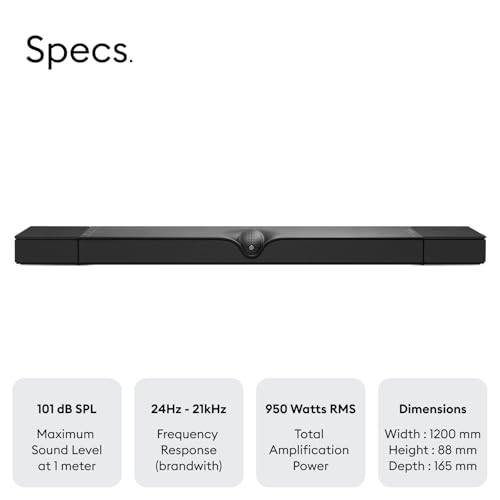
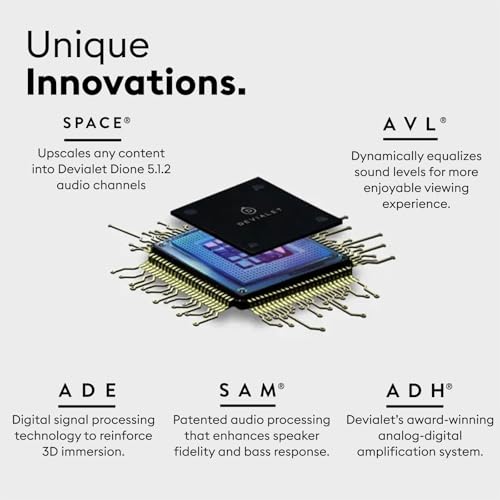
What makes this particularly impressive is Devialet's SAM® (Speaker Active Matching) technology. SAM continuously monitors each subwoofer's performance and adjusts the signal in real-time to prevent distortion, even at high volumes. The result? The Devialet Dione can reproduce frequencies as low as 24Hz – that's approaching the threshold of human hearing and deeper than many dedicated subwoofers achieve.
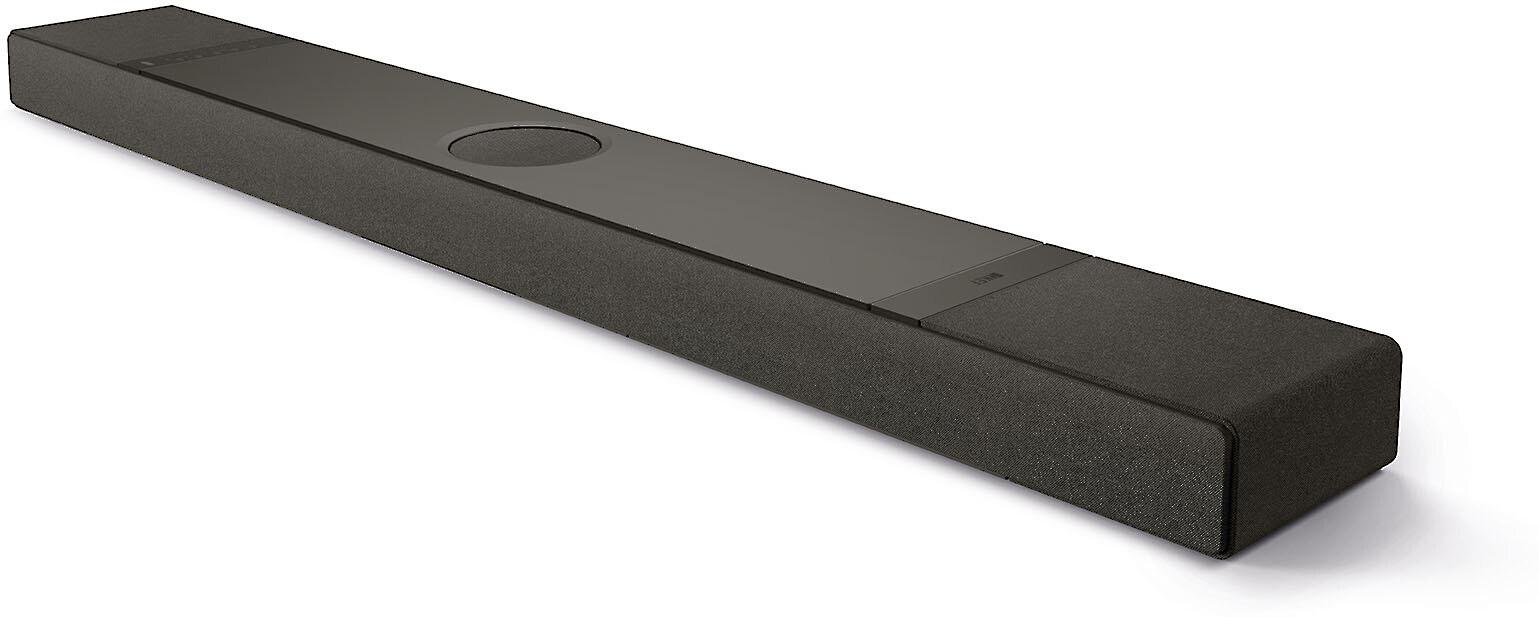
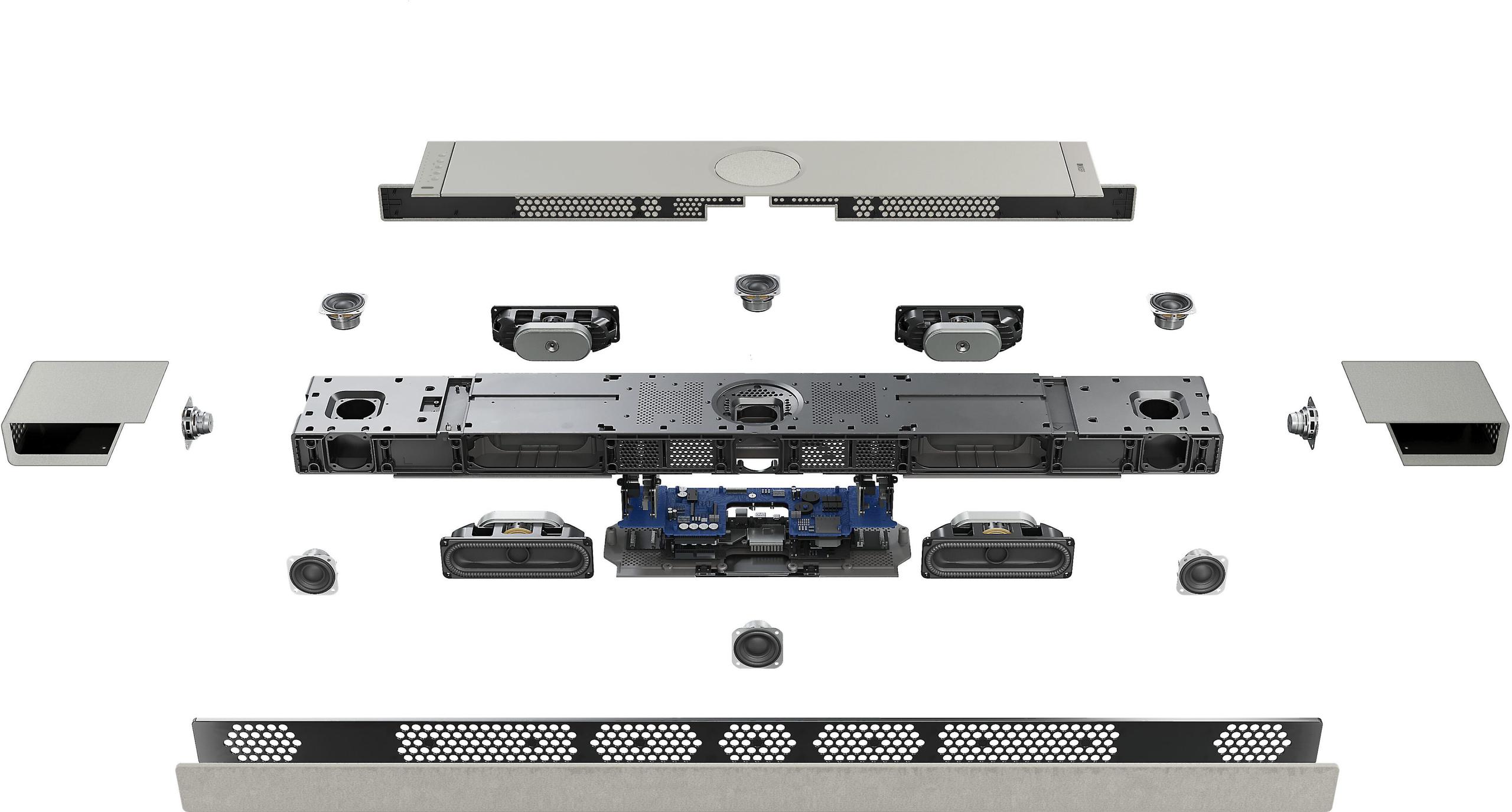
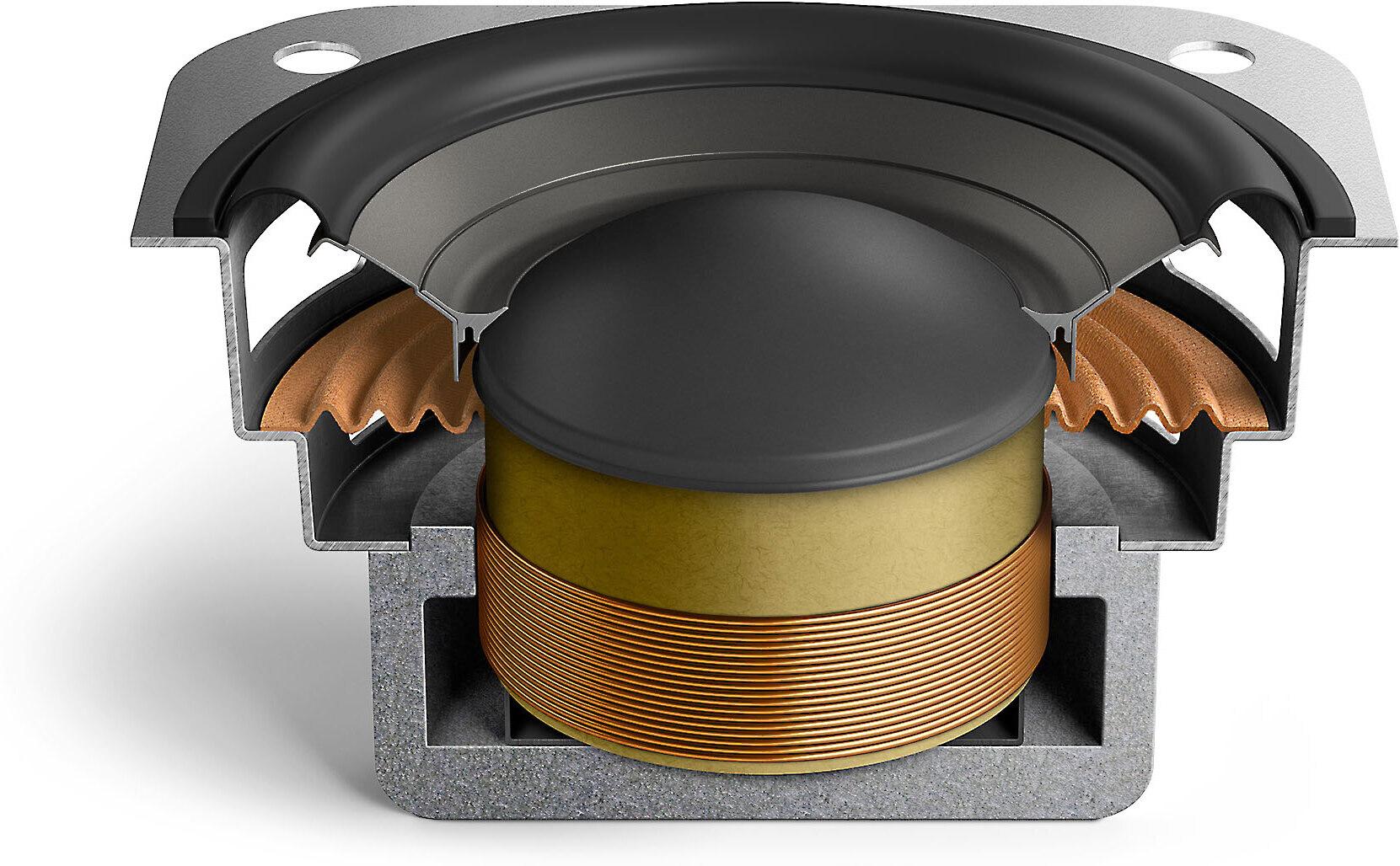
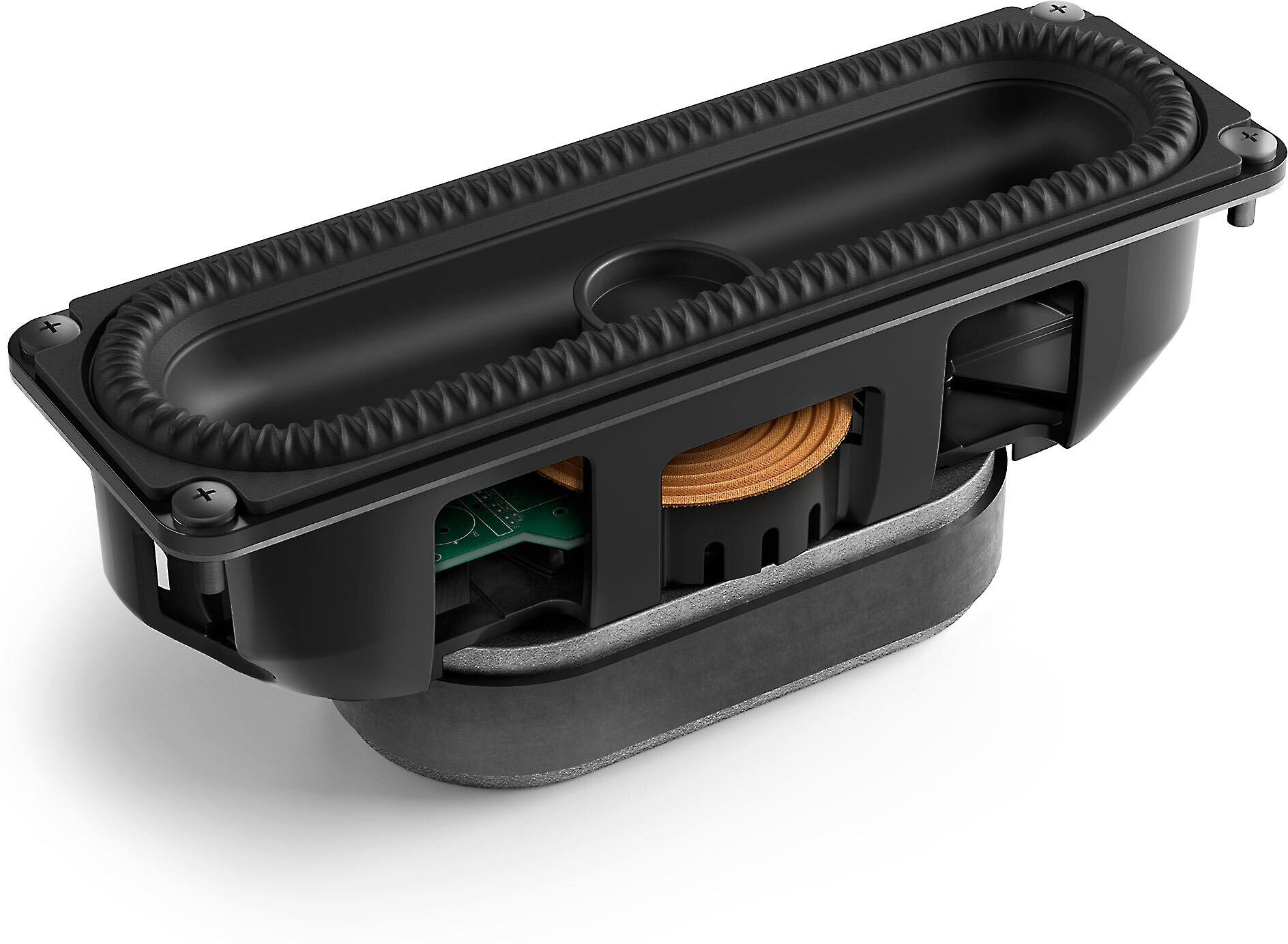
The KEF XIO takes a different approach with four racetrack-shaped P185 drivers. These oval-shaped woofers use P-Flex technology, borrowed from KEF's high-end KC62 subwoofer. P-Flex employs a specialized surround design that resists the internal air pressure created when the driver moves, allowing for cleaner, more controlled bass. Additionally, KEF's VECO (Velocity Control Technology) uses sensors to monitor driver movement and reduces distortion by up to 28dB.
While the KEF XIO extends down to 34Hz – still excellent for a soundbar – it doesn't match the Dione's room-shaking low-end. However, KEF includes both wired and wireless subwoofer outputs, giving you the option to add an external sub later. The Dione, conversely, has no subwoofer output because Devialet believes its internal drivers make external bass unnecessary.
In practice, this means the Devialet Dione delivers more visceral impact for action movies and bass-heavy music without requiring additional equipment. The KEF XIO provides excellent bass for its size but may leave bass enthusiasts wanting more depth, particularly in larger rooms.
Dialogue clarity often separates good soundbars from great ones, and this is where the KEF XIO demonstrates its audiophile heritage. The XIO employs six Uni-Q MX drivers – miniaturized versions of KEF's renowned concentric driver design. In a Uni-Q driver, the tweeter (high-frequency speaker) sits directly in the center of the midrange driver's cone, creating what engineers call a "point source."
This design eliminates timing differences between the tweeter and midrange driver because sound from both elements reaches your ears simultaneously. Traditional speakers suffer from interference patterns when frequencies from separate drivers arrive at slightly different times, causing certain frequencies to cancel out or become emphasized depending on your seating position. The KEF XIO's Uni-Q design ensures consistent tonal balance whether you're sitting dead center or off to the side.
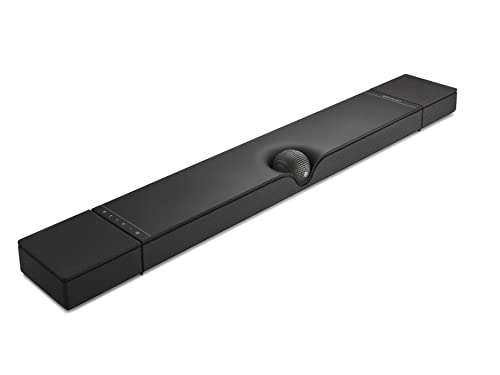
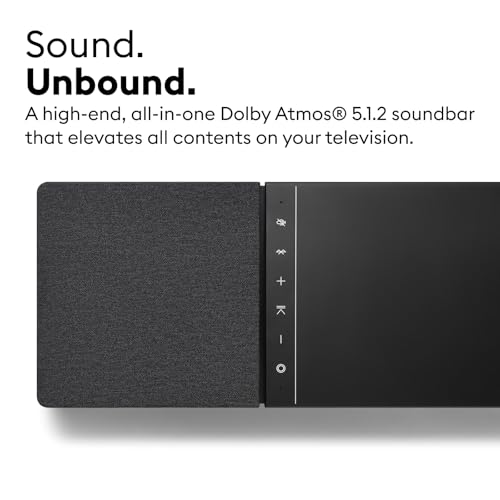
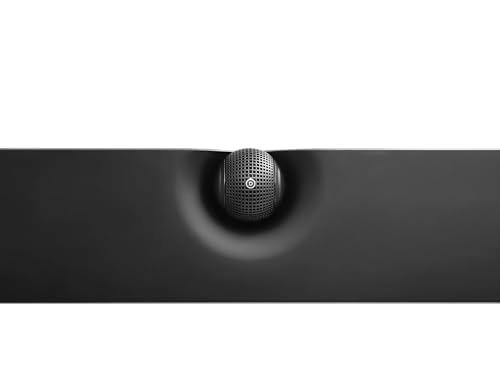
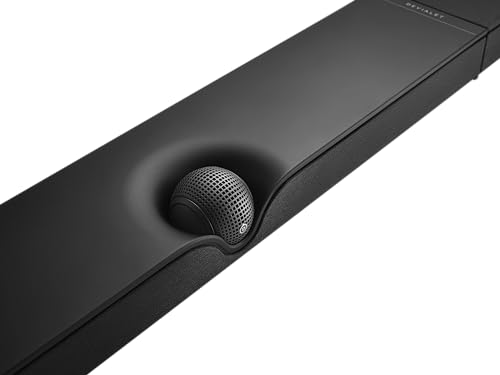
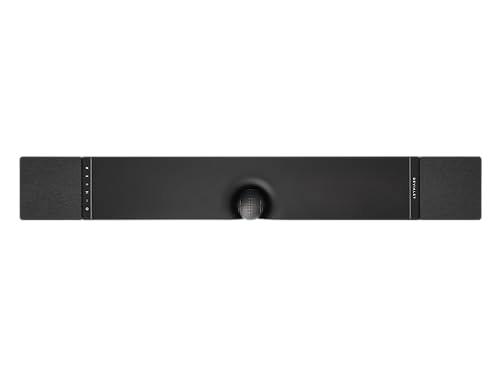
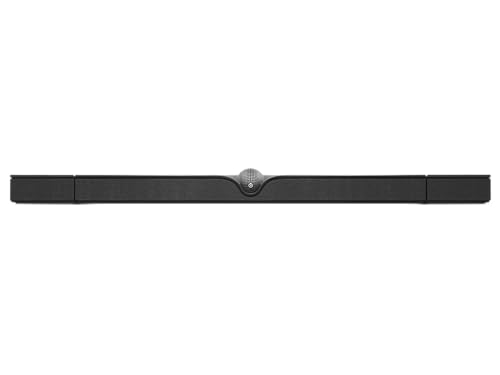
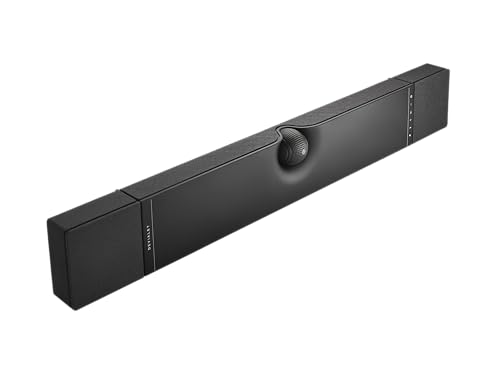
The Devialet Dione addresses dialogue clarity through its innovative ORB® technology. The ORB is a spherical center channel speaker that can rotate up to 180 degrees. When you wall-mount the Dione, the ORB automatically rotates to face the listening area directly, maintaining optimal dialogue placement. This mechanical solution ensures voices remain locked to the screen rather than appearing to come from above or below it.
Both soundbars include dedicated voice modes that emphasize speech frequencies and reduce background noise, but they achieve this differently. The KEF XIO uses its Music Integrity Engine to subtly boost vocal presence while maintaining overall tonal balance. The Devialet Dione employs AVL® (Adaptive Volume Level) technology that continuously monitors content and adjusts levels in real-time, ensuring whispered dialogue remains audible without making explosions deafeningly loud.
Based on consensus from expert reviews, the KEF XIO generally provides clearer, more natural-sounding dialogue, while the Devialet Dione excels at maintaining voice intelligibility across different volume levels and room positions.
Both soundbars create convincing 5.1.2-channel surround sound using driver arrays and sophisticated processing, but their approaches differ significantly. The Devialet Dione relies heavily on its ADE® (Advanced Dimensional Experience) beamforming technology. ADE analyzes your room and the soundbar's placement, then steers specific frequencies through different drivers to create phantom surround and height effects.
What's particularly clever about the Dione's system is its orientation awareness. Internal sensors detect whether the soundbar is shelf-mounted or wall-mounted, then automatically adjust the beamforming algorithms accordingly. This ensures optimal surround effects regardless of placement, which is crucial since wall-mounting versus shelf placement dramatically affects how sound reflects in your room.
The KEF XIO takes a more traditional approach with discrete up-firing drivers for height effects and side-firing elements for surround channels. Its Intelligent Placement Technology uses a built-in microphone to measure room acoustics during setup, then applies appropriate corrections. The XIO supports more audio formats than the Dione, including DTS:X and Sony 360 Reality Audio, whereas the Devialet Dione focuses exclusively on Dolby Atmos and Dolby Digital formats.
For spatial audio performance, expert reviews suggest the KEF XIO creates a more natural, expansive soundstage, while the Devialet Dione produces more dramatic, enveloping effects. The choice often comes down to preference: do you want subtle realism or impressive spectacle?
Treble performance and overall system coherence reveal each manufacturer's audio philosophy. The KEF XIO's Uni-Q drivers inherently provide superior imaging – the ability to precisely locate sounds in space. Because all frequencies emerge from essentially the same point, stereo effects and sound placement appear more realistic and stable.
The Devialet Dione counters with its ADH® (Analog Digital Hybrid) amplification technology. ADH combines the sonic purity of Class A amplifiers with the efficiency of Class D designs. Class A amplifiers are prized for their low distortion and smooth sound but waste enormous amounts of energy as heat. Class D amplifiers run cool and efficient but can sound harsh or digital. ADH uses Class A circuitry to define the signal's character while Class D stages provide the power, theoretically capturing the best of both worlds.
Devialet also incorporates Magic Wire technology, which minimizes the signal path between digital processing and amplification. Shorter signal paths typically mean less noise and better preservation of subtle details.
In listening evaluations, reviewers consistently note the KEF XIO's superior coherence and natural tonal balance, particularly for music listening. The Devialet Dione tends toward a more dramatic, slightly bass-heavy presentation that excels with action movies but may be less ideal for critical music listening.
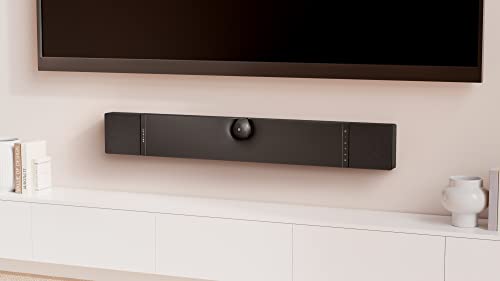
The visual and physical differences between these soundbars reflect their distinct approaches. The Devialet Dione makes a bold design statement with its rotating ORB center channel. This spherical element immediately identifies the soundbar and serves as both functional technology and aesthetic focal point. The overall construction uses premium aluminum with acoustic fabric, but the ORB adds visual bulk and brings total height to 88mm.
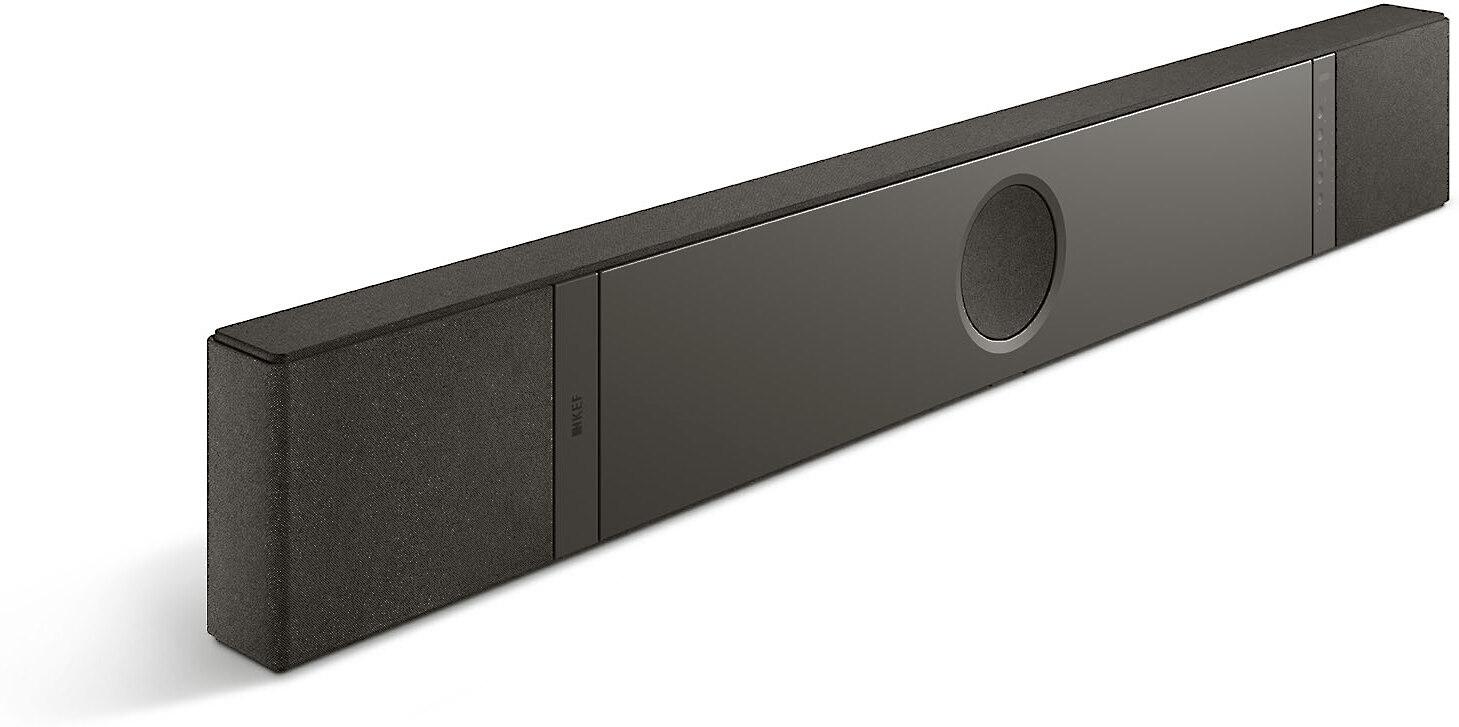
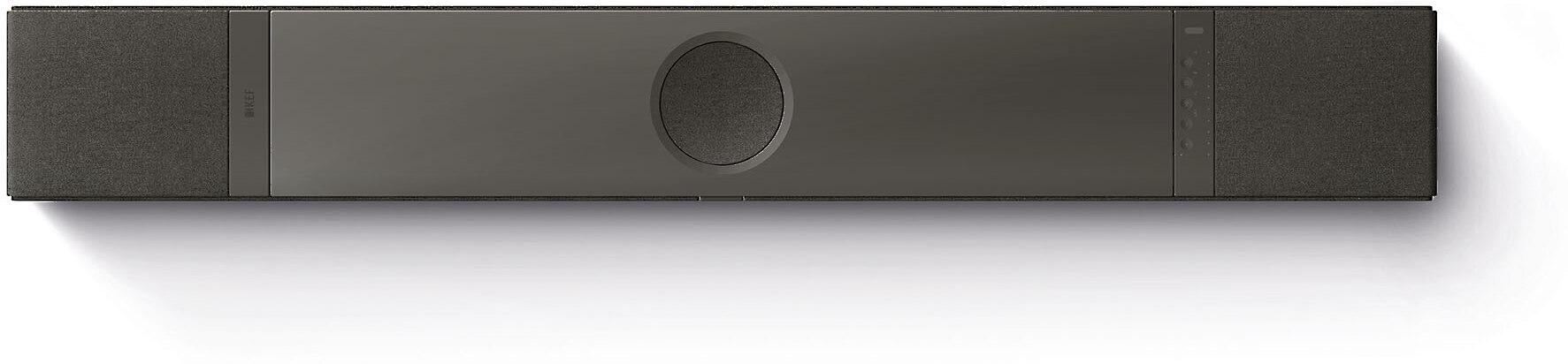
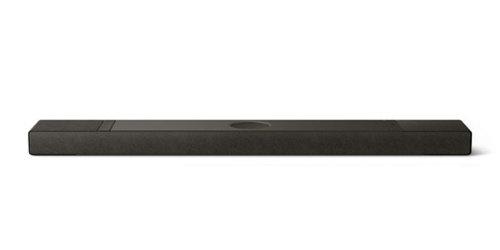
The KEF XIO embraces minimalism with a sleek, low-profile design measuring just 70mm tall. Its aluminum construction and fabric grille prioritize discrete integration with modern TV setups. While less visually distinctive, this approach appeals to users who prefer their audio equipment to blend seamlessly with their living space.
Both soundbars require substantial mounting considerations due to their weight and size, but the Devialet Dione's 12kg mass demands particularly robust wall anchors. The KEF XIO offers more flexible placement options due to its slimmer profile.
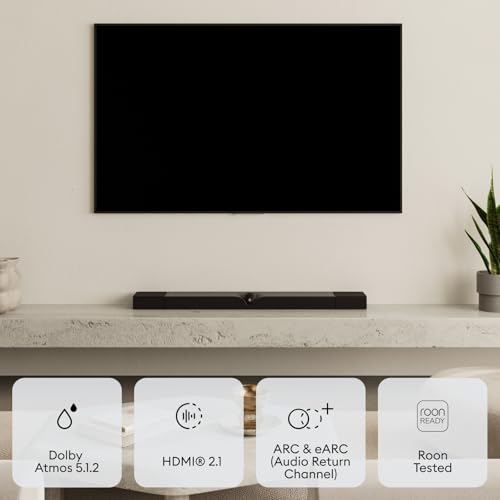
Modern premium soundbars must excel beyond pure audio performance, and both models deliver comprehensive connectivity. Each includes HDMI 2.1 eARC for high-bandwidth audio return from compatible TVs, plus optical digital inputs for older equipment. Both support major wireless protocols including Wi-Fi, Bluetooth, AirPlay 2, and direct streaming from services like Spotify and Tidal.
The KEF XIO gains an advantage with Wi-Fi 6 support and broader audio format compatibility, including DTS:X. It also provides subwoofer outputs for system expansion. The Devialet Dione focuses on its proprietary ecosystem integration and more sophisticated automatic room adaptation through its ADE® technology.
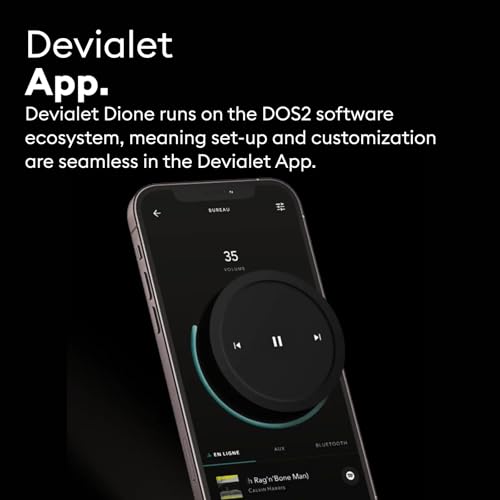
Both manufacturers offer mobile apps for setup and control, though user reviews suggest KEF's app provides more granular adjustment options while Devialet's focuses on simplicity and automatic optimization.
At similar price points (both commanding premium pricing at the time of writing), these soundbars target different user priorities. The Devialet Dione delivers maximum impact and convenience for users who want plug-and-play cinema performance. Its superior bass output and dramatic presentation make it ideal for large rooms and action-heavy content. The automatic placement adaptation and ORB technology provide unique functionality that some users will find indispensable.
The KEF XIO appeals to users who prioritize balanced performance across movies, music, and dialogue. Its more refined approach and superior format support make it better suited for mixed content consumption and critical listening. The option to add a subwoofer later provides upgrade flexibility that the Dione lacks.
Choose the Devialet Dione if you want maximum bass impact without additional components, prioritize action movies and dynamic content, have a large room that needs powerful filling, or appreciate unique design elements. Its 950W amplification and eight dedicated subwoofers eliminate the need for external bass in most scenarios.
Opt for the KEF XIO if balanced audio quality across all content types matters most, vocal clarity and musical accuracy are priorities, you prefer minimalist aesthetics, or you want the flexibility to add components later. Its Uni-Q driver technology and refined tuning provide superior overall coherence and natural sound reproduction.
Both represent excellent value in the premium soundbar category, but they serve different listening preferences and use cases. The Dione maximizes impact and convenience, while the XIO emphasizes refinement and versatility. Consider your primary content types, room size, and aesthetic preferences when making your final decision. Either choice will deliver a significant upgrade over standard TV audio and most budget soundbar alternatives.
| Devialet Dione | KEF XIO |
|---|---|
| Driver Configuration - More drivers generally mean better sound separation and power | |
| 17 drivers (9 full-range + 8 dedicated subwoofers) | 12 drivers (6 Uni-Q MX + 4 P185 racetrack woofers + 2 full-range) |
| Total Power Output - Higher wattage enables louder, cleaner sound in large rooms | |
| 950W RMS across 17 amplifier channels | 820W total across 12 amplifier channels |
| Bass Extension - Lower frequencies provide more impactful movie experience | |
| 24Hz (exceptional depth, rivals dedicated subwoofers) | 34Hz (very good for soundbar, may benefit from external sub) |
| Unique Driver Technology - Proprietary innovations that affect sound quality | |
| Push-push subwoofer array with SAM® technology for distortion control | Uni-Q concentric drivers for point-source accuracy and P-Flex woofer technology |
| Spatial Audio Format Support - Determines compatibility with different movie and music sources | |
| Dolby Atmos, Dolby Digital (no DTS:X support) | Dolby Atmos, DTS:X, Sony 360 Reality Audio (broader format compatibility) |
| Distinctive Design Features - Unique elements that affect placement and aesthetics | |
| Rotating ORB® center channel adapts to wall/shelf mounting | Slim 70mm profile for easy TV integration, minimalist design |
| Room Adaptation Technology - How well the soundbar adjusts to your specific space | |
| ADE® beamforming with automatic orientation detection | Intelligent Placement Technology with built-in calibration microphone |
| Subwoofer Expandability - Option to add external bass later | |
| No subwoofer output (Devialet believes internal drivers sufficient) | Wired and wireless subwoofer outputs available for system expansion |
| Physical Dimensions - Affects placement options and visual impact | |
| 1200mm × 88mm × 165mm, 12kg (substantial presence, requires sturdy mounting) | 1210mm × 70mm × 165mm, lighter profile (easier TV integration) |
| Connectivity Standards - Future-proofing and compatibility considerations | |
| HDMI 2.1 eARC, Wi-Fi 802.11ac, Bluetooth 5.0 | HDMI 2.1 eARC, Wi-Fi 6, Bluetooth 5.3 (more future-proof wireless) |
| Music vs Movie Optimization - How each soundbar balances different content types | |
| Optimized for cinematic impact and bass-heavy content | Balanced for both music accuracy and movie immersion |
The Devialet Dione delivers significantly deeper bass with its 8 dedicated aluminum subwoofers extending down to 24Hz, while the KEF XIO reaches 34Hz with 4 racetrack woofers. The Dione eliminates the need for an external subwoofer in most rooms, making it ideal for bass-heavy movies and music.
Yes, both the Devialet Dione and KEF XIO support Dolby Atmos 5.1.2 channel audio. However, the KEF XIO also supports DTS:X and Sony 360 Reality Audio, giving it broader format compatibility than the Devialet Dione.
The KEF XIO is generally better for music due to its Uni-Q concentric drivers that provide superior imaging and tonal balance. The Devialet Dione offers a more bass-heavy, cinematic presentation that may overwhelm subtle musical details.
The KEF XIO has a slimmer 70mm height profile that fits better in front of most TVs, while the Devialet Dione measures 88mm tall with its distinctive ORB center channel. Both are approximately 1200mm wide and weigh around 10-12kg.
The KEF XIO typically provides clearer dialogue due to its Uni-Q point-source design that ensures consistent vocal reproduction across seating positions. The Devialet Dione uses its rotating ORB technology and AVL processing to maintain voice intelligibility at different volume levels.
The KEF XIO includes both wired and wireless subwoofer outputs for system expansion. The Devialet Dione has no subwoofer output because its 8 internal subwoofers are designed to provide complete bass coverage without external components.
The Devialet Dione excels in large rooms with its 950W amplification and powerful bass drivers that can fill spacious areas effectively. The KEF XIO with 820W is better suited for small to medium rooms where its refined sound signature won't be overwhelmed.
The KEF XIO uses Intelligent Placement Technology with a built-in microphone for acoustic measurement and adjustment. The Devialet Dione features ADE beamforming that automatically detects orientation and adapts processing for wall-mount or shelf placement.
The KEF XIO provides more future-proof connectivity with Wi-Fi 6 and Bluetooth 5.3, plus broader audio format support. Both soundbars include HDMI 2.1 eARC, but the Devialet Dione focuses more on proprietary ecosystem integration.
Both the Devialet Dione and KEF XIO can enhance gaming audio, but may have higher latency than gaming-specific soundbars. The KEF XIO might be slightly better for competitive gaming due to its more balanced sound signature and precise imaging.
The Devialet Dione makes a bold statement with its spherical ORB center channel that rotates based on placement. The KEF XIO takes a minimalist approach with clean lines and a low profile that blends seamlessly with modern TV setups.
Both the Devialet Dione and KEF XIO offer excellent value in the premium soundbar category. The Devialet Dione provides more raw power and bass impact per dollar, while the KEF XIO delivers superior refinement and format flexibility for similar pricing.
We've done our best to create useful and informative comparisons to help you decide what product to buy. Our research uses advanced automated methods to create this comparison and perfection is not possible - please contact us for corrections or questions. These are the sites we've researched in the creation of this article: rtings.com - crutchfield.com - devialet.com - ooberpad.com - bhphotovideo.com - kjwestone.co.uk - whathifi.com - devialet.com - devialet.com - sound-advice.online - kjwestone.co.uk - device.report - tmraudio.com - devialet.com - devialetchat.com - projectorscreen.com - soundandvision.com - bestbuy.com - youtube.com - av.com - audiofi.ca - devialet.com - blog.son-video.com - audioconnection.com.au - baybloorradio.com - cdn.abicart.com - smarthomesounds.co.uk - e-piphany.co.za - cloneyaudio.com - devialet.com - catalog.asbis.ee - av.com - soundandvision.com - youtube.com - comparisontabl.es - blog.son-video.com - residentialsystems.com - whathifi.com - audioadvice.com - crutchfield.com - homecrux.com - techradar.com - youtube.com - us.kef.com - gramophone.com - cepro.com - audioxpress.com - musicdirect.com - gramophone.com - us.kef.com - crutchfield.com - hifipig.com - bestbuy.com - listenup.com - bestbuy.com - bestbuy.com - listenup.com

Privacy Policy
Terms and Conditions - Affiliate Policy
Home Security
© Copyright 2008-2026.
11816 Inwood Rd #1211, Dallas, TX 75244