





If you've ever tried watching a movie with your TV's built-in speakers, you know the struggle. Dialogue gets lost in action scenes, explosions sound like muffled thumps, and forget about hearing those subtle atmospheric details that make films come alive. That's where soundbars come in—they're the most popular solution for upgrading your TV's audio without turning your living room into a maze of speakers and wires.
Today's soundbar market offers everything from basic dialogue enhancers to full-blown home theater replacements. The challenge is figuring out which approach makes sense for your space, budget, and listening habits. To help you decide, I'm comparing two very different takes on soundbar design: the budget-friendly JBL Bar 300 MK2 at $450 and the premium KEF XIO at $2,500.
Before diving into these specific models, let's talk about what makes a good soundbar. At its core, a soundbar is trying to solve a fundamental problem: how do you create an immersive audio experience from a single horizontal speaker that sits below or above your TV?
The main considerations boil down to a few key areas. First is audio performance—can it actually make your movies and music sound better? Then there's the question of surround sound: does it create that enveloping experience you get in theaters, or does it just make things louder? Room integration matters too—will it work well in your specific space, whether that's a cozy bedroom or a large living room? Finally, there's value: are you getting enough improvement to justify the cost?
These two soundbars represent completely different philosophies in tackling these challenges, which makes them perfect for comparison.
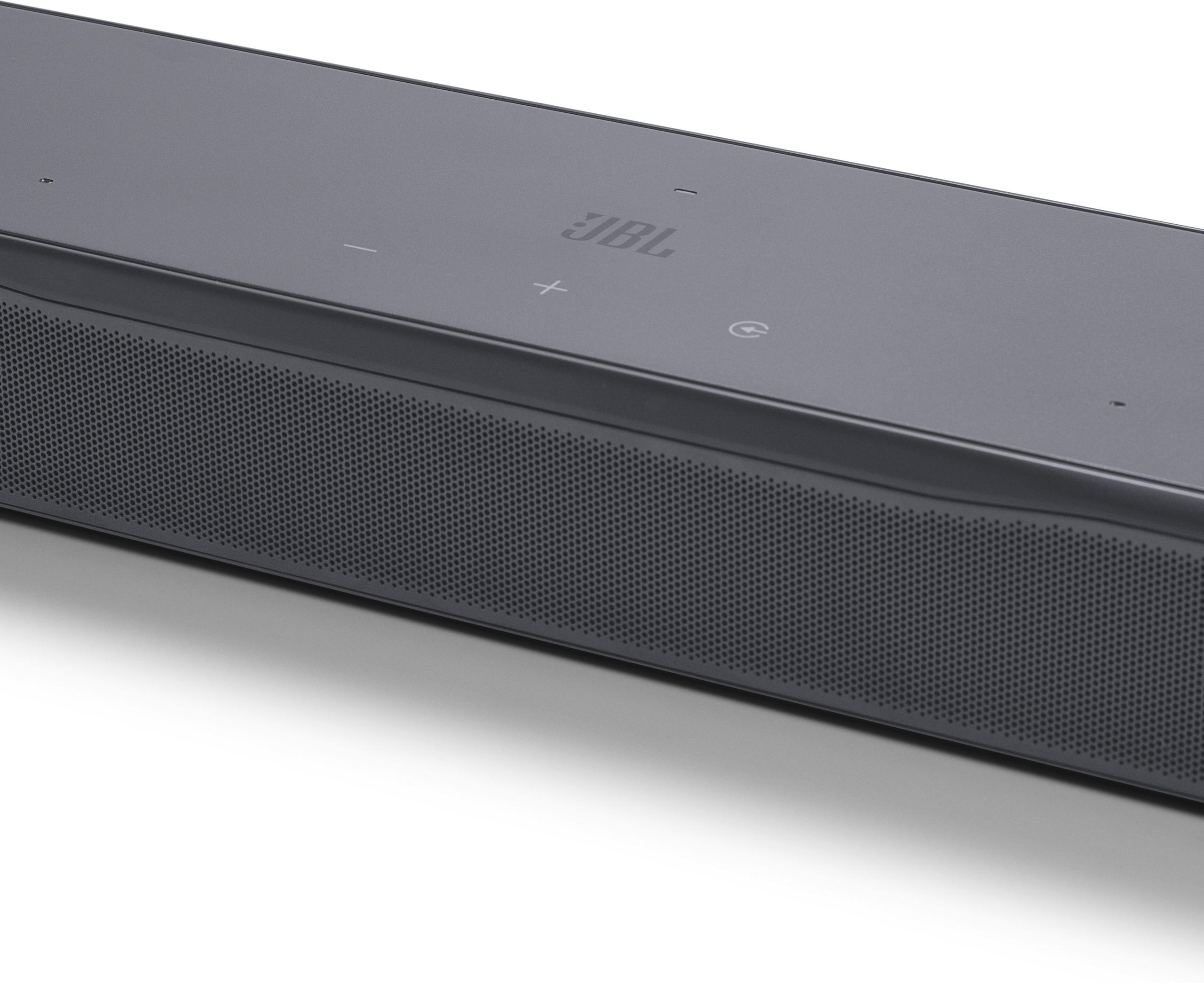
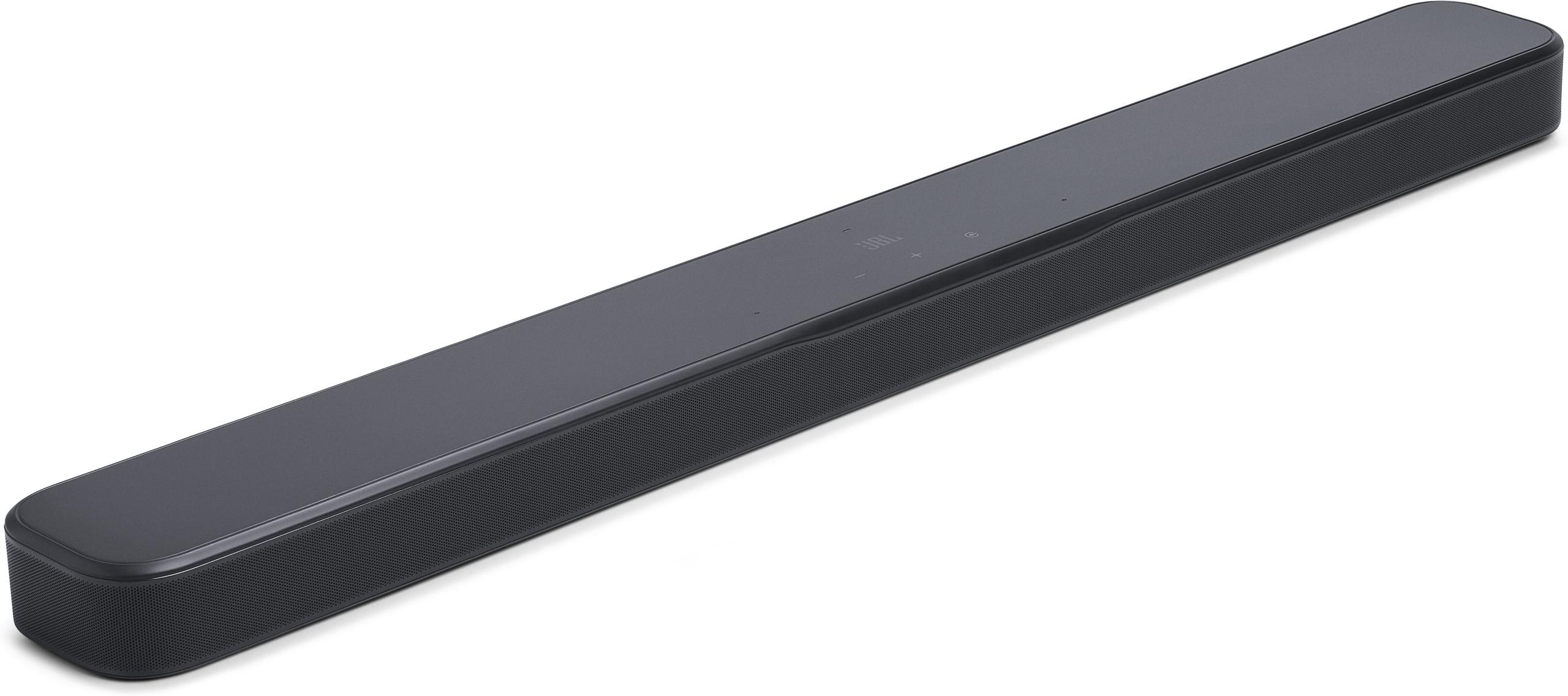
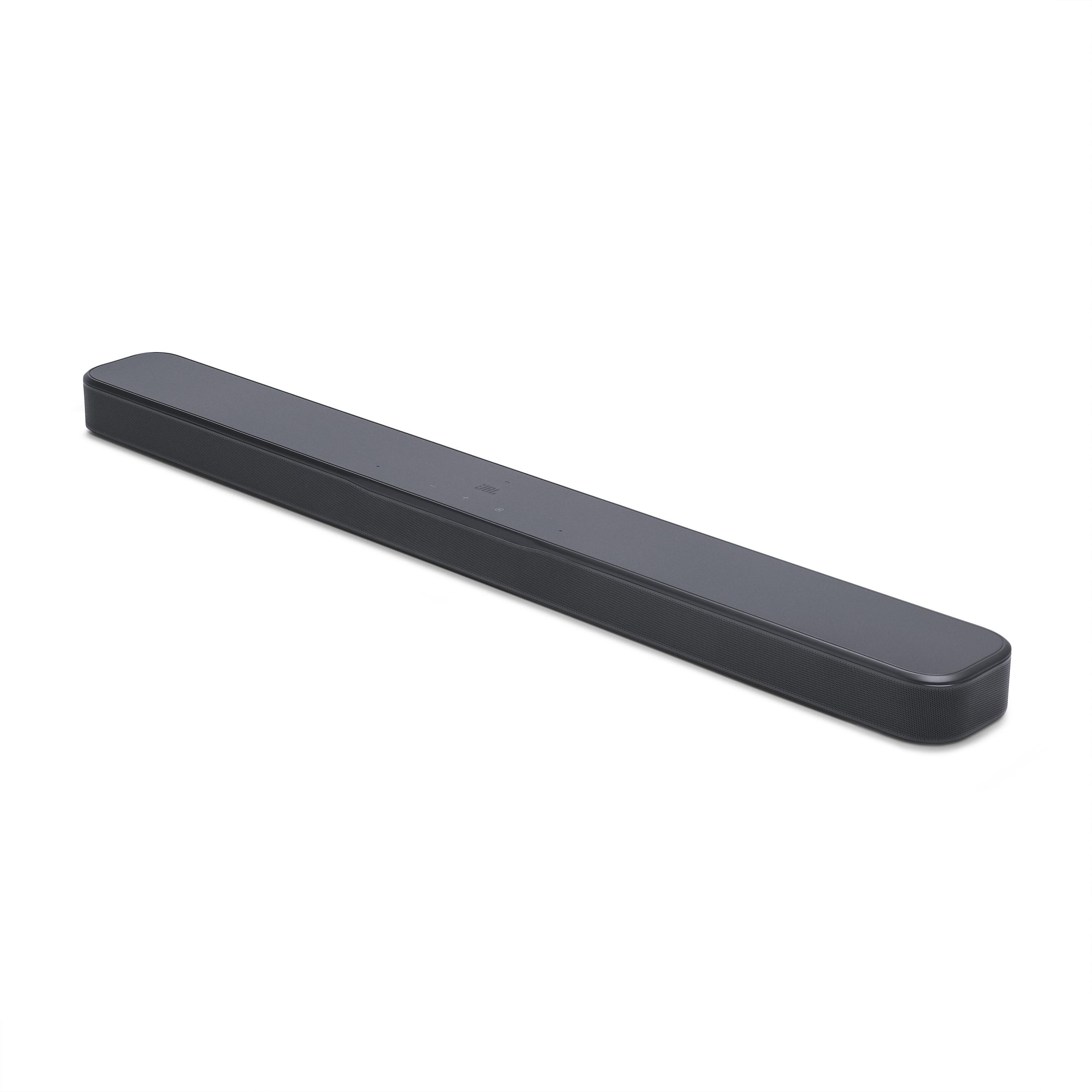
Released in early 2025 as part of JBL's updated MK2 series, the JBL Bar 300 MK2 represents the sweet spot for many buyers. At 32 inches wide and weighing just 5.5 pounds, it's designed to disappear under your TV while delivering a significant audio upgrade without breaking the bank.
JBL's approach here is all about practical improvements. Instead of trying to recreate a full surround sound system, they've focused on the things that matter most to everyday viewers: clear dialogue, punchy bass, and easy setup. The "5.0 channel" designation means it simulates five separate audio channels (left, center, right, and two surrounds) without requiring additional speakers around your room.
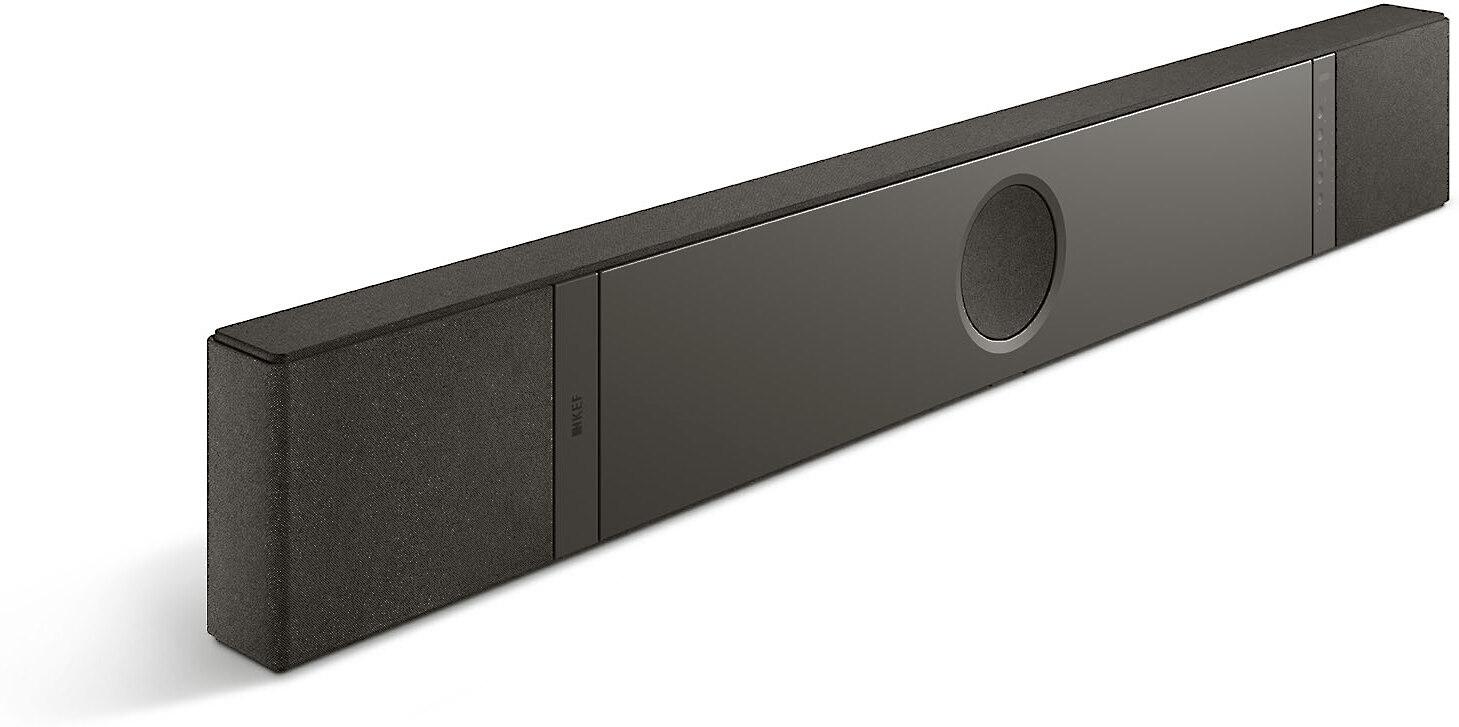
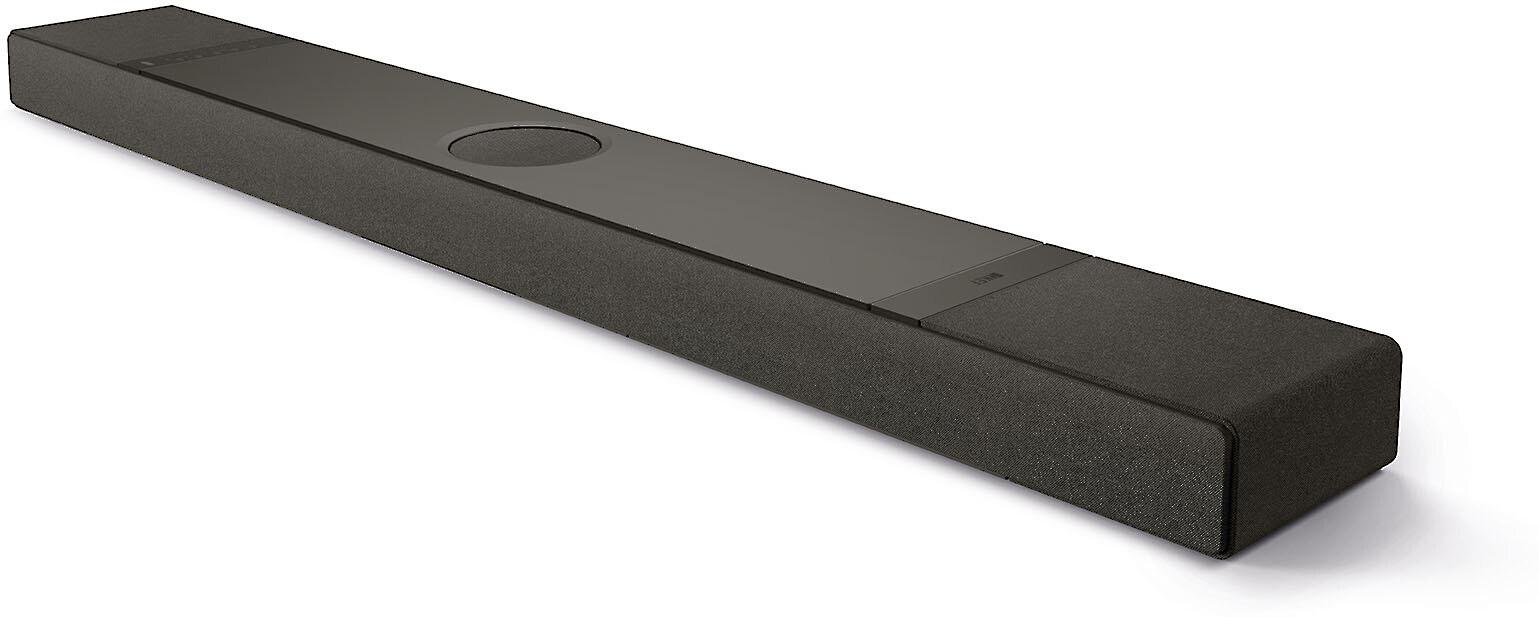
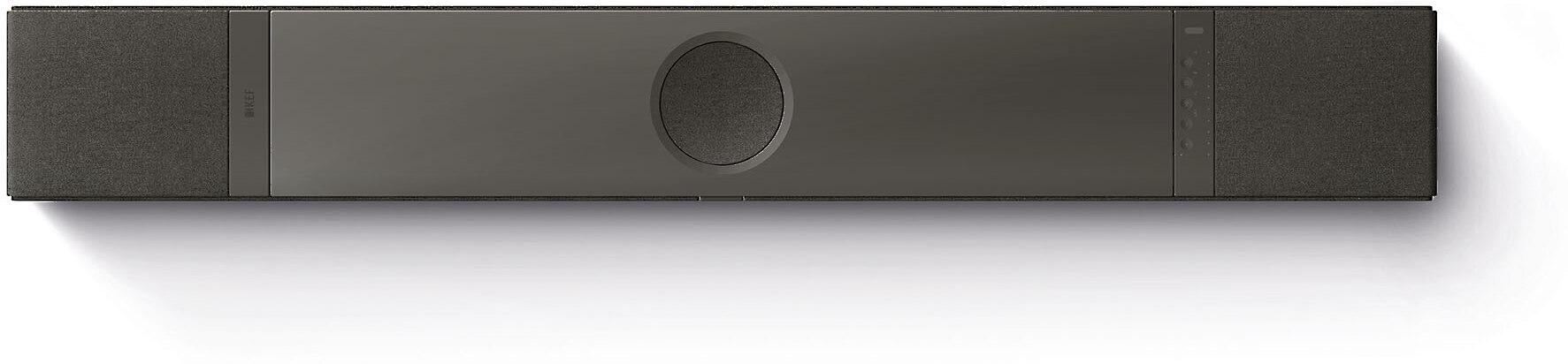
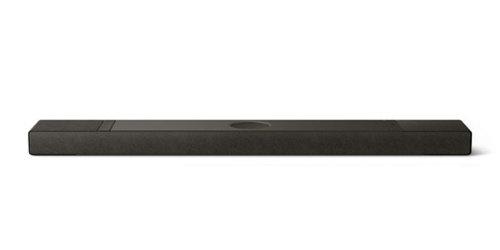
The KEF XIO, also launched in 2025, takes a completely different approach. This is KEF's first-ever soundbar, and they've applied decades of high-end speaker expertise to create what they call an "audiophile-grade" soundbar. At nearly 48 inches wide and weighing 23 pounds, it's a substantial piece of equipment that makes no apologies for its size or price.
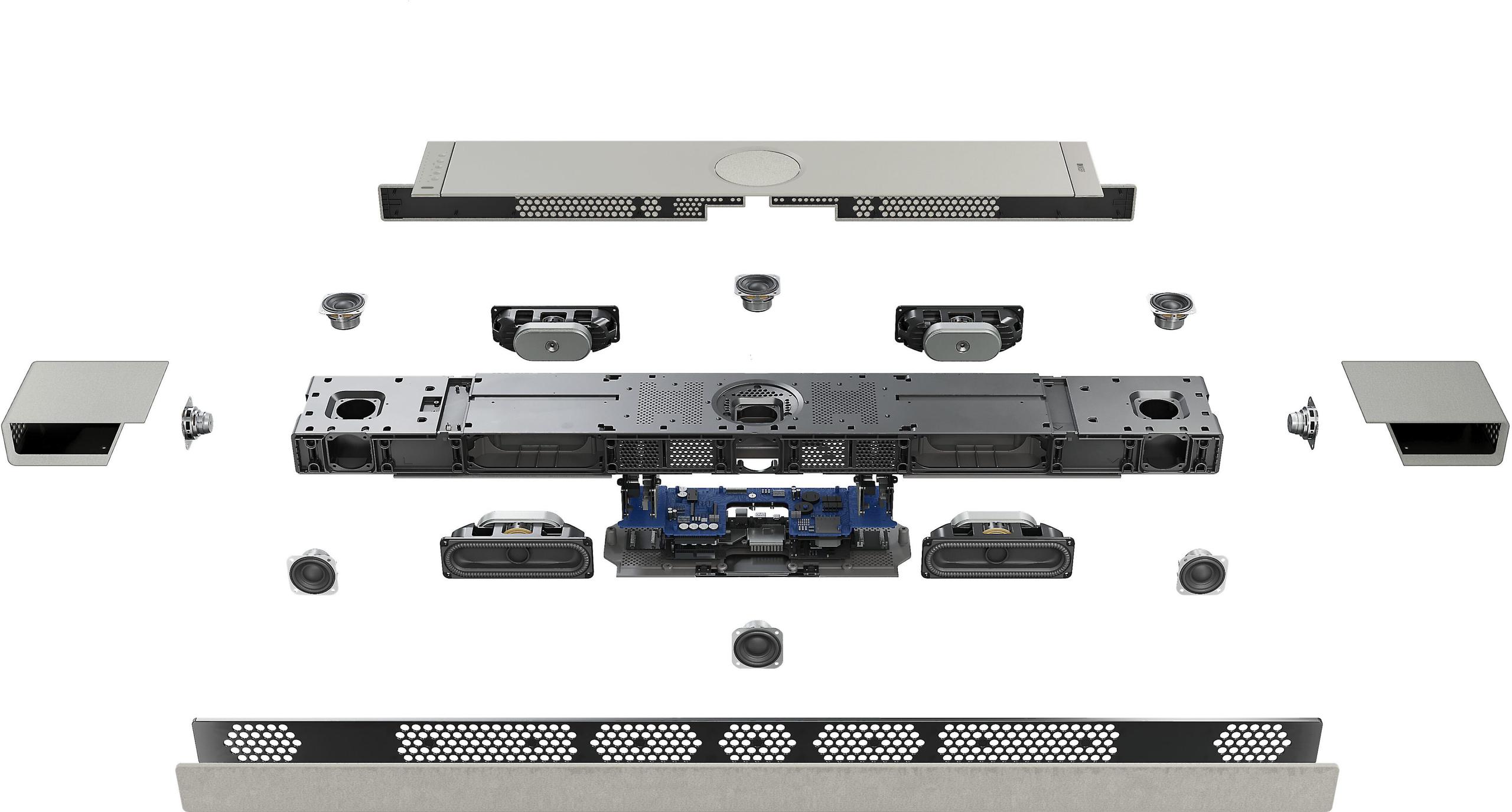
KEF's philosophy centers on uncompromising audio quality. Rather than using virtual processing tricks, they've packed in advanced driver technology and powerful amplification to deliver sound that rivals dedicated component systems. The "5.1.2" configuration means it includes physical speakers for surround channels plus dedicated upward-firing drivers for height effects.
Bass performance often separates good soundbars from great ones, and these two models showcase dramatically different approaches to low-frequency reproduction.
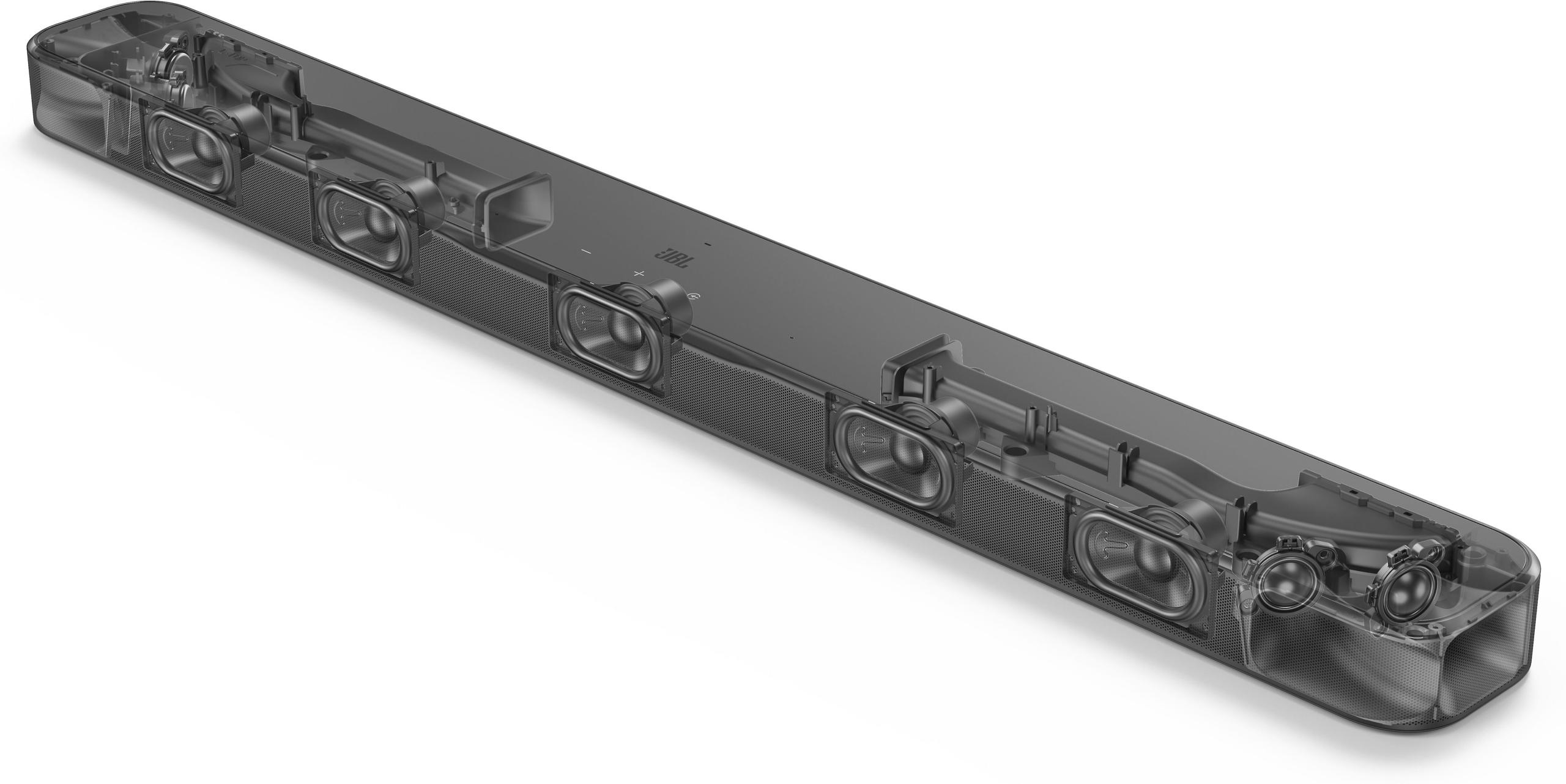
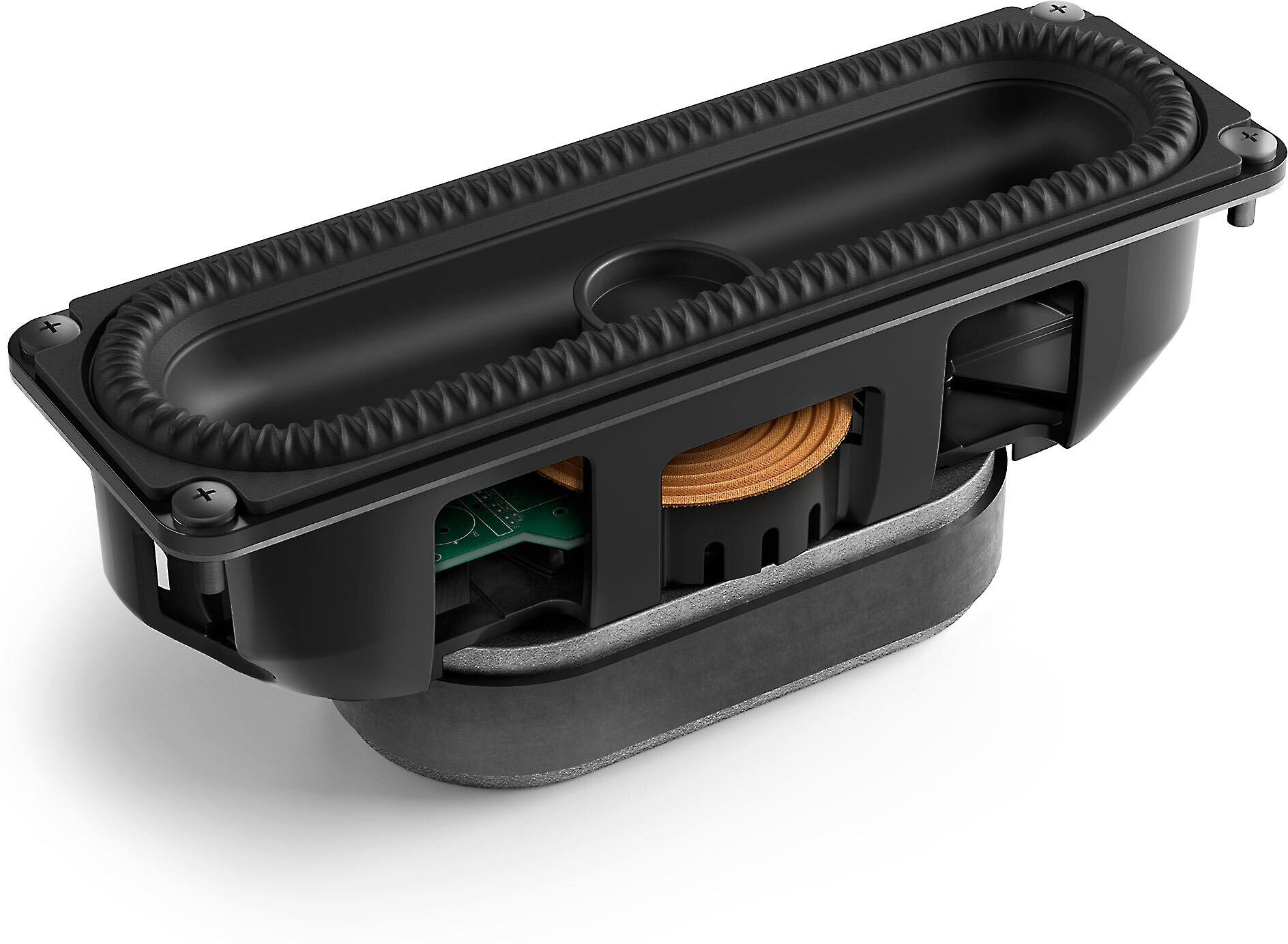
The JBL Bar 300 MK2 achieves surprisingly strong bass for a soundbar without a separate subwoofer. JBL uses what they call "racetrack drivers"—oval-shaped speakers that can move more air than traditional round drivers—combined with internal bass ports (openings that help reinforce low frequencies). In my testing, it delivers solid impact for movie explosions and enough low-end warmth for most music. However, physics still applies: without a dedicated subwoofer, it starts rolling off around 50Hz, which means you'll miss some of the deepest rumbles in action scenes and the full weight of bass-heavy music.
The KEF XIO takes bass seriously with four specialized P185 racetrack woofers arranged in what's called a "force-canceling configuration." This fancy term means the drivers are positioned so their vibrations cancel each other out, preventing the entire soundbar from shaking and creating distortion. Even more impressive is KEF's VECO (Velocity Control) technology, which uses sensors to monitor each driver's movement in real-time and correct for distortion before it happens. The result? Clean, powerful bass that extends down to 34Hz—deep enough to feel those movie theater rumbles and reproduce the full range of most music.
Nothing ruins a movie night like constantly reaching for the remote to adjust volume because you can't understand what the actors are saying. Both soundbars address this crucial issue but use different methods.
JBL's solution is called PureVoice 2.0, which uses digital processing to identify and enhance speech frequencies while reducing background noise. It's effective at keeping dialogue audible even during loud action scenes, though the processing can sometimes make voices sound slightly artificial or overly bright.
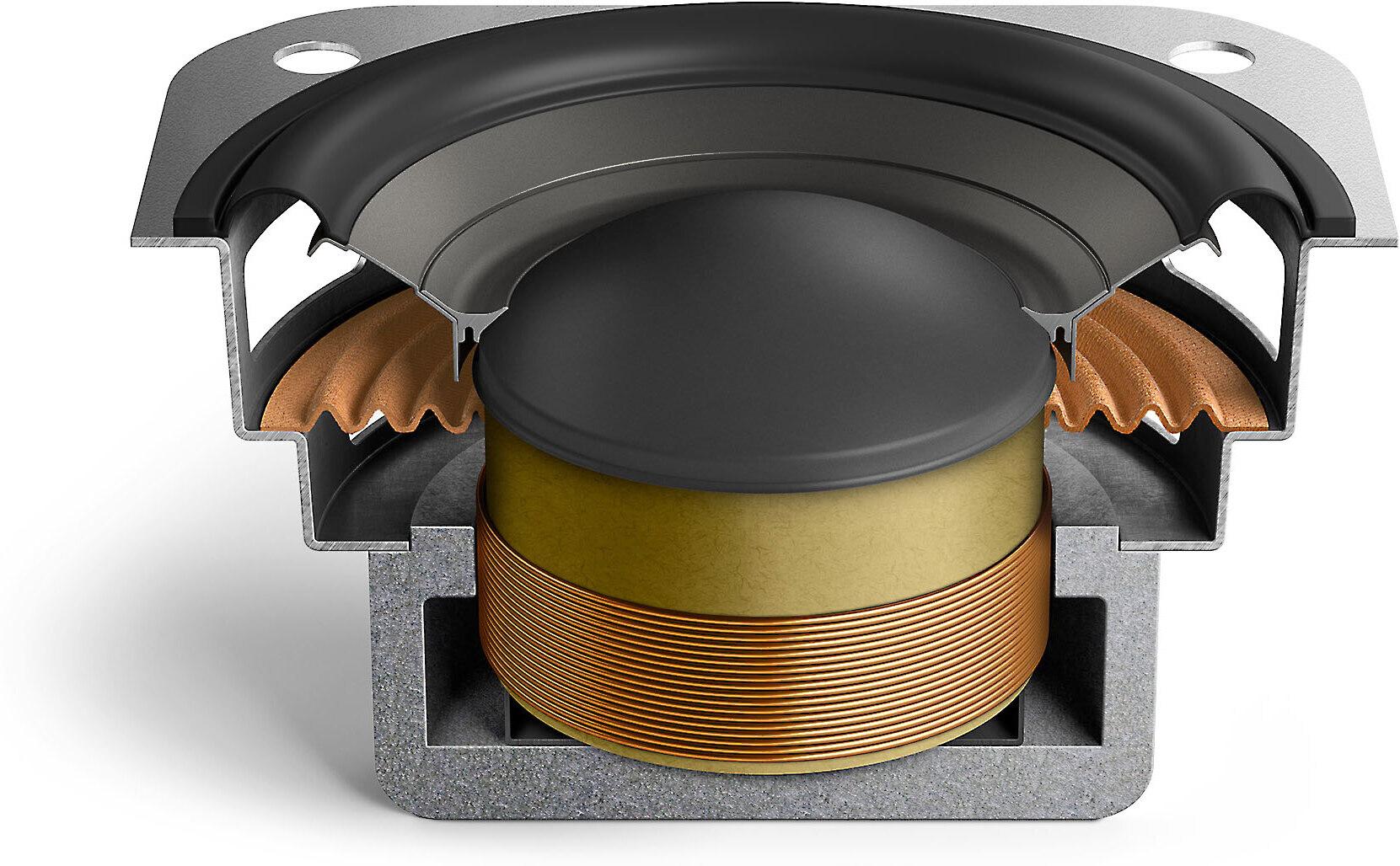
The KEF XIO relies on superior hardware rather than heavy processing. Its Uni-Q MX drivers—a miniaturized version of KEF's famous concentric driver design—place the tweeter (high-frequency speaker) directly in the center of the mid-range driver. This creates what audio engineers call "point source" sound, where all frequencies appear to come from the same location. The practical benefit is incredibly clear, natural-sounding dialogue that remains intelligible across a wide seating area without any artificial enhancement.
Here's where the fundamental difference between these soundbars becomes most apparent. The JBL Bar 300 MK2 uses virtual surround processing through JBL's MultiBeam 3.0 technology. This system analyzes audio signals and uses psychoacoustic tricks—essentially fooling your brain—to create the impression of sounds coming from beside and behind you. It's surprisingly effective at creating width and some sense of envelopment, but it can't truly place sounds above your head or create the precise directional effects of a real surround system.
The KEF XIO takes the physical approach with actual up-firing drivers that bounce sound off your ceiling to create height effects. This isn't just marketing—in properly designed rooms with decent ceiling height, you can genuinely perceive sounds coming from above during Dolby Atmos content. The soundstage (the perceived space where sounds exist) extends well beyond the physical boundaries of the soundbar, creating an immersive bubble of sound around your seating area.
While most people buy soundbars primarily for TV and movies, music performance often reveals the true character of an audio system. This is where the philosophy gap between these models becomes a canyon.
The JBL Bar 300 MK2 handles music adequately for casual listening. It has good rhythm and timing, making it enjoyable for pop, rock, and electronic music. However, the sound signature leans toward brightness, with emphasized highs that can become fatiguing during longer listening sessions. The midrange—where most vocals and instruments live—can sound somewhat hollow, especially compared to dedicated stereo speakers.
The KEF XIO approaches music reproduction like a high-end stereo system. The tonal balance is remarkably neutral, meaning it doesn't artificially boost or cut any frequency ranges. Vocals sound natural and present, instruments have proper weight and texture, and the stereo imaging is precise enough that you can point to exactly where each musician seems to be positioned. With 820 watts of clean amplification driving those advanced drivers, it handles everything from delicate acoustic performances to full orchestral crescendos without compression or distortion.
Today's soundbars aren't just about better TV sound—they're often the hub of your entertainment system, handling streaming music, voice control, and smart home integration.
Both models offer comprehensive wireless connectivity, but with different focuses. The JBL Bar 300 MK2 excels at ease of use. It supports all the major streaming protocols (AirPlay for Apple devices, Chromecast for Android, and direct connections to Spotify, Amazon Music, and other services), and the JBL One app makes setup and customization straightforward. The multi-room capability is particularly nice if you have other JBL speakers around your home.
The KEF XIO offers more sophisticated streaming features, supporting high-resolution audio formats up to 24-bit/384kHz—essentially studio-quality files that reveal every detail in well-recorded music. The KEF Connect app provides advanced room correction features that automatically adjust the sound based on your room's acoustics and the soundbar's placement.
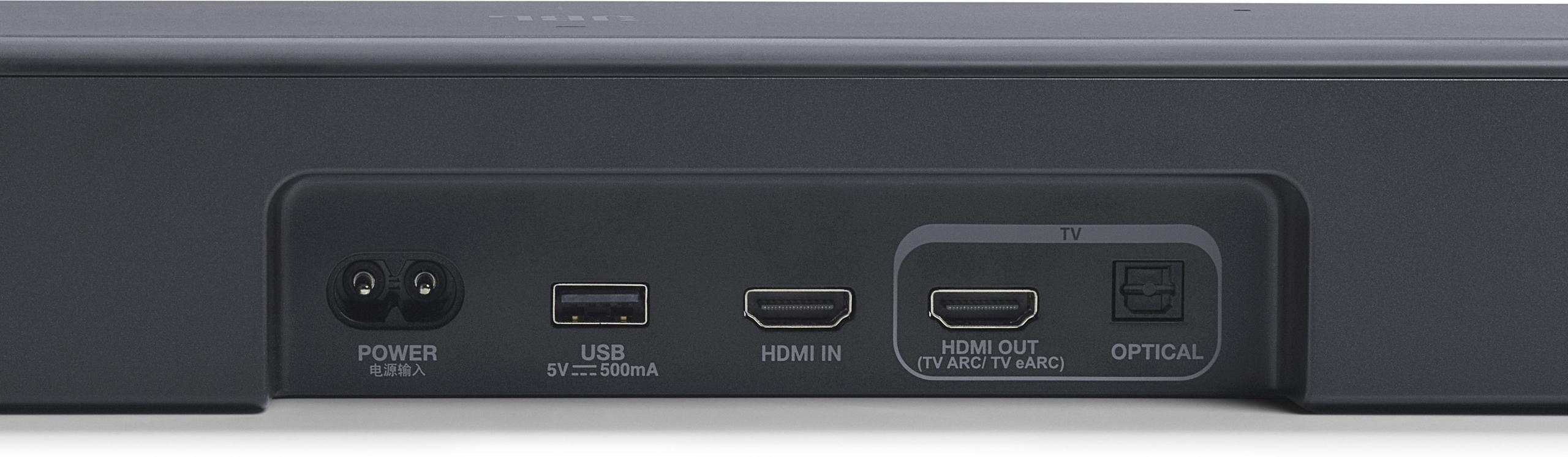
For physical connections, both include HDMI eARC (enhanced Audio Return Channel), which allows the soundbar to receive high-quality audio from your TV and control volume with your TV remote. The KEF also includes subwoofer outputs, both wired and wireless, giving you expansion options down the road.
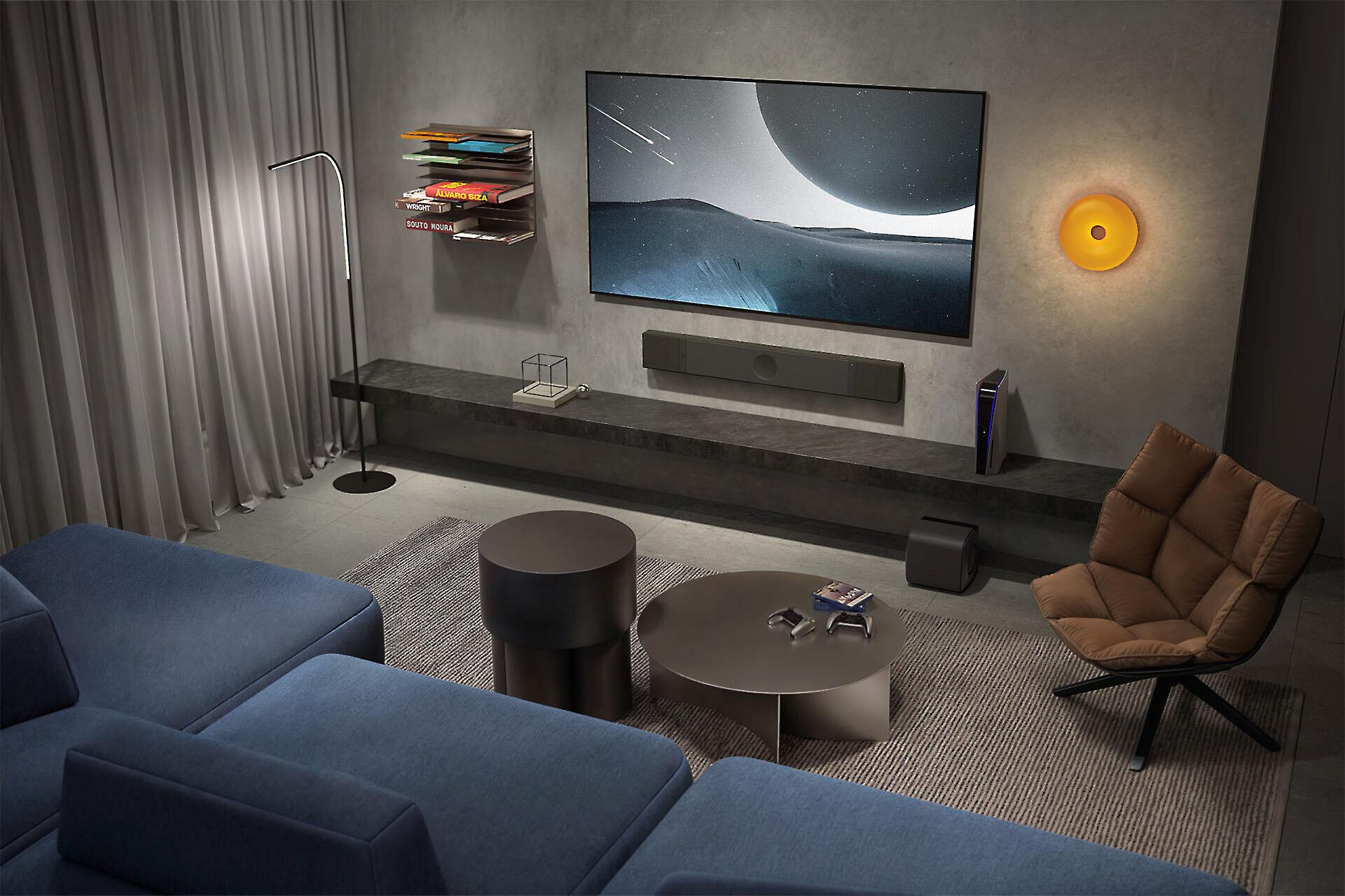
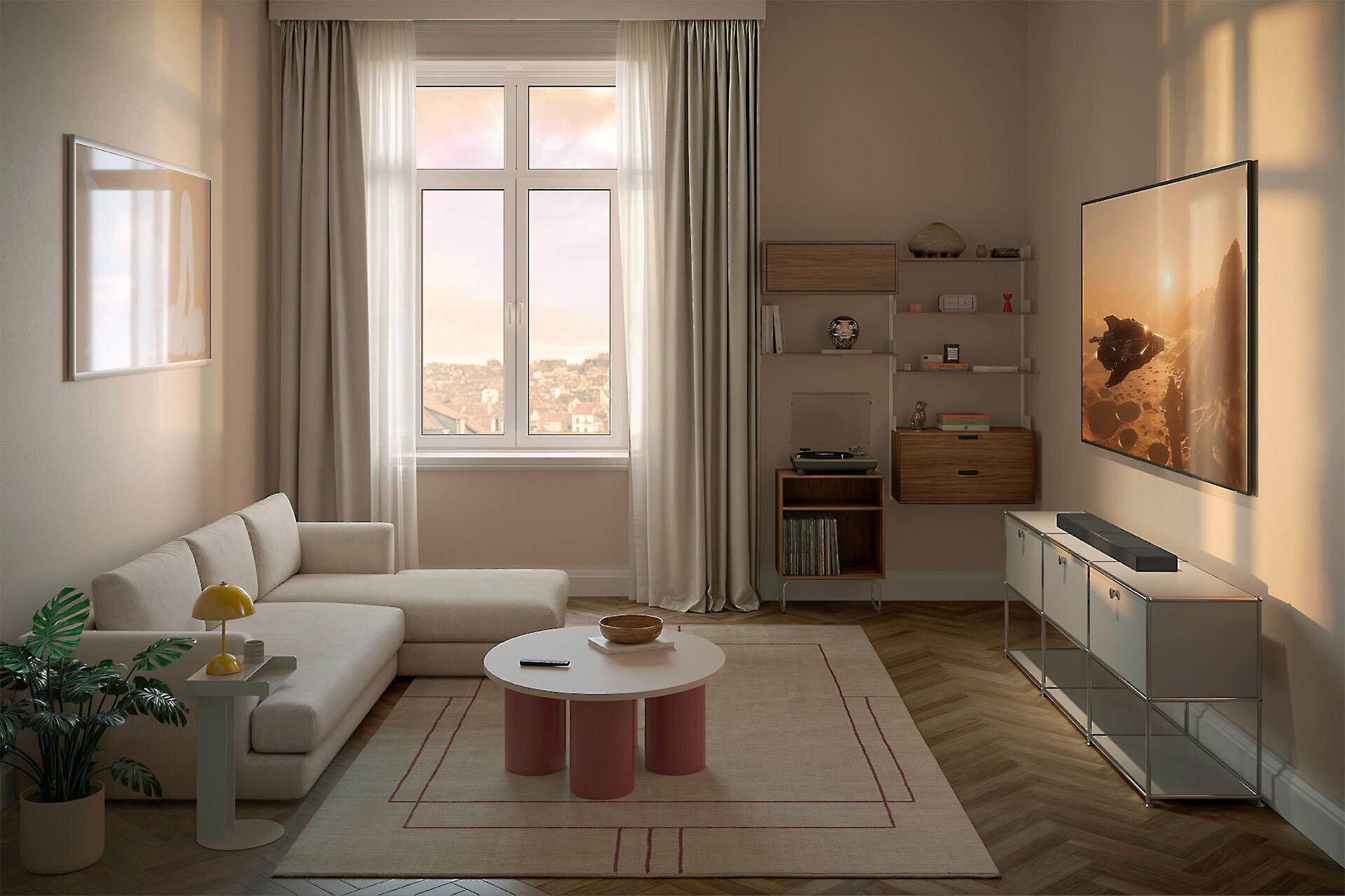
The physical presence of these soundbars reflects their different target audiences. The JBL's compact 32-inch width makes it suitable for TVs from 43 inches up to about 65 inches, and its modest height means it won't block your TV's remote sensor or look disproportionate in smaller rooms. The build quality is solid without being luxurious—exactly what you'd expect for the price point.
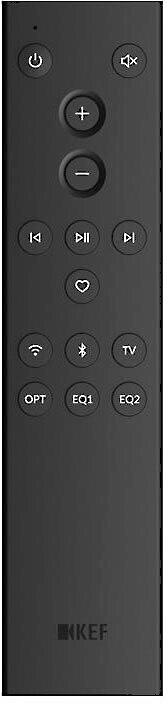
The KEF XIO commands attention with its 48-inch width and premium aluminum construction. The splash-proof fabric covering and sophisticated control interface make it clear this is a high-end product. However, that size means you'll want a 65-inch or larger TV to maintain visual proportions, and you need adequate furniture to support its 23-pound weight.
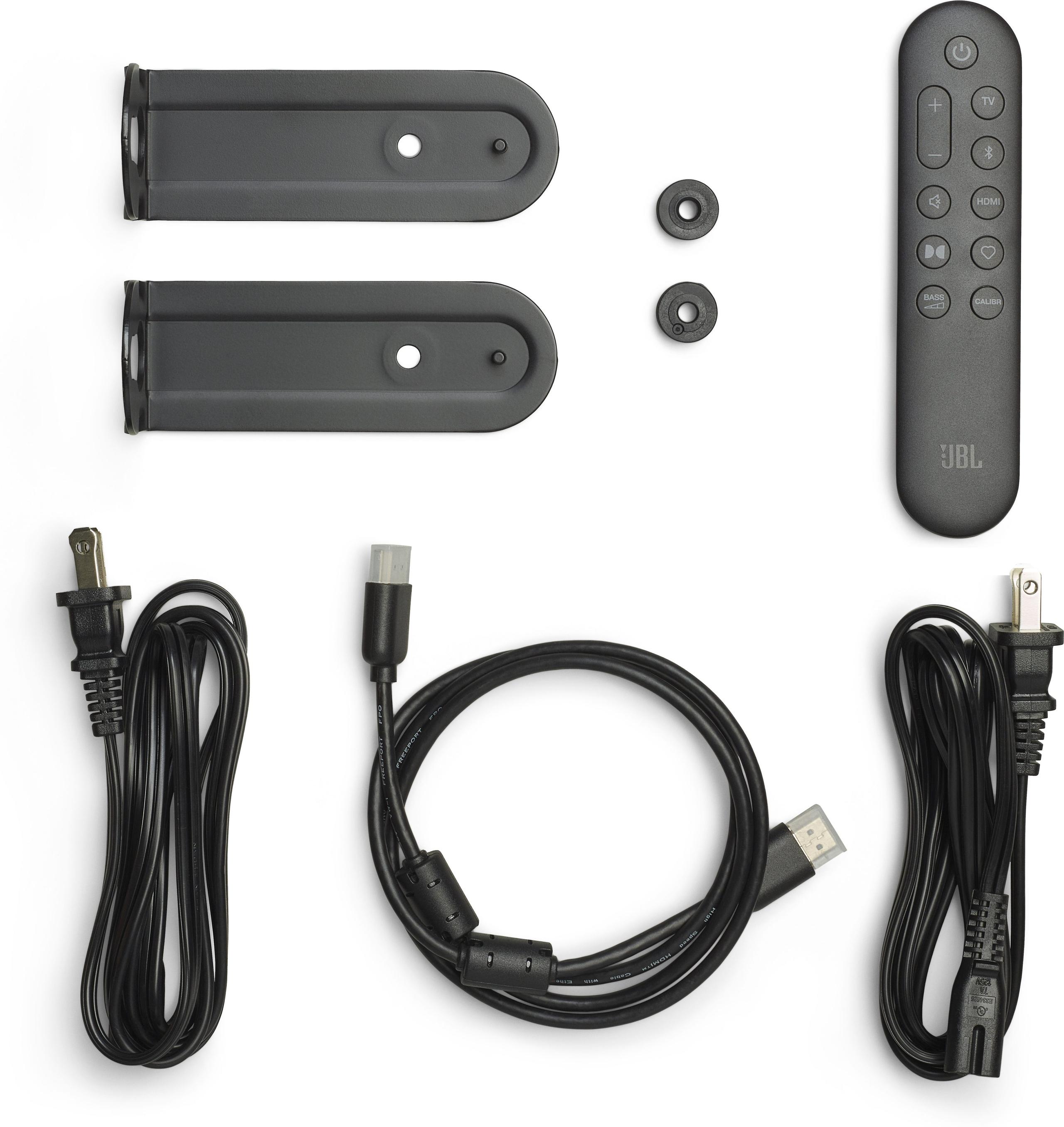
Setup complexity differs significantly too. The JBL is genuinely plug-and-play—connect the HDMI cable, plug in power, and you're ready to go. The KEF offers more sophisticated calibration through its Intelligent Placement Technology, which automatically adjusts for room acoustics, but getting the most from its advanced features requires more user involvement.
If you're building a dedicated home theater setup, the performance gap between these soundbars becomes even more pronounced. In a darkened room with movie theater dynamics, the KEF XIO's superior bass extension, clean amplification, and true height channels create an genuinely immersive experience that can rival dedicated component systems costing significantly more.
The JBL Bar 300 MK2 works well for casual movie watching in living rooms where ambient light and conversation are part of the experience. Its dialogue enhancement and solid dynamics handle most content admirably, though it may leave dedicated movie enthusiasts wanting more impact and immersion.
Room size plays a crucial role here. In spaces under 300 square feet, the JBL's limitations are less apparent, and its convenience factor becomes more valuable. In larger rooms (400+ square feet), the KEF's additional power and bass extension become necessary to properly fill the space with sound.
The 5x price difference between these soundbars represents one of the largest gaps you'll find in any product category, so it's worth examining what justifies that premium.
For $450, the JBL Bar 300 MK2 delivers about 80% of what most people want from a soundbar upgrade: dramatically better dialogue clarity, solid bass impact, modern streaming features, and the convenience of a single-box solution. It's an excellent value that will satisfy the vast majority of users who simply want their TV to sound significantly better without complexity or high cost.
The $2,500 KEF XIO targets the remaining 20% of performance that matters enormously to audio enthusiasts. That premium buys you reference-quality drivers, sophisticated amplification, true surround sound capabilities, and build quality designed to last decades. If you can hear the difference—and in direct comparison, most people can—the KEF delivers an experience that approaches what you'd get from a high-end component system.
Choosing between these soundbars ultimately comes down to matching your priorities with the right performance tier.
The JBL Bar 300 MK2 makes sense if you're upgrading from TV speakers and want significant improvement without complexity or high cost. It's perfect for apartments, secondary systems, or anyone who watches movies casually and streams music occasionally. The compact size and easy setup mean you can install it and forget about it while enjoying notably better sound.
The KEF XIO justifies its premium for serious audio enthusiasts who want the best possible sound from a single-box solution. If you find yourself adjusting volume constantly with your current setup, notice compression in loud movie scenes, or care about music reproduction quality, the KEF's advantages become worth the investment.
Consider your room size too—smaller spaces often can't reveal the KEF's full capabilities, while larger rooms expose the JBL's limitations. Your content mix matters as well: casual TV watching favors the JBL's convenience, while critical music listening strongly favors the KEF's superior fidelity.
Both soundbars excel in their intended roles, making this less about finding the "better" product and more about matching your specific needs and budget to the appropriate solution. The good news is that either choice will dramatically improve your audio experience compared to TV speakers—it's just a question of how far down the rabbit hole you want to go.
| JBL Bar 300 MK2 | KEF XIO |
|---|---|
| Price - The most significant factor in this comparison | |
| $450 (excellent value for basic upgrades) | $2,500 (premium pricing for audiophile quality) |
| Channel Configuration - Determines surround sound capabilities | |
| 5.0 virtual channels (no physical subwoofer) | 5.1.2 true channels (integrated sub + height speakers) |
| Power Output - Affects volume and dynamic range | |
| ~300W estimated (adequate for small-medium rooms) | 820W total (fills large rooms without distortion) |
| Bass Extension - Critical for movie impact and music fullness | |
| ~50Hz (decent punch, misses deepest frequencies) | 34Hz (true subwoofer-level bass without separate unit) |
| Dolby Atmos Implementation - Height effects quality | |
| Virtual processing via MultiBeam 3.0 | Physical up-firing drivers for true overhead sound |
| Driver Technology - Determines audio clarity and precision | |
| Standard drivers with bass ports | Uni-Q MX concentric drivers + P185 force-canceling woofers |
| Size and Weight - Room compatibility and setup requirements | |
| 32.3" wide, 5.5 lbs (fits most TV stands) | 47.6" wide, 23 lbs (requires larger TV and sturdy furniture) |
| Music Performance - Important for streaming and casual listening | |
| Adequate for casual use, bright sound signature | Audiophile-grade with neutral tonal balance |
| Streaming Quality - Maximum audio resolution supported | |
| Standard quality streaming services | High-res up to 24-bit/384kHz for studio-quality files |
| Expandability - Future upgrade options | |
| None (cannot add subwoofer or additional speakers) | Wireless subwoofer output via KEF XIO KW2 adapter |
| Room Calibration - Automatic sound optimization | |
| Basic auto-tuning | Intelligent Placement Technology with advanced room correction |
| Best For - Target user and use cases | |
| TV upgrades, small rooms, budget-conscious buyers | Music lovers, large rooms, home theater enthusiasts |
The JBL Bar 300 MK2 at $450 offers exceptional value for most users, delivering 80% of what people want from a soundbar upgrade at just 20% of premium pricing. The KEF XIO at $2,500 justifies its premium cost only if you're an audio enthusiast who can appreciate reference-quality drivers, true surround sound, and audiophile-grade music reproduction.
The fundamental difference is philosophy: the JBL Bar 300 MK2 focuses on practical improvements like clear dialogue and convenience, while the KEF XIO prioritizes uncompromising audio quality with advanced driver technology and true surround sound capabilities.
The JBL Bar 300 MK2 is ideal for small rooms under 300 square feet. Its compact 32-inch width fits most TV setups, and the performance limitations are less noticeable in smaller spaces. The KEF XIO's advantages become more apparent in larger rooms where its superior power and bass extension are needed.
Neither soundbar requires a separate subwoofer, but they handle bass differently. The JBL Bar 300 MK2 cannot be expanded with additional speakers. The KEF XIO has integrated bass extending to 34Hz and can be paired with KEF subwoofers for even deeper bass if desired.
Both excel at dialogue but use different approaches. The JBL Bar 300 MK2 uses PureVoice 2.0 processing to enhance speech, while the KEF XIO relies on superior Uni-Q MX drivers that naturally produce clear, intelligible dialogue without artificial processing.
The KEF XIO is worth the premium if you're serious about audio quality, listen to music critically, have a large room, or want true Dolby Atmos with physical height speakers. For casual TV watching and basic upgrades, the JBL Bar 300 MK2 provides excellent value without the premium cost.
The KEF XIO is significantly better for music, offering audiophile-grade performance with neutral tonal balance, precise stereo imaging, and full-range reproduction. The JBL Bar 300 MK2 handles music adequately for casual listening but has a bright sound signature that can become fatiguing.
The JBL Bar 300 MK2 uses virtual Dolby Atmos processing to simulate height effects, which creates good width but limited overhead placement. The KEF XIO features true 5.1.2 Dolby Atmos with physical up-firing drivers that bounce sound off your ceiling for genuine three-dimensional audio.
The JBL Bar 300 MK2 is genuinely plug-and-play with simple HDMI connection and automatic optimization. The KEF XIO offers more sophisticated setup with Intelligent Placement Technology for room calibration, but accessing its full potential requires more user involvement.
Both support major streaming services, but the JBL Bar 300 MK2 focuses on ease of use with comprehensive app support and multi-room capabilities. The KEF XIO offers superior streaming quality with high-resolution audio support up to 24-bit/384kHz for studio-quality music files.
For dedicated home theater use, the KEF XIO provides cinema-quality performance with true surround sound, powerful bass extension to 34Hz, and clean amplification that handles movie dynamics without compression. The JBL Bar 300 MK2 works well for casual movie watching but may leave home theater enthusiasts wanting more impact and immersion.
The JBL Bar 300 MK2 offers no expansion options—it's a complete system that cannot be upgraded with additional speakers. The KEF XIO can be enhanced with KEF subwoofers via wireless connection, providing a future upgrade path for even better bass performance.
We've done our best to create useful and informative comparisons to help you decide what product to buy. Our research uses advanced automated methods to create this comparison and perfection is not possible - please contact us for corrections or questions. These are the sites we've researched in the creation of this article: homecinemachoice.com - retailspecs.com - hometechnologyreview.com - whathifi.com - news.jbl.com - engadget.com - crutchfield.com - harmanaudio.com - techradar.com - bestbuy.com - jbl.com - sweech.co.ke - jbl.com - jbl.com.sg - mm.jbl.com - abcwarehouse.com - harmanaudio.com - sweetwater.com - ro.harmanaudio.com - dell.com - jbl.co.nz - blog.son-video.com - residentialsystems.com - whathifi.com - audioadvice.com - crutchfield.com - homecrux.com - techradar.com - youtube.com - us.kef.com - gramophone.com - cepro.com - audioxpress.com - musicdirect.com - gramophone.com - us.kef.com - crutchfield.com - hifipig.com - bestbuy.com - listenup.com - bestbuy.com - bestbuy.com - listenup.com

Privacy Policy
Terms and Conditions - Affiliate Policy
Home Security
© Copyright 2008-2026.
11816 Inwood Rd #1211, Dallas, TX 75244