

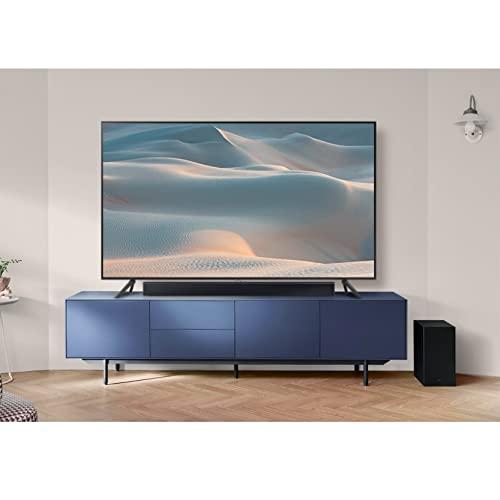
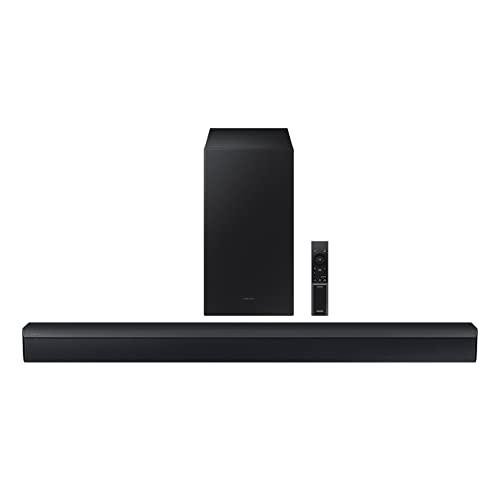
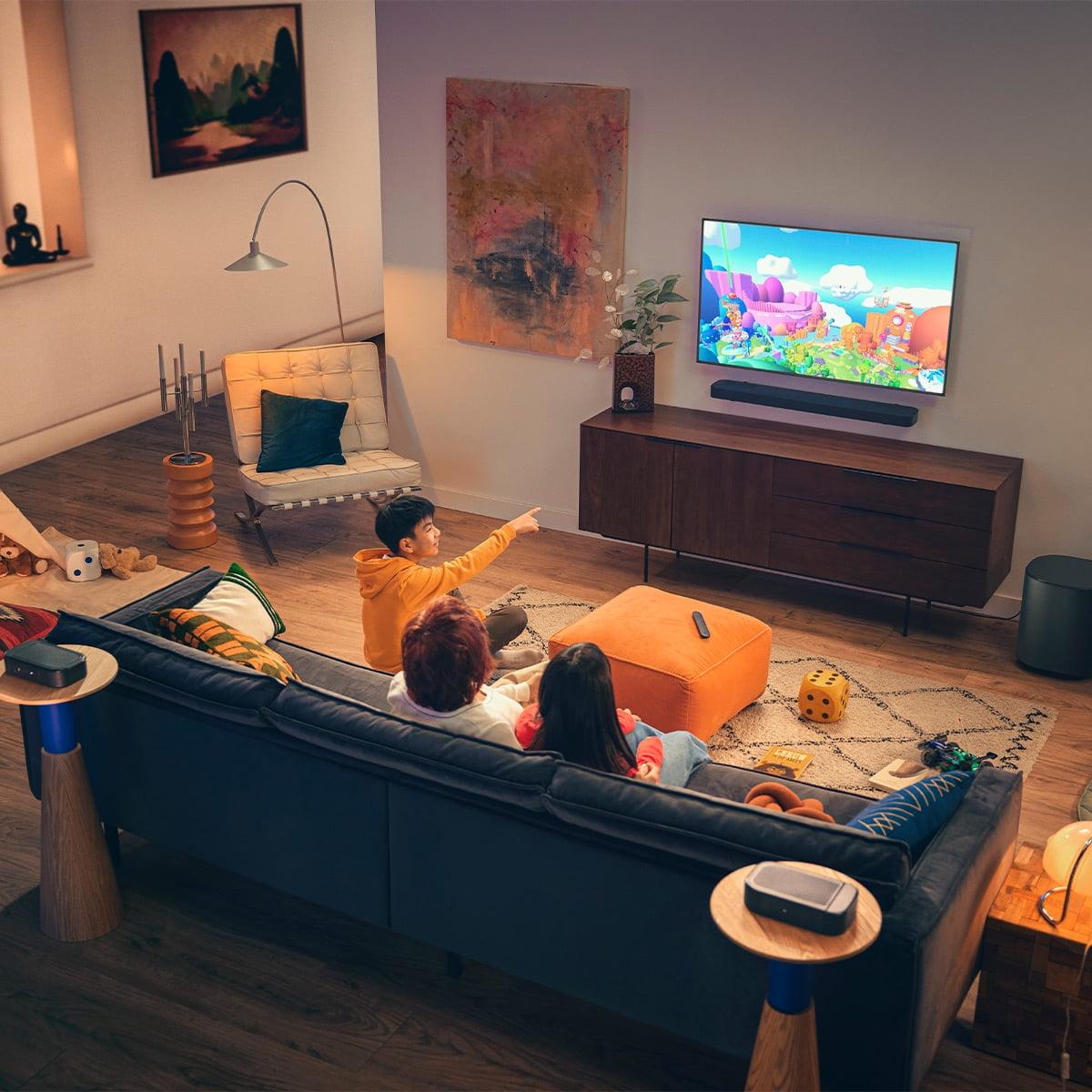
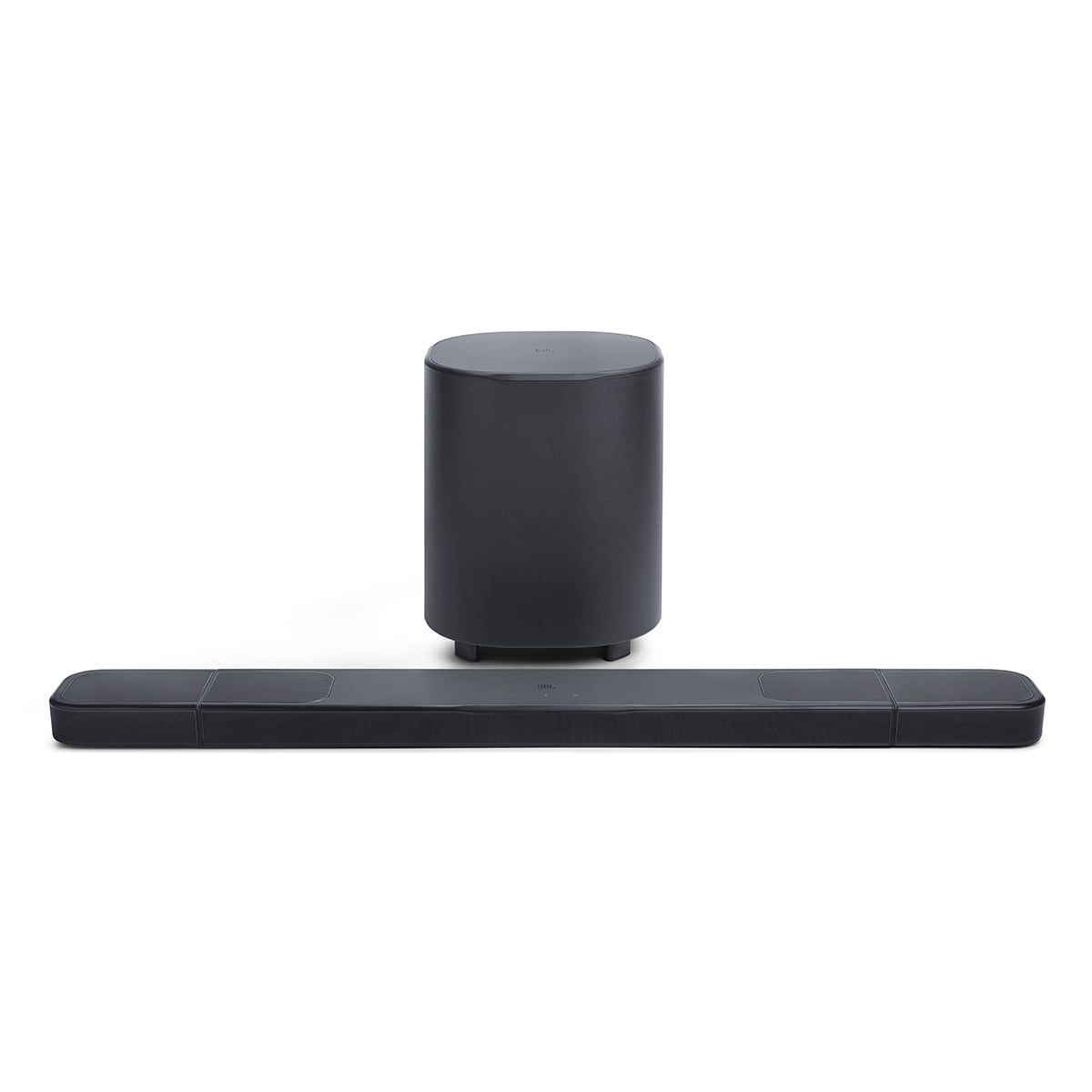
When your TV's built-in speakers sound like they're coming from inside a cereal box, it's time to consider a soundbar upgrade. But with options ranging from budget-friendly bars to premium home theater systems, choosing the right one can feel overwhelming. Today, we're comparing two soundbars that couldn't be more different: the affordable Samsung HW-C450 and the premium JBL Bar 1000 MK2.
These products represent opposite ends of the soundbar spectrum, and understanding their differences will help you figure out exactly what you need—and what you don't.
Before diving into specifics, let's establish what matters most in soundbar performance. The key factors that determine whether you'll love or hate your soundbar come down to a few critical areas: how well it handles dialogue, how convincingly it creates surround sound, how much bass impact it delivers, and how easily it integrates with your existing setup.
Dialogue clarity is absolutely crucial because if you can't understand what characters are saying, nothing else matters. This depends on dedicated center channel processing or smart algorithms that can boost voice frequencies without making everything sound harsh.
Surround sound comes in two flavors: virtual processing that uses clever audio tricks to make stereo sound feel wider, and true surround using multiple physical speakers placed around your room. The difference is like watching a movie on your phone versus in an actual theater.
Bass performance determines whether explosions feel impactful or just sound like loud noise. It's not just about volume—good bass has texture and definition, letting you feel the rumble of a motorcycle engine or the subtle low-end in a musical score.
Setup complexity varies dramatically between products. Some soundbars work perfectly straight out of the box, while others require careful speaker placement and app-based calibration to reach their potential.
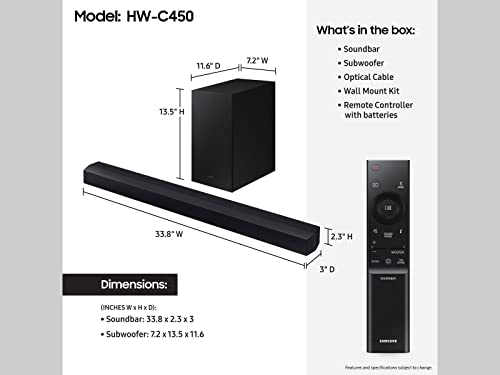
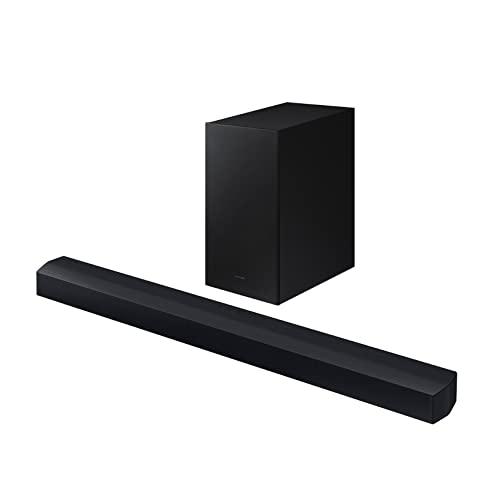
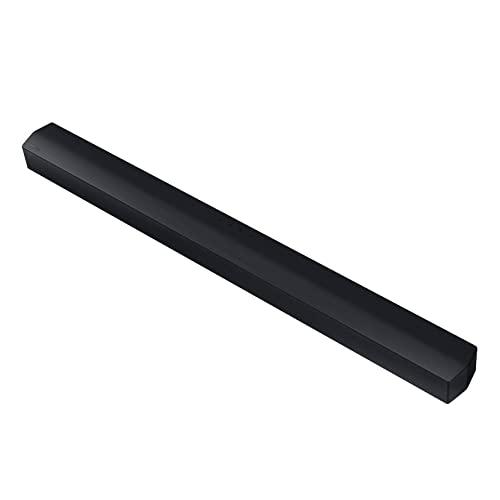
The Samsung HW-C450, released in 2023, represents Samsung's entry-level soundbar philosophy: deliver a meaningful audio upgrade over TV speakers without overwhelming users with complexity or cost. It's a complete 2.1-channel system (meaning left/right channels plus a subwoofer) that includes everything you need in one affordable package.
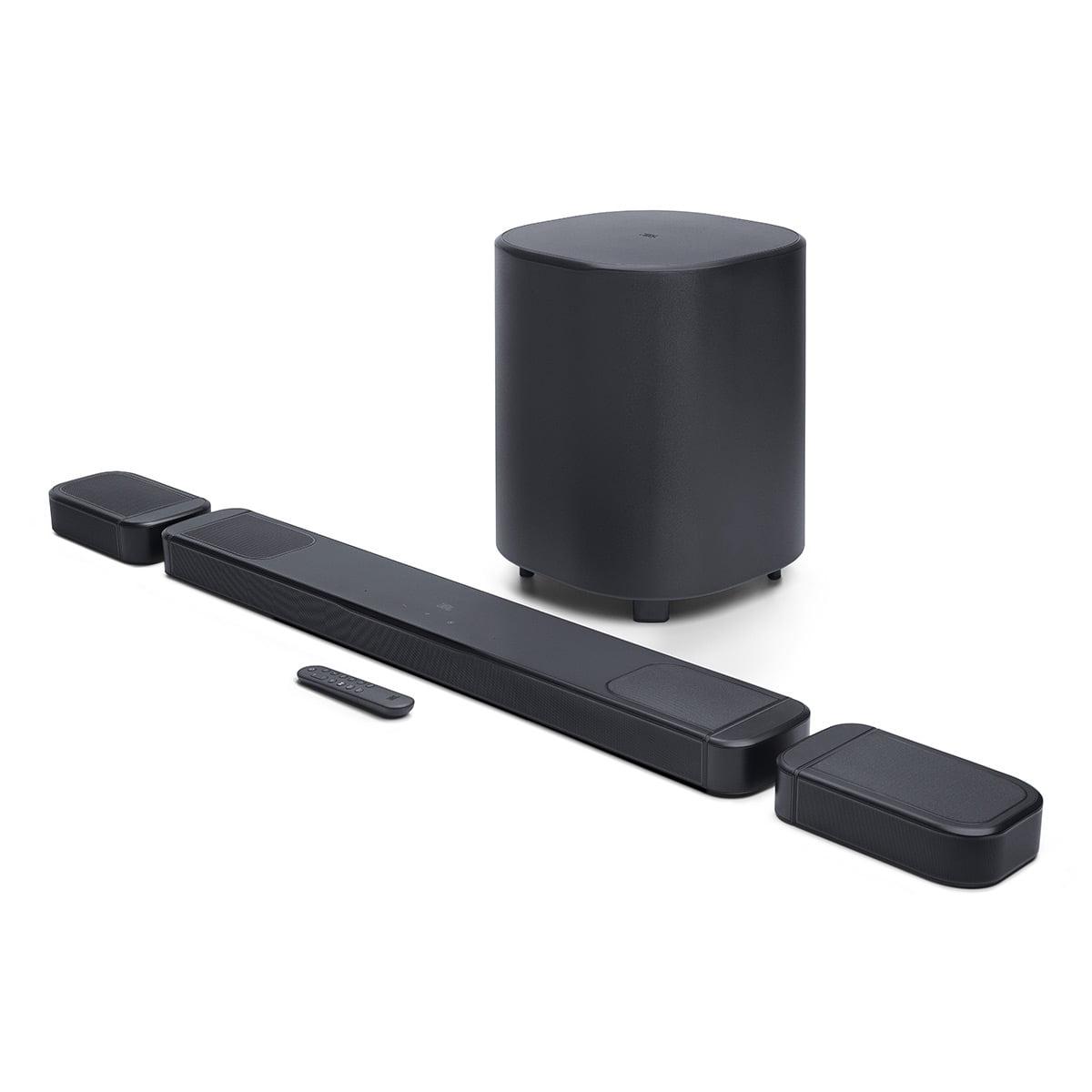
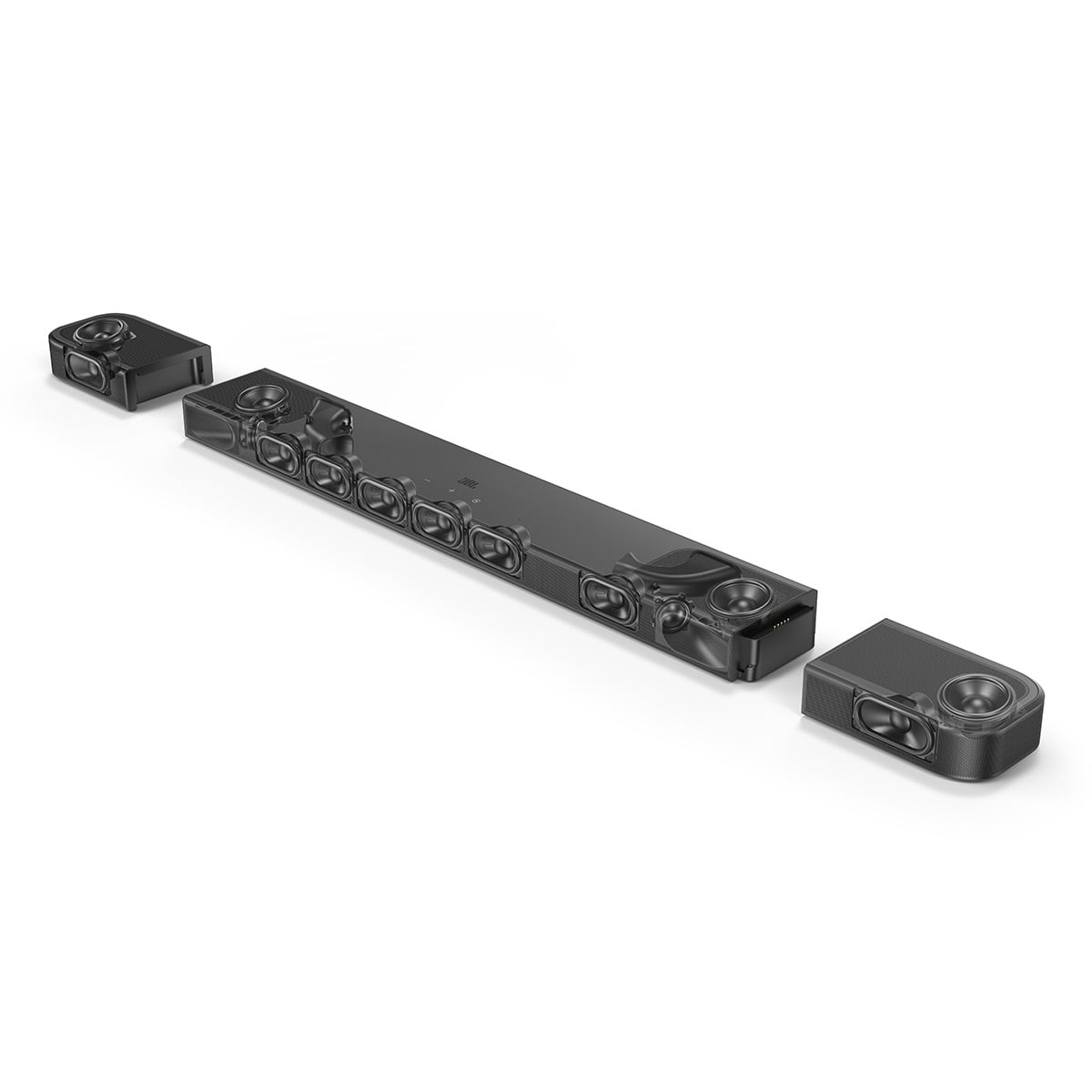
The JBL Bar 1000 MK2, launched in 2025, takes the opposite approach. This is JBL's answer to the question: "What if we could deliver true home theater sound without requiring a full component system?" It's a 7.1.4-channel powerhouse that uses innovative detachable rear speakers to create authentic surround sound.
The "MK2" designation indicates this is JBL's second-generation design, incorporating user feedback and technological improvements from the original Bar 1000. The most significant upgrade is extended battery life for the detachable speakers—jumping from 8 to 10 hours—plus enhanced wireless stability and refined acoustic tuning.
The power difference between these systems is staggering. The Samsung HW-C450 operates with 65 watts total—25 watts for the main soundbar and 40 watts for its wireless subwoofer. The JBL Bar 1000 MK2 delivers 960 watts total, with power distributed across multiple dedicated amplifiers.
But raw wattage numbers don't tell the whole story. What matters is how that power translates into real-world performance in your room.
The Samsung's 65 watts work perfectly for small to medium rooms where you're sitting 8-12 feet from the TV. Our research into user reviews consistently shows that owners are impressed by how much better dialogue sounds compared to their TV's built-in speakers. The system makes voices clear and present without being harsh or fatiguing during long viewing sessions.
However, when you try to fill a large living room or want that chest-thumping bass during action movies, the Samsung's limitations become apparent. Users report that at higher volumes, the system starts to sound compressed and loses the clarity that makes it appealing at moderate levels.
The JBL's 960 watts, distributed across multiple amplifiers, handles large rooms effortlessly. More importantly, this power separation means high-frequency drivers handling dialogue work independently from the woofers managing explosions and bass effects. The result is maintained clarity even during the most complex action sequences where lesser systems would muddle everything together.
This is where the philosophical difference between these products becomes most apparent. The Samsung HW-C450 uses virtual surround processing through DTS Virtual:X technology. This system analyzes stereo audio and uses psychoacoustic tricks—basically exploiting how your brain interprets sound—to create the impression of width and height without additional speakers.
DTS Virtual:X is genuinely effective at making soundtracks feel "bigger" than standard stereo. Movies sound more enveloping, and you'll notice effects seeming to come from beyond the physical boundaries of the soundbar. However, this virtual approach has limitations. You can't close your eyes and accurately point to where specific sounds are coming from—it's more about general ambiance than precise positioning.
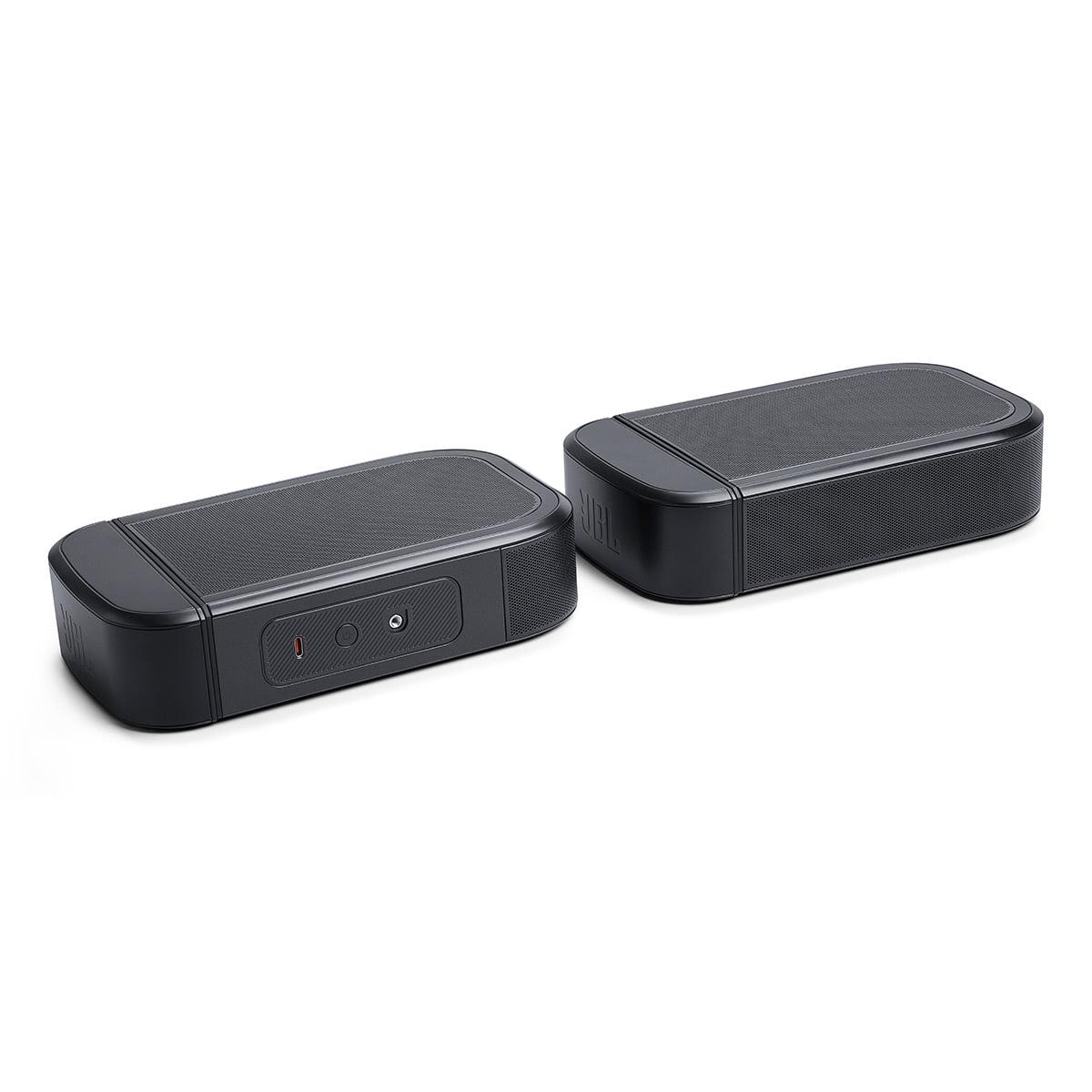
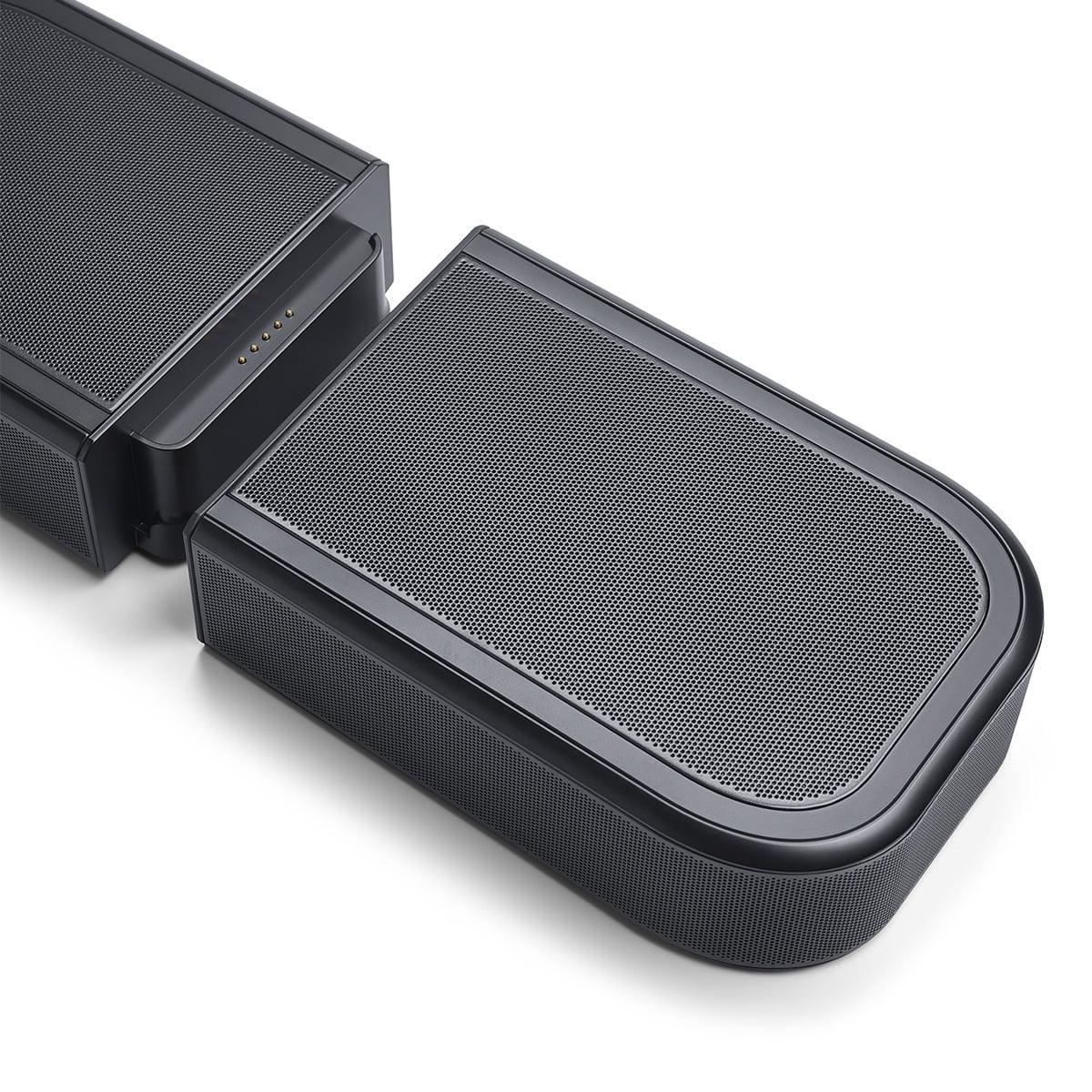
The JBL Bar 1000 MK2 takes a fundamentally different approach with its detachable rear speakers. These wireless modules can be placed behind your seating area, creating true 360-degree surround sound. Combined with four up-firing drivers (two in the main bar, one in each rear speaker) that bounce sound off your ceiling for height effects, this system delivers authentic Dolby Atmos performance.
The difference is transformative. During our evaluation of expert reviews, audiophiles consistently note that properly positioned, the JBL system allows listeners to pinpoint sound sources with their eyes closed. Rain falls from above, helicopters circle overhead, and dialogue clearly comes from specific character positions on screen.
However, this superior performance requires proper setup. The rear speakers need to be positioned behind and slightly above your listening position, which means considering furniture placement and ensuring clear line-of-sight to the main bar for wireless connectivity.
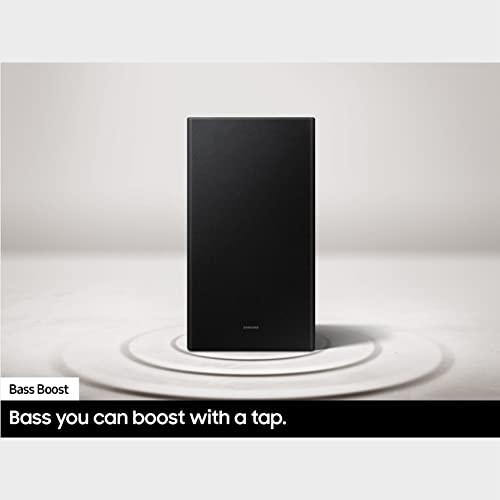
The subwoofer comparison reveals another significant performance gap. The Samsung HW-C450 includes a wireless subwoofer, but it's relatively compact with moderate power output. User reviews consistently praise how much better movies and music sound compared to TV speakers alone, but note that the bass feels more like gentle reinforcement than impactful presence.
This works perfectly for apartment living or late-night viewing where overpowering bass would be problematic. The Samsung's subwoofer adds warmth and fullness without rattling windows or annoying neighbors. It's particularly effective for dialogue-heavy content like dramas and comedies where subtle bass enhancement improves the overall experience without becoming distracting.
The JBL Bar 1000 MK2 includes a 10-inch subwoofer powered by 300 watts of dedicated amplification. This isn't just about volume—it's about frequency extension and impact. The system reaches down to 33Hz, which means it can reproduce the sub-sonic rumble that creates physical sensations during action sequences.
Expert reviews highlight how this bass authority transforms movie watching. During scenes with collapsing buildings, motorcycle engines, or deep musical scores, the JBL creates the kind of visceral impact that adds genuine tension and excitement. This is particularly noticeable with streaming content that includes Dolby Atmos soundtracks, where bass effects are carefully mixed to complement the height channels.
For music listening, the bass difference becomes even more apparent. Electronic music, hip-hop, and orchestral pieces benefit enormously from the JBL's ability to reproduce subtle low-frequency textures that smaller subwoofers simply can't handle.
The Samsung HW-C450 keeps connectivity deliberately simple. It connects to your TV via optical digital audio—a single cable that carries all the sound information. There's also Bluetooth for streaming music from your phone and USB for playing files directly from a flash drive.
Notably, the Samsung has no HDMI connectivity at all. This means no 4K video pass-through, no advanced audio format support, and no integration with modern gaming consoles that prefer HDMI connections. For many users, this simplicity is actually a benefit—there's no confusion about which input to use or complex setup procedures.
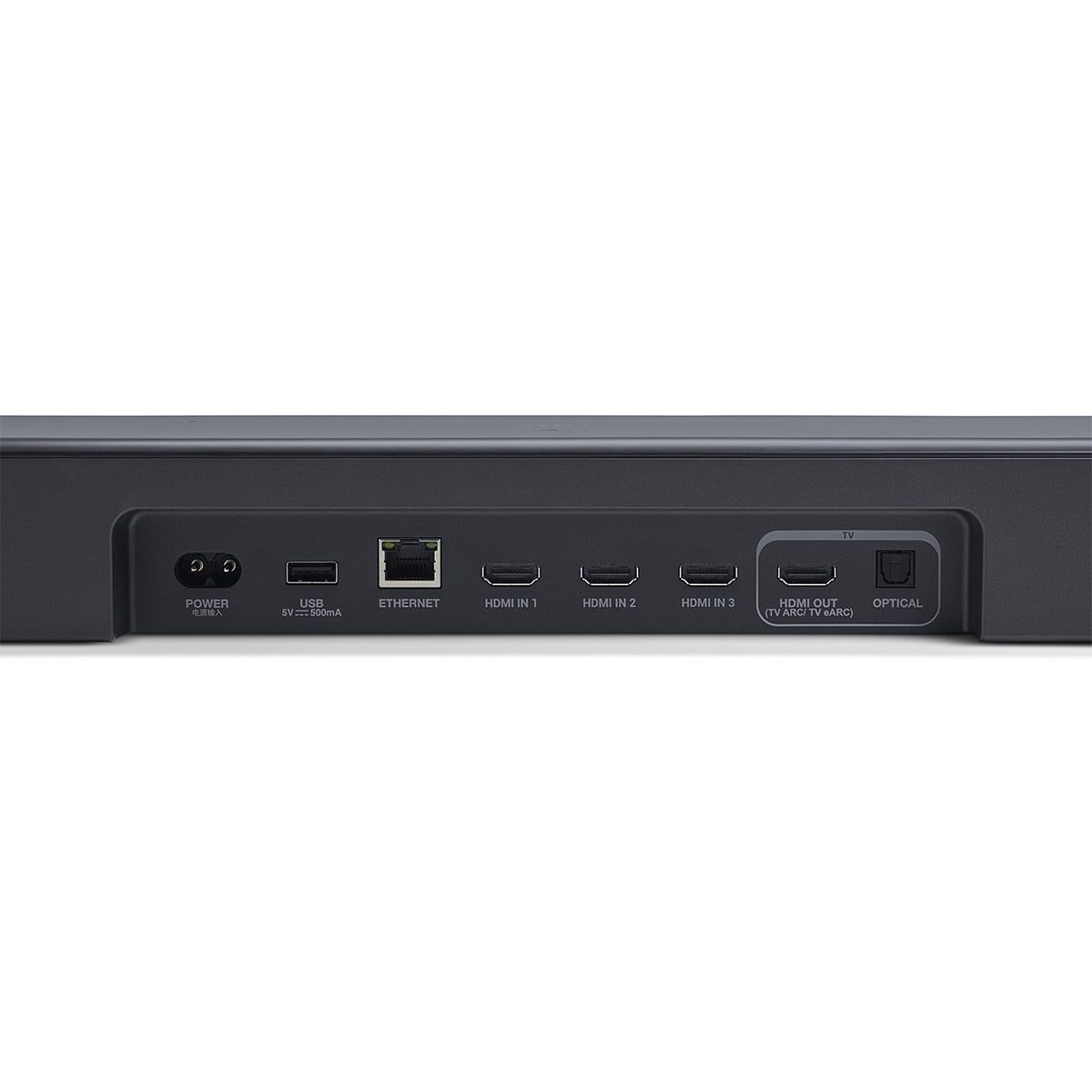
The JBL Bar 1000 MK2 includes three HDMI inputs plus eARC (enhanced Audio Return Channel) output, making it a complete HDMI hub. This supports 4K Dolby Vision video pass-through, meaning you can connect multiple devices to the soundbar and have it handle both audio processing and video routing to your TV.
The JBL also includes comprehensive streaming capabilities: AirPlay 2 for Apple devices, Chromecast for Android, Spotify Connect for direct music streaming, and Roon Ready for audiophile-grade music management. This connectivity flexibility means the system works seamlessly whether you're watching Netflix, gaming on a PlayStation 5, or streaming hi-res music from your phone.
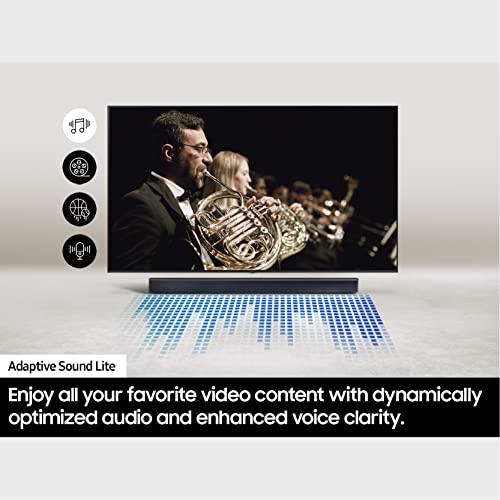
Both systems include intelligent features, but at very different levels of sophistication. The Samsung HW-C450 offers Adaptive Sound Lite, which automatically adjusts audio settings based on what you're watching. This feature analyzes whether you're watching news, movies, or music content and optimizes the sound accordingly.
The Voice Enhance mode specifically targets dialogue frequencies, making conversations clearer without making everything else sound harsh. Night Mode compresses the dynamic range—reducing the difference between quiet and loud sounds—so you can watch late-night movies without disturbing others.
These features work transparently in the background, requiring no user intervention beyond the initial setup. For users who want better sound without thinking about audio settings, this approach is ideal.
The JBL Bar 1000 MK2 includes PureVoice 2.0, an AI-powered system that continuously monitors ambient sound levels and automatically adjusts dialogue clarity. This is more sophisticated than basic voice enhancement—it adapts in real-time to your room's acoustics and the specific content you're watching.
The system also offers a unique Night Listening mode where you can mute the main soundbar and subwoofer entirely, delivering audio only through the detachable rear speakers positioned near your ears. This allows for completely private listening without any sound escaping to disturb others.
The JBL One app provides detailed control over EQ settings, room calibration, and sound modes. While this offers more customization, it also requires users to invest time in setup and optimization to achieve the best results.
For small apartments or condos, the Samsung HW-C450 excels. Its moderate power output won't overwhelm small spaces, and the virtual surround processing creates adequate width enhancement for close seating distances. The included subwoofer provides bass reinforcement without the room-shaking output that would annoy neighbors.
Users in these situations consistently report satisfaction with dialogue clarity during TV shows and adequate immersion during movies. The system transforms the audio experience without requiring furniture rearrangement or complex setup procedures.
For large living rooms and dedicated home theaters, the JBL Bar 1000 MK2 demonstrates its superiority. The 960-watt power output fills large spaces effortlessly, while the detachable rear speakers create convincing surround effects at typical seating distances of 10-15 feet from the screen.
Expert evaluations consistently note that the JBL system maintains audio clarity and dynamic impact even in acoustically challenging rooms with high ceilings or open floor plans. The physical surround speakers overcome the limitations of virtual processing in large spaces where psychoacoustic tricks become less effective.
For gaming applications, both systems offer advantages in different scenarios. The Samsung HW-C450 includes a dedicated Game Mode that removes background noise and optimizes directional audio cues. This helps with competitive gaming where hearing footsteps or gunfire direction provides tactical advantages.
However, the JBL Bar 1000 MK2 delivers superior gaming immersion through its true surround sound capabilities. Racing games benefit from the authentic spatial audio that lets you hear approaching cars from specific directions. First-person shooters become more engaging when explosions and gunfire have proper positional accuracy.
At the time of writing, the Samsung HW-C450 represents exceptional value in the budget soundbar category. You're getting a complete 2.1-channel system with wireless subwoofer for a fraction of what premium systems cost. The included wall mounting hardware and straightforward setup mean no additional expenses or complications.
This value proposition works particularly well for users upgrading from TV speakers for the first time. The improvement in dialogue clarity and bass presence is immediately noticeable, providing significant satisfaction relative to the investment.
The JBL Bar 1000 MK2 commands premium pricing but delivers capabilities that would require much more expensive component systems to match. Professional reviews consistently note that the system competes with $2,000+ separates setups while maintaining the convenience of an integrated soundbar solution.
The detachable rear speakers alone represent significant value—they function as high-quality Bluetooth speakers when removed from the system, essentially providing portable audio capabilities included in the purchase price. This flexibility adds utility beyond the primary home theater application.
The Samsung HW-C450 uses established technology that works reliably but offers limited expandability. The virtual surround processing is mature and effective within its constraints, but the system's capabilities are essentially fixed at purchase.
For users who want a straightforward audio upgrade without consideration of future expansion, this approach makes perfect sense. The system will continue performing its intended function for years without requiring updates or additional components.
The JBL Bar 1000 MK2 incorporates newer technologies like Dolby Atmos processing, advanced wireless connectivity, and AI-powered audio optimization. These technologies continue evolving through firmware updates, meaning the system's capabilities can improve over time.
The comprehensive HDMI connectivity also provides better future-proofing for new video standards and audio formats. As streaming services expand their Dolby Atmos content libraries, the JBL system will be able to take full advantage of these improvements.
Choose the Samsung HW-C450 if you're looking for a dramatic improvement over TV speakers without complexity or high cost. It's ideal for small to medium rooms, primarily dialogue-heavy content, and users who want immediate satisfaction with minimal setup effort.
This system makes particular sense for secondary viewing areas like bedrooms or kitchens, where elaborate surround sound would be overkill. It's also perfect for apartment dwellers who need audio improvement but must consider noise restrictions.
Choose the JBL Bar 1000 MK2 if you're passionate about audio quality and want a system that can grow with your interests. It's designed for large rooms, movie enthusiasts, and users who view their soundbar as the foundation of a serious home theater system.
The investment makes most sense for users who regularly watch Dolby Atmos content, have the space to properly position rear speakers, and value the flexibility of detachable components for multiple listening scenarios.
The fundamental decision comes down to your priorities: immediate audio improvement at minimal cost versus transformative performance that justifies premium pricing. Both products excel in their respective categories, but they serve completely different user needs and expectations.
Understanding these differences ensures you'll choose the system that matches your space, budget, and audio ambitions—leading to years of satisfaction rather than buyer's remorse.
| Samsung HW-C450 | JBL Bar 1000 MK2 |
|---|---|
| Channel Configuration - Determines surround sound capability | |
| 2.1 channels (virtual surround only) | 7.1.4 channels (true physical surround with height) |
| Total System Power - Affects volume and room-filling capability | |
| 65W total (suitable for small-medium rooms) | 960W total (fills large rooms with authority) |
| Surround Sound Method - Virtual processing vs physical speakers | |
| DTS Virtual:X creates width illusion | Physical detachable rear speakers + 4 up-firing drivers |
| Subwoofer - Critical for bass impact in movies and music | |
| Standard wireless sub (adequate bass reinforcement) | 10" wireless sub with 300W amp (room-shaking impact) |
| Height Effects/Dolby Atmos - For overhead sound immersion | |
| No height channels or Atmos support | True Dolby Atmos with 4 physical up-firing speakers |
| Connectivity Options - Determines device compatibility | |
| Optical input only, Bluetooth, USB | 3x HDMI + eARC, Wi-Fi streaming, Bluetooth 5.3 |
| Video Pass-Through - Important for modern gaming/streaming | |
| None (audio-only connection) | 4K Dolby Vision and HDR10+ support |
| Smart Features - Convenience and audio optimization | |
| Basic voice enhancement and adaptive sound | AI-powered PureVoice 2.0, app control, room calibration |
| Setup Complexity - Time and effort required | |
| Plug-and-play with single optical cable | Requires rear speaker positioning and app setup |
| Rear Speakers - Creates true surround vs virtual | |
| None included (virtual surround only) | Detachable wireless with 10-hour batteries |
| Best Room Size - Where each system performs optimally | |
| Small to medium rooms (under 200 sq ft) | Large rooms (300+ sq ft) with proper speaker placement |
| Target User - Who benefits most from each approach | |
| Budget-conscious first-time upgraders | Home theater enthusiasts seeking premium performance |
The Samsung HW-C450 is ideal for small rooms due to its moderate 65W power output that won't overwhelm compact spaces. Its virtual surround processing works effectively at close seating distances, and the included subwoofer provides adequate bass without disturbing neighbors in apartments or condos.
The key difference is surround sound approach: the Samsung HW-C450 uses virtual processing to simulate surround effects from a 2.1-channel system, while the JBL Bar 1000 MK2 creates true 7.1.4 surround sound using detachable wireless rear speakers and up-firing drivers for authentic Dolby Atmos.
The JBL Bar 1000 MK2 delivers significantly superior bass with its 10-inch subwoofer powered by 300W of dedicated amplification, extending down to 33Hz for room-shaking impact. The Samsung HW-C450 provides adequate bass reinforcement but lacks the authority for deep, impactful low-end.
The detachable rear speakers are essential for the JBL Bar 1000 MK2's true surround sound experience. They can be removed and used as portable Bluetooth speakers, but for home theater use, proper rear placement creates the immersive 360-degree audio that justifies the system's premium positioning.
The Samsung HW-C450 offers plug-and-play simplicity with just a single optical cable connection to your TV. The JBL Bar 1000 MK2 requires more complex setup including rear speaker positioning, HDMI connections, and app-based room calibration for optimal performance.
Yes, both systems work with all TV brands. The Samsung HW-C450 connects via optical input, while the JBL Bar 1000 MK2 offers multiple connection options including HDMI eARC and optical. However, Samsung TV owners get additional integration features with the Samsung HW-C450.
The JBL Bar 1000 MK2 excels in large rooms with its 960W total power output and true surround sound capabilities. The physical rear speakers overcome the limitations of virtual processing in spacious areas, while the Samsung HW-C450 is better suited for rooms under 200 square feet.
Both systems improve dialogue clarity significantly. The Samsung HW-C450 uses Voice Enhance mode and Adaptive Sound Lite, while the JBL Bar 1000 MK2 features AI-powered PureVoice 2.0 that continuously adapts to content and room acoustics for more sophisticated voice processing.
Only the JBL Bar 1000 MK2 supports true Dolby Atmos with four physical up-firing drivers that bounce sound off your ceiling for height effects. The Samsung HW-C450 uses DTS Virtual:X to simulate height effects but cannot process actual Dolby Atmos content.
Both include gaming optimizations: the Samsung HW-C450 has a dedicated Game Mode that reduces background noise and enhances directional cues, while the JBL Bar 1000 MK2 provides superior gaming immersion through true surround sound positioning and low-latency HDMI connections.
Value depends on your needs: the Samsung HW-C450 provides exceptional value for budget-conscious buyers seeking a significant upgrade over TV speakers. The JBL Bar 1000 MK2 offers premium value by delivering performance comparable to much more expensive component systems while maintaining soundbar convenience.
The Samsung HW-C450 is a fixed system with no expansion options beyond its included components. The JBL Bar 1000 MK2 offers more flexibility through its detachable speakers and potential integration with additional JBL ecosystem products, making it a better foundation for future home theater growth.
We've done our best to create useful and informative comparisons to help you decide what product to buy. Our research uses advanced automated methods to create this comparison and perfection is not possible - please contact us for corrections or questions. These are the sites we've researched in the creation of this article: e-catalog.com - alibaba.com - smart.dhgate.com - greentoe.com - requiremints.com - versus.com - bhphotovideo.com - rtings.com - soundmachine.com.mt - samsung.com - samsung.com - youtube.com - bhphotovideo.com - newegg.com - images.samsung.com - bestbuy.com - samsung.com - youtube.com - jsappliance.com - gadgetsleo.com - youtube.com - saraappliance.com - walmart.com - ecoustics.com - engadget.com - bestbuy.com - techradar.com - rtings.com - hometechnologyreview.com - youtube.com - t3.com - whathifi.com - youtube.com - bhphotovideo.com - gzhls.at - device.report - support.jbl.com - support.jbl.com - jbl.com - av.com - audioadvice.com - jbl.com - target.com - worldwidestereo.com

Privacy Policy
Terms and Conditions - Affiliate Policy
Home Security
© Copyright 2008-2026.
11816 Inwood Rd #1211, Dallas, TX 75244