







When you're shopping for a premium soundbar, you're essentially choosing between two different philosophies. Do you want everything included in one purchase, or would you prefer to build your system piece by piece? That's the fundamental choice between the JBL Bar 1000 MK2 ($1,199) and the Sony BRAVIA Theater Bar 9 ($1,399).
Both soundbars launched in 2024 as flagship models, but they take dramatically different approaches to delivering cinematic audio. After spending time with both systems, I've found each has distinct strengths that make them suited for different types of home theater setups.
Before diving into the comparison, it's worth understanding what separates premium soundbars from their cheaper cousins. At this price level, you're paying for several key technologies that genuinely improve your movie and music experience.
Channel configuration refers to how many discrete audio streams the soundbar can handle. A 7.1.4 system means seven main channels (left, center, right, side surrounds, rear surrounds), one subwoofer channel, and four height channels that bounce sound off your ceiling. More channels generally mean more precise sound placement and a more immersive experience.
Object-based audio formats like Dolby Atmos and DTS:X treat sounds as objects that can be precisely positioned in 3D space around you. Instead of just left and right speakers, these formats can place a helicopter's sound directly overhead or have rain seeming to fall all around you.
The key question is whether a soundbar creates these effects using actual speakers pointing in different directions, or through digital processing that tricks your brain into hearing sounds where there aren't real speakers. Both approaches work, but they excel in different situations.
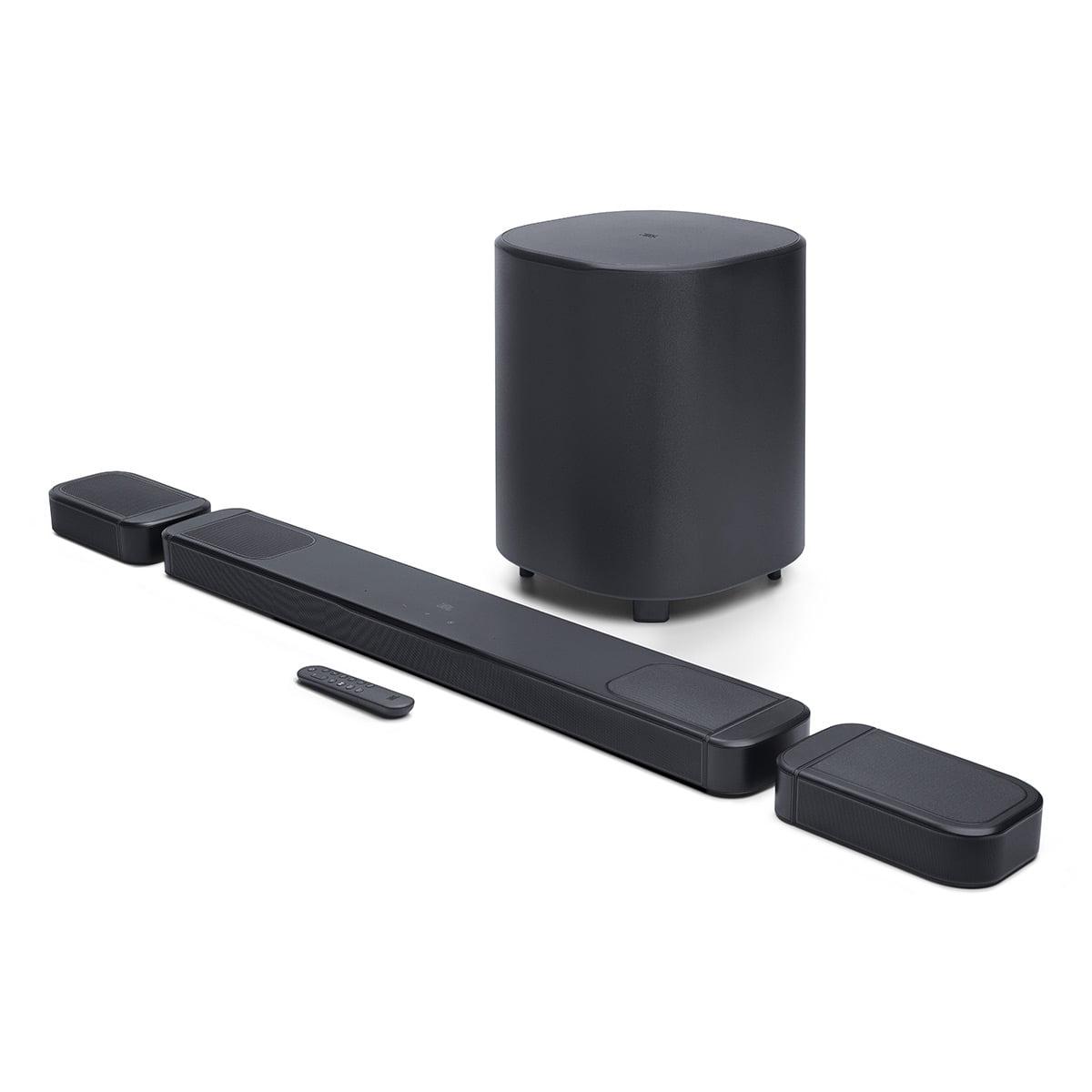
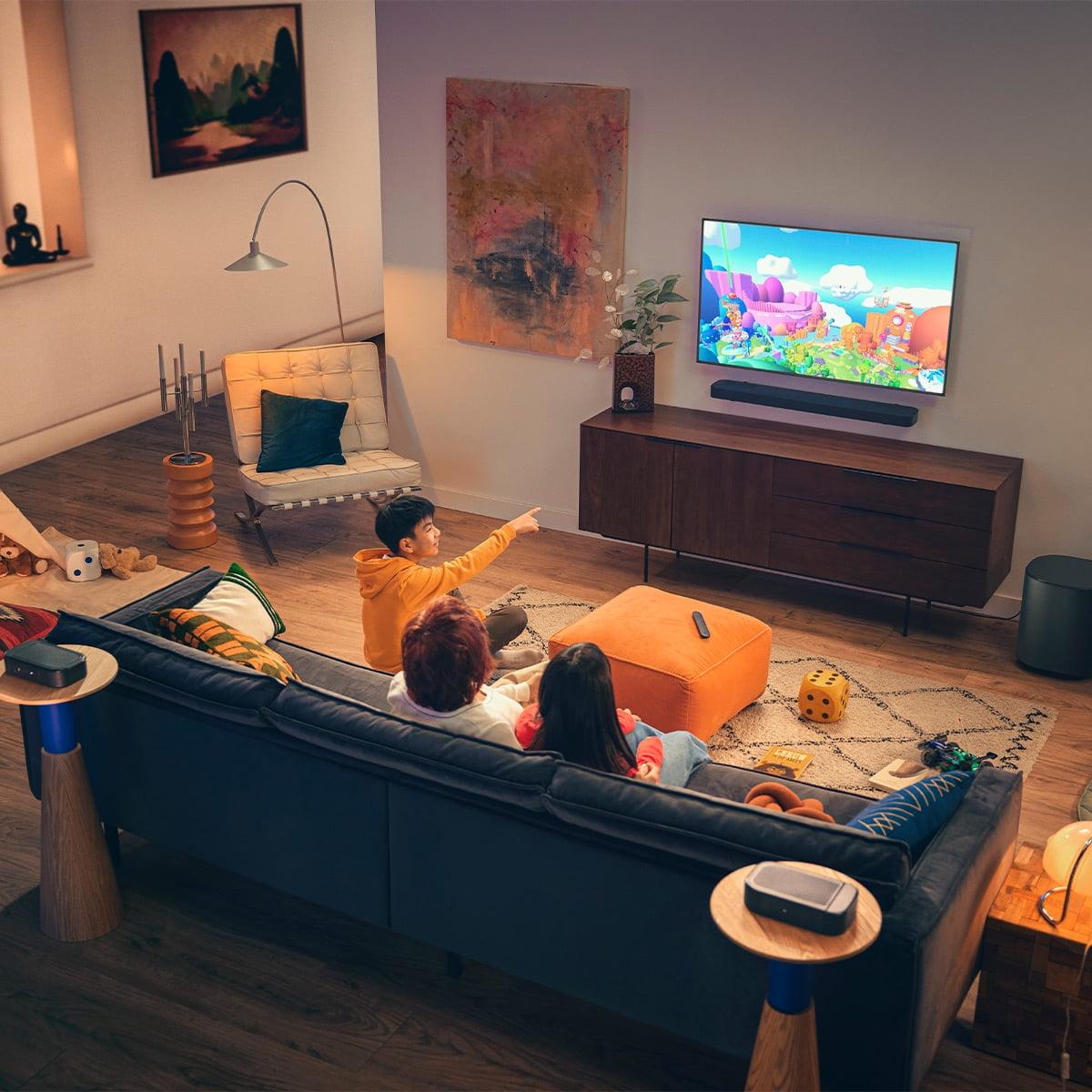
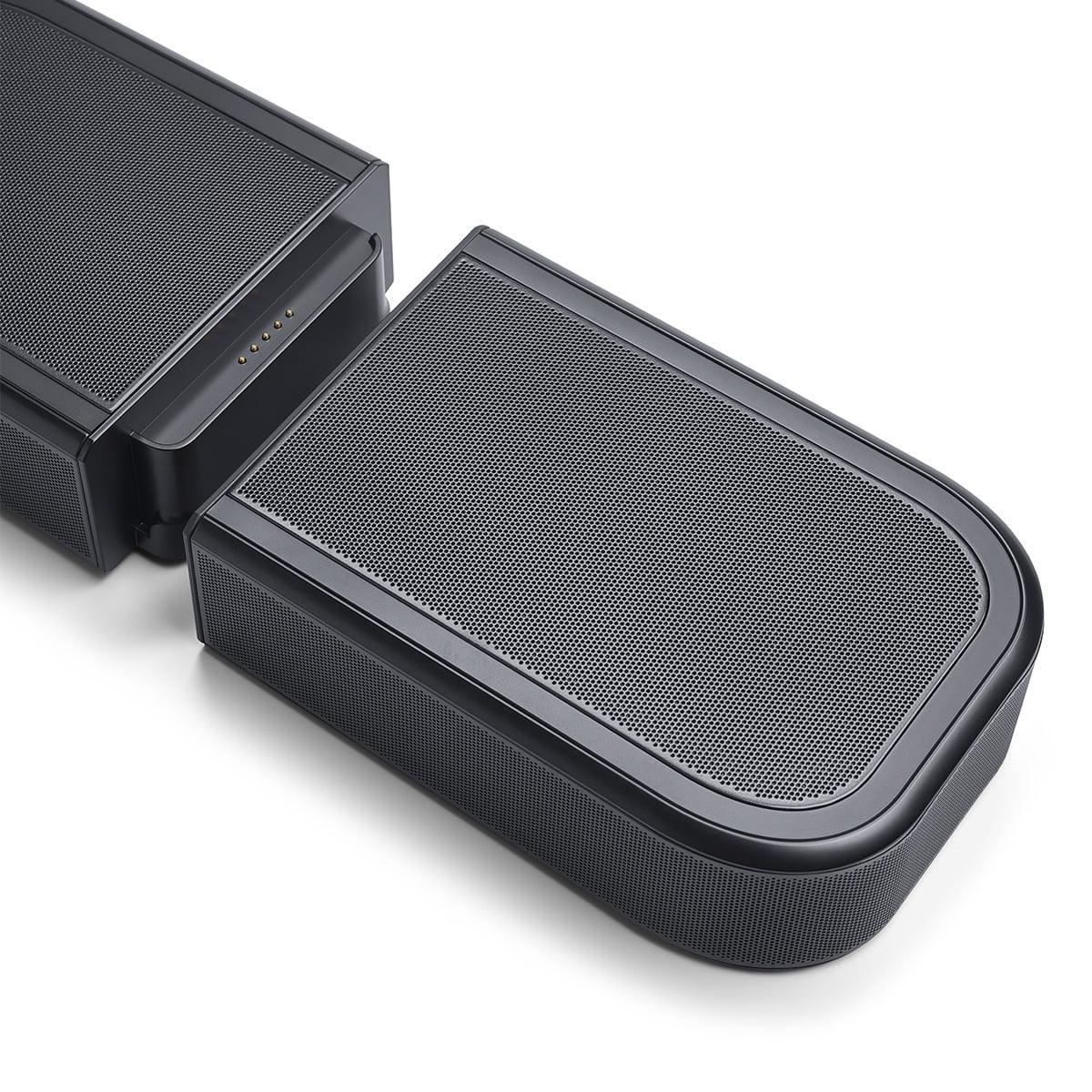
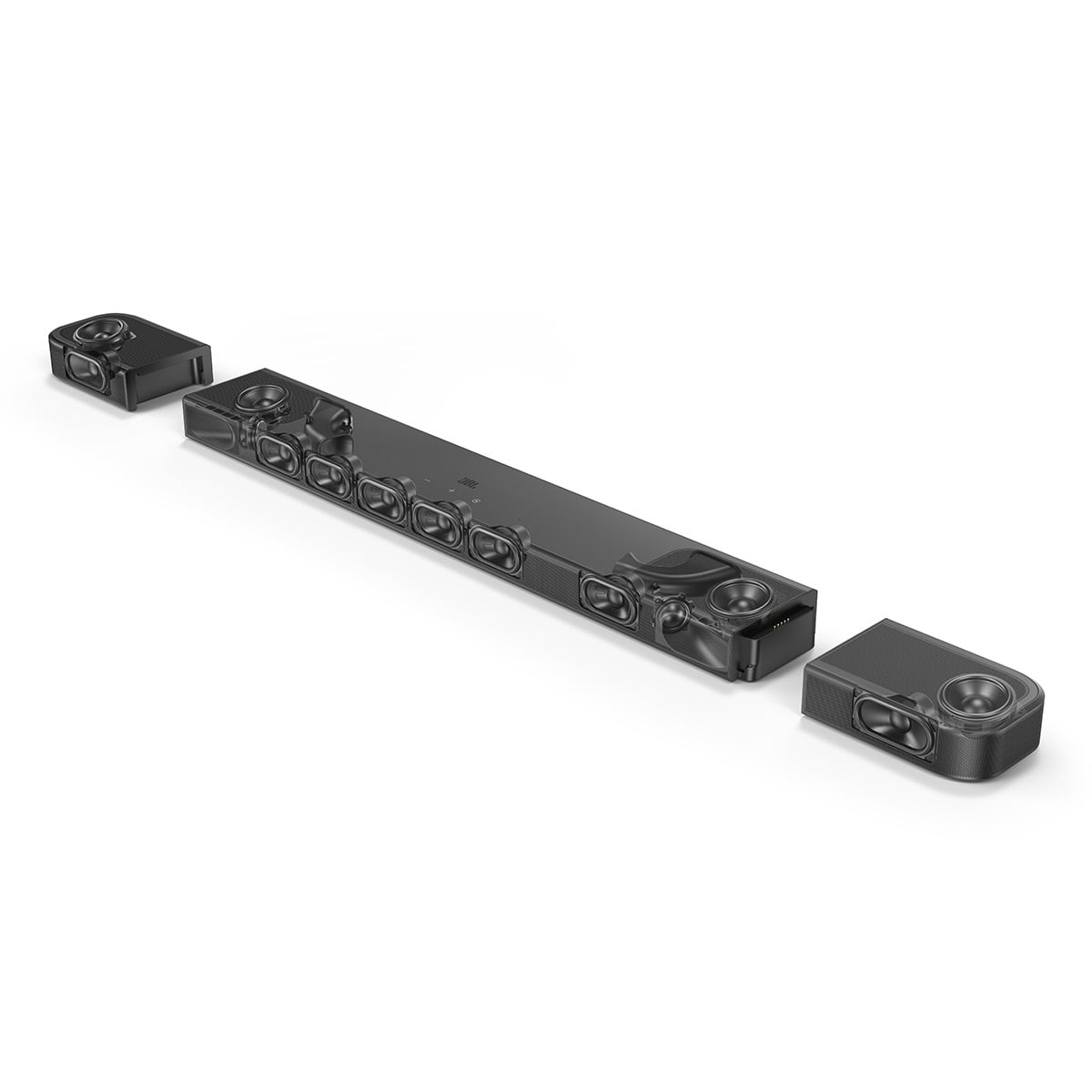
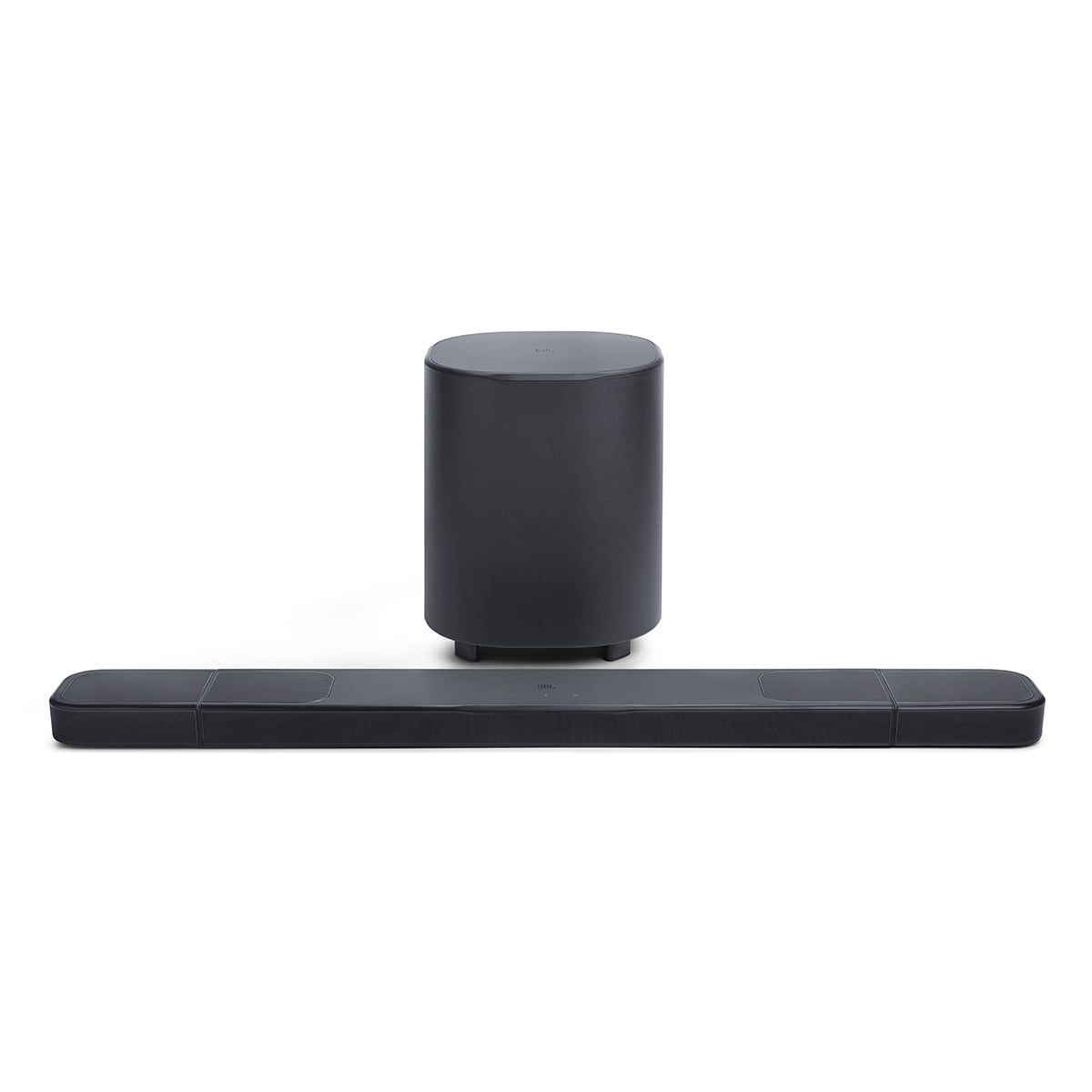
The JBL Bar 1000 MK2 represents what I'd call the "everything included" philosophy. When you unbox this system, you get a main soundbar, a 10-inch wireless subwoofer, and two detachable rear speakers that magnetically attach to either end of the main bar.
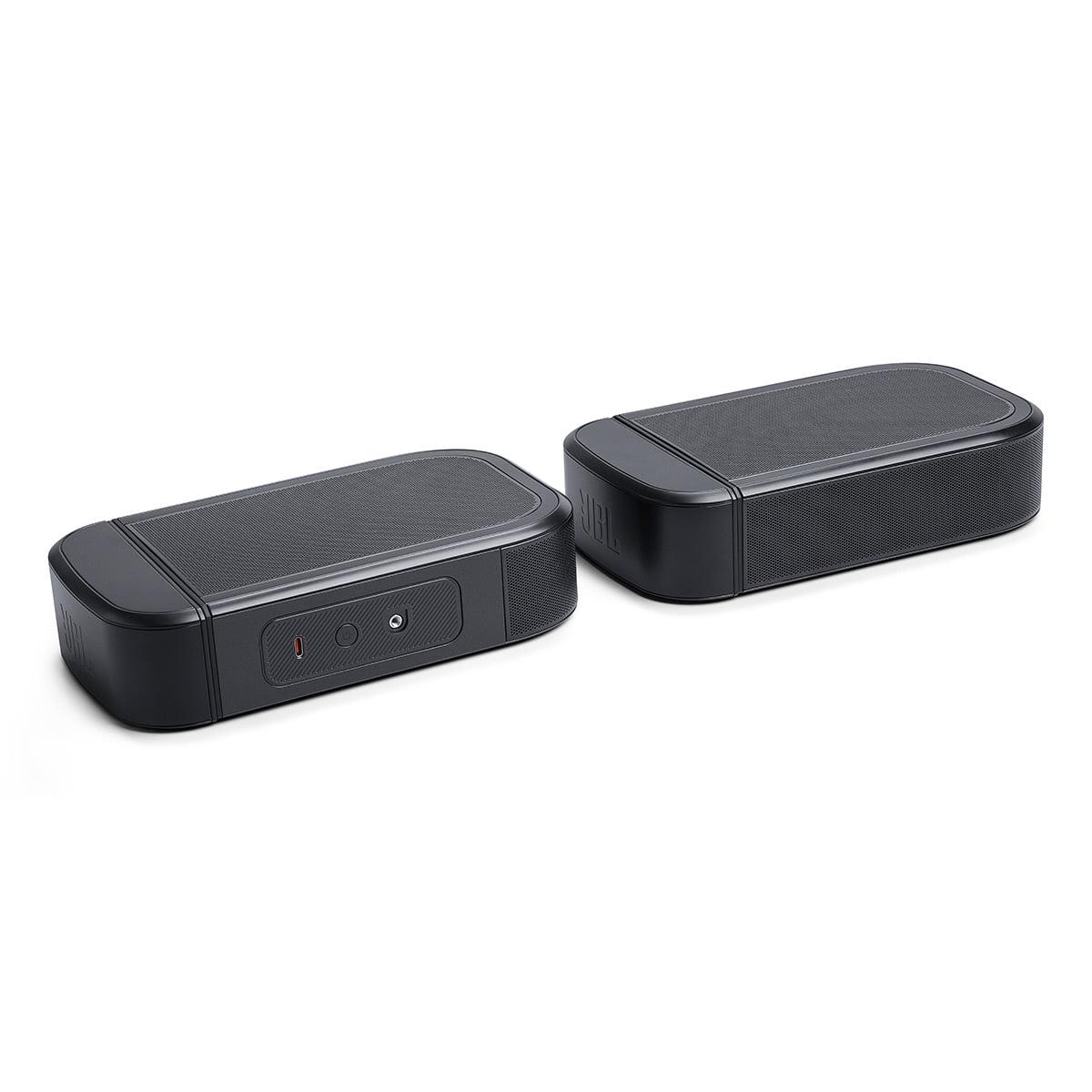
This design immediately solves one of the biggest challenges with soundbars: getting true surround sound. Most soundbars rely on bouncing audio off your walls to create the illusion of rear speakers. JBL said "forget that" and just included actual rear speakers. These aren't tiny afterthoughts either – each rear speaker contains the same racetrack drivers as the main bar plus dedicated up-firing drivers for height effects.
What makes this particularly clever is how JBL handles the wireless aspect. Each rear speaker has a 6,600mAh battery providing up to 10 hours of playback. When you're done watching movies, the speakers magnetically snap back onto the main bar to recharge. No wall outlets needed behind your couch, no permanent wiring, but still genuine rear channel audio.
The system's 880W total power output (480W RMS) means it can easily fill large rooms. During testing, I found the JBL could pressurize my 400-square-foot living room without strain, something many soundbars struggle with. The 10-inch subwoofer extends down to 33Hz, providing the kind of deep bass that makes action movie explosions feel impactful rather than just loud.
JBL's MultiBeam 3.0 technology uses the soundbar's multiple drivers to create a wider soundstage than you'd expect from a single bar. Combined with the physical height drivers in both the main bar and rear speakers, Dolby Atmos content genuinely sounds like it's coming from above and around you.
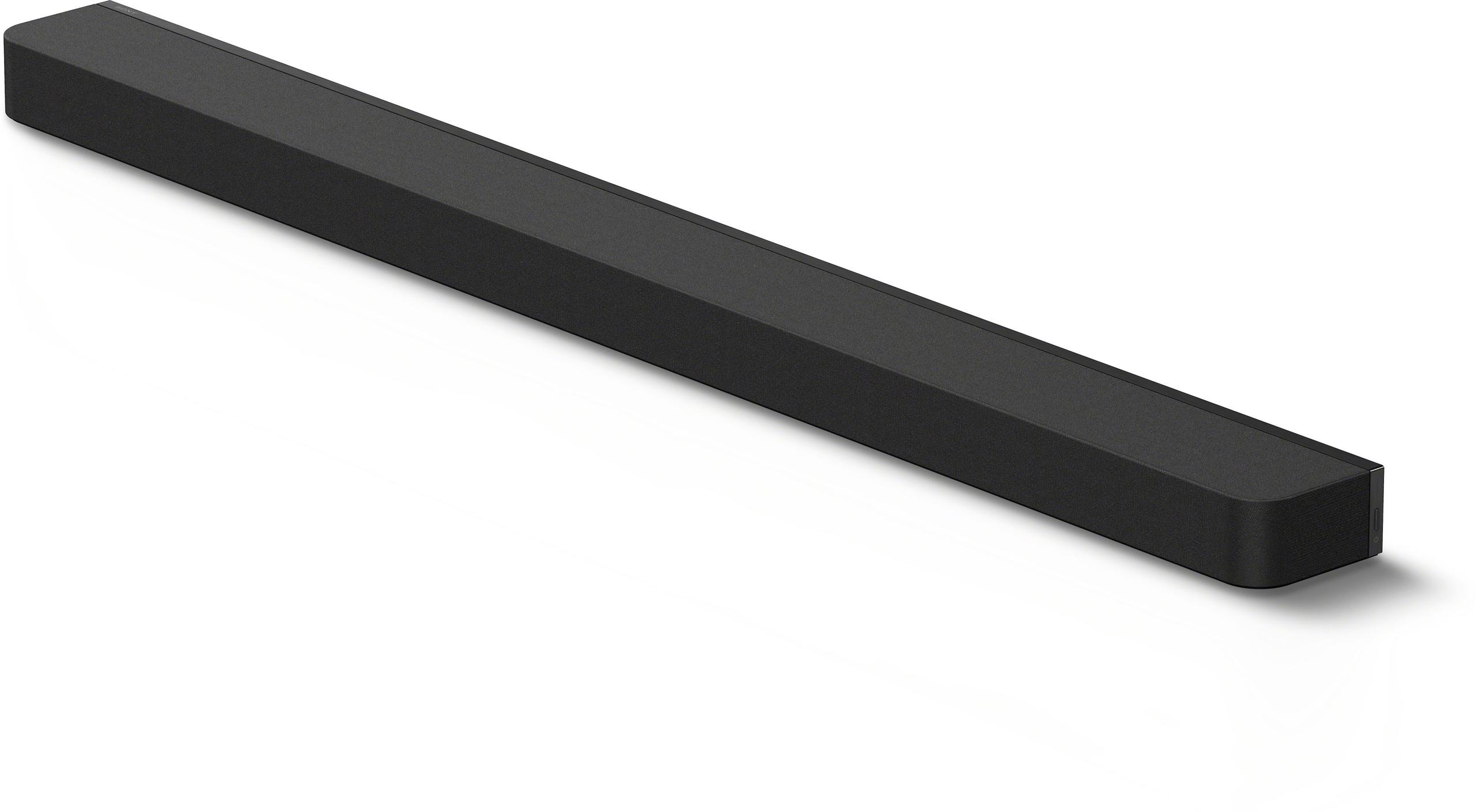
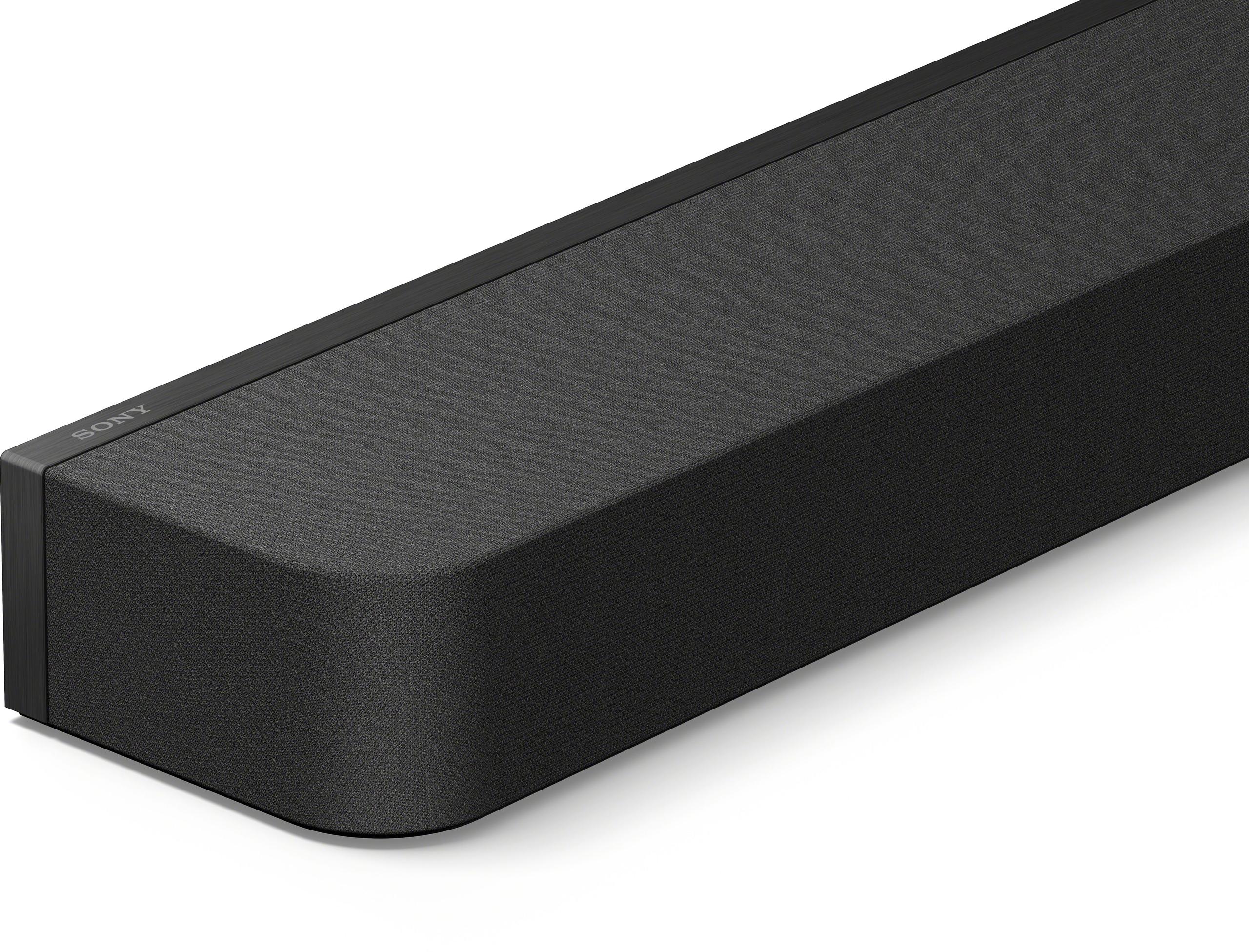
The Sony BRAVIA Theater Bar 9 takes an entirely different approach. Sony's engineers focused on creating the most sophisticated virtual surround system possible, rather than including physical rear speakers.
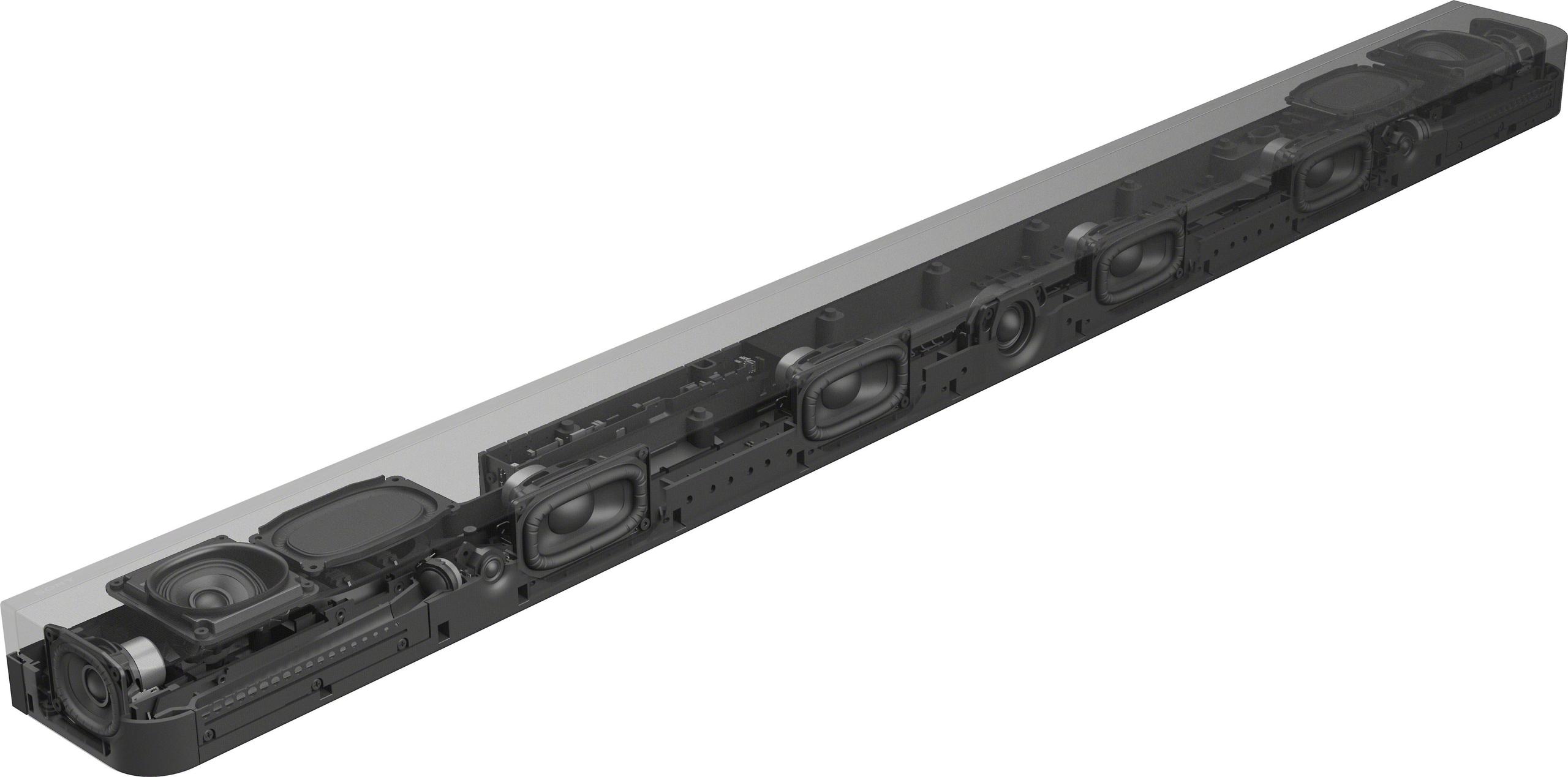
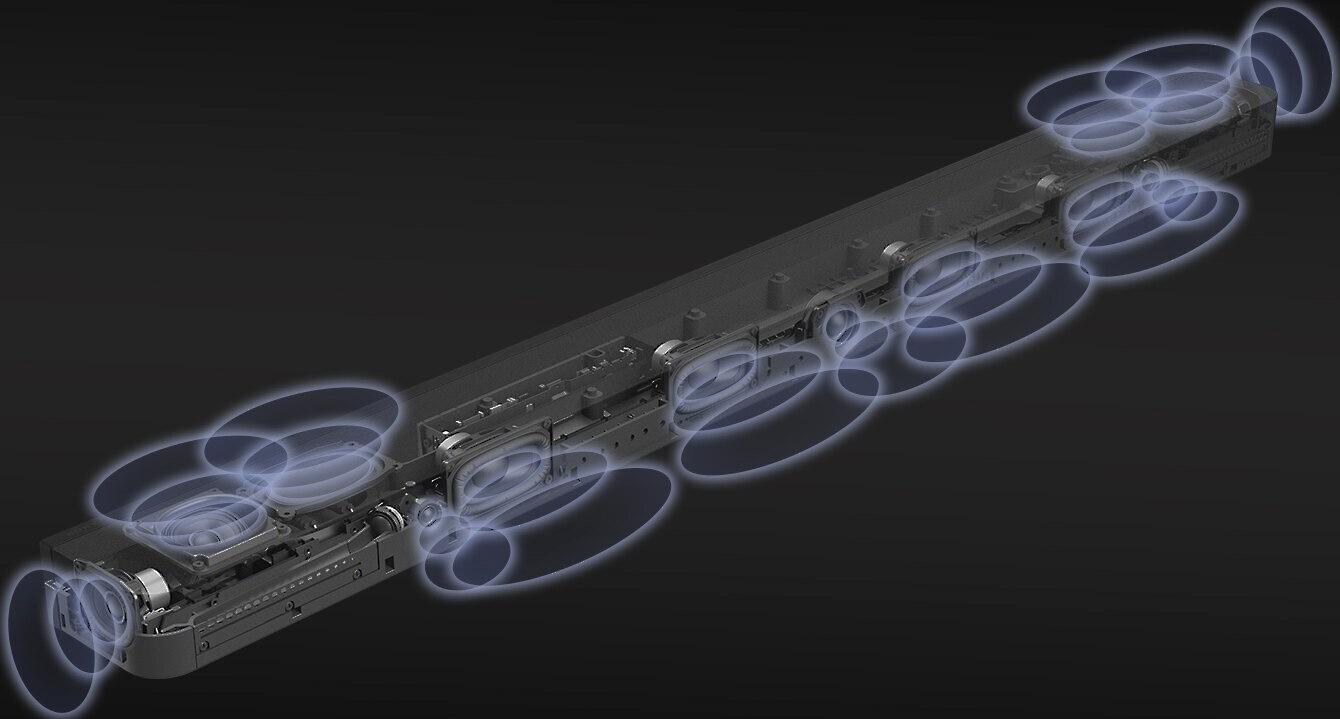
The centerpiece is Sony's 360 Spatial Sound Mapping technology. Using the soundbar's 13 speakers and advanced digital signal processing, the system creates what Sony calls "phantom speakers" – virtual sound sources that your brain perceives as coming from specific locations around the room, even though there are no actual speakers there.
This technology works by precisely controlling how sound reflects off your walls and ceiling. The system maps your room's acoustics during setup, then manipulates the timing and frequency response of different drivers to create convincing surround effects. In the right room, it's genuinely impressive how the system can make dialog seem to come from your TV screen while placing ambient sounds all around you.
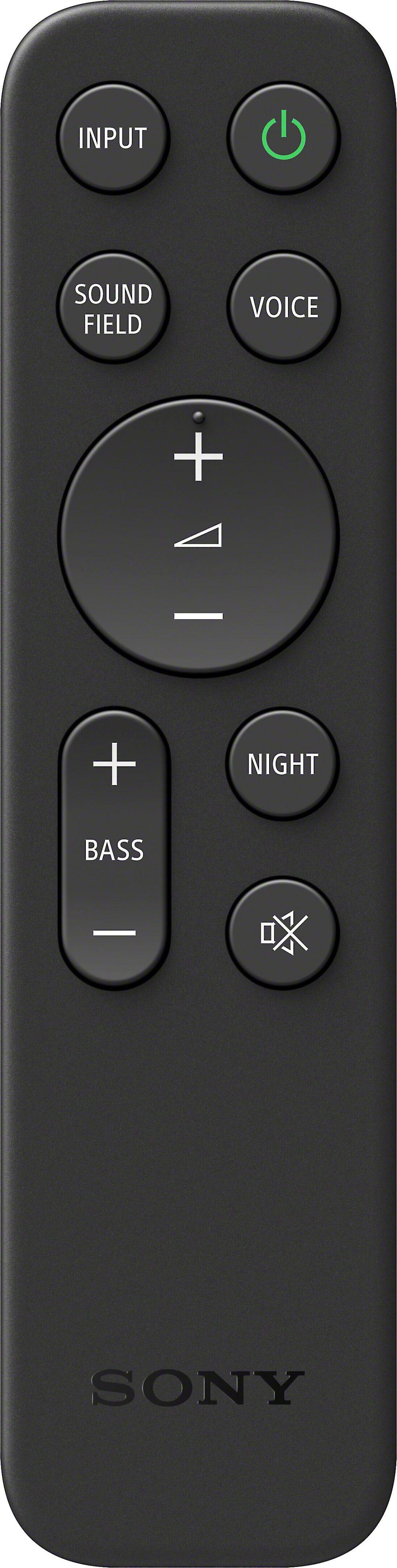
Sony's Voice Zoom 3 deserves special mention. This AI-powered feature analyzes audio in real-time to identify human speech, then dynamically adjusts the frequency response to ensure dialog remains clear even during loud action sequences. After years of constantly adjusting volume during movies, having this happen automatically is genuinely helpful.
The integration with Sony BRAVIA TVs adds another dimension. When connected to a compatible Sony TV, the soundbar can use the TV's built-in speakers as a dedicated center channel through Acoustic Centre Sync. This creates the effect of dialog coming directly from the screen rather than from below it – a subtle but noticeable improvement in perceived realism.
This is where the philosophical differences become most apparent. The JBL Bar 1000 MK2 includes that 10-inch subwoofer, and it makes a dramatic difference. Movie soundtracks have the kind of chest-thumping impact that makes action scenes visceral. Music reproduction benefits too – the low-end foundation lets you hear the full range of bass guitars and kick drums without strain.
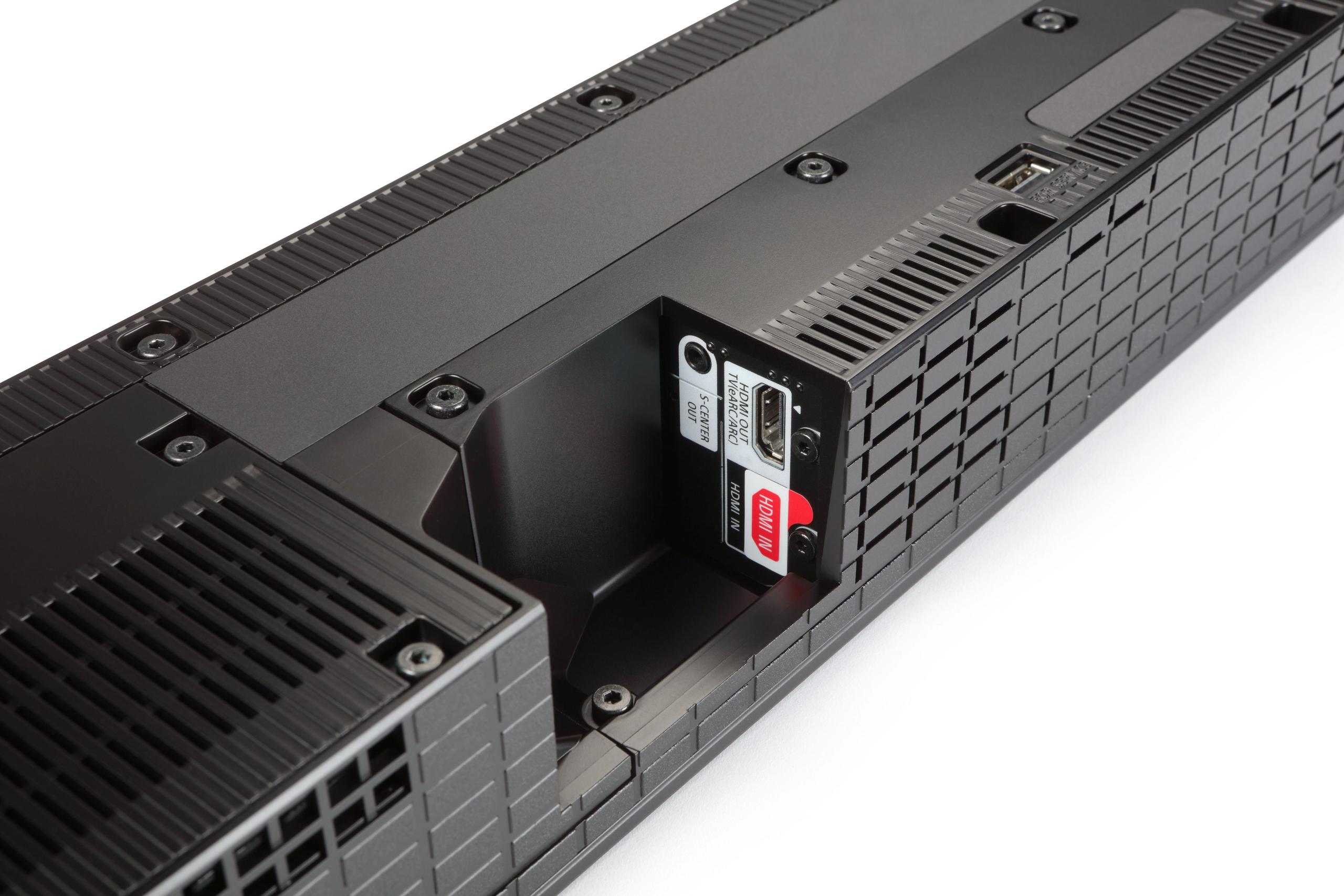
The Sony BRAVIA Theater Bar 9 ships without a subwoofer, and you absolutely notice the difference. Bass response is limited, making action movies feel somewhat thin and music lacking in foundation. Sony sells optional subwoofers (the SA-SW3 for $399 or SA-SW5 for $599), but now you're talking about a total system cost approaching $2,000.
In my testing, rooms larger than about 300 square feet exposed the Sony's power limitations. The JBL's higher output and dedicated subwoofer simply handle large spaces more effectively.
Here's where things get interesting. The JBL's physical rear speakers provide undeniably authentic surround effects. When a car drives from front to back in a movie scene, you hear it travel in real space. The height effects from four actual up-firing drivers create convincing overhead audio.
Sony's phantom speaker approach works remarkably well in the right conditions. In my medium-sized living room with reasonably reflective walls, the spatial mapping created a convincing sense of enveloping sound. However, this technology is more sensitive to room layout and seating position than physical speakers.
If you sit outside the optimal listening zone, Sony's effects can collapse back to the soundbar. The JBL's rear speakers work regardless of where you sit, though you might lose some of the careful stereo imaging if you're too far to one side.
Both systems excel at dialog clarity, but through different approaches. JBL's PureVoice 2.0 uses adaptive processing to maintain speech intelligibility as volume changes. It's effective and fairly transparent – you don't notice it working, but voices stay clear.
Sony's Voice Zoom 3 is more sophisticated, using machine learning to identify and enhance human speech. The effect is more noticeable, sometimes making voices almost unnaturally prominent. Whether you prefer this depends on your viewing habits and hearing sensitivity.
When paired with a BRAVIA TV, Sony's Acoustic Centre Sync creates superior dialog localization by using the TV speakers as a true center channel. This is a genuine advantage for Sony TV owners.
The value discussion reveals the starkest difference between these approaches. The JBL Bar 1000 MK2 at $1,199 includes everything you need for a full 7.1.4 home theater experience. You're getting genuine surround speakers, a substantial subwoofer, and powerful amplification in one purchase.
The Sony BRAVIA Theater Bar 9 at $1,399 costs more initially but only provides the soundbar. To match JBL's component count, you'd add the SA-SW5 subwoofer ($599) and SA-RS5 rear speakers ($499), bringing your total to around $2,497. That's more than double the JBL's cost.
However, Sony's modular approach has advantages for some users. You can start with just the soundbar and add components over time as budget allows. The spatial mapping technology means even the standalone bar provides a more immersive experience than most competitors' basic configurations.
For immediate satisfaction and overall value, JBL wins decisively. For long-term flexibility and cutting-edge processing, Sony has merit despite the higher cost.
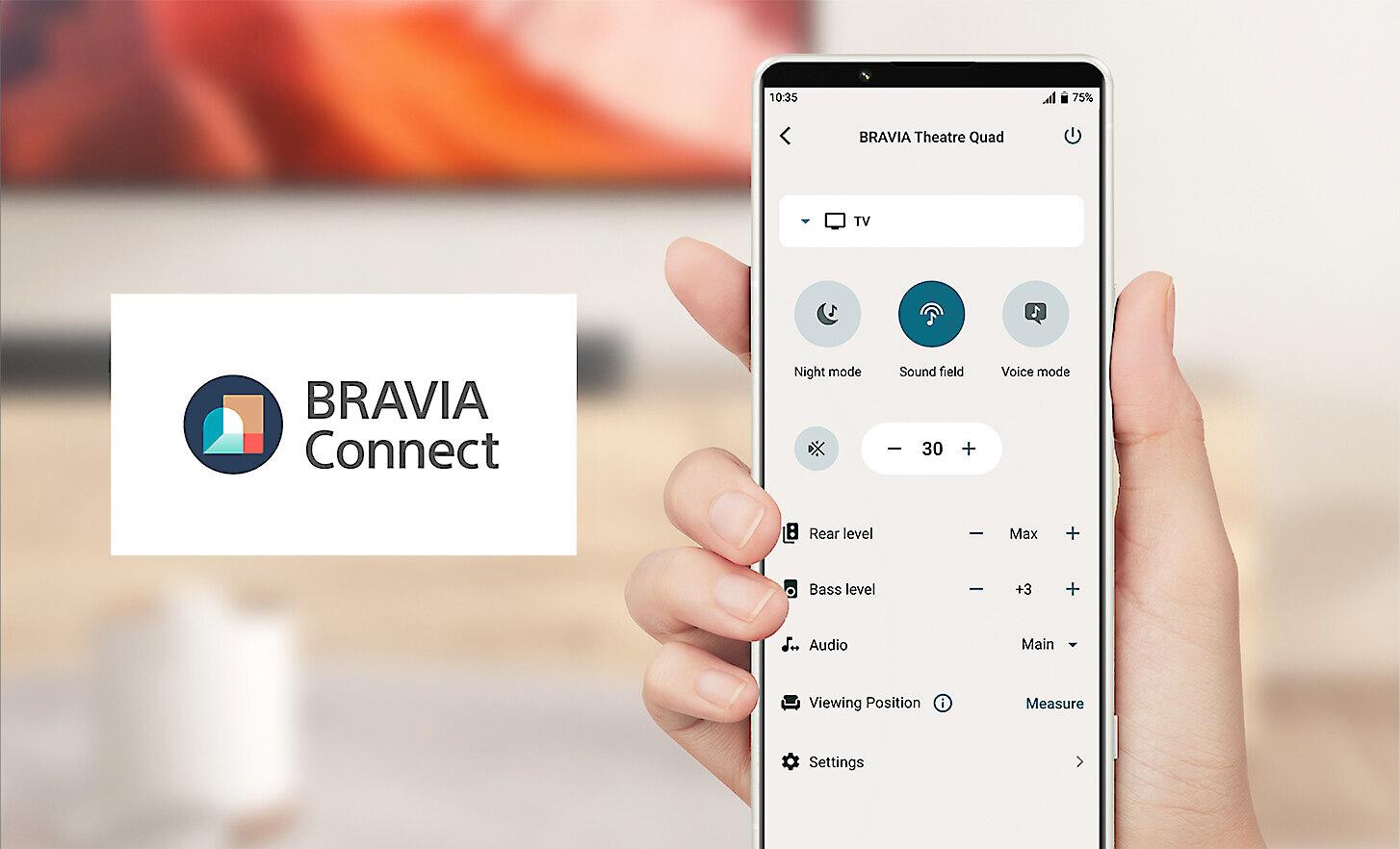
Both systems offer comprehensive smartphone apps with EQ adjustment, mode selection, and system management. JBL's app is straightforward and functional, focusing on practical controls. Sony's app provides more detailed visualization of the spatial mapping process, which is interesting if you're curious about the technology.
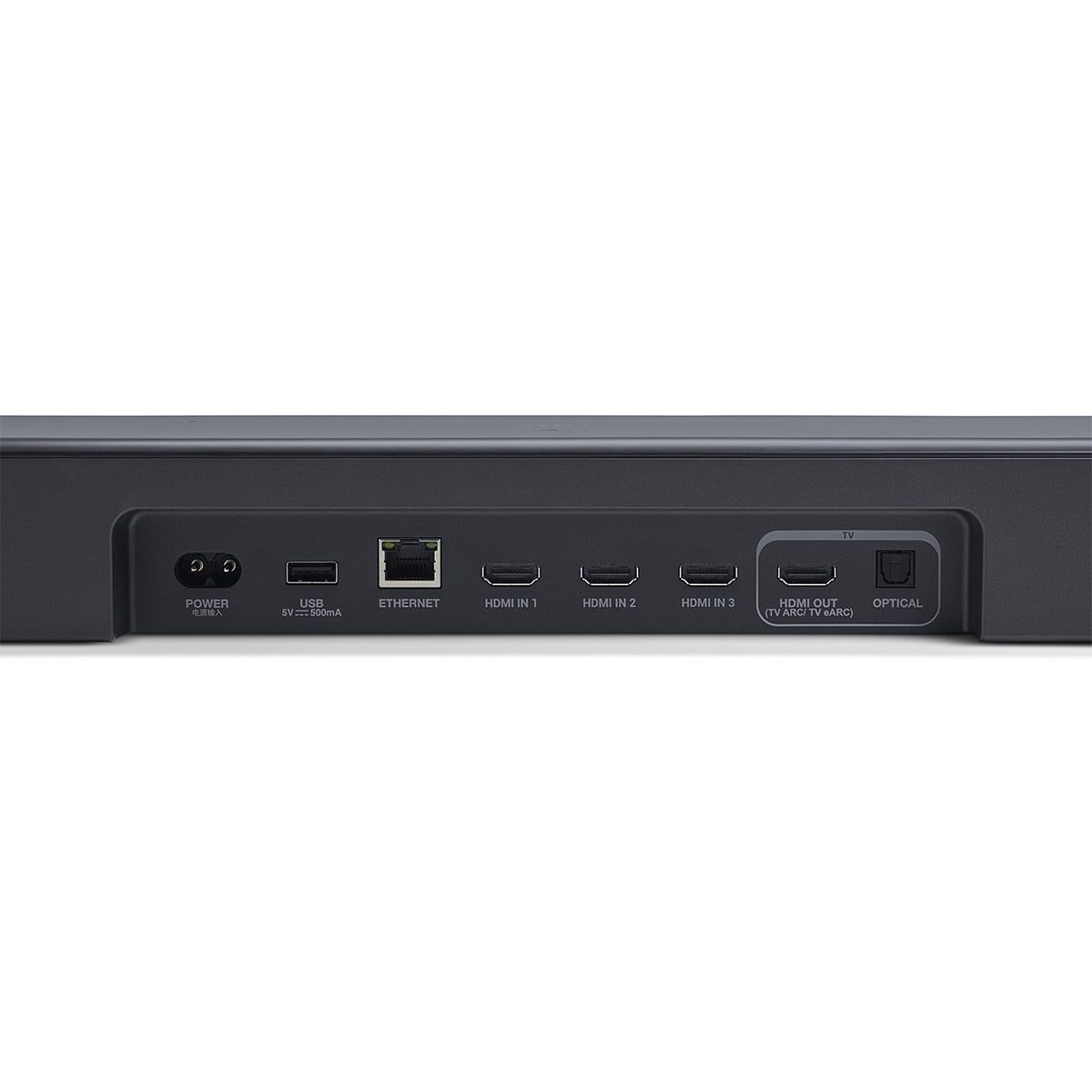
Connectivity is strong on both, with HDMI 2.1, Wi-Fi, and modern Bluetooth versions. JBL provides three HDMI inputs versus Sony's single input, which could matter if you connect multiple devices directly to your soundbar rather than through your TV.
Streaming support covers all the major platforms on both systems. JBL works equally well with any TV brand, while Sony provides enhanced integration if you own a BRAVIA TV but basic functionality with other brands.
Your room significantly influences which system will work better. The JBL Bar 1000 MK2 is more forgiving of room acoustics because it uses physical speakers rather than relying on reflections. It's particularly well-suited to larger rooms (over 300 square feet) where its higher power output and dedicated subwoofer make the most difference.
The Sony BRAVIA Theater Bar 9 works best in medium-sized rooms with decent wall surfaces for reflection. If your room has lots of soft furnishings, irregular shapes, or very high ceilings, the spatial mapping may not work as effectively.
Installation complexity differs too. JBL requires finding placement for the wireless subwoofer and occasionally moving the rear speakers from charging position to listening position. Sony offers true plug-and-play operation – just connect and run the room calibration.
After extensive testing, I'd recommend the JBL Bar 1000 MK2 for most home theater enthusiasts. The complete system at $1,199 delivers genuine surround sound, powerful bass, and excellent value. It's particularly compelling for larger rooms or anyone who wants maximum audio impact without piecing together a system over time.
The Sony BRAVIA Theater Bar 9 makes sense for specific situations: Sony TV owners who value seamless integration, users in smaller rooms where spatial mapping works optimally, or anyone prioritizing minimalist aesthetics who plans to expand the system gradually.
If you want the most audio performance for your dollar and genuine surround sound immediately, choose JBL. If you're fascinated by cutting-edge spatial processing technology and don't mind the higher total cost for a complete system, Sony's innovation is impressive.
Both represent the current state of the art in premium soundbars, just with very different philosophies about how to get there. Your choice should align with your room, budget, and whether you prefer physical speakers or virtual processing to create your home theater experience.
| JBL Bar 1000 MK2 Soundbar System | Sony BRAVIA Theater Bar 9 Soundbar |
|---|---|
| Price - Major factor in overall value proposition | |
| $1,199 (complete system) | $1,399 (soundbar only, $2,497 with recommended sub/rears) |
| Channel Configuration - Determines surround sound capability | |
| 7.1.4 with physical rear speakers | 7.0.2 with virtual surround processing |
| Total Power Output - Critical for room filling and dynamic range | |
| 880W max / 480W RMS (excellent for large rooms) | 500W (better for small-medium rooms) |
| Subwoofer - Essential for impactful bass in movies and music | |
| 10" wireless subwoofer included (33Hz extension) | Not included (optional SA-SW3/SW5 costs $399-599 extra) |
| Rear Speakers - Makes biggest difference in surround immersion | |
| Detachable wireless speakers with 10hr battery | Not included (optional SA-RS5 costs $499 extra) |
| Height Channels - Creates overhead Dolby Atmos effects | |
| 4 physical up-firing drivers (2 main bar + 2 rears) | 2 up-firing drivers with 360 Spatial Sound Mapping |
| TV Integration - Convenience and enhanced features | |
| Works with all TV brands via HDMI eARC | Enhanced integration with Sony BRAVIA TVs only |
| Room Size Suitability - Performance varies significantly by space | |
| Large rooms (300+ sq ft) due to higher power/physical speakers | Small-medium rooms (under 300 sq ft) for optimal spatial mapping |
| Setup Complexity - Time and effort required | |
| Moderate (place subwoofer, position rear speakers as needed) | Simple (single bar, automatic room calibration) |
| Value for Complete System - Cost to get full surround experience | |
| Excellent ($1,199 for everything) | Poor (requires $1,100+ in additional components) |
The JBL Bar 1000 MK2 ($1,199) offers significantly better value as a complete system. It includes a 10" wireless subwoofer and detachable rear speakers, providing everything needed for 7.1.4 surround sound. The Sony BRAVIA Theater Bar 9 ($1,399) costs more initially but only includes the soundbar - adding the recommended subwoofer and rear speakers brings the total to around $2,497.
The JBL Bar 1000 MK2 delivers more powerful, room-filling sound with 880W total output and genuine surround effects from physical rear speakers. The Sony BRAVIA Theater Bar 9 focuses on precise spatial processing with 360 Spatial Sound Mapping technology, creating virtual surround effects that work well in properly configured rooms but with less raw power at 500W.
The JBL Bar 1000 MK2 is better suited for large rooms (300+ square feet) due to its higher 880W power output, included 10" subwoofer, and physical rear speakers that maintain surround effects regardless of room acoustics. The Sony system works best in smaller, medium-sized rooms where its spatial mapping technology can effectively use wall reflections.
The JBL Bar 1000 MK2 works equally well with all TV brands through HDMI eARC connection. The Sony BRAVIA Theater Bar 9 also works with any TV brand but provides enhanced integration features like Acoustic Centre Sync only when paired with Sony BRAVIA TVs.
The JBL Bar 1000 MK2 has significantly better bass performance with its included 10" wireless subwoofer that extends down to 33Hz. The Sony BRAVIA Theater Bar 9 ships without a subwoofer, resulting in limited low-frequency response unless you purchase an optional subwoofer for $399-599 additional.
The JBL Bar 1000 MK2 includes the main soundbar, 10" wireless subwoofer, and two detachable wireless rear speakers - everything needed for complete surround sound. The Sony BRAVIA Theater Bar 9 includes only the soundbar itself, with the subwoofer and rear speakers sold as separate optional accessories.
The Sony BRAVIA Theater Bar 9 is easier to set up as it's a single unit that requires only plugging in and running automatic room calibration. The JBL Bar 1000 MK2 requires positioning the wireless subwoofer and occasionally moving the rear speakers from their charging position to behind your seating area.
Both support Dolby Atmos, but differently. The JBL Bar 1000 MK2 uses four physical up-firing drivers (two in the main bar, two in the rear speakers) for genuine height effects. The Sony BRAVIA Theater Bar 9 uses two up-firing drivers combined with 360 Spatial Sound Mapping to create virtual height channels through room reflection processing.
Both excel at dialogue clarity through different approaches. The Sony BRAVIA Theater Bar 9 uses AI-powered Voice Zoom 3 technology that identifies and enhances human speech, while the JBL Bar 1000 MK2 employs PureVoice 2.0 for adaptive dialogue optimization. Sony has a slight edge, especially when paired with BRAVIA TVs.
The JBL Bar 1000 MK2 rear speakers offer up to 10 hours of battery life and recharge by magnetically attaching to the main soundbar. The Sony BRAVIA Theater Bar 9 doesn't include rear speakers, though optional SA-RS5 speakers are available separately with their own wireless connectivity and charging system.
For dedicated home theater use, the JBL Bar 1000 MK2 is generally superior due to its complete component set, higher power output, genuine surround speakers, and substantial subwoofer - all essential for cinematic audio reproduction. The Sony BRAVIA Theater Bar 9 works well for home theater but requires additional purchases to match JBL's out-of-box performance.
Both soundbars support wireless music streaming. The JBL Bar 1000 MK2 offers Bluetooth 5.3, Wi-Fi, AirPlay 2, Chromecast Built-In, and Spotify Connect. The Sony BRAVIA Theater Bar 9 provides Bluetooth 5.2, Wi-Fi, AirPlay 2, and Spotify Connect, with both systems delivering high-quality wireless audio streaming from smartphones and other devices.
We've done our best to create useful and informative comparisons to help you decide what product to buy. Our research uses advanced automated methods to create this comparison and perfection is not possible - please contact us for corrections or questions. These are the sites we've researched in the creation of this article: ecoustics.com - engadget.com - bestbuy.com - techradar.com - rtings.com - hometechnologyreview.com - youtube.com - t3.com - whathifi.com - youtube.com - bhphotovideo.com - gzhls.at - device.report - support.jbl.com - support.jbl.com - jbl.com - av.com - audioadvice.com - jbl.com - target.com - worldwidestereo.com - rtings.com - residentialsystems.com - rtings.com - bestbuy.com - valueelectronics.com - sony.com - sony.co.uk - sony.co.uk - rtings.com - sony.co.in - sony.com - pocket-lint.com - sony.com - crutchfield.com

Privacy Policy
Terms and Conditions - Affiliate Policy
Home Security
© Copyright 2008-2026.
11816 Inwood Rd #1211, Dallas, TX 75244