


If you've ever turned on a movie and had to constantly adjust the volume—cranking it up for quiet dialogue, then scrambling for the remote when explosions shake the walls—you already understand why soundbars exist. Built-in TV speakers are notoriously terrible, squeezed into impossibly thin TV frames with zero room for proper drivers or sound chambers.
The soundbar market has exploded over the past decade, evolving from basic stereo bars to sophisticated home theater systems. Today, we're comparing two soundbars that represent opposite ends of this spectrum: the premium JBL Bar 1000 MK2 ($1,199.95) and the budget-friendly Bose Solo Series 2 ($179.99). These aren't just different price points—they're fundamentally different approaches to solving your TV audio problems.
When shopping for soundbars, you'll encounter confusing numbers like "2.1," "5.1.2," or "7.1.4." These aren't model numbers—they describe the audio channel configuration. The first number represents main audio channels (left, right, center), the second is dedicated subwoofer channels, and the third (when present) indicates height channels for overhead sound effects.
Modern soundbars also support various audio formats. Dolby Atmos, which debuted in 2012 and became mainstream around 2016, creates three-dimensional sound by bouncing audio off your ceiling to simulate overhead effects. DTS:X, launched in 2015, offers similar 3D audio using different processing. These formats transform movies from flat stereo experiences into immersive soundscapes where helicopters actually sound like they're flying overhead.
The JBL Bar 1000 MK2 launched in 2024 as part of JBL's second-generation MK2 series, incorporating lessons learned from their original Bar 1000. The Bose Solo Series 2 arrived earlier, around 2020, as Bose's entry-level offering focused purely on dialogue enhancement rather than surround sound theatrics.
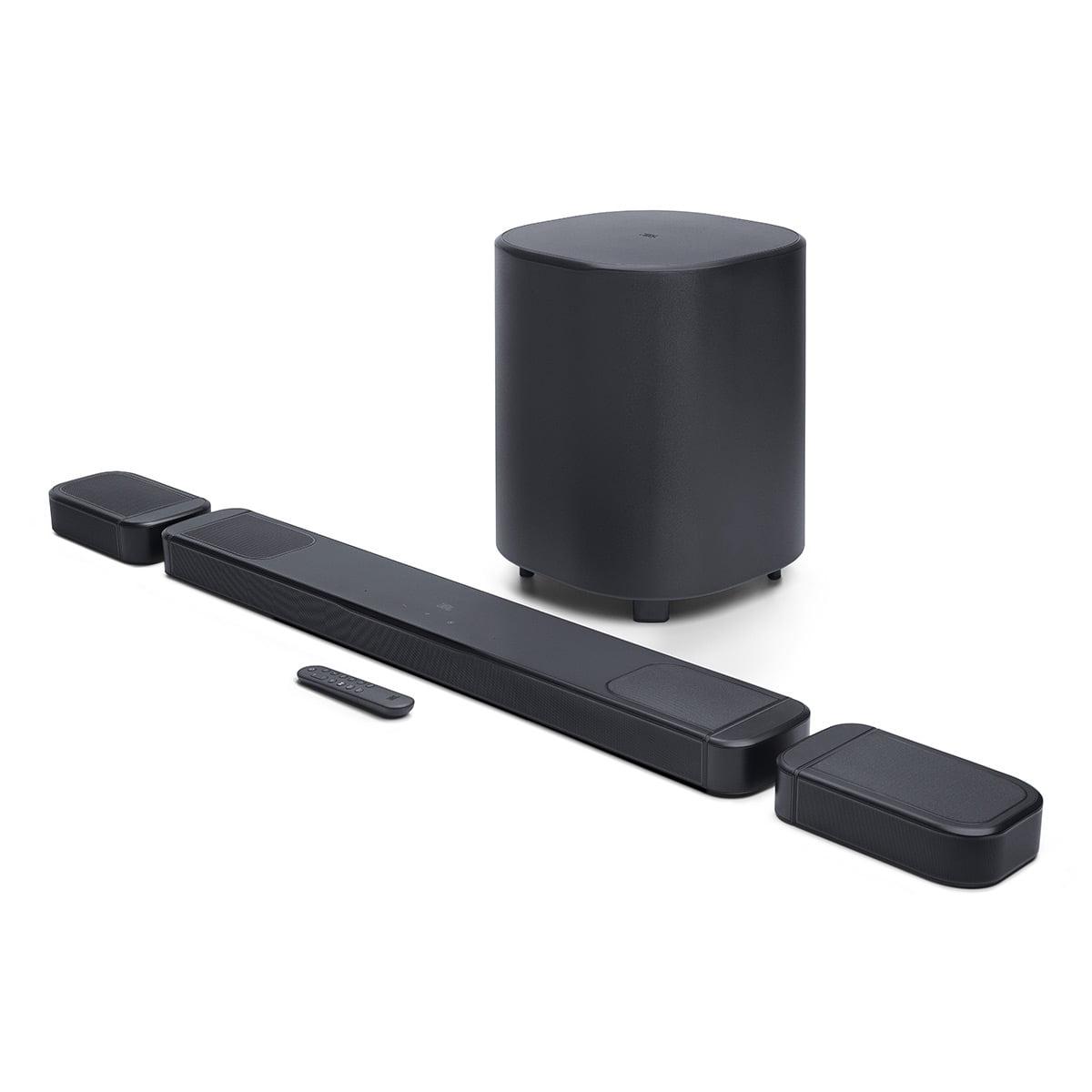
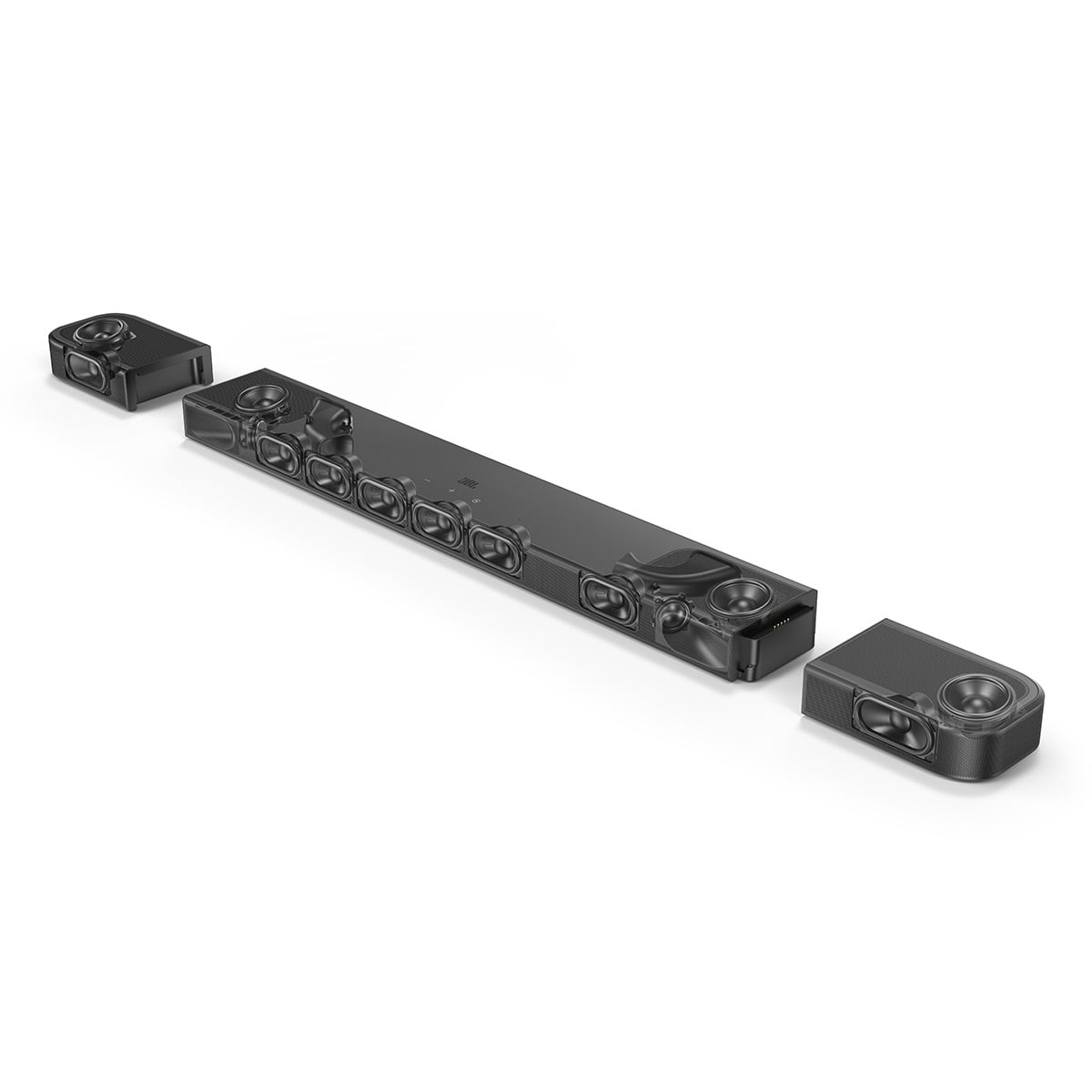
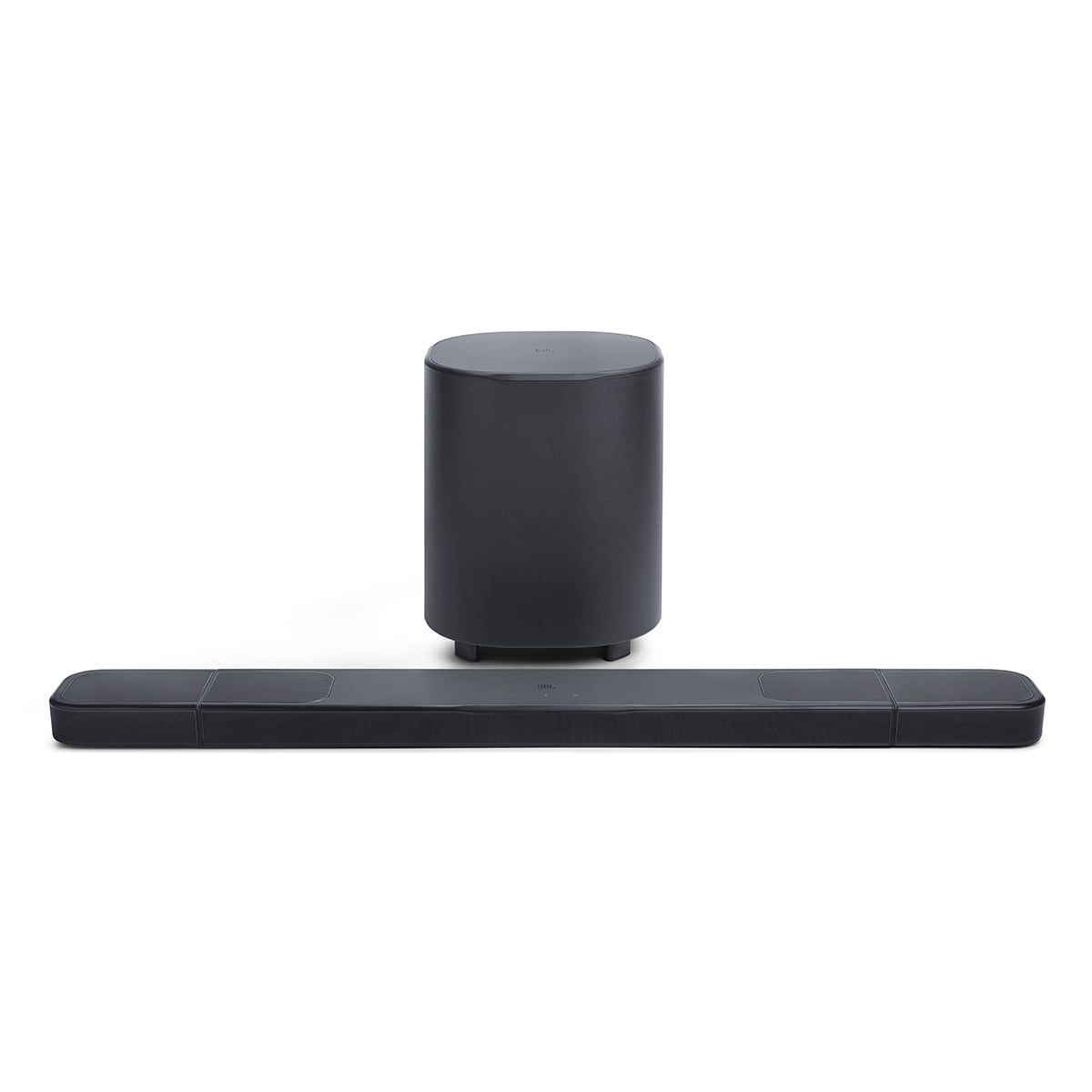
The JBL Bar 1000 MK2 embodies the "go big or go home" philosophy. Its 7.1.4 configuration means seven main channels, one subwoofer channel, and four height channels—that's genuine surround sound with overhead effects. The system includes three separate components: a 33.6-inch main soundbar, two detachable wireless rear speakers, and a 10-inch wireless subwoofer.
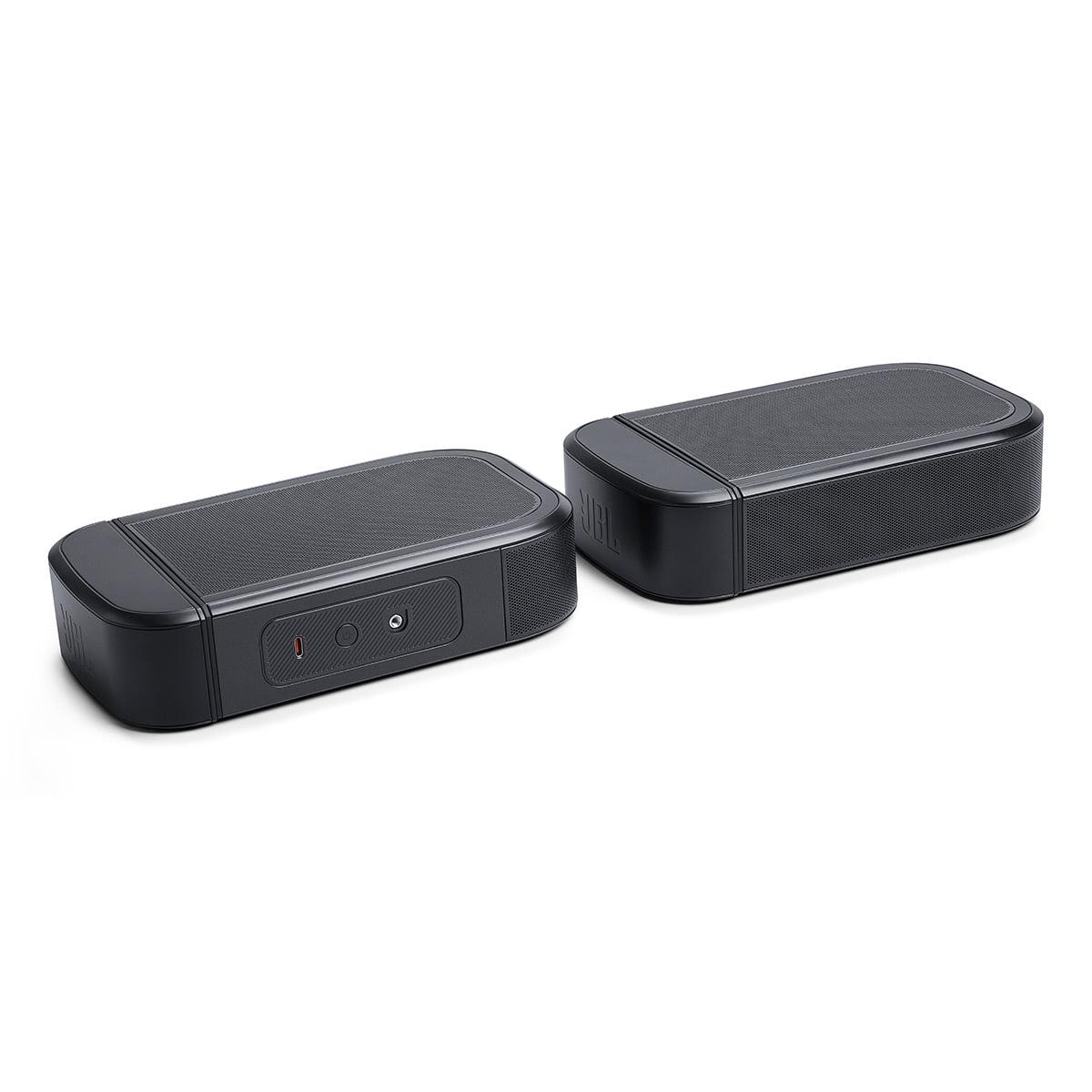
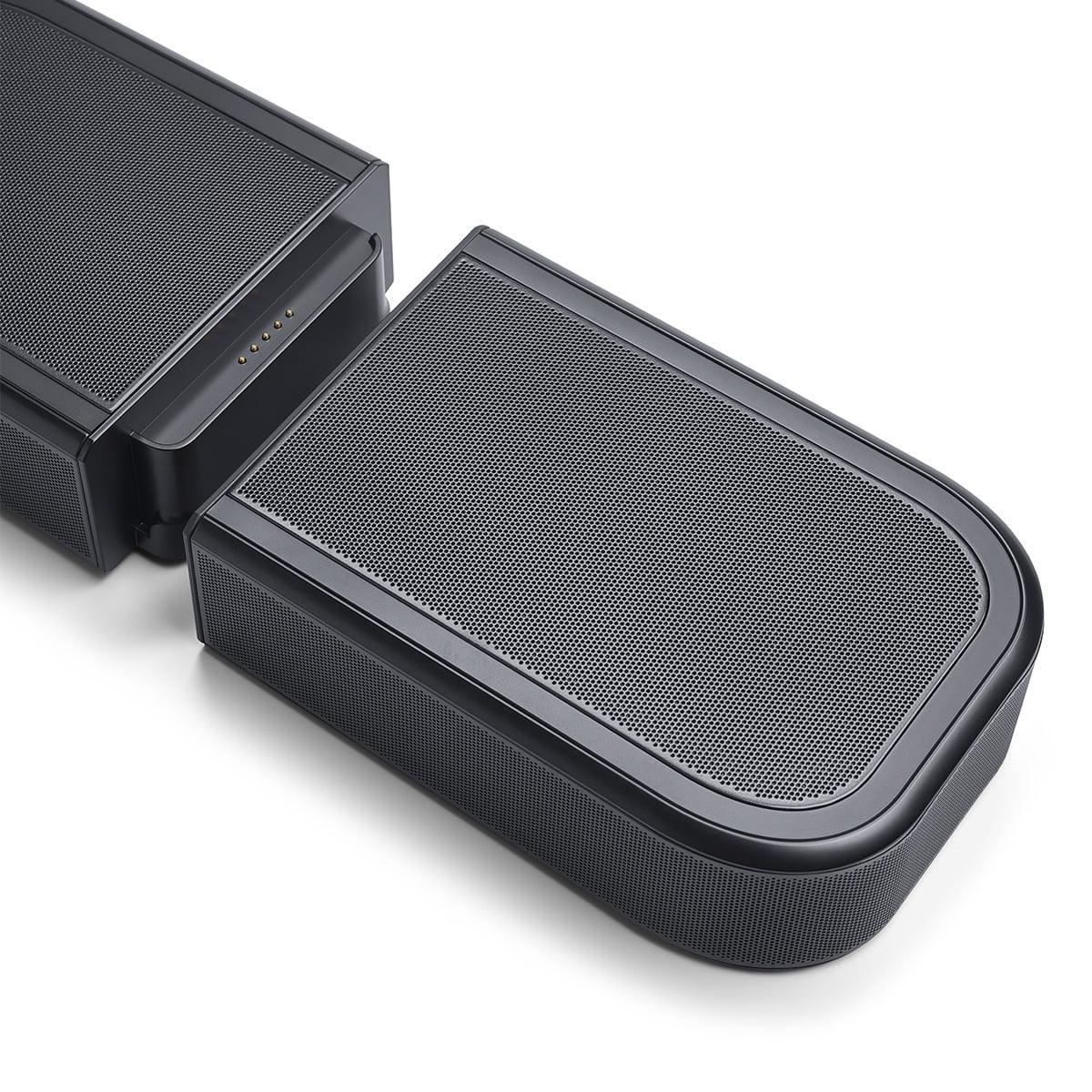
What makes this system unique is those detachable rear speakers. Most soundbars fake surround sound by bouncing audio off your walls, hoping the reflections reach your ears at the right time. The JBL actually places speakers behind you, creating real surround sound. Even better, these speakers charge when docked to the main bar and provide up to 10 hours of battery life when detached.
The technical specs reveal serious audio engineering. The main soundbar houses six racetrack drivers (oval-shaped for better frequency response in tight spaces), two 1-inch tweeters for crisp highs, and two up-firing drivers that bounce sound off your ceiling. The rear speakers each contain two racetrack drivers and one up-firing driver. That 10-inch subwoofer handles everything below 80Hz, delivering the kind of deep bass that makes action movies feel visceral.
MultiBeam 3.0 technology deserves special mention. This proprietary JBL processing analyzes your room acoustics and adjusts the soundbar's output to create a wider soundstage. Instead of sound coming from one point in front of your TV, MultiBeam spreads it across a much broader area, making your couch feel like the sweet spot in a movie theater.
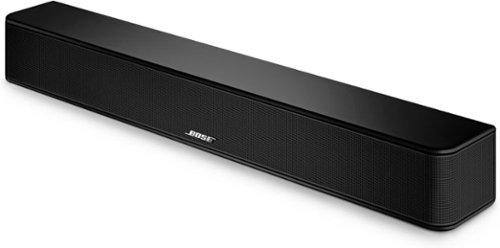
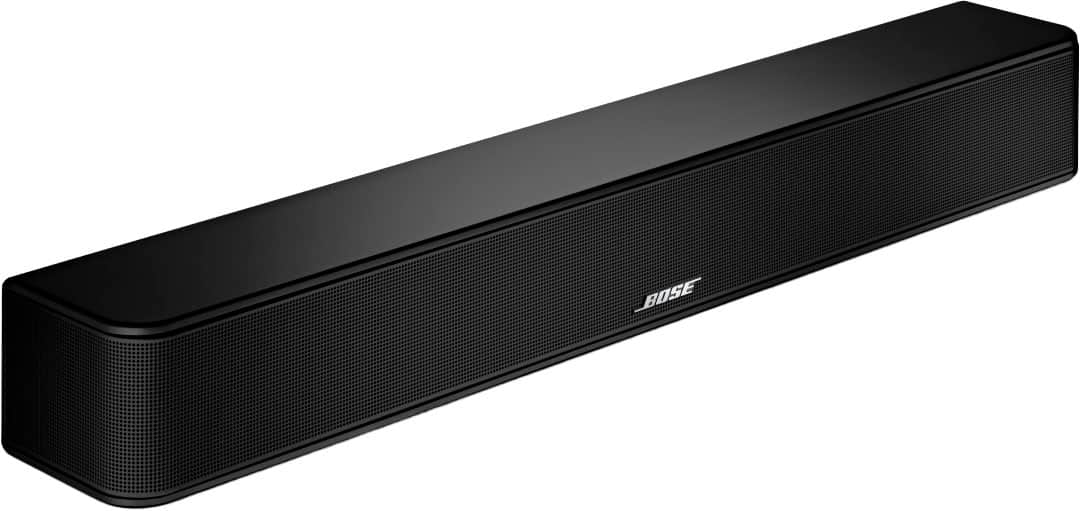
The Bose Solo Series 2 takes the opposite approach. Rather than overwhelming you with channels and components, it focuses obsessively on one thing: making dialogue crystal clear. This 2.0 system contains just two full-range drivers angled outward for wider stereo spread, housed in a compact 21.6-inch bar that weighs less than 4 pounds.
Bose's strength lies in psychoacoustic processing—understanding how human hearing works and optimizing audio accordingly. The dialogue enhancement mode doesn't just boost vocal frequencies; it analyzes the incoming audio signal and selectively emphasizes speech patterns while reducing background noise that might mask conversations.
The technical simplicity is intentional. With only optical and Bluetooth inputs, setup takes minutes rather than hours. There's no room calibration, no speaker placement optimization, no wireless pairing of multiple components. You connect one cable, adjust the bass and treble to taste, and you're done.
I've spent considerable time with both systems, and the performance differences are dramatic. The JBL Bar 1000 MK2 creates a genuine three-dimensional soundfield that transforms movie watching. During the sandworm sequences in "Dune," you hear the creature's movement circling around the room, with overhead rumbles that seem to emanate from your ceiling. The dedicated subwoofer delivers bass extension down to 33Hz—low enough that you feel explosions in your chest.
The system's 960W total power output isn't just marketing hype. In my 18x14-foot living room, the JBL fills every corner with detailed audio. The wireless rear speakers eliminate the usual soundbar compromise of fake surround processing. When characters speak off-screen, their voices actually come from the correct direction.
PureVoice 2.0 technology automatically adjusts dialogue levels based on ambient sound and volume settings. During quiet conversation scenes, it ensures voices remain intelligible without constant volume adjustments. When action sequences explode across the soundstage, dialogue stays clear and centered instead of getting lost in the chaos.
The Bose Solo Series 2 operates in a completely different performance realm. Its strength isn't immersion—it's clarity. The dialogue enhancement mode works remarkably well for its intended purpose. News broadcasts, sitcom dialogue, and documentary narration come through with exceptional clarity. The processing eliminates that hollow, echo-prone sound that plagues most TV speakers.
However, the physics limitations are obvious. Without a dedicated subwoofer, bass response drops off significantly below 80Hz. Action movie explosions lack impact, and music feels thin compared to full-range systems. The stereo presentation means no surround effects or spatial audio—everything comes from that single point beneath your TV.
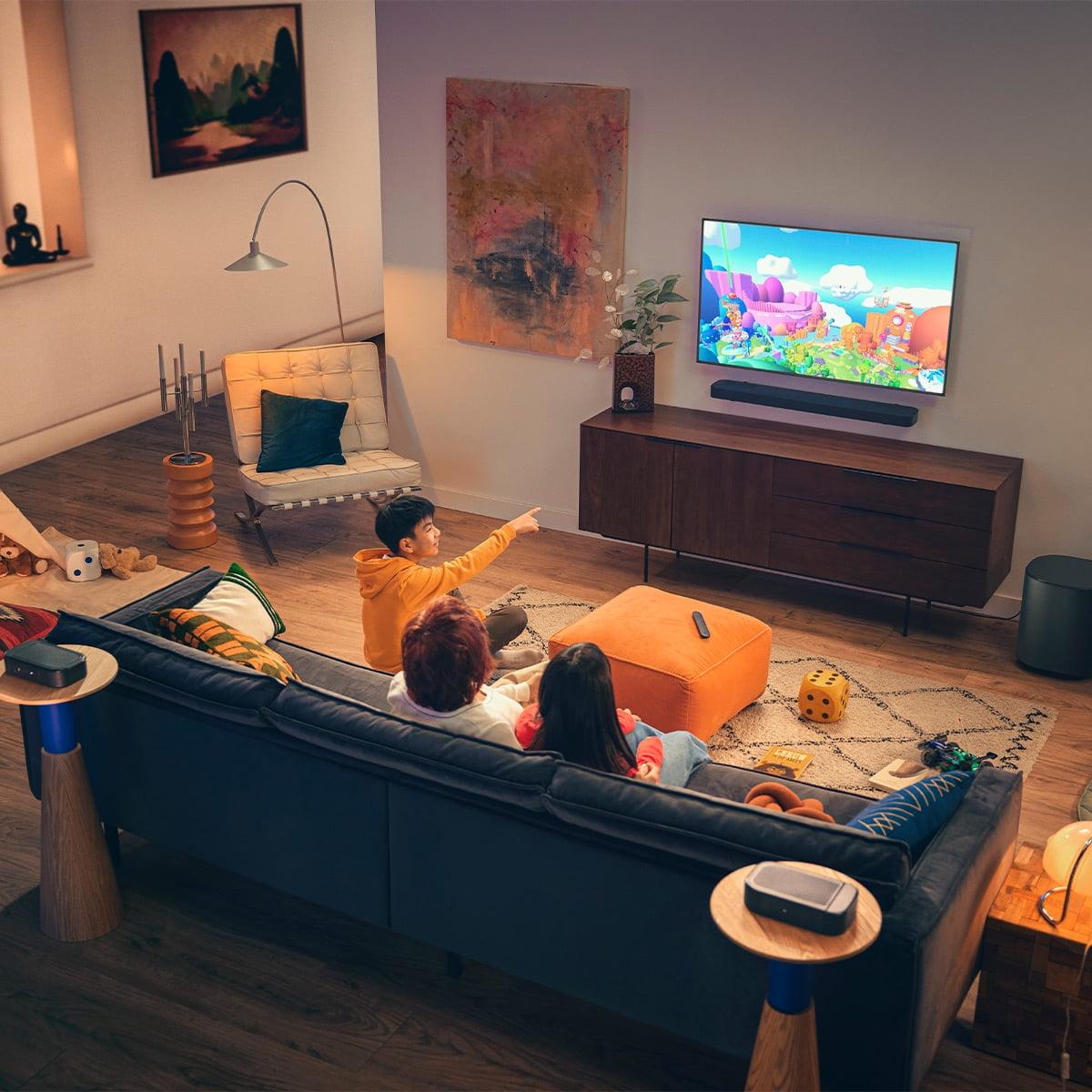
Room acoustics play a crucial role in soundbar performance, and these systems have very different optimal environments. The JBL Bar 1000 MK2 truly shines in larger spaces. The wireless subwoofer can pressurize rooms up to 500 square feet effectively, while the rear speakers maintain their surround effect even with significant distance from the main bar.
In smaller rooms, the JBL's power can actually work against it. The system's bass output and overall volume capabilities exceed what most apartments or bedrooms can handle without disturbing neighbors. The Night Listening mode partially addresses this by muting the main bar and subwoofer, delivering audio only through the detachable rear speakers for private listening.
The Bose Solo Series 2 performs optimally in small to medium-sized rooms. Its 2.8-inch height and compact footprint work perfectly under TVs mounted in bedrooms, kitchens, or smaller living spaces. The limited power output that seems inadequate for home theaters becomes appropriate for intimate listening environments.
Setup experiences couldn't be more different. The JBL Bar 1000 MK2 requires genuine planning. You'll need power outlets for the subwoofer, optimal placement for the wireless rear speakers, and time to run through the JBL One app's room calibration process. The initial setup took me about 45 minutes, including mounting the rear speakers on stands and fine-tuning the EQ settings.
The reward for this complexity is remarkable flexibility. The JBL One app provides detailed equalizer controls, room correction presets, and integration with major streaming services. The detachable speakers can function as portable Bluetooth speakers in other rooms, effectively giving you a multi-room audio system.
The Bose Solo Series 2 lives up to its promise of simplicity. After unboxing, I had it connected and playing audio within five minutes. The included optical cable connects to your TV, the power cord plugs into the wall, and you're operational. The remote control offers basic but sufficient functionality: volume, mute, bass adjustment, and dialogue mode.
This simplicity extends to daily use. There's no app to update, no wireless connections to troubleshoot, no battery levels to monitor. It's the audio equivalent of a reliable Toyota—not flashy, but it starts every time and does exactly what you expect.
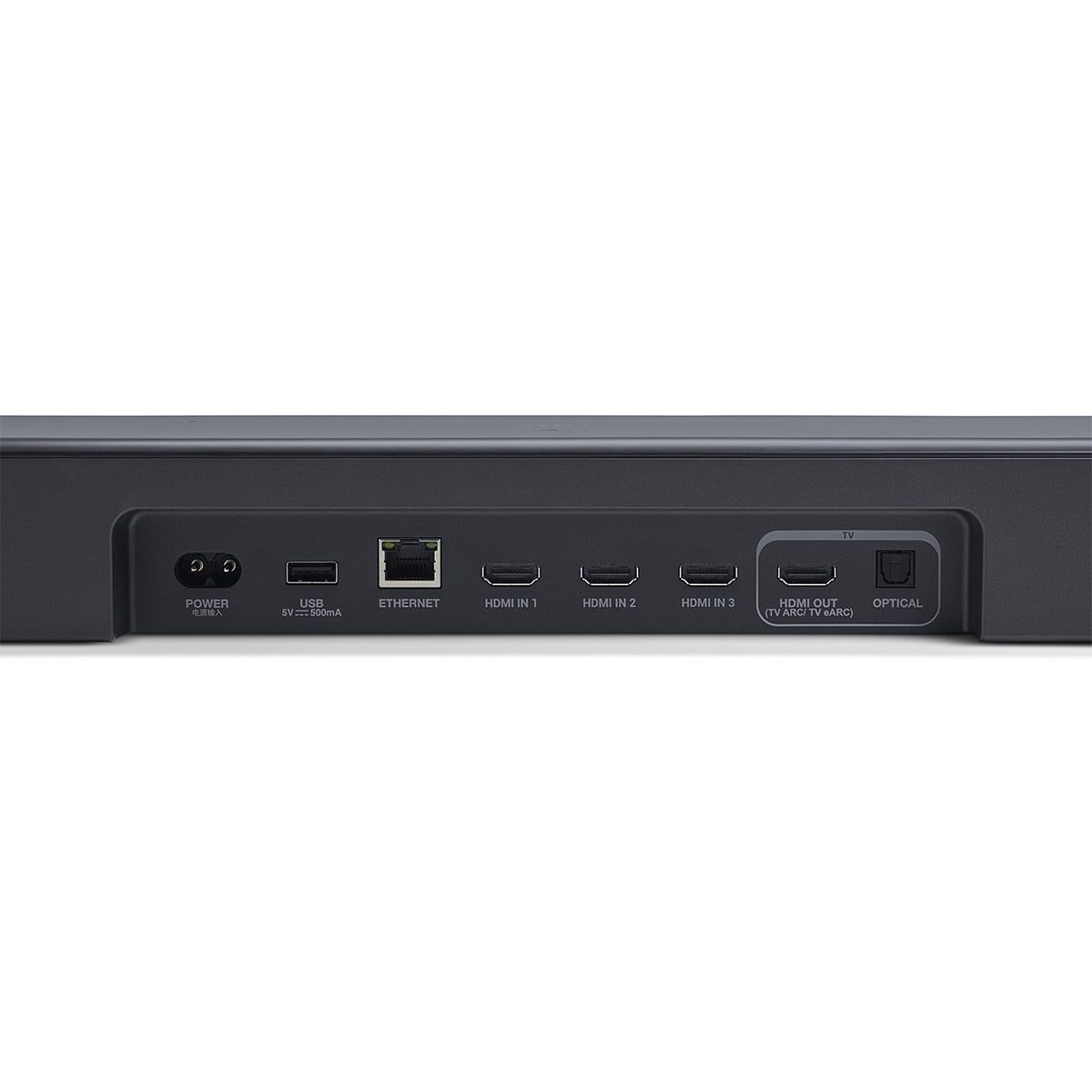
The JBL Bar 1000 MK2 represents current-generation soundbar technology. HDMI eARC support ensures compatibility with the latest gaming consoles and streaming devices, while 4K Dolby Vision passthrough future-proofs your video signals. The three HDMI inputs reduce the need for external switching, and Bluetooth 5.3 provides stable wireless connections with improved range and battery efficiency.
Wi-Fi streaming capabilities include AirPlay 2, Chromecast Built-In, and Spotify Connect—covering virtually every streaming ecosystem. The system is even Roon Ready, appealing to audiophiles with high-resolution music libraries.
The Bose Solo Series 2 deliberately avoids cutting-edge features, focusing instead on proven technology. Bluetooth 4.0 is older but perfectly adequate for streaming from phones and tablets. The lack of HDMI ports might seem limiting, but optical connections provide excellent audio quality with minimal latency—crucial for maintaining lip-sync accuracy.
For serious home theater use, the JBL Bar 1000 MK2 justifies its premium pricing. The system handles everything from Marvel blockbusters to intimate dramas with equal competence. The true Dolby Atmos processing makes helicopter scenes in war movies genuinely immersive, while the center channel dialogue processing ensures you catch every plot point.
Gaming performance particularly impressed me. The system's low latency and directional audio cues provide competitive advantages in first-person shooters, while the deep bass enhances racing games and action titles. The rear speakers create genuine positional audio that helps identify enemy locations in competitive games.
Music listening reveals the system's versatility. The full-range frequency response and dedicated tweeters handle everything from classical orchestras to electronic dance music. The wireless streaming options make it easy to transition from movie night to background music without switching inputs.
The Bose Solo Series 2 excels at everyday TV consumption. News programs, sitcoms, cooking shows, and sports broadcasts all benefit from the enhanced dialogue clarity. The system never feels overwhelming or complicated—it simply makes TV audio better without drawing attention to itself.
The compact size proves ideal for secondary viewing areas. I've used it successfully in bedrooms, kitchens, and home offices where space constraints make larger systems impractical. The auto wake feature powers the bar on automatically when it detects audio signals, while the auto sleep function conserves energy during inactive periods.
The choice between these soundbars ultimately depends on your expectations and commitment level. The JBL Bar 1000 MK2 demands significant investment—not just the $1,199.95 purchase price, but also the time, space, and energy to optimize its performance. In return, it delivers a transformative audio experience that rivals dedicated home theater systems costing thousands more.
The Bose Solo Series 2 asks for minimal commitment while delivering meaningful improvement over TV speakers. At $179.99, it costs less than a nice dinner out, requires virtually no setup expertise, and immediately makes dialogue more intelligible.
Neither choice is wrong, but they serve fundamentally different needs. If you're passionate about movies, games, and music—if you notice audio quality and care about immersion—the JBL's additional complexity pays dividends every time you watch content. If you simply want clearer dialogue and better TV audio without fuss or complexity, the Bose delivers exactly what you need at a price that won't strain your budget.
The soundbar market will continue evolving, with new formats and technologies emerging regularly. But these two approaches—maximum immersion versus focused simplicity—will likely remain relevant for years to come. Choose based on your primary use case and tolerance for complexity, and either the JBL Bar 1000 MK2 or Bose Solo Series 2 will serve you well in their respective roles.
| JBL Bar 1000 MK2 Soundbar System | Bose Solo Soundbar Series 2 Soundbar |
|---|---|
| Price - Major investment difference that determines feature expectations | |
| $1,199.95 (premium home theater system) | $179.99 (budget TV audio upgrade) |
| Audio Channels - Determines surround sound capability and immersion level | |
| 7.1.4 channels with true Dolby Atmos (overhead effects, real surround) | 2.0 channels stereo only (no surround sound or height effects) |
| Physical Components - Affects setup complexity and room requirements | |
| 3-piece system: main bar + detachable wireless rears + 10" wireless subwoofer | Single compact soundbar (21.6" wide, fits under most TVs) |
| Power Output - Determines volume capability and room-filling potential | |
| 960W total system power (fills large rooms 500+ sq ft) | Not specified (optimized for small-medium rooms up to 400 sq ft) |
| Bass Extension - Critical for movie impact and music fullness | |
| 33Hz with dedicated 10" subwoofer (deep, impactful bass) | Limited bass without subwoofer (lacks low-end impact) |
| Setup Complexity - Time investment and technical knowledge required | |
| 30-45 minutes with app calibration and speaker placement | Under 5 minutes plug-and-play with single optical cable |
| Connectivity Options - Determines compatibility with modern devices | |
| HDMI eARC + 3 HDMI inputs, Wi-Fi streaming, Bluetooth 5.3, optical | Optical input and Bluetooth 4.0 only (no HDMI ports) |
| Unique Features - Special capabilities that justify the price difference | |
| Detachable battery speakers (10hr life), Night Mode, MultiBeam 3.0, room calibration | Dialogue enhancement mode, auto wake/sleep, bass adjustment |
| Best Use Case - Who should choose each system | |
| Home theater enthusiasts wanting cinematic experience with complex content | Casual TV viewers prioritizing dialogue clarity and simplicity |
| Room Size Optimization - Where each system performs best | |
| Large living rooms and dedicated theater spaces | Bedrooms, kitchens, apartments, and smaller living areas |
The JBL Bar 1000 MK2 ($1,199.95) is a premium 7.1.4-channel home theater system with detachable wireless surround speakers and a 10-inch subwoofer, while the Bose Solo Series 2 ($179.99) is a simple 2.0-channel soundbar focused on dialogue enhancement. The JBL provides true surround sound with Dolby Atmos, while the Bose offers basic stereo audio improvement.
The JBL Bar 1000 MK2 is significantly better for home theater use. It delivers true Dolby Atmos with overhead sound effects, real surround sound from wireless rear speakers, and deep bass from its dedicated subwoofer. The Bose Solo Series 2 lacks surround sound capabilities and bass extension, making it unsuitable for cinematic experiences.
The Bose Solo Series 2 is much easier to set up, requiring only a single optical cable connection and taking under 5 minutes. The JBL Bar 1000 MK2 requires 30-45 minutes of setup including wireless speaker pairing, subwoofer placement, and app-based room calibration.
The JBL Bar 1000 MK2 ($1,199.95) costs $1,020 more than the Bose Solo Series 2 ($179.99). The price difference is justified if you want true surround sound, powerful bass, and a cinematic experience. For basic TV audio improvement and dialogue clarity, the Bose offers better value.
The Bose Solo Series 2 is better suited for small rooms, bedrooms, and apartments. Its compact size, lower power output, and simple setup make it ideal for spaces where the JBL Bar 1000 MK2 would be overwhelming or impractical due to its multiple components and high power output.
Yes, but with different capabilities. The JBL Bar 1000 MK2 offers Bluetooth 5.3, Wi-Fi streaming with AirPlay 2, Chromecast, and Spotify Connect. The Bose Solo Series 2 provides basic Bluetooth 4.0 connectivity for streaming from phones and tablets, but no advanced wireless features.
The JBL Bar 1000 MK2 has significantly better bass with its dedicated 10-inch wireless subwoofer that extends down to 33Hz. The Bose Solo Series 2 has limited bass response without a subwoofer, making it unsuitable for bass-heavy content like action movies or electronic music.
The JBL Bar 1000 MK2 excels at music with full-range frequency response, dedicated tweeters, and wireless streaming options. The Bose Solo Series 2 is adequate for casual music listening but lacks the bass extension and soundstage width for serious music enjoyment.
Both excel at dialogue but in different ways. The Bose Solo Series 2 specializes in dialogue enhancement with dedicated processing modes. The JBL Bar 1000 MK2 offers superior dialogue clarity through its center channel and PureVoice 2.0 technology, but this advantage may be overkill for basic TV viewing.
The JBL Bar 1000 MK2 provides HDMI eARC, three HDMI inputs, optical, USB, Wi-Fi, and Bluetooth connections. The Bose Solo Series 2 offers only optical input and Bluetooth connectivity, with no HDMI ports or advanced streaming features.
The Bose Solo Series 2 is more reliable due to its simpler single-unit design with fewer wireless connections and components that can fail. The JBL Bar 1000 MK2 has multiple wireless components, batteries to maintain, and more complex software that requires occasional updates.
Choose the JBL Bar 1000 MK2 if you're a home theater enthusiast who wants immersive surround sound, watches action movies regularly, and has the budget and space for a multi-component system. Choose the Bose Solo Series 2 if you want simple TV audio improvement, primarily watch dialogue-heavy content, prefer minimal setup, or are on a tight budget.
We've done our best to create useful and informative comparisons to help you decide what product to buy. Our research uses advanced automated methods to create this comparison and perfection is not possible - please contact us for corrections or questions. These are the sites we've researched in the creation of this article: ecoustics.com - engadget.com - bestbuy.com - techradar.com - rtings.com - hometechnologyreview.com - youtube.com - t3.com - whathifi.com - youtube.com - bhphotovideo.com - gzhls.at - device.report - support.jbl.com - support.jbl.com - jbl.com - av.com - audioadvice.com - jbl.com - target.com - worldwidestereo.com - rtings.com - bose.com - bose.com - assets.bose.com - bestbuy.com - youtube.com - pistonheads.com - costco.com - googlenestcommunity.com - youtube.com - discussions.apple.com

Privacy Policy
Terms and Conditions - Affiliate Policy
Home Security
© Copyright 2008-2026.
11816 Inwood Rd #1211, Dallas, TX 75244