


Shopping for a premium soundbar can feel overwhelming. You're looking at hundreds or even thousands of dollars for something that should make your TV sound amazing, but how do you know which one actually delivers? Today we're diving deep into two very different approaches to premium home audio: the Amazon Fire TV Soundbar Plus 5.1 and the JBL Bar 1000 MK2.
Both promise to transform your living room into a mini theater, but they take completely different paths to get there. One focuses on delivering excellent value with straightforward 5.1 surround sound, while the other pushes the envelope with cutting-edge features and maximum flexibility. Let's break down what really matters when you're spending serious money on sound.
Before we dive into specifics, it's worth understanding what separates premium soundbars from cheaper alternatives. The main considerations come down to channel configuration (how many discrete audio streams the system can handle), power output (how loud and dynamic the sound can get), and connectivity options (how it integrates with your existing setup).
Channel configuration is probably the most important spec to understand. A 5.1 system means five main speakers (left, center, right, left surround, right surround) plus one subwoofer for bass. A 7.1.4 system adds two more side channels and four height channels for overhead effects. More channels generally mean more immersive sound, but they also mean higher complexity and cost.
The other crucial factor is whether the system supports immersive audio formats like Dolby Atmos. This technology treats sounds as objects that can be placed anywhere in three-dimensional space, rather than just assigning them to specific channels. The catch is that there are two ways to implement Atmos: virtual processing (using software to simulate height effects) and true Atmos with physical up-firing speakers that bounce sound off your ceiling.
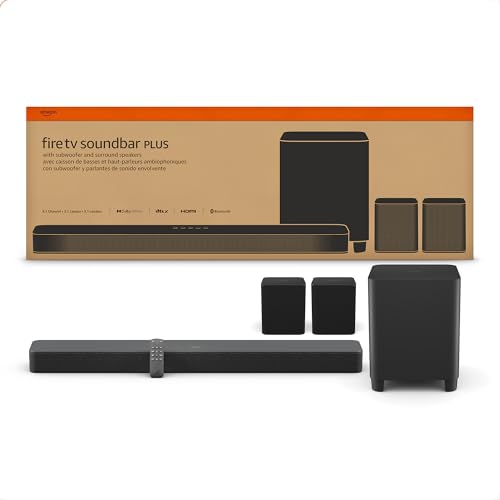
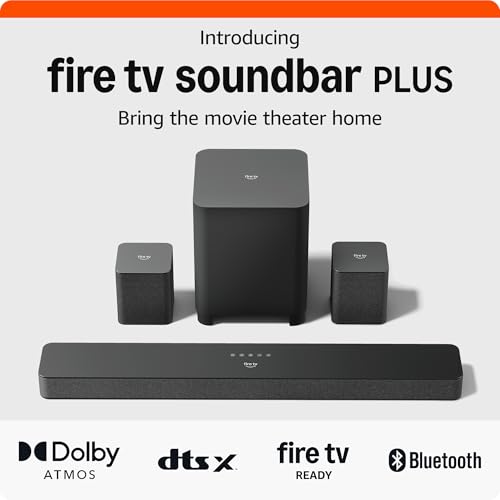
The Amazon Fire TV Soundbar Plus, released in late 2025, represents Amazon's serious entry into premium home audio. At the time of writing, it's positioned in the mid-range premium segment, offering true 5.1 surround sound with wireless components at a price point that undercuts many competitors. Amazon's approach here is clear: deliver excellent core performance without getting distracted by bells and whistles.
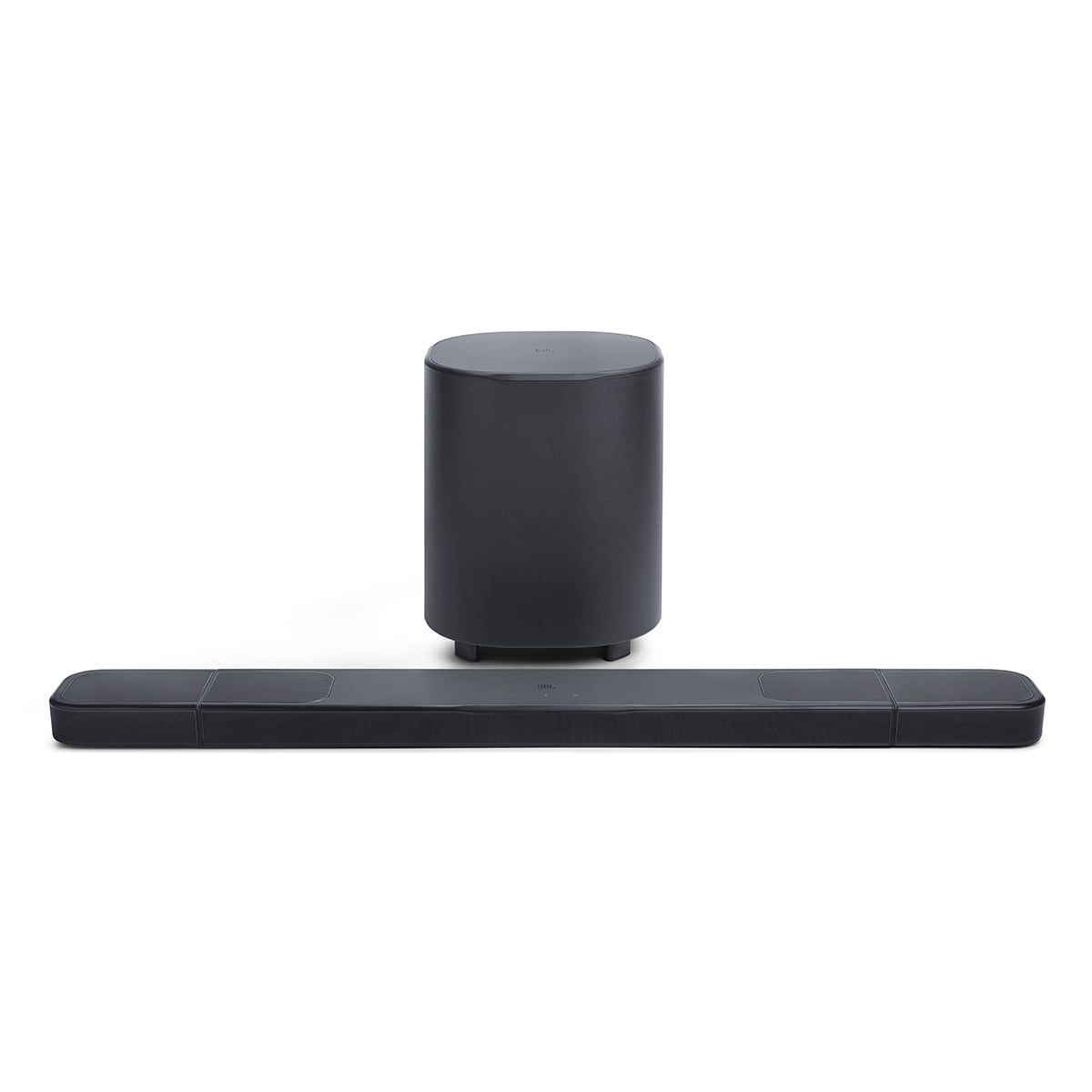
The JBL Bar 1000 MK2, part of JBL's 2025 product refresh, takes the opposite approach. It's a flagship system that throws everything at the wall – 7.1.4 channels, detachable wireless surrounds, true Dolby Atmos with up-firing drivers, and extensive smart features. The price reflects this kitchen-sink approach, positioning it in the premium tier where it competes with the best from Samsung and Sonos.
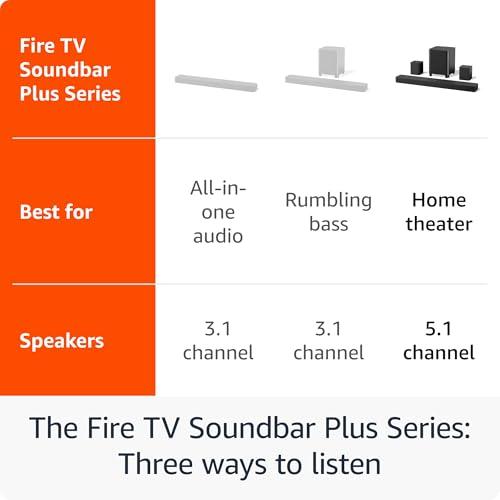
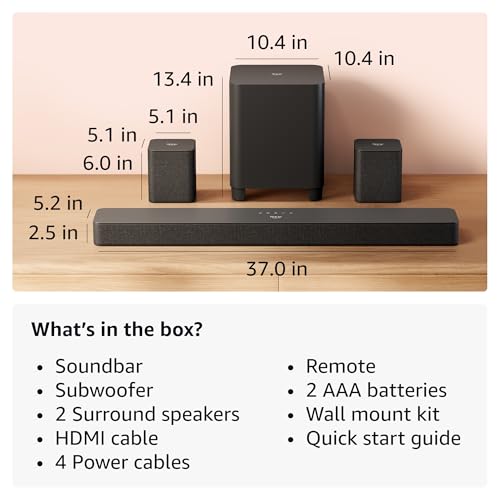
The most obvious difference between these systems is their channel count. The Fire TV Soundbar Plus sticks to a classic 5.1 configuration: left, center, right channels in the main soundbar, plus two wireless rear satellites and a wireless subwoofer. It's straightforward, proven, and focuses all its resources on making those five channels sound great.
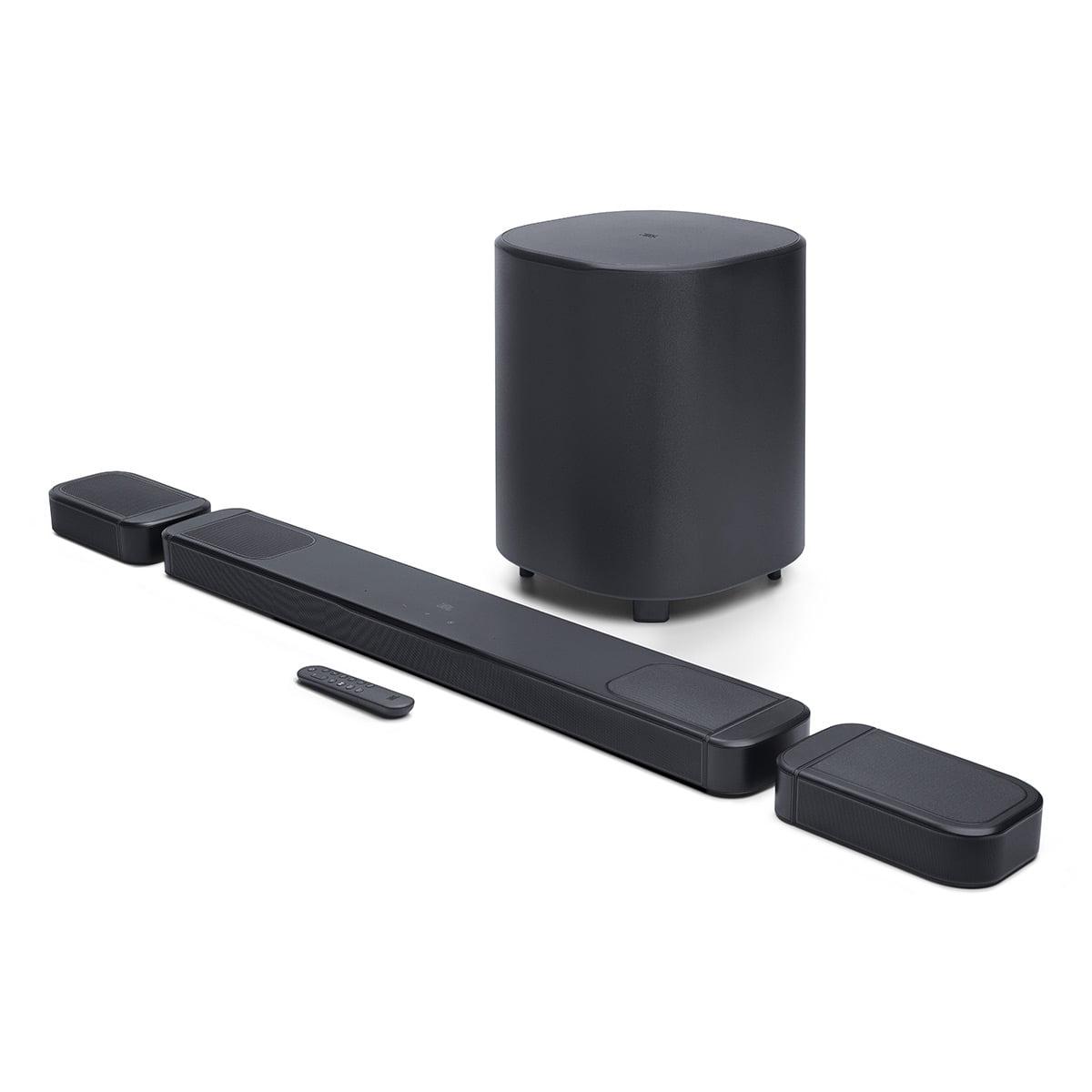
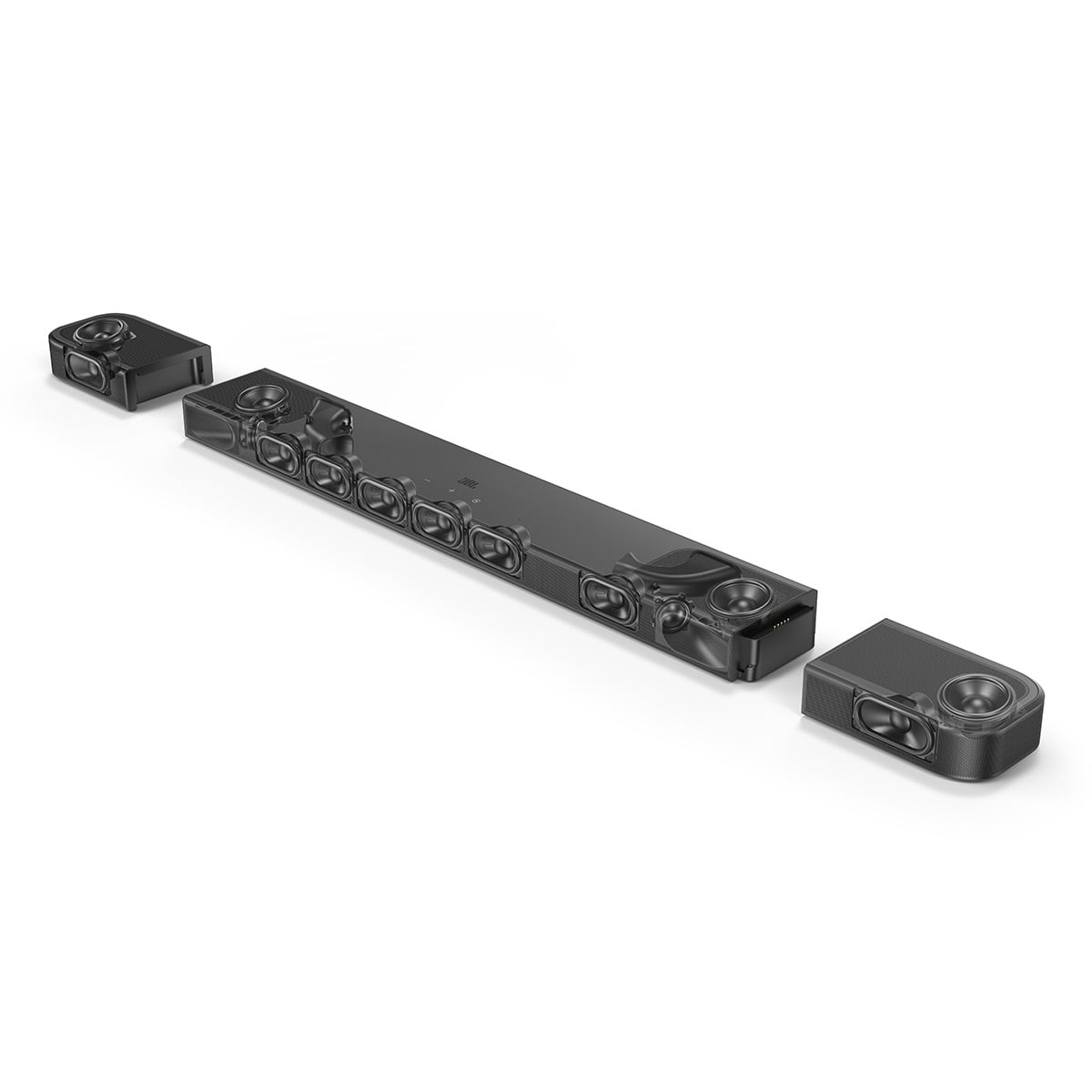
The JBL Bar 1000 MK2 goes much further with its 7.1.4 setup. Those extra numbers represent additional side channels and four height channels created by up-firing drivers. Two of these drivers live in the main soundbar, and one in each detachable rear speaker. This creates what JBL calls a "floor-to-ceiling" soundstage that can place audio effects above your head.
In terms of raw power, the JBL dominates with 960W maximum output (480W RMS) compared to the Fire TV's more modest specifications. This power advantage becomes noticeable when filling larger rooms or pushing for reference-level volume during action sequences. The JBL can maintain composure and clarity even when things get loud and chaotic.
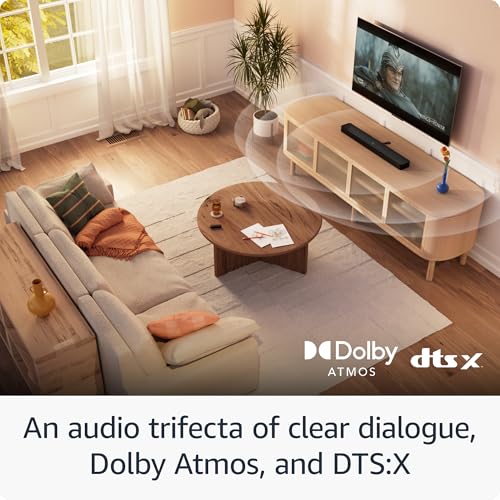
Here's where the two systems diverge most dramatically. The Fire TV Soundbar Plus supports Dolby Atmos and DTS:X formats, but implements them through virtual processing. This means the system uses clever algorithms to simulate height effects without actually firing sound upward. It works, but the effect is more subtle – you get some sense of expanded soundstage, but true overhead effects remain elusive.
The JBL Bar 1000 MK2 implements what we'd call "real" Dolby Atmos. Those four up-firing drivers physically project sound toward your ceiling, where it bounces back down to create genuine height effects. When a helicopter flies overhead in a movie, you'll actually hear it above you rather than just in front of you. The system's MultiBeam 3.0 technology further enhances this by creating a wider horizontal soundstage, so effects can seem to come from well outside the physical boundaries of your speakers.
This difference matters more than the specifications might suggest. Virtual Atmos can sound impressive, but true height channels create moments of genuine surprise and immersion that virtual processing simply cannot replicate.
Both systems include wireless subwoofers, but with different approaches. The Fire TV system includes a competent subwoofer that integrates well with the main speakers and provides solid impact for movie explosions and music. It's well-tuned for its price point and won't overwhelm smaller rooms.
The JBL's 10-inch subwoofer is substantially more powerful, with 300W maximum power handling and the ability to dig deeper into subsonic frequencies. This translates to more visceral impact during action sequences and fuller reproduction of bass-heavy music. The difference becomes particularly apparent in larger rooms where the extra power and driver size help maintain impact across greater distances.
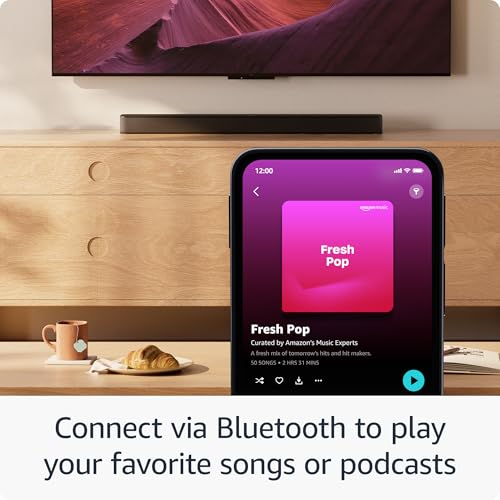
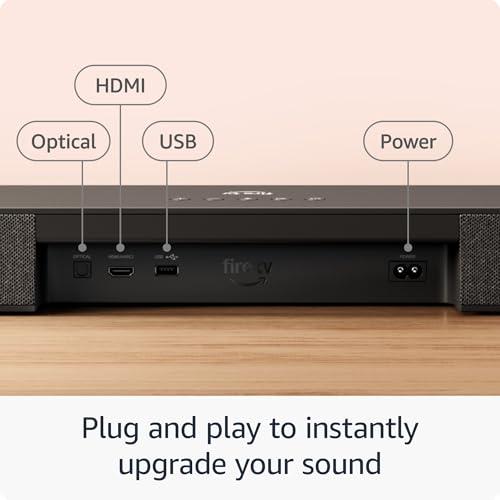
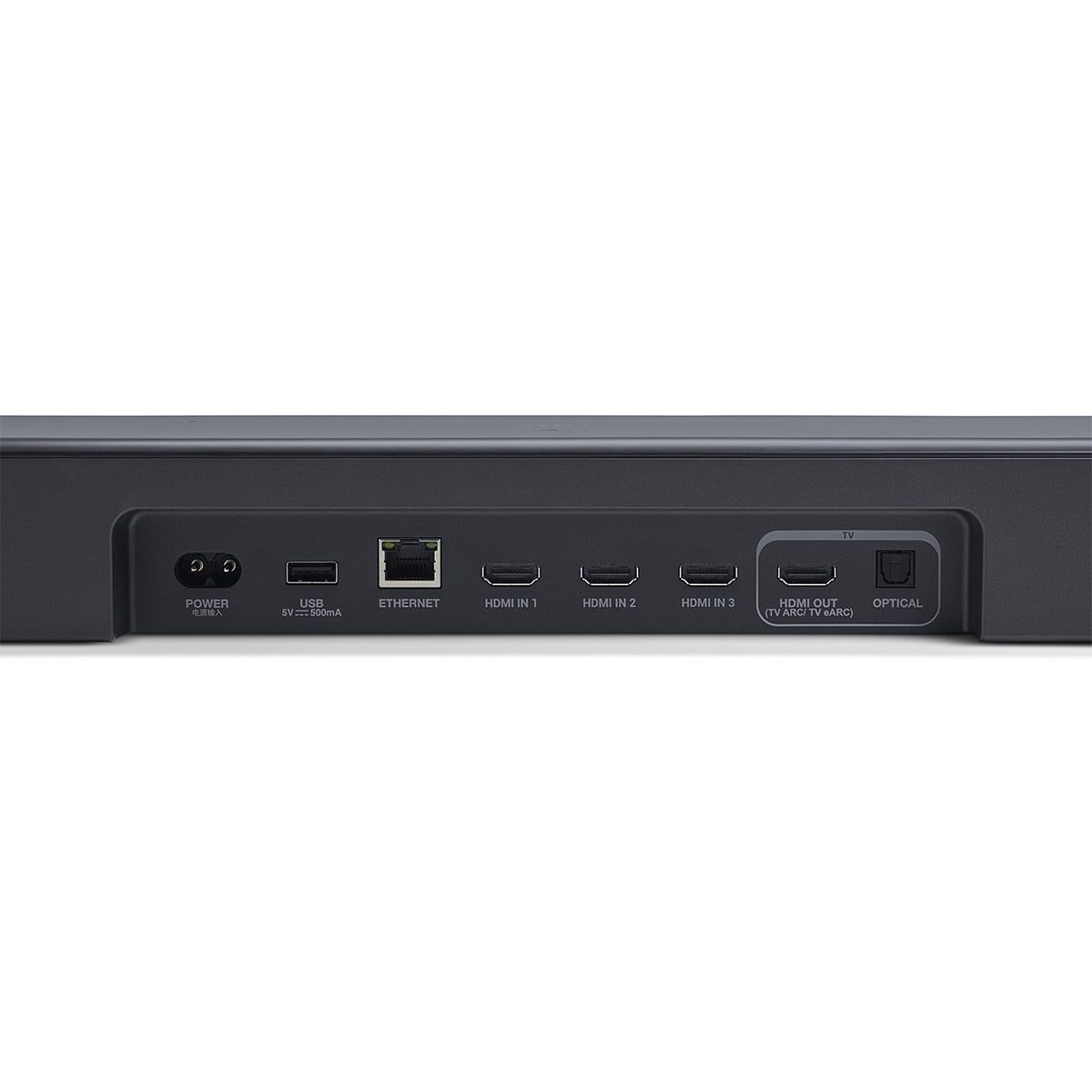
The connectivity story reveals each manufacturer's priorities. The Amazon Fire TV Soundbar Plus covers the essentials with HDMI eARC (which allows high-quality audio passthrough and TV remote control), optical input, USB for music playback, and Bluetooth for wireless streaming. Its party trick is deep integration with Fire TV devices – when connected to compatible Amazon streaming devices, you can control the soundbar through your TV's interface and use your Fire TV remote for basic adjustments.
The JBL Bar 1000 MK2 goes much further into smart territory. Beyond the basic connections, it includes dual-band Wi-Fi and supports virtually every streaming protocol you might want: AirPlay 2 for Apple devices, Chromecast Built-In for Android, Spotify Connect for direct streaming, and Roon Ready for audiophile-grade music management. The JBL One app provides detailed control over EQ settings, room calibration, and system management.
This difference reflects broader philosophies. Amazon built a soundbar that works exceptionally well within its ecosystem but doesn't try to be everything to everyone. JBL created a system that can integrate with virtually any smart home setup and adapt to different user preferences.
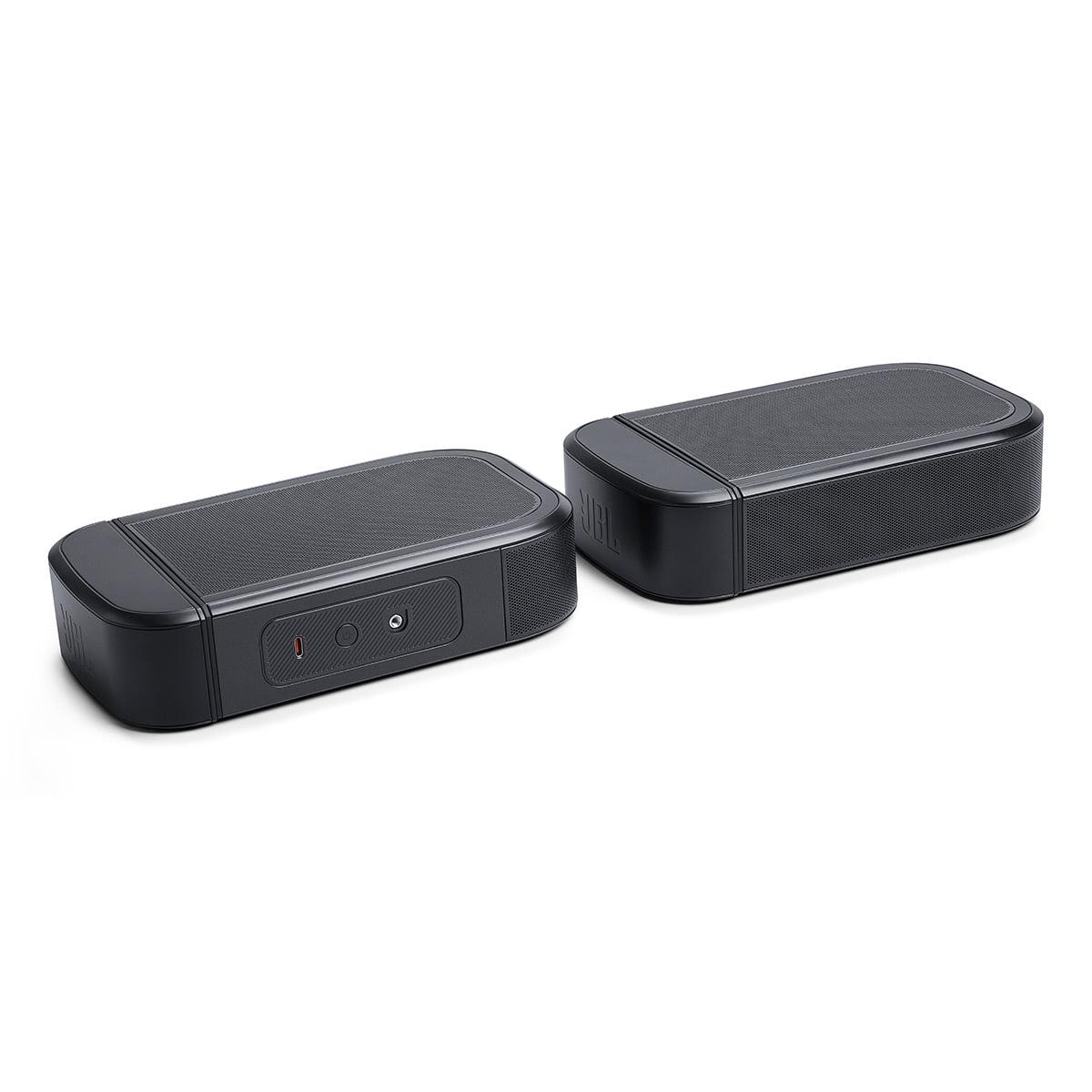
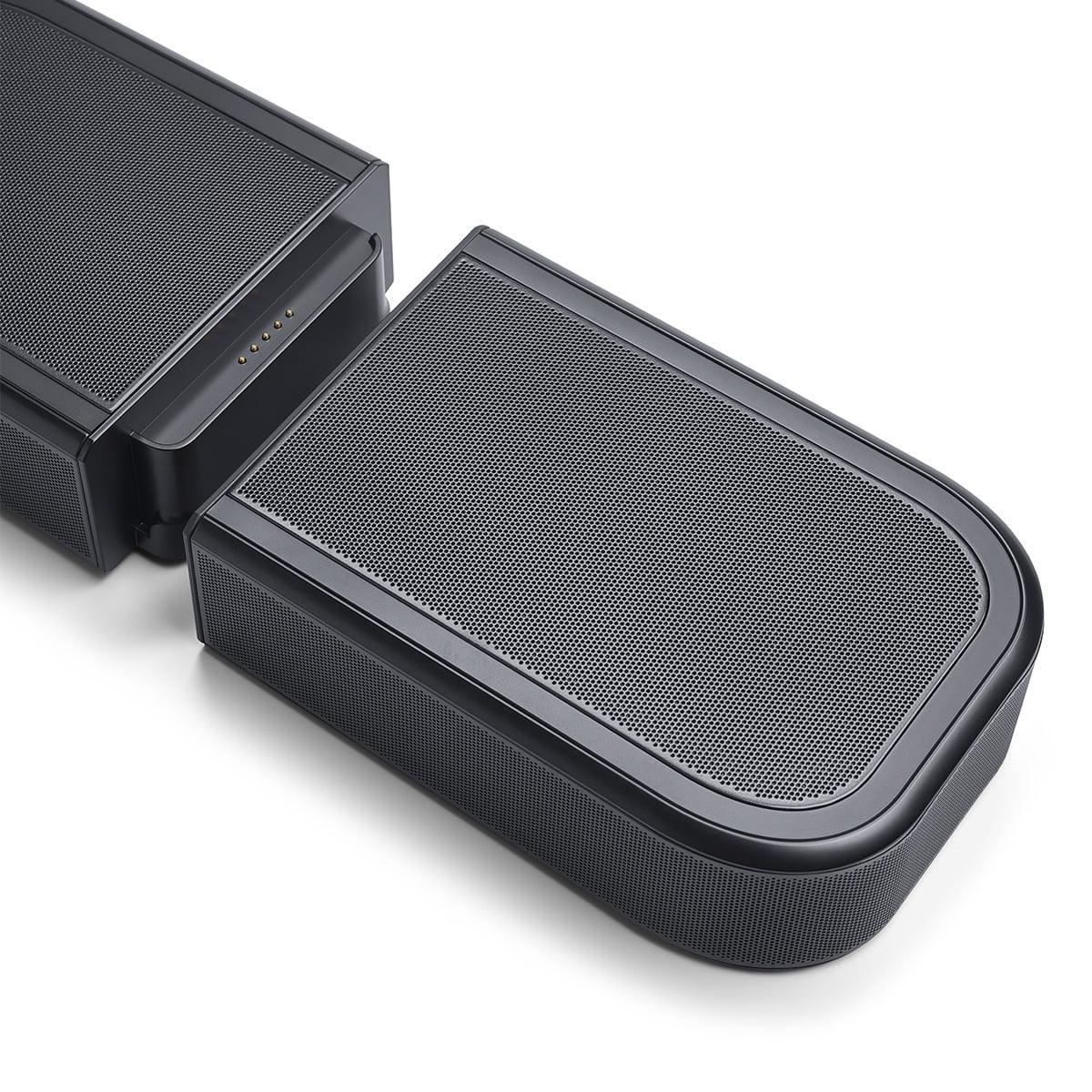
The JBL Bar 1000 MK2 includes one feature that sets it apart from virtually every competitor: truly detachable wireless surround speakers. These aren't just wireless satellites – they're full-featured speakers that can detach from the main soundbar and function independently.
Each detachable speaker includes its own battery (rated for up to 10 hours), up-firing driver for Atmos effects, and full-range drivers for music playback. When you want surround sound, they dock magnetically to either end of the main soundbar and become part of the 7.1.4 system. When you want portable audio, they detach and become high-quality Bluetooth speakers you can take anywhere.
This flexibility extends to a unique "Night Mode" that mutes the main soundbar and subwoofer entirely, routing audio only to the detachable speakers. Imagine watching a late-night movie with full surround sound that won't wake the neighbors – the speakers can be positioned right near your listening position for an intimate, immersive experience without disturbing others.
The Fire TV system takes a more traditional approach with fixed wireless rear speakers. They provide excellent surround effects when positioned properly, but they're designed to stay in place as part of your permanent setup.
For movie watching, both systems deliver significant improvements over built-in TV speakers, but in different ways. The Fire TV Soundbar Plus excels at dialogue clarity thanks to its dedicated center channel, and the wireless rear speakers create a convincing surround bubble for most content. Action sequences have good impact, and the system maintains good balance across different types of content.
Our research into user and expert reviews consistently highlights the Fire TV's strength in dialogue reproduction and overall tonal balance. The system doesn't try to be overly dramatic or bass-heavy – it aims for accuracy and clarity, which serves most TV content well.
The JBL Bar 1000 MK2 approaches home theater with more ambition. Those up-firing drivers create genuine height effects that can make action sequences dramatically more immersive. When properly calibrated, the system creates a soundstage that extends well beyond the physical speakers, with effects that seem to move around and above the room.
However, this capability comes with complexity. The JBL benefits significantly from proper room treatment and positioning, while the Fire TV system is more forgiving of less-than-ideal setups. If you have a dedicated media room with good acoustics, the JBL will shine. If you're working with a typical living room with hard surfaces and furniture placement constraints, the Fire TV might be the more practical choice.
Music reproduction reveals another key difference. The Fire TV system performs competently with music but clearly prioritizes movie content. The tonal balance works well for most genres, though bass-heavy electronic music or rock might expose the limitations of the smaller subwoofer in larger rooms.
The JBL Bar 1000 MK2 shows its premium credentials with music playback. The more powerful amplification, larger subwoofer, and sophisticated driver array create better dynamics and fuller frequency response. The various streaming options make it easy to access high-quality music sources, and the app-based EQ allows fine-tuning for different musical preferences.
You're primarily focused on improving your TV watching experience without getting deep into audio enthusiast territory. The Fire TV system delivers excellent value for users who want clear dialogue, solid surround effects, and reliable performance without complexity.
It's particularly compelling for existing Fire TV users who will benefit from the ecosystem integration. Being able to control your soundbar through your streaming device's interface is genuinely convenient for daily use.
The system also makes sense for users with space or aesthetic constraints. The components are designed to be unobtrusive and work well in typical living room setups without requiring extensive positioning optimization or room treatment.
Users who want the best possible audio experience and are willing to pay for premium features. The JBL system justifies its higher price point with genuinely advanced capabilities that cheaper systems cannot match.
The detachable speaker functionality appeals to users with varied lifestyles – perhaps you want serious home theater performance most of the time, but occasionally need portable speakers for outdoor gatherings or other rooms. The flexibility is genuinely unique in this price range.
It's also the better choice for larger rooms or users who frequently watch action-heavy content where the immersive audio capabilities will be most apparent. If you're the type of person who notices when movie theaters have excellent sound systems, you'll appreciate what the JBL brings to your home setup.
At the time of writing, the pricing reflects each system's positioning. The Fire TV Soundbar Plus offers exceptional value in the mid-range premium category, delivering true 5.1 surround sound with wireless components at a price that undercuts many competitors with similar features.
The JBL Bar 1000 MK2 commands a significant premium but includes features and capabilities that justify the cost for users who will actually utilize them. The detachable speakers alone represent a unique value proposition that no direct competitor offers.
Value isn't just about price – it's about getting the features you'll actually use at a price that makes sense for your situation. If you primarily watch TV shows and movies in a typical living room setup, paying extra for features like true Atmos height channels might not provide proportional benefit. But if you're building a dedicated entertainment space or frequently host movie nights, those premium features become much more valuable.
Choose the Amazon Fire TV Soundbar Plus if you want excellent surround sound performance with straightforward operation and strong value. It's particularly appealing for Fire TV ecosystem users and anyone who prioritizes reliability and ease of use over cutting-edge features.
Choose the JBL Bar 1000 MK2 if you want flagship-level performance with maximum flexibility and don't mind paying for premium features. The detachable speakers and true Atmos implementation provide capabilities that cheaper systems simply cannot match.
Both represent significant upgrades over built-in TV audio, but they target different priorities and use cases. The Fire TV focuses its resources on core performance and value, while the JBL pushes boundaries with advanced features and maximum capability. Your choice should align with how you actually use your entertainment system and what aspects of audio performance matter most to you.
| Amazon Fire TV Soundbar Plus 5.1 | JBL Bar 1000 MK2 |
|---|---|
| Channel Configuration - Determines surround sound immersion level | |
| 5.1 channels (focused on core surround performance) | 7.1.4 channels (adds side channels and height effects) |
| Dolby Atmos Implementation - Critical for overhead sound effects | |
| Virtual processing only (simulated height effects) | True Atmos with 4 up-firing drivers (real overhead sound) |
| Total System Power - Affects volume and dynamics | |
| Moderate power output (suitable for most rooms) | 960W max/480W RMS (fills large rooms with authority) |
| Subwoofer - Essential for movie impact and music bass | |
| Wireless subwoofer included (good integration) | 10-inch wireless sub with 300W (deeper, more powerful bass) |
| Rear Speaker Design - Flexibility vs permanent placement | |
| Fixed wireless satellites (traditional surround setup) | Detachable battery-powered speakers (10hr portable use) |
| Smart Features - Streaming and app control capabilities | |
| HDMI eARC, Bluetooth, Fire TV integration | Wi-Fi, AirPlay 2, Chromecast, Spotify Connect, JBL One app |
| Setup Complexity - Time and effort to optimize | |
| Plug-and-play with pre-paired components | More complex with room calibration and app setup |
| Best Use Case - Who should prioritize each system | |
| TV/movie watching with Fire TV ecosystem users | Premium home theater with flexible lifestyle needs |
| Value Proposition - Performance per dollar consideration | |
| Excellent 5.1 performance at accessible pricing | Flagship features justify premium cost for enthusiasts |
The Amazon Fire TV Soundbar Plus 5.1 provides excellent value by delivering true 5.1 surround sound with wireless components at a mid-range price point. The JBL Bar 1000 MK2 costs significantly more but includes premium features like detachable speakers and true Dolby Atmos that justify the higher price for enthusiasts seeking flagship performance.
The JBL Bar 1000 MK2 delivers superior sound quality with its 7.1.4 channel configuration, 960W of power, and four up-firing drivers for genuine overhead effects. The Amazon Fire TV Soundbar Plus 5.1 focuses on excellent core 5.1 performance with clear dialogue and solid bass, but uses virtual Atmos processing instead of physical height channels.
The Amazon Fire TV Soundbar Plus 5.1 wins for simplicity with pre-paired wireless components and plug-and-play operation. The JBL Bar 1000 MK2 requires more setup time due to its advanced features, app configuration, and room calibration options, though it offers more customization once configured.
Yes, both the Amazon Fire TV Soundbar Plus 5.1 and JBL Bar 1000 MK2 work with all TV brands through HDMI eARC or optical connections. However, the Amazon Fire TV system offers special integration features when paired with Fire TV streaming devices.
The Amazon Fire TV Soundbar Plus 5.1 is better suited for smaller spaces due to its more modest power output and simpler setup requirements. The JBL Bar 1000 MK2 is designed for larger rooms and may be overkill for compact living spaces, though its night mode feature could be useful for apartment dwellers.
The JBL Bar 1000 MK2 provides significantly deeper and more powerful bass with its 10-inch subwoofer and 300W of dedicated bass amplification. The Amazon Fire TV Soundbar Plus 5.1 includes a capable wireless subwoofer that delivers good bass for most content but won't match the JBL's room-shaking impact.
The JBL Bar 1000 MK2 excels in streaming connectivity with Wi-Fi, AirPlay 2, Chromecast Built-In, Spotify Connect, and Roon Ready support. The Amazon Fire TV Soundbar Plus 5.1 covers the basics with Bluetooth and excellent Fire TV integration but lacks advanced wireless streaming protocols.
Yes, both systems include wireless surround speakers, but with different capabilities. The Amazon Fire TV Soundbar Plus 5.1 has traditional fixed wireless satellites, while the JBL Bar 1000 MK2 features unique detachable speakers with 10-hour batteries that can function as portable Bluetooth speakers.
The JBL Bar 1000 MK2 provides a more immersive home theater experience with true Dolby Atmos height effects, more powerful amplification, and a wider soundstage. The Amazon Fire TV Soundbar Plus 5.1 still delivers excellent movie performance with clear dialogue and solid surround effects, making it a great choice for casual movie watching.
The Amazon Fire TV Soundbar Plus 5.1 doesn't require an app and can be controlled via the included remote or Fire TV interface. The JBL Bar 1000 MK2 benefits significantly from the JBL One app for EQ adjustments and advanced features, though basic functions work with the included remote.
Both systems have similar soundbar sizes, but the JBL Bar 1000 MK2 includes larger components overall due to its 10-inch subwoofer and more substantial rear speakers. The Amazon Fire TV Soundbar Plus 5.1 has more compact wireless satellites and a smaller subwoofer, making it easier to integrate into tight spaces.
The Amazon Fire TV Soundbar Plus 5.1 is more beginner-friendly with straightforward setup, simple controls, and excellent performance right out of the box. The JBL Bar 1000 MK2 offers more advanced features but requires more time to learn and optimize, making it better suited for users who want to dive deeper into audio customization.
We've done our best to create useful and informative comparisons to help you decide what product to buy. Our research uses advanced automated methods to create this comparison and perfection is not possible - please contact us for corrections or questions. These are the sites we've researched in the creation of this article: rtings.com - cordbusters.co.uk - techradar.com - developer.amazon.com - t3.com - hometechnologyreview.com - youtube.com - hometechnologyreview.com - whathifi.com - hometechnologyreview.com - hometechnologyreview.com - youm.design - hometechnologyreview.com - dolby.com - ecoustics.com - engadget.com - bestbuy.com - techradar.com - rtings.com - hometechnologyreview.com - youtube.com - t3.com - whathifi.com - youtube.com - bhphotovideo.com - gzhls.at - device.report - support.jbl.com - support.jbl.com - jbl.com - av.com - audioadvice.com - jbl.com - target.com - worldwidestereo.com

Privacy Policy
Terms and Conditions - Affiliate Policy
Home Security
© Copyright 2008-2026.
11816 Inwood Rd #1211, Dallas, TX 75244