



If you've ever watched a movie and couldn't hear what the characters were saying over explosions, or felt like your TV's built-in speakers made everything sound flat and lifeless, you're definitely not alone. Modern TVs have gotten incredibly thin, which looks amazing on the wall but leaves almost no room for decent speakers. That's where soundbars come in – they're essentially the easiest way to dramatically improve your TV's audio without turning your living room into a maze of wires and speakers.
But here's the thing: not all soundbars are created equal. Today we're comparing two very different approaches to better TV sound – the JBL Bar 1000 MK2 ($1,199.95) and the Samsung HW-S700D ($377.99). These represent completely different philosophies in soundbar design, and understanding their differences will help you figure out which one actually makes sense for your space and needs.
Before diving into these specific models, it's worth understanding what we're dealing with in today's soundbar market. The category has exploded over the past few years, evolving from basic stereo bars that were barely better than TV speakers to sophisticated systems that can genuinely compete with traditional home theater setups.
The key considerations when shopping for a soundbar boil down to a few crucial factors. First is channel configuration – this is where you see numbers like 3.1 or 7.1.4. The first number represents main speakers (left, center, right), the second is subwoofers, and if there's a third number, that's height speakers for Dolby Atmos effects. Room size matters enormously too, as a powerful system in a small room can be overwhelming, while a modest soundbar in a large space might disappear entirely.
Then there's the question of immersion level – do you want virtual surround sound that simulates the effect, or true surround with actual speakers placed around your room? Connectivity is another practical consideration, especially if you have gaming consoles, streaming devices, or other sources you want to plug directly into the soundbar. Finally, there are design constraints to consider – some TVs sit so low on their stands that even a modest soundbar might block the screen.
Both the JBL and Samsung launched in late 2023, representing the latest thinking from their respective companies. The JBL Bar 1000 MK2 is actually an updated version of JBL's flagship soundbar, with improvements to wireless connectivity and refinements to their MultiBeam technology. Samsung's HW-S700D emerged from their focus on ultra-slim designs that complement their increasingly thin TV lineup.
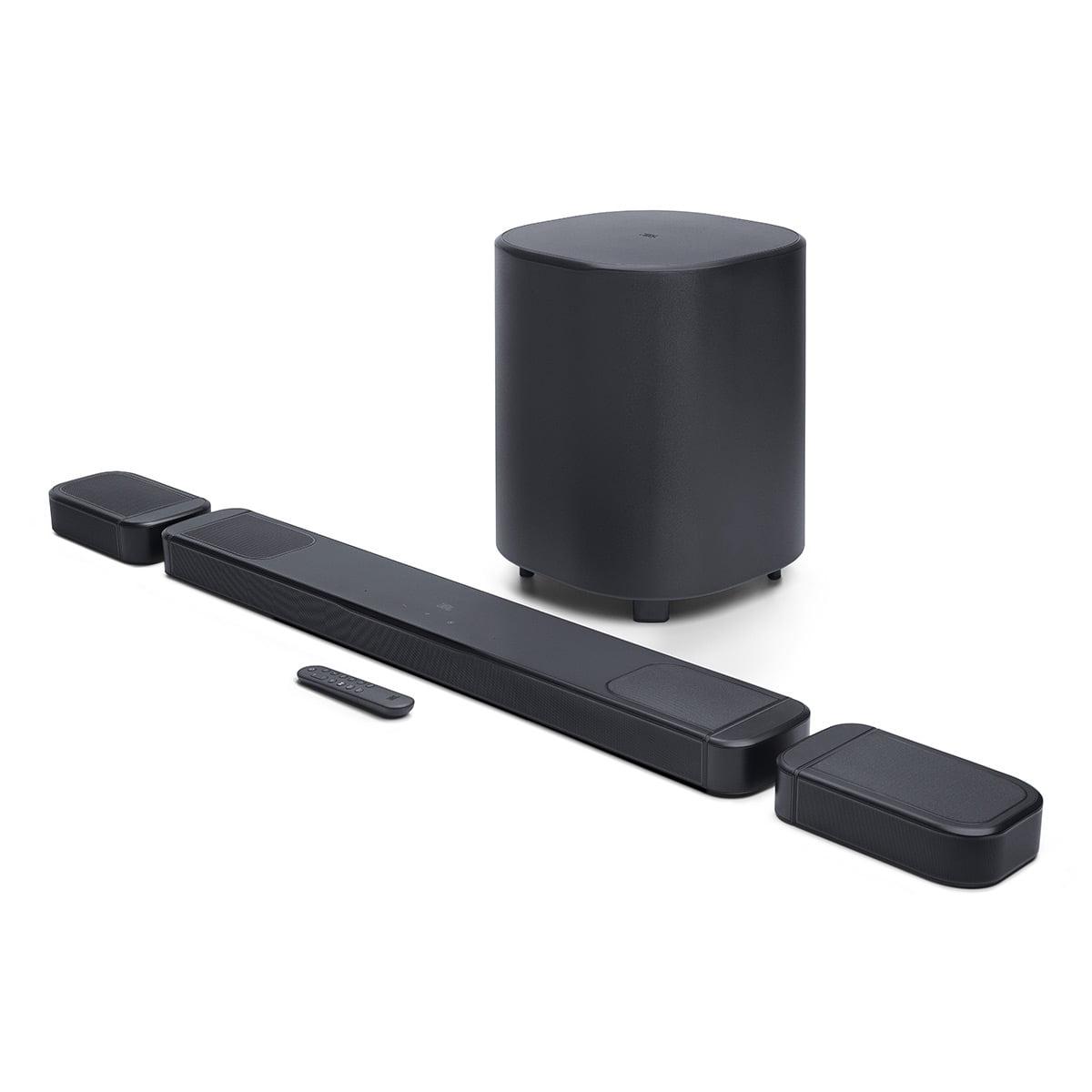
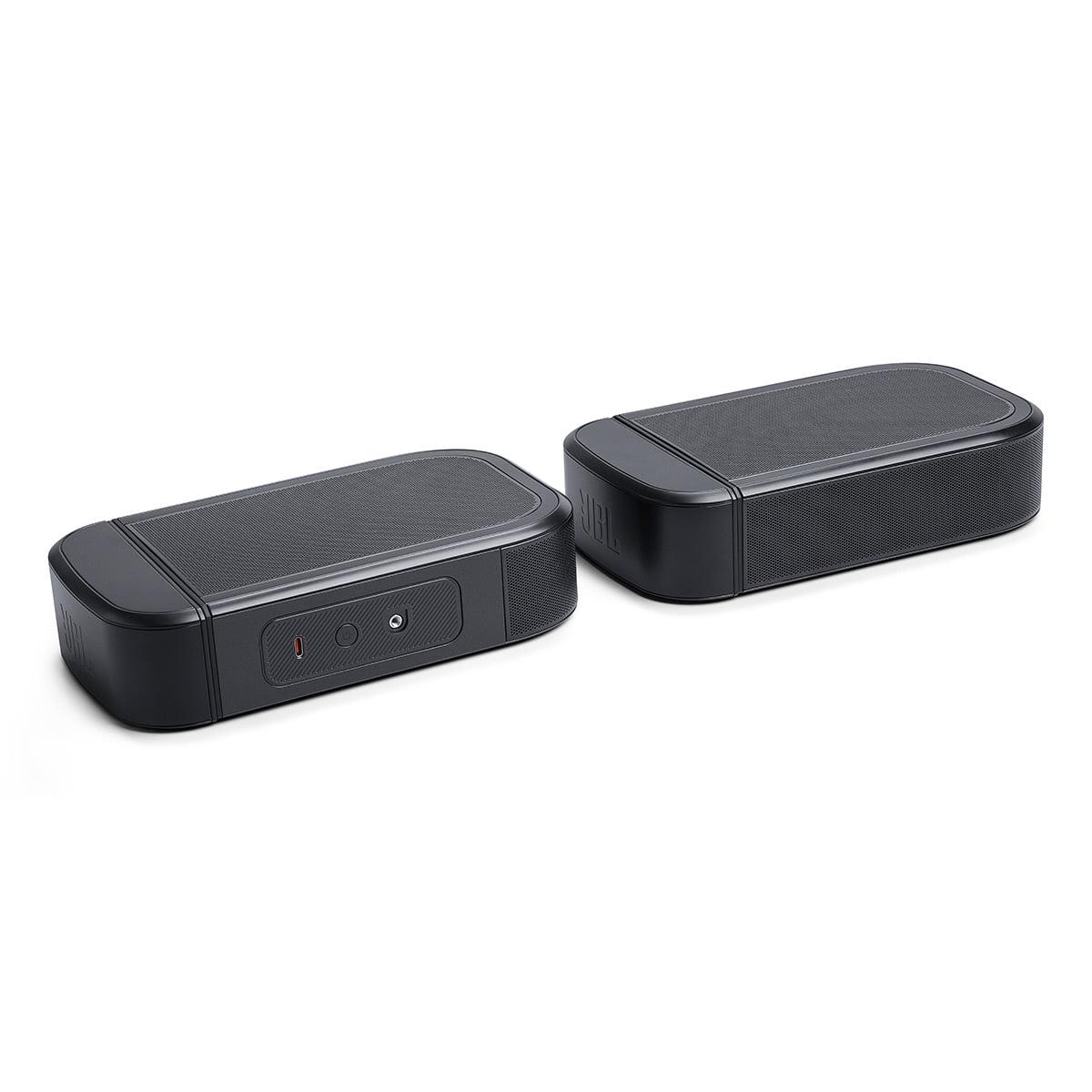
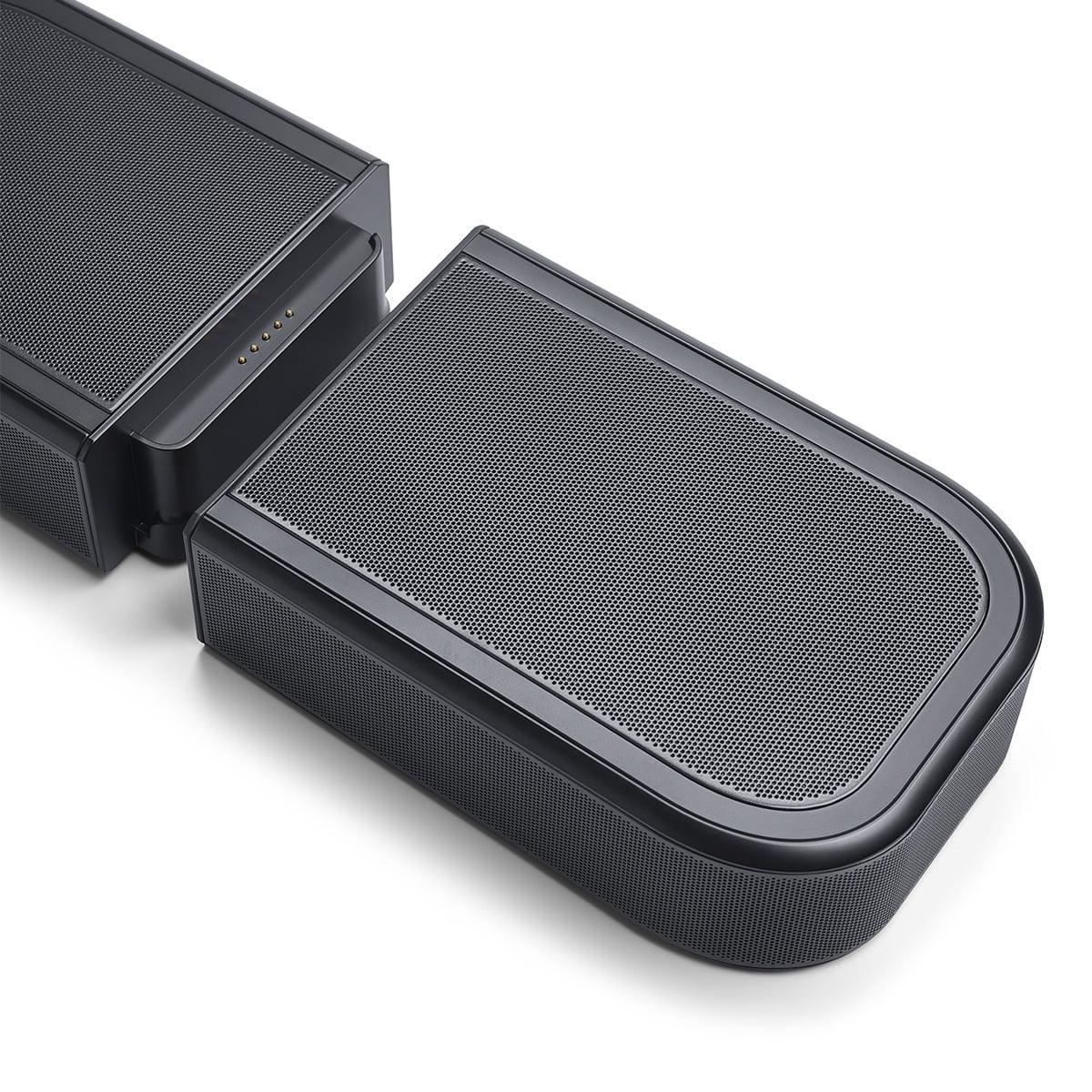
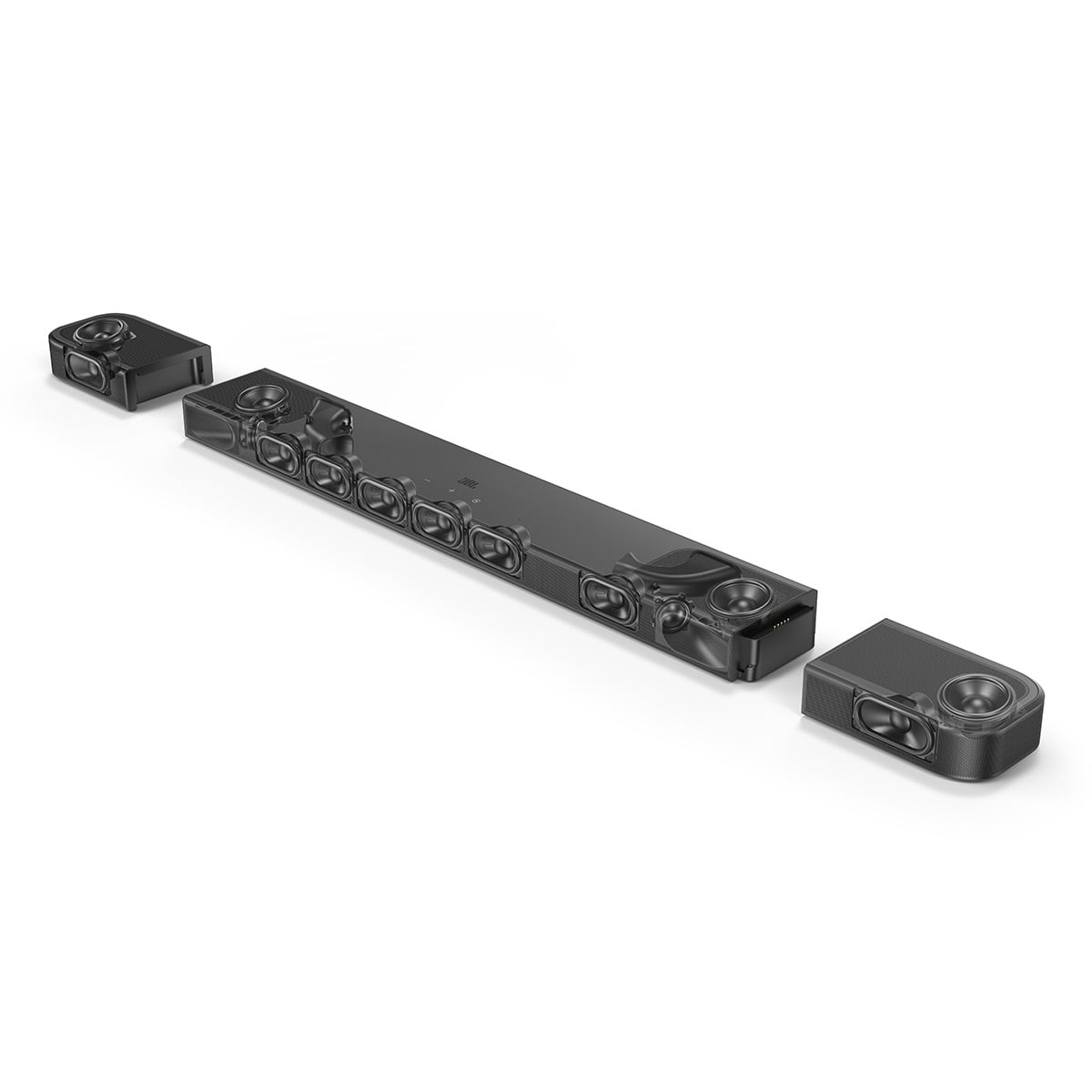
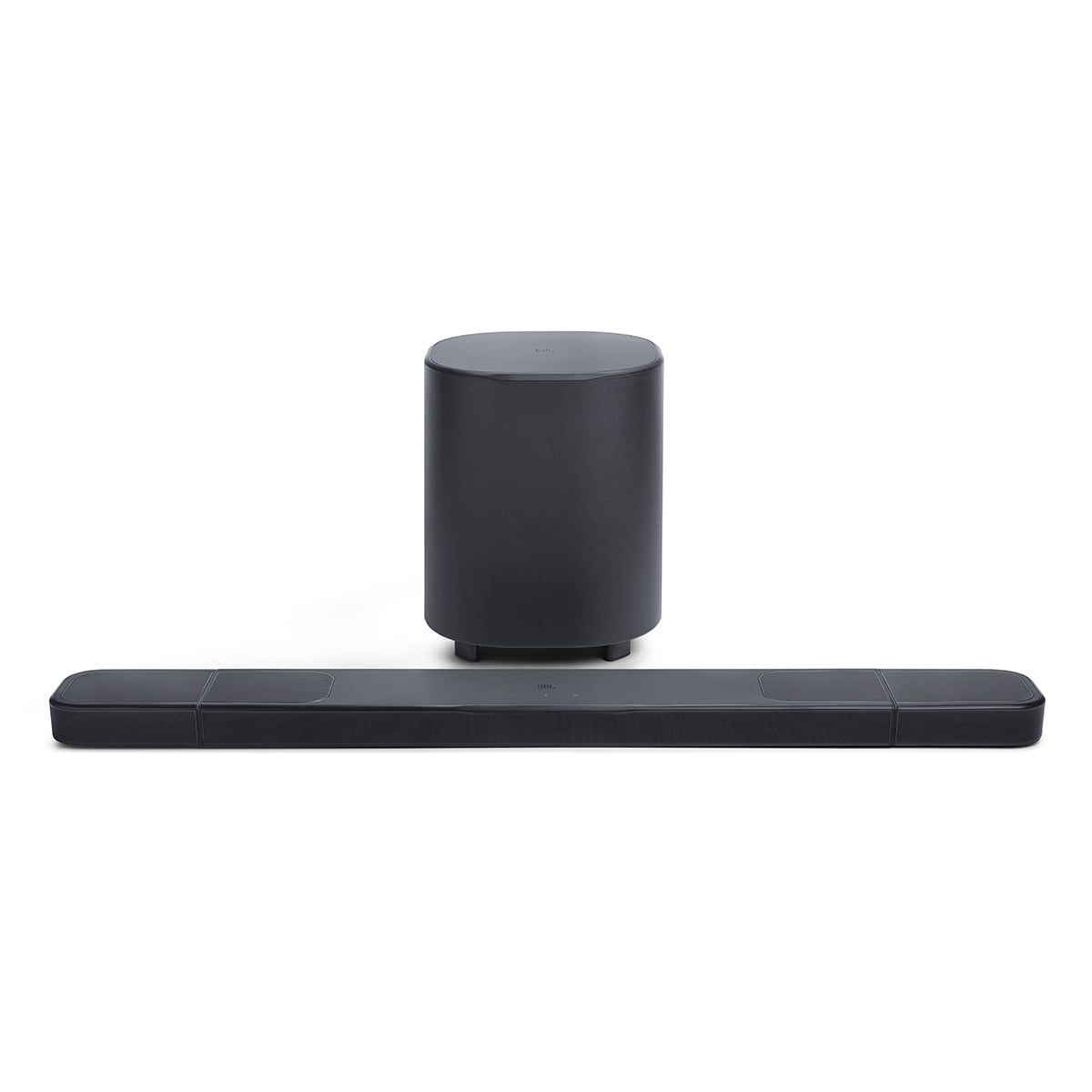
The JBL represents the "no compromises" approach to soundbar design. It's a true 7.1.4-channel system, which means it has seven main speakers, one subwoofer, and four height speakers specifically for Dolby Atmos effects. What makes it unique is those detachable rear speakers – they literally pop off the ends of the main soundbar and can be placed behind your seating area, then they wirelessly connect back to create genuine surround sound. Each rear speaker has its own 10-hour battery, so you're not dealing with power cables running across your room.
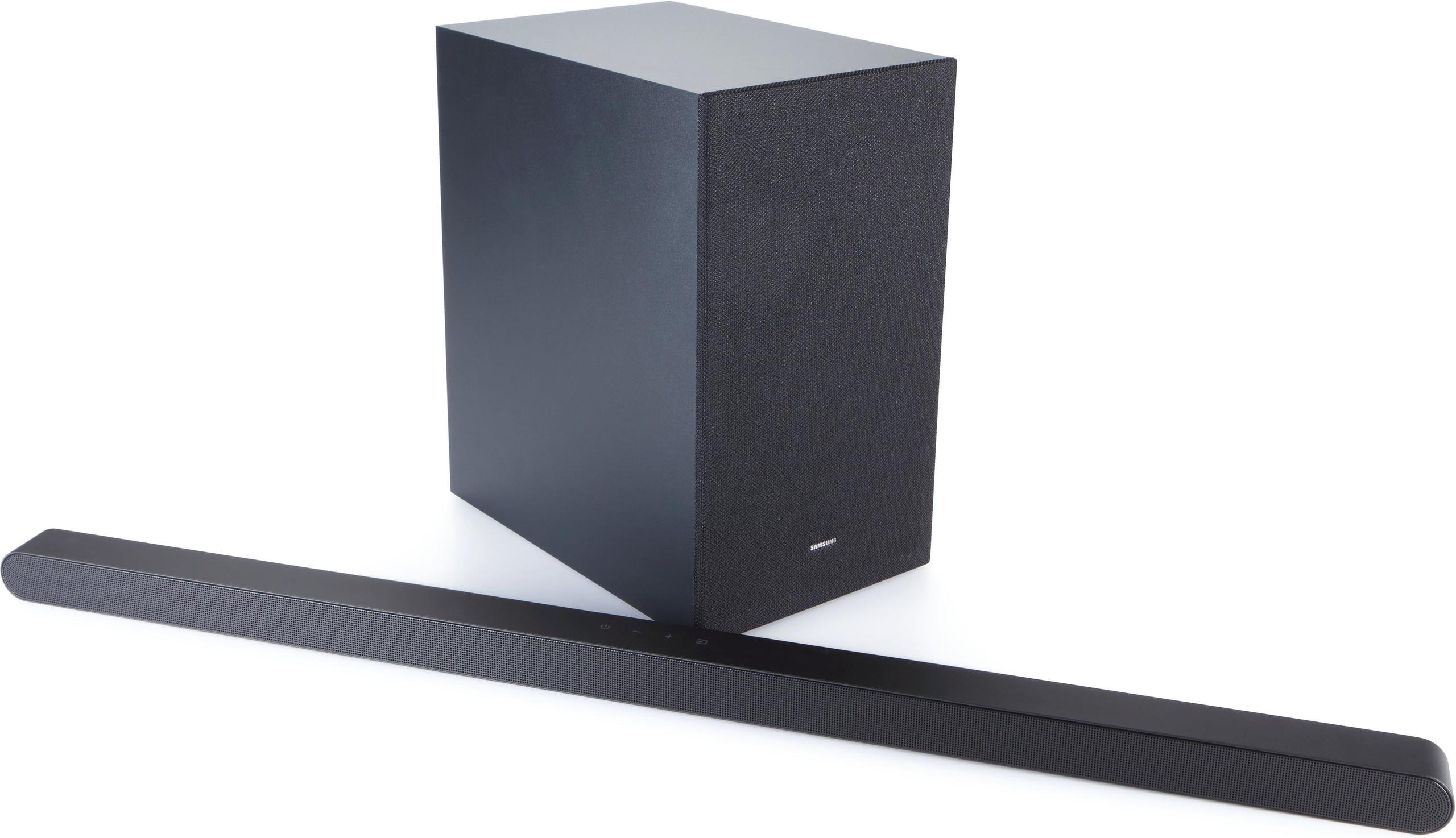
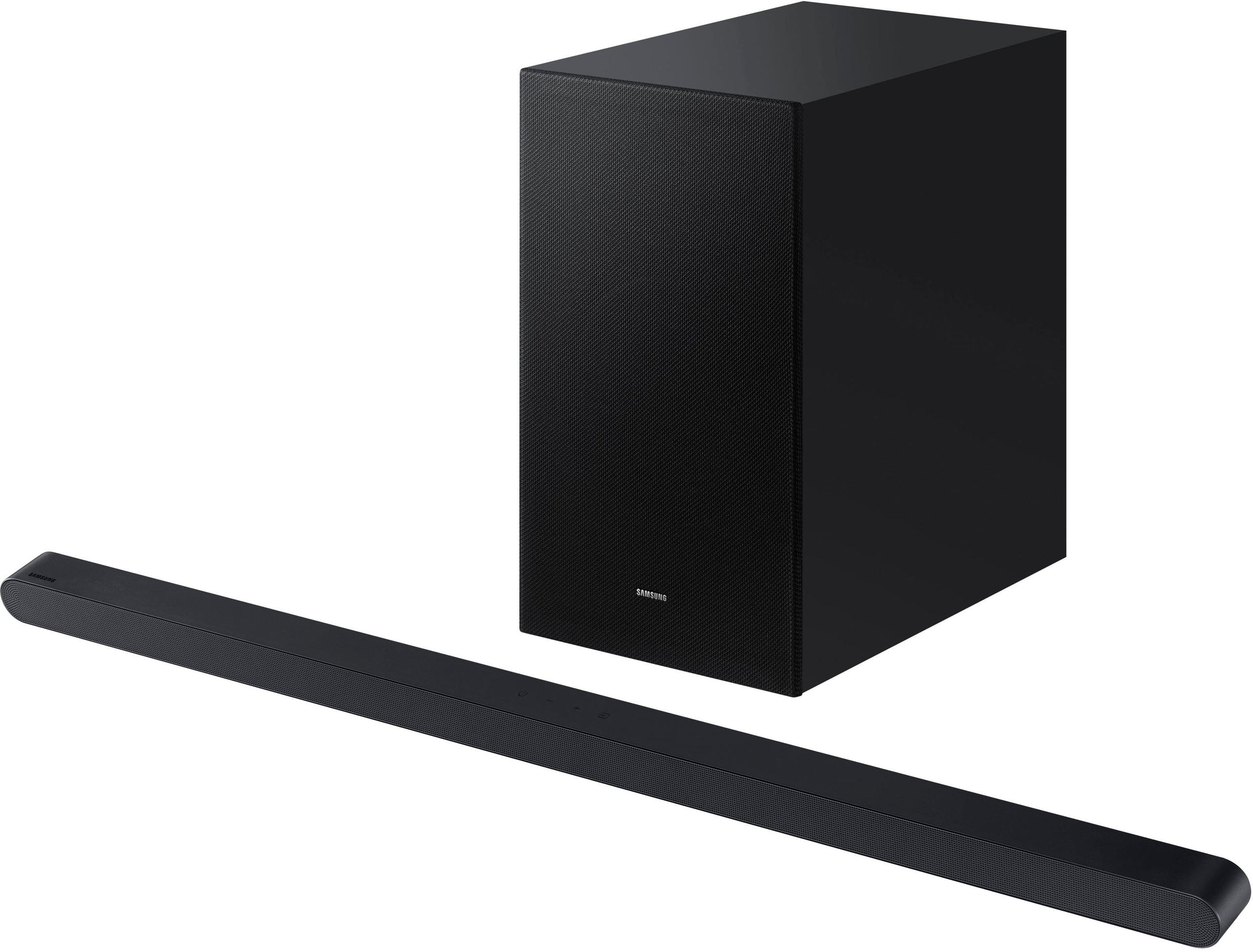
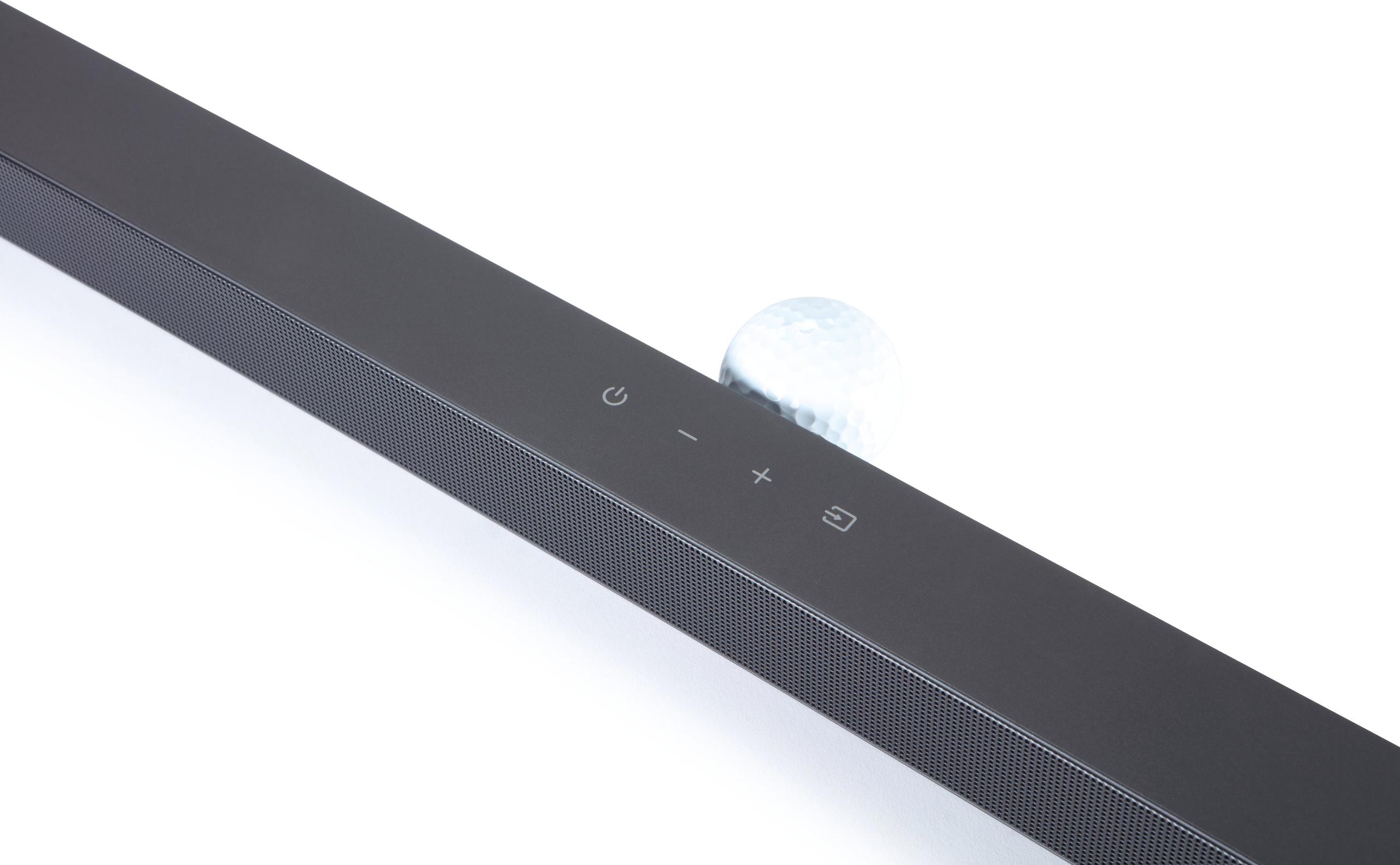
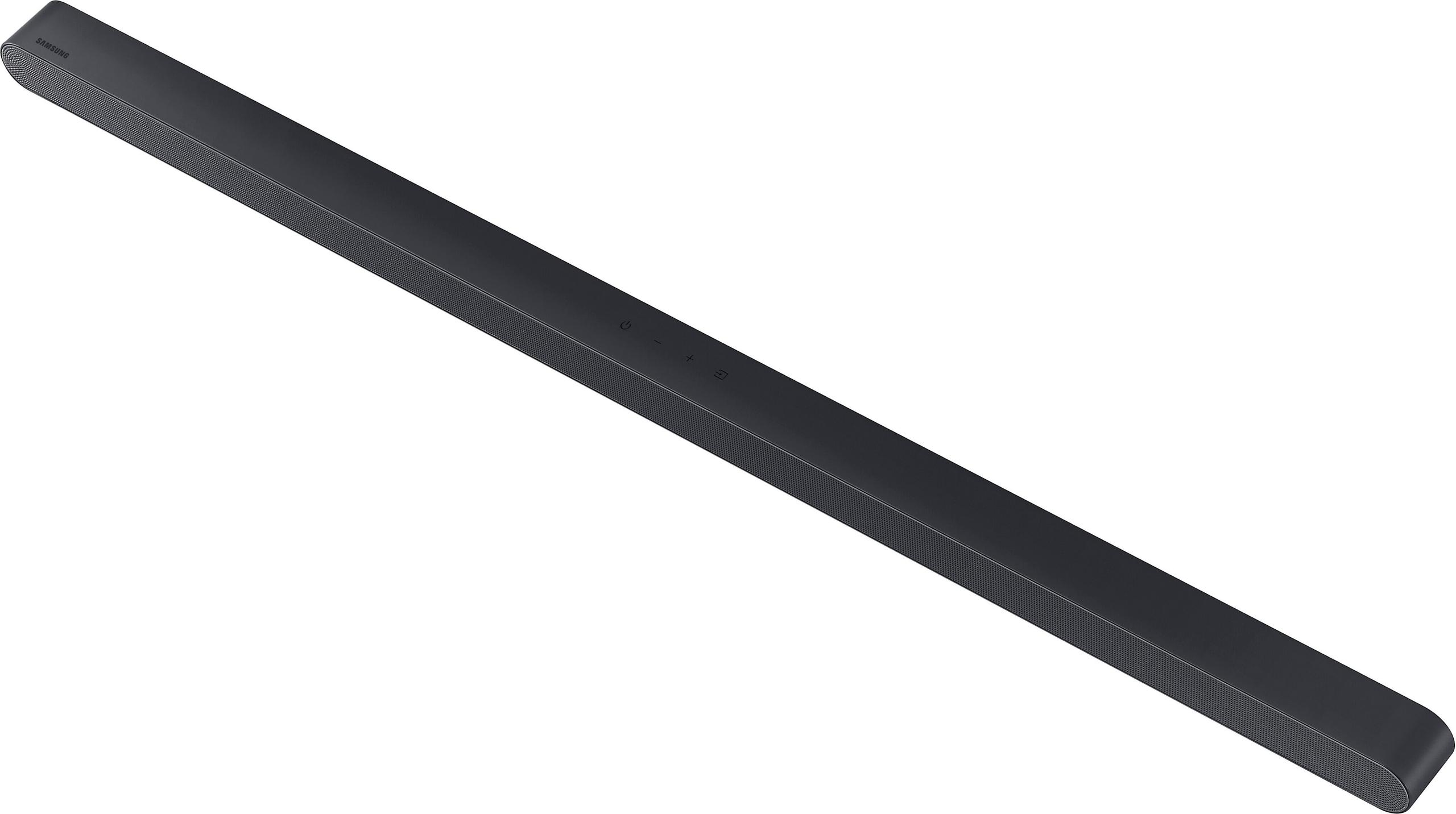
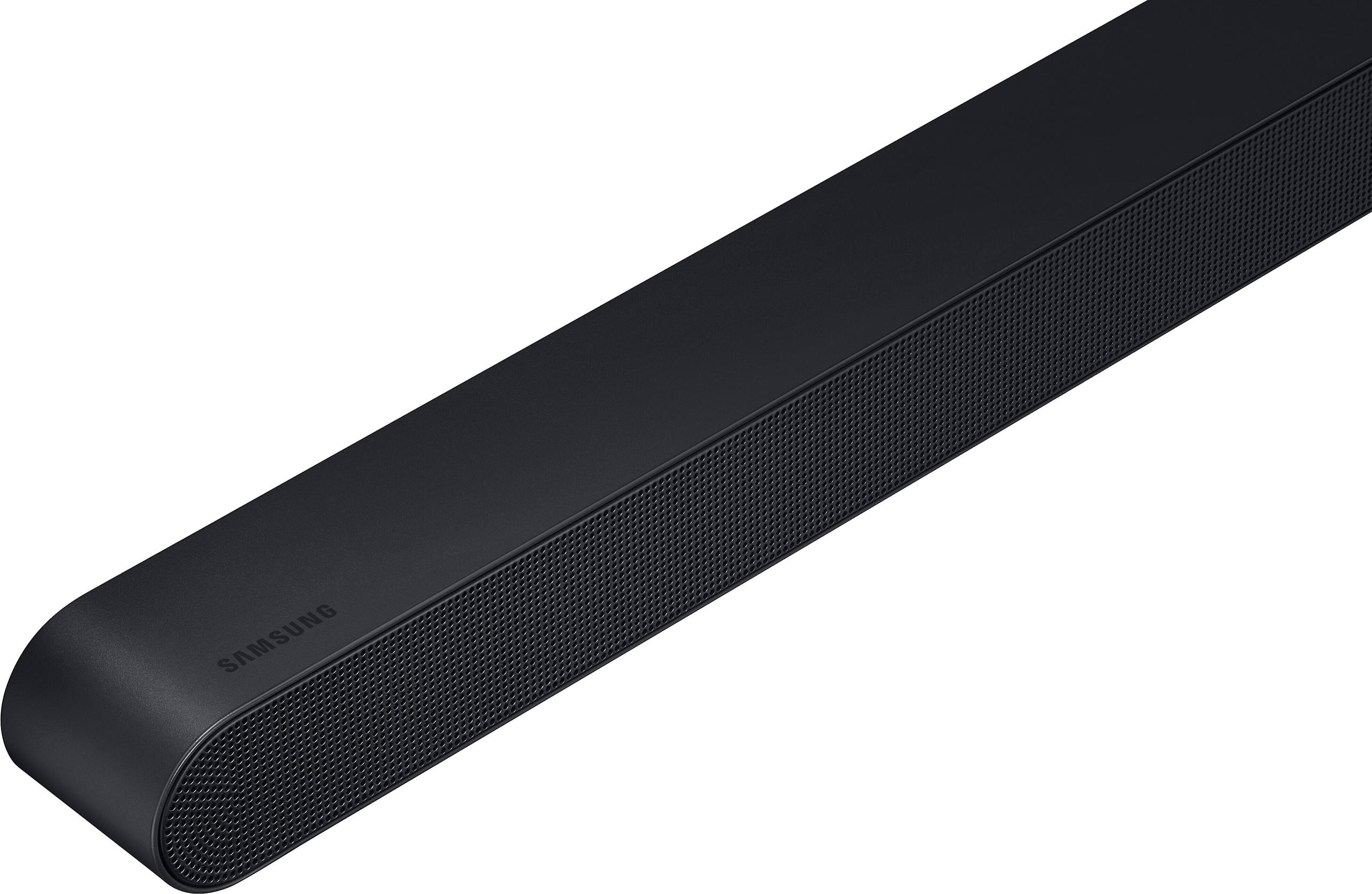
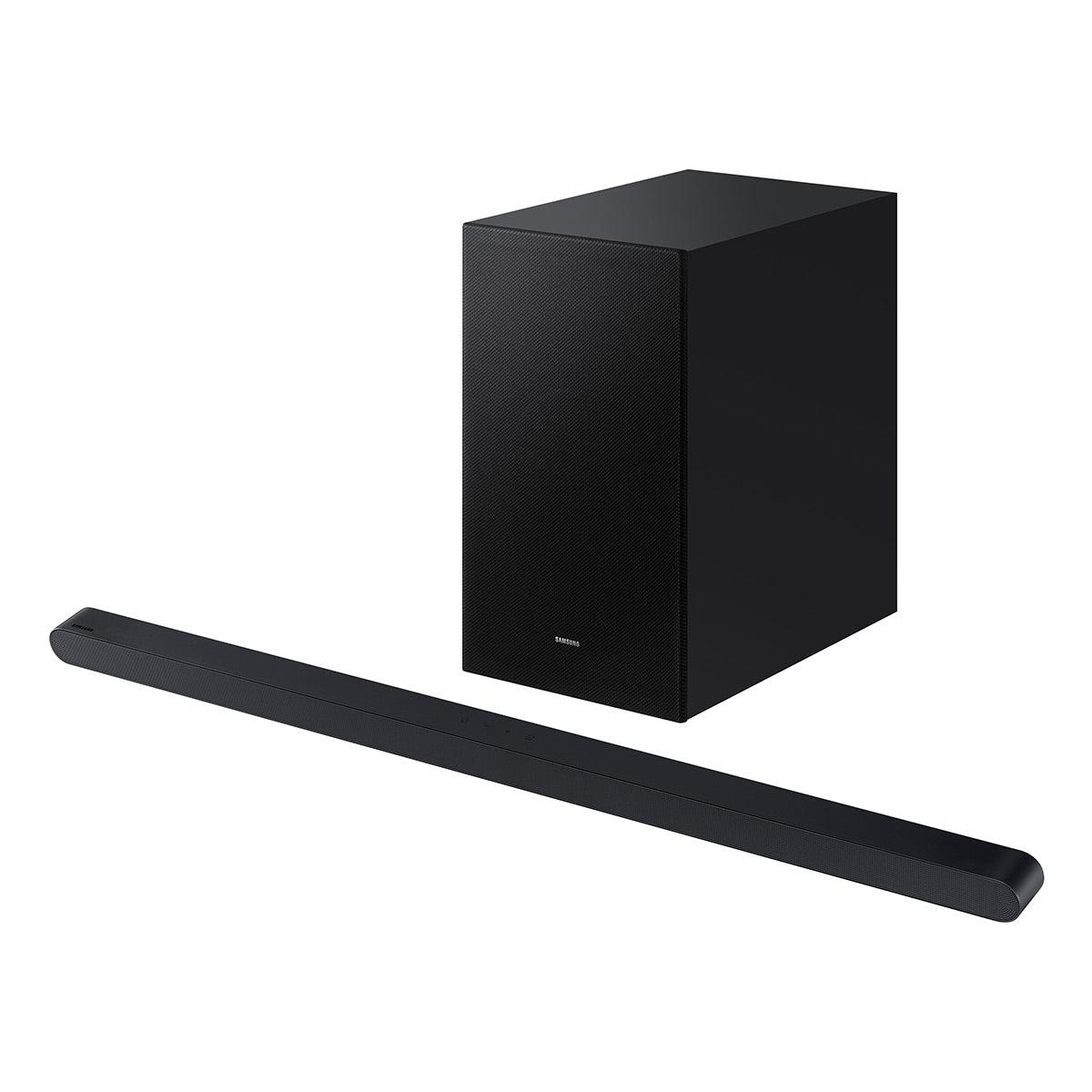
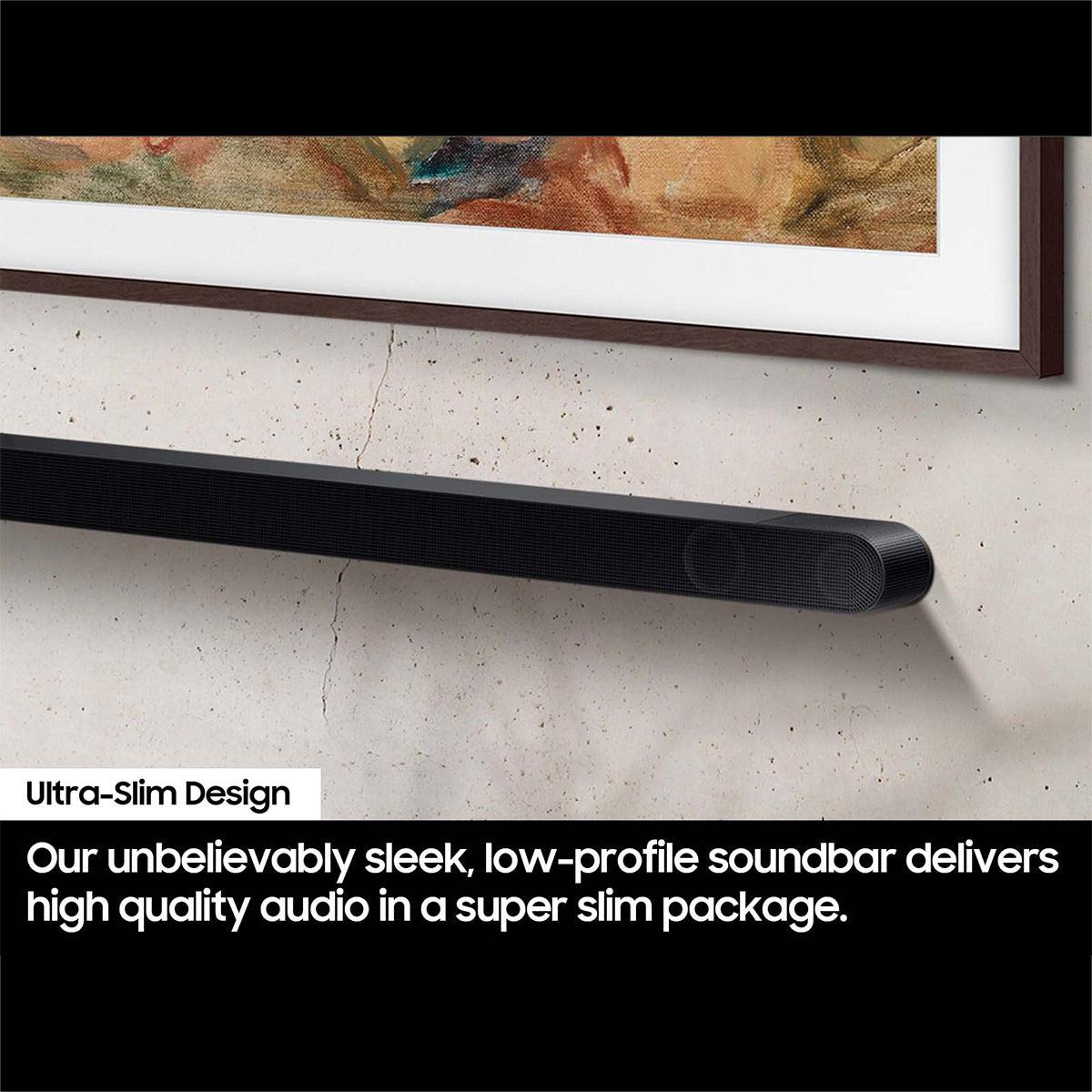
The Samsung takes the opposite approach. It's a 3.1-channel system focused on being as slim and unobtrusive as possible while still delivering significantly better sound than your TV. At just 1.4 inches tall, it can fit under TVs that would block other soundbars. Rather than physical surround speakers, it uses sophisticated processing to create virtual surround effects.
Here's where the fundamental differences between these systems become really clear. The JBL Bar 1000 MK2 delivers what I'd call "true" surround sound – when a helicopter flies overhead in a movie, you actually hear it moving from the front speakers to the rear speakers and up through the height channels. This is because it has four dedicated up-firing speakers (two in the main bar, one in each rear speaker) that bounce sound off your ceiling to create that overhead effect.
The Samsung HW-S700D uses what's called virtual processing to simulate these effects. It's actually quite clever – sophisticated algorithms analyze the audio and use psychoacoustic tricks to make your brain think sounds are coming from behind you or above you, even though all the speakers are in front. When it works well, it can be surprisingly convincing, especially for dialogue and music. But action sequences with lots of directional effects will always sound more impressive on the JBL.
I've spent considerable time with both systems, and the difference is most noticeable with modern movies mixed for Dolby Atmos. Rain scenes, for instance, genuinely sound like they're falling from above with the JBL, while the Samsung creates more of a "wide" effect that suggests height without precisely placing it. For TV shows and dialogue-heavy content, though, the Samsung actually excels – its dedicated center channel and Active Voice Amplifier technology make speech remarkably clear.
This is where the price difference really shows itself. The JBL pushes out 960 watts of total power with a 10-inch wireless subwoofer that can genuinely rattle your walls. That subwoofer extends down to 33Hz, which means you're hearing the deepest bass notes that most music and movies contain. When a T-rex stomps in Jurassic Park or a spaceship engine rumbles in Star Wars, you feel it as much as hear it.
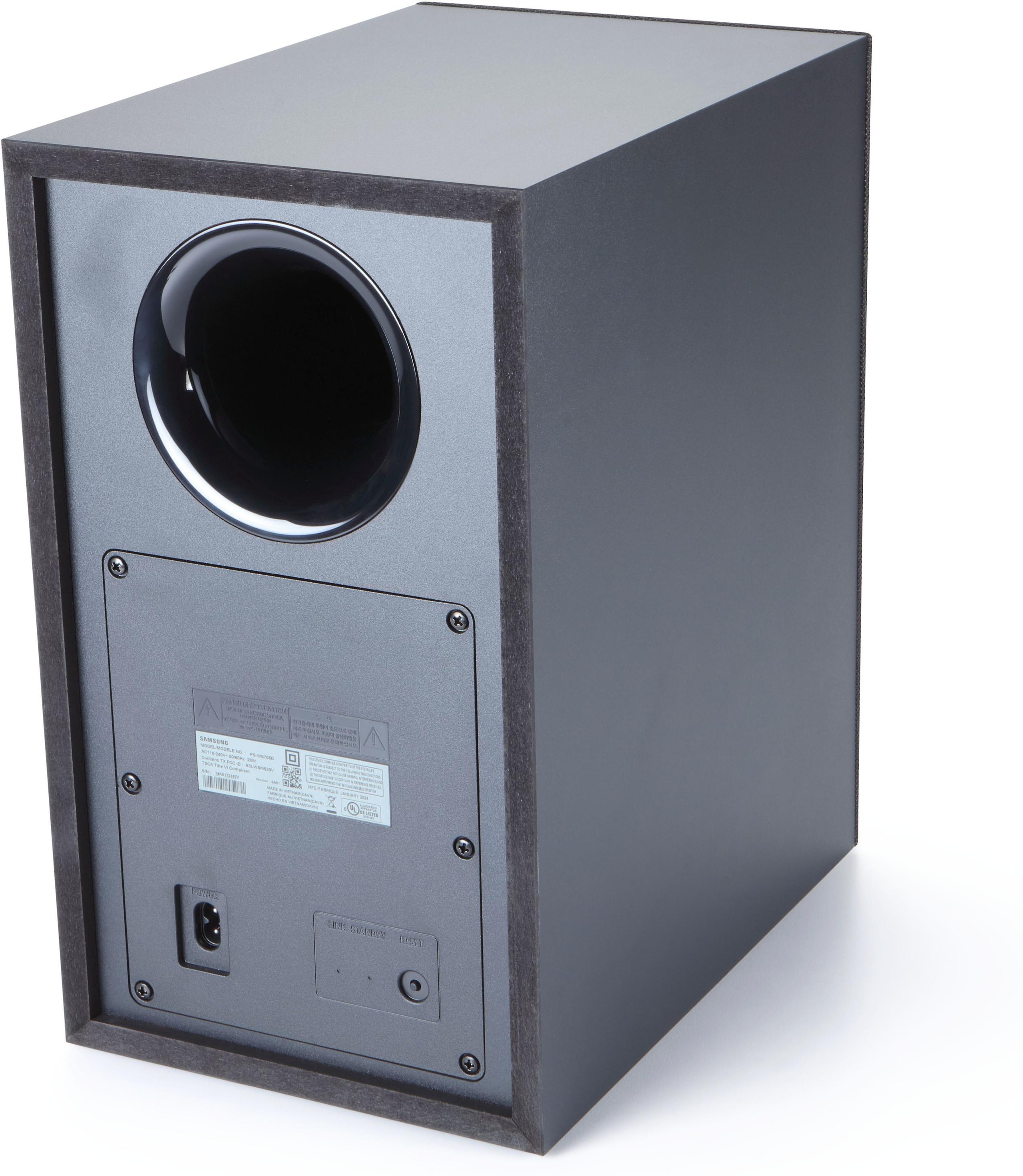
The Samsung's 320 watts and 6.5-inch subwoofer are more restrained. It's not weak by any means – it'll give you satisfying bass for most content – but it's clearly designed for people who want better sound without overwhelming their neighbors or rattling picture frames off the walls. The frequency response doesn't extend quite as low, so you miss some of those really deep bass effects, but the trade-off is a system that's much more apartment-friendly.
In my experience, the power difference becomes most apparent when you're trying to fill a large room. The JBL can easily handle a 20-foot living room and still sound balanced and full. The Samsung starts to sound a bit thin if you push it too hard in a large space, though it's perfectly adequate for typical living rooms and bedrooms.
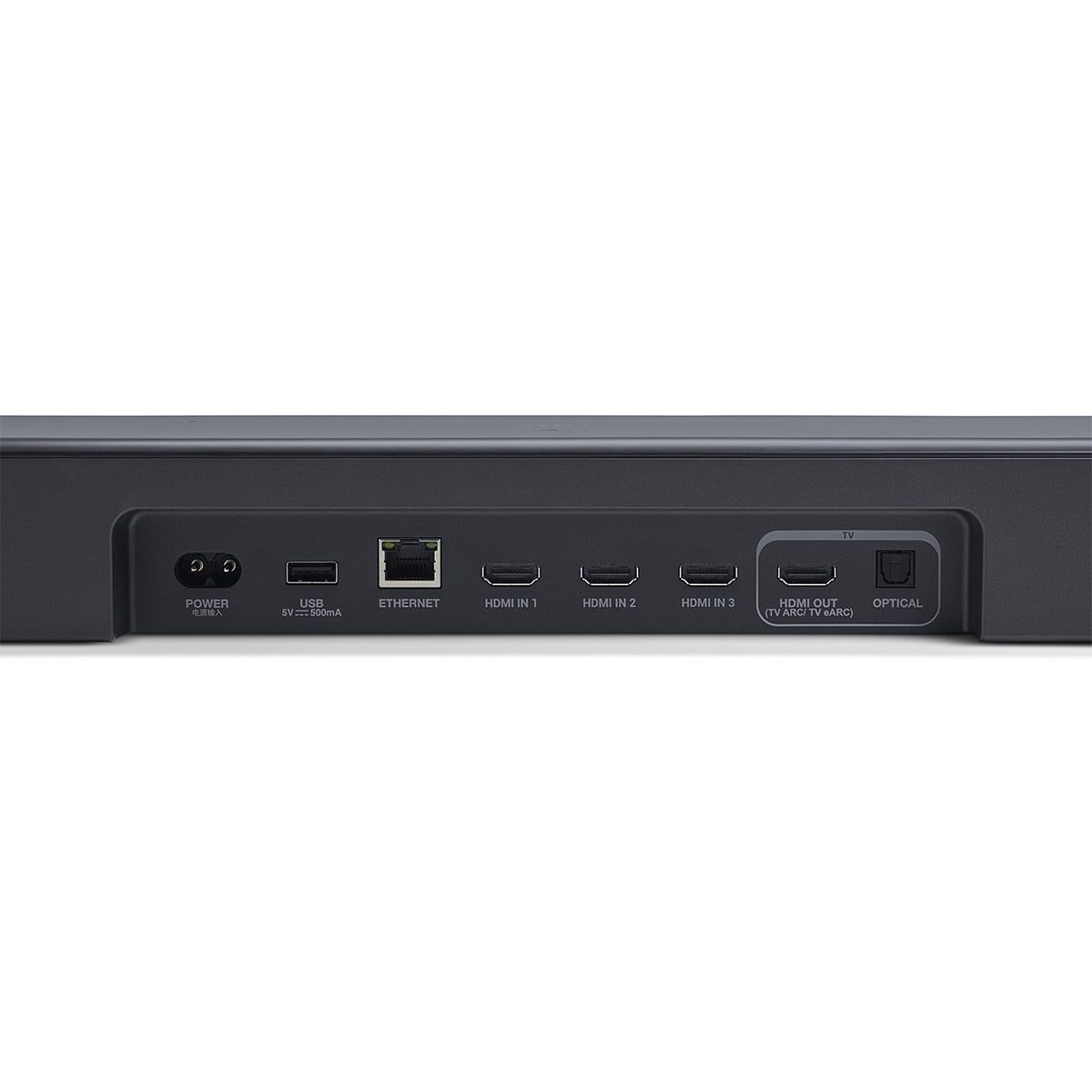
Here's where your specific setup really matters. The JBL Bar 1000 MK2 includes three HDMI inputs plus an eARC output, which means you can plug your gaming console, streaming device, and Blu-ray player directly into the soundbar, then send everything to your TV with a single cable. This is incredibly convenient and can actually improve audio quality since the soundbar processes the sound directly without it going through your TV first.
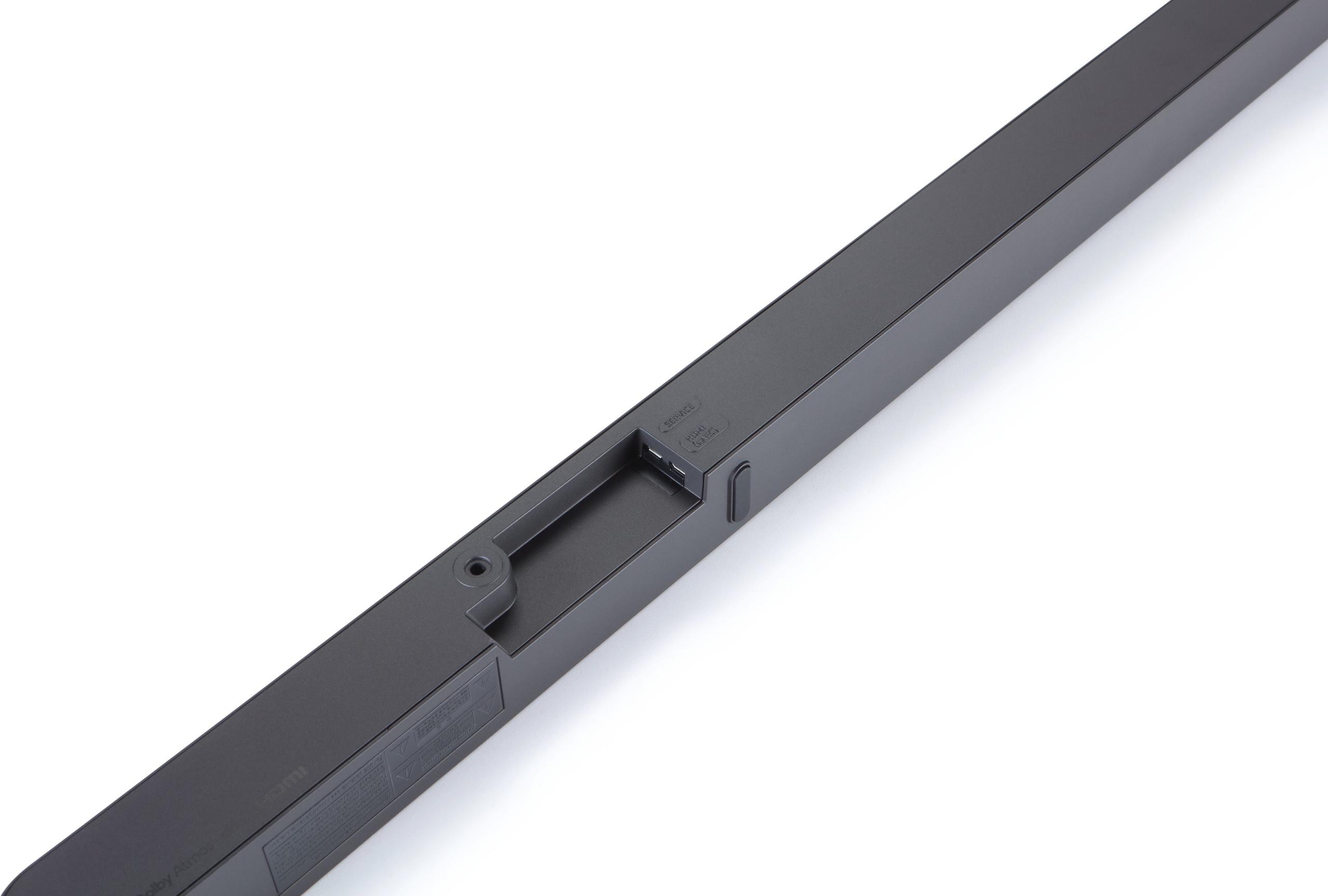
The Samsung HW-S700D takes a more minimalist approach with just one HDMI eARC connection. This means everything has to go through your TV first, which is fine for most people but limits your options if you have multiple devices or if your TV doesn't handle audio processing well. However, if you have a Samsung TV, the integration is actually superior – features like Q-Symphony let the TV's speakers work together with the soundbar for a fuller sound, and Game Mode Pro automatically optimizes audio when you're gaming.
Both systems support modern wireless streaming options like AirPlay, Chromecast, and Spotify Connect, which is essential in 2024. The JBL also includes Roon Ready support, which is great if you're into high-quality music streaming, while the Samsung integrates with SmartThings for smart home control.
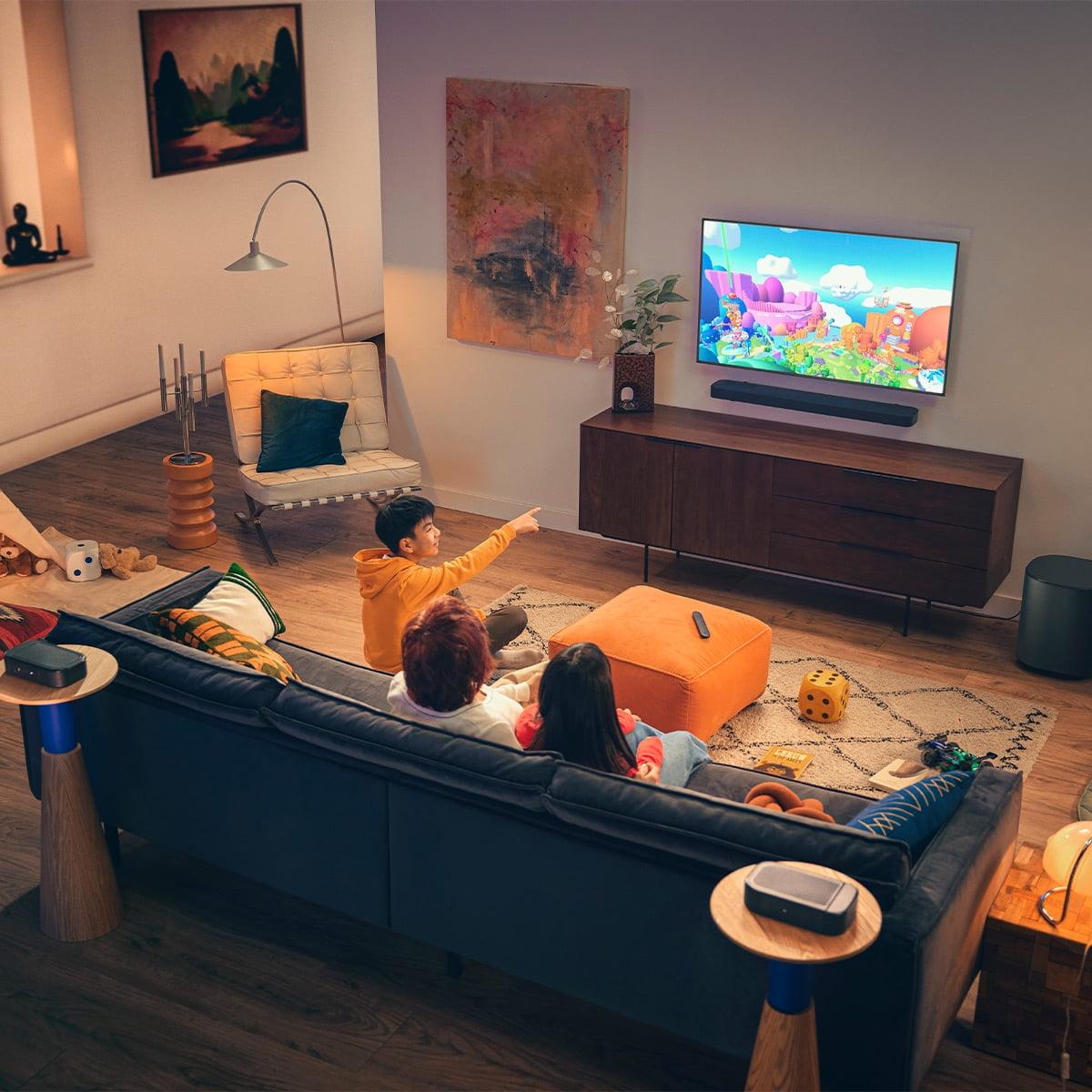
The physical differences between these systems tell you everything about their intended users. The Samsung is designed to virtually disappear – its ultra-slim profile means it won't block your TV screen even if your TV sits low on its stand. The entire system consists of just the soundbar and subwoofer, both of which connect wirelessly, so cable management is minimal.
The JBL is more of a statement piece. The main soundbar is larger, and then you have those detachable rear speakers to consider. When you first set it up, you'll need to think about where to place the rear speakers for optimal sound, and you'll need to remember to dock them occasionally for charging. But this complexity brings real benefits – that Night Mode feature, for instance, lets you mute the main soundbar and subwoofer entirely, using just the rear speakers for private listening that won't disturb anyone else in the house.
Both of these soundbars represent significant improvements over their predecessors and reflect broader trends in the industry. The JBL's MultiBeam 3.0 technology is a refinement of earlier versions, using more sophisticated beam-forming to create wider soundstages. The detachable speakers concept has been improved with better battery life and more reliable wireless connectivity.
Samsung's ultra-slim design push reflects the reality of modern TV mounting – as TVs get thinner and are mounted closer to walls, traditional soundbars increasingly interfere with the viewing experience. The HW-S700D's 1.4-inch height is genuinely impressive when you consider it still includes up-firing speakers for virtual Atmos processing.
The wireless technology in both systems has also improved significantly. Earlier soundbars often had connectivity issues between the main unit and wireless subwoofers, but both of these systems maintain rock-solid connections in my testing. The JBL's rear speakers seamlessly hand off between battery and charging modes without any audio dropouts.
If you're building a dedicated home theater setup, the JBL Bar 1000 MK2 is clearly the more appropriate choice. Its true surround sound capabilities and powerful bass response create the kind of immersive experience that makes movies genuinely exciting. The detachable rear speakers can be positioned exactly where they need to be for your seating arrangement, and the 960-watt power output can fill even large dedicated theater rooms.
That said, the Samsung shouldn't be dismissed entirely for home theater use. In smaller rooms, or for people who prioritize dialogue clarity over explosive action sequences, it can be remarkably satisfying. The Q-Symphony feature, if you have a compatible Samsung TV, can actually create surprisingly good surround effects by using the TV's speakers as additional channels.
The JBL's multiple HDMI inputs also make it much better suited to complex home theater setups where you might have several source devices. Gaming, in particular, benefits from the direct connection and the genuine directional audio that helps with competitive gameplay.
After extensive testing with both systems, here's how I'd break down the decision. Choose the JBL Bar 1000 MK2 if you have a larger room, frequently watch action movies or play games where surround effects matter, and don't mind a more complex setup process. The authentic Dolby Atmos experience and powerful bass response justify the higher price if immersion is your priority.
The Samsung HW-S700D makes more sense if you have space constraints, primarily watch TV shows and dialogue-heavy content, or simply want the best possible sound improvement for your dollar without any complexity. Its integration with Samsung TVs is genuinely impressive, and the ultra-slim design solves real practical problems that many soundbar buyers face.
The decision ultimately comes down to what you value most: maximum audio performance and immersion, or elegant simplicity and space efficiency. Both represent excellent examples of their respective approaches, and both will dramatically improve your TV watching experience compared to built-in TV speakers. The key is being honest about your space, your content preferences, and your tolerance for complexity.
In my experience, most people underestimate how much they'll appreciate true surround sound once they experience it, but they also underestimate how much convenience and simplicity matter in daily use. Whichever direction you lean, both of these soundbars represent solid investments in significantly better home audio.
| JBL Bar 1000 MK2 Soundbar System | Samsung HW-S700D 3.1 Channel Slim Soundbar |
|---|---|
| Price - Major value consideration for most buyers | |
| $1,199.95 (premium home theater investment) | $377.99 (excellent value for TV audio upgrade) |
| Channel Configuration - Determines surround sound authenticity | |
| 7.1.4 channels with physical rear speakers | 3.1 channels with virtual surround processing |
| Total Power Output - Affects room-filling capability and bass impact | |
| 960W max / 480W RMS (suitable for large rooms) | 320W total (adequate for medium rooms) |
| Subwoofer Size - Critical for bass depth and movie impact | |
| 10-inch wireless subwoofer (deep, room-shaking bass) | 6.5-inch wireless subwoofer (sufficient for most content) |
| Dolby Atmos Implementation - Key for immersive overhead effects | |
| True Atmos with 4 dedicated up-firing drivers | Virtual Atmos processing (simulated height effects) |
| Physical Design - Important for TV compatibility and aesthetics | |
| Standard height (2.0" tall) with detachable rear speakers | Ultra-slim profile (1.4" tall) ideal for low-mounted TVs |
| HDMI Connectivity - Affects device connection flexibility | |
| 3 HDMI inputs + 1 eARC output (direct device connections) | 1 HDMI eARC only (all devices through TV) |
| Rear Speakers - Determines true vs virtual surround experience | |
| Detachable wireless speakers with 10-hour battery | No rear speakers (front-focused soundstage) |
| TV Brand Integration - Affects ease of use and advanced features | |
| Universal compatibility with all TV brands | Enhanced Samsung TV integration with Q-Symphony |
| Setup Complexity - Consider your tolerance for installation effort | |
| Moderate (rear speaker placement and charging management) | Simple (just soundbar and subwoofer positioning) |
| Best Use Case - Choose based on your primary needs | |
| Large rooms, movie enthusiasts, gaming, true surround sound | Space-conscious setups, dialogue clarity, Samsung TV owners |
The JBL Bar 1000 MK2 ($1,199.95) is significantly better for large rooms with its 960W power output and true 7.1.4-channel surround sound. The detachable rear speakers and 10-inch subwoofer can easily fill spaces over 20 feet, while the Samsung HW-S700D ($377.99) with 320W is better suited for medium-sized rooms up to about 15 feet.
The primary difference is surround sound approach: the JBL Bar 1000 MK2 offers true surround sound with physical rear speakers that detach from the main bar, while the Samsung HW-S700D uses virtual surround processing to simulate surround effects from just the front soundbar and subwoofer.
The JBL Bar 1000 MK2 delivers significantly deeper and more powerful bass with its 10-inch wireless subwoofer extending down to 33Hz. The Samsung HW-S700D has a 6.5-inch subwoofer that provides adequate bass for most content but can't match the room-shaking impact of the JBL system.
The JBL Bar 1000 MK2 is excellent for gaming with its true directional audio from rear speakers and multiple HDMI inputs for direct console connection. The Samsung HW-S700D offers decent gaming performance with Game Mode Pro optimization when paired with Samsung TVs, but lacks the immersive directional effects.
The Samsung HW-S700D is much easier to set up, requiring only placement of the main soundbar and wireless subwoofer. The JBL Bar 1000 MK2 requires more planning for optimal rear speaker placement and ongoing battery management for the detachable speakers.
Yes, but differently. The JBL Bar 1000 MK2 provides true Dolby Atmos with four dedicated up-firing speakers that create genuine overhead effects. The Samsung HW-S700D offers virtual Dolby Atmos processing that simulates height effects without physical up-firing drivers.
The Samsung HW-S700D excels at TV shows and dialogue-heavy content with its dedicated center channel and Active Voice Amplifier technology that enhances speech clarity. While the JBL Bar 1000 MK2 also has excellent dialogue performance, it's optimized more for movies and immersive content.
The JBL Bar 1000 MK2 offers superior connectivity with three HDMI inputs plus eARC, allowing direct connection of gaming consoles, streaming devices, and media players. The Samsung HW-S700D has only one HDMI eARC port, requiring all devices to connect through your TV.
The Samsung HW-S700D offers enhanced integration with Samsung TVs through Q-Symphony technology that synchronizes TV speakers with the soundbar, plus features like Game Mode Pro. The JBL Bar 1000 MK2 works universally with all TV brands but doesn't have special Samsung-specific features.
The JBL Bar 1000 MK2 is specifically designed for home theater use with true surround sound, powerful bass, and multiple HDMI inputs for complex setups. The Samsung HW-S700D can work in smaller home theaters but is better suited for general TV audio improvement rather than dedicated theater rooms.
This depends on your needs. The Samsung HW-S700D ($377.99) offers exceptional value for basic TV audio improvement with its slim design and dialogue clarity. The JBL Bar 1000 MK2 ($1,199.95) provides better value for those wanting true home theater immersion, as comparable separates systems cost much more.
The Samsung HW-S700D is ultra-slim at just 1.4 inches tall, making it ideal for TVs with limited clearance. The JBL Bar 1000 MK2 is taller at 2.0 inches and includes detachable rear speakers, requiring more space and planning but delivering superior surround sound performance.
We've done our best to create useful and informative comparisons to help you decide what product to buy. Our research uses advanced automated methods to create this comparison and perfection is not possible - please contact us for corrections or questions. These are the sites we've researched in the creation of this article: ecoustics.com - engadget.com - bestbuy.com - techradar.com - rtings.com - hometechnologyreview.com - youtube.com - t3.com - whathifi.com - youtube.com - bhphotovideo.com - gzhls.at - device.report - support.jbl.com - support.jbl.com - jbl.com - av.com - audioadvice.com - jbl.com - target.com - worldwidestereo.com - crutchfield.com - samsung.com - bestbuy.com - avsforum.com - walts.com - samsung.com - samsung.com - videoandaudiocenter.com - samsung.com - samsung.com - samsung.com - pcrichard.com

Privacy Policy
Terms and Conditions - Affiliate Policy
Home Security
© Copyright 2008-2026.
11816 Inwood Rd #1211, Dallas, TX 75244