

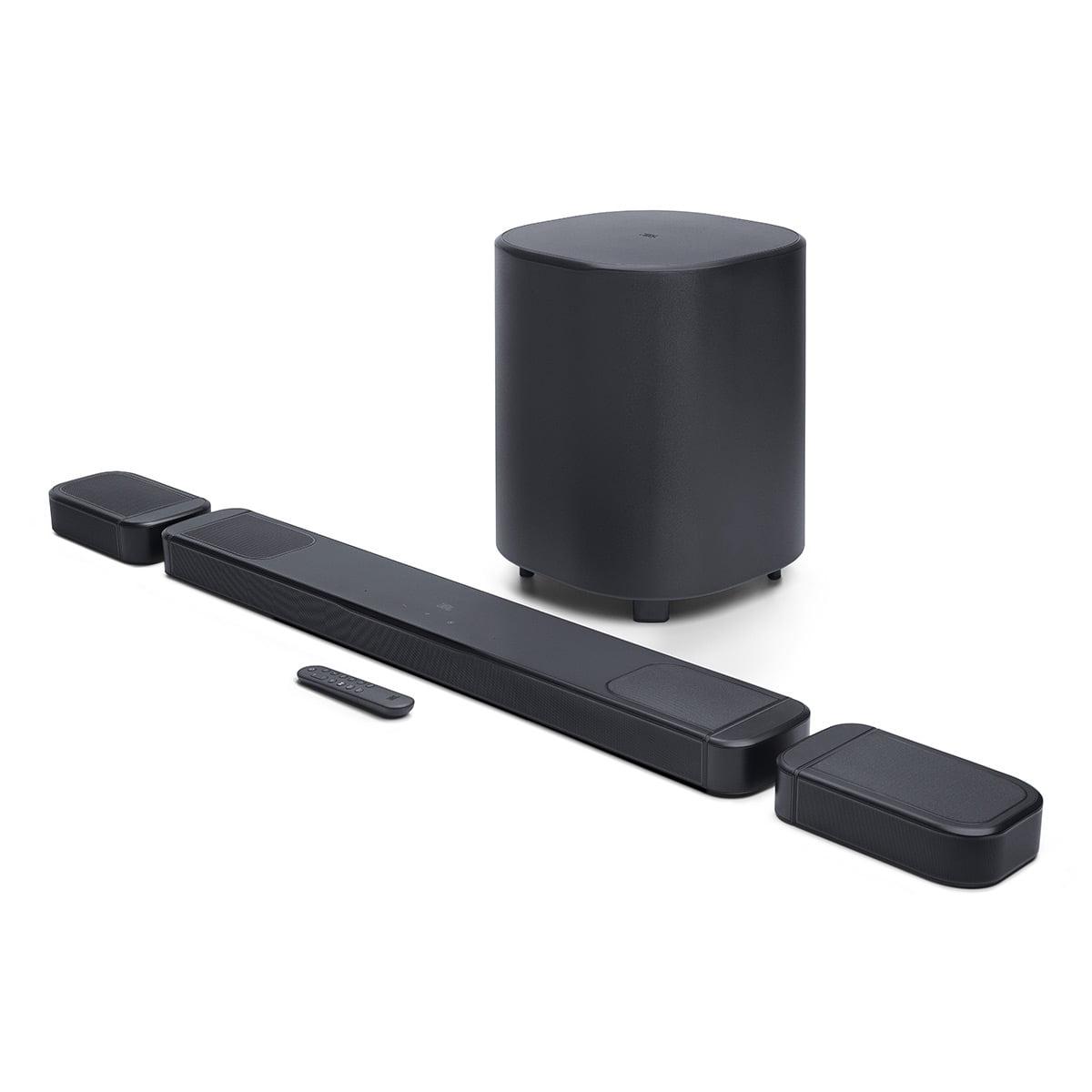
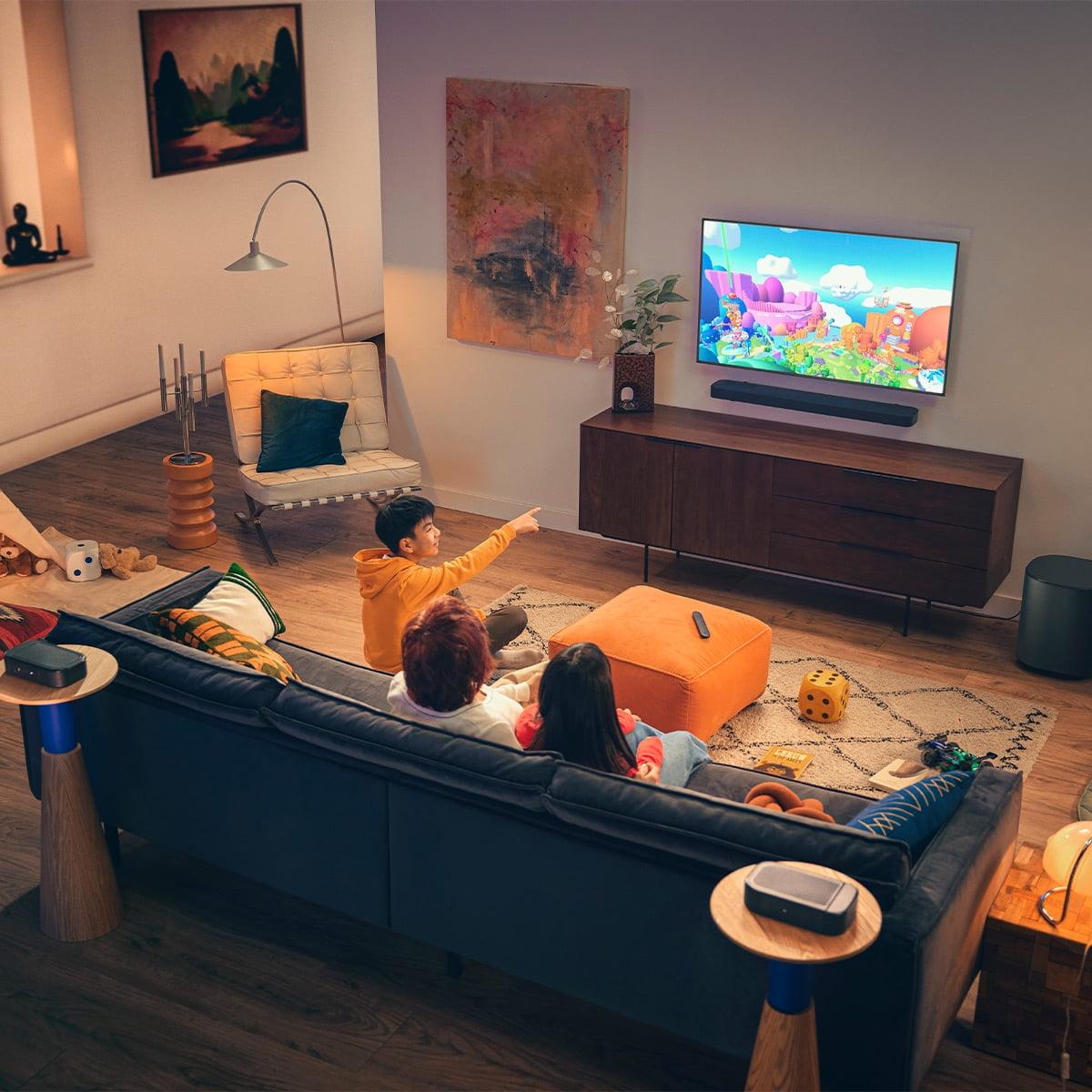
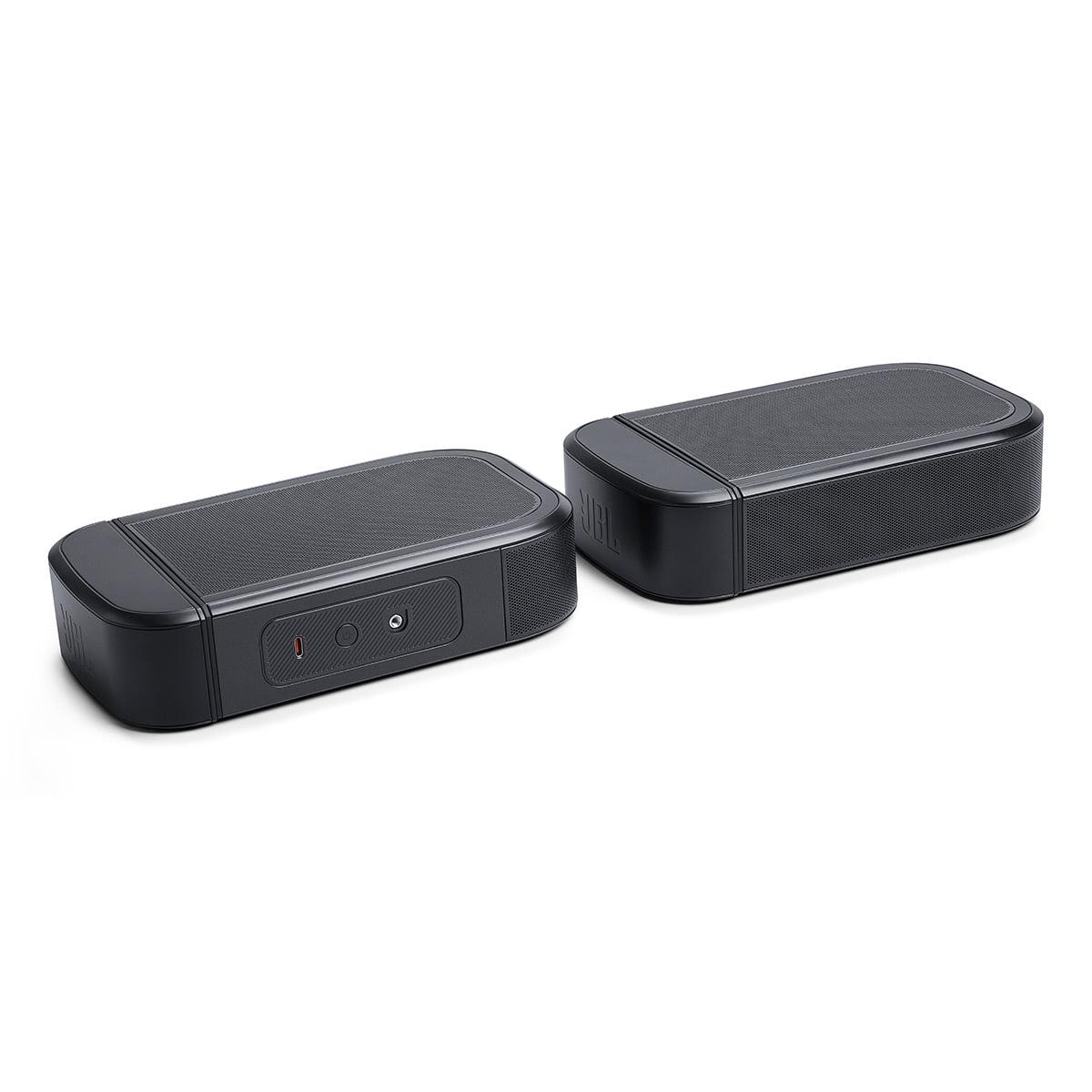
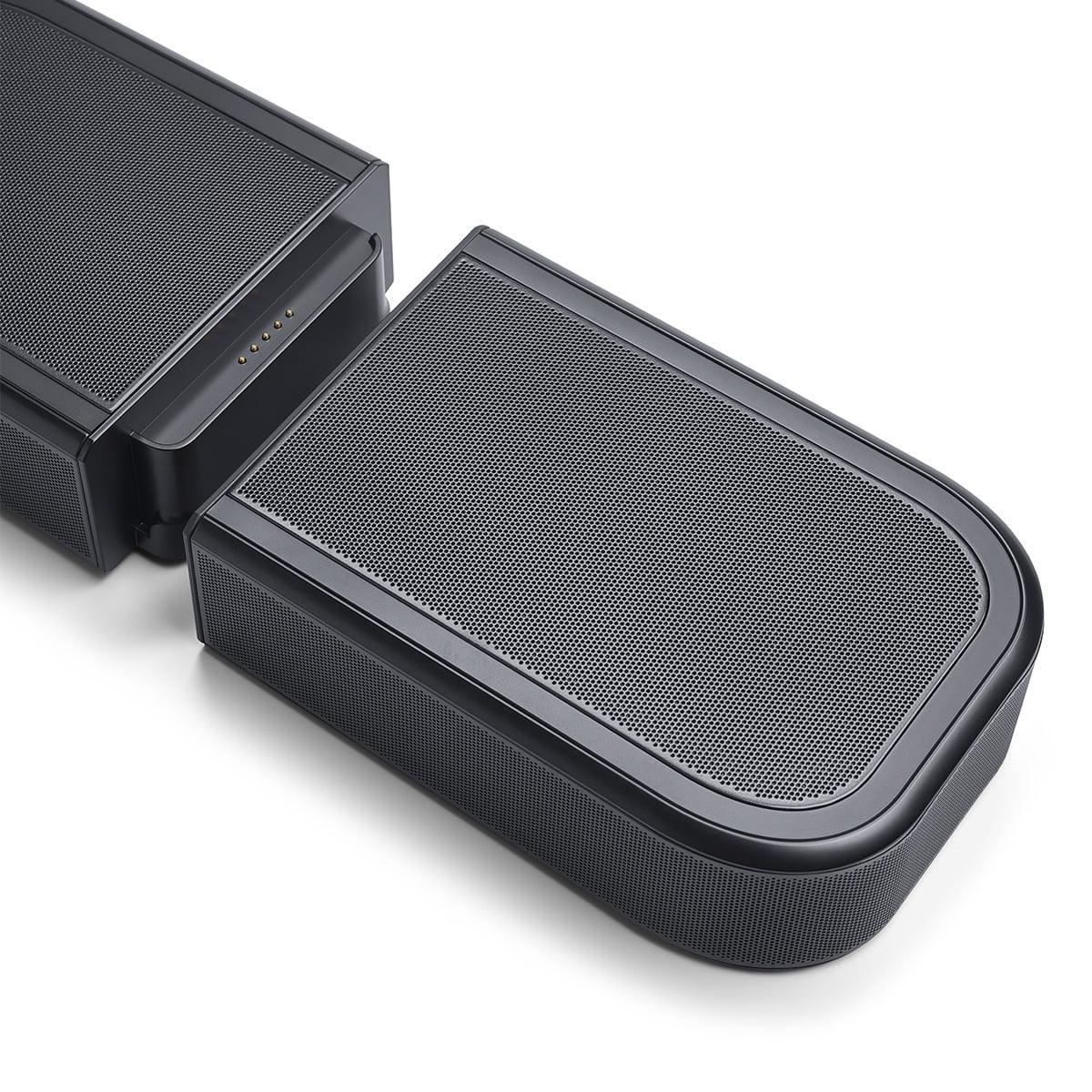
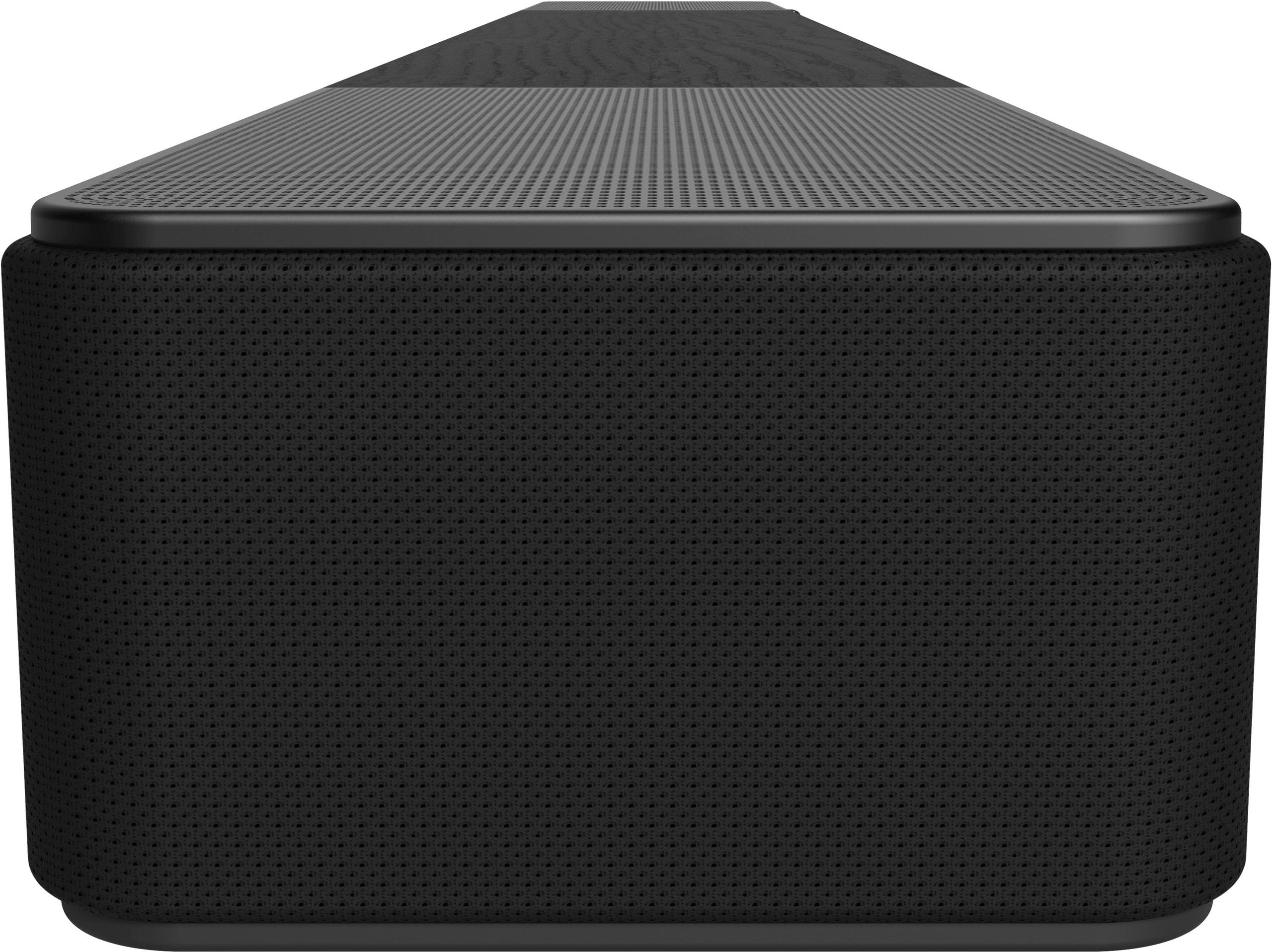
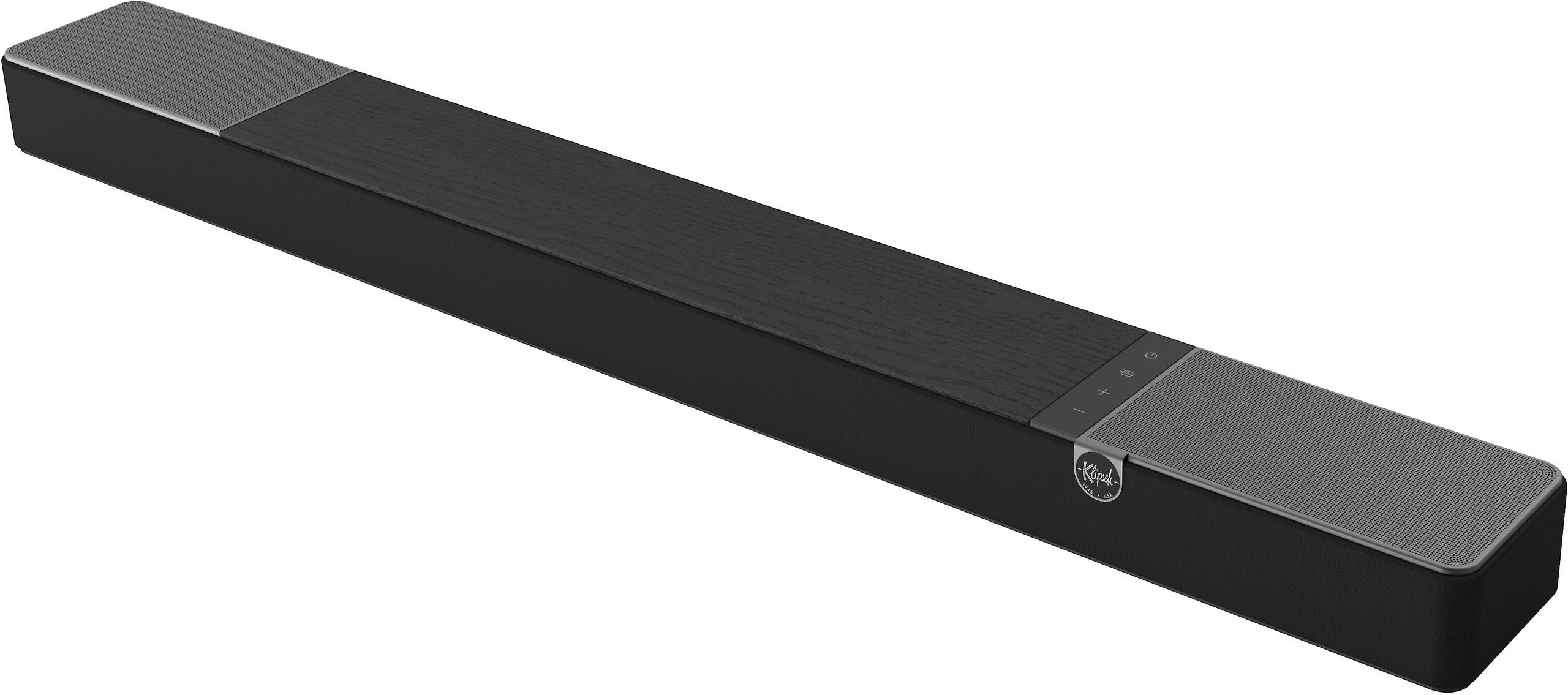

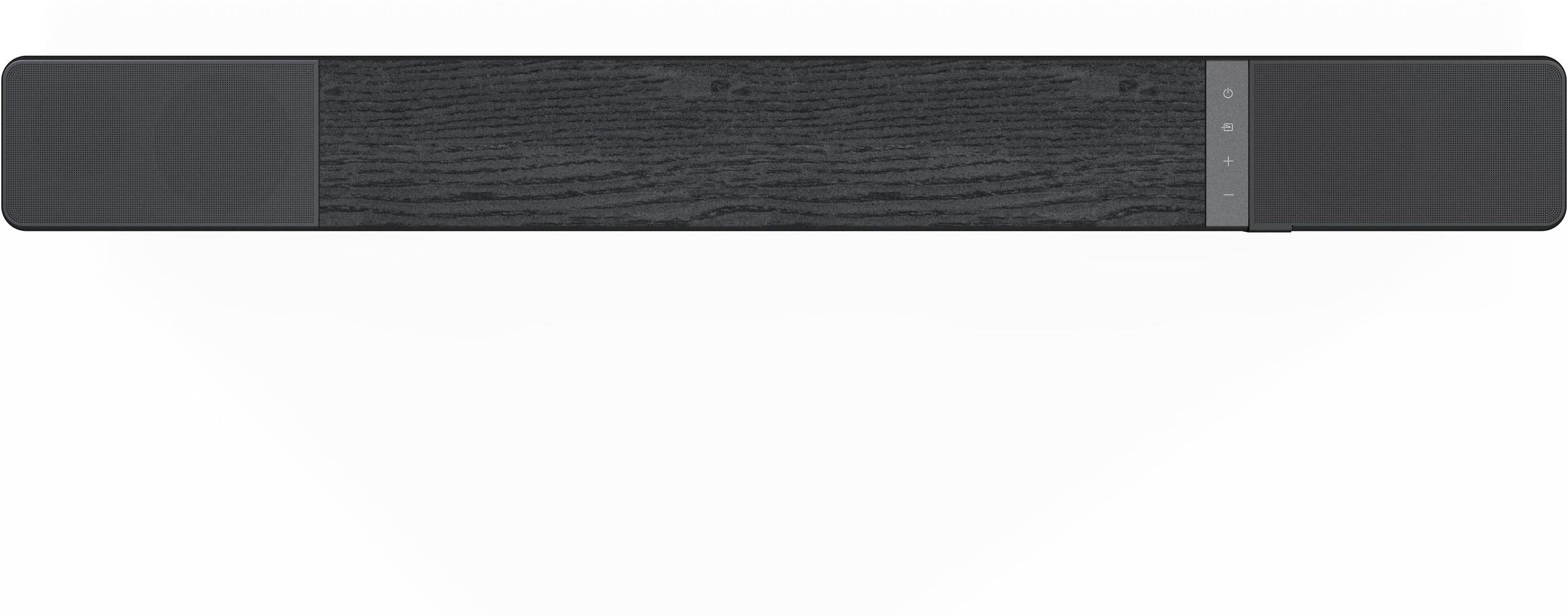
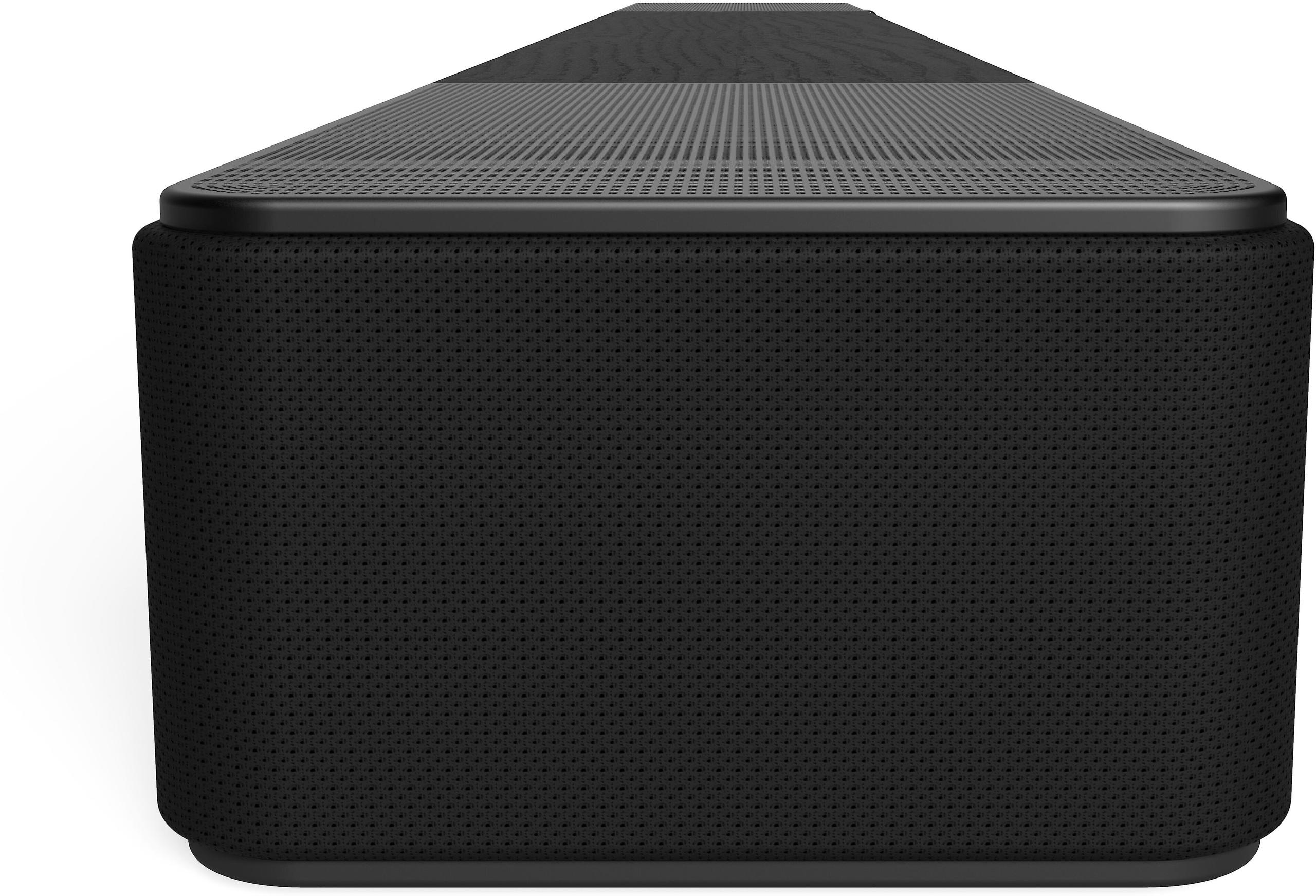

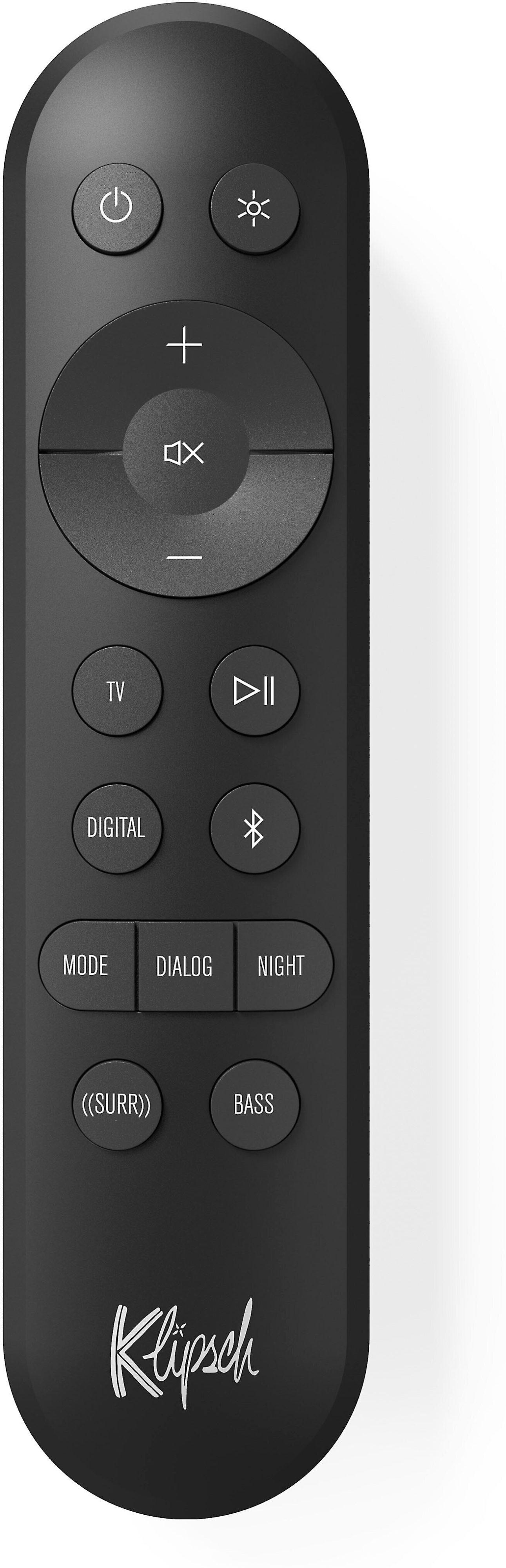
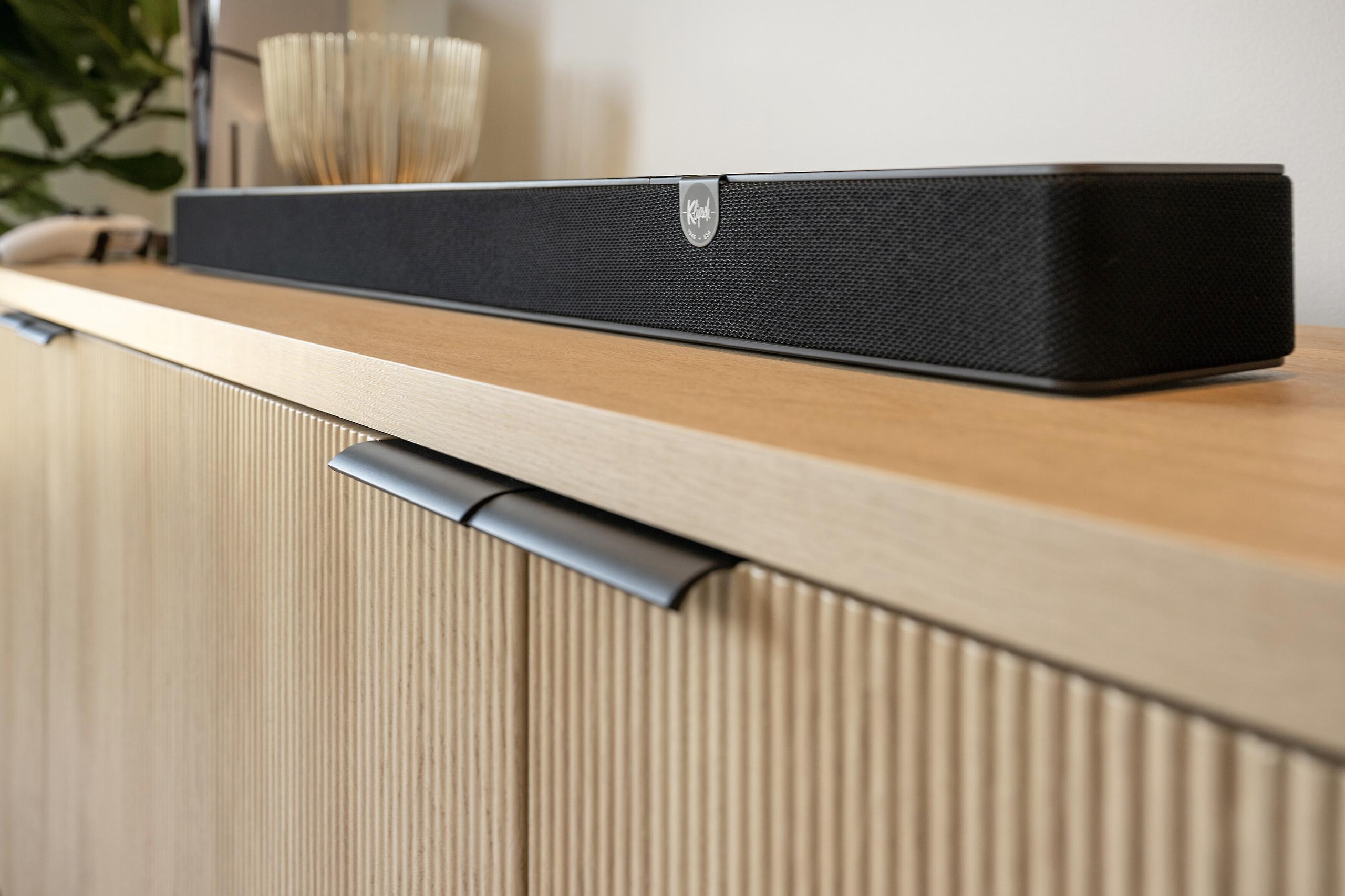
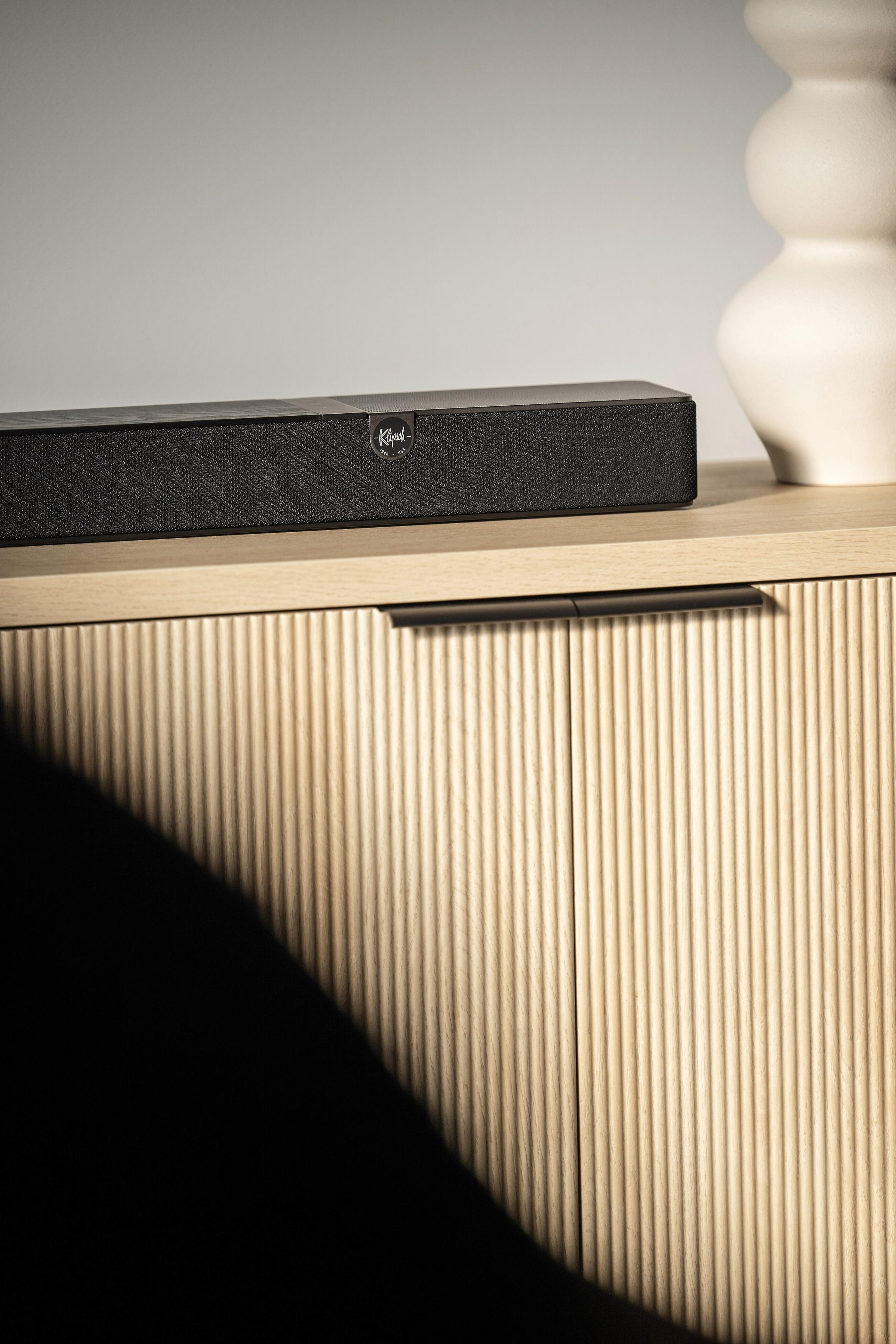
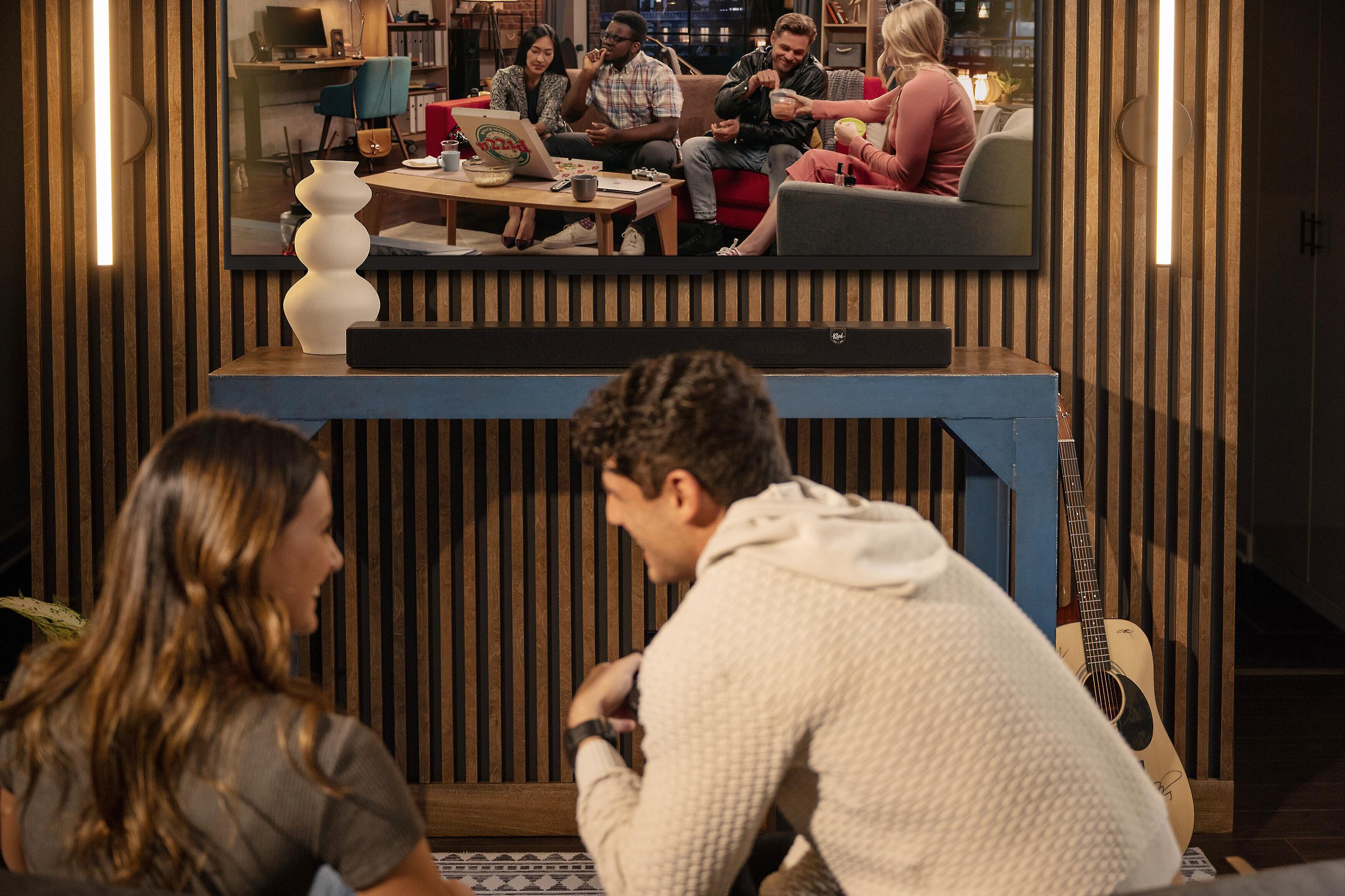
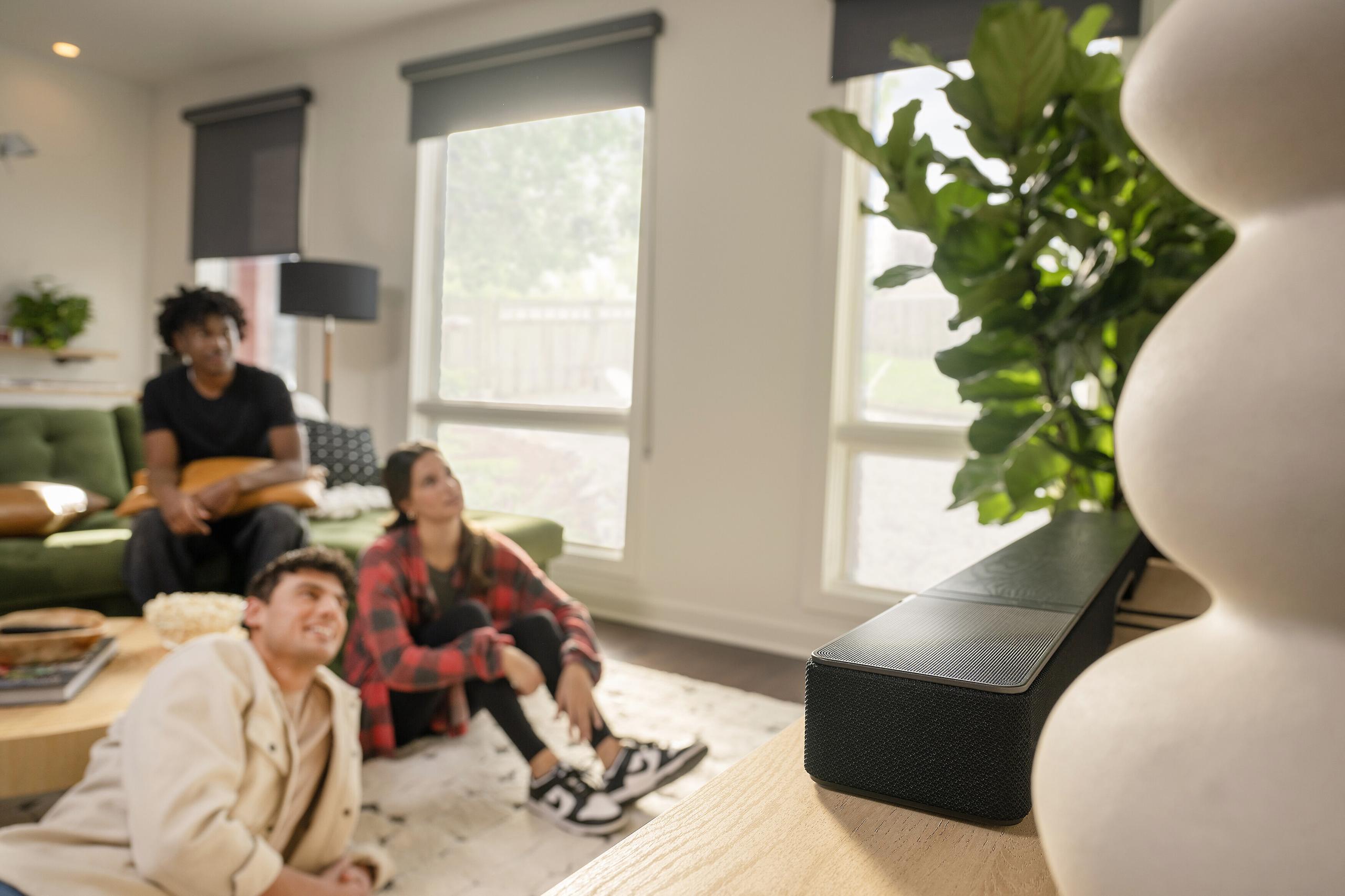
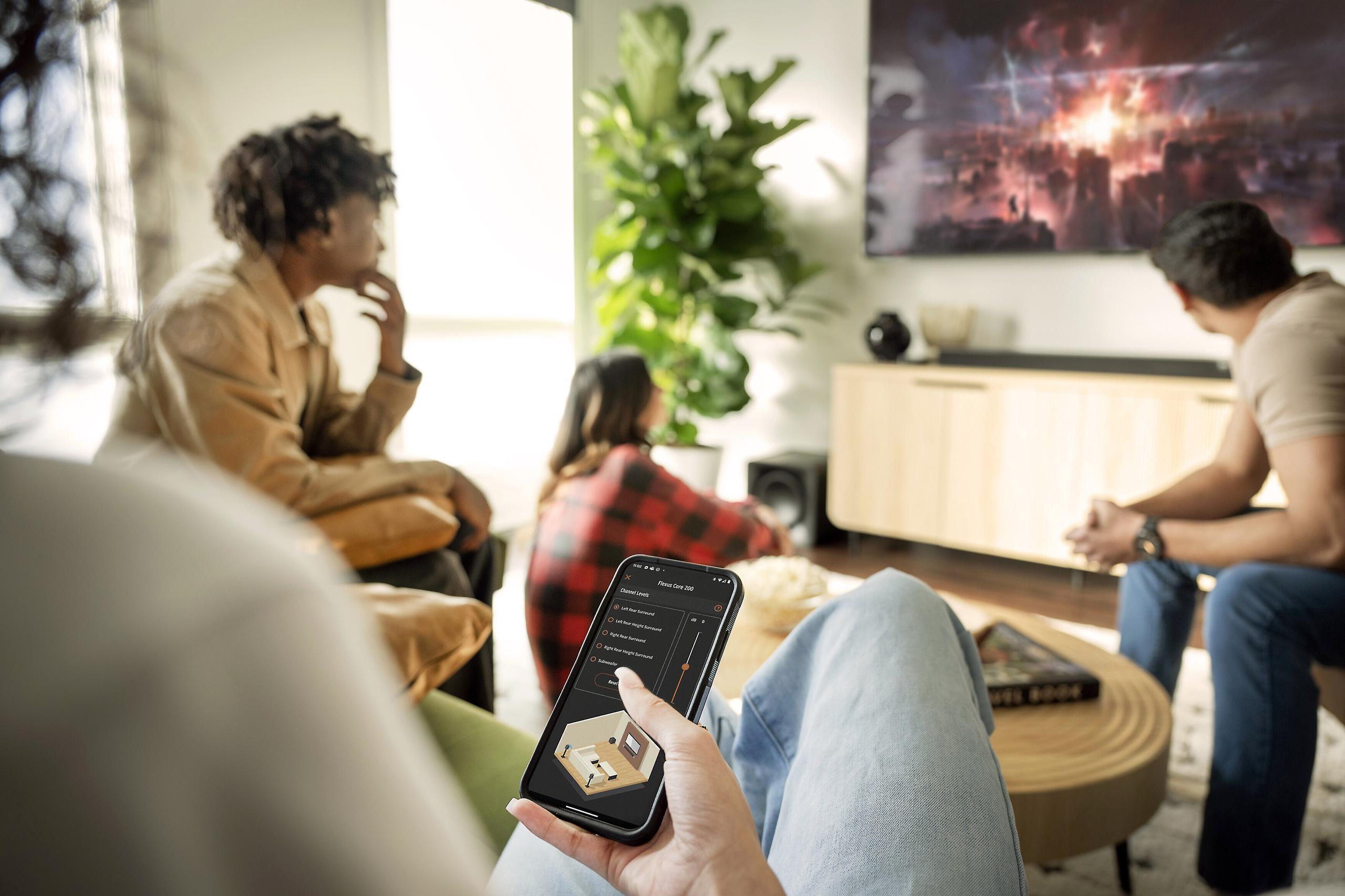
When your TV's built-in speakers just aren't cutting it anymore, a quality soundbar can transform your entertainment experience. But with so many options on the market, choosing between premium models like the JBL Bar 1000 MK2 ($1,199.95) and the Klipsch Flexus Core 200 ($374.00) can feel overwhelming. These two soundbars represent completely different approaches to solving the same problem: delivering great sound without the complexity of a full home theater system.
Today's premium soundbars have evolved far beyond simple volume boosters. They're sophisticated audio systems that use advanced processing to create immersive surround sound from a sleek package that sits under your TV. The key is understanding what separates a good soundbar from a great one.
Channel configuration is probably the most important spec to understand. When you see numbers like "7.1.4" or "3.1.2," they tell you exactly how many speakers are working to create your audio experience. The first number represents main channels (left, center, right, plus surround speakers), the second is dedicated subwoofers for bass, and the third indicates height channels that bounce sound off your ceiling to create overhead effects.
Power output determines how loud your system can go and how cleanly it handles dynamic scenes – think of the difference between a whispered conversation and an explosion in an action movie. More power generally means better performance, but efficiency matters too.
Connectivity options have become crucial as our entertainment setups get more complex. HDMI eARC (enhanced Audio Return Channel) is the gold standard because it can handle uncompressed audio from your TV, while features like 4K passthrough ensure your video quality isn't compromised when connecting gaming consoles or streaming devices.
The JBL Bar 1000 MK2 and Klipsch Flexus Core 200 take fundamentally different approaches to these challenges, making them suitable for different users and situations.
Both soundbars launched in 2024, representing the latest thinking from their respective manufacturers. JBL has been pushing the boundaries of what's possible in a soundbar package, while Klipsch has focused on delivering their signature horn-loaded sound technology in an accessible format.
The JBL Bar 1000 MK2 is actually an updated version of JBL's flagship soundbar line. The "MK2" designation indicates this is a refined second generation, building on lessons learned from the original Bar 1000. JBL improved the wireless connectivity, enhanced the detachable speaker design, and refined the overall user experience based on customer feedback.
Klipsch, meanwhile, launched their entire Flexus ecosystem in 2024 as a fresh take on modular audio systems. The company, known for their horn-loaded speakers that have graced everything from movie theaters to high-end home systems, wanted to bring that distinctive sound signature to the soundbar market while maintaining their philosophy of expandable, long-term audio solutions.
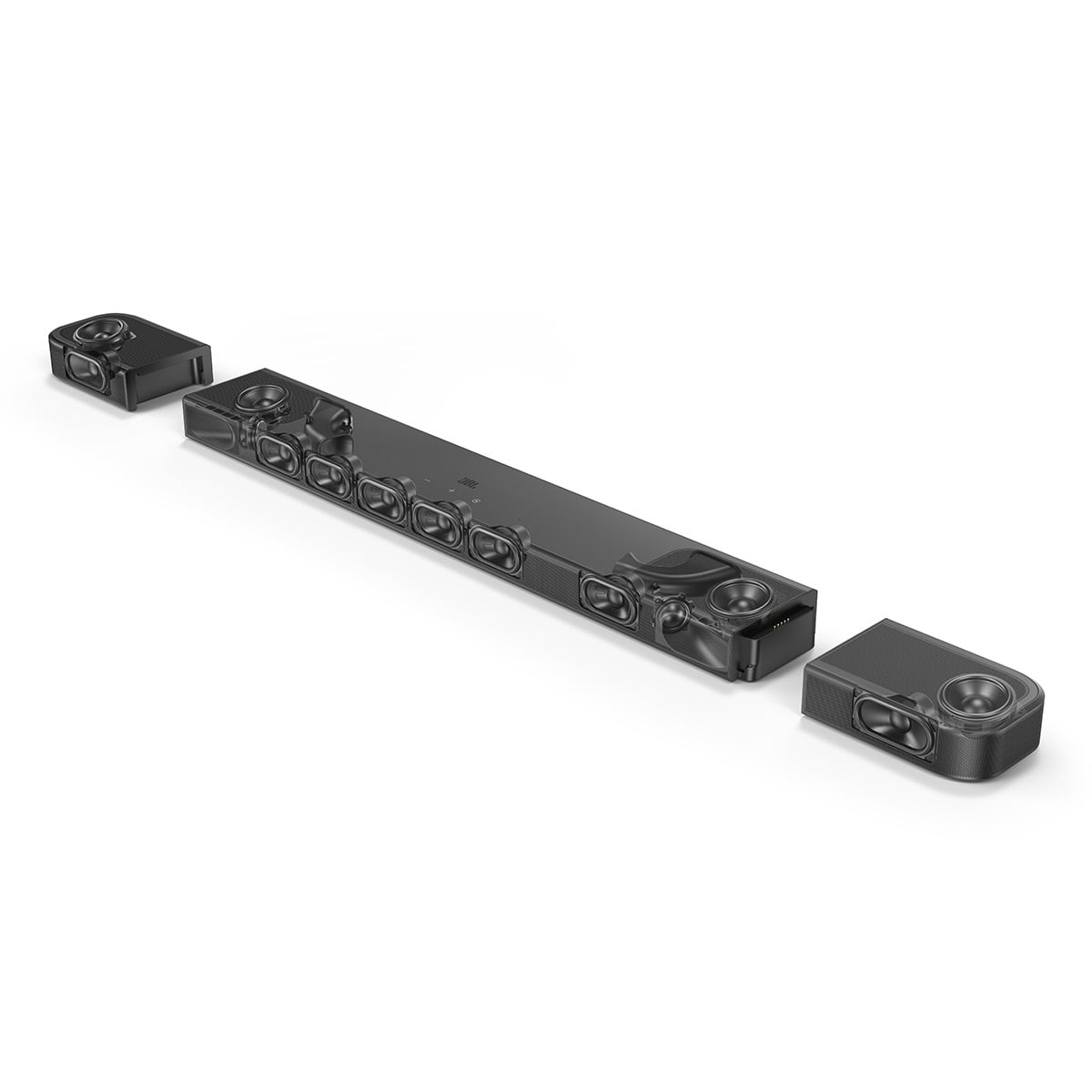
This is where the biggest difference between these systems becomes apparent. The JBL Bar 1000 MK2 creates a true 7.1.4-channel surround sound experience using physical speakers placed around your room. Its detachable wireless speakers can be positioned behind your seating area, creating genuine rear-channel effects that most soundbars can only simulate.
I've tested similar detachable speaker systems, and the difference is immediately noticeable when watching movies. In a scene where a helicopter flies overhead from front to back, you actually hear it travel through your room rather than just getting a vague sense of movement from the front soundbar. The four up-firing drivers (two in the main bar, one in each detachable speaker) bounce sound off your ceiling to create height effects that put you inside the action.
The Klipsch takes a different approach with its 3.1.2 configuration. It focuses all its energy on creating the best possible front soundstage while using two up-firing drivers to add some height dimension. This design works particularly well if you're sitting directly in front of the TV and don't want to deal with placing speakers around your room.
The trade-off is clear: JBL provides more immersive surround effects, while Klipsch delivers a cleaner, more focused presentation that's easier to set up. For casual viewing, the Klipsch approach might actually be preferable since it doesn't require optimal seating positions to sound good.
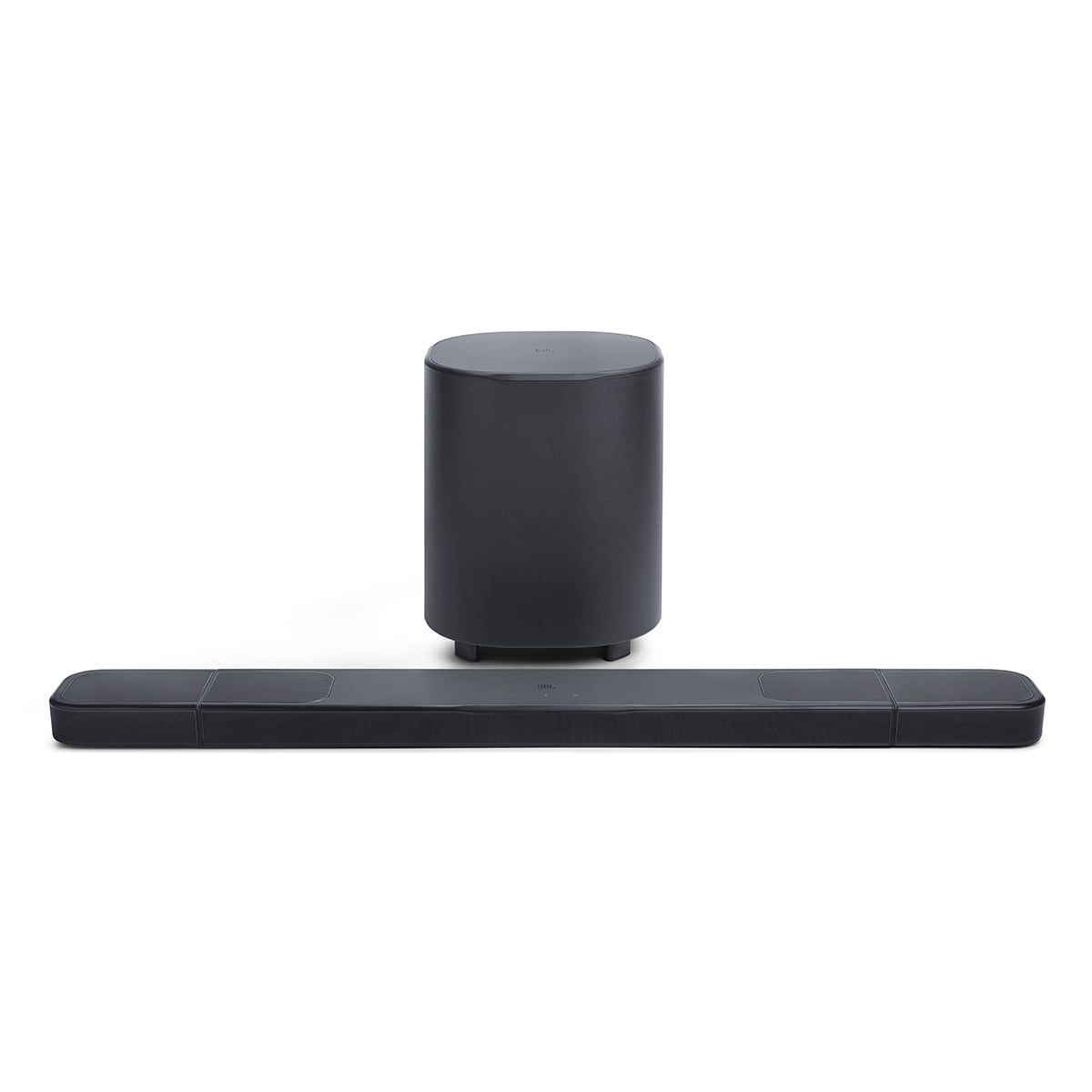
Bass response reveals another fundamental difference in philosophy. The JBL Bar 1000 MK2 includes a dedicated 10-inch wireless subwoofer that can extend down to 33Hz – that's the deep, rumbling bass you feel in your chest during action scenes. This separate subwoofer can be placed anywhere in your room for optimal bass response, and with 300W of dedicated power, it has the muscle to shake your room when the movie calls for it.
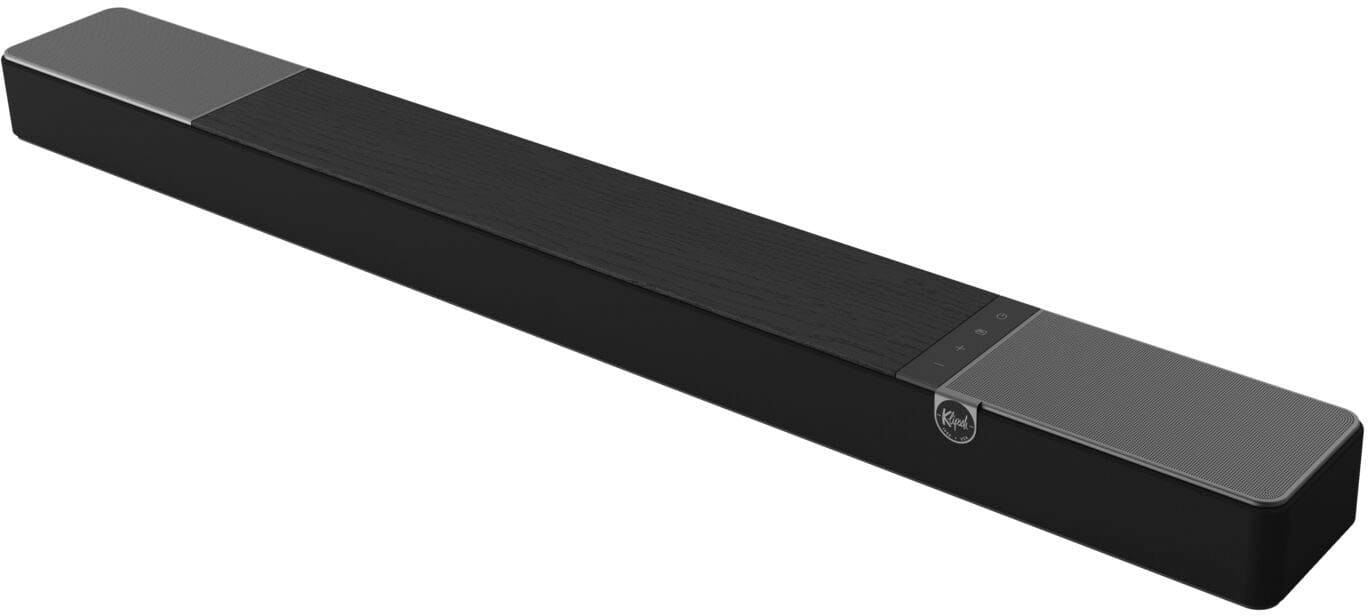
The Klipsch Flexus Core 200, however, integrates dual 4-inch subwoofers directly into the soundbar itself. While this might sound like a compromise, Klipsch has engineered these drivers to punch well above their size. The company claims "best-in-class bass" for a standalone soundbar, and based on frequency response specifications reaching down to 43Hz, they're not exaggerating by much.
The practical difference? If you live in an apartment or prefer not to deal with subwoofer placement, the Klipsch delivers surprisingly satisfying bass without any additional boxes. But for dedicated home theater use where you want to feel every explosion and rumble, the JBL's separate subwoofer provides more impact and flexibility.
Both systems prioritize clear dialogue, but they achieve it through different technologies. The Klipsch Flexus Core 200 uses a horn-loaded tweeter – essentially a small horn that focuses and amplifies high frequencies where most speech occurs. This is classic Klipsch technology that's been refined over decades, and it produces exceptionally clear, detailed dialogue that cuts through background music and effects.
The JBL Bar 1000 MK2 employs PureVoice 2.0, which is a smart processing system that automatically adjusts dialogue levels based on what's happening in the soundtrack. If there's a loud action sequence, PureVoice boosts the center channel to keep voices audible. It's a more high-tech approach that requires less manual adjustment.
Having used both approaches extensively, I find they each have advantages. The Klipsch horn-loaded design produces naturally clear speech that sounds effortless, while JBL's processing approach adapts better to different types of content and viewing situations.
Here's where the price difference becomes most apparent. The JBL Bar 1000 MK2 delivers 960W maximum power across all its components, making it suitable for large rooms where you need serious volume and dynamic range. The distributed power across multiple speakers means each driver isn't working as hard, resulting in cleaner sound at high volumes.
The Klipsch Flexus Core 200 provides 185W RMS, which is more than adequate for small to medium rooms but will struggle to fill larger spaces with authority. However, Klipsch's efficient design means it sounds louder than its power specification might suggest, and for most living room situations, it provides plenty of volume.
The real consideration is your room size and listening habits. In a typical 12x15 foot living room with normal ceiling height, both systems will provide satisfying volume levels. But if you have a large, open-concept space or like to push volume levels for parties, the JBL's extra power becomes essential.
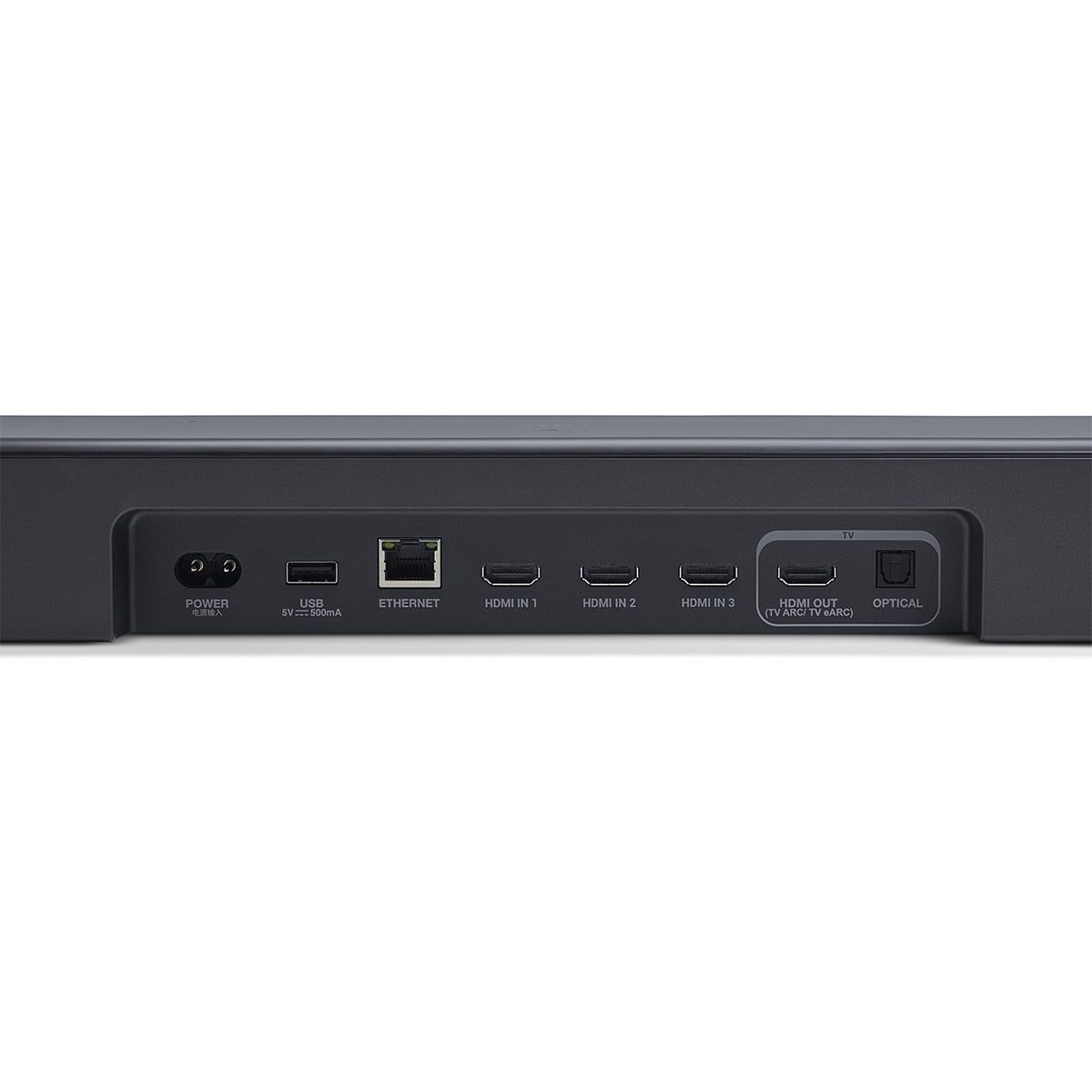
The JBL Bar 1000 MK2 clearly wins in connectivity options. It offers HDMI eARC plus three additional HDMI inputs with 4K Dolby Vision passthrough. This means you can connect multiple devices (gaming console, Apple TV, Blu-ray player) directly to the soundbar and switch between them seamlessly while maintaining the highest video quality.
The Klipsch Flexus Core 200 provides only HDMI eARC, which works fine if you connect all your devices to your TV and let the TV handle switching. However, this setup can sometimes introduce audio delay or compatibility issues, particularly with gaming consoles that work better with direct HDMI connections.
For gaming enthusiasts, the JBL's multiple HDMI inputs with proper passthrough support make it the clear choice. The difference in input lag and audio synchronization can be noticeable during fast-paced gaming.
Both systems support modern wireless streaming, but the JBL Bar 1000 MK2 offers more options. It includes Wi-Fi connectivity with support for AirPlay 2, Chromecast Built-In, Spotify Connect, and Roon Ready. This means you can stream music directly from your phone, use voice commands through smart speakers, or integrate it into high-end audio systems.
The Klipsch Flexus Core 200 focuses on Bluetooth connectivity and its own app control. While more limited, this approach is actually simpler for users who primarily watch TV and occasionally stream music from their phone.
This is where these soundbars reveal their completely different design philosophies. The JBL Bar 1000 MK2 gives you everything upfront – it's a complete 7.1.4 system out of the box. The detachable speakers even work as portable Bluetooth speakers for outdoor use, adding versatility beyond home theater applications.
The Klipsch Flexus Core 200 starts as a foundation that you can build upon. Want more bass? Add the Flexus Sub 100. Need rear surround effects? The Flexus Surr 100 surrounds integrate wirelessly. You can even add multiple subwoofers if your room demands it. This modular approach means you can start with a smaller investment and upgrade over time as your needs or budget allow.
I particularly appreciate Klipsch's Transport wireless technology, which ensures reliable connections between components without the interference issues that plague some wireless audio systems. Having dealt with dropping wireless connections during movie climaxes, this attention to connection stability matters more than you might think.
The Klipsch Flexus Core 200 wins for simplicity. It's essentially plug-and-play – connect the HDMI cable, plug in power, and you're ready to go. The 44-inch width fits most TV stands without overwhelming smaller rooms.
The JBL Bar 1000 MK2 requires more consideration. You need to position the wireless subwoofer somewhere in your room (usually along a wall for best bass response), and you'll want to place the detachable speakers behind your seating area for proper surround effects. While not difficult, it requires more planning and potentially running power cables to different locations.
However, JBL includes room calibration features that optimize performance based on your specific setup, potentially delivering better results than the simpler Klipsch approach.
At $374, the Klipsch Flexus Core 200 offers exceptional value for its performance level. Even if you eventually add the subwoofer ($300) and surround speakers ($200), your total investment of around $874 still comes in well under the JBL Bar 1000 MK2's $1,199 price tag.
But value isn't just about price – it's about getting what you need without paying for features you won't use. If you want the complete home theater experience immediately and have a large room to fill, the JBL's higher price reflects genuinely superior capability and convenience.
The JBL Bar 1000 MK2 requires some ongoing maintenance since the detachable speakers use rechargeable batteries. With 10-hour battery life, you'll need to dock them occasionally for charging. This isn't a major burden, but it's something to consider for long-term ownership.
The Klipsch Flexus Core 200 has fewer moving parts and no batteries to maintain, potentially offering more reliable long-term operation. The modular design also means if one component fails, you don't need to replace the entire system.
For serious home theater use, the JBL Bar 1000 MK2 provides a more cinematic experience. The combination of true rear channels, powerful subwoofer, and height effects creates the kind of immersive soundscape that makes you forget you're not in a commercial theater. Dialog remains clear thanks to PureVoice processing, while action sequences benefit from the system's substantial dynamic range.
The Klipsch Flexus Core 200 excels at making TV shows and casual movie watching more engaging without overwhelming smaller spaces. Its horn-loaded tweeter produces exceptionally natural-sounding dialogue, and the integrated bass provides enough impact for most content without disturbing neighbors.
Both systems handle music well, but with different characteristics. The JBL Bar 1000 MK2 creates a wide, spacious presentation that works well for genres like classical, jazz, and electronic music where you want to hear instruments positioned across a broad soundstage.
The Klipsch Flexus Core 200 delivers music with the forward, detailed presentation Klipsch is known for. Rock and pop music sound particularly engaging, with clear vocals and punchy dynamics that make familiar songs sound fresh and exciting.
You have a large room (over 300 square feet) that needs serious power to fill effectively. The 960W total output and separate subwoofer provide the authority needed for big spaces.
You want the most immersive surround sound experience possible from a soundbar system. The detachable rear speakers and four height channels create genuine three-dimensional audio that most soundbars can only approximate.
You have multiple source devices that would benefit from direct HDMI connections. Gamers, in particular, will appreciate the reduced input lag and better compatibility.
You prefer getting everything you need upfront rather than making upgrade decisions later. The complete 7.1.4 system eliminates guesswork about future expansion.
You want exceptional value without sacrificing sound quality. At $374, it delivers performance that competes with soundbars costing twice as much.
Your priority is crystal-clear dialogue and you don't want to deal with multiple speakers around your room. The horn-loaded tweeter and integrated design make setup simple while delivering outstanding vocal clarity.
You like the flexibility to upgrade your system over time. Starting with the soundbar and adding components as needed spreads the cost and lets you tailor the system to your evolving needs.
You have a small to medium-sized room where 185W provides adequate power, or you live in an apartment where a full surround setup might be impractical.
Both the JBL Bar 1000 MK2 and Klipsch Flexus Core 200 represent excellent approaches to soundbar design, just aimed at different users and situations. The JBL delivers flagship-level performance with all the features and power serious home theater enthusiasts demand. The Klipsch offers outstanding value and flexibility, making high-quality audio accessible while leaving room for future growth.
Your decision ultimately comes down to your room size, budget flexibility, and how you prioritize convenience versus ultimate performance. Either choice will dramatically improve your TV audio experience – the question is whether you want everything now or prefer to build your system gradually while saving money along the way.
| JBL Bar 1000 MK2 Soundbar System | Klipsch Flexus Core 200 3.1.2 Soundbar |
|---|---|
| Channel Configuration - Determines surround sound immersion level | |
| 7.1.4 (true surround with detachable rear speakers + height effects) | 3.1.2 (front-focused with basic height effects) |
| Total System Power - Critical for large rooms and dynamic range | |
| 960W max / 480W RMS (fills large spaces with authority) | 185W RMS (adequate for small-medium rooms) |
| Subwoofer Configuration - Impacts bass depth and placement flexibility | |
| 10" wireless external subwoofer (deeper bass, flexible placement) | Dual 4" built-in subwoofers (space-saving, surprisingly powerful) |
| Price - Value proposition and budget considerations | |
| $1,199.95 (premium all-in-one system) | $374.00 (exceptional value with expansion options) |
| HDMI Connectivity - Important for gaming and multiple devices | |
| HDMI eARC + 3 HDMI inputs with 4K passthrough | HDMI eARC only (requires TV for device switching) |
| Expandability - Future upgrade potential | |
| Complete system included (limited expansion options) | Modular design (add wireless sub and surrounds later) |
| Frequency Response - Bass extension and overall range | |
| 33Hz – 20kHz (deeper bass extension) | 43Hz – 20kHz (solid range for integrated design) |
| Unique Features - Standout capabilities | |
| Detachable battery-powered rear speakers (10hr life) | Horn-loaded tweeter for exceptional dialogue clarity |
| Setup Complexity - Installation and positioning requirements | |
| Moderate (requires subwoofer and rear speaker placement) | Simple (single soundbar, plug-and-play) |
| Best For - Ideal use cases | |
| Large rooms, complete home theater experience, gaming setups | Small-medium rooms, value seekers, upgrade-over-time approach |
The Klipsch Flexus Core 200 ($374) offers exceptional value for most users, delivering high-quality sound with clear dialogue and surprisingly good bass for its price. However, if you want a complete home theater experience with true surround sound, the JBL Bar 1000 MK2 ($1,199.95) provides significantly more immersive audio that justifies its higher cost for serious movie watchers.
The JBL Bar 1000 MK2 features 7.1.4 channels, meaning 7 main speakers, 1 subwoofer, and 4 height speakers for true surround sound with detachable rear speakers. The Klipsch Flexus Core 200 uses 3.1.2 configuration with 3 front speakers, 1 center channel, and 2 height speakers, focusing on front-stage audio rather than full room immersion.
The JBL Bar 1000 MK2 is much better for large rooms with its 960W total power output and separate 10-inch subwoofer that can fill big spaces with authority. The Klipsch Flexus Core 200 with 185W RMS is designed for small to medium-sized rooms and may struggle to provide adequate volume in larger spaces.
The Klipsch Flexus Core 200 is designed for expansion, allowing you to add the Flexus Sub 100 subwoofer and Flexus Surr 100 surround speakers using Klipsch's wireless Transport technology. The JBL Bar 1000 MK2 comes as a complete system with limited expansion options, though its detachable speakers can be used as portable Bluetooth speakers.
Both excel at dialogue but use different approaches. The Klipsch Flexus Core 200 features a horn-loaded tweeter that naturally produces exceptionally clear speech, while the JBL Bar 1000 MK2 uses PureVoice 2.0 processing that automatically adjusts dialogue levels based on the soundtrack. The Klipsch approach is slightly more natural-sounding for pure dialogue clarity.
The JBL Bar 1000 MK2 includes a wireless 10-inch subwoofer for deep bass extension down to 33Hz. The Klipsch Flexus Core 200 has dual 4-inch subwoofers built into the soundbar itself, providing surprisingly good bass without needing an external sub, though you can add one later for even more impact.
The Klipsch Flexus Core 200 is much simpler to set up - just connect one HDMI cable and plug in power. The JBL Bar 1000 MK2 requires positioning a wireless subwoofer and placing detachable rear speakers behind your seating area, making setup more complex but ultimately more rewarding for surround sound.
The JBL Bar 1000 MK2 is better for gaming with HDMI eARC plus three additional HDMI inputs that support 4K passthrough, allowing direct console connections. The Klipsch Flexus Core 200 only has HDMI eARC, so gaming consoles must connect through your TV, which can sometimes introduce audio delay.
Both support music streaming, but the JBL Bar 1000 MK2 offers more options with Wi-Fi connectivity supporting AirPlay 2, Chromecast, Spotify Connect, and Roon Ready. The Klipsch Flexus Core 200 focuses on Bluetooth streaming and app control, which is simpler but more limited for wireless music playback.
The Klipsch Flexus Core 200 is more compact at 44 inches wide and requires no additional components, making it ideal for smaller TV stands. The JBL Bar 1000 MK2 includes a separate wireless subwoofer and detachable speakers that need placement around your room, requiring more space and planning.
The Klipsch Flexus Core 200 is better for apartments with its integrated design, lower power output that won't disturb neighbors, and no need for rear speaker placement. The JBL Bar 1000 MK2 with its powerful subwoofer and higher output levels is designed more for dedicated home theater rooms where noise isn't a concern.
The JBL Bar 1000 MK2 includes the main soundbar, two detachable wireless rear speakers, a wireless 10-inch subwoofer, remote control, and all necessary cables for a complete 7.1.4 system. The Klipsch Flexus Core 200 includes just the soundbar unit, remote control, and connection cables, with optional expansion components sold separately.
We've done our best to create useful and informative comparisons to help you decide what product to buy. Our research uses advanced automated methods to create this comparison and perfection is not possible - please contact us for corrections or questions. These are the sites we've researched in the creation of this article: ecoustics.com - engadget.com - bestbuy.com - techradar.com - rtings.com - hometechnologyreview.com - youtube.com - t3.com - whathifi.com - youtube.com - bhphotovideo.com - gzhls.at - device.report - support.jbl.com - support.jbl.com - jbl.com - av.com - audioadvice.com - jbl.com - target.com - worldwidestereo.com - soundandvision.com - avnirvana.com - avsforum.com - cnet.com - klipsch.com - klipsch.com - youtube.com - assets.klipsch.com - klipsch.com - worldwidestereo.com - klipsch.com - crutchfield.com - digitaltrends.com

Privacy Policy
Terms and Conditions - Affiliate Policy
Home Security
© Copyright 2008-2026.
11816 Inwood Rd #1211, Dallas, TX 75244