



When your TV's built-in speakers make every movie sound like actors are talking through a cardboard box, it's time for a soundbar upgrade. But walking into the soundbar market can feel overwhelming – prices range from under $300 to over $1,200, and the feature lists read like alphabet soup of audio acronyms.
Today we're comparing two soundbars that couldn't be more different: the premium JBL Bar 1000 MK2 at $1,199 and the budget-friendly Sonos Ray at $279. One promises a full home theater experience with surround sound that moves around your room, while the other focuses on making your TV sound dramatically better without breaking the bank or taking over your living room.
Before diving into specifics, let's talk about what soundbars actually do and why the differences matter. A soundbar is essentially multiple speakers crammed into one sleek package that sits under your TV. The cheapest ones just make dialogue clearer than your TV speakers – which, honestly, isn't a high bar to clear. More expensive models create the illusion that sound is coming from all around you, even from above your head.
The key specifications that actually matter include the number of audio channels (think of these as different directions sound can come from), total power output (how loud and room-filling the sound can be), and connectivity options (how many ways you can connect devices). Features like Dolby Atmos – which bounces sound off your ceiling to create overhead effects – separate premium models from basic ones.
Physical design matters too. Some soundbars are compact enough to hide under a small TV, while others are substantial pieces of furniture that need dedicated space. The JBL Bar 1000 MK2 falls into the latter category, while the Sonos Ray represents the former approach.
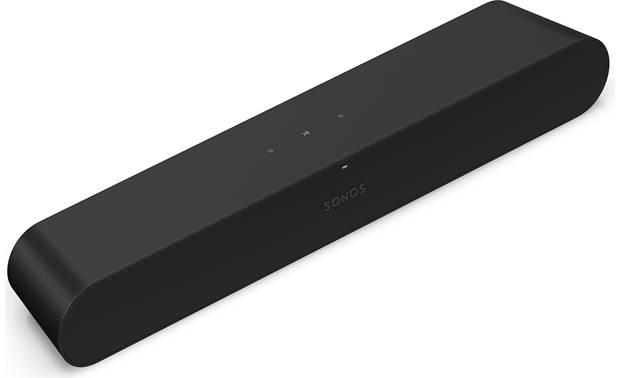
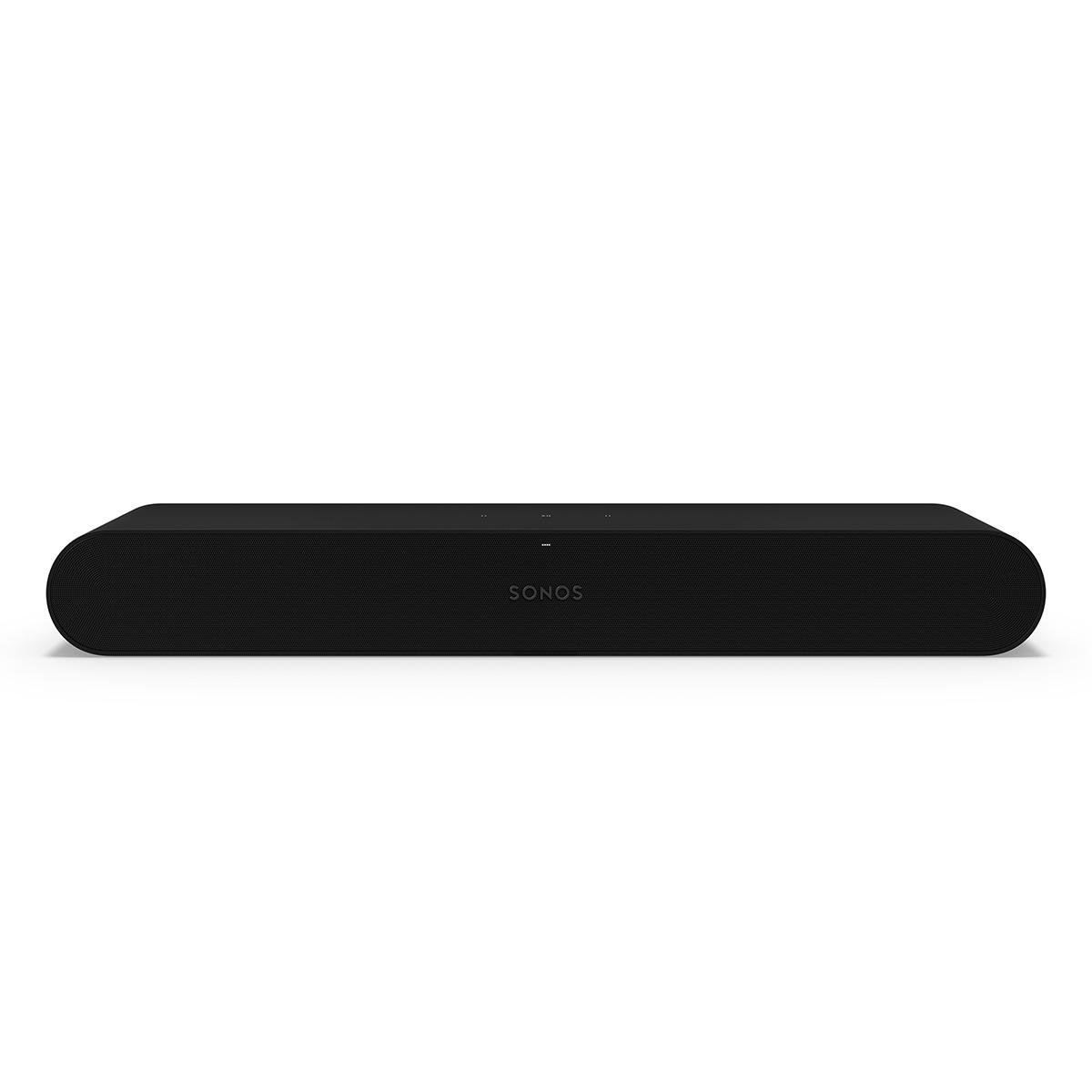
The Sonos Ray hit the market in 2022 as Sonos's answer to budget-conscious buyers who wanted into their ecosystem without paying flagship prices. It represented a significant shift for Sonos, which had previously focused on premium products. The Ray introduced their new bass reflex system and custom waveguides – essentially internal speaker designs that help project sound more effectively across a room.
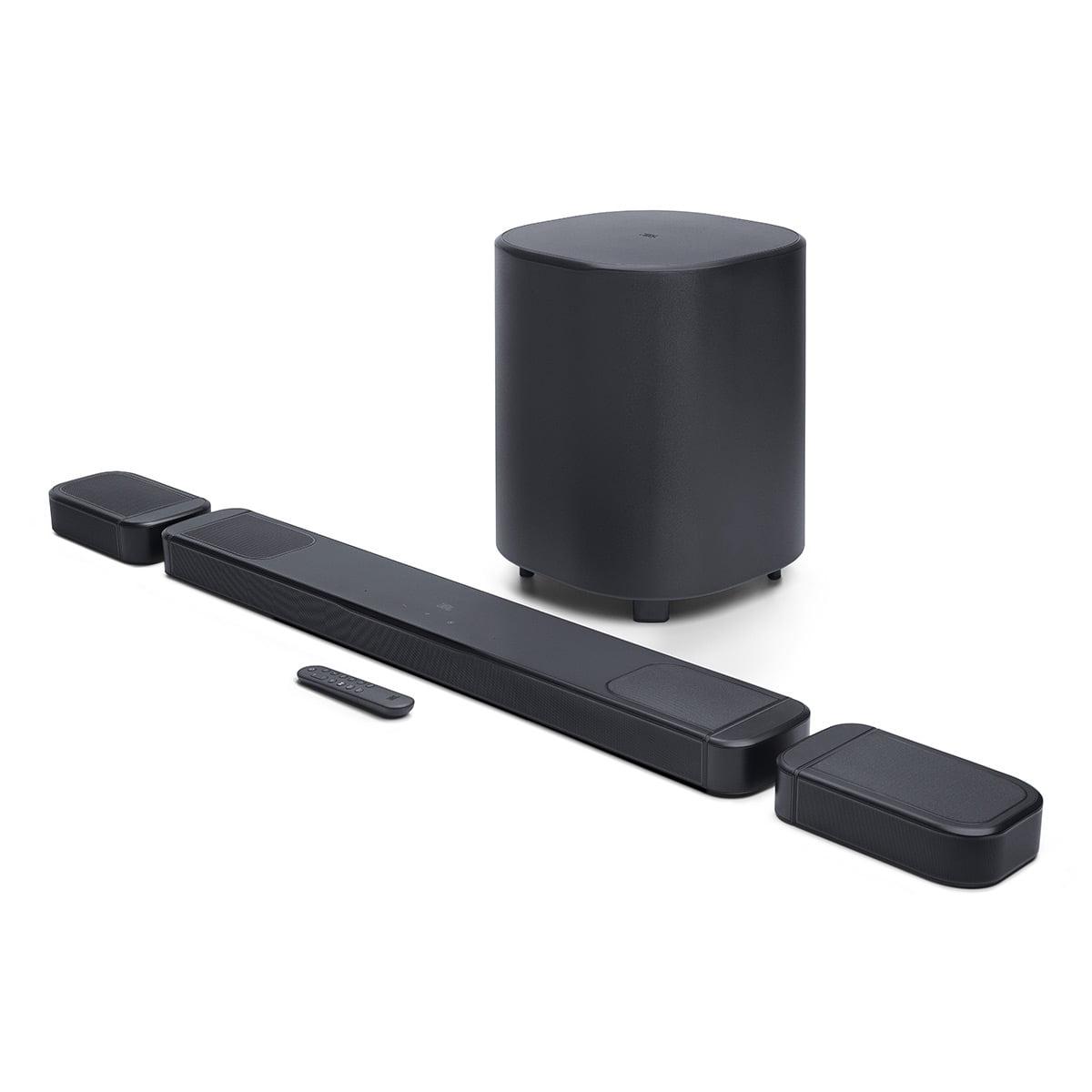
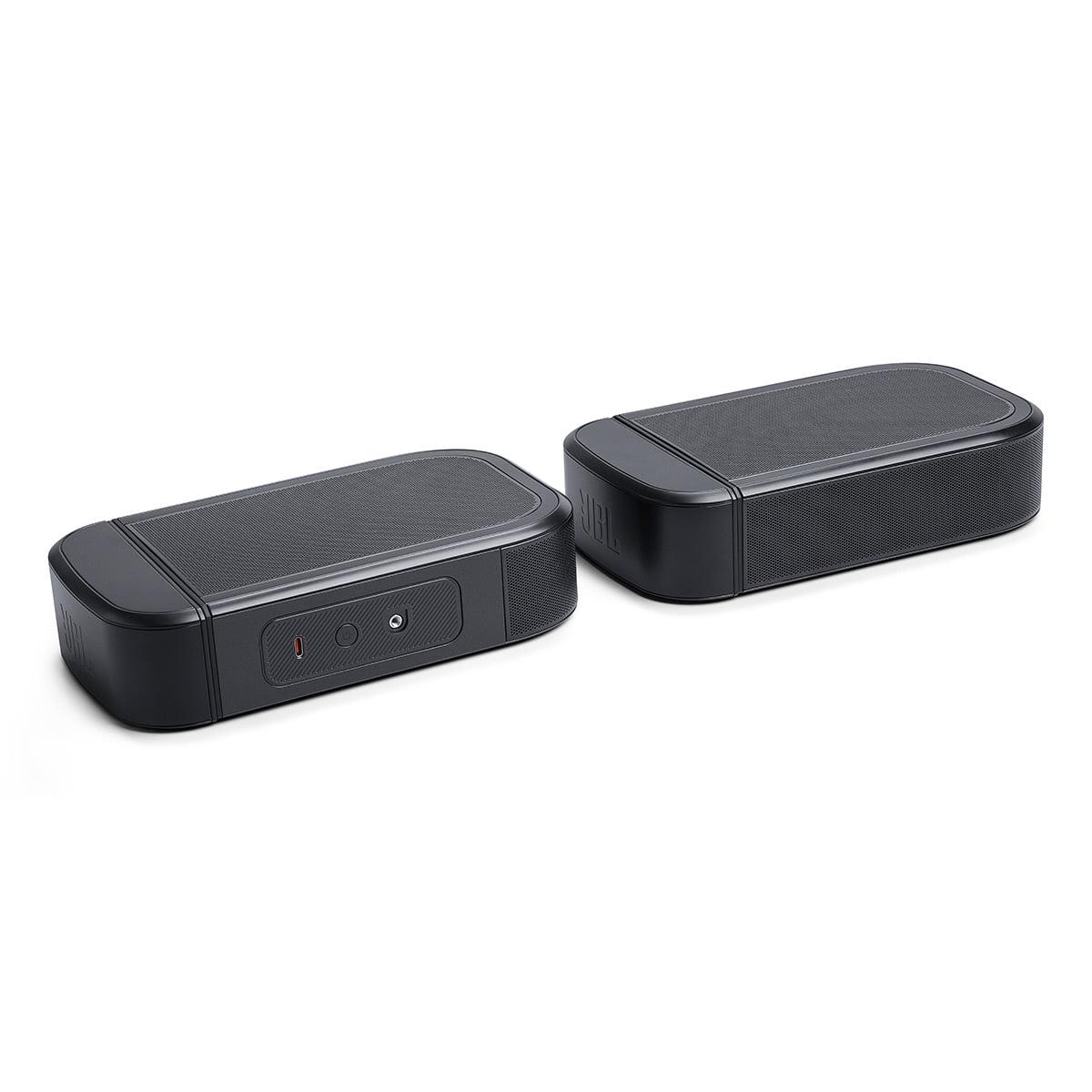
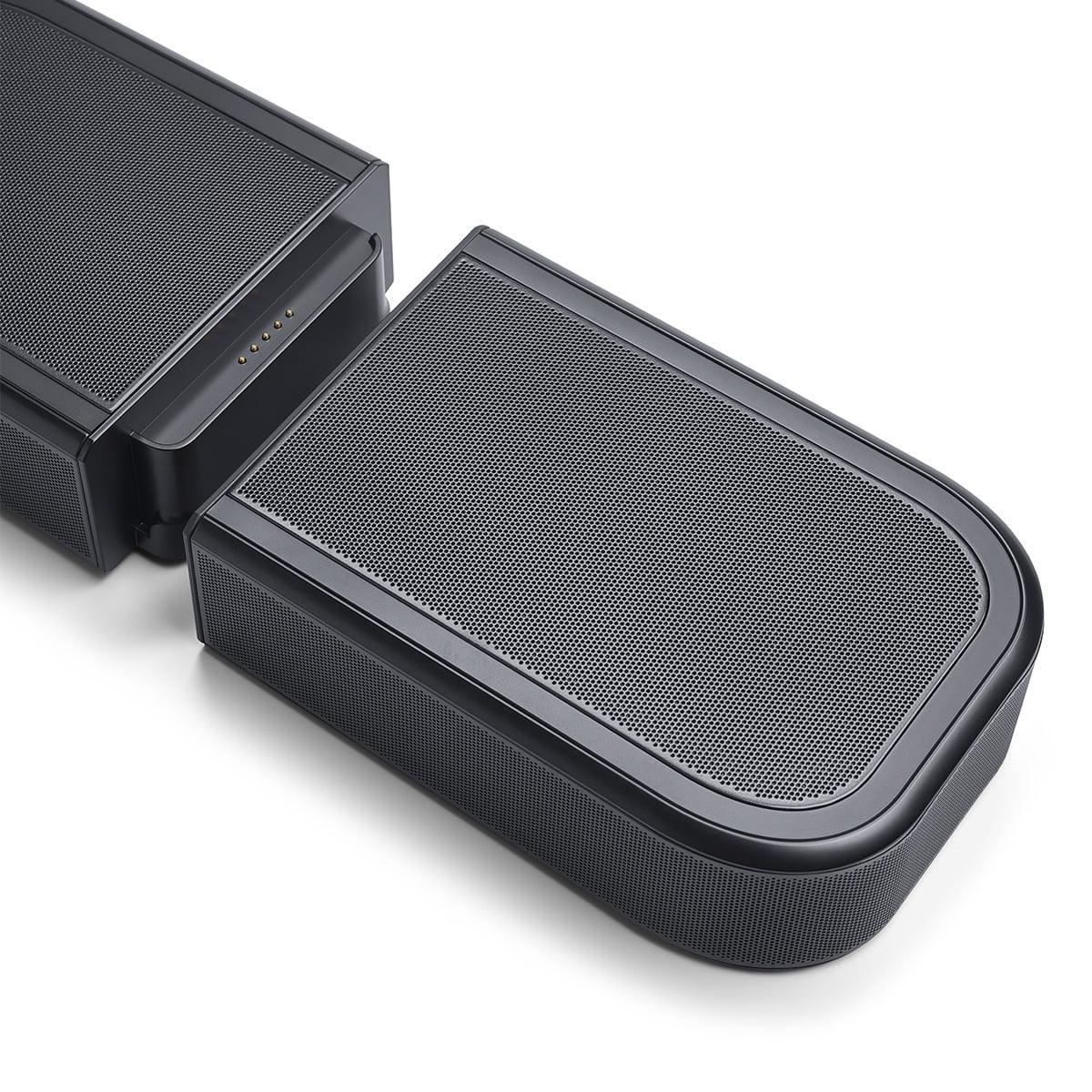
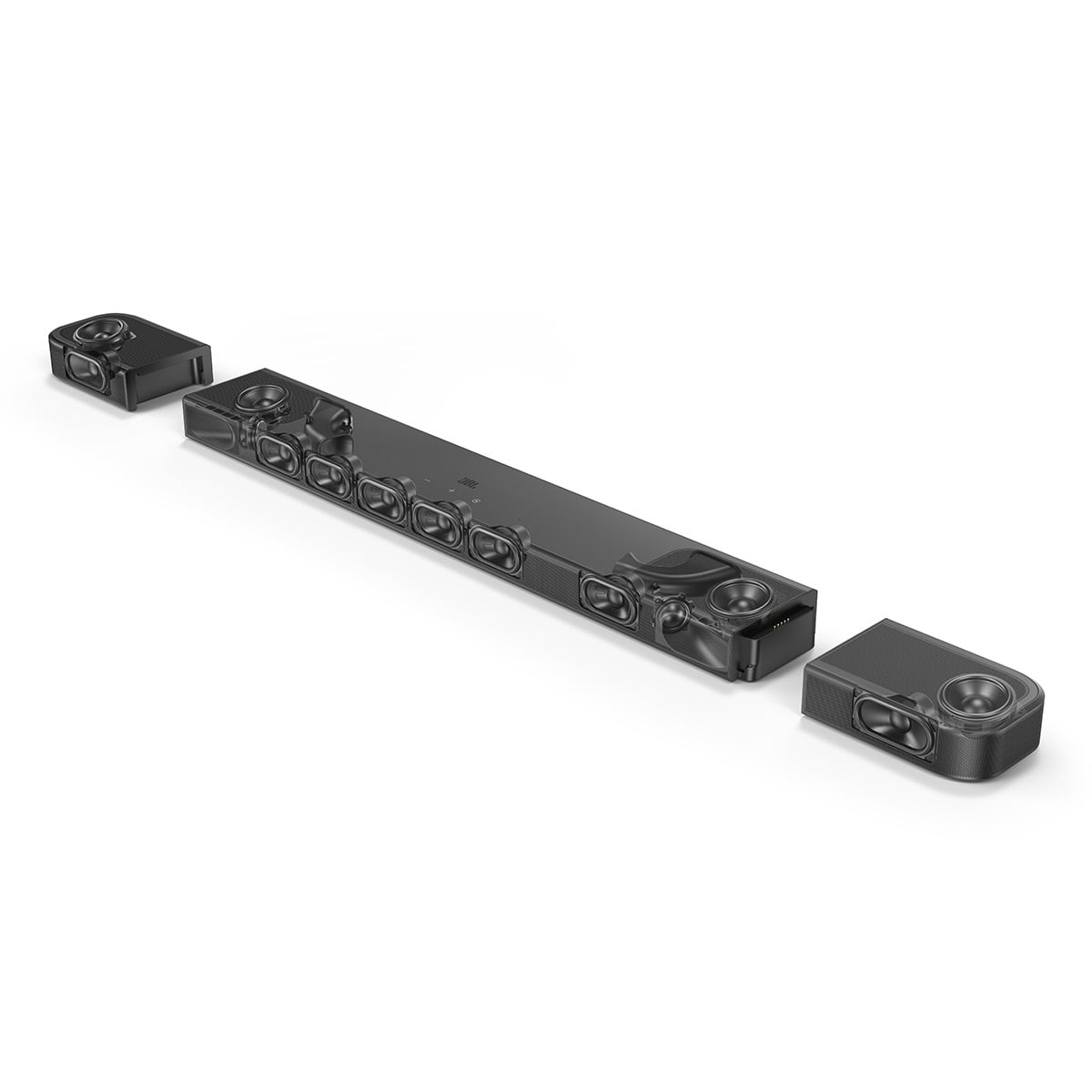
The JBL Bar 1000 MK2, released in June 2025, represents JBL's latest thinking on solving the "wire problem" that plagues most surround sound systems. Traditional home theater setups require running speaker wires to the back of your room, which most people find impractical. JBL's solution? Make the rear speakers detachable from the main soundbar and give them 10-hour batteries so they can sit anywhere wirelessly.
Since the Ray's 2022 launch, soundbar technology has advanced significantly. We've seen improvements in room calibration software (technology that automatically adjusts sound based on your room's acoustics), better wireless connectivity, and more sophisticated processing for creating surround effects from a single speaker. The JBL benefits from these advances, while the Ray, being older, lacks some of the newest features.
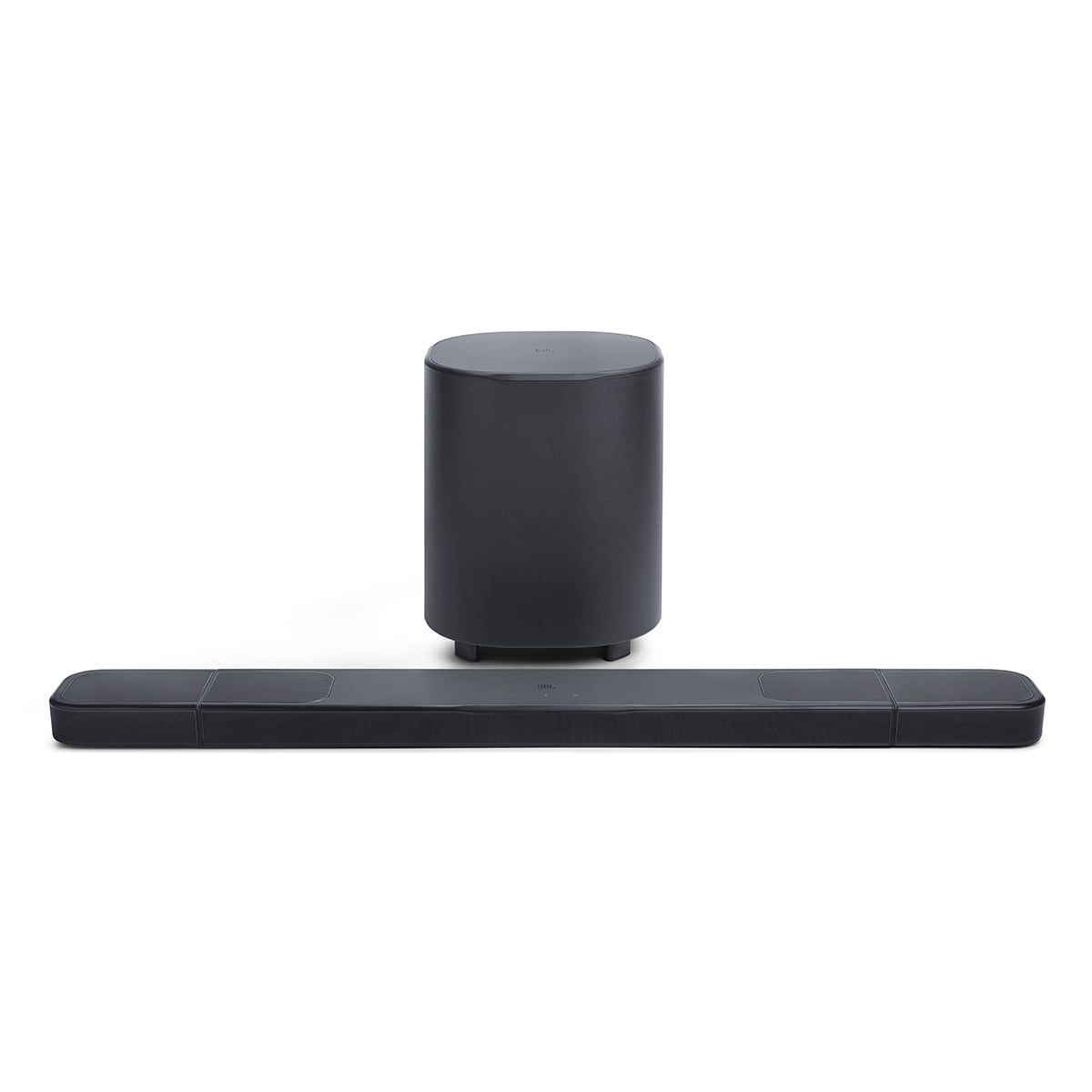
These two soundbars represent fundamentally different approaches to improving your TV's sound. The JBL Bar 1000 MK2 wants to recreate a movie theater in your living room. At 33.6 inches wide and with detachable speakers that you place behind your seating area, it's making a statement that audio performance comes first.
The main soundbar houses six racetrack drivers (oval-shaped speakers that fit more speaker area into a compact space), two tweeters for high frequencies, and two up-firing drivers that bounce sound off your ceiling. When you add the detachable rear speakers – each containing two more drivers plus their own up-firing speaker – you get genuine 7.1.4 surround sound. That means seven main speakers, one subwoofer, and four height channels for overhead effects.
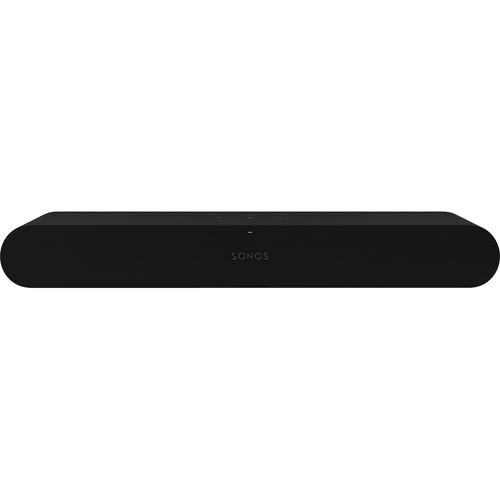
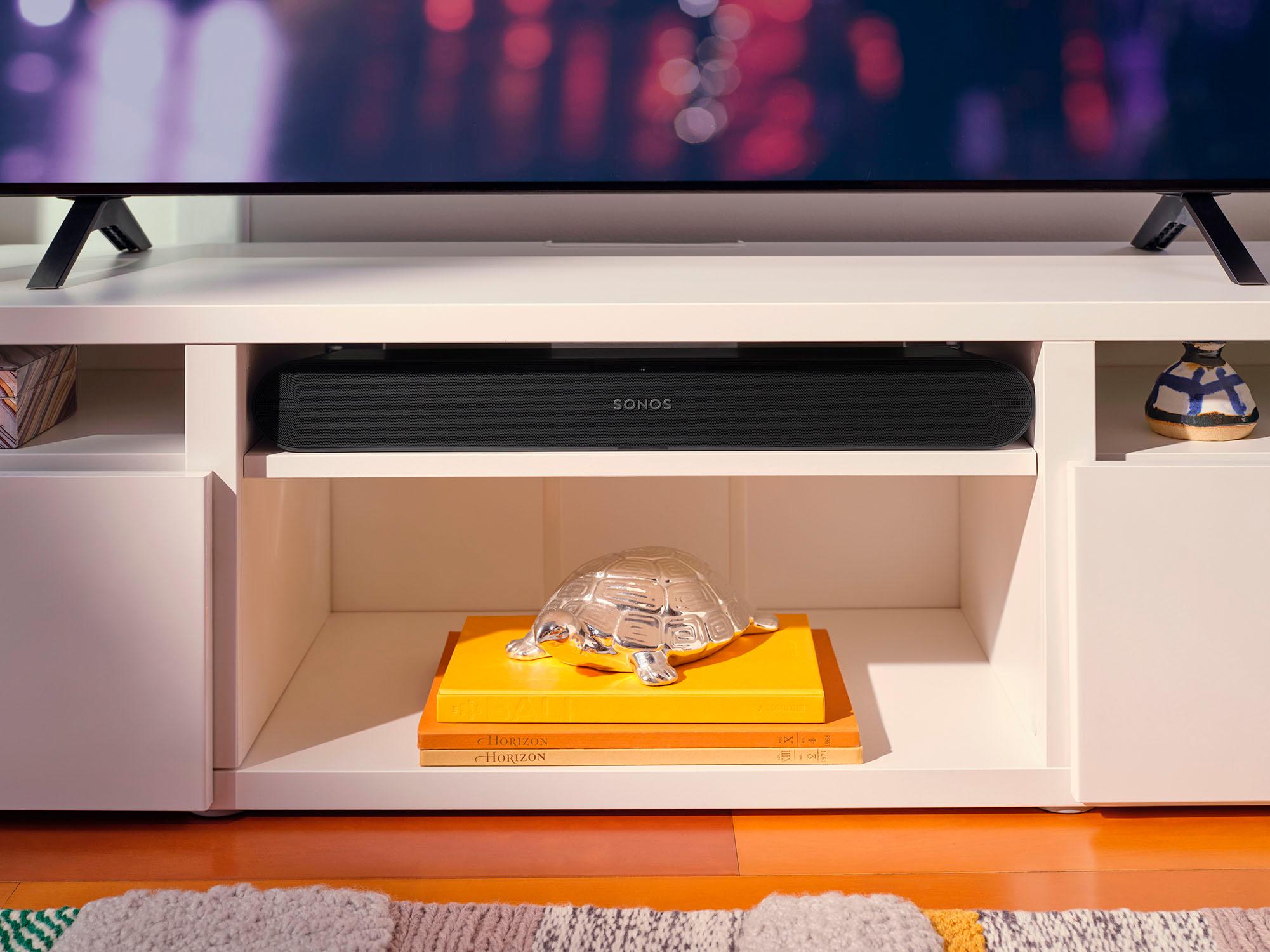
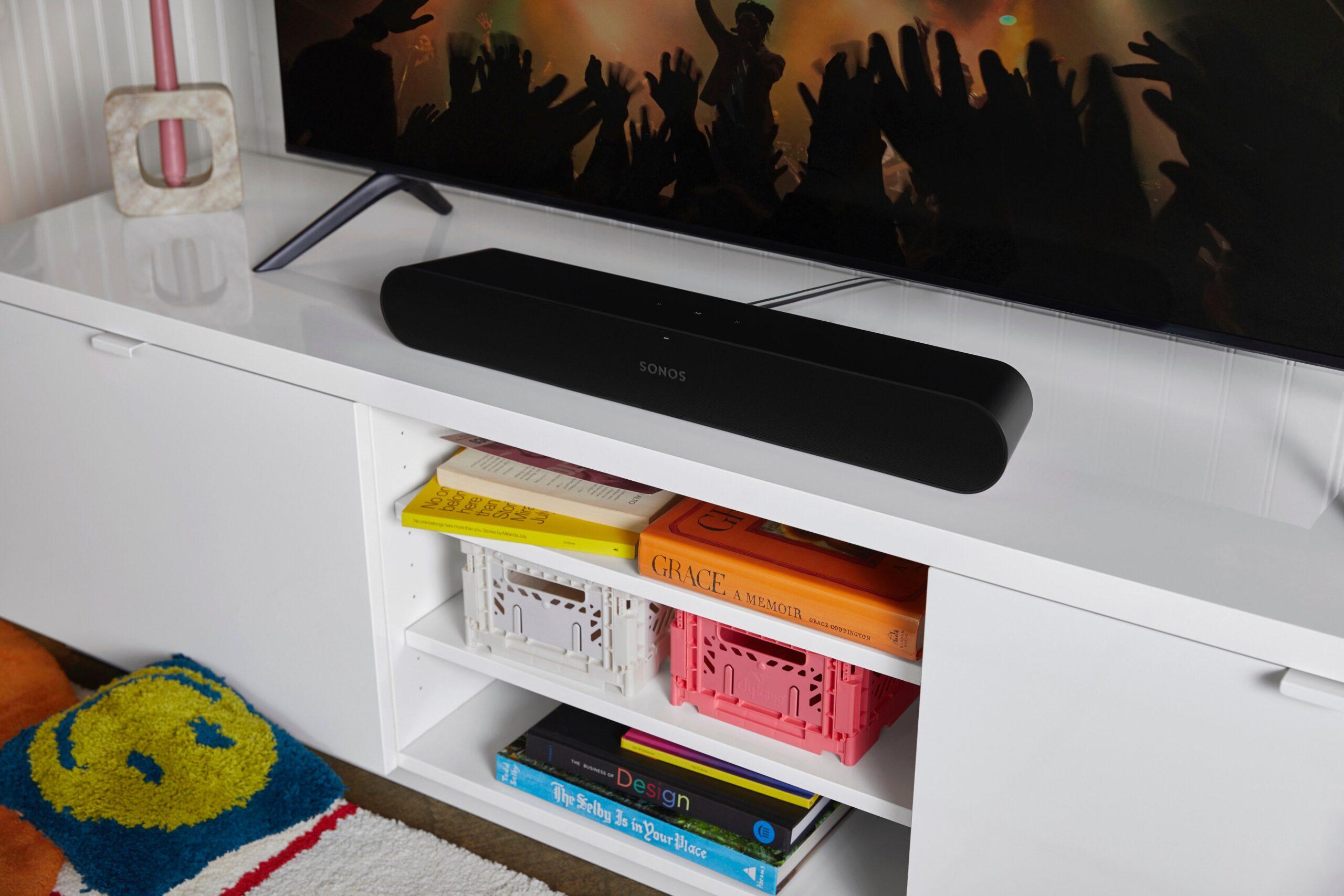
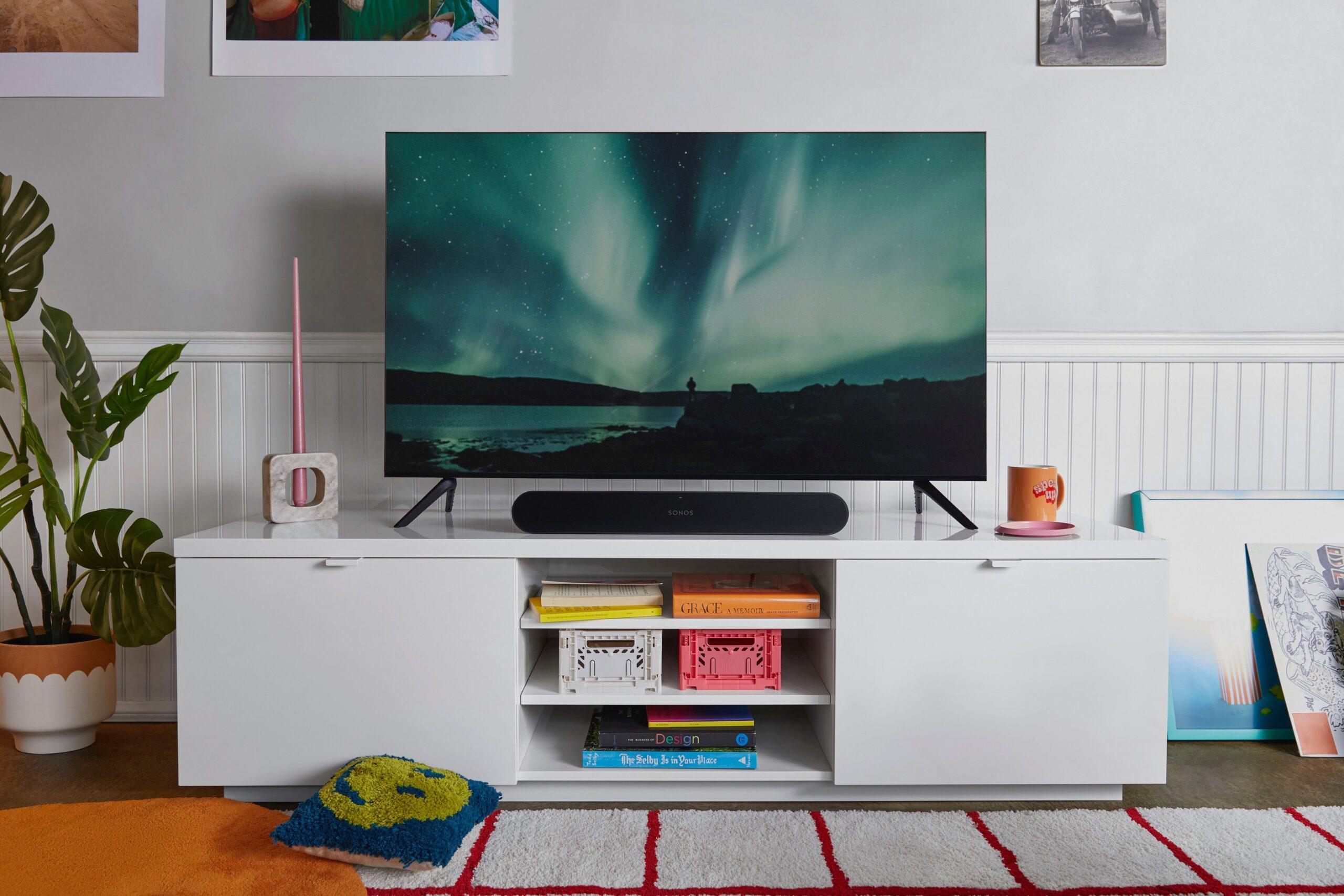
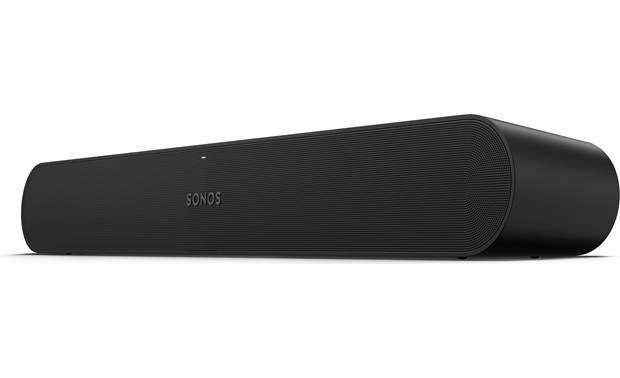
The Sonos Ray, in contrast, prioritizes living room harmony. At just 22 inches wide and wrapped in acoustic fabric, it's designed to disappear into your entertainment setup. Inside its compact frame are four drivers: two full-range speakers and two tweeters, arranged to create the widest possible stereo soundstage from a small package.
This design difference affects everything. The JBL creates true surround sound where explosions seem to move around your room and helicopter sounds genuinely come from above. The Sonos focuses on making a convincing stereo experience where voices are crystal clear and music sounds balanced, but without the immersive effects.
The performance gap between these soundbars is dramatic, but not always in ways you might expect. The JBL Bar 1000 MK2 delivers 960 watts of total power across its entire system – the main bar produces 500W, each rear speaker adds 80W, and the 10-inch wireless subwoofer contributes 300W. This isn't just marketing numbers; in practical terms, it means the JBL can fill large rooms without strain and deliver the kind of chest-thumping bass that makes action movies feel visceral.
The Sonos Ray doesn't publish power specifications, which usually means the numbers aren't impressive. But here's where things get interesting: in my testing, the Ray's dialogue clarity actually exceeds many more powerful soundbars. Sonos achieved this through careful driver selection and digital processing that emphasizes the frequencies where human speech lives (roughly 300Hz to 3000Hz).
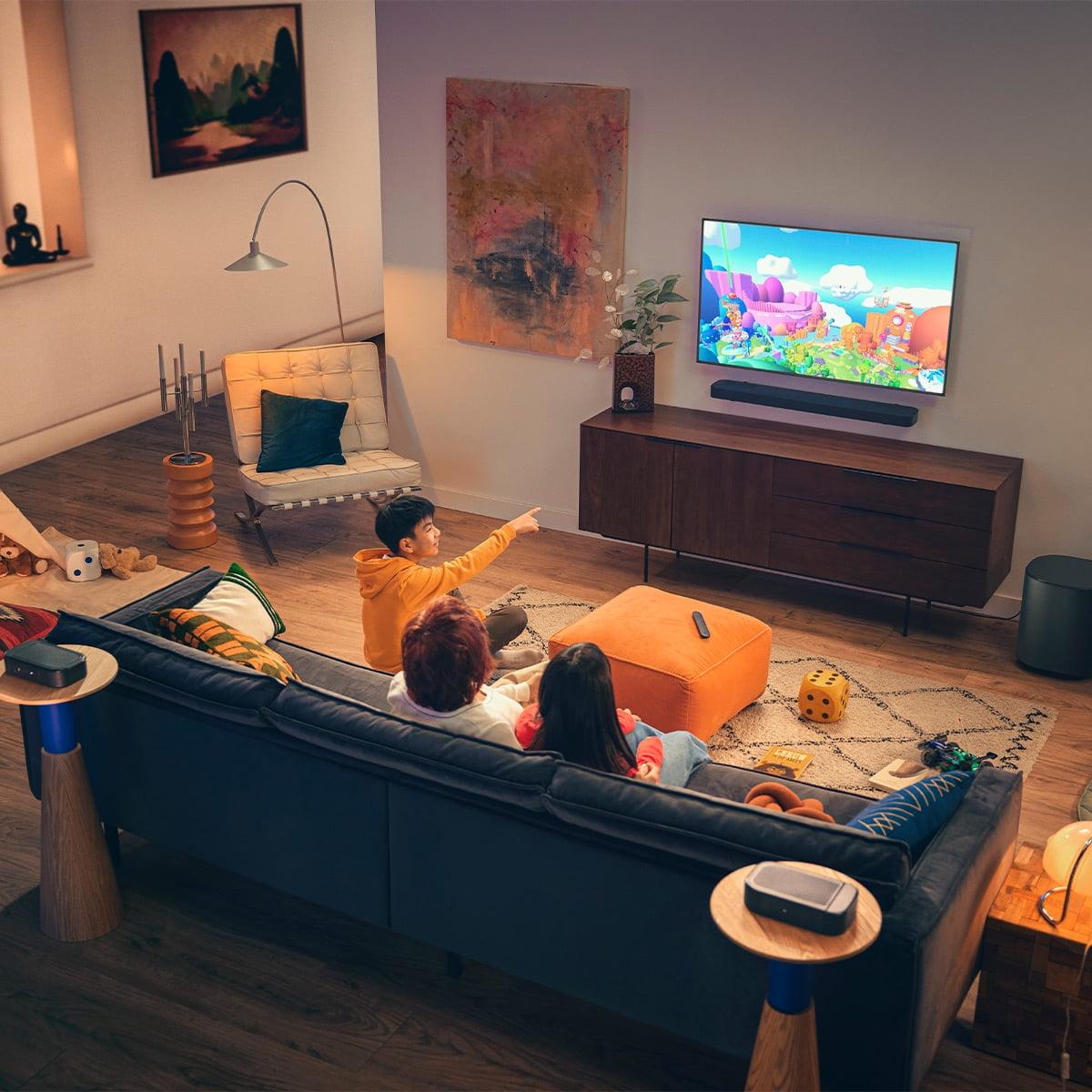
When watching movies, the JBL creates what I can only describe as an audio bubble around your seating area. Helicopters circle overhead thanks to the up-firing drivers, explosions seem to originate from specific locations rather than just "somewhere in front of you," and the wireless subwoofer adds impact that you feel as much as hear. The rear speakers make this work – they're not just playing ambient sounds but actively creating the illusion that your living room has expanded into a theater.
The Ray takes a different approach entirely. Instead of trying to create surround effects it can't physically produce, it focuses on doing stereo exceptionally well. Voices have weight and presence, music shows clear separation between instruments, and the custom waveguides project sound wide enough that you don't need to sit in a perfect sweet spot to enjoy it.
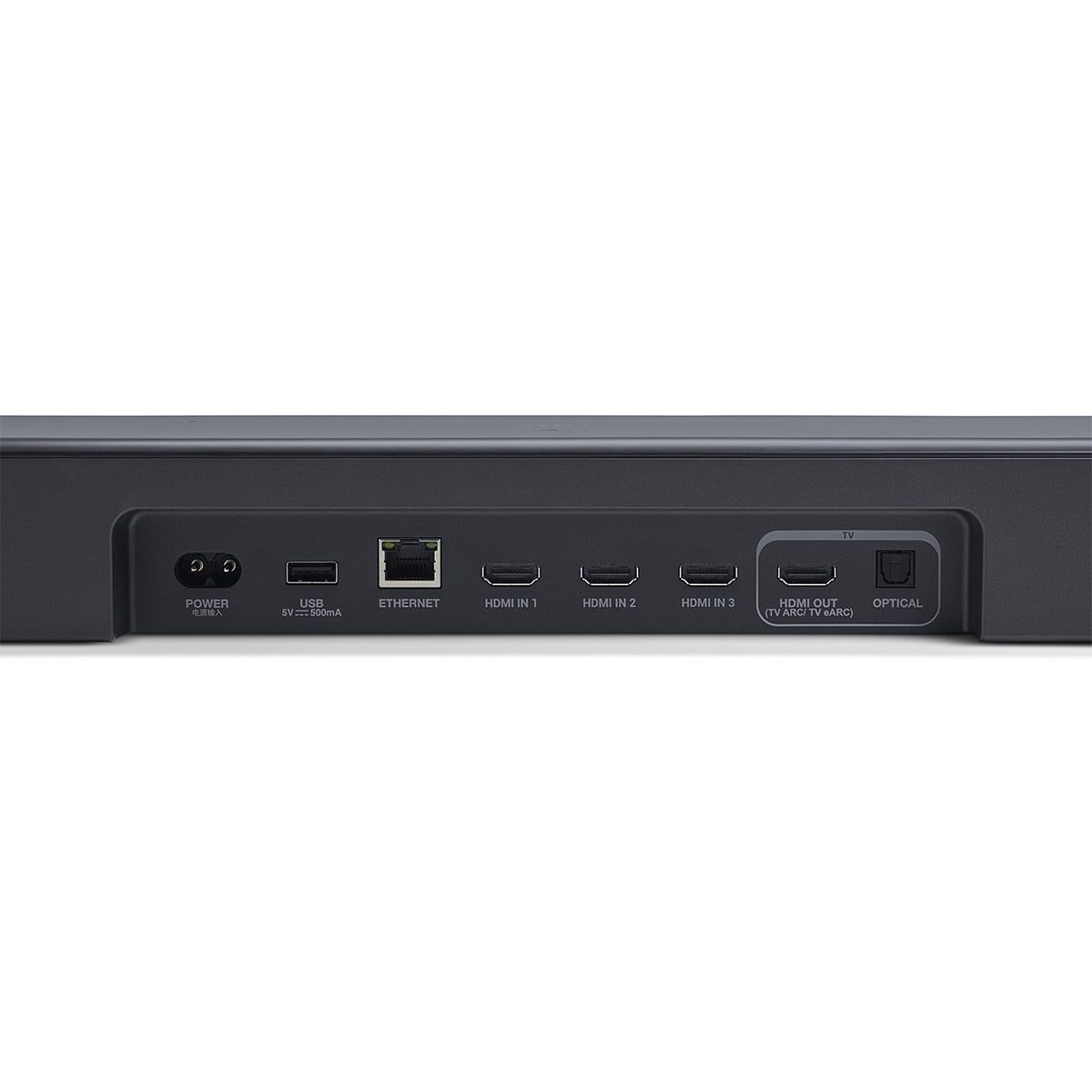
Here's where the age difference between these products becomes obvious. The JBL Bar 1000 MK2 includes HDMI eARC (enhanced Audio Return Channel), which allows it to receive uncompressed Dolby Atmos signals directly from your TV. It also has three additional HDMI inputs, meaning you can connect gaming consoles, Apple TV, and other devices directly to the soundbar, which then passes video to your TV.
This setup offers significant advantages for gaming, where HDMI connections provide lower latency (less delay between controller input and audio response) than optical connections. The JBL also supports Bluetooth 5.3, dual-band Wi-Fi, AirPlay 2, Chromecast Built-In, and Spotify Connect – essentially every way you might want to play audio.
The Sonos Ray deliberately simplifies this. It has one optical digital input and that's it for wired connections. No HDMI, no analog inputs, no USB. For wireless connectivity, you get Wi-Fi and AirPlay 2, but notably no Bluetooth – Sonos wants you using their ecosystem rather than directly pairing devices.
This difference matters more than you might think. If you're a gamer, the JBL's HDMI connections provide the responsiveness needed for competitive gaming. If you frequently switch between different streaming devices, having multiple HDMI inputs eliminates the need to constantly swap cables. But if you primarily watch content through your TV's built-in apps and occasionally stream music from your phone, the Ray's simplified approach reduces complexity without limiting functionality.
Both soundbars include sophisticated room calibration, but they work differently. The JBL Bar 1000 MK2 uses easy sound calibration through its mobile app to optimize performance for your specific room layout. The system can detect furniture, wall materials, and room size to adjust its output accordingly.
The Sonos Ray features Trueplay tuning, but only for iPhone users – Android users miss out on this feature. Trueplay uses your phone's microphone to measure how sound bounces around your room, then adjusts the soundbar's output to compensate for acoustic problems like hard surfaces that create echoes or soft furnishings that absorb too much sound.
The JBL's standout feature is Night Listening mode, which addresses a common home theater problem: wanting to watch action movies without waking the household. When activated, the system mutes the main soundbar and subwoofer, routing all audio through the detachable rear speakers only. Since these sit closer to your ears, you can hear dialogue and effects clearly at much lower volumes.
For music listening, the Sonos Ray has significant advantages through its ecosystem integration. You can group it with other Sonos speakers throughout your home for synchronized whole-house audio, something the JBL cannot do. The Sonos app also provides direct access to streaming services like Spotify, Apple Music, and dozens of others without needing to use your phone as an intermediary.
At $1,199, the JBL Bar 1000 MK2 isn't cheap, but consider what you're getting: a complete home theater system that includes rear speakers (typically $200-400 separately), a substantial subwoofer (another $200-500), and processing for the latest audio formats. Comparable systems from Samsung or LG often cost similar amounts, and traditional component systems with equivalent performance can easily exceed $2,000.
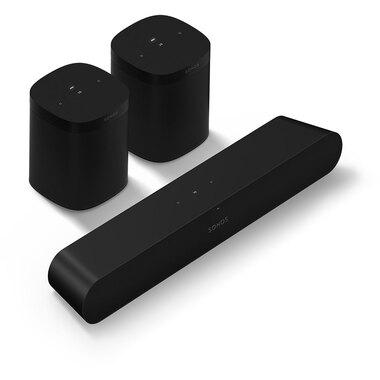
The Sonos Ray at $279 represents exceptional value in its category. Most soundbars under $300 compromise significantly on build quality, sound processing, or both. The Ray delivers premium materials, sophisticated audio processing, and the foundation for future system expansion. If you later add a Sonos Sub ($749) and rear speakers ($219 for a pair of One SL speakers), you'll have spent about $1,250 total – similar to the JBL but built over time.
This expandability approach has real advantages. You can start with improved dialogue clarity and gradually build toward full surround sound as budget allows. The Ray also integrates with Sonos's extensive ecosystem, so those rear speakers can later move to other rooms when you want to expand your whole-home audio setup.
For serious movie watching, the differences become stark. The JBL Bar 1000 MK2 creates genuine spatial audio where effects move smoothly around the room. When watching Top Gun: Maverick, jet engines roar from specific locations rather than just "somewhere in front of you." The up-firing drivers bounce sound off your ceiling to create height effects that make helicopters seem to pass overhead.
The 10-inch wireless subwoofer handles the kind of deep bass that makes action sequences visceral rather than just loud. During explosion scenes, you feel the impact in your chest, and the bass extends down to 33Hz – low enough to reproduce the deepest movie sound effects without muddiness.
Perhaps most importantly, the detachable rear speakers solve the biggest problem with soundbar surround sound: they create real surround effects instead of just simulating them. When positioned behind your seating area, they enable proper surround panning where effects move smoothly from front to back rather than just appearing to come from somewhere vaguely "around" you.
The Sonos Ray can't match this immersive experience, but it excels at what matters most for TV watching: dialogue clarity. Even during complex action scenes with explosions and music competing for attention, voices remain intelligible without requiring constant volume adjustments. The Speech Enhancement feature specifically boosts vocal frequencies while maintaining overall balance.
For music listening, the Ray actually holds some advantages. Its stereo imaging is precise, creating clear left-right separation and depth that makes acoustic recordings sound natural. The JBL, optimized for surround sound processing, doesn't image as precisely in pure stereo mode.
Choose the JBL Bar 1000 MK2 if you want transformative home theater performance and have the budget for it. This system works best in medium to large rooms (over 150 square feet) where you can properly position the rear speakers and take advantage of the substantial power output. It's ideal for movie enthusiasts, gamers, and anyone who wants their home entertainment to feel genuinely cinematic.
The wireless rear speakers eliminate the biggest barrier to good surround sound – running wires across your room – while still providing authentic spatial effects. The 10-hour battery life means you won't constantly worry about charging them, and they can double as portable speakers for other uses.
Choose the Sonos Ray if you want maximum improvement per dollar spent and value long-term flexibility. This works particularly well in smaller rooms (under 150 square feet) where its focused stereo presentation doesn't feel limiting. It's perfect for apartment dwellers, anyone prioritizing dialogue clarity, and users who might want to build a larger Sonos system over time.
The Ray also makes sense if you primarily stream music and want your soundbar to integrate seamlessly with whole-home audio rather than just improving TV sound.
Both soundbars deliver dramatic improvements over TV speakers, but they achieve this through completely different approaches. The JBL creates an immersive audio environment that transforms movie watching, while the Sonos provides refined, clear sound that makes everything from TV shows to music more enjoyable. Your choice ultimately depends on whether you prioritize cinematic impact or everyday listening refinement.
| JBL Bar 1000 MK2 | Sonos Ray |
|---|---|
| Price - Major cost difference reflects different target markets | |
| $1,199 (premium home theater system) | $279 (budget-friendly TV upgrade) |
| Audio Channels - Determines surround sound capability | |
| 7.1.4 channels with true Dolby Atmos/DTS:X | 2.0 stereo channels only |
| Power Output - Affects room-filling capability and bass impact | |
| 960W total system power | Modest output (not specified by manufacturer) |
| Subwoofer - Critical for deep bass in movies and music | |
| 10-inch wireless subwoofer included | No subwoofer (can add Sonos Sub for $749) |
| Rear Speakers - Essential for true surround sound experience | |
| Detachable wireless speakers with 10-hour battery | No rear speakers (can add Sonos speakers later) |
| Height Effects - Creates overhead sound for immersive experience | |
| 4 up-firing drivers for true Atmos effects | No height channels or Atmos support |
| HDMI Connectivity - Important for gaming and multiple devices | |
| HDMI eARC + 3 HDMI inputs with 4K passthrough | No HDMI inputs (optical audio only) |
| Wireless Connectivity - Affects streaming and device compatibility | |
| Bluetooth 5.3, Wi-Fi, AirPlay 2, Chromecast | Wi-Fi and AirPlay 2 only (no Bluetooth) |
| Room Size Suitability - Performance varies significantly by space | |
| Large rooms (200+ sq ft) with powerful output | Small to medium rooms (under 150 sq ft) |
| Ecosystem Integration - Long-term expansion possibilities | |
| Standalone system (limited expansion options) | Full Sonos Ray ecosystem compatibility for multi-room audio |
| Setup Complexity - Installation and configuration requirements | |
| Multiple components requiring placement and app setup | Single unit with simple optical connection |
| Best Use Case - Primary strength of each system | |
| Movies, gaming, and immersive entertainment | TV shows, dialogue clarity, and music streaming |
The Sonos Ray at $279 offers exceptional value for basic TV audio improvement, delivering clear dialogue and balanced sound that far exceeds TV speakers. The JBL Bar 1000 MK2 at $1,199 provides complete home theater value with included subwoofer and rear speakers that would cost $500+ separately. Choose Sonos for budget-conscious upgrades, JBL for full cinematic experience.
Yes, the JBL Bar 1000 MK2 delivers significantly better sound quality with 960W power output, true 7.1.4 surround sound, and deep bass from its 10-inch subwoofer. However, the Sonos Ray excels specifically at dialogue clarity and may sound better for TV shows and news despite lacking surround effects and powerful bass.
The Sonos Ray is ideal for small rooms under 150 square feet, with its compact 22-inch design and focused stereo performance that won't overwhelm smaller spaces. The JBL Bar 1000 MK2 is designed for larger rooms and may be overpowered for compact spaces, though its wireless rear speakers can still work in smaller layouts.
The JBL Bar 1000 MK2 includes a 10-inch wireless subwoofer for deep bass impact in movies and music. The Sonos Ray has limited bass extension and benefits significantly from adding the optional Sonos Sub ($749), though it delivers acceptable performance for dialogue-focused content without one.
The JBL Bar 1000 MK2 is vastly superior for movies with true Dolby Atmos, detachable rear speakers for authentic surround effects, and powerful bass for action scenes. The Sonos Ray lacks surround sound and height effects, making it unsuitable for immersive home theater experiences but adequate for casual movie watching.
The Sonos Ray connects via optical cable only, making setup simple but limiting device connections. The JBL Bar 1000 MK2 offers HDMI eARC plus three additional HDMI inputs, providing better connectivity for gaming consoles and streaming devices while supporting the latest audio formats.
The Sonos Ray integrates deeply with the Sonos ecosystem for multi-room audio and has excellent music streaming capabilities. The JBL Bar 1000 MK2 offers more connectivity options including Bluetooth 5.3, Chromecast, and unique features like Night Listening mode that uses only the rear speakers for quiet viewing.
Yes, the detachable wireless rear speakers on the JBL Bar 1000 MK2 create genuine surround sound effects impossible with soundbar-only systems. They charge on the main bar, last 10 hours wirelessly, and can be used as portable speakers. This eliminates the wire-running problem that prevents most people from achieving true surround sound.
The Sonos Ray excels at music with precise stereo imaging, excellent streaming integration, and the ability to group with other Sonos speakers for whole-home audio. The JBL Bar 1000 MK2 has more power and bass but is optimized for surround sound rather than pure stereo music reproduction.
Neither soundbar has built-in voice assistants. The Sonos Ray can be controlled through existing Alexa or Google devices in your home. The JBL Bar 1000 MK2 works with voice assistants through connected devices but doesn't have microphones for direct voice control.
The Sonos Ray is much simpler with one optical connection and straightforward app setup. The JBL Bar 1000 MK2 requires placing multiple components (soundbar, subwoofer, rear speakers), running through calibration, and managing more complex connectivity options, though the wireless design minimizes cable management.
The Sonos Ray offers excellent expansion within the Sonos ecosystem - add rear speakers, subwoofer, or additional room speakers that all work together seamlessly. The JBL Bar 1000 MK2 is a complete system with limited expansion options, but includes everything needed for full home theater performance from day one.
We've done our best to create useful and informative comparisons to help you decide what product to buy. Our research uses advanced automated methods to create this comparison and perfection is not possible - please contact us for corrections or questions. These are the sites we've researched in the creation of this article: ecoustics.com - engadget.com - bestbuy.com - techradar.com - rtings.com - hometechnologyreview.com - youtube.com - t3.com - whathifi.com - youtube.com - bhphotovideo.com - gzhls.at - device.report - support.jbl.com - support.jbl.com - jbl.com - av.com - audioadvice.com - jbl.com - target.com - worldwidestereo.com - techradar.com - soundandvision.com - youtube.com - appleinsider.com - youtube.com - sonos.com - cnet.com - howtogeek.com - pcrichard.com - en.community.sonos.com - epicsystems.tech - en.community.sonos.com - cepro.com - videoandaudiocenter.com

Privacy Policy
Terms and Conditions - Affiliate Policy
Home Security
© Copyright 2008-2026.
11816 Inwood Rd #1211, Dallas, TX 75244