

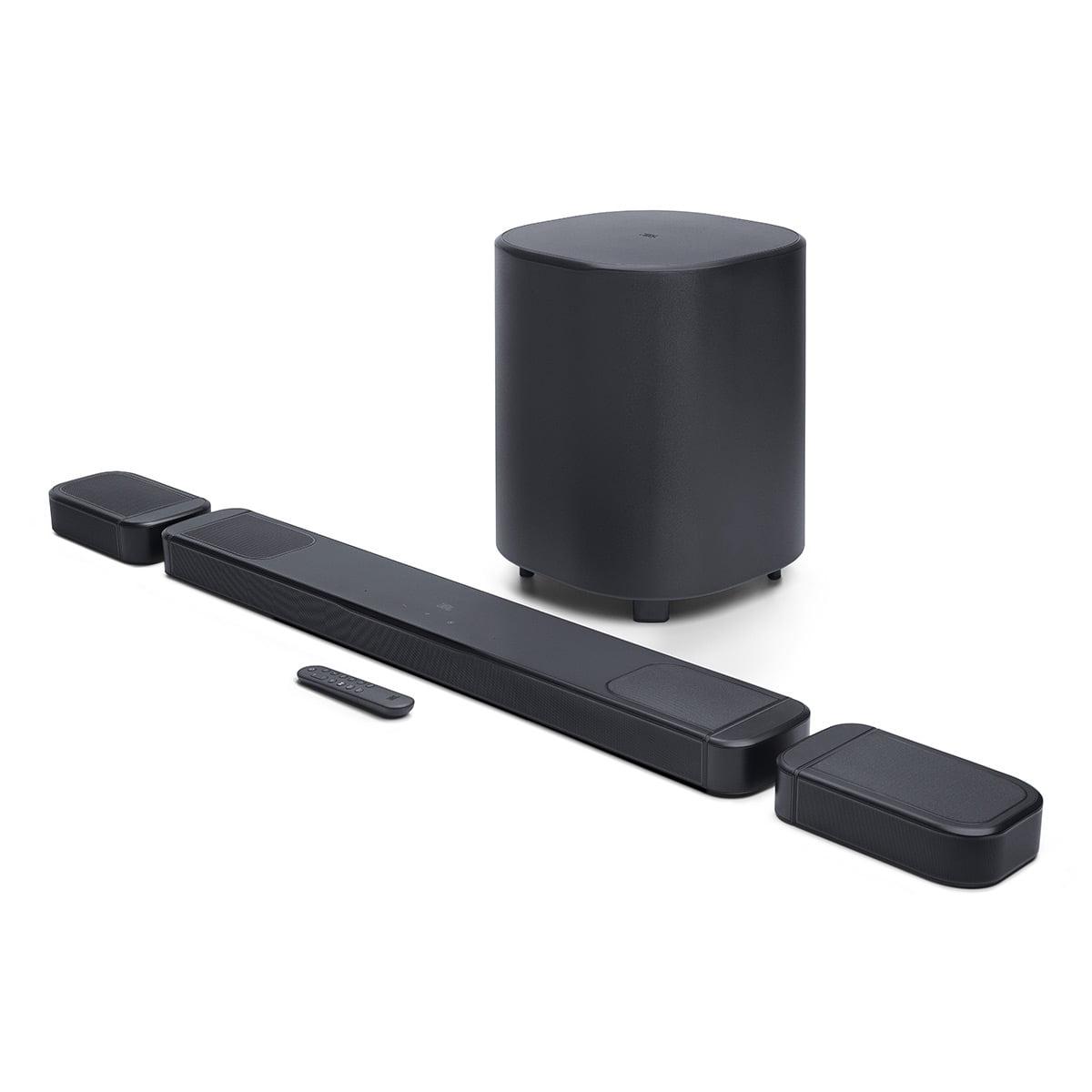
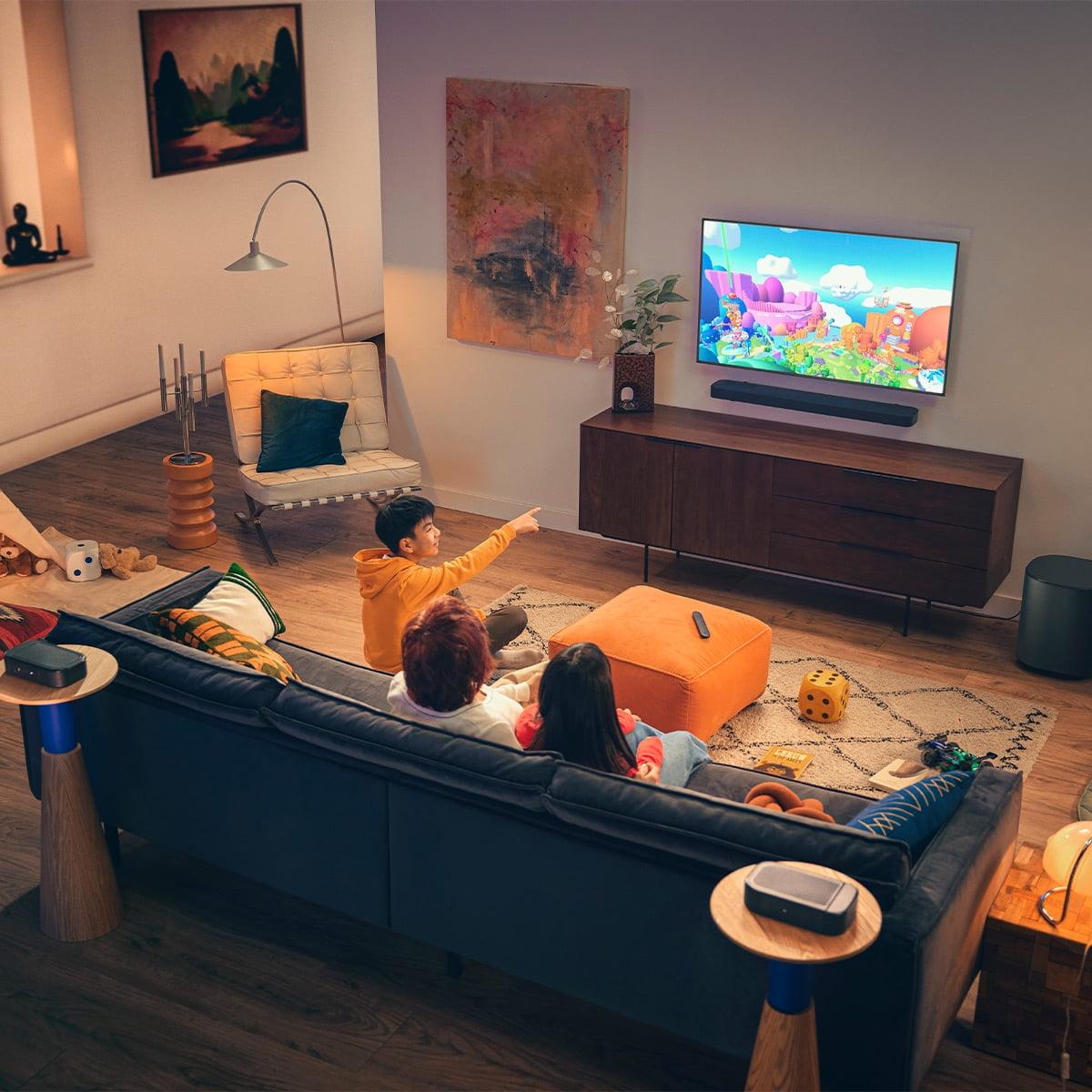
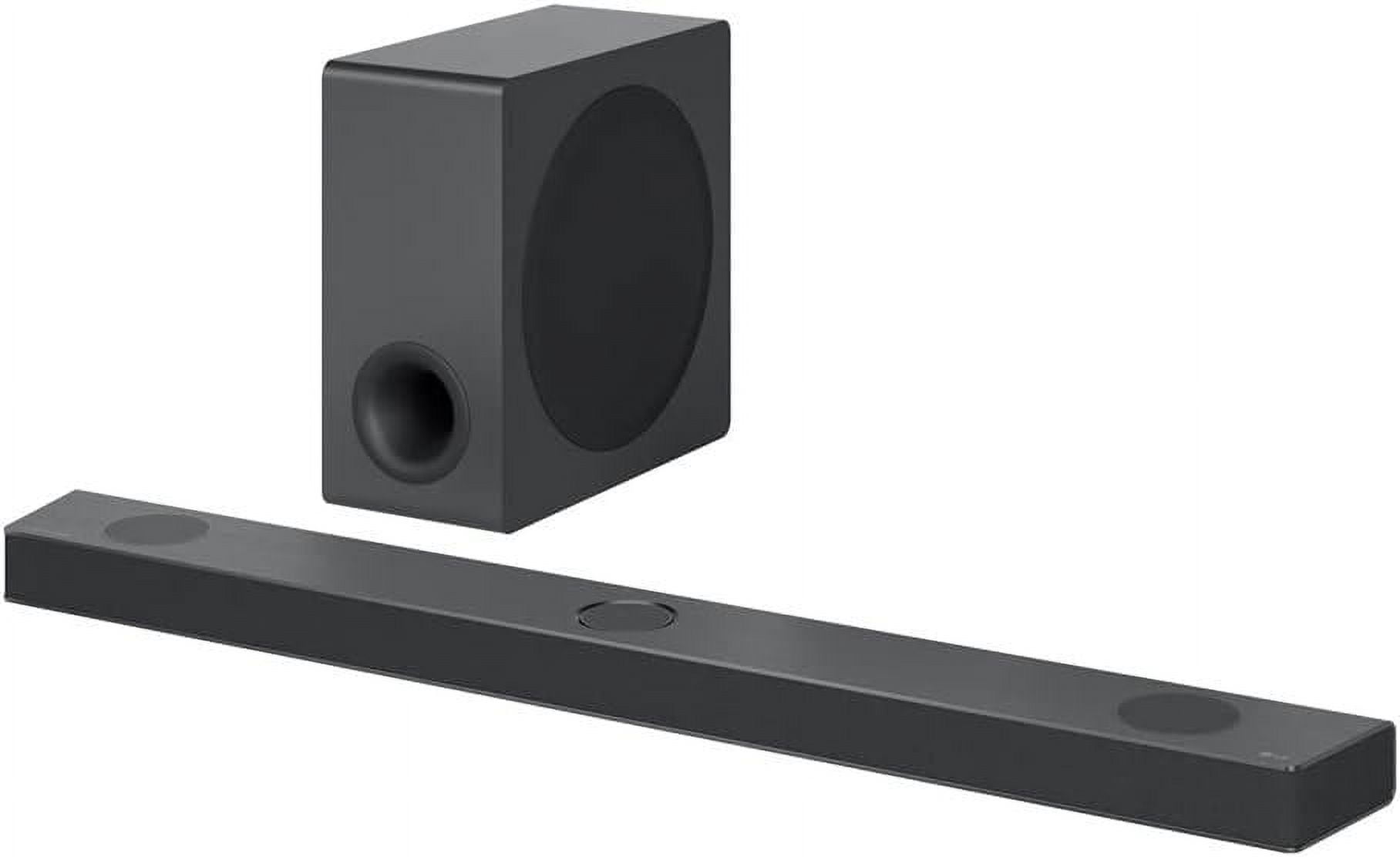




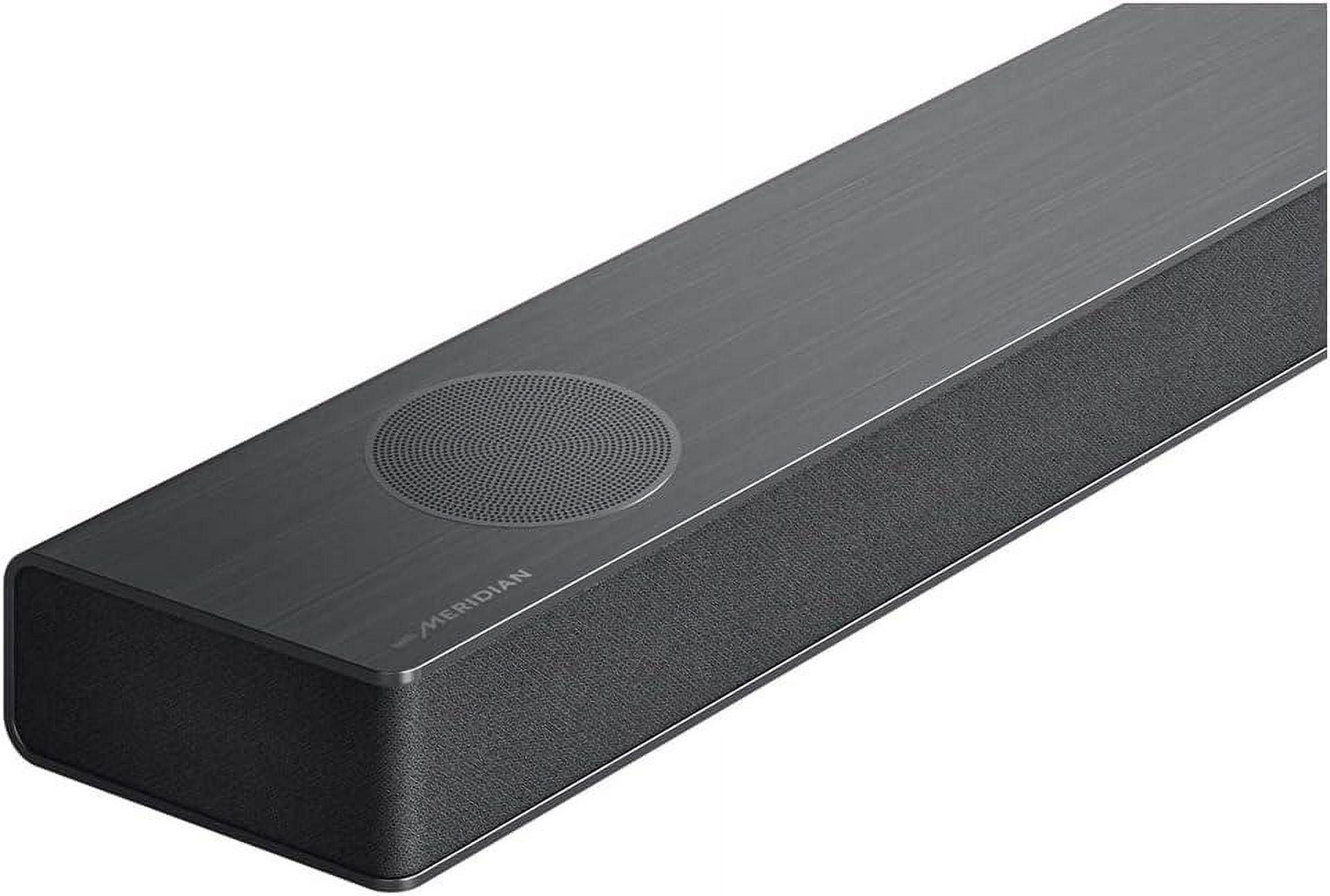

Shopping for a premium soundbar can feel overwhelming, especially when you're choosing between two excellent options like the JBL Bar 1000 MK2 ($1,200) and the LG S90TR ($697). Both promise to transform your living room into a home theater, but they take notably different approaches to achieving that goal. After spending considerable time with premium soundbars over the years, I've learned that the "best" choice often depends more on your specific needs and setup than any objective performance crown.
Before diving into the comparison, it's worth understanding what separates premium soundbars from their budget counterparts. These aren't just louder TV speakers—they're sophisticated audio systems designed to create genuine surround sound experiences without requiring multiple speakers scattered around your room.
The magic happens through a combination of multiple drivers (individual speakers), advanced signal processing, and what's called "psychoacoustic manipulation"—essentially tricking your brain into hearing sounds from directions where no speakers actually exist. Premium models like these two add dedicated height channels that fire sound upward, bouncing it off your ceiling to create overhead effects. This is what makes Dolby Atmos possible, where you can hear helicopters flying overhead or rain falling from above.
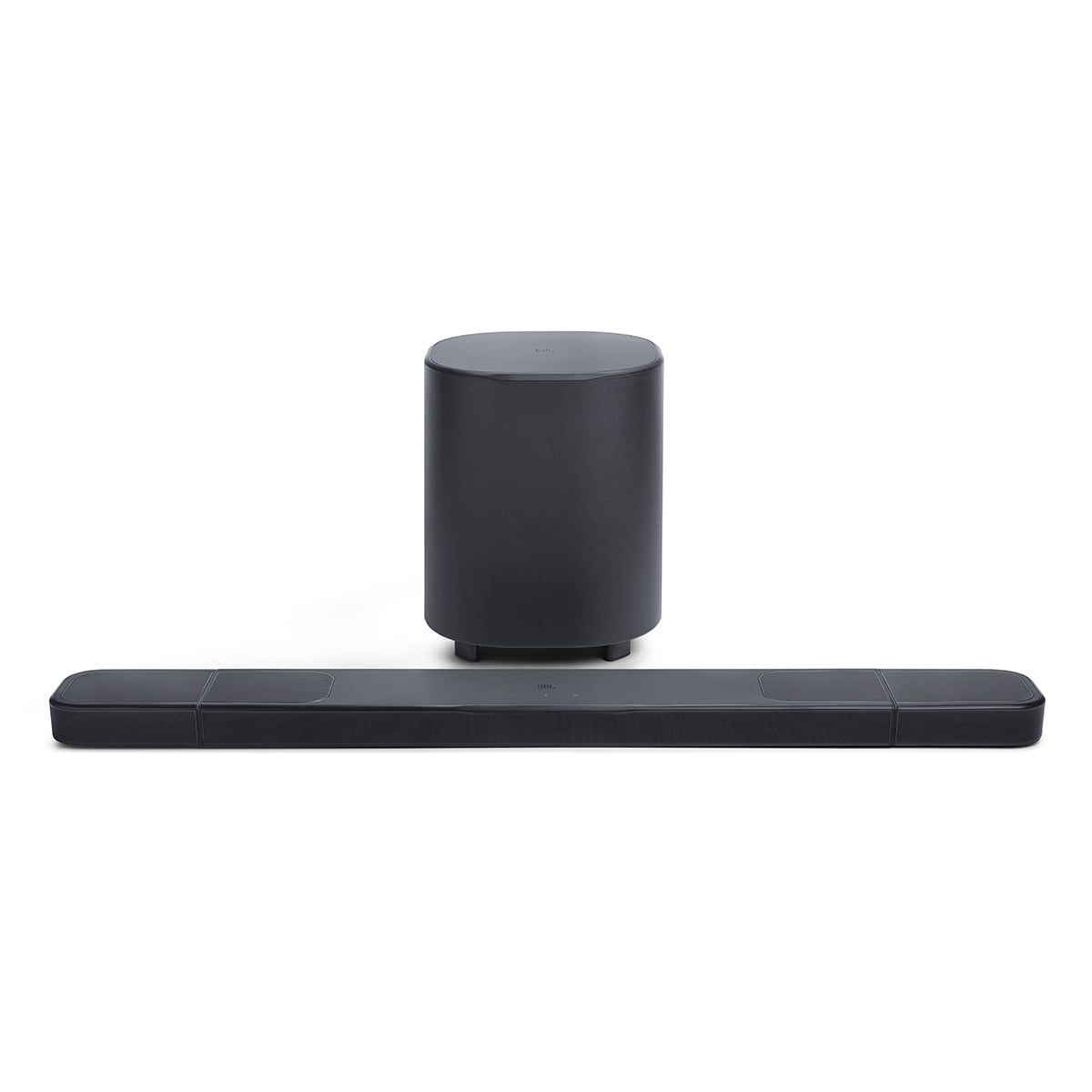
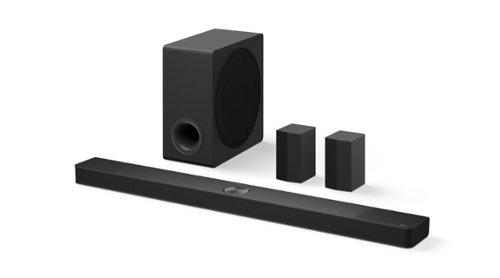
Both soundbars also include wireless subwoofers and rear speakers, creating what's called a "discrete" surround system. Unlike virtual surround, where software creates the illusion of rear speakers, these systems have actual speakers behind you. The difference is immediately noticeable—dialogue stays anchored to the screen while effects and music envelope you from all directions.
The JBL Bar 1000 MK2 represents JBL's flagship soundbar for 2024, building on the success of the original Bar 1000 series that launched in 2022. JBL's parent company, Harman, has been refining this concept for several years, and the MK2 version incorporates lessons learned from user feedback about the original model. The most significant improvement is the enhanced wireless connectivity—early Bar 1000 models suffered from occasional Wi-Fi dropouts that could interrupt streaming music. The MK2 addresses this with upgraded wireless chips and better antenna design.
The LG S90TR ($697), meanwhile, launched in early 2024 as part of LG's renewed focus on audio after years of primarily being known for displays. LG has been playing catch-up in the premium soundbar space, but they've brought some unique advantages from their TV business. The S90TR incorporates technologies originally developed for LG's high-end OLED TVs, particularly around room acoustics and calibration algorithms.
What's interesting is how both companies have evolved their approaches. JBL doubled down on what they do best—powerful, dynamic sound with innovative physical design. LG leveraged their TV expertise to create smarter, more integrated systems. This philosophical difference shapes everything about how these soundbars perform.
The technical specifications tell an important story here. The JBL Bar 1000 MK2 features a 7.1.4 configuration, while the LG S90TR uses 7.1.3. That final number—4 versus 3—represents height channels, and it's more significant than you might think.
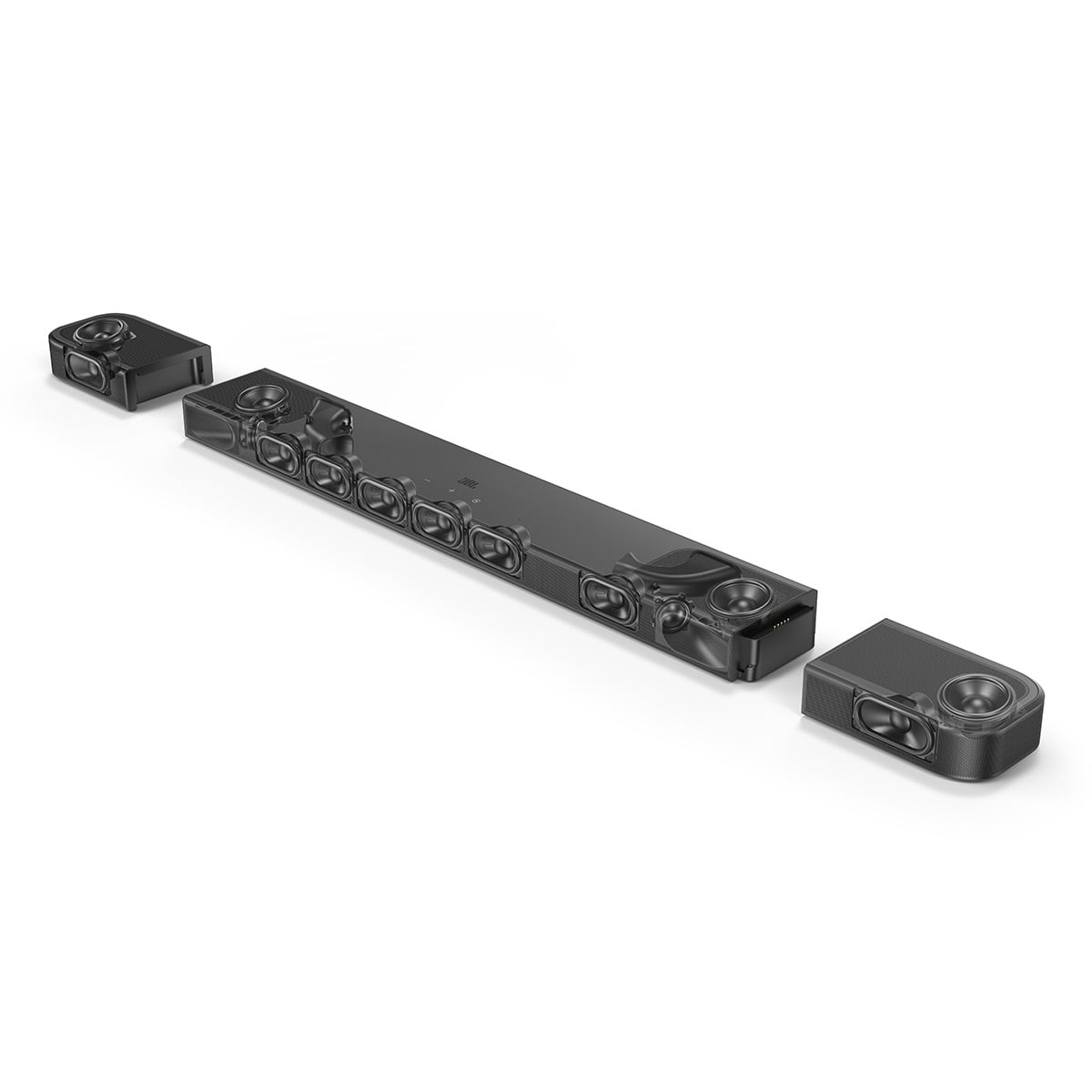
JBL's four height channels include two up-firing drivers in the main soundbar and one in each detachable rear speaker. This creates what they call a "hemisphere of sound" around your listening position. When watching movies like "Top Gun: Maverick," jet engines don't just move left to right—they actually seem to fly over your head in three-dimensional space. The effect is particularly convincing during helicopter scenes or thunderstorms, where the extra height channel adds a layer of realism that's immediately noticeable.
LG's 7.1.3 system places all three height channels in the main soundbar. While this might seem like a limitation, LG's approach has advantages too. By concentrating the height effects in one location, they can create more precise timing and phase relationships between the drivers. This often results in more cohesive overhead effects, even if they're not quite as dramatic as JBL's approach.
The power difference is equally telling. JBL's 960W total power output versus LG's 650W might seem academic, but it translates to real-world differences. In larger rooms—say, over 300 square feet—the JBL maintains its authority at higher volumes without the compression that can make dialogue sound strained or effects lose their impact. However, in smaller-to-medium rooms, LG's power is more than adequate, and the more controlled output can actually sound more refined.
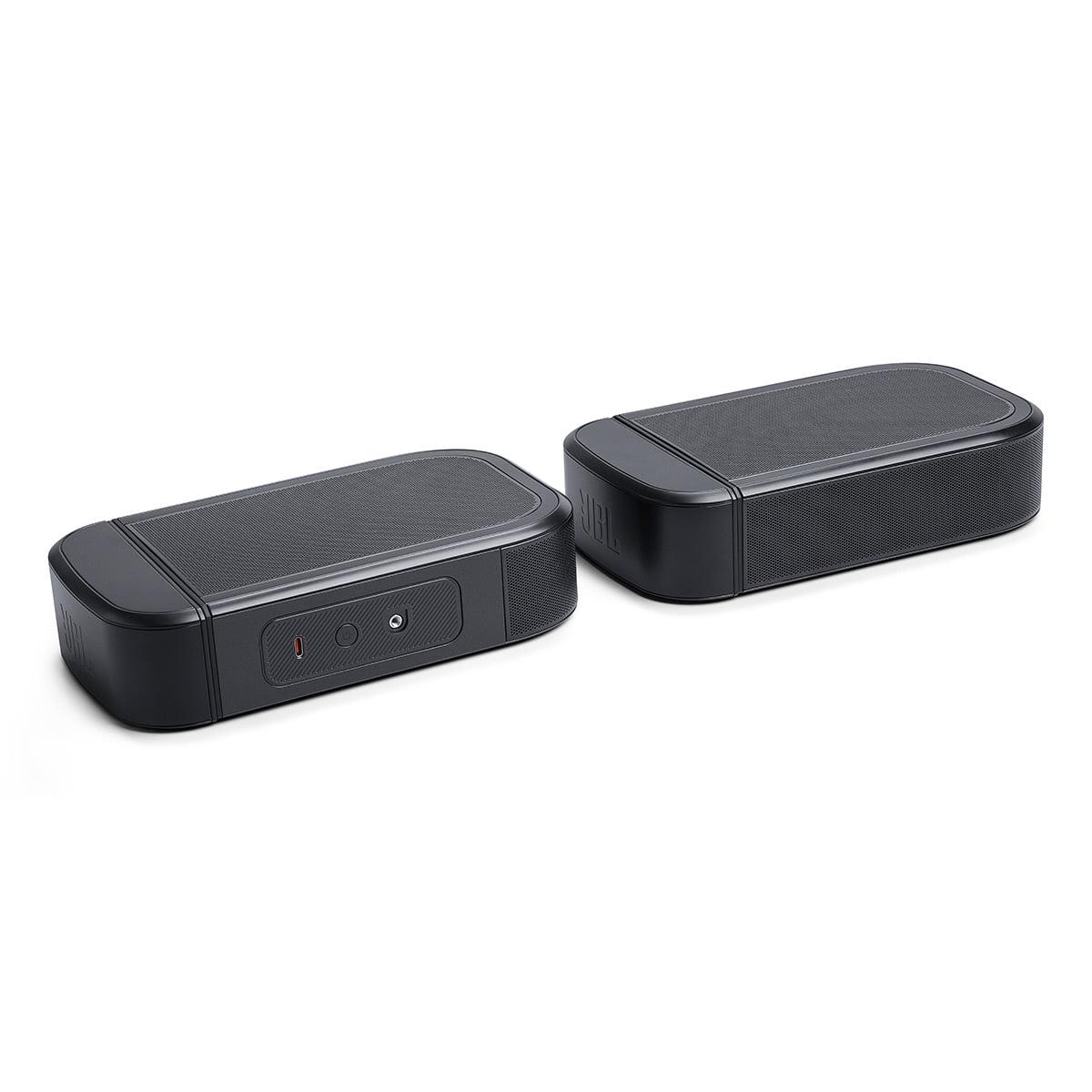
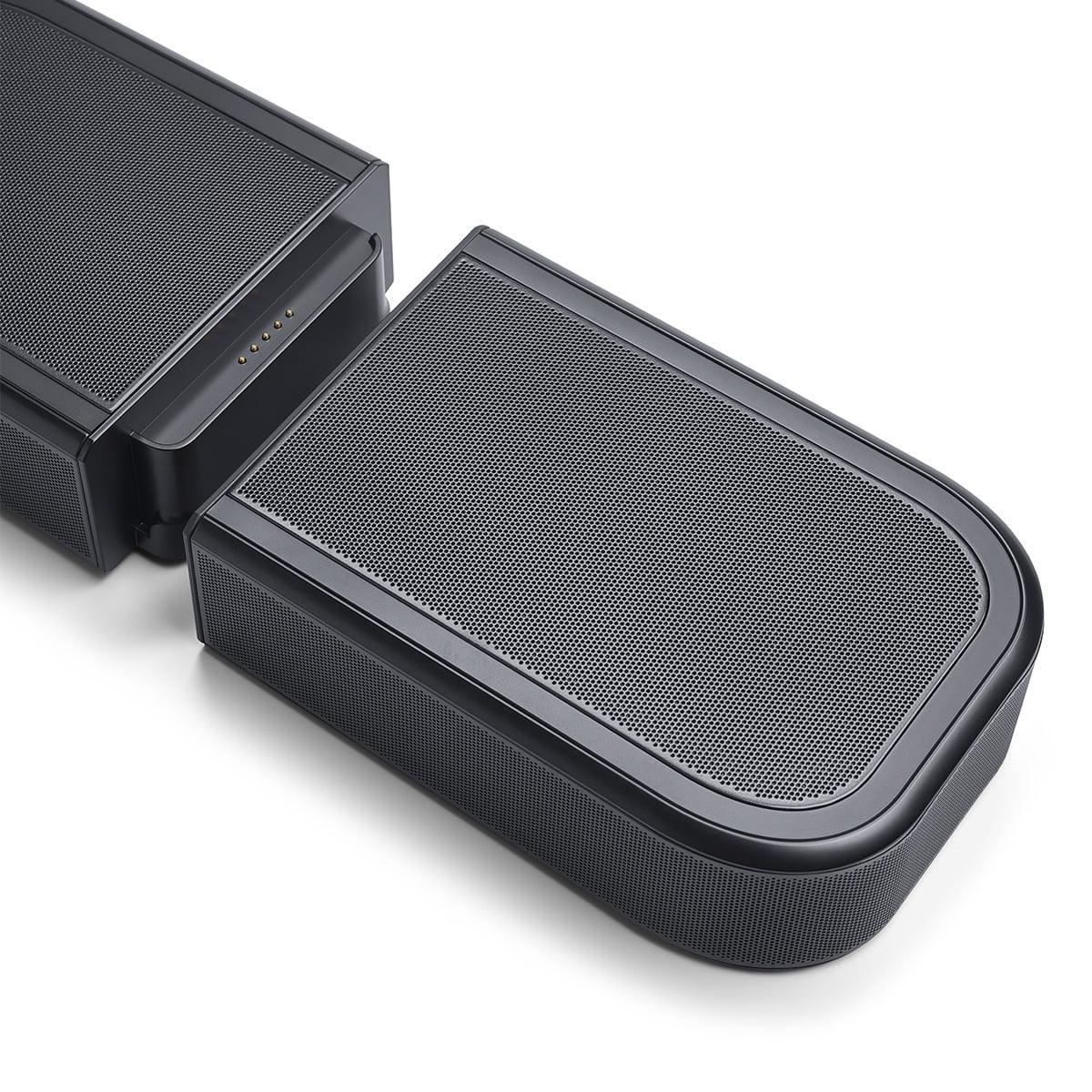
This is where the two soundbars diverge most dramatically. The JBL Bar 1000 MK2's detachable rear speakers represent genuinely innovative thinking. Each speaker includes a 6,600mAh battery providing up to 10 hours of playback time. When you want surround sound, you simply detach them from the main bar and place them behind your seating area—no power outlets required.
I've found this flexibility invaluable in real-world use. Most living rooms weren't designed with soundbar rear speakers in mind, so finding power outlets in the right locations can be challenging. JBL's solution eliminates this constraint entirely. During movie nights, the speakers sit on side tables or shelves behind the couch. When not needed, they dock magnetically to the main bar for charging and create a cleaner look.
The speakers also function as standalone Bluetooth devices, which opens up interesting possibilities. You can take one to the kitchen while cooking, use them as a wireless stereo pair in another room, or even bring them outside for gatherings. It's a level of versatility that traditional soundbar systems simply can't match.
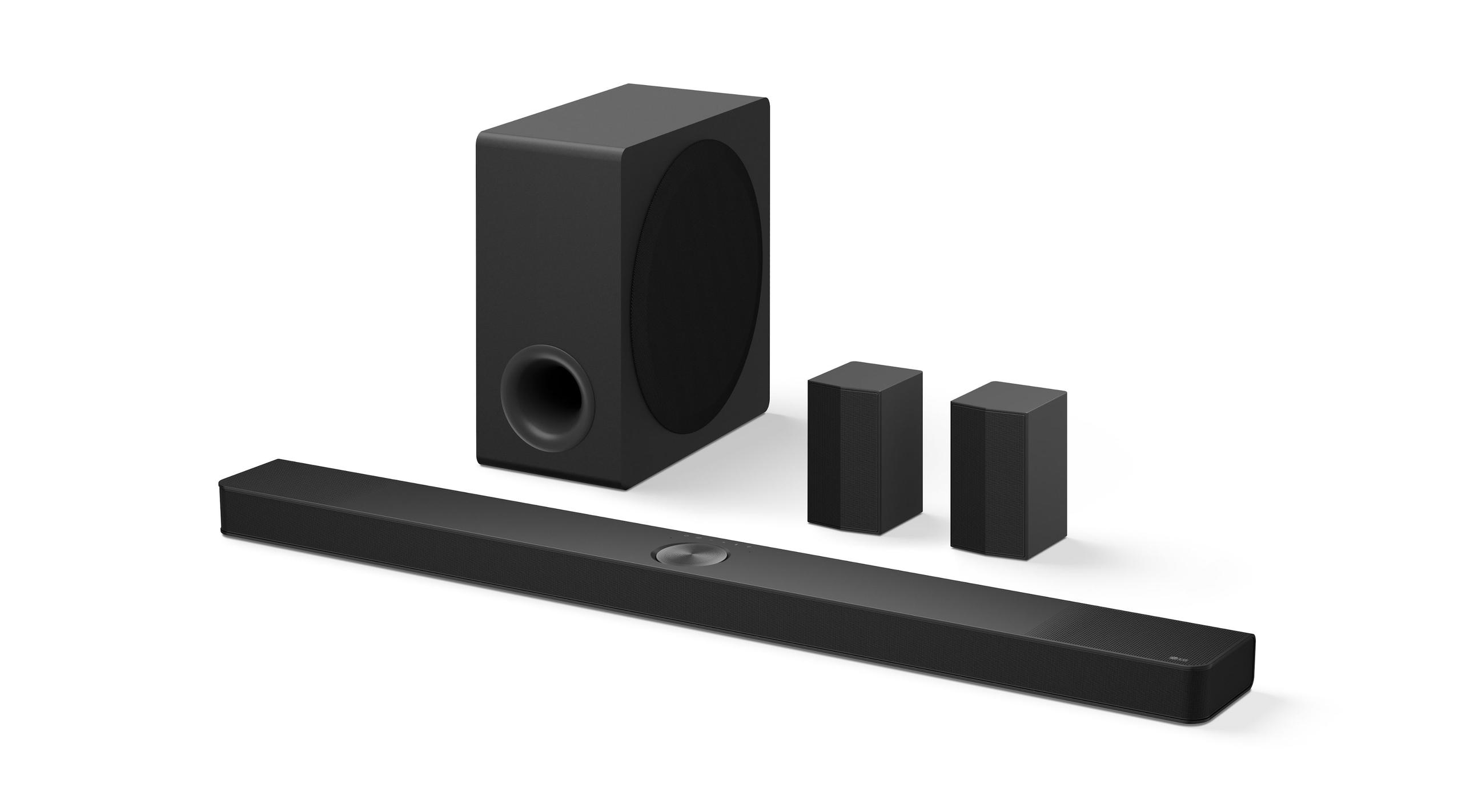
The LG S90TR takes the conventional approach with wired rear speakers, but they've refined the execution. The wireless connection between the main bar and rear speakers is rock-solid, and LG includes longer power cables than most competitors. The speakers themselves are well-designed with angled drivers that help disperse sound more effectively than typical rear channels.
The trade-off is placement flexibility. You need power outlets near your rear speaker locations, which can limit optimal positioning. However, there are advantages to the wired approach: no battery management, no possibility of power running out during long movie sessions, and potentially more consistent performance since the speakers don't need to reserve power for battery management circuits.
Both soundbars excel at creating immersive experiences, but their strengths manifest differently. The JBL Bar 1000 MK2 delivers what I'd describe as "aggressive immersion." The four height channels combined with JBL's MultiBeam 3.0 technology create a wide, enveloping soundstage that can make smaller rooms feel larger. MultiBeam uses sophisticated signal processing to bounce sound off your room's walls, extending the apparent width of the soundstage well beyond the physical width of the soundbar.
This approach shines with action movies and concert videos. During the opening scene of "Blade Runner 2049," where massive ships fly overhead, the JBL creates a genuinely three-dimensional space around you. The extra height channel means effects don't just come from "somewhere overhead"—they can move from front-high to rear-high with convincing precision.
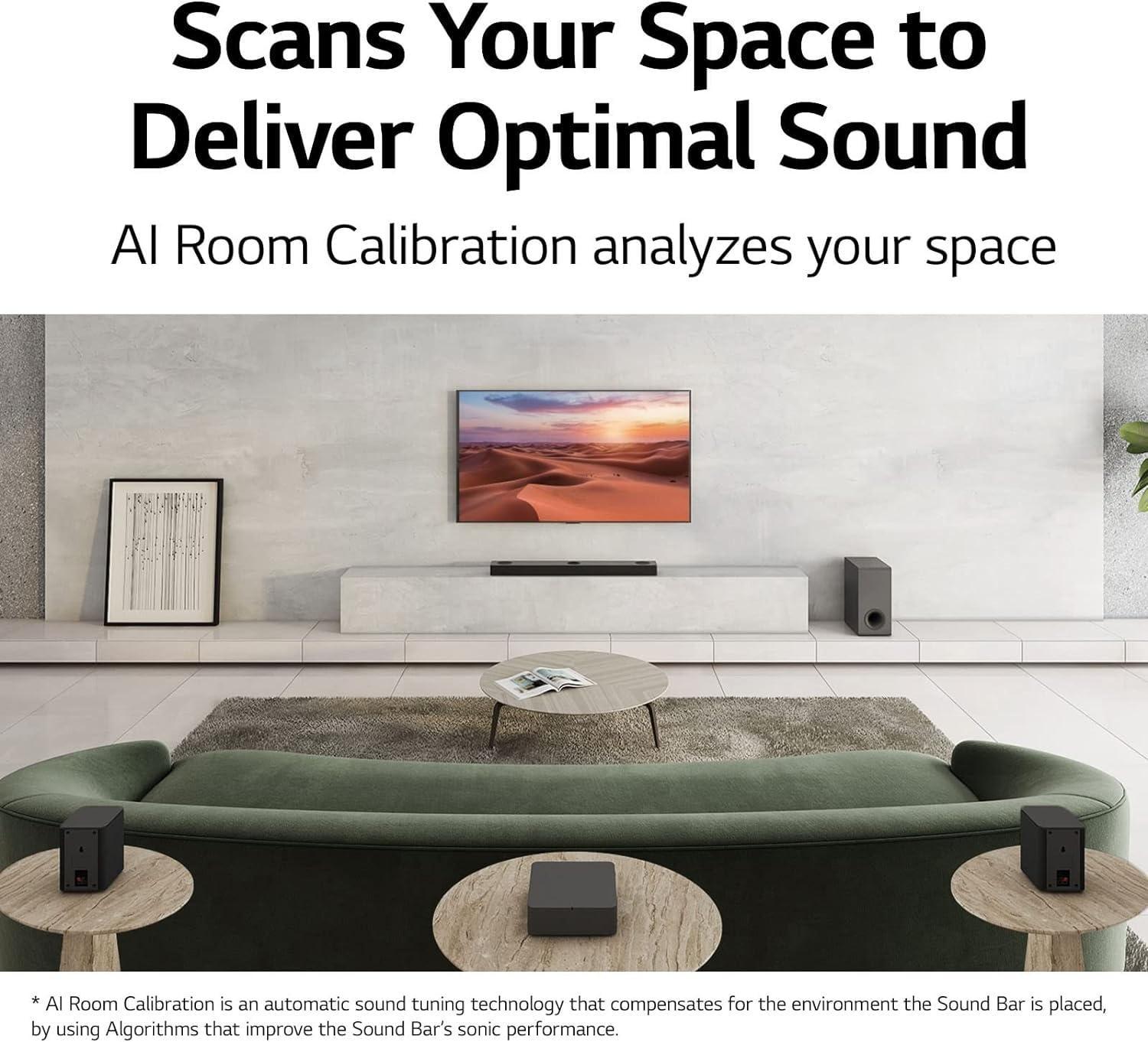
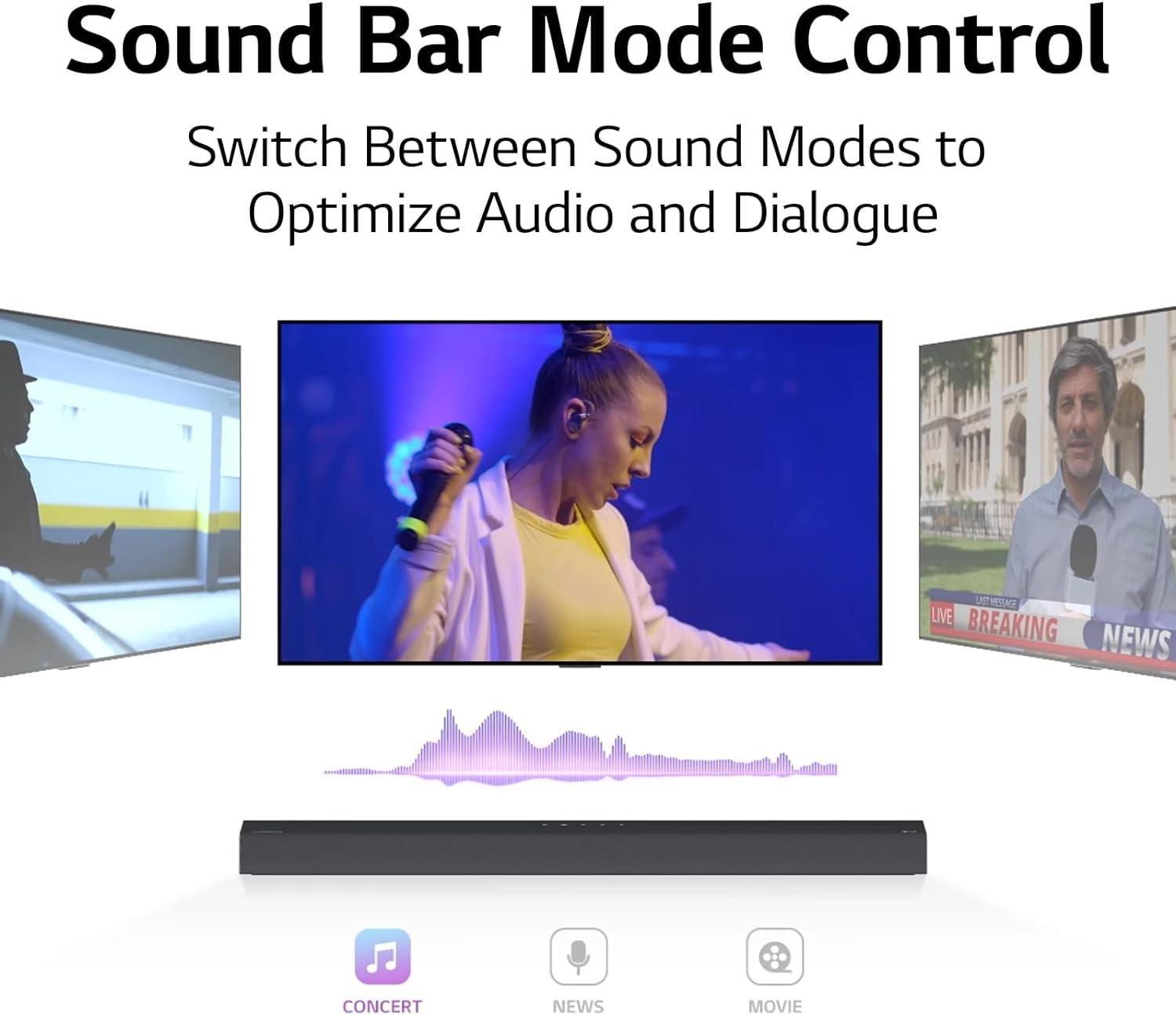
The LG S90TR offers what I'd call "refined immersion." Its AI room calibration technology analyzes your room's acoustics using built-in microphones and adjusts the sound accordingly. This automatic optimization often results in more balanced, natural-sounding surround effects. The system excels with dialogue-heavy content and music, where the more restrained approach prevents fatigue during longer listening sessions.
LG's WOW Orchestra technology deserves special mention. If you own a compatible LG TV, the soundbar can work in tandem with your TV's built-in speakers, using them as additional center and height channels. This creates an even more immersive experience that's uniquely tailored to LG's ecosystem. The effect is subtle but noticeable—dialogue becomes more focused on the screen, while ambient effects spread more naturally throughout the room.
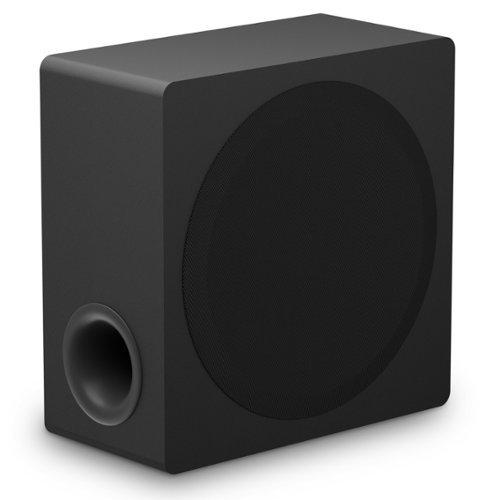
The subwoofer comparison reveals fundamental differences in philosophy. The JBL Bar 1000 MK2's 10-inch wireless subwoofer is simply larger and more powerful than LG's 8-inch unit. With 300W of dedicated power and the ability to reach down to 33Hz, it delivers the kind of deep, room-shaking bass that makes action movies visceral experiences.
This becomes immediately apparent with content like "Mad Max: Fury Road" or "Dune." The JBL's subwoofer doesn't just play bass—it creates physical sensations. Engine rumbles feel like they're coming from beneath your feet, explosions have genuine impact, and the low-frequency effects that support Dolby Atmos soundtracks add an extra dimension of immersion.
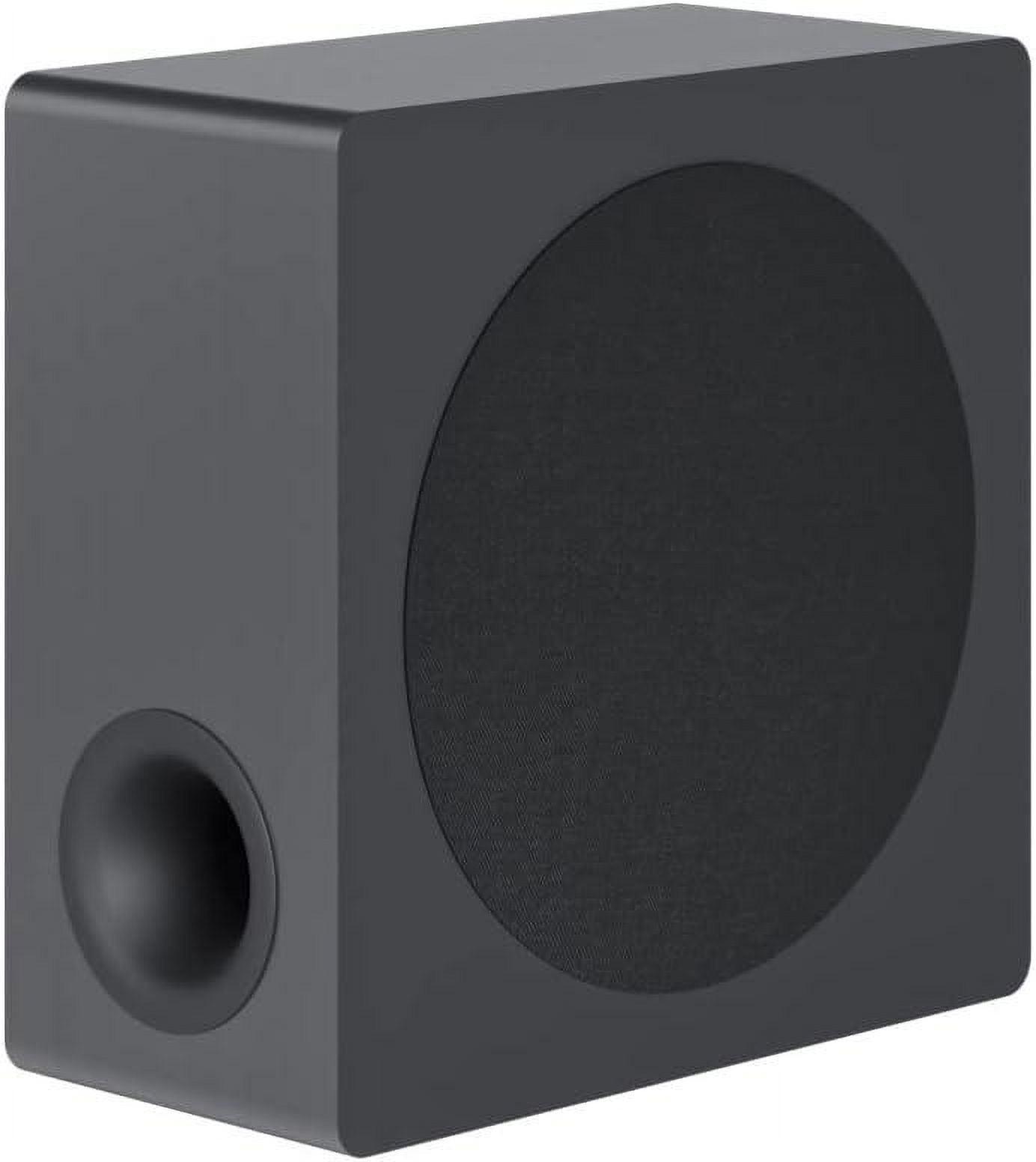
However, bigger isn't always better for every situation. The LG S90TR's 8-inch subwoofer produces more controlled, precise bass that integrates better with the main speakers. In apartments or smaller rooms, this restraint is actually an advantage. The bass is still substantial—certainly more than most TV speakers could ever produce—but it's less likely to disturb neighbors or overwhelm delicate musical passages.
LG's AI calibration also optimizes the subwoofer's output based on your room's characteristics. If you're in a smaller space, it automatically reduces the bass to prevent boomy resonances. In larger rooms, it opens up the low end for more impact. This adaptive approach means the LG often sounds more balanced out of the box, while the JBL might require manual EQ adjustments to avoid overwhelming smaller rooms.
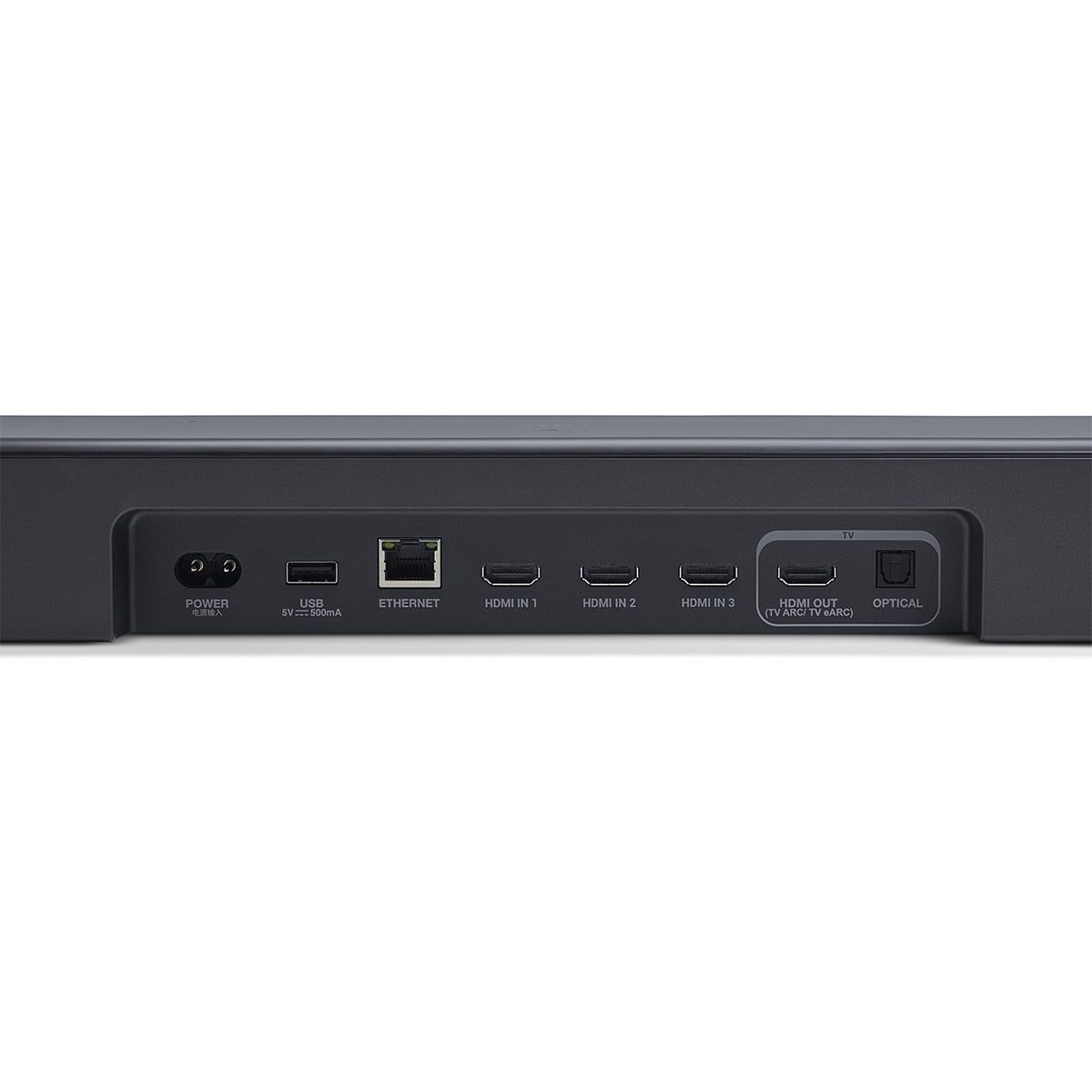
Modern gaming demands specific features that weren't important just a few years ago. The LG S90TR was clearly designed with current-generation consoles in mind. Its HDMI inputs support 4K resolution at 120Hz refresh rates, which is essential for PlayStation 5 and Xbox Series X gaming. Variable Refresh Rate (VRR) support eliminates screen tearing, while Auto Low Latency Mode (ALLM) automatically reduces input lag when gaming content is detected.
These features make a tangible difference in competitive gaming. The reduced latency means your audio cues—footsteps, gunshots, directional effects—arrive in perfect sync with the video. In games like "Call of Duty" or "Apex Legends," this synchronization can mean the difference between reacting quickly to threats or missing crucial audio information.
The LG also includes gaming-specific EQ presets that emphasize the frequency ranges most important for competitive play. These presets boost the midrange frequencies where footsteps and voice communication occur while reducing excessive bass that might mask important details.
The JBL Bar 1000 MK2, unfortunately, shows its movie-first design philosophy here. While it supports 4K passthrough, it's limited to 60Hz refresh rates and lacks advanced gaming features. For casual gaming, this isn't a significant limitation, but serious gamers will notice the difference immediately.
Both soundbars excel at dialogue reproduction, but they achieve clarity through different methods. The JBL Bar 1000 MK2 uses its PureVoice 2.0 technology, which continuously analyzes the audio signal and automatically adjusts dialogue levels based on surrounding sound. During quiet scenes, voices remain naturally positioned. When explosions or music threaten to overwhelm dialogue, PureVoice boosts the center channel to maintain clarity without making voices sound artificially processed.
The system works remarkably well with challenging content. Movies like "Interstellar" or "The Dark Knight Rises," notorious for burying dialogue under booming soundscapes, become much more intelligible. The technology is sophisticated enough to distinguish between dialogue and other midrange sounds, so it enhances voices without boosting every frequency in that range.
The LG S90TR takes a more analytical approach with its AI-driven dialogue enhancement. The system uses machine learning algorithms to identify speech patterns and automatically optimize the frequency response for vocal clarity. It's less aggressive than JBL's approach but often more natural-sounding, especially with varied content types.
LG's center channel configuration also contributes to dialogue clarity. The up-firing center driver creates a more focused vocal image that appears to emanate directly from the screen rather than from the soundbar below it. This psychological effect, called "acoustic transparency," makes dialogue feel more naturally integrated with the visual content.
The $500 price difference between these soundbars represents one of the most significant considerations for most buyers. The JBL Bar 1000 MK2 at $1,200 positions itself as a premium product with flagship features to match. The detachable rear speakers, extra height channel, and superior power output justify the higher price for users who prioritize maximum performance and flexibility.
However, the LG S90TR at $697 offers remarkable value for money. It delivers approximately 90% of the JBL's performance at 60% of the price. For most users in most rooms, the performance difference won't justify the extra cost. The LG's AI calibration, gaming features, and TV integration often provide more practical value than the JBL's raw power advantage.
The value equation changes if you own an LG TV. The WOW Orchestra integration and optimized remote control functionality add significant value that effectively widens the performance gap in LG's favor. Similarly, serious gamers will find the LG's advanced gaming features essential, making it the clear choice regardless of price.
Choose the JBL Bar 1000 MK2 if you're building a dedicated home theater room where maximum immersion is the priority. The detachable rear speakers are perfect for larger rooms or unconventional layouts where running power cables isn't practical. If you frequently move or rent your home, the flexibility of battery-powered rears becomes invaluable. The extra height channel and superior power output also make it the better choice for rooms larger than 300 square feet or for users who regularly host movie nights with demanding content.
The LG S90TR makes more sense for the majority of users, especially those with LG TVs or serious gaming habits. The AI room calibration eliminates the guesswork of manual setup, while the gaming features ensure compatibility with current and future console generations. The more balanced sound signature works better across varied content types, and the lower price point makes premium soundbar features accessible to more buyers.
Both soundbars represent excellent choices that will dramatically improve your home entertainment experience. The decision often comes down to specific priorities: maximum immersion and flexibility versus smart features and value. Either way, you're getting a sophisticated audio system that brings genuine home theater performance to your living room—no complicated receiver or multiple speaker installations required.
The soundbar market has evolved dramatically in recent years, and both the JBL Bar 1000 MK2 and LG S90TR represent the current state of the art in their respective price categories. Whichever you choose, you'll be getting technology that would have been impossible to achieve in this form factor just a few years ago.
| JBL Bar 1000 MK2 ($1,200) | LG S90TR ($697) |
|---|---|
| Price - Significant $500 difference for marginal performance gains | |
| $1,200 (premium positioning) | $697 (excellent value for features) |
| Channel Configuration - Extra height channel creates more immersive overhead effects | |
| 7.1.4 (4 height channels for superior Atmos) | 7.1.3 (3 height channels, still excellent) |
| Total Power Output - Higher wattage fills larger rooms more effectively | |
| 960W max / 480W RMS (better for large spaces) | 650W (adequate for most home theaters) |
| Subwoofer Size - Larger driver produces deeper, more impactful bass | |
| 10-inch wireless (extends to 33Hz) | 8-inch wireless (more controlled, room-friendly) |
| Rear Speaker Design - Unique detachable design eliminates power outlet constraints | |
| Detachable battery-powered (10-hour life, ultimate flexibility) | Traditional wireless (requires power outlets) |
| Gaming Features - Essential for modern console gaming | |
| Basic 4K/60Hz passthrough only | 4K/120Hz, VRR, ALLM (full gaming support) |
| Room Calibration - Automatic setup vs manual tuning | |
| Manual EQ adjustments via app | AI-driven auto-calibration with room analysis |
| TV Integration - LG owners get significant additional value | |
| Universal compatibility (works with any TV brand) | WOW Orchestra with LG TVs (uses TV speakers as additional channels) |
| Streaming Connectivity - Both offer comprehensive wireless options | |
| AirPlay 2, Chromecast, Spotify Connect, Roon Ready, Bluetooth 5.3 | AirPlay 2, Chromecast, Spotify Connect, Bluetooth 5.1 |
| Dialogue Enhancement - Both excel at speech clarity through different methods | |
| PureVoice 2.0 (adaptive dialogue boost during loud scenes) | AI-driven speech optimization with up-firing center channel |
The JBL Bar 1000 MK2 delivers superior movie performance with its 7.1.4 channel configuration and four height channels that create more convincing Dolby Atmos overhead effects. Its 10-inch subwoofer also produces deeper, more impactful bass for action sequences. However, the LG S90TR offers excellent movie performance at a lower price point and includes AI room calibration that automatically optimizes sound for your space.
The JBL Bar 1000 MK2 costs $1,200, while the LG S90TR is priced at $697 - a $500 difference. The LG offers approximately 90% of the JBL's performance at 60% of the price, making it the better value for most buyers unless you specifically need the JBL's unique detachable rear speakers or extra height channel.
The JBL Bar 1000 MK2 has superior bass performance with its larger 10-inch wireless subwoofer that can reach down to 33Hz and produces more room-shaking low-end effects. The LG S90TR features an 8-inch subwoofer that delivers more controlled, precise bass that's better suited for smaller rooms and apartments where overwhelming bass might be problematic.
Yes, both the JBL Bar 1000 MK2 and LG S90TR support true Dolby Atmos with dedicated up-firing height channels. The JBL has four height channels compared to LG's three, creating slightly more immersive overhead effects. Both also support DTS:X for comprehensive 3D audio format compatibility.
The LG S90TR is significantly better for gaming with support for 4K/120Hz, Variable Refresh Rate (VRR), and Auto Low Latency Mode (ALLM) - features essential for PlayStation 5 and Xbox Series X gaming. The JBL Bar 1000 MK2 only supports basic 4K/60Hz passthrough and lacks advanced gaming features.
The JBL Bar 1000 MK2 features unique detachable rear speakers with built-in batteries that provide up to 10 hours of playback. This eliminates the need for power outlets near your seating area and allows flexible placement anywhere in the room. The speakers can also be used as portable Bluetooth devices when detached.
The LG S90TR is easier to set up thanks to its AI room calibration that automatically analyzes your space and optimizes the sound accordingly. The JBL Bar 1000 MK2 requires more manual adjustment through its app, though the detachable rear speakers make physical placement more flexible.
While the LG S90TR works with any TV brand, it offers significant additional value with LG TVs through WOW Orchestra technology, which uses your TV's built-in speakers as additional center and height channels. This integration creates a more immersive experience that's exclusive to the LG ecosystem.
The LG S90TR generally performs better for music with its more balanced sound signature and AI optimization that adapts to different content types. The JBL Bar 1000 MK2 is more tuned for movies and can sound overly aggressive with some music genres, though both offer EQ customization through their respective apps.
Both soundbars offer comprehensive wireless connectivity. The JBL Bar 1000 MK2 includes Bluetooth 5.3, AirPlay 2, Chromecast, Spotify Connect, and Roon Ready support. The LG S90TR features Bluetooth 5.1 and similar streaming options, with the addition of WOWCAST technology for completely wireless Dolby Atmos transmission between components.
The JBL Bar 1000 MK2 is better suited for large rooms over 300 square feet due to its higher power output (960W vs 650W) and ability to maintain authority at higher volumes without compression. The extra height channel also helps fill larger spaces with more immersive sound, while the detachable rear speakers offer unlimited placement flexibility.
The LG S90TR offers superior value for most buyers, delivering premium soundbar features like true Dolby Atmos, wireless subwoofer, rear speakers, and AI calibration at $697. Unless you specifically need the JBL Bar 1000 MK2's detachable rear speakers or have a very large room, the LG provides better performance per dollar spent.
We've done our best to create useful and informative comparisons to help you decide what product to buy. Our research uses advanced automated methods to create this comparison and perfection is not possible - please contact us for corrections or questions. These are the sites we've researched in the creation of this article: ecoustics.com - engadget.com - bestbuy.com - techradar.com - rtings.com - hometechnologyreview.com - youtube.com - t3.com - whathifi.com - youtube.com - bhphotovideo.com - gzhls.at - device.report - support.jbl.com - support.jbl.com - jbl.com - av.com - audioadvice.com - jbl.com - target.com - worldwidestereo.com - rtings.com - abt.com - youtube.com - bestbuy.com - microcenter.com - buydig.com - bestbuy.com - videoandaudiocenter.com - oceanstateappliance.com - youtube.com - avsforum.com - lg.com

Privacy Policy
Terms and Conditions - Affiliate Policy
Home Security
© Copyright 2008-2026.
11816 Inwood Rd #1211, Dallas, TX 75244