

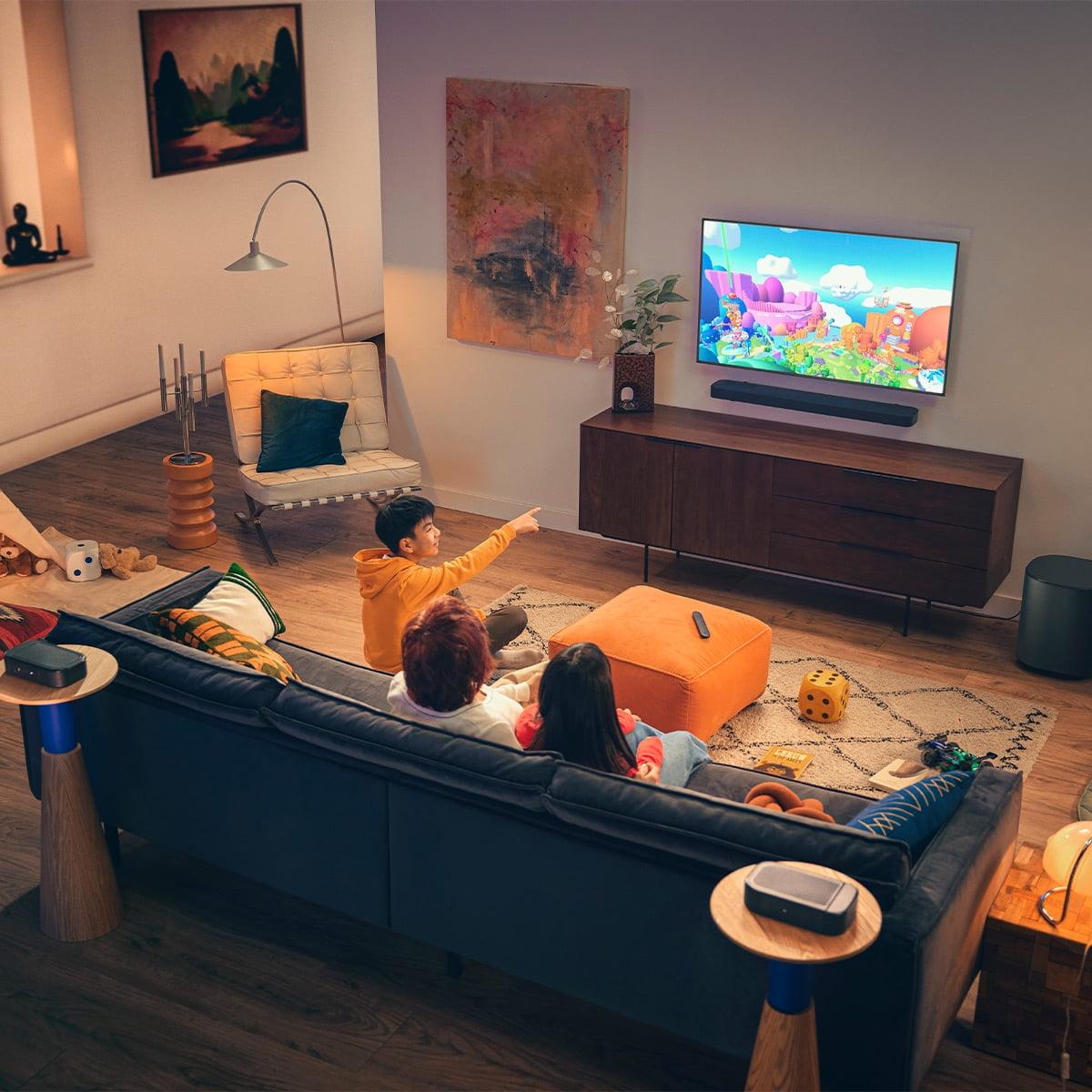
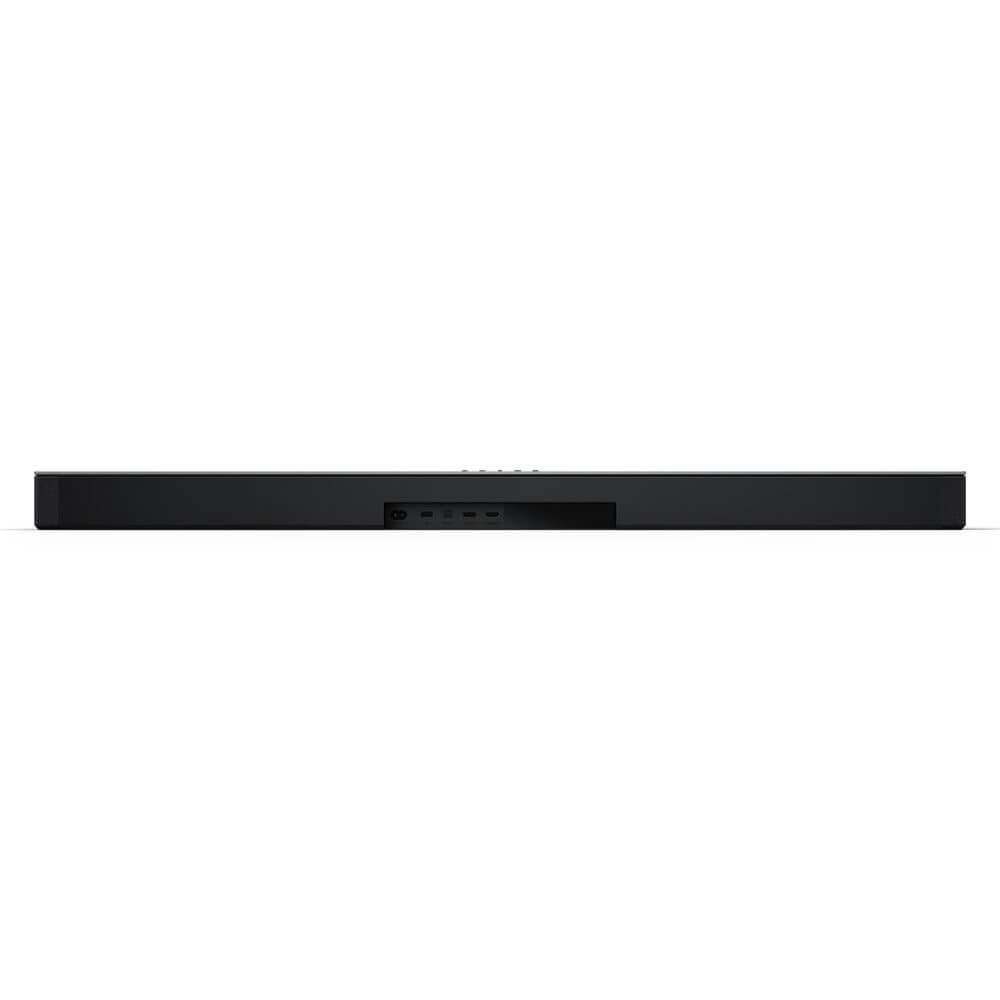
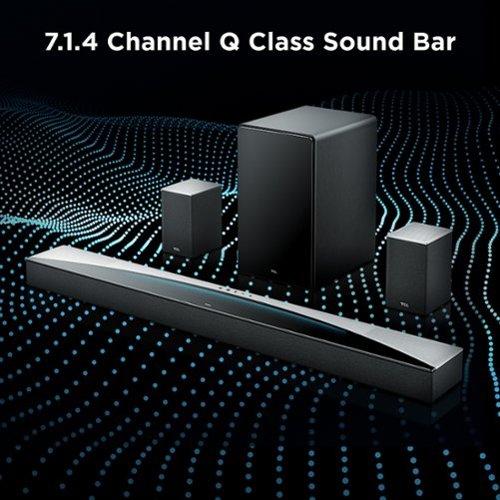

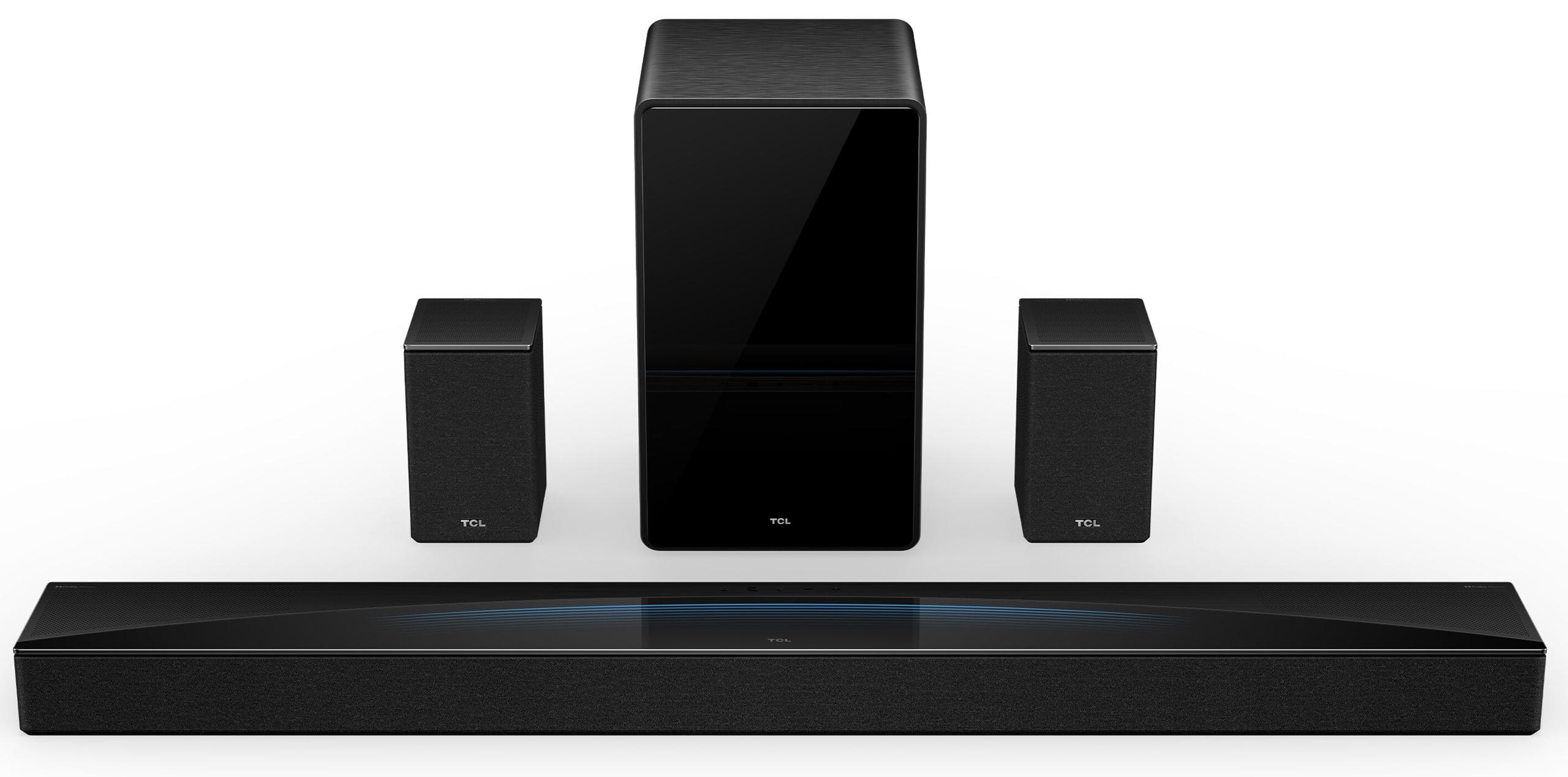
When you're shopping for a premium soundbar to transform your living room into a home theater, you're faced with an interesting choice in 2025. The soundbar market has exploded with innovation, particularly in how these systems create immersive surround sound without the complexity of traditional receiver-based setups. Two standout options represent very different philosophies: the innovative JBL Bar 1000 MK2 ($1,199.95) and the value-packed TCL Q85H Q Class ($499.99).
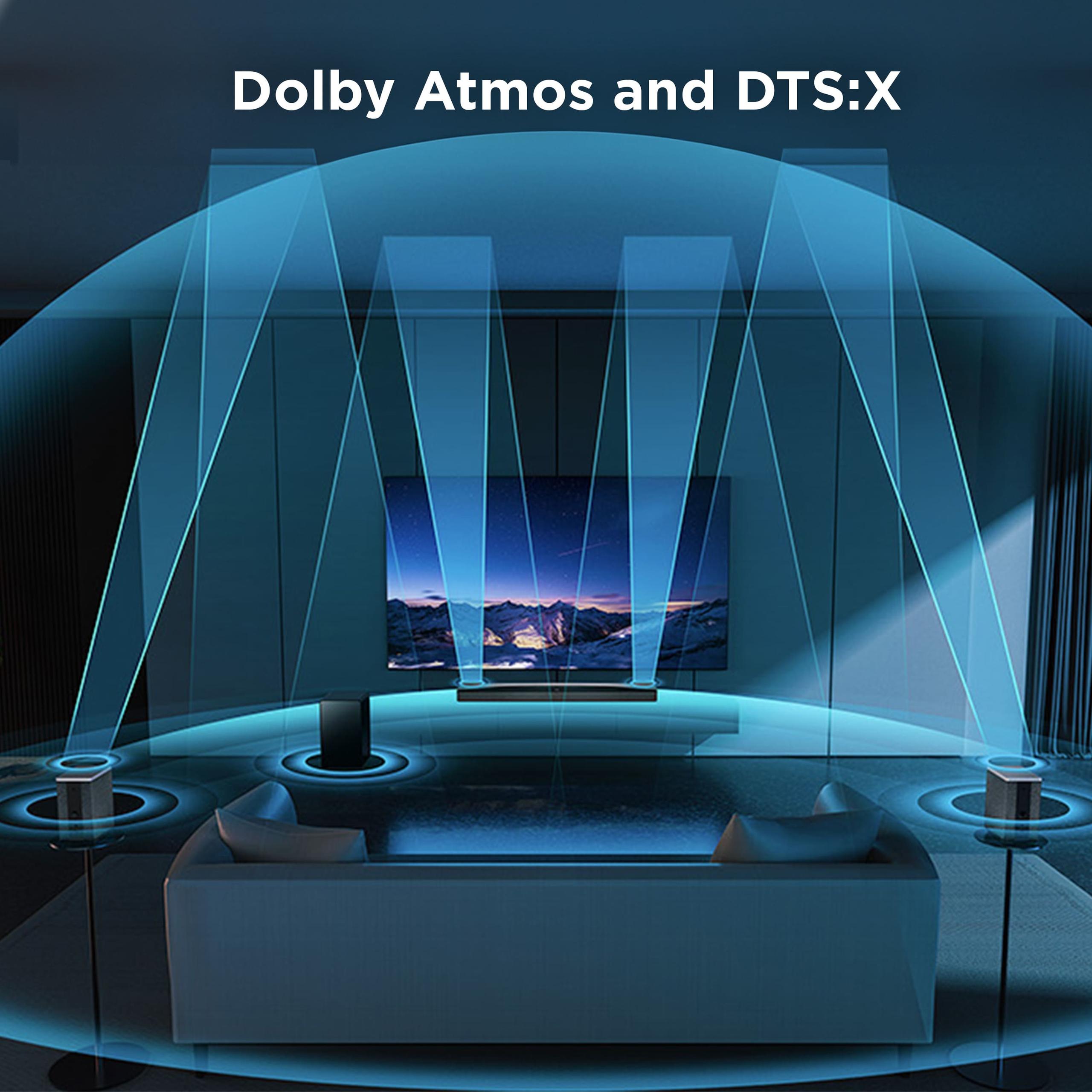
Premium soundbars have evolved dramatically from simple TV speaker replacements to sophisticated home theater systems. The key breakthrough has been in spatial audio technology—specifically Dolby Atmos and DTS:X, which create the illusion of sound coming from above and around you. Think of it as the difference between listening to music on basic earbuds versus being inside a concert hall.
What makes these systems "premium" isn't just the price tag. It's their ability to deliver true surround sound through clever speaker placement, advanced audio processing, and—in the best cases—actual physical speakers positioned around your room. The main considerations when evaluating these systems include how they handle immersive audio technology, whether they use physical or virtual surround sound, bass performance, room integration complexity, and ultimately, what you get for your money.
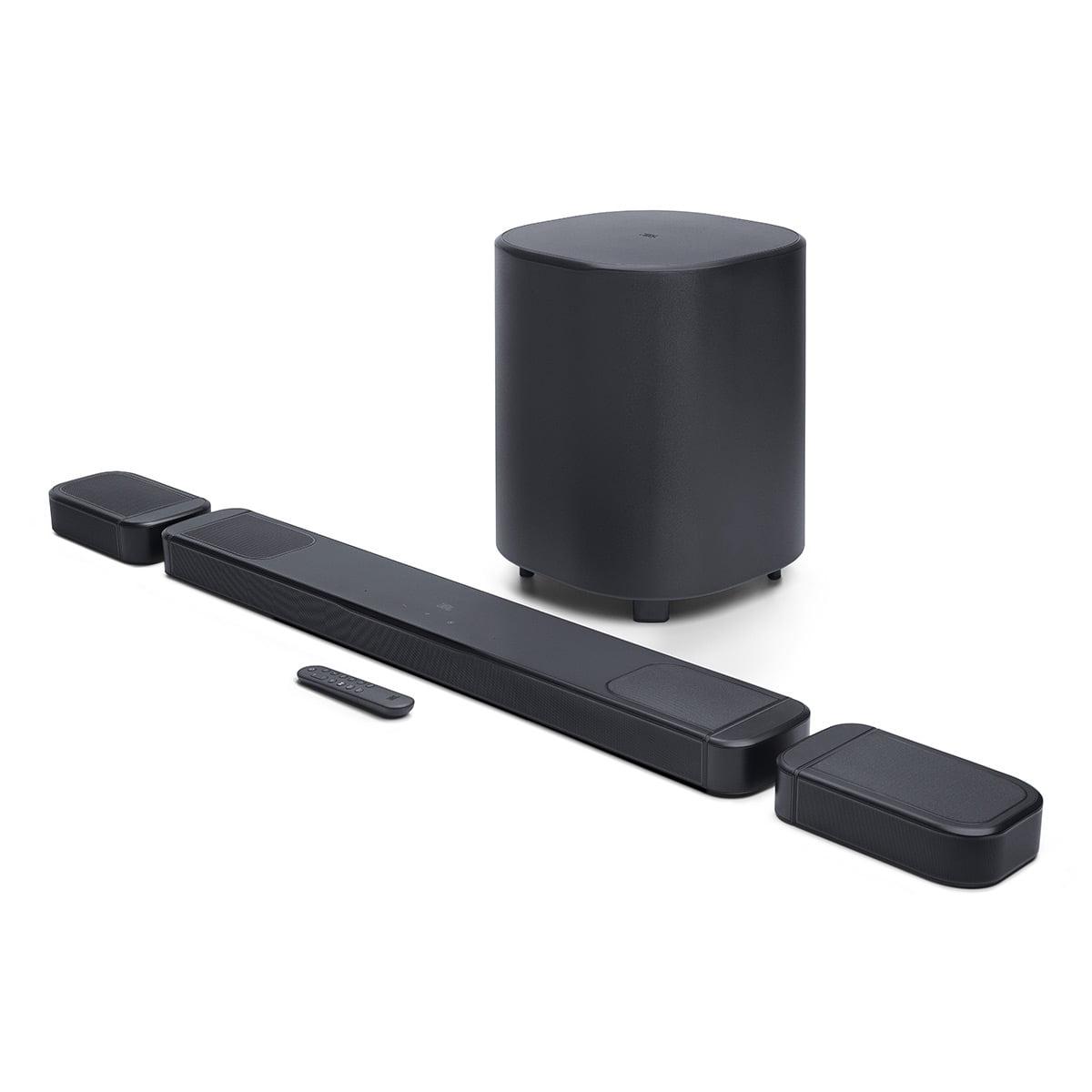
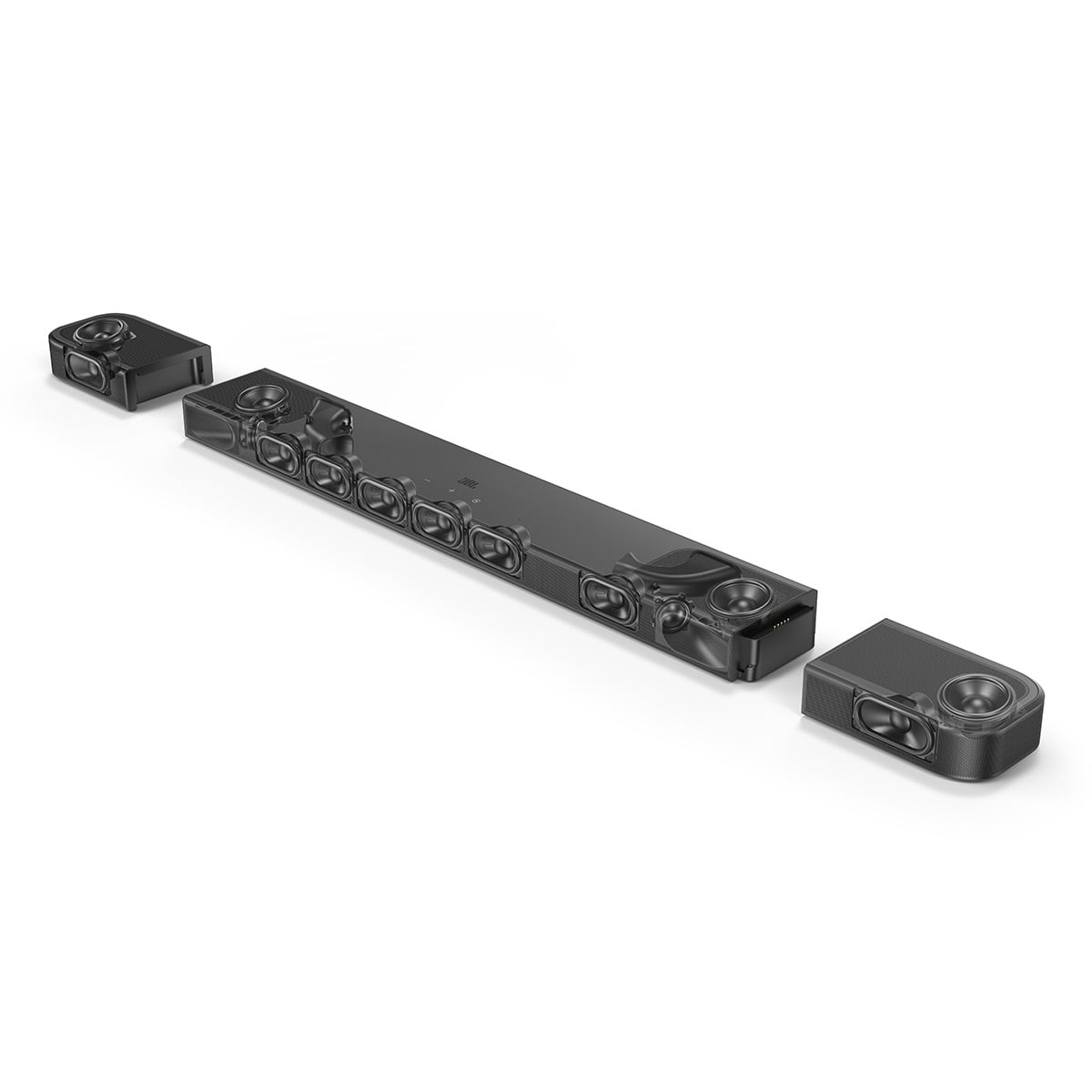
The JBL Bar 1000 MK2 launched in June 2025 as JBL's answer to the flexibility problem that has plagued soundbars since their inception. Traditional soundbars excel at front-facing audio but struggle with true surround sound because they can't physically place speakers behind you. JBL's solution? Make the rear speakers completely detachable and battery-powered, so you can place them anywhere without running wires or finding power outlets.
The TCL Q85H Q Class, released in early 2024, takes a different approach entirely. Rather than focusing on wireless flexibility, TCL concentrated on delivering premium features at a price point that doesn't require a second mortgage. They've optimized the system specifically for integration with smart TVs, particularly their own TCL and Roku TV models, creating a more seamless but less flexible experience.
The timing of these releases is significant. The JBL represents the latest thinking in soundbar design, incorporating lessons learned from years of user feedback about wire management and speaker placement. The TCL, being a year older, focuses on proven technologies but packages them in a way that maximizes value rather than pushing technological boundaries.
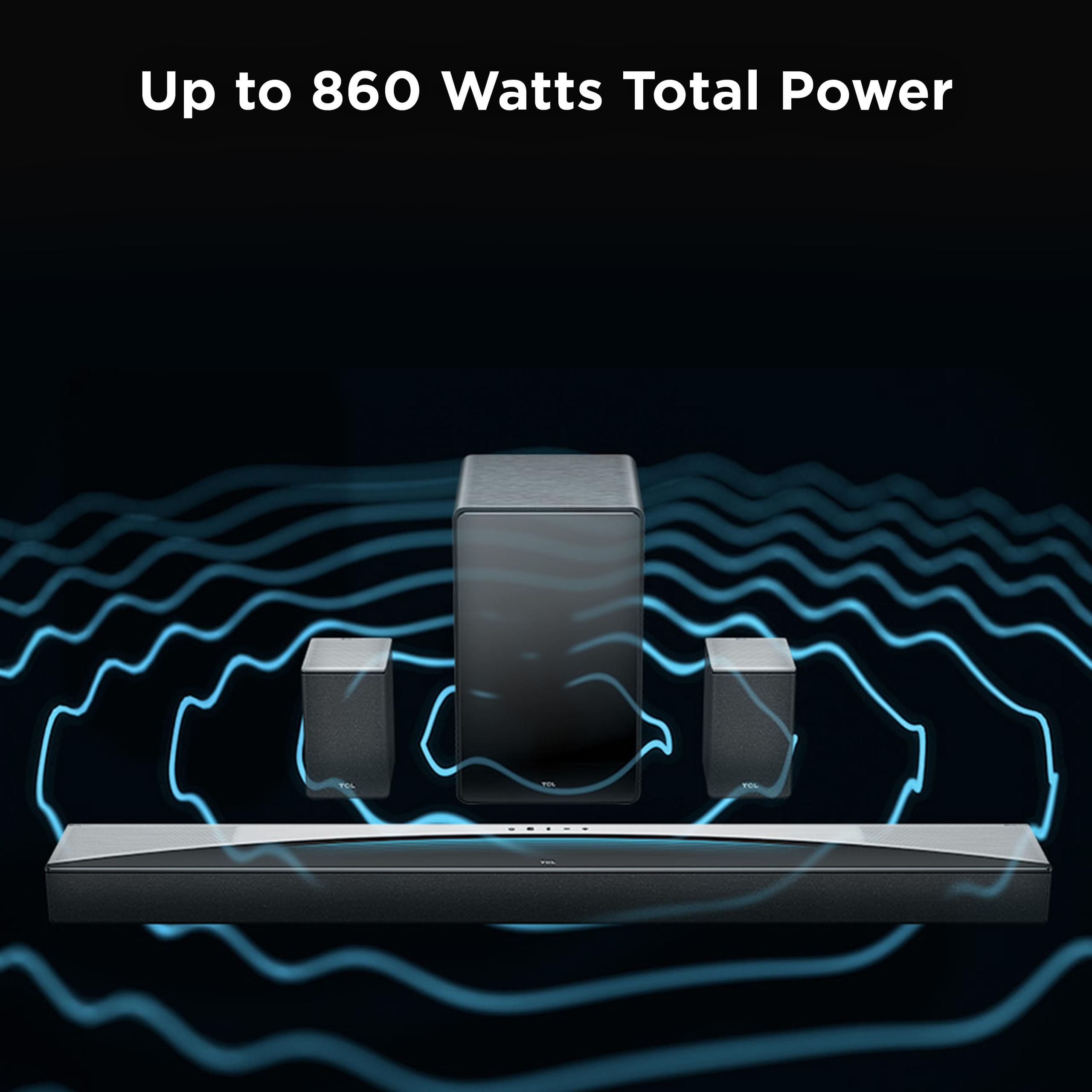
Both systems claim 7.1.4-channel Dolby Atmos support, but the numbers tell only part of the story. The JBL Bar 1000 MK2 delivers 960W maximum power (480W RMS), while the TCL Q85H provides 860W total. However, how this power is distributed makes all the difference in real-world performance.
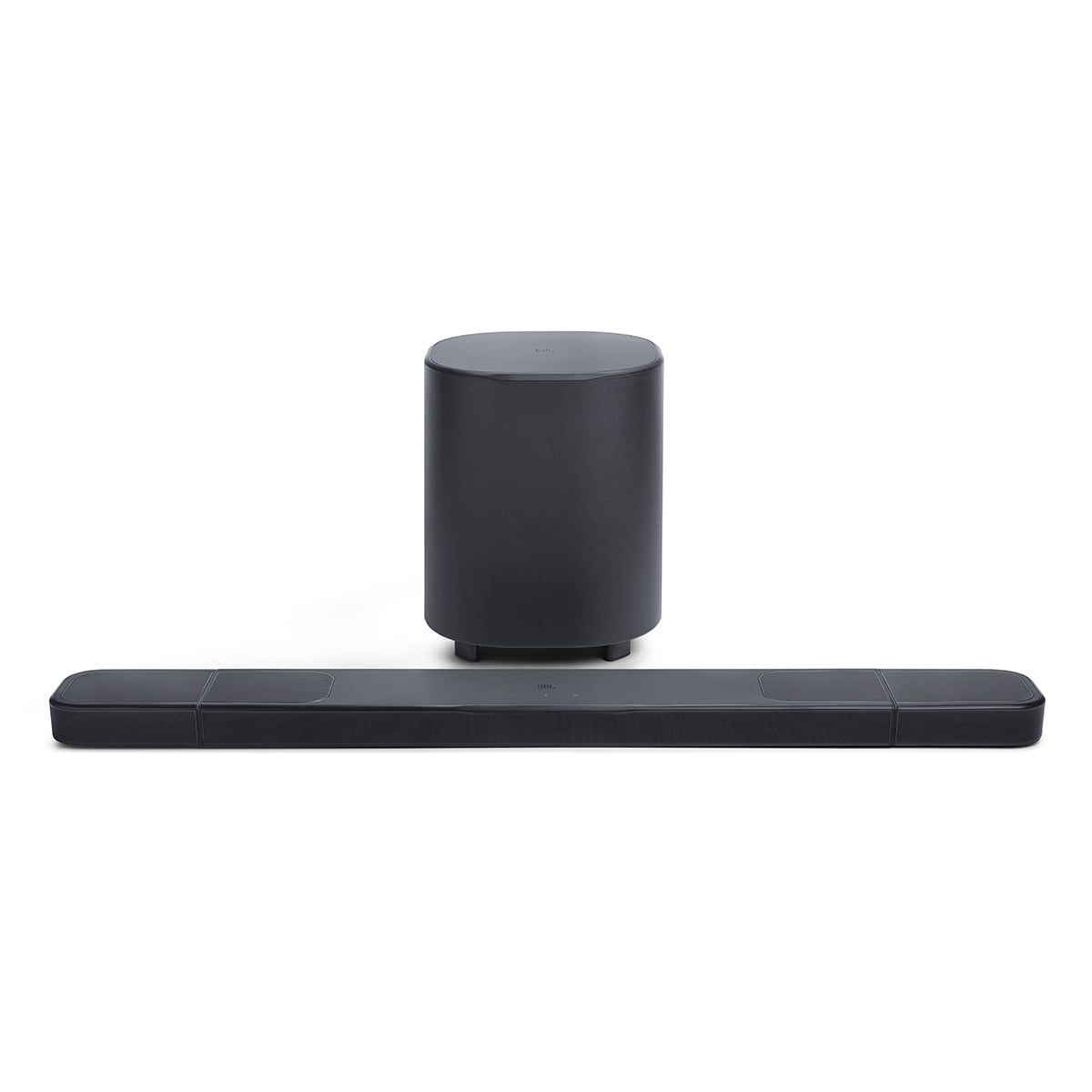
The JBL's power breakdown is particularly impressive: the main soundbar handles 500W maximum, each detachable rear speaker gets 80W maximum, and the 10-inch subwoofer commands 300W maximum. This distribution means you're getting genuine multi-directional power, not just a single powerful soundbar trying to do everything through audio processing.
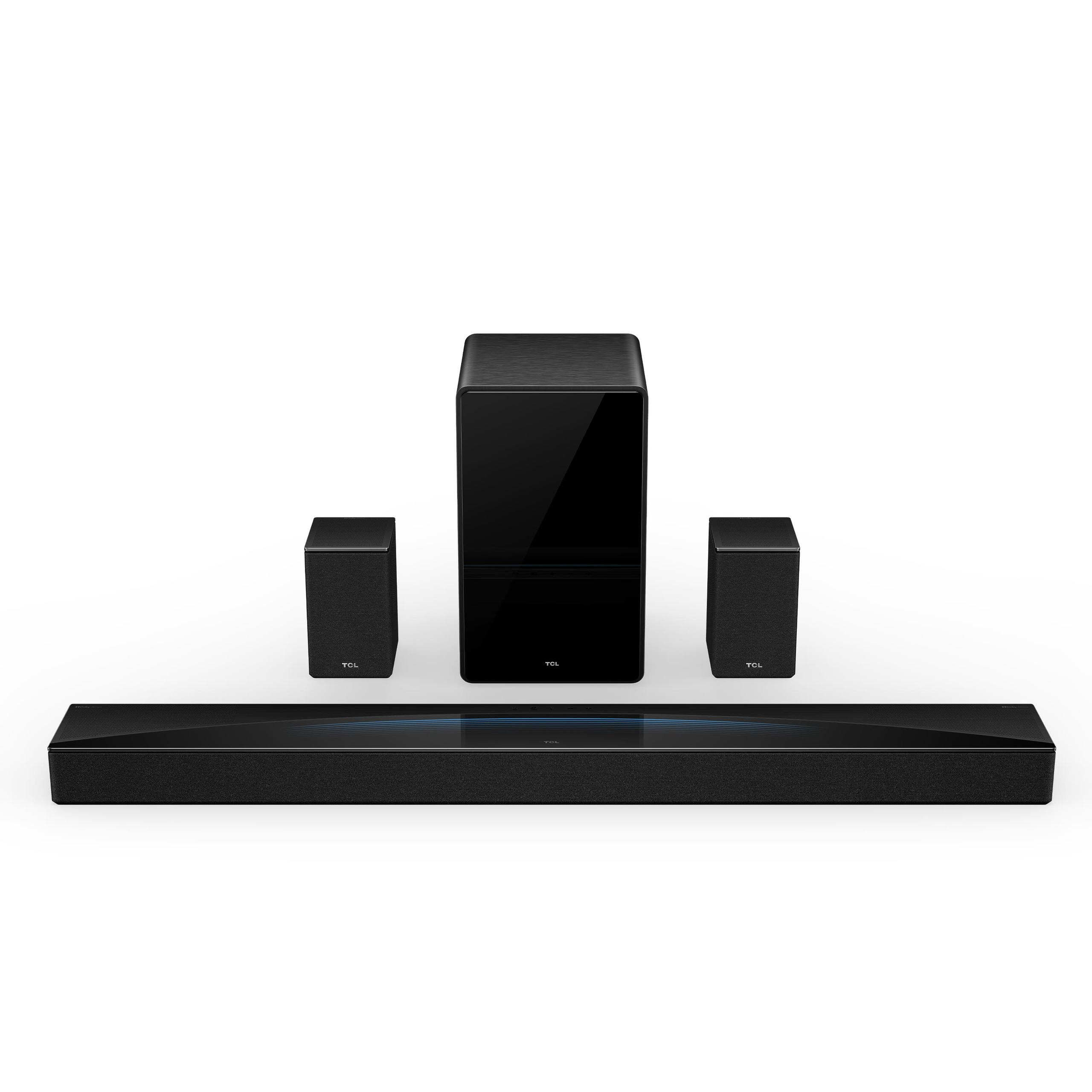
The TCL's approach is more traditional but still effective. Its 860W is spread across 15 total speakers, including dedicated tweeters (high-frequency drivers that handle crisp details like cymbal crashes and dialogue consonants) and a 6.5-inch subwoofer with bass boost technology. The key difference here is TCL's inclusion of a dedicated center channel—a separate driver specifically for dialogue reproduction.
In home theater setups, the subwoofer often makes or breaks the experience. Movie explosions, music basslines, and even the subtle rumble that adds tension to dramatic scenes all depend on quality low-frequency reproduction.
The JBL's 10-inch wireless subwoofer is significantly larger than the TCL's 6.5-inch unit, and size matters in subwoofer performance. Larger drivers can move more air, creating deeper bass extension and higher output before distortion. The JBL's frequency response extends down to 33Hz, which means you'll feel those deep movie theater rumbles in your chest. For context, most music and movie content with serious bass impact occurs between 40-80Hz, so the JBL has headroom to spare.
The TCL compensates for its smaller driver with bass boost technology—essentially digital signal processing that emphasizes certain frequency ranges to create the perception of deeper bass. While this can be effective, it's not quite the same as having the physical capability to reproduce those frequencies naturally. However, for smaller rooms or apartment living where overwhelming bass isn't desirable, the TCL's approach might actually be preferable.
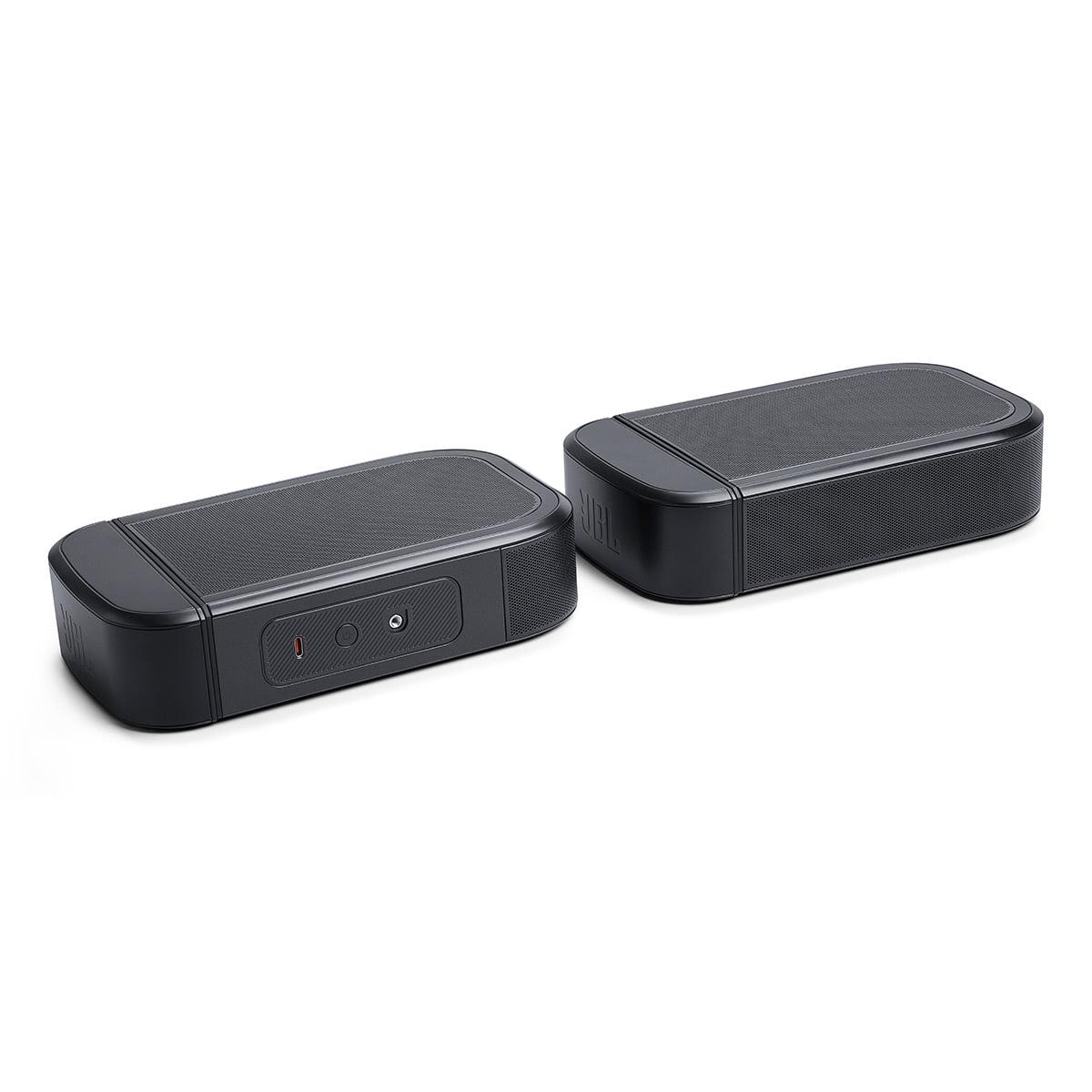
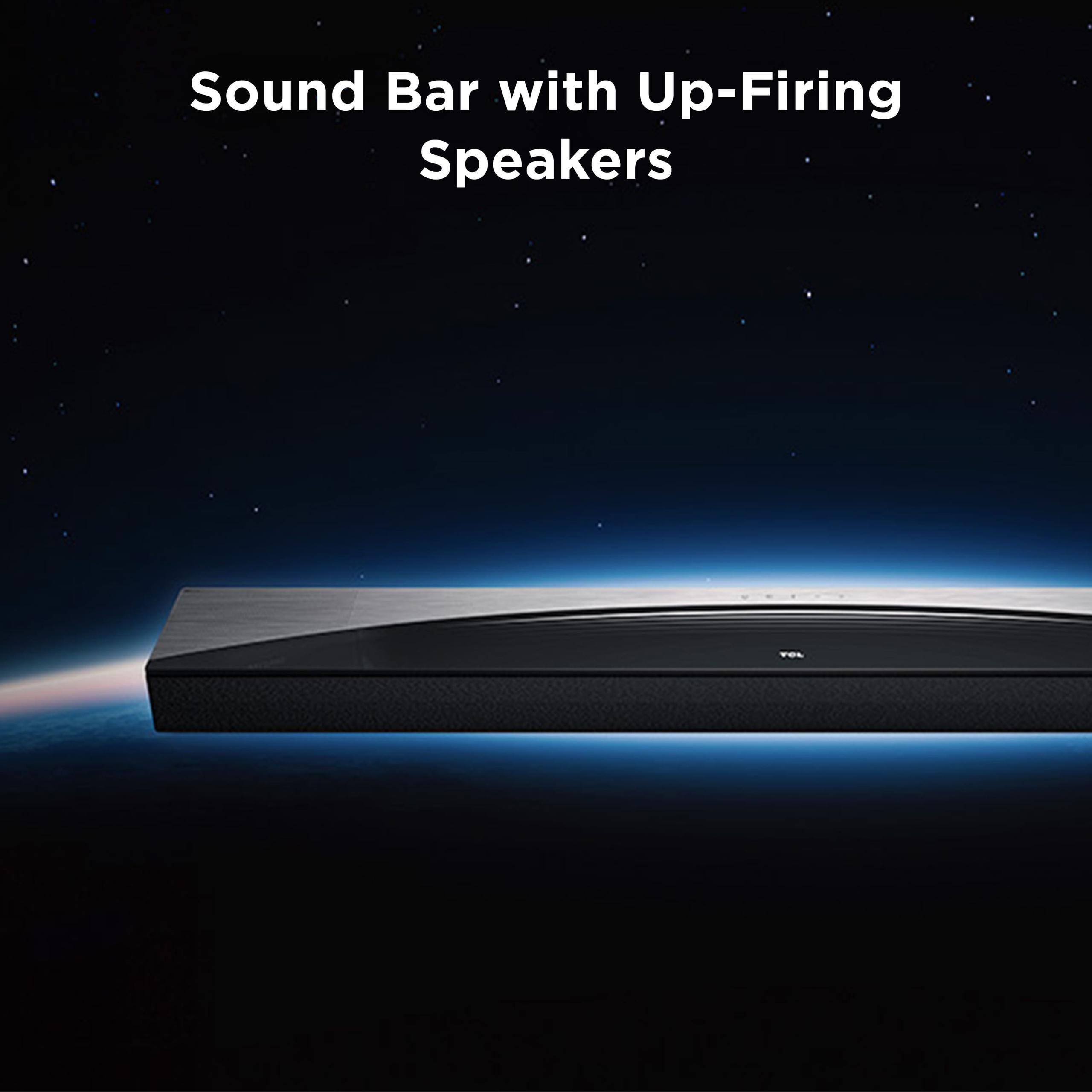
This is where the fundamental difference between these systems becomes clear. The JBL Bar 1000 MK2 uses actual physical speakers—those detachable rear units—to create surround sound. Each rear speaker contains two racetrack drivers (oval-shaped drivers that fit more cone area into a compact space) and one up-firing driver that bounces sound off your ceiling to create height effects.
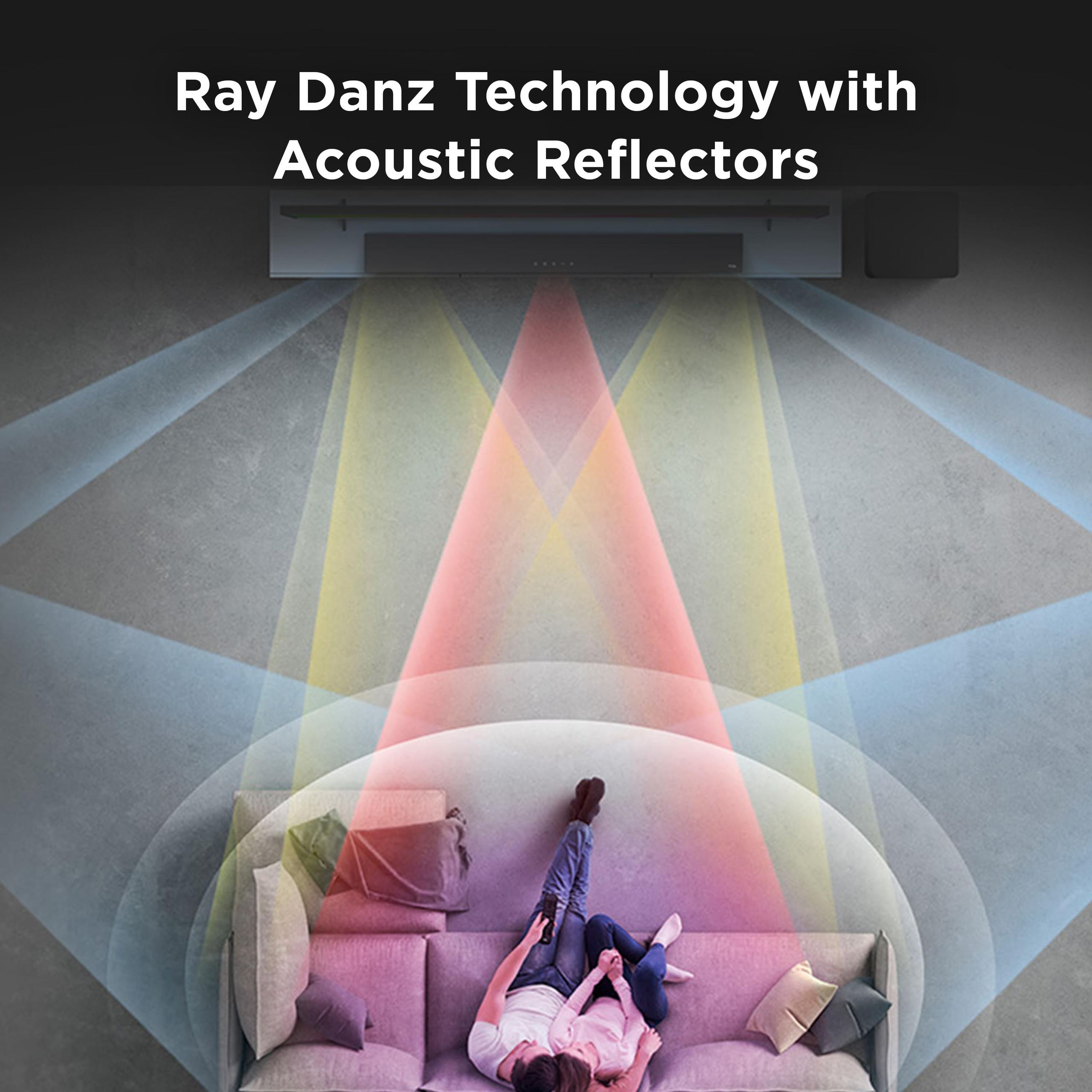
The TCL relies more heavily on psychoacoustic processing—techniques that trick your brain into perceiving sound coming from directions where there aren't actually speakers. Their RayDanz technology with acoustic reflectors widens the soundstage by carefully controlling how sound waves bounce around your room. While this can be surprisingly effective, it's more dependent on your room's acoustics and your seating position.
From my experience testing various soundbar systems, physical rear speakers almost always provide more convincing surround sound, especially for content with discrete rear channel effects like helicopters flying overhead or footsteps approaching from behind. However, processing-based systems like the TCL can create impressively wide soundstages that make movies feel more expansive than basic soundbars.
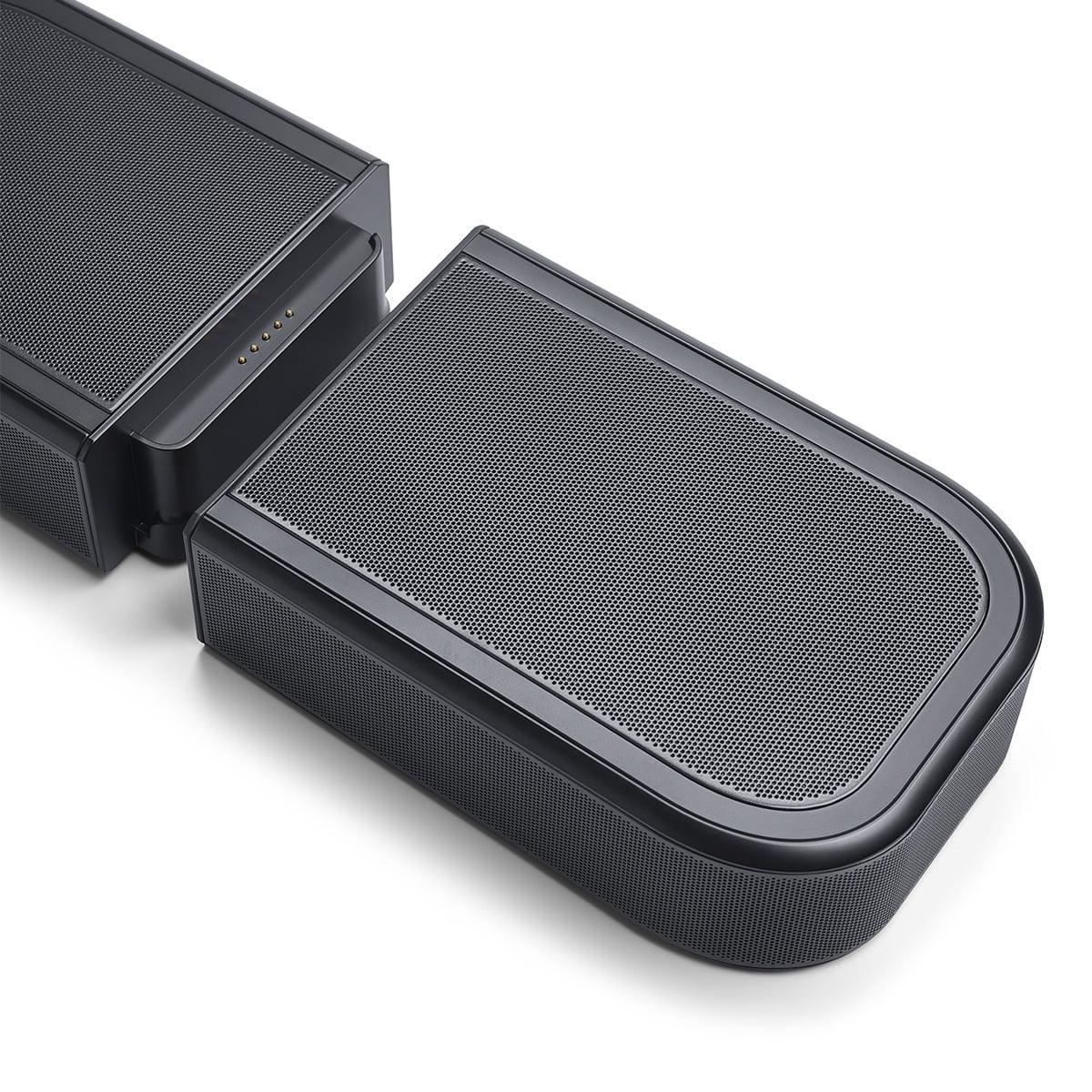
The detachable rear speakers on the JBL Bar 1000 MK2 aren't just a convenience feature—they're a fundamental reimagining of how soundbars work. Each speaker houses a 3.635V, 6600mAh battery providing up to 10 hours of playback. When docked on the main soundbar, they charge automatically and function as extensions of the main unit. When detached, they become wireless surround speakers that connect via Wi-Fi rather than Bluetooth, ensuring low latency and high-quality audio transmission.
This system solves the biggest compromise of traditional soundbars: the inability to place rear speakers in optimal positions. Instead of running speaker wire across your room or accepting that virtual surround is "good enough," you can place these speakers on end tables, bookshelves, or even temporarily on the floor during movie nights, then store them back on the soundbar when not in use.
The Night Mode feature takes this flexibility further. Through the JBL One app, you can mute the main soundbar and subwoofer entirely, routing all audio through just the detachable speakers. This creates a personal listening experience that won't disturb others—imagine watching an action movie at midnight with full surround sound that only you can hear.
The TCL Q85H Q Class focuses on intelligent integration rather than physical innovation. Its AI Sonic room calibration automatically adjusts the audio output based on your room's acoustics, measuring how sound reflects off walls, furniture, and other surfaces to optimize the listening experience for your specific space.
The dedicated center channel deserves special attention. In traditional home theater setups, the center channel handles roughly 70% of a movie's dialogue and important audio cues. Most soundbars try to create a "phantom center" using left and right speakers, but the TCL includes an actual center driver. This means voices stay locked to the screen even when you're sitting off to the side, and dialogue remains clear during complex action sequences.
For gaming, the TCL includes specific audio modes optimized for different game genres. The low-latency processing ensures audio stays synchronized with fast-paced action, while the bass boost emphasizes the impact effects that make gaming more immersive.
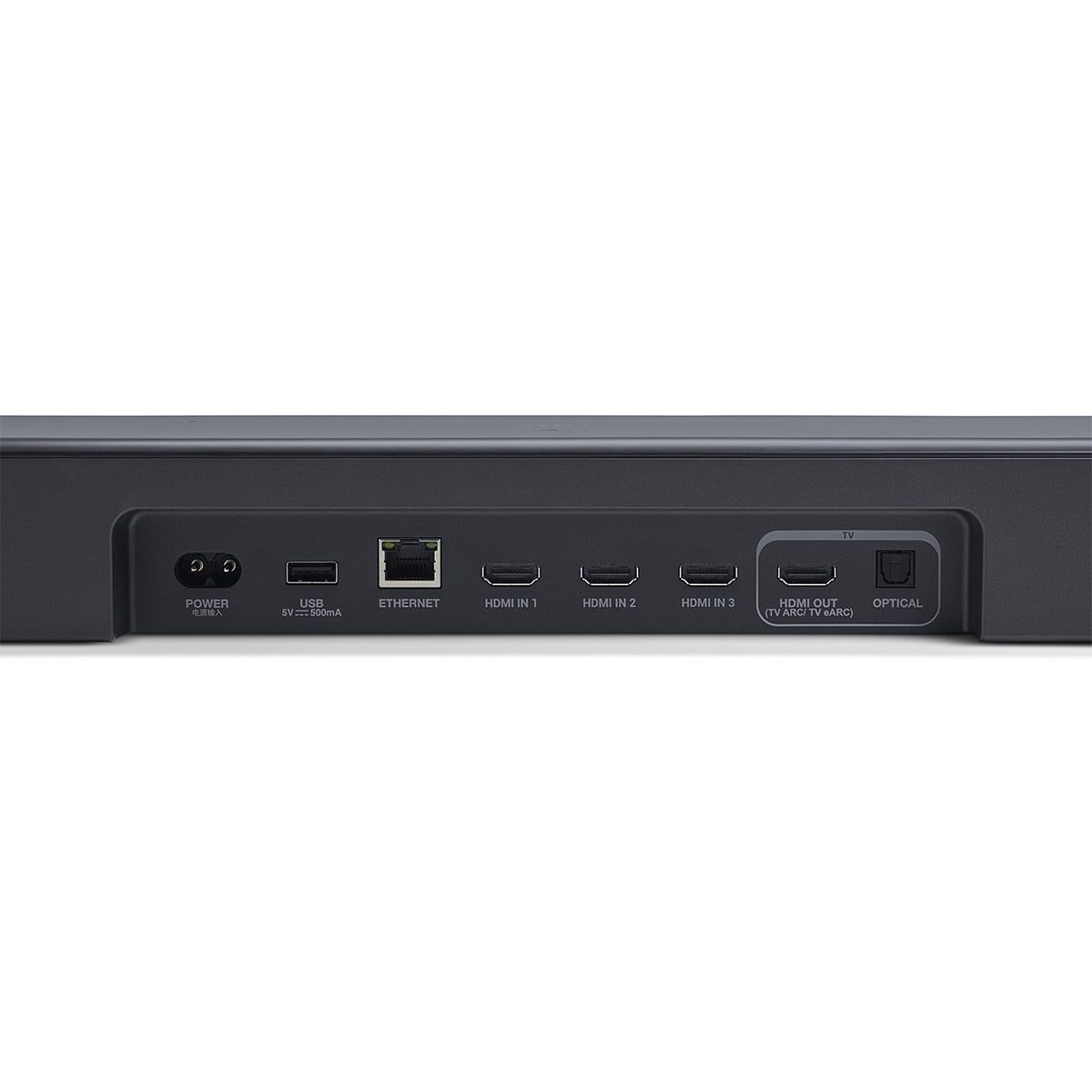
The JBL Bar 1000 MK2 comes loaded with connectivity options that future-proof your investment. Three HDMI inputs plus HDMI eARC mean you can connect multiple devices (gaming console, streaming device, Blu-ray player) directly to the soundbar, then send everything to your TV through a single cable. The HDMI 2.1 support includes features like Variable Refresh Rate (VRR) and Auto Low Latency Mode (ALLM), which are crucial for modern gaming consoles.
The wireless capabilities are equally impressive. Wi-Fi 6 support ensures stable streaming, while compatibility with AirPlay 2, Chromecast Built-In, Spotify Connect, and Roon Ready means you can stream music from virtually any device or service. Bluetooth 5.3 provides improved range and stability for phone connections.
The JBL One app serves as mission control for the entire system. Beyond basic volume and input selection, it provides detailed EQ controls, lets you configure the Night Mode, and handles firmware updates that can add new features over time.
The TCL takes a more focused approach to connectivity, optimizing specifically for smart TV integration. If you own a TCL or Roku TV, the soundbar integrates so seamlessly that you can control it entirely through your TV's remote and interface. This eliminates the need for multiple remotes and creates a more unified user experience.
The AI Sonic calibration works automatically, but the TCL Home Connect app provides manual override when needed. While it doesn't offer the extensive streaming service integration of the JBL, it covers the essentials with Bluetooth 5.1 and standard HDMI connectivity.
In larger rooms (over 15 feet from seating to soundbar), the JBL Bar 1000 MK2 has clear advantages. The 10-inch subwoofer can fill substantial space with deep bass, while the detachable rear speakers maintain their effectiveness regardless of room size. The higher total power output (960W vs 860W) provides more headroom for loud passages without compression or distortion.
The MultiBeam 3.0 technology in the JBL creates a wide soundstage that scales well with room size. In my testing, the system maintained good stereo imaging and surround effects even in acoustically challenging spaces with high ceilings or lots of hard surfaces.
The TCL Q85H Q Class might actually be preferable in smaller spaces. The 6.5-inch subwoofer provides adequate bass without overwhelming neighbors, while the RayDanz technology can create convincing width effects in rooms where physical rear speakers might be impractical.
The dedicated center channel really shines in smaller rooms where you're more likely to be sitting directly in front of the TV. Dialogue clarity is noticeably better than systems that rely on phantom center imaging, especially important for TV shows and dialogue-heavy movies.
Both systems handle gaming well, but with different strengths. The TCL's dedicated gaming modes and low-latency processing make it particularly good for competitive gaming where audio cues matter. The bass boost feature enhances the impact of explosions and gunfire without muddying important audio details.
The JBL's advantage in gaming comes from its more immersive surround sound. Games with good spatial audio design—think horror games where you need to locate threats by sound, or racing games where you hear competitors approaching from behind—benefit significantly from the physical rear speakers.
At $1,199.95, the JBL Bar 1000 MK2 represents a significant investment, but the per-feature value is reasonable when you consider what you're getting. The detachable speaker system alone is worth the premium for users who want true surround sound without permanent rear speaker installation. Add the larger subwoofer, premium connectivity, and extensive streaming integration, and the price becomes more justifiable.
This system makes sense for users who prioritize flexibility and future-proofing. If you rent your home, move frequently, or simply don't want permanent speakers mounted around your room, the JBL's approach solves problems that traditional home theater setups can't address.
At $499.99, the TCL Q85H Q Class delivers exceptional value by focusing on proven technologies rather than innovation for its own sake. You're getting legitimate Dolby Atmos processing, a wireless subwoofer, room calibration, and dedicated center channel—features that would cost significantly more in competing systems.
The TCL makes sense for users who want premium home theater performance without premium pricing. If you're primarily watching movies and TV shows (rather than complex gaming or music listening), and you don't need the flexibility of wireless rear speakers, the TCL delivers 90% of the experience at 40% of the price.
You have a larger room that can benefit from the more powerful subwoofer and higher total output. Wire management is a concern, and you want the flexibility to optimize speaker placement for different content or occasions. Night listening without disturbing others is important to your household. You value extensive connectivity options and streaming service integration. Budget allows for a premium investment in the latest soundbar technology.
The JBL represents the cutting edge of soundbar design, solving real problems that have plagued these systems since their inception. If you can afford the premium, you're getting genuinely innovative technology that changes how soundbars can work in real homes.
You want maximum home theater impact at a reasonable price point. Dialogue clarity is a priority for your TV and movie watching. You own a TCL or Roku TV and want seamless integration. Your room is smaller or you live in an apartment where overwhelming bass isn't desirable. Gaming is a primary use case, and you value optimized audio modes. You prefer simpler setup with automatic room optimization rather than manual tweaking.
The TCL proves that premium features don't require premium pricing when the focus remains on core performance rather than flashy innovations.
The choice between the JBL Bar 1000 MK2 and TCL Q85H Q Class ultimately comes down to priorities and budget. The JBL represents innovative engineering that solves real-world problems, particularly around speaker placement and wireless flexibility. The TCL focuses on delivering proven performance at an accessible price point, with smart optimizations that maximize value.
Both systems will dramatically improve your TV's audio and provide legitimate home theater experiences. The JBL pushes the boundaries of what soundbars can do, while the TCL perfects the traditional approach with smart features and competitive pricing. Your choice depends on whether you prioritize cutting-edge flexibility or maximum performance per dollar.
| JBL Bar 1000 MK2 ($1,199.95) | TCL Q85H Q Class ($499.99) |
|---|---|
| Total System Power - Higher wattage means louder volume and better dynamics in large rooms | |
| 960W max / 480W RMS | 860W max |
| Subwoofer Size - Larger drivers produce deeper bass and higher output before distortion | |
| 10-inch wireless subwoofer (300W max) | 6.5-inch wireless subwoofer with bass boost |
| Rear Speakers - Physical rears create more convincing surround than virtual processing | |
| Detachable wireless with 10-hour battery, up-firing drivers | Wired/wireless surrounds with forward and up-firing drivers |
| Frequency Response - Lower numbers mean deeper bass extension | |
| 33Hz – 20kHz (excellent deep bass) | Not specified (likely 40-45Hz typical for 6.5" sub) |
| HDMI Connectivity - More inputs reduce need for external switching | |
| 3x HDMI in + 1x eARC (HDMI 2.1 with VRR/ALLM) | Standard HDMI with eARC support |
| Streaming Integration - More services mean fewer additional devices needed | |
| AirPlay 2, Chromecast, Spotify Connect, Roon Ready, Bluetooth 5.3 | Bluetooth 5.1, optimized for TCL/Roku TV integration |
| Dialogue Enhancement - Critical for clear speech during loud action scenes | |
| PureVoice 2.0 adaptive processing | Dedicated center channel driver |
| Room Calibration - Automatic setup reduces manual tweaking | |
| Easy sound calibration via JBL One App | AI Sonic automatic room calibration |
| Unique Features - Special capabilities that differentiate each system | |
| Night Mode (private listening via detachable speakers) | RayDanz technology, gaming modes, bass boost |
| Release Date - Newer products typically have latest features and improvements | |
| June 2025 (latest generation) | Early 2024 (proven technology) |
The TCL Q85H Q Class ($499.99) offers exceptional value at half the price of the JBL Bar 1000 MK2 ($1,199.95). You get 7.1.4 Dolby Atmos, wireless subwoofer, and room calibration for under $500. The JBL justifies its premium price with unique detachable wireless rear speakers and larger 10-inch subwoofer, but the TCL delivers 90% of the performance at 40% of the cost.
The biggest difference is flexibility. The JBL Bar 1000 MK2 features detachable battery-powered rear speakers that you can place anywhere without wires, while the TCL Q85H Q Class uses a more traditional approach with fixed components but includes a dedicated center channel for superior dialogue clarity.
The JBL Bar 1000 MK2 has superior bass with its 10-inch wireless subwoofer producing deeper extension down to 33Hz. The TCL Q85H Q Class uses a smaller 6.5-inch subwoofer with bass boost technology, which is adequate for smaller rooms but can't match the JBL's deep bass impact in larger spaces.
Yes, both the JBL Bar 1000 MK2 and TCL Q85H Q Class support true 7.1.4 Dolby Atmos with physical up-firing drivers. The JBL has up-firing drivers in both the main bar and detachable rear speakers, while the TCL uses up-firing drivers and RayDanz technology with acoustic reflectors to create height effects.
The TCL Q85H Q Class has an advantage for dialogue with its dedicated center channel driver, ensuring voices stay clear and locked to the screen. The JBL Bar 1000 MK2 uses PureVoice 2.0 processing technology, which is effective but not quite as precise as having a physical center channel for speech reproduction.
The JBL Bar 1000 MK2 offers more comprehensive wireless connectivity with Wi-Fi 6, AirPlay 2, Chromecast Built-In, Spotify Connect, and Roon Ready support. The TCL Q85H Q Class focuses on Bluetooth 5.1 and seamless integration with TCL and Roku TVs, offering simpler but more TV-centric wireless functionality.
The TCL Q85H Q Class includes dedicated gaming modes with low-latency processing and bass boost optimized for different game genres. The JBL Bar 1000 MK2 excels in games requiring spatial audio awareness due to its physical rear speakers, making it better for immersive single-player games rather than competitive gaming.
The TCL Q85H Q Class offers simpler setup with AI Sonic automatic room calibration that adjusts to your space without manual tweaking. The JBL Bar 1000 MK2 requires more initial setup through the JBL One App but provides more granular control with detailed EQ settings and placement flexibility for the detachable speakers.
The TCL Q85H Q Class is often better suited for smaller rooms and apartments, where its 6.5-inch subwoofer provides adequate bass without overwhelming the space. The JBL Bar 1000 MK2 with its larger 10-inch subwoofer and higher power output is designed more for medium to large rooms where you can fully utilize its capabilities.
Only the JBL Bar 1000 MK2 allows independent use of its detachable rear speakers, which can function as Bluetooth speakers in other rooms when not connected to the main system. The TCL Q85H Q Class has integrated surround speakers that cannot be used separately from the main soundbar system.
The TCL Q85H Q Class excels in smart TV integration, especially with TCL and Roku TVs, allowing control through your TV's remote and interface. The JBL Bar 1000 MK2 works with all TV brands but requires its own app and remote for full functionality, though it offers broader streaming service compatibility.
The JBL Bar 1000 MK2 consumes more power overall due to its higher 960W maximum output and need to charge the detachable speakers' batteries. The TCL Q85H Q Class is more energy-efficient with 860W maximum power and simpler charging requirements, making it better for users concerned about electricity costs or environmental impact.
We've done our best to create useful and informative comparisons to help you decide what product to buy. Our research uses advanced automated methods to create this comparison and perfection is not possible - please contact us for corrections or questions. These are the sites we've researched in the creation of this article: ecoustics.com - engadget.com - bestbuy.com - techradar.com - rtings.com - hometechnologyreview.com - youtube.com - t3.com - whathifi.com - youtube.com - bhphotovideo.com - gzhls.at - device.report - support.jbl.com - support.jbl.com - jbl.com - av.com - audioadvice.com - jbl.com - target.com - worldwidestereo.com - gamerant.com - bestbuy.com - tcl.com - bestbuy.com - tcl.com - tcl.com - nfm.com - tcl.com - electronicexpress.com - tcl.com - tcl.com - digitaltrends.com

Privacy Policy
Terms and Conditions - Affiliate Policy
Home Security
© Copyright 2008-2026.
11816 Inwood Rd #1211, Dallas, TX 75244