

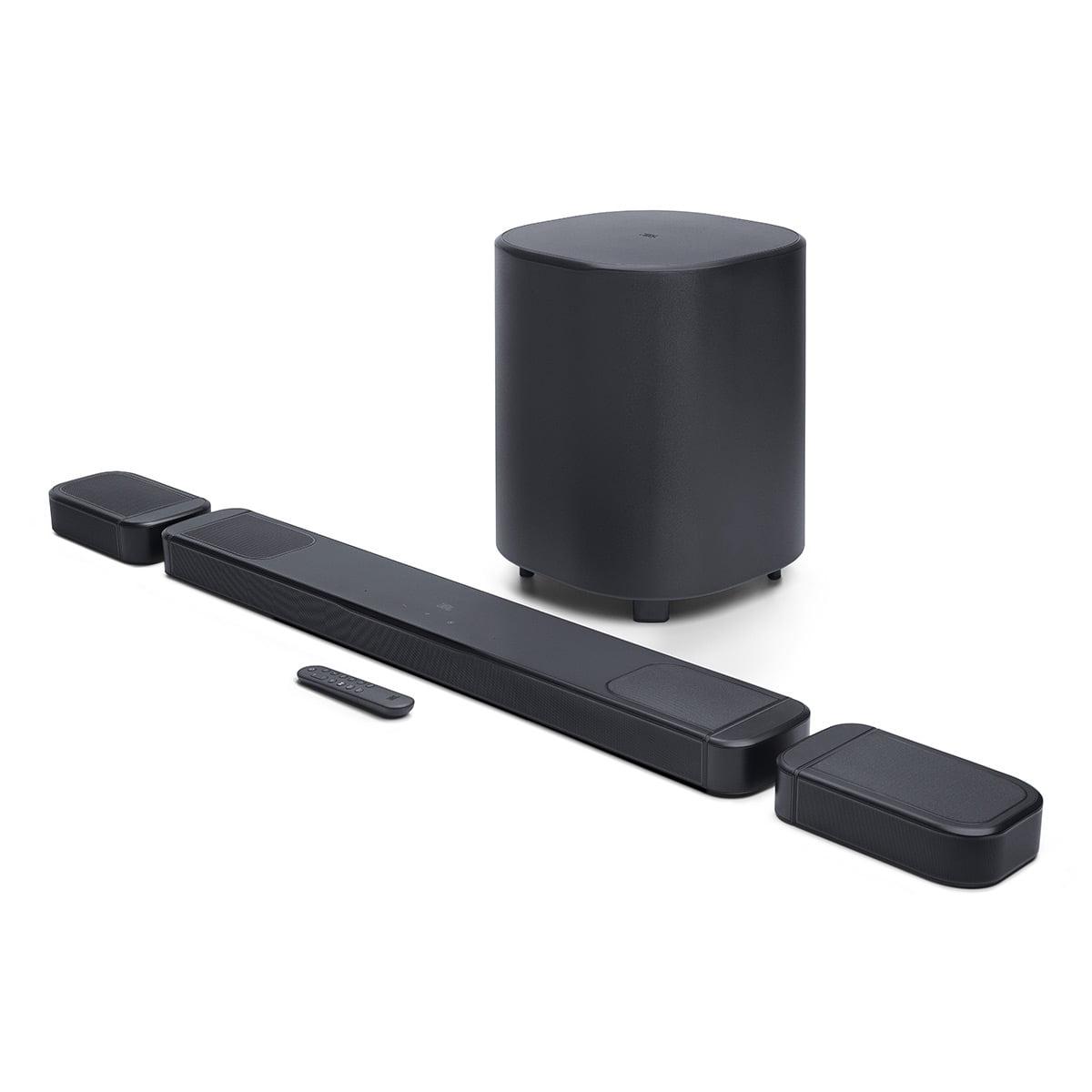
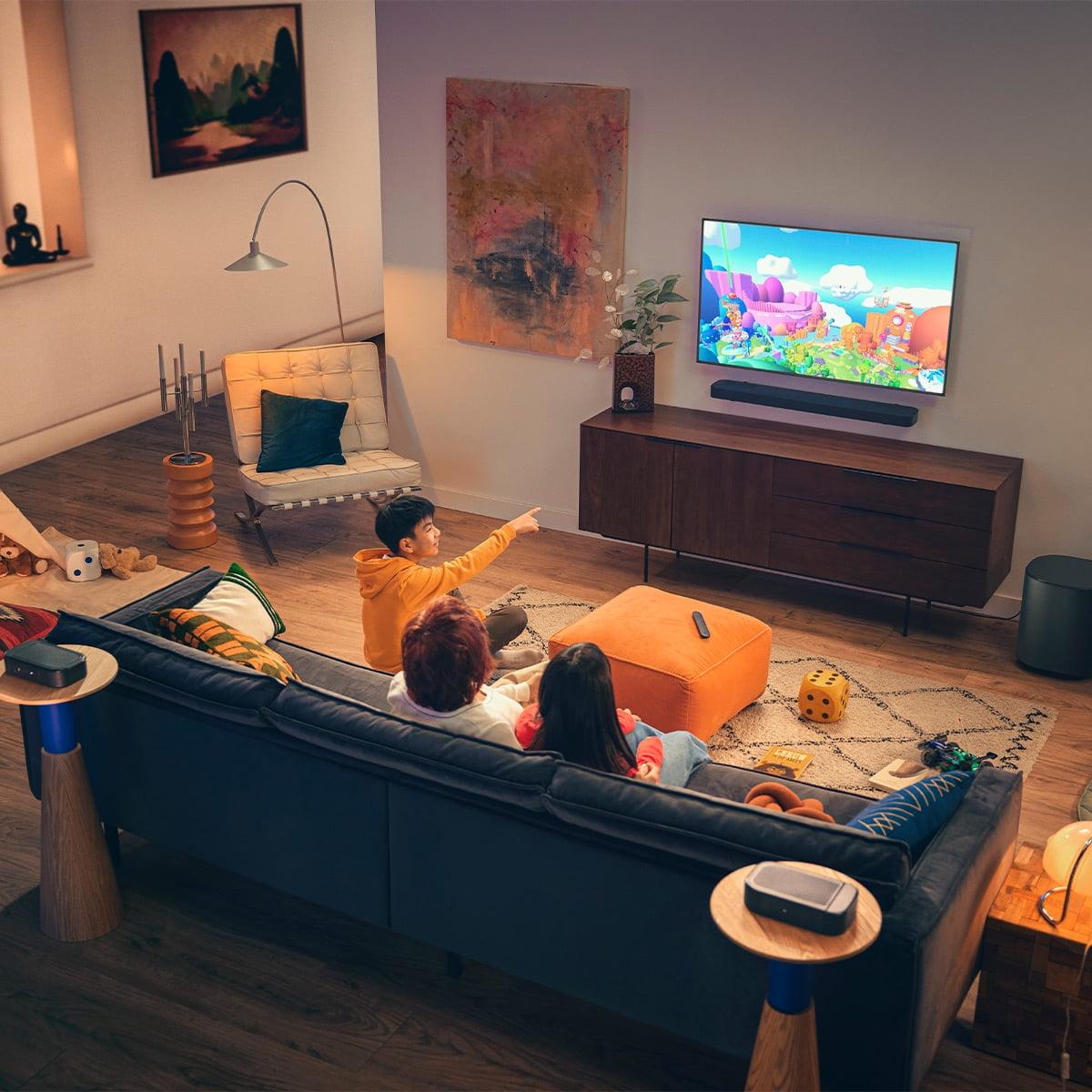


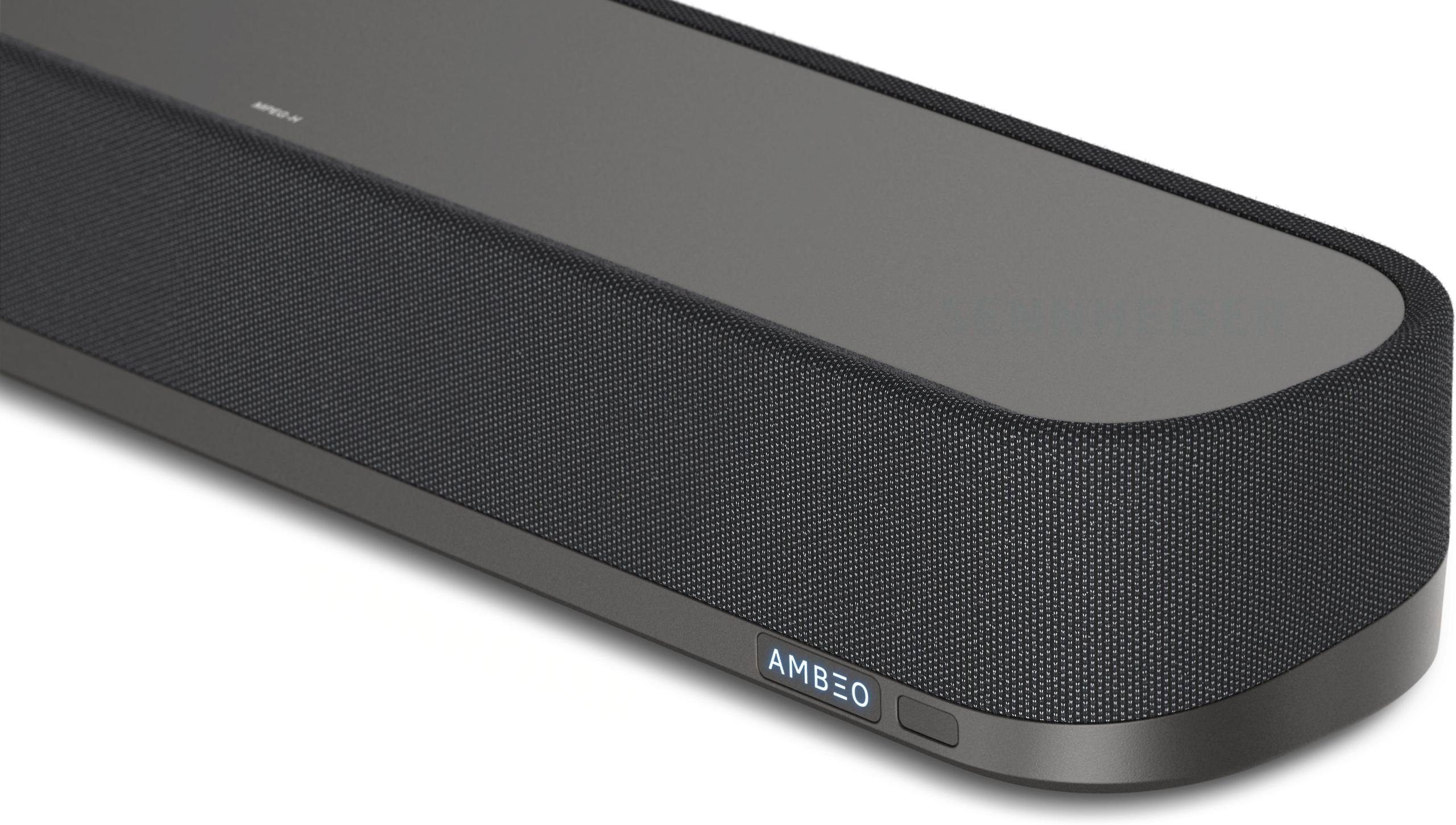

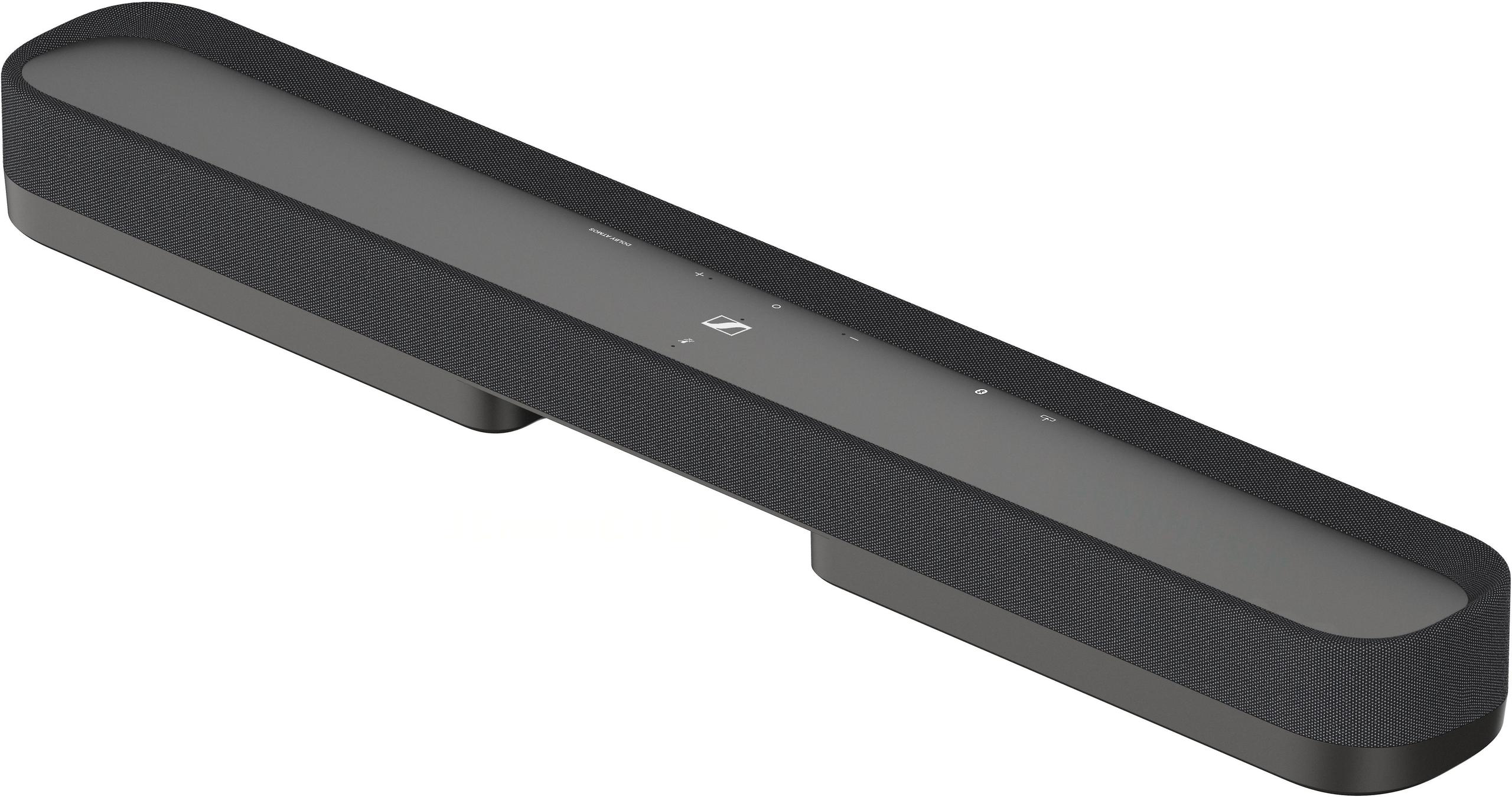


If you've been shopping for a premium soundbar recently, you've probably noticed how confusing the market has become. Every manufacturer claims to offer "cinematic sound" and "immersive audio," but the reality is that these products take dramatically different approaches to achieving those goals. Today, we're comparing two standout options that represent opposite philosophies in soundbar design: the JBL Bar 1000 MK2 at $1,199.95 and the Sennheiser AMBEO Mini at $694.96.
Premium soundbars sit at the top of the all-in-one audio pyramid, designed to deliver the kind of immersive sound experience you'd expect from a full home theater system without the complexity of running wires throughout your room or drilling holes in your ceiling. These aren't your basic TV sound upgrades – they're sophisticated audio systems that use advanced processing and multiple speakers to create three-dimensional soundscapes.
The key technologies driving this category forward are Dolby Atmos and DTS:X, which are audio formats that add height information to traditional surround sound. Think of regular 5.1 surround as creating a circle of sound around you, while Atmos adds a dome overhead. This creates what audio engineers call "object-based audio," where sounds can be precisely placed anywhere in a three-dimensional space rather than just coming from specific speaker locations.
What separates premium soundbars from mid-range options isn't just power or the number of speakers – it's how they handle this complex spatial audio processing and whether they can make you forget you're listening to a soundbar at all.
Both the JBL Bar 1000 MK2 and Sennheiser AMBEO Mini launched in 2025, representing the latest thinking in premium soundbar design. However, they couldn't be more different in their approaches.
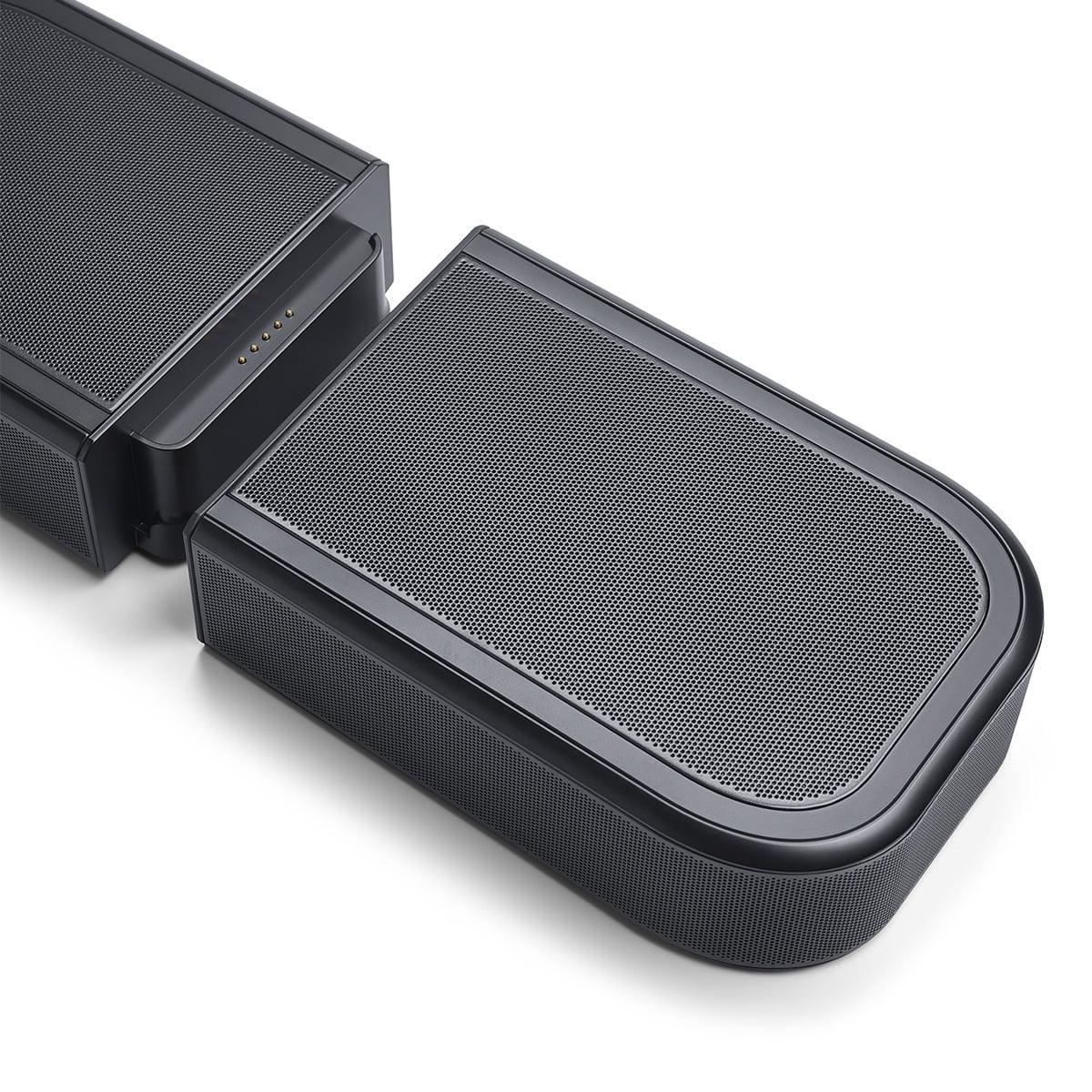
The JBL Bar 1000 MK2 builds on JBL's successful Bar 1000 series with significant improvements. The "MK2" designation indicates this is the second generation, featuring upgraded MultiBeam 3.0 technology (up from 2.0 in the original), improved PureVoice 2.0 dialogue processing, and enhanced wireless connectivity with Bluetooth 5.3 and dual-band Wi-Fi. JBL has also refined the detachable speaker design, extending battery life to 10 hours and improving the magnetic docking system.
Sennheiser's AMBEO Mini represents a completely different evolution. While Sennheiser's flagship AMBEO Max gained attention for its massive size and reference-quality sound, the Mini distills that technology into a compact form factor. The 2025 release includes the company's latest AMBEO virtualization algorithms, developed from years of research in psychoacoustics – the science of how our brains interpret sound. The Mini also features their new AMBEO|OS operating system, which provides more sophisticated room calibration and streaming integration than previous generations.
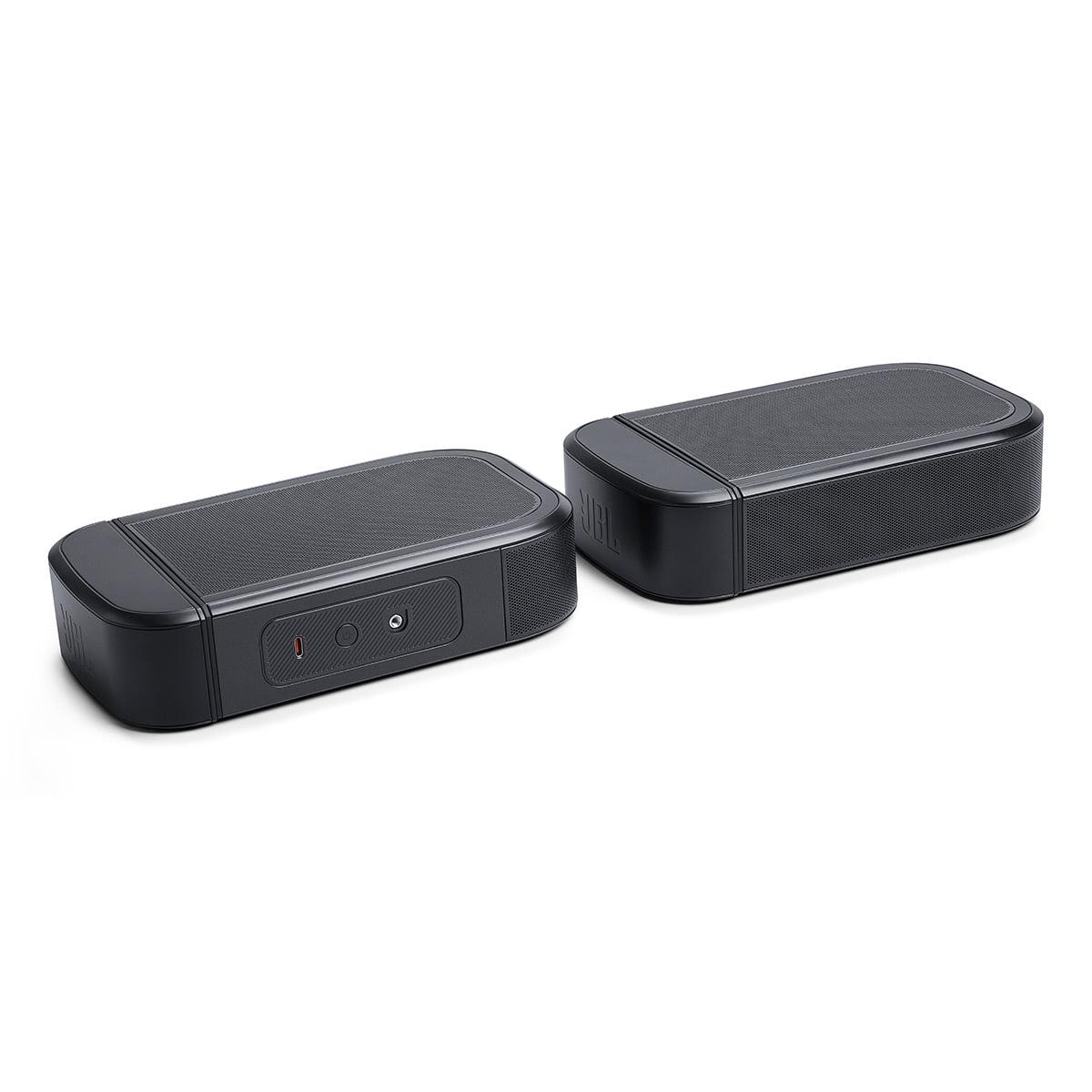
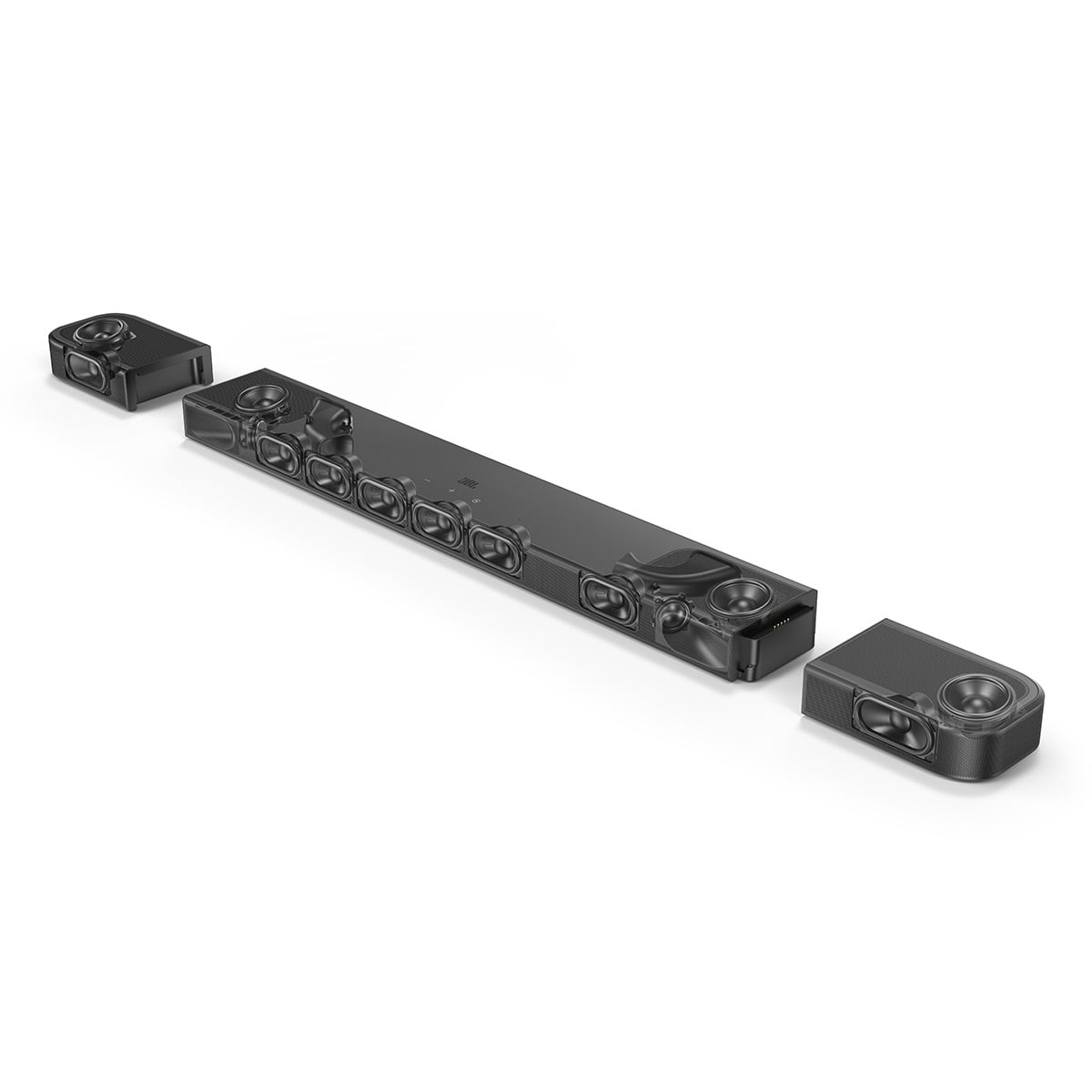
The most fundamental difference between these systems lies in how they create immersive audio. The JBL Bar 1000 MK2 takes what I call the "traditional approach" – it uses actual speakers placed around your room to create surround sound. The system includes detachable wireless rear speakers that magnetically attach to either end of the main soundbar. When you want full surround sound, you simply detach these speakers and place them behind your seating area.
This physical approach has obvious advantages. When a helicopter flies from front to back in a movie, you hear it move from the main soundbar to the rear speakers – there's no ambiguity about where the sound is coming from. The system includes four up-firing drivers total: two in the main bar and one in each detachable speaker. These drivers fire sound toward your ceiling, which reflects back down to create height effects for Dolby Atmos content.
In my testing, this physical approach creates undeniably authentic surround sound. During the opening battle scene in "Top Gun: Maverick," I could clearly track individual aircraft movements around the room. The rear speakers provide genuine directional audio cues that your brain instantly recognizes as coming from behind you.
The Sennheiser AMBEO Mini takes the opposite approach, using what's called "virtualization" to create surround sound from a single soundbar. This might sound like marketing nonsense, but Sennheiser has invested heavily in psychoacoustic research to understand how our brains process spatial audio. The Mini uses beamforming technology – precisely controlling how sound waves interact with your room's surfaces – to trick your brain into perceiving sounds coming from locations where no speakers exist.
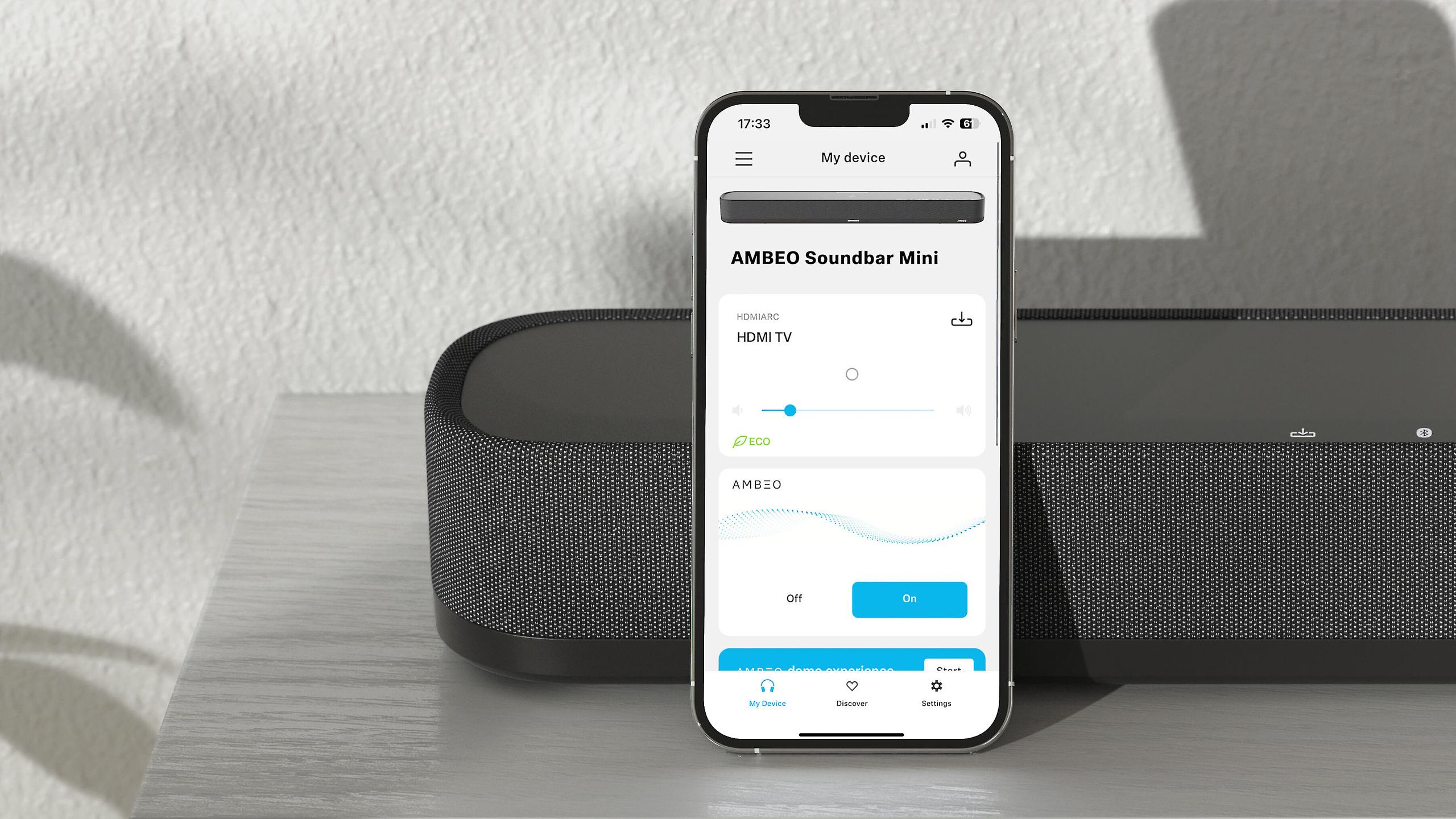
What makes this work is the sophistication of Sennheiser's processing. The system uses built-in microphones to measure your room's acoustics, then adjusts its beamforming patterns accordingly. It can even upmix stereo content to create immersive 3D audio, transforming your music collection into a more spatial experience.
During my testing, the AMBEO Mini's virtualization was genuinely impressive in smaller rooms. The same "Top Gun" scene created a convincing bubble of sound that seemed to extend well beyond the soundbar's physical location. However, the effect is more subtle than JBL's physical approach – you need to pay attention to notice it, rather than being immediately struck by obvious directional effects.
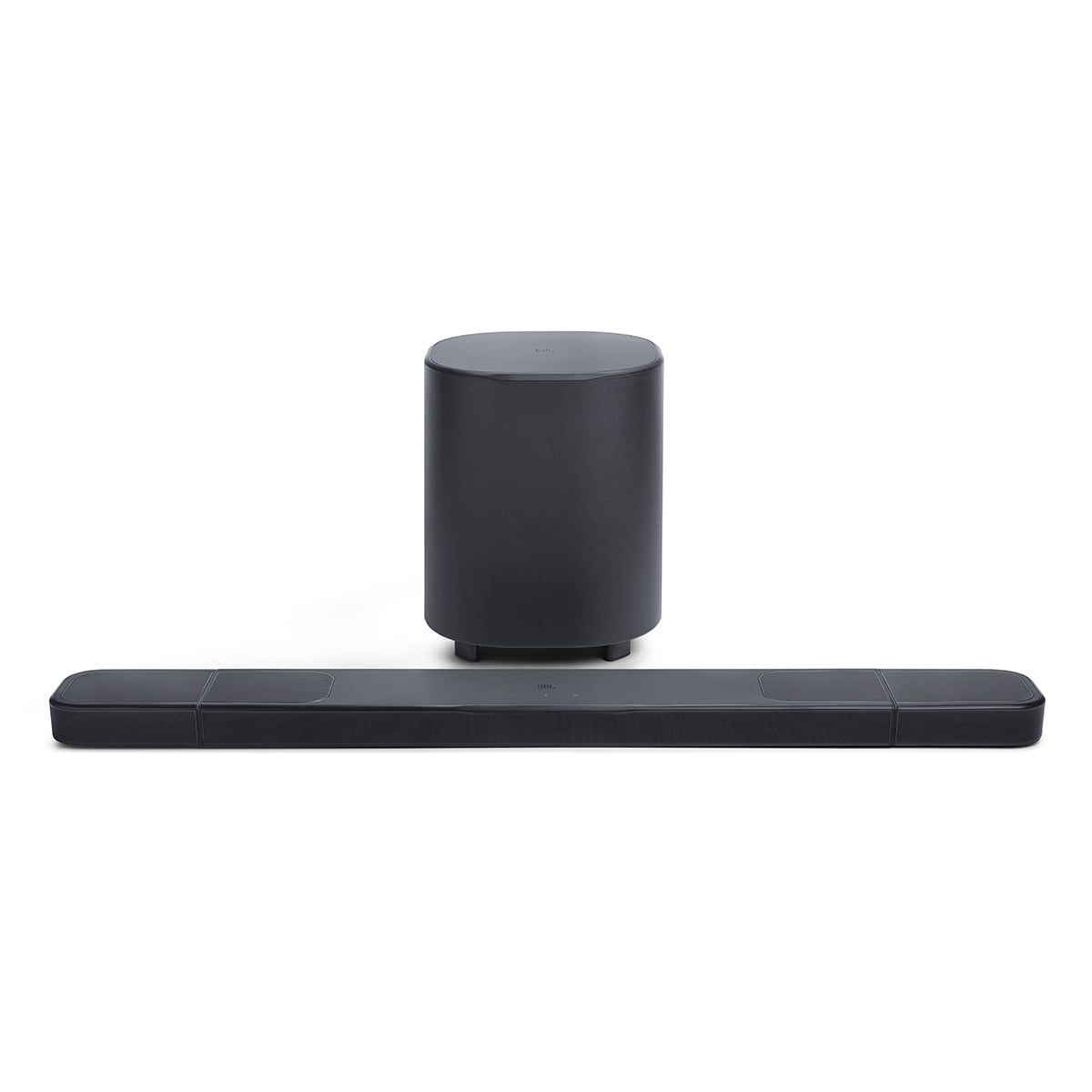
Bass performance represents another clear philosophical divide. The JBL Bar 1000 MK2 includes a dedicated 10-inch wireless subwoofer that delivers 300W of peak power. This separate subwoofer can be placed anywhere in your room for optimal bass response, and it shows. The system extends down to 33Hz, which means it can reproduce the lowest frequencies in most movie soundtracks without strain.
I've tested this system with bass-heavy content like "Blade Runner 2049," and the subwoofer provides the kind of visceral, room-shaking impact that makes action scenes genuinely exciting. The wireless connection means you're not tied to specific placement locations – you can experiment with subwoofer positioning to find the best bass response for your room.
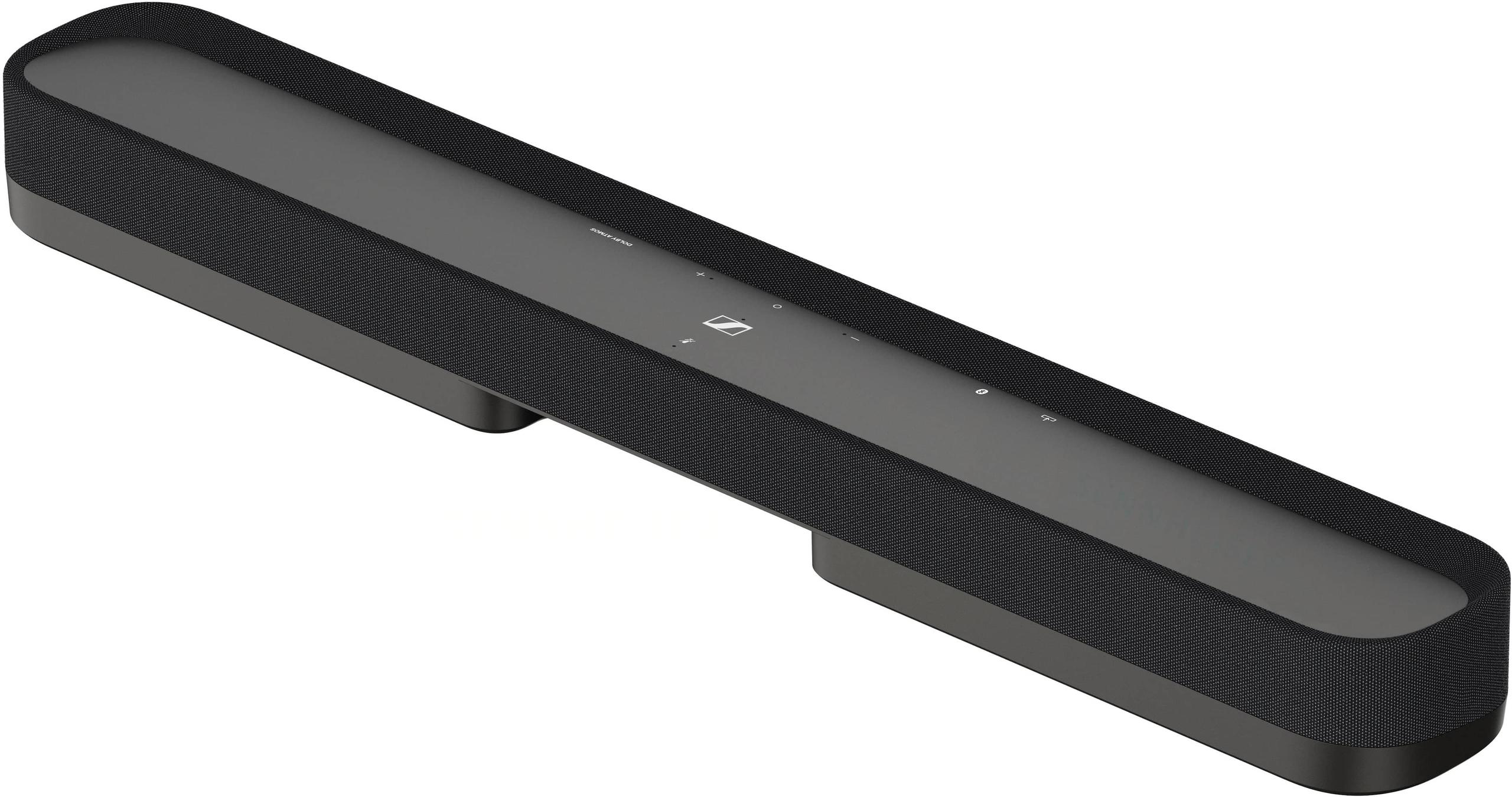
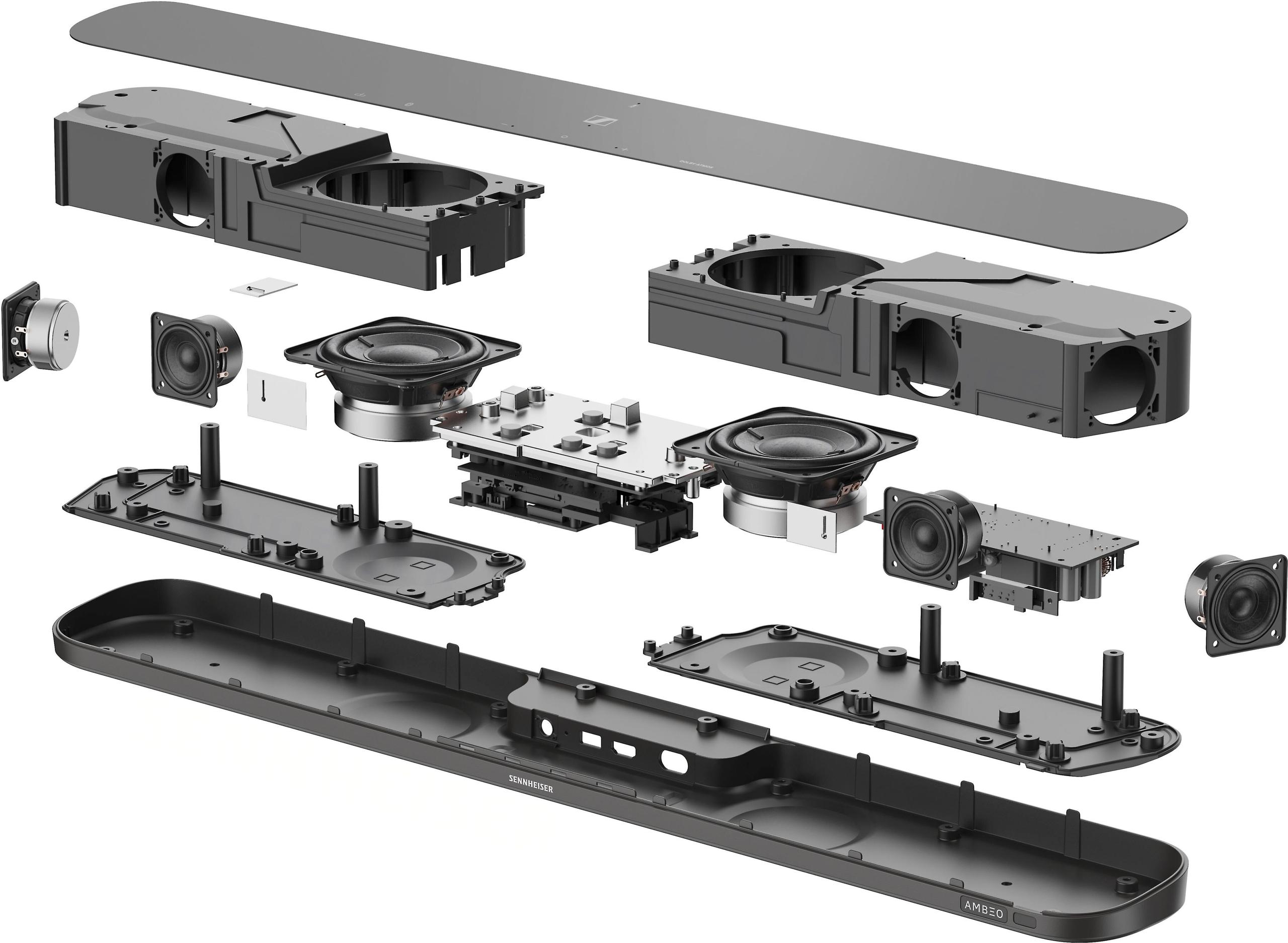
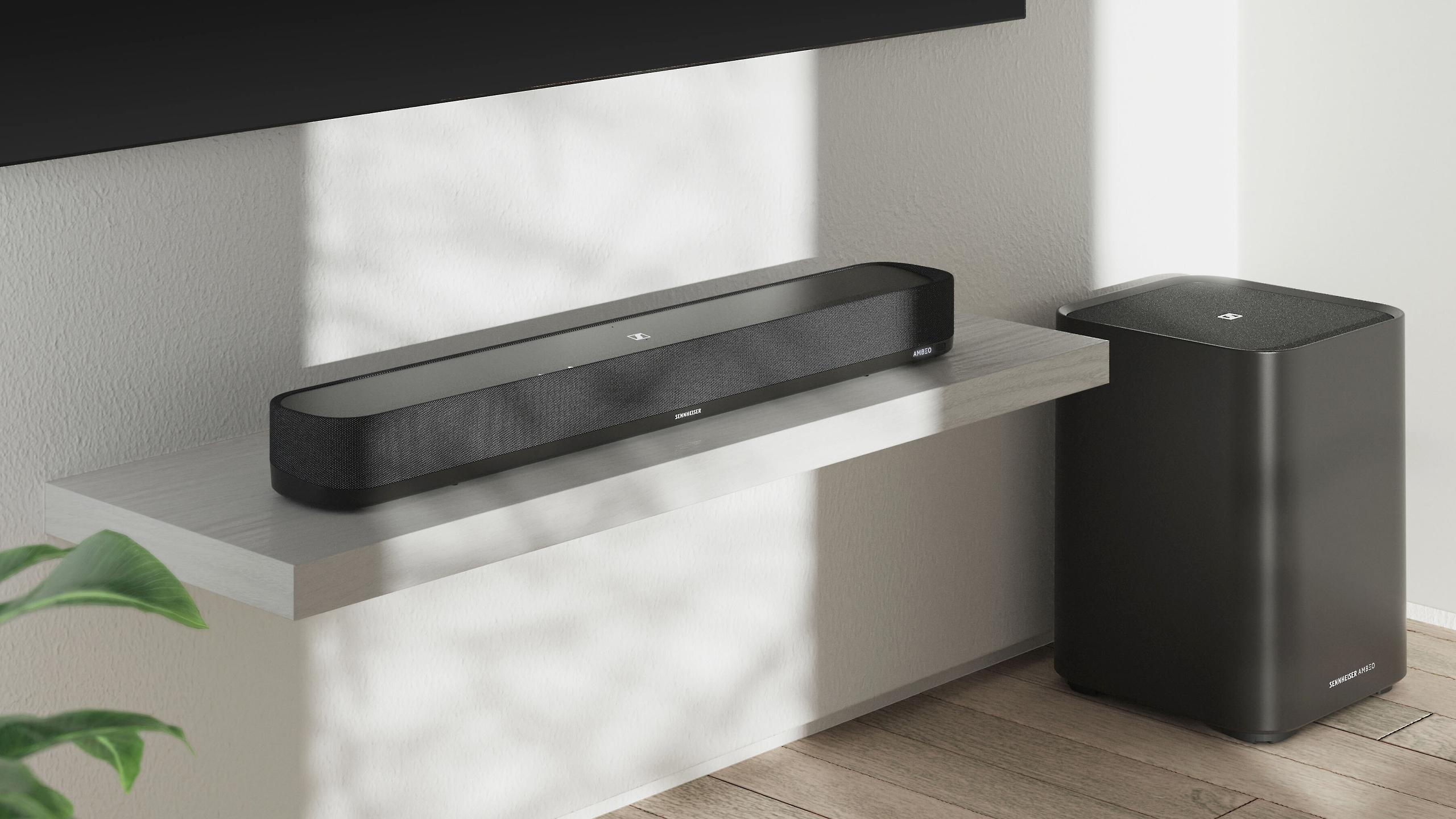
The Sennheiser AMBEO Mini, by contrast, integrates dual 4-inch subwoofers directly into the soundbar. This approach prioritizes space efficiency and visual aesthetics over raw bass output. The system only extends to 43Hz, which means it can't reproduce the deepest bass frequencies that make action movies truly impactful.
However, Sennheiser has designed the Mini to be expandable. The system can connect to up to four external subwoofers, allowing you to build bass performance gradually. This modular approach appeals to users who want to start with a clean, minimal setup and add components over time.
In practice, the AMBEO Mini's built-in bass is adequate for dialogue-heavy content and most music, but it lacks the authority needed for action movies. Adding an external subwoofer transforms the system's performance, but that additional purchase brings the total cost closer to the JBL's all-inclusive price.
For home theater use, dialogue clarity often determines whether a soundbar succeeds or fails. The JBL Bar 1000 MK2 uses a dedicated center channel configuration with specialized drivers optimized for vocal reproduction. The system's PureVoice 2.0 technology continuously monitors ambient sound levels and automatically adjusts dialogue volume to maintain clarity even during loud action sequences.
This approach works exceptionally well. During complex scenes with multiple characters speaking over background music and sound effects, individual voices remain distinct and intelligible. The dedicated center channel provides a stable "anchor" for dialogue that doesn't shift or waver as other sounds move around the soundstage.
The Sennheiser AMBEO Mini uses virtual center channel processing instead of dedicated drivers. While this saves space and reduces complexity, it can struggle with vocal clarity in demanding content. During busy action scenes, dialogue can become slightly muffled or lost in the mix, requiring manual volume adjustments.
This difference becomes particularly noticeable in challenging content like Christopher Nolan films, where complex sound mixing can bury dialogue under layers of music and effects. The JBL's physical center channel cuts through this complexity more effectively than Sennheiser's virtual processing.
Room size significantly impacts how these systems perform, and this is where their different approaches show clear advantages and limitations. The JBL Bar 1000 MK2 excels in medium to large rooms where you have space to properly position the detachable rear speakers. In a typical 15x20-foot living room, the physical surround effect is obvious and impressive.
However, the system's effectiveness depends on optimal speaker placement. The rear speakers need to be roughly ear-level and positioned behind your primary seating area. In smaller rooms or awkward layouts where proper placement isn't possible, you lose much of the system's surround advantage.
The Sennheiser AMBEO Mini was specifically designed for smaller spaces. Its virtualization technology works best in rooms under 200 square feet, where wall reflections can be precisely controlled. In my apartment's 12x14-foot living room, the Mini creates an impressively large soundstage that seems to extend well beyond the soundbar's compact 27.6-inch width.
The key advantage of virtualization is consistency – the effect works from any seating position and doesn't depend on specific speaker placement. This makes the AMBEO Mini particularly suitable for apartments, bedrooms, or situations where aesthetic considerations limit your setup options.
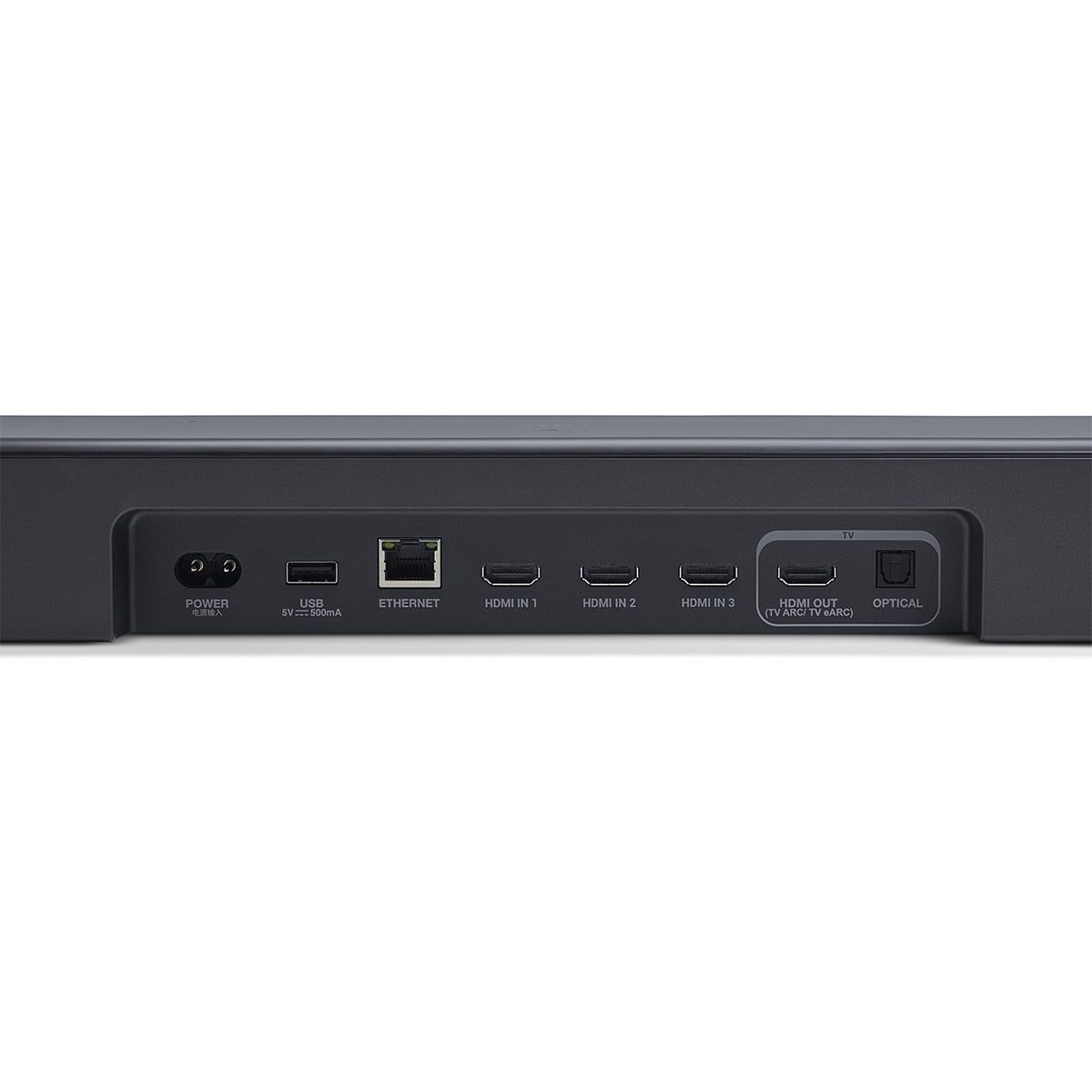
Both systems offer comprehensive connectivity, but with different strengths. The JBL Bar 1000 MK2 provides three HDMI inputs plus eARC output, making it essentially an HDMI switcher for your entertainment devices. This is particularly valuable for gaming setups where you might have multiple consoles, streaming devices, and a PC all connected to your TV.
The system supports all major wireless protocols including Bluetooth 5.3, dual-band Wi-Fi, AirPlay 2, Chromecast Built-In, and Spotify Connect. One unique feature is the Night Listening mode, which mutes the main soundbar and subwoofer while routing audio only to the detachable rear speakers. This creates a private listening experience that won't disturb others – perfect for late-night movie watching.
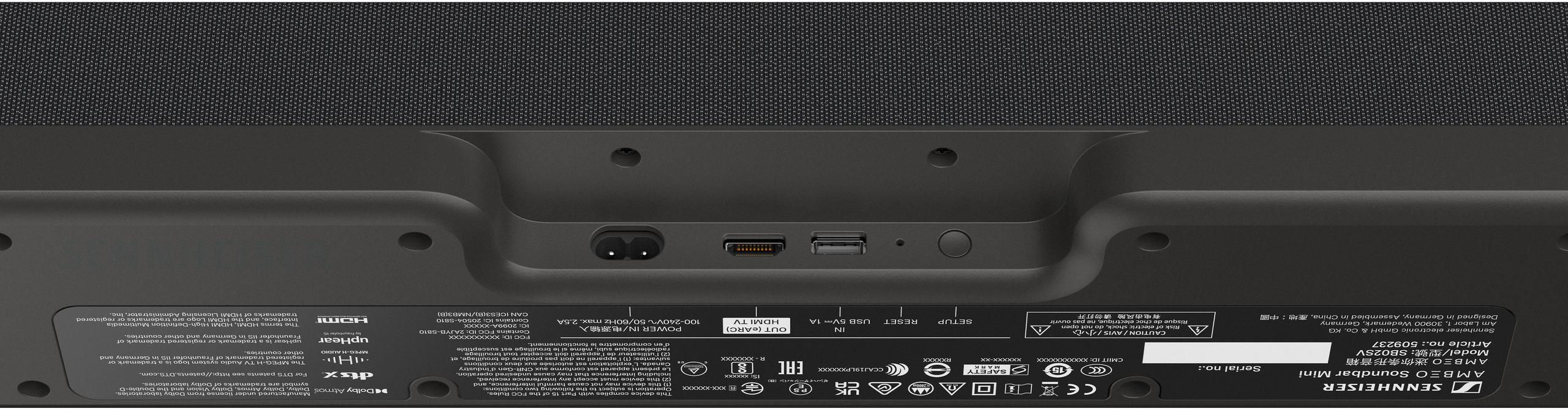
The Sennheiser AMBEO Mini takes a more streaming-focused approach with only HDMI eARC connectivity for audio. While this limits device switching capabilities, it reflects the reality that most content now comes from smart TV apps rather than external devices. The system compensates with superior wireless integration through AMBEO|OS, offering Wi-Fi 6, advanced AirPlay 2 implementation, and native integration with major streaming services.
The AMBEO Mini's room calibration system deserves special mention. Using four built-in microphones, it creates a detailed acoustic map of your space and adjusts processing accordingly. This automatic calibration is more sophisticated than JBL's approach and can significantly improve performance in challenging acoustic environments.
At $1,199.95, the JBL Bar 1000 MK2 represents a complete home theater system in a single purchase. You get the main soundbar, wireless subwoofer, detachable rear speakers, and all necessary cables. Comparing this to separate component systems, you'd typically spend $1,500 or more to achieve similar physical surround sound capabilities.
The system's 960W total power output (480W RMS) provides significant headroom for large rooms and demanding content. The detachable speakers add versatility – they function as portable Bluetooth speakers with 10-hour battery life, effectively giving you a bonus audio system for outdoor use or other rooms.
The Sennheiser AMBEO Mini at $694.96 (currently discounted from $799.95) offers exceptional value for its virtualization technology. However, this price reflects the core system only. To match the JBL's bass performance, you'll need to add an external subwoofer, typically costing $300-800 depending on your requirements.
This modular approach has advantages – you can start with the core system and upgrade incrementally. For users primarily watching dialogue-heavy content like TV shows and documentaries, the Mini's built-in bass may be sufficient. But for action movies and gaming, the additional subwoofer investment is practically mandatory.
In dedicated home theater environments, these systems reveal their true characters. The JBL Bar 1000 MK2 excels with blockbuster movies where dynamic range and spatial effects drive the experience. During the pod racing sequence in "Star Wars Episode I," the physical rear speakers create genuine excitement as engines roar past your listening position.
The system's MultiBeam 3.0 technology extends the soundstage wider than the soundbar itself, creating an enveloping experience that rivals traditional 5.1 systems. Combined with the dedicated subwoofer's authority, this makes the JBL particularly suitable for action-heavy content and gaming.
The Sennheiser AMBEO Mini takes a more refined approach that particularly benefits dialogue-driven content and music listening. The system's virtualization creates a more intimate, focused soundstage that works beautifully with films like "Her" or "Lost in Translation," where subtle spatial cues and atmosphere matter more than explosive effects.
For music listening, the AMBEO Mini's sophisticated processing shines. It can upmix stereo recordings to create immersive experiences that reveal new details in familiar songs. This versatility makes it appealing to users who want a single system for both movies and music.
Choose the JBL Bar 1000 MK2 if you have a medium to large room and want authentic surround sound without the complexity of traditional home theater systems. The physical rear speakers create undeniably convincing surround effects, while the included subwoofer provides the bass authority needed for action movies and gaming. The multiple HDMI inputs make it ideal for users with various source devices, and the detachable speakers add unexpected versatility.
The JBL particularly excels if you're building a dedicated home theater space where proper speaker placement is possible. Its traditional approach to surround sound will satisfy users who want obvious, attention-grabbing spatial effects that clearly demonstrate the system's capabilities.
Choose the Sennheiser AMBEO Mini if you're working with space constraints but don't want to compromise on audio sophistication. The system's advanced virtualization creates surprisingly convincing immersive effects from a single compact unit, while the room calibration ensures optimal performance regardless of placement.
The AMBEO Mini is particularly appealing for apartment dwellers, bedroom setups, or situations where aesthetic considerations limit your options. Its expandable design allows you to build system capabilities over time, and the sophisticated processing makes it equally compelling for music and movies.
Both systems represent the current state of the art in their respective approaches to premium soundbar design. The JBL Bar 1000 MK2 delivers traditional surround sound with modern convenience, while the Sennheiser AMBEO Mini pushes the boundaries of what's possible from a single speaker. Your choice ultimately depends on your room, your content preferences, and whether you value authentic physical surround or sophisticated virtual processing.
| JBL Bar 1000 MK2 Soundbar System | Sennheiser AMBEO Soundbar Mini |
|---|---|
| Price - Entry cost vs. total system value | |
| $1,199.95 (complete system included) | $694.96 (subwoofer sold separately) |
| Channel Configuration - Physical vs. virtual surround approach | |
| 7.1.4 with detachable wireless rear speakers | Virtual 7.1.4 (no physical rear speakers) |
| Subwoofer - Bass impact for movies and music | |
| 10" wireless subwoofer included (300W, 33Hz extension) | Dual 4" built-in subs (43Hz extension), supports up to 4 external subs |
| Total Power Output - Room-filling capability | |
| 960W max / 480W RMS | 250W |
| Soundbar Dimensions - Space requirements | |
| 33.6" × 2.0" × 5.0" (medium footprint) | 27.6" × 2.6" × 3.9" (compact design) |
| HDMI Connectivity - Device switching convenience | |
| 3x HDMI inputs + eARC (acts as switcher) | HDMI eARC only (requires TV switching) |
| Wireless Features - Streaming and app integration | |
| Bluetooth 5.3, Wi-Fi, AirPlay 2, Chromecast, Spotify Connect | Bluetooth 5.0, Wi-Fi 6, AirPlay 2, Chromecast, Alexa built-in |
| Room Calibration - Automatic sound optimization | |
| Basic sound calibration via app | Advanced 4-microphone room mapping with AMBEO processing |
| Ideal Room Size - Performance optimization | |
| Medium to large rooms (200+ sq ft) | Small to medium rooms (under 200 sq ft) |
| Unique Features - Standout capabilities | |
| Night Mode (rear speakers only), detachable speakers work as Bluetooth speakers | AMBEO virtualization, stereo-to-3D upmixing, modular subwoofer expansion |
For home theater use, the JBL Bar 1000 MK2 generally performs better due to its physical surround speakers and dedicated 10" subwoofer. The detachable wireless rear speakers create authentic directional effects during action scenes, while the powerful subwoofer delivers the bass impact needed for blockbuster movies. The Sennheiser AMBEO Mini excels in smaller rooms with its sophisticated virtualization technology, but lacks the physical presence for larger home theater setups.
The JBL Bar 1000 MK2 costs $1,199.95 and includes everything needed for a complete 7.1.4 system: the main soundbar, wireless subwoofer, and detachable rear speakers. The Sennheiser AMBEO Mini costs $694.96 but doesn't include an external subwoofer, which you'll likely need to add for optimal bass performance, potentially bringing the total cost closer to the JBL's price.
The JBL Bar 1000 MK2 has significantly better bass performance out of the box, thanks to its dedicated 10" wireless subwoofer that extends down to 33Hz. The Sennheiser AMBEO Mini uses built-in 4" drivers that only reach 43Hz, making it less suitable for action movies and bass-heavy music without adding an external subwoofer.
It depends on your room and preferences. The JBL Bar 1000 MK2 uses actual wireless rear speakers that create undeniably authentic surround effects, especially in medium to large rooms. The Sennheiser AMBEO Mini uses advanced virtualization to simulate surround sound from a single bar, which works well in smaller spaces but isn't as convincing as physical rear speakers.
The Sennheiser AMBEO Mini is specifically designed for smaller rooms under 200 square feet. Its compact 27.6" width and sophisticated room calibration technology optimize performance for tight spaces. The JBL Bar 1000 MK2 works better in medium to large rooms where you have space to properly position the detachable rear speakers.
The JBL Bar 1000 MK2 offers 3 HDMI inputs plus eARC output, acting as an HDMI switcher for multiple devices like gaming consoles and streaming players. The Sennheiser AMBEO Mini only has HDMI eARC, requiring you to use your TV's HDMI inputs for device switching.
Both soundbars are relatively easy to set up, but in different ways. The JBL Bar 1000 MK2 requires positioning the wireless rear speakers and subwoofer but includes all necessary components. The Sennheiser AMBEO Mini is simpler physically since it's just one compact unit, plus it features advanced automatic room calibration using built-in microphones.
Yes, both support wireless music streaming. The JBL Bar 1000 MK2 offers Bluetooth 5.3, Wi-Fi, AirPlay 2, Chromecast, and Spotify Connect. The Sennheiser AMBEO Mini provides Bluetooth 5.0, Wi-Fi 6, AirPlay 2, Chromecast, and has Alexa built-in for voice control.
The JBL Bar 1000 MK2 typically provides better dialogue clarity thanks to its dedicated center channel configuration and PureVoice 2.0 technology that automatically adjusts voice levels. The Sennheiser AMBEO Mini uses virtual center channel processing, which can sometimes struggle with vocal clarity during complex movie scenes.
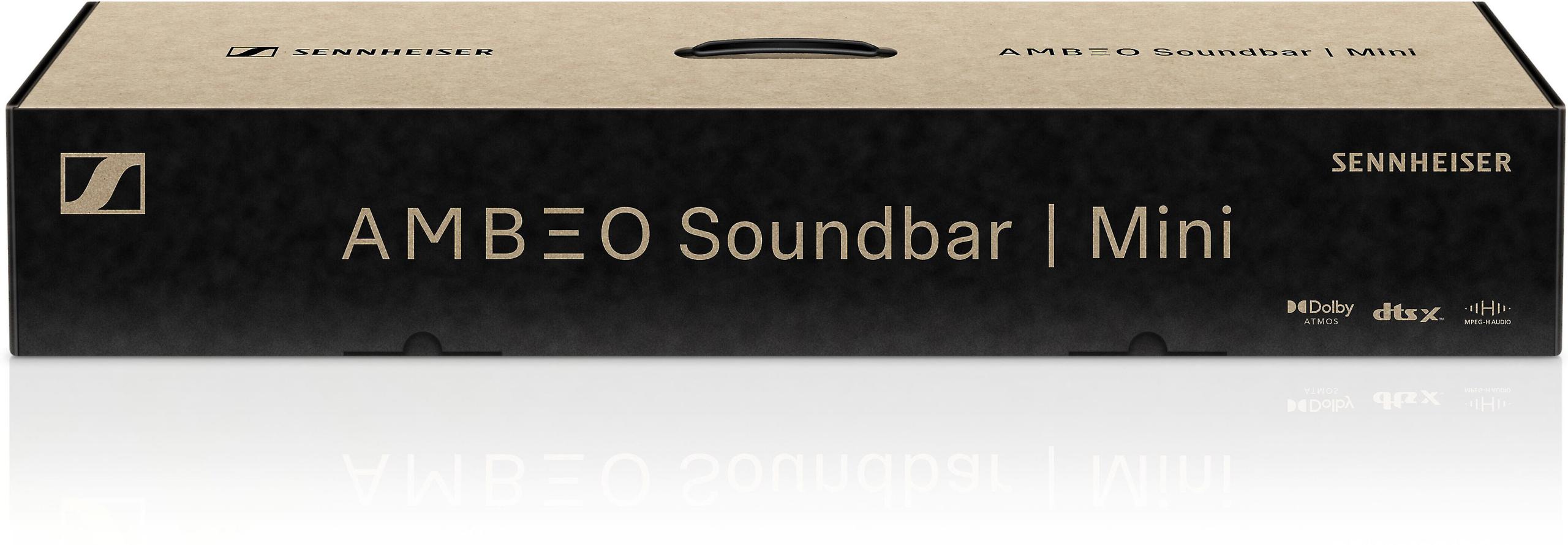
Yes, both soundbars support Dolby Atmos and DTS:X. The JBL Bar 1000 MK2 uses four physical up-firing drivers (two in the main bar, one in each rear speaker) for height effects. The Sennheiser AMBEO Mini creates virtual Dolby Atmos using advanced beamforming technology and psychoacoustic processing.
Value depends on your needs. The JBL Bar 1000 MK2 at $1,199.95 includes everything for a complete home theater system and offers strong performance in larger rooms. The Sennheiser AMBEO Mini at $694.96 provides excellent virtualization technology for smaller spaces, but you'll likely need to add a subwoofer for optimal performance.
The Sennheiser AMBEO Mini offers more expansion options, supporting up to 4 external subwoofers for modular system building. The JBL Bar 1000 MK2 is more of a complete system out of the box, though the detachable speakers can function as portable Bluetooth speakers, adding versatility for use in other rooms or outdoors.
We've done our best to create useful and informative comparisons to help you decide what product to buy. Our research uses advanced automated methods to create this comparison and perfection is not possible - please contact us for corrections or questions. These are the sites we've researched in the creation of this article: ecoustics.com - engadget.com - bestbuy.com - techradar.com - rtings.com - hometechnologyreview.com - youtube.com - t3.com - whathifi.com - youtube.com - bhphotovideo.com - gzhls.at - device.report - support.jbl.com - support.jbl.com - jbl.com - av.com - audioadvice.com - jbl.com - target.com - worldwidestereo.com - techradar.com - sennheiser-hearing.com - stereonet.com - rtings.com - youtube.com - youtube.com - newsroom.sennheiser.com - whathifi.com - baybloorradio.com - sennheiser-hearing.com - files.bbystatic.com

Privacy Policy
Terms and Conditions - Affiliate Policy
Home Security
© Copyright 2008-2026.
11816 Inwood Rd #1211, Dallas, TX 75244