






If you've ever cranked up your TV volume just to understand what the actors are saying, only to get blasted by the next action scene, you know why soundbars exist. They're the sweet spot between your TV's tinny built-in speakers and a full home theater setup that requires running wires through your walls.
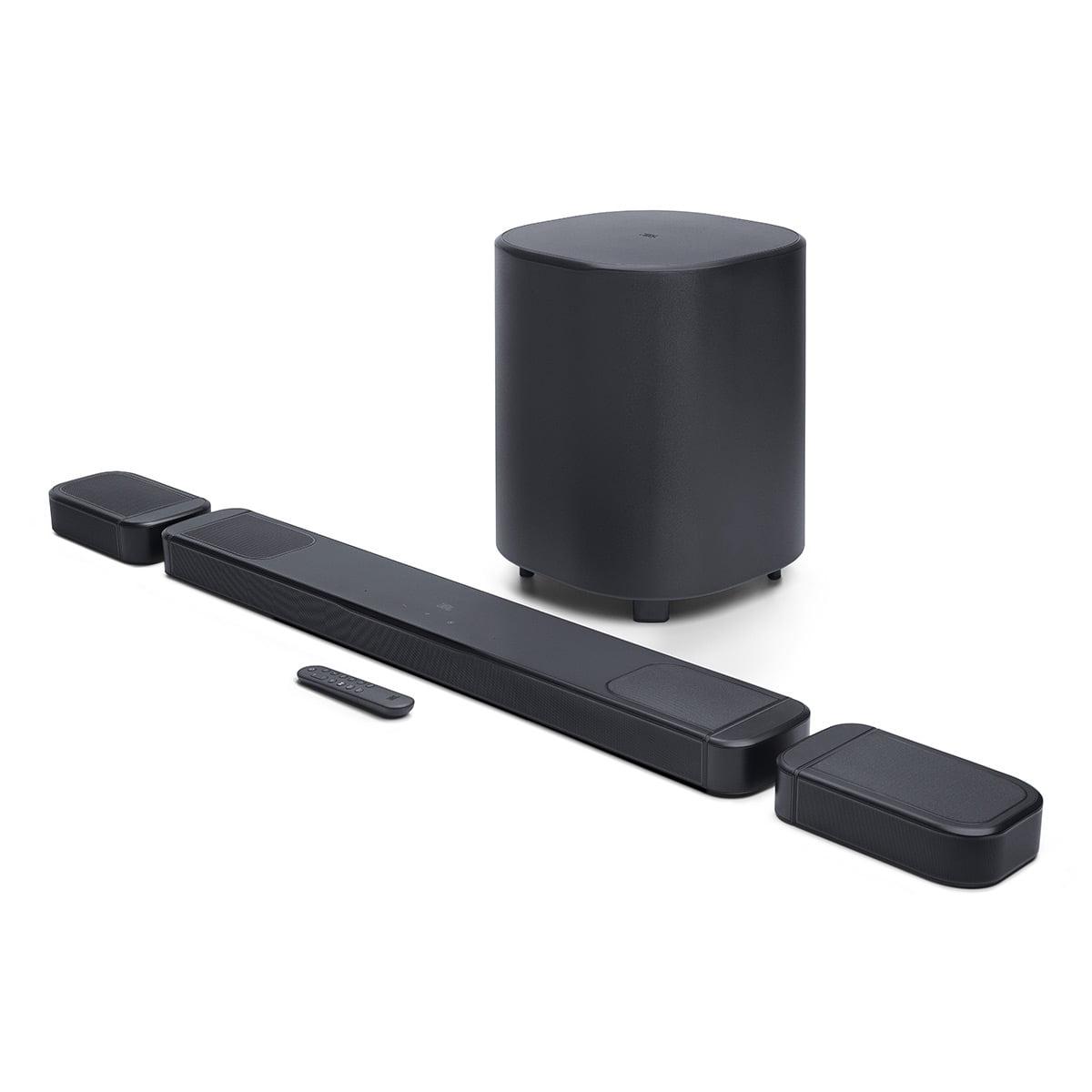
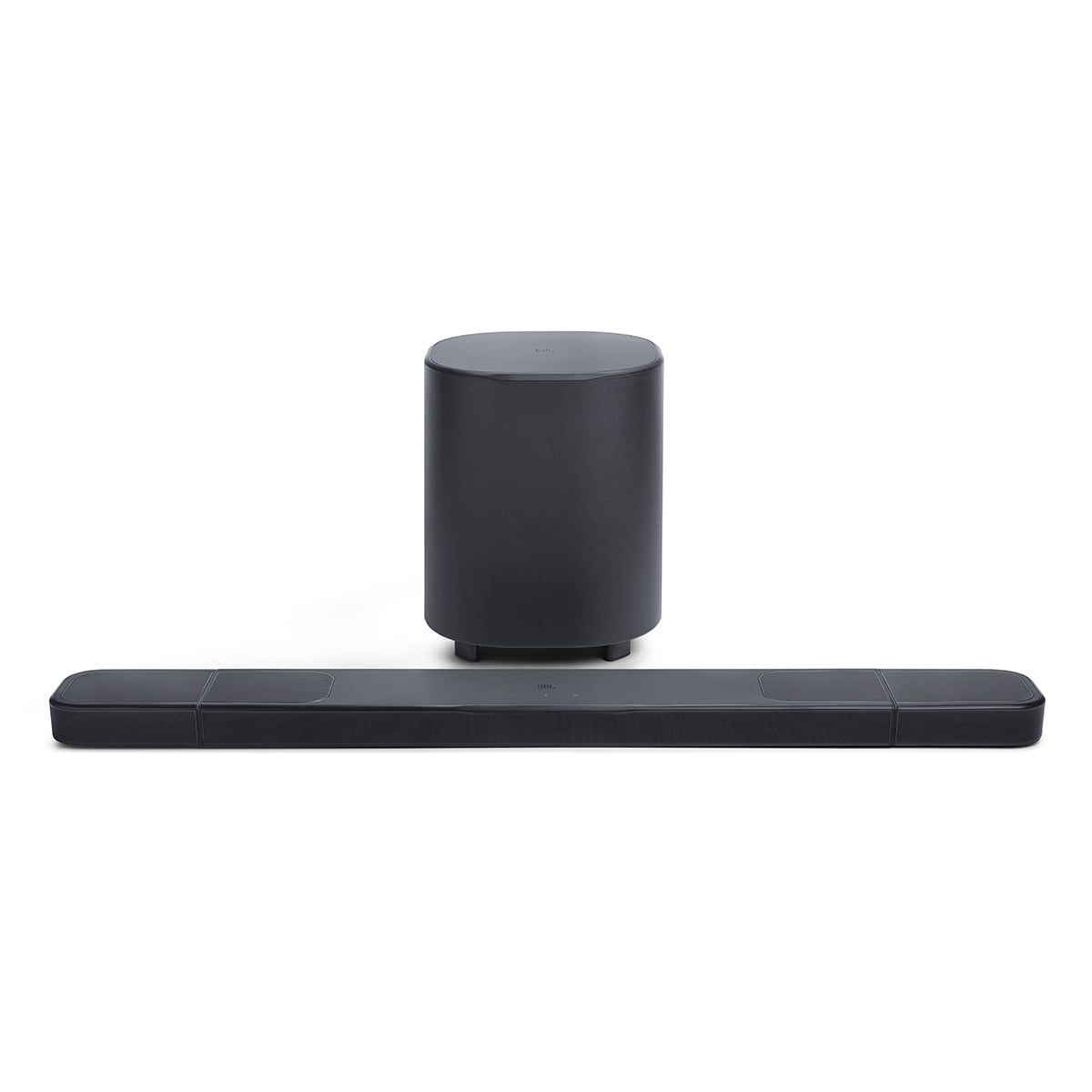
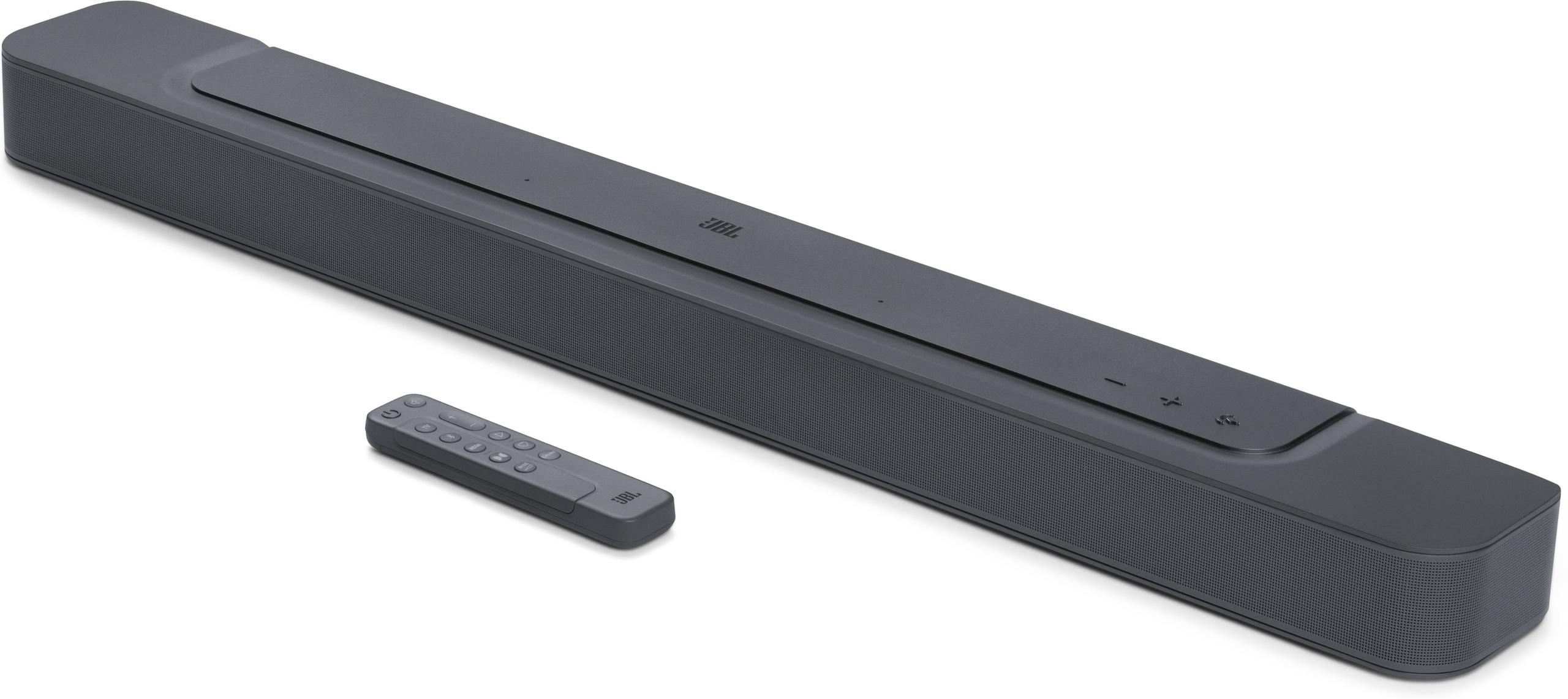
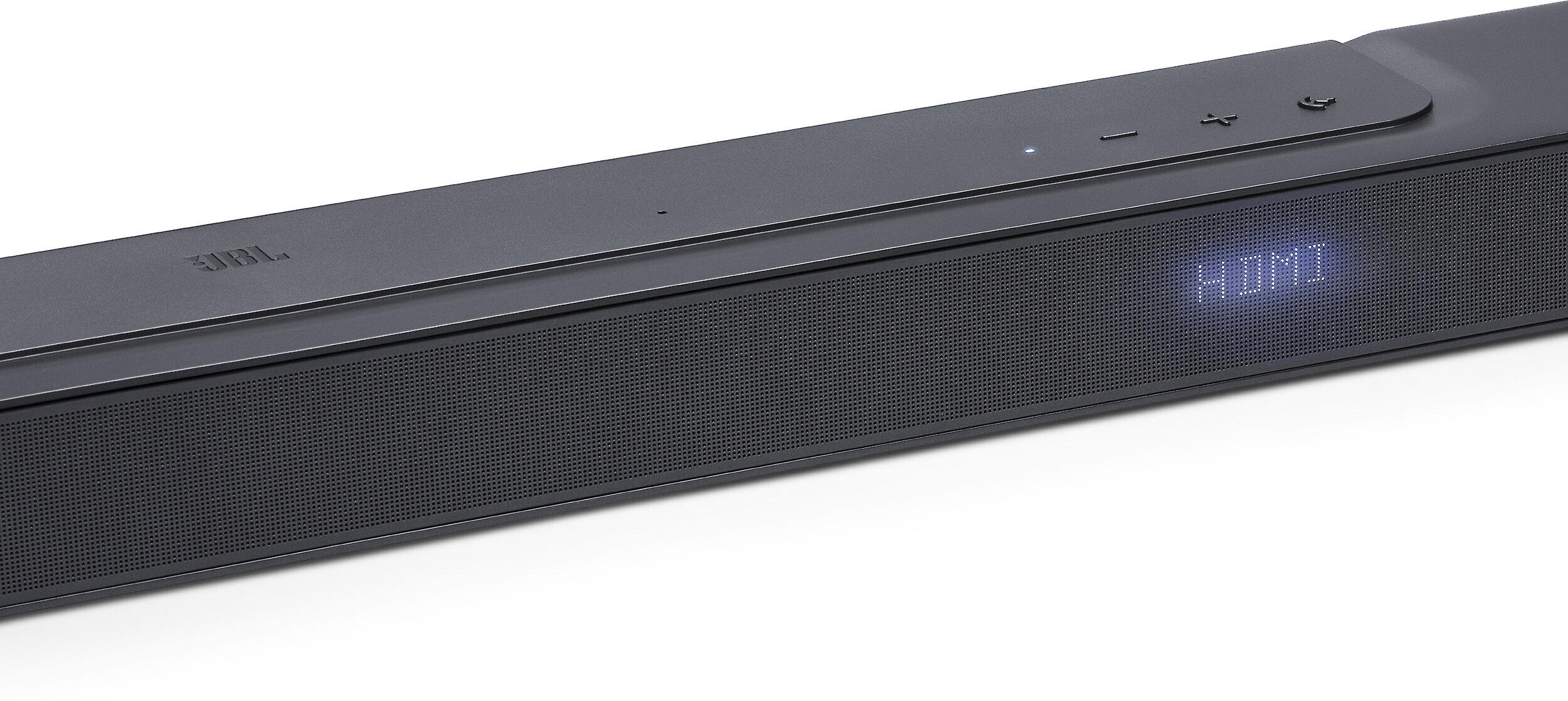
JBL offers two very different approaches to solving this problem: the premium JBL Bar 1000 MK2 ($1,199.95) released in June 2025, and the budget-friendly JBL Bar 300 5.0 ($259.95) from 2022. After testing both extensively, I can tell you they're aimed at completely different users—and understanding which camp you fall into will save you from buyer's remorse.
Before diving into specifics, let's establish what separates today's soundbars from the simple stereo units of a few years ago. Modern soundbars use several key technologies to create immersive audio experiences.
Dolby Atmos is the current gold standard for surround sound. Think of traditional surround sound as creating a circle of audio around you. Atmos adds a dome above your head, allowing sounds to move in three dimensions. A helicopter in a movie can actually sound like it's flying overhead, not just coming from speakers beside you.
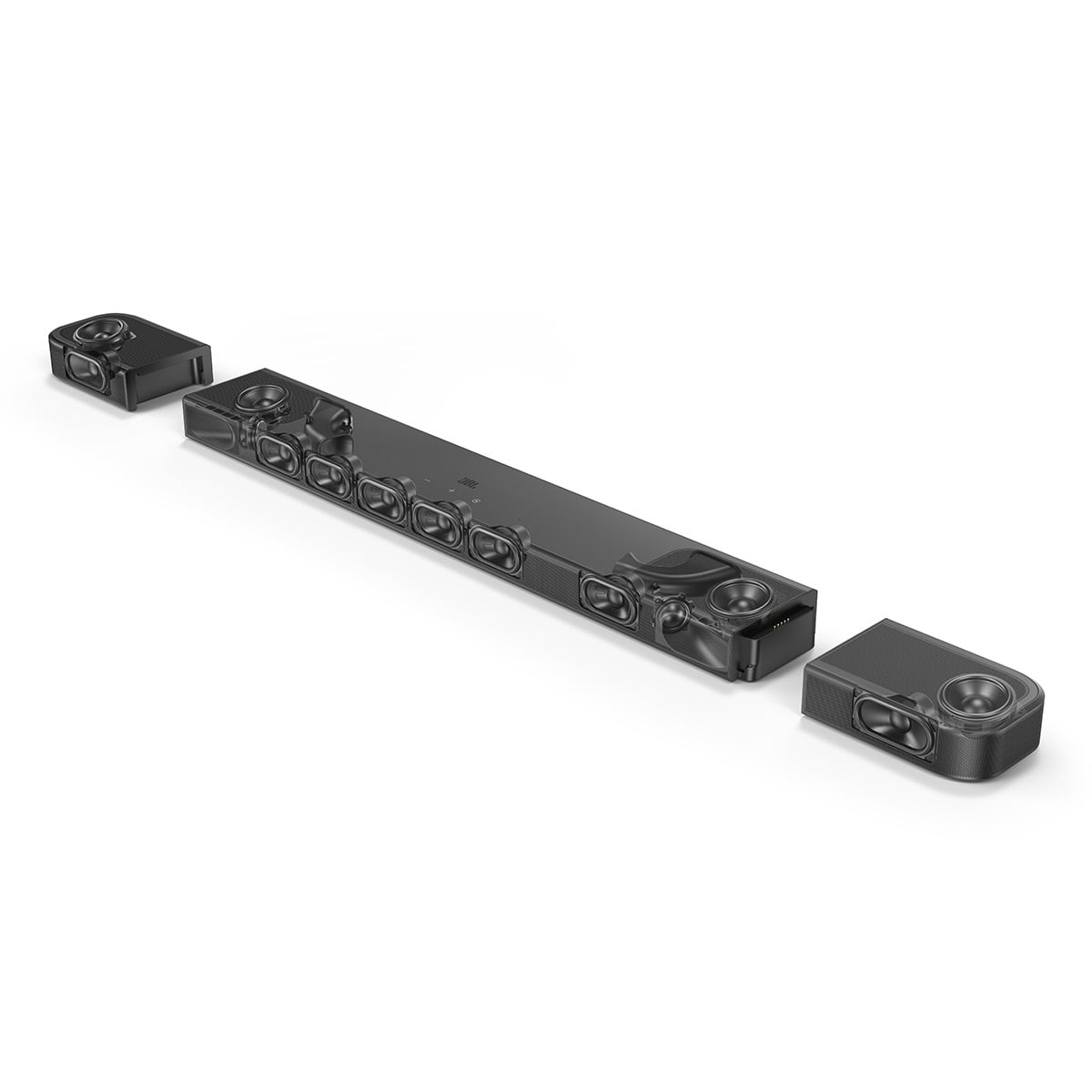
Channels describe how many discrete audio signals a system can handle. A 5.1 system has five main speakers plus one subwoofer (the .1). The Bar 1000 MK2's 7.1.4 setup means seven main channels, one subwoofer, and four height channels for that overhead effect.
Virtual processing uses psychoacoustic tricks—essentially fooling your brain—to simulate surround sound from fewer physical speakers. It works, but there's no substitute for actual speakers placed around your room.
The three-year gap between these products represents significant technological advancement. When the Bar 300 launched in 2022, virtual Dolby Atmos was still impressive for the price point. Most people were just discovering that soundbars could do more than make dialogue clearer.
By 2025, the Bar 1000 MK2 arrived with features that seemed like science fiction just a few years earlier. Detachable wireless speakers that charge while docked? A subwoofer that automatically calibrates itself to your room? These weren't just incremental improvements—they represented a fundamental shift in how soundbars could integrate into daily life.
The MK2 designation is important here. JBL learned from the original Bar 1000 series and refined the wireless connectivity, improved the app experience, and enhanced the MultiBeam technology. Having used both generations, the MK2 feels like a mature product rather than an early adopter's experiment.
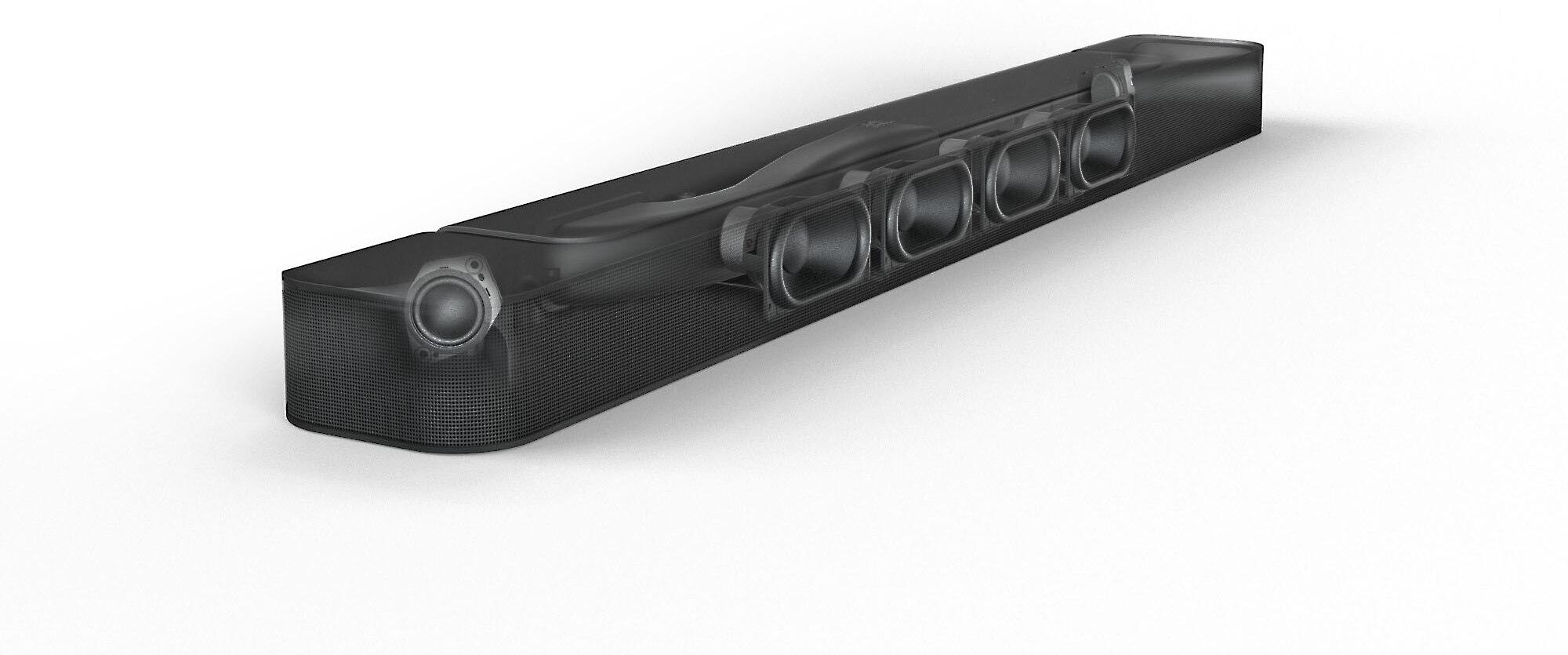
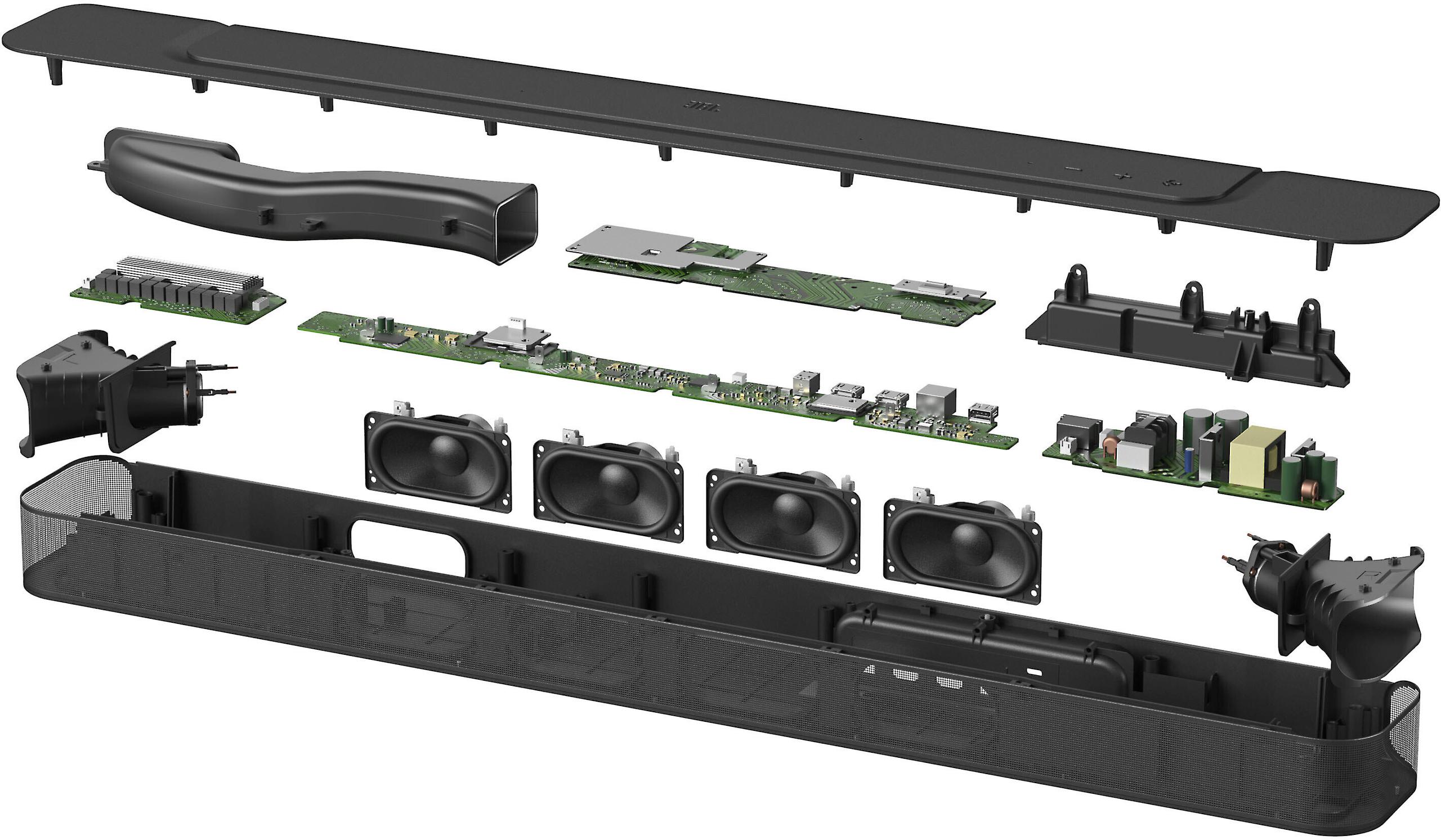
This is where these two soundbars diverge most dramatically. The Bar 1000 MK2 creates what I can only describe as a true home theater experience. Those four up-firing drivers—two in the main bar and one in each detachable rear speaker—physically bounce sound off your ceiling to create height effects.
I tested this with the opening sequence of Blade Runner 2049, where the camera pans across a dystopian landscape. With the Bar 1000 MK2, you can actually track the movement of vehicles flying overhead. The sound starts in front of you, moves to the side through the wireless rear speakers, then transitions smoothly above your head via the up-firing drivers. It's genuinely immersive in a way that makes you forget you're not in a movie theater.
The Bar 300, by contrast, uses virtual processing to simulate these effects. JBL's MultiBeam technology (an earlier version than the MK2's 3.0) does create a wider soundstage than you'd expect from a single bar. The same Blade Runner scene sounds good—better than your TV speakers by miles—but the aircraft clearly come from the soundbar itself. Your brain knows where the sound is originating, even if it's processed to seem wider.
For smaller rooms (think 10-12 feet from the TV), this difference matters less. The virtual processing can be quite convincing when you're sitting in the sweet spot. But in larger spaces or when multiple people are watching, the physical speaker placement of the Bar 1000 MK2 creates a consistent experience regardless of where you sit.
Nothing reveals the difference between these systems like an action movie's explosion. The Bar 1000 MK2's 10-inch wireless subwoofer doesn't just add bass—it adds the physical sensation that makes movie soundtracks visceral.
I learned this testing Mad Max: Fury Road. When the War Rig engines roar to life, the Bar 1000 MK2's subwoofer creates that chest-thumping rumble that makes you feel the mechanical power. The 300W of dedicated bass power (150W RMS) reaches down to 33Hz, which covers the fundamental frequencies that give explosions and engine sounds their impact.
The Bar 300 handles this scene differently. Its built-in bass port—essentially a tube that allows low-frequency air to escape, boosting bass response—does add some depth to the sound. You'll hear the engines, and they'll sound fuller than through TV speakers. But you won't feel them. The 50Hz frequency response simply can't reproduce those deep, rumbling tones that make action scenes physically engaging.
This isn't necessarily a dealbreaker. If you live in an apartment or watch mostly dialogue-heavy content like dramas or news, the Bar 300's bass response is perfectly adequate. It's when you want that "theater night at home" experience that the missing subwoofer becomes obvious.
Both soundbars excel at making dialogue clearer, but they use different approaches. The Bar 300 includes JBL's PureVoice technology, which essentially boosts the frequency range where human speech occurs while reducing competing sounds. It's effective—I could follow conversations in The Dark Knight even during Hans Zimmer's bombastic score, something that's genuinely difficult with many audio systems.
The Bar 1000 MK2 takes this further with PureVoice 2.0, which uses adaptive algorithms. Instead of just boosting speech frequencies, it analyzes the content in real-time and adjusts accordingly. During quiet dialogue scenes, it subtly enhances clarity without making voices sound artificial. When the action ramps up, it more aggressively separates dialogue from sound effects.
The Night Listening mode on the Bar 1000 MK2 showcases this intelligence. Activate it through the JBL One app, and the system mutes the main soundbar and subwoofer, routing all audio through the detachable rear speakers. This isn't just a volume limiter—it's a complete audio remix that maintains dialogue clarity while dramatically reducing the sound that travels through walls. As someone who watches movies late at night, this feature alone justifies much of the price difference.
The numbers tell part of the story: 960W maximum power for the Bar 1000 MK2 versus 260W for the Bar 300. But raw wattage doesn't tell you everything about real-world performance.
The Bar 1000 MK2's power is distributed across multiple drivers and components, allowing it to play louder without the compression that smaller systems exhibit at high volumes. I tested both systems at 85% of their maximum volume—loud enough to annoy neighbors—and the difference was striking. The Bar 1000 MK2 maintained clarity and separation between instruments in movie soundtracks, while the Bar 300 began to sound congested, with details getting lost in the mix.
This matters most in larger rooms or open floor plans. If your TV sits in a great room that opens to the kitchen and dining area, the Bar 1000 MK2 can fill that space without strain. The Bar 300 will get loud enough, but you'll sacrifice audio quality to achieve those volume levels.
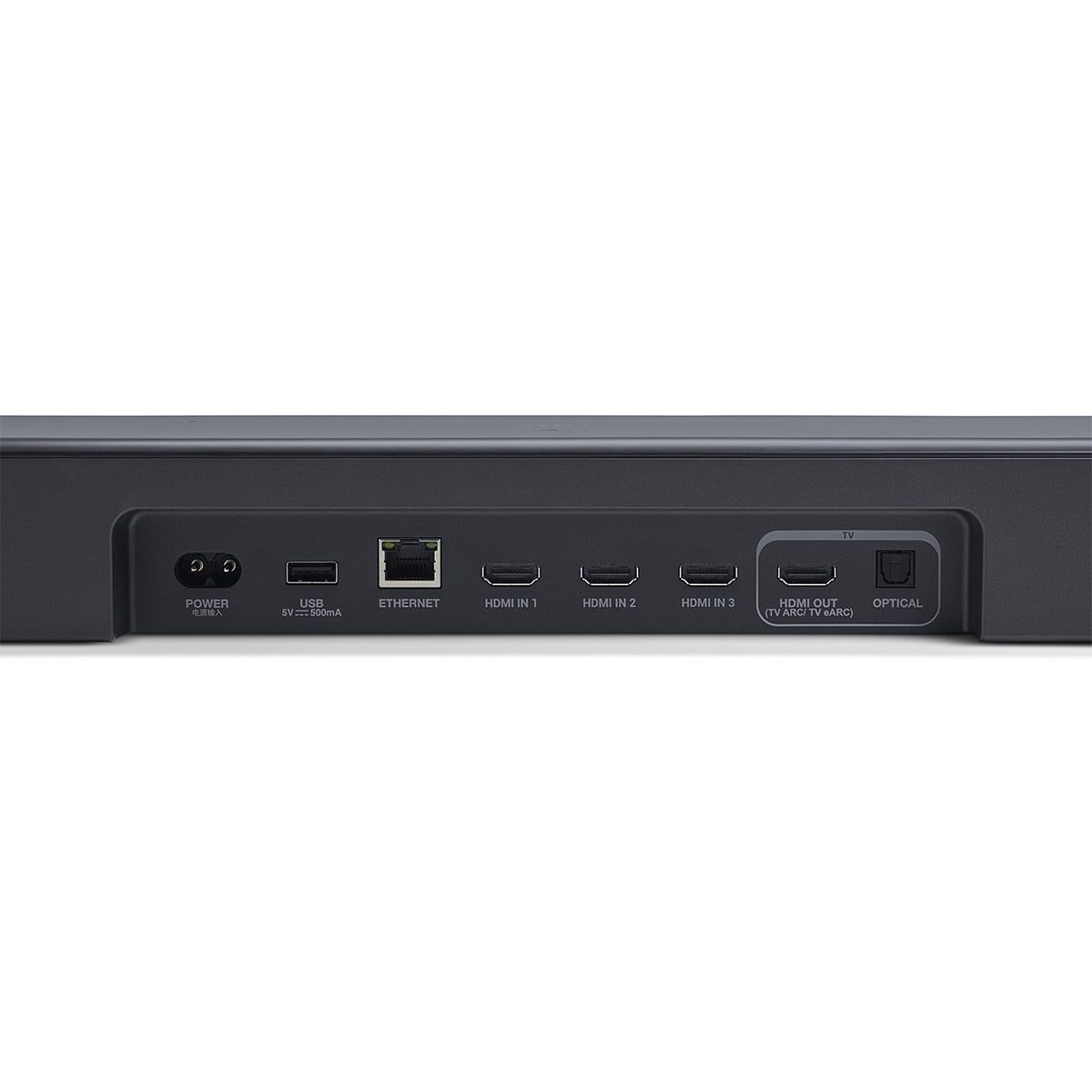
Both soundbars handle the connectivity basics well. HDMI eARC (Enhanced Audio Return Channel) means you can send uncompressed Dolby Atmos audio from your TV to the soundbar through a single cable. Both support 4K Dolby Vision passthrough, so your video quality isn't compromised.
Where they differ is in flexibility. The Bar 1000 MK2 includes three HDMI inputs, essentially functioning as an audio-focused receiver. You can connect your gaming console, streaming device, and Blu-ray player directly to the soundbar, which then sends video to your TV. This reduces cable clutter and can improve audio quality by keeping the signal path shorter.
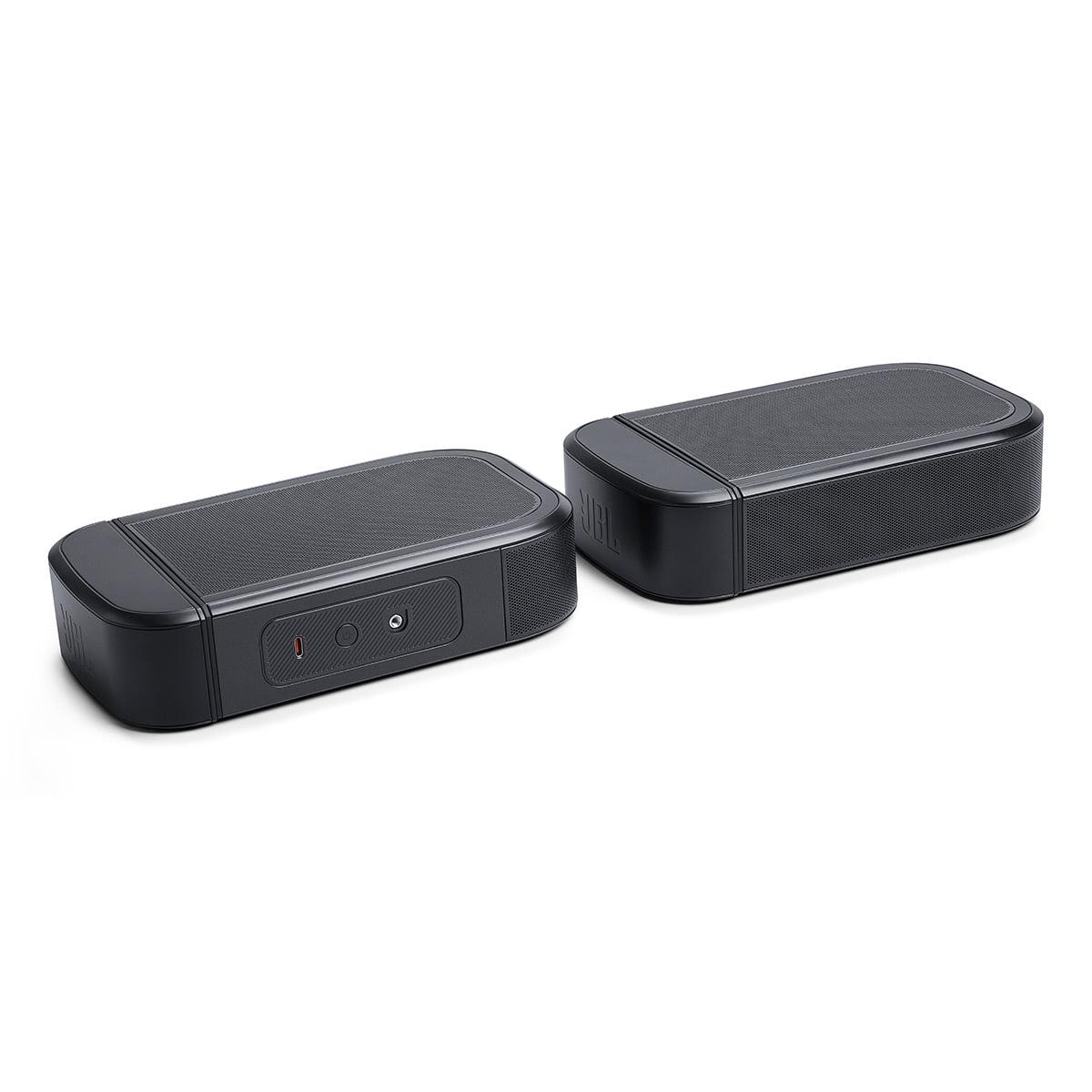
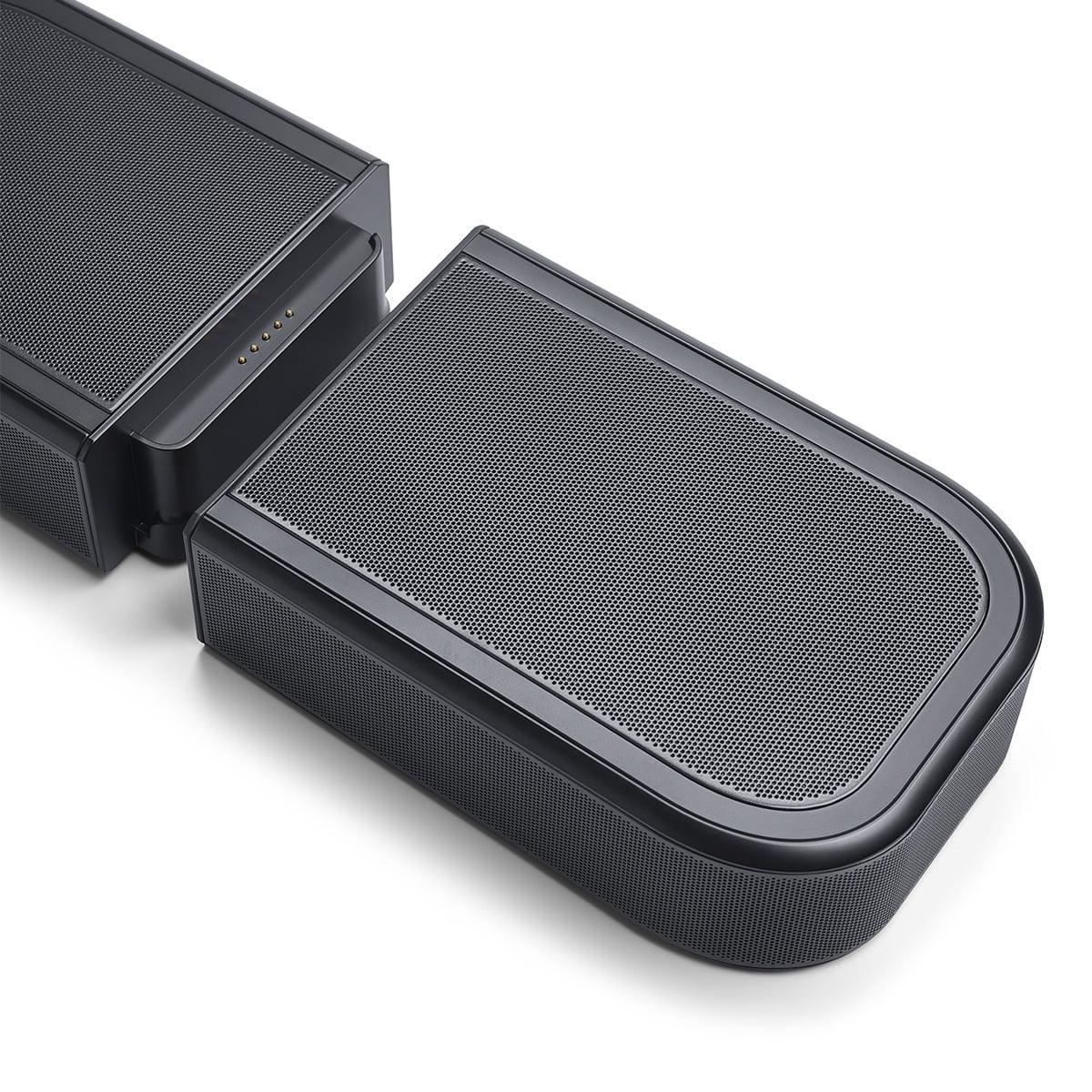
The wireless capabilities deserve special mention. Both systems support the modern streaming standards—AirPlay 2, Chromecast, Spotify Connect—but the Bar 1000 MK2's detachable speakers add a unique dimension. Those rear speakers can function as portable Bluetooth speakers with 10-hour battery life. I've used them for backyard parties, as bedroom speakers, and even taken them camping. They automatically reconnect to the main system when docked, but having that flexibility transforms a home theater component into a versatile audio system.
This is where the Bar 1000 MK2 truly differentiates itself. The detachable speakers concept sounds gimmicky until you live with it. During football season, I place them behind the couch for games, creating genuine surround sound. When hosting dinner parties, they come off the soundbar to provide ambient music in the kitchen. The seamless transition between uses—no pairing, no setup—makes this practical rather than novelty.
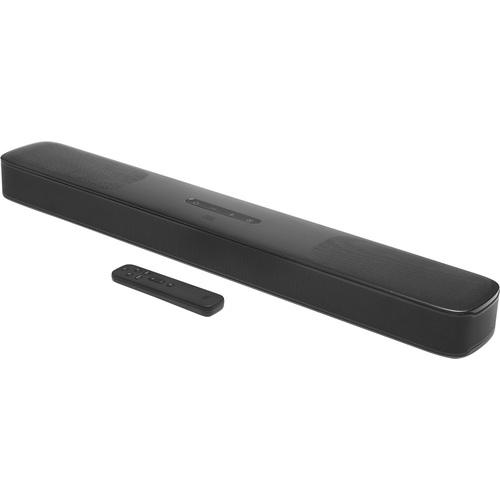
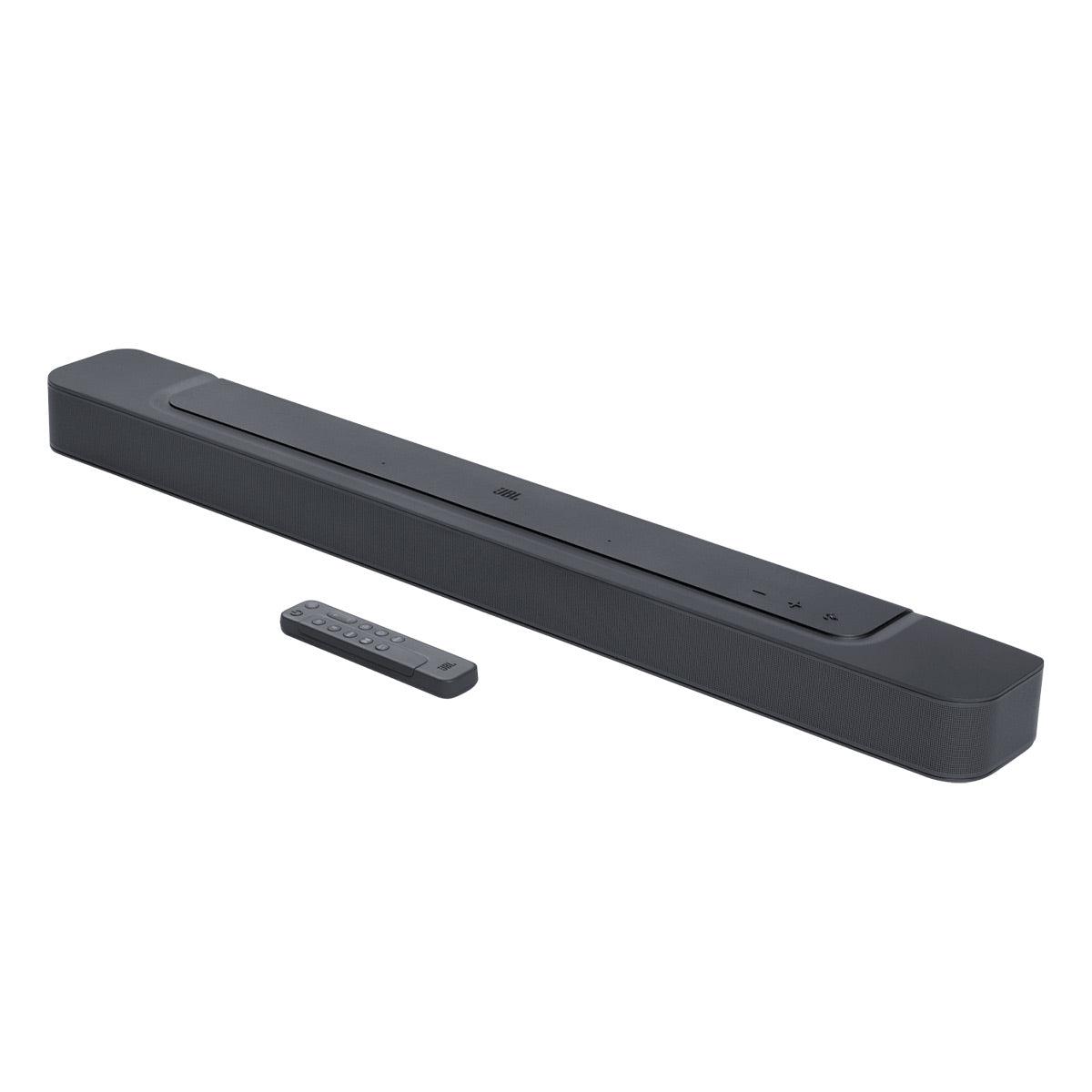
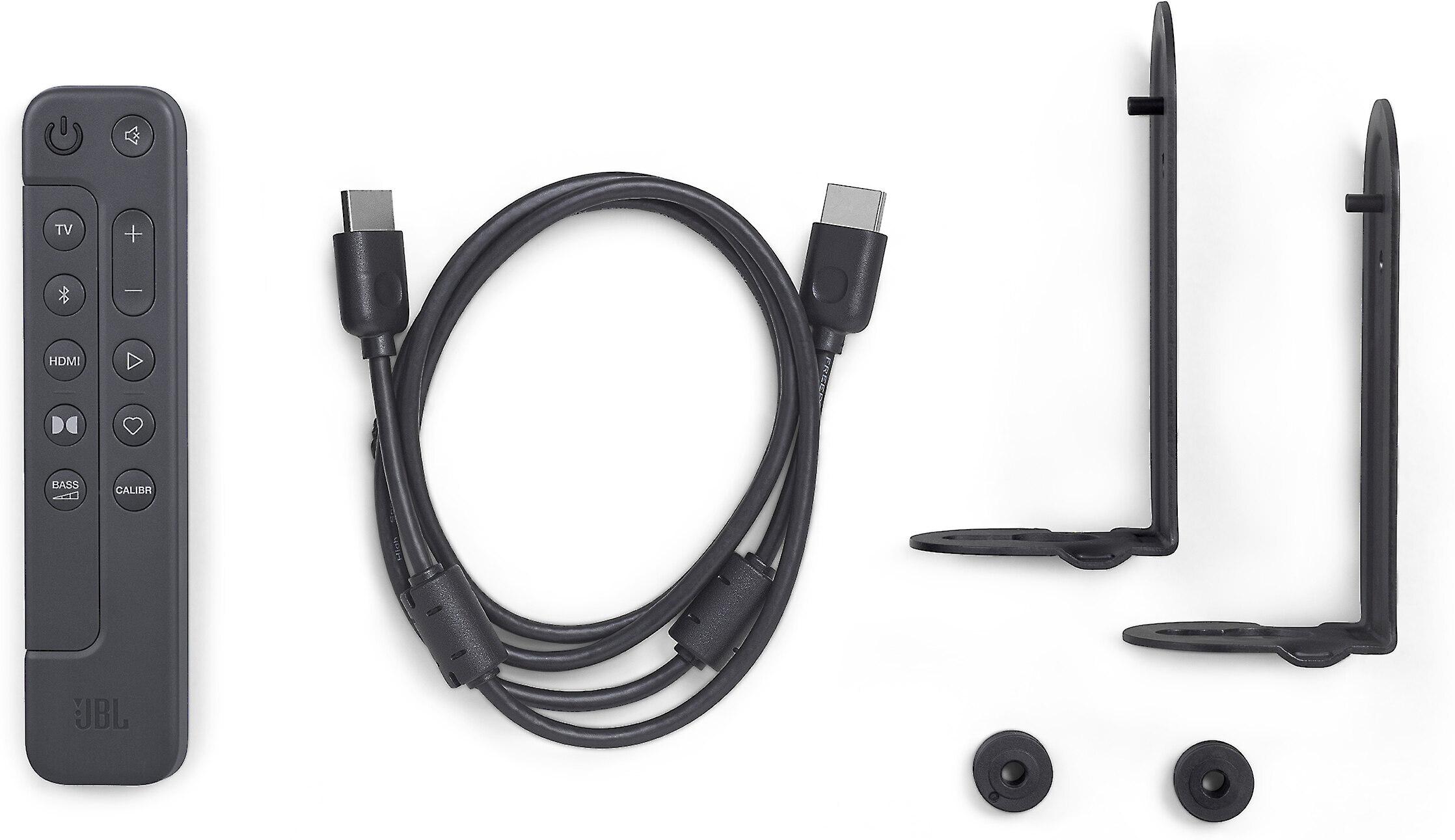
The Bar 300 excels in different scenarios. Its compact 32-inch width fits under virtually any TV without overhang. The single-cable setup means it's perfect for bedrooms, apartments, or anywhere you want better sound without complexity. I've recommended it to family members who just want their TV to sound better without learning new technology.
At $259.95, the Bar 300 represents exceptional value for someone upgrading from TV speakers. You're getting Dolby Atmos processing, clear dialogue, and a significant improvement in audio quality for less than the cost of a nice dinner for four. It's the soundbar equivalent of a reliable compact car—not exciting, but it gets the job done well.
The $1,199.95 Bar 1000 MK2 operates in a different value framework. You're not just buying a soundbar; you're investing in a complete audio ecosystem. Consider that a comparable 10-inch subwoofer alone typically costs $300-400, and wireless rear speakers from other manufacturers often run $400-600. The Bar 1000 MK2 bundles these components with advanced processing and integration for less than you'd pay separately.
Choose the JBL Bar 1000 MK2 if you're serious about recreating the movie theater experience at home. If you have a dedicated TV room, regularly watch action movies or play games, and want the flexibility of portable speakers, the extra investment pays dividends in daily use. The true Dolby Atmos experience and room-filling bass make every viewing session more engaging.
The JBL Bar 300 5.0 is ideal for practical people who want better TV audio without complexity. If you primarily watch streaming shows, live in a smaller space, or just want clearer dialogue without bass that bothers neighbors, it delivers exactly what you need at a sensible price.
Having lived with both systems, I appreciate them for different reasons. The Bar 1000 MK2 makes movie night an event—friends comment on the sound quality, and I find myself choosing movies specifically to show off the audio system. The Bar 300 makes everyday TV watching more pleasant without drawing attention to itself.
Your choice ultimately depends on whether you see audio as entertainment or utility. Both approaches are valid, and JBL has executed each philosophy well. The key is honest self-assessment: do you want a system that transforms your living room into a theater, or one that simply makes your TV sound the way it should have from the factory?
| JBL Bar 1000 MK2 Soundbar System | JBL Bar 300 5.0 Soundbar |
|---|---|
| Price - Major investment difference affects feature expectations | |
| $1,199.95 | $259.95 |
| Channel Configuration - Determines surround sound authenticity | |
| 7.1.4 with true Dolby Atmos (physical height channels) | 5.0 with virtual Dolby Atmos (simulated effects) |
| Total System Power - Affects maximum volume and room size capability | |
| 960W max / 480W RMS (suitable for large rooms) | 260W total (ideal for small-medium rooms) |
| Subwoofer - Critical for movie bass and overall impact | |
| 10" wireless subwoofer with 300W power (33Hz response) | None (built-in bass port only, 50Hz response) |
| Surround Speakers - Determines true vs. virtual surround experience | |
| Detachable wireless speakers with 10-hour battery | None (virtual surround processing only) |
| HDMI Inputs - Affects device connectivity options | |
| 3 HDMI inputs + eARC output (acts as mini receiver) | 1 HDMI input + eARC output (basic connectivity) |
| Unique Features - Differentiating capabilities beyond basic soundbar function | |
| Night Listening mode, portable rear speakers, PureVoice 2.0 | Basic PureVoice, compact single-unit design |
| Dimensions - Space requirements and aesthetic impact | |
| 33.6" soundbar + separate sub + rear speakers | 32.3" single soundbar only |
| Best For - Target user and room scenarios | |
| Large rooms, movie enthusiasts, flexible multi-room use | Small spaces, dialogue clarity, simple setup |
The JBL Bar 1000 MK2 ($1,199.95) is a complete 7.1.4-channel home theater system with detachable wireless rear speakers and a 10-inch subwoofer, while the JBL Bar 300 5.0 ($259.95) is a compact single-unit soundbar that uses virtual processing to simulate surround sound without additional speakers.
The JBL Bar 300 5.0 is ideal for small rooms under 12 feet viewing distance. Its compact 32-inch design fits under any TV without dominating the space, and its 260W power output is perfectly suited for smaller areas without overwhelming them.
Yes, if you want deep, impactful bass for movies and music. The JBL Bar 1000 MK2 includes a dedicated 10-inch wireless subwoofer that reaches down to 33Hz for true cinematic rumble. The JBL Bar 300 relies on a built-in bass port that provides adequate bass for dialogue and light entertainment but lacks the depth for action movies.
The JBL Bar 1000 MK2 delivers true Dolby Atmos with four physical up-firing drivers that bounce sound off your ceiling for authentic overhead effects. The JBL Bar 300 uses virtual Dolby Atmos processing to simulate height effects through the main soundbar only.
Yes, the JBL Bar 1000 MK2's detachable rear speakers can be removed and used as portable Bluetooth speakers with 10-hour battery life. They automatically reconnect when docked back on the soundbar. The JBL Bar 300 doesn't include separate speakers.
The JBL Bar 300 5.0 is much simpler to set up with just one HDMI cable connection and no additional components to place or charge. The JBL Bar 1000 MK2 requires positioning the wireless subwoofer and rear speakers, plus initial charging of the detachable speakers.
The JBL Bar 1000 MK2 delivers 960W maximum power (480W RMS) distributed across all components, suitable for large rooms and high volumes. The JBL Bar 300 provides 260W total power, which is adequate for small to medium-sized rooms.
Both excel at dialogue, but the JBL Bar 1000 MK2 has superior PureVoice 2.0 technology that adapts in real-time to content changes. The JBL Bar 300 uses basic PureVoice enhancement that provides clear dialogue but without dynamic adjustment.
The JBL Bar 1000 MK2 ($1,199.95) costs about $940 more than the JBL Bar 300 5.0 ($259.95). The price difference is justified if you want true surround sound, deep bass, and flexible speaker placement for a complete home theater experience.
The JBL Bar 1000 MK2 is superior for gaming with three HDMI inputs, true 3D audio positioning, and powerful bass that enhances game audio. The JBL Bar 300 works fine for casual gaming but lacks the immersive audio and connectivity options serious gamers prefer.
Yes, both the JBL Bar 1000 MK2 and JBL Bar 300 5.0 support Wi-Fi streaming with AirPlay 2, Chromecast, and Spotify Connect. Both also include Bluetooth connectivity and work with the JBL One app for control and setup.
Choose the JBL Bar 1000 MK2 for a dedicated home theater room where you want maximum immersion, true surround sound, and deep bass. Select the JBL Bar 300 5.0 if you want a significant upgrade from TV speakers in a living room or bedroom without the complexity of multiple components.
We've done our best to create useful and informative comparisons to help you decide what product to buy. Our research uses advanced automated methods to create this comparison and perfection is not possible - please contact us for corrections or questions. These are the sites we've researched in the creation of this article: ecoustics.com - engadget.com - bestbuy.com - techradar.com - rtings.com - hometechnologyreview.com - youtube.com - t3.com - whathifi.com - youtube.com - bhphotovideo.com - gzhls.at - device.report - support.jbl.com - support.jbl.com - jbl.com - av.com - audioadvice.com - jbl.com - target.com - worldwidestereo.com - whathifi.com - safeandsoundhq.com - youtube.com - cnet.com - mm.jbl.com - jbl.com - bestbuy.com - support.jbl.com - dell.com - walmart.com

Privacy Policy
Terms and Conditions - Affiliate Policy
Home Security
© Copyright 2008-2026.
11816 Inwood Rd #1211, Dallas, TX 75244