

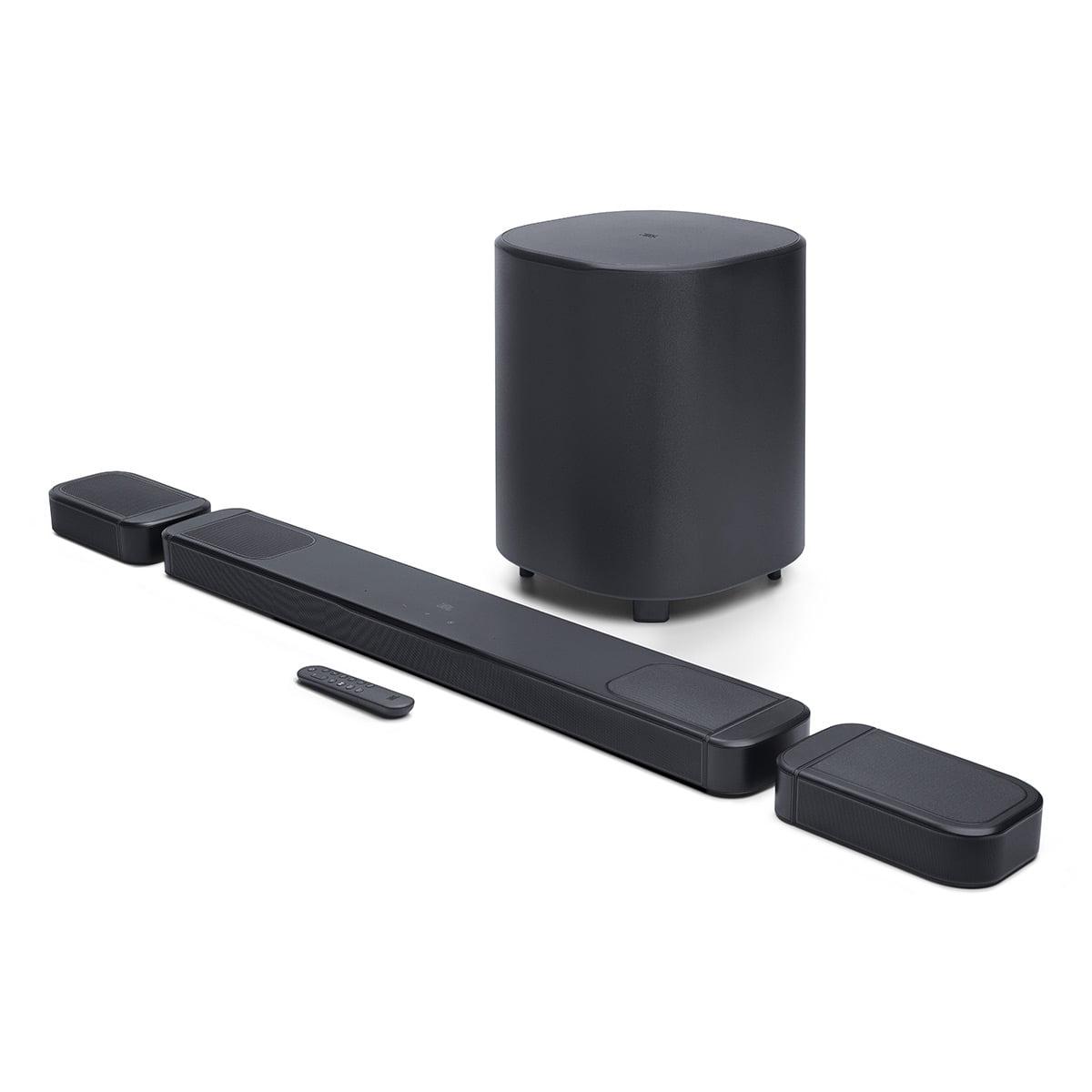
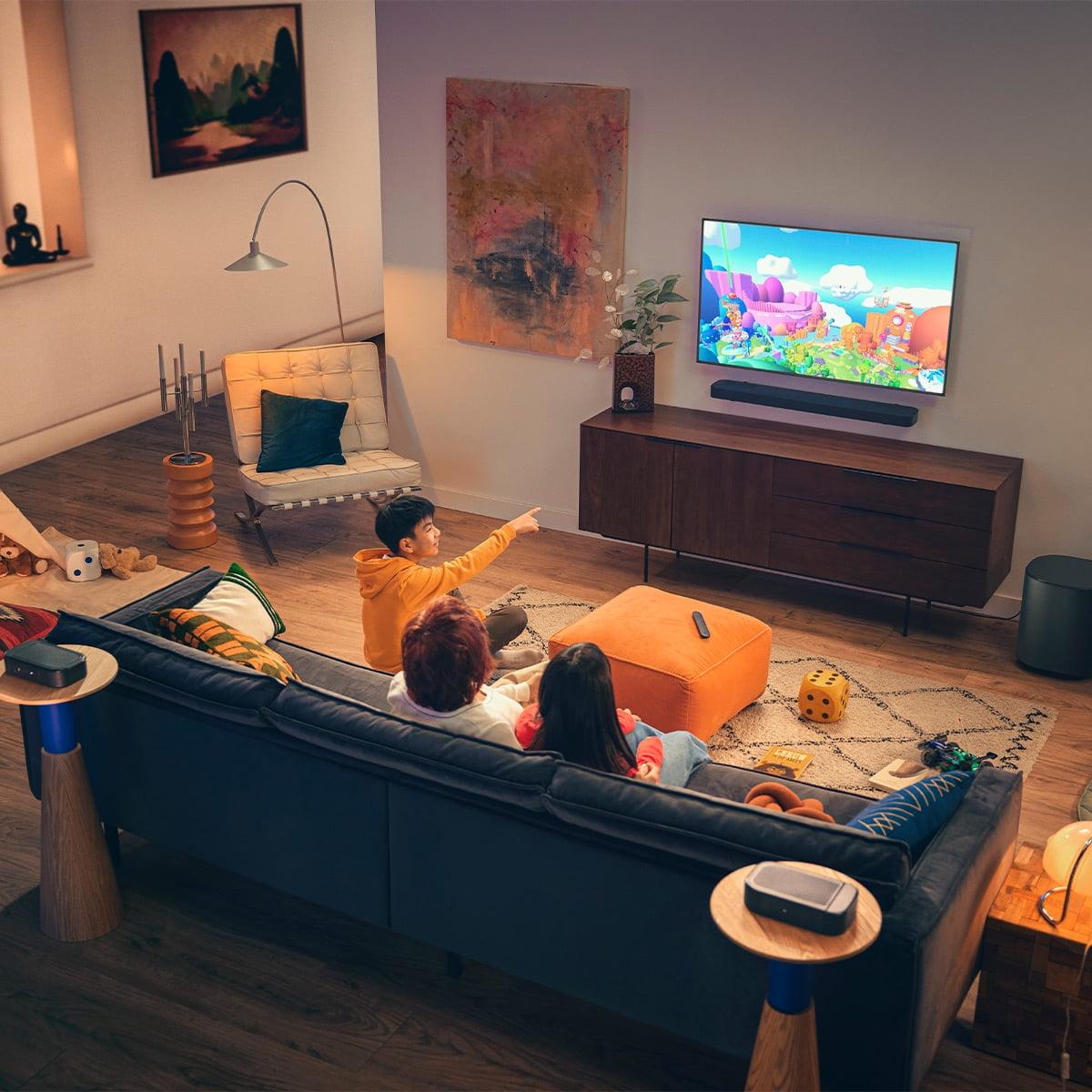
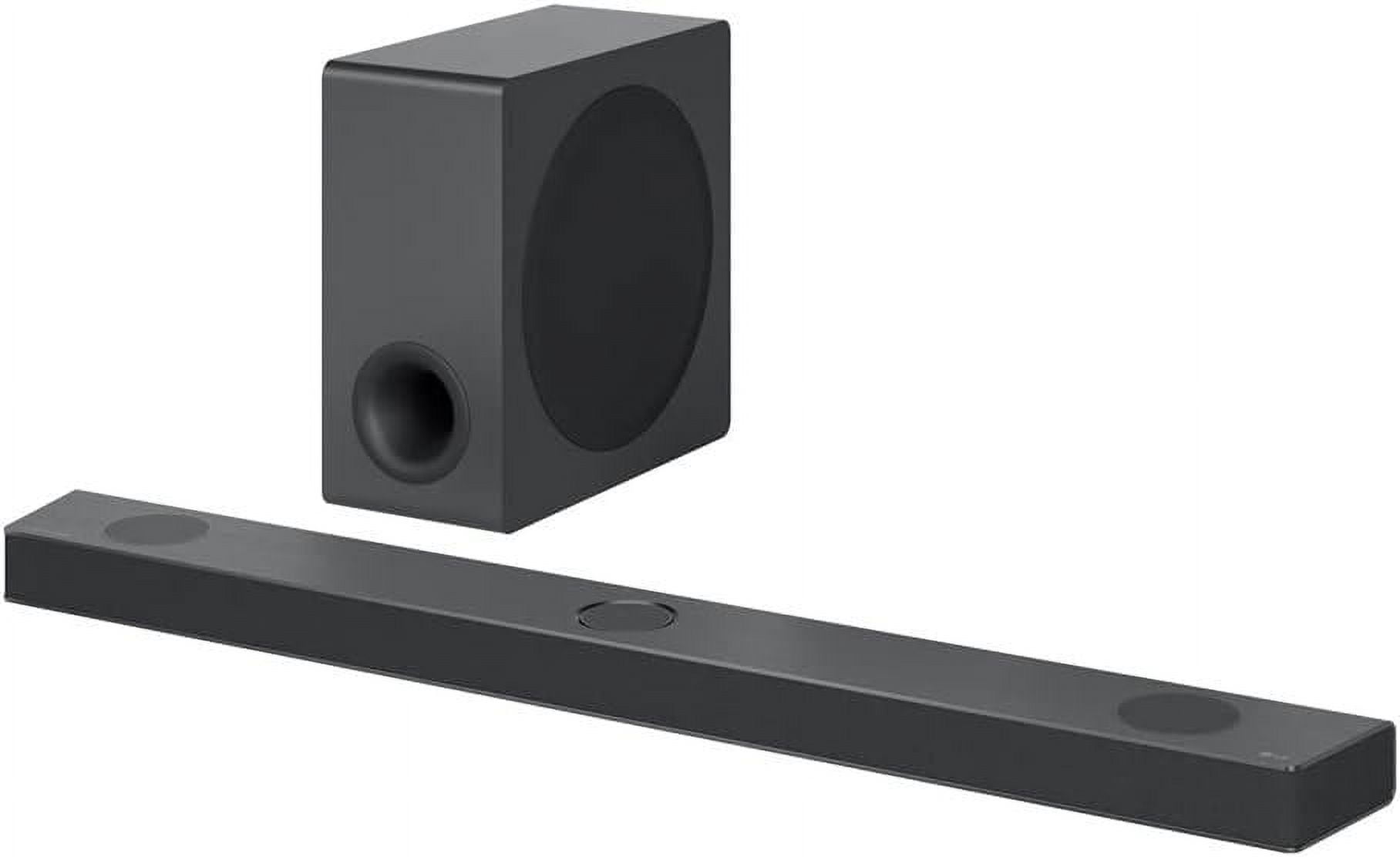




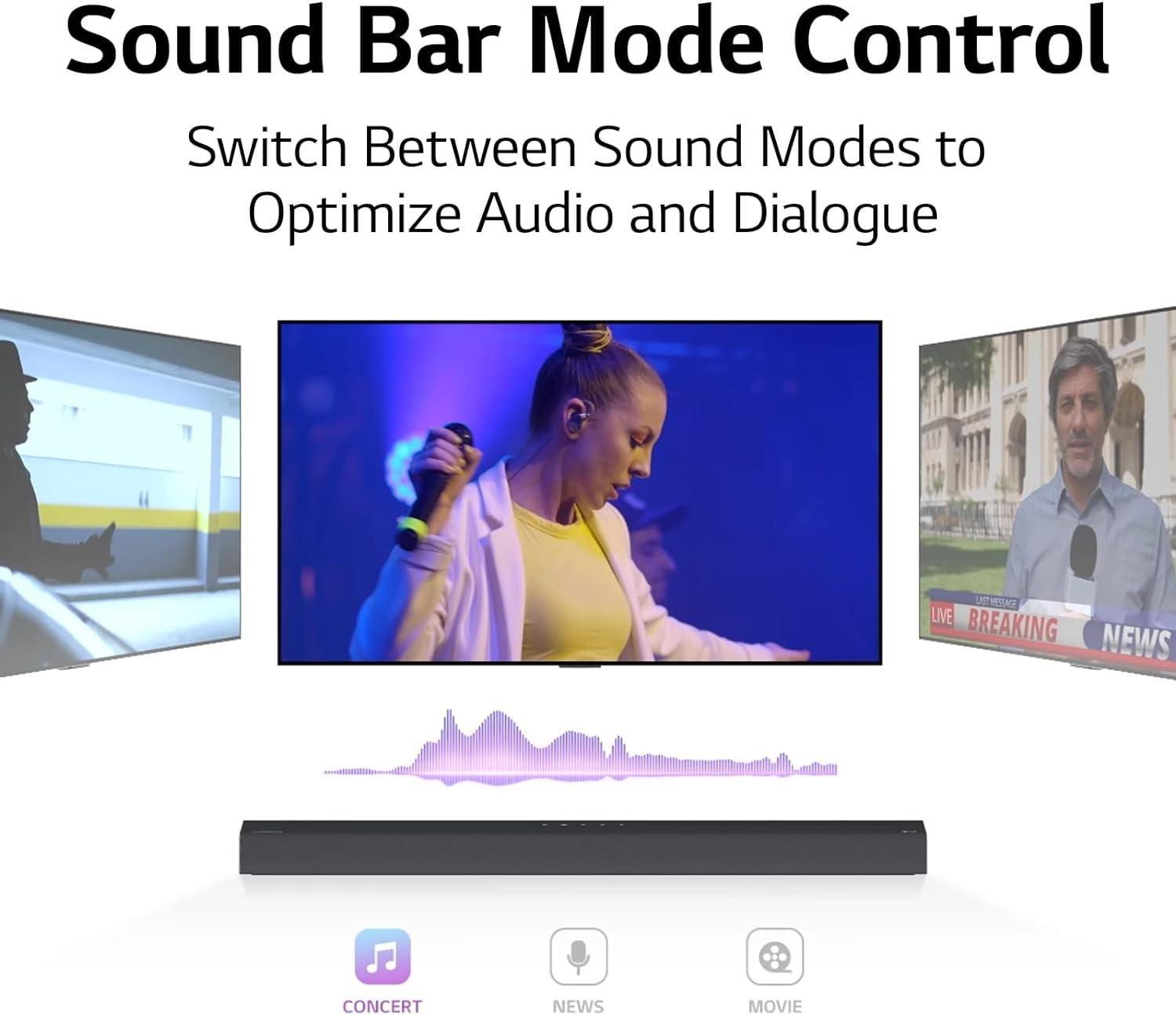

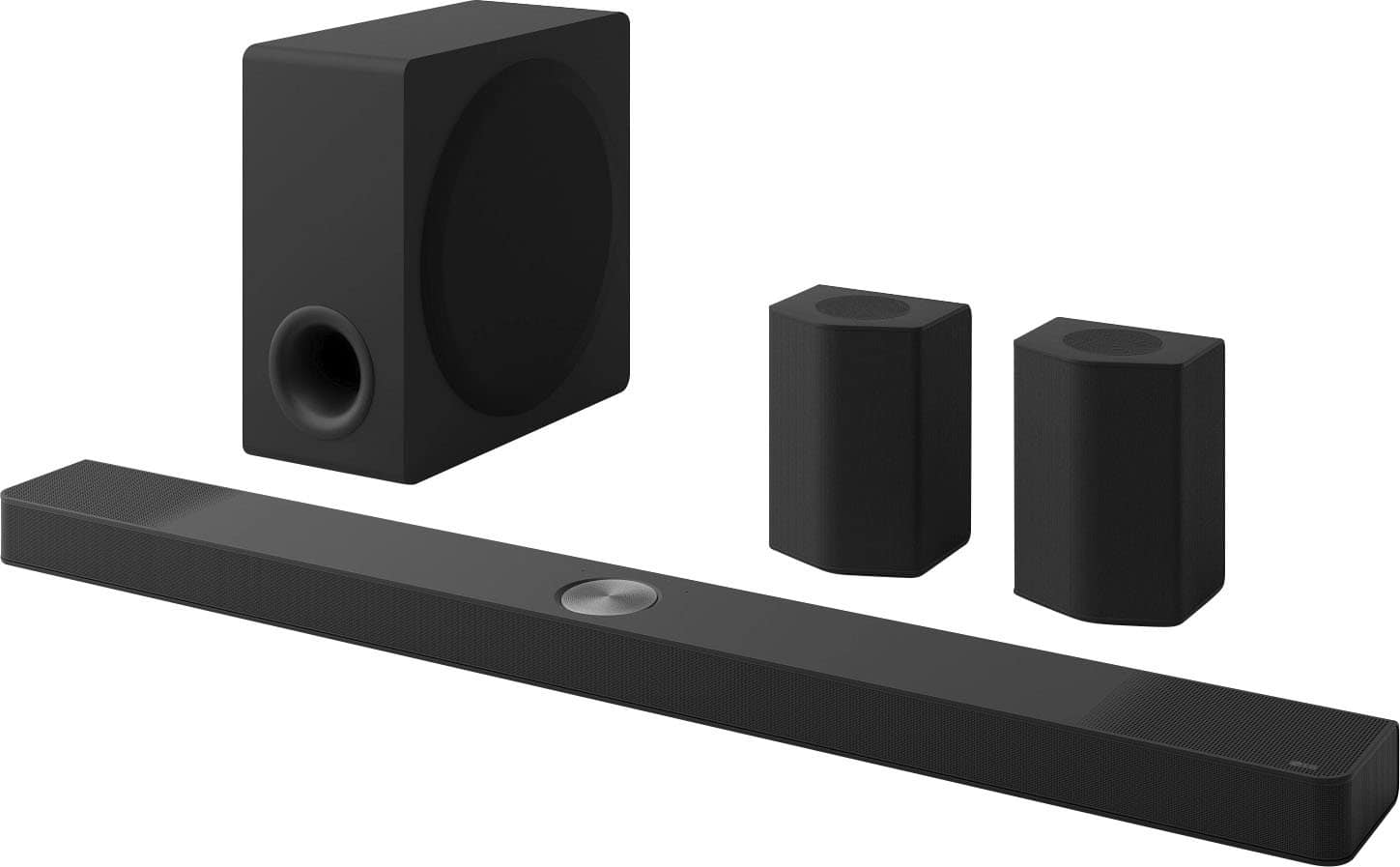
Choosing the right premium soundbar can transform your living room into a home theater, but with flagship models like the JBL Bar 1000 MK2 ($1,199) and LG S95TR ($997) offering different approaches to immersive audio, the decision isn't straightforward. Both deliver the kind of surround sound that makes you feel like you're inside the movie, but they get there in surprisingly different ways.
Premium soundbars represent a sweet spot in home audio—they deliver cinematic experiences without the complexity of traditional surround sound systems that require running wires throughout your room. These flagship models typically cost $1,000 or more because they include features that budget soundbars simply can't match.
The most important feature is true Dolby Atmos, which uses object-based audio to place sounds precisely in three-dimensional space around you. Instead of just having left and right speakers, these systems include up-firing drivers that bounce sound off your ceiling to create height effects. When a helicopter flies overhead in a movie, you'll actually hear it above you rather than just in front of you.
Both systems also include wireless subwoofers for deep bass and rear speakers to complete the surround experience. But here's where things get interesting—they take completely different approaches to solving the same problems.
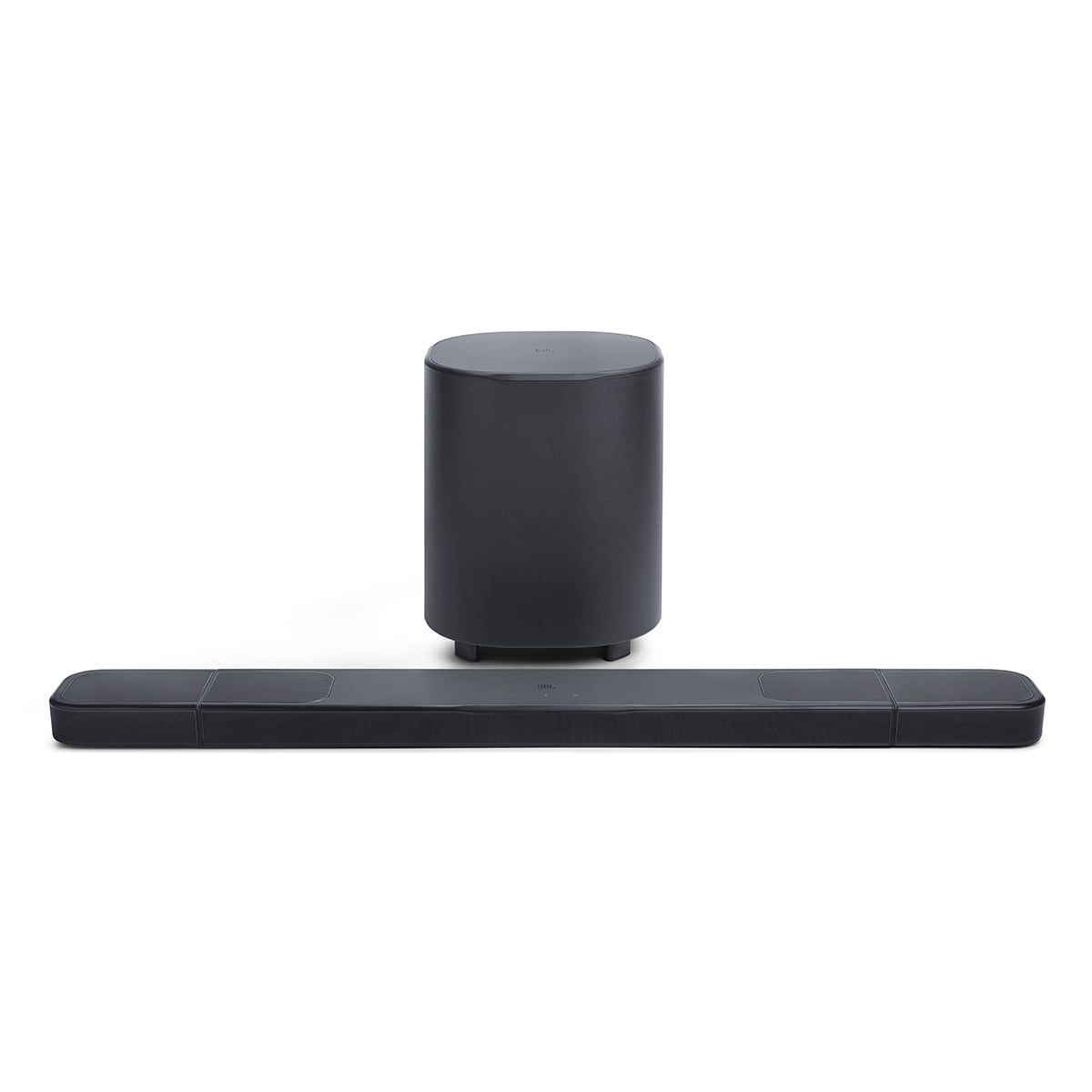
The JBL Bar 1000 MK2 launched as an update to JBL's 2022 flagship, with the "MK2" designation indicating refinements like added Spotify Connect and enhanced dialogue processing. JBL's philosophy centers on wireless flexibility and powerful bass performance.
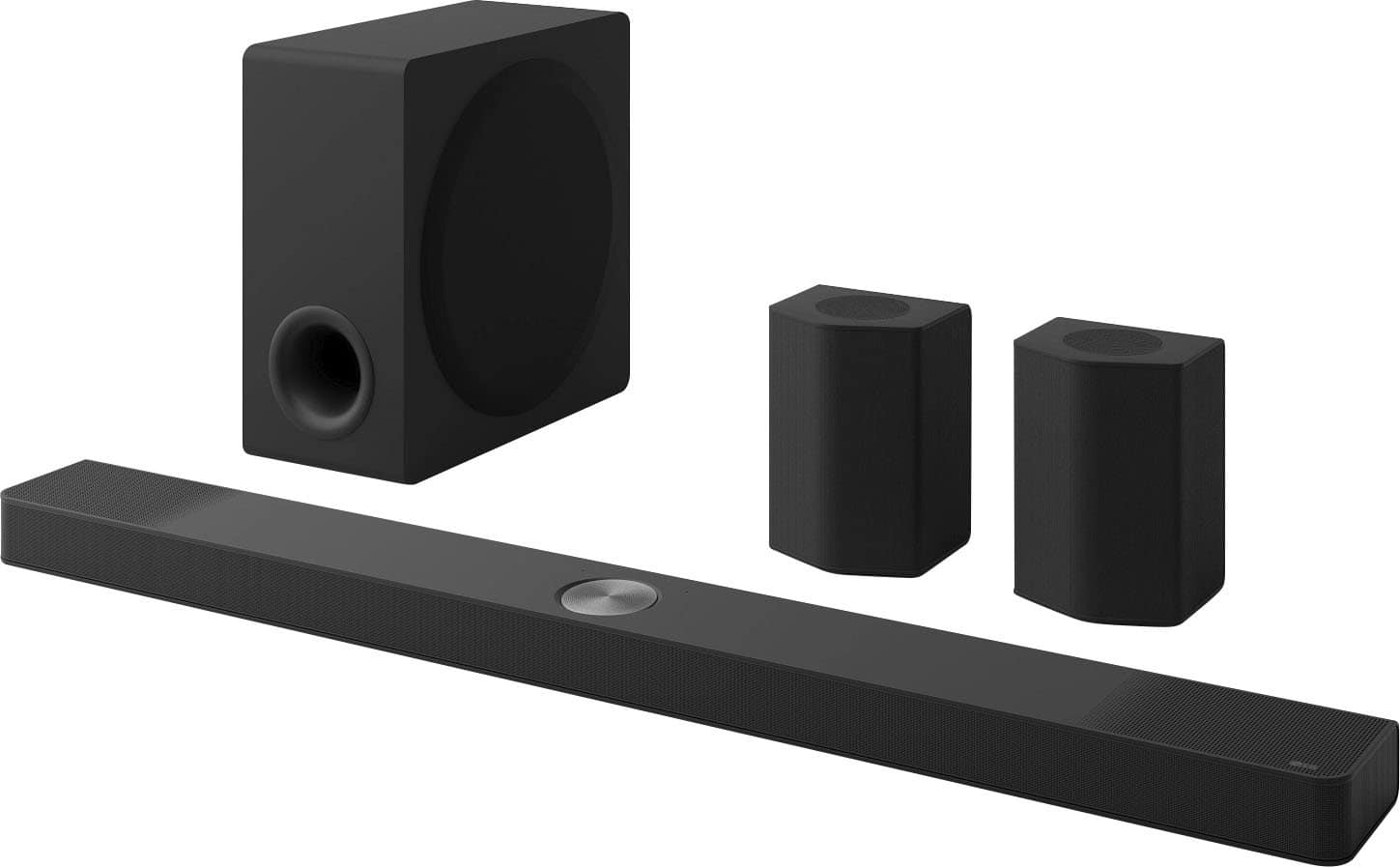
The LG S95TR, released in 2024 as LG's current flagship, takes a more technical approach with additional audio channels and deep integration with LG TVs. LG has since released the S95AR in 2025, but the S95TR remains their most popular premium option.
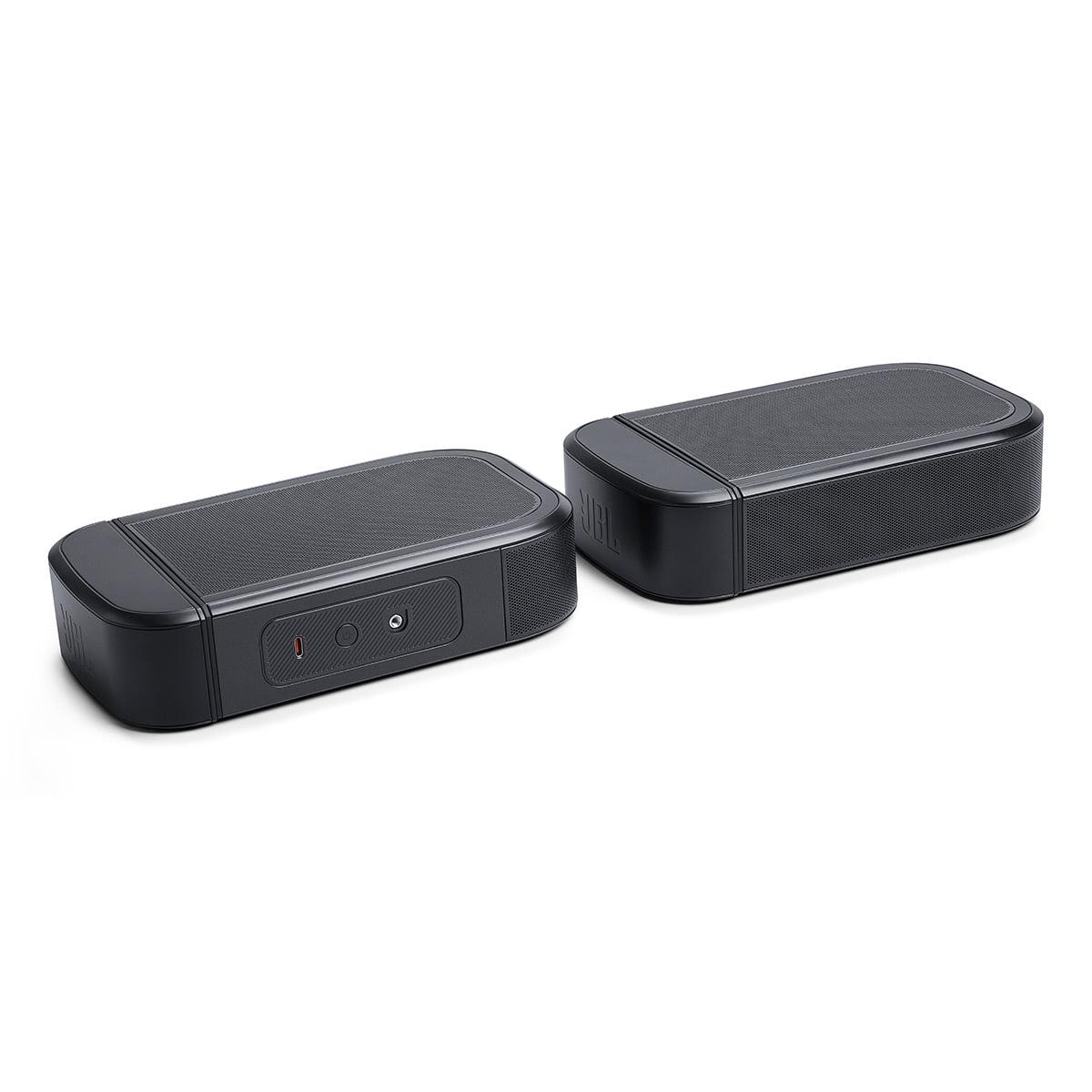
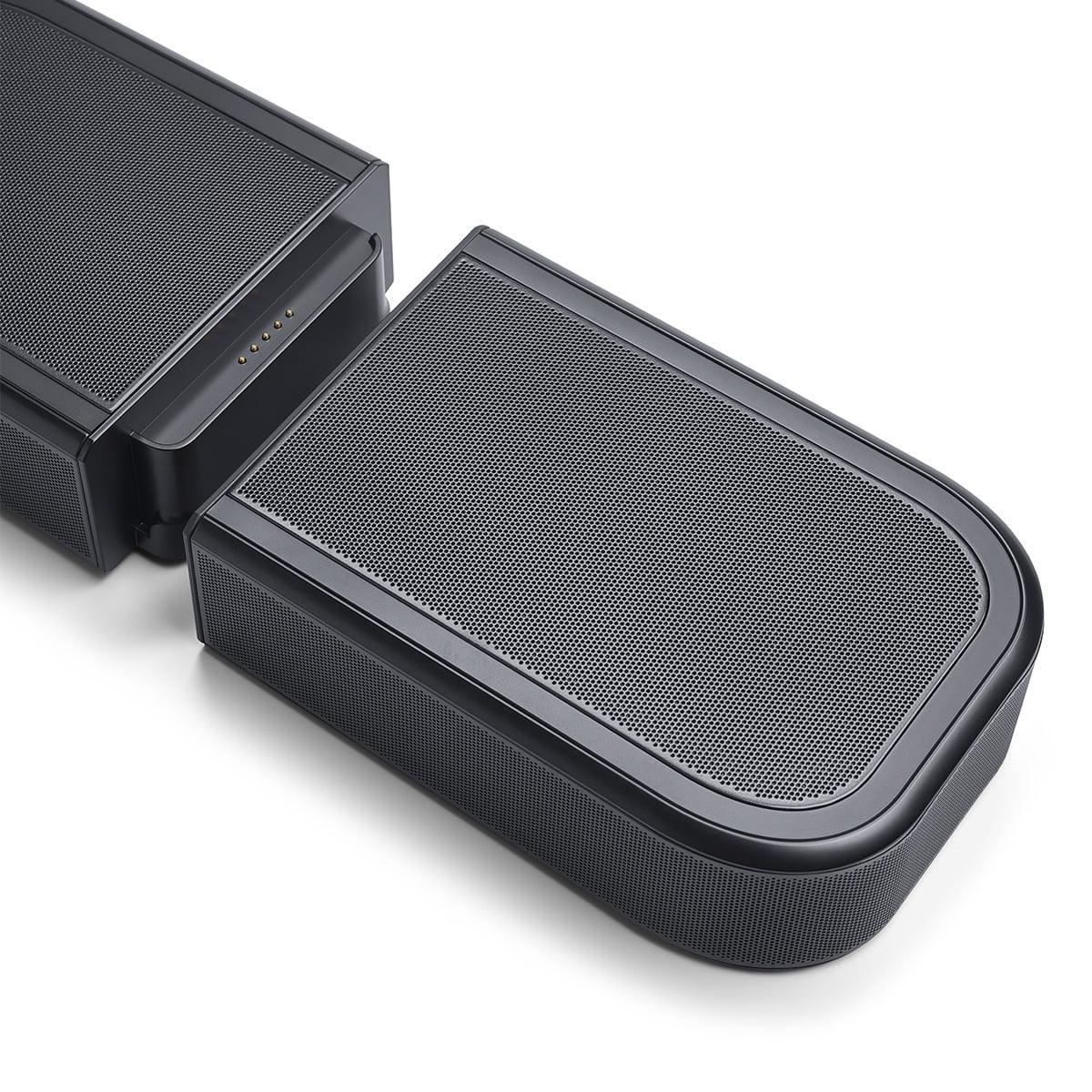
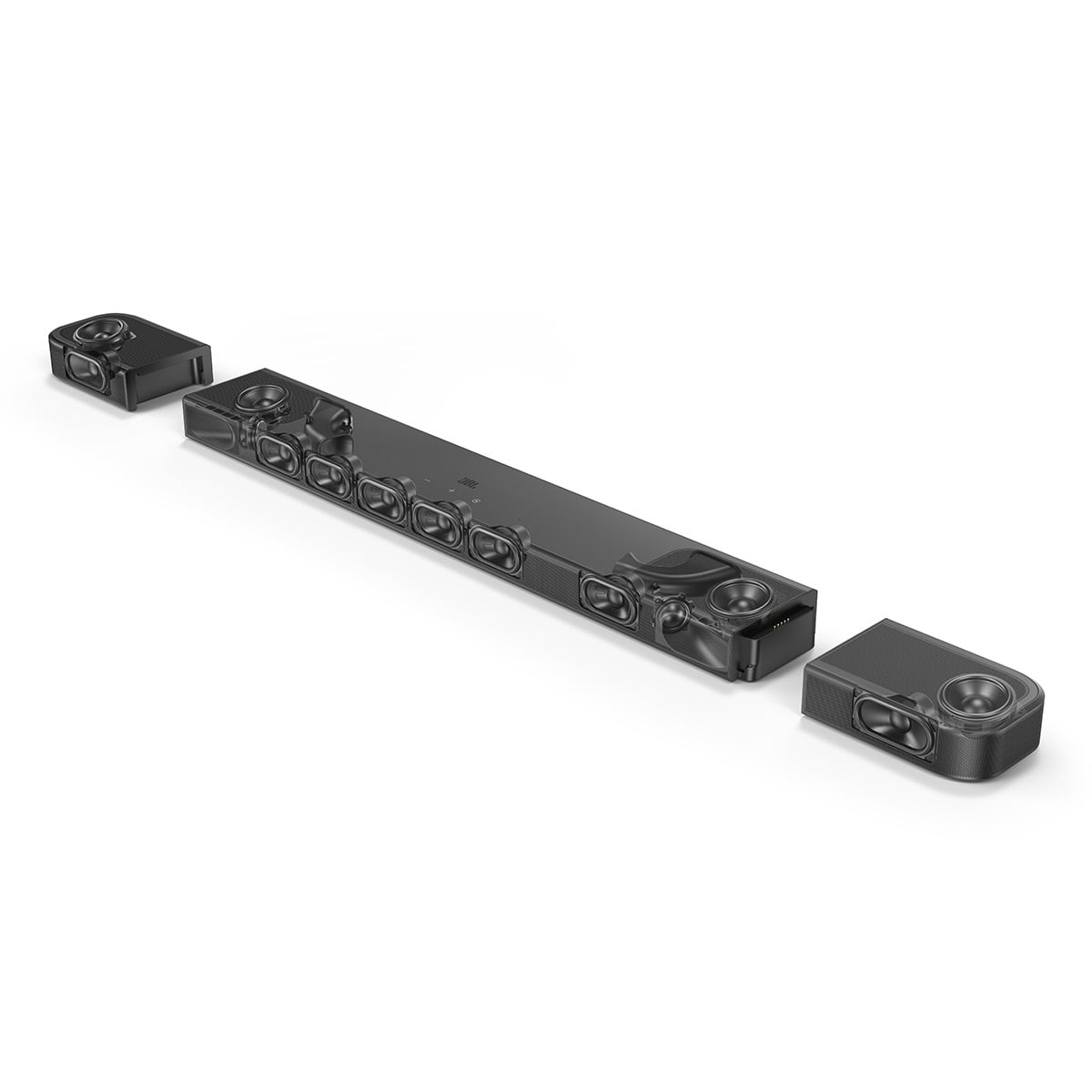
The JBL's standout feature is something you won't find anywhere else: completely detachable, battery-powered rear speakers. These aren't just wireless—they're truly cordless, with 10-hour batteries that charge when docked to the main soundbar. This means you can place them anywhere in your room without worrying about power outlets or unsightly cables snaking across your floor.
I've tested many soundbar systems, and the freedom this provides is remarkable. You can optimize their placement for the best surround effect, then easily move them when you're cleaning or rearranging furniture. Even better, they double as portable Bluetooth speakers for other rooms or outdoor use.
LG chose a different path, packing more audio channels into their system. While the JBL offers 7.1.4 channels, the LG delivers 9.1.5 channels. Those numbers represent different speaker positions: the first digit is front channels, the second is subwoofers, and the third is height channels.
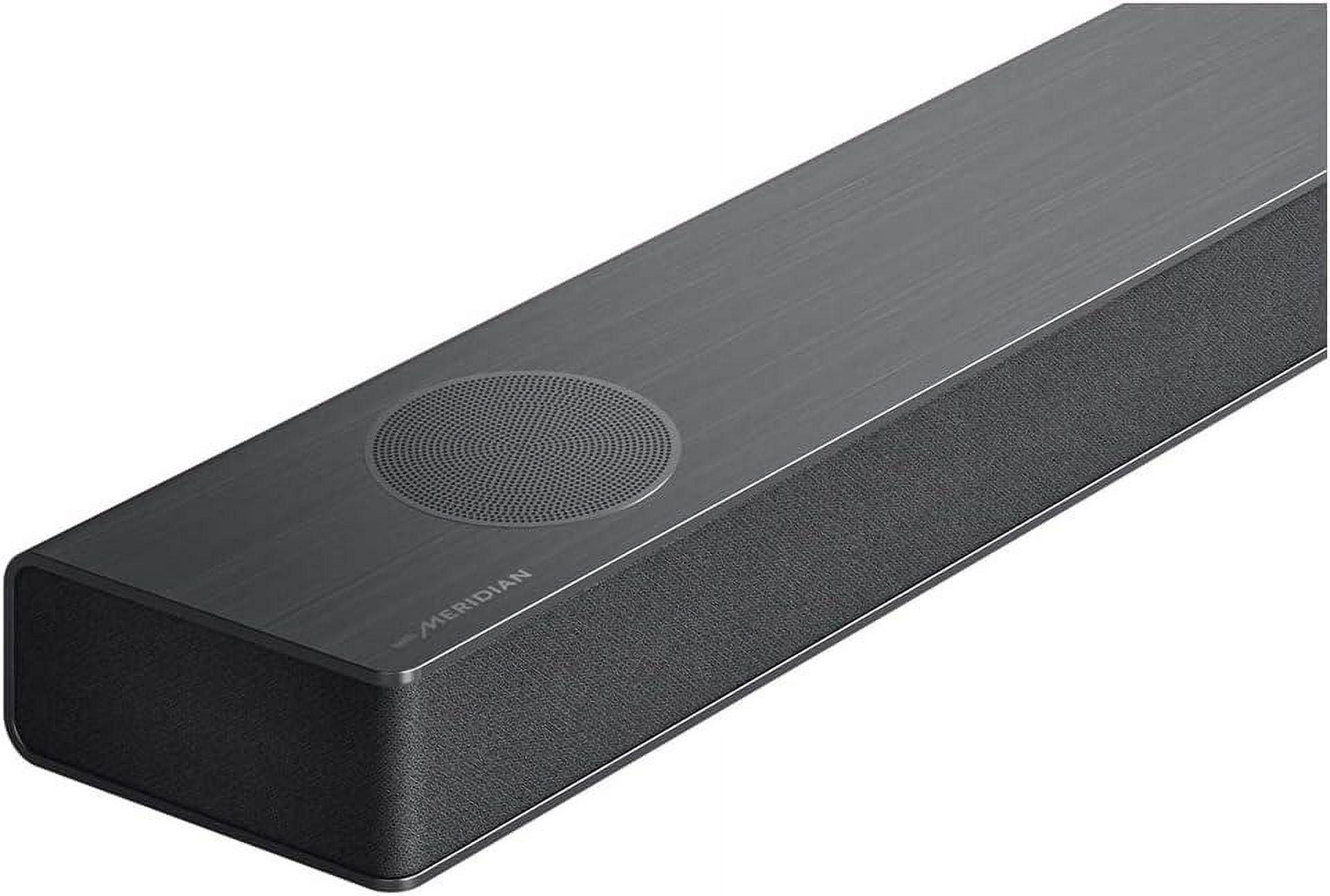
LG's innovation lies in their industry-first up-firing center channel. Most soundbars fire dialogue straight forward, but LG bounces center channel audio off your ceiling too. In theory, this creates more immersive vocal effects and better dialogue projection throughout the room.
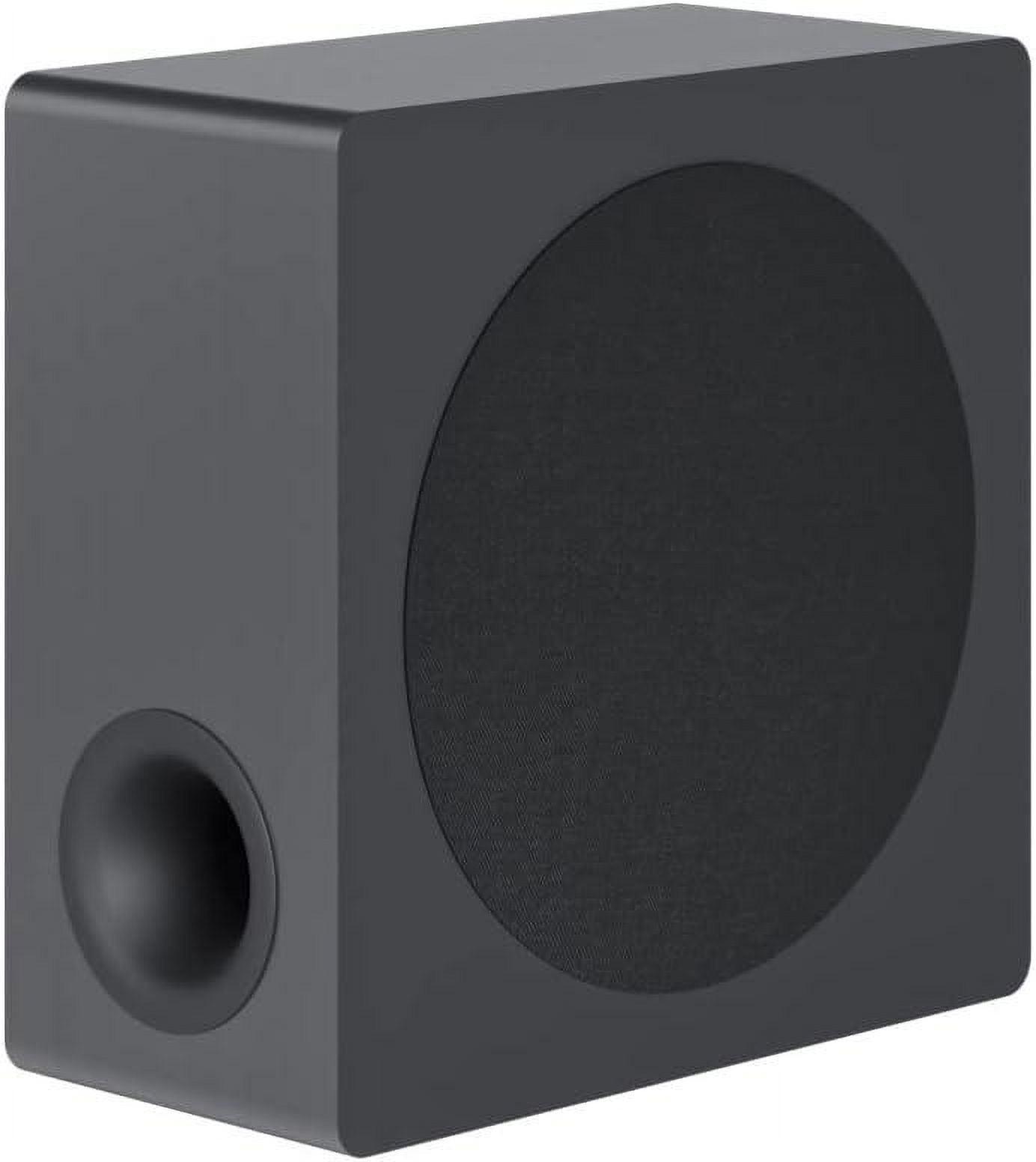
This is where the JBL Bar 1000 MK2 shows its strength. The 10-inch wireless subwoofer delivers substantially more impactful bass than LG's smaller subwoofer. When watching action movies like "Top Gun: Maverick," the difference is immediately apparent—jet engines have more rumble, explosions feel more visceral, and music maintains its low-end punch even at moderate volumes.
The JBL's subwoofer doesn't just go louder; it goes deeper. Those ultra-low frequencies around 30-35Hz that you feel in your chest during movie theaters? The JBL reproduces them more convincingly. This matters for gaming too—the thunderous footsteps in games like "Call of Duty" or the engine roar in racing games becomes more immersive.
LG's bass is adequate and well-integrated, but it lacks that room-shaking presence that makes action scenes truly exciting. If you're primarily watching dialogue-heavy shows and documentaries, this might not matter. But for blockbuster movies and gaming, the JBL's bass advantage is significant.
Here's where JBL's PureVoice 2.0 technology shines. This adaptive system automatically analyzes ambient sound and the soundbar's volume level, then optimizes dialogue frequencies to ensure voices remain clear and intelligible. The result is remarkable—you can follow conversations in whisper-quiet scenes without cranking up the volume, and dialogue remains crisp even during explosive action sequences.
During testing with complex films like "Inception," where dialogue often competes with Hans Zimmer's booming score, the JBL consistently delivered clearer vocal reproduction. The system seems to understand that dialogue clarity is paramount and adjusts accordingly.
LG's up-firing center channel is innovative on paper, but in real-world testing, it doesn't provide the same consistent dialogue enhancement as JBL's processing. While the extra channel adds some interesting vocal effects, it doesn't solve the fundamental challenge of making quiet dialogue audible over background noise and music.
This is where LG's additional channels provide some benefit. With 9.1.5 channels versus JBL's 7.1.4, the LG S95TR offers more precise sound placement, particularly for overhead effects. In scenes with rain, helicopters, or other effects that should come from above, the LG creates slightly more convincing height illusions.
However, the difference is more noticeable in larger rooms. In typical living rooms (12x15 feet or smaller), both systems create similarly immersive surround experiences. The JBL's four up-firing drivers (two in the main bar, one in each rear speaker) still deliver convincing Dolby Atmos effects that make you feel surrounded by sound.
For music listening, LG's additional channels provide better instrument separation in complex recordings. Jazz ensembles and orchestral pieces benefit from the more precise channel mapping. But for most popular music and movie soundtracks, both systems perform admirably.
The JBL Bar 1000 MK2's wireless rear speakers transform the setup experience. Traditional surround systems require you to find power outlets near your rear seating area and run cables (even if hidden). With the JBL, you simply place the speakers wherever they sound best, and they'll work for hours before needing to return to their charging dock.
This flexibility extends beyond just avoiding cables. You can experiment with placement—putting them on side tables, mounting them on walls, or even placing them on the floor behind your couch. The wireless design means you can optimize for your specific room without being constrained by electrical outlet locations.
The LG's wired rear speakers, while more traditional, require careful planning. You need accessible power outlets, and the cables (though they can be hidden) add complexity to the installation. In my experience, this often forces compromises in speaker placement that can affect sound quality.
This is where LG's approach offers unique advantages, particularly for LG TV owners. The WOW Orchestra feature synchronizes the TV's built-in speakers with the soundbar, essentially using your TV as additional front channels. This creates an even wider soundstage and can improve dialogue clarity by adding the TV's center channel to the mix.
The WOW Interface puts soundbar controls directly on your LG TV's interface, eliminating the need for separate remotes or apps for basic adjustments. For LG TV owners, this integration feels seamless and natural.
JBL takes a more universal approach, working equally well with any TV brand. The automatic room calibration is simpler than LG's AI-based system but still effective for most rooms. The JBL One app provides comprehensive control and customization options, though it's not as elegantly integrated as LG's TV-based interface.
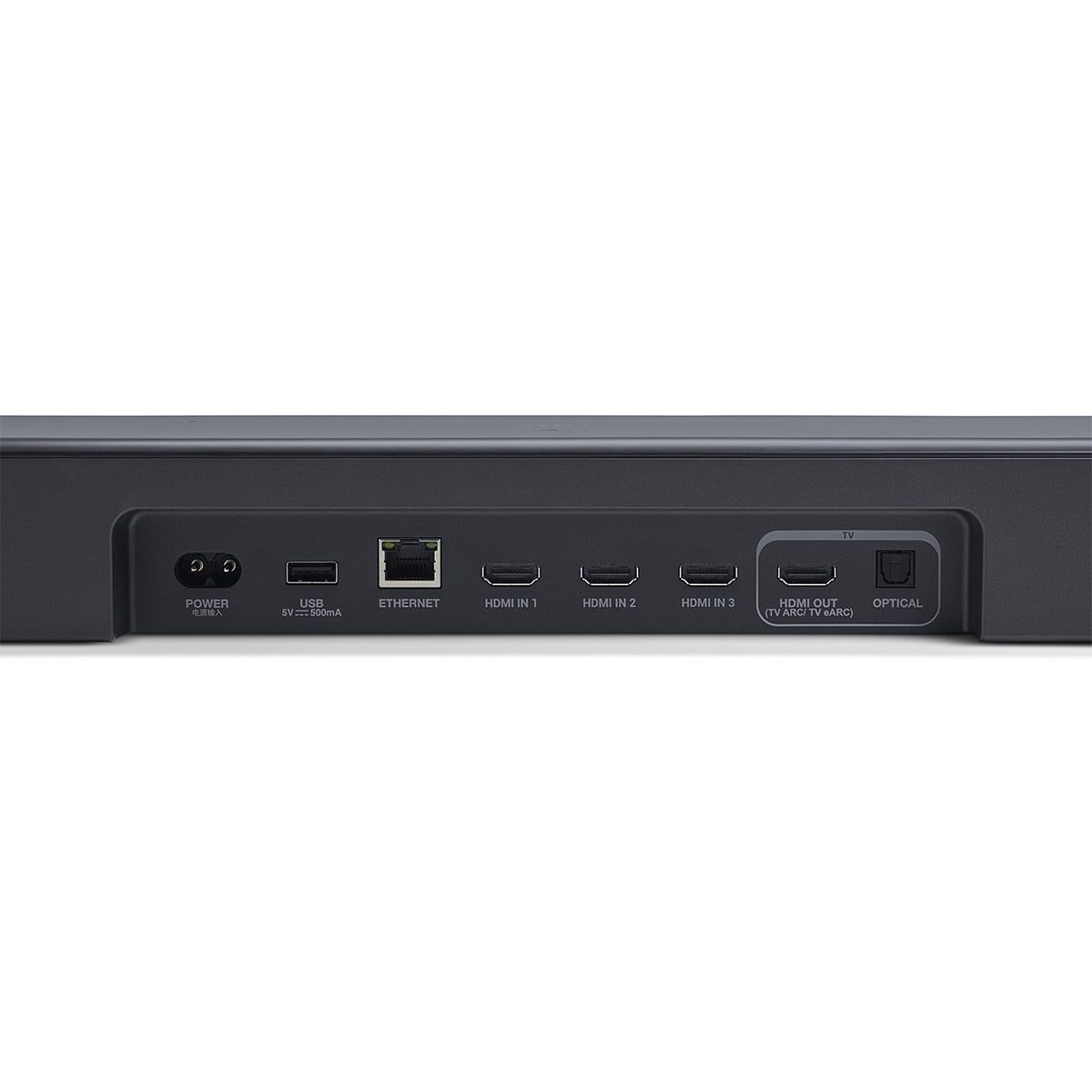
LG's system has one significant drawback: it lacks HDMI audio pass-through for devices connected to the soundbar. This means if you connect a gaming console or streaming device directly to the soundbar, it must transmit audio wirelessly to the TV and back. This can introduce slight delays and limits connectivity options compared to the JBL's full HDMI 2.1 pass-through support.
The detachable speakers offer functionality beyond just surround sound. The Night Mode feature lets you mute the main soundbar and subwoofer, delivering audio only through the rear speakers for private listening. This is perfect for late-night movie watching when you don't want to wake others.
These speakers also work independently as Bluetooth speakers with impressive 10-hour battery life. I've used them for outdoor gatherings, in the garage while working, and even as bedroom speakers. This versatility adds value beyond the primary home theater function.
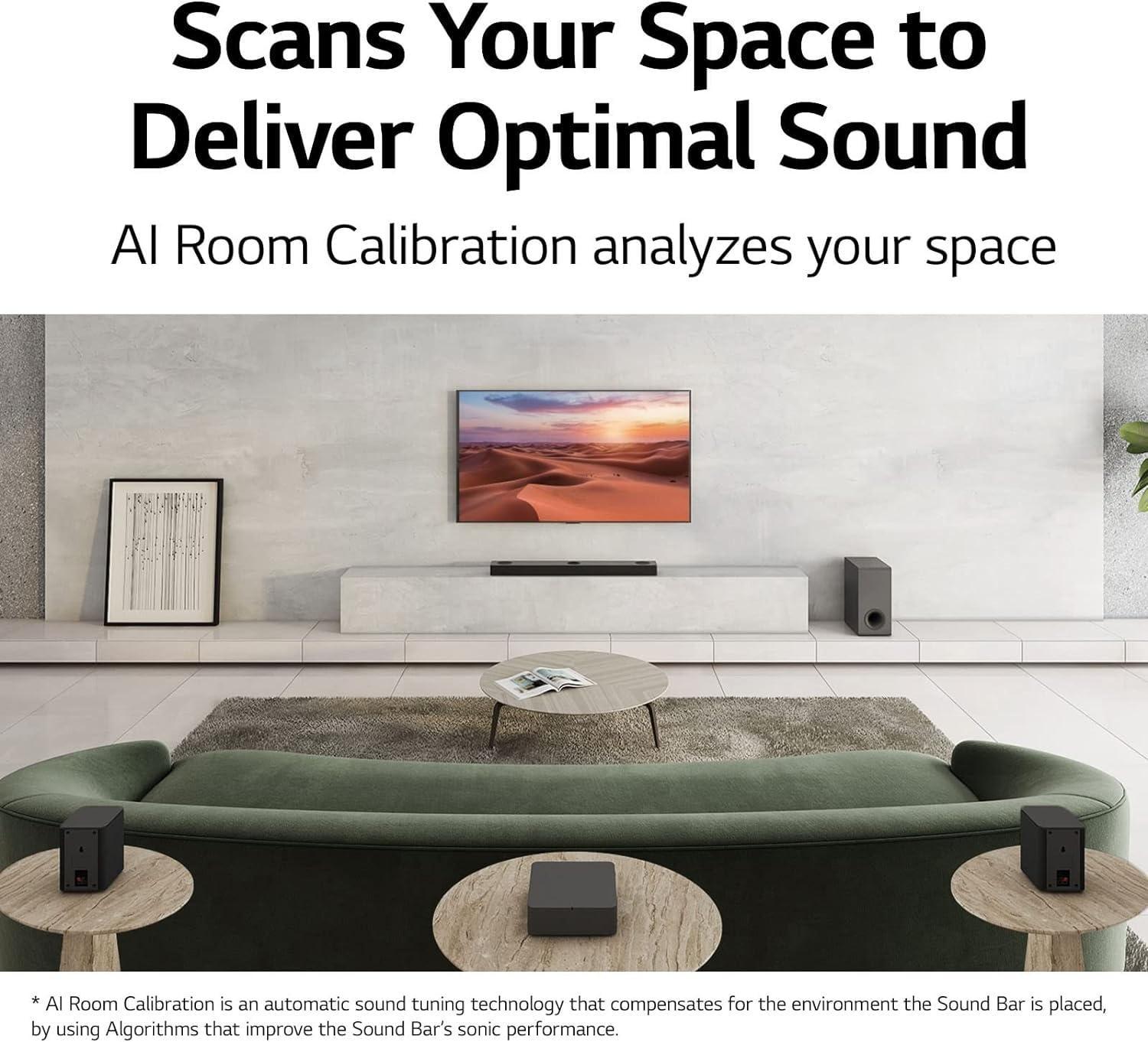
LG's AI room calibration goes beyond simple volume adjustments. The system analyzes your room's acoustics and adjusts frequency response, timing, and channel levels to optimize performance for your specific space. This is particularly valuable in irregularly shaped rooms or spaces with challenging acoustics.
The calibration process is more sophisticated than JBL's, though also more complex. For audio enthusiasts who want to squeeze every bit of performance from their system, LG's approach offers more fine-tuning possibilities.
At $1,199, the JBL Bar 1000 MK2 costs about $200 more than the LG S95TR, but you're paying for genuinely unique technology. The wireless rear speakers represent a significant engineering achievement, and the larger subwoofer provides performance that's immediately noticeable.
The LG offers more audio channels and advanced calibration features at a lower price point. For the technically inclined, particularly LG TV owners, this represents excellent value. The additional channels and sophisticated processing justify the flagship positioning.
However, consider long-term usability. JBL's wireless speakers require periodic charging but offer unmatched flexibility. LG's wired speakers provide consistent power but may limit room arrangement options over time.
Prioritize bass impact and dialogue clarity. The larger subwoofer and PureVoice technology deliver immediately noticeable improvements for movie watching and gaming. If you regularly watch action films or play bass-heavy games, this advantage is worth the premium.
Value setup flexibility over maximum channel count. The wireless rear speakers eliminate major installation headaches and provide unique versatility. If you rent your home, frequently rearrange furniture, or want speakers that work beyond just home theater, JBL's approach is superior.
Use various TV brands or prioritize universal compatibility. JBL works equally well with any TV, while LG's best features require LG TVs.
Own an LG TV and want seamless integration. The WOW ecosystem features provide genuine convenience and enhanced performance that justify choosing LG's soundbar specifically.
Have a larger room that benefits from additional channels. In spaces larger than typical living rooms, LG's 9.1.5 channel configuration provides more precise sound placement and better overall immersion.
Prefer comprehensive calibration and don't mind setup complexity. LG's AI room calibration is more sophisticated, and the wired speakers provide consistent performance without battery concerns.
Want flagship features at a lower price point. The LG delivers advanced processing and more channels for less money, representing better technical value on paper.
Both the JBL Bar 1000 MK2 and LG S95TR deliver exceptional Dolby Atmos experiences that transform home entertainment. Your choice should align with your priorities: JBL for bass impact, dialogue clarity, and installation flexibility at a premium price, or LG for more channels, advanced calibration, and better technical value, especially for LG TV owners.
In my experience, most people underestimate how much they'll appreciate JBL's wireless speakers' flexibility once they live with the system. However, if you're an LG TV owner with a larger room and enjoy tweaking audio settings, the LG's additional channels and integration features provide compelling advantages.
Neither choice is wrong—they simply excel in different areas. Consider your room, your TV, and your priorities, and either system will deliver the kind of immersive audio experience that makes staying home feel like going to the movies.
| JBL Bar 1000 MK2 Soundbar System | LG S95TR 9.1.5 Channel Soundbar with Dolby Atmos |
|---|---|
| Price - Premium soundbar investment | |
| $1,199 | $997 |
| Channel Configuration - More channels mean better sound positioning | |
| 7.1.4 channels (good for most rooms) | 9.1.5 channels (better precision in larger spaces) |
| Total Power Output - Higher wattage delivers fuller sound | |
| 960W max / 480W RMS (powerful for most rooms) | Not specified (adequate for intended performance) |
| Subwoofer Size - Larger drivers produce deeper bass | |
| 10-inch wireless subwoofer (room-filling bass) | Smaller wireless subwoofer (adequate but less impactful) |
| Rear Speaker Design - Critical for setup flexibility | |
| Detachable battery-powered wireless (10-hour battery, ultimate flexibility) | Wired rear speakers (require power outlets, limit placement) |
| Up-firing Drivers - Essential for Dolby Atmos height effects | |
| 4 up-firing drivers (2 in bar, 1 in each rear) | 5 up-firing drivers including unique up-firing center channel |
| Dialogue Enhancement Technology - Crucial for clear speech | |
| PureVoice 2.0 adaptive dialogue optimization | Up-firing center channel for vocal projection |
| TV Integration Features - Important for seamless operation | |
| Universal compatibility with all TV brands | WOW Orchestra and Interface (LG TVs only) |
| HDMI Connectivity - Affects device compatibility | |
| Full HDMI 2.1 pass-through with eARC | HDMI eARC but lacks audio pass-through for connected devices |
| Room Calibration - Optimizes sound for your space | |
| Simple automatic calibration | Advanced AI-based room calibration |
| Unique Features - Value-added functionality | |
| Night Mode, portable Bluetooth speakers, Spotify Connect | WOW ecosystem integration, industry-first up-firing center |
| Best For - Who should choose each model | |
| Bass lovers, dialogue clarity, setup flexibility | LG TV owners, larger rooms, maximum channels |
The LG S95TR ($997) offers better value with more channels (9.1.5 vs 7.1.4) at a lower price. However, the JBL Bar 1000 MK2 ($1,199) justifies its higher cost with unique wireless rear speakers and superior bass performance from its 10-inch subwoofer.
The biggest difference is the rear speaker design. The JBL Bar 1000 MK2 features detachable, battery-powered wireless rear speakers that require no power cords, while the LG S95TR uses traditional wired rear speakers that need power outlets for placement.
The JBL Bar 1000 MK2 delivers significantly better bass with its 10-inch wireless subwoofer compared to the LG S95TR's smaller subwoofer. This makes the JBL better for action movies, gaming, and bass-heavy music genres.
Yes, both the JBL Bar 1000 MK2 and LG S95TR support true Dolby Atmos with dedicated up-firing drivers. The JBL has 4 up-firing speakers while the LG has 5, including an industry-first up-firing center channel.
The JBL Bar 1000 MK2 is much easier to set up because its wireless rear speakers don't require power outlets or cable management. The LG S95TR requires finding power outlets for the rear speakers and managing cables, making installation more complex.
The JBL Bar 1000 MK2 works equally well with all TV brands and includes universal compatibility features. The LG S95TR works with any TV but offers special integration features like WOW Orchestra only with LG TVs.
The JBL Bar 1000 MK2 excels at dialogue clarity with its PureVoice 2.0 technology that automatically optimizes speech frequencies. While the LG S95TR has an innovative up-firing center channel, it doesn't match JBL's consistent dialogue enhancement in real-world testing.
Only the JBL Bar 1000 MK2 allows independent use of its rear speakers as portable Bluetooth speakers with 10-hour battery life. The LG S95TR's wired rear speakers cannot be used separately from the main system.
The LG S95TR performs better in larger rooms thanks to its 9.1.5 channel configuration that provides more precise sound positioning. The JBL Bar 1000 MK2 works well in most rooms but the LG's additional channels benefit bigger spaces more.
Yes, both the JBL Bar 1000 MK2 and LG S95TR include wireless subwoofers. However, the JBL's 10-inch subwoofer is significantly larger and more powerful than the LG's smaller wireless subwoofer.
The LG S95TR has more channels with its 9.1.5 configuration compared to the JBL Bar 1000 MK2's 7.1.4 setup. This means the LG has more individual speakers for potentially better surround sound precision.
For home theater, choose the JBL Bar 1000 MK2 if you prioritize powerful bass, clear dialogue, and easy setup. Choose the LG S95TR if you have an LG TV, a large room, and want maximum channels. Both deliver excellent cinematic experiences with true Dolby Atmos support.
We've done our best to create useful and informative comparisons to help you decide what product to buy. Our research uses advanced automated methods to create this comparison and perfection is not possible - please contact us for corrections or questions. These are the sites we've researched in the creation of this article: ecoustics.com - engadget.com - bestbuy.com - techradar.com - rtings.com - hometechnologyreview.com - youtube.com - t3.com - whathifi.com - youtube.com - bhphotovideo.com - gzhls.at - device.report - support.jbl.com - support.jbl.com - jbl.com - av.com - audioadvice.com - jbl.com - target.com - worldwidestereo.com - techradar.com - bestbuy.com - youtube.com - trustedreviews.com - zdnet.com - rtings.com - lg.com - lambcotvandappliance.com - valueelectronics.com - romomattressfurniture.com - dolby.com - youtube.com

Privacy Policy
Terms and Conditions - Affiliate Policy
Home Security
© Copyright 2008-2026.
11816 Inwood Rd #1211, Dallas, TX 75244