

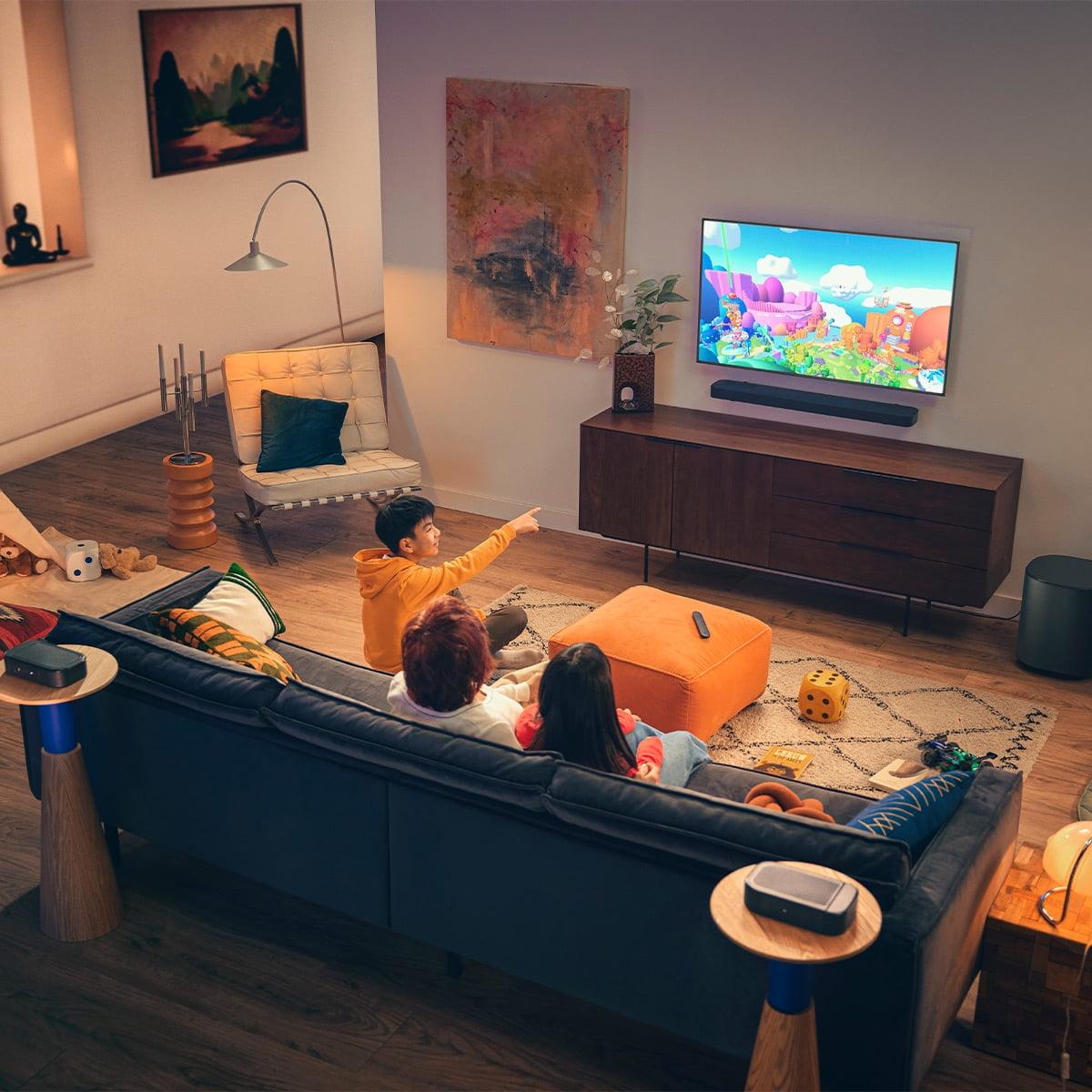

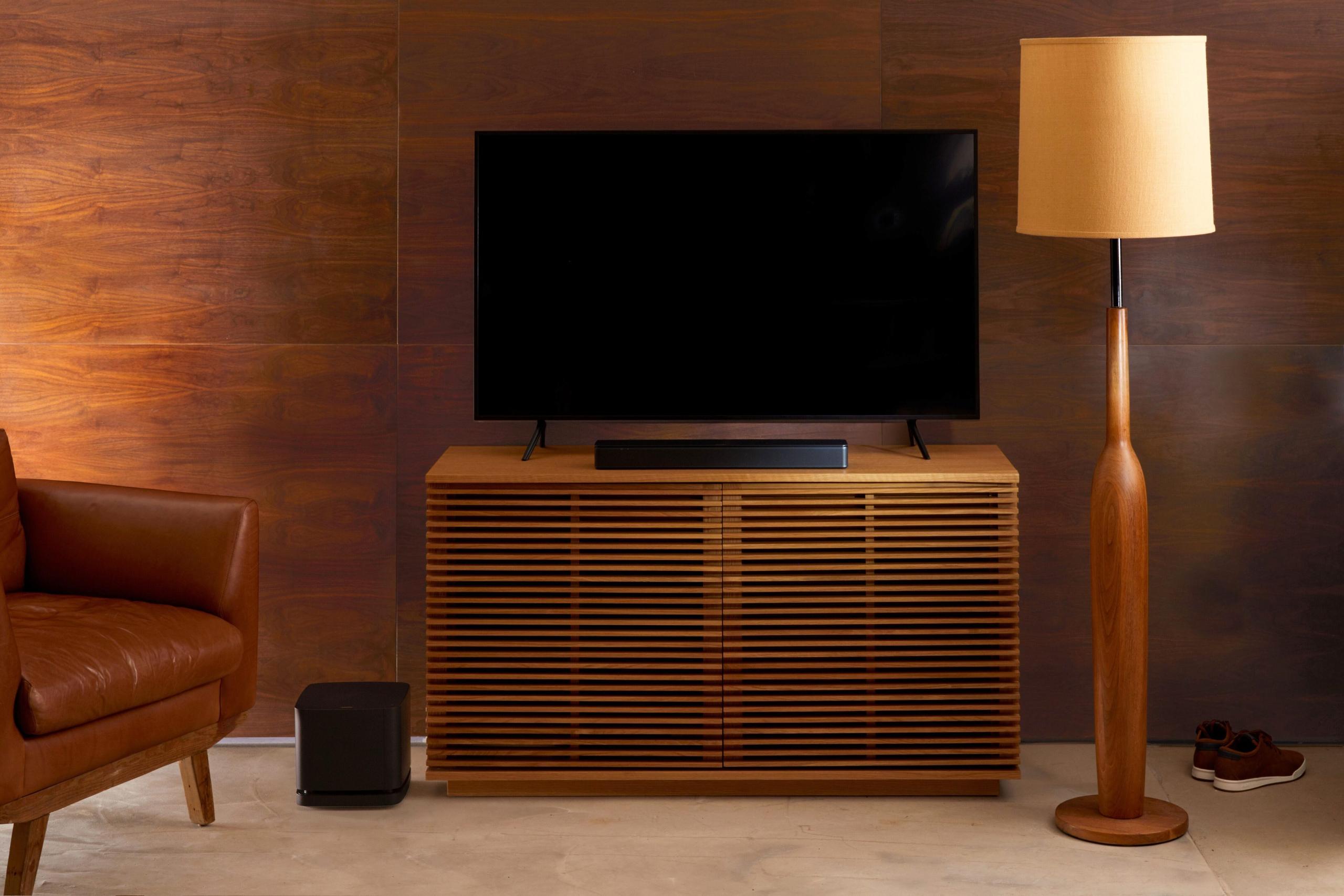
If you've ever tried watching a movie on your TV and found yourself constantly reaching for the remote to turn up the volume during quiet dialogue scenes, only to have your ears blown out by the next action sequence, you're experiencing the main problem that soundbars solve. Most TVs today are incredibly thin, which looks great on your wall but leaves almost no room for decent speakers. The tiny drivers they do manage to squeeze in often fire downward toward your entertainment center, creating muffled, unclear sound that makes following conversations a real chore.
This is where soundbars come in. These horizontal speaker systems sit below or in front of your TV and dramatically improve audio quality. But here's where things get interesting: not all soundbars are created equal. Today we're comparing two very different approaches to solving your TV's audio problems—the JBL Bar 1000 MK2 ($1,199) and the Bose TV Speaker ($199).
Before diving into the comparison, let's talk about what makes soundbars tick. At their core, they're trying to recreate the experience of having multiple speakers around your room using just one (or a few) devices. The magic happens through a combination of physical drivers (the individual speakers inside the bar), digital processing, and sometimes additional components like subwoofers and rear speakers.
When shopping for soundbars, you'll encounter terms like "2.0," "3.1," or "7.1.4." These numbers tell you about the channel configuration—essentially, how many different audio streams the system can handle. The first number represents main channels (left, center, right), the second is for subwoofers, and if there's a third number, it indicates height channels for overhead effects. More channels generally mean more immersive sound, but they also require more components and complexity.
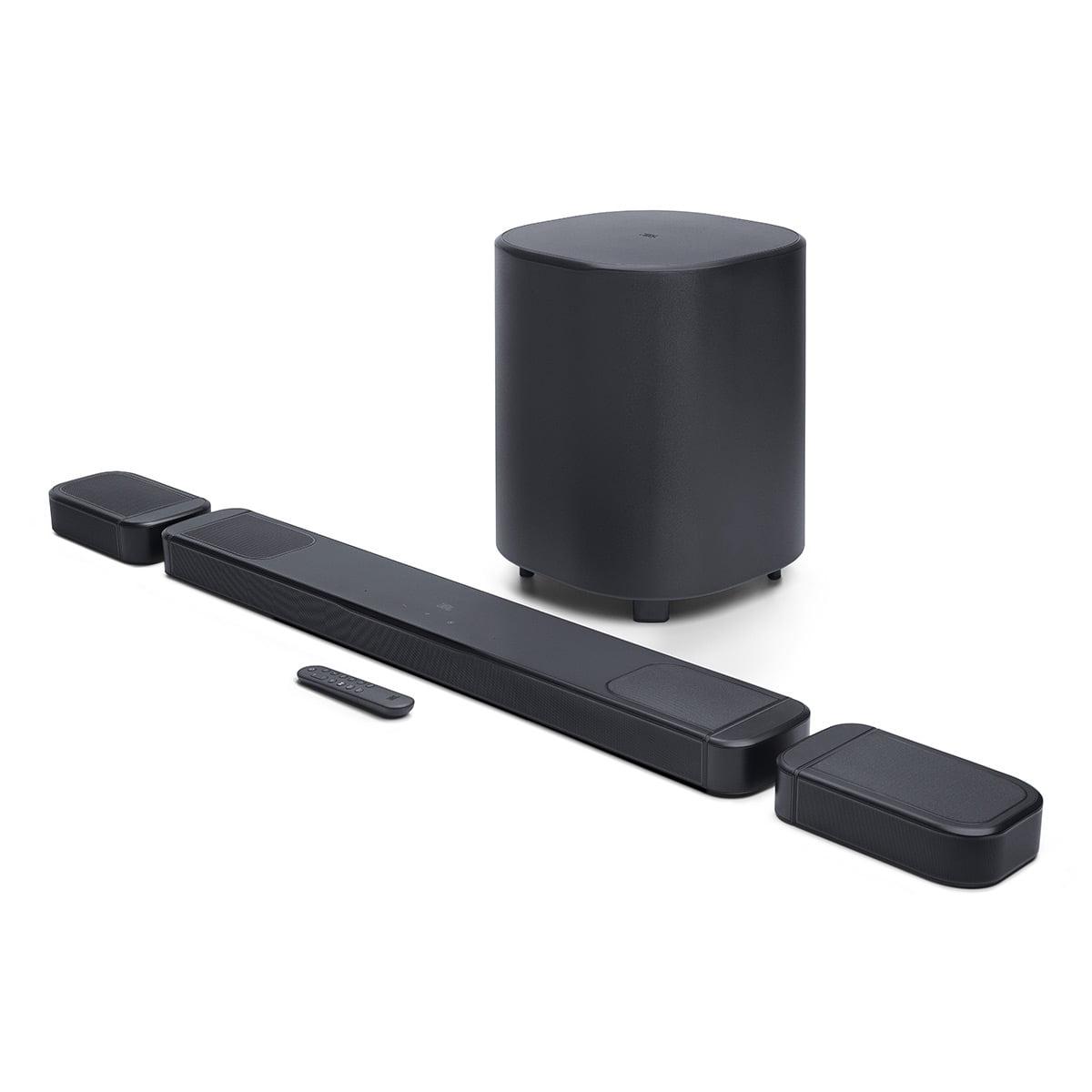
The JBL Bar 1000 MK2 and Bose TV Speaker represent opposite philosophies in this space. JBL went all-out with a 7.1.4 system that includes physical rear speakers and height effects, while Bose focused on perfecting a simple 2.0 stereo setup that prioritizes dialogue clarity above all else.
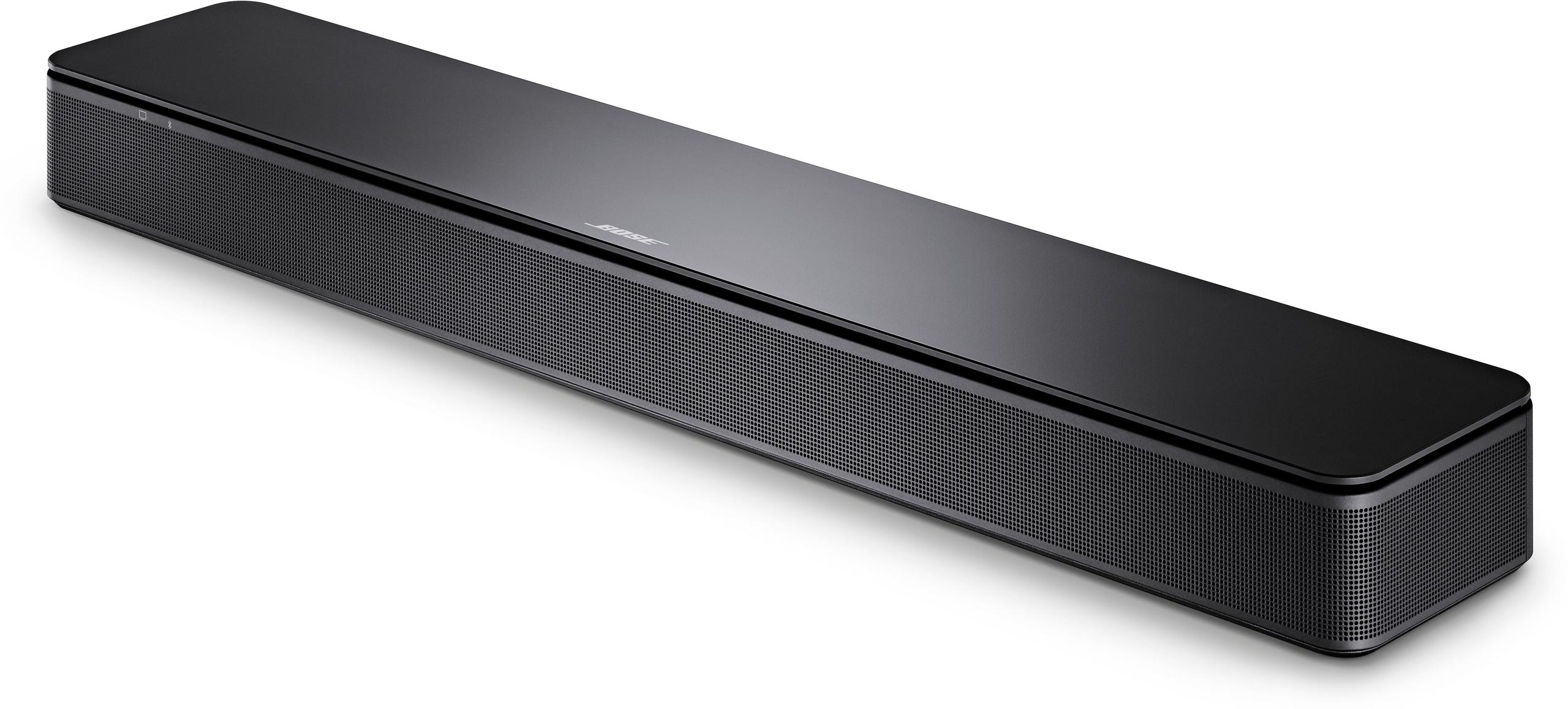
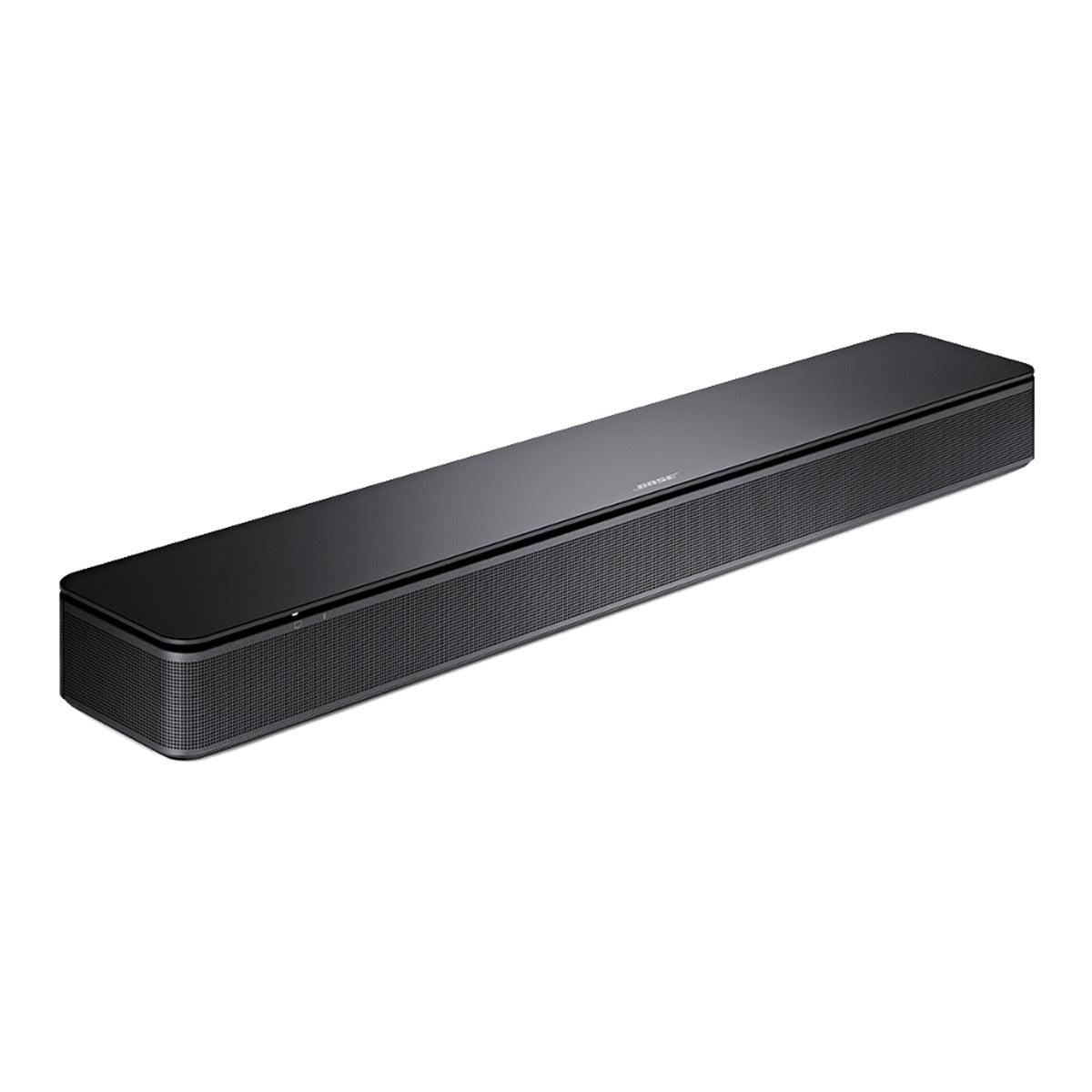
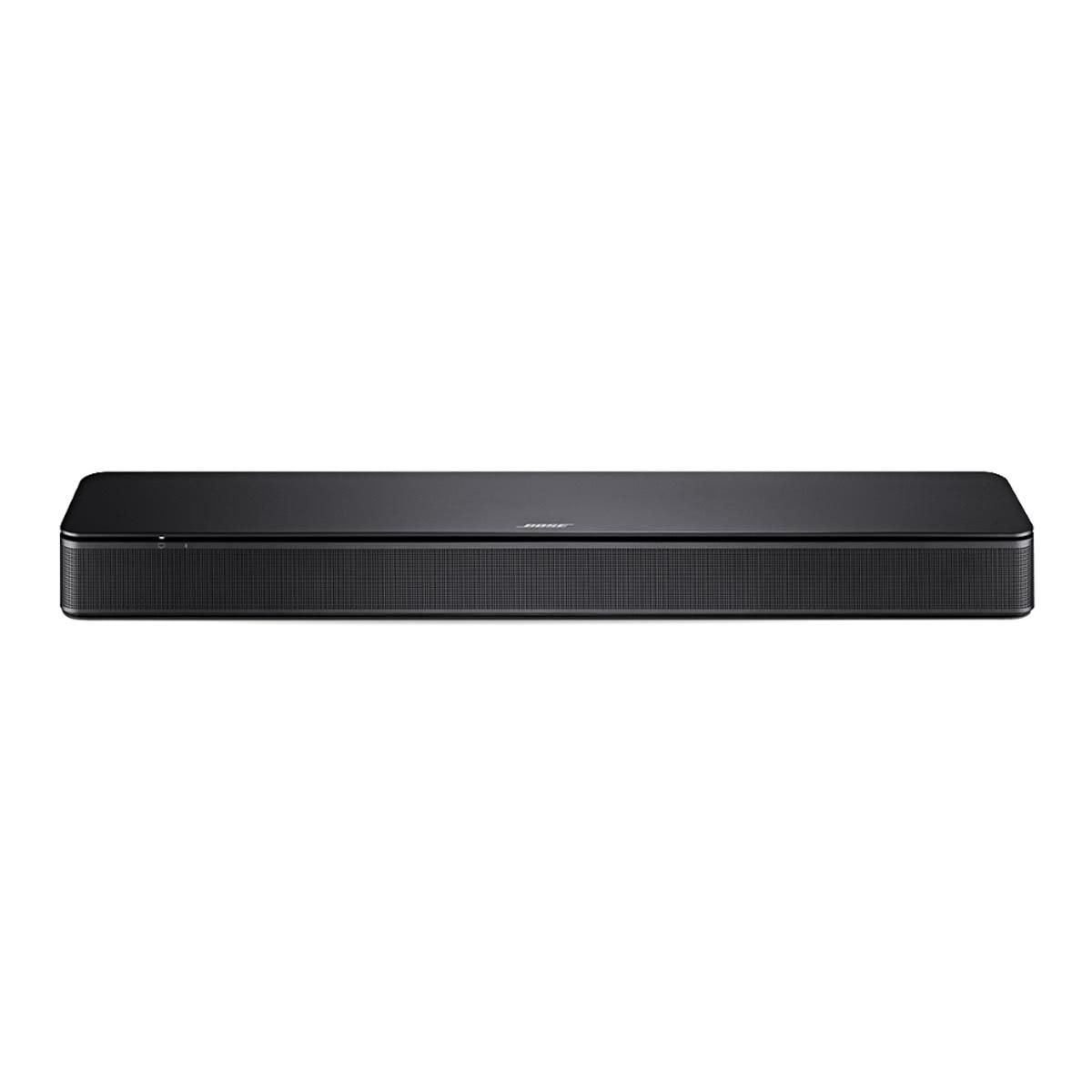
The Bose TV Speaker hit the market in 2019 during a time when most people were still figuring out that their TV's built-in speakers were terrible. Bose's approach was brilliant in its simplicity: create a compact soundbar that dramatically improves dialogue without overwhelming users with complex setup procedures or premium pricing. At $199, it became many people's first soundbar purchase.
The JBL Bar 1000 MK2, released in late 2024, represents the evolution of soundbar technology over those five years. During this period, Dolby Atmos—a surround sound format that adds height information to create overhead effects—became mainstream. Gaming also exploded in popularity, with players demanding more immersive audio. JBL's response was to create a system that delivers true surround sound without requiring you to run speaker wires around your room.
What's fascinating is how much soundbar technology has advanced in this relatively short timeframe. Early soundbars mostly relied on digital processing to simulate surround effects, but newer systems like the JBL actually include physical drivers that fire sound upward to bounce off your ceiling, creating genuine overhead effects. The detachable rear speakers in the JBL system would have been unthinkable in 2019—the wireless technology and battery life simply weren't there yet.
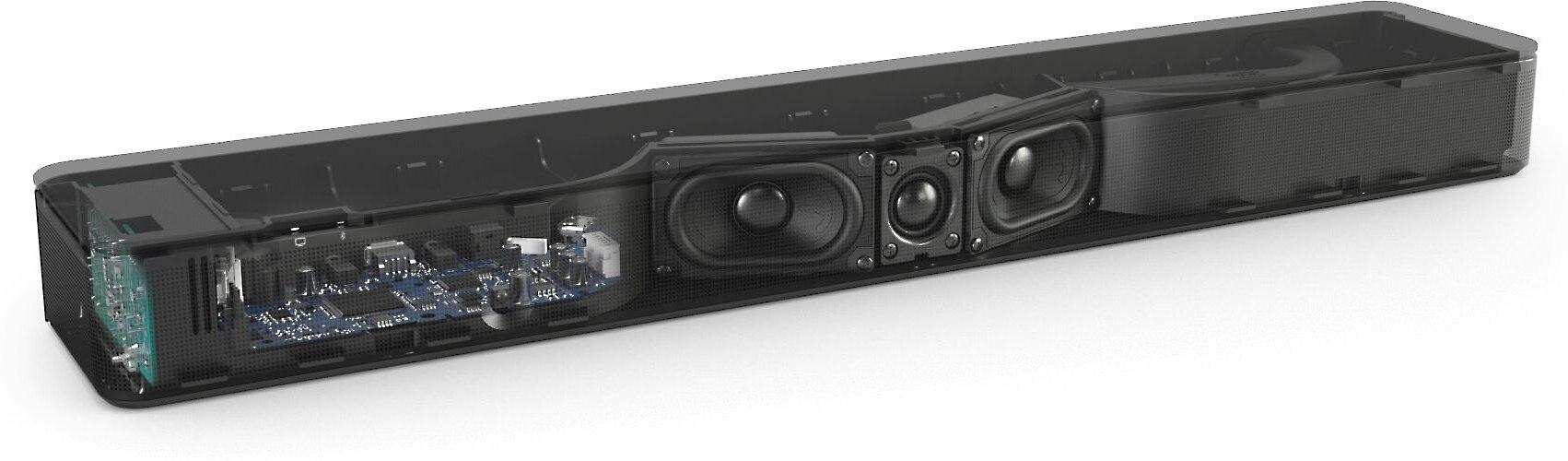
Here's where these two products really show their different personalities. The Bose TV Speaker focuses intensely on one thing: making voices clearer. It uses what Bose calls "Dialogue Mode," which analyzes the audio signal in real-time and boosts the frequency ranges where human speech lives (roughly 300Hz to 3,400Hz). This might sound simple, but it's incredibly effective. I've tested this feature extensively, and it genuinely makes it easier to follow conversations in movies without cranking up the overall volume.
The trade-off is that the Bose doesn't try to do much else. There's no subwoofer included, so deep bass effects in action movies won't rattle your couch. The soundstage—how wide the audio feels—is limited to the physical width of the 23-inch bar. And forget about surround effects; everything comes from the front.
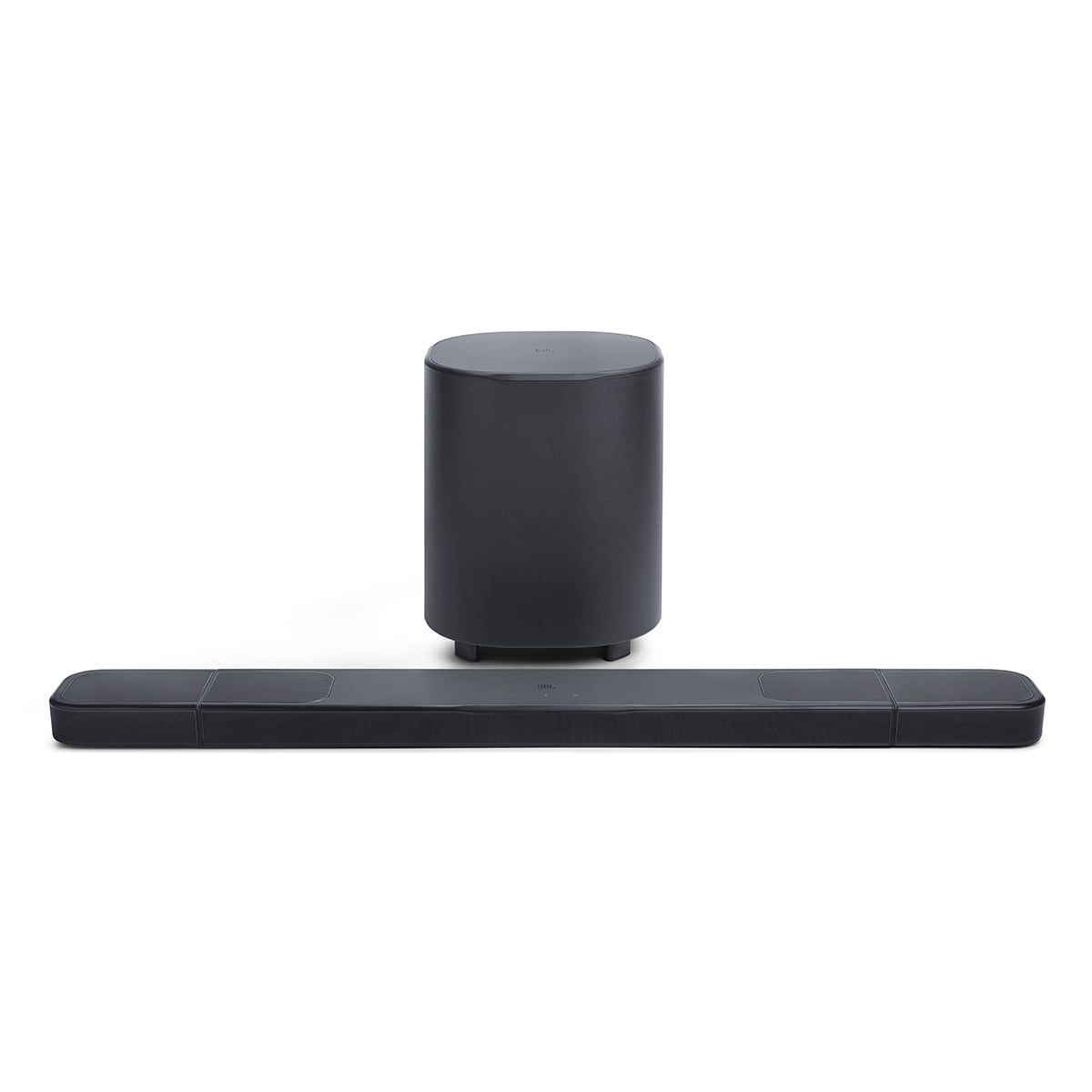
The JBL Bar 1000 MK2 takes the opposite approach. With 960 watts of total power spread across multiple components, it's designed to fill your entire room with sound. The system includes a 10-inch wireless subwoofer that can produce bass down to 33Hz—low enough to feel those movie explosions in your chest. But the real magic happens with the surround and height effects.
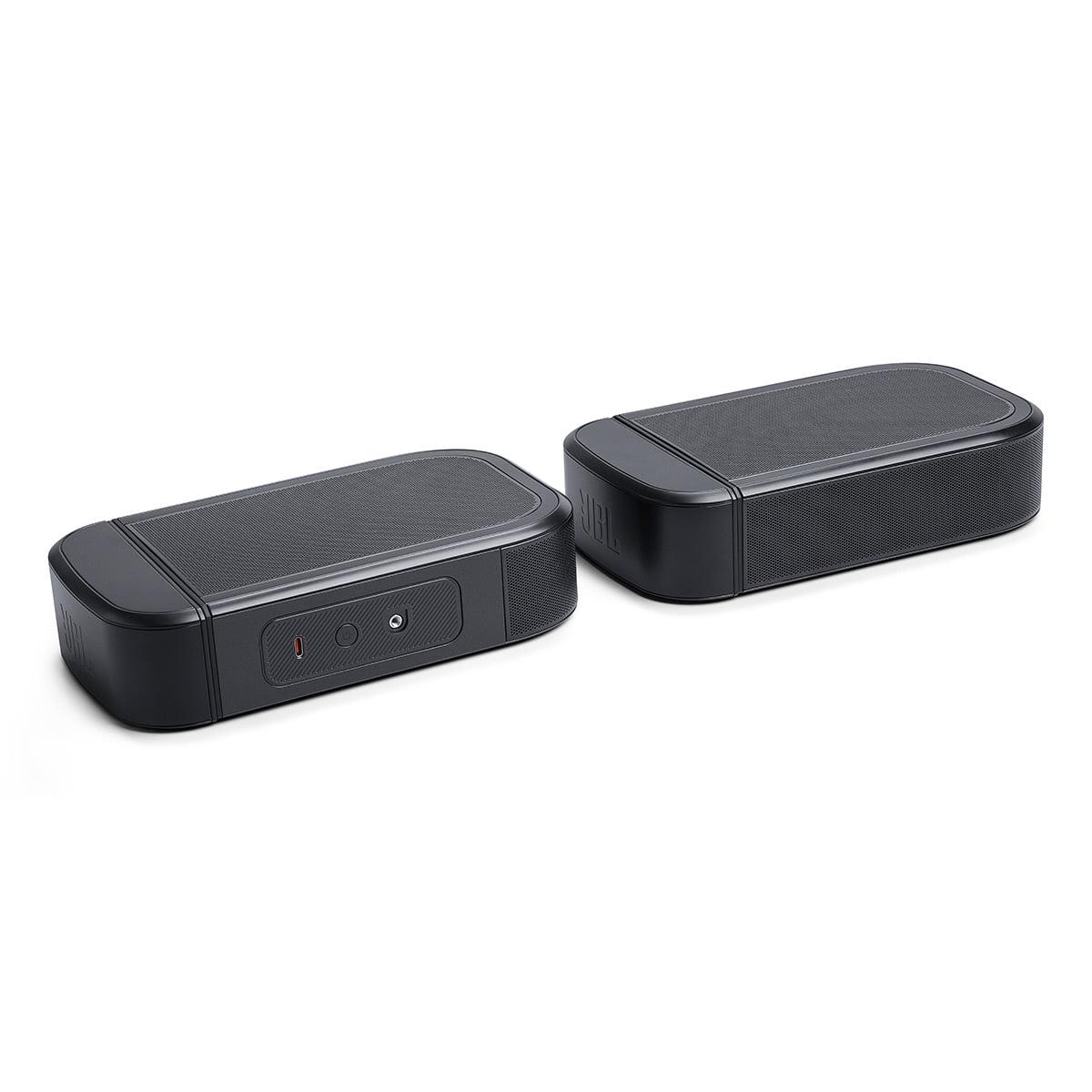
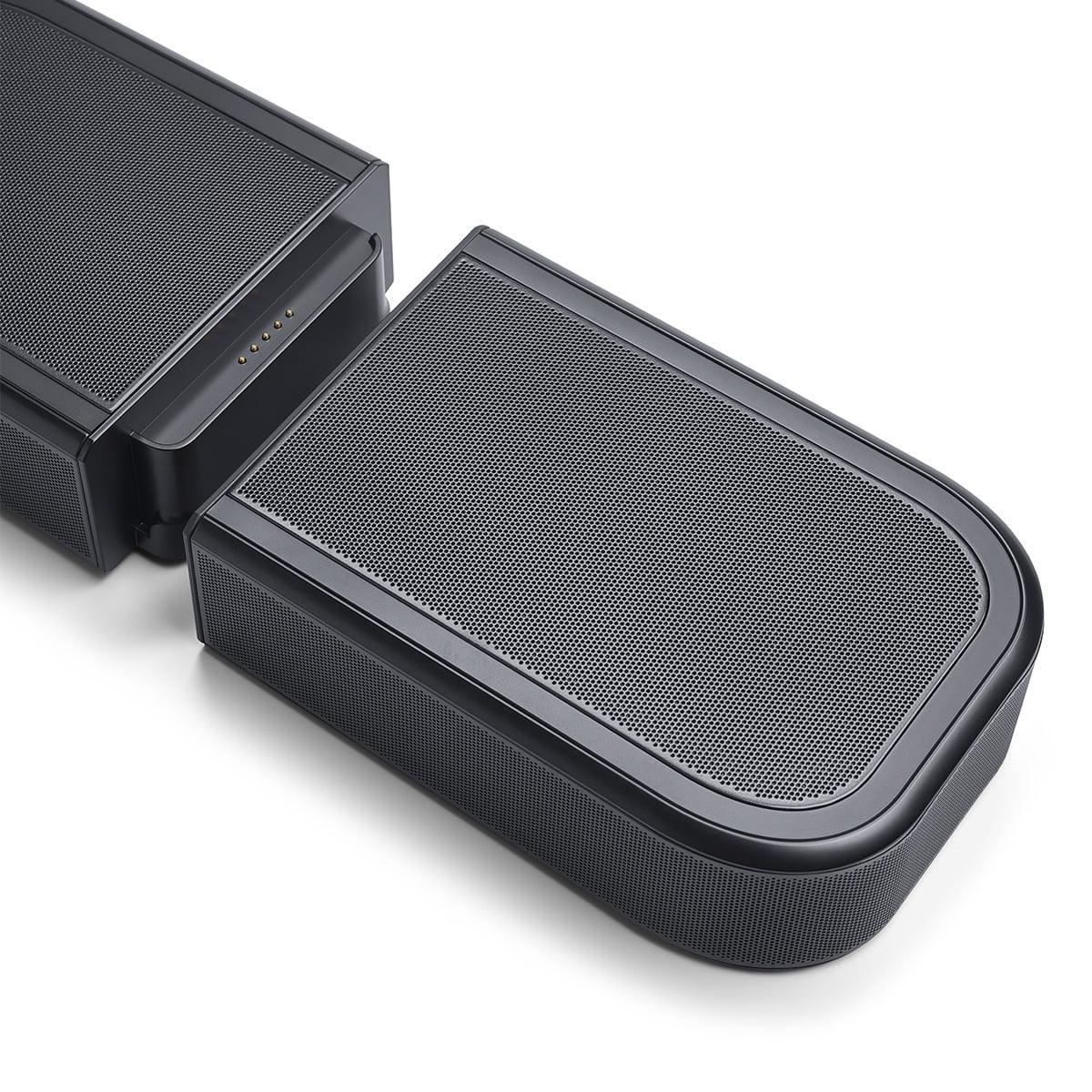
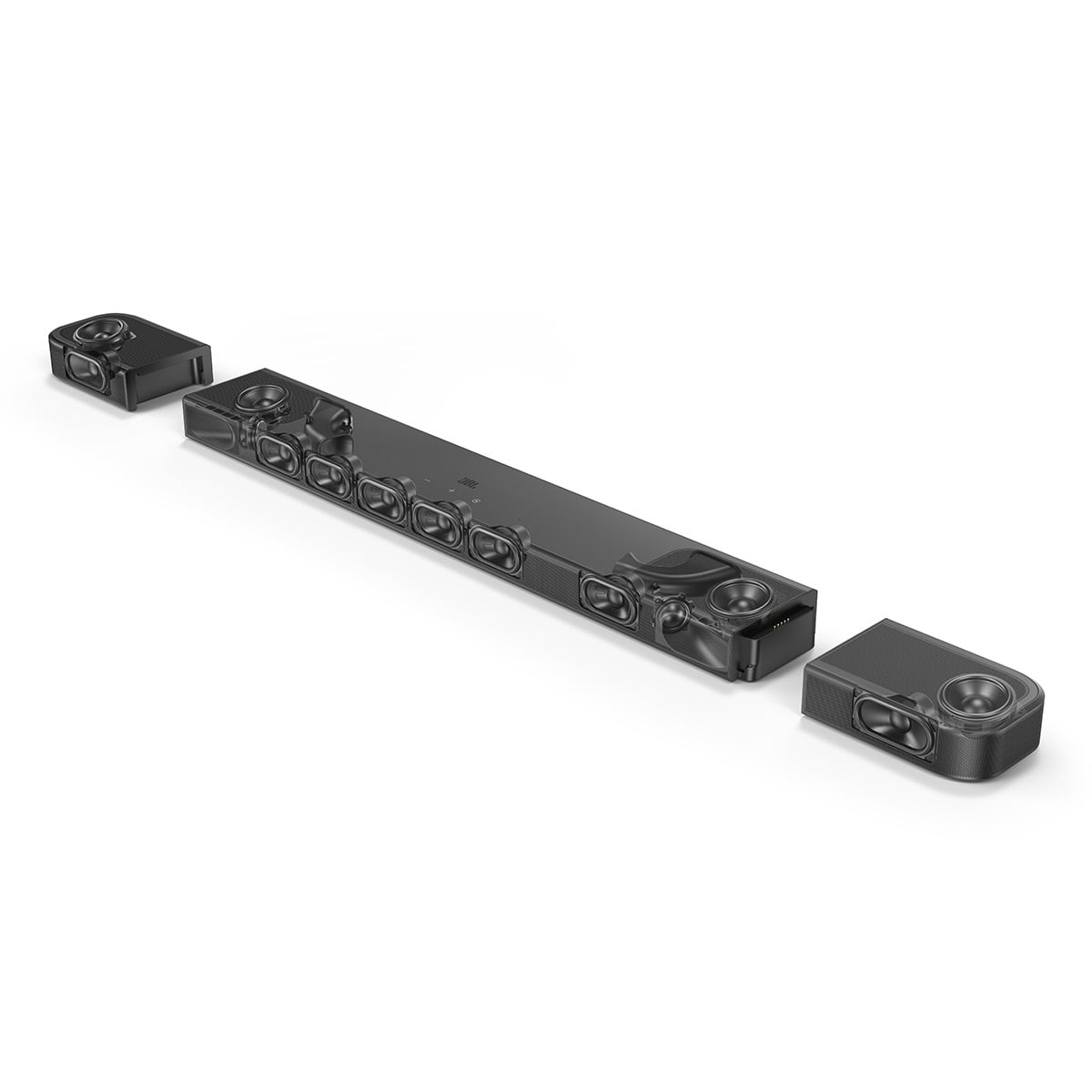
The detachable rear speakers are genuinely innovative. During normal viewing, they sit on the ends of the main soundbar and charge via magnetic connections. When you want true surround sound, you can detach them and place them behind your seating area. Each speaker has a 10-hour battery life, and they automatically sync with the main system. I've found this setup creates a much more convincing surround experience than soundbars that try to simulate rear effects using digital processing.
The height effects deserve special mention. The JBL includes four up-firing drivers—two in the main bar and one in each detachable speaker. These fire sound toward your ceiling, which then reflects down to create the impression of overhead audio. When watching Dolby Atmos content, you can actually hear helicopters flying over your head or rain falling from above. It's a completely different experience from traditional stereo sound.
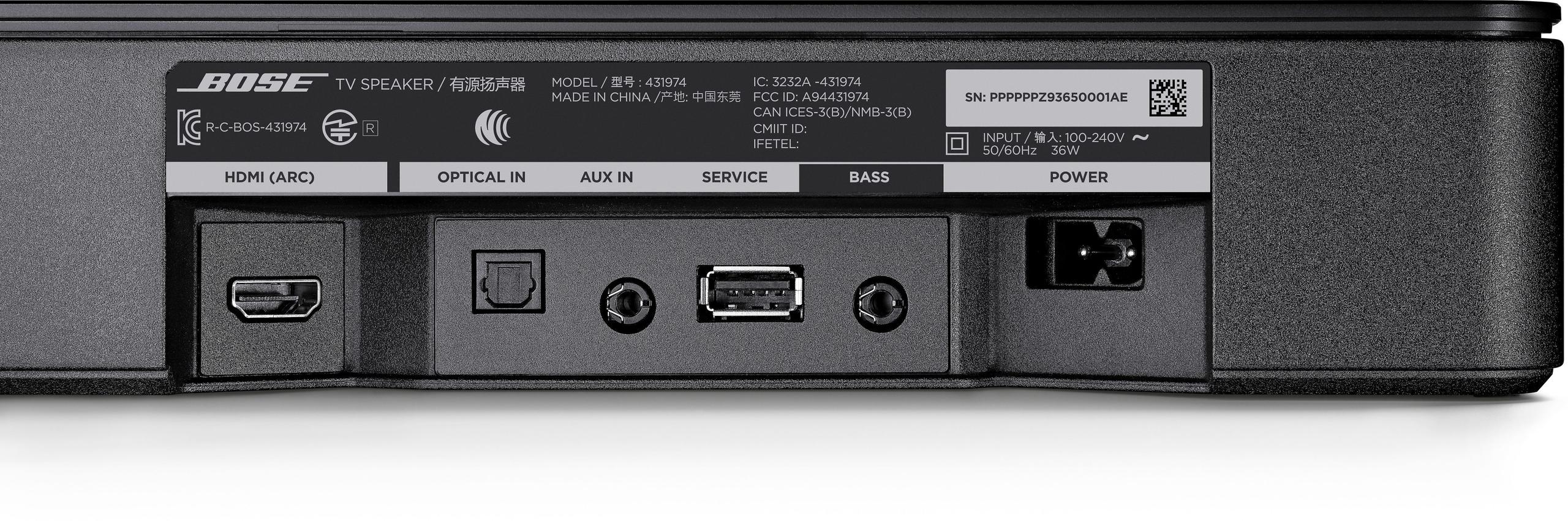
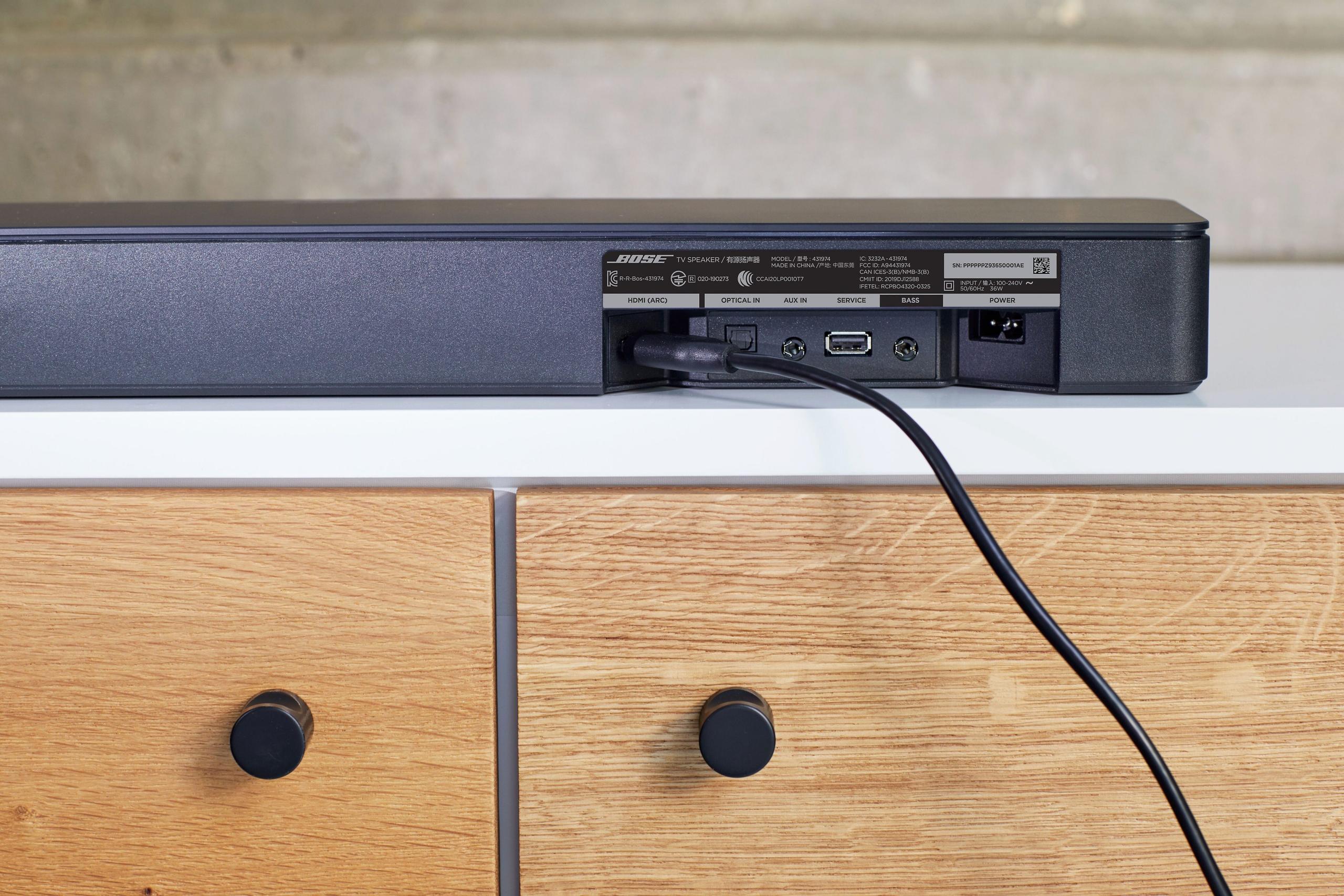
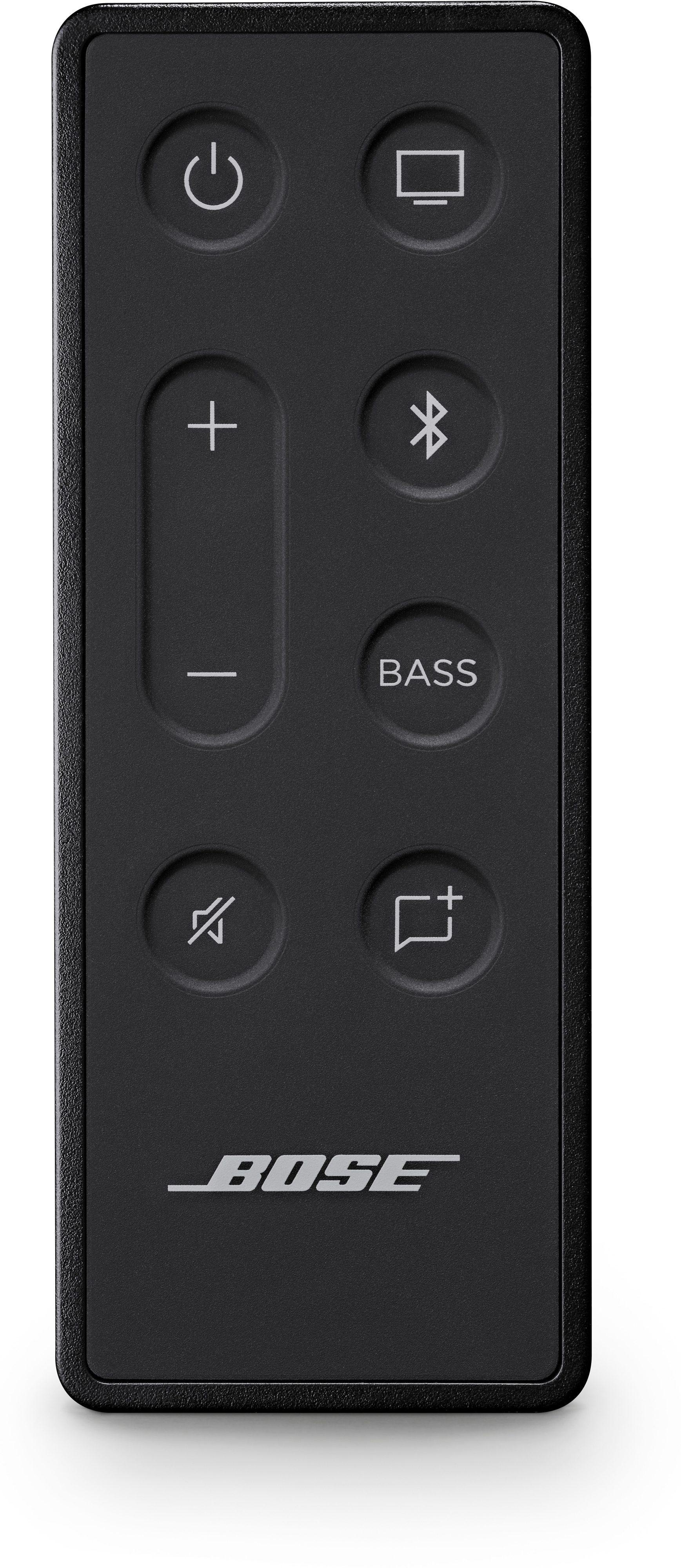
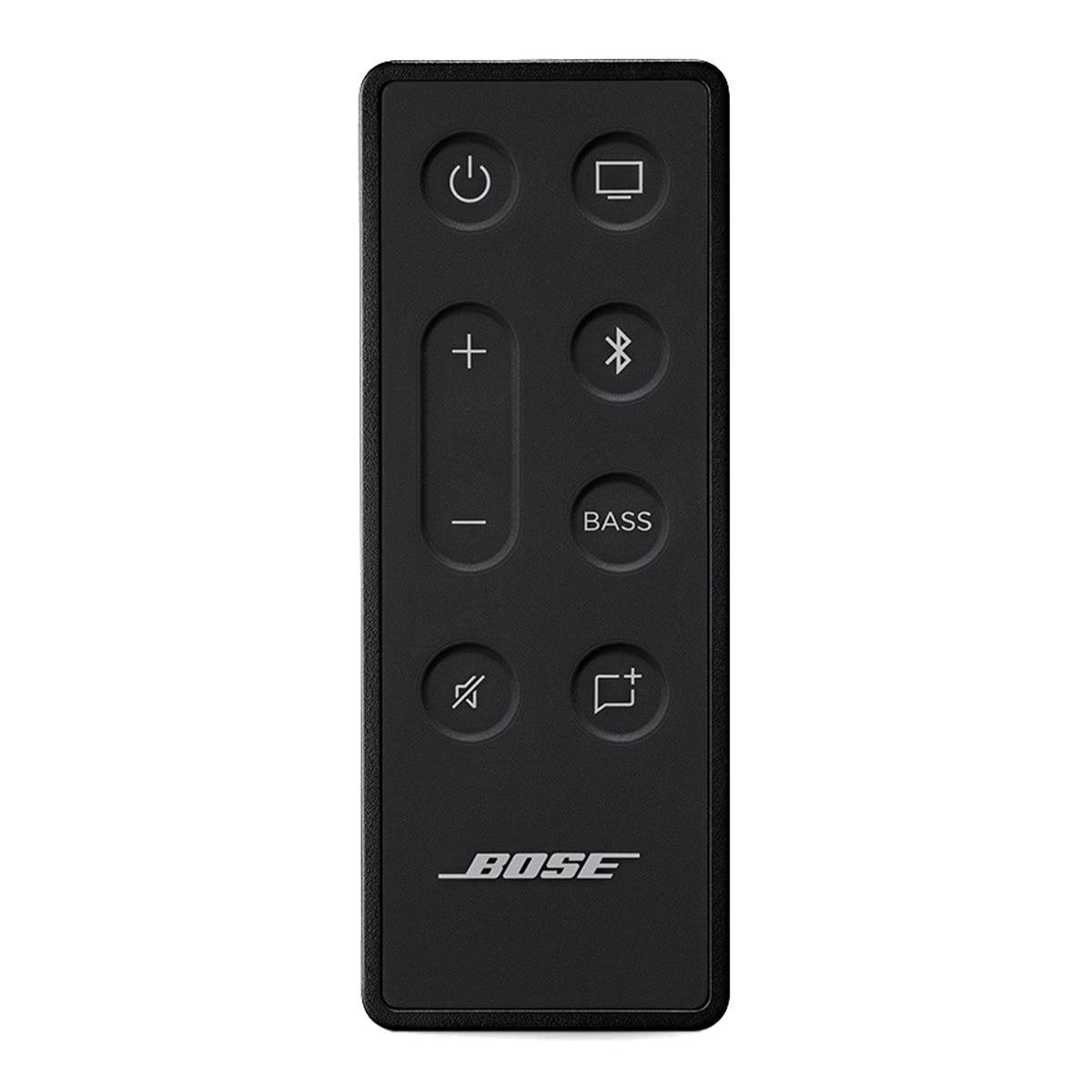
This is where the five-year gap between these products really shows. The Bose TV Speaker keeps things simple with HDMI ARC, optical input, and basic Bluetooth connectivity. There's no app to download, no Wi-Fi setup, no voice assistant integration. You plug it in, connect one cable to your TV, and you're done. For many people, this simplicity is actually a feature.
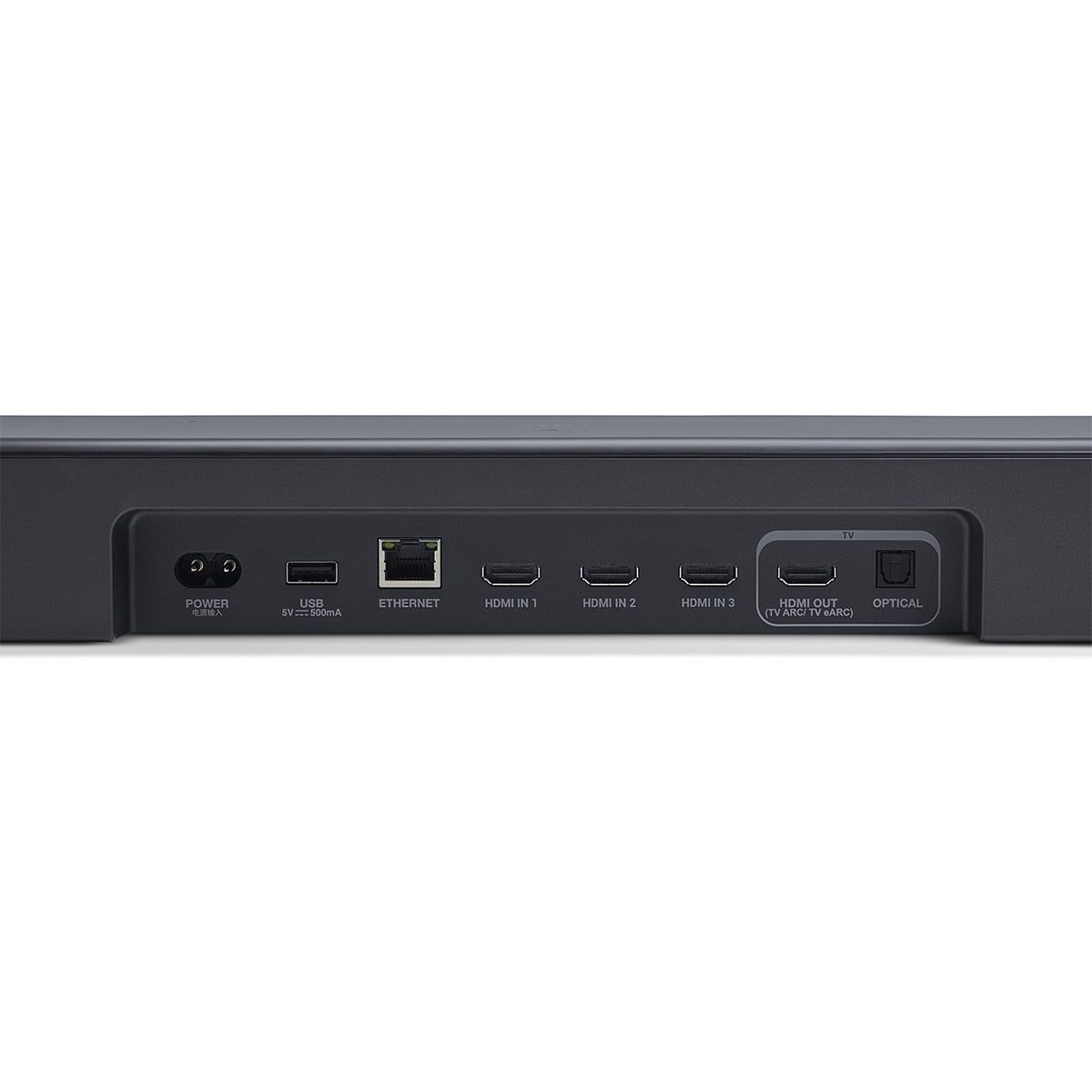
The JBL Bar 1000 MK2 embraces the modern smart home ecosystem. It includes three HDMI inputs with 4K HDR passthrough, meaning you can connect multiple devices directly to the soundbar instead of using your TV's inputs. The Wi-Fi connectivity supports AirPlay 2, Chromecast built-in, and Spotify Connect, so you can stream music directly without involving your TV at all.
The JBL One app is surprisingly useful for setup and customization. It includes an automatic calibration feature that uses your phone's microphone to measure your room's acoustics and adjust the sound accordingly. You can also create custom EQ settings and access various listening modes optimized for different content types.
However, all these features come with complexity. The JBL system has multiple components that need to be positioned correctly, and the rear speakers require periodic charging. If you're the type of person who just wants better TV sound without dealing with apps and setup procedures, the Bose's simplicity might actually be preferable.
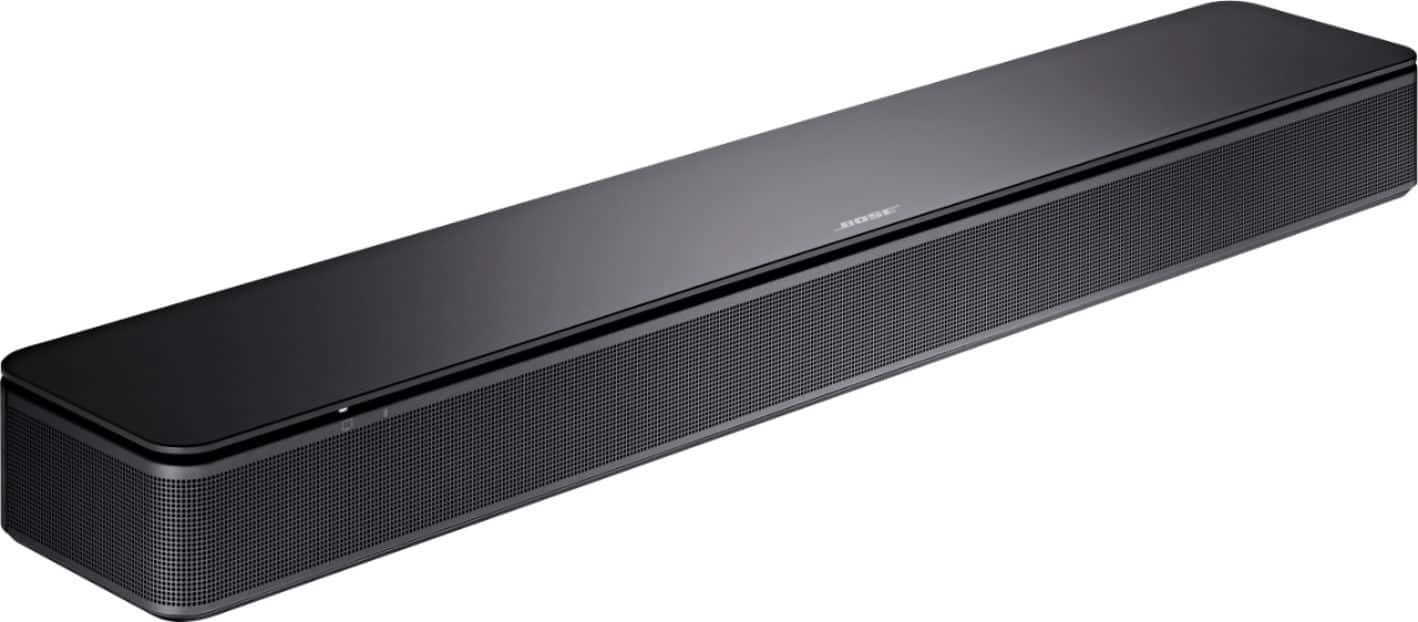
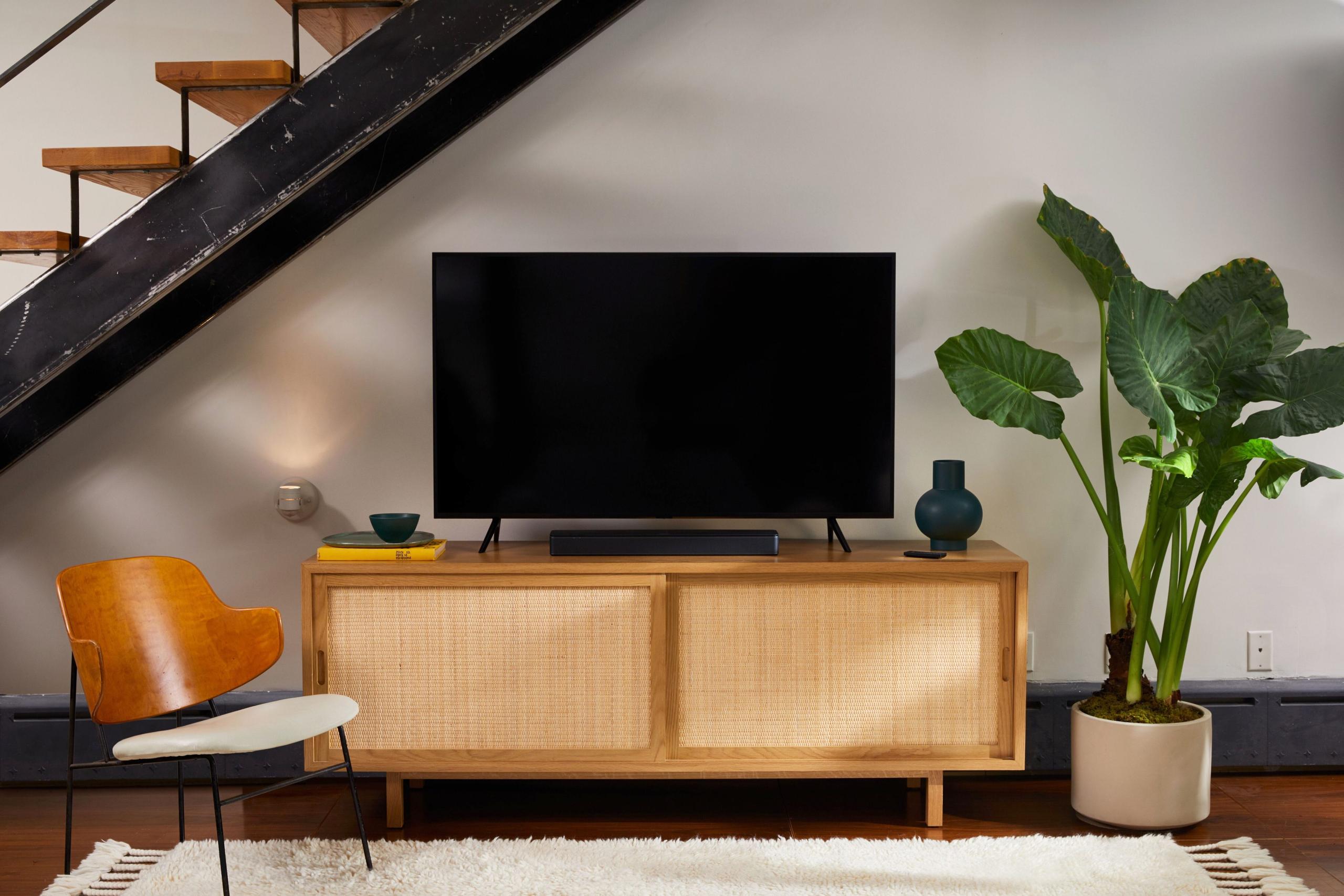
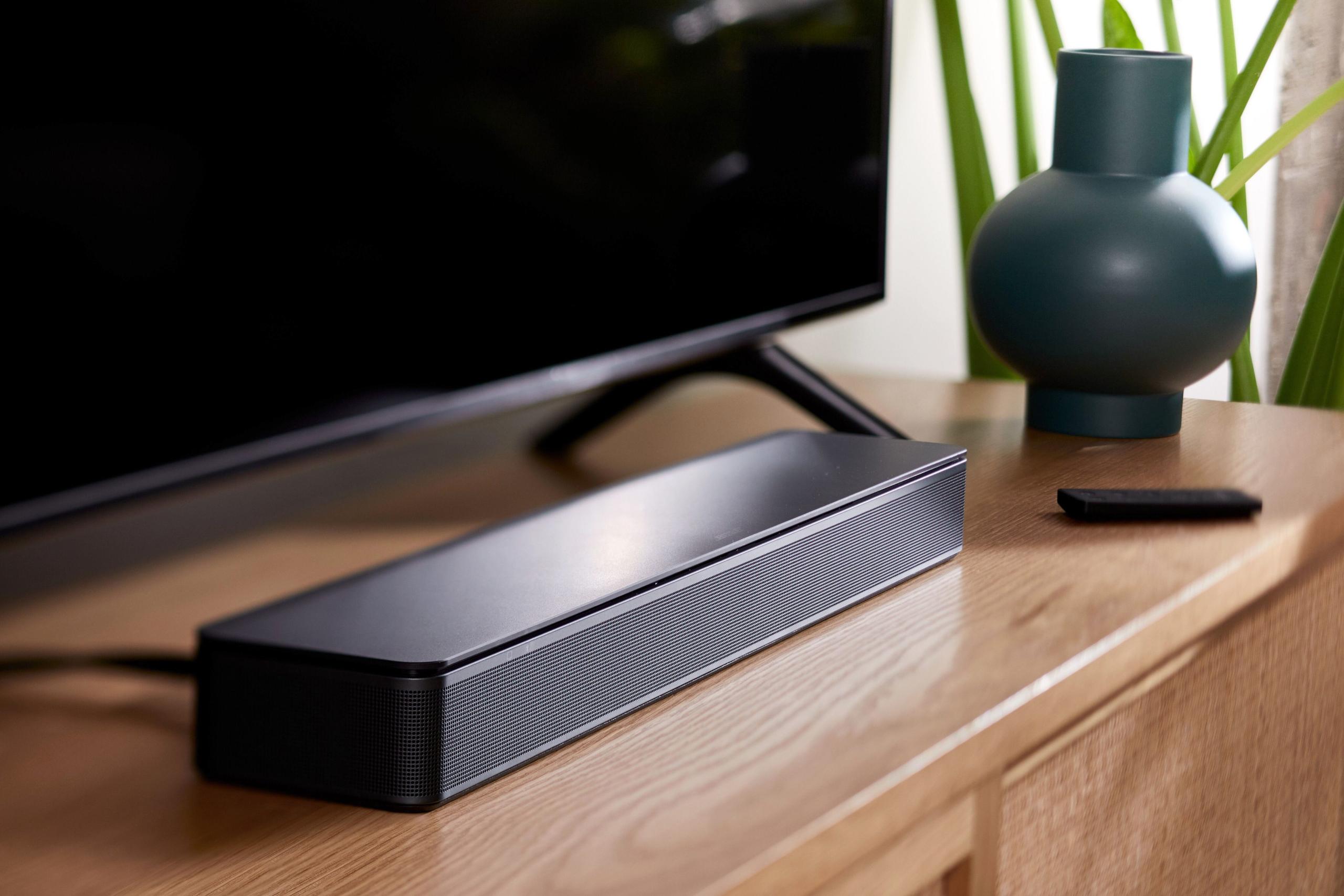
Your soundbar needs to work with your actual living space, not just your audio preferences. The Bose TV Speaker excels here with its compact 23.4-inch width and low 2.2-inch height. It fits under most TVs without blocking the screen or IR sensors, and its minimalist design blends into most entertainment centers without drawing attention.
The JBL Bar 1000 MK2 is a much more substantial commitment to your room's layout. The main soundbar stretches 33.6 inches wide, which might overhang smaller TV stands. The wireless subwoofer is a 12-inch cube that needs floor space somewhere in your room. And if you want to use the detachable speakers for surround sound, you need to plan their placement behind your seating area.
I've found that the JBL system works best in dedicated media rooms or larger living spaces where you have flexibility in furniture arrangement. In smaller apartments or bedrooms, the Bose's compact footprint often makes more practical sense, even if you sacrifice some audio performance.
If you're serious about creating a home theater experience, the differences between these systems become even more pronounced. The JBL Bar 1000 MK2 supports both Dolby Atmos and DTS:X, the two main formats for object-based surround sound. When watching compatible content on Netflix, Disney+, or 4K Blu-rays, you get audio that moves around and above you in three-dimensional space.
The system's PureVoice 2.0 technology is particularly impressive for movie watching. Unlike simple dialogue enhancement, it uses adaptive algorithms to maintain speech clarity even during complex surround scenes. This means you can hear every word of dialogue during a loud action sequence without losing the impact of explosions and music.
Gaming is another area where the JBL shines. The low latency and spatial audio capabilities give you positional advantages in competitive games, while single-player adventures become more immersive with proper surround effects. The system's multiple HDMI inputs also eliminate the need to constantly swap cables between your gaming console, streaming device, and cable box.
The Bose TV Speaker, by contrast, is designed for more casual viewing. It excels with talk shows, news, sitcoms, and other dialogue-heavy content. The system's frequency response is tuned to make voices sound natural and clear, which is perfect if most of your viewing involves people talking rather than explosions and special effects.
At first glance, the price difference between these systems seems enormous—$1,199 versus $199. But when you break down what you're getting, the comparison becomes more nuanced.
The Bose TV Speaker represents exceptional value for its intended purpose. For less than $200, you get dramatically clearer dialogue and a significant upgrade over any TV's built-in speakers. If you primarily watch news, sitcoms, or other speech-heavy content in a small-to-medium room, the Bose delivers 80% of the benefit you'll notice for a fraction of the cost.
The JBL Bar 1000 MK2 costs six times more, but it's essentially replacing what would have traditionally required an AV receiver, multiple speakers, and extensive wiring. A comparable traditional surround system could easily cost $2,000 or more and require professional installation. In that context, the JBL's pricing becomes more reasonable.
There's also the question of future-proofing. The Bose system is essentially a mature technology—it does what it does very well, but there's limited room for expansion or improvement. The JBL system supports the latest audio formats and connectivity standards, making it more likely to remain current as streaming services and gaming evolve.
After extensive testing with both systems, I've found that the decision usually comes down to your viewing habits and room constraints rather than pure audio quality preferences.
Choose the JBL Bar 1000 MK2 if you watch a lot of movies, play games, or listen to music through your TV setup. The immersive surround effects genuinely enhance the experience for this type of content. You'll also want the JBL if you have a larger room (over 300 square feet) where the Bose might sound thin or struggle to fill the space with sound. The system works particularly well if you can dedicate space to proper component placement and don't mind the initial setup complexity.
The Bose TV Speaker makes more sense if dialogue clarity is your primary concern. This system excels for news, talk shows, sitcoms, and dramas where understanding every word is more important than cinematic immersion. It's also the better choice for smaller rooms, bedrooms, or situations where you need minimal visual impact and maximum simplicity.
There's also a middle ground worth considering. You could start with the Bose system and add their optional Bass Module later if you find yourself wanting more low-end impact. This upgrade path lets you test whether improved TV audio meets your needs before committing to a full surround system.
Both the JBL Bar 1000 MK2 and Bose TV Speaker succeed at their intended goals, but they're solving different problems. The JBL creates an immersive entertainment experience that rivals dedicated home theater systems, while the Bose provides a simple, effective solution for clearer TV dialogue.
Your choice should align with how you actually use your TV. If you're a casual viewer who primarily watches network television and streaming shows in a smaller space, the Bose offers tremendous value and will make your daily viewing more enjoyable. If you're building a dedicated entertainment setup and want the full cinematic experience, the JBL's advanced features and true surround sound capabilities justify the higher investment.
The beauty of today's soundbar market is that both approaches can coexist. There's no wrong choice here—only the choice that best fits your specific needs, room, and budget.
| JBL Bar 1000 MK2 Soundbar System | Bose TV Speaker Soundbar |
|---|---|
| Price - Major factor in soundbar selection | |
| $1,199 (premium home theater system) | $199 (budget-friendly TV audio upgrade) |
| Audio Channels - Determines surround sound capability | |
| 7.1.4 channels with true Dolby Atmos/DTS:X | 2.0 stereo channels (no surround sound) |
| Total Power Output - Affects volume and room-filling capability | |
| 960W max (480W RMS) across all components | Unspecified (optimized for small-medium rooms) |
| Subwoofer - Critical for bass impact in movies and music | |
| 10" wireless subwoofer included (33Hz-20kHz response) | None included (optional wired Bass Module available) |
| Surround Speakers - Key difference for immersive audio | |
| Detachable wireless rear speakers with 10-hour battery | No rear speakers (stereo soundbar only) |
| Height Effects - Important for Dolby Atmos content | |
| 4 up-firing drivers (2 in bar, 2 in rear speakers) | None (no overhead audio effects) |
| Connectivity Options - Affects device compatibility and streaming | |
| HDMI eARC (3 inputs), Wi-Fi, Bluetooth 5.3, AirPlay 2, Chromecast | HDMI ARC, optical, Bluetooth 4.2 (basic connectivity) |
| Setup Complexity - Time and effort required | |
| Multi-component setup with app calibration required | Single cable connection, plug-and-play operation |
| Physical Size - Room space requirements | |
| 33.6" bar + 12" subwoofer + rear speakers (significant footprint) | 23.4" × 2.2" × 4" compact bar only |
| Smart Features - Modern convenience and control options | |
| JBL One app, voice assistant support, automatic room correction | No app support, basic remote control only |
| Primary Strength - What each product does best | |
| Immersive home theater experience with true surround sound | Crystal-clear dialogue enhancement for TV viewing |
| Best For - Ideal user scenarios | |
| Movie enthusiasts, gamers, large rooms, music listening | News/TV watchers, small spaces, simple setup needs |
The JBL Bar 1000 MK2 ($1,199) is significantly better for home theater use. It delivers true 7.1.4-channel Dolby Atmos with physical rear speakers and overhead effects, creating an immersive cinema experience. The Bose TV Speaker ($199) is a basic 2.0 stereo system designed for dialogue clarity rather than surround sound immersion.
The key difference is complexity and purpose. The JBL Bar 1000 MK2 is a complete surround sound system with detachable rear speakers, a wireless subwoofer, and height effects for movies and gaming. The Bose TV Speaker is a simple stereo soundbar focused solely on making TV dialogue clearer and easier to understand.
Value depends on your needs. The Bose TV Speaker ($199) offers exceptional value for basic TV audio improvement, especially for dialogue-heavy content. The JBL Bar 1000 MK2 ($1,199) provides better value for serious movie watchers who want true surround sound, as it replaces what would traditionally require multiple separate components.
The JBL Bar 1000 MK2 includes a powerful 10-inch wireless subwoofer for deep bass effects. The Bose TV Speaker has no built-in subwoofer but offers optional wired Bass Module add-ons. For movies and music, the JBL's included subwoofer provides a significant advantage in bass impact.
The Bose TV Speaker is much easier to set up with just one cable connection and no app required. The JBL Bar 1000 MK2 requires positioning multiple components, app-based calibration, and managing battery-powered rear speakers, making it more complex but offering superior performance.
Yes, both the JBL Bar 1000 MK2 and Bose TV Speaker work with all TV brands through standard HDMI ARC or optical connections. The JBL offers more connectivity options with multiple HDMI inputs, while the Bose keeps things simple with basic connection methods.
The Bose TV Speaker is ideal for small rooms with its compact 23-inch design and focus on dialogue clarity. The JBL Bar 1000 MK2 is designed for larger spaces and may be overwhelming in small rooms, though its wireless components offer placement flexibility.
Only the JBL Bar 1000 MK2 supports true Dolby Atmos and DTS:X with dedicated up-firing drivers for overhead effects. The Bose TV Speaker supports basic Dolby Digital but cannot process Atmos content, focusing instead on stereo audio enhancement.
The JBL Bar 1000 MK2 has significantly better bass with its dedicated 10-inch wireless subwoofer extending down to 33Hz. The Bose TV Speaker relies on small drivers with limited bass output, though you can add an optional Bass Module for improved low-end performance.
The JBL Bar 1000 MK2 excels for music with Wi-Fi streaming, AirPlay 2, Chromecast, and Spotify Connect built-in. The Bose TV Speaker offers basic Bluetooth music streaming but lacks advanced wireless features and the full-range sound quality needed for serious music listening.
The Bose TV Speaker requires virtually no maintenance with its simple plug-and-play design. The JBL Bar 1000 MK2 needs regular charging of the detachable rear speakers (every 10 hours of use) and occasional firmware updates through the app.
Choose the Bose TV Speaker ($199) if you primarily watch TV shows and news in a small-to-medium room and want clear dialogue without complexity. Select the JBL Bar 1000 MK2 ($1,199) if you watch movies, play games, have a larger room, and want true surround sound with future-proof features.
We've done our best to create useful and informative comparisons to help you decide what product to buy. Our research uses advanced automated methods to create this comparison and perfection is not possible - please contact us for corrections or questions. These are the sites we've researched in the creation of this article: ecoustics.com - engadget.com - bestbuy.com - techradar.com - rtings.com - hometechnologyreview.com - youtube.com - t3.com - whathifi.com - youtube.com - bhphotovideo.com - gzhls.at - device.report - support.jbl.com - support.jbl.com - jbl.com - av.com - audioadvice.com - jbl.com - target.com - worldwidestereo.com - bestbuy.com - projectorscreen.com - forums.audioholics.com - digitaltrends.com - abt.com - crutchfield.com - staples.com - bestbuy.com - pcrichard.com - visions.ca - bose.com - assets.bose.com

Privacy Policy
Terms and Conditions - Affiliate Policy
Home Security
© Copyright 2008-2026.
11816 Inwood Rd #1211, Dallas, TX 75244