

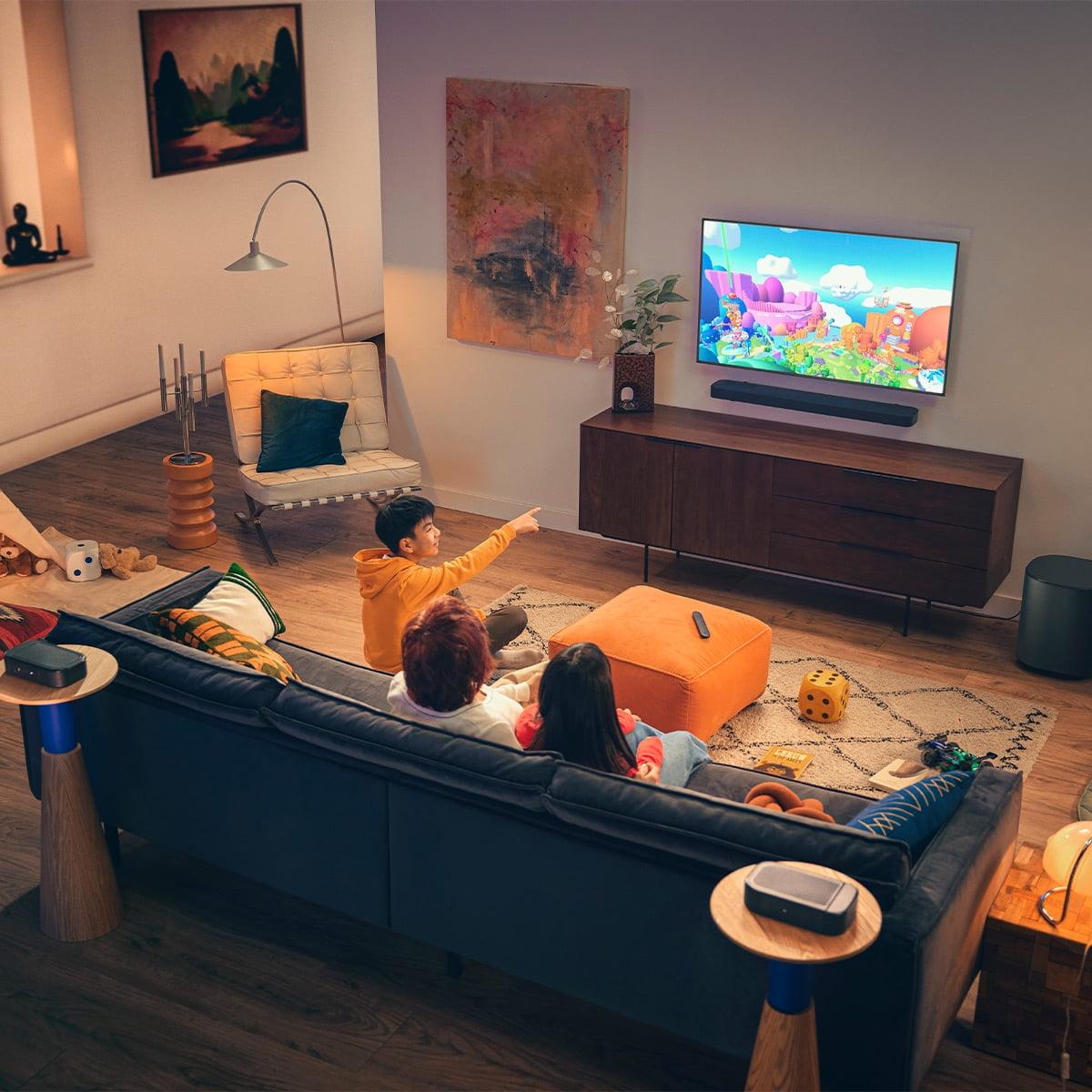
When your TV's built-in speakers sound like they're buried in a tin can, it's time to upgrade. Soundbars have become the go-to solution for dramatically improving your home entertainment audio without the complexity of a full surround sound system. But with options ranging from under $150 to over $1,000, choosing the right one can feel overwhelming.
Today we're comparing two very different approaches to home theater audio: the Ultimea Aura A40 U2601 and the JBL Bar 1000 MK2. These systems represent opposite ends of the soundbar spectrum—one prioritizes value and accessibility, while the other delivers no-compromise premium performance. Understanding their differences will help you decide which approach makes sense for your space, budget, and audio expectations.
Before diving into specifics, let's establish what separates good soundbars from mediocre ones. The most critical performance factors are channel configuration (how many discrete audio channels the system can reproduce), power handling (how loud and clean the sound remains at high volumes), frequency response (the range from deep bass to crisp highs), and connectivity options (how well it integrates with modern TVs and streaming devices).
Virtual surround uses digital processing to simulate multi-channel audio from fewer physical speakers, while true surround uses actual discrete speakers placed around the room. Think of virtual surround like a skilled magician creating the illusion of multiple performers, while true surround is actually having those performers positioned around you.
Dolby Atmos is a newer audio format that adds height information to surround sound, making helicopters sound like they're flying overhead rather than just side-to-side. This requires upward-firing speakers or ceiling-mounted ones to bounce sound off your ceiling back to your ears.
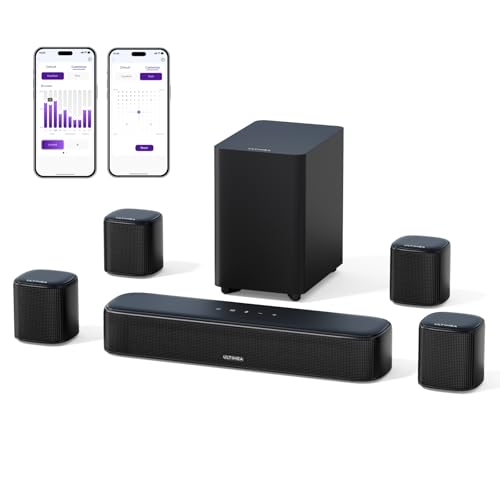
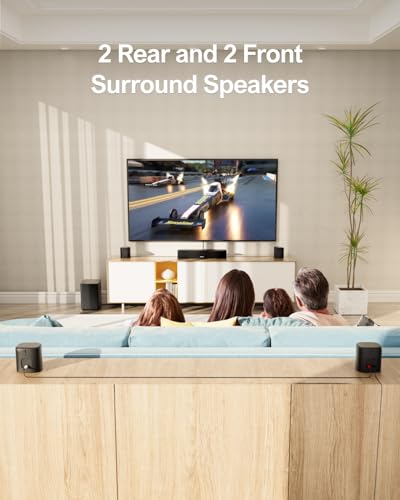
Released in 2024, the Ultimea Aura A40 U2601 represents an aggressive approach to budget soundbar design. At roughly $130 (at the time of writing), it includes features typically found in systems costing three times more: four physical surround speakers, a dedicated subwoofer, and extensive app-based customization.
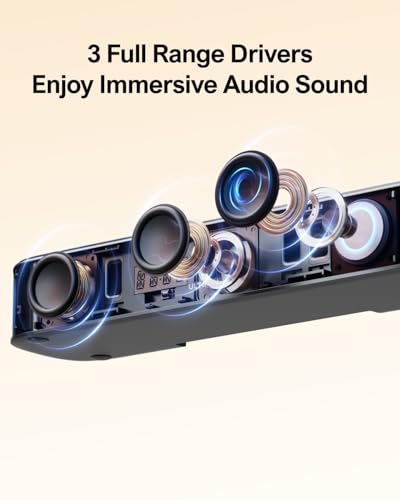
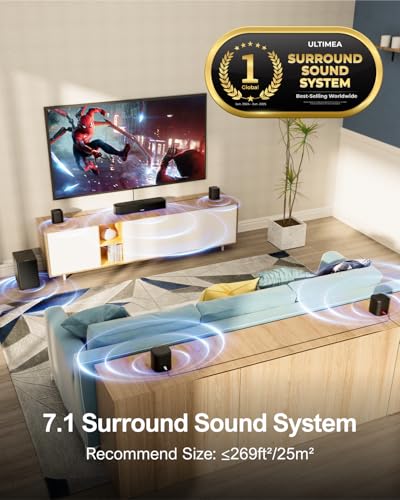
The system uses what Ultimea calls "7.1 virtual surround," which means it processes audio to simulate seven main channels plus one subwoofer channel. However, it's important to understand that this isn't true 7.1-channel discrete audio—it's advanced stereo processing distributed across eight physical speakers (three in the main bar, four surround speakers, and one subwoofer).
The Ultimea Aura A40 U2601 includes BassMX technology, which is the company's digital processing designed to optimize bass response from the 4-inch subwoofer. While the marketing sounds impressive, the real-world result is controlled low-frequency output that won't rattle your neighbors but provides enough punch for movies and music.
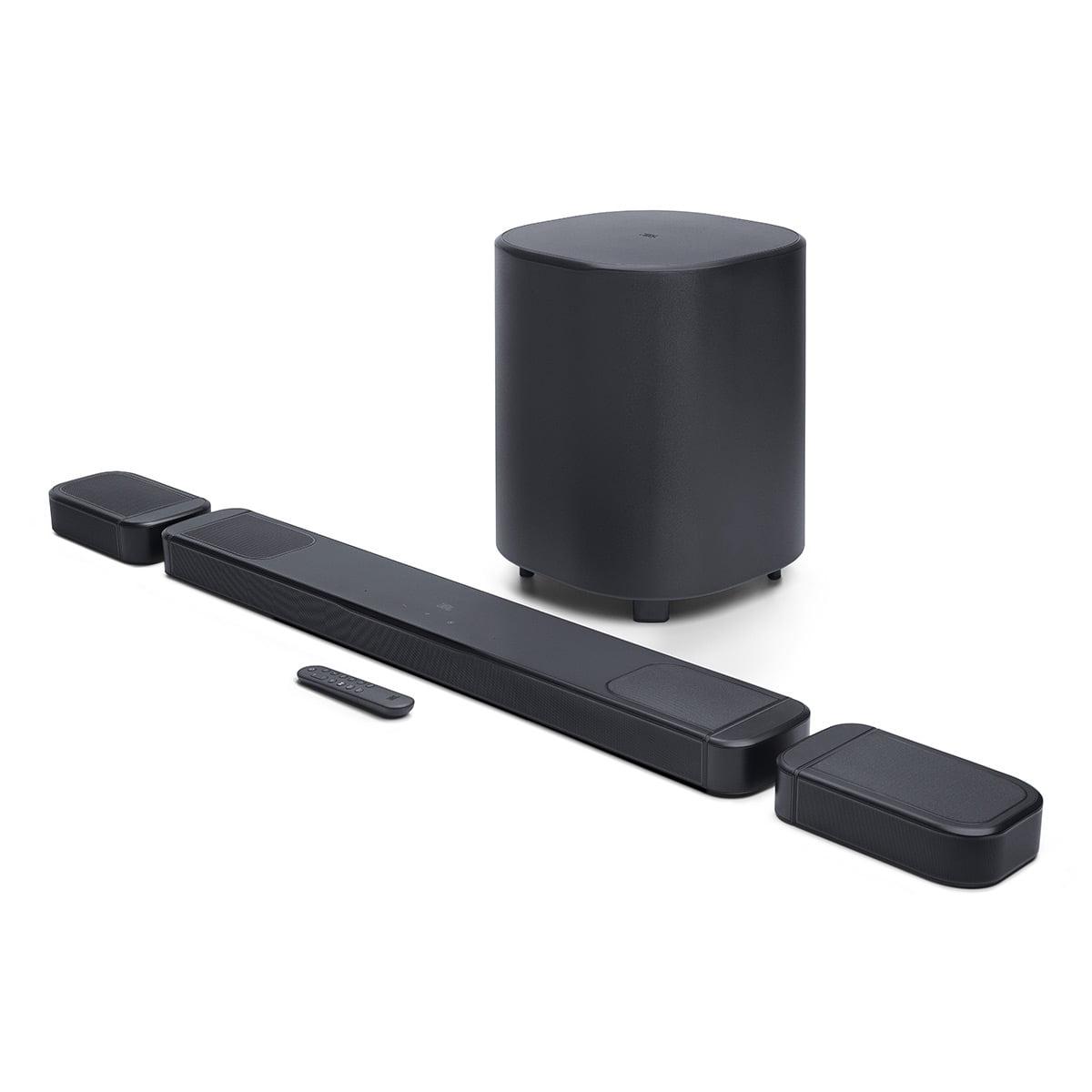
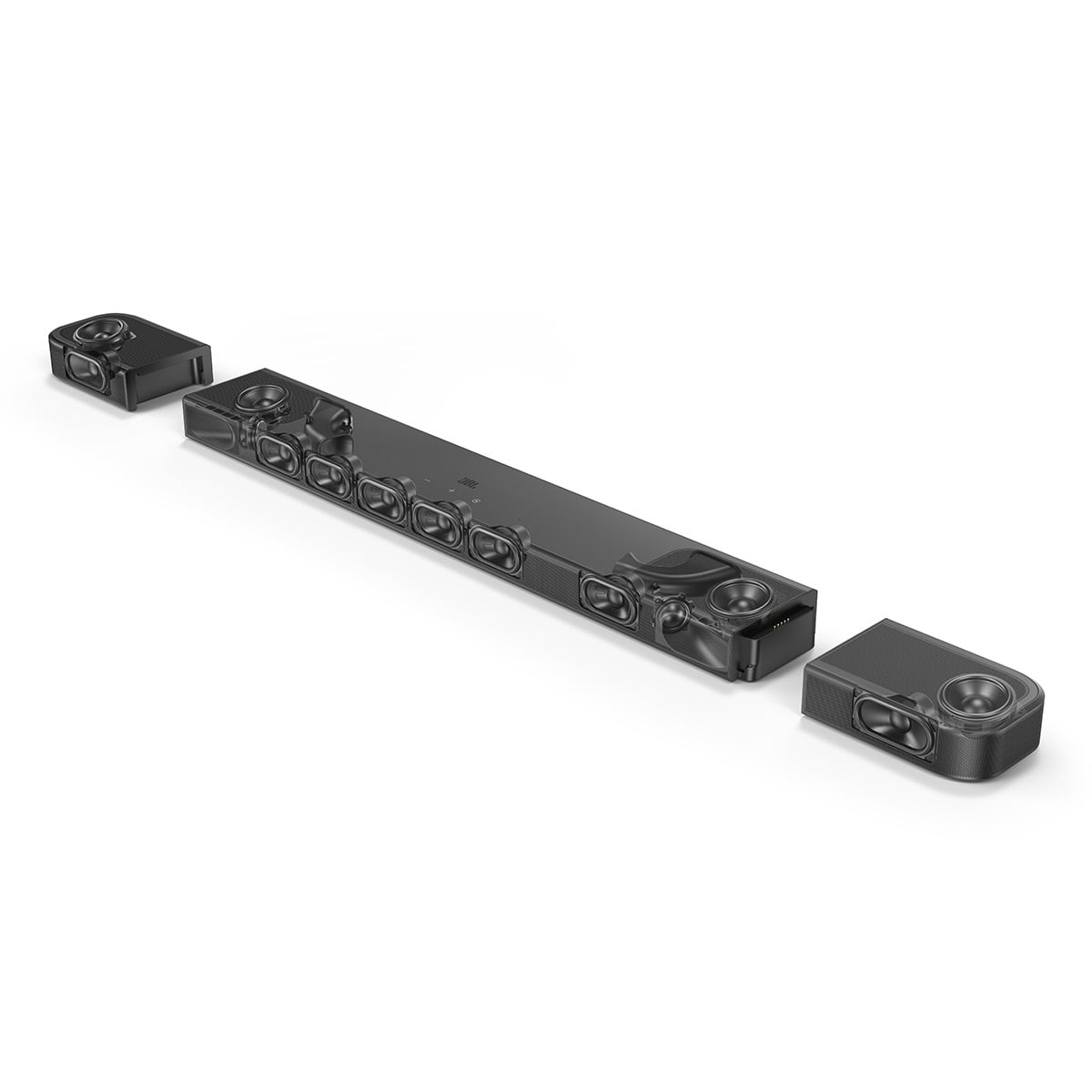
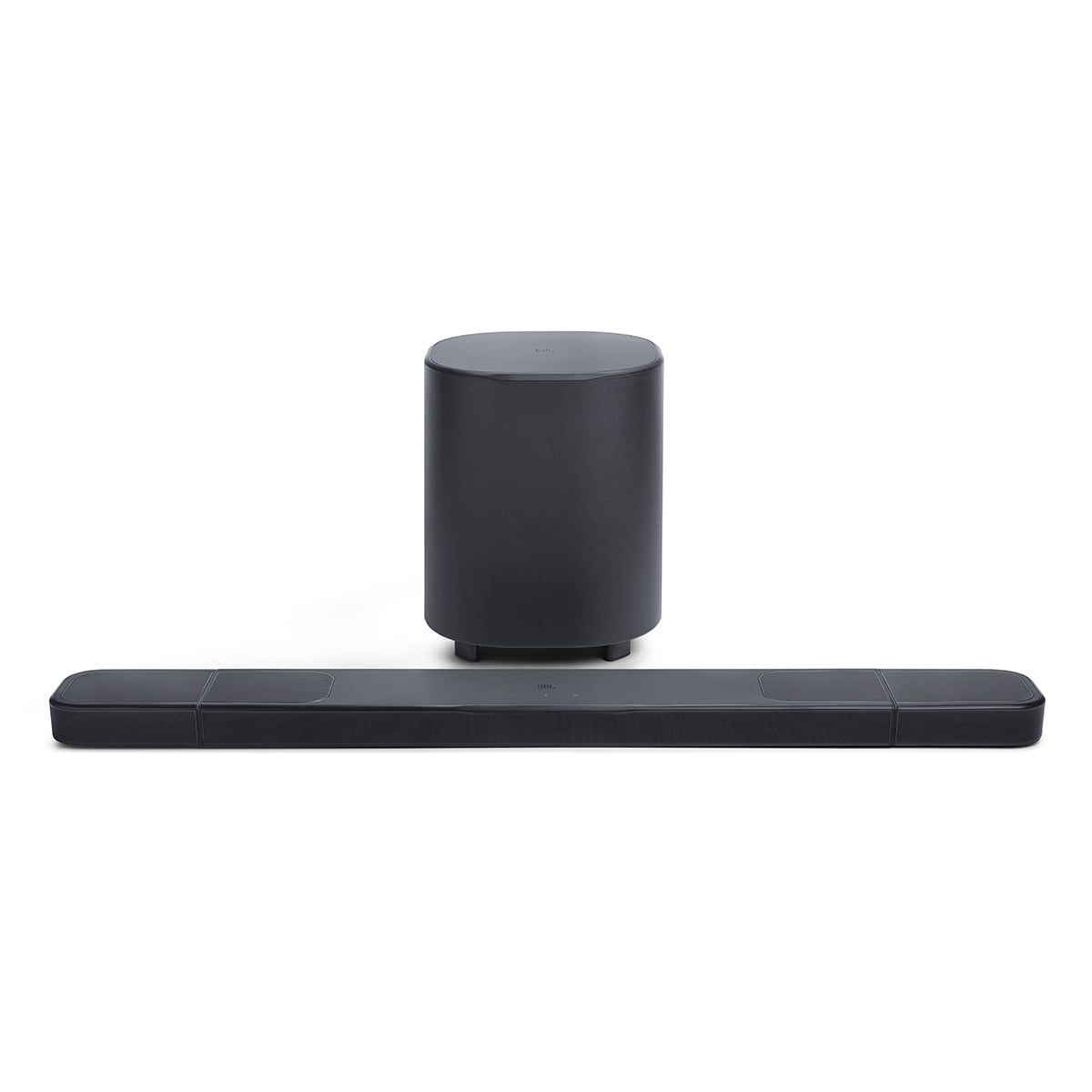
The JBL Bar 1000 MK2, released in 2025, takes a completely different approach. This is a true 7.1.4-channel system, meaning seven main channels, one subwoofer channel, and four height channels for Dolby Atmos effects. At roughly four to five times the price of the Ultimea Aura A40 U2601, it delivers genuine premium home theater performance.
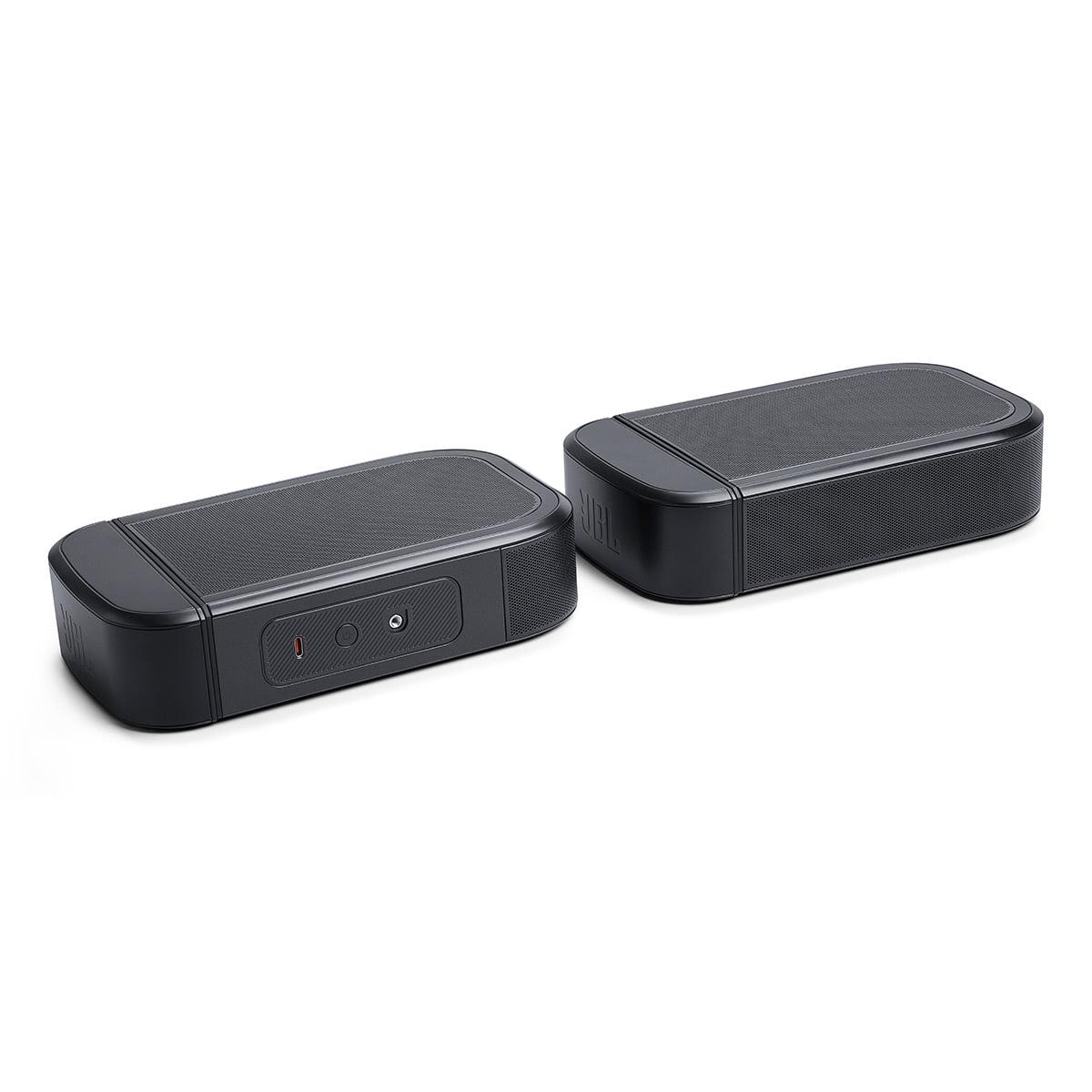
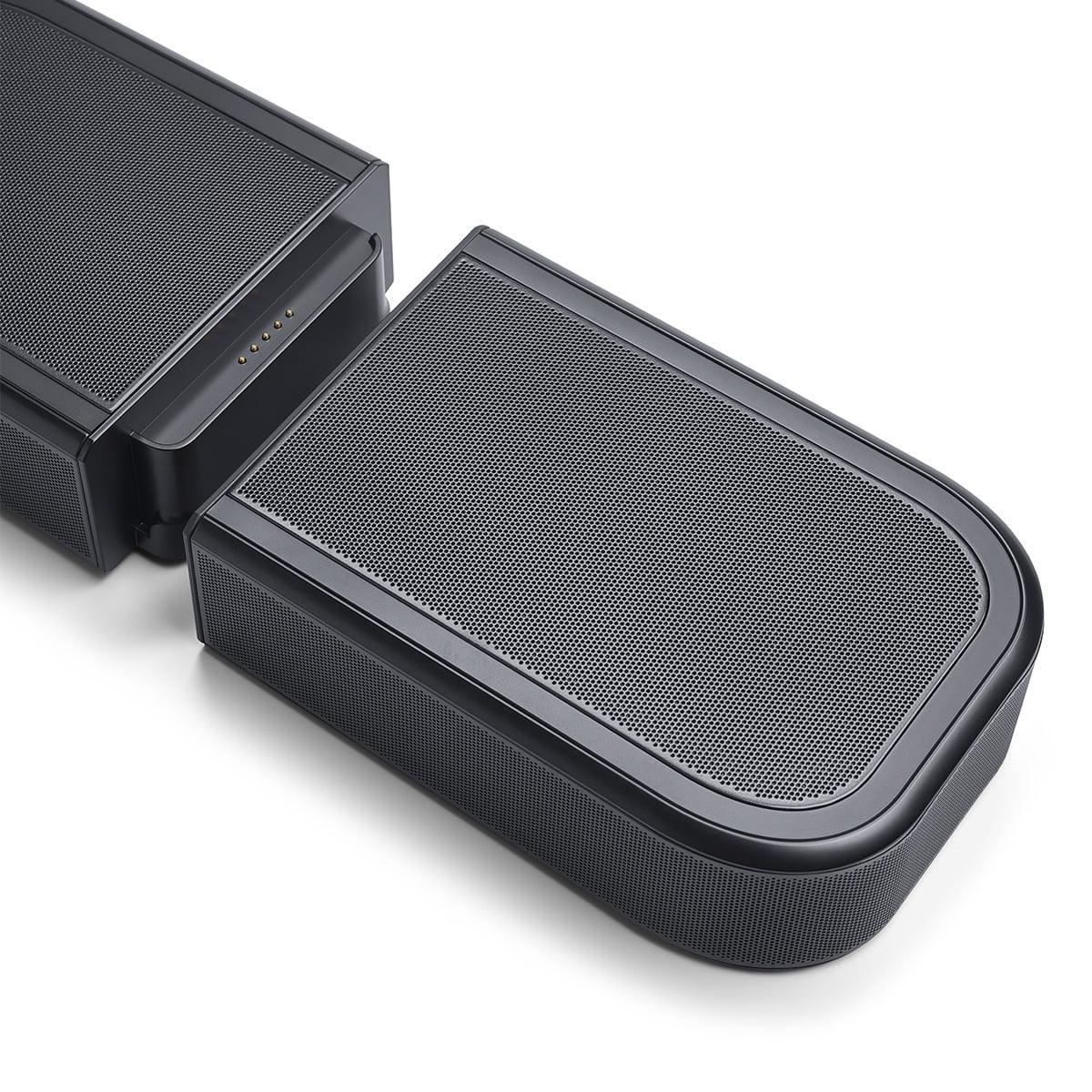
The standout innovation is the detachable wireless surround speakers. These battery-powered units can operate for up to 10 hours when removed from the main soundbar, doubling as portable Bluetooth speakers. When docked, they charge automatically and integrate seamlessly into the surround sound experience. This solves one of the biggest challenges with soundbars: providing true rear surround effects without running wires across your living room.
The JBL Bar 1000 MK2 includes a 10-inch wireless subwoofer compared to the Ultimea Aura A40 U2601's 4-inch wired unit. This size difference matters significantly—larger subwoofer drivers can move more air and reproduce deeper bass frequencies with less distortion.
The power difference between these systems is substantial and immediately noticeable. The Ultimea Aura A40 U2601 delivers 330 watts peak power, which sounds impressive until you realize this is total system power divided across eight speakers. In practice, this provides adequate volume for rooms up to about 270 square feet—perfect for apartments, bedrooms, or small living rooms.
The JBL Bar 1000 MK2 pumps out 960 watts maximum (480 watts RMS, which is the more honest continuous power rating). This isn't just about getting louder—more power means cleaner sound at moderate volumes, better dynamic range during explosive movie scenes, and the ability to fill larger spaces without strain. If you have a living room larger than 300 square feet or prefer listening at higher volumes, the power difference becomes crucial.
Bass reproduction reveals the clearest performance gap between these systems. The Ultimea Aura A40 U2601's frequency response bottoms out around 65Hz, which handles most movie dialogue and mid-bass effects but misses the deepest rumbles that make action scenes visceral. The 4-inch subwoofer works hard but can sound strained during bass-heavy content.
In contrast, the JBL Bar 1000 MK2 extends down to 33Hz—nearly an octave lower. This captures the deep bass that makes explosions feel convincing and music sound fuller. The 10-inch subwoofer moves significantly more air with less effort, resulting in cleaner, more controlled bass even at higher volumes.
Our research into user reviews consistently shows that people notice bass quality more than any other audio characteristic when upgrading from TV speakers. The difference between adequate bass and truly impactful bass significantly affects your emotional connection to movies and music.
This is where the fundamental design philosophies create the biggest experiential difference. The Ultimea Aura A40 U2601 uses four physical surround speakers but processes audio through virtual surround algorithms. You'll hear sounds coming from different directions, and effects like footsteps or voices will seem to move around the room. However, the surround effect depends heavily on your seating position and room acoustics.
The JBL Bar 1000 MK2 processes true Dolby Atmos and DTS:X audio formats, which contain discrete information for each channel. When content is properly mixed for Atmos, helicopters don't just fly left to right—they can swoosh overhead thanks to the four up-firing drivers. This height dimension adds remarkable immersion that virtual processing simply cannot replicate.
The detachable nature of the JBL Bar 1000 MK2's rear speakers deserves special attention. Unlike fixed rear speakers that need specific placement, these can be positioned optimally during movies, then removed for other uses. This flexibility makes them practical even in challenging room layouts.
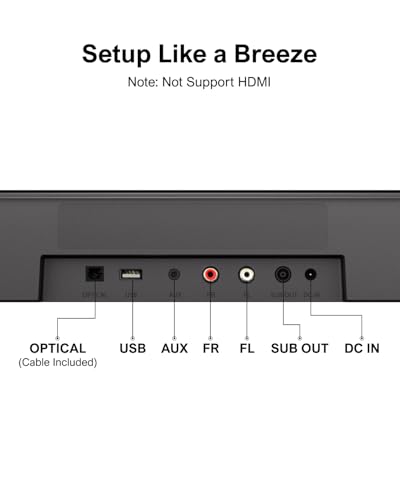
Here's where the Ultimea Aura A40 U2601 shows its budget constraints most clearly. The system completely lacks HDMI connectivity, relying instead on optical, AUX, and USB inputs. While optical can carry surround sound signals, it can't handle the highest quality audio formats or integrate with modern TV features like volume control through your TV remote.
This limitation means you can't access the highest quality audio from streaming services or 4K Blu-rays, and you'll need to manage multiple remotes. For anyone with a TV purchased after 2020, this feels like a step backward in convenience.
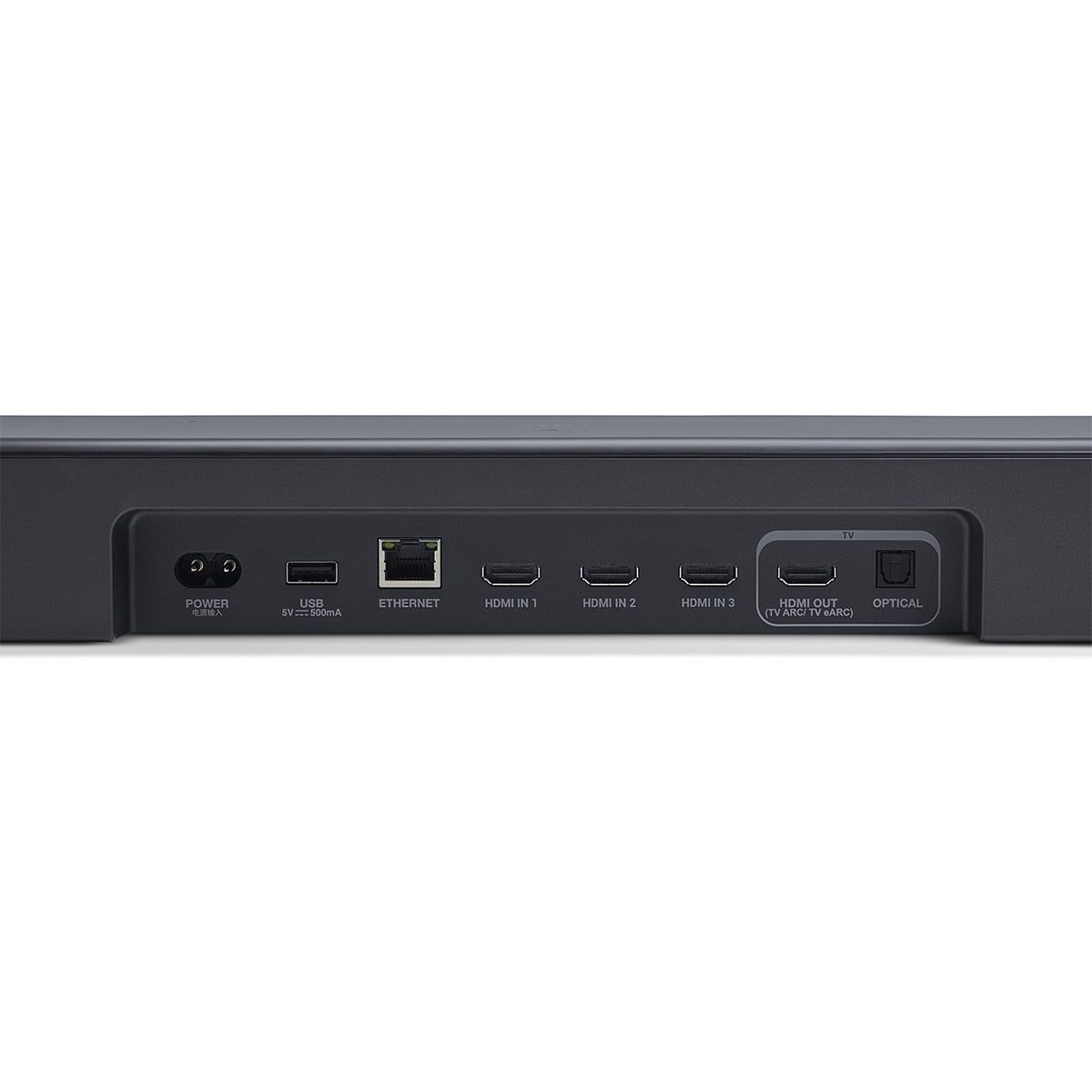
The JBL Bar 1000 MK2 includes HDMI eARC (enhanced Audio Return Channel), which provides the best possible audio quality and seamless integration with your TV's smart features. The system also includes three additional HDMI inputs, effectively turning it into an audio/video hub for multiple devices. Add Wi-Fi connectivity, and you get direct access to streaming services like Spotify and Apple Music without involving your TV at all.
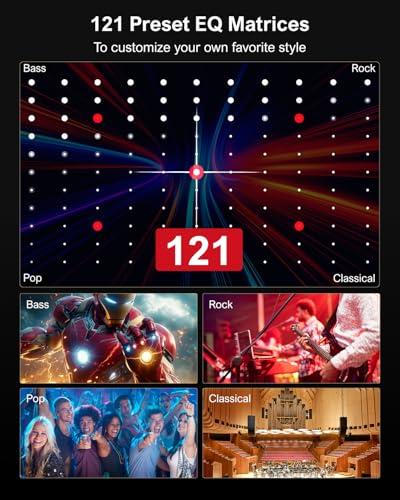
Both systems offer smartphone app control, but with different approaches and capabilities. The Ultimea Aura A40 U2601 compensates for its audio limitations with impressive customization options. The ULTIMEA Smart App provides 121 preset EQ matrices covering everything from classical music to heavy metal, plus a 10-band equalizer for manual tuning. Six listening modes (Movie, Music, Voice, Sport, Game, Night) optimize the sound for different content types.
This level of customization is unusual at this price point and helps maximize performance from the modest hardware. You can fine-tune the bass response, adjust surround levels, and even update the firmware automatically.
The JBL Bar 1000 MK2 takes a more streamlined approach through the JBL One app. Rather than overwhelming users with options, it focuses on intelligent automation. PureVoice 2.0 automatically adjusts dialogue clarity based on ambient noise and volume levels, reducing the constant volume adjustments that plague many home theater setups. Easy sound calibration optimizes the system for your specific room without manual measurements.
The JBL Bar 1000 MK2 also includes a unique Night Listening mode that mutes the main bar and subwoofer, routing audio only to the detachable rear speakers for private listening. This feature is particularly clever for apartment living or late-night viewing.
Setup complexity differs significantly between these approaches. The Ultimea Aura A40 U2601 requires running wires to four surround speakers, though the system does minimize this somewhat by making the rear-right speaker wireless. Wall mounting is possible for all components, which helps in smaller spaces.
The JBL Bar 1000 MK2 is notably easier to live with long-term. The wireless subwoofer can be placed anywhere within range, and the detachable rear speakers eliminate permanent wire runs. When you need to vacuum or rearrange furniture, just pop off the rear speakers temporarily.
Both systems work well wall-mounted, but the JBL Bar 1000 MK2's wireless components make this more practical. There's something satisfying about a completely wireless surround setup that doesn't compromise performance.
You're looking for your first significant TV audio upgrade and want maximum features for minimum budget. This system makes sense for apartments, bedrooms, or small living rooms where the power limitations won't be noticeable. If you primarily watch streaming content through your TV's apps and don't mind managing multiple remotes, the lack of HDMI isn't a dealbreaker.
The Ultimea Aura A40 U2601 is also ideal for secondary rooms, kids' playrooms, or anywhere you want better sound than TV speakers without a major investment. The extensive customization options mean you can tune it to sound surprisingly good despite the hardware limitations.
Students, renters, or anyone who might move frequently will appreciate the relatively simple setup and modest investment. If this system gets you 70% of the way to great home theater sound for 20% of the cost, that's excellent value.
You want a legitimate home theater experience that can grow with your setup over time. This system makes sense for dedicated media rooms, large living spaces, or anywhere audio quality is a priority. If you've invested in a nice TV and 4K streaming services, it deserves audio equipment that can fully utilize those sources.
The JBL Bar 1000 MK2 is particularly compelling for homes where flexibility matters. The detachable speakers work well for parties, outdoor gatherings, or even taking on trips. If you value innovation and want features that will still feel current in five years, the premium is justifiable.
Anyone who has experienced true Dolby Atmos in a movie theater will appreciate what the JBL Bar 1000 MK2 brings to home viewing. The height effects genuinely enhance immersion in ways that virtual processing cannot match.
These products succeed in their respective market segments for different reasons. The Ultimea Aura A40 U2601 proves that sophisticated surround sound doesn't require a premium budget, while accepting reasonable compromises in power, bass extension, and connectivity. For many people taking their first step beyond TV speakers, it provides an impressive upgrade that justifies its limitations.
The JBL Bar 1000 MK2 demonstrates what's possible when budget isn't the primary constraint. The combination of true Dolby Atmos, innovative wireless design, and premium power handling creates a genuinely compelling home theater experience.
Your choice ultimately depends on whether you prioritize accessibility or performance. Both systems will dramatically improve your TV audio experience, but they'll do so in fundamentally different ways. The Ultimea Aura A40 U2601 gets you most of the benefits of surround sound at an accessible price, while the JBL Bar 1000 MK2 delivers an uncompromised premium experience that justifies its higher cost.
At the time of writing, the price difference between these systems is substantial enough that they're really addressing different buyer needs. But if you can stretch your budget toward the JBL Bar 1000 MK2, the performance and feature advantages make it a worthwhile long-term investment for anyone serious about home entertainment audio.
| Ultimea Aura A40 U2601 Soundbar System | JBL Bar 1000 MK2 Soundbar System |
|---|---|
| Audio Architecture - Determines surround sound quality and immersion | |
| 7.1 Virtual Surround with 4 wired speakers + subwoofer | True 7.1.4 Dolby Atmos with detachable wireless surrounds + 10" subwoofer |
| Power Output - Critical for room filling capability and clean sound | |
| 330W peak (adequate for small-medium rooms up to 270 sq ft) | 960W max / 480W RMS (handles large rooms with authority) |
| Connectivity - Affects integration with modern TVs and streaming | |
| Bluetooth 5.3, Optical, AUX, USB (No HDMI - major limitation) | HDMI eARC + 3 HDMI inputs, Wi-Fi, Bluetooth 5.3, AirPlay 2, Chromecast |
| Bass Extension - Lower frequencies create more impactful movie experience | |
| 65Hz-18kHz with 4" wired subwoofer (decent but limited depth) | 33Hz-20kHz with 10" wireless subwoofer (deep, room-shaking bass) |
| Surround Speaker Design - Flexibility and placement options | |
| 4 wired speakers (2 front, 2 rear) with mixed wireless connectivity | Detachable wireless speakers with 10-hour battery, double as Bluetooth speakers |
| Smart Features - App control and customization options | |
| ULTIMEA app with 121 EQ presets, 10-band equalizer, 6 listening modes | JBL One app with PureVoice 2.0, easy calibration, Night Mode |
| Audio Formats - Support for premium streaming and disc content | |
| Standard stereo and virtual surround processing | True Dolby Atmos, DTS:X with height effects via up-firing drivers |
| Setup Complexity - Installation difficulty and wire management | |
| Moderate (requires wiring 4 speakers, some wireless connectivity) | Simple (fully wireless surrounds and subwoofer, minimal cables) |
| Room Size Recommendation - Optimal performance space | |
| Small to medium rooms (108-270 sq ft) | Medium to large rooms (270+ sq ft, scales well) |
| Release Year - Technology generation and future-proofing | |
| 2024 (current budget-focused design) | 2025 (latest premium technology) |
| Value Proposition - Best use case for the investment | |
| Maximum surround features at budget price point | Premium home theater experience with innovative flexibility |
The Ultimea Aura A40 U2601 is specifically designed for smaller spaces, with a recommended room size of 108-270 square feet. Its 330W power output and compact design make it ideal for apartments where you don't want to disturb neighbors. The JBL Bar 1000 MK2 delivers more power but may be overkill for very small rooms.
Yes, HDMI connectivity is crucial for modern TV integration. The JBL Bar 1000 MK2 includes HDMI eARC and three additional HDMI inputs for seamless connection to 4K TVs and streaming devices. The Ultimea Aura A40 U2601 lacks HDMI entirely, limiting it to optical and Bluetooth connections, which can complicate setup with newer TVs.
The JBL Bar 1000 MK2 delivers significantly deeper bass with its 10-inch wireless subwoofer extending down to 33Hz. The Ultimea Aura A40 U2601 uses a 4-inch wired subwoofer that only reaches 65Hz, providing adequate but less impactful bass for movies and music.
The Ultimea Aura A40 U2601 uses virtual 7.1 surround, which processes stereo audio to simulate multi-channel effects. The JBL Bar 1000 MK2 offers true 7.1.4 Dolby Atmos with discrete channels and height effects, creating more convincing surround sound with audio that can appear to come from above.
The JBL Bar 1000 MK2 is designed for larger spaces with its 960W maximum power output and room-filling capability. It maintains clean sound at high volumes and can handle rooms over 300 square feet. The Ultimea Aura A40 U2601 is better suited for rooms under 270 square feet and may struggle in larger spaces.
The Ultimea Aura A40 U2601 includes four wired surround speakers that require cable connections around your room. The JBL Bar 1000 MK2 features innovative detachable wireless surround speakers that can be removed from the main bar, placed anywhere, and even used as portable Bluetooth speakers with 10-hour battery life.
Both systems offer comprehensive app control, but with different strengths. The Ultimea Aura A40 U2601 provides extensive customization with 121 EQ presets and a 10-band equalizer. The JBL Bar 1000 MK2 focuses on intelligent features like PureVoice 2.0 for automatic dialogue optimization and easy room calibration.
Only the JBL Bar 1000 MK2 supports true Dolby Atmos with four up-firing drivers that bounce sound off your ceiling for height effects. The Ultimea Aura A40 U2601 cannot process Dolby Atmos content and relies on virtual surround processing instead.
The JBL Bar 1000 MK2 offers simpler installation with its fully wireless subwoofer and detachable rear speakers, minimizing cable runs across your room. The Ultimea Aura A40 U2601 requires wiring four surround speakers, though it does include some wireless connectivity to reduce cables.
The Ultimea Aura A40 U2601's biggest advantage is delivering surround sound features at an extremely accessible price point, making it ideal for first-time upgraders. The JBL Bar 1000 MK2's key strength is its premium performance with true Dolby Atmos, innovative detachable speakers, and comprehensive connectivity.
The JBL Bar 1000 MK2 excels for streaming with HDMI eARC support, built-in Wi-Fi for direct service access, and true Dolby Atmos processing for premium content. The Ultimea Aura A40 U2601 can handle streaming audio through optical or Bluetooth connections but cannot access the highest quality audio formats.
Choose the Ultimea Aura A40 U2601 if you want maximum surround sound features at a budget price for small to medium rooms and don't mind optical-only TV connection. Select the JBL Bar 1000 MK2 if you prioritize premium audio performance, have a larger room, want modern HDMI connectivity, and value innovative features like detachable wireless speakers.
We've done our best to create useful and informative comparisons to help you decide what product to buy. Our research uses advanced automated methods to create this comparison and perfection is not possible - please contact us for corrections or questions. These are the sites we've researched in the creation of this article: walmart.com - newegg.com - youtube.com - ultimea.com - youtube.com - device.report - ultimea.co - manuals.plus - homestudiobasics.com - youtube.com - bestbuy.com - community.ultimea.com - manuals.plus - eu.ultimea.com - navesapeugeot.com.br - bestbuy.com - images.thdstatic.com - provantage.com - ultimea.com - bestbuy.com - ecoustics.com - engadget.com - bestbuy.com - techradar.com - rtings.com - hometechnologyreview.com - youtube.com - t3.com - whathifi.com - youtube.com - bhphotovideo.com - gzhls.at - device.report - support.jbl.com - support.jbl.com - jbl.com - av.com - audioadvice.com - jbl.com - target.com - worldwidestereo.com

Privacy Policy
Terms and Conditions - Affiliate Policy
Home Security
© Copyright 2008-2026.
11816 Inwood Rd #1211, Dallas, TX 75244