

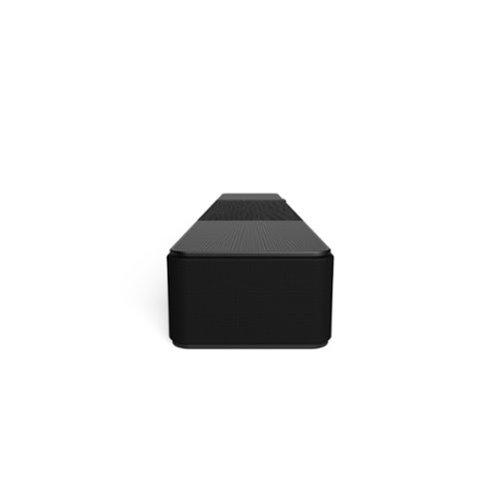

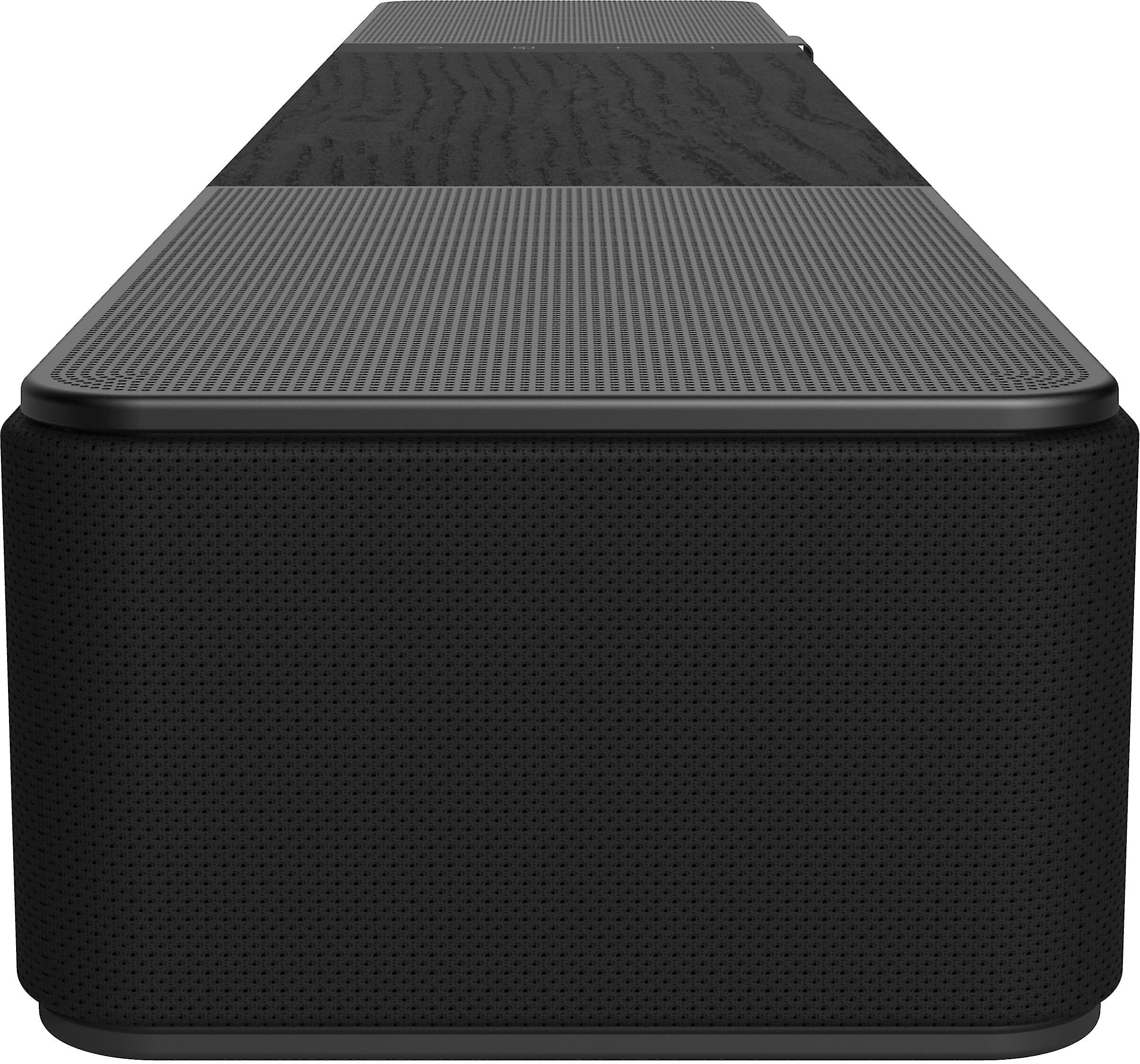
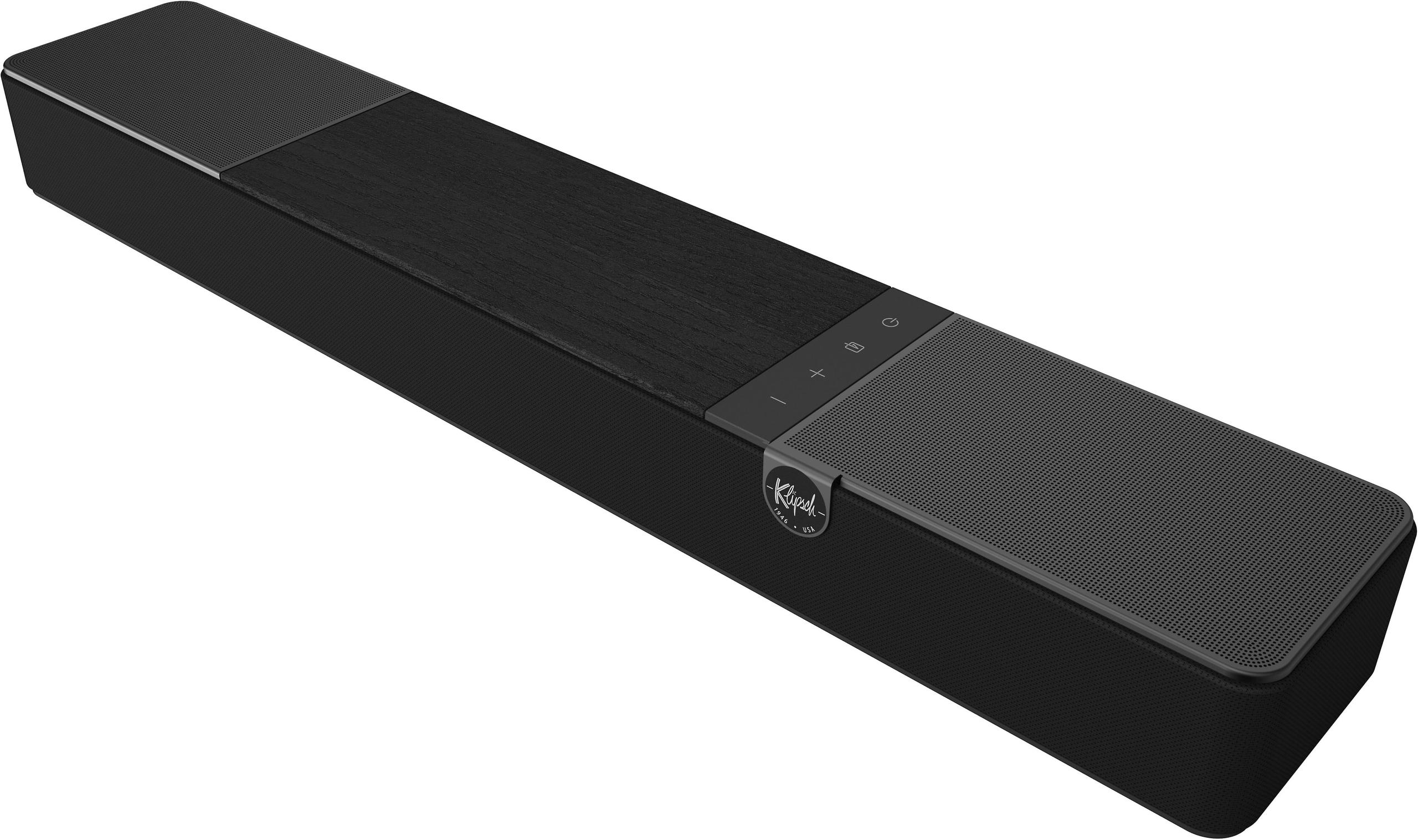


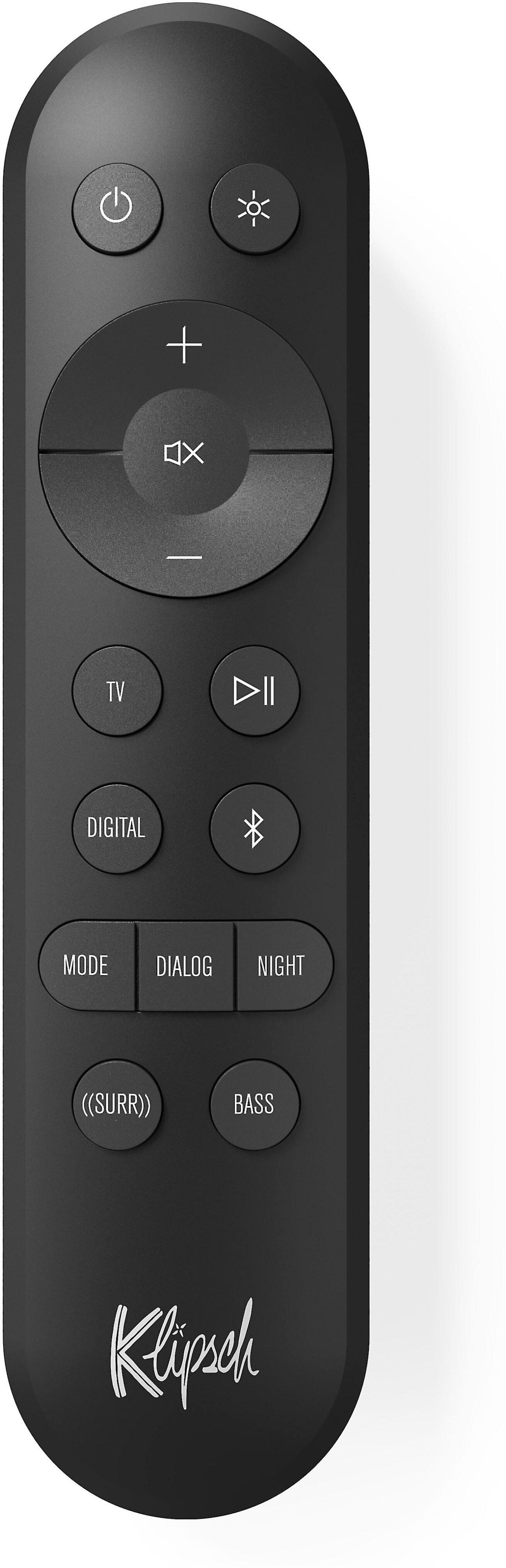



If you've ever watched a movie on your TV and thought "this audio is terrible," you're not alone. Most TVs today are so thin that their built-in speakers sound like they're coming from inside a shoebox. That's where soundbars come in, and choosing between the JBL Bar 1000 MK2 at $1,199 and the Klipsch Flexus Core 100 at $228 is like comparing a luxury sedan to a reliable compact car – both will get you where you want to go, but the journey will be very different.
The soundbar market has exploded over the past decade, evolving from simple TV speaker replacements to sophisticated home theater systems. When I first started reviewing audio gear, most soundbars were basic stereo units that made dialogue clearer. Today's offerings range from budget-friendly voice enhancers to premium systems that can rival traditional surround sound setups costing thousands more.
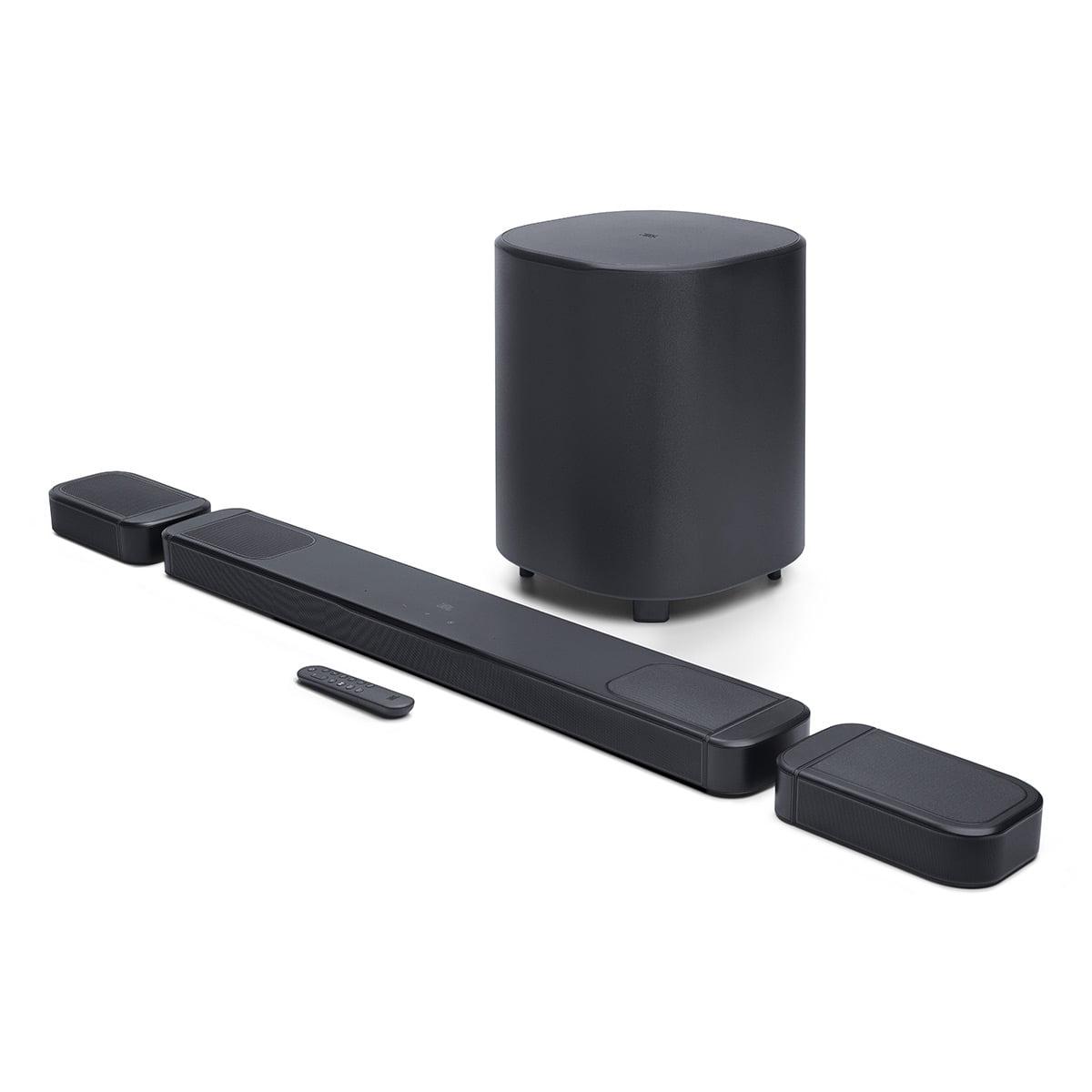
The key difference lies in channel configuration – think of channels as separate audio streams that create the surround experience. A 2.1 system has left and right speakers plus a subwoofer (the ".1" represents the bass channel). A 7.1.4 system like the JBL has seven main channels, one subwoofer, and four height channels that fire sound upward to bounce off your ceiling. This creates what audio engineers call "object-based audio," where sounds can be precisely placed in three-dimensional space around you.
Room size matters enormously here. I've tested plenty of underpowered soundbars in large rooms where they simply disappear, and overpowered systems in small apartments where they overwhelm the space. Bass response – how deep and powerful the low frequencies sound – depends heavily on your room's acoustics and size.
The JBL Bar 1000 MK2 represents JBL's 2023 evolution of their flagship soundbar philosophy: give users everything they need for cinema-quality audio in one complete package. Released as an improvement over the original Bar 1000, it refined the wireless connectivity and added better room calibration algorithms while maintaining the signature detachable surround speaker design that made its predecessor unique.
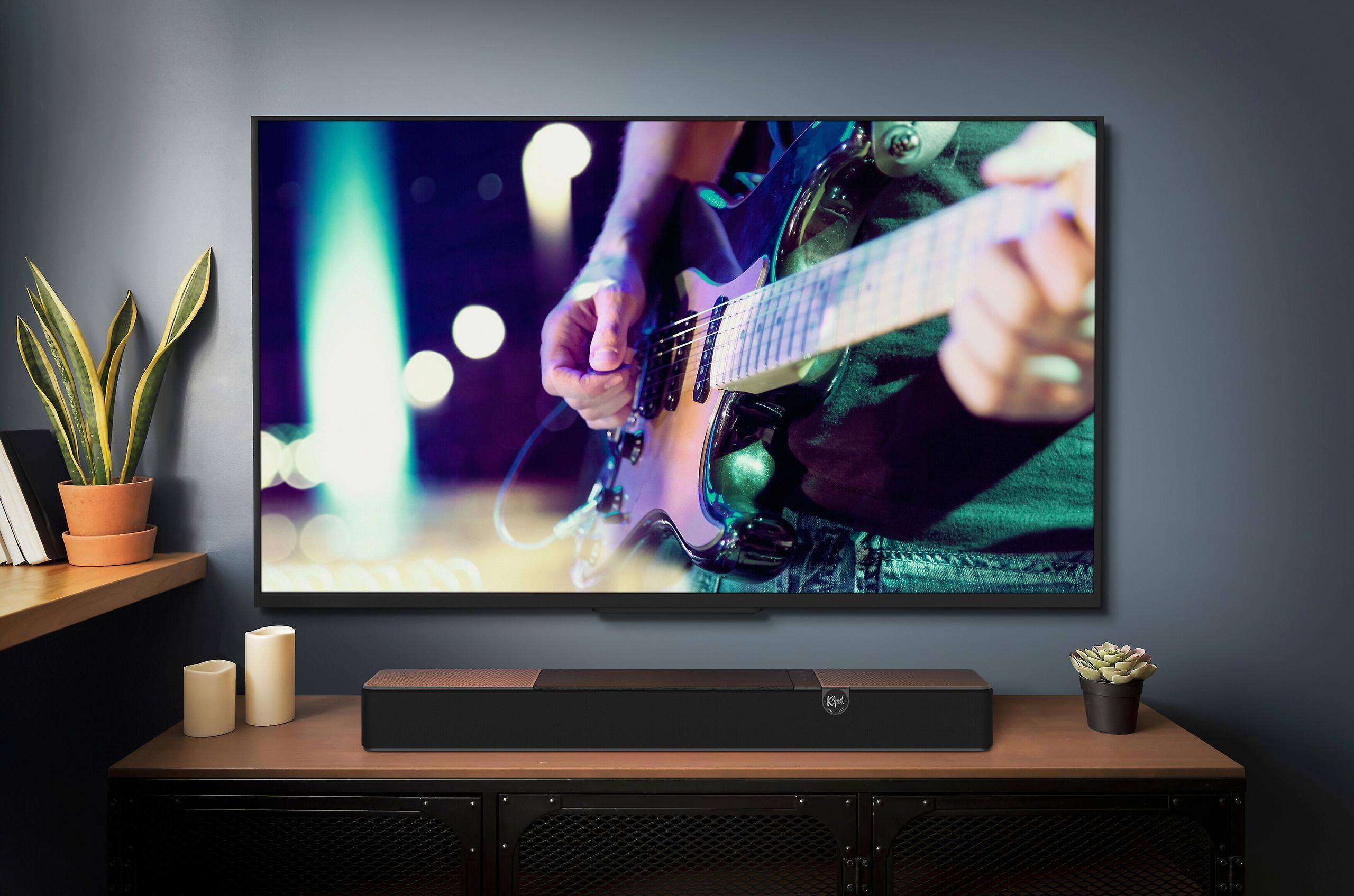
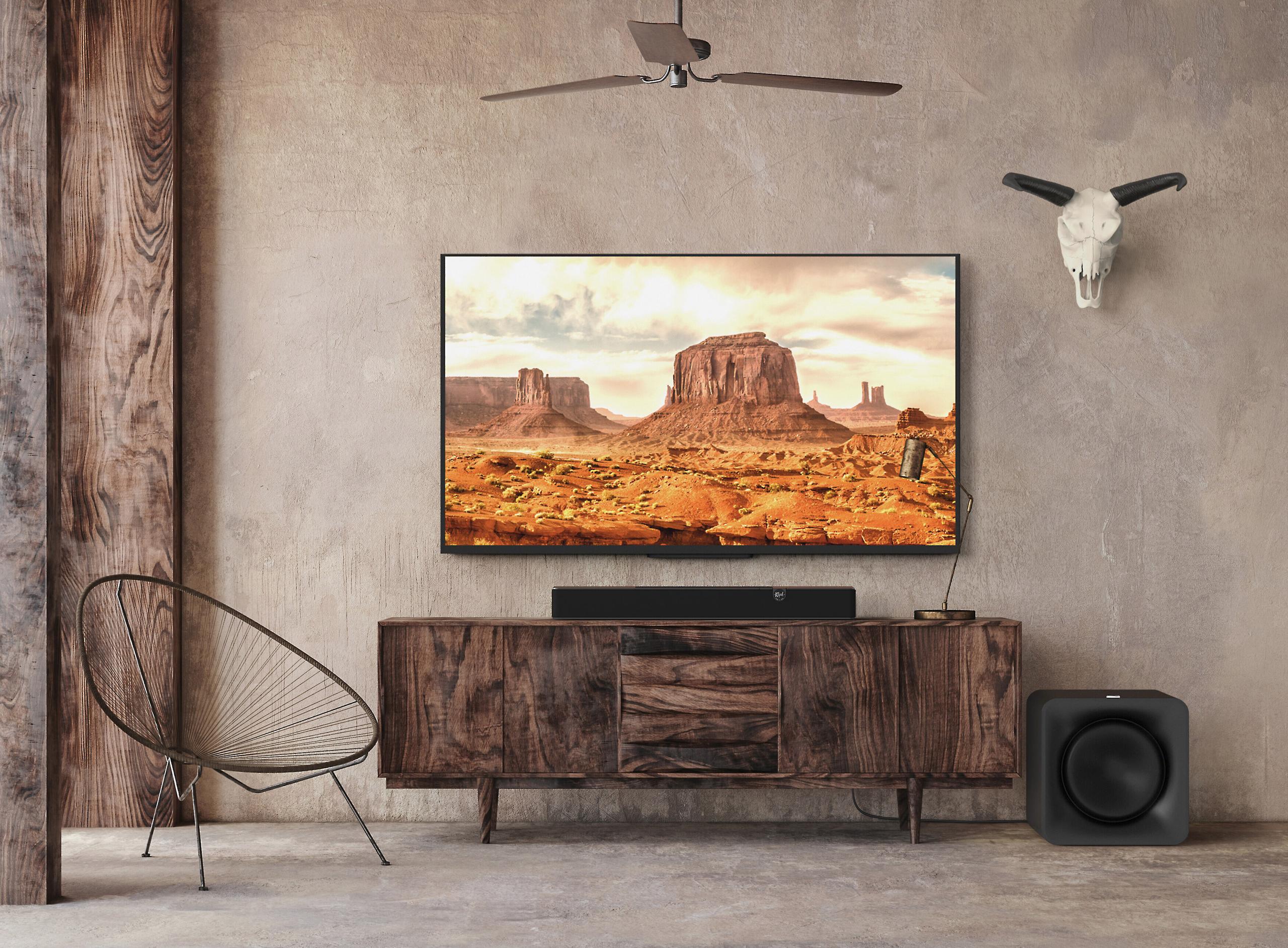
The Klipsch Flexus Core 100, launched in early 2024, takes a completely different approach. Rather than overwhelming users with complexity, Klipsch focused on their audio heritage – they've been making speakers since 1946 – to create a foundation piece that sounds exceptional on its own but can grow with your needs and budget.
Here's where these two systems diverge dramatically. The JBL delivers true 7.1.4-channel surround sound, meaning you get seven main audio channels (front left, center, right, side surrounds, rear surrounds), one subwoofer channel, and four height channels. Those height channels use up-firing drivers – speakers that shoot sound toward your ceiling – to create what's called the "Dolby Atmos bubble." When a helicopter flies overhead in a movie, you'll actually hear it move from front to back above your head.
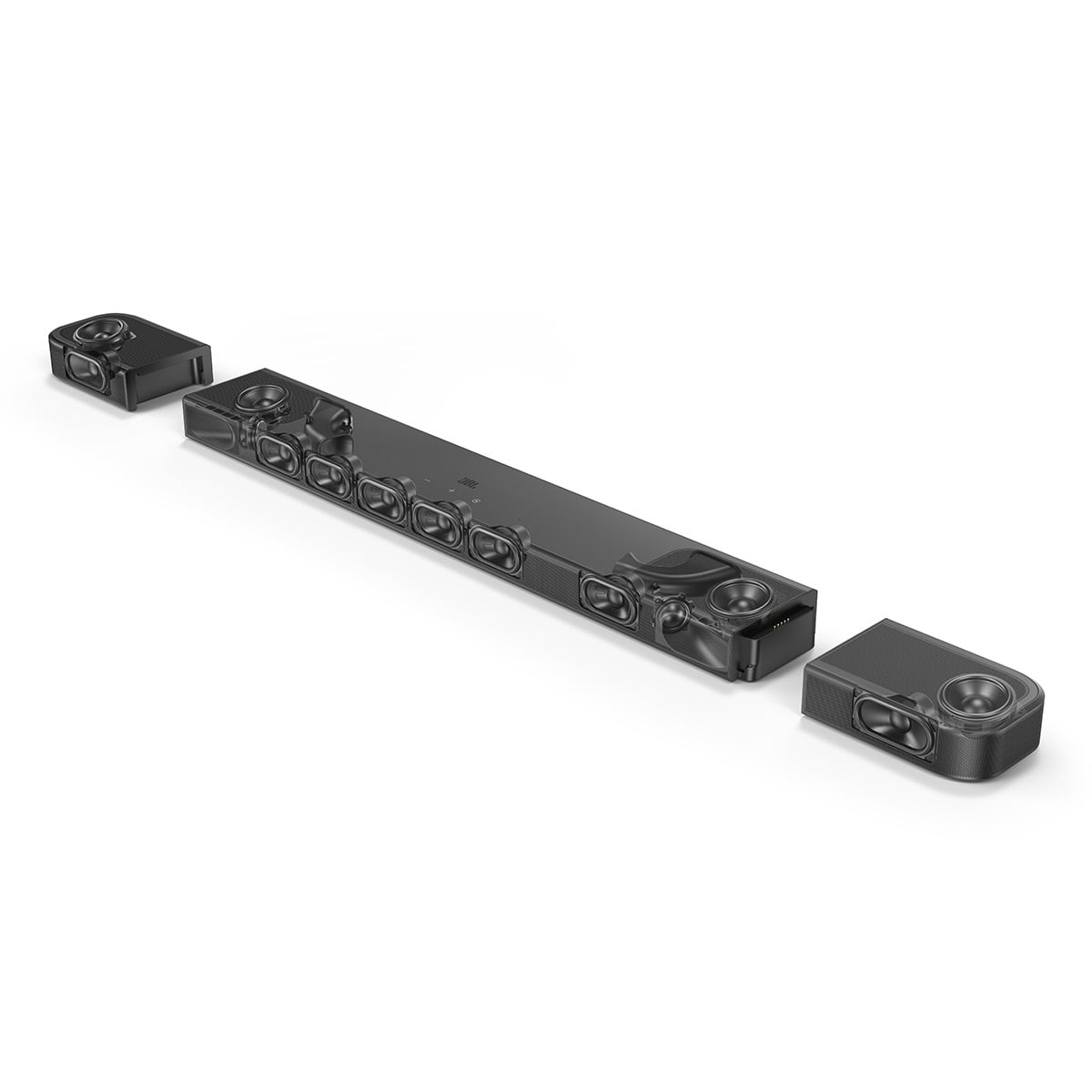
I've spent considerable time with Dolby Atmos content, and the difference between virtual processing and real height effects is night and day. The JBL's four up-firing drivers (two in the main bar, one in each detachable rear speaker) create genuine overhead effects that make you forget you're not in a movie theater.
The Klipsch takes a different approach entirely. Its 2.1 configuration focuses on creating an exceptionally wide stereo image – imagine the audio equivalent of a panoramic photograph. While it can decode Dolby Atmos signals, it relies on psychoacoustic processing to trick your brain into perceiving height and surround effects. This works surprisingly well for casual viewing, but action movies and immersive gaming reveal the limitations.
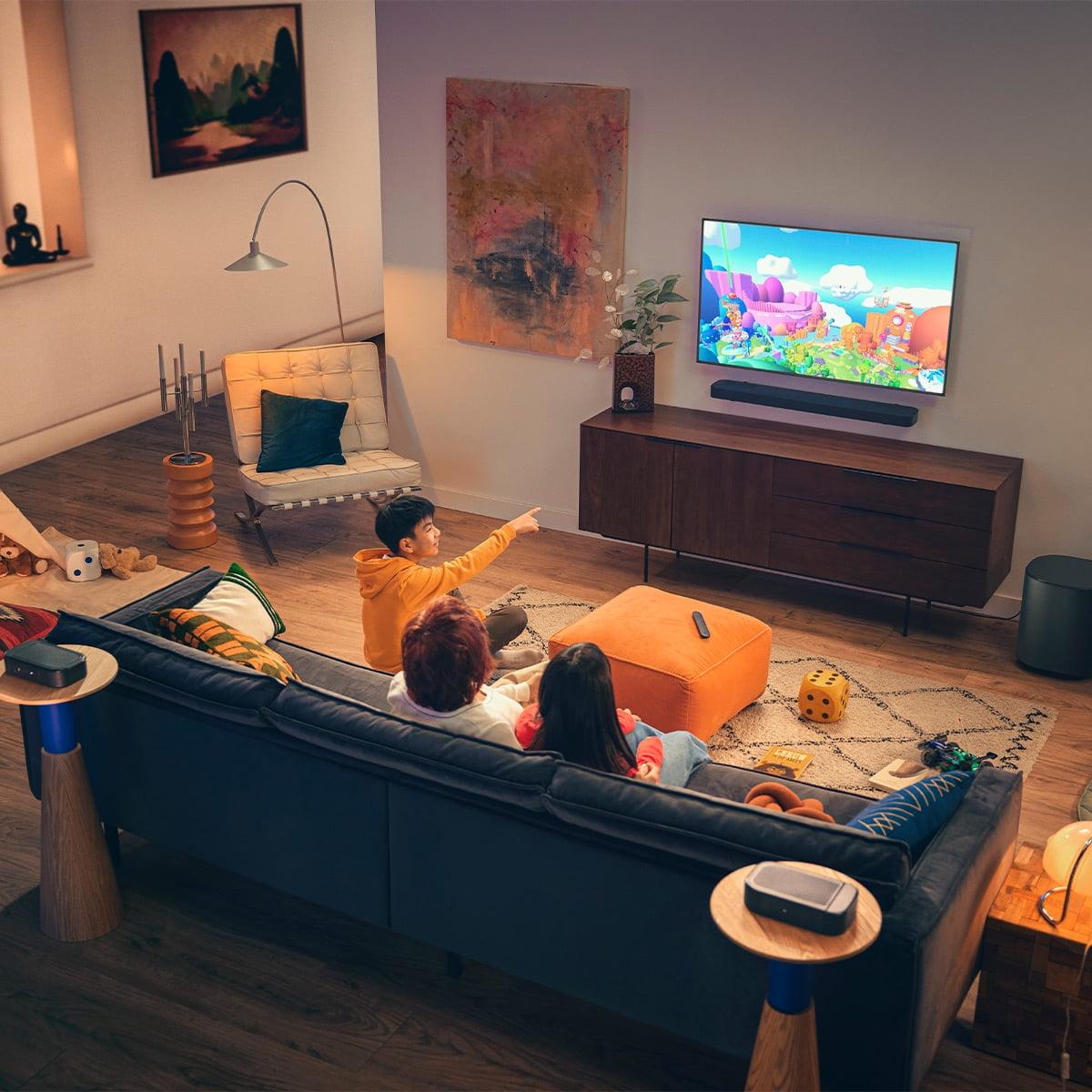
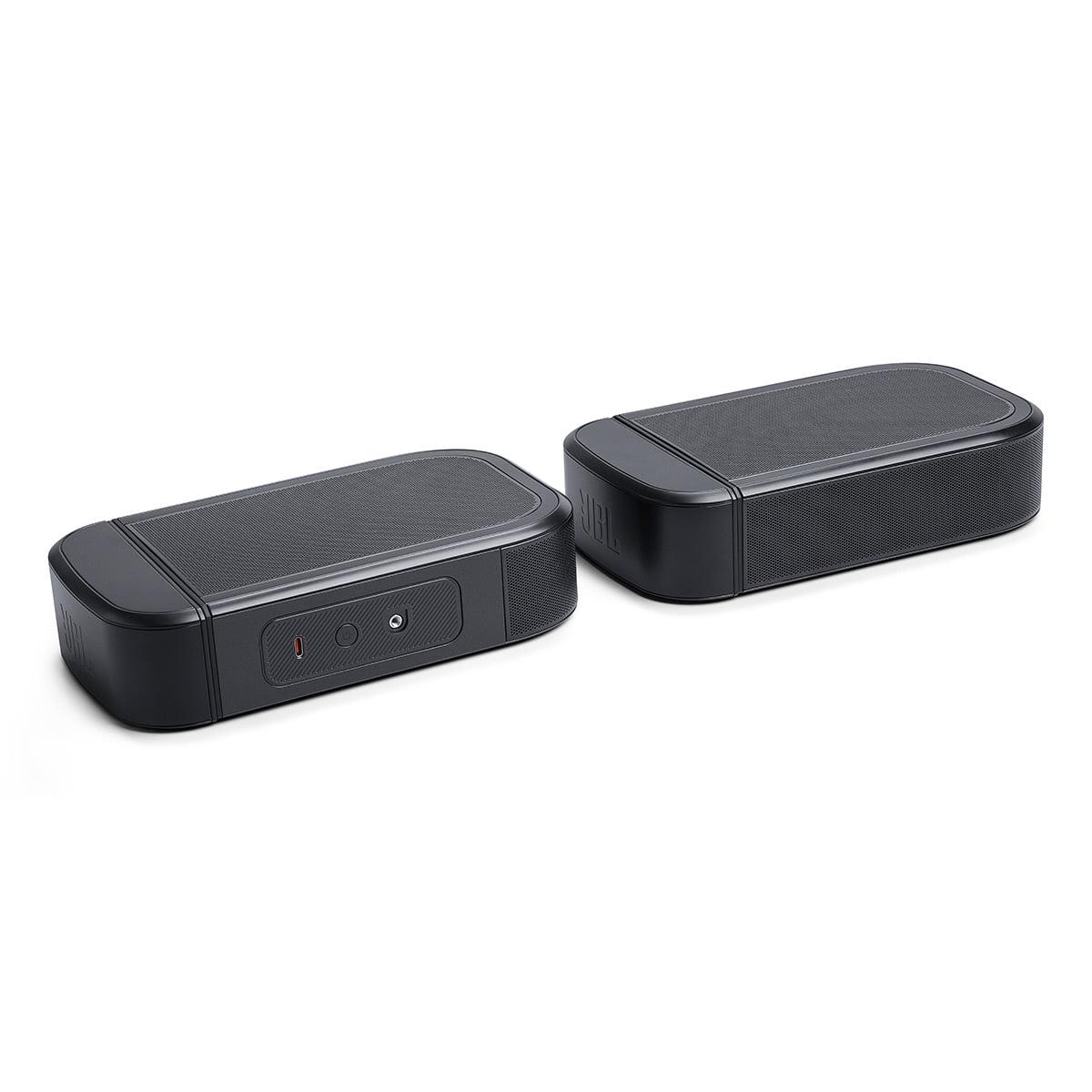
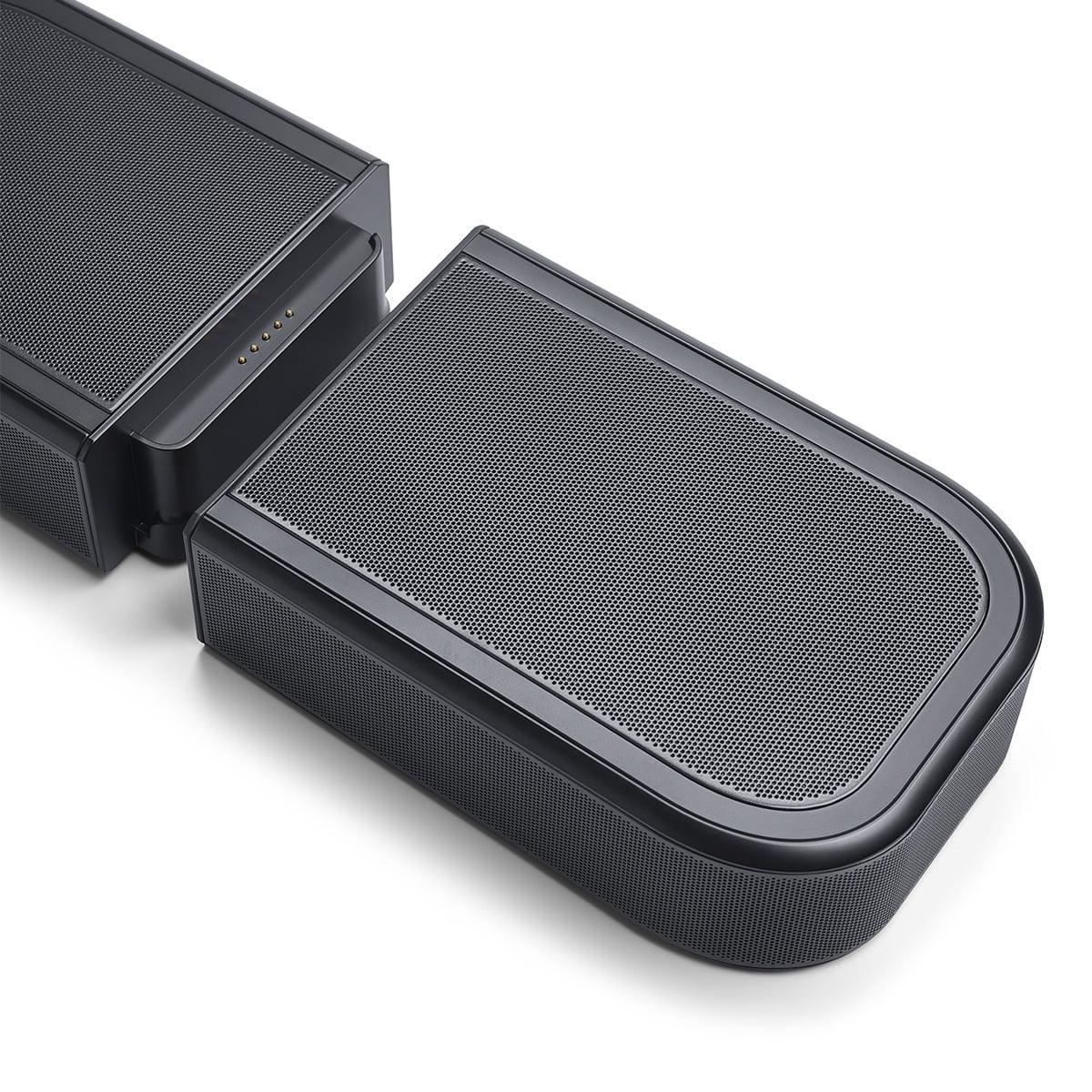
The JBL's detachable surround speakers deserve special mention. These battery-powered units clip onto either end of the main soundbar for storage and charging, but can be placed anywhere in your room for optimal surround positioning. Each provides up to 10 hours of playback and eliminates the usual nightmare of running speaker wires to your rear wall. It's an elegant solution that I wish more manufacturers would adopt.
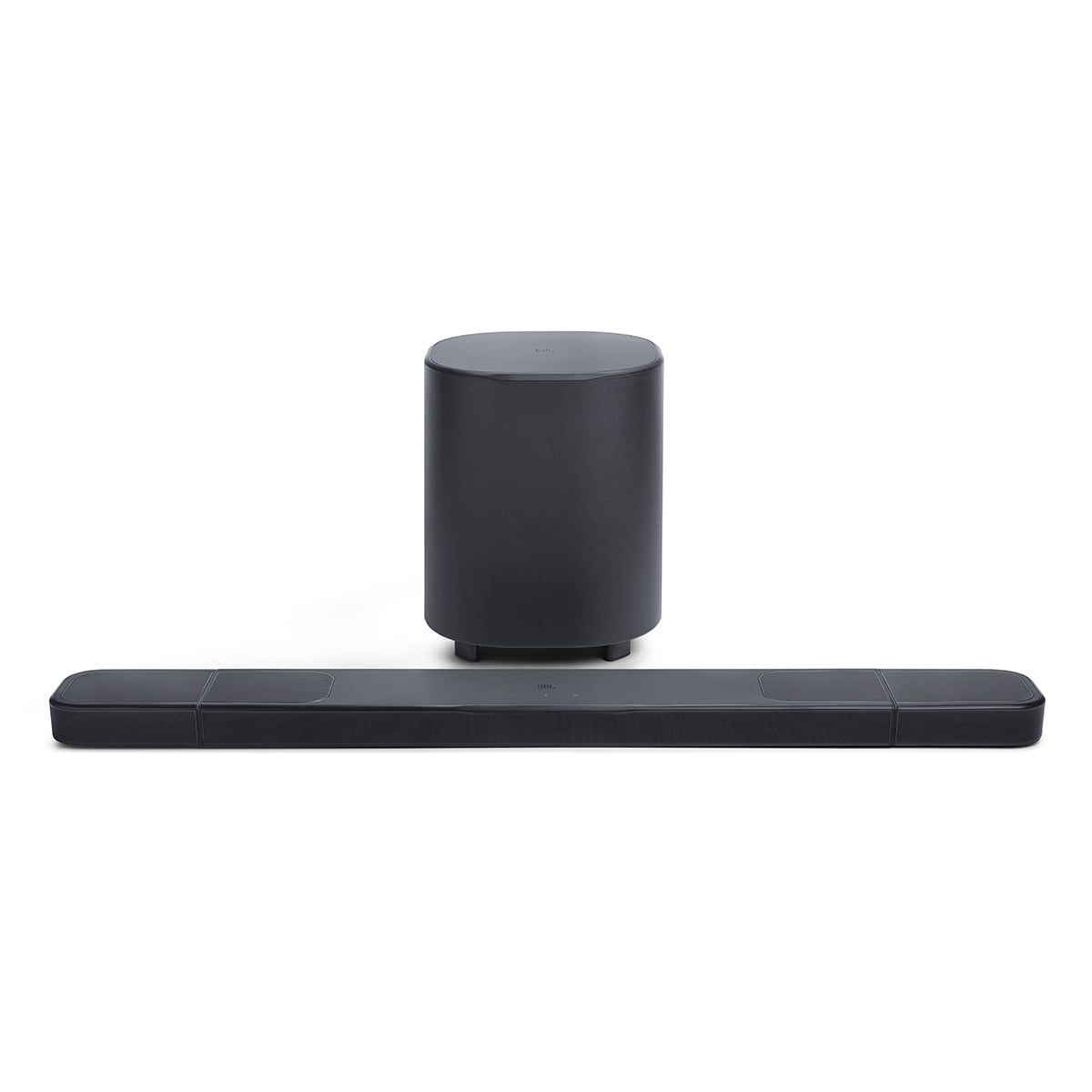
Bass reproduction represents perhaps the starkest difference between these systems. The JBL includes a dedicated 10-inch wireless subwoofer that can extend down to 33Hz – low enough to reproduce the deep rumble of explosions, thunder, and music's lowest notes. During my testing, this subwoofer could easily pressurize my 400-square-foot listening room, creating the kind of tactile bass response that makes action sequences feel visceral.
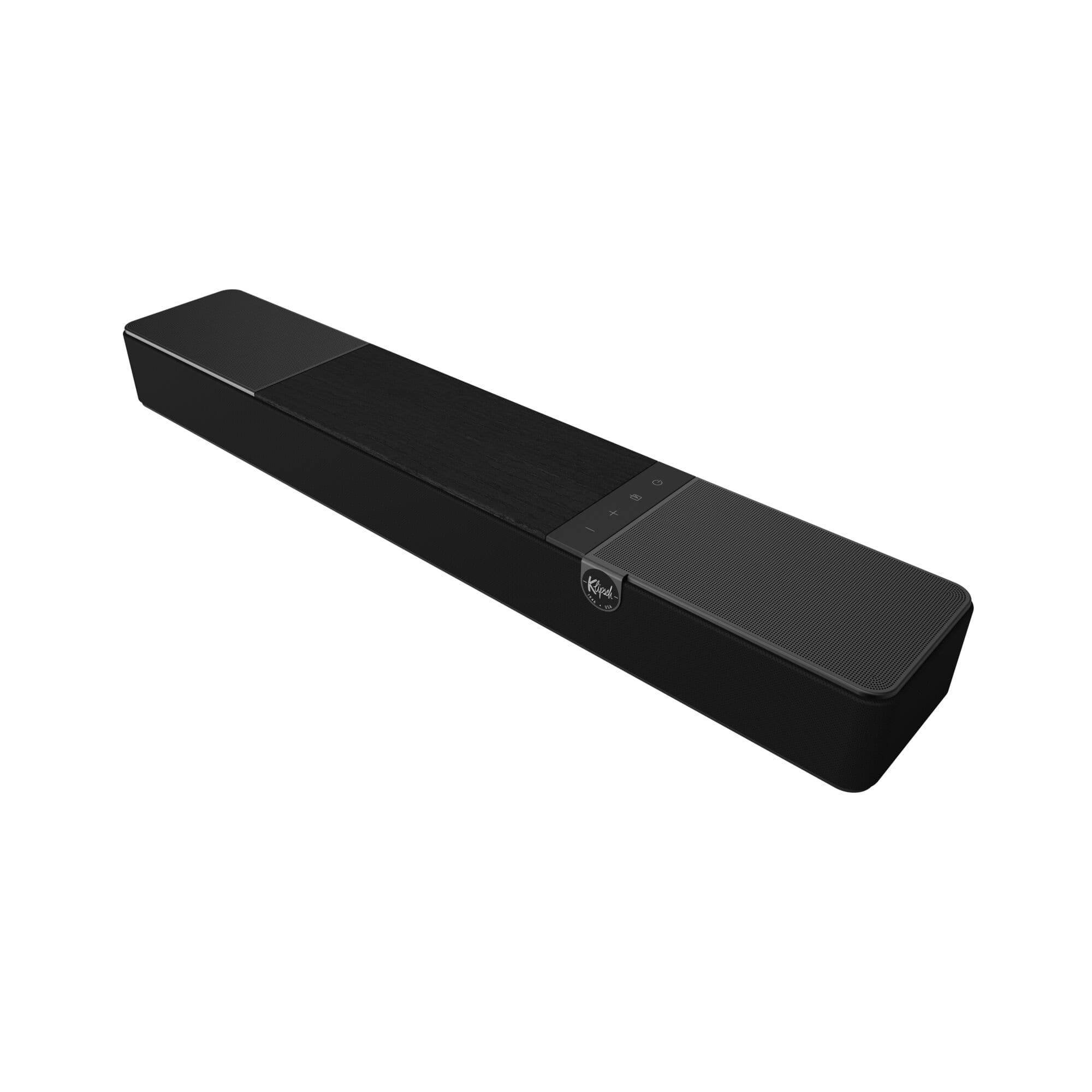
The Klipsch integrates dual 4-inch subwoofers directly into the main soundbar. While this eliminates the need for a separate box cluttering your living space, it limits bass extension to about 45Hz. That 12Hz difference might not sound significant, but it represents the difference between feeling bass in your chest versus just hearing it. For most TV content and music, the Klipsch approach works well. For movies with serious low-frequency content – think Marvel films or anything directed by Christopher Nolan – the JBL provides substantially more impact.
However, Klipsch's integrated approach has advantages. There's no subwoofer placement to optimize, no additional power cord, and no risk of the bass sounding disconnected from the main speakers. The company's engineers tuned those built-in woofers specifically to work with the soundbar's other drivers, creating cohesive sound that many users prefer over systems with separate subwoofers.
Raw power numbers tell an important story here. The JBL pumps out 960 watts maximum power (480 watts RMS), distributed across its soundbar, surround speakers, and subwoofer. This isn't marketing fluff – in larger rooms, you need substantial amplification to maintain clear sound at higher volumes without distortion.
The Klipsch operates at 100 watts RMS, which sounds modest but reflects its different design philosophy. Klipsch has always emphasized efficiency over brute force, using horn-loaded tweeters and carefully matched drivers to extract maximum performance from moderate power levels. In appropriately sized rooms (under 300 square feet), the Flexus Core 100 can achieve surprisingly high volumes while maintaining clarity.
I've tested both systems at their limits, and the JBL definitely handles larger spaces better. But push either system too hard, and you'll encounter compression – where the sound starts to feel squashed and loses its dynamic range. The key is matching the system to your room size and listening preferences.
Both manufacturers tackle dialogue enhancement differently, but both succeed admirably. The JBL employs PureVoice 2.0 technology, which uses adaptive algorithms to automatically optimize dialogue based on ambient sound levels and the soundbar's volume setting. This means voices remain clear even during loud action sequences without manual volume riding.
Klipsch relies on their legendary Tractrix horn technology – a design dating back to the 1940s that loads tweeters with horn-shaped waveguides. These horns control sound dispersion precisely, ensuring voices project clearly across different listening positions. Many users report that dialogue sounds more natural and effortless through the Klipsch system, even at lower volumes.
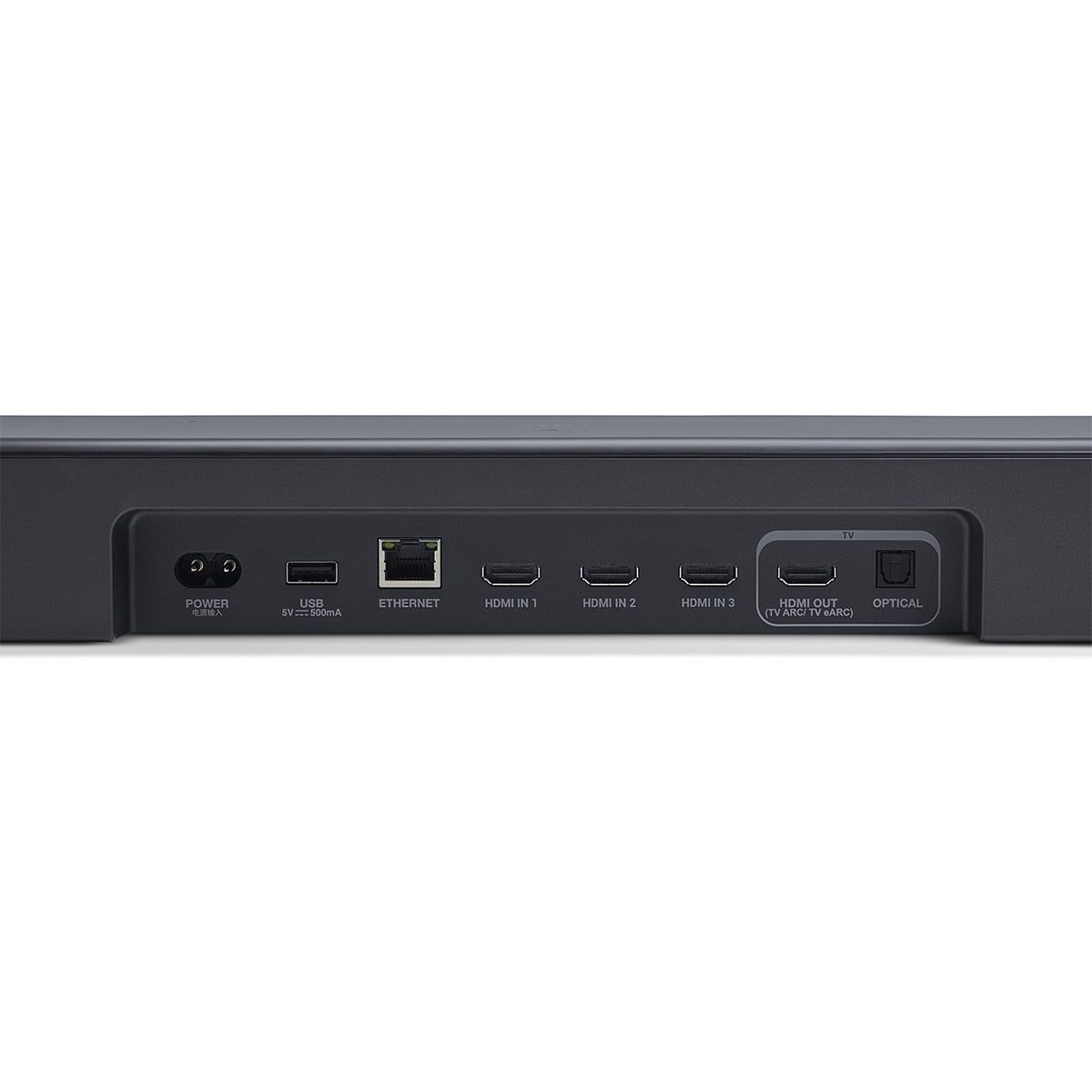
Modern soundbars serve as central hubs for home entertainment systems, and connectivity options can make or break the user experience. The JBL Bar 1000 MK2 provides comprehensive connectivity with HDMI eARC plus three additional HDMI inputs, all supporting 4K Dolby Vision passthrough. This means you can connect multiple sources directly to the soundbar – game consoles, streaming devices, Blu-ray players – and the soundbar handles switching between them while maintaining the highest video quality.
The JBL also embraces wireless streaming with Wi-Fi support for AirPlay 2, Chromecast Built-in, and Spotify Connect. This allows direct streaming from phones, tablets, and computers without additional devices. Bluetooth 5.3 provides stable wireless connections for devices that don't support Wi-Fi streaming.
The Klipsch takes a more focused approach with HDMI eARC for TV connection, Bluetooth for wireless devices, and optical/USB-C inputs for older sources. Notably, it lacks HDMI switching and Wi-Fi streaming, which simplifies setup but limits flexibility for complex entertainment systems.
Both systems include dedicated smartphone apps for control and customization. The JBL One App provides extensive EQ options, room calibration, and access to streaming services. Klipsch Connect Plus focuses on essential controls and preset EQ modes, reflecting the brand's "great sound shouldn't be complicated" philosophy.
The pricing difference between these systems – nearly $1,000 – reflects fundamentally different value propositions. The JBL Bar 1000 MK2 delivers a complete premium home theater experience immediately. You're paying for advanced wireless technology, multiple drivers, sophisticated processing, and the convenience of a turnkey solution.
The Klipsch Flexus Core 100 represents a more measured approach. At $228 (frequently discounted from its $349 MSRP), it provides excellent stereo sound immediately while offering expansion possibilities. Add the optional Flexus Surrounds for about $200, and you get rear channel effects. Include the Flexus Subwoofer for another $300, and you approach JBL territory in total cost but with the flexibility of building over time.
This modular approach has pros and cons. You can spread the investment across months or years, testing each component before adding the next. However, you risk component discontinuation, and the final system may not integrate as seamlessly as purpose-built complete systems like the JBL.
For home theater enthusiasts who prioritize immersive movie experiences, the JBL makes compelling sense. Its true Dolby Atmos implementation transforms properly mastered content into something approaching commercial theater quality. The wireless subwoofer placement flexibility allows optimization for your specific room acoustics – something I've found crucial in smaller spaces where subwoofer positioning dramatically affects bass quality.
The detachable surround speakers add unique versatility. Beyond their primary surround duty, they can serve as portable Bluetooth speakers for outdoor gatherings or bedroom listening. The JBL One App even includes a "Night Listening" mode that mutes the main soundbar and subwoofer, delivering audio only through the rear speakers for private late-night viewing.
For users prioritizing simplicity and gradual system building, the Klipsch offers immediate satisfaction with future possibilities. Its compact form factor suits smaller rooms perfectly, and the built-in bass response handles most content admirably. The upgrade path provides psychological comfort – you're not locked into your initial purchase decision.
Room size ultimately drives much of this decision. In spaces larger than 300 square feet, the JBL's additional power and dedicated subwoofer become increasingly valuable. Smaller rooms may actually benefit from the Klipsch's more restrained approach, where excessive bass can overwhelm the space.
Content preferences matter too. If you primarily watch dialogue-heavy television and occasional movies, the Klipsch's exceptional vocal clarity and wide stereo imaging provide excellent value. Movie enthusiasts and gamers seeking maximum immersion will appreciate the JBL's true surround effects and powerful bass response.
Budget considerations extend beyond initial purchase price. The JBL represents a single decision – you get everything needed for premium performance immediately. The Klipsch requires ongoing decisions about expansion timing and component selection, but allows matching investment to available funds.
Both systems represent excellent engineering approaches to the soundbar challenge. The JBL Bar 1000 MK2 succeeds as a premium all-in-one solution that delivers cinema-quality audio without complex setup. The Klipsch Flexus Core 100 excels as a foundation piece that sounds exceptional immediately while providing growth possibilities.
Your choice should align with your room size, content preferences, budget flexibility, and tolerance for complexity. Either way, you'll experience dramatically better audio than your TV's built-in speakers – and isn't that really the point?
| JBL Bar 1000 MK2 Soundbar System | Klipsch Flexus Core 100 Soundbar |
|---|---|
| Price - Upfront investment vs expandable approach | |
| $1,199 (complete system included) | $228-349 (foundation bar, add components later) |
| Channel Configuration - Determines surround immersion level | |
| 7.1.4 channels (true surround + overhead effects) | 2.1 channels (stereo + bass, virtual surround) |
| Power Output - Room-filling capability and maximum volume | |
| 960W max / 480W RMS (handles large rooms easily) | 100W RMS (ideal for small-medium rooms) |
| Subwoofer - Bass depth and impact for movies/music | |
| 10" wireless subwoofer (33Hz extension, room-shaking bass) | Dual 4" built-in woofers (45Hz extension, space-saving) |
| Dolby Atmos Support - Overhead sound effects authenticity | |
| True height effects with 4 up-firing drivers | Atmos decoding only (virtual height processing) |
| Surround Speakers - Rear channel audio placement | |
| Detachable wireless rears included (10hr battery) | Optional Flexus Surrounds available separately (~$200) |
| HDMI Connectivity - Source switching and video passthrough | |
| HDMI eARC + 3 inputs with 4K Dolby Vision passthrough | HDMI eARC only (no switching or passthrough) |
| Wireless Streaming - Device compatibility beyond Bluetooth | |
| Wi-Fi, AirPlay 2, Chromecast, Spotify Connect, Bluetooth 5.3 | Bluetooth only (no Wi-Fi streaming services) |
| Expandability - Future upgrade possibilities | |
| Fixed system (no expansion options) | Modular design (add surrounds, subwoofer over time) |
| Setup Complexity - Installation and configuration effort | |
| Multiple wireless components, app calibration required | Single bar setup, optional app for basic EQ |
| Frequency Response - Audio range and clarity | |
| 33Hz - 20kHz (deep bass to crisp highs) | 45Hz - 20kHz (adequate bass, excellent mids/highs) |
| Best Room Size - Optimal performance space | |
| Large rooms (300+ sq ft, high ceilings preferred) | Small to medium rooms (under 300 sq ft) |
The JBL Bar 1000 MK2 at $1,199 offers better value if you want a complete premium home theater system immediately, including wireless surround speakers and a 10" subwoofer. The Klipsch Flexus Core 100 at $228-349 provides excellent value as a starter system that you can expand over time, making it more budget-friendly upfront.
The JBL Bar 1000 MK2 is a complete 7.1.4-channel system with true Dolby Atmos, detachable wireless surround speakers, and a dedicated subwoofer. The Klipsch Flexus Core 100 is a 2.1-channel soundbar with built-in bass that focuses on stereo performance and optional expansion capabilities.
The JBL Bar 1000 MK2 has significantly better bass with its dedicated 10" wireless subwoofer that extends down to 33Hz for deep, room-shaking impact. The Klipsch Flexus Core 100 uses dual 4" built-in woofers that provide adequate bass for most content but can't match the JBL's low-frequency power.
The JBL Bar 1000 MK2 includes detachable wireless surround speakers that create true 7.1.4-channel surround sound for an immersive movie experience. While the Klipsch Flexus Core 100 sounds excellent in stereo, it relies on virtual surround processing and optional add-on speakers for rear channel effects.
The Klipsch Flexus Core 100 is better suited for small to medium rooms under 300 square feet, offering excellent clarity without overwhelming the space. The JBL Bar 1000 MK2 is designed for larger rooms and may produce too much bass and power for smaller spaces.
Yes, the Klipsch Flexus Core 100 is part of a modular system where you can add Flexus Surrounds (around $200) and a Flexus Subwoofer (around $300) over time. The JBL Bar 1000 MK2 is a complete system that cannot be expanded further.
The Klipsch Flexus Core 100 is much easier to set up as a single soundbar with simple plug-and-play operation. The JBL Bar 1000 MK2 requires positioning multiple wireless components (soundbar, subwoofer, and surround speakers) and using the app for optimal calibration.
The JBL Bar 1000 MK2 provides true Dolby Atmos with four up-firing drivers that create genuine overhead sound effects. The Klipsch Flexus Core 100 can decode Dolby Atmos signals but uses virtual processing to simulate height effects without dedicated up-firing speakers.
The JBL Bar 1000 MK2 offers more comprehensive connectivity with HDMI eARC, three additional HDMI inputs with 4K passthrough, Wi-Fi streaming, and Bluetooth 5.3. The Klipsch Flexus Core 100 provides basic connectivity with HDMI eARC, Bluetooth, optical, and USB-C inputs but lacks HDMI switching and Wi-Fi streaming.
The JBL Bar 1000 MK2 delivers 960W maximum power (480W RMS) distributed across all components, making it suitable for large rooms and high volumes. The Klipsch Flexus Core 100 operates at 100W RMS, which is adequate for smaller rooms but may lack power for larger spaces.
Both excel at dialogue, but with different approaches. The Klipsch Flexus Core 100 uses Tractrix horn technology for exceptionally clear and natural-sounding voices. The JBL Bar 1000 MK2 employs PureVoice 2.0 adaptive processing that automatically optimizes dialogue based on content and volume levels.
Choose the JBL Bar 1000 MK2 if you want immediate premium home theater performance, have a large room, and can afford the $1,199 investment upfront. Select the Klipsch Flexus Core 100 if you prefer starting with excellent stereo sound for $228-349 and want the flexibility to expand your system gradually as budget allows.
We've done our best to create useful and informative comparisons to help you decide what product to buy. Our research uses advanced automated methods to create this comparison and perfection is not possible - please contact us for corrections or questions. These are the sites we've researched in the creation of this article: ecoustics.com - engadget.com - bestbuy.com - techradar.com - rtings.com - hometechnologyreview.com - youtube.com - t3.com - whathifi.com - youtube.com - bhphotovideo.com - gzhls.at - device.report - support.jbl.com - support.jbl.com - jbl.com - av.com - audioadvice.com - jbl.com - target.com - worldwidestereo.com - cnet.com - klipsch.com - klipsch.com - bestbuy.com - sweetwater.com - assets.onkyo-av.com - youtube.com - worldwidestereo.com - avnirvana.com - target.com

Privacy Policy
Terms and Conditions - Affiliate Policy
Home Security
© Copyright 2008-2026.
11816 Inwood Rd #1211, Dallas, TX 75244