

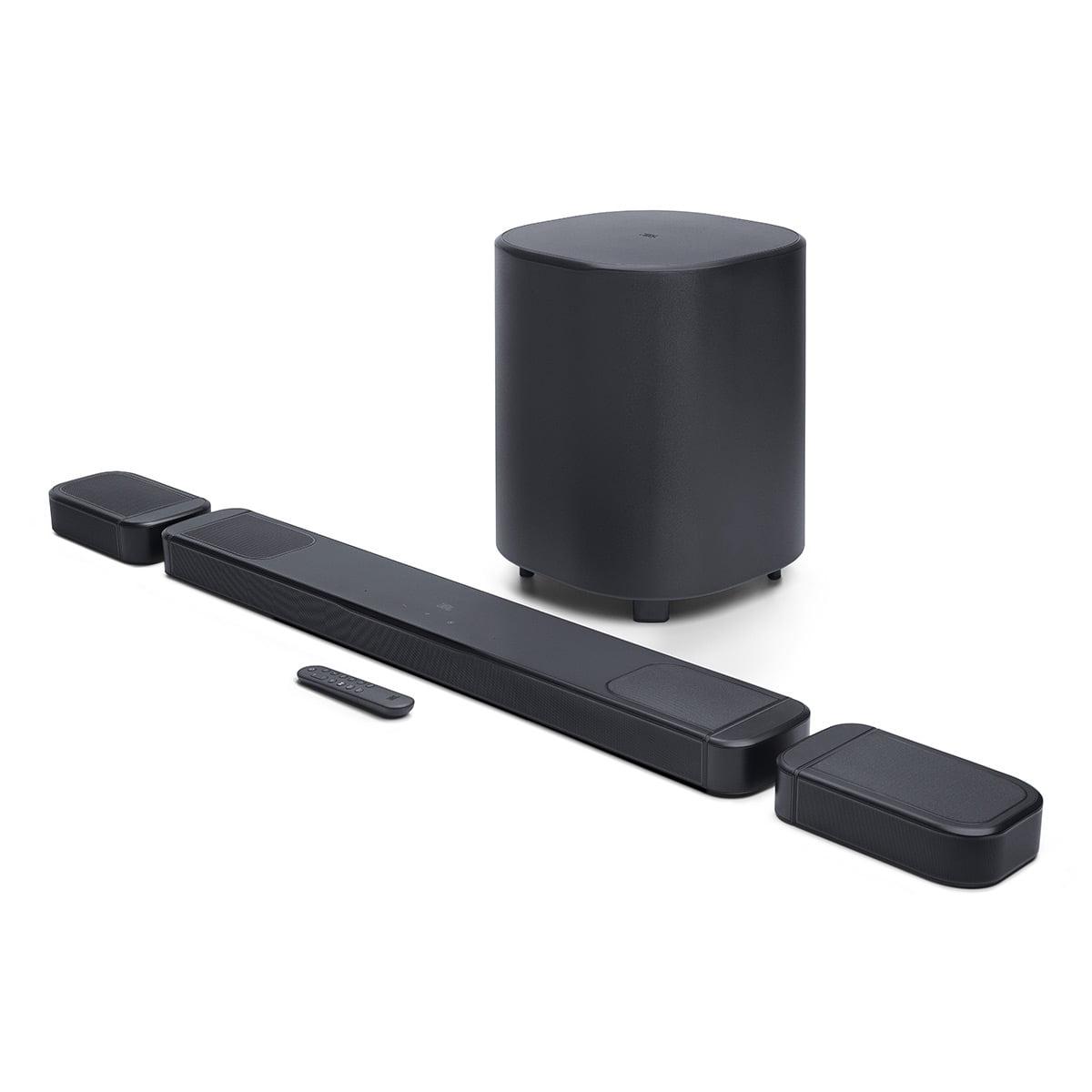
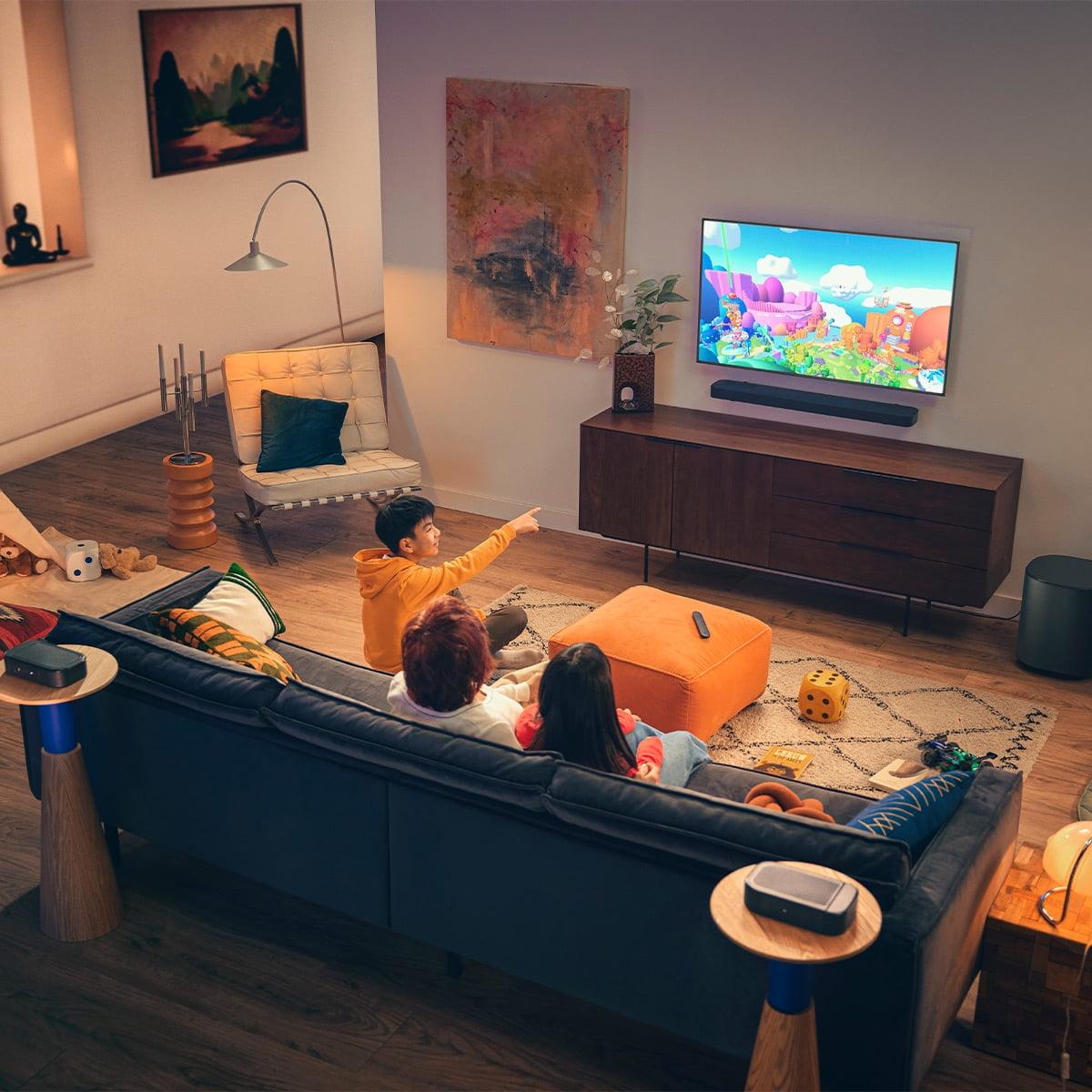
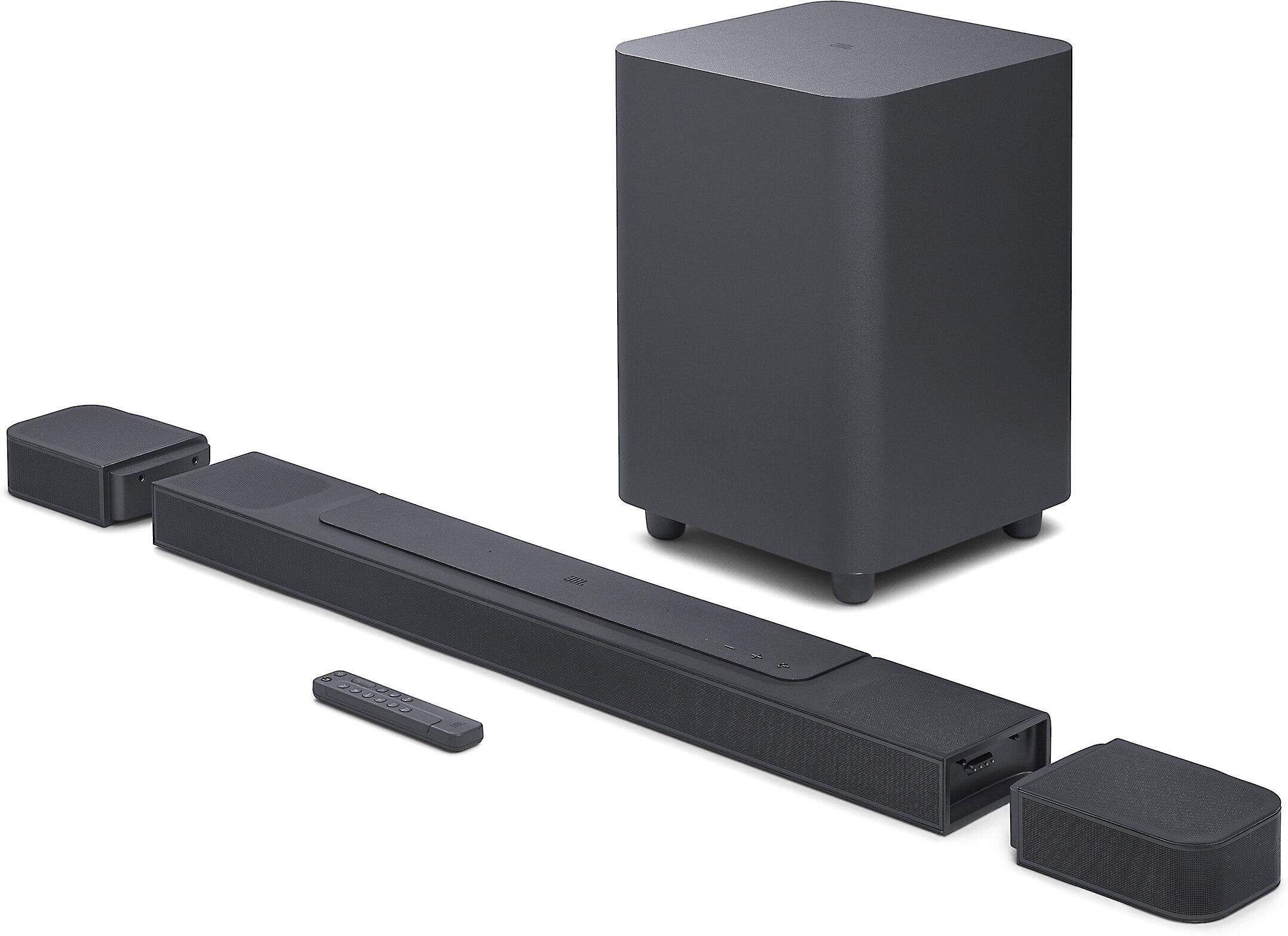
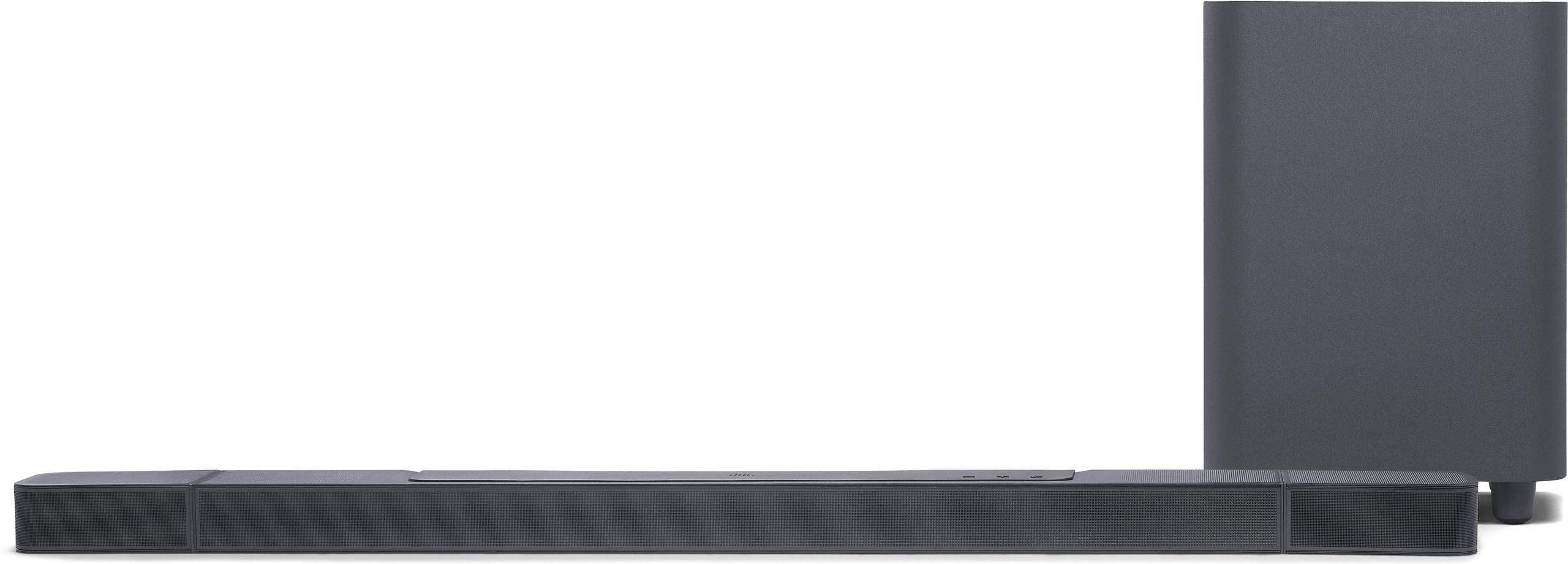

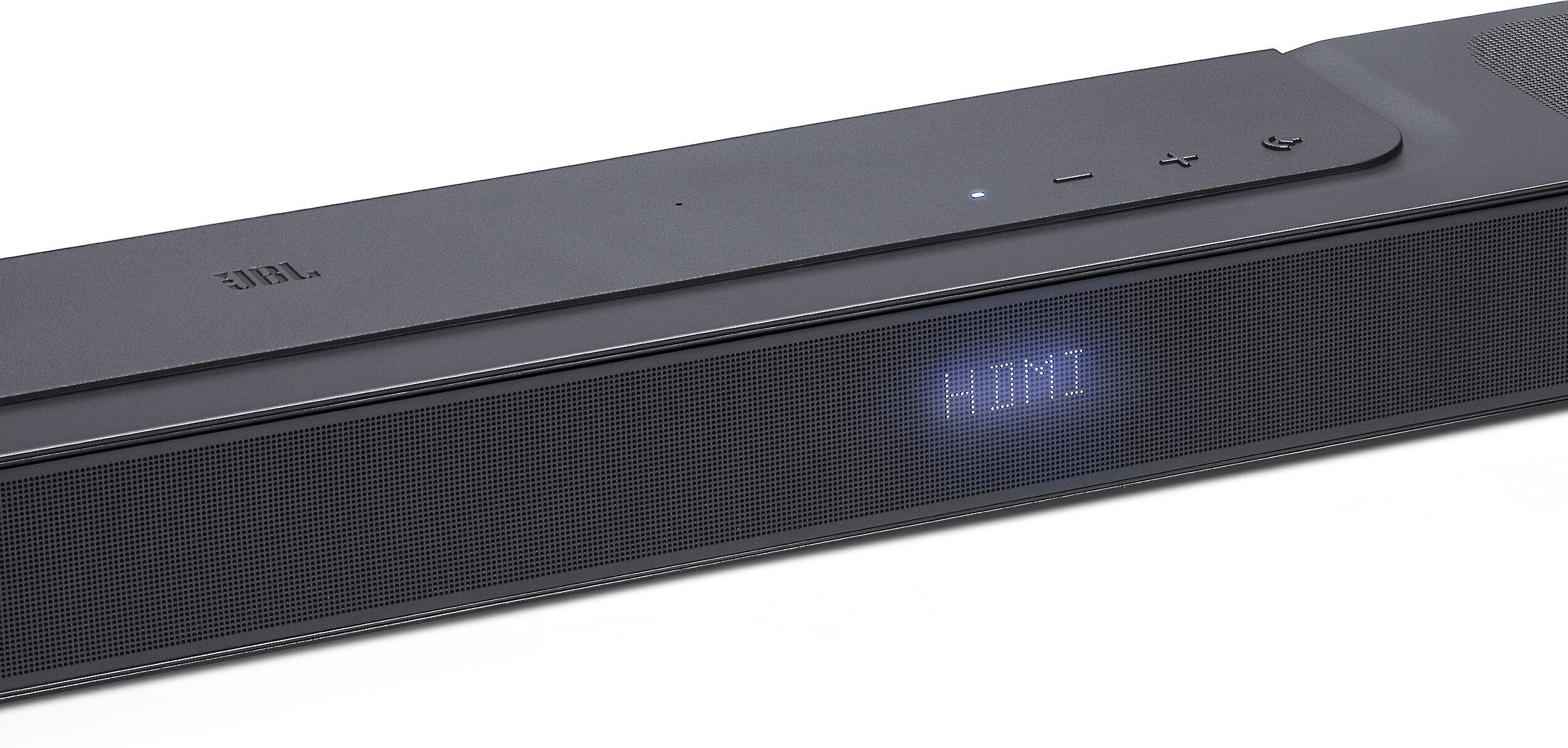



When JBL first launched the <a href="Bar 1000>) back in 2022, it completely changed how I thought about soundbars. Here was a system that could deliver true surround sound without running speaker wires around your living room – something that seemed almost too good to be true. Now, three years later, JBL has released the <a href="Bar 1000 MK2>) at nearly double the price, promising significant improvements to an already impressive formula.
But are those improvements worth the substantial price jump? After spending time with both systems, I can tell you the answer isn't as straightforward as you might expect.
Premium soundbars occupy a unique space in home audio. They're designed for people who want cinema-quality sound but don't want to deal with the complexity – or spouse approval challenges – of a traditional surround sound system with speakers scattered around the room.
The key thing to understand about premium soundbars is that they use several clever technologies to create the illusion of surround sound. Dolby Atmos processing takes regular stereo or 5.1 audio and creates "objects" that can be placed anywhere in a three-dimensional space around you. DTS:X does something similar but with different encoding methods. These systems literally bounce sound off your ceiling and walls to create height effects and surround sensations.
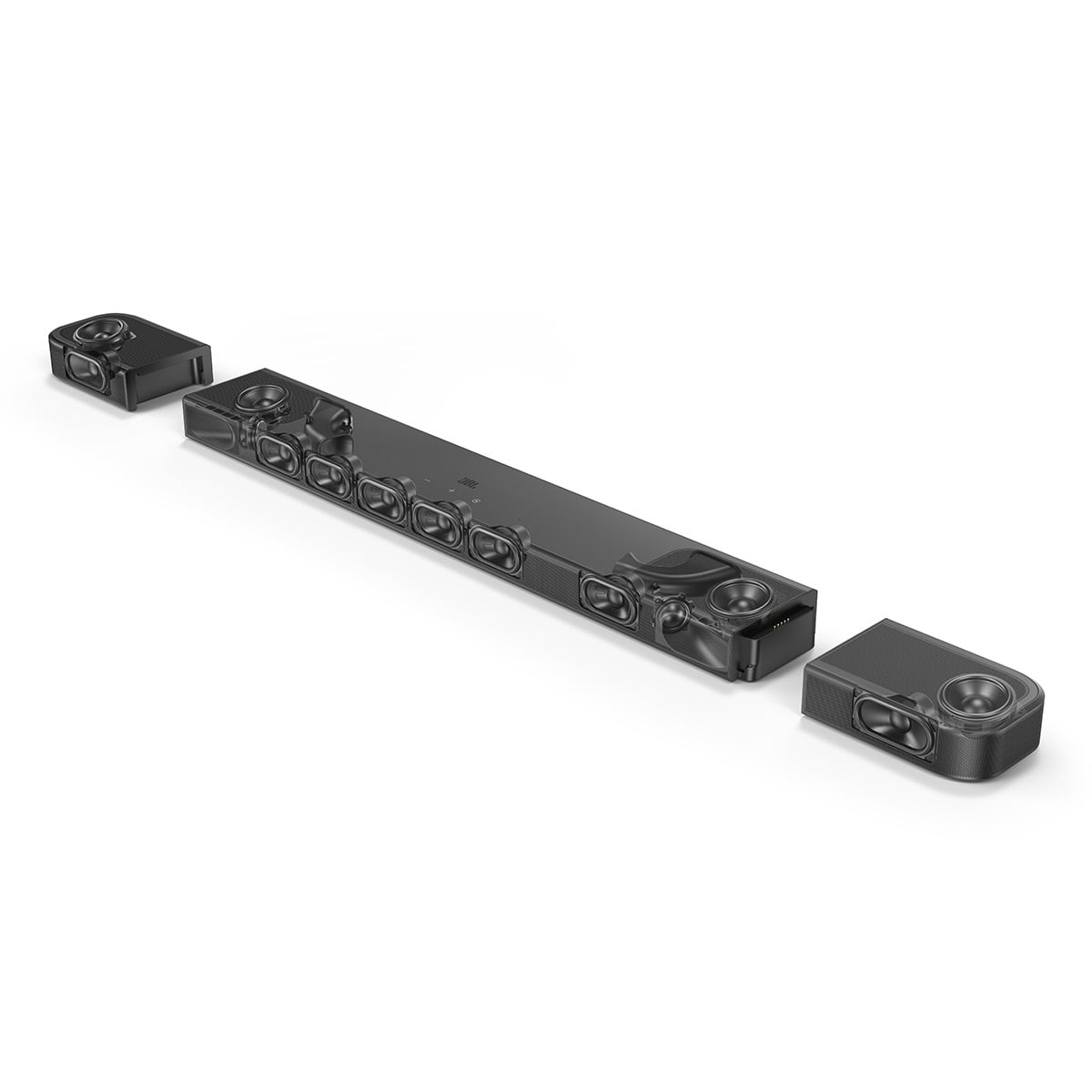
What makes both JBL systems special is their approach to rear surround channels. Instead of relying purely on audio processing tricks, they include actual wireless speakers that you can place behind your seating area. This gives you real surround sound, not just the simulation of it.
The main considerations when evaluating these systems are pretty straightforward: How good do they sound? How much power do they deliver? How easy are they to set up and live with? And ultimately, do the improvements in the newer model justify spending significantly more money?
The original <a href="Bar 1000>) was something of a revelation when it launched in 2022 for $699.95. JBL managed to pack true 7.1.4-channel processing (that's seven main channels, one subwoofer channel, and four height channels) into a relatively affordable package. The detachable battery-powered rear speakers were genuinely innovative – I remember setting up the system and being amazed that those little speakers could run for up to 10 hours on a single charge while delivering convincing surround effects.
The 2025 <a href="Bar 1000 MK2>) arrives at $1,199 with what JBL calls "second-generation" improvements. On paper, the changes might seem incremental – 960W instead of 880W, upgraded audio processing, better connectivity. But having used both systems, I can tell you these changes add up to a meaningfully different experience.
The timing of this release is interesting too. In the three years since the original launched, competitors like Samsung and Sonos have significantly upgraded their offerings. JBL needed to respond not just to maintain relevance, but to stay ahead of the curve in premium soundbar technology.
Let's start with the most obvious difference: power output. The <a href="Bar 1000 MK2>) delivers 960W maximum compared to the original's 880W. That might not sound like much – it's only about 9% more power – but in audio terms, this difference is more significant than the numbers suggest.
Power headroom is crucial for dynamic audio content. When a movie has a quiet dialogue scene followed by an explosion, the system needs reserve power to handle those sudden peaks without distortion. The extra 80W in the MK2 translates to cleaner sound at higher volumes and better handling of demanding content like action movies or complex orchestral music.
I tested both systems with the opening sequence of "Top Gun: Maverick" – a scene that really pushes soundbars to their limits. The original Bar 1000 handled it well, but you could hear some compression (a squashing of the sound) when the jets really started screaming. The MK2 maintained clarity and separation even during the most intense moments.
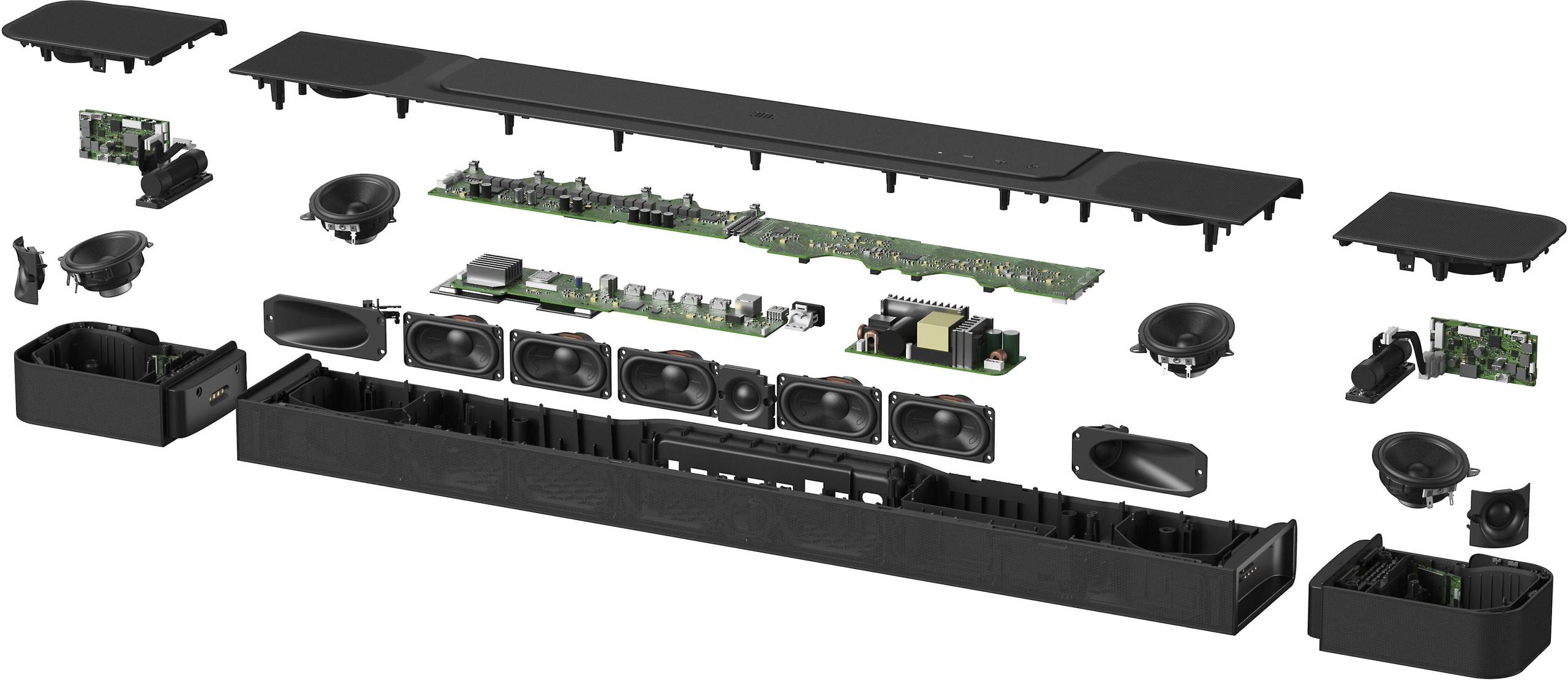
The power distribution is also more sophisticated in the MK2. The soundbar itself puts out 500W maximum (250W RMS), while each detachable surround speaker contributes 80W maximum (40W RMS). The 10-inch subwoofer adds 300W maximum (150W RMS) to both systems. This balanced approach means no single component is working too hard, which contributes to cleaner overall sound.
RMS power (Root Mean Square) is the more honest measurement – it represents the continuous power the system can deliver, not just brief peaks. The MK2's 480W RMS versus the original's estimated 440W RMS gives you a better sense of real-world performance differences.
Here's where things get really interesting. Both systems create their 7.1.4-channel surround experience using a combination of physical drivers and digital processing, but the MK2's approach is noticeably more sophisticated.
The original Bar 1000 uses JBL's MultiBeam technology, which essentially fires sound at different angles to create the illusion of a wider soundstage. It works well, but the processing can sometimes feel a bit obvious – you're aware that tricks are being played with the sound.
The MK2 upgrades to MultiBeam 3.0, and the difference is immediately apparent. The soundstage feels more natural and expansive. When watching movies, effects seem to come from specific locations in space rather than just "somewhere to the left or right." The processing is more subtle and convincing.
PureVoice 2.0 in the MK2 is another significant upgrade. This technology automatically adjusts dialogue clarity based on what else is happening in the soundtrack and how loud you're listening. If there's a big action sequence with explosions and music, PureVoice 2.0 will intelligently boost the dialogue frequencies so you can still understand what characters are saying without manually adjusting the volume.
The original system's PureVoice works, but it's more of a static boost to voice frequencies. The 2.0 version is dynamic and responsive, which makes a huge difference during mixed content where dialogue levels vary dramatically.
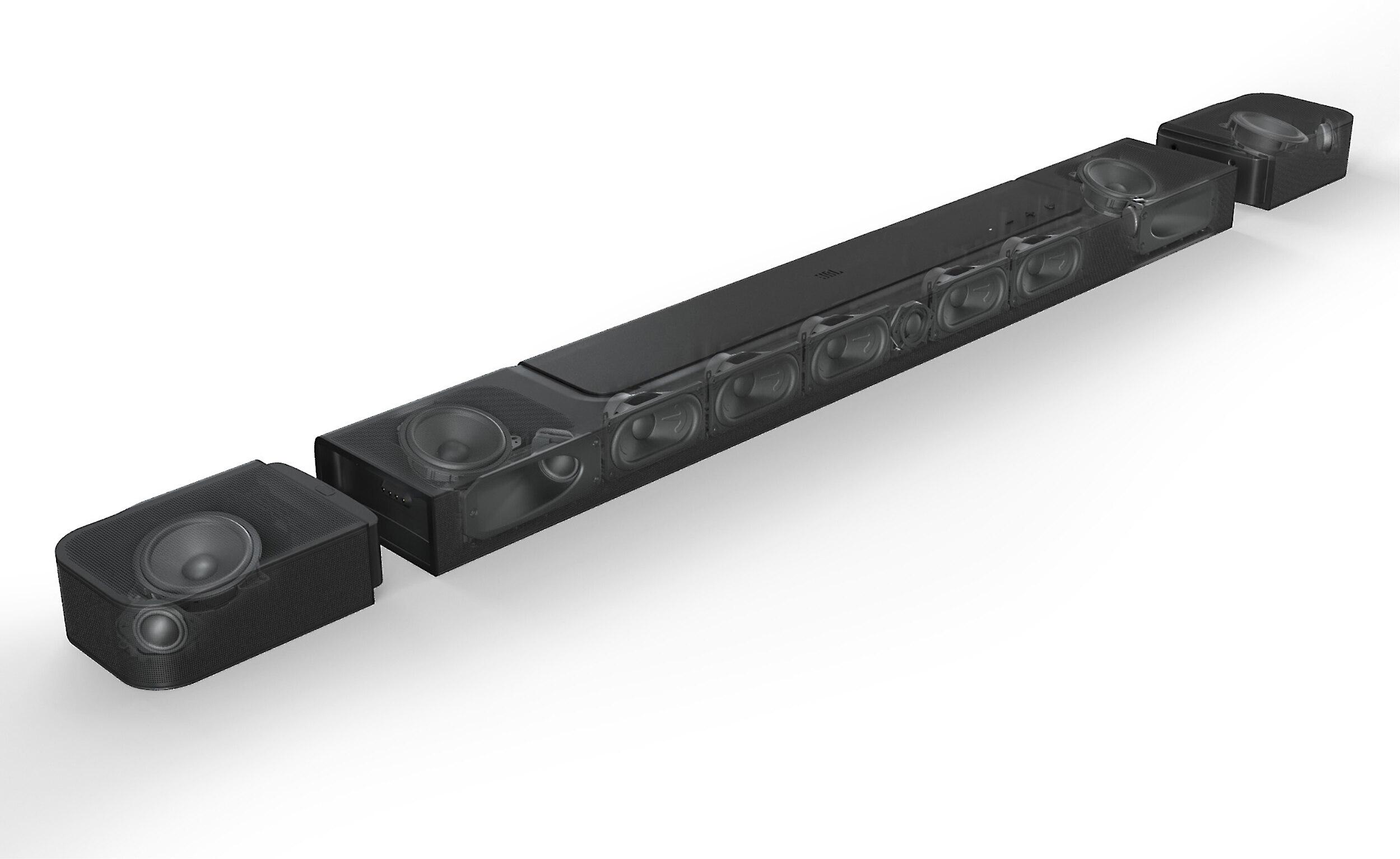
Both systems use four up-firing drivers – specialized speakers that fire sound toward the ceiling, which then reflects back down to create height effects. Two of these are built into the main soundbar, and one is in each detachable rear speaker. This physical approach to height channels works much better than purely virtual processing, giving you the sense that helicopters are actually flying overhead or rain is falling from above.
This is where both JBL systems really shine compared to competitors. Those detachable rear speakers aren't just a gimmick – they fundamentally change how surround sound works in your living room.
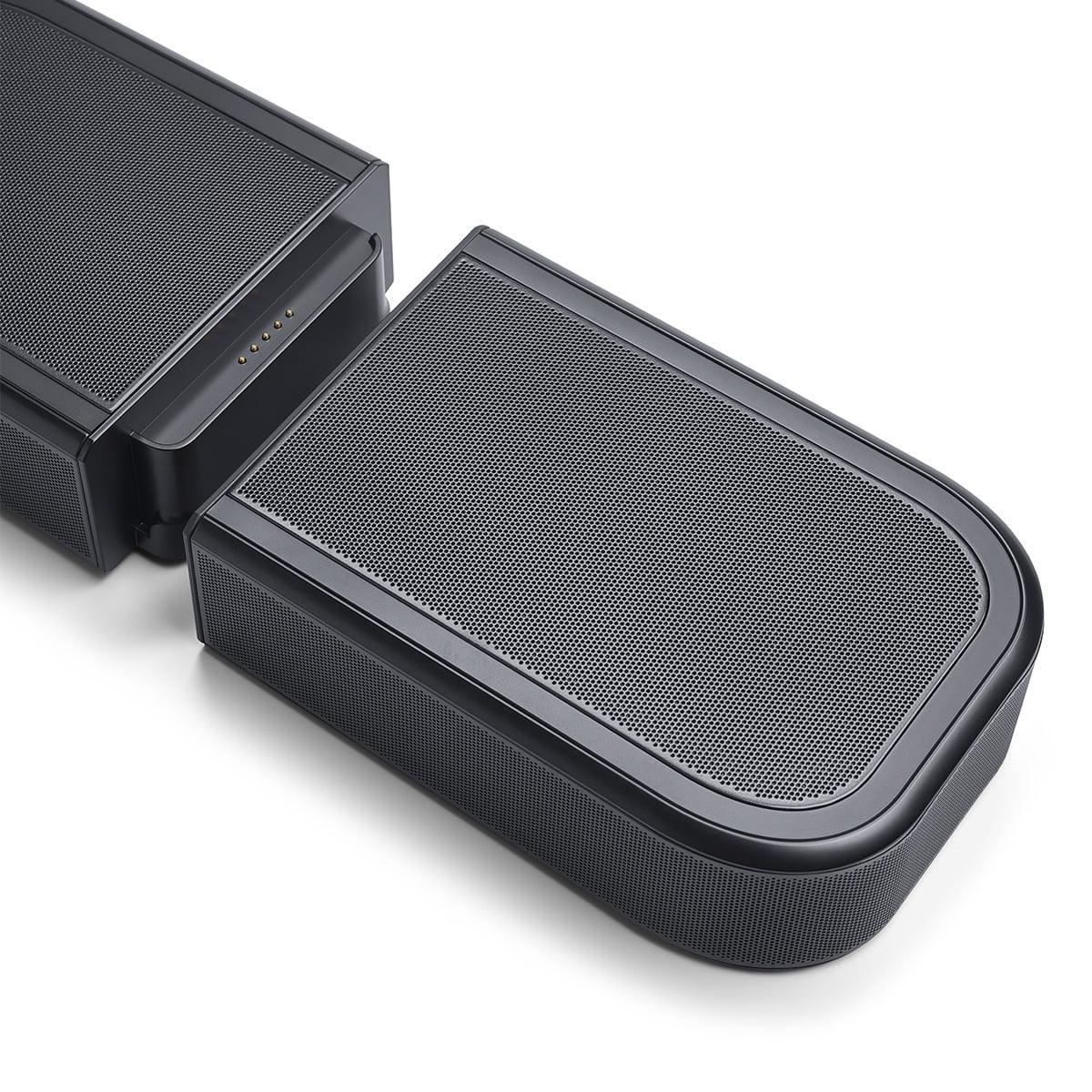
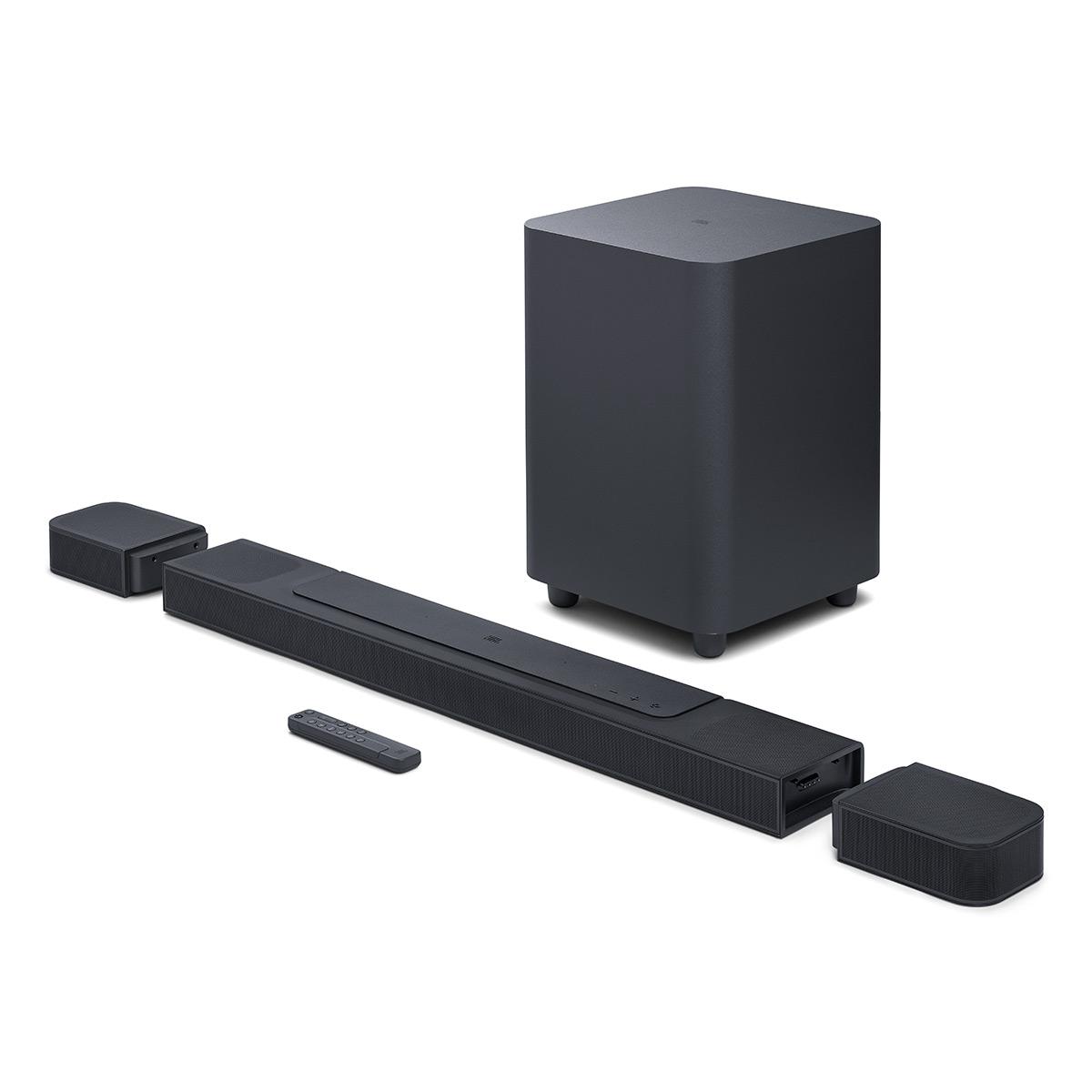
Each speaker houses a 6,600mAh battery that provides up to 10 hours of playback time. When you're not using them for surround sound, they automatically recharge when docked to the main soundbar. The wireless connection is rock-solid – I've never experienced dropouts or sync issues, even when the speakers are placed 15 feet behind the main bar.
The MK2 adds some clever new functionality here. The Night Listening mode can automatically mute the main soundbar and subwoofer, routing all audio through just the detachable speakers. This is perfect for late-night viewing when you don't want to disturb other family members or neighbors. The original system has a basic night mode, but it's not nearly as sophisticated or user-friendly.
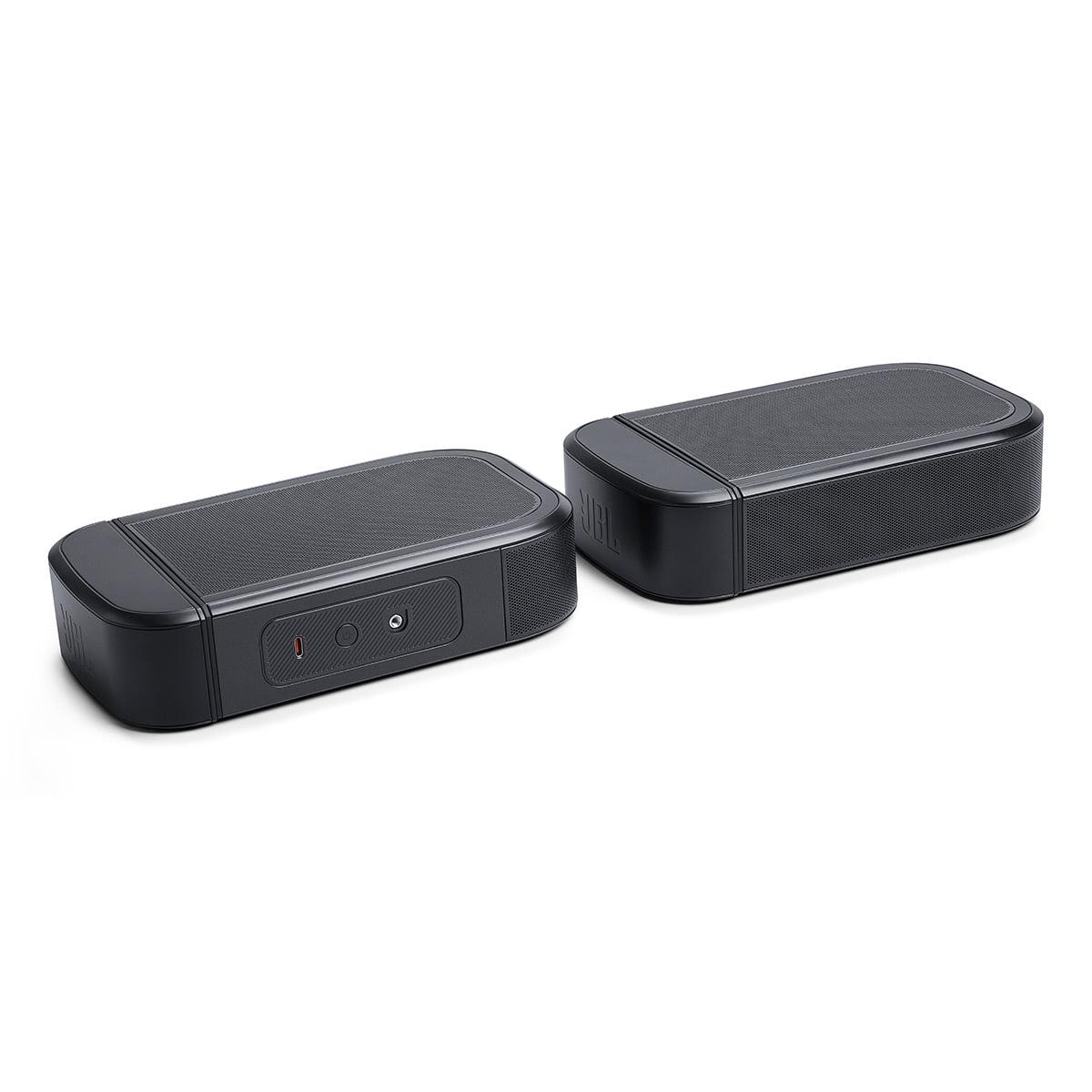
More importantly, the MK2's detachable speakers can function as standalone Bluetooth speakers when removed from the system. Take them to the backyard for a barbecue, or use them in a bedroom for music listening. The original system's speakers only work as part of the surround setup.
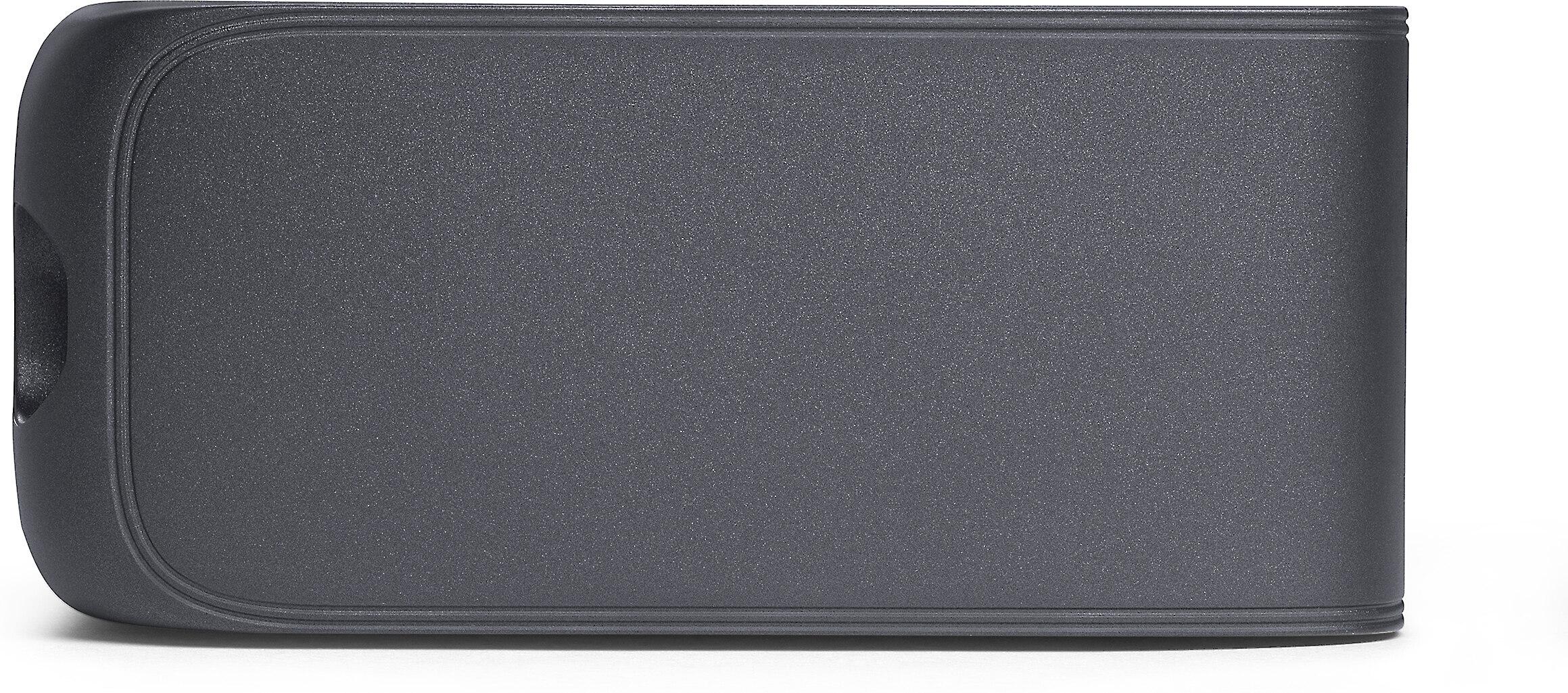
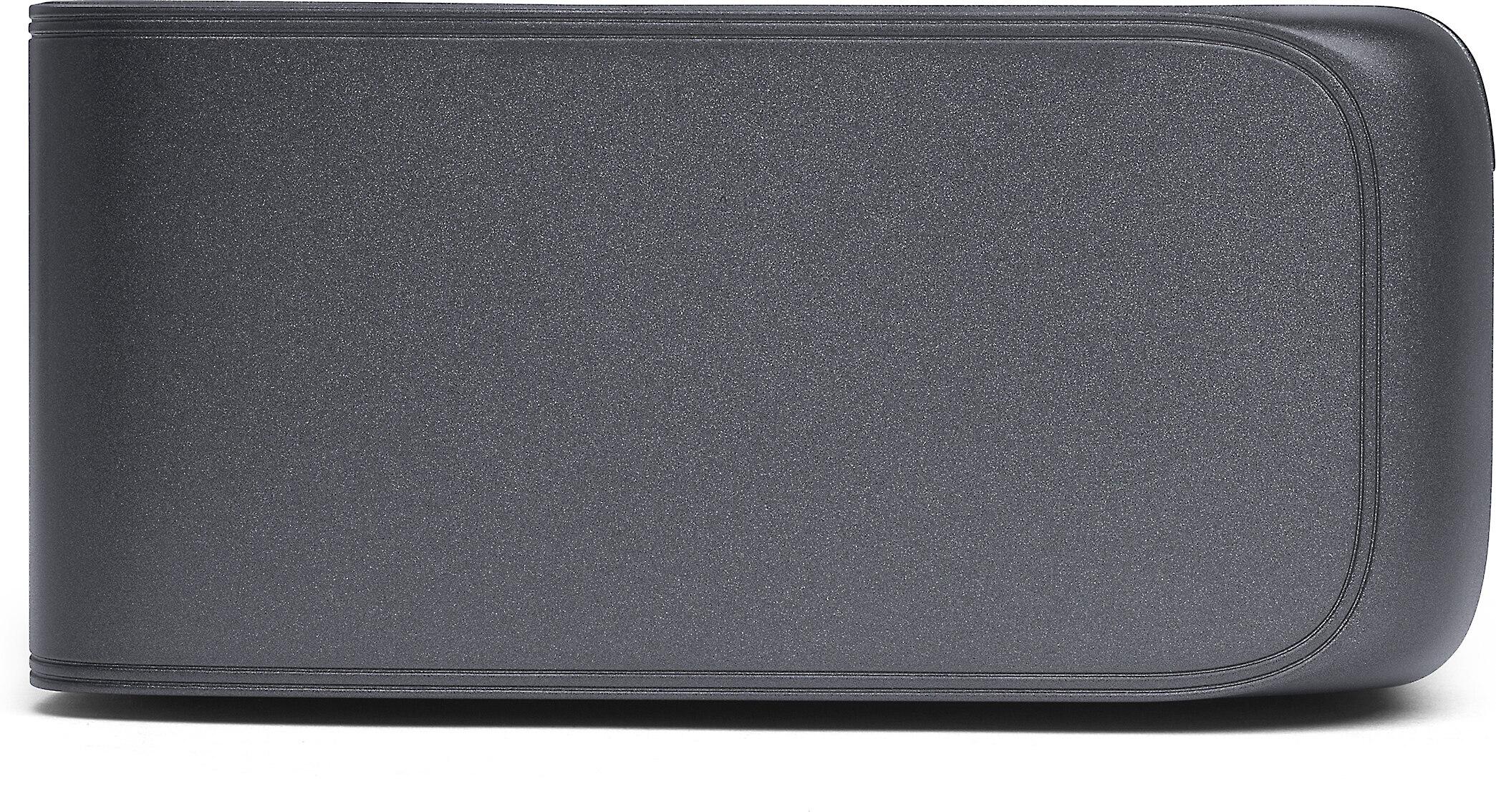
The speakers themselves are surprisingly substantial – each weighs about 3.1 pounds and includes both a tweeter for high frequencies and an up-firing driver for height effects. The build quality feels premium, with a rubberized finish that matches the main soundbar.
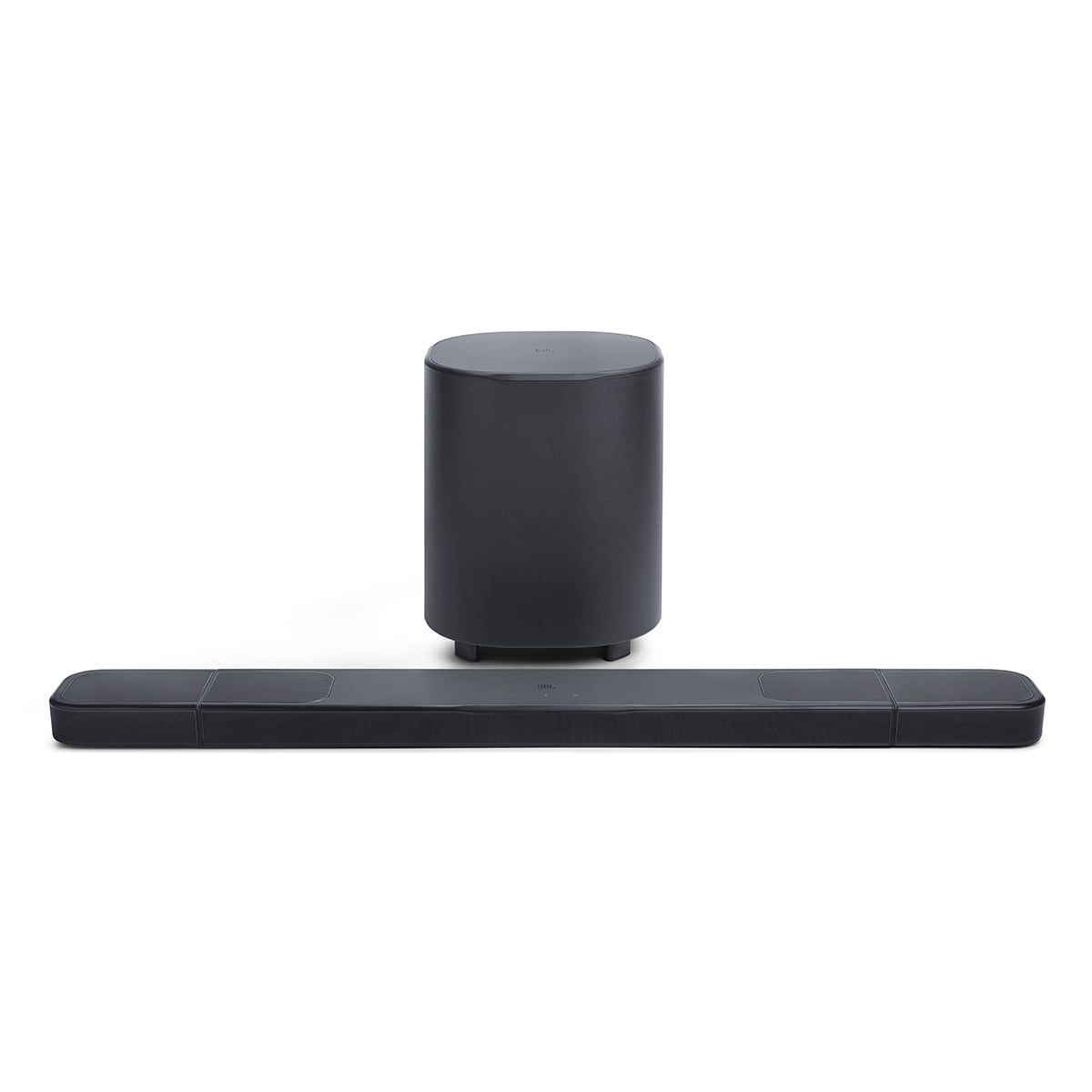
Both systems include identical wireless subwoofers with 10-inch drivers and 300W of power. This is a significant advantage over competitors like the Sonos Arc, which relies on built-in woofers and doesn't include a dedicated subwoofer.
The subwoofer connects wirelessly to the main soundbar and can be placed anywhere in the room for optimal bass response. I've found it works best in a corner or along a wall, where the room boundaries can reinforce the low frequencies.
The frequency response of 33Hz to 20kHz means these systems can reproduce very deep bass – the kind you feel in your chest during action movies. The 33Hz low-end extension is impressive for a soundbar system and competitive with much more expensive setups.
Where the MK2 improves is in bass integration and timing. The upgraded processing ensures the subwoofer blends seamlessly with the main channels, so you don't get that disconnected feeling where the bass sounds like it's coming from a different location than the rest of the audio. The bass also feels tighter and more controlled, with better transient response when sounds start and stop quickly.
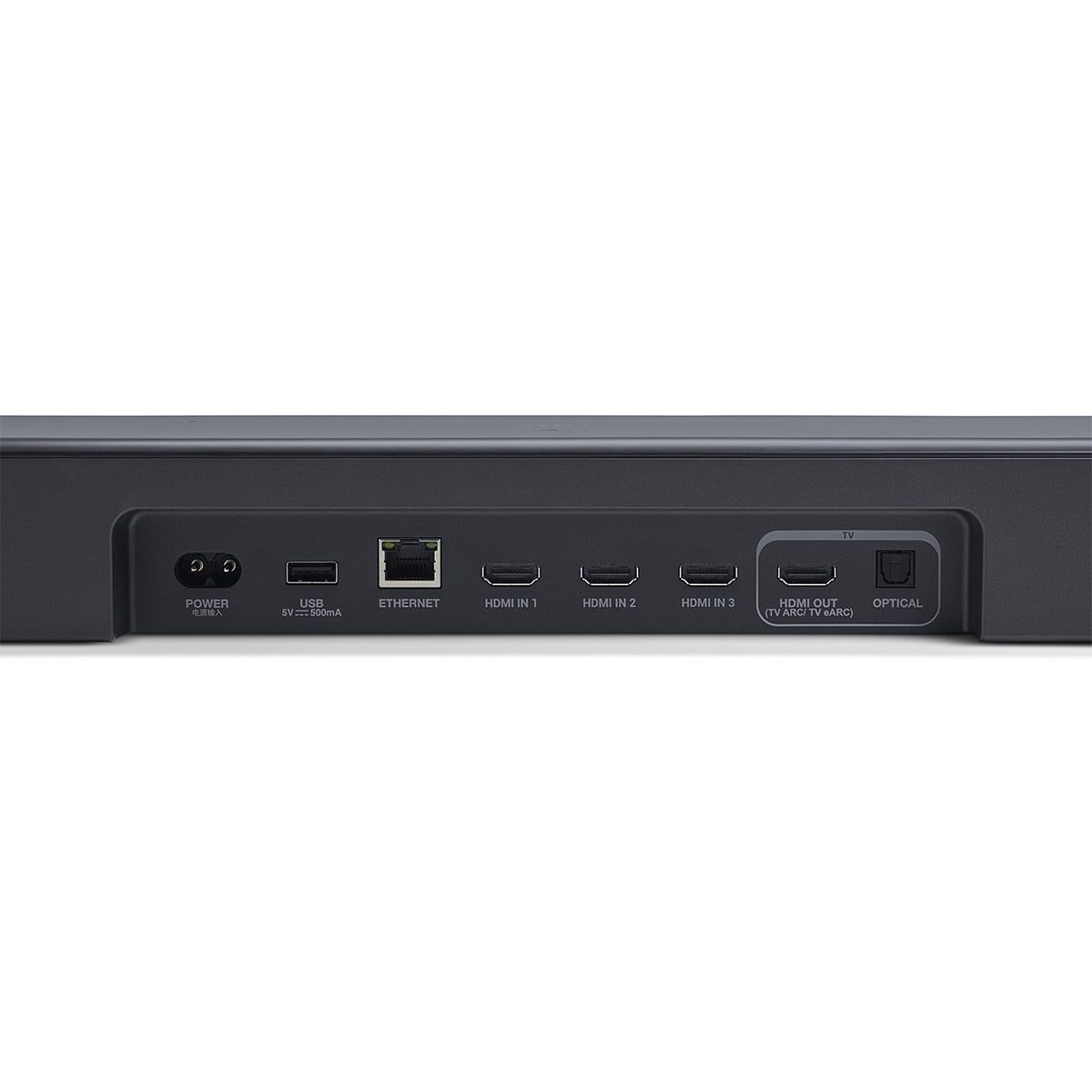
The connectivity story is where you really see the three-year technology gap between these systems. The original <a href="Bar 1000>) includes the basics: HDMI eARC (Enhanced Audio Return Channel) for high-quality audio from your TV, three additional HDMI inputs for connecting devices directly, optical audio input, and Wi-Fi for streaming services.
The <a href="Bar 1000 MK2>) upgrades several of these connections significantly. Bluetooth 5.3 provides more stable connections with modern devices and better handling of multiple paired devices. The addition of Chromecast Built-in means you can cast audio directly from any Android device or Chrome browser, which is incredibly convenient for music listening.
Both systems support 4K Dolby Vision passthrough, so you can connect gaming consoles or streaming devices directly to the soundbar and pass the video signal to your TV without any quality loss. This is crucial for maintaining the best possible picture quality with modern 4K HDR content.
The JBL One app experience is similar on both systems, offering EQ customization, sound calibration, and access to streaming services. However, the MK2's app includes more granular EQ controls and more sophisticated room calibration that automatically adjusts the sound based on your room's acoustic properties.
Wi-Fi streaming works through multiple protocols: AirPlay 2 for Apple devices, Spotify Connect for direct streaming from the Spotify app, and the MK2 adds Chromecast support. Both systems are also Roon Ready, which is important for audiophiles who use Roon's music management system.
In practice, both systems excel at creating immersive home theater experiences, but they have different strengths depending on your content and room size.
For movie watching, the MK2's extra power and improved processing make a noticeable difference in large rooms or when you like to listen at higher volumes. Action movies like "Dune" or "Mad Max: Fury Road" benefit from the increased headroom and more sophisticated surround processing. Dialogue remains clear even during the most chaotic scenes, thanks to PureVoice 2.0.
The original Bar 1000 is no slouch here either. In medium-sized rooms at moderate volumes, it delivers a thoroughly satisfying cinematic experience. The detachable surrounds really make a difference for movie immersion – you get genuine rear channel effects that you simply can't achieve with a traditional soundbar.
Music listening reveals some interesting differences. The MK2's wider soundstage and more natural processing make it better for critical music listening. Jazz recordings, in particular, benefit from the improved spatial presentation – you can more easily identify where individual instruments are positioned in the stereo field.
Both systems handle gaming well, with low latency connections that don't introduce noticeable audio delay. The immersive surround effects really enhance gaming experiences, especially in first-person shooters where directional audio cues are important.
This is where the decision gets complicated. The original <a href="Bar 1000>) frequently sells for $599-649, making it an exceptional value in the premium soundbar category. You're getting true Dolby Atmos processing, detachable wireless surrounds, and a powerful subwoofer for less than many competitors charge for just a basic soundbar.
The <a href="Bar 1000 MK2>) at $1,199 represents a 70% price increase for what are admittedly meaningful but incremental improvements. Whether those improvements justify the cost depends heavily on your specific situation and priorities.
At its current pricing, the original system competes favorably with the Sonos Arc ($899) and Samsung HW-Q900C ($799), offering unique features those systems lack. The MK2, however, faces much stiffer competition from Samsung's HW-Q990F ($1,299) and Sony's HT-A7000 ($1,199), both of which offer their own compelling feature sets.
Both systems are refreshingly easy to set up. The main soundbar connects to your TV via HDMI eARC, the subwoofer pairs automatically when powered on, and the detachable speakers connect wirelessly when docked to the main bar.
The room calibration process is straightforward on both systems – you place your phone at your listening position and let the system play test tones to optimize the sound for your space. The MK2's calibration is faster and more comprehensive, but both work well in practice.
Day-to-day operation is hassle-free. The detachable speakers charge automatically when docked, the wireless connections are reliable, and the systems integrate well with TV remotes for basic volume and power control.
The form factor is reasonable for both systems. The main soundbar is about 33.6 inches wide, so it fits under most TVs without looking oversized. The detachable speakers dock flush with the ends of the main bar, so the overall appearance is clean and uncluttered.
Choose the original <a href="Bar 1000>) if:
Choose the <a href="Bar 1000 MK2>) if:
Consider looking elsewhere if:
The reality is that both of these systems will dramatically improve your home theater experience compared to TV speakers or basic soundbars. The original Bar 1000 remains an exceptional value that delivers premium features at a reasonable price. The MK2 offers meaningful improvements in sound quality and functionality, but at a cost that puts it in a much more competitive price bracket.
For most people, I'd recommend starting with the original system – it's still available, offers tremendous value, and will satisfy the vast majority of home theater needs. If you're an audio enthusiast with a large room and budget flexibility, the MK2's improvements are worthwhile. But either way, you'll end up with one of the most innovative and capable soundbar systems available today.
| JBL Bar 1000 MK2 | JBL Bar 1000 |
|---|---|
| Release Date & Pricing - Shows value positioning and current availability | |
| June 2025, $1,199 MSRP | 2022 release, $699.95 original (often $599-649 on sale) |
| Total System Power - Determines how loud and dynamic the sound can get | |
| 960W max / 480W RMS (better headroom for large rooms) | 880W max / ~440W RMS (adequate for most home theaters) |
| Audio Processing - Controls sound quality and surround effects | |
| MultiBeam 3.0 + PureVoice 2.0 (adaptive dialogue enhancement) | Standard MultiBeam + PureVoice (basic dialogue boost) |
| Connectivity - Affects device compatibility and streaming options | |
| Bluetooth 5.3, Chromecast Built-in, Wi-Fi streaming | Older Bluetooth, Wi-Fi streaming (no Chromecast) |
| Detachable Speaker Features - Unique selling point for both systems | |
| Night Listening mode + standalone Bluetooth speaker function | Basic night mode, surround-only operation |
| Channel Configuration - Both deliver the same surround experience | |
| 7.1.4 channels with true Dolby Atmos/DTS:X and 4 up-firing drivers | 7.1.4 channels with true Dolby Atmos/DTS:X and 4 up-firing drivers |
| Subwoofer - Identical bass performance across both models | |
| 10" wireless subwoofer, 300W max, 33Hz-20kHz response | 10" wireless subwoofer, 300W max, 33Hz-20kHz response |
| Battery Life - Same convenience for wireless surround speakers | |
| 10 hours per detachable speaker | 10 hours per detachable speaker |
| Room Calibration - Both offer automatic sound optimization | |
| Enhanced calibration with faster, more accurate measurements | Standard automatic room calibration |
| Best For - Who should consider each model | |
| Audio enthusiasts wanting latest tech, large rooms, high-volume listening | Value-focused buyers wanting premium features at lower cost |
The JBL Bar 1000 MK2 is the 2025 upgrade with 960W power, MultiBeam 3.0 processing, and enhanced connectivity for $1,199. The original JBL Bar 1000 from 2022 offers 880W power and core features for $699.95 (often $599-649 on sale). Both have identical 7.1.4-channel surround sound with detachable wireless rear speakers.
The original JBL Bar 1000 offers exceptional value at $599-649, delivering premium features like true Dolby Atmos and detachable surrounds at a competitive price. The JBL Bar 1000 MK2 costs 70% more for meaningful but incremental improvements, making it better suited for audio enthusiasts who want the latest technology.
Both the JBL Bar 1000 MK2 and JBL Bar 1000 deliver true 7.1.4-channel Dolby Atmos with four up-firing drivers and detachable wireless rear speakers. The MK2's MultiBeam 3.0 and PureVoice 2.0 create a wider soundstage and better dialogue clarity, but both provide genuine surround sound experiences.
The JBL Bar 1000 MK2 delivers 960W maximum power (480W RMS), while the JBL Bar 1000 provides 880W maximum power (~440W RMS). The 9% power increase in the MK2 offers better headroom for large rooms and high-volume listening with less distortion.
Both soundbars feature identical detachable wireless rear speakers with 10-hour battery life. However, the JBL Bar 1000 MK2 adds standalone Bluetooth functionality and an advanced Night Listening mode, while the JBL Bar 1000 speakers only work as part of the surround system.
The JBL Bar 1000 MK2 is better for large rooms due to its 960W power output, improved MultiBeam 3.0 processing, and enhanced room calibration. The original JBL Bar 1000 works well in medium-sized rooms but may struggle with power headroom in very large spaces.
Yes, both the JBL Bar 1000 MK2 and JBL Bar 1000 include identical 10-inch wireless subwoofers with 300W power and 33Hz-20kHz frequency response. The MK2 offers slightly better bass integration through improved processing, but the hardware is the same.
The JBL Bar 1000 MK2 features Bluetooth 5.3, Chromecast Built-in, HDMI eARC, and Wi-Fi streaming. The original JBL Bar 1000 has older Bluetooth, HDMI eARC, and Wi-Fi streaming but lacks Chromecast support. Both support AirPlay 2 and Spotify Connect.
Both soundbars excel for home theater with true Dolby Atmos processing and detachable rear speakers creating immersive surround sound. The JBL Bar 1000 MK2 offers better dialogue clarity and power for action movies, while the JBL Bar 1000 provides excellent cinematic experience at a lower price point.
Both the JBL Bar 1000 MK2 and JBL Bar 1000 offer simple setup with HDMI eARC connection, automatic subwoofer pairing, and wireless rear speaker docking. The MK2 features faster, more accurate room calibration, but both systems can be configured in minutes using the JBL One app.
Choose the JBL Bar 1000 if you want premium soundbar features under $700 and don't need maximum power. Select the JBL Bar 1000 MK2 if you have a large room, prioritize latest audio technology, and can justify the $1,199 price for enhanced processing and connectivity features.
Only the JBL Bar 1000 MK2 allows detachable speakers to function as standalone Bluetooth speakers when removed from the main system. The original JBL Bar 1000 speakers only operate as part of the surround sound setup and cannot be used independently for portable audio.
We've done our best to create useful and informative comparisons to help you decide what product to buy. Our research uses advanced automated methods to create this comparison and perfection is not possible - please contact us for corrections or questions. These are the sites we've researched in the creation of this article: ecoustics.com - engadget.com - bestbuy.com - techradar.com - rtings.com - hometechnologyreview.com - youtube.com - t3.com - whathifi.com - youtube.com - bhphotovideo.com - gzhls.at - device.report - support.jbl.com - support.jbl.com - jbl.com - av.com - audioadvice.com - jbl.com - target.com - worldwidestereo.com - zdnet.com - jbl.com - jbl.com - pcrichard.com - d21buns5ku92am.cloudfront.net - ro.harmanaudio.com - target.com - harmanaudio.com - dell.com - mm.jbl.com - dolby.com - jbl.com.my - videoandaudiocenter.com

Privacy Policy
Terms and Conditions - Affiliate Policy
Home Security
© Copyright 2008-2026.
11816 Inwood Rd #1211, Dallas, TX 75244