


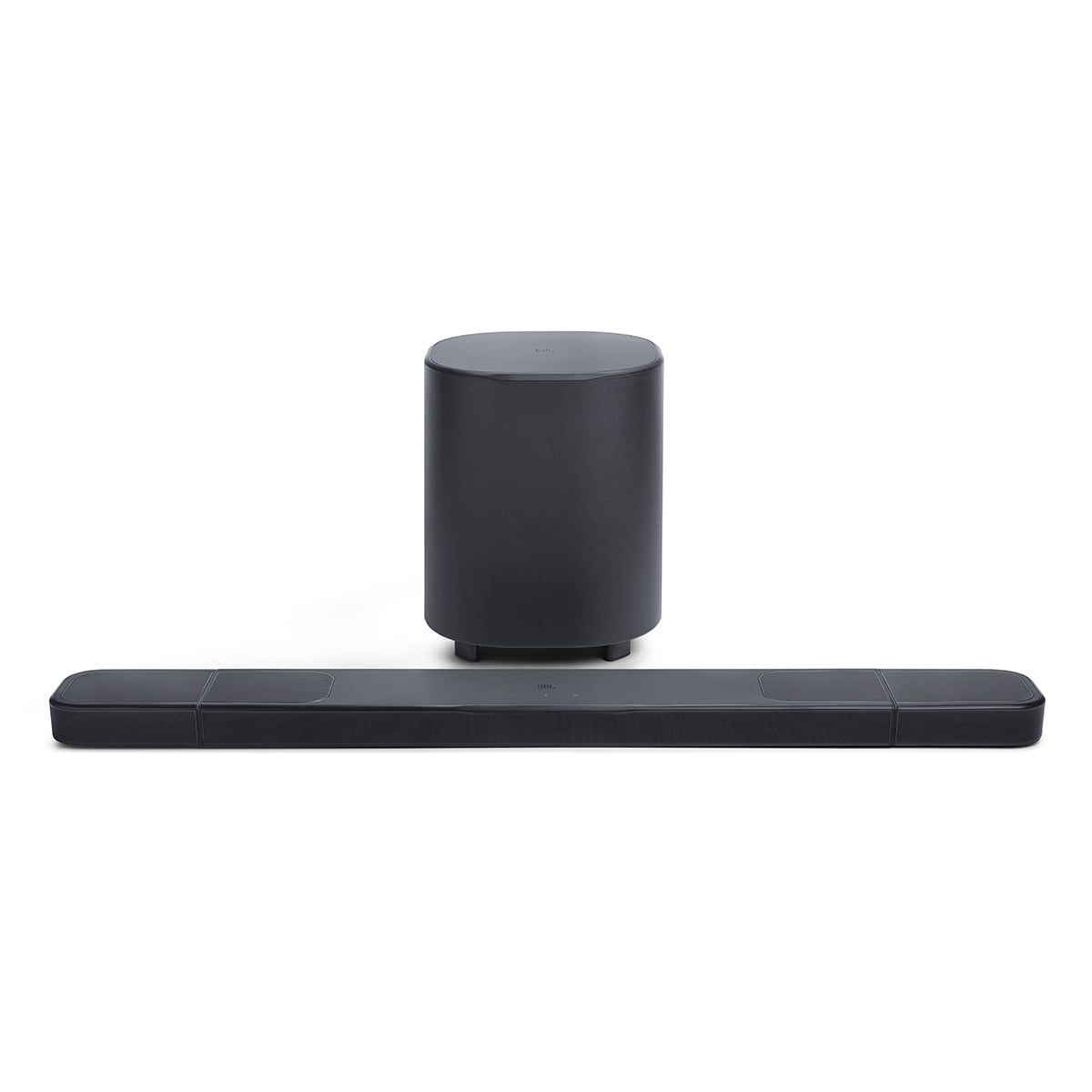
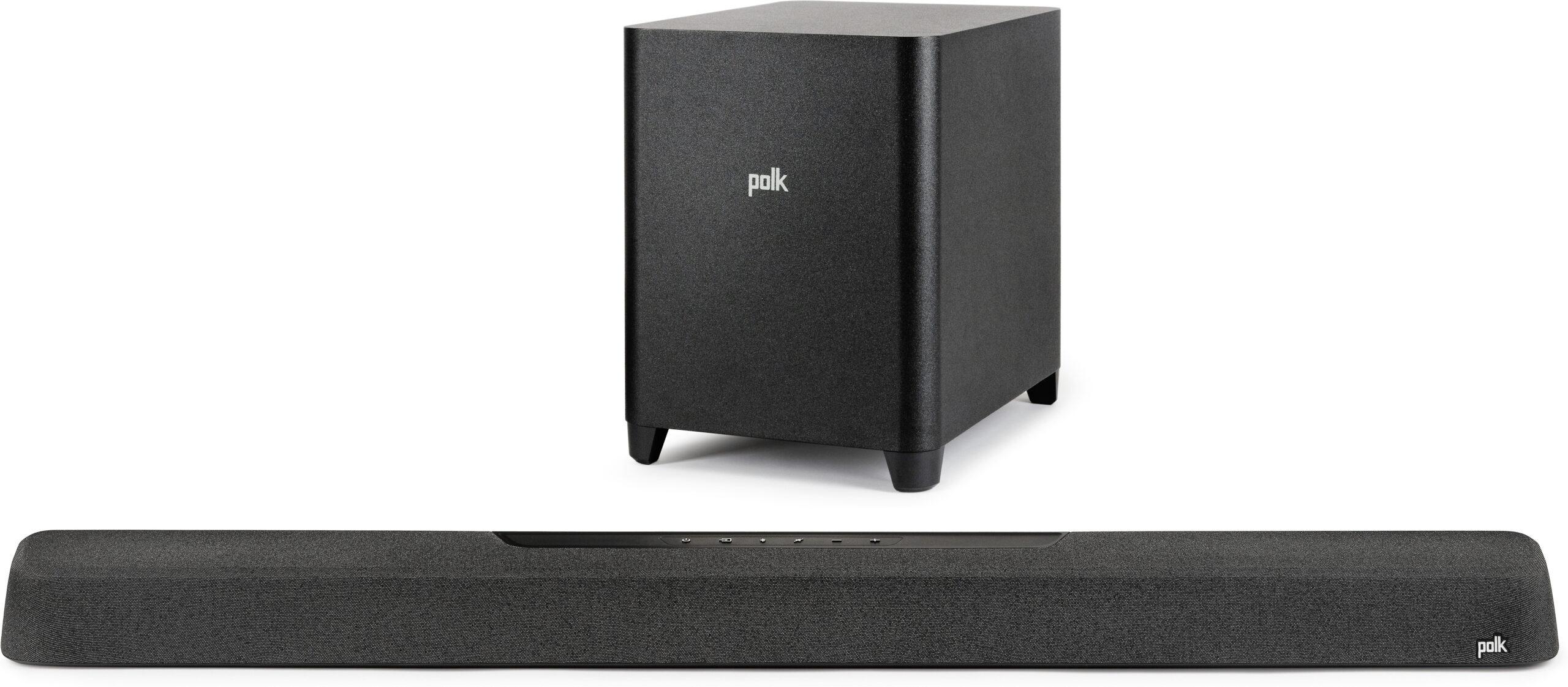
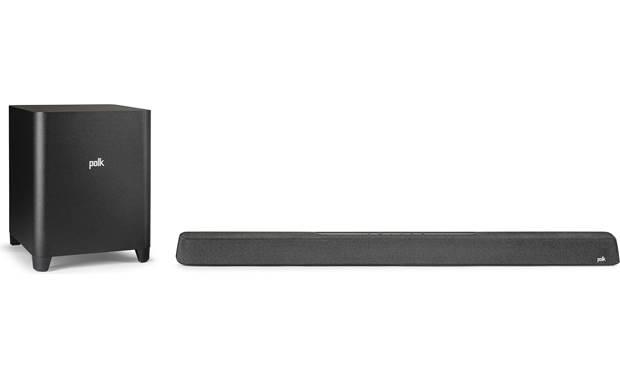
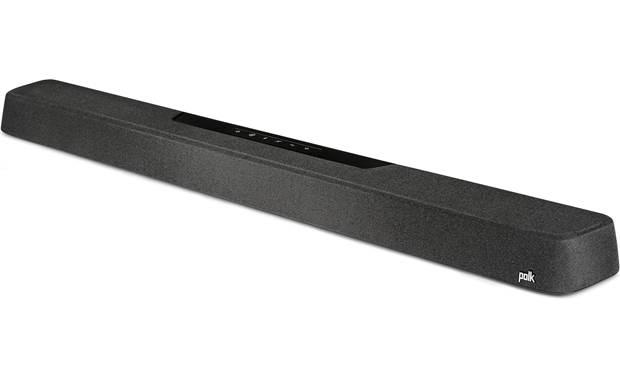
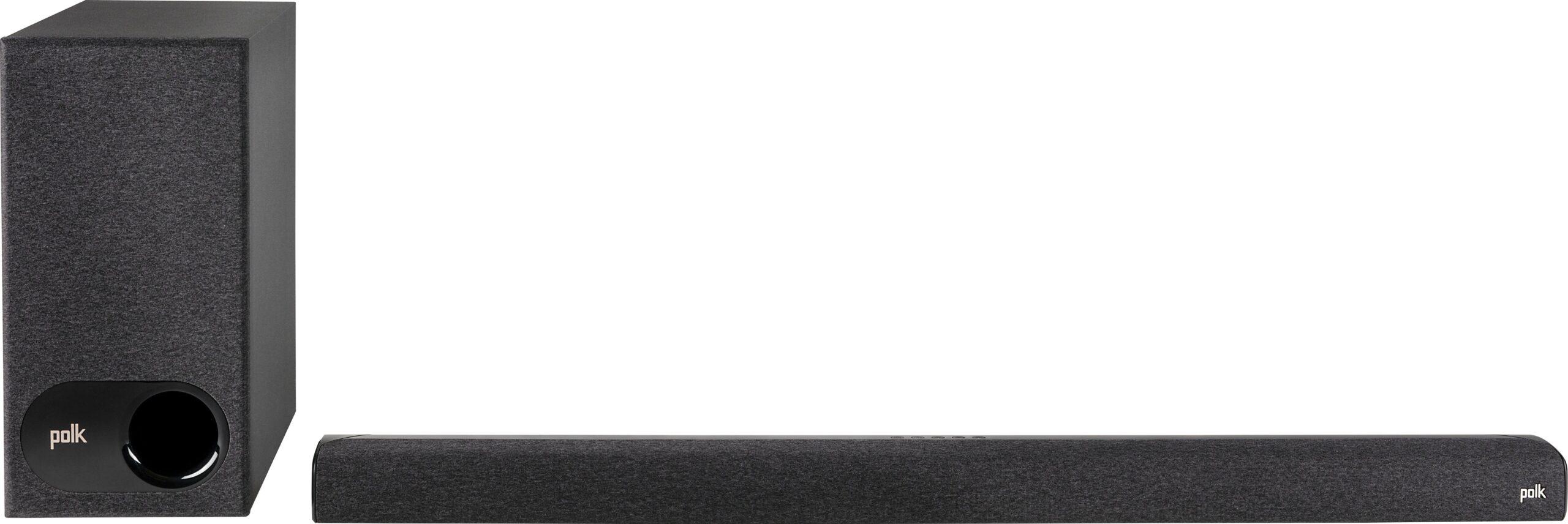
If you've been shopping for a soundbar lately, you've probably noticed the market has gotten pretty confusing. Between all the channel configurations, virtual processing claims, and tech jargon, it's hard to know what actually matters for your living room. Today I'm breaking down two popular options that take very different approaches: the JBL Bar 1000 MK2 ($1,199) and the Polk Audio MagniFi Max AX ($499).
I've spent considerable time with both systems, and while they're both excellent in their own ways, they're designed for completely different users and spaces. Let me walk you through everything you need to know to make the right choice.
Before diving into specifics, let's talk about what makes today's soundbars so much better than the basic models from a few years ago. The biggest game-changer has been object-based audio formats like Dolby Atmos and DTS:X. Instead of just sending audio to specific channels (like left, right, center), these formats treat sounds as objects that can be placed anywhere in 3D space around you.
Think of it this way: in old surround sound, a helicopter would move from your front-left speaker to your rear-left speaker in distinct steps. With Atmos, that helicopter can smoothly travel overhead in any direction, creating a much more realistic experience. This is why you'll see numbers like "7.1.4" in soundbar specs—that's seven main channels, one subwoofer, and four height channels for overhead effects.
The challenge is that most of us don't want seven separate speakers cluttering our living rooms. Soundbars solve this by either using clever audio processing to fake surround effects (called virtualization) or by including additional physical speakers that can be placed around the room.
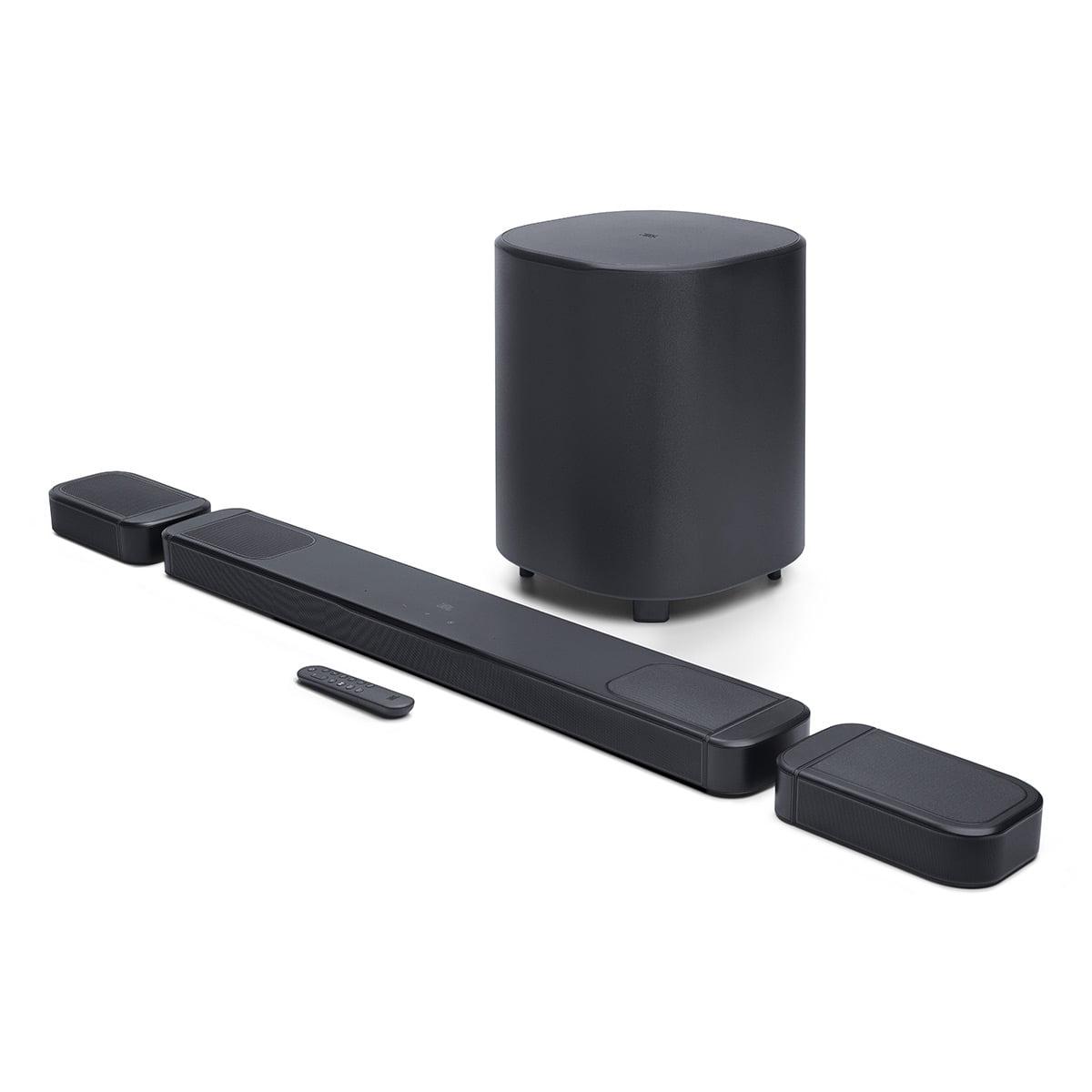
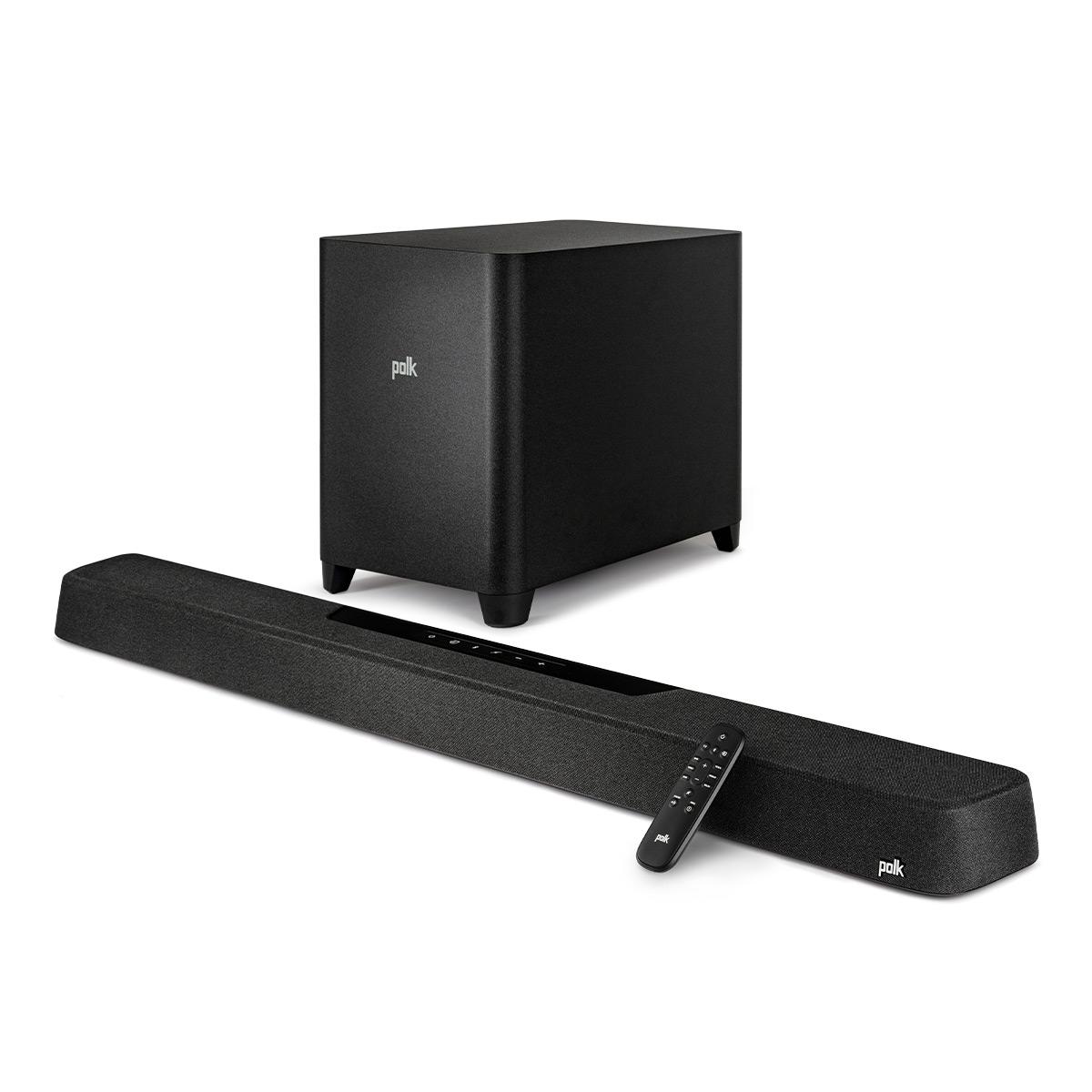
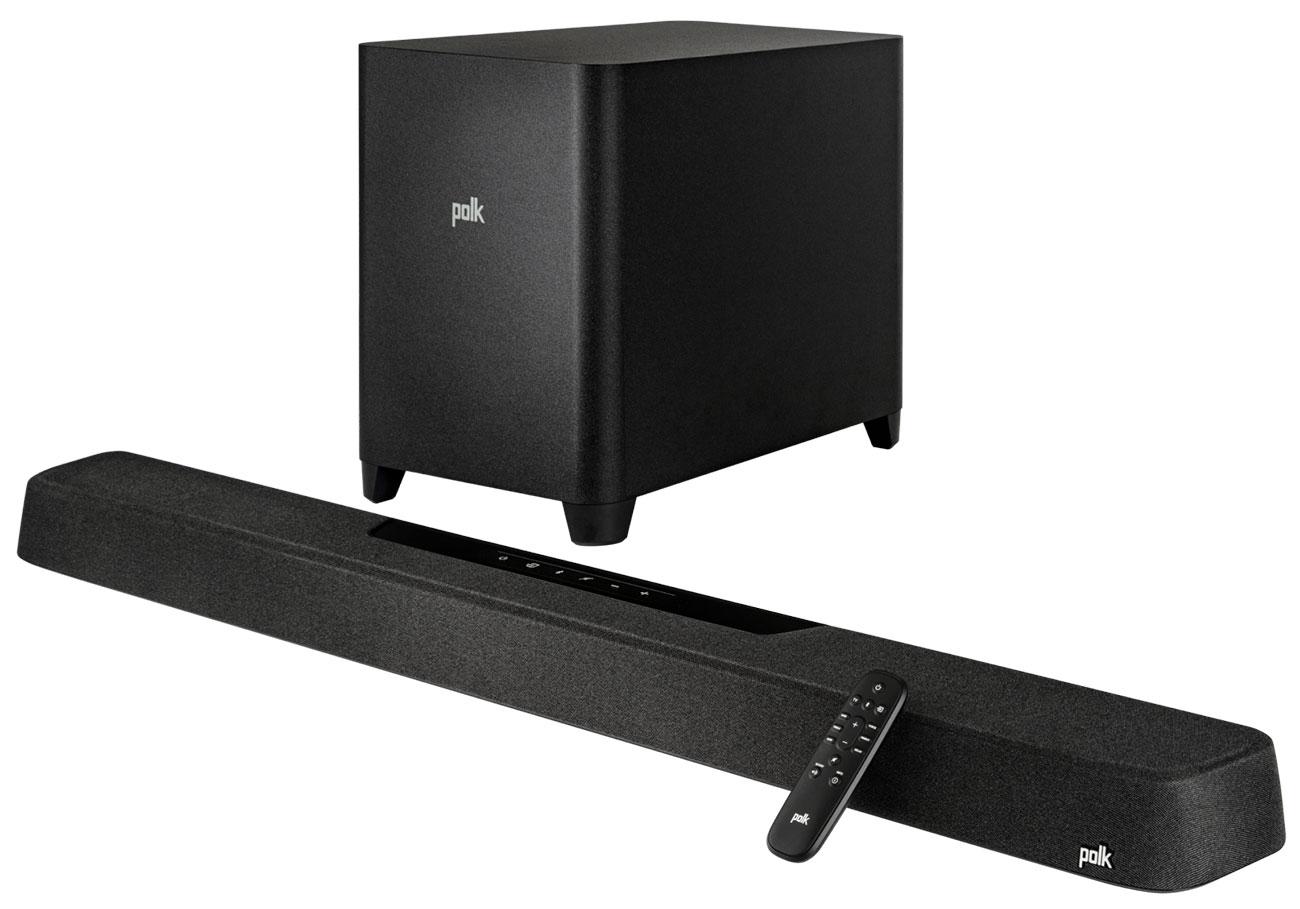
The JBL Bar 1000 MK2 arrived in 2022 as JBL's answer to Samsung's dominant HW-Q990 series, with a refresh in 2023 that improved connectivity and app features. It's what I'd call a "no-compromise" system—JBL packed in every feature they could think of, resulting in a true 7.1.4-channel setup with detachable wireless rear speakers.
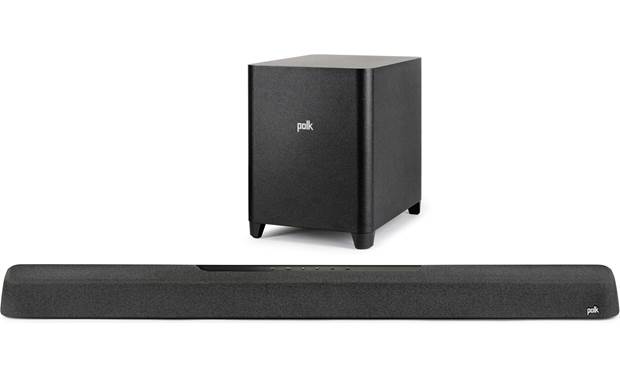
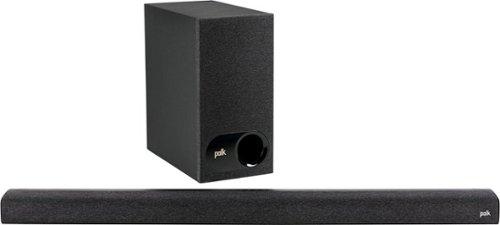
The Polk Audio MagniFi Max AX, also released in 2022, takes a more focused approach. Polk, with their 50+ year heritage in speaker design, concentrated on delivering excellent dialogue clarity and solid Dolby Atmos performance at roughly half the price. It's a 3.1.2 system, meaning three main channels, one subwoofer, and two height channels.
These different philosophies create products that excel in different scenarios, and understanding these differences is crucial for making the right choice.
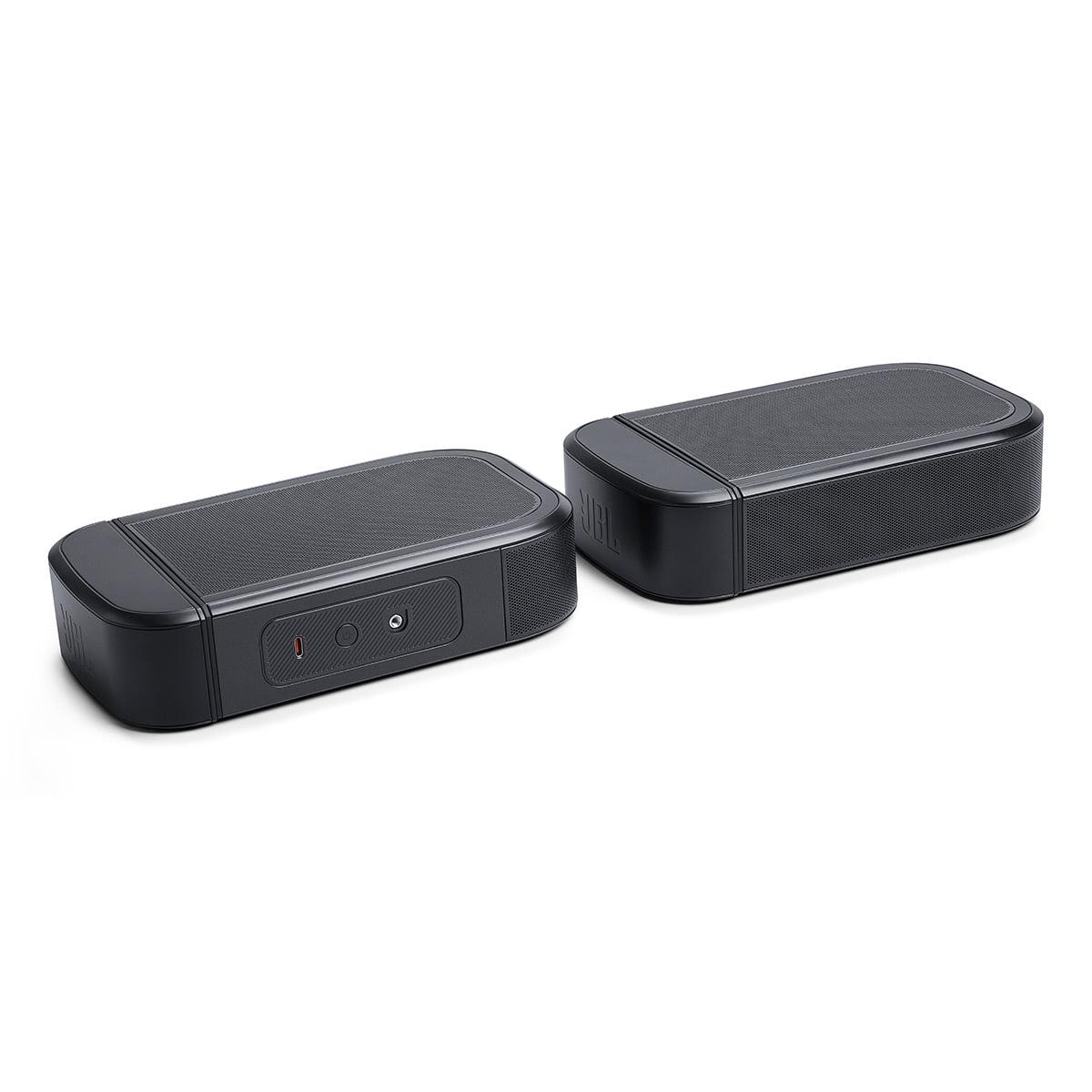
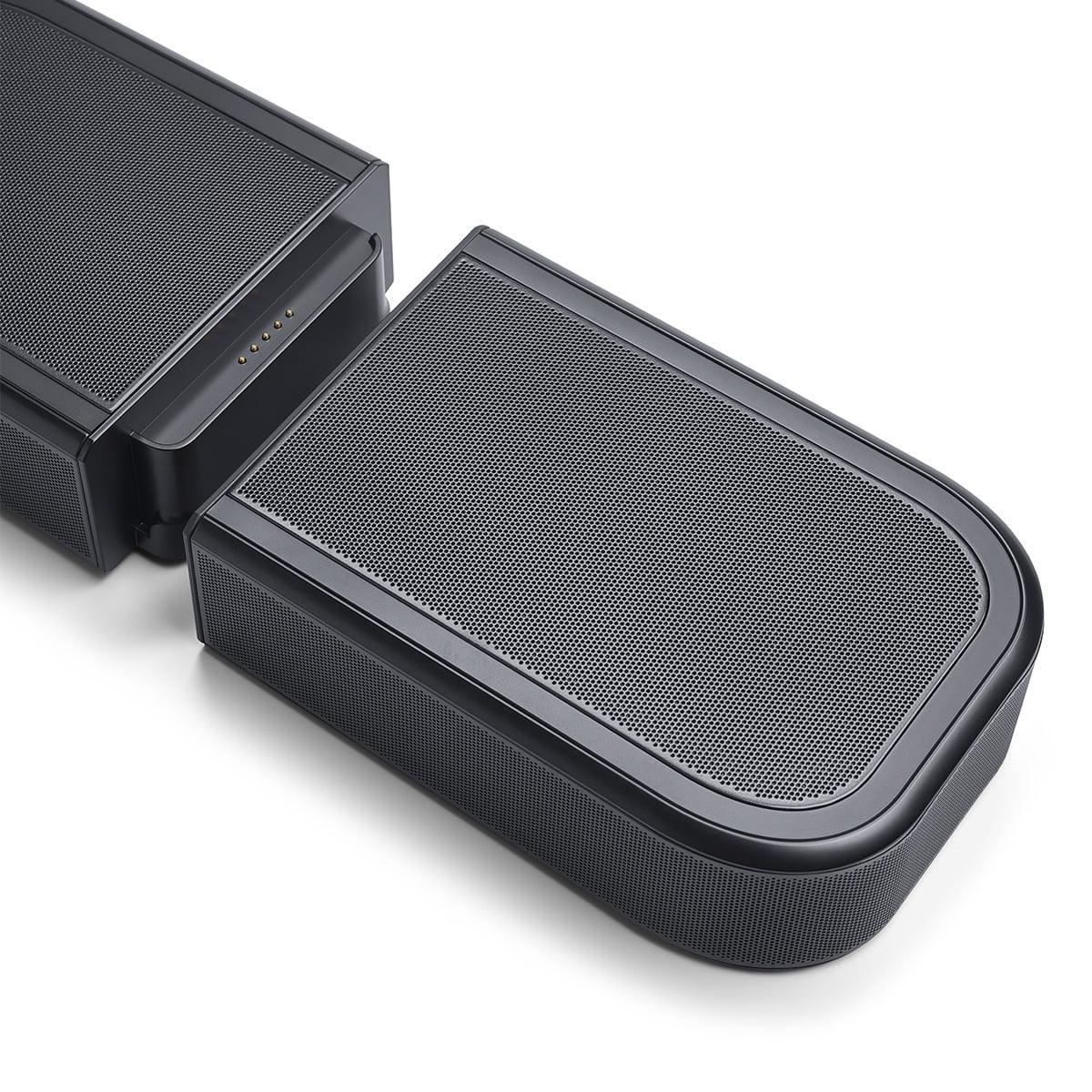
Here's where these two systems diverge most dramatically. The JBL includes two detachable satellite speakers that you can place behind your seating area. These aren't just wireless speakers—they're specifically tuned to work as rear surround channels, and they automatically recharge when docked to the main soundbar.
I've found these satellites make an enormous difference with action movies. When watching something like "Top Gun: Maverick," you hear jet engines not just moving across the front soundstage, but actually circling around you. The effect is convincing enough that I've had guests turn around thinking something was happening behind them.
The Polk, by contrast, uses what's called Stereo Dimensional Array (SDA) technology—a fancy name for very sophisticated audio processing. Instead of physical rear speakers, it uses multiple drivers in the soundbar itself to create the illusion of surround sound. The system analyzes the audio and uses psychoacoustic tricks (basically how your brain processes sound) to make you think audio is coming from places where there are no speakers.
Does virtual surround work? Absolutely, but with limitations. It's most effective when you're sitting in the sweet spot directly in front of the soundbar. Move too far to one side, and the illusion breaks down. Physical rear speakers, like those in the JBL, maintain their effectiveness regardless of where you sit in the room.
For a typical family movie night where everyone's scattered across the couch, the JBL's approach provides a more consistent experience. But if you're usually watching alone or with one other person in a fixed seating position, the Polk's virtual processing can be surprisingly effective.
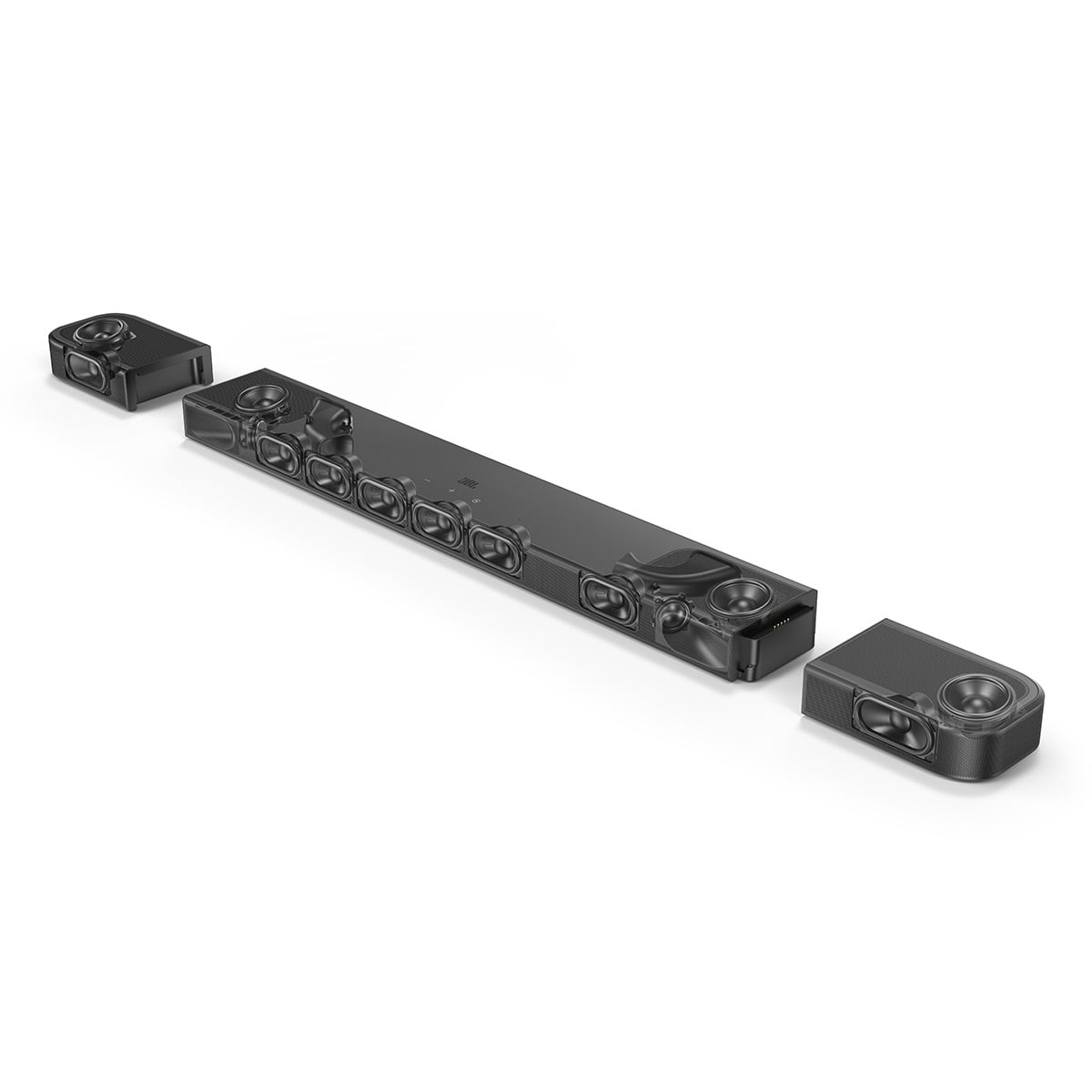
Both systems support Dolby Atmos, but they achieve those overhead effects differently. The JBL Bar 1000 MK2 uses four up-firing drivers—two in the main soundbar and one in each detachable satellite. These drivers fire sound upward to bounce off your ceiling, creating the illusion of overhead audio.
The physics here matter more than you might think. Sound reflecting off your ceiling needs to travel a longer distance than direct sound, and your brain uses those timing differences to perceive height. Having four up-firing drivers means the JBL can create height effects both in front of and behind your listening position, making overhead sounds like rain or aircraft much more convincing.
The Polk uses two up-firing drivers located only in the main soundbar. This still creates noticeable height effects, but they're concentrated in the front half of the room. You'll definitely hear helicopters and explosions coming from above, but the effect isn't as immersive as having height channels surrounding you.
In my testing, the difference becomes most apparent with well-mixed Atmos content like "Blade Runner 2049" or nature documentaries. The JBL creates a true "dome" of sound, while the Polk provides good height effects that gradually fade as you move toward the rear of the room.
This is where the price difference really shows up in practical terms. The JBL delivers 960W of total system power (with 480W RMS for sustained output), making it capable of filling large rooms without strain. I've used it in spaces up to 400 square feet, and it maintains clarity even at party-level volumes.
The Polk doesn't publish specific power figures, but based on my testing, it's optimized for medium-sized rooms up to about 250 square feet. Push it too hard in a large space, and you'll notice compression—the audio starts to sound squashed and less dynamic during loud scenes.
Both systems include 10-inch wireless subwoofers, but again, the JBL's is more powerful. The bass response extends down to 33Hz, which means you'll feel those deep movie soundtrack rumbles that many soundbars miss. The Polk's subwoofer is well-balanced and integrates smoothly with the main speakers, but it doesn't have quite the same visceral impact.
For home theater use, this power difference matters more than you might expect. Movie soundtracks have enormous dynamic range—quiet dialogue scenes followed by explosive action sequences. Having adequate power reserves means the system can handle these swings without distortion or compression.
Interestingly, both systems excel at dialogue clarity, but they achieve it through different methods. The JBL uses PureVoice 2.0, an adaptive system that automatically adjusts dialogue levels based on the surrounding audio and your volume setting. If there's a loud explosion, PureVoice will temporarily boost the center channel to ensure you don't miss the next line of dialogue.
The Polk takes a more traditional approach with VoiceAdjust technology, giving you manual control over dialogue enhancement. You can dial in exactly how much voice boost you want, which some users prefer over automatic systems.
In practice, both work exceptionally well. The JBL's automatic approach is more convenient—set it once and forget it. The Polk's manual system gives you more control but requires occasional adjustment depending on what you're watching.
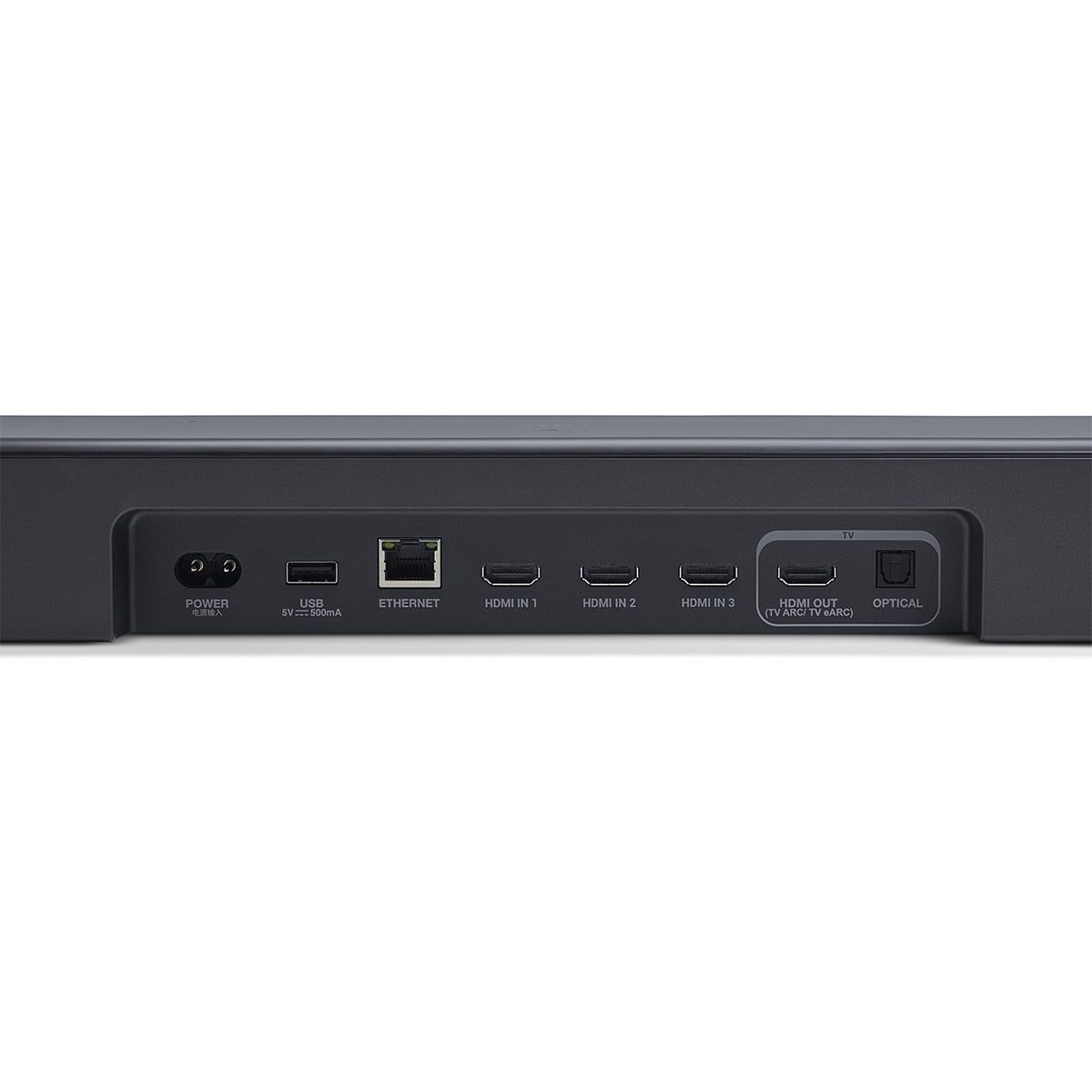
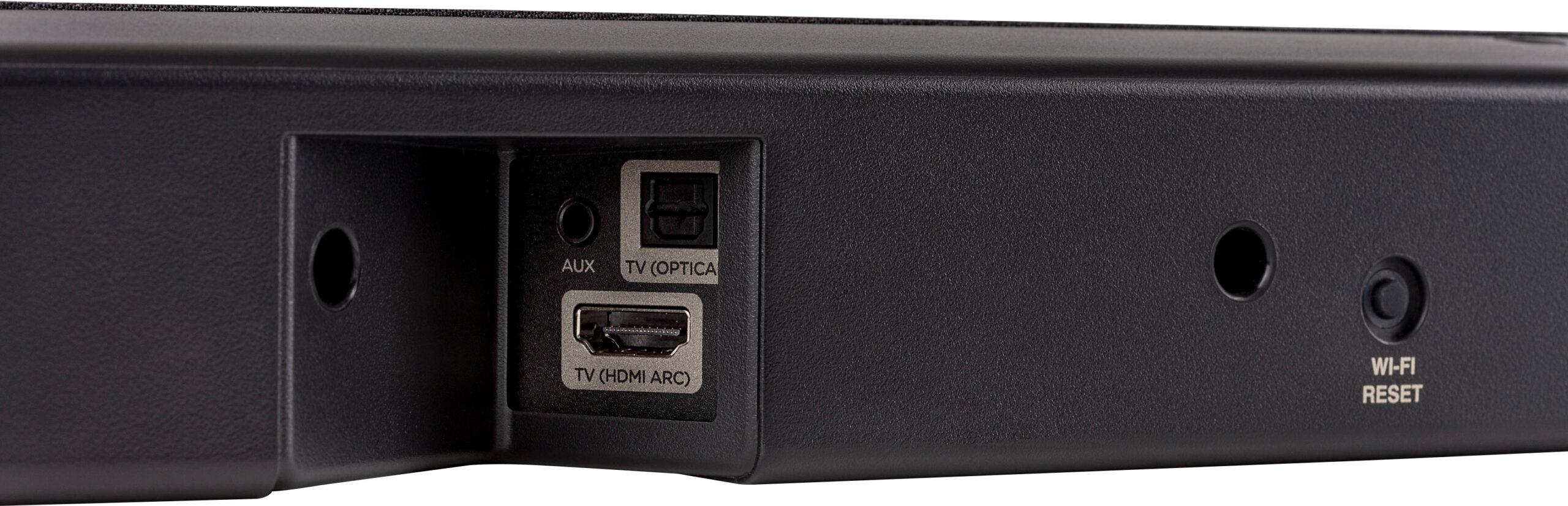
Modern soundbars are expected to do more than just improve your TV's audio, and both systems deliver on connectivity. The JBL Bar 1000 MK2 includes three HDMI inputs plus an eARC output, meaning you can connect multiple devices (game consoles, streaming boxes, Blu-ray players) directly to the soundbar and have it pass video to your TV while processing the audio.
The wireless connectivity is where the JBL really shines. It supports AirPlay 2, Chromecast, Spotify Connect, and is even Roon Ready for audiophile music streaming. The JBL One app provides detailed EQ controls and the ability to customize how the system responds to different content types.
The Polk covers the basics well with similar HDMI and wireless streaming support, but the app experience is more limited. You get basic EQ presets (Movie, Music, Sports, Night Mode) but not the granular control the JBL offers.
For smart home integration, the JBL supports Amazon Alexa Multi-Room Music, allowing it to participate in whole-home audio systems. The Polk is more of a standalone system without these integrations.
Let me spend some time on the JBL's most unique feature: those detachable rear speakers. Each satellite has a 6,600mAh battery providing up to 10 hours of playback. When you want surround sound, they dock to the main bar. When you want portable speakers for the patio or kitchen, you can take them anywhere.
I've found this flexibility surprisingly useful. Movie night calls for the full 7.1.4 setup, but I can grab a satellite for background music while cooking dinner. The speakers automatically switch between surround mode and Bluetooth mode depending on whether they're docked or portable.
There's also a "Night Listening" mode that mutes the main soundbar and subwoofer, playing audio only through the satellites. This lets you enjoy late-night movies without disturbing others—something that's particularly clever for apartment living.
The Polk Audio MagniFi Max AX, being a traditional soundbar, doesn't offer this flexibility. It's designed for one purpose and does that purpose well, but you can't expand or adapt it for other use cases.
Getting great sound from any audio system requires proper setup, and this is another area where these products differ significantly. The JBL includes automatic room calibration that analyzes your space and adjusts the sound accordingly. Place the satellites, run the calibration routine through the app, and the system optimizes itself for your room's acoustics.
The Polk relies more on manual adjustment. You can choose from six preset EQ modes, but achieving optimal performance requires some experimentation to find what works best in your space. The presets are well-designed, but they're not customized to your specific room.
For users who want a "set it and forget it" experience, the JBL's approach is clearly superior. For those who enjoy tweaking settings and prefer manual control, the Polk's simpler approach might actually be preferable.
Modern gaming has embraced surround sound and Dolby Atmos, making soundbar choice important for console gaming. The JBL's true surround setup excels here, providing positional audio that can give you a competitive advantage in multiplayer games. You'll hear enemies approaching from specific directions, environmental cues that help with navigation, and immersive effects that enhance single-player story games.
The HDMI inputs support 4K gaming at 120Hz with variable refresh rate, so you won't experience any lag or visual compromises when gaming on PS5 or Xbox Series X.
The Polk handles gaming well too, but without physical rear speakers, you miss some of the positional audio benefits. It's perfectly adequate for casual gaming, but serious gamers will appreciate the JBL's more immersive approach.
At $499, the Polk Audio MagniFi Max AX represents excellent value for users who want Dolby Atmos capability without breaking the bank. You get solid build quality, excellent dialogue clarity, and decent immersion for about half the cost of premium alternatives.
The $1,199 JBL Bar 1000 MK2 costs more than twice as much, but you're getting significantly more functionality. True 7.1.4 surround sound, detachable satellites, automatic calibration, and premium features that competing systems often charge even more for.
When I consider total cost of ownership, the JBL's modular design and advanced features make it more likely to remain satisfying as your needs evolve. The Polk is an excellent entry point, but you can't upgrade it later if you decide you want physical rear speakers.
After extensive testing with both systems, here's how I'd break down the decision:
Choose the JBL Bar 1000 MK2 if you have a large room (over 300 square feet), want the most immersive possible experience for movies and gaming, value the flexibility of detachable speakers, and can justify the premium price for flagship features. It's also the better choice if you plan to use advanced streaming features or want automatic room optimization.
Choose the Polk MagniFi Max AX if you have a medium-sized room where virtual surround is sufficient, prioritize dialogue clarity above maximum immersion, need to work within a tighter budget while still getting Dolby Atmos, prefer simple and reliable operation, or don't need portable functionality.
For most users in typical living rooms, the Polk provides 80% of the performance at 40% of the cost. But if you're building a dedicated home theater or want the absolute best soundbar experience money can buy, the JBL justifies its premium pricing with genuinely superior performance and unique features you won't find elsewhere.
Both are excellent products that will dramatically improve your TV's audio. The question isn't which one is better—it's which one is better for your specific situation, room, and budget.
| JBL Bar 1000 MK2 Soundbar System | Polk Audio MagniFi Max AX 3.1.2 Soundbar |
|---|---|
| Price - Major investment difference that affects value calculation | |
| $1,199 (flagship pricing with premium features) | $499 (mid-tier pricing for solid performance) |
| Audio Configuration - Determines surround sound accuracy and immersion | |
| 7.1.4 channels with physical rear speakers | 3.1.2 channels with virtual surround processing |
| Up-firing Drivers - Critical for Dolby Atmos overhead effects | |
| 4 drivers (soundbar + both satellites) | 2 drivers (soundbar only) |
| Rear Speakers - Makes or breaks true surround experience | |
| Detachable wireless satellites with 10-hour battery | None (relies on virtual processing) |
| Total Power Output - Determines room size compatibility and volume headroom | |
| 960W max / 480W RMS (large room capable) | Not specified (medium room optimized) |
| Subwoofer - Essential for movie bass impact | |
| 10" wireless, 300W max, down to 33Hz | 10" wireless, lower power output |
| HDMI Connectivity - Important for gaming and multiple device connections | |
| 3 inputs + 1 eARC output with 4K/120Hz support | 3 inputs with 4K/HDR support |
| Voice Enhancement - Critical for dialogue clarity | |
| PureVoice 2.0 (automatic adaptive adjustment) | VoiceAdjust (manual control) |
| Room Calibration - Affects out-of-box sound quality | |
| Advanced auto-calibration via app | Manual EQ presets only |
| Unique Features - Additional value beyond basic soundbar function | |
| Detachable speakers work as Bluetooth portables, Night Mode | SDA stereo enhancement technology |
| Smart Home Integration - Future-proofing and ecosystem compatibility | |
| Alexa MRM, Roon Ready, comprehensive streaming | Basic streaming support |
| Best For - Target user and room scenarios | |
| Large rooms, gaming enthusiasts, maximum immersion | Medium rooms, budget-conscious, dialogue priority |
The JBL Bar 1000 MK2 ($1,199) is significantly better for large rooms thanks to its 960W total power output and true 7.1.4-channel configuration. It can fill spaces over 300 square feet without distortion, while the Polk Audio MagniFi Max AX ($499) is optimized for medium-sized rooms up to 250 square feet.
The biggest difference is surround sound approach: the JBL Bar 1000 MK2 includes detachable wireless rear speakers for true 7.1.4 surround sound, while the Polk Audio MagniFi Max AX uses virtual processing to simulate surround effects from a 3.1.2 configuration without physical rear speakers.
The JBL Bar 1000 MK2 delivers superior Dolby Atmos with four up-firing drivers (two in the soundbar, one in each satellite) creating more accurate overhead effects. The Polk Audio MagniFi Max AX has only two up-firing drivers in the main bar, limiting height effects to the front listening area.
The JBL Bar 1000 MK2 ($1,199) costs $700 more than the Polk Audio MagniFi Max AX ($499), but you get true surround sound, detachable portable speakers, automatic room calibration, and significantly more power. It's worth it for large rooms and users wanting maximum immersion.
Both excel at dialogue clarity through different methods. The JBL Bar 1000 MK2 uses automatic PureVoice 2.0 technology that adapts to content, while the Polk Audio MagniFi Max AX offers manual VoiceAdjust control. Both deliver excellent speech intelligibility for movies and TV shows.
Physical rear speakers like those in the JBL Bar 1000 MK2 provide more convincing surround effects than virtual processing. The Polk Audio MagniFi Max AX uses sophisticated virtual surround that works well from the main listening position, but physical speakers maintain effectiveness throughout the room.
The JBL Bar 1000 MK2 is superior for gaming due to its true surround sound providing accurate positional audio and competitive advantages in multiplayer games. It supports 4K/120Hz gaming without lag. The Polk Audio MagniFi Max AX handles gaming adequately but lacks the immersive positioning of physical rear speakers.
Both include 10-inch wireless subwoofers, but the JBL Bar 1000 MK2 delivers more powerful bass with 300W output and frequency response down to 33Hz. The Polk Audio MagniFi Max AX provides well-balanced bass that's less impactful but still satisfying for most content.
The JBL Bar 1000 MK2 offers automatic room calibration that optimizes sound with minimal user input, while the Polk Audio MagniFi Max AX requires manual adjustment using preset EQ modes. The JBL provides a more "set-and-forget" experience despite having more components.
The JBL Bar 1000 MK2 offers unique flexibility with detachable satellites that work as portable Bluetooth speakers with 10-hour battery life. The Polk Audio MagniFi Max AX is a traditional fixed soundbar designed specifically for home theater use without portable functionality.
The JBL Bar 1000 MK2 offers more comprehensive streaming with AirPlay 2, Chromecast, Spotify Connect, Roon Ready, and Alexa integration. The Polk Audio MagniFi Max AX covers basic streaming needs with AirPlay 2, Chromecast, and Bluetooth but lacks advanced smart home features.
Choose the JBL Bar 1000 MK2 ($1,199) for large rooms, maximum immersion, and premium features including true surround sound and portable speakers. Choose the Polk Audio MagniFi Max AX ($499) for medium rooms, excellent dialogue clarity, and solid Dolby Atmos performance at half the price.
We've done our best to create useful and informative comparisons to help you decide what product to buy. Our research uses advanced automated methods to create this comparison and perfection is not possible - please contact us for corrections or questions. These are the sites we've researched in the creation of this article: ecoustics.com - engadget.com - bestbuy.com - techradar.com - rtings.com - hometechnologyreview.com - youtube.com - t3.com - whathifi.com - youtube.com - bhphotovideo.com - gzhls.at - device.report - support.jbl.com - support.jbl.com - jbl.com - av.com - audioadvice.com - jbl.com - target.com - worldwidestereo.com - youtube.com - avsforum.com - rtings.com - rtings.com - bestbuy.com - walts.com - hometechnologyreview.com - polkaudio.com - pcrichard.com

Privacy Policy
Terms and Conditions - Affiliate Policy
Home Security
© Copyright 2008-2026.
11816 Inwood Rd #1211, Dallas, TX 75244