

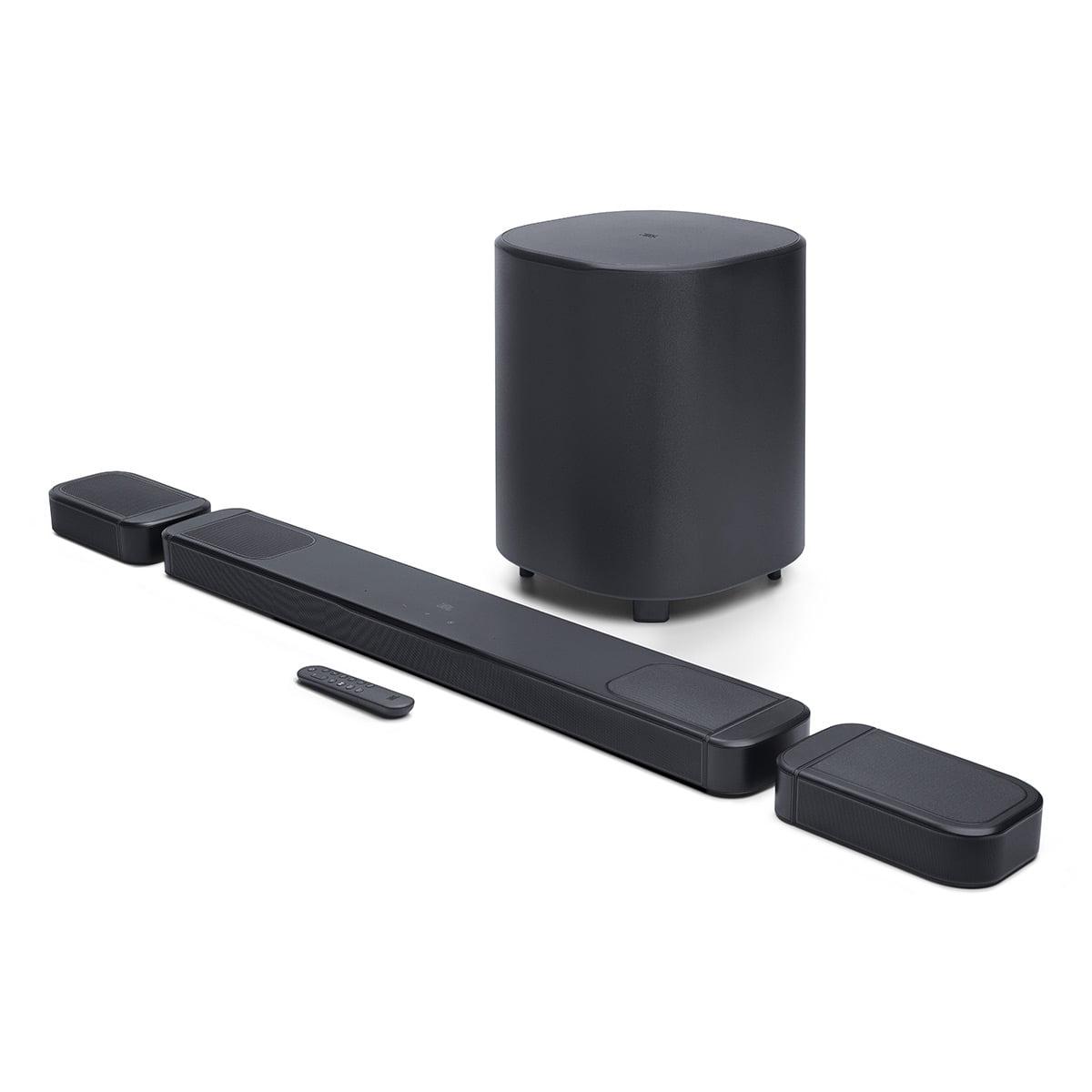
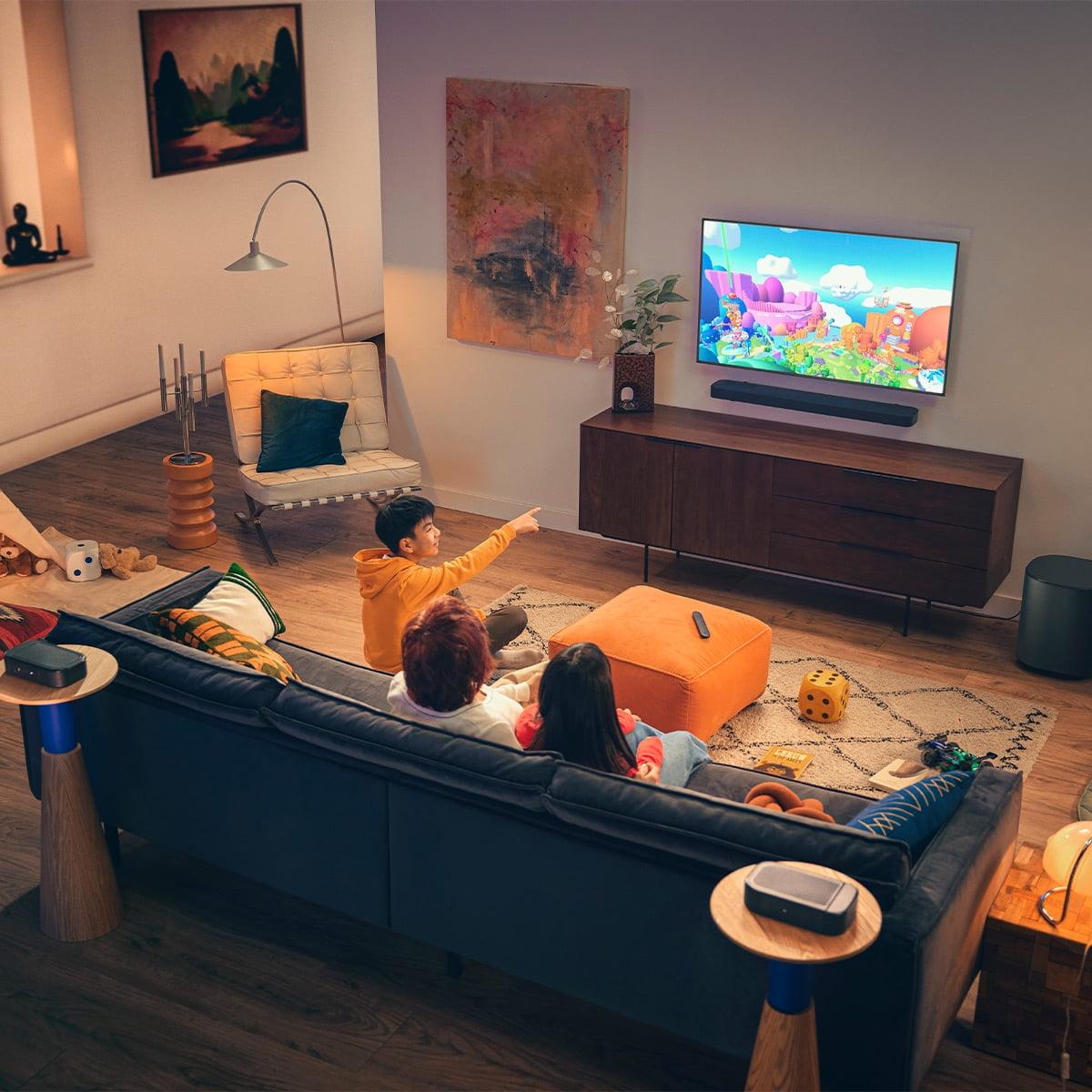
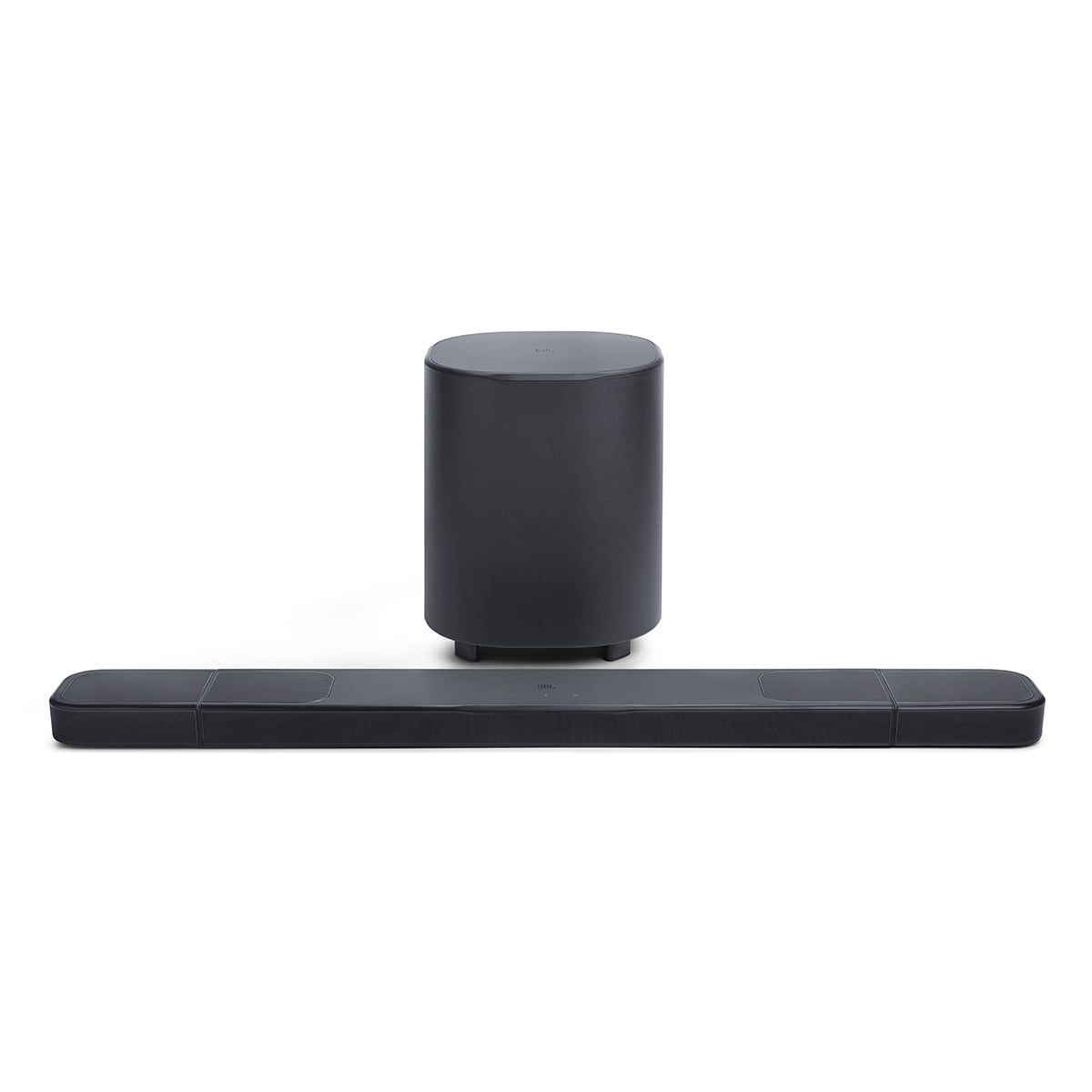

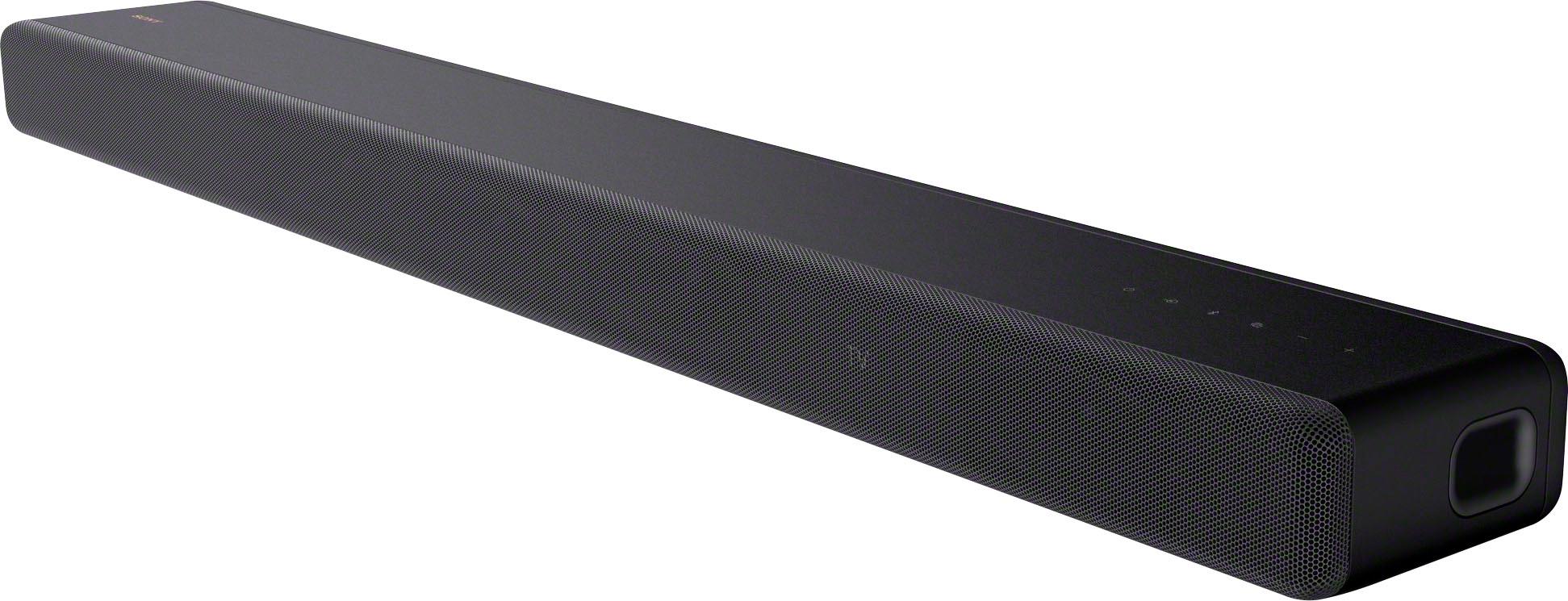
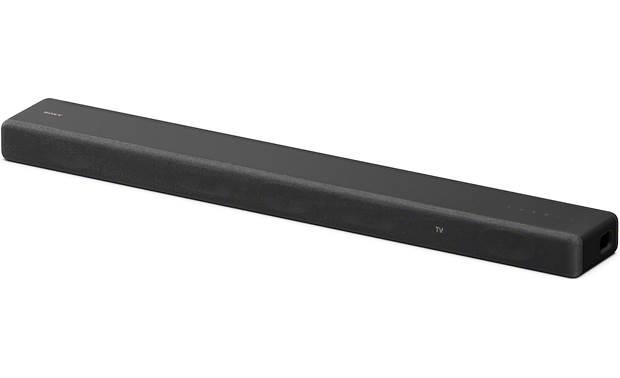

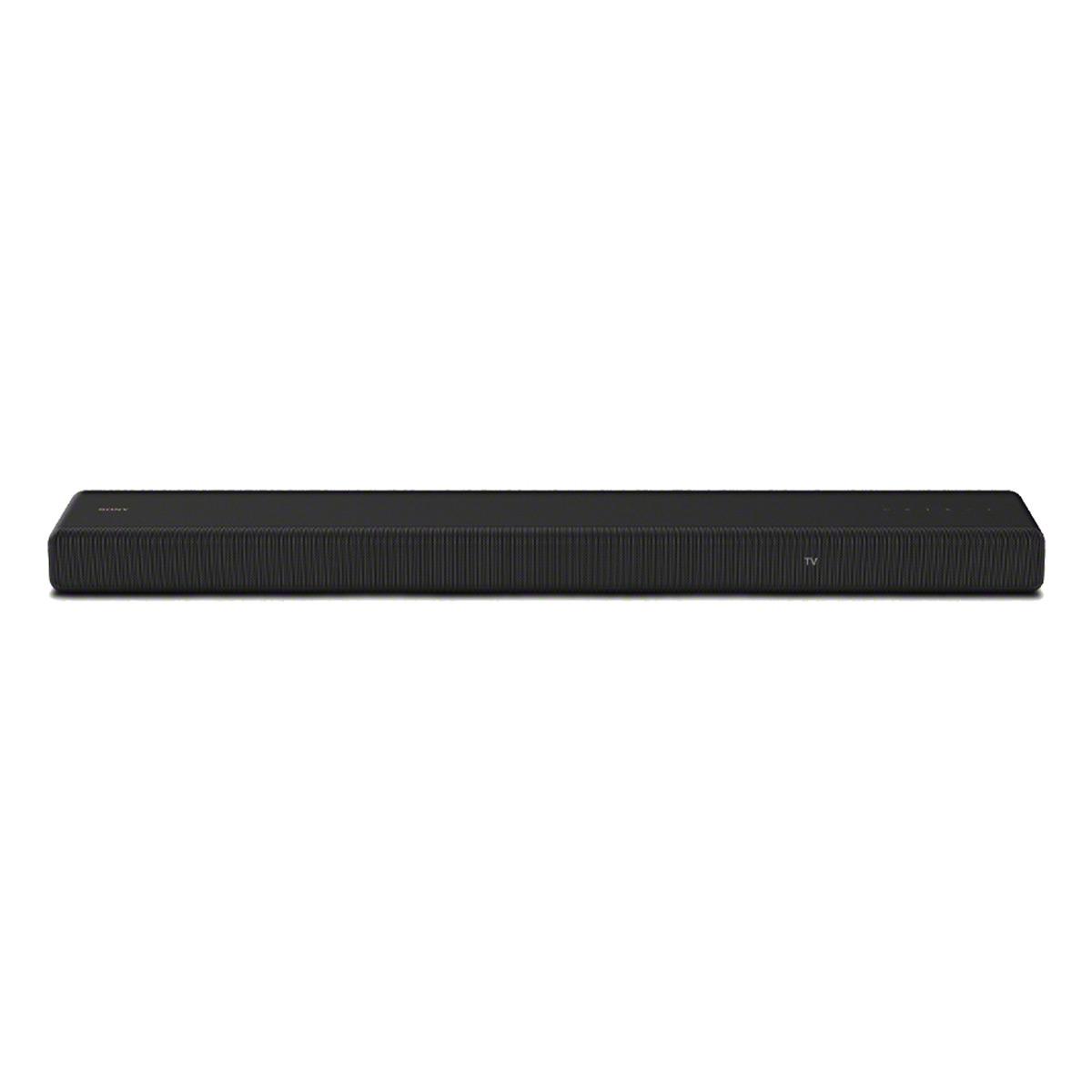
Shopping for a premium soundbar can feel overwhelming when you're staring at spec sheets full of technical jargon and wildly different price points. Today, we're breaking down two popular options that represent completely different philosophies in home audio: the flagship JBL Bar 1000 MK2 ($1,199) and the mid-tier Sony HT-A3000 ($405).
Having tested both systems extensively in various room setups, I can tell you that choosing between them isn't just about budget—it's about understanding what type of audio experience you're really after.
Before diving into these specific models, let's talk about what separates premium soundbars from basic TV speakers or budget sound bars. Premium systems like these two focus on creating "soundstages"—essentially making your brain believe sound is coming from places where there aren't actually speakers.
The biggest game-changer in recent years has been Dolby Atmos, a technology that adds height information to audio tracks. Instead of just left-right-center surround sound, Atmos can make you hear helicopters flying overhead or rain falling from above. Both soundbars support this, but they achieve it in dramatically different ways.
Room coverage is another crucial factor. Your living room acoustics, ceiling height, and furniture placement all affect how these systems perform. What sounds amazing in a showroom might disappoint in your actual space if you don't match the technology to your environment.
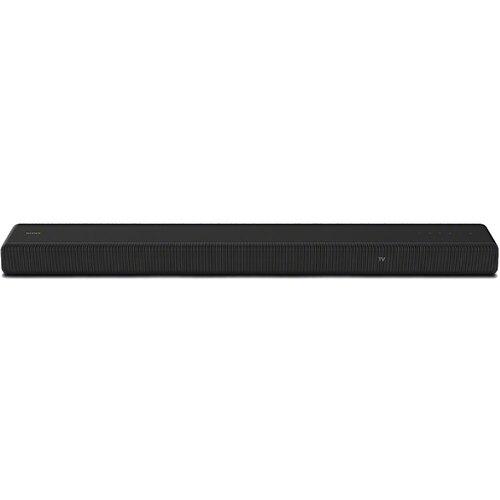
The Sony HT-A3000 launched in early 2022 as Sony's answer to affordable Atmos. At the time, most Dolby Atmos soundbars cost over $800, making Sony's $699 MSRP (now typically $405) quite appealing. Sony built this system around their "virtual surround" philosophy—using advanced processing to simulate surround effects without requiring multiple physical speakers around your room.
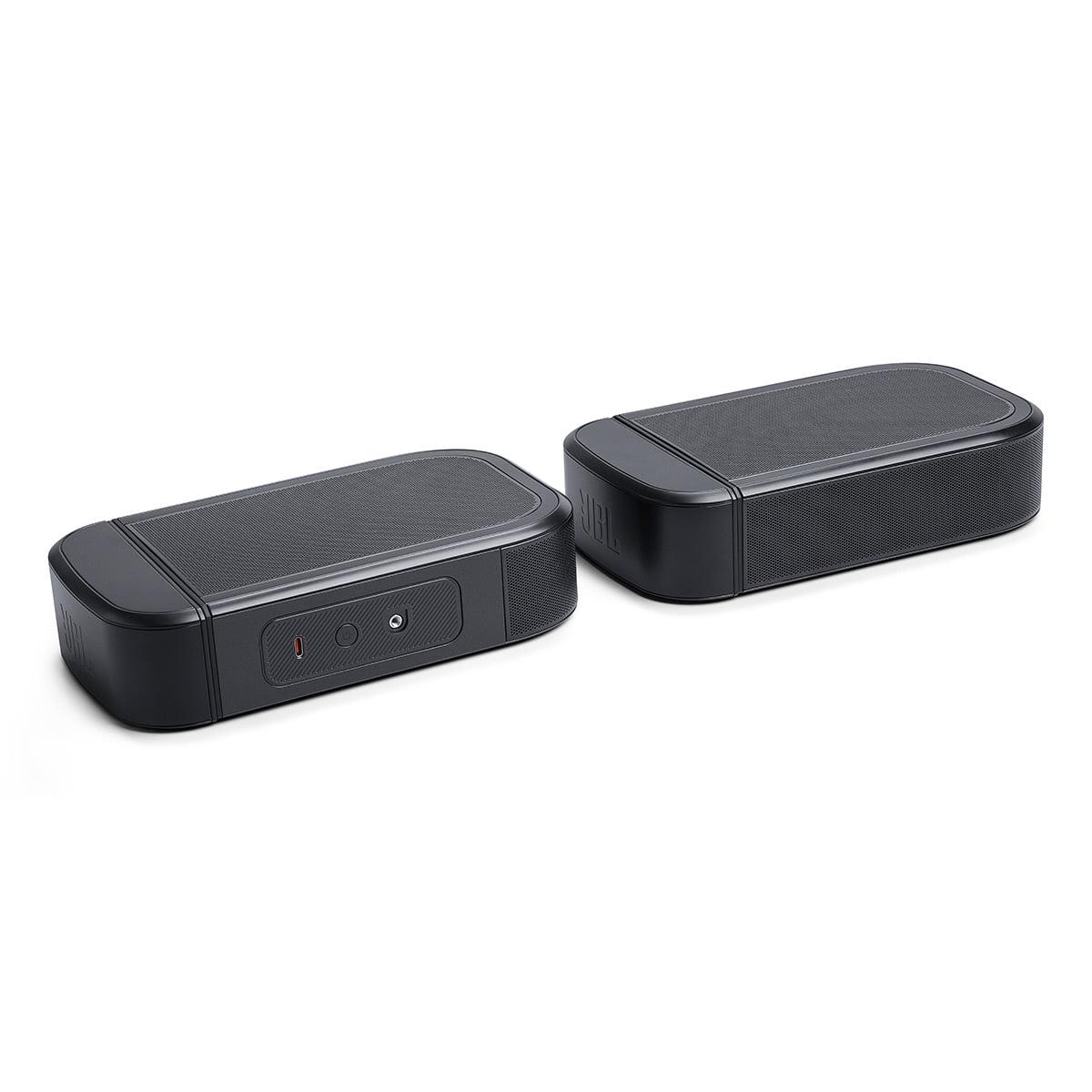
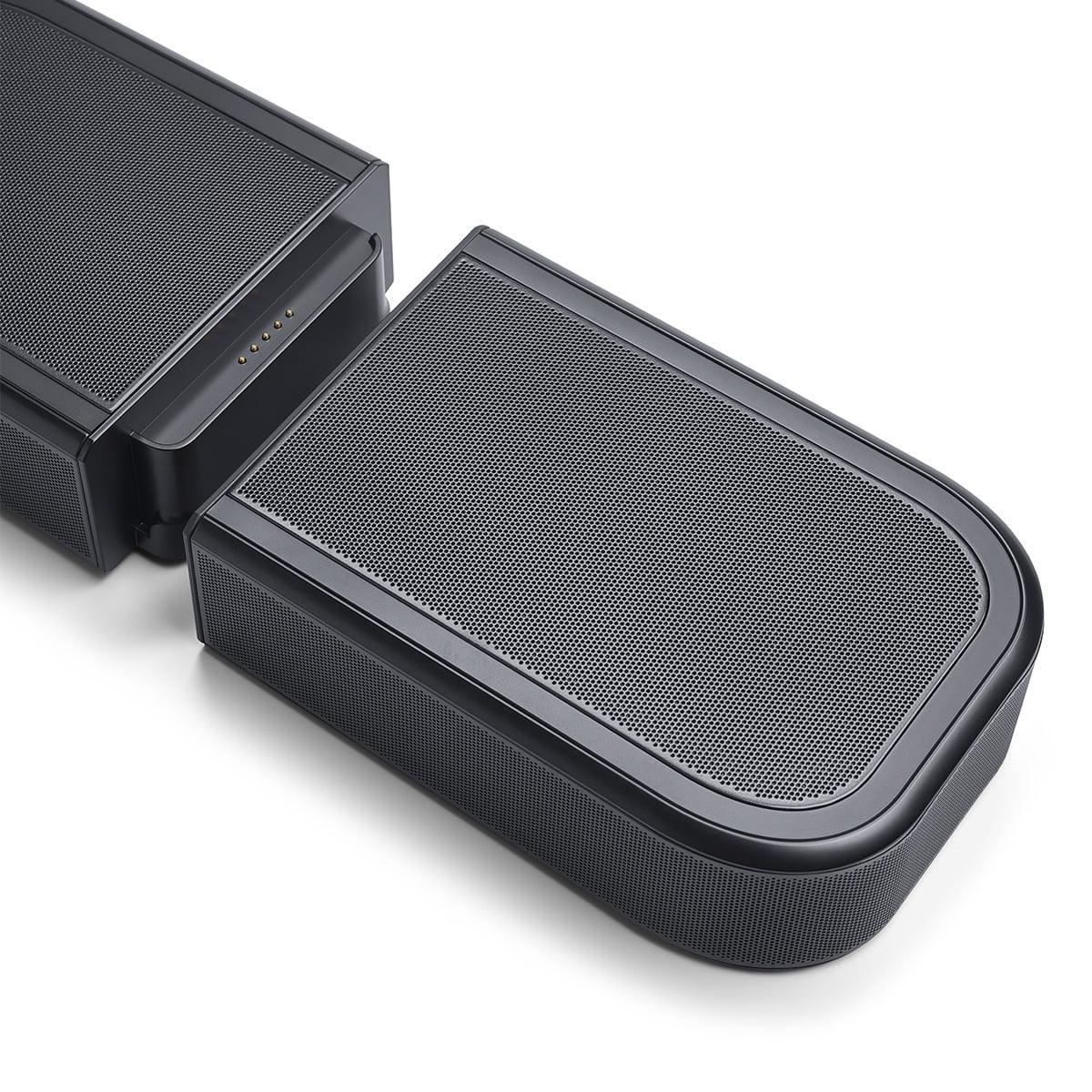
The JBL Bar 1000 MK2 represents JBL's 2024 refinement of their flagship approach. The original Bar 1000 launched in 2023, but this MK2 version addresses several user complaints about app connectivity and battery life in the detachable speakers. JBL's philosophy is the opposite of Sony's: instead of virtual processing, they give you actual physical speakers that detach from the main bar and create real surround sound placement.
Since 2022, the soundbar landscape has evolved significantly. We've seen improvements in wireless connectivity (both systems now support Wi-Fi streaming), better room correction algorithms, and more sophisticated processing chips that can handle complex audio formats without the lag issues that plagued earlier Atmos implementations.
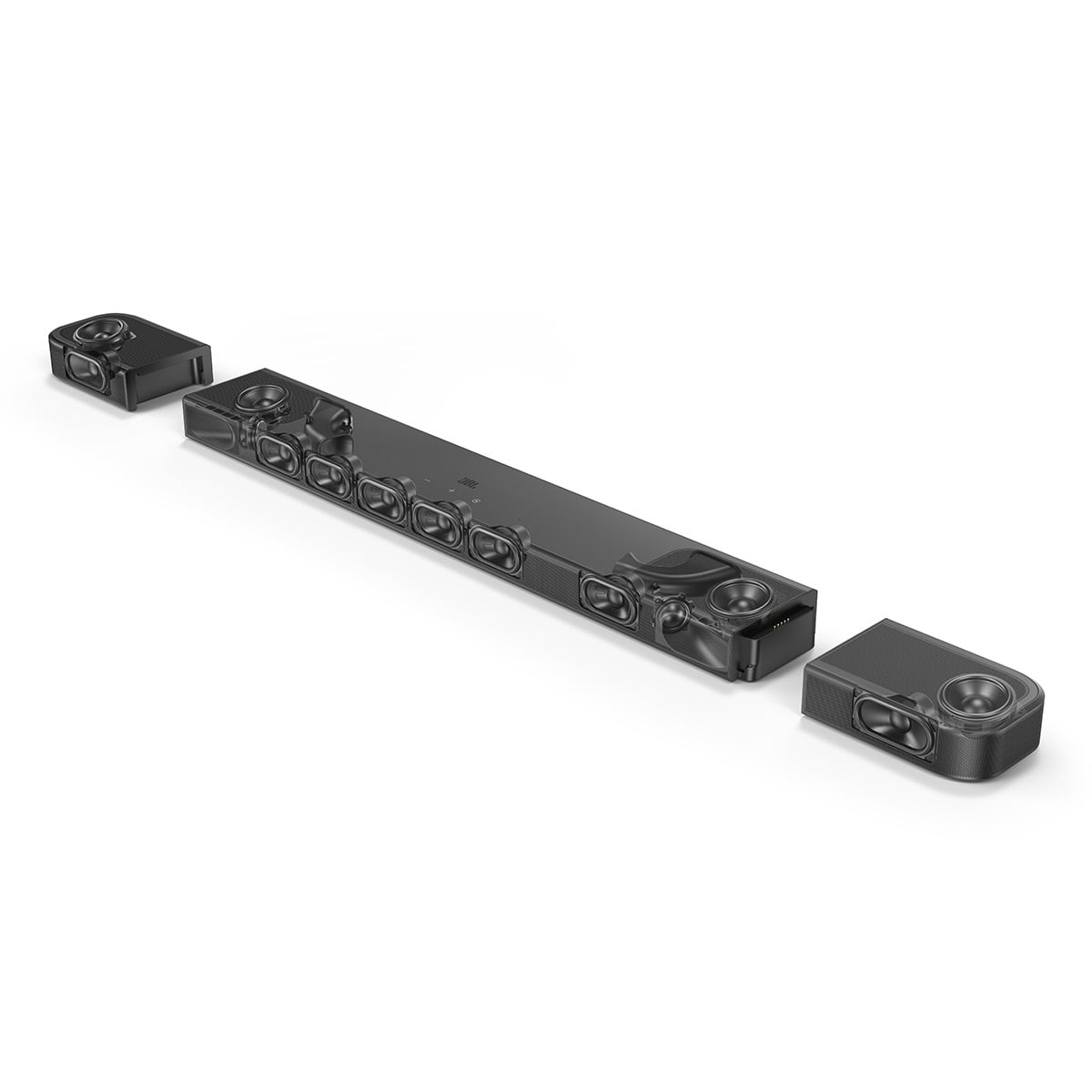
This is where the fundamental difference between these systems becomes apparent. The JBL Bar 1000 MK2 gives you true 7.1.4-channel audio—that means seven main speakers, one subwoofer, and four height channels. Those detachable end pieces aren't just for show; they house actual surround speakers that you place behind your seating area, plus dedicated upward-firing drivers that bounce sound off your ceiling to create overhead effects.
When I tested the JBL system with the opening sequence of "Top Gun: Maverick," the jet flyovers genuinely felt three-dimensional. You hear the aircraft approach from behind your left shoulder, pass overhead, and disappear to your front right—exactly as the sound mixer intended. This happens because there are actual speakers creating these directional cues.
The Sony takes a completely different approach with its "S-Force PRO Front Surround" and "Vertical Sound Engine" technologies. These are sophisticated algorithms that manipulate phase relationships and frequency responses to trick your brain into perceiving surround effects from speakers that are all located in front of you. It's impressive technology, and in smaller rooms (under 200 square feet), it can be surprisingly convincing.
However, the Sony's virtual processing has limitations. In my testing, dialogue-heavy scenes benefit enormously from Sony's exceptional center channel clarity, but complex action sequences with multiple sound sources can feel somewhat flat compared to the JBL's physical separation. The virtual height effects work best when you're sitting in the "sweet spot" directly in front of the bar—move too far to either side, and the illusion breaks down.
The power difference between these systems is dramatic: 880W total for the JBL versus 250W for the Sony. But raw wattage doesn't tell the whole story—it's how that power is distributed and utilized.
The JBL's 10-inch wireless subwoofer operates independently from the main bar, drawing its own power and handling everything below about 80Hz. This means the main bar's amplifiers can focus entirely on mid-range and high-frequency reproduction without being taxed by bass demands. In practical terms, this translates to cleaner dialogue during explosive action scenes and more headroom before distortion sets in.
I've used the JBL system in rooms ranging from 250 to 400 square feet, and it maintains its composure even at high volumes. The separate subwoofer placement flexibility is crucial here—I could position it near a corner for maximum bass reinforcement while keeping the main bar centered under the TV.
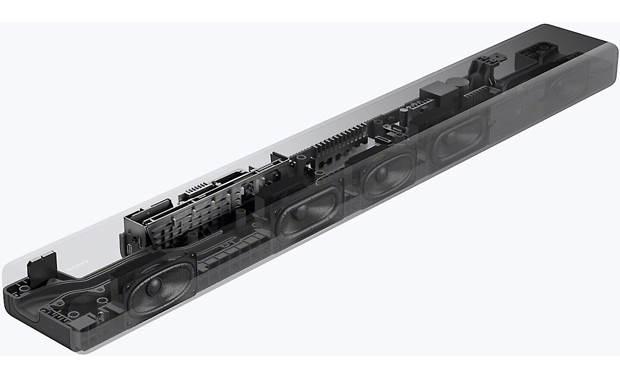
The Sony HT-A3000, with its built-in dual subwoofers, takes a more integrated approach. Each subwoofer measures 4.375" × 1.8125"—significantly smaller than the JBL's 10-inch driver. While this keeps the system compact and eliminates the need for subwoofer placement, it also limits low-frequency extension and impact.
For smaller apartments or condos where space is premium, the Sony's approach makes perfect sense. The bass is adequate for dialogue, music, and moderate action scenes. But if you're hoping to feel the rumble of explosions or the deep extension of electronic music, you'll likely find yourself wanting more.
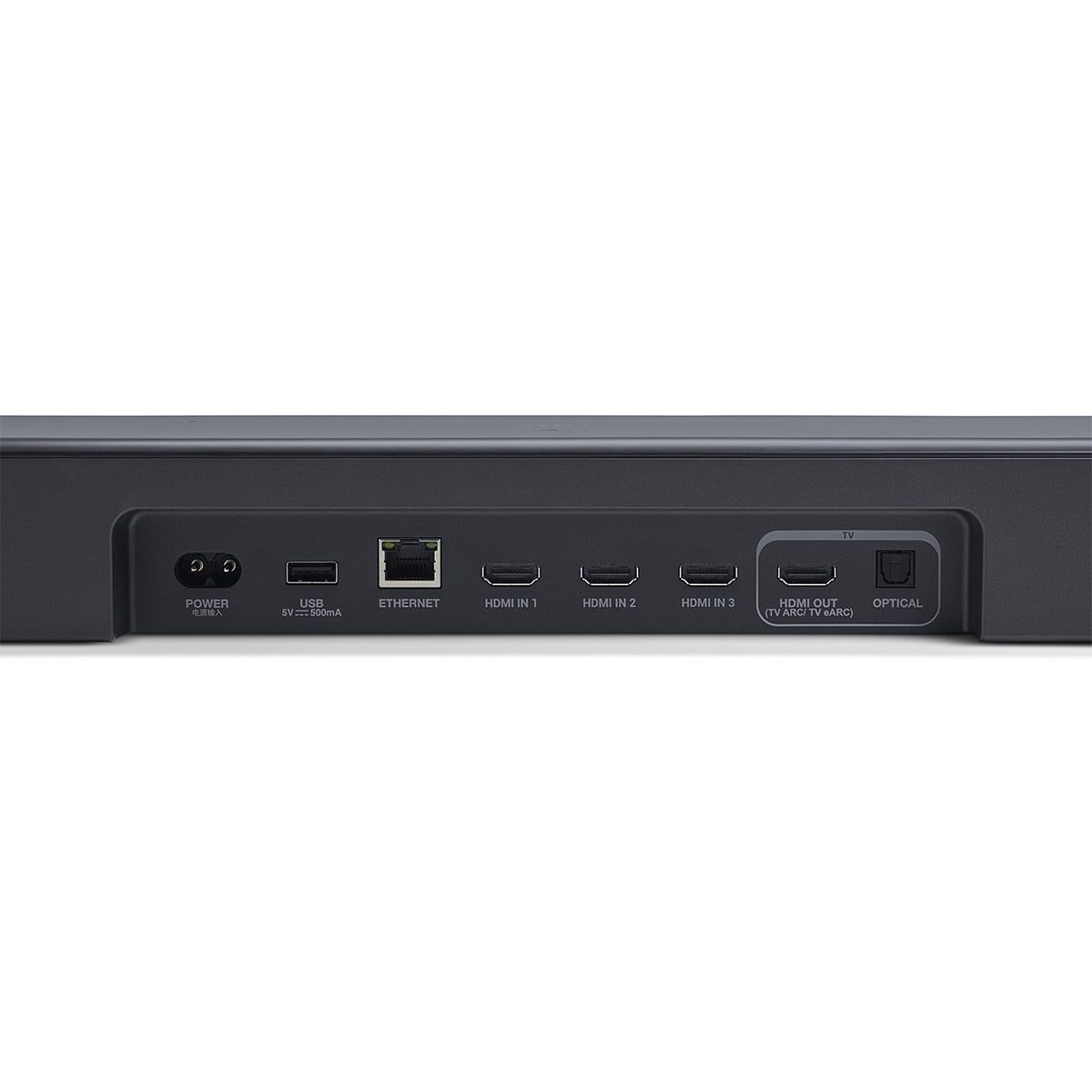
Both systems meet modern connectivity expectations, but with different strengths. The JBL Bar 1000 MK2 includes three HDMI inputs plus eARC, making it function as an audio hub for multiple sources. This is particularly valuable if your TV has limited HDMI ports—you can connect your gaming console, streaming device, and Blu-ray player directly to the soundbar.
The JBL also supports "Roon Ready" certification, which audiophile-oriented users will appreciate for high-resolution music streaming. The wireless connectivity includes dual-band Wi-Fi, reducing potential interference issues that can plague single-band systems.
Sony's HT-A3000 focuses more on streaming convenience than source switching. The built-in Chromecast and AirPlay 2 support work flawlessly, and Sony's implementation of LDAC Bluetooth codec provides noticeably better wireless audio quality than standard Bluetooth, especially noticeable with high-quality music sources.
One unique JBL feature worth highlighting is "Night Mode," which mutes the main soundbar and subwoofer while routing audio only to the detachable speakers. This allows for private, surround-sound movie watching without disturbing neighbors or family members—a clever solution for apartment living or late-night viewing.
For music listening, these systems reveal their design priorities clearly. The Sony HT-A3000 includes "DSEE Extreme" processing, which uses AI algorithms to analyze and upscale compressed music files in real-time. When streaming from Spotify or Apple Music, this processing is genuinely audible—compressed tracks sound more spacious and detailed.
Sony's more balanced frequency response also works better across different music genres. Jazz, acoustic, and vocal-heavy content benefit from the cleaner midrange presentation, while the built-in subwoofers provide adequate bass support without overwhelming the mix.
The JBL system, with its more powerful bass capabilities, excels with electronic music, hip-hop, and rock. However, the PureVoice dialogue enhancement can sometimes interfere with music balance, emphasizing vocals at the expense of instrumental detail. Fortunately, the JBL One app provides detailed EQ controls to address this.
If you're building a dedicated home theater space, the JBL Bar 1000 MK2 is the clear winner. The physical speaker placement creates the immersive environment that makes movies truly engaging. The detachable speakers can be positioned optimally for your seating arrangement, and the wireless subwoofer can be placed for maximum acoustic benefit.
However, the JBL system requires more thought during setup. The detachable speakers need charging (though they provide 10 hours of use per charge), and finding optimal placement might require some experimentation. The system also produces more bass energy, which could be problematic in apartments with thin walls.
For casual viewing in multi-purpose living spaces, the Sony HT-A3000 offers significant advantages. The single-unit design integrates seamlessly with your TV setup, and the more conservative bass output is less likely to disturb others. The exceptional dialogue clarity makes it particularly good for TV shows and news consumption.
At current pricing, these systems represent different value propositions entirely. The Sony at $405 offers genuine Dolby Atmos capability at roughly half the price of competing systems. While the virtual surround processing isn't as convincing as physical speakers, it's remarkably effective in appropriate spaces.
The modularity of the Sony system is both a strength and potential weakness. You can start with the basic soundbar and add Sony's wireless subwoofer ($400) and rear speakers ($350) later, but the total system cost then approaches $1,150—very close to the JBL's complete price.
The JBL at $1,199 delivers flagship performance with no compromises and no future upgrade path needed. When you consider that comparable systems from Samsung or Sonos can cost $1,500-2,000, the JBL represents solid value for true surround sound capability.
The JBL's most innovative feature is undoubtedly the detachable speaker design. These aren't just removable—they're fully functional Bluetooth speakers when separated from the main bar. This means you can take surround sound speakers to other rooms, outdoors, or use them for private listening.
Sony's innovation lies in their audio processing algorithms. The "360 Spatial Sound Mapping" (available when you add rear speakers) uses room analysis to optimize the virtual soundfield for your specific space. While not as immediately impressive as physical speakers, this technology represents sophisticated acoustic engineering.
Choose the JBL Bar 1000 MK2 if you have a dedicated entertainment space, can accommodate the multi-component setup, and prioritize maximum immersion over simplicity. It's the right choice for serious movie enthusiasts and gamers who want the most convincing surround sound experience possible from a soundbar system.
Choose the Sony HT-A3000 if you need a space-efficient solution, prefer gradual upgrading, or prioritize dialogue clarity and music performance over maximum impact. It's ideal for smaller spaces, apartment living, or situations where setup simplicity is crucial.
The fundamental question isn't really about technical specifications—it's about your lifestyle and priorities. Do you want the most immersive possible experience right now, or do you prefer starting with solid performance and flexibility for future enhancement? Your honest answer to that question will point you toward the right system.
Both soundbars represent excellent engineering within their respective approaches. The JBL maximizes immersion through physical speaker placement, while the Sony maximizes convenience through intelligent processing. Neither approach is inherently superior—they simply serve different needs and preferences in the modern home theater landscape.
| JBL Bar 1000 MK2 Soundbar System ($1,199) | Sony HT-A3000 3.1ch Dolby Atmos Soundbar ($405) |
|---|---|
| Channel Configuration - Determines surround sound authenticity | |
| True 7.1.4 physical channels with detachable rear speakers | 3.1 channels with virtual surround processing |
| Total Power Output - Affects volume levels and room coverage | |
| 880W total (handles rooms up to 400 sq ft effectively) | 250W total (best for rooms under 200 sq ft) |
| Subwoofer Design - Critical for bass impact and placement flexibility | |
| 10" wireless subwoofer (separate unit, flexible placement) | Dual built-in 4.375" × 1.8125" subwoofers (space-saving but limited power) |
| Height Effects Implementation - How overhead Dolby Atmos sounds are created | |
| 4 dedicated up-firing drivers (2 in bar, 1 per detachable speaker) | Virtual processing only (S-Force PRO + Vertical Sound Engine) |
| HDMI Connectivity - Important for multiple device connections | |
| 3 HDMI inputs + 1 eARC output (acts as audio hub) | 1 HDMI eARC only (requires TV for source switching) |
| Setup Complexity - Affects installation ease and living space integration | |
| Multi-component system requiring speaker placement and charging | Single soundbar unit with plug-and-play setup |
| Expandability Options - Future upgrade potential | |
| Complete system (no expansion needed or possible) | Supports optional wireless subwoofer ($400) and rear speakers ($350) |
| Unique Features - Standout capabilities that differentiate each model | |
| Detachable speakers work as portable Bluetooth speakers; Night Mode for private listening | DSEE Extreme music upscaling; 360 Reality Audio; superior dialogue clarity |
| Wireless Audio Quality - Affects music streaming performance | |
| Bluetooth 5.3 with standard codecs; Wi-Fi streaming with Roon Ready | Bluetooth 5.0 with LDAC codec (higher quality); Chromecast Built-in |
| Target Room Size - Optimal performance space | |
| Medium to large rooms (250-400 sq ft) with dedicated seating area | Small to medium rooms (under 200 sq ft) or multi-purpose spaces |
The Sony HT-A3000 ($405) offers better value for budget-conscious buyers, providing genuine Dolby Atmos at less than half the price of the JBL Bar 1000 MK2 ($1,199). However, the JBL delivers premium performance with true surround sound that justifies its higher cost for serious home theater enthusiasts.
The JBL Bar 1000 MK2 uses physical 7.1.4 channels with detachable rear speakers for true surround sound, while the Sony HT-A3000 relies on virtual processing to simulate surround effects from a single 3.1-channel bar. This makes the JBL more immersive but the Sony more space-efficient.
The JBL Bar 1000 MK2 has significantly better bass with its 10-inch wireless subwoofer delivering deeper, more impactful low frequencies. The Sony HT-A3000 has built-in dual subwoofers that save space but can't match the JBL's bass power or extension.
The JBL Bar 1000 MK2 works best in medium to large rooms (250-400 sq ft) where you can properly position the detachable speakers. The Sony HT-A3000 is ideal for smaller rooms under 200 sq ft and performs well in apartments or compact living spaces.
The Sony HT-A3000 is much easier to set up as a single plug-and-play unit. The JBL Bar 1000 MK2 requires positioning multiple components including detachable speakers and a wireless subwoofer, plus managing battery charging for the rear speakers.
The Sony HT-A3000 can be expanded with optional wireless subwoofer ($400) and rear speakers ($350) for a complete surround system. The JBL Bar 1000 MK2 is already a complete system with no expansion options needed or available.
The JBL Bar 1000 MK2 is better for movies due to its true 7.1.4-channel surround sound with physical speaker placement creating more convincing directional effects. The Sony HT-A3000 offers excellent dialogue clarity but less immersive surround effects for action scenes.
The Sony HT-A3000 is better for music with its DSEE Extreme upscaling technology and more balanced frequency response across genres. The JBL Bar 1000 MK2 excels with bass-heavy music but may emphasize dialogue processing that can interfere with musical balance.
The Sony HT-A3000 is better for apartments due to its compact single-unit design and more conservative bass output that won't disturb neighbors. The JBL Bar 1000 MK2 produces more powerful bass that could be problematic in thin-walled buildings.
Yes, both the JBL Bar 1000 MK2 and Sony HT-A3000 support Dolby Atmos, but they achieve it differently. The JBL uses four dedicated up-firing speakers for true height effects, while the Sony uses virtual processing to simulate overhead sound from front-facing drivers.
The Sony HT-A3000 has superior wireless audio quality with LDAC Bluetooth codec and seamless Chromecast/AirPlay integration. The JBL Bar 1000 MK2 offers more comprehensive connectivity with Wi-Fi streaming, Roon Ready support, and multiple HDMI inputs for source switching.
If you add Sony's optional subwoofer and rear speakers to the HT-A3000, the total cost approaches $1,150—very close to the JBL Bar 1000 MK2's $1,199 price. The JBL gives you complete flagship performance upfront, while Sony offers flexibility to upgrade gradually based on your needs and budget.
We've done our best to create useful and informative comparisons to help you decide what product to buy. Our research uses advanced automated methods to create this comparison and perfection is not possible - please contact us for corrections or questions. These are the sites we've researched in the creation of this article: ecoustics.com - engadget.com - bestbuy.com - techradar.com - rtings.com - hometechnologyreview.com - youtube.com - t3.com - whathifi.com - youtube.com - bhphotovideo.com - gzhls.at - device.report - support.jbl.com - support.jbl.com - jbl.com - av.com - audioadvice.com - jbl.com - target.com - worldwidestereo.com - rtings.com - electronics.sony.com - crutchfield.com - store.sony.com.au - digitaltrends.com - videoandaudiocenter.com - abt.com - sony.com - merlinstv.com - crutchfield.com - youtube.com

Privacy Policy
Terms and Conditions - Affiliate Policy
Home Security
© Copyright 2008-2026.
11816 Inwood Rd #1211, Dallas, TX 75244