


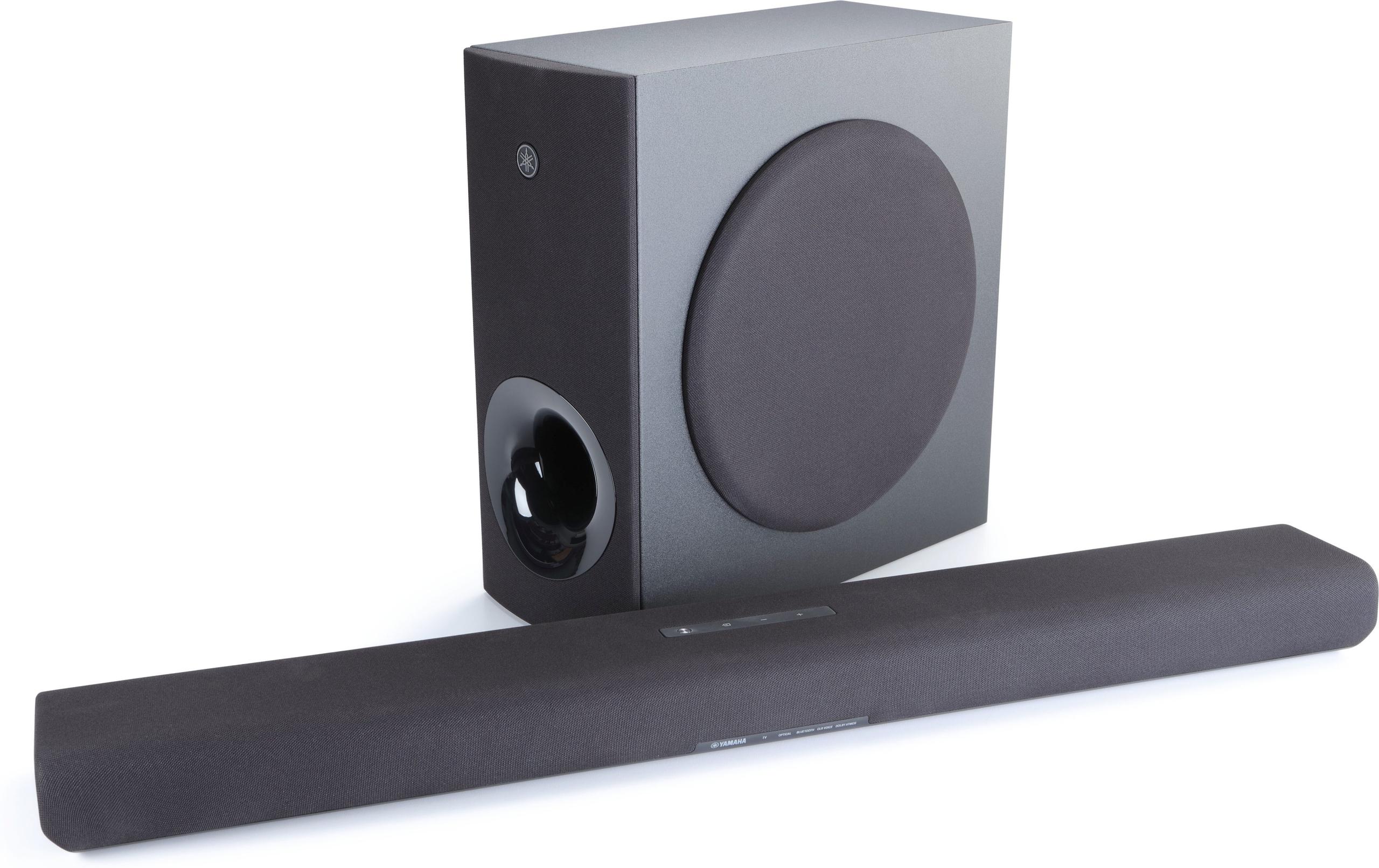



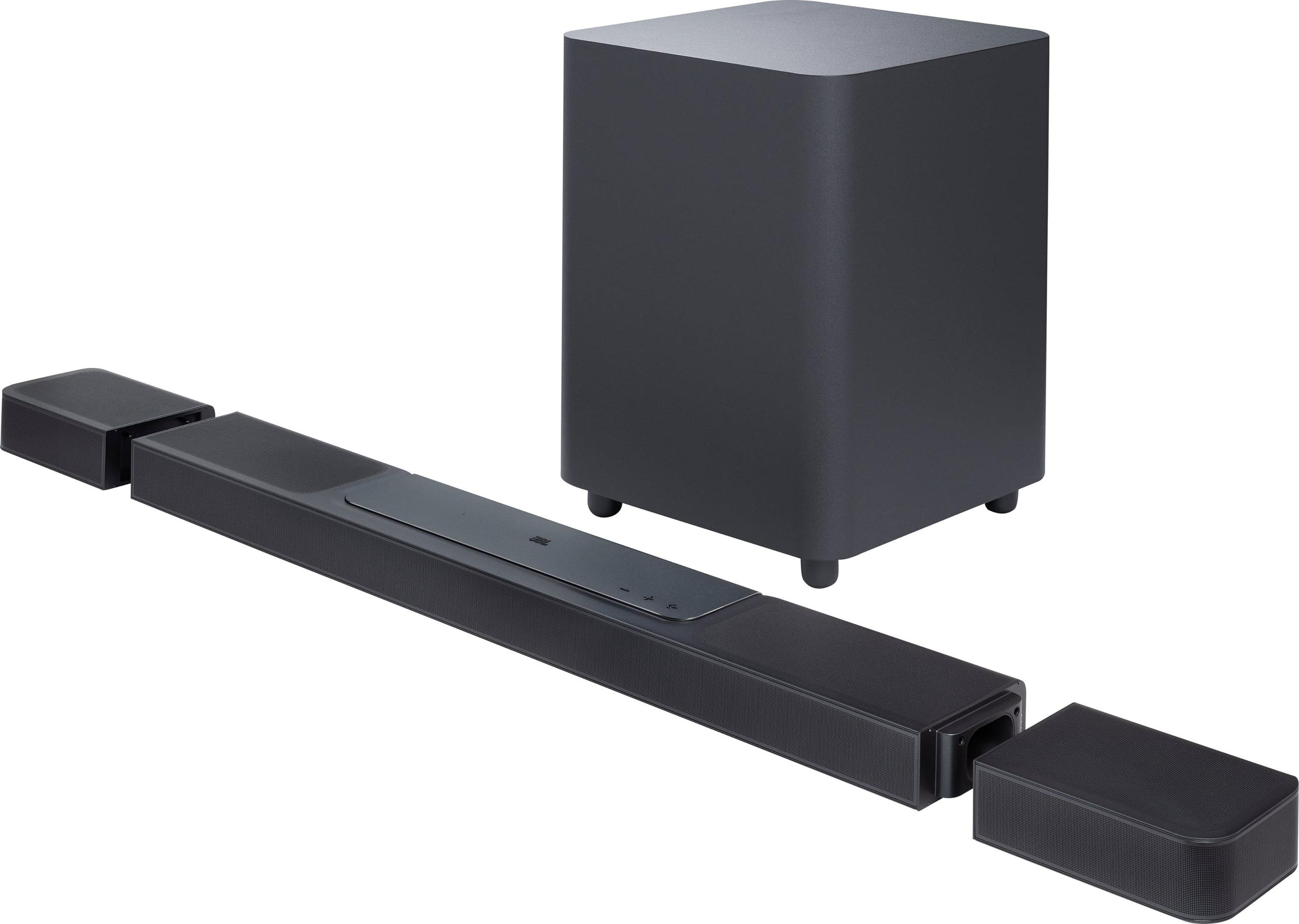
When your TV's built-in speakers just aren't cutting it anymore, a soundbar can transform your viewing experience. But with options ranging from budget-friendly to premium-priced, choosing the right one can feel overwhelming. Today, we're comparing two soundbars that represent completely different approaches: the affordable Yamaha SR-B40A ($340) and the high-end JBL Bar 1300X ($1,300).
These aren't just different price points – they're fundamentally different philosophies about home audio. One focuses on delivering impressive sound at an accessible price, while the other pushes the boundaries of what's possible with modern soundbar technology.
Before diving into specifics, let's talk about what makes a soundbar worth your money. The most important factors are audio performance, value for your dollar, how well it fits your room and lifestyle, connectivity options, and ease of use.
Audio performance breaks down into several key areas. First, there's the channel configuration – this tells you how many separate audio channels the soundbar can produce. A 2.1 system has left and right channels plus a subwoofer for bass, while something like 11.1.4 means eleven main channels, one subwoofer channel, and four height channels for overhead effects.
Then there's immersive audio processing, like Dolby Atmos, which creates the illusion of sounds moving around and above you. Some soundbars achieve this through virtual processing (using clever software tricks), while others use dedicated speakers pointing upward to bounce sound off your ceiling.
Power output matters too, but it's not just about raw watts. How that power is distributed across different frequency ranges and how cleanly it's delivered makes the real difference in sound quality.
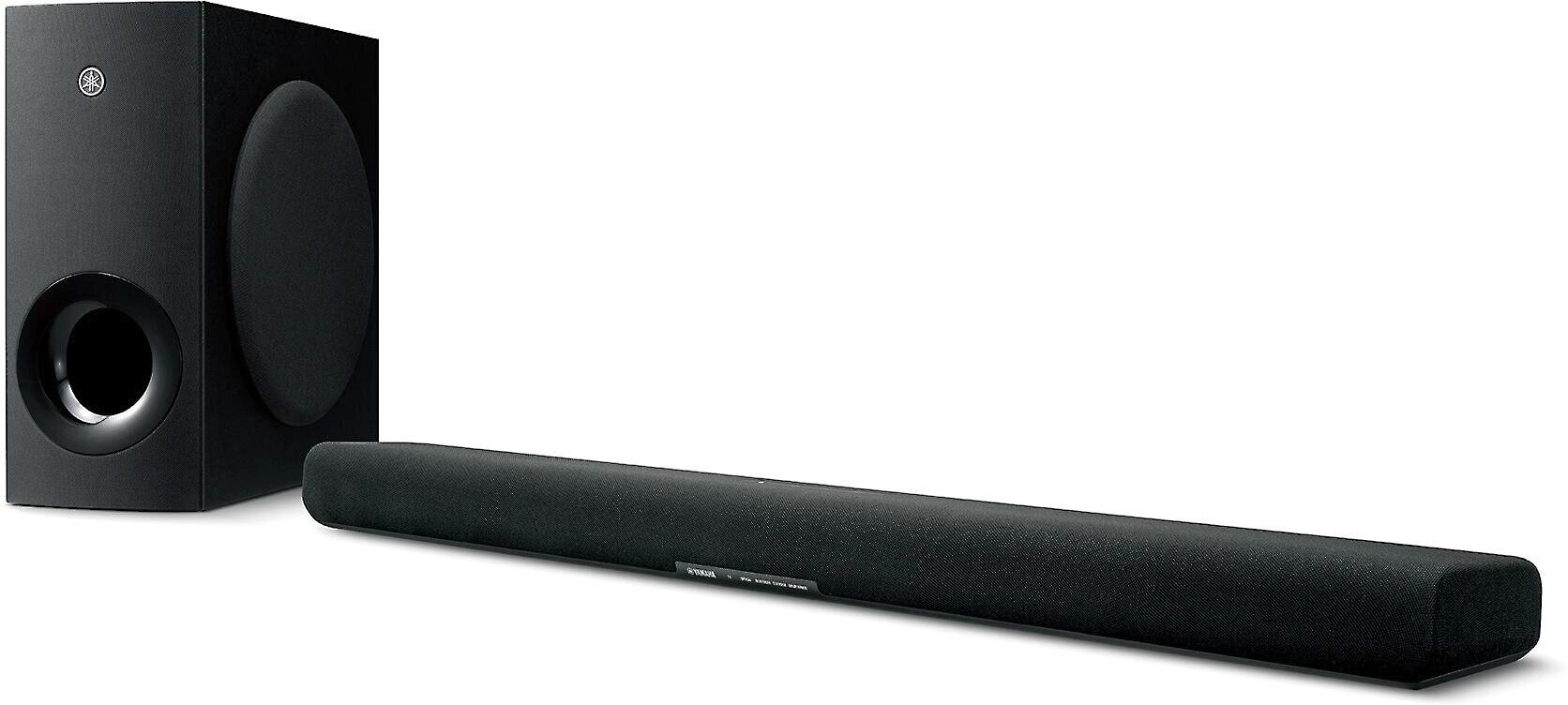
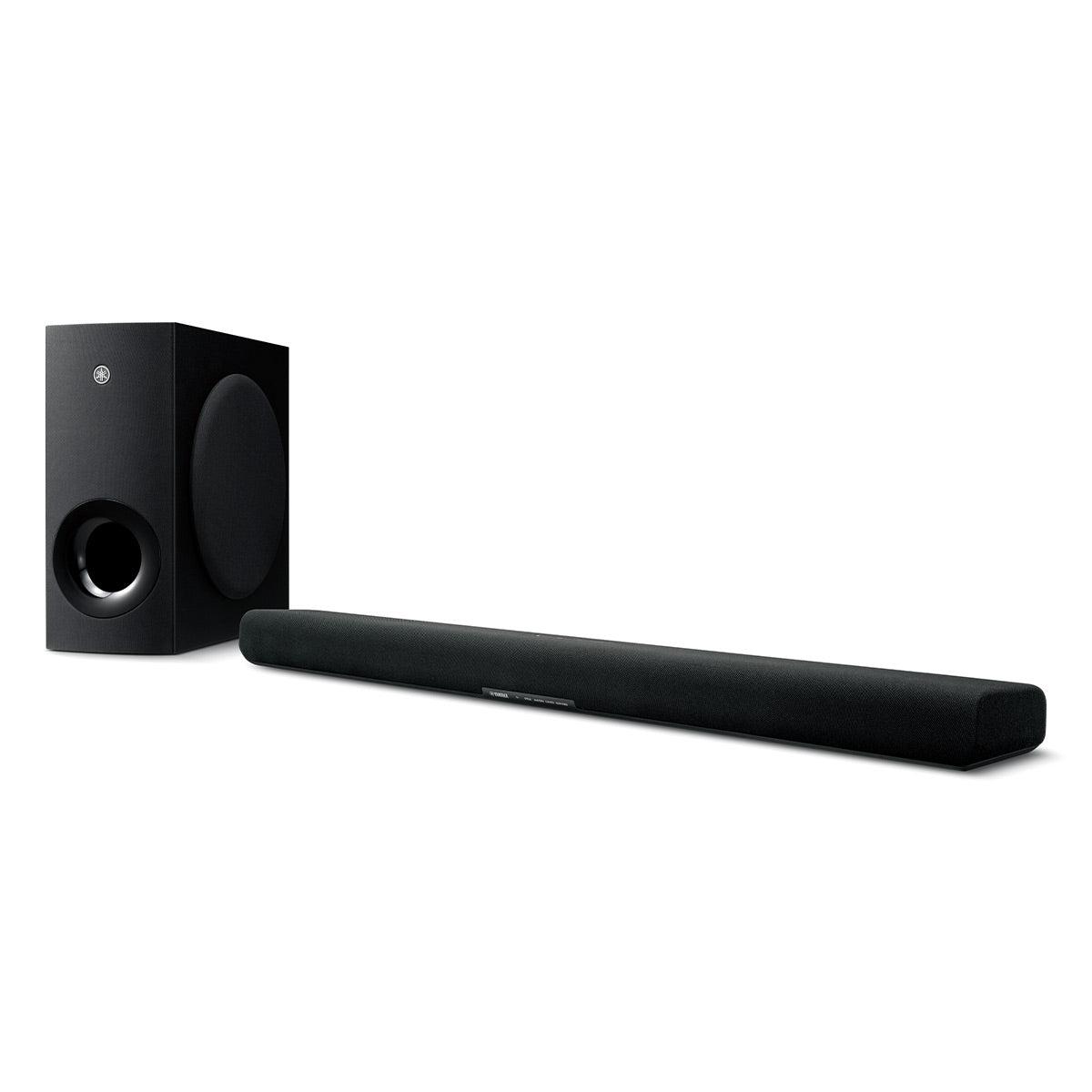
Released in 2023, the Yamaha SR-B40A entered a crowded budget soundbar market with a clear mission: deliver Dolby Atmos processing and strong bass performance without breaking the bank. At $340, it represents Yamaha's effort to bring their audio engineering expertise to everyday buyers.
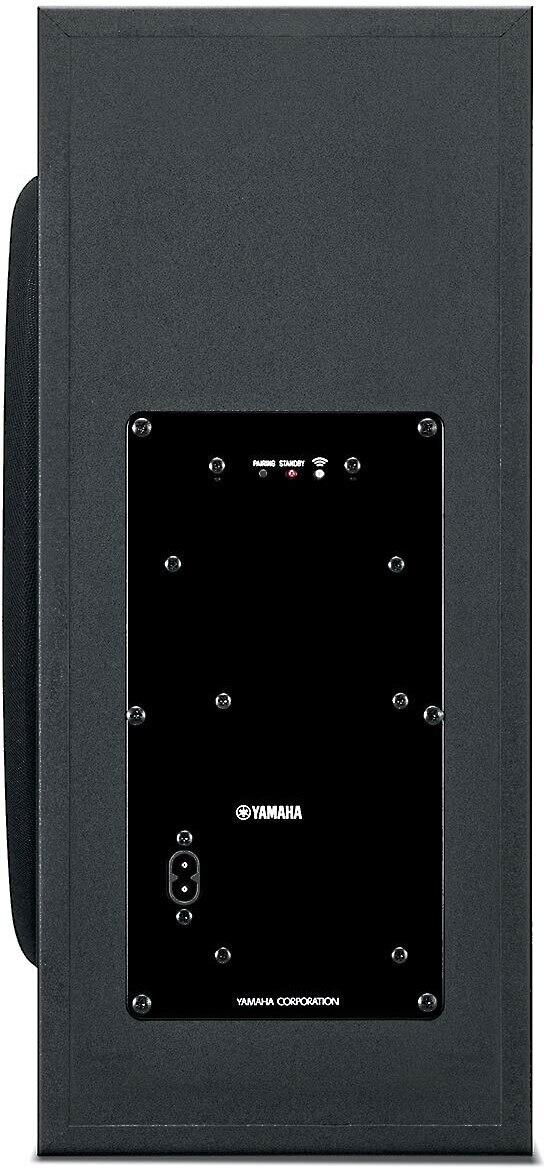
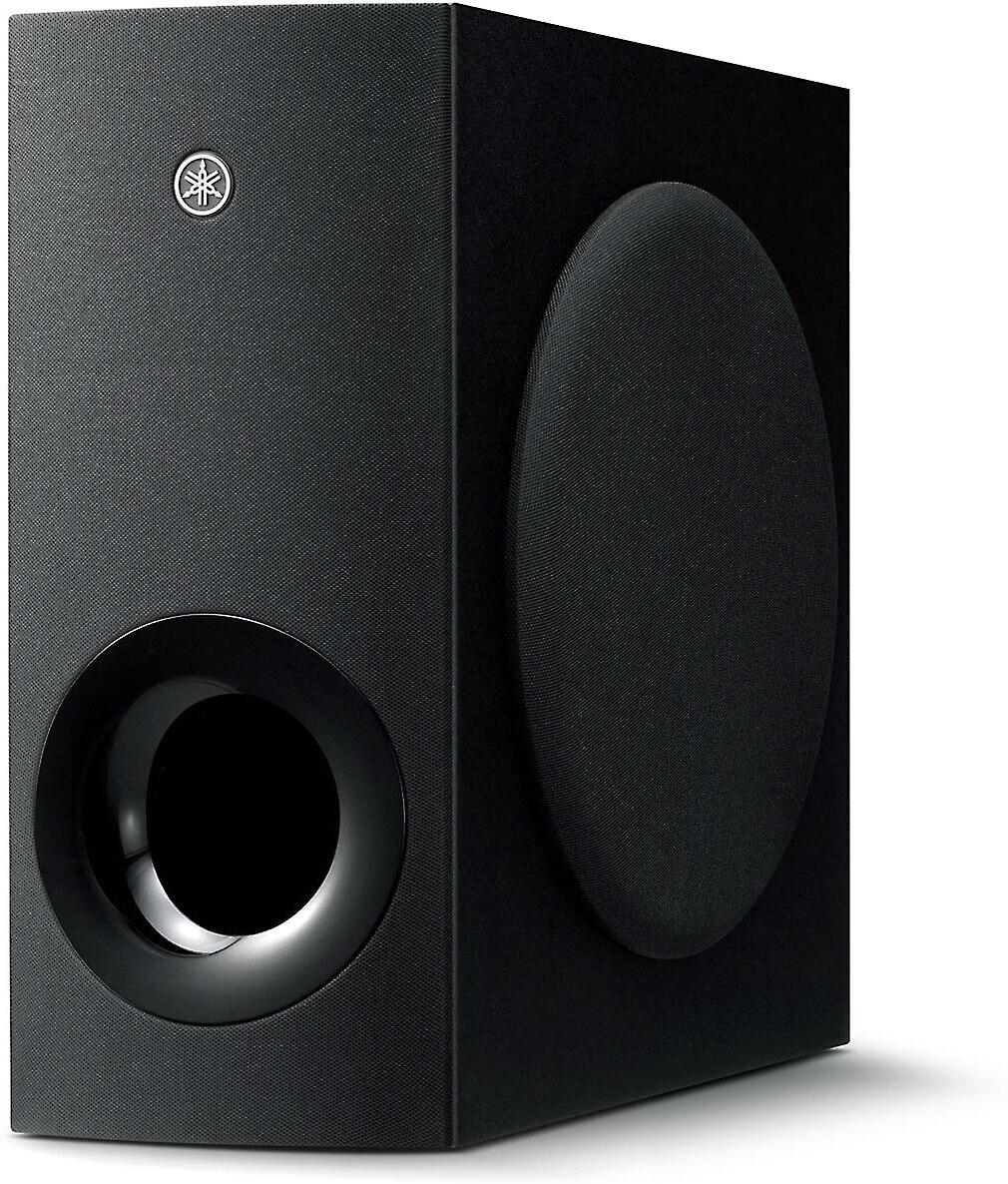
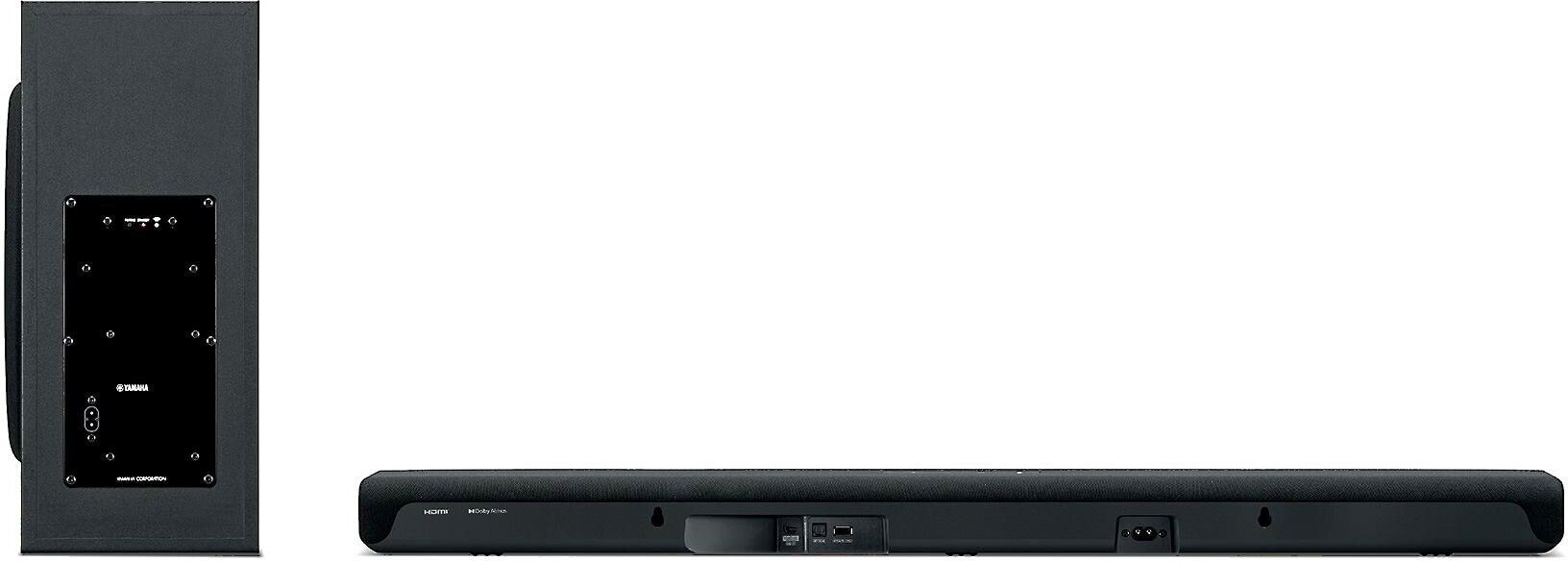
The SR-B40A uses a 2.1-channel configuration, meaning you get left and right speakers in the main bar plus a separate wireless subwoofer. The main bar houses four 1.8-inch cone drivers and two 1-inch dome tweeters (the small speakers that handle high frequencies like cymbals and voices). The wireless subwoofer features a 6.5-inch driver that, despite its modest size, consistently surprises users with its punch.
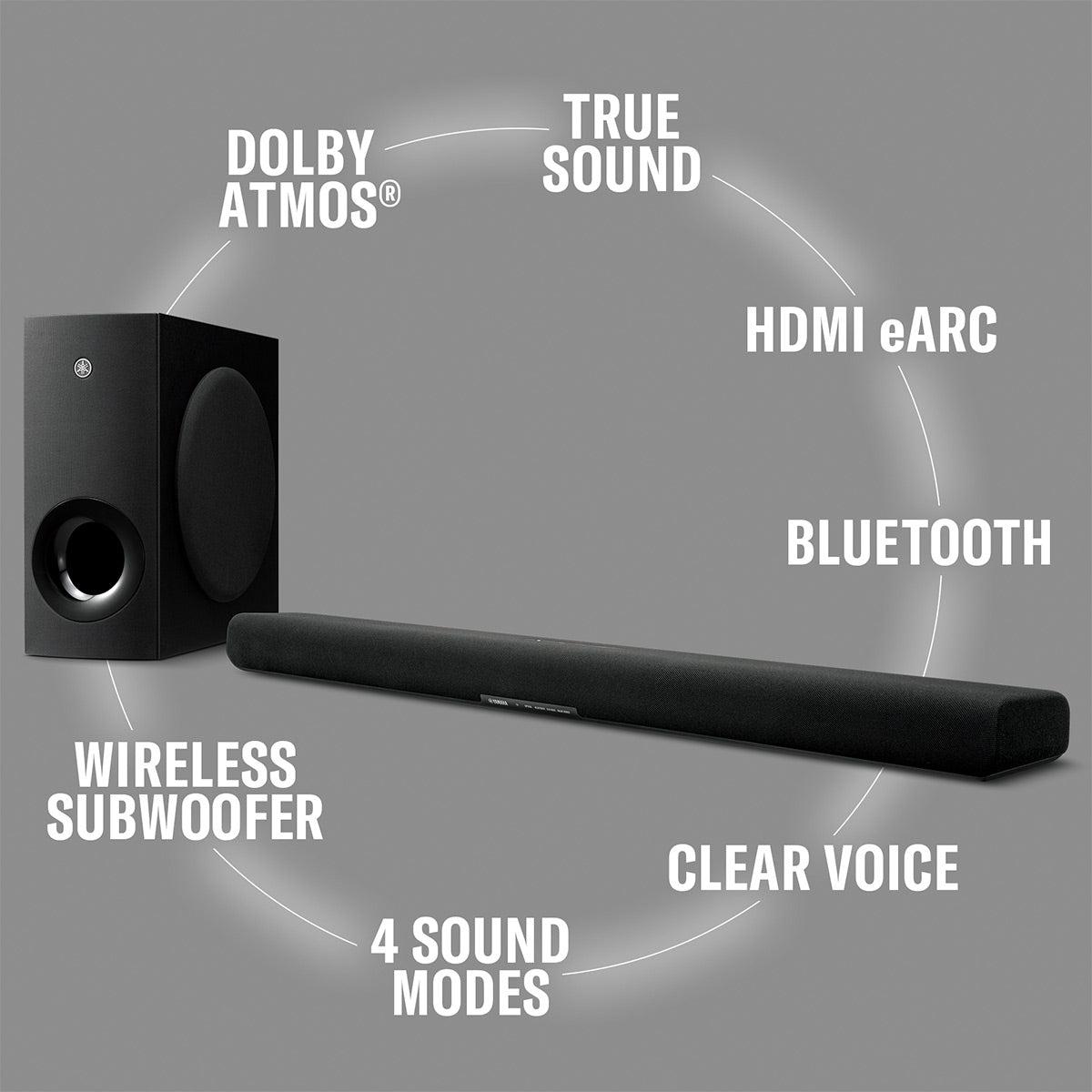
What's particularly clever about this system is its virtual Dolby Atmos processing. Since there are no physical speakers pointing upward, the soundbar uses digital signal processing to create the illusion of height effects. It analyzes the incoming audio and adjusts timing, volume, and frequency response across its drivers to trick your brain into hearing sounds from above. While it can't match true height speakers, the effect is more convincing than you might expect, especially in smaller rooms.
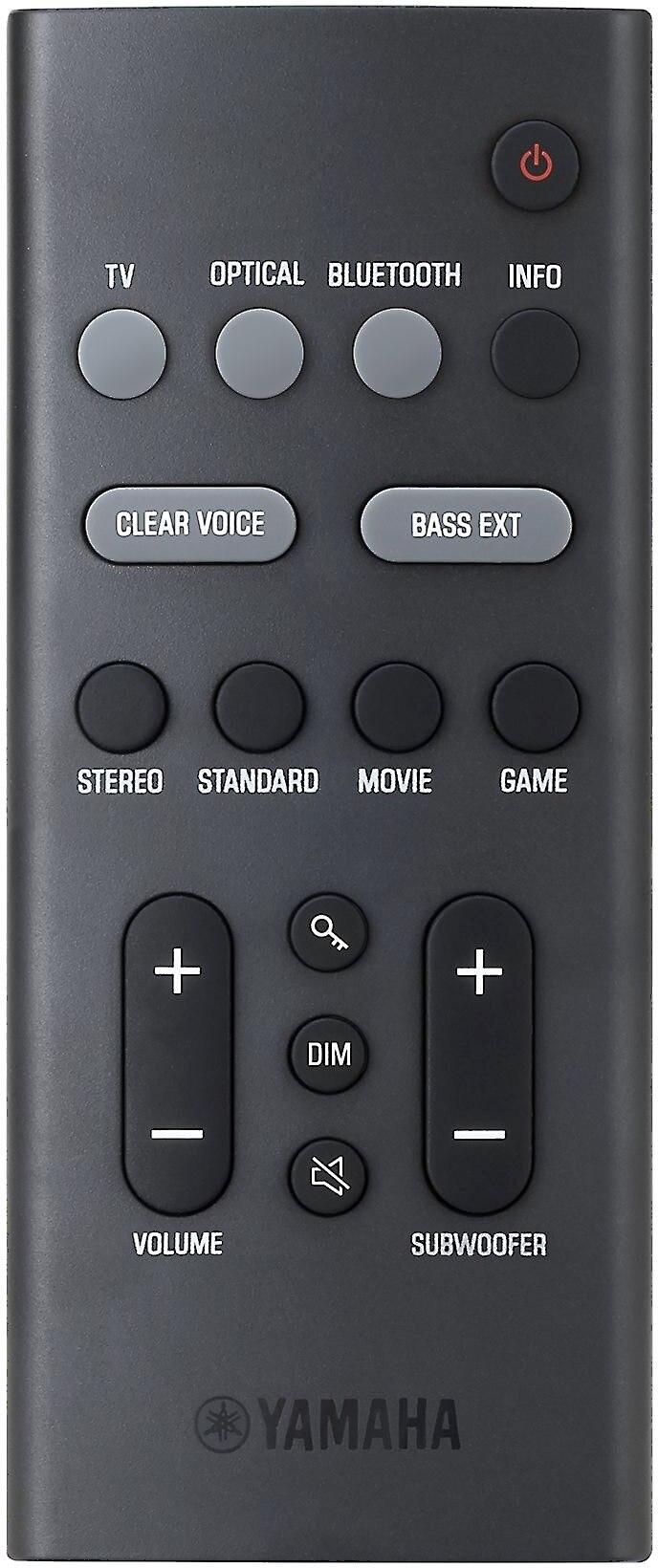
Yamaha included their "Clear Voice" technology, which is supposed to make dialogue more audible by boosting certain frequencies where human speech lives. However, based on user feedback, this feature can make voices sound tinny or artificial when pushed too hard. It's one of those features that works better in theory than practice.
The Bass Extension feature is more successful. This lets you customize how much low-end emphasis you want, essentially letting you tune the subwoofer's impact to your room and preferences. In a small apartment, you might dial it back to avoid bothering neighbors. In a larger space, you can push it forward for more movie theater-like impact.
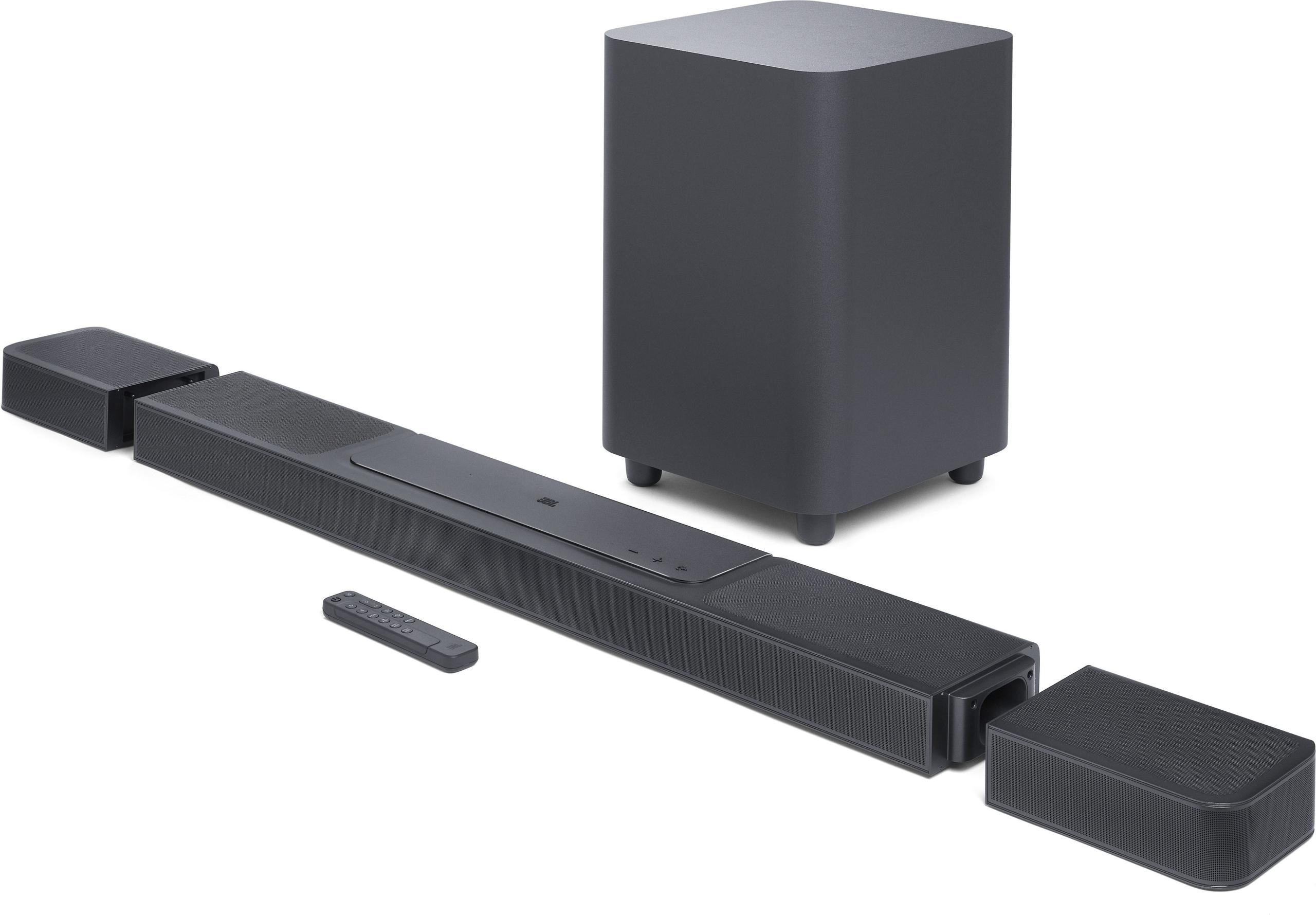
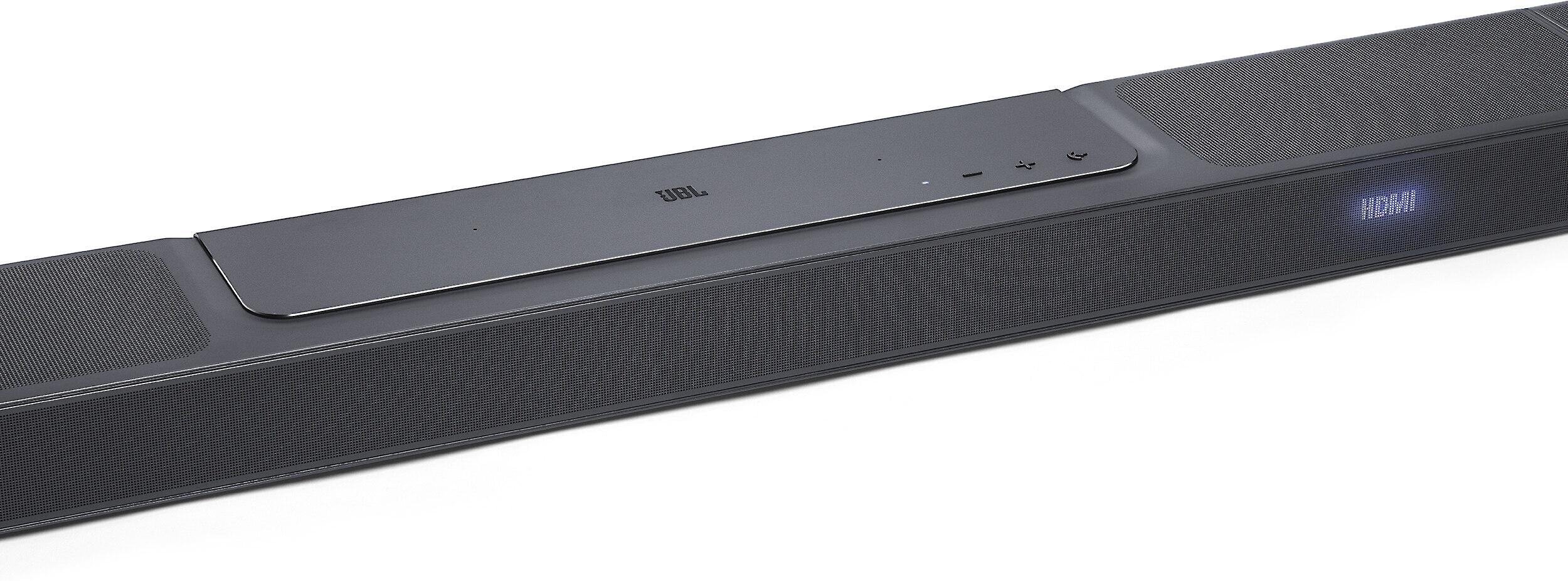
The JBL Bar 1300X, released in 2024, represents JBL's flagship soundbar technology. At $1,300, it's not just more expensive – it's playing in an entirely different league technically.
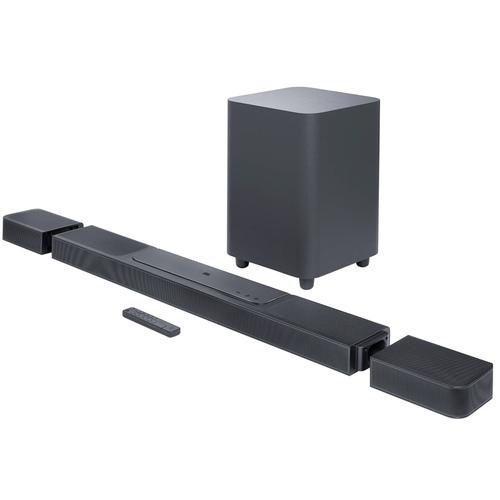
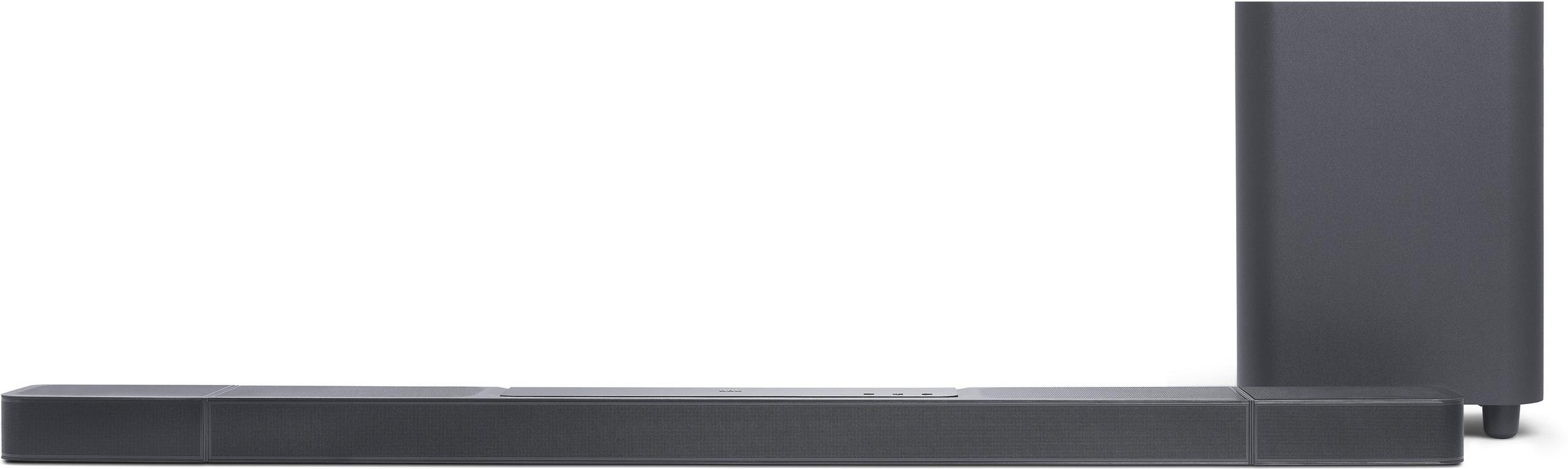
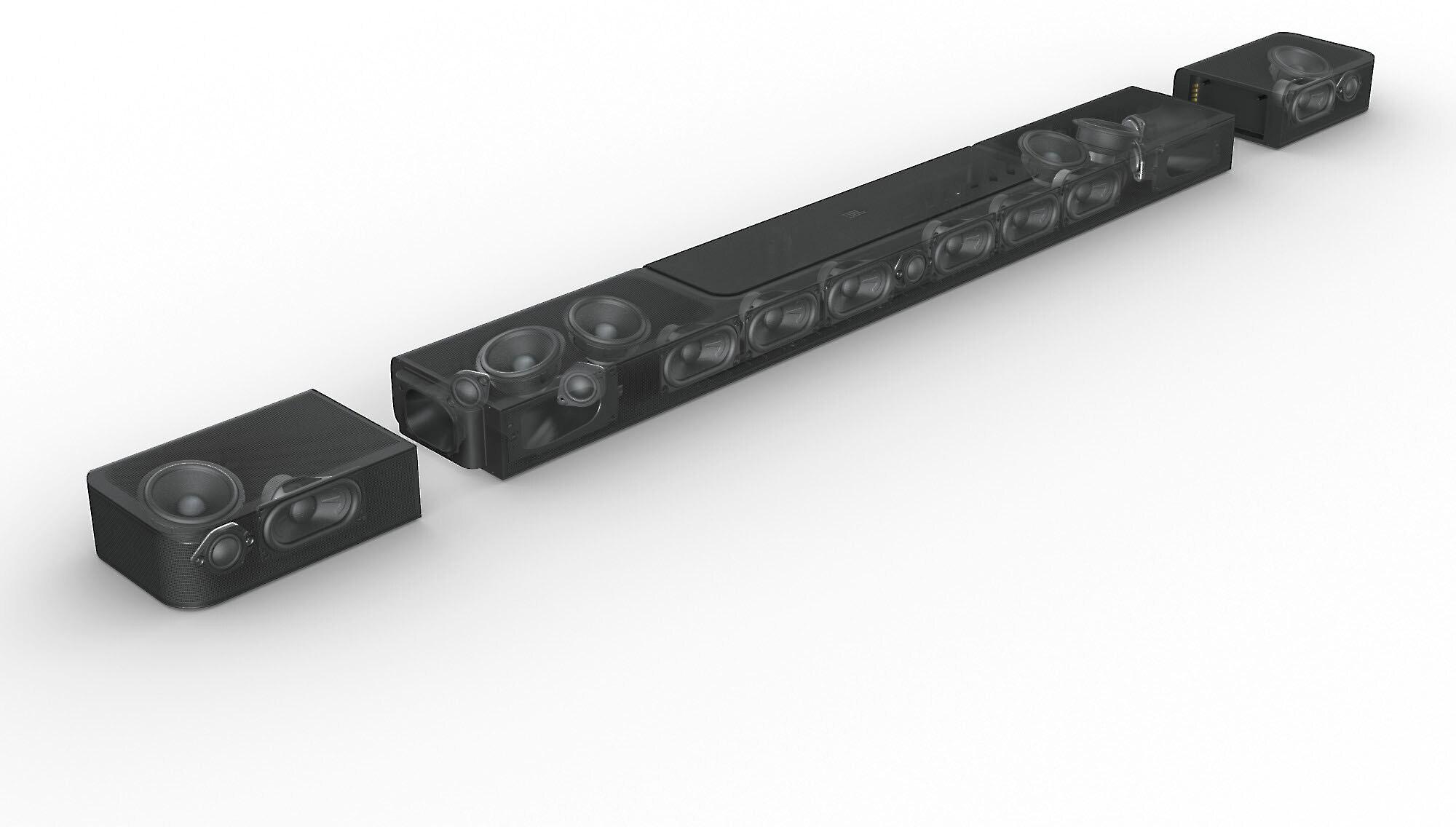
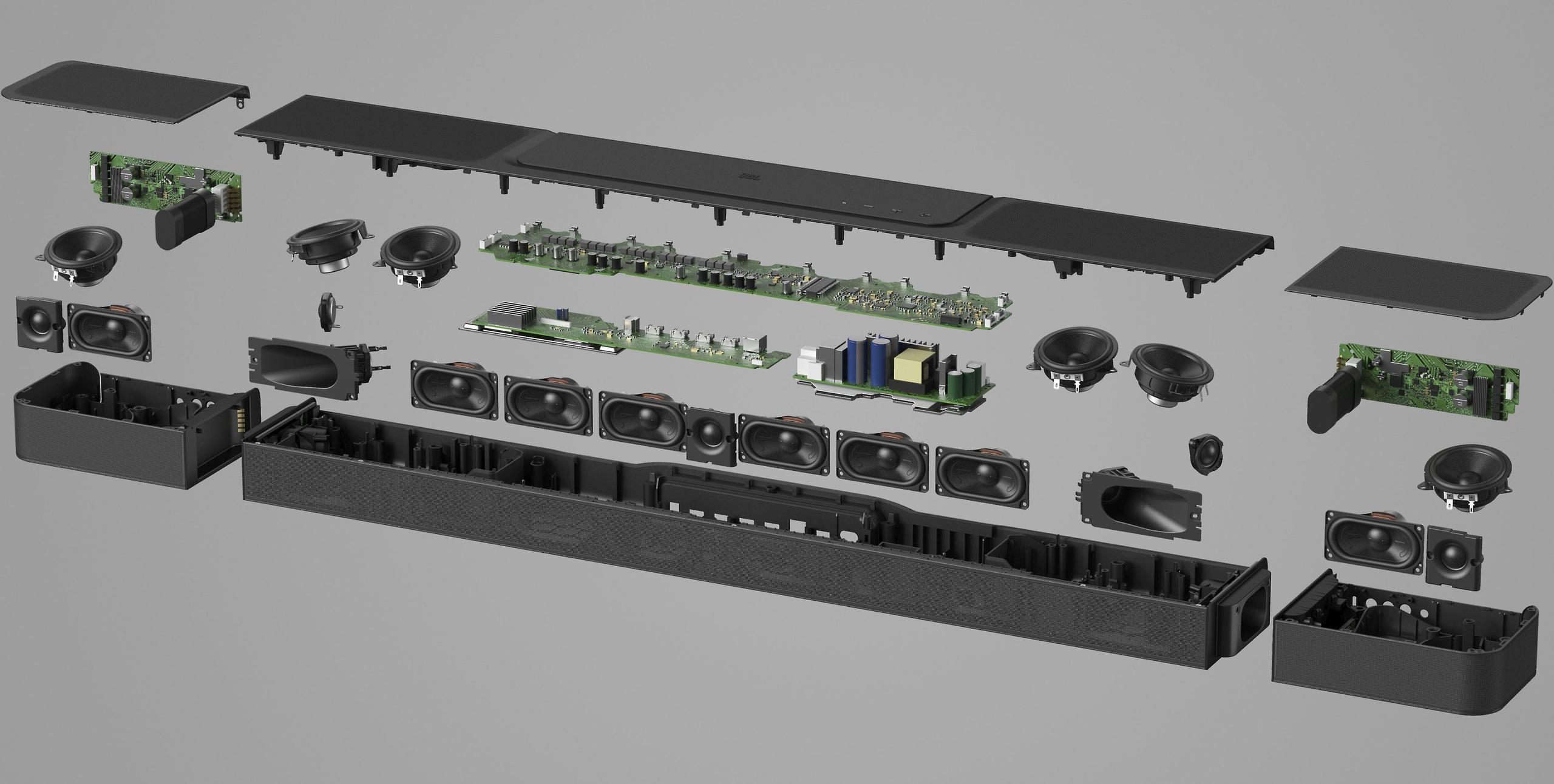
This is an 11.1.4 system, which sounds complex because it is. You get eleven main channels spread across the soundbar and detachable surround speakers, one subwoofer channel, and four dedicated height channels. Those height channels are real speakers pointing upward, not virtual processing. The main soundbar alone houses six racetrack-shaped drivers (oval drivers that fit more cone area into tight spaces), five dome tweeters, and four up-firing full-range drivers specifically for height effects.
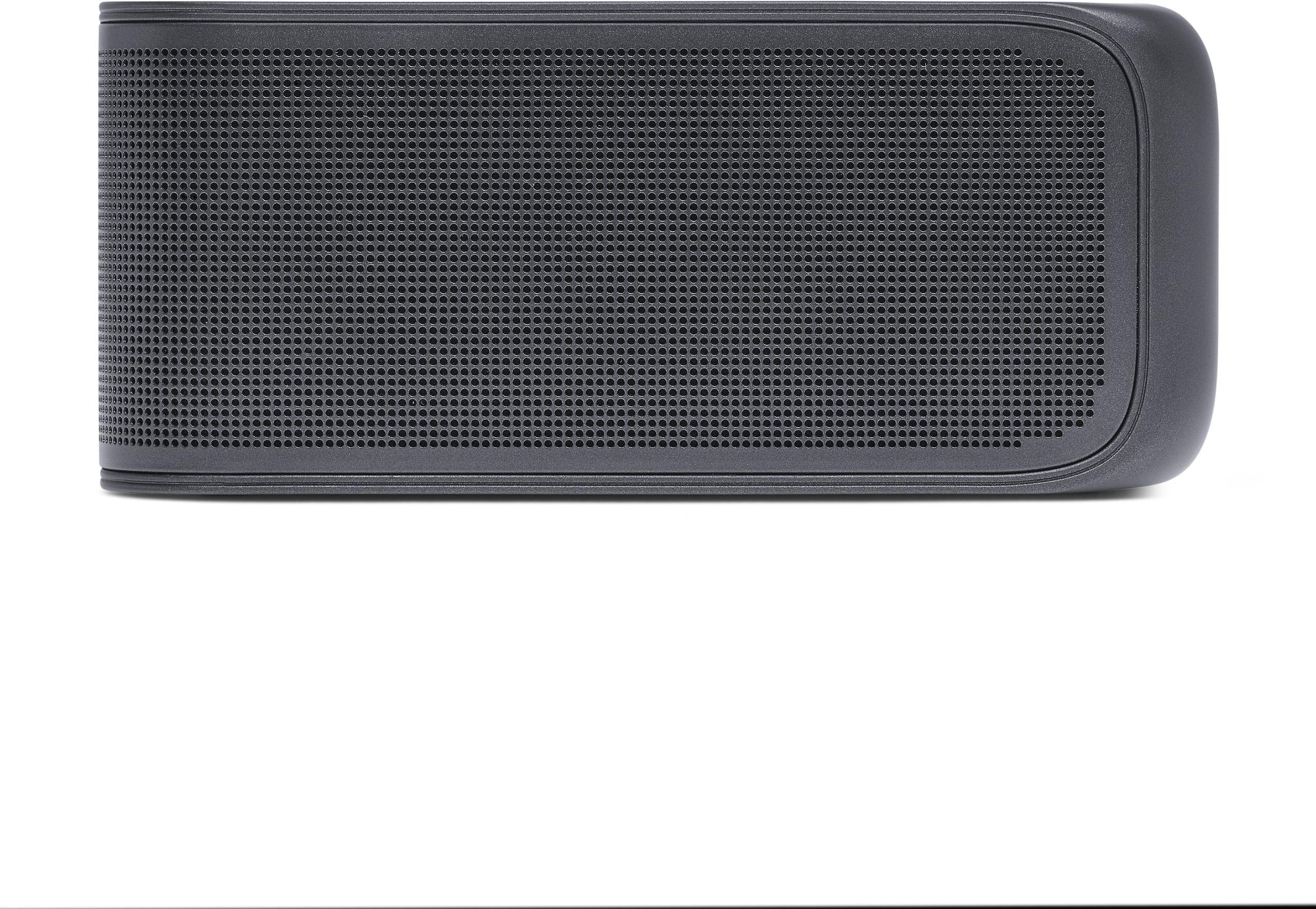
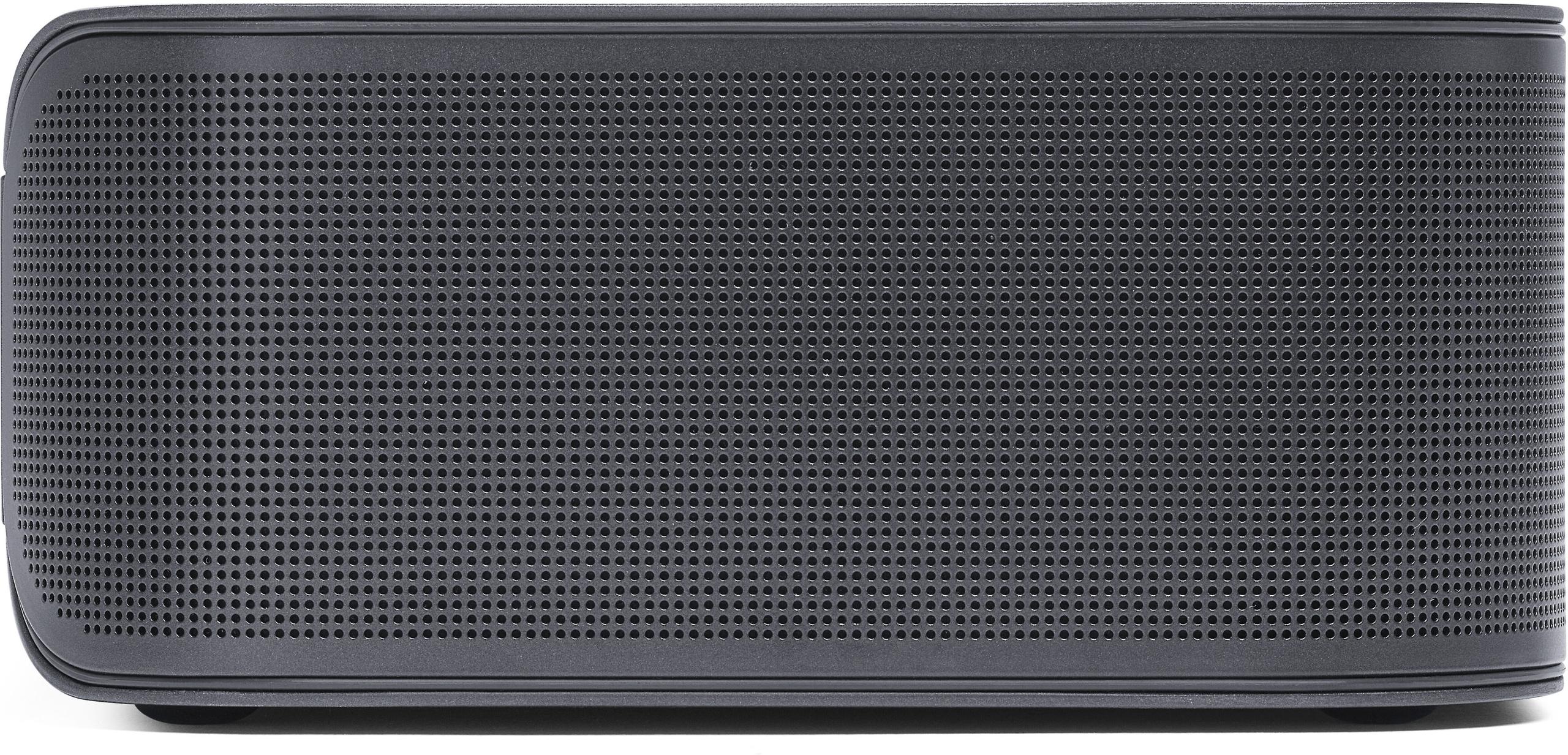
But here's where it gets really interesting: the surround speakers are completely detachable. They magnetic attach to the ends of the main soundbar for a sleek look, but you can remove them and place them anywhere in your room. They're battery-powered (lasting about 10 hours per charge) and connect wirelessly, so you're not running cables across your living room. When detached, they can even function as standalone Bluetooth speakers.
The 12-inch subwoofer is substantially larger than Yamaha's 6.5-inch unit, and the difference is immediately audible. It reaches down to 33Hz, which means you'll feel those deep movie effects and bass lines that smaller subs simply can't reproduce. At 300 watts, it has three times the power of the Yamaha's subwoofer.
JBL's MultiBeam technology deserves special mention. This uses digital signal processing combined with the physical speaker array to create what they call "beamforming." Essentially, the soundbar analyzes your room and directs different parts of the audio to different areas, creating a wider, more enveloping soundstage than traditional soundbars can achieve.
This is perhaps the biggest difference between these two systems. The Yamaha SR-B40A uses virtual Dolby Atmos processing, which means it's using software to simulate height effects through its existing drivers. The JBL Bar 1300X has actual speakers pointing at your ceiling to create genuine overhead effects.
In practice, the difference is significant. The Yamaha can create a sense of expanded soundstage and some height illusion, particularly with properly mixed Atmos content like big-budget movies. But when a helicopter flies overhead in a movie, you'll hear it move from left to right more than you'll feel it pass above you.
The JBL, with its four dedicated up-firing drivers, creates genuinely three-dimensional audio. That same helicopter scene will have you looking up at the ceiling. Rain sounds like it's actually falling from above, and ambient effects in games create a bubble of sound around you. It's the difference between looking at a painting of a landscape and standing in the actual landscape.
Both systems include wireless subwoofers, but they're in different weight classes entirely. The Yamaha's 6.5-inch driver punches well above its size class, delivering surprisingly solid bass for movies and music. Users consistently mention being impressed by its output relative to the system's price point. However, it starts to strain with the deepest bass notes and can't quite deliver the room-shaking impact of larger systems.
The JBL's 12-inch subwoofer is in another category altogether. Those extra inches of cone area and 300 watts of power translate to bass that you feel in your chest during action sequences. More importantly, it maintains composure and clarity even at high volumes, where smaller subs often become muddy or distorted.
The difference becomes most apparent with content that has serious low-frequency content – think the T-Rex footsteps in Jurassic Park or the basement scenes in action movies. The Yamaha will give you a sense of that low-end energy, while the JBL will make your couch vibrate.
Both soundbars attempt to address one of the most common complaints about modern TV and movie audio: dialogue that gets buried under music and effects. However, they take different approaches.
The Yamaha's Clear Voice feature boosts mid-range frequencies where human speech primarily lives. In theory, this should make voices more prominent. In practice, user reviews suggest it can make dialogue sound artificial or separated from the rest of the audio. It's better than nothing, but it's a somewhat crude solution.
The JBL takes a more sophisticated approach with its PureVoice technology and dedicated center channel processing. Instead of just boosting certain frequencies, it uses the discrete center channel (a separate audio pathway specifically for dialogue) to maintain vocal clarity while keeping everything else balanced. The result is dialogue that sounds natural but remains audible even during complex audio scenes.
While both soundbars are designed primarily for TV and movie content, they also need to handle music well. This is where the power and driver quality differences become most apparent.
The Yamaha SR-B40A delivers respectable music performance for its price range. Yamaha's audio engineering heritage shows in the balanced tonal reproduction – nothing sounds overly harsh or muddy. The stereo imaging (how well you can locate different instruments in the soundstage) is decent for a soundbar, though it can't match dedicated stereo speakers.
The JBL Bar 1300X, with its massive power reserve and multiple high-quality drivers, excels with music. The frequency response extends from 33Hz to 20kHz, covering essentially the full range of human hearing. More importantly, it maintains clarity and separation between instruments even at high volumes. The MultiBeam technology creates a wider soundstage that makes music feel more spacious and engaging.
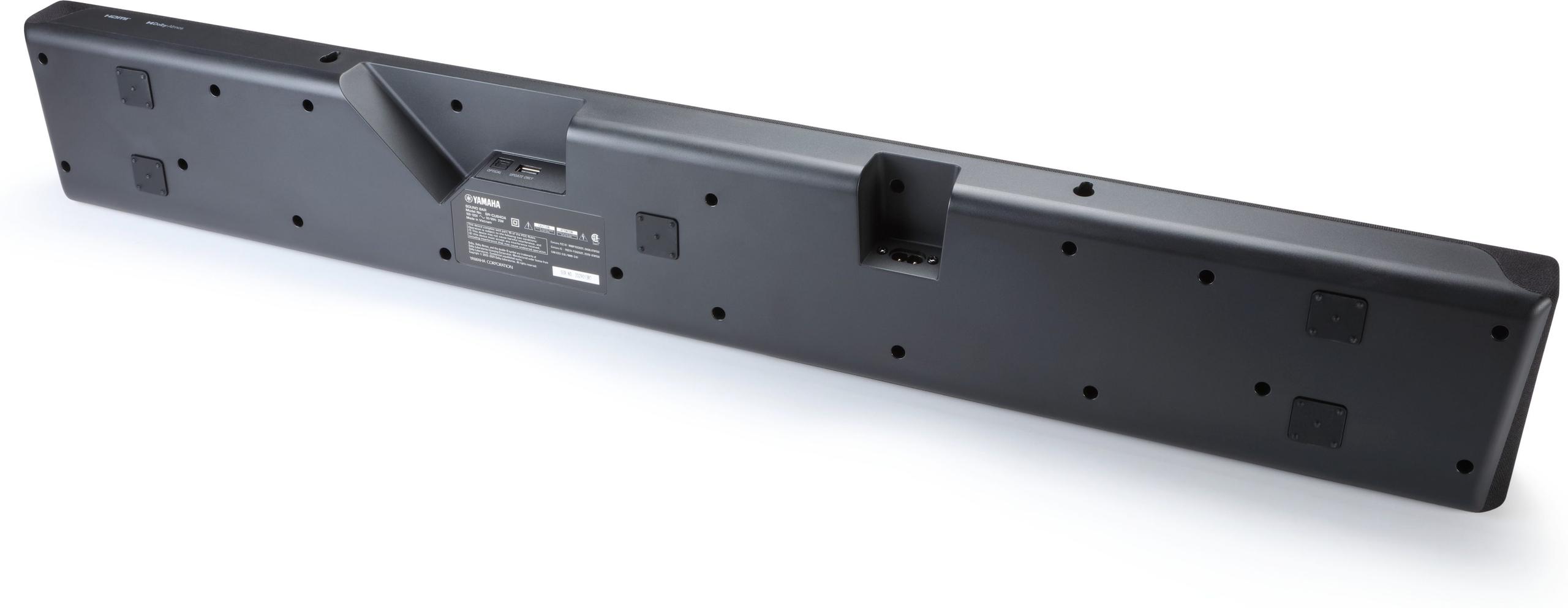
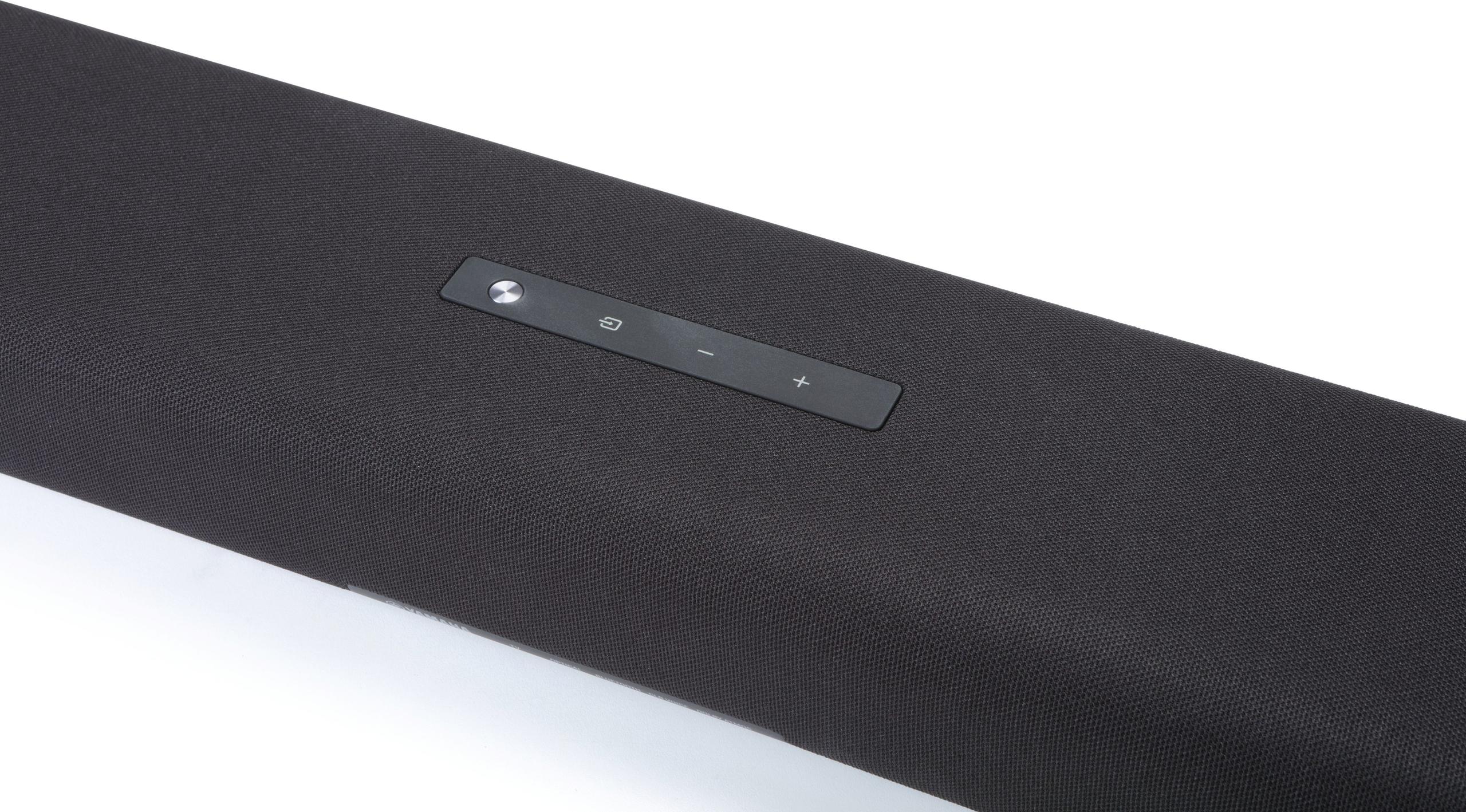
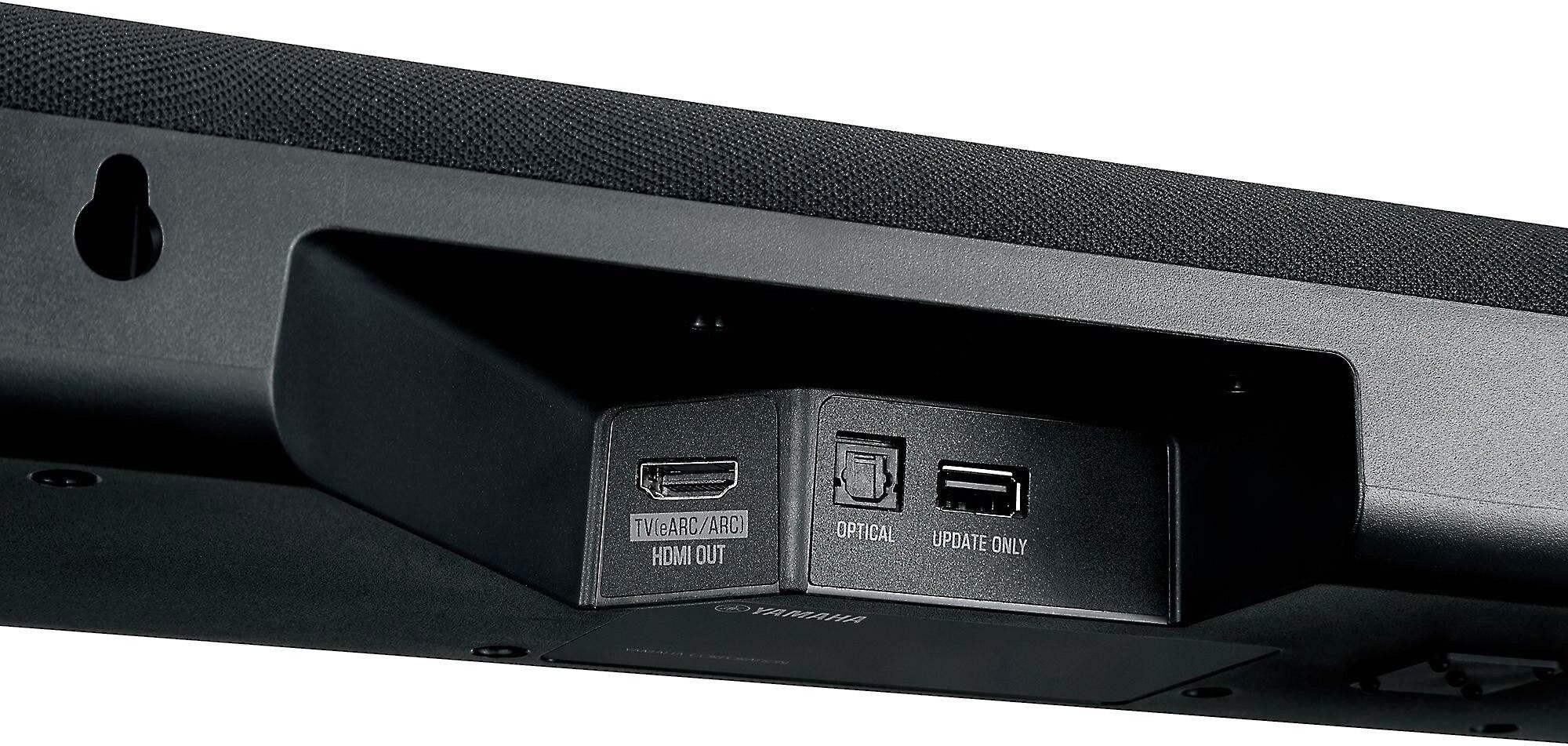
This is where the price difference really shows in terms of convenience and future-proofing. The Yamaha keeps things simple with Bluetooth connectivity and HDMI eARC (Enhanced Audio Return Channel, which lets you control the soundbar with your TV remote). Setup is straightforward, and the included app provides basic control over sound modes and settings.
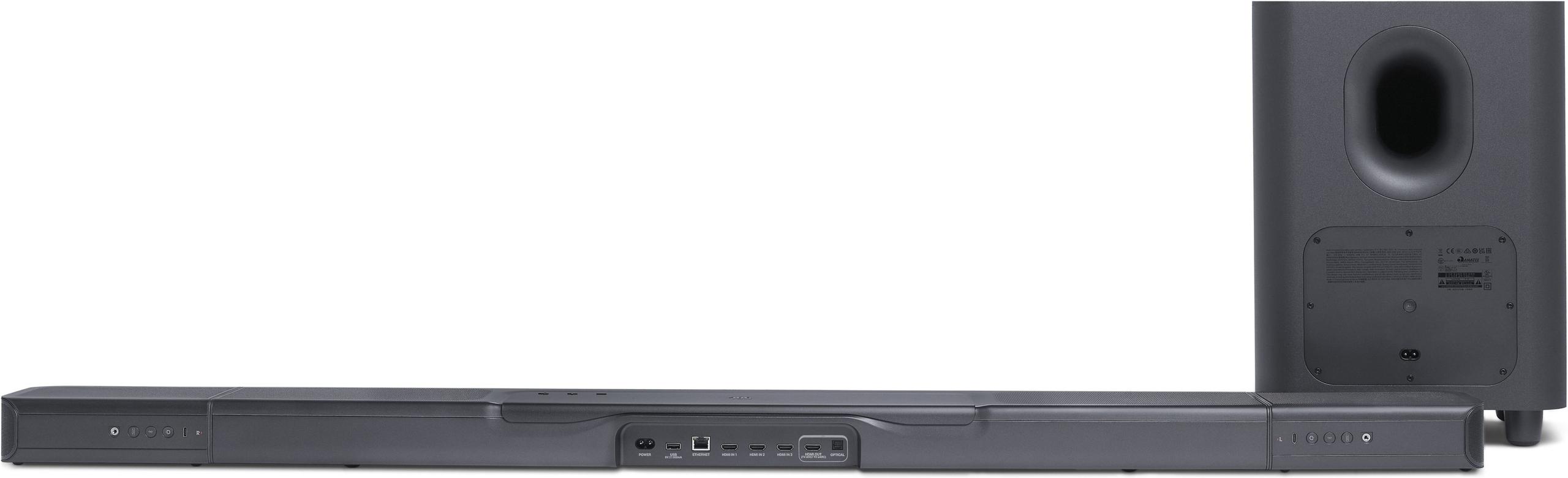
The JBL embraces the smart home ecosystem fully. It includes Wi-Fi connectivity with support for AirPlay 2, Chromecast built-in, and Alexa Multi-Room Music. This means you can stream music directly from services like Spotify without needing your phone or TV on. The four HDMI inputs let you connect multiple devices directly to the soundbar, which then passes video to your TV.
The JBL also includes automatic room calibration, which uses built-in microphones to analyze your room's acoustics and adjust the sound accordingly. The Yamaha lacks this feature, so you're relying on manual adjustments and the included sound modes (Stereo, Standard, Movie, and Game) to optimize performance.
In a dedicated home theater room, the differences between these systems become even more pronounced. The JBL Bar 1300X can fill a large room (300+ square feet) with immersive sound, while the Yamaha SR-B40A works best in smaller to medium-sized spaces.
For home theater use, consider your room layout carefully. The JBL's detachable surround speakers shine in rooms where you can position them properly behind your seating area. If your couch is against the back wall, you might not get the full benefit of the surround channels.
The Yamaha's virtual processing actually works better in smaller, more acoustically controlled spaces. In a large, open-plan living area, the effect can get lost, but in a cozy family room, it can be surprisingly effective.
The $960 price difference between these soundbars isn't just about paying more for better sound – it's about fundamentally different use cases and priorities.
The Yamaha SR-B40A represents exceptional value for users who want a significant upgrade from TV speakers without the complexity or cost of a premium system. If you're primarily watching TV shows, streaming content, and the occasional movie, it delivers impressive performance per dollar. The wireless subwoofer alone makes action scenes and music dramatically more engaging than any TV's built-in speakers could manage.
The JBL Bar 1300X justifies its premium pricing through genuine technical innovation and performance that approaches separate component systems. The detachable surround speakers alone represent a unique approach to the traditional soundbar limitations. When you factor in the authentic Dolby Atmos processing, the powerful subwoofer, and the comprehensive smart features, it becomes a compelling choice for serious home theater enthusiasts.
Choose the Yamaha SR-B40A if you're looking for the biggest audio improvement per dollar spent. It's perfect for smaller living spaces, apartment dwellers who need to be mindful of bass levels, and anyone who wants great sound without complexity. If your primary use is TV watching and casual movie streaming, the virtual Atmos processing provides enough immersion to enhance the experience significantly.
The JBL Bar 1300X makes sense when you want an authentic home theater experience and have the room to accommodate it properly. If you're a serious movie buff, gamer, or music lover who appreciates the nuances of high-quality audio reproduction, the investment pays off in daily enjoyment. The flexibility of the detachable speakers also makes it appealing for users who want one system that can adapt to different scenarios.
Both soundbars represent solid engineering and clear design philosophies. The Yamaha proves that excellent sound doesn't require a premium budget, while the JBL demonstrates what's possible when cutting-edge technology meets thoughtful design. Your choice ultimately comes down to your budget, room size, audio priorities, and how much complexity you're comfortable with in your daily entertainment setup.
The good news is that either choice will dramatically improve your audio experience over basic TV speakers. The question is whether you want good sound at a great price, or great sound with innovative features at a premium price.
| Yamaha SR-B40A ($340) | JBL Bar 1300X ($1,300) |
|---|---|
| Price - The most obvious difference that determines your buying decision | |
| $340 (exceptional value for budget buyers) | $1,300 (premium pricing for advanced features) |
| Channel Configuration - Determines how immersive your audio experience will be | |
| 2.1 channels with virtual Dolby Atmos | 11.1.4 channels with true Dolby Atmos/DTS:X |
| Total Power Output - More power means better performance at higher volumes | |
| 200W (50W per channel + 100W subwoofer) | 1,170W (650W soundbar + 300W sub + 220W surrounds) |
| Subwoofer Size - Larger drivers produce deeper, more impactful bass | |
| 6.5" wireless subwoofer (surprising punch for the size) | 12" wireless subwoofer (room-shaking deep bass) |
| Surround Speakers - Real speakers create authentic surround sound vs. virtual processing | |
| None (relies on virtual surround processing) | Detachable battery-powered wireless speakers |
| Height Channels - Physical upward-firing speakers vs. software simulation | |
| Virtual height effects through processing | 4 dedicated up-firing drivers for true overhead sound |
| Smart Connectivity - Determines how you can stream music and control the system | |
| Bluetooth only, HDMI eARC, basic app control | Wi-Fi, AirPlay 2, Chromecast, Alexa MRM, 300+ streaming services |
| HDMI Inputs - More inputs mean fewer cable swaps between devices | |
| 1 HDMI eARC input | 4 HDMI inputs plus eARC output |
| Room Calibration - Automatic tuning optimizes sound for your specific space | |
| Manual adjustment only | Automatic room calibration with built-in microphones |
| Ideal Room Size - Larger systems need more space to perform optimally | |
| Small to medium rooms (under 200 sq ft) | Large rooms (300+ sq ft) for full surround benefit |
| Setup Complexity - Simpler systems are easier for non-tech users | |
| Plug-and-play simplicity | More complex but includes auto-calibration |
| Best Use Case - Who each product serves best | |
| Budget-conscious TV watchers wanting better sound | Home theater enthusiasts seeking premium immersive audio |
The Yamaha SR-B40A ($340) offers exceptional value for budget-conscious buyers, delivering solid 2.1-channel sound with virtual Dolby Atmos at an affordable price. The JBL Bar 1300X ($1,300) provides premium value for those wanting true surround sound with its 11.1.4 channels and detachable wireless speakers, but costs nearly four times more.
The primary difference is their approach to surround sound. The Yamaha SR-B40A uses virtual processing to simulate immersive audio through its 2.1 channels, while the JBL Bar 1300X delivers authentic surround sound with 11.1.4 channels, including physical height speakers and detachable wireless surrounds.
The JBL Bar 1300X significantly outperforms with its 12-inch, 300W subwoofer that reaches down to 33Hz for deep, room-shaking bass. The Yamaha SR-B40A has a smaller 6.5-inch, 100W subwoofer that still delivers impressive bass for its size and price point.
The JBL Bar 1300X excels in home theater applications with true Dolby Atmos processing, dedicated height channels, and detachable surround speakers that create an authentic cinema experience. The Yamaha SR-B40A works well for casual home theater use in smaller rooms but lacks the immersive capabilities of a true surround system.
The Yamaha SR-B40A offers simpler setup with just HDMI eARC connection and basic configuration. The JBL Bar 1300X has a more complex setup due to multiple components but includes automatic room calibration to optimize performance for your specific space.
The Yamaha SR-B40A only supports Bluetooth streaming from your devices. The JBL Bar 1300X offers comprehensive streaming with Wi-Fi, AirPlay 2, Chromecast built-in, and access to over 300 streaming services directly without needing your phone or TV.
The Yamaha SR-B40A is ideal for small to medium rooms under 200 square feet, where its virtual surround processing works effectively. The JBL Bar 1300X is designed for larger spaces (300+ sq ft) where you can properly position the detachable surround speakers for optimal performance.
The JBL Bar 1300X offers superior dialogue clarity with PureVoice technology and dedicated center channel processing that keeps voices natural and clear. The Yamaha SR-B40A includes Clear Voice technology, but users report it can make dialogue sound artificial when enhanced.
The JBL Bar 1300X provides extensive connectivity with four HDMI inputs, Wi-Fi, Bluetooth, and multiple streaming protocols. The Yamaha SR-B40A keeps it simple with one HDMI eARC input and Bluetooth connectivity, which is sufficient for basic TV and phone streaming needs.
The detachable wireless surround speakers on the JBL Bar 1300X are a standout feature, offering genuine rear channel audio and the flexibility to use them as portable Bluetooth speakers. This unique design justifies much of the price premium for users who want authentic surround sound without running cables.
The JBL Bar 1300X excels at music with its wide frequency response (33Hz-20kHz), high power output, and MultiBeam technology that creates a spacious soundstage. The Yamaha SR-B40A delivers respectable music performance with Yamaha's balanced audio tuning, though it can't match the dynamic range of the premium system.
TV size isn't the determining factor – room size and budget matter more. The Yamaha SR-B40A works well with any TV size in smaller rooms and tight budgets. The JBL Bar 1300X suits larger TVs in spacious rooms where you can take advantage of its surround capabilities, regardless of whether you have a 55-inch or 85-inch display.
We've done our best to create useful and informative comparisons to help you decide what product to buy. Our research uses advanced automated methods to create this comparison and perfection is not possible - please contact us for corrections or questions. These are the sites we've researched in the creation of this article: crutchfield.com - visions.ca - shop.usa.yamaha.com - bestbuy.com - bestbuy.com - usa.yamaha.com - my.yamaha.com - europe.yamaha.com - adorama.com - usa.yamaha.com - digitalhomecreations.com - europe.yamaha.com - sundownone.com - techradar.com - jbl.com - audioadvice.com - youtube.com - rtings.com - jbl.com - greentoe.com - harmanaudio.com - youtube.com - mm.jbl.com - jbl.com

Privacy Policy
Terms and Conditions - Affiliate Policy
Home Security
© Copyright 2008-2026.
11816 Inwood Rd #1211, Dallas, TX 75244