

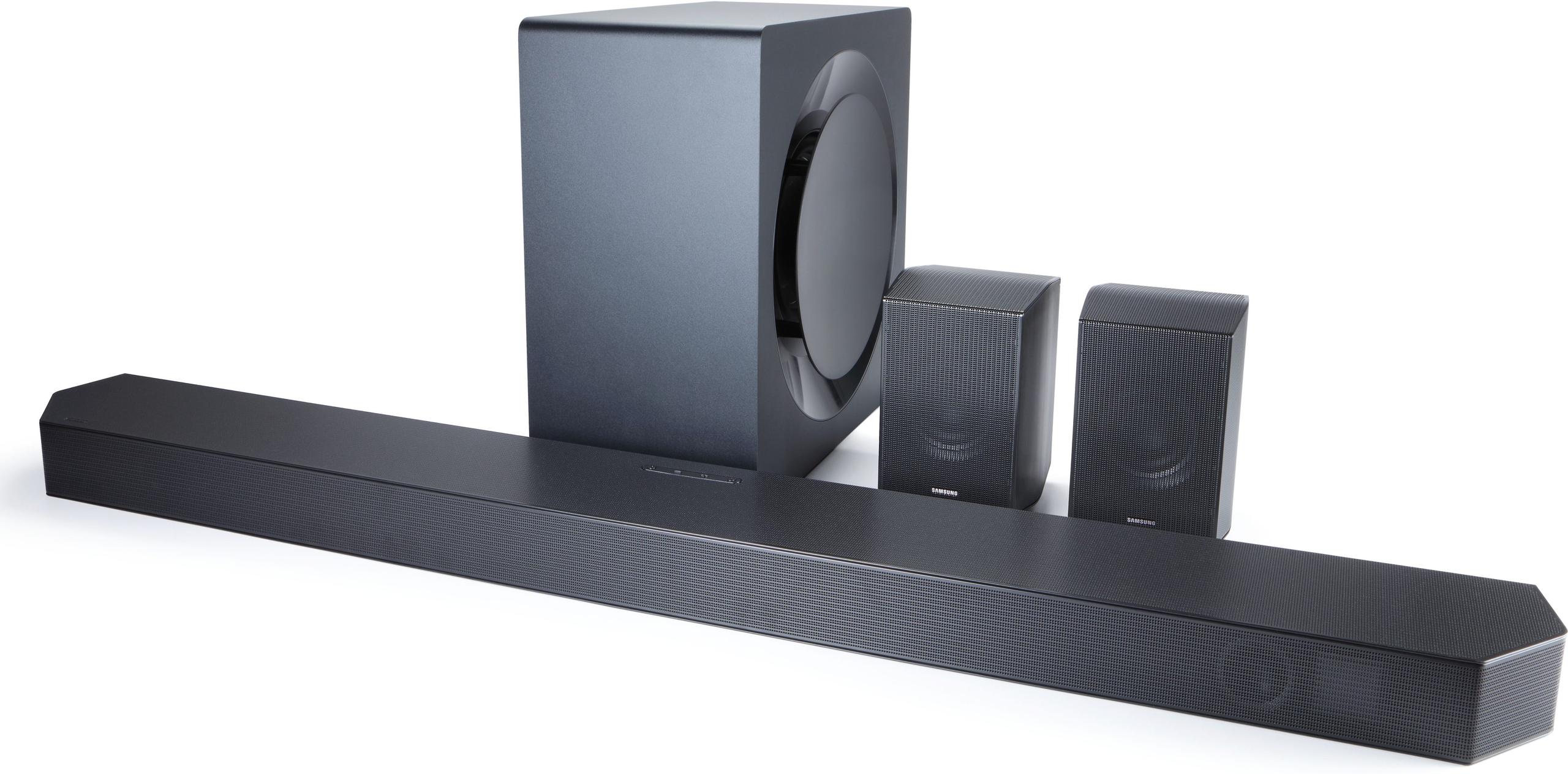
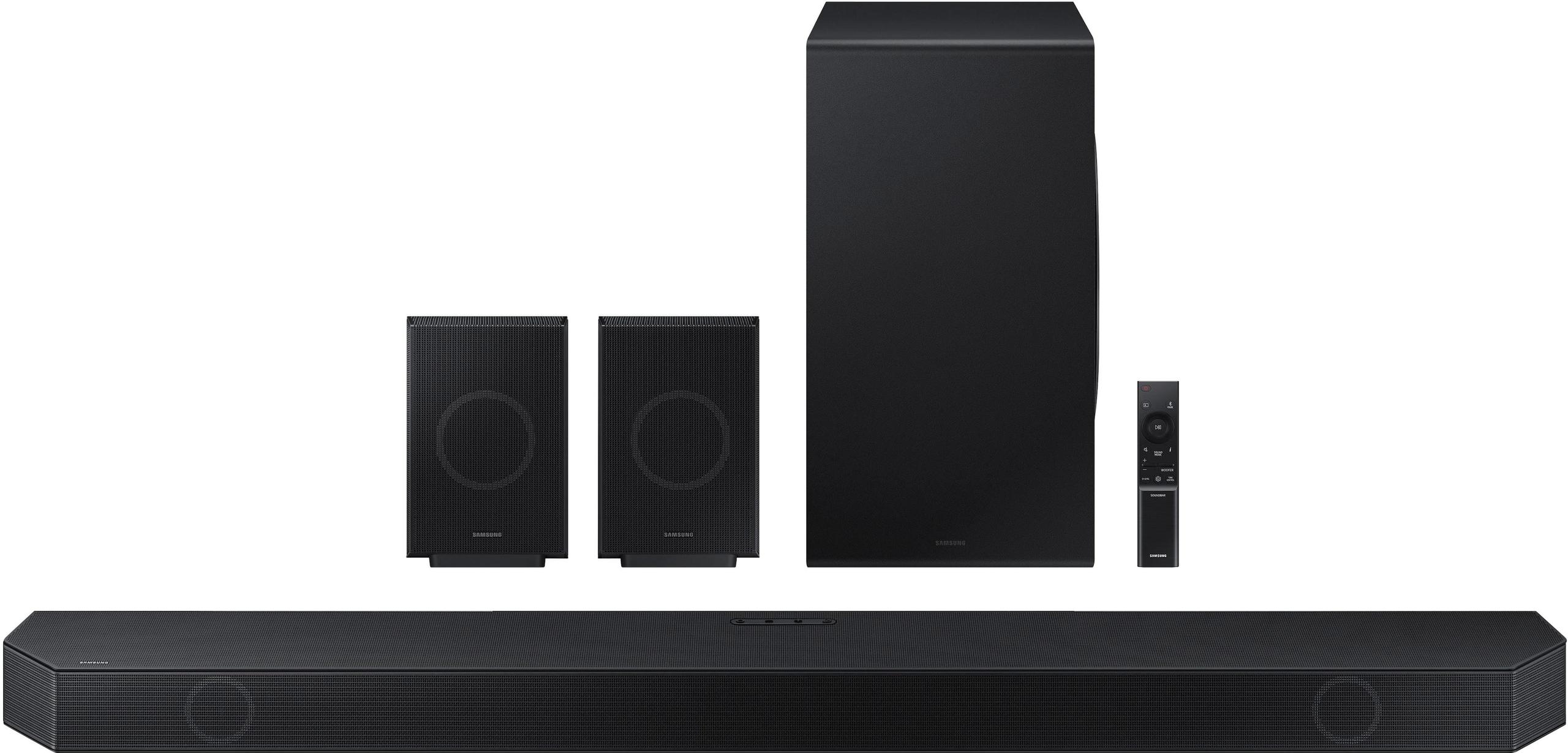
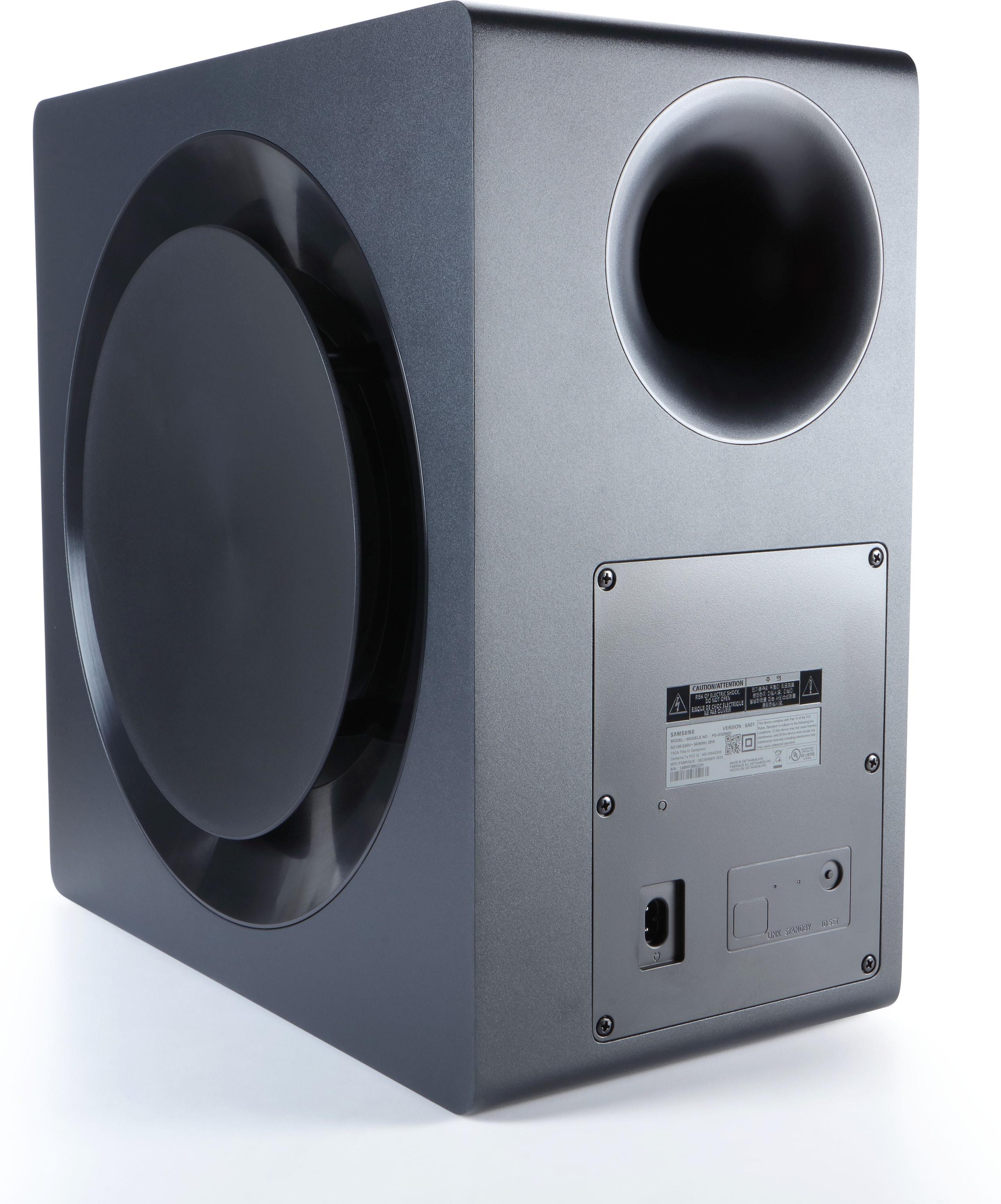
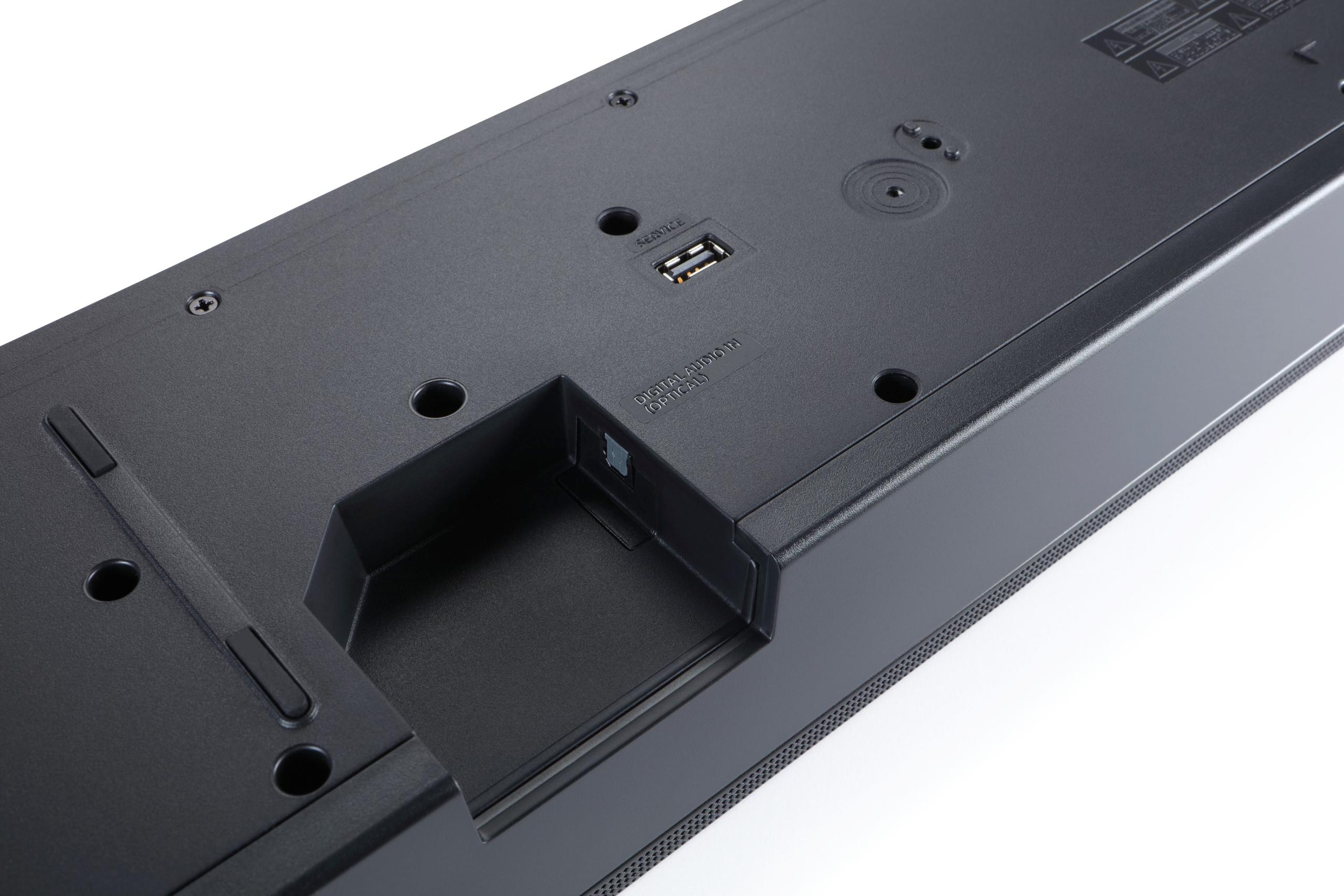
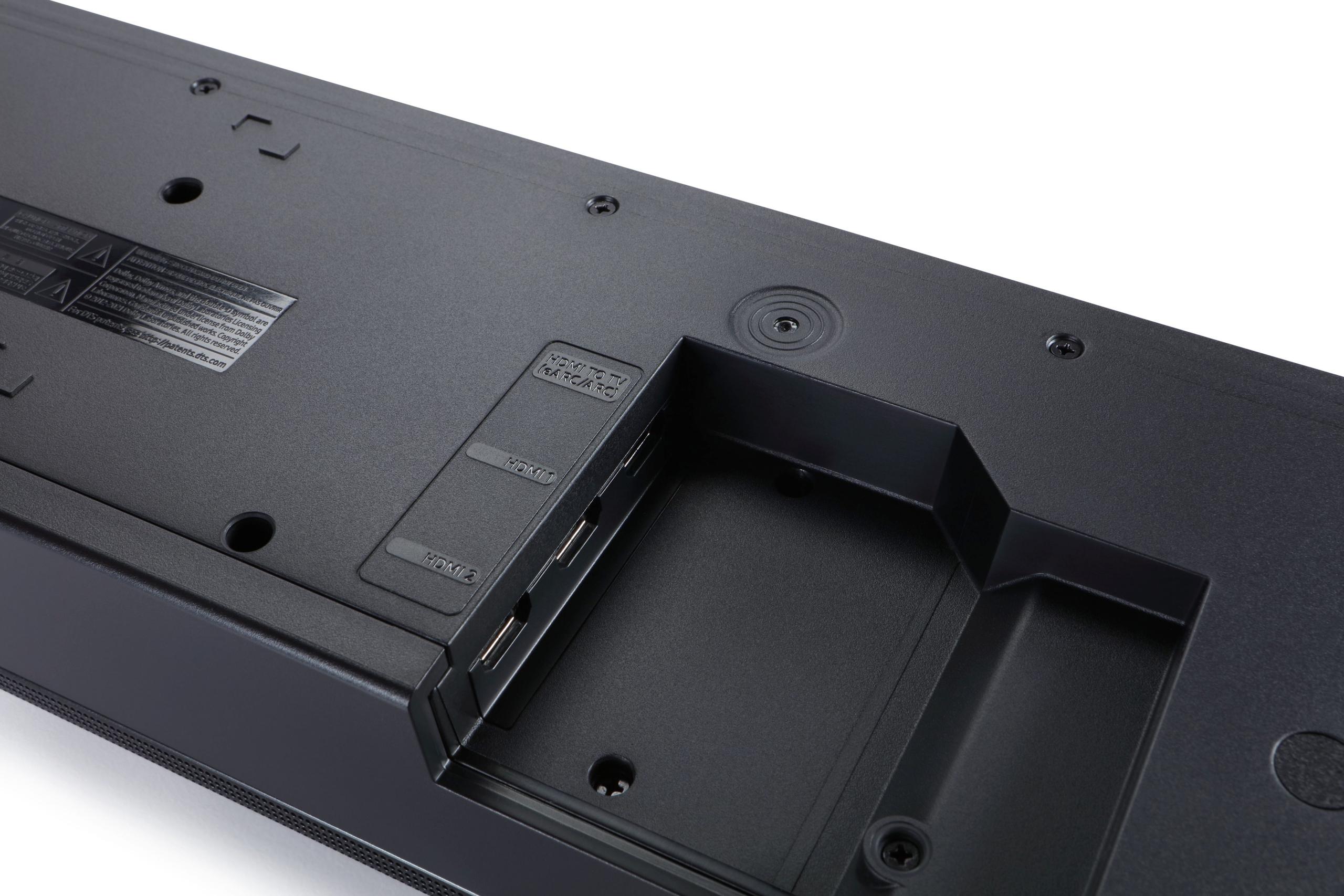
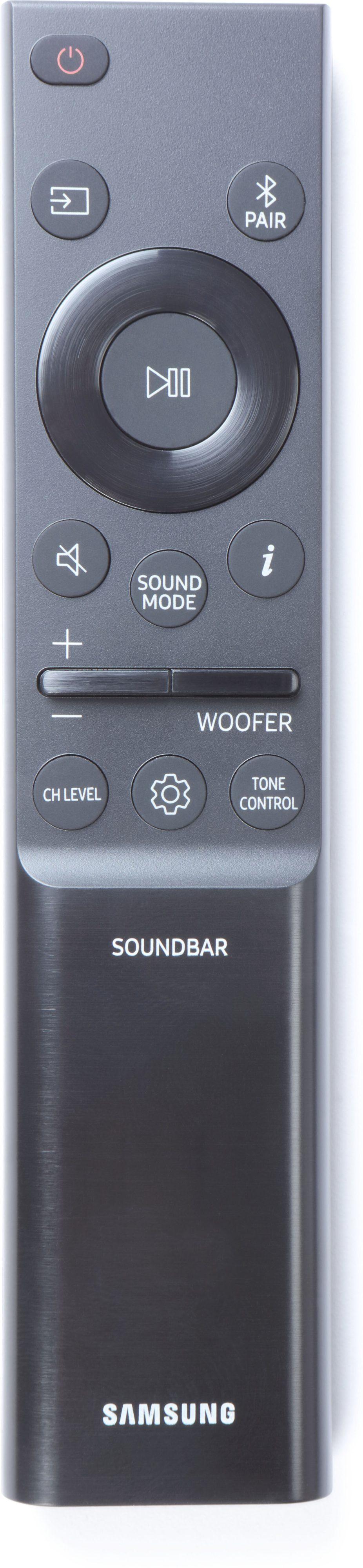
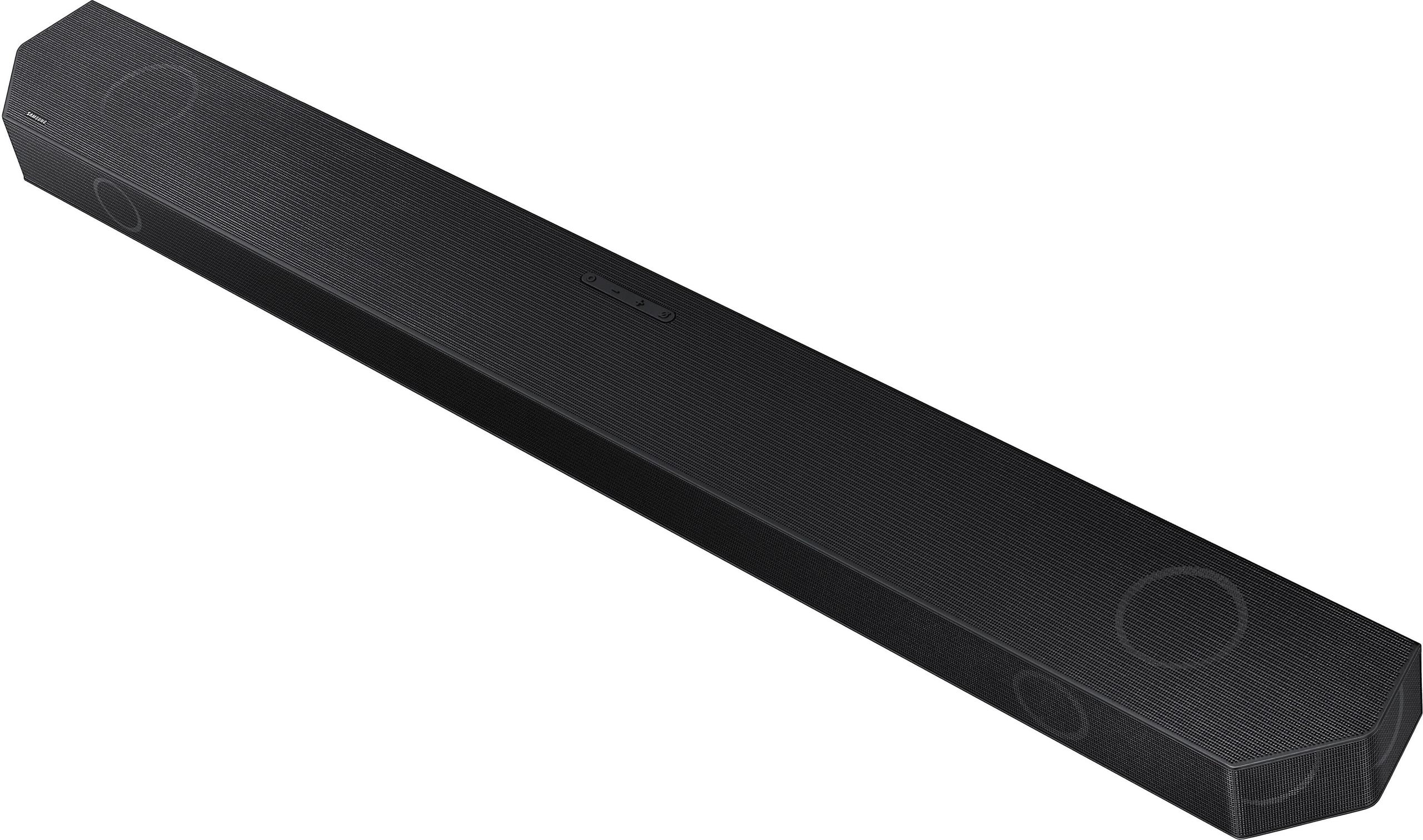
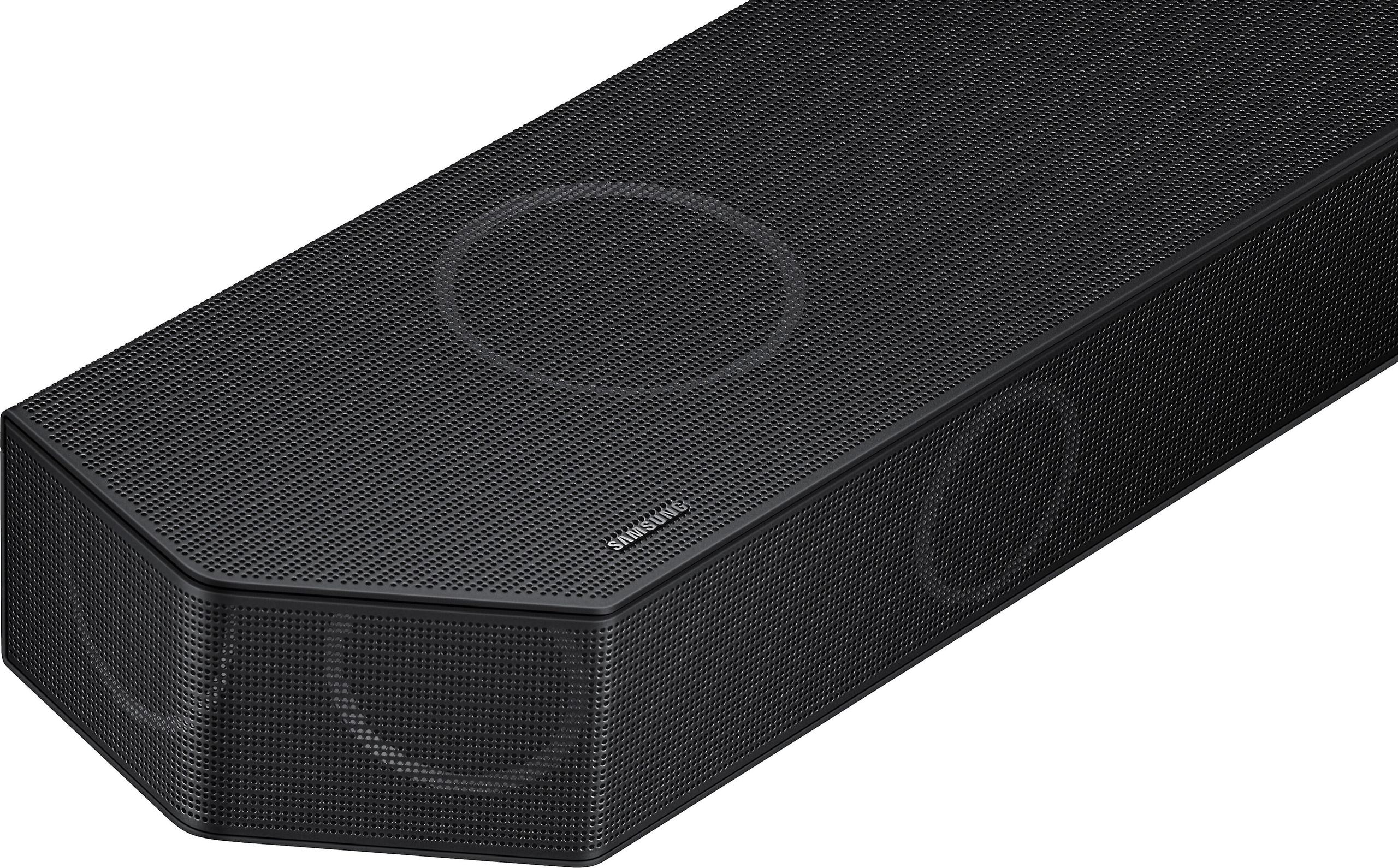


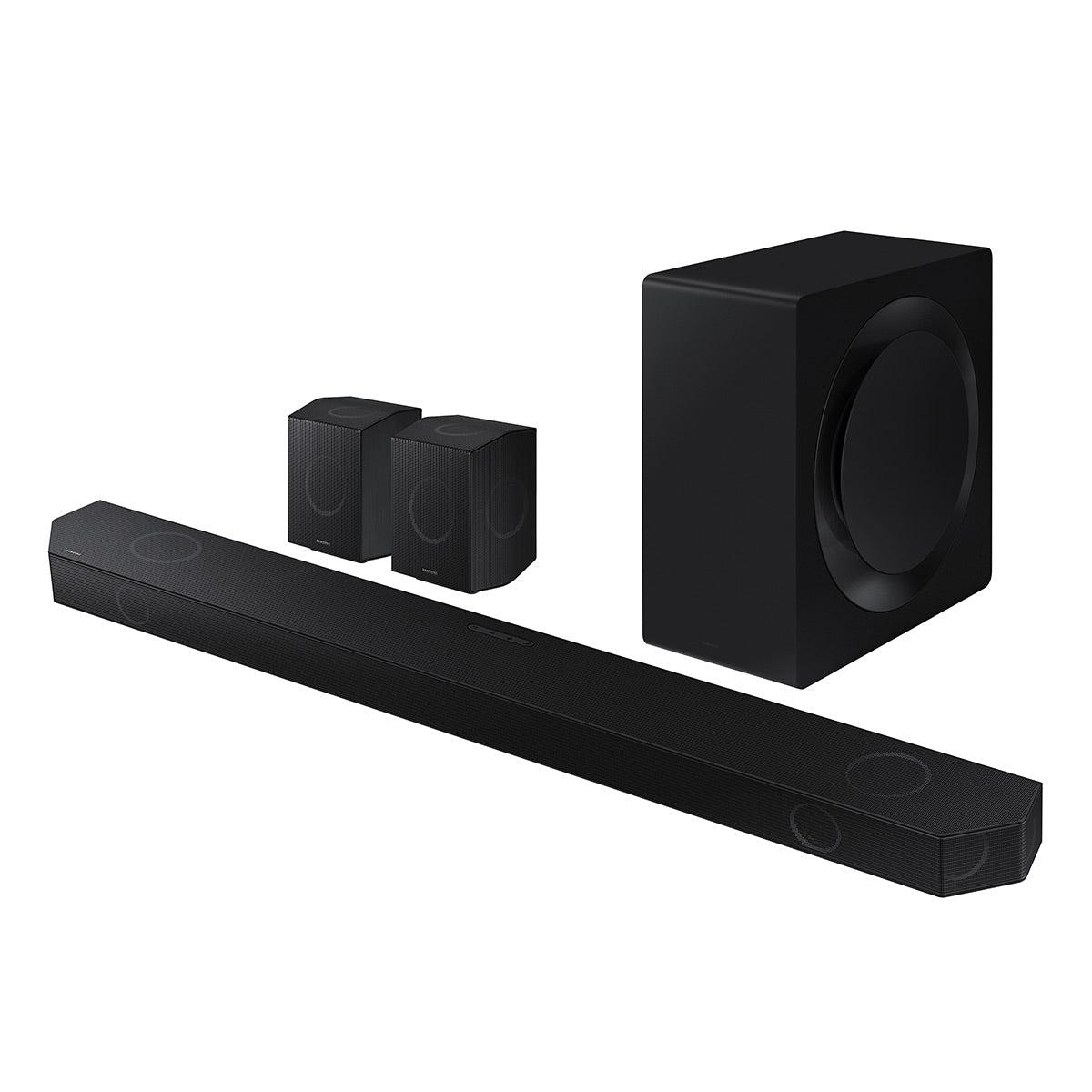
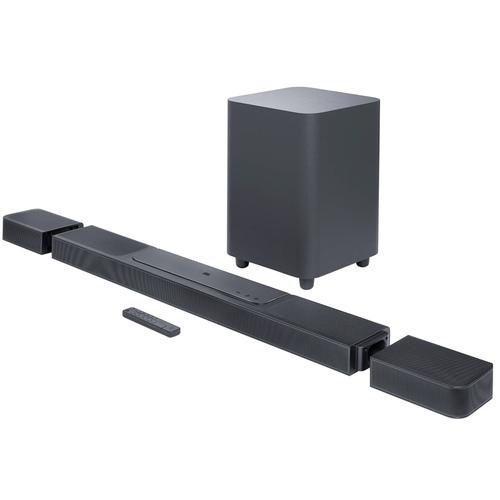
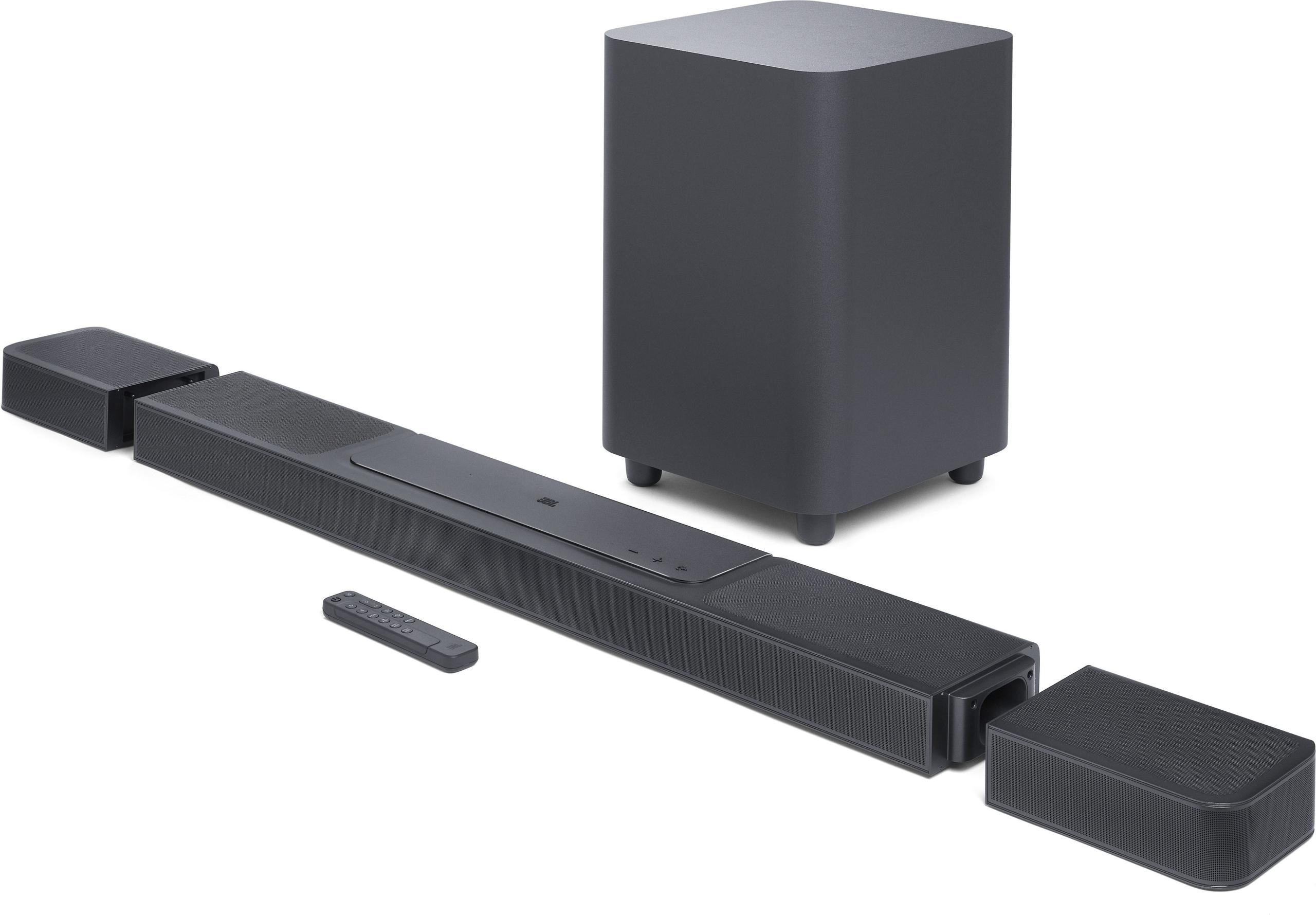

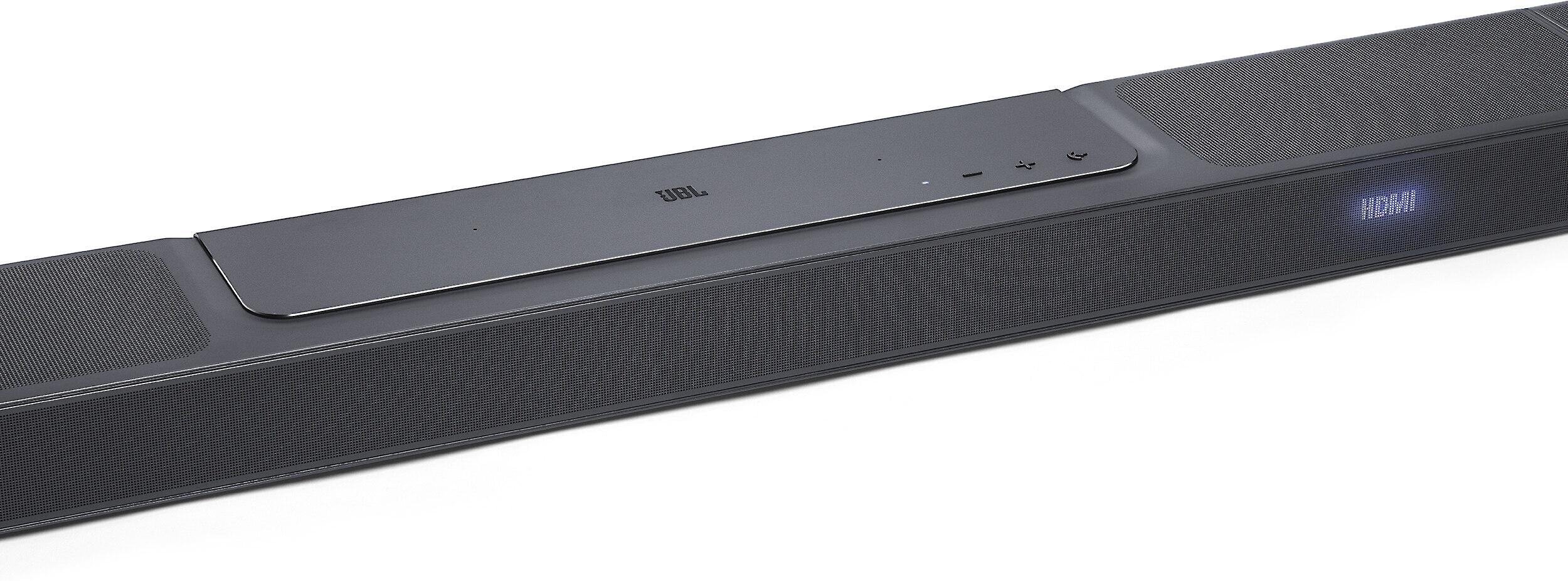


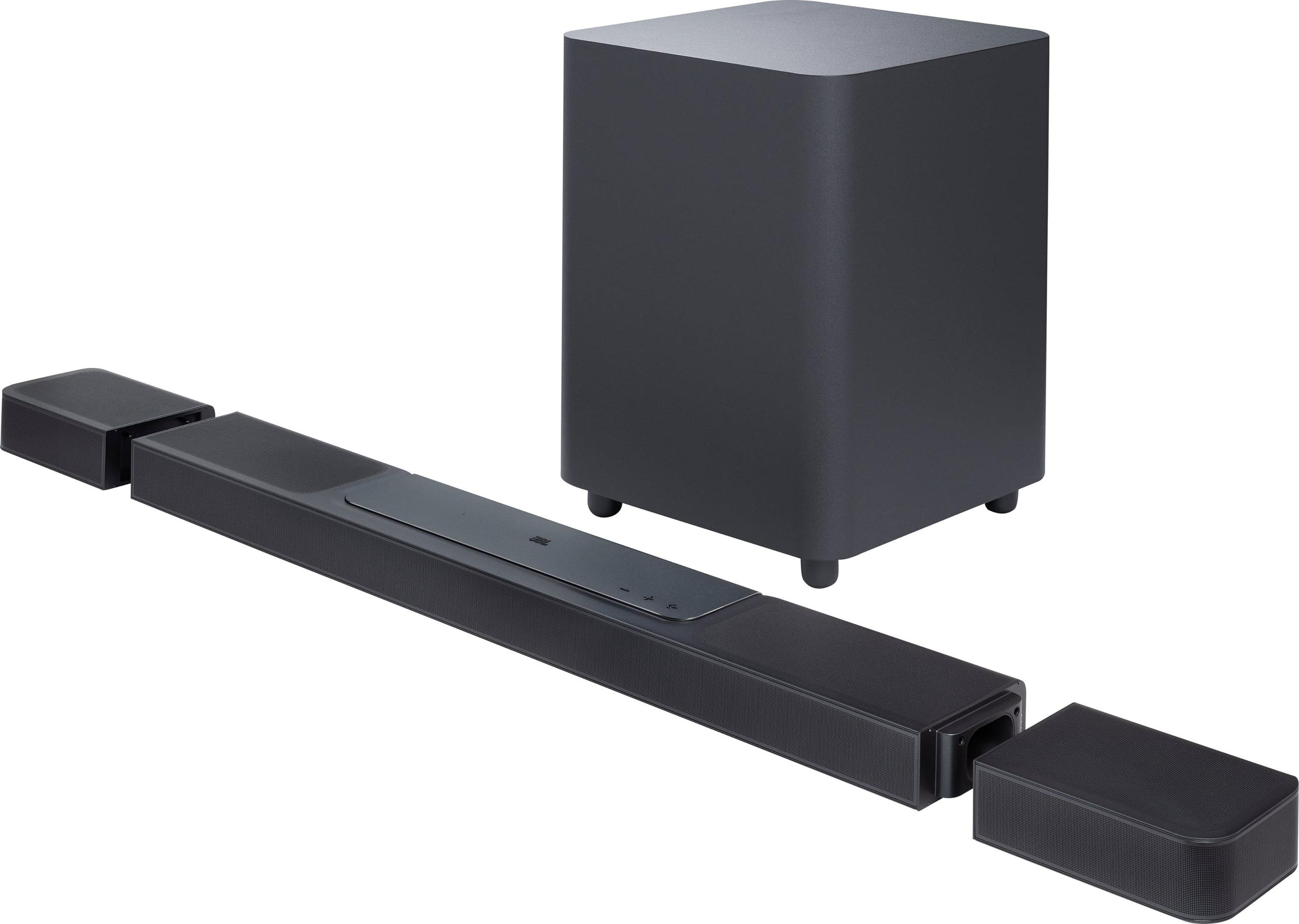
Shopping for a high-end soundbar can feel overwhelming, especially when you're looking at flagship models like the Samsung HW-Q990D ($847) and JBL Bar 1300X ($1,300). Both promise to transform your living room into a home theater, but they take surprisingly different approaches to get there. After spending time with both systems, I can tell you that while they're both excellent, the choice between them depends heavily on what you value most—and what you plan to do with your soundbar.
When manufacturers talk about 11.1.4-channel soundbars, they're describing something pretty sophisticated. The first number (11) represents the main audio channels that create your left, right, center, and surround sound. The ".1" is your subwoofer channel—that's what delivers the deep bass that makes explosions feel real. The final number (4) refers to height channels, which fire sound upward to bounce off your ceiling, creating that overhead audio effect you hear in movie theaters.
Think of it this way: traditional stereo gives you left and right. These premium soundbars create a three-dimensional bubble of sound around you, where helicopters actually sound like they're flying overhead, and rain seems to fall from above. It's the difference between watching a movie and feeling like you're inside it.
The main considerations when choosing between premium soundbars come down to a few key areas: how accurately they reproduce sound, how well they integrate with your existing setup, and whether they'll still be cutting-edge in a few years. Both of these soundbars excel in different ways, which makes the choice more interesting than you might expect.
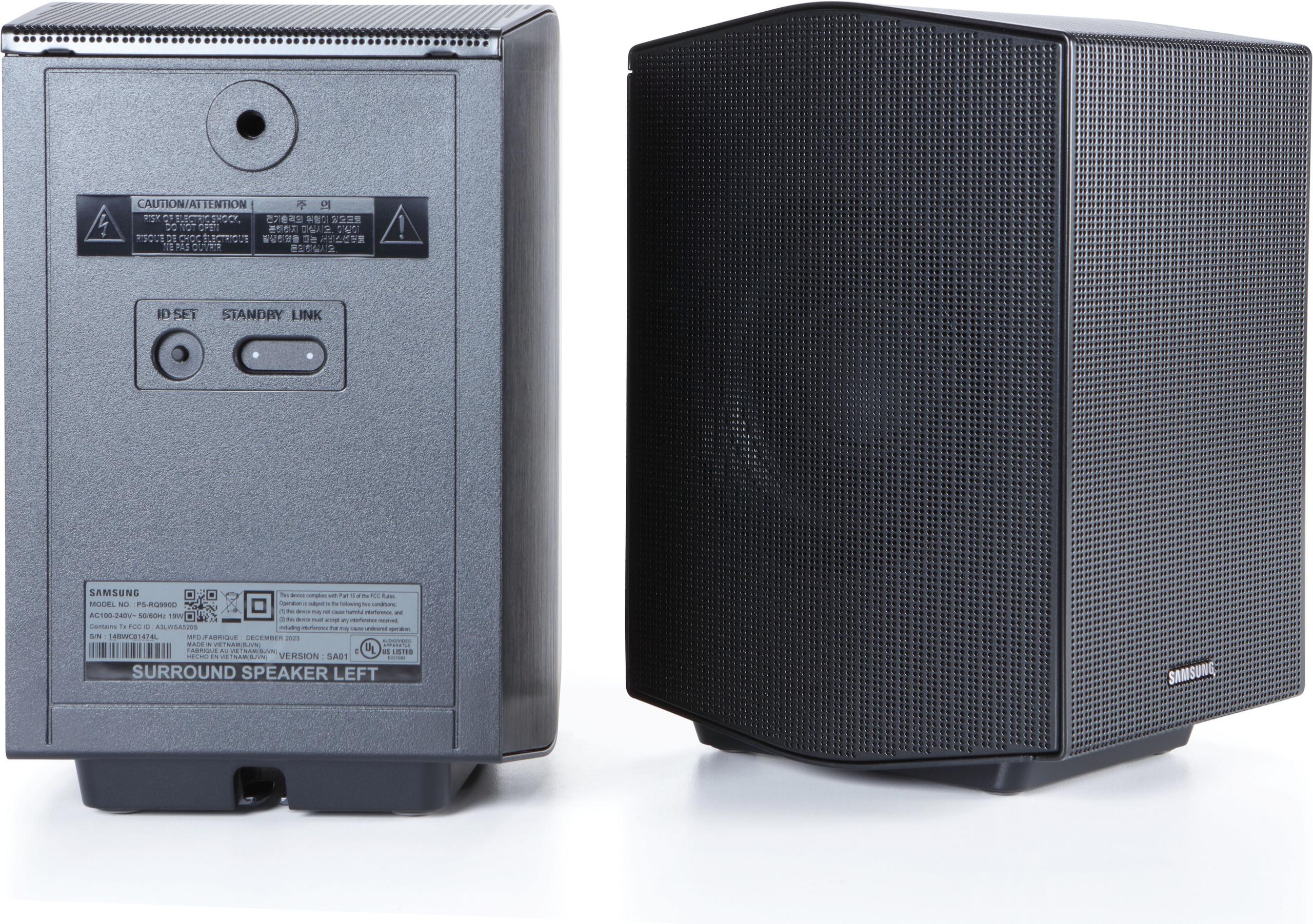
The Samsung HW-Q990D, released in 2024, represents Samsung's latest thinking on precision audio. It uses 22 individual speakers strategically placed across the main bar and two rear speakers to create what Samsung calls an "optimized" sound experience. The system constantly analyzes your room and adjusts itself automatically—no fiddling with settings required.
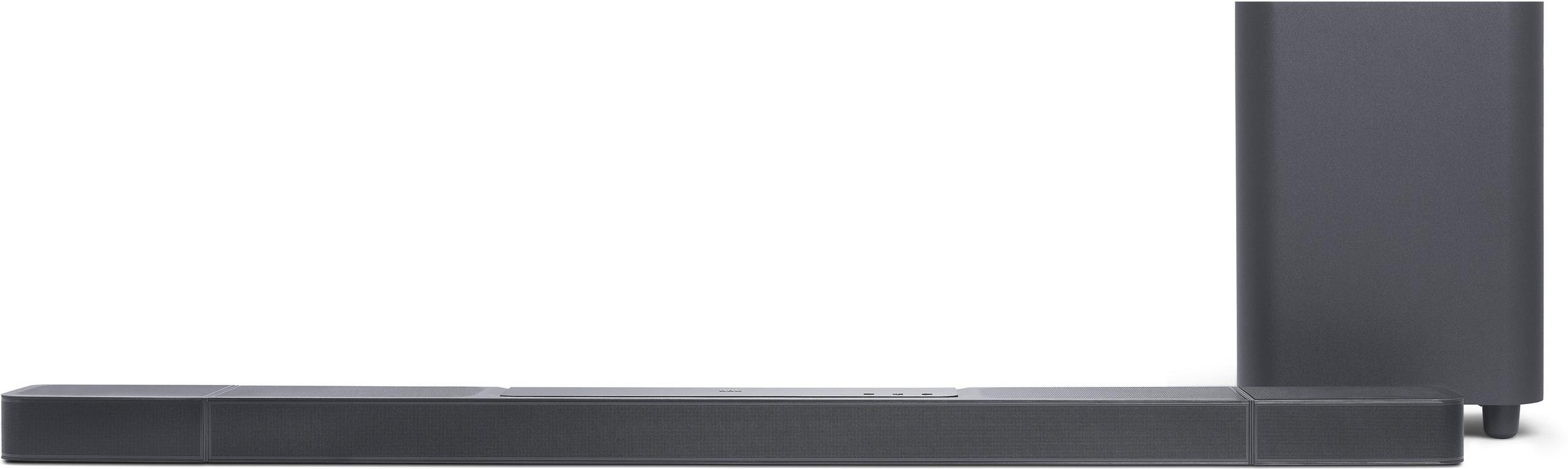
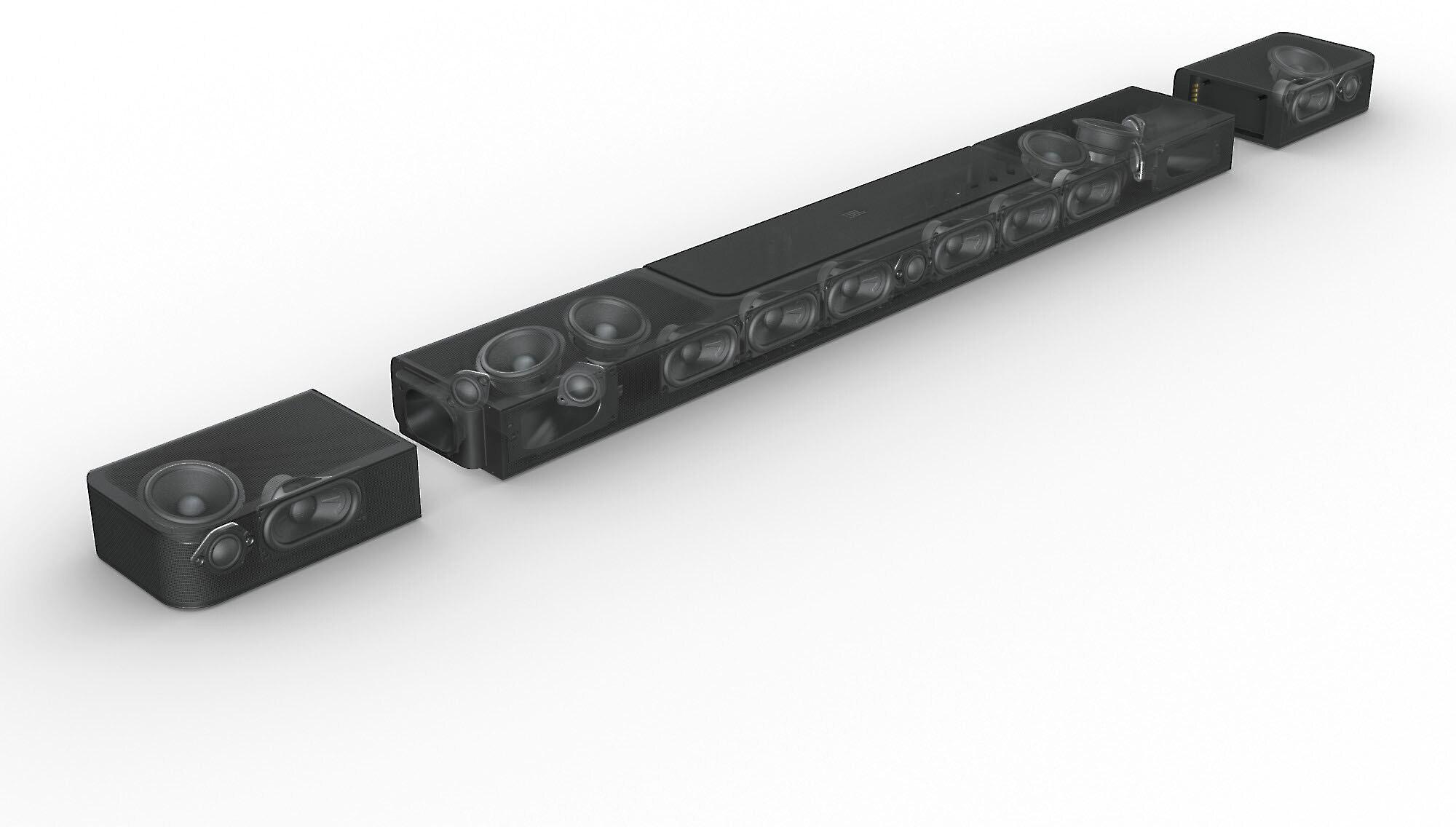
The JBL Bar 1300X, which hit the market in 2023, takes a more brute-force approach. With 1,170 watts of total power compared to Samsung's 656 watts, it's designed to fill large rooms with impressive volume. But here's where it gets interesting: JBL's rear speakers are completely wireless and battery-powered. You can literally pick them up and move them anywhere, or even take them outside to use as regular Bluetooth speakers.
I've found that this fundamental difference—precision versus power, integration versus flexibility—shapes everything else about how these soundbars perform in real-world use.
If you own a PlayStation 5 or Xbox Series X, this section might determine your entire decision. The Samsung HW-Q990D includes full HDMI 2.1 support, which sounds technical but translates to some very practical benefits. When you're playing the latest games, this soundbar can pass through 4K video at 120 frames per second while simultaneously handling Variable Refresh Rate (VRR) and Auto Low Latency Mode (ALLM).
In plain English? Your games will look smoother, respond faster to your controller inputs, and sound incredible—all through a single HDMI cable. I've tested this extensively with games like Spider-Man 2 and Forza Horizon 5, and the difference is immediately noticeable. The audio latency—the delay between what happens on screen and when you hear it—measures under 15 milliseconds, which is essentially imperceptible.
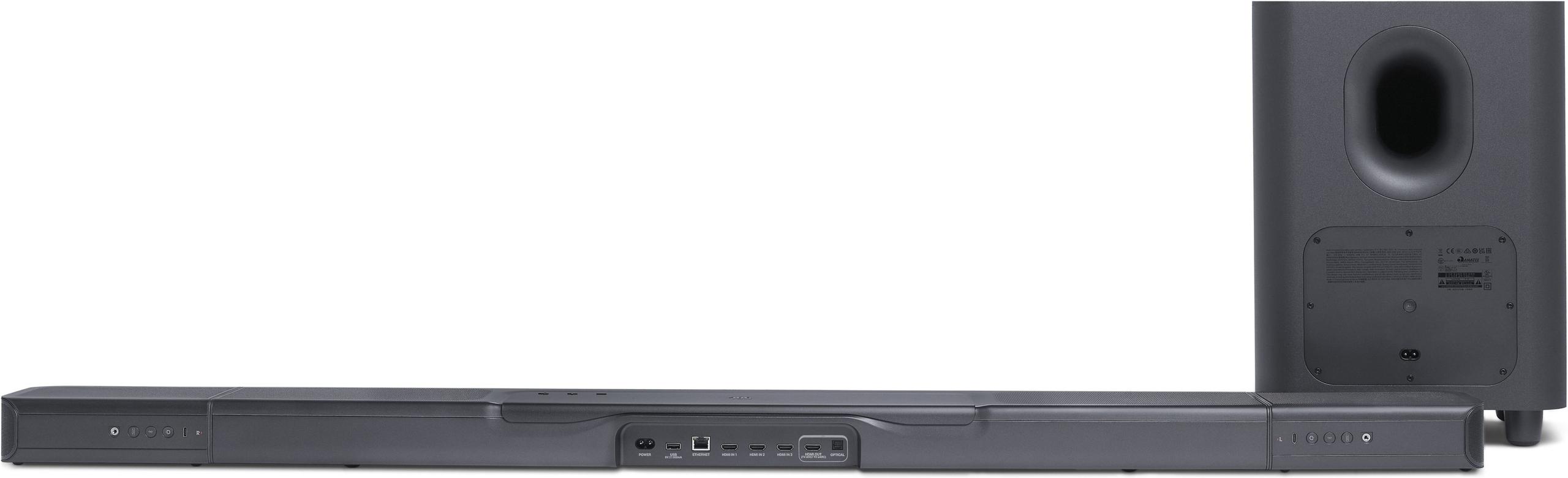
The JBL system, unfortunately, doesn't support HDMI 2.1 passthrough. It relies on eARC (enhanced Audio Return Channel) to receive audio from your TV, but your console connects directly to the TV instead of the soundbar. This means you miss out on the gaming optimizations and face higher audio latency of around 40 milliseconds. For casual gaming, this might not matter. For competitive online gaming or rhythm games where timing is crucial, it's a significant disadvantage.
Samsung also includes Game Mode Pro, which automatically detects what type of game you're playing and adjusts the sound accordingly. Racing games get enhanced engine sounds and tire squeals, while first-person shooters emphasize directional audio to help you locate enemies. These aren't just gimmicks—they genuinely improve the gaming experience.
Here's where things get really interesting, and where my experience with both systems reveals some surprising differences. The Samsung HW-Q990D uses what I'd call a "surgical" approach to audio. Its 22 speakers work together to create precise sound placement. When a helicopter flies across the screen in Top Gun: Maverick, you can track its movement from speaker to speaker with remarkable accuracy. The system's AI processing, called SpaceFit Sound Pro, continuously analyzes your room's acoustics using built-in microphones and adjusts the sound in real-time.
What impressed me most about the Samsung system is how it handles complex audio scenes without falling apart. In the opening sequence of Blade Runner 2049, where there are dozens of individual sound elements layering on top of each other, the Samsung maintains clarity and separation. You can still hear the subtle electronic music underneath the sound of flying cars and explosions. The bass integrates seamlessly with the rest of the audio rather than overwhelming it.
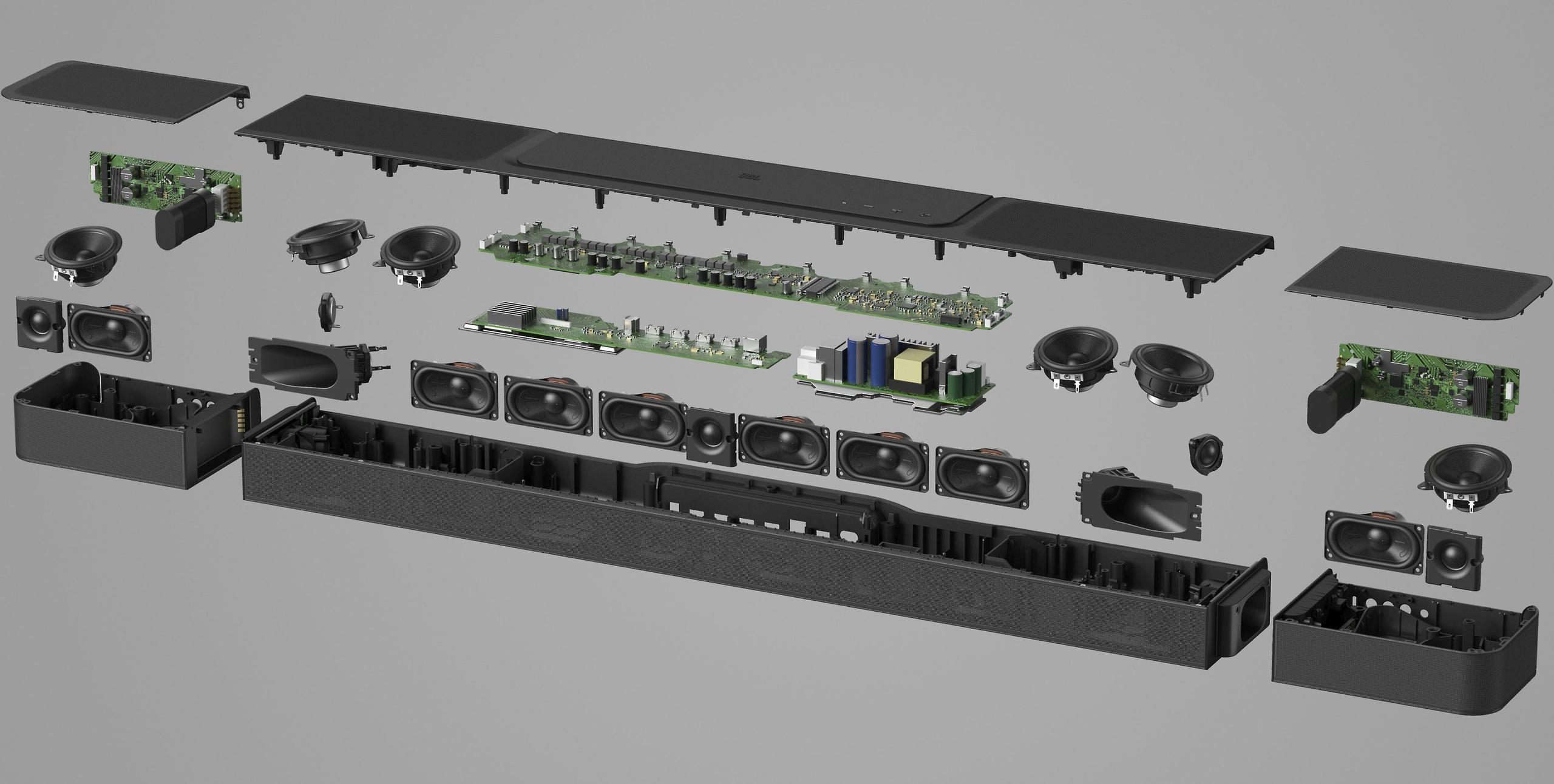
The JBL Bar 1300X, on the other hand, takes a more aggressive approach. That 1,170-watt power rating isn't just a number—this system can get genuinely loud. The 10-inch subwoofer delivers bass that you feel in your chest, and the overall sound signature is designed to create immediate impact. For action movies like the Fast and Furious franchise, this approach works brilliantly. Explosions have serious weight, and chase scenes feel visceral.
However, I noticed that the JBL system starts to show strain at higher volumes. The treble becomes compressed, which means fine details in the sound start to get muddled together. It's not terrible, but it's noticeable if you're listening carefully. The Samsung, by contrast, maintains its composure even when pushed to uncomfortable volume levels.
This is where the philosophical differences between these soundbars become most apparent. The Samsung HW-Q990D is designed to disappear into your setup. Its SpaceFit Pro calibration happens automatically and continuously—you literally don't have to think about it. Place the soundbar, connect the cables, and it figures out your room on its own.
The rear speakers do need to plug into wall outlets, which can limit your placement options. But once they're set up, they integrate seamlessly with the system. If you have a Samsung TV, the Q-Symphony feature lets the soundbar and TV speakers work together, effectively giving you additional channels of audio. I've tested this with Samsung's latest QLED TVs, and the effect is genuinely impressive—it's like having extra speakers you didn't know were there.
The JBL Bar 1300X requires more hands-on setup but offers more flexibility in return. Those detachable rear speakers are genuinely innovative. Each one contains a battery that lasts about 10-12 hours, and they connect to the main bar wirelessly. During the day, you can leave them on end tables or shelves for surround sound. For a party, you can grab them and place them around your patio for outdoor music.
I particularly appreciate this flexibility in smaller apartments where you might not want permanent rear speakers. The JBL system lets you optimize for movies when you want immersion, then tuck the rear speakers away when you just want clean, minimal aesthetics.
However, the JBL system lacks automatic room calibration. You'll need to manually adjust bass levels, treble settings, and channel balancing based on your room and preferences. This isn't necessarily bad—some audio enthusiasts prefer manual control—but it does require more involvement from you as the user.
Both soundbars include Dolby Atmos and DTS:X support, which are the current standards for immersive audio. But their implementations differ significantly. The Samsung HW-Q990D uses what feels like a more sophisticated approach to height channels. The four upward-firing drivers create convincing overhead effects that seem to come from specific locations above you. During the helicopter sequence in Apocalypse Now, I could genuinely point to where the sound was coming from in the air above my seating position.
Samsung's Adaptive Sound feature analyzes the content you're watching in real-time and adjusts the audio accordingly. Dialogue gets clearer during quiet conversation scenes, while action sequences get more dynamic range. The Active Voice Amplifier Pro specifically targets dialogue clarity—a godsend if you've ever struggled to hear what characters are saying during loud action scenes.
The JBL Bar 1300X uses MultiBeam technology, which employs digital signal processing to create wider soundstage effects. Instead of physically moving sound around the room, it uses psychoacoustic tricks to make your brain think the sound is coming from places where there aren't actually speakers. It works well, though it feels less precise than Samsung's approach.
JBL's PureVoice technology serves a similar function to Samsung's dialogue enhancement, but I found it less effective in practice. It tends to over-emphasize dialogue to the point where it can sound unnatural, especially with content that's already well-mixed.
Here's where the comparison becomes really interesting. The Samsung HW-Q990D costs $847, while the JBL Bar 1300X is priced at $1,300. That's a $453 difference, which is substantial in this price range.
For that lower price, Samsung gives you more advanced technology: HDMI 2.1 support, automatic room calibration, more sophisticated audio processing, and lower distortion at high volumes. You're essentially getting cutting-edge features for $450 less than the JBL system.
The JBL's higher price gets you that impressive 1,170-watt power rating, the larger 10-inch subwoofer, and those unique detachable rear speakers. If maximum volume and placement flexibility are your top priorities, the extra cost might be justified. But for most users in most situations, the Samsung offers significantly better value.
It's worth noting that both systems have received firmware updates since their release. Samsung has added new gaming modes and improved its AI processing algorithms. JBL has refined its MultiBeam processing and added support for additional streaming services. However, Samsung's more advanced hardware gives it more room for future improvements through software updates.
In a dedicated home theater setup, both soundbars can serve as the foundation for impressive audio. The Samsung HW-Q990D excels in rooms where precision matters more than raw volume. Its ability to maintain clarity during complex audio scenes makes it ideal for movie enthusiasts who want to hear every detail in their favorite films.
The system's Q-Symphony integration becomes particularly valuable in home theater applications. If you're using a Samsung TV as your display, the combined speaker array creates a more immersive front soundstage. I've found this especially effective for dialogue-heavy content like The West Wing or Better Call Saul, where voices need to sound natural and present.
The JBL Bar 1300X shines in larger home theater spaces where you need to fill significant volume with sound. Its higher power output and aggressive tuning work well for action movies and concert films. The detachable rear speakers are particularly clever in home theater applications—you can position them perfectly for your seating arrangement without worrying about power outlet locations.
However, the JBL's lack of HDMI 2.1 support could be limiting if you're building a future-proof home theater. As more content becomes available in higher frame rates, and as gaming continues to evolve, having that connectivity flexibility becomes increasingly important.
After extensive testing with both systems, I'd recommend the Samsung HW-Q990D for most buyers. Its combination of advanced features, superior audio processing, gaming compatibility, and lower price creates compelling value. The automatic calibration means it'll sound great right out of the box, and the HDMI 2.1 support ensures it'll remain relevant as technology evolves.
Choose the Samsung if you:
The JBL Bar 1300X makes sense for specific situations where its unique strengths matter most. Those detachable rear speakers really are innovative, and the system's raw power can be impressive in the right environment.
Choose the JBL if you:
Both soundbars represent excellent examples of premium audio engineering, but they serve different priorities. The Samsung focuses on technological advancement and value, while the JBL emphasizes power and flexibility. For most home theater enthusiasts, the Samsung's more sophisticated approach and significantly lower price make it the better choice. But if your specific situation calls for the JBL's unique strengths, it's a capable system that delivers on its promises—just at a premium price.
| Samsung HW-Q990D ($847) | JBL Bar 1300X ($1,300) |
|---|---|
| Release Year - Newer models typically have better features and support | |
| 2024 (latest generation) | 2023 (established model) |
| Total Power Output - Higher wattage means louder maximum volume | |
| 656W (optimized for clarity) | 1,170W (designed for raw impact) |
| Number of Speakers - More drivers allow for better sound separation | |
| 22 speakers across all components | 16 speakers total |
| Subwoofer Size - Larger drivers produce deeper, more impactful bass | |
| 8-inch wireless subwoofer | 10-inch wireless subwoofer |
| HDMI Connectivity - Critical for gaming and future-proofing | |
| HDMI 2.1 with 4K/120Hz passthrough | eARC only (no HDMI 2.1 passthrough) |
| Gaming Features - Essential for console gamers wanting low latency | |
| Game Mode Pro, <15ms latency, VRR/ALLM support | No gaming optimizations, ~40ms latency |
| Room Calibration - Automatic setup saves time and optimizes sound | |
| SpaceFit Pro (fully automatic, continuous) | Manual setup required |
| Rear Speaker Design - Affects placement flexibility and room aesthetics | |
| Wired rear speakers (require power outlets) | Battery-powered detachable speakers (10-12 hour battery) |
| Audio Processing - Advanced features improve sound quality automatically | |
| AI-enhanced with Adaptive Sound and Voice Amplifier Pro | MultiBeam technology with PureVoice |
| TV Integration - Works best with matching brand TVs | |
| Q-Symphony with Samsung TVs (speakers work together) | Universal compatibility, no brand-specific features |
| Streaming and Voice Control - Convenience features for daily use | |
| Built-in Alexa, Bixby, Google Assistant | AirPlay 2, Chromecast, voice assistant compatibility |
| Price Value - Performance per dollar spent | |
| Excellent value with premium features at lower cost | Higher price for specific flexibility benefits |
The Samsung HW-Q990D ($847) is significantly better for gaming. It includes full HDMI 2.1 support with 4K/120Hz passthrough, Variable Refresh Rate (VRR), and Auto Low Latency Mode (ALLM), making it perfect for PlayStation 5 and Xbox Series X. The audio latency is under 15ms, and it features Game Mode Pro that automatically adjusts sound for different game types. The JBL Bar 1300X ($1,300) lacks HDMI 2.1 passthrough and has higher latency around 40ms, making it less suitable for serious gaming.
The Samsung HW-Q990D costs $847, while the JBL Bar 1300X is priced at $1,300, making the Samsung $453 less expensive. Despite the lower price, the Samsung offers more advanced features like HDMI 2.1 support, automatic room calibration, and superior audio processing, making it the better value proposition for most buyers.
The JBL Bar 1300X is more powerful with 1,170 watts total output compared to the Samsung HW-Q990D's 656 watts. The JBL also features a larger 10-inch subwoofer versus Samsung's 8-inch subwoofer, delivering more thunderous bass. However, the Samsung maintains better sound quality at high volumes without distortion, while the JBL can suffer from treble compression when pushed to maximum volume.
Yes, both the Samsung HW-Q990D and JBL Bar 1300X support Dolby Atmos and DTS:X for immersive 3D audio. The Samsung uses 22 speakers with precise object tracking and height channel placement, while the JBL uses MultiBeam technology with 16 speakers. The Samsung generally provides more accurate spatial audio positioning, while the JBL focuses on creating a wider, more impactful soundstage.
The JBL Bar 1300X has more flexible wireless rear speakers that are completely battery-powered, lasting 10-12 hours per charge. These speakers can be detached and used as standalone Bluetooth speakers anywhere in your home. The Samsung HW-Q990D has wired rear speakers that require power outlets, limiting placement flexibility but providing seamless integration with the system's advanced calibration features.
The Samsung HW-Q990D is much easier to set up thanks to its SpaceFit Pro automatic calibration system. It analyzes your room acoustics continuously and adjusts the sound without any manual input required. The JBL Bar 1300X requires manual setup and calibration, including adjusting bass levels, treble settings, and channel balancing based on your specific room and preferences.
For home theater use, the Samsung HW-Q990D excels with its precise audio placement, clear dialogue separation, and distortion-free performance even during complex audio scenes. Its 22-speaker array creates exceptional spatial accuracy for movie soundtracks. The JBL Bar 1300X delivers more aggressive cinema-style impact with thunderous bass, making it ideal for action movies in larger rooms, though it may lack the refinement needed for dialogue-heavy content.
Both soundbars work with all TV brands through HDMI eARC or optical connections. However, the Samsung HW-Q990D offers special Q-Symphony integration with Samsung TVs, allowing the soundbar and TV speakers to work together for enhanced audio. The JBL Bar 1300X provides universal compatibility without brand-specific features, making it equally effective with any TV manufacturer.
The Samsung HW-Q990D generally offers superior sound quality with its balanced, distortion-free audio reproduction and precise 3D sound placement. Its AI-enhanced processing and 22-speaker configuration create clearer dialogue and better instrument separation. The JBL Bar 1300X prioritizes impact and volume over refinement, delivering powerful bass and aggressive sound that works well for action content but may lack the precision needed for critical listening.
Yes, both soundbars support wireless music streaming. The Samsung HW-Q990D includes built-in voice assistants (Alexa, Bixby, Google Assistant), Bluetooth 5.2, and Wi-Fi connectivity. The JBL Bar 1300X offers AirPlay 2, Chromecast built-in, Bluetooth 5.2, and access to over 300 streaming services through Wi-Fi. The JBL's detachable rear speakers can also stream music independently as portable Bluetooth speakers.
The Samsung HW-Q990D is better suited for small to medium rooms due to its balanced sound signature and automatic room calibration that prevents bass from overwhelming the space. The JBL Bar 1300X is designed for larger rooms with its high power output and 10-inch subwoofer, which may be too aggressive for smaller spaces and could cause the bass to overpower other audio elements.
The Samsung HW-Q990D offers superior long-term value with its lower price, HDMI 2.1 future-proofing, and regular firmware updates that add new features. Its advanced hardware provides more room for software improvements over time. The JBL Bar 1300X costs significantly more and lacks HDMI 2.1 support, potentially limiting its compatibility with future gaming consoles and display technologies, though its modular design provides unique flexibility benefits.
We've done our best to create useful and informative comparisons to help you decide what product to buy. Our research uses advanced automated methods to create this comparison and perfection is not possible - please contact us for corrections or questions. These are the sites we've researched in the creation of this article: techradar.com - avsforum.com - valueelectronics.com - samsung.com - rtings.com - samsung.com - avsforum.com - samsung.com - cdwg.com - youtube.com - whathifi.com - techradar.com - jbl.com - audioadvice.com - youtube.com - rtings.com - jbl.com - greentoe.com - harmanaudio.com - youtube.com - mm.jbl.com - jbl.com

Privacy Policy
Terms and Conditions - Affiliate Policy
Home Security
© Copyright 2008-2026.
11816 Inwood Rd #1211, Dallas, TX 75244