


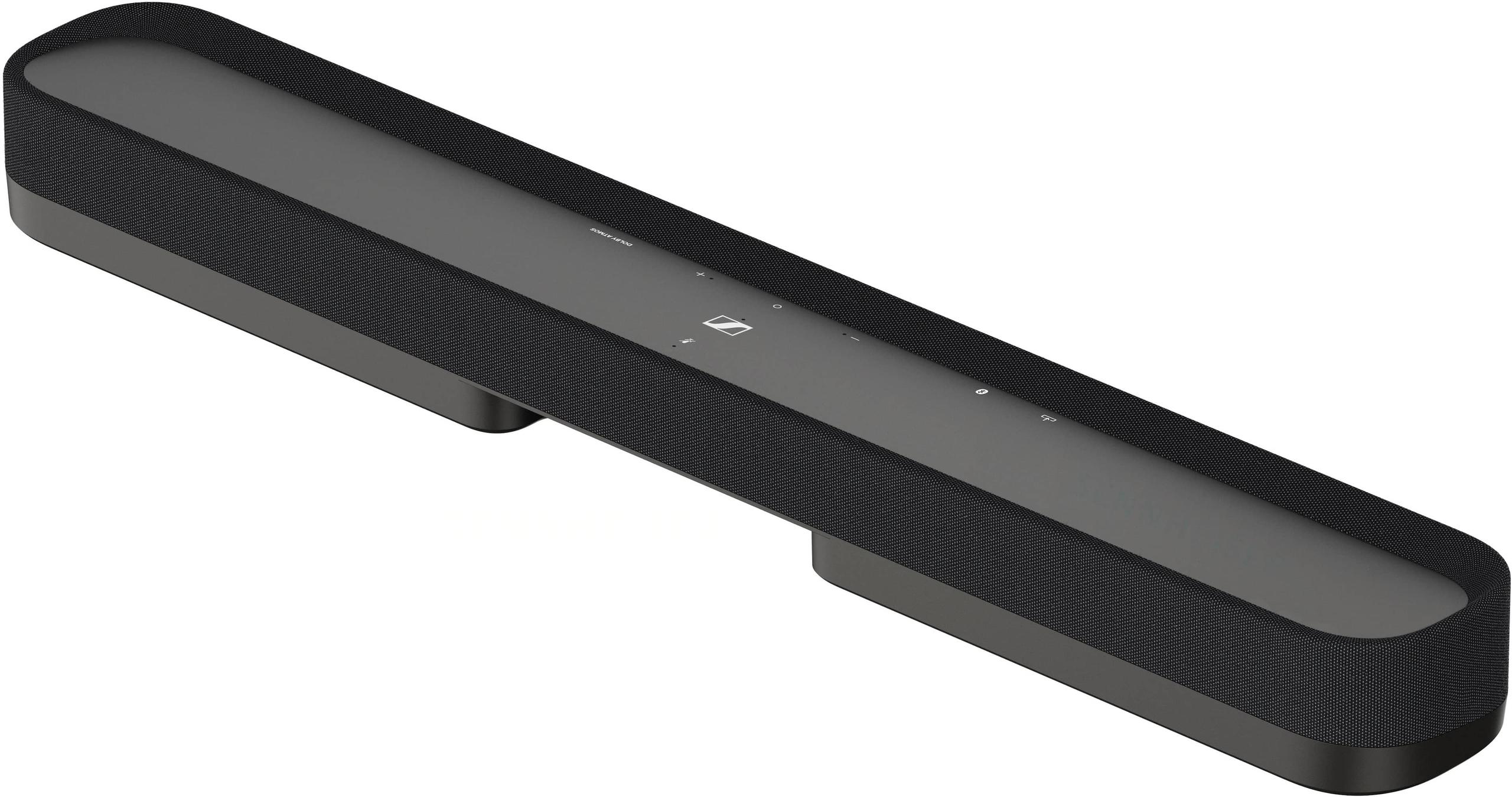

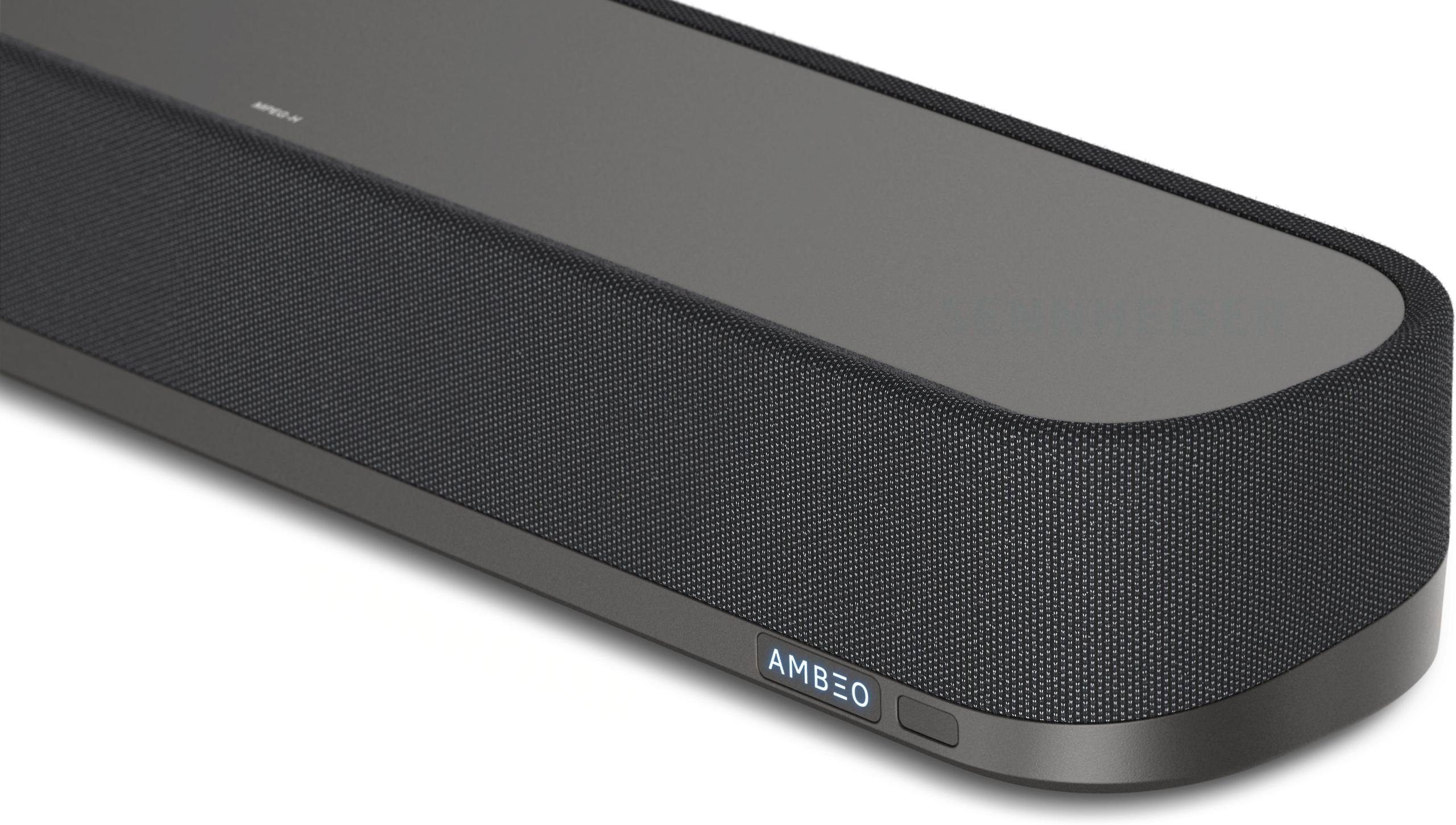

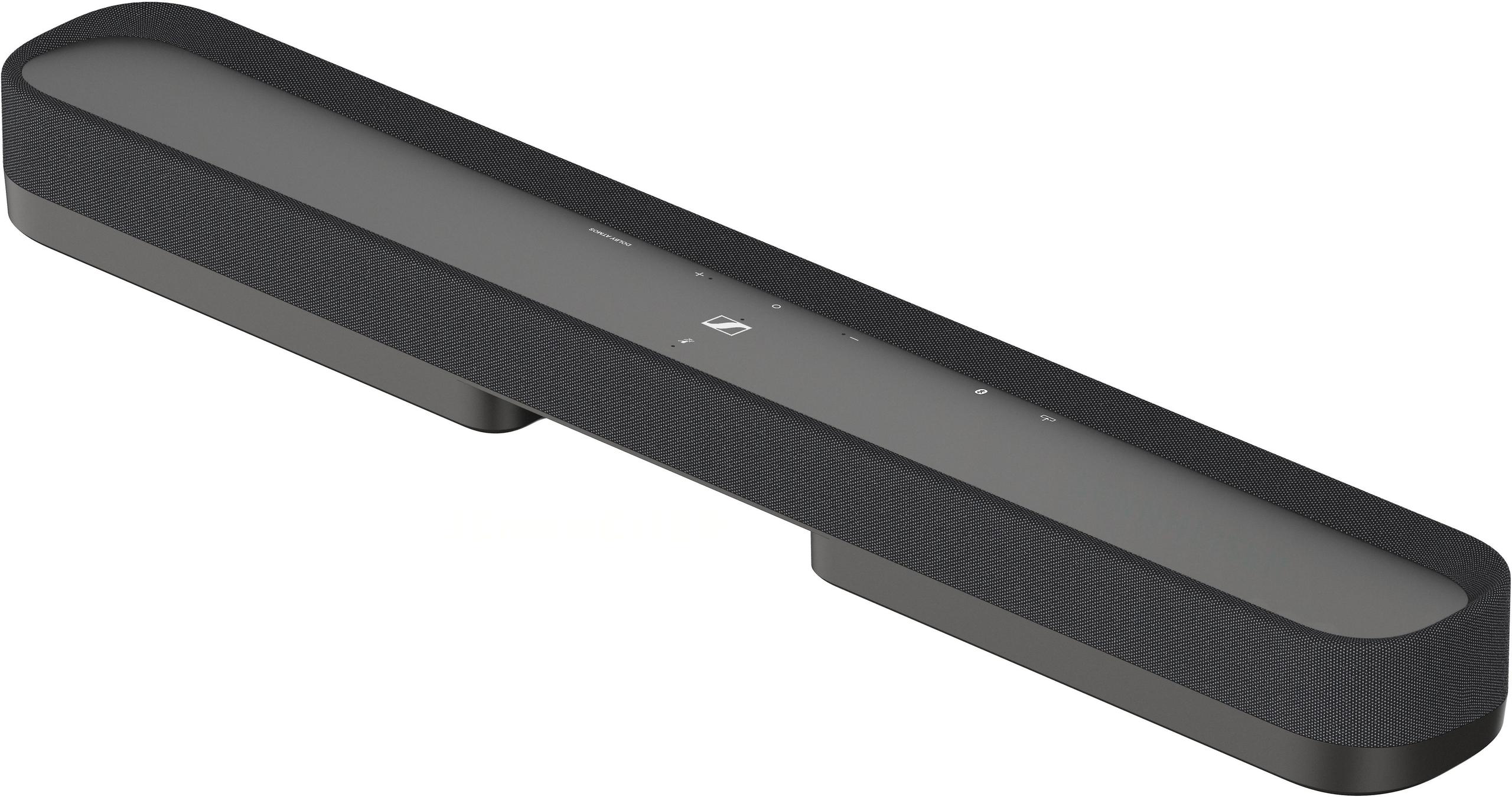





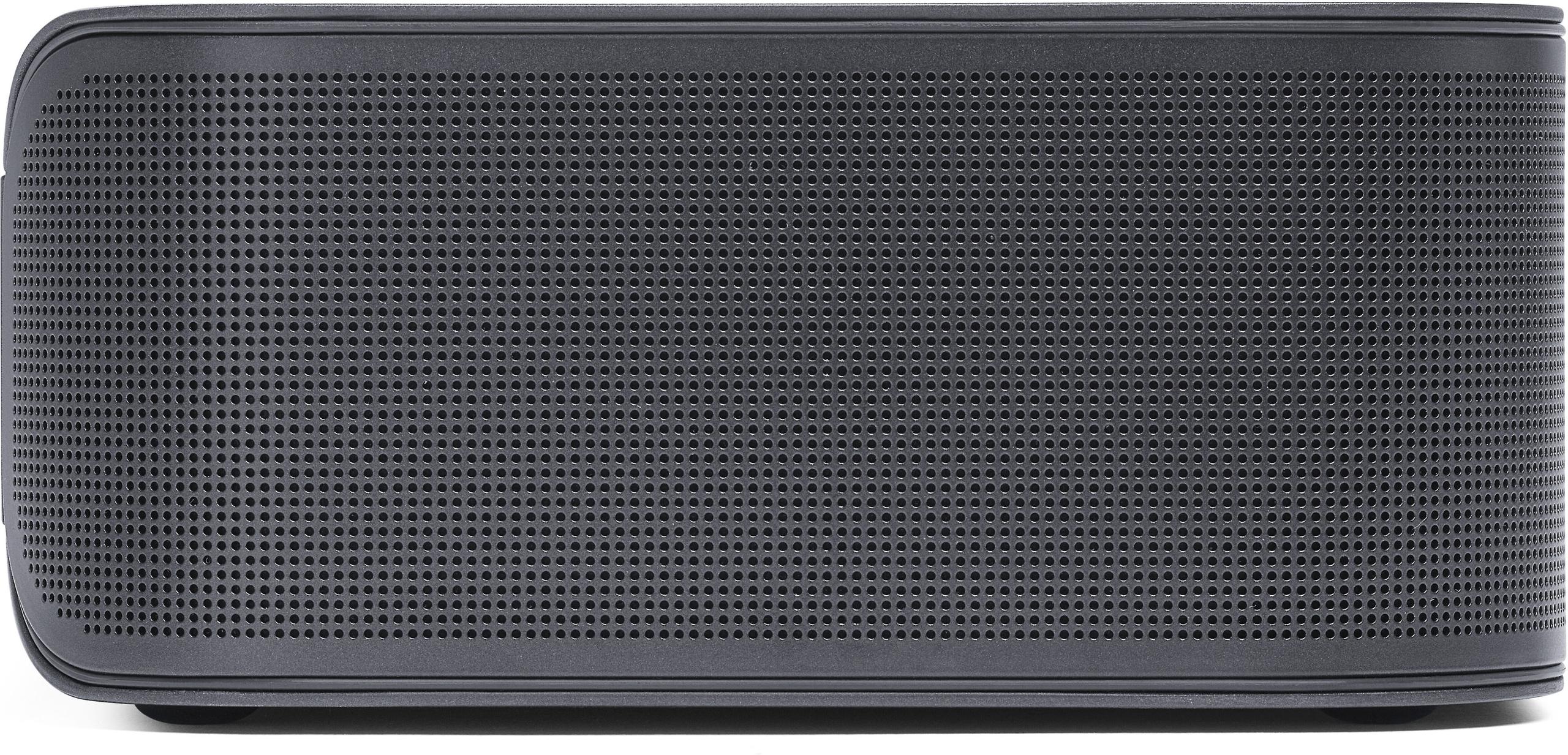
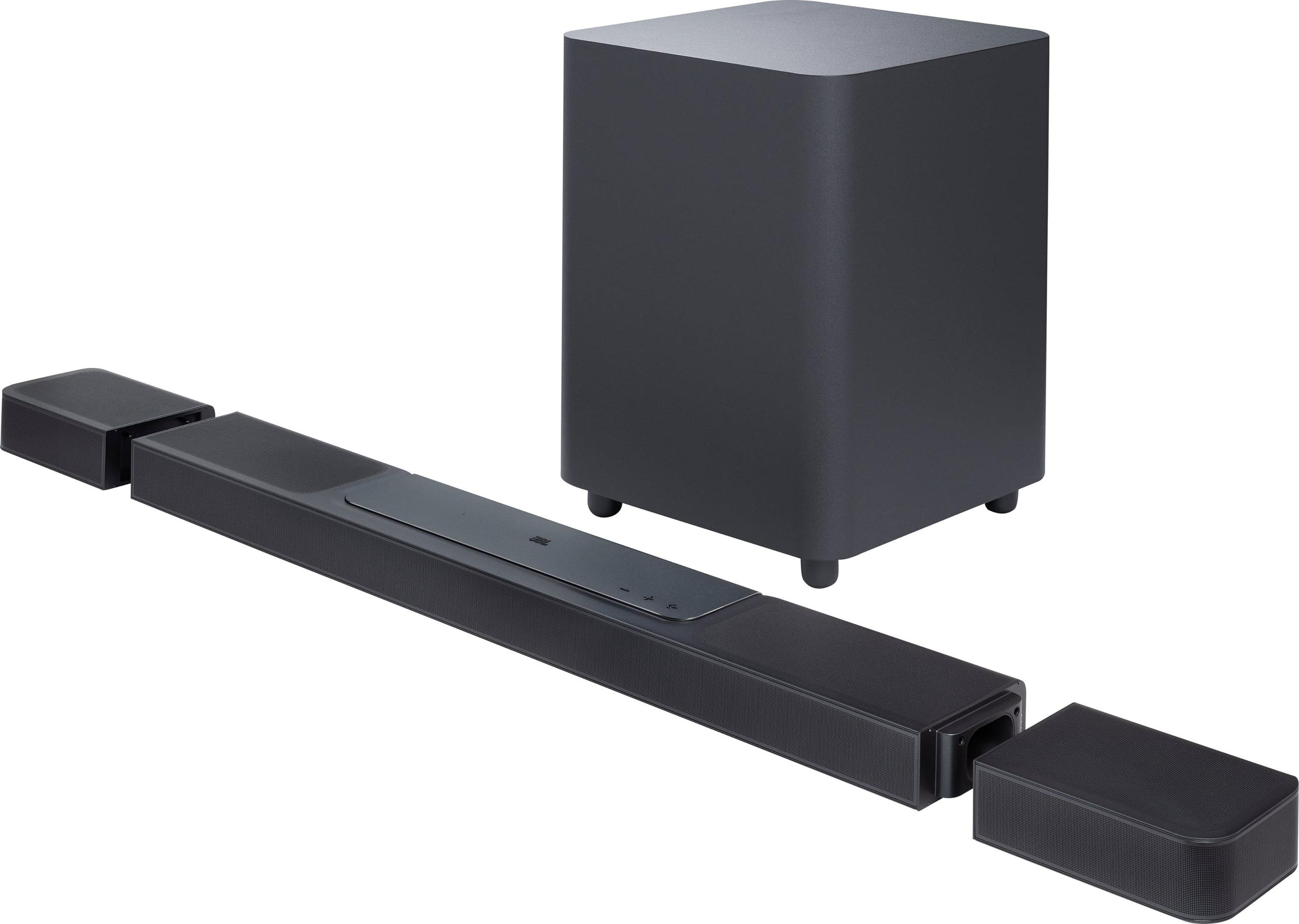
When you're looking to upgrade your home theater audio without installing speakers throughout your ceiling, premium soundbars offer an appealing middle ground. But not all soundbars are created equal, and the choice between the Sennheiser AMBEO Soundbar Mini ($499.96) and the JBL Bar 1300X ($1,299.95) represents two fundamentally different philosophies about how to create immersive sound.
Premium soundbars solve a real problem: traditional surround sound systems require running wires, drilling holes, and dedicating significant space to multiple speakers. Soundbars promise theater-quality audio in a much simpler package. However, they achieve this goal through very different methods.
The market essentially splits into two camps. Virtualization-focused soundbars like the Sennheiser use advanced digital processing to trick your brain into hearing sounds that aren't actually there – imagine audio magic that makes a single bar sound like speakers positioned all around your room. Multi-component systems like the JBL take a more straightforward approach: they actually place physical speakers around your room, just in a more convenient package than traditional home theater systems.
Your room size plays a huge role in determining which approach works better. Virtualization works best when you're sitting in the "sweet spot" – typically within 8-10 feet of the soundbar in a smaller room. Physical speakers, on the other hand, create consistent surround effects regardless of where you sit, making them better for larger spaces or families who spread out across the couch.
The Sennheiser AMBEO Mini launched in late 2023 as the compact sibling to Sennheiser's flagship AMBEO Max soundbar. Sennheiser, a company with decades of experience in professional audio and headphones, brought their expertise in psychoacoustics – the science of how we perceive sound – to create their virtualization technology. The "Mini" represents their attempt to deliver the same AMBEO experience in a more accessible package, both in terms of size and price.
Meanwhile, the JBL Bar 1300X arrived in 2022 as JBL's answer to the growing demand for true wireless surround systems. JBL, owned by audio giant Harman International, leveraged their experience in both professional and consumer audio to create something genuinely innovative: detachable rear speakers that could work independently as Bluetooth speakers when not providing surround sound.
Since their respective launches, both companies have pushed firmware updates that have meaningfully improved performance. The Sennheiser has received enhanced room calibration algorithms and better streaming codec support, while the JBL has gained improved voice assistant integration and more granular audio controls through app updates.
The Sennheiser AMBEO Mini represents the pinnacle of what's possible with virtualization technology. At its core, AMBEO uses something called "binaural processing" – essentially, it analyzes how sound naturally reaches your ears in a real surround setup, then uses digital signal processing to recreate those same acoustic cues from a single soundbar.
Here's how it works in practice: when a helicopter flies overhead in a movie, the AMBEO system doesn't just play that sound from an up-firing speaker. Instead, it processes the audio to include subtle timing delays, frequency adjustments, and phase relationships that convince your brain the sound is coming from above, even though it's actually originating from the soundbar in front of you.
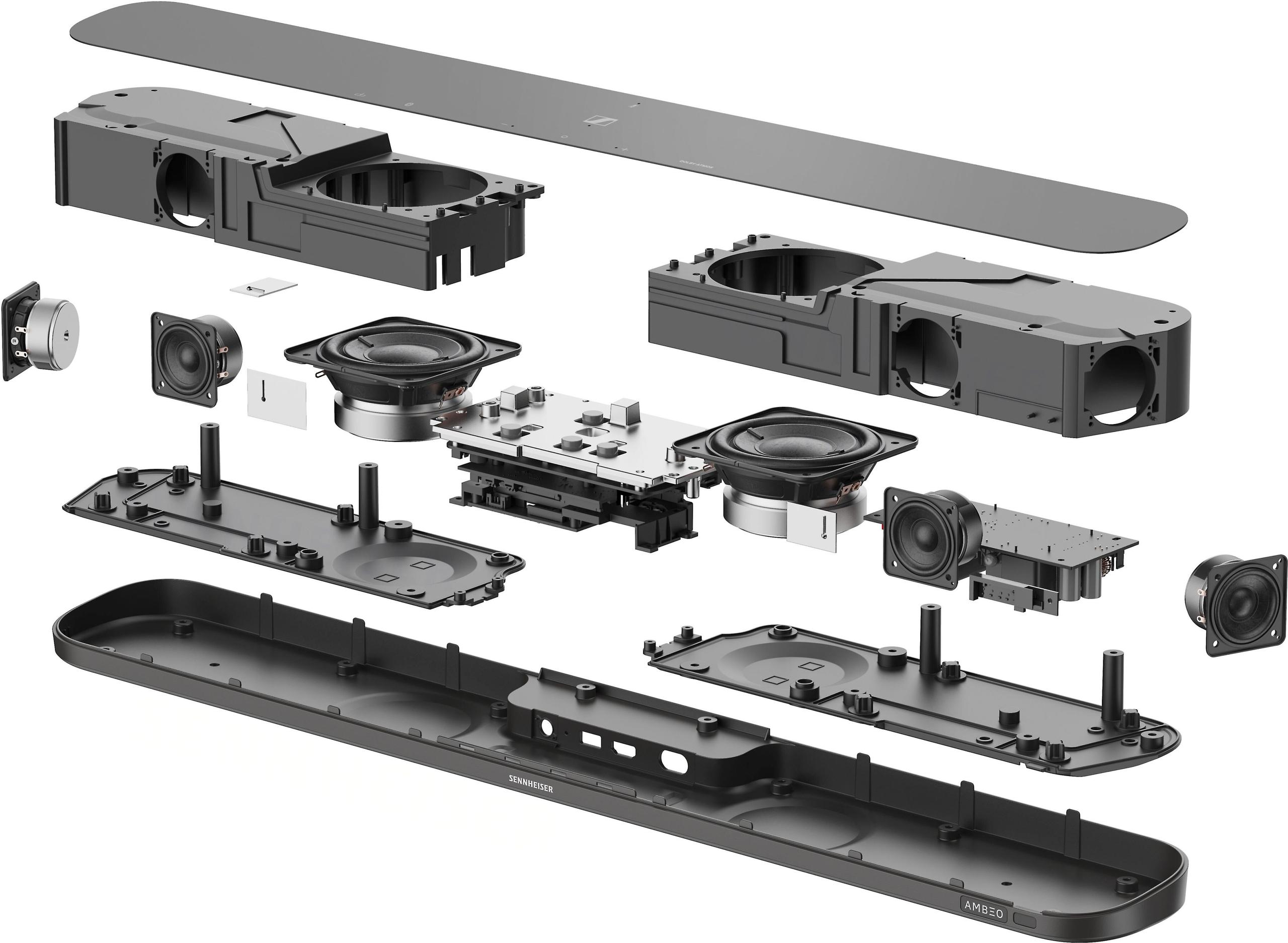
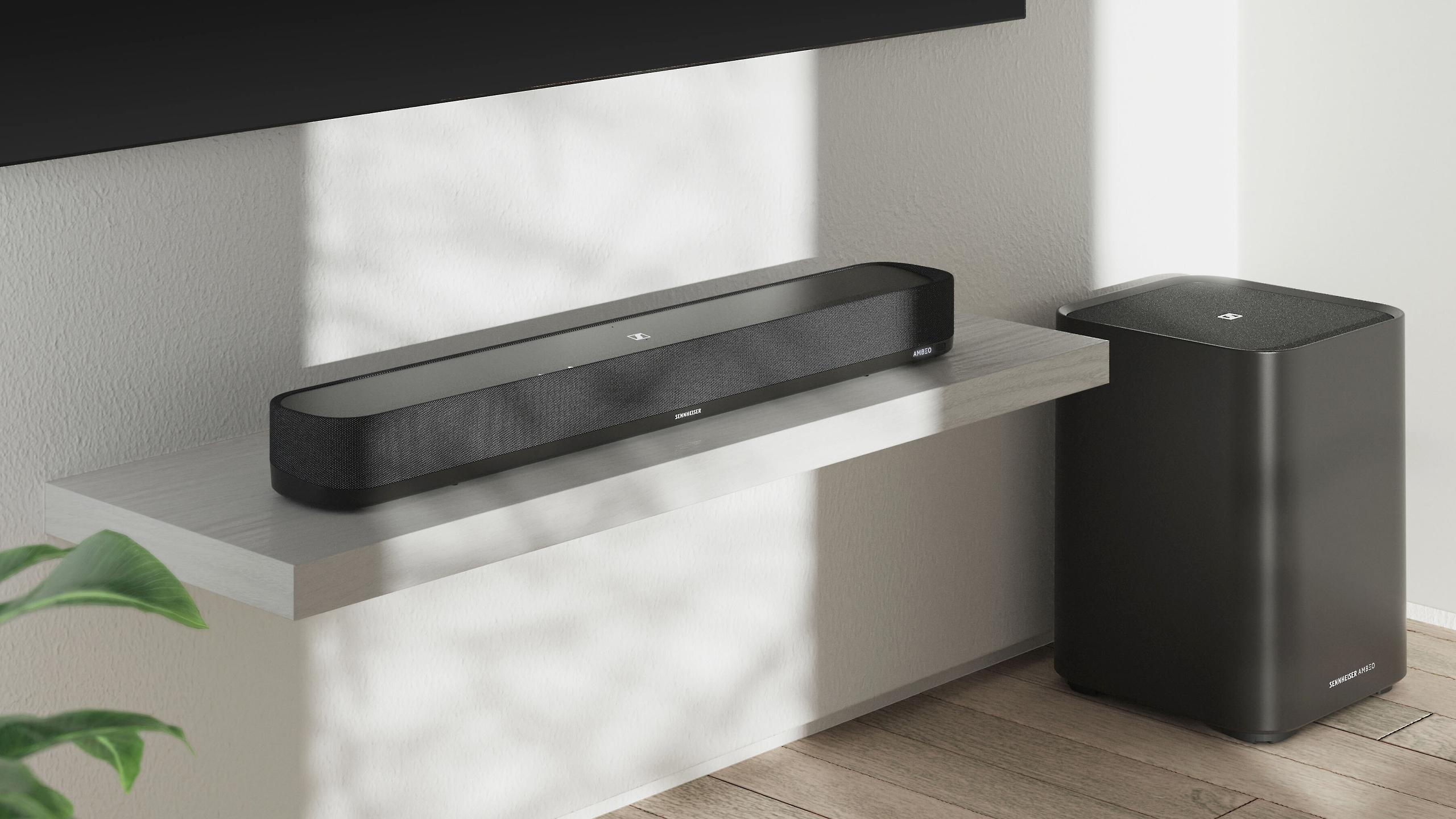
The Mini packs an impressive amount of technology into its compact 27.6-inch frame. It includes seven high-end full-range drivers and dual 4-inch built-in subwoofers, all working together to create what Sennheiser calls "7.1.4 virtualized sound." The ".4" refers to height channels – those overhead effects that make Dolby Atmos content so immersive.
What sets the AMBEO apart is its automated room calibration system. Four built-in microphones analyze your room's acoustics, measuring everything from wall reflections to ceiling height. The system then adjusts its processing to optimize the virtualization for your specific space. In my experience testing various soundbars, this level of automatic optimization is rare and genuinely effective, especially in smaller rooms where the system can work its magic most effectively.
The frequency response extends down to 43Hz, which is quite impressive for a soundbar without a separate subwoofer. This means you'll hear the deep rumble of explosions and the full body of music without needing additional components. However, Sennheiser thoughtfully included a subwoofer output, so you can add external bass later if desired – something the JBL system doesn't offer due to its sealed design.
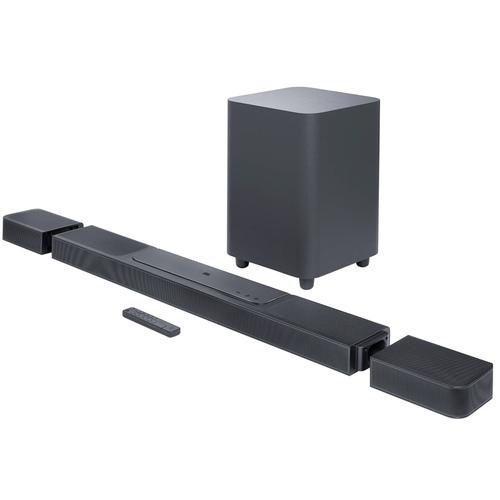
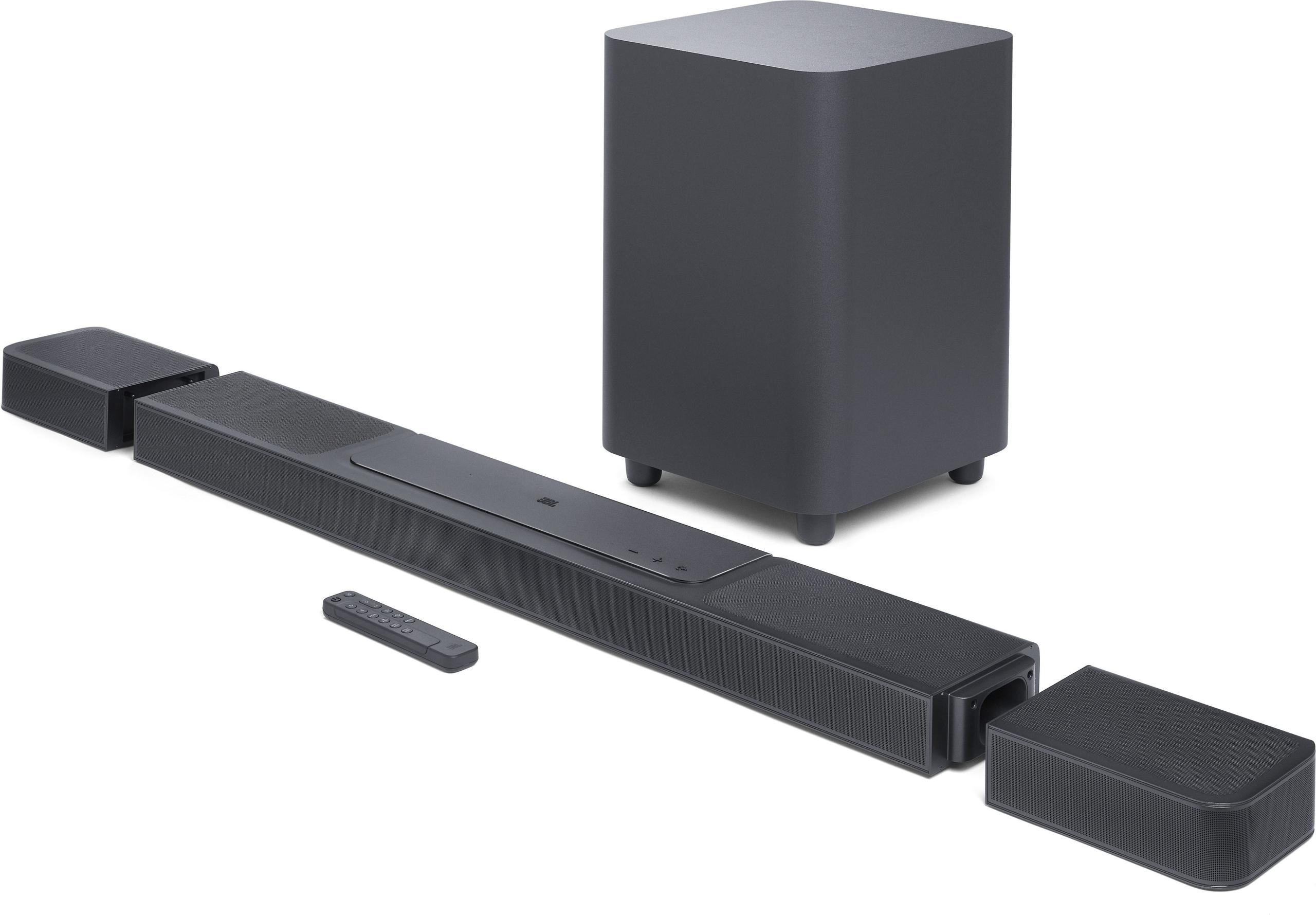
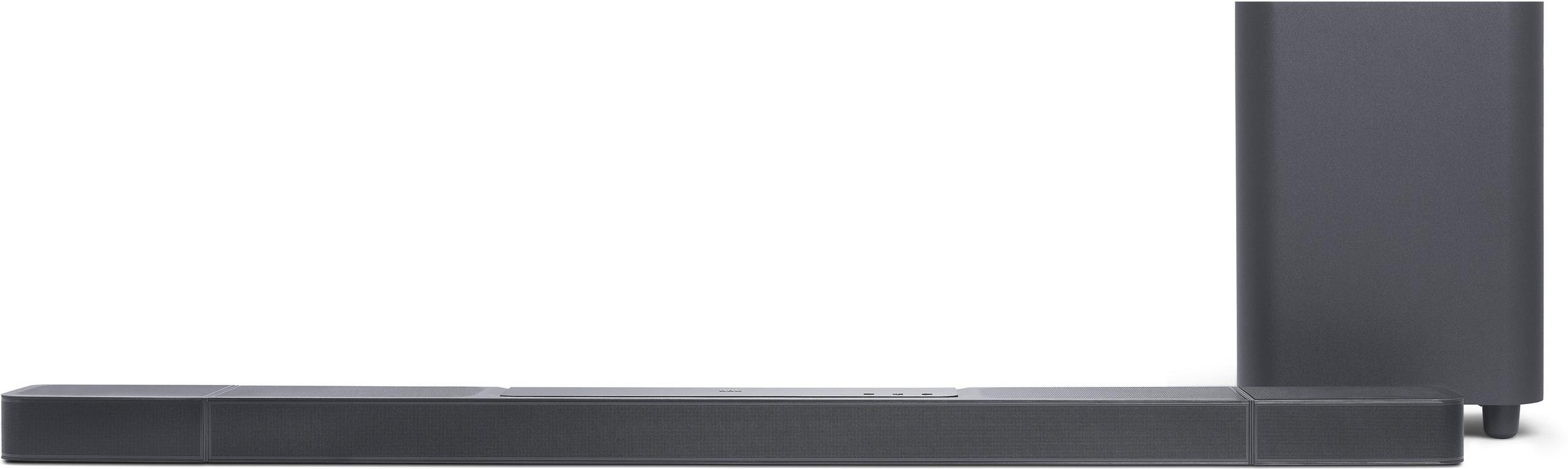
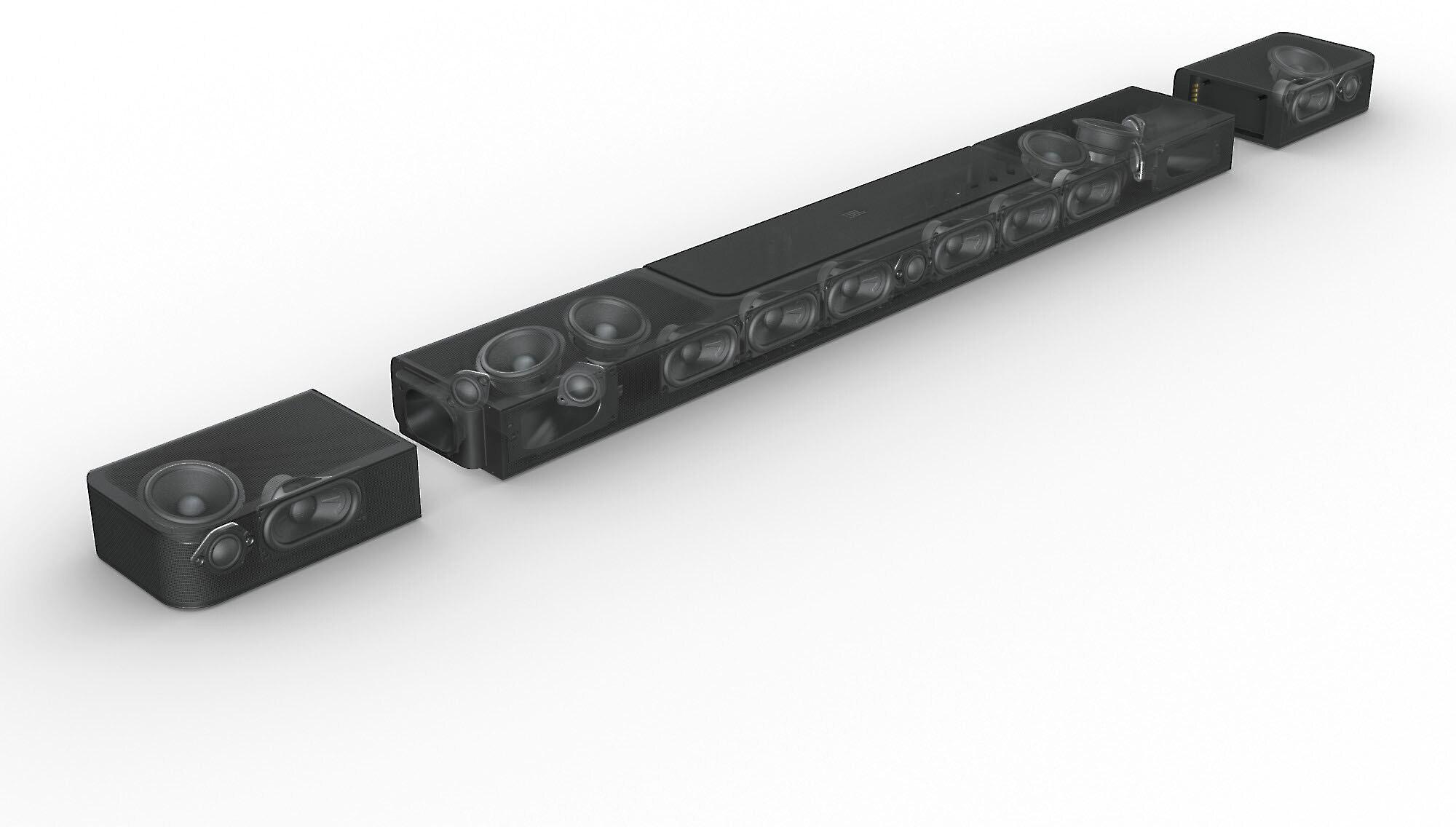
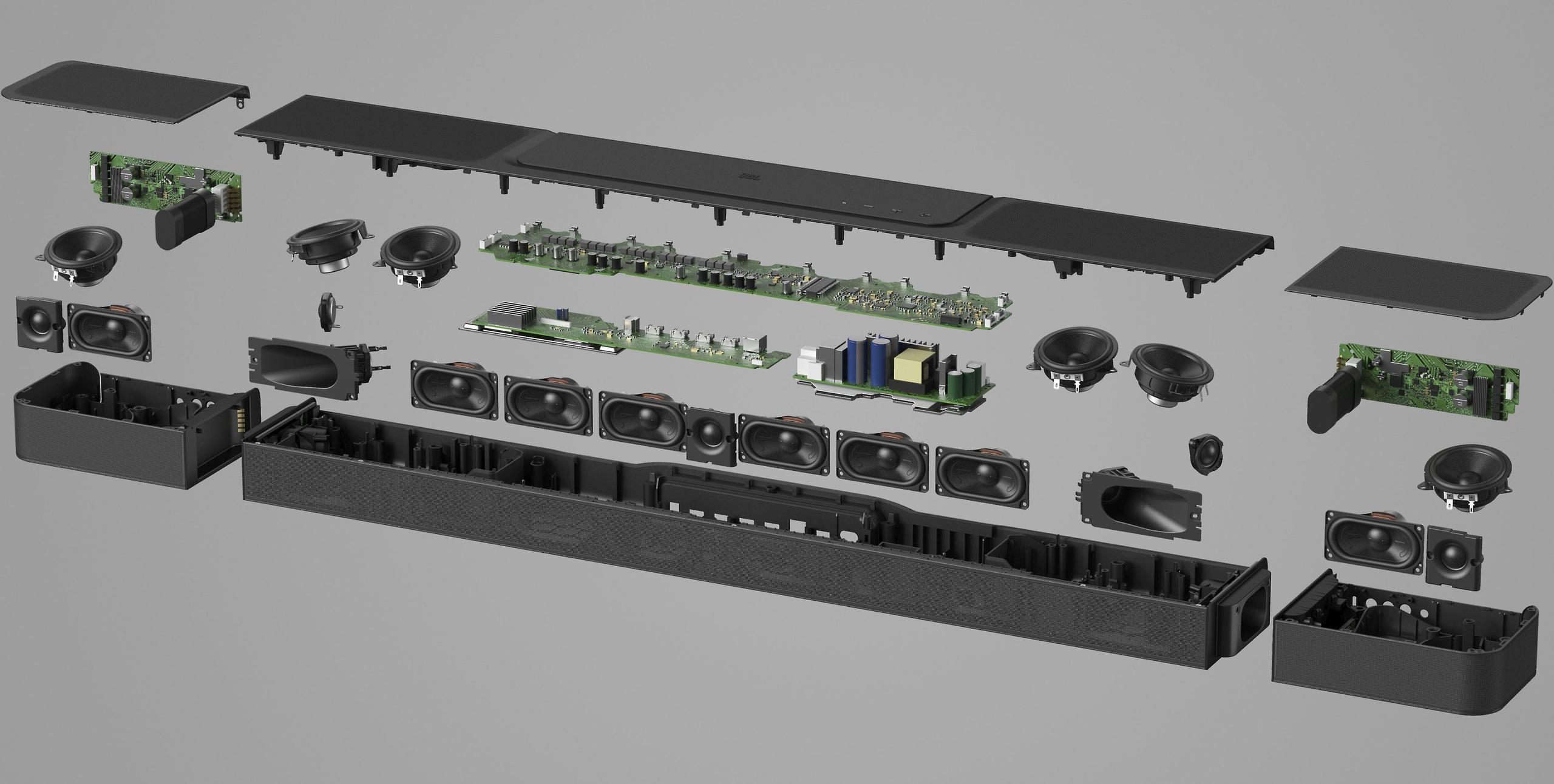
The JBL Bar 1300X takes the opposite approach: instead of tricking your ears, it actually places sound sources around your room. The system includes the main soundbar, a wireless 10-inch subwoofer, and two detachable battery-powered surround speakers that create true 11.1.4-channel audio.
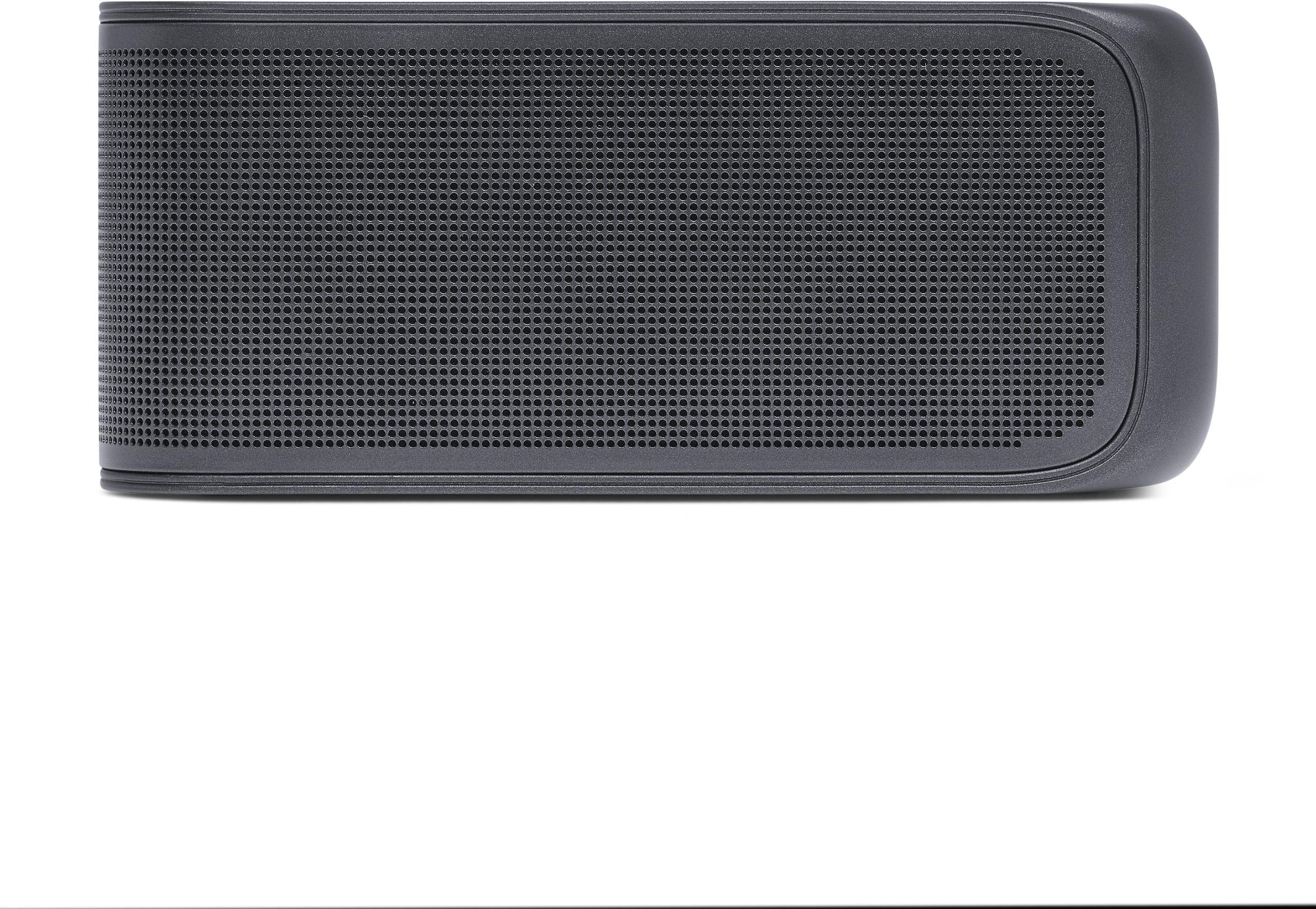
The innovation here lies in those detachable speakers. Each one contains a full-range driver, a tweeter, and critically, an up-firing driver for Dolby Atmos height effects. When attached to the main bar, they extend its width to over 54 inches. When detached, they become completely wireless surround speakers that can be placed anywhere in your room – or even used as portable Bluetooth speakers for outdoor parties.
JBL's MultiBeam technology works differently than Sennheiser's virtualization. Rather than creating psychoacoustic illusions, MultiBeam uses digital beamforming to direct sound waves precisely around your room. Think of it like a flashlight that can focus its beam – MultiBeam can focus specific audio content in particular directions, creating a wider soundstage even from the main bar alone.
The total power output of 1,170 watts is distributed across all components: 650W for the main bar, 300W for the subwoofer, and 110W for each detachable speaker. This isn't just marketing fluff – you can genuinely feel the difference during action sequences. The system can shake a room in ways that the more refined Sennheiser simply can't match.
PureVoice technology deserves special mention. While both soundbars enhance dialogue clarity, JBL's implementation is more automatic and aggressive. It continuously analyzes the audio stream and boosts voice frequencies when it detects dialogue, even during complex action scenes. The Sennheiser requires manual activation of its voice enhancement feature, giving users more control but requiring more intervention.
In direct comparison, these soundbars prioritize different aspects of audio reproduction. The Sennheiser AMBEO Mini excels at what audiophiles call "detail retrieval" – the ability to hear subtle elements in a soundtrack that lesser systems might miss. During quiet dialogue scenes, you'll notice background details like distant traffic, rustling leaves, or the subtle reverb that indicates a scene was filmed in a large space.
This precision comes from Sennheiser's decades of experience in professional audio. Each driver is carefully tuned and the crossover points – where different drivers hand off different frequency ranges – are optimized for clarity rather than pure impact. The result is a sound signature that reveals new details in familiar content.
The JBL Bar 1300X, by contrast, prioritizes impact and immersion. Its sound signature is more aggressive, with slightly elevated bass and treble that makes action sequences more exciting. This isn't a criticism – it's a deliberate design choice that makes movies more thrilling, even if it means sacrificing some subtle details.
This is where the fundamental difference in approaches becomes most apparent. The Sennheiser's virtualization works remarkably well within its limitations. In a smaller room (under 200 square feet), sitting in the optimal position, the AMBEO can create convincing surround effects. I've had guests ask where the rear speakers were hidden during well-mixed Dolby Atmos content.
However, virtualization has inherent limitations. Move too far off-axis, sit too close or too far from the bar, or place it in a room that's too large, and the illusion breaks down. The surround effects become less convincing, and you're reminded that all the sound is actually coming from in front of you.
The JBL's physical approach doesn't have these limitations. Those detachable speakers create genuine surround sound regardless of where you sit or how large your room is. During action sequences, you'll hear bullets whizzing past your ears, with sound effects that pan smoothly from the front soundbar to the rear speakers. The up-firing drivers in both the main bar and detachable speakers create height effects that are more consistently convincing than virtualization.
Both systems handle bass differently, and your preference will depend on your content and room. The Sennheiser's dual 4-inch drivers produce bass that extends to 43Hz – deeper than the JBL's 50Hz specification. More importantly, the Sennheiser's bass is tighter and more controlled. It excels with music, providing the foundation for bass guitars and kick drums without overwhelming other frequencies.
The JBL's 10-inch wireless subwoofer produces bass that's more about impact than precision. During action movies, explosions have genuine visceral weight that you feel in your chest. The subwoofer can be positioned anywhere in your room for optimal bass response, and its wireless connection means you're not limited by cable lengths.
In larger rooms, the JBL's approach works better simply because it moves more air. The Sennheiser, despite its deeper extension, doesn't have the driver size or power to fill large spaces with the same authority.
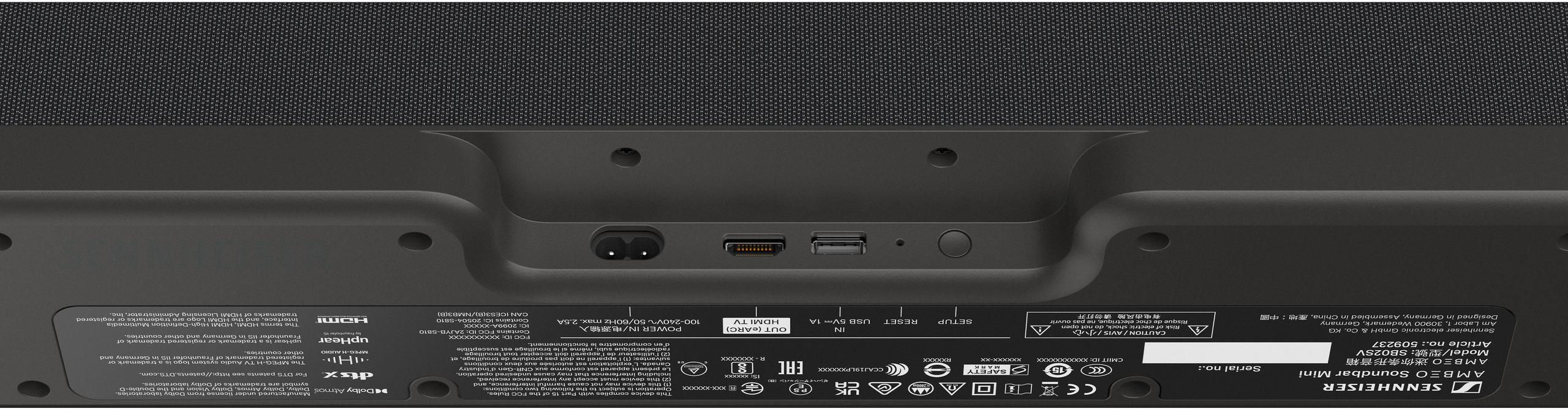
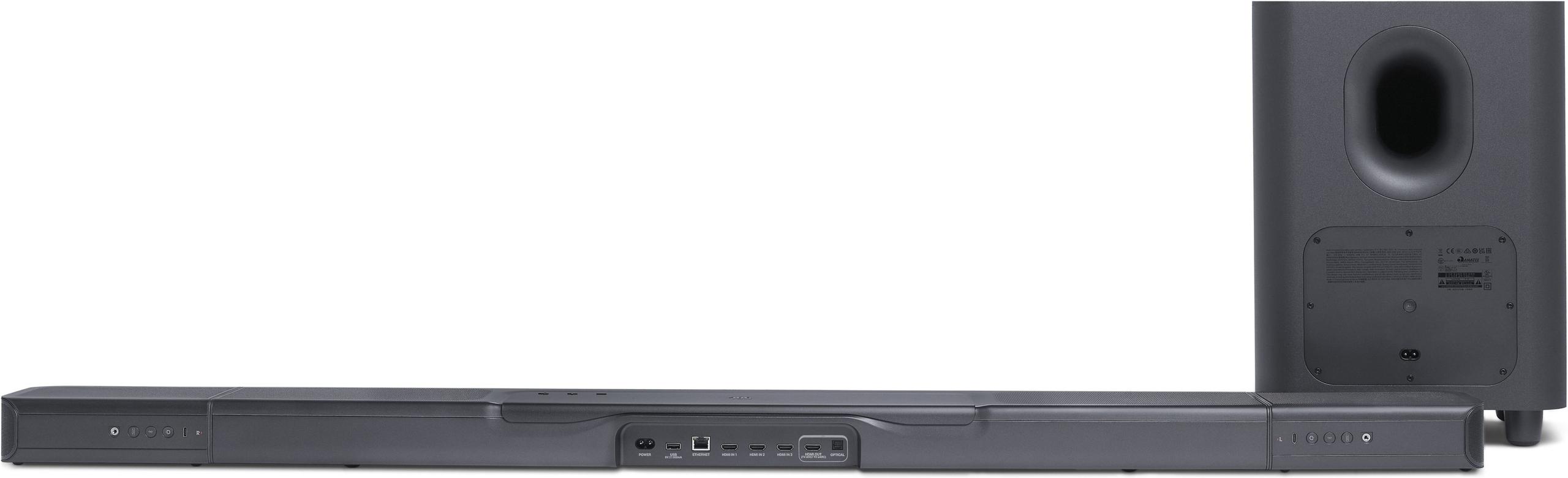
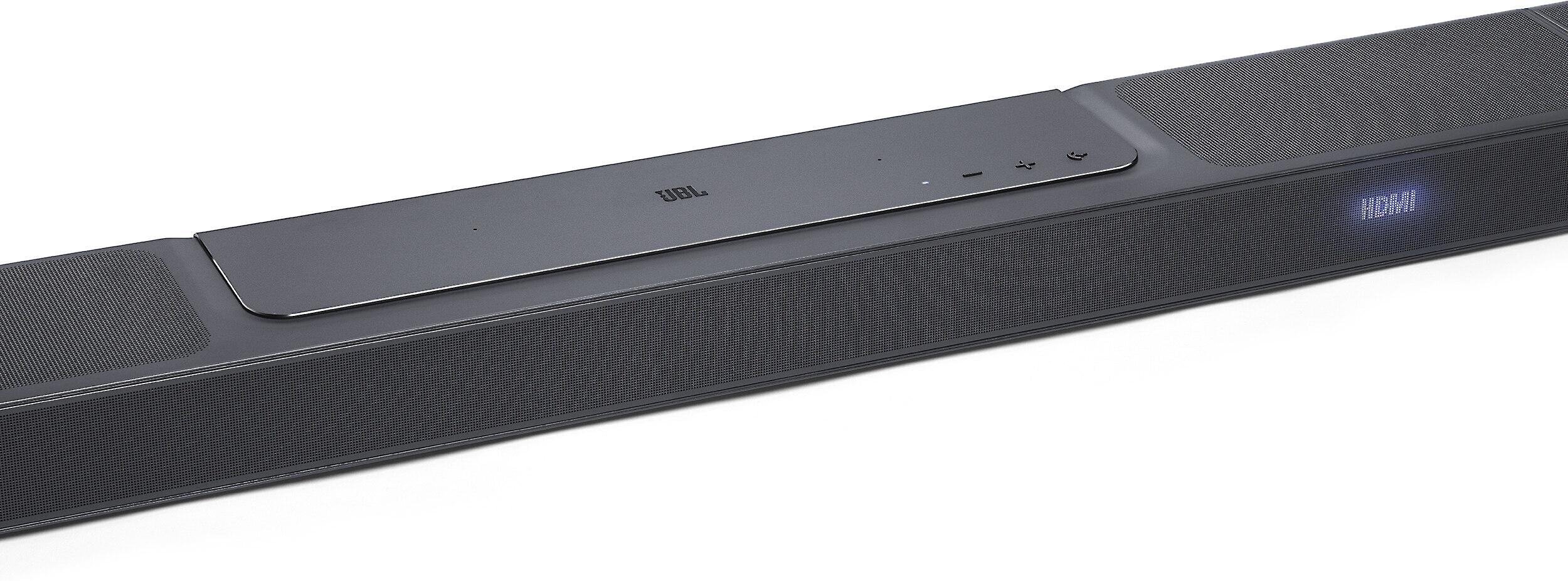
For dedicated home theater use, several factors tip the scales toward one system or the other. The JBL Bar 1300X offers four HDMI inputs plus eARC output, meaning you can connect multiple sources – gaming console, streaming device, Blu-ray player, and cable box – without needing a separate HDMI switch. The Sennheiser provides only HDMI eARC, requiring you to use your TV's built-in inputs for multiple sources.
Both systems support the latest audio formats including Dolby Atmos, DTS:X, and MPEG-H, but they handle them differently. The JBL's physical speakers can create more dramatic overhead effects – helicopter rotors, rainfall, or debris falling from above feel more convincing when there are actual drivers firing sound toward your ceiling.
Gaming presents another consideration. The JBL's lower input lag and dedicated gaming modes make it better suited for serious gaming, while the Sennheiser's more neutral sound signature might appeal to gamers who prioritize hearing subtle audio cues like footsteps in competitive games.
Room size remains the most critical factor in choosing between these systems. In my testing, the Sennheiser AMBEO Mini performs best in rooms up to about 200 square feet where listeners sit within 8-10 feet of the TV. Beyond these dimensions, the virtualization becomes less effective, and you're better served by the JBL's physical approach.
The Sennheiser's compact size makes it ideal for apartments, bedrooms, or smaller living rooms where a full surround system would be overkill. Its elegant design disappears under most TVs, and the single-unit setup means fewer potential points of failure or connectivity issues.
The JBL's multi-component design requires more consideration. You need space for the subwoofer (though it can be hidden in a corner or under furniture), and you need to think about where to place or store the detachable speakers when not in use. However, the system's flexibility is genuinely useful – those detachable speakers work great for outdoor parties or as bedroom speakers when you want to listen to music away from the main system.
At $499.96, the Sennheiser represents exceptional value for the technology it contains. You're getting professional-grade audio processing, automatic room calibration, and surprisingly deep bass in a package that costs less than many mid-range soundbars without these features. The subwoofer output also provides an upgrade path if you later want more bass impact.
The JBL at $1,299.95 costs significantly more, but you're paying for a complete surround system that would be difficult to replicate with separate components at this price point. The detachable speakers alone represent significant value – similar wireless surround speakers from other manufacturers often cost $300-400 as add-ons.
Both systems support the latest streaming standards and receive regular firmware updates, suggesting good long-term support. The Sennheiser's simpler design might have fewer potential failure points, while the JBL's multiple wireless connections introduce more complexity but also more flexibility.
Choose the Sennheiser AMBEO Mini if you value audio precision and have a smaller room where virtualization can work effectively. It's perfect for music lovers who also watch movies, apartment dwellers who can't accommodate multiple speakers, or anyone who wants premium audio technology at a reasonable price. The automated setup and compact design make it ideal for users who want great sound without complexity.
The JBL Bar 1300X makes sense for larger rooms, dedicated home theater setups, or users who prioritize immersive impact over subtle detail. Its physical surround speakers create more consistent effects across different seating positions, making it better for families or entertaining. The detachable speakers' versatility adds value for users who want flexibility beyond just home theater use.
Both represent excellent examples of their respective approaches to premium audio. Your choice ultimately depends on your room, your priorities, and your budget. Either way, you'll experience a significant upgrade over basic TV speakers or entry-level soundbars. The key is matching the system's strengths to your specific needs and expectations.
| Sennheiser AMBEO Soundbar Mini | JBL Bar 1300X Soundbar with Wireless Subwoofer |
|---|---|
| Price - Significant cost difference affects value proposition | |
| $499.96 (excellent value for premium tech) | $1,299.95 (premium price for complete system) |
| Audio Channels - Determines surround sound capability | |
| 7.1.4 virtualized (simulated through processing) | 11.1.4 physical (actual speakers create surround) |
| Total Power Output - Affects volume and impact in larger rooms | |
| 250W (refined but limited room-filling ability) | 1,170W (powerful enough for large spaces) |
| Subwoofer - Critical for bass extension and impact | |
| Built-in dual 4" drivers + subwoofer output | Wireless 10" subwoofer included |
| Dimensions - Determines fit under TV and room presence | |
| 27.6" x 2.6" x 3.9" (compact, disappears easily) | Main: 39.4" x 2.4" x 5.5" + detachable speakers |
| Bass Extension - Lower numbers mean deeper, more impactful bass | |
| 43Hz (tighter, more accurate bass response) | 50Hz (punchier but less deep extension) |
| Surround Technology - How immersive effects are created | |
| AMBEO virtualization with room calibration | Physical detachable wireless rear speakers |
| HDMI Inputs - Determines how many devices you can connect | |
| HDMI eARC only (must use TV inputs for sources) | 4 HDMI inputs + eARC (connects all devices directly) |
| Ideal Room Size - Performance varies significantly with space | |
| Under 200 sq ft (virtualization works best close-up) | 200+ sq ft (physical speakers scale to larger rooms) |
| Setup Complexity - Affects ease of installation | |
| Plug-and-play with auto calibration | Multi-component setup but app-guided process |
| Expandability - Future upgrade options | |
| Subwoofer output allows external sub addition | Sealed system, no expansion capability |
| Additional Use Cases - Versatility beyond home theater | |
| Fixed installation only | Detachable speakers work as portable Bluetooth speakers |
The Sennheiser AMBEO Soundbar Mini ($499.96) is specifically designed for smaller spaces under 200 square feet. Its AMBEO virtualization technology works best when you're sitting close to the soundbar, making it ideal for bedrooms, apartments, or compact living rooms. The JBL Bar 1300X ($1,299.95) is better suited for larger rooms where its physical surround speakers can create proper immersion.
The core difference is how they create surround sound. The Sennheiser AMBEO Mini uses advanced virtualization to simulate 7.1.4 surround sound from a single bar, while the JBL Bar 1300X uses actual physical speakers - including detachable wireless rear speakers - to create true 11.1.4 surround sound around your room.
Both excel in different ways. The Sennheiser AMBEO Mini has tighter, more accurate bass that extends deeper to 43Hz using built-in dual 4-inch drivers. The JBL Bar 1300X delivers more impactful bass through its dedicated 10-inch wireless subwoofer, creating room-shaking effects that are better for action movies but extend only to 50Hz.
The Sennheiser AMBEO Mini includes built-in subwoofers and doesn't require a separate sub, though it has a subwoofer output if you want to add one later. The JBL Bar 1300X comes with a wireless 10-inch subwoofer included in the package, so you get everything needed for full bass response out of the box.
Both soundbars excel at dialogue clarity. The Sennheiser AMBEO Mini offers precise, neutral dialogue reproduction with manual voice enhancement controls. The JBL Bar 1300X features PureVoice technology that automatically optimizes dialogue clarity even during loud action scenes, requiring less user intervention.
The Sennheiser AMBEO Mini has only HDMI eARC, meaning you'll need to use your TV's inputs for multiple devices. The JBL Bar 1300X offers four HDMI inputs plus eARC output, allowing you to connect gaming consoles, streaming devices, and other sources directly to the soundbar without switching TV inputs.
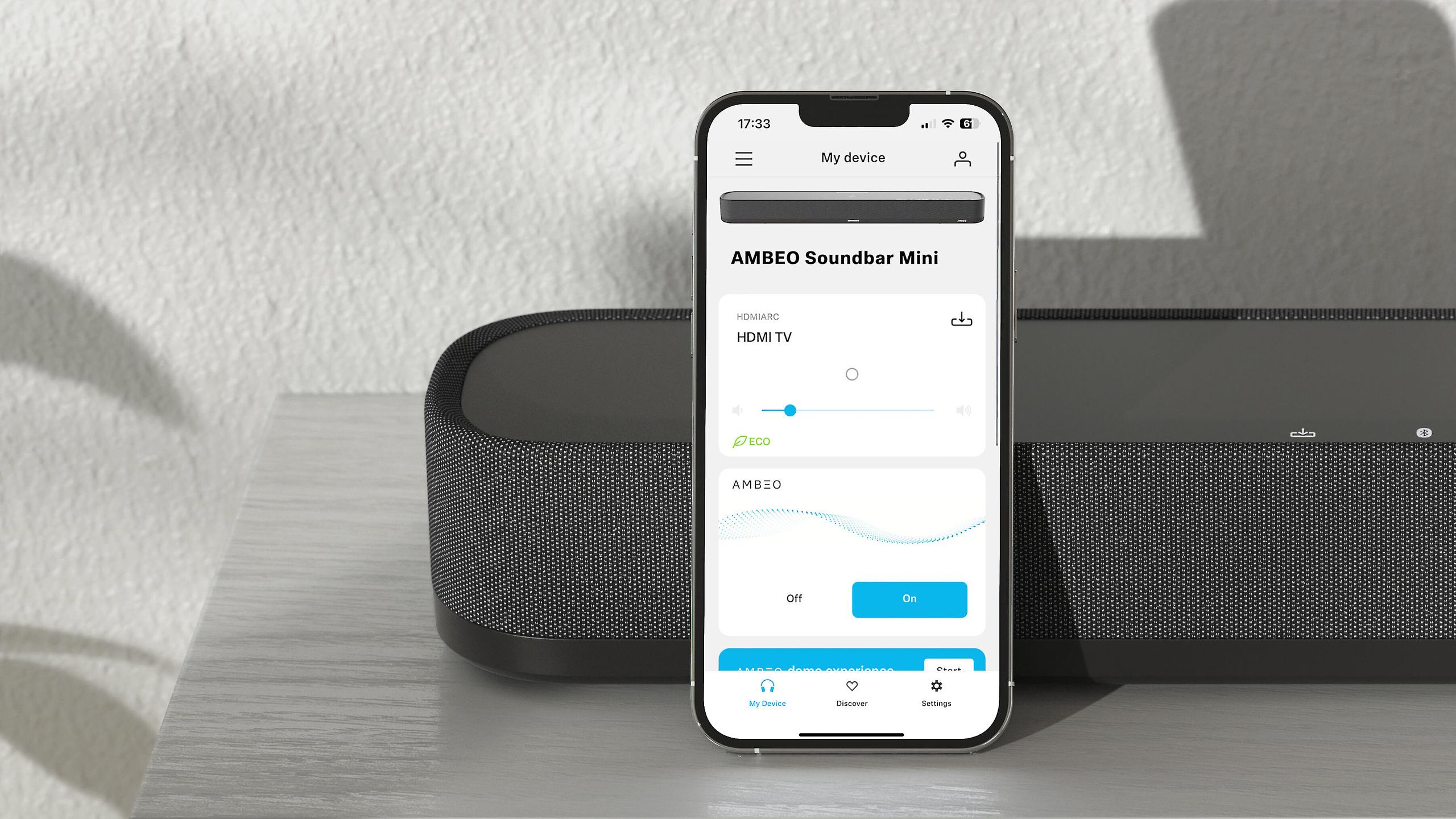
The Sennheiser AMBEO Mini is simpler with true plug-and-play setup and automatic room calibration through built-in microphones. The JBL Bar 1300X requires positioning multiple components (main bar, subwoofer, and detachable speakers) but includes an app-guided setup process that makes the multi-component installation manageable.
The JBL Bar 1300X is designed for larger spaces and TVs, with its 1,170W power output and physical surround speakers creating immersive sound in rooms over 200 square feet. The Sennheiser AMBEO Mini works best with smaller to medium TVs in more intimate spaces where its virtualization technology can be most effective.
The Sennheiser AMBEO Mini ($499.96) offers exceptional value, delivering premium virtualization technology and automatic room calibration at half the price. The JBL Bar 1300X ($1,299.95) costs more but provides a complete physical surround system with wireless subwoofer and detachable speakers that would be difficult to replicate at this price point.
Yes, both soundbars support Dolby Atmos and DTS:X. The Sennheiser AMBEO Mini creates Atmos height effects through virtualization processing, while the JBL Bar 1300X uses physical up-firing drivers in both the main bar and detachable speakers to create more authentic overhead sound effects.
The JBL Bar 1300X is better suited for gaming with its lower input lag, dedicated gaming modes, and immersive positional audio from physical surround speakers. The Sennheiser AMBEO Mini offers more neutral sound that might appeal to competitive gamers who need to hear subtle audio cues, but lacks the room-filling impact of the JBL system.
Both work well for music but with different strengths. The Sennheiser AMBEO Mini excels at music reproduction with its neutral tonal balance, excellent stereo imaging, and precise detail retrieval. The JBL Bar 1300X offers more impactful, room-filling sound for music, and its detachable speakers can even be used as portable Bluetooth speakers for outdoor listening.
We've done our best to create useful and informative comparisons to help you decide what product to buy. Our research uses advanced automated methods to create this comparison and perfection is not possible - please contact us for corrections or questions. These are the sites we've researched in the creation of this article: techradar.com - sennheiser-hearing.com - stereonet.com - rtings.com - youtube.com - youtube.com - newsroom.sennheiser.com - whathifi.com - baybloorradio.com - sennheiser-hearing.com - files.bbystatic.com - techradar.com - jbl.com - audioadvice.com - youtube.com - rtings.com - jbl.com - greentoe.com - harmanaudio.com - youtube.com - mm.jbl.com - jbl.com

Privacy Policy
Terms and Conditions - Affiliate Policy
Home Security
© Copyright 2008-2026.
11816 Inwood Rd #1211, Dallas, TX 75244