

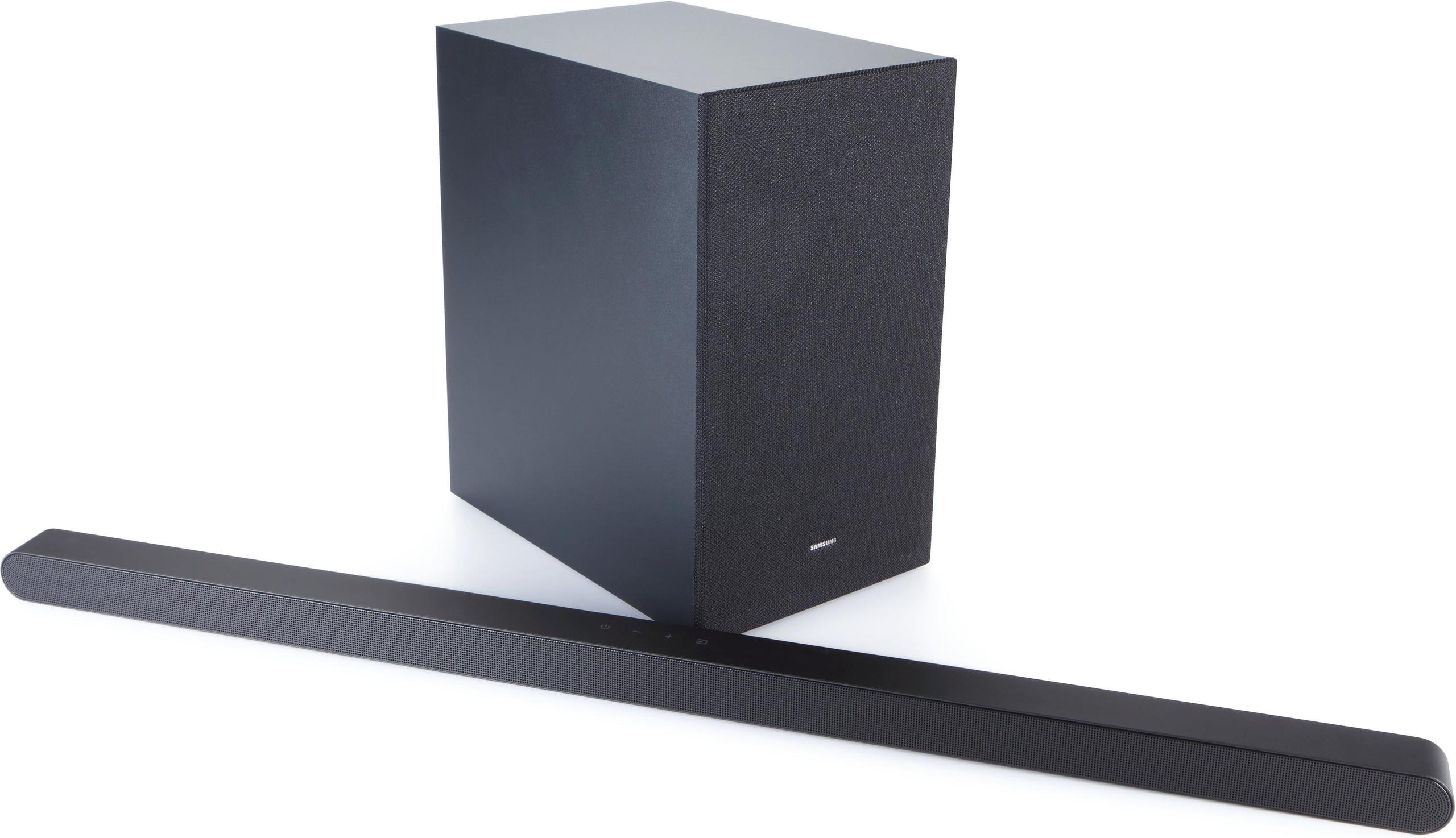
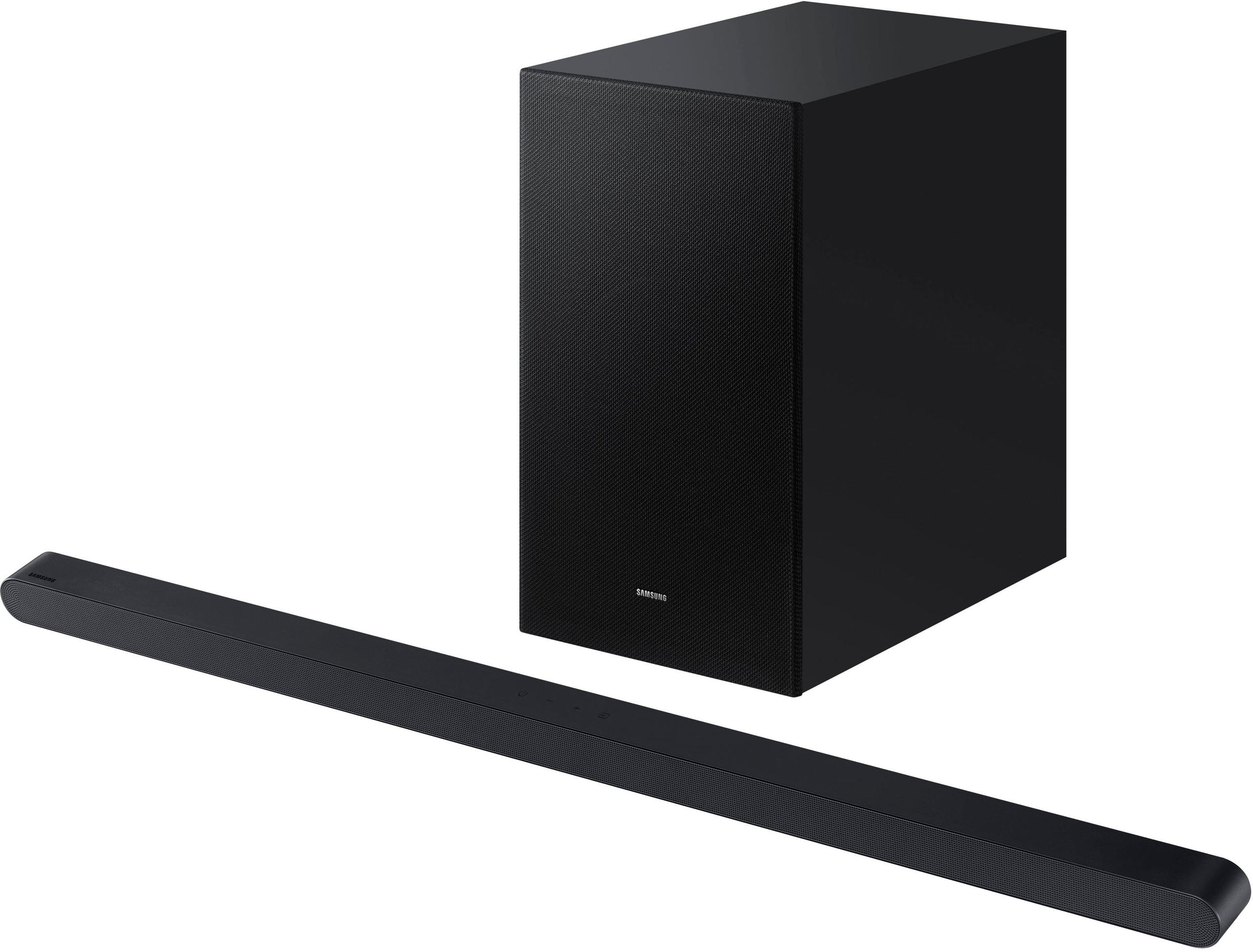


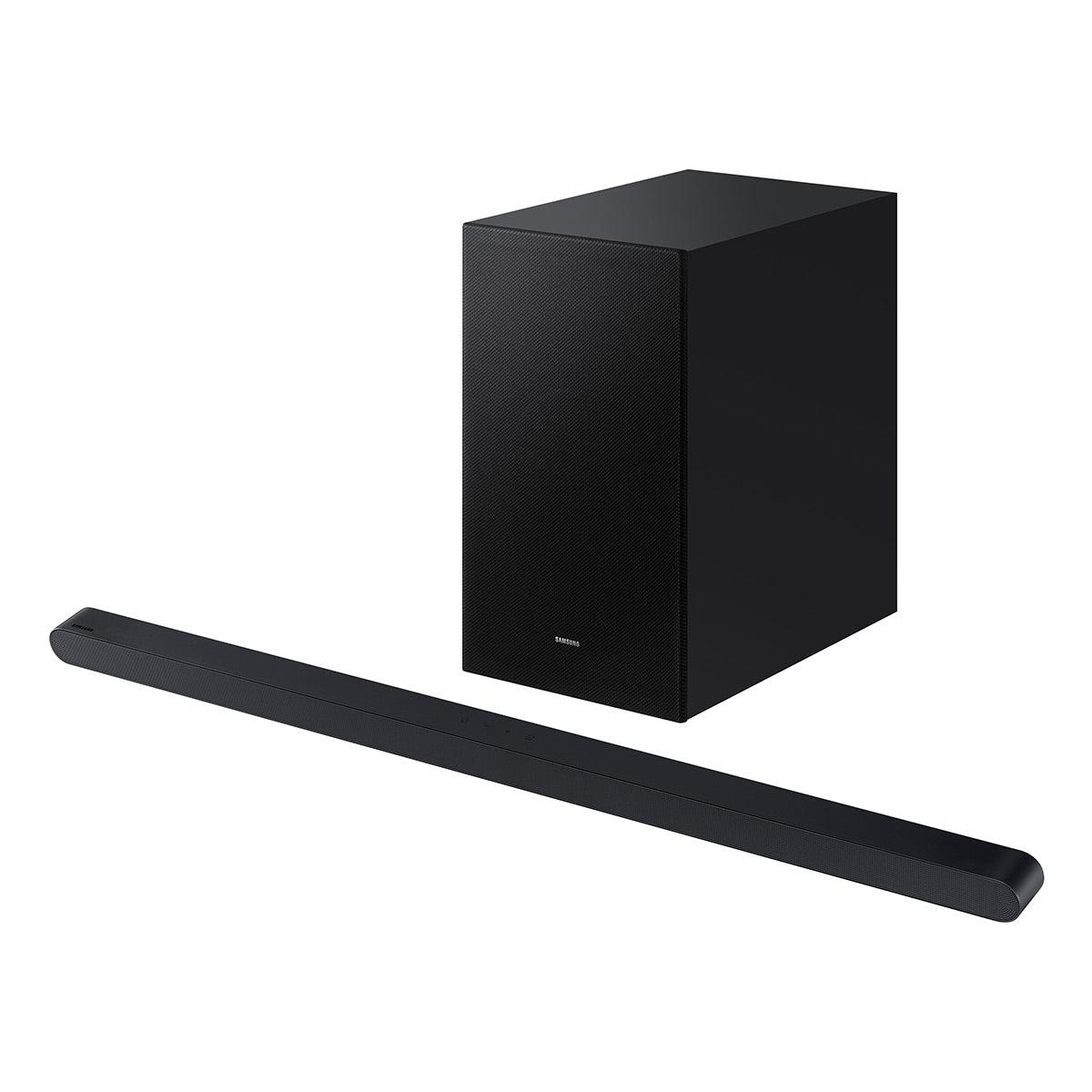
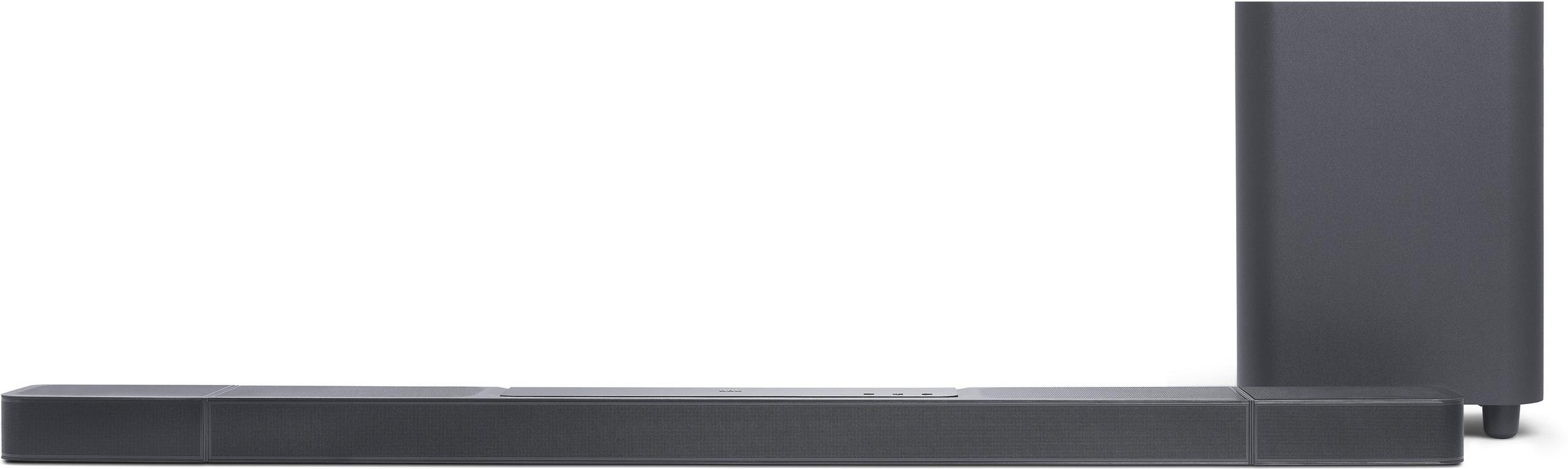

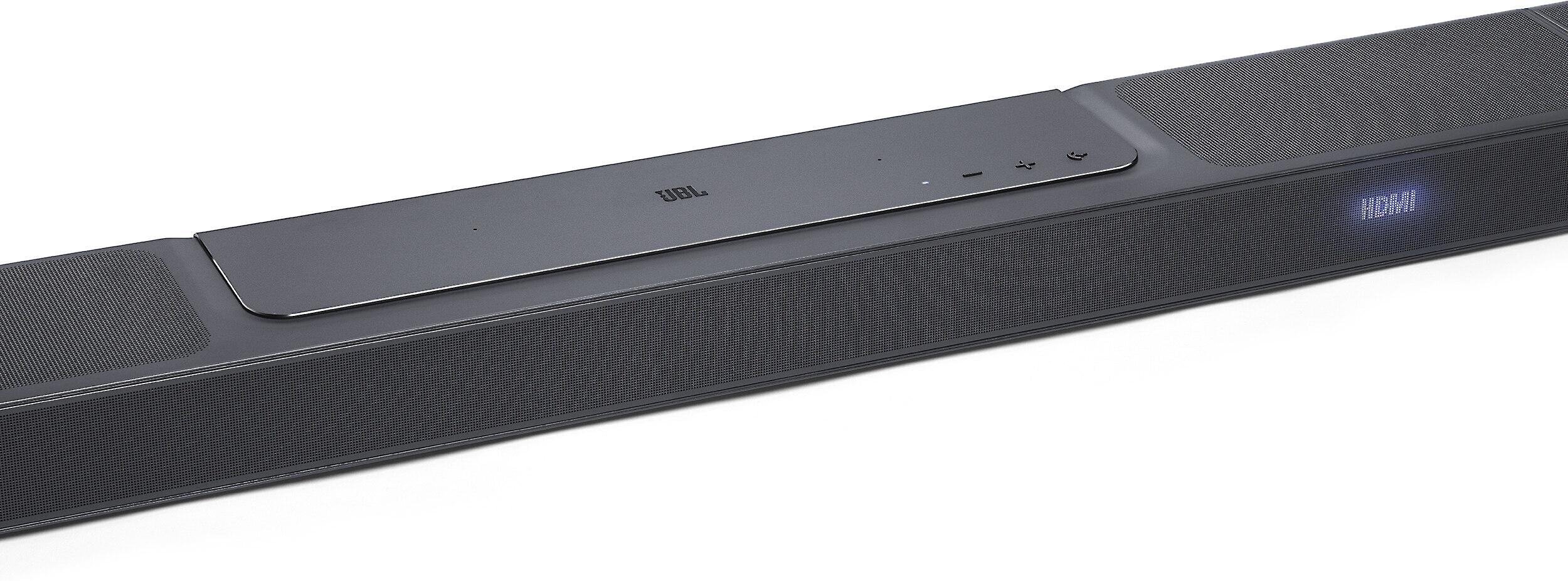


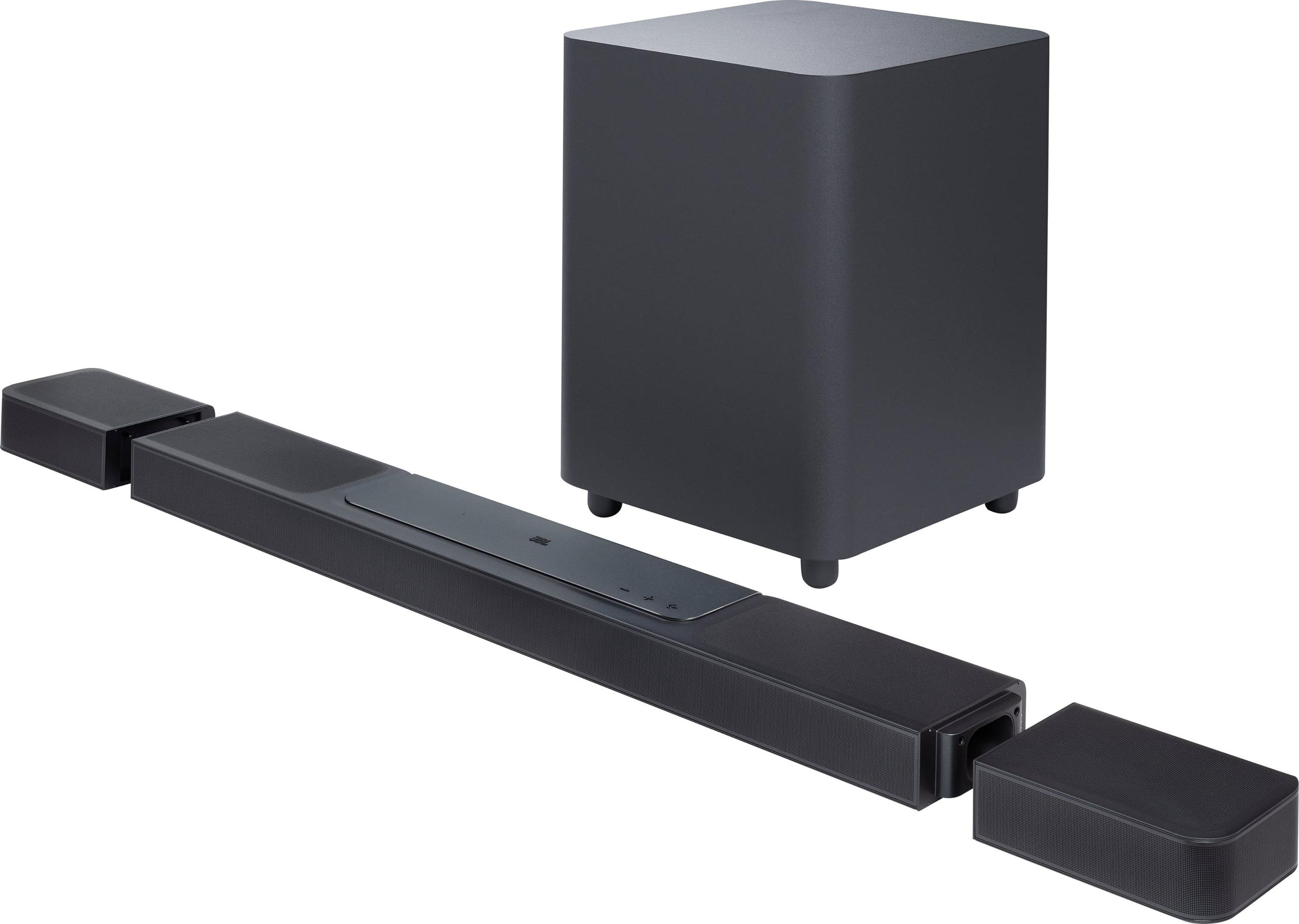
If you've been struggling with your TV's terrible built-in speakers, you're not alone. I've tested dozens of soundbars over the years, and the difference between good and bad audio can completely transform your viewing experience. Today we're comparing two very different approaches to solving this problem: the sleek Samsung HW-S700D ($378) and the powerhouse JBL Bar 1300X ($1,300).
These soundbars couldn't be more different in their philosophy. The Samsung takes a "less is more" approach—it's incredibly slim, integrates beautifully with Samsung TVs, and focuses on delivering clean audio without dominating your living space. The JBL, on the other hand, is all about maximum immersion. It's a full home theater system disguised as a soundbar, complete with detachable wireless rear speakers and enough power to rattle your windows.
Before diving into specifics, let's talk about what makes a soundbar work. The core challenge is creating the illusion of surround sound from a device that sits in front of you. Traditional home theater systems place speakers all around the room, but soundbars have to be more creative.
The key differentiator is channel configuration—those numbers like "3.1" or "11.1.4" that you see in specs. The first number represents main channels (left, center, right), the second is subwoofers, and the third (when present) indicates height channels for Dolby Atmos. So the Samsung's 3.1 setup has left, center, right speakers plus a subwoofer, while the JBL's 11.1.4 configuration includes all those plus height speakers and surround channels.
Dolby Atmos deserves special mention since both soundbars support it. Traditional surround sound places audio in specific speaker locations, but Atmos treats sounds as objects that can move freely through 3D space. Imagine a helicopter flying overhead in a movie—with Atmos, you'll actually hear it move above your head, not just from side to side.
The Samsung HW-S700D first launched in 2020, but Samsung has kept the design largely unchanged through 2024—a testament to getting the formula right from the start. This isn't unusual for Samsung soundbars; they tend to nail a design and stick with it rather than making constant revisions. The slim profile and Q-Symphony technology (which lets the soundbar work with your Samsung TV's built-in speakers simultaneously) were innovations that set it apart from the competition.
The JBL Bar 1300X is much newer, arriving in 2023 as JBL's flagship offering. It represents a significant technological leap with its detachable wireless rear speakers—something I haven't seen executed this well in other soundbars. JBL has been aggressive about updates, with firmware improvements regularly adding new streaming services and refining the room calibration algorithms.
What's particularly interesting is how these release timelines reflect different market approaches. Samsung perfected their formula early and focused on refinement, while JBL waited to enter the premium market until they could offer something genuinely innovative.
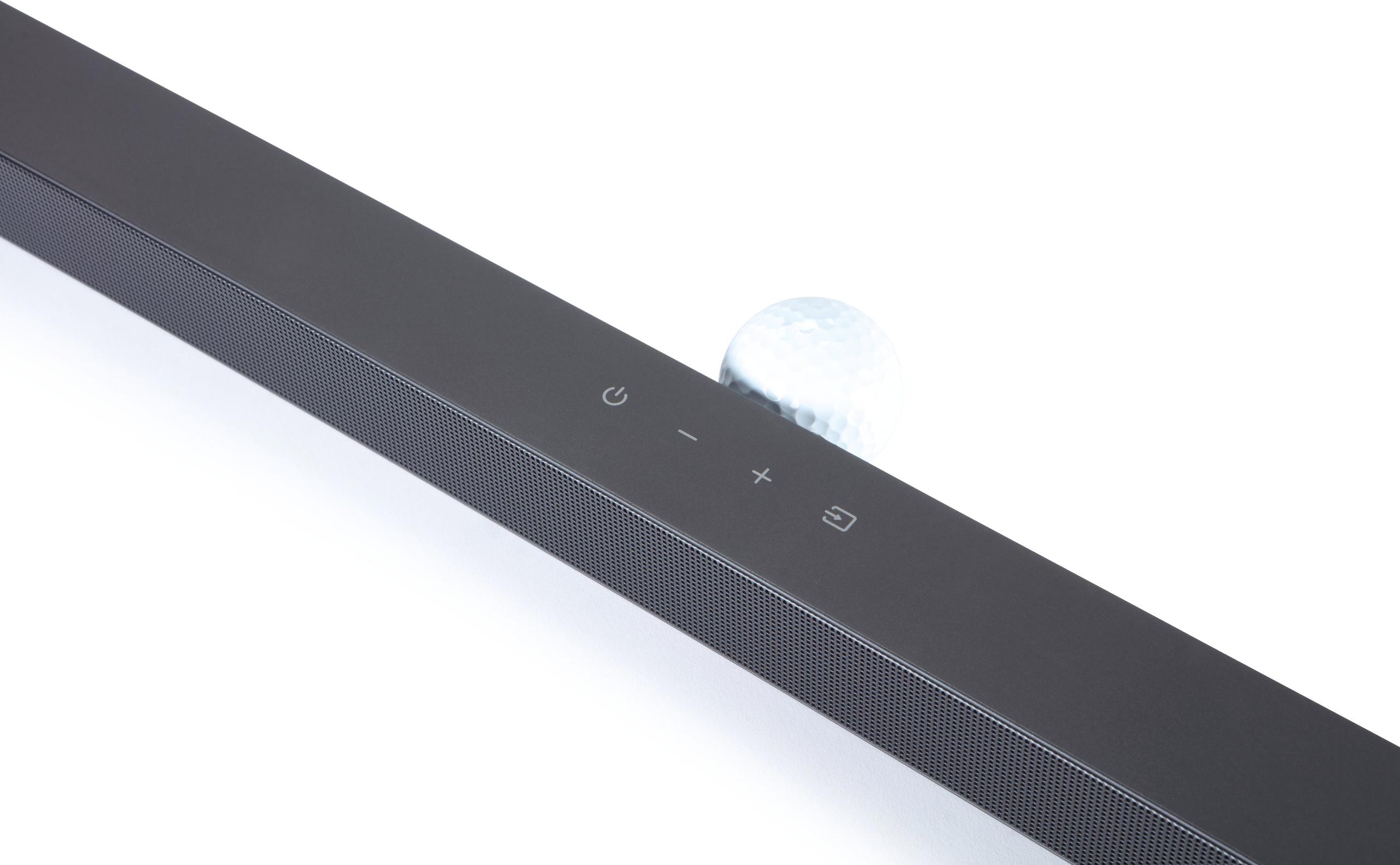
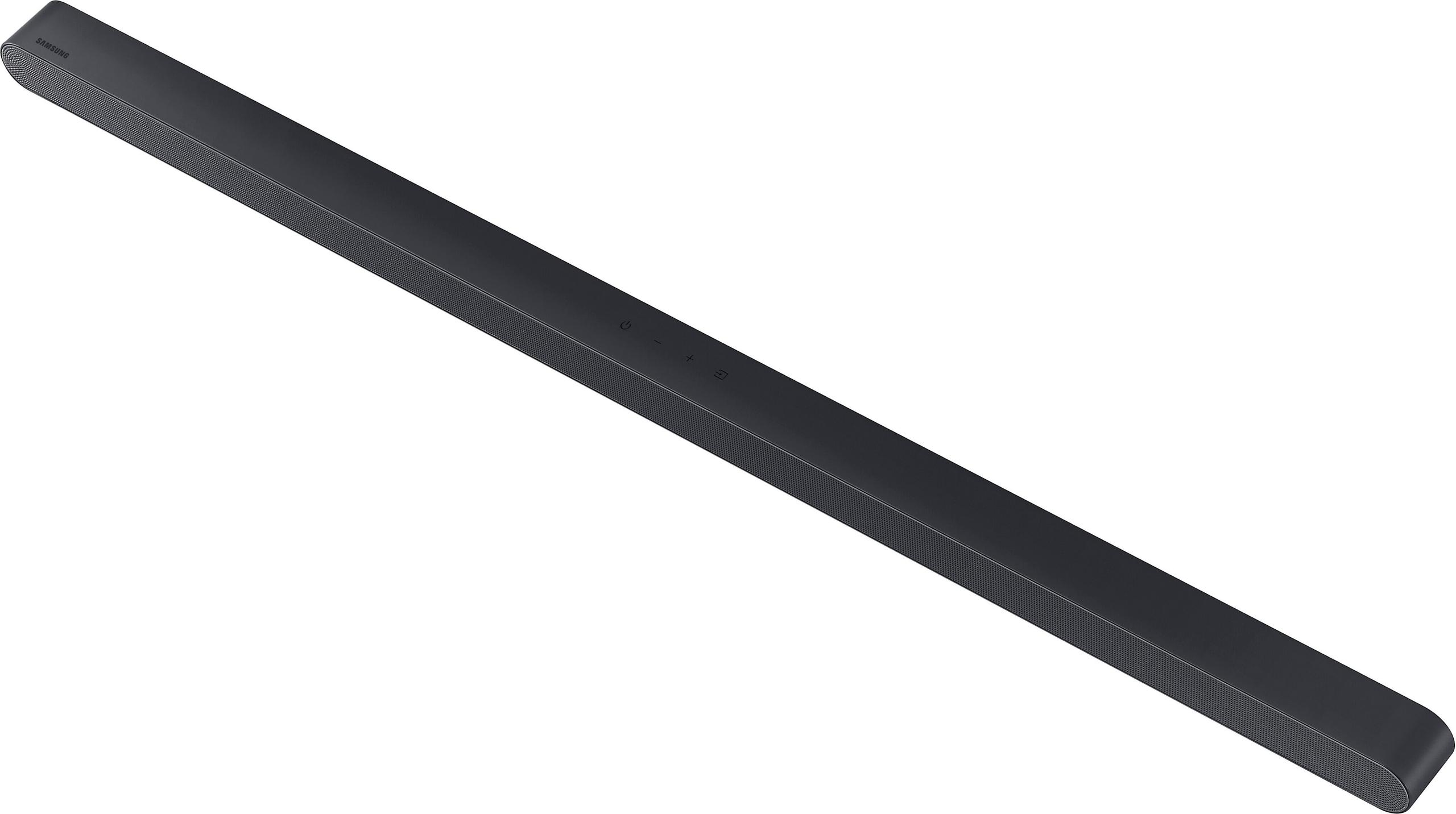
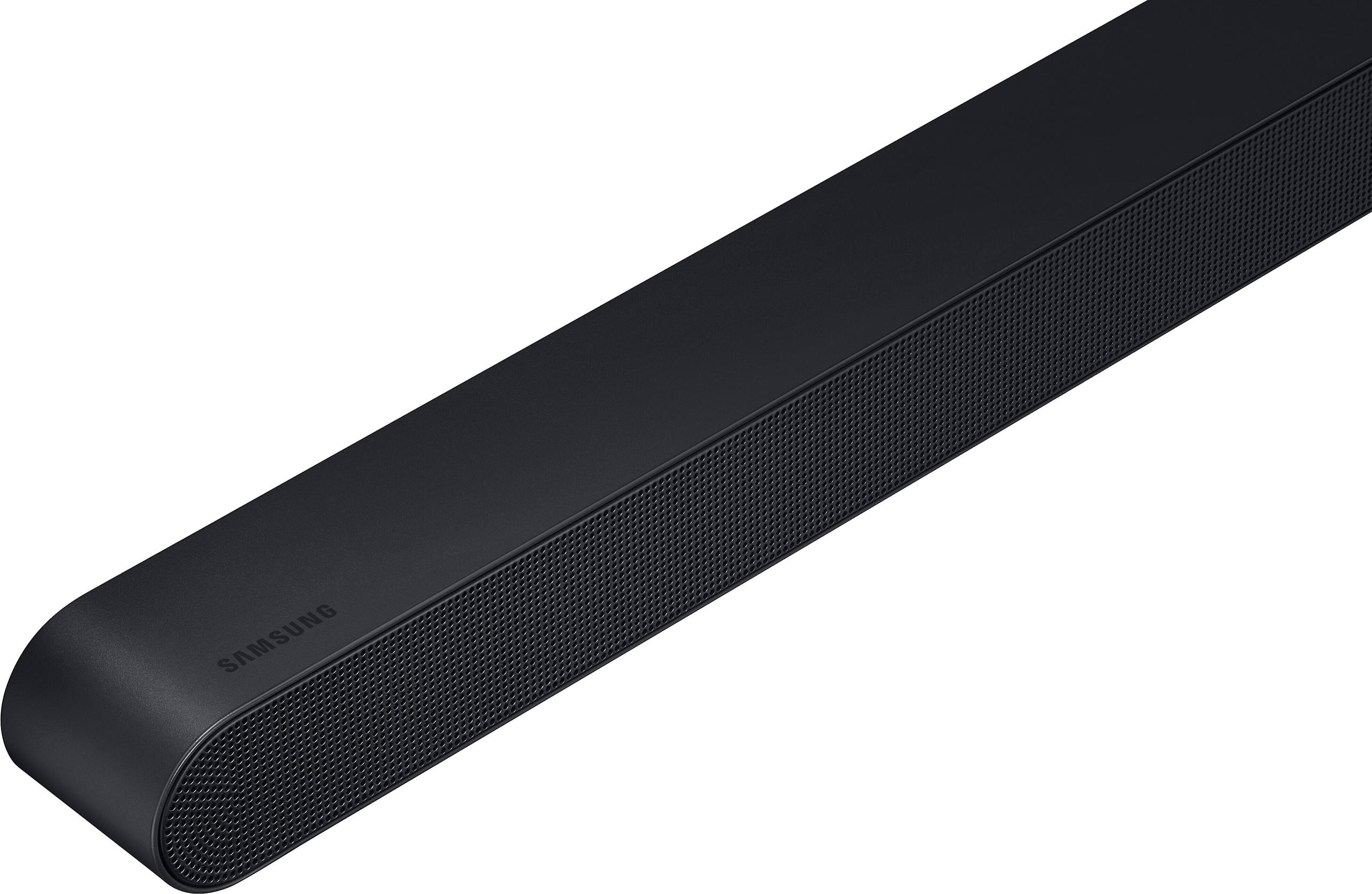
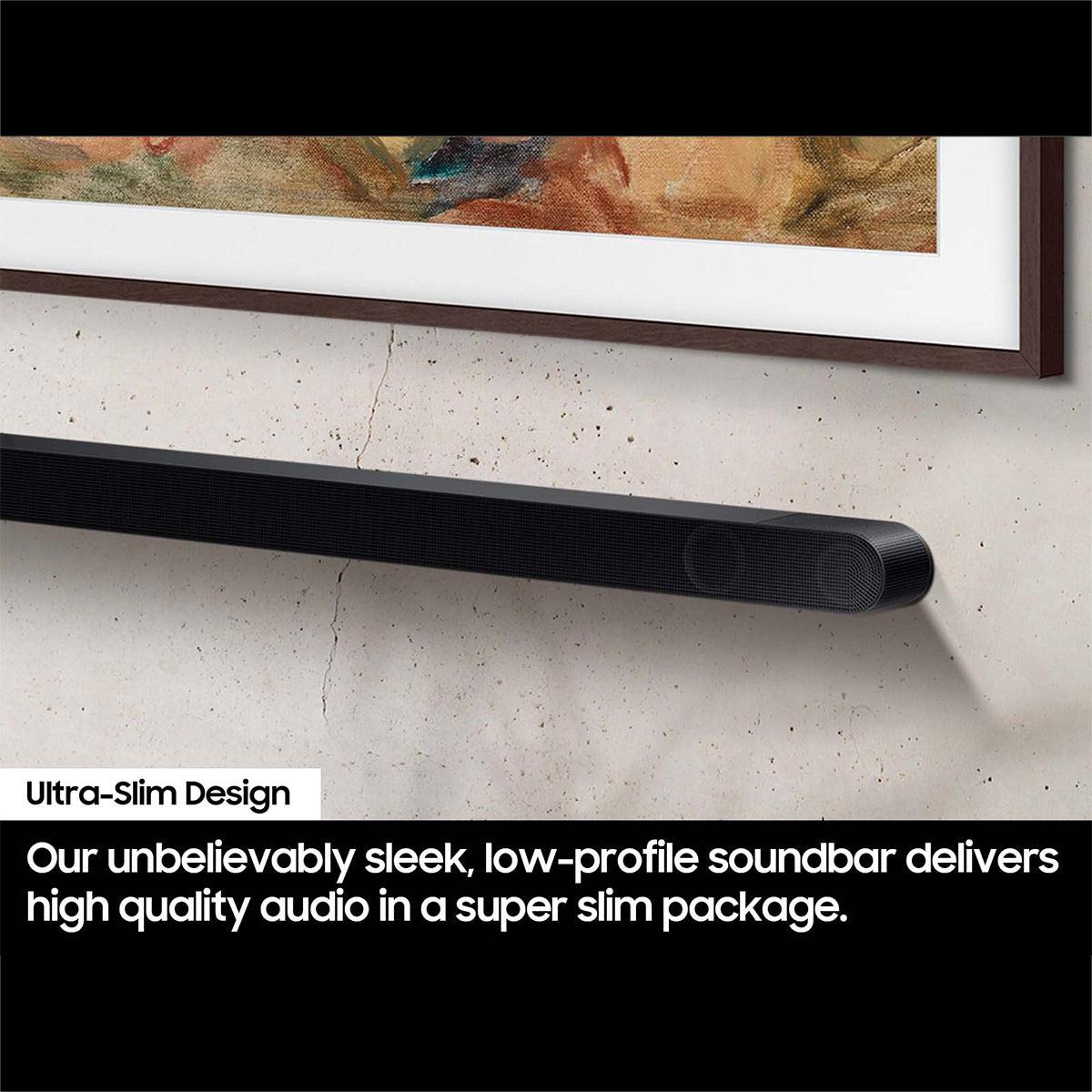
I've installed both soundbars in multiple rooms, and the physical differences are immediately apparent. The Samsung measures just 2.4 inches tall—so slim that it practically disappears when wall-mounted below a TV. This ultra-thin profile is achieved by using racetrack-shaped drivers (oval rather than round) that fit more efficiently in the limited space.
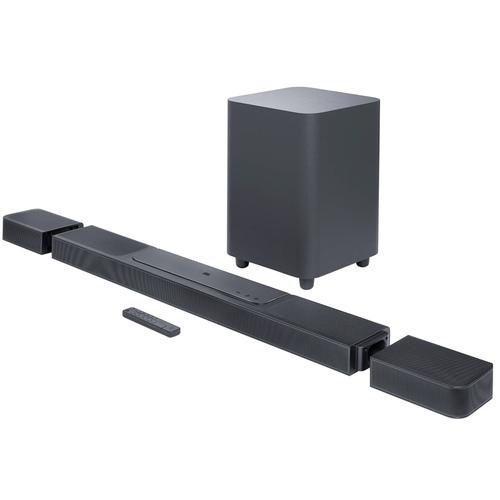
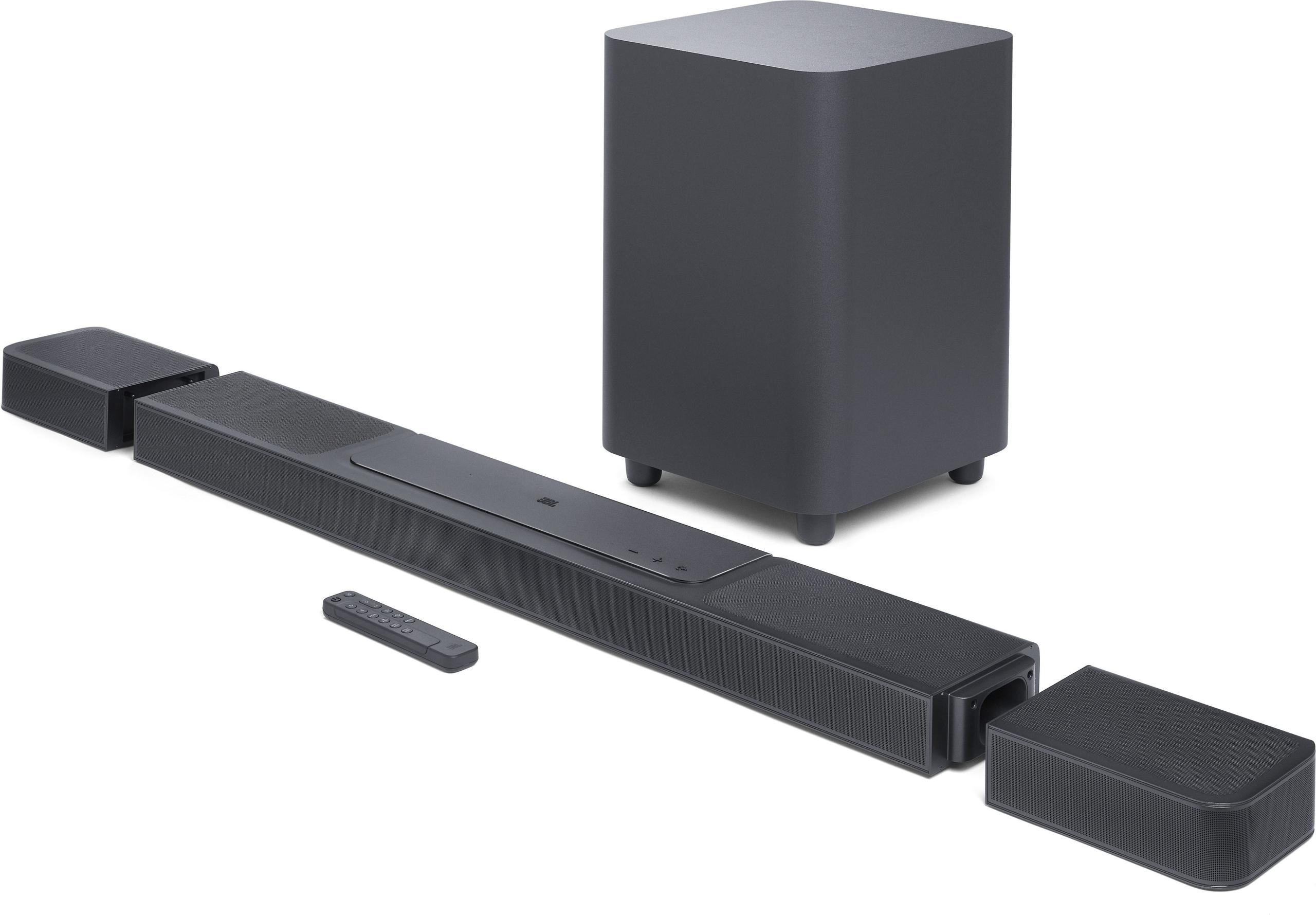
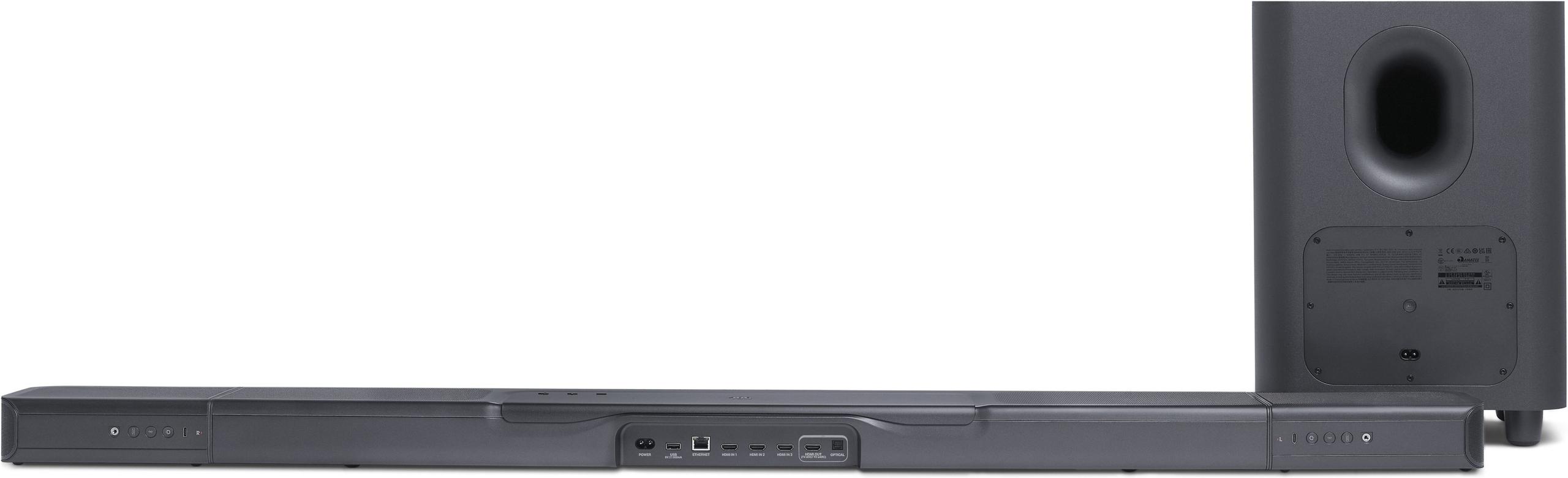
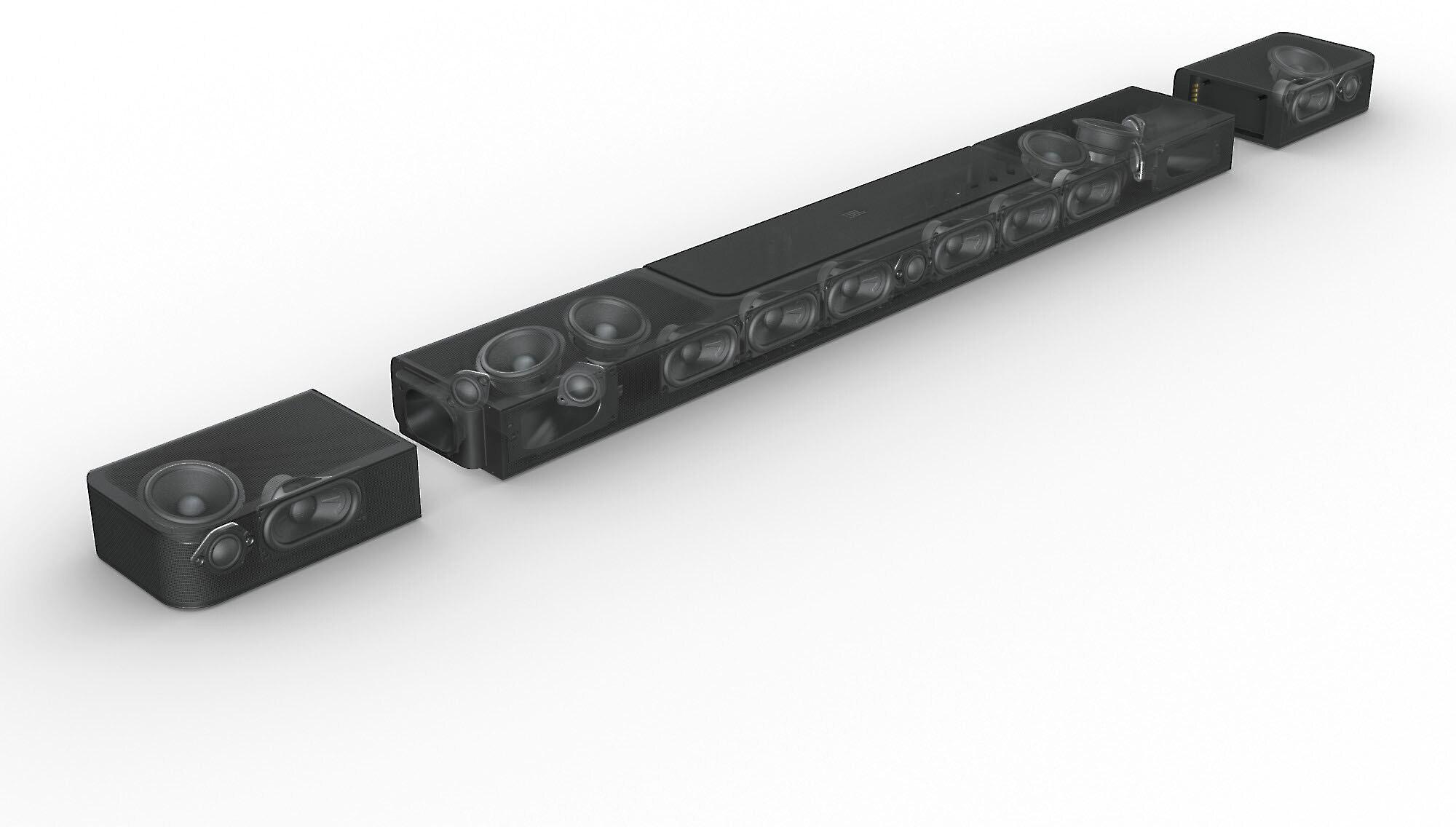
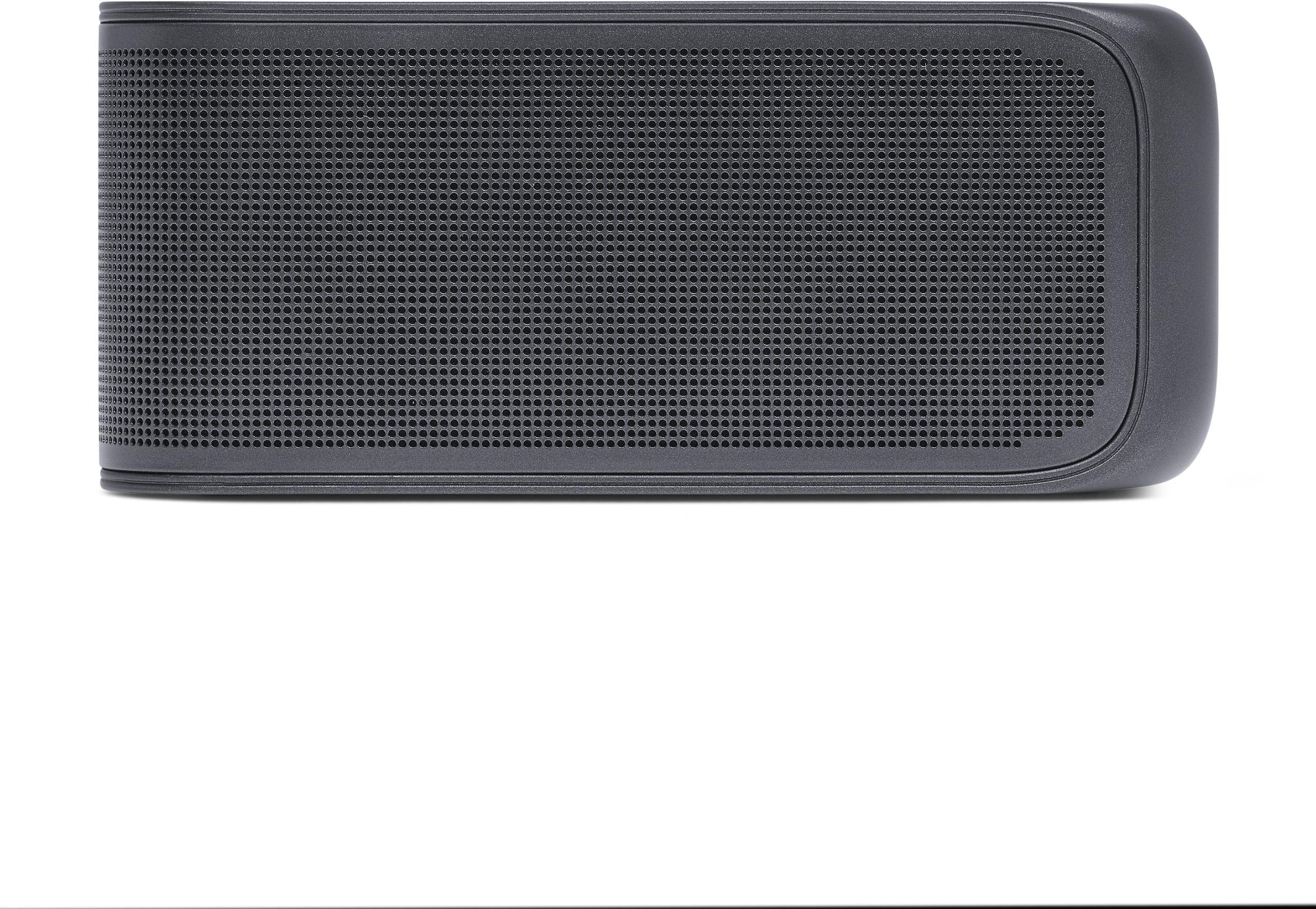
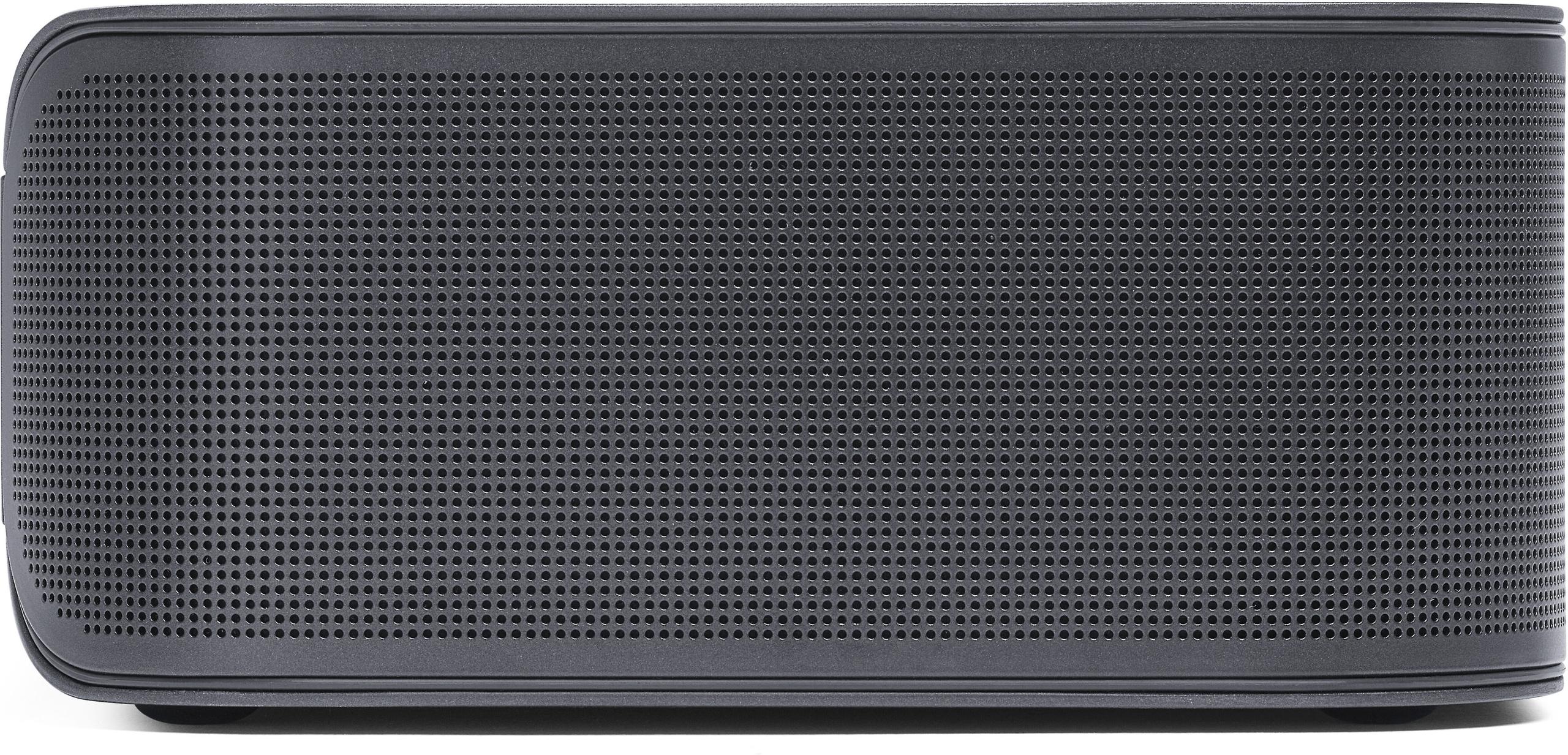
The JBL takes the opposite approach. At nearly the same height but much more substantial in depth, it makes a visual statement that says "serious audio equipment lives here." The detachable end sections can be removed and placed behind your seating area, transforming from a 3.1 system into true wireless surround sound. These battery-powered rear speakers are genuinely clever—they charge when attached to the main bar and can run for up to 12 hours independently.
From a practical standpoint, the Samsung's minimalist design makes it perfect for bedrooms or any space where you don't want audio equipment to dominate the aesthetics. The JBL's more substantial presence works better in dedicated media rooms or larger living spaces where its size is proportional to the room.
Here's where the fundamental differences become crystal clear. The Samsung uses virtual processing to create its Dolby Atmos effects. Essentially, sophisticated software analyzes the audio signal and uses psychoacoustic tricks to make your brain think sounds are coming from places they're not. It's like an audio optical illusion—clever, but ultimately limited by physics.
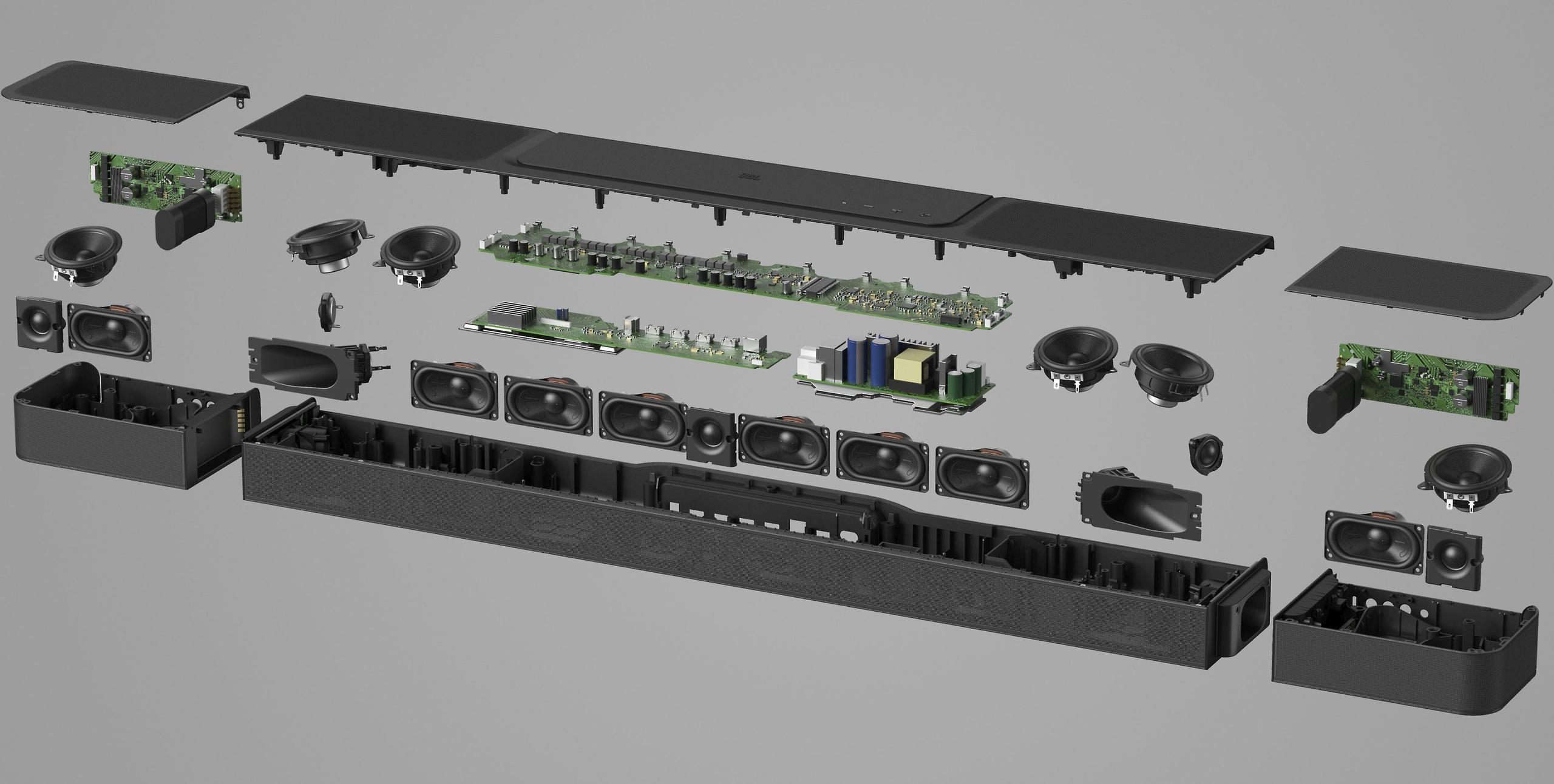
The JBL takes the brute force approach with six actual up-firing drivers—four in the main bar and one in each detachable rear speaker. These physically bounce sound off your ceiling to create genuine overhead effects. I've tested both approaches extensively, and while Samsung's virtual processing is impressive for the price point, it simply cannot match the dimensional accuracy of physical height channels.
Power output tells a similar story. The Samsung's 250 watts is perfectly adequate for small to medium rooms, but the JBL's 1,170 watts provides serious headroom. This isn't just about volume—it's about dynamic range. When a movie scene transitions from whispered dialogue to an explosion, the JBL can handle that contrast without compression or distortion. The Samsung starts to strain at high volumes, especially with bass-heavy content.
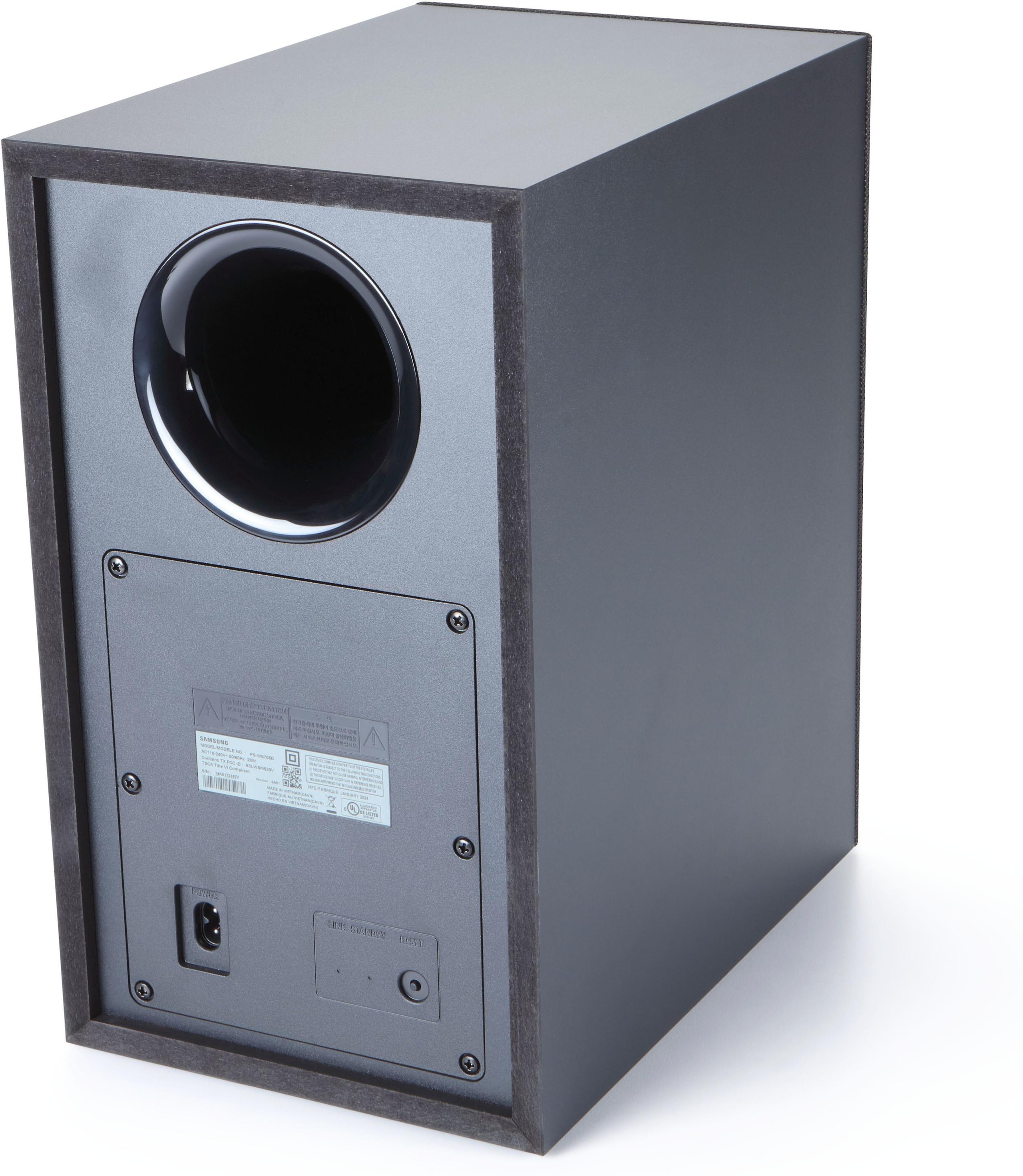
The subwoofer comparison is particularly revealing. While Samsung doesn't specify their subwoofer's size or power rating (usually a red flag), the JBL proudly features a 12-inch driver with 300 watts of dedicated power. In practice, this translates to bass that you feel in your chest versus bass that you merely hear.
Both soundbars embrace the modern expectation of smart connectivity, but they take different paths. The Samsung shines with Q-Symphony, an exclusive feature that coordinates the soundbar with compatible Samsung TVs. Instead of turning off the TV's speakers (as most soundbars do), Q-Symphony uses them as additional channels for a wider soundstage. It's genuinely clever and works better than you'd expect.
SpaceFit Sound is another Samsung exclusive that automatically calibrates the audio based on your room's acoustics, using the Samsung TV's built-in microphone to analyze reflections and adjust accordingly. This kind of automatic room correction used to require expensive dedicated equipment.
The JBL counters with broader compatibility and more streaming options. AirPlay, Chromecast built-in, and Alexa Multi-Room Music support mean you can stream from virtually any device or service. The JBL One app provides detailed EQ controls and room correction settings that audio enthusiasts will appreciate.
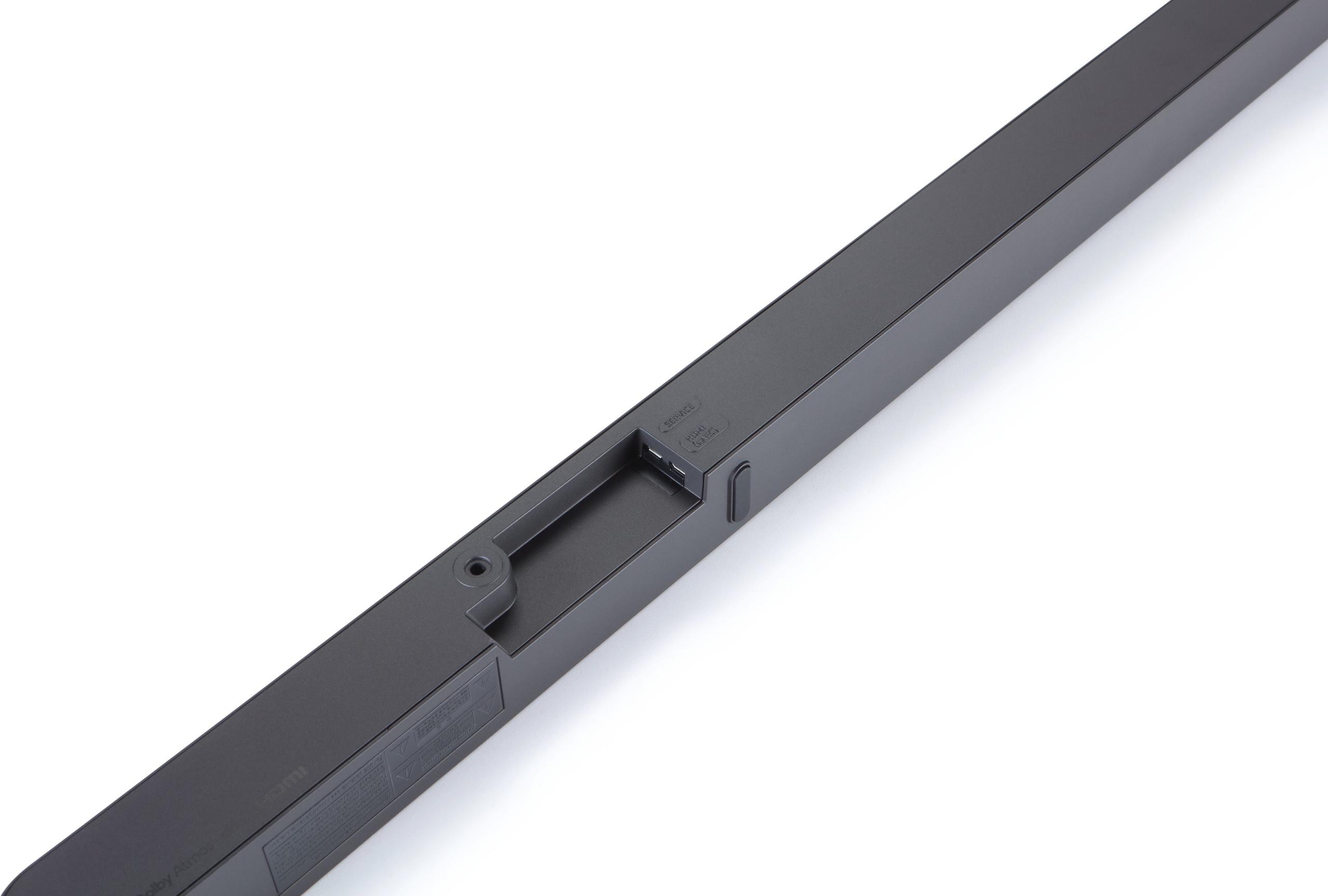
Connectivity options favor the JBL significantly. While the Samsung offers only HDMI eARC (Enhanced Audio Return Channel—a single cable that handles both audio and control signals), the JBL provides four HDMI inputs plus eARC output. If you have multiple gaming consoles, a Blu-ray player, and streaming devices, this connectivity advantage is huge.
For serious home theater use, the differences become more pronounced. I've watched the same action sequences on both systems, and the JBL delivers a more visceral, immersive experience. The MultiBeam technology uses advanced signal processing to create a wider soundfield, while the physical surround speakers provide actual rear channel separation.
The Samsung's approach works well for dialogue-heavy content like dramas or comedies. The Active Voice Amplifier (AVA) does an excellent job of keeping speech clear even when background music swells. However, complex soundtracks with lots of simultaneous elements can sound congested compared to the JBL's superior channel separation.
Bass response in home theater contexts heavily favors the JBL. Movie sound designers expect substantial low-frequency capability to properly render explosions, musical scores, and atmospheric effects. The Samsung's bass feels polite by comparison—present but not impactful.
Gaming performance shows similar differences. The JBL's Game Mode Pro automatically adjusts processing for lower latency while maintaining surround effects. With multiple HDMI inputs, you can connect various gaming consoles without switching cables. The Samsung's single HDMI connection becomes limiting if you have multiple gaming systems.
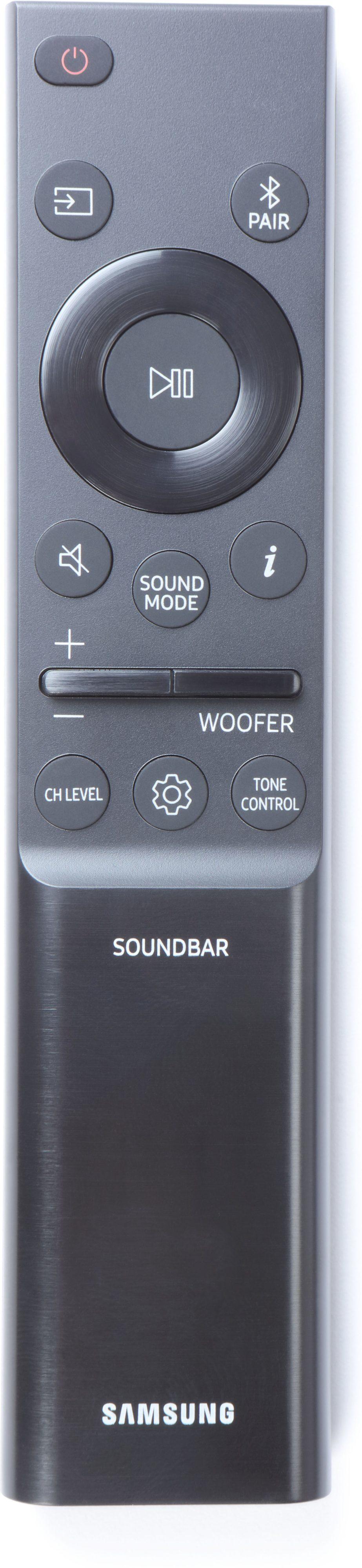
The Samsung's One Remote functionality deserves mention—you can control the soundbar using your Samsung TV's remote, eliminating the need for multiple remotes. It sounds minor, but in daily use, this simplification is genuinely convenient.
The JBL's detachable rear speakers represent genuine innovation. Beyond their obvious surround sound benefits, they function as standalone Bluetooth speakers. I've used them for outdoor gatherings, moving them easily from the main system. The magnetic attachment system is robust, and the charging integration is seamless.
Room calibration approaches differ significantly. Samsung's system works automatically through the TV, while JBL's requires manual initiation but provides more detailed adjustments. The JBL system can compensate for unusual room shapes or furniture arrangements more effectively.
In my testing across different room sizes and content types, clear usage patterns emerge. The Samsung HW-S700D excels in:
Apartments and smaller homes where its slim profile and moderate power output are perfectly matched to the space. The Samsung's refined, controlled sound signature works beautifully for late-night viewing when you need clear dialogue without disturbing neighbors.
Secondary viewing areas like bedrooms or kitchens benefit from the Samsung's unobtrusive design and simple setup. The wireless subwoofer can be placed out of sight while still providing adequate bass extension.
Samsung TV owners get the most value through ecosystem integration. Q-Symphony and one-remote operation create a seamless experience that feels like a natural TV upgrade rather than adding another device.
The JBL Bar 1300X dominates in:
Dedicated media rooms where its substantial power and true surround capabilities can be fully utilized. The room-filling sound and genuine Atmos effects transform movie watching into an event.
Large open-plan spaces that would overwhelm the Samsung's modest power output. The JBL's driver count and amplification provide even coverage across wide listening areas.
Multi-source entertainment setups with gaming consoles, streaming devices, and Blu-ray players all benefit from the multiple HDMI inputs and flexible connectivity.
At $378, the Samsung represents excellent value for its intended use case. You're getting sophisticated processing, premium build quality, and exclusive Samsung integrations at a reasonable price. The slim design has staying power—it won't look dated as room aesthetics evolve.
The JBL's $1,300 price tag reflects its ambitious feature set and premium components. You're paying for genuine home theater performance, innovative wireless technology, and future-proof connectivity. The detachable speakers alone represent significant engineering innovation.
Longevity considerations favor both products but for different reasons. The Samsung's focused feature set and established design mean it's unlikely to feel obsolete quickly. The JBL's extensive connectivity and updateable firmware provide more room for evolution as standards change.
Choose the Samsung HW-S700D if you value elegant integration over maximum performance. It's perfect for Samsung TV owners who want significantly better audio without visual clutter or complex setup. The price point makes it accessible for most budgets, and the refined sound signature works well for varied content types.
The JBL Bar 1300X justifies its premium price for users who prioritize immersive audio performance. If you're building a serious home theater, have a large room to fill, or simply want the best possible soundbar experience regardless of cost, the JBL delivers genuine value despite its high price.
Your room size, content preferences, and ecosystem choices should drive this decision more than price alone. Both soundbars excel in their intended roles—the Samsung as an elegant TV enhancement, the JBL as a comprehensive home theater solution. Understanding which philosophy matches your needs will lead to years of audio satisfaction.
| Samsung HW-S700D ($378) | JBL Bar 1300X ($1,300) |
|---|---|
| Price - The most obvious difference that sets expectations | |
| $378 (down from $499) - Excellent value for Samsung TV owners | $1,300 - Premium pricing for flagship features |
| Channel Configuration - Determines surround sound capability | |
| 3.1 channels (virtual Atmos processing) | 11.1.4 channels (true Atmos with physical height drivers) |
| Total Power Output - Critical for room size and volume levels | |
| 250W total (adequate for small-medium rooms) | 1,170W total (handles large spaces without distortion) |
| Dolby Atmos Implementation - Affects 3D audio realism | |
| Virtual processing only (software simulation) | 6 physical up-firing drivers (genuine overhead effects) |
| Subwoofer - Determines bass depth and impact | |
| Wireless subwoofer (size/power unspecified) | 12" wireless subwoofer with 300W dedicated power |
| Design Profile - Important for TV mounting and aesthetics | |
| Ultra-slim 2.4" height (disappears under wall-mounted TVs) | Standard 2.4" height but much deeper (commands presence) |
| Surround Speakers - Affects true surround sound placement | |
| None (relies on virtual processing) | Detachable battery-powered wireless rears (12-hour battery) |
| HDMI Connectivity - Matters for multiple devices | |
| 1 HDMI eARC only (limits source connections) | 4 HDMI inputs + 1 eARC output (handles multiple consoles/devices) |
| Samsung TV Integration - Exclusive features for brand loyalty | |
| Q-Symphony, SpaceFit Sound, One Remote control | Standard compatibility (no special Samsung features) |
| Streaming Services - Affects music and content access | |
| Basic Bluetooth, AirPlay, limited streaming | 300+ services via AirPlay, Chromecast, Alexa MRM |
| Room Calibration - Optimizes sound for your specific space | |
| SpaceFit Sound (automatic via Samsung TV) | Manual room correction with detailed EQ controls |
| Frequency Response - Shows bass extension capability | |
| Not specified (typically 50Hz-20kHz for this class) | 33Hz-20kHz (deeper bass extension for movie impact) |
| Ideal Room Size - Determines if power matches your space | |
| Small to medium rooms (up to 250 sq ft) | Medium to large rooms (250-400+ sq ft) |
| Best Use Case - Who each product serves best | |
| Samsung TV owners wanting elegant audio upgrade | Home theater enthusiasts prioritizing immersion |
The Samsung HW-S700D ($378) offers excellent value for Samsung TV owners who want a significant audio upgrade without breaking the bank. The JBL Bar 1300X ($1,300) costs 3.4x more but delivers genuine home theater performance with true Dolby Atmos and wireless surround speakers. Choose Samsung for budget-conscious upgrades, JBL for maximum audio quality.
The biggest difference is surround sound capability. The Samsung HW-S700D uses virtual processing to simulate surround effects from a 3.1 channel setup, while the JBL Bar 1300X provides true 11.1.4 surround sound with physical up-firing drivers and detachable wireless rear speakers for authentic 3D audio.
The Samsung HW-S700D ($378) is ideal for small rooms up to 250 square feet. Its 250W power output and slim design won't overwhelm compact spaces, and the controlled sound signature works perfectly for apartments or bedrooms where you need clear audio without disturbing neighbors.
Not necessarily. The JBL Bar 1300X ($1,300) is designed for medium to large rooms (250-400+ sq ft) and its 1,170W power output can be overwhelming in small spaces. However, if you're a serious movie enthusiast who wants the best possible audio quality regardless of room size, the JBL's superior performance may still be worth it.
The Samsung HW-S700D is specifically designed for Samsung TV integration with exclusive features like Q-Symphony (uses TV speakers + soundbar simultaneously), SpaceFit Sound (automatic room calibration), and one-remote control. The JBL Bar 1300X works with Samsung TVs but lacks these special integration features.
The JBL Bar 1300X has significantly more powerful bass with its 12-inch subwoofer and 300W dedicated power, extending down to 33Hz for deep, room-shaking impact. The Samsung HW-S700D includes a wireless subwoofer but doesn't specify size or power, resulting in more modest bass that's adequate but not as impactful for movies.
The JBL Bar 1300X ($1,300) is superior for gaming with its Game Mode Pro optimization, four HDMI inputs for multiple consoles, and true surround sound for directional audio cues. The Samsung HW-S700D has only one HDMI connection, limiting connectivity for serious gamers with multiple systems.
The Samsung HW-S700D uses virtual processing to simulate Dolby Atmos height effects through software, which works but lacks the precision of physical drivers. The JBL Bar 1300X features six actual up-firing drivers that bounce sound off your ceiling for genuine 3D audio positioning that's much more immersive.
The Samsung HW-S700D ($378) is simpler to set up with just one HDMI connection and automatic integration with Samsung TVs. The JBL Bar 1300X requires more initial setup due to multiple HDMI connections and positioning the detachable rear speakers, but offers more customization options through the JBL One app.
Yes, but the JBL Bar 1300X ($1,300) offers superior streaming with access to 300+ services via AirPlay, Chromecast, and Alexa Multi-Room Music. The Samsung HW-S700D supports basic Bluetooth and AirPlay streaming but has fewer built-in options for direct music service access.
Both soundbars offer excellent build quality, but they serve different purposes. The Samsung HW-S700D excels in elegant, minimalist construction with premium materials in an ultra-slim profile. The JBL Bar 1300X demonstrates superior engineering with its innovative detachable wireless speakers, robust magnetic connections, and heavy-duty components designed for high-power output.
Choose the Samsung HW-S700D ($378) if you own a Samsung TV, have a small-to-medium room, prioritize clean aesthetics, and want excellent value. Choose the JBL Bar 1300X ($1,300) if you want maximum audio performance, have a large room, watch lots of movies, need multiple HDMI inputs, or prioritize true surround sound over budget considerations.
We've done our best to create useful and informative comparisons to help you decide what product to buy. Our research uses advanced automated methods to create this comparison and perfection is not possible - please contact us for corrections or questions. These are the sites we've researched in the creation of this article: crutchfield.com - samsung.com - bestbuy.com - avsforum.com - walts.com - samsung.com - samsung.com - videoandaudiocenter.com - samsung.com - samsung.com - samsung.com - pcrichard.com - techradar.com - jbl.com - audioadvice.com - youtube.com - rtings.com - jbl.com - greentoe.com - harmanaudio.com - youtube.com - mm.jbl.com - jbl.com

Privacy Policy
Terms and Conditions - Affiliate Policy
Home Security
© Copyright 2008-2026.
11816 Inwood Rd #1211, Dallas, TX 75244