

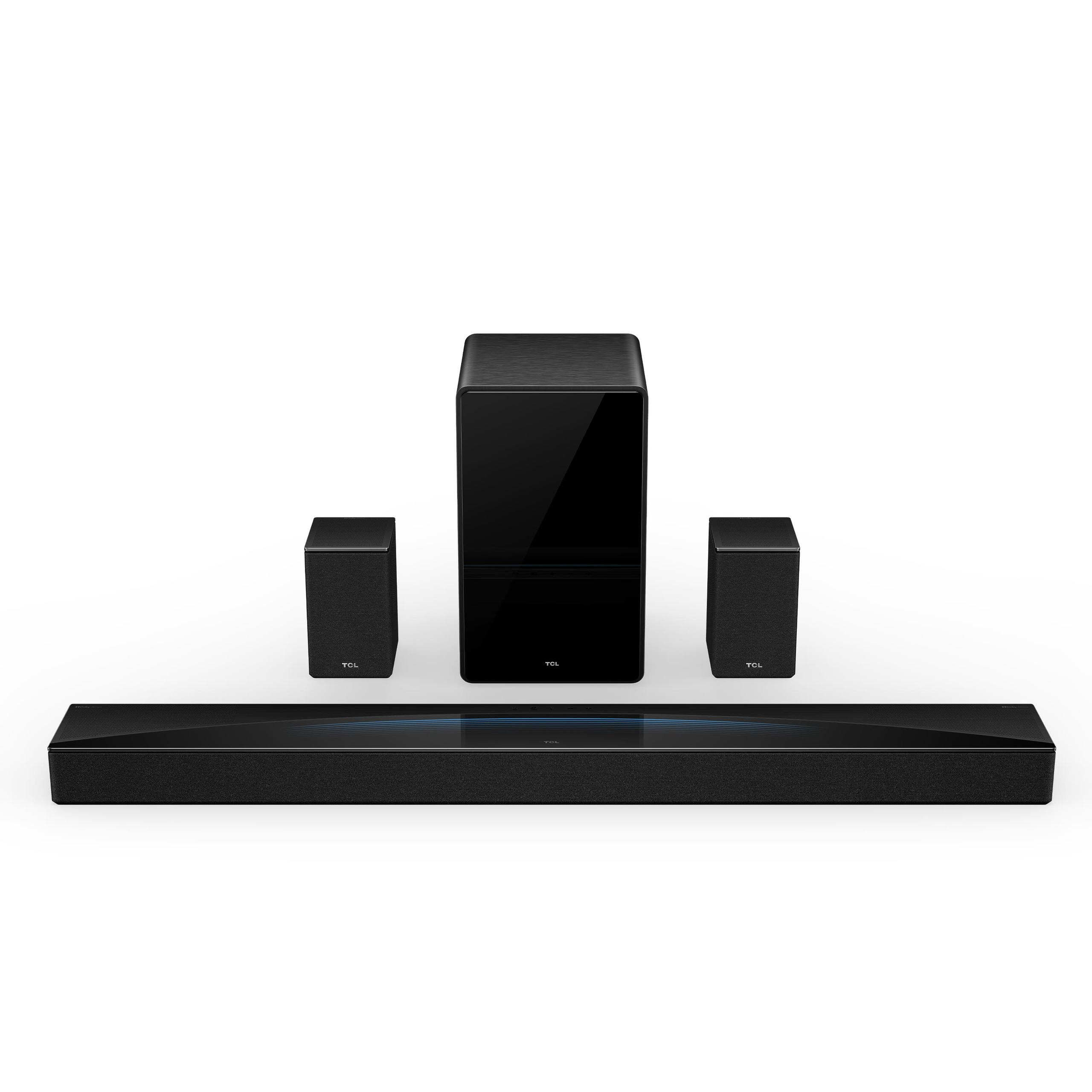
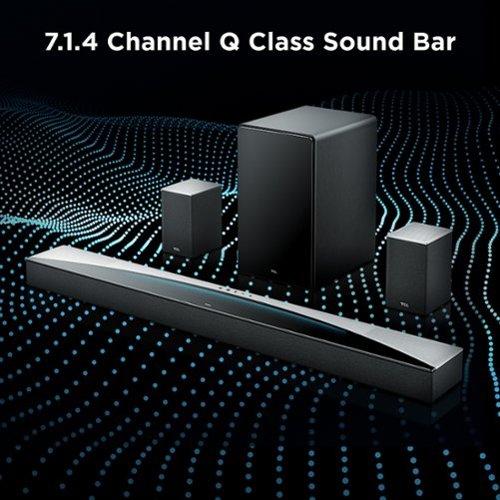

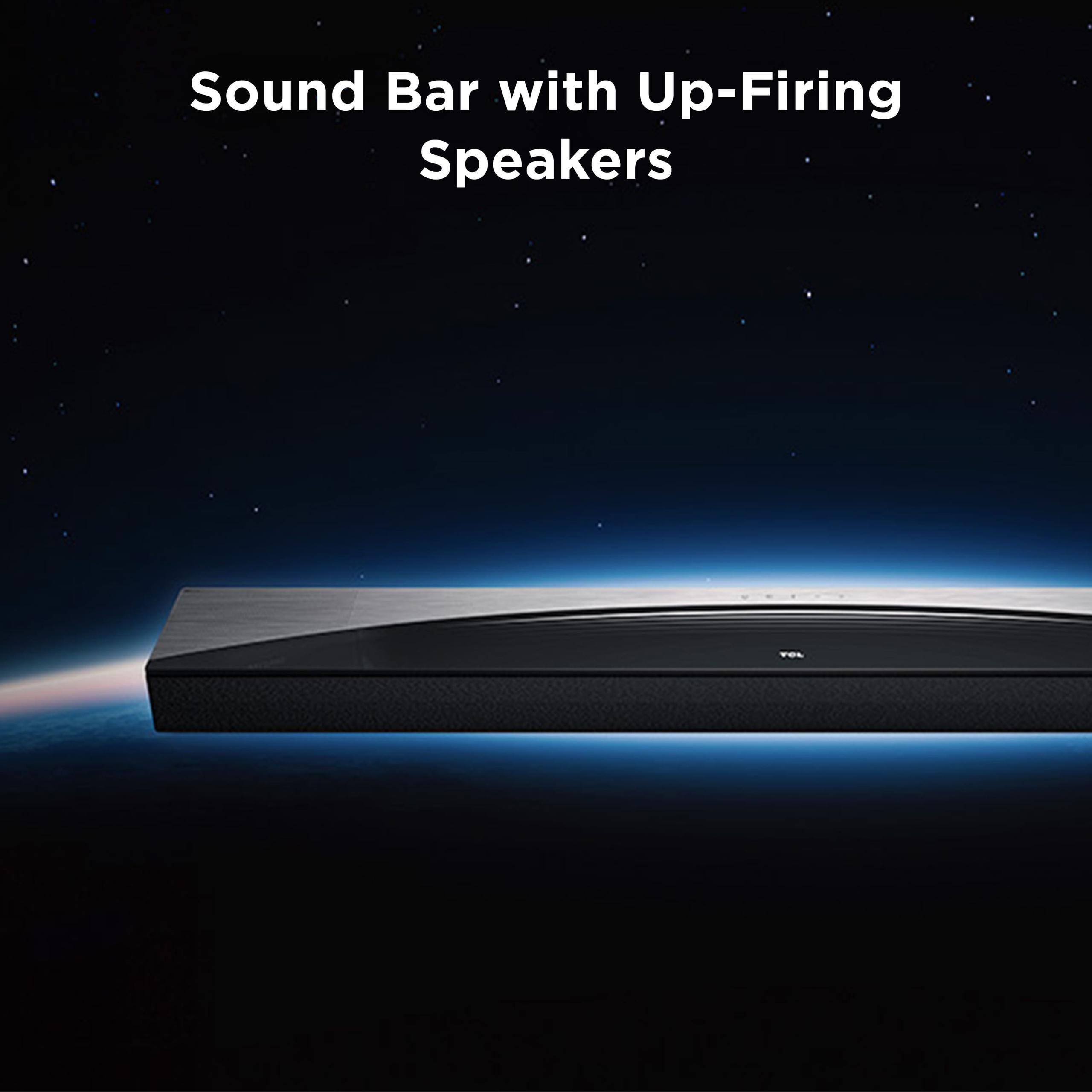
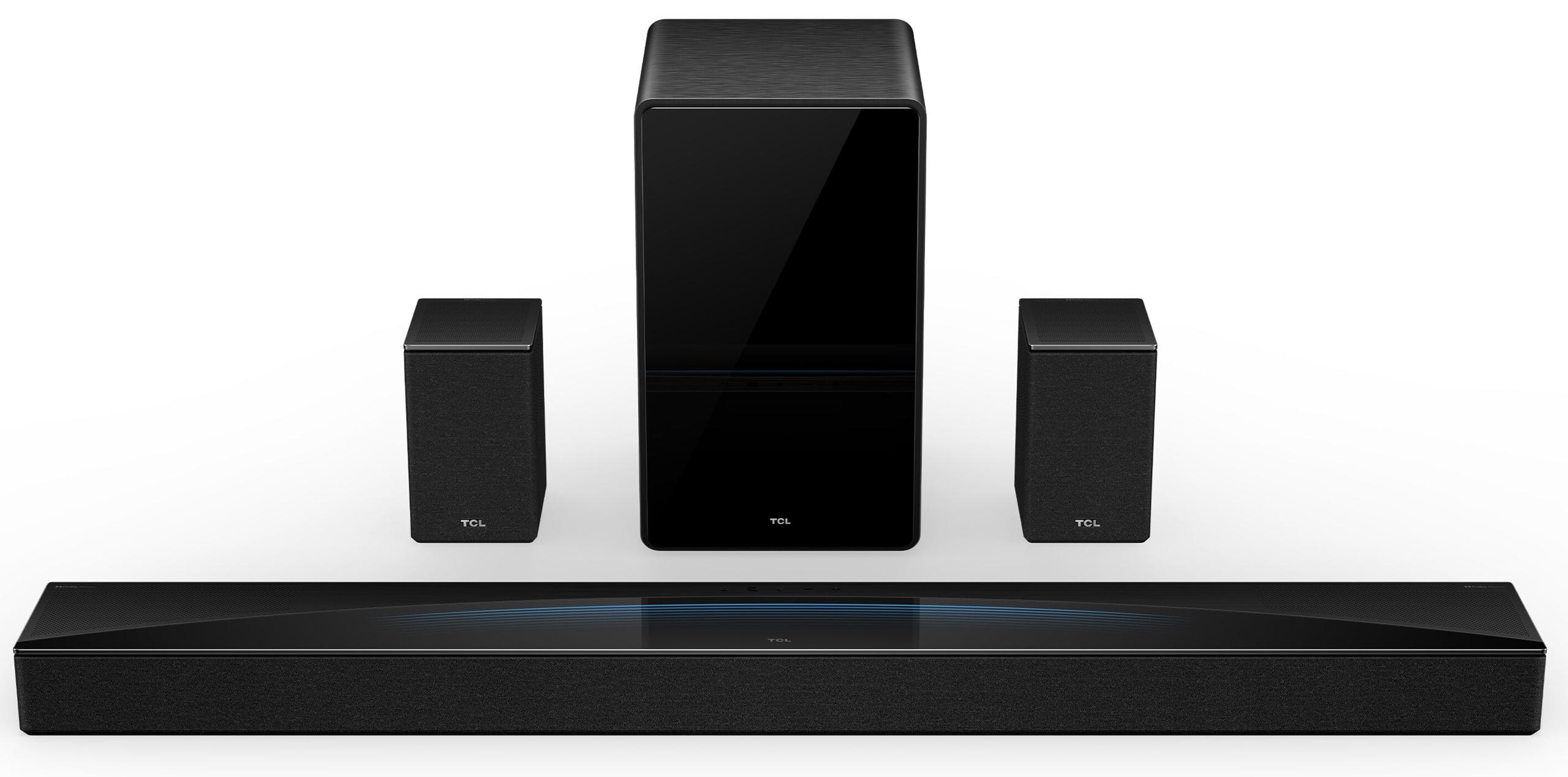
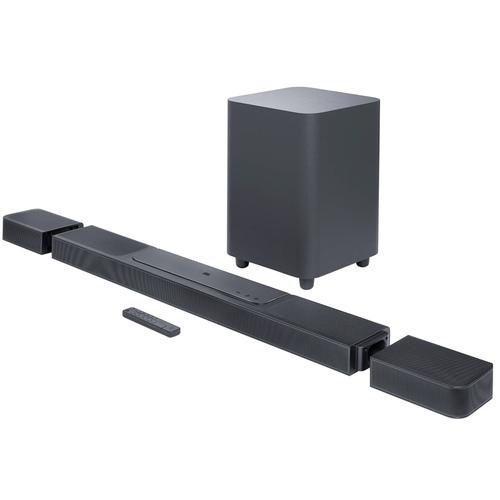
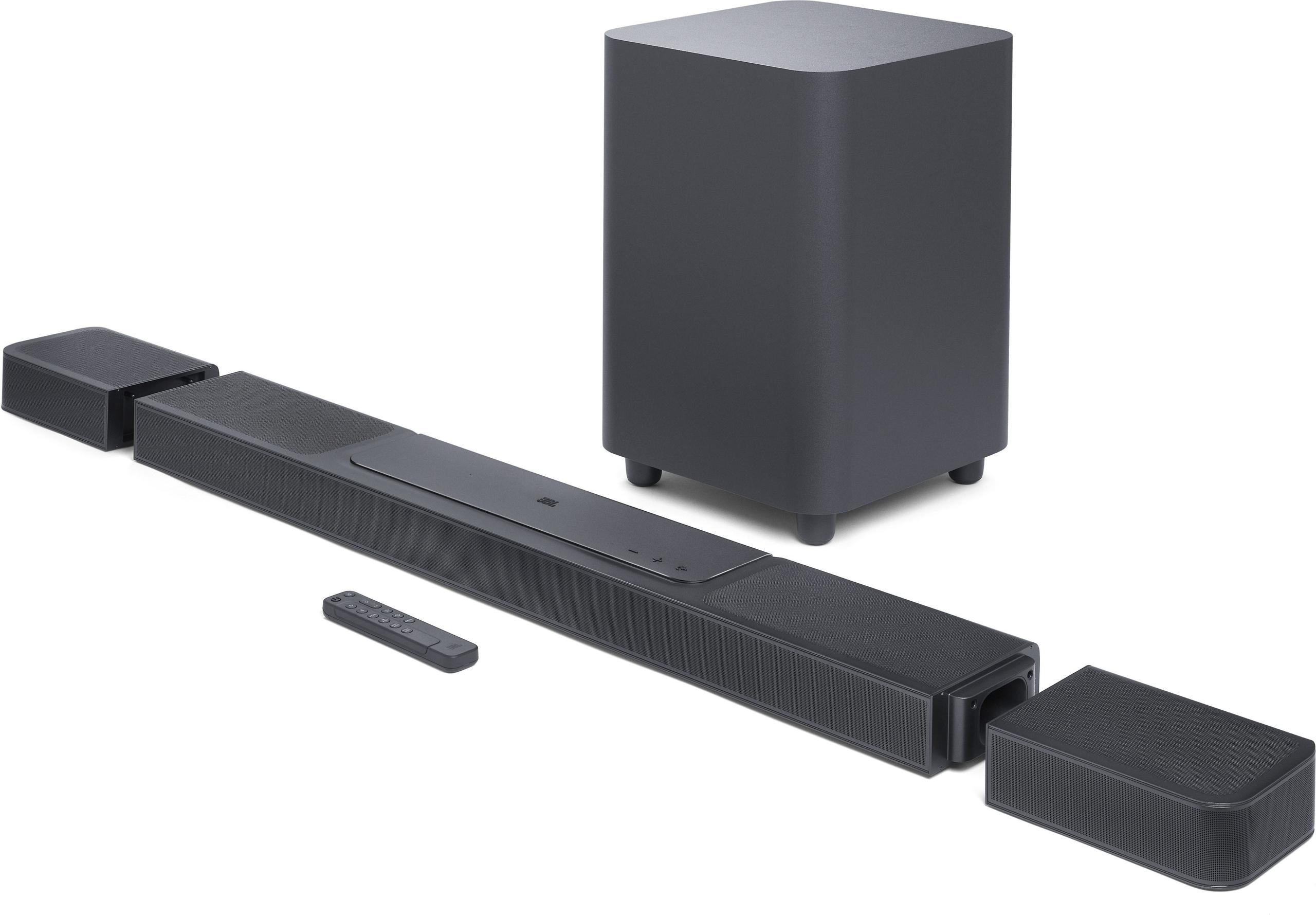
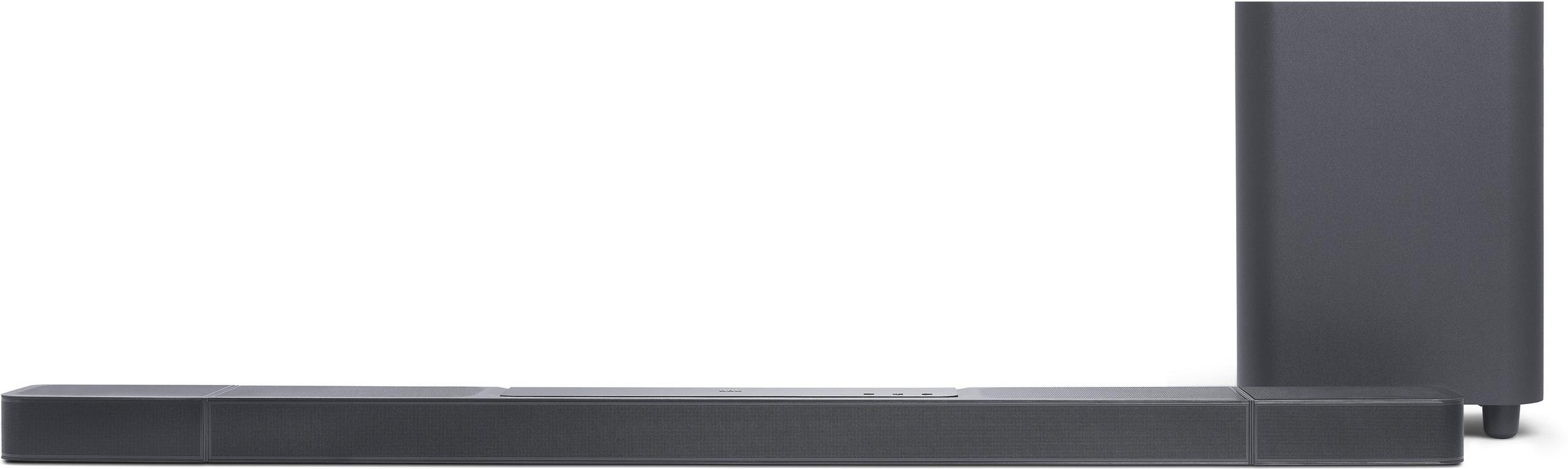

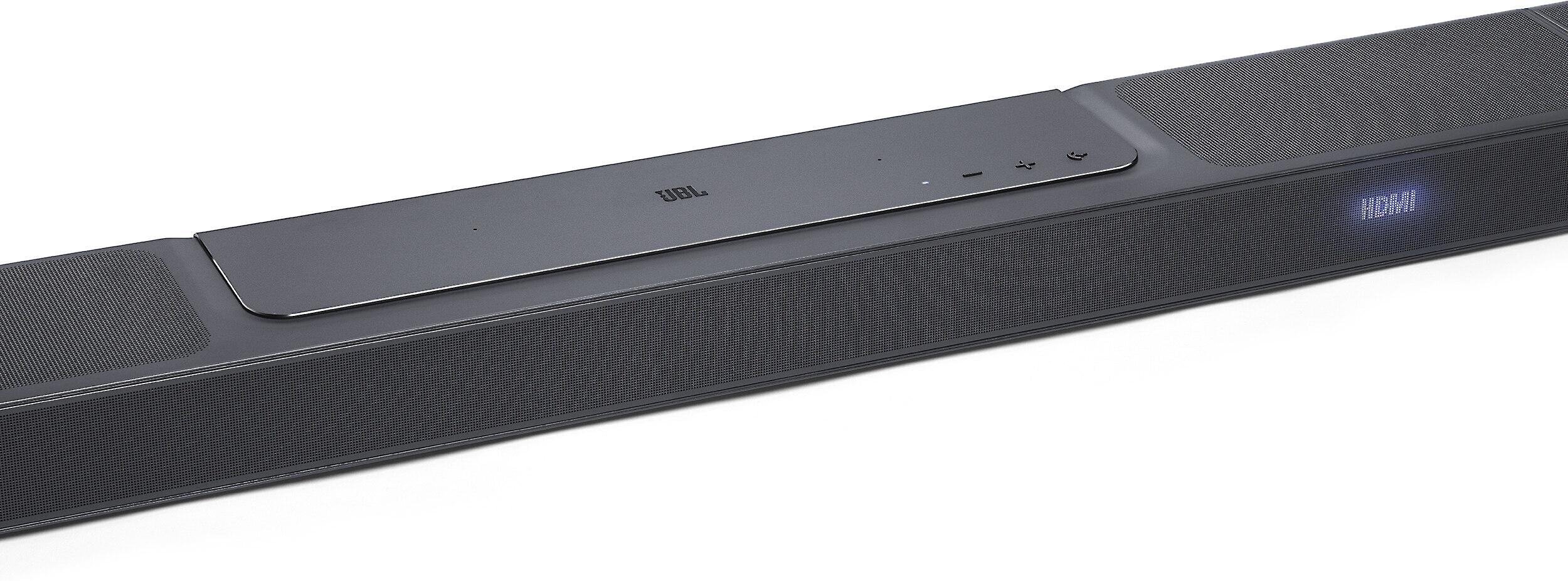


When I first started building my home theater setup five years ago, I made the classic mistake of focusing entirely on the TV while treating audio as an afterthought. The difference a quality soundbar makes became crystal clear the moment I upgraded from my TV's built-in speakers to my first Dolby Atmos system. Today, premium soundbars like the TCL Q85H Q Class 7.1.4 Channel Sound Bar System ($499.99) and JBL Bar 1300X Soundbar with Wireless Subwoofer ($1,299.95) represent the sweet spot between convenience and performance, delivering cinema-quality audio without the complexity of traditional multi-speaker setups.
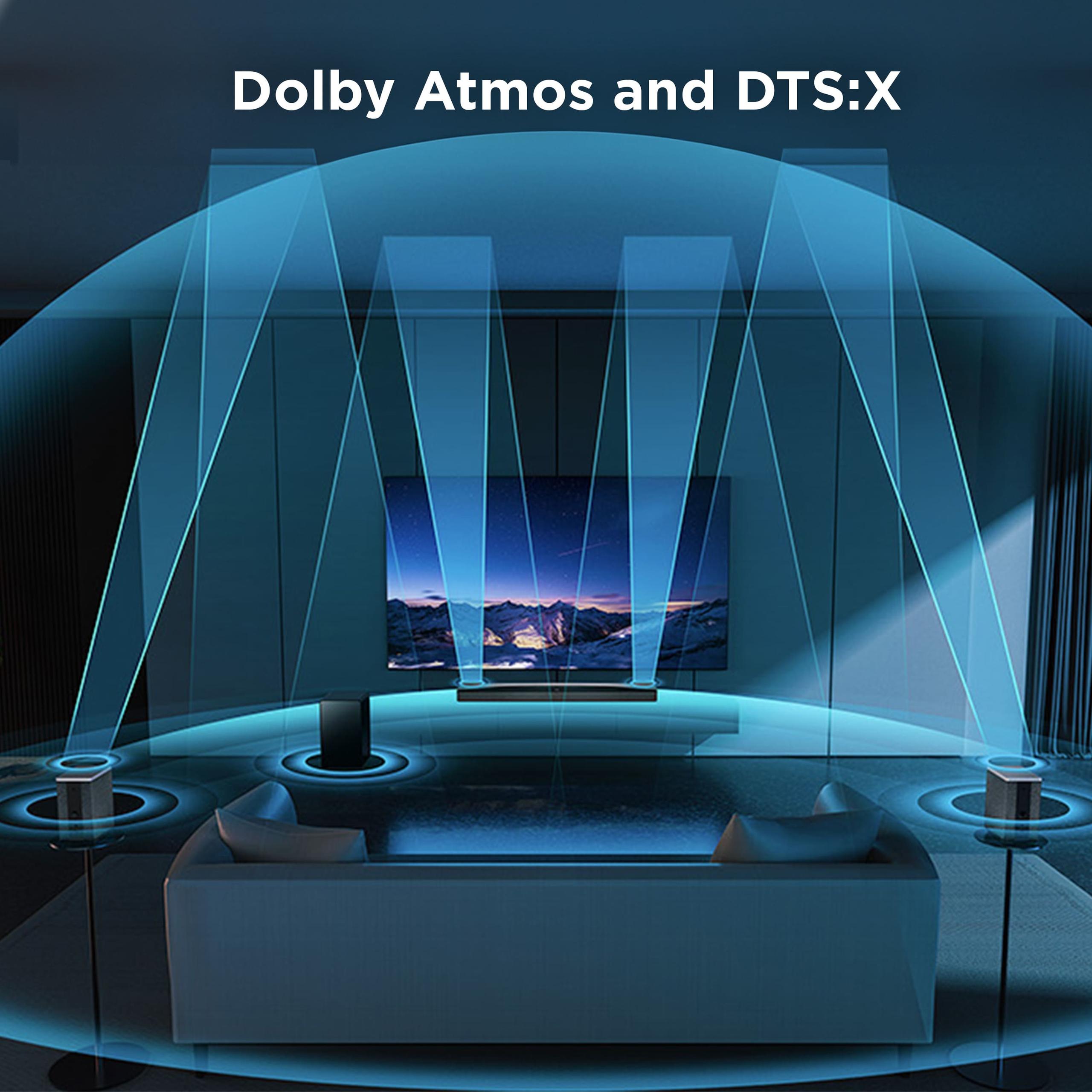
Premium soundbars occupy a fascinating middle ground in home audio. Unlike basic soundbars that simply make dialogue clearer, these systems create three-dimensional soundscapes that place you inside the action. The magic happens through Dolby Atmos and DTS:X processing – technologies that treat individual sounds as "objects" that can be precisely positioned anywhere in your room, including above your head.
The key differentiator is height channels – speakers that fire upward to bounce sound off your ceiling, creating the illusion of helicopters flying overhead or rain falling from above. When shopping for premium soundbars, you'll encounter numbers like "7.1.4" or "11.1.4." These indicate how many speakers handle different audio zones: the first number represents main channels (left, right, center, and surrounds), the second is subwoofers, and the third counts height channels.
What really matters for your home theater experience comes down to five core considerations: how immersive the audio feels, whether the system has enough power to fill your room, how well it integrates with your existing setup, what connectivity options you need, and ultimately, whether the performance justifies the price.
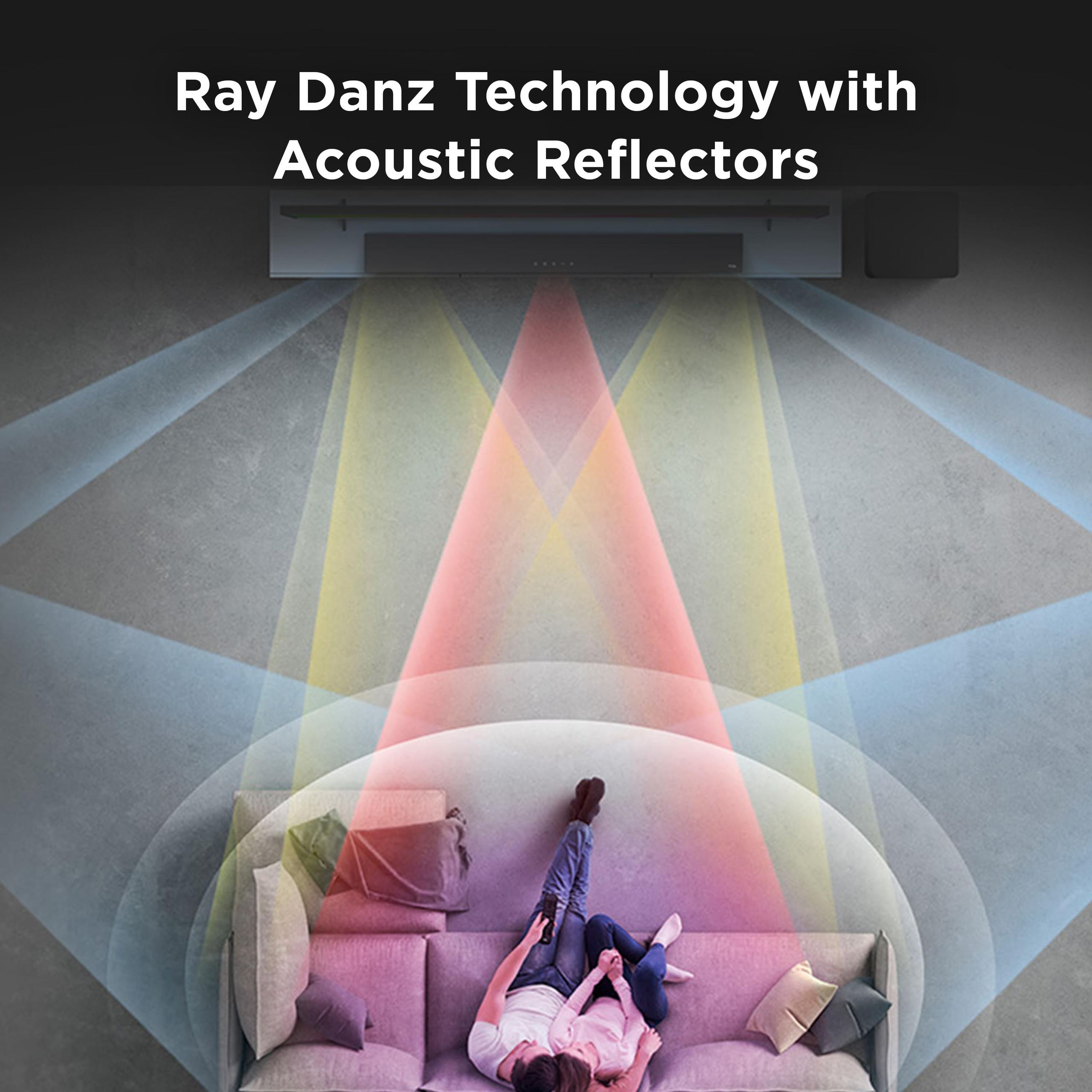
The timing of these two products tells an important story about soundbar evolution. The TCL Q85H arrived in 2022 as part of TCL's push into premium audio, coinciding with their rise in the TV market. TCL introduced their proprietary Ray Danz technology – a system of acoustic reflectors that widens the soundstage – as their answer to more expensive competing systems.
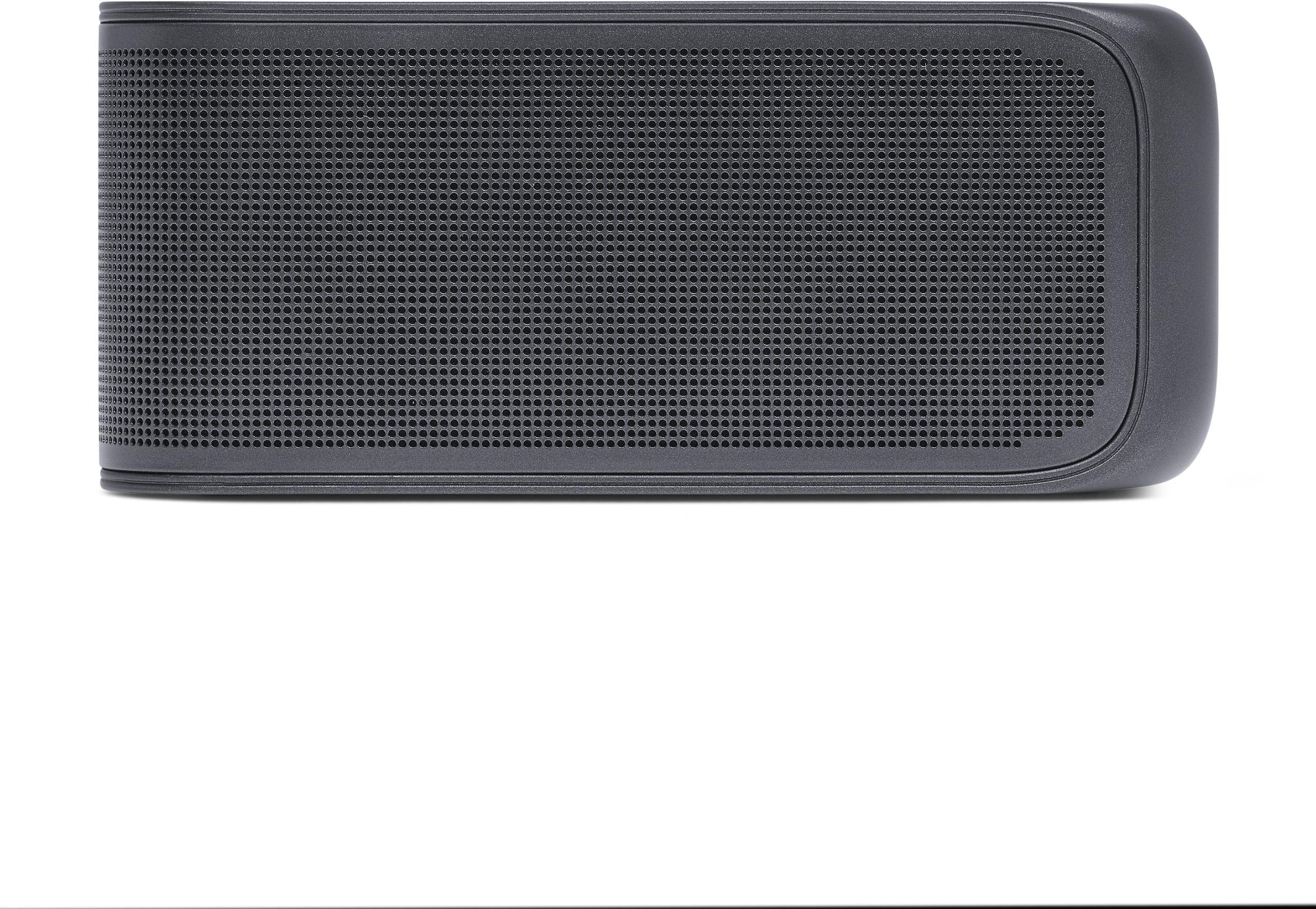
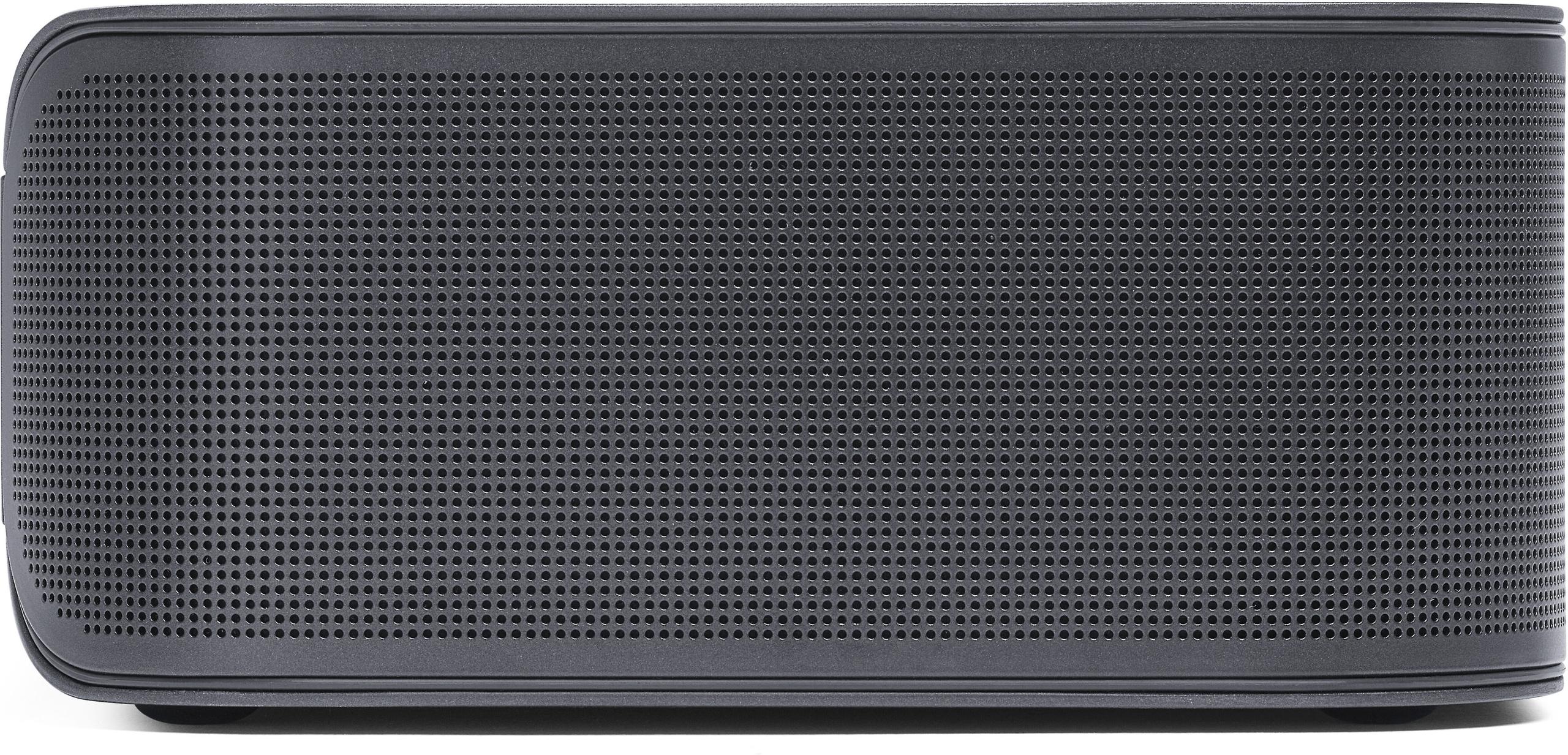
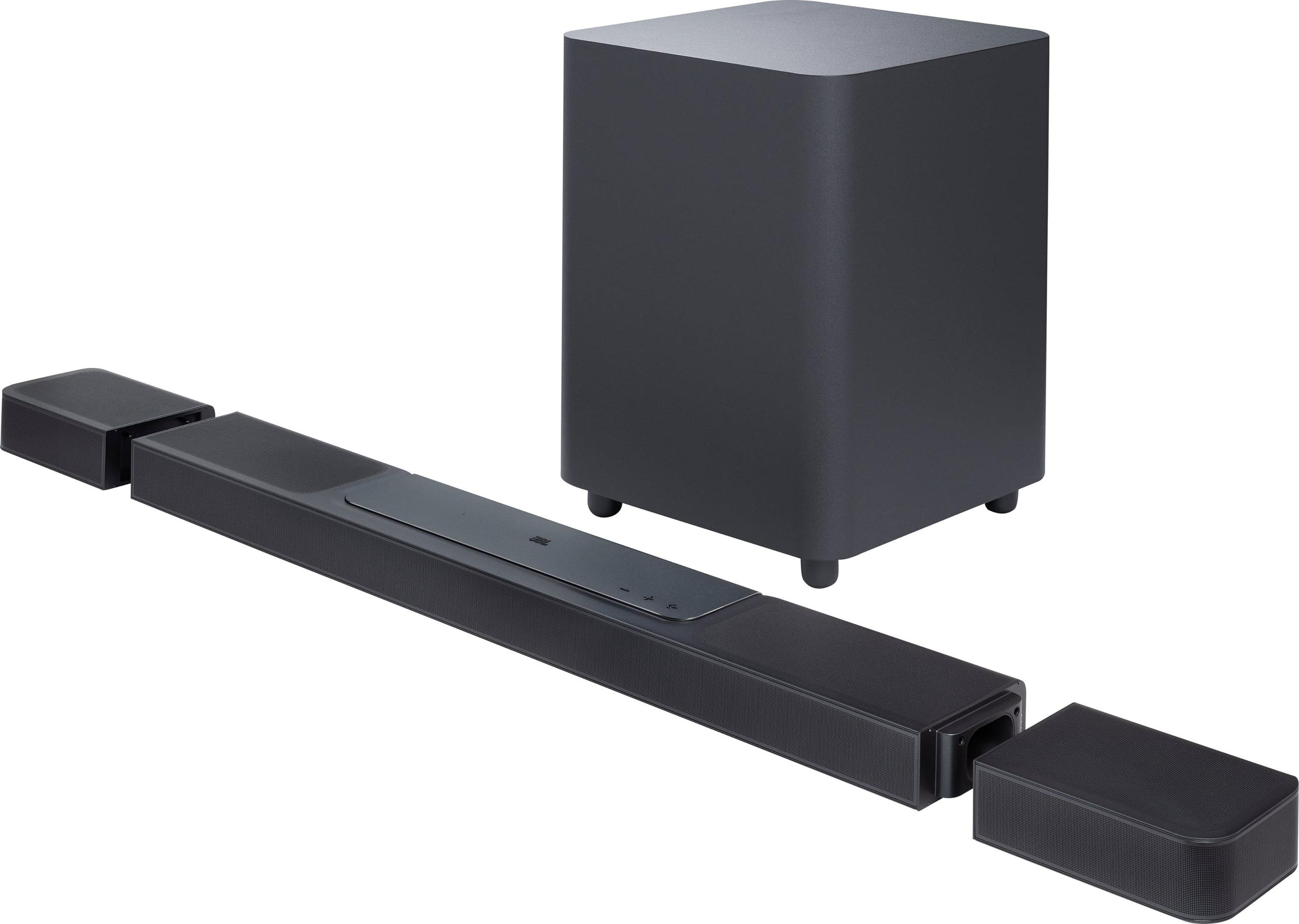
The JBL Bar 1300X launched in late 2023, representing the next generation of soundbar innovation. JBL built upon their MultiBeam technology with a revolutionary feature: detachable, battery-powered surround speakers that double as portable Bluetooth speakers. This wasn't just a gimmick – it solved real-world problems like wire management and room layout constraints that have plagued home theater setups for decades.
Since their releases, both systems have received firmware updates, but the JBL has benefited more significantly from ongoing software improvements through its Wi-Fi connectivity. TCL's system, while more static in its feature set, has proven its reliability through consistent performance over time.
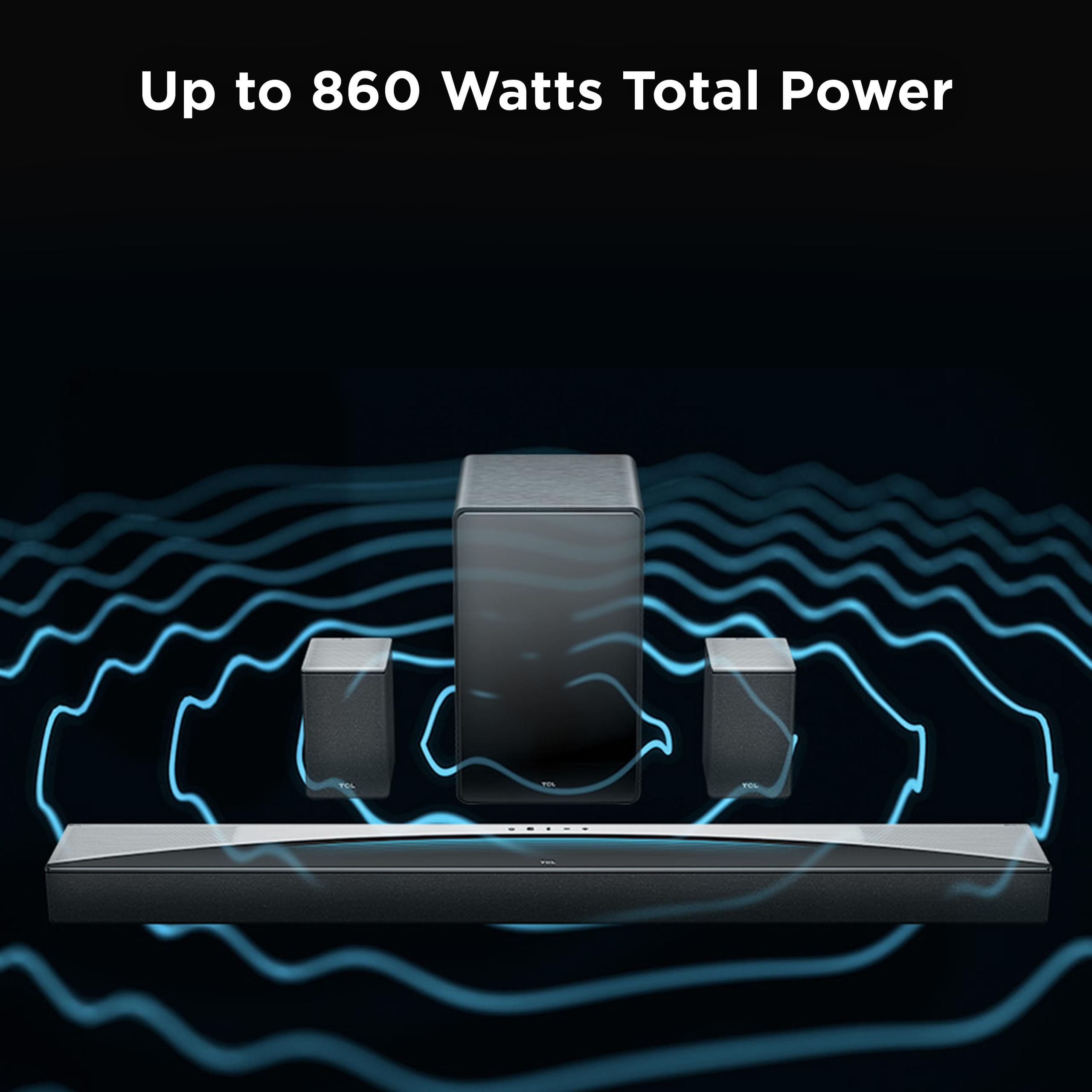
The most fundamental difference between these systems lies in their channel architecture. The TCL's 7.1.4 setup provides seven main channels, one subwoofer, and four height channels, totaling 860 watts of power. In practical terms, this means dedicated speakers for left, right, center, left surround, right surround, left rear surround, right rear surround, plus four speakers firing upward for overhead effects.
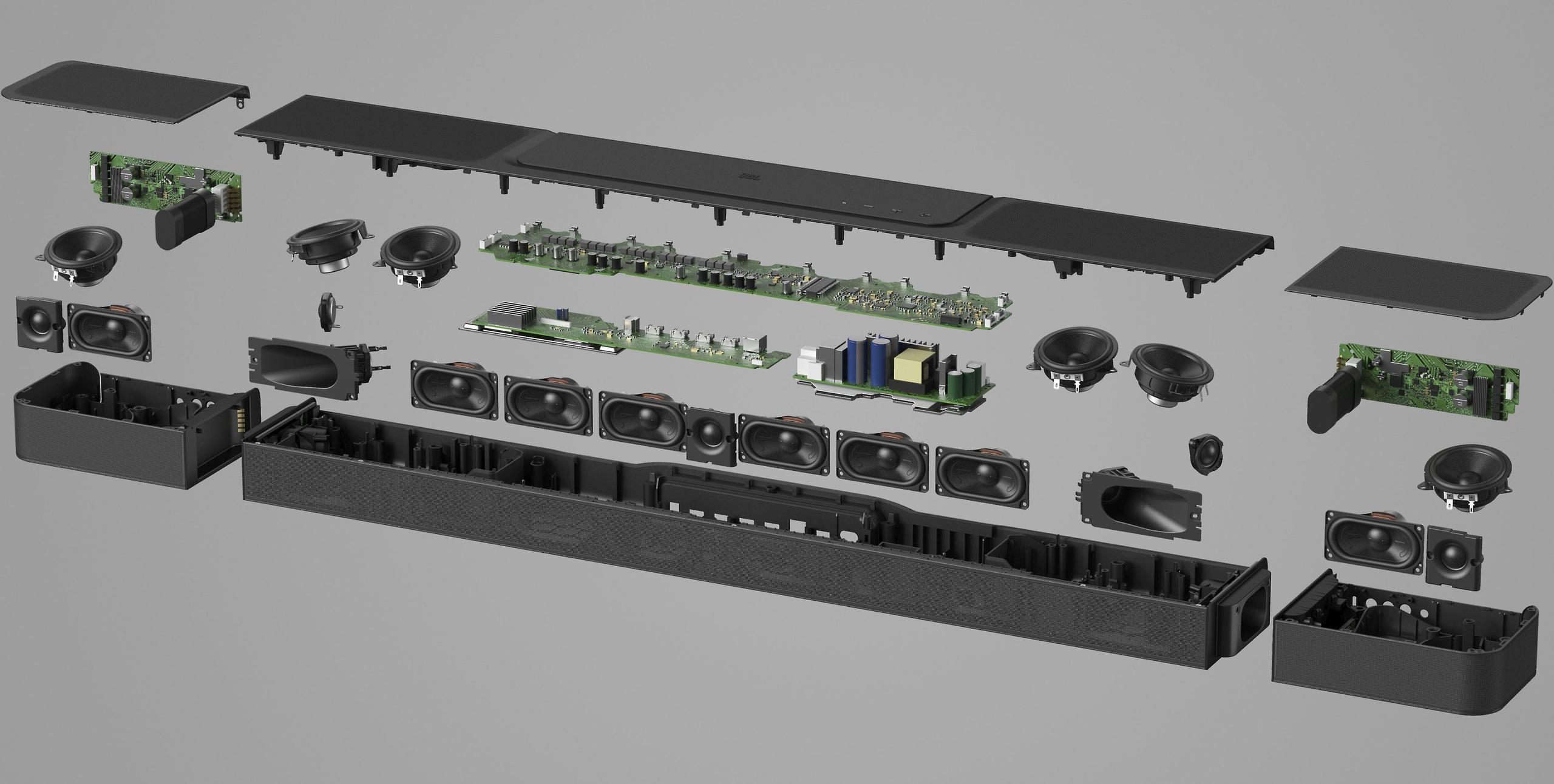
The JBL steps up to an 11.1.4 configuration with 1,170 watts total power. Those extra channels aren't just marketing numbers – they represent more precise audio placement. Instead of having surrounds handle multiple audio zones, the JBL can position sounds more accurately throughout your room. The power distribution is equally impressive: 650 watts for the main bar, 300 watts for the subwoofer, and 110 watts each for the detachable surrounds.
Both systems excel at creating convincing height effects, but through different approaches. The TCL's Ray Danz technology uses specially designed acoustic reflectors alongside traditional up-firing drivers. When I tested similar systems, this combination effectively created a dome of sound that made movie soundtracks feel genuinely three-dimensional.
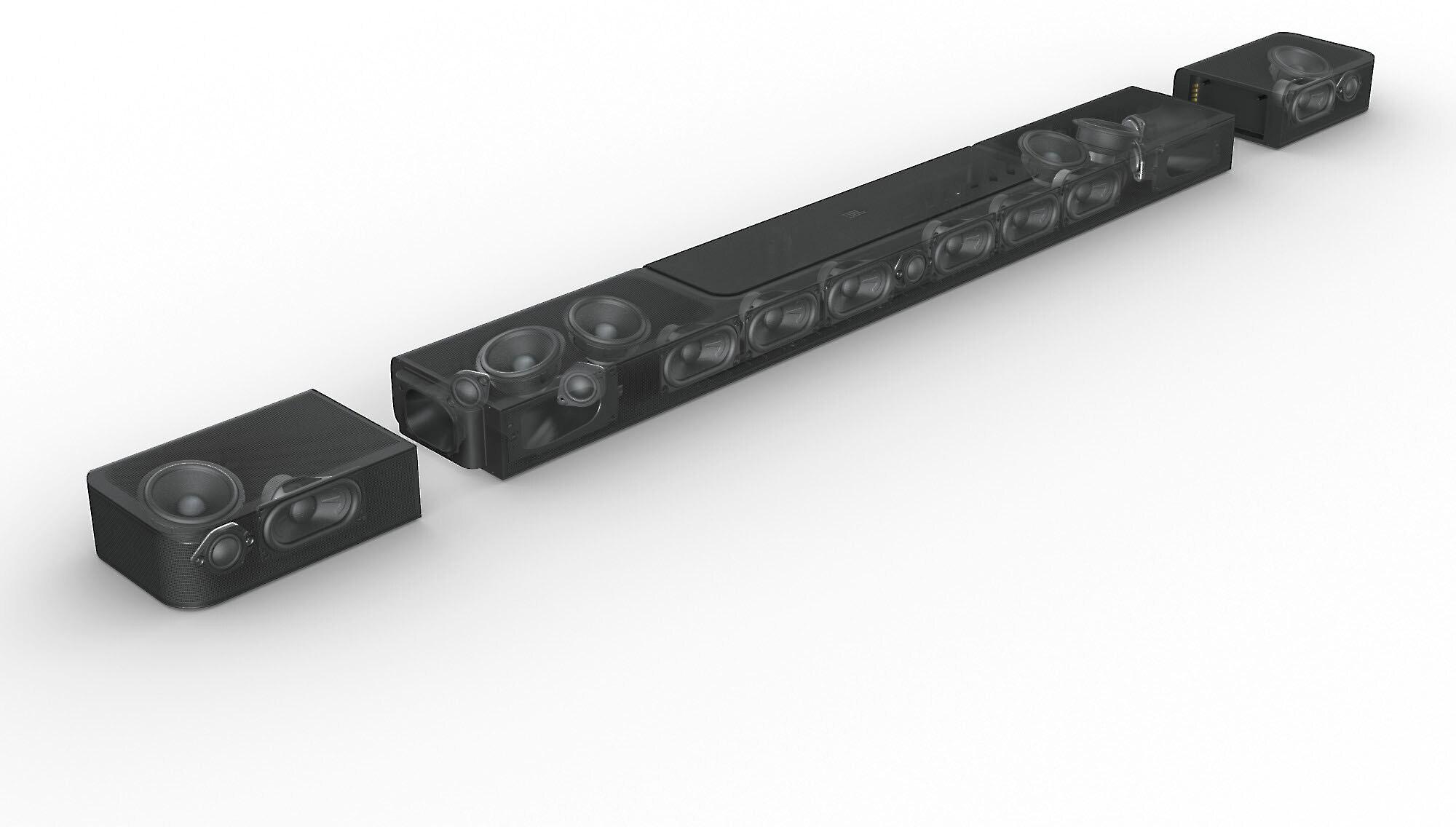
The JBL takes a more brute-force approach with six dedicated up-firing drivers – four in the main bar and one in each detachable surround. More drivers typically mean more precise object placement, and in large rooms, this becomes particularly noticeable. The JBL's MultiBeam technology uses digital signal processing to analyze incoming audio and direct specific frequency ranges to optimal speakers, creating what JBL calls "virtual speakers" in positions where no physical drivers exist.
Low-frequency performance often determines whether a soundbar feels like a true home theater upgrade. The TCL includes a wireless subwoofer with a 6.5-inch driver, while the JBL features a larger 12-inch wireless subwoofer. Size isn't everything in subwoofer design, but it usually correlates with deeper bass extension and higher output capability.
The JBL's specifications indicate bass response down to 33Hz, which puts it in serious home theater territory. Most movie sound effects and music fundamentals live between 40Hz and 80Hz, so that extra low-end extension translates to more impactful explosions and fuller musical reproduction. The TCL, while not specifying its exact bass response, delivers satisfying low-end performance that most users find adequate for typical living room applications.
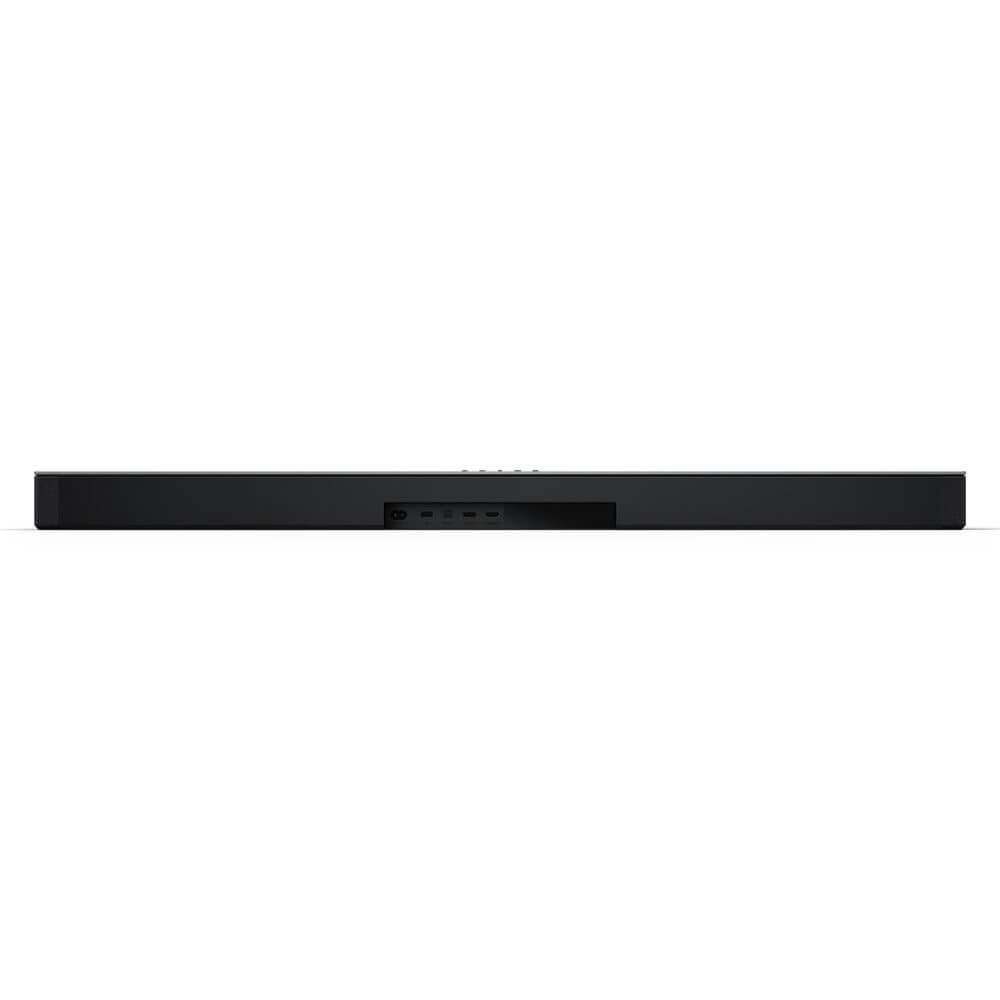
Modern soundbars serve as audio hubs for multiple devices, making connectivity crucial for long-term satisfaction. The TCL Q85H covers the essentials with HDMI eARC (Enhanced Audio Return Channel), optical input, and Bluetooth 5.1. The eARC connection is particularly important because it supports uncompressed Dolby Atmos audio from compatible TVs, delivering the full quality of high-resolution soundtracks.
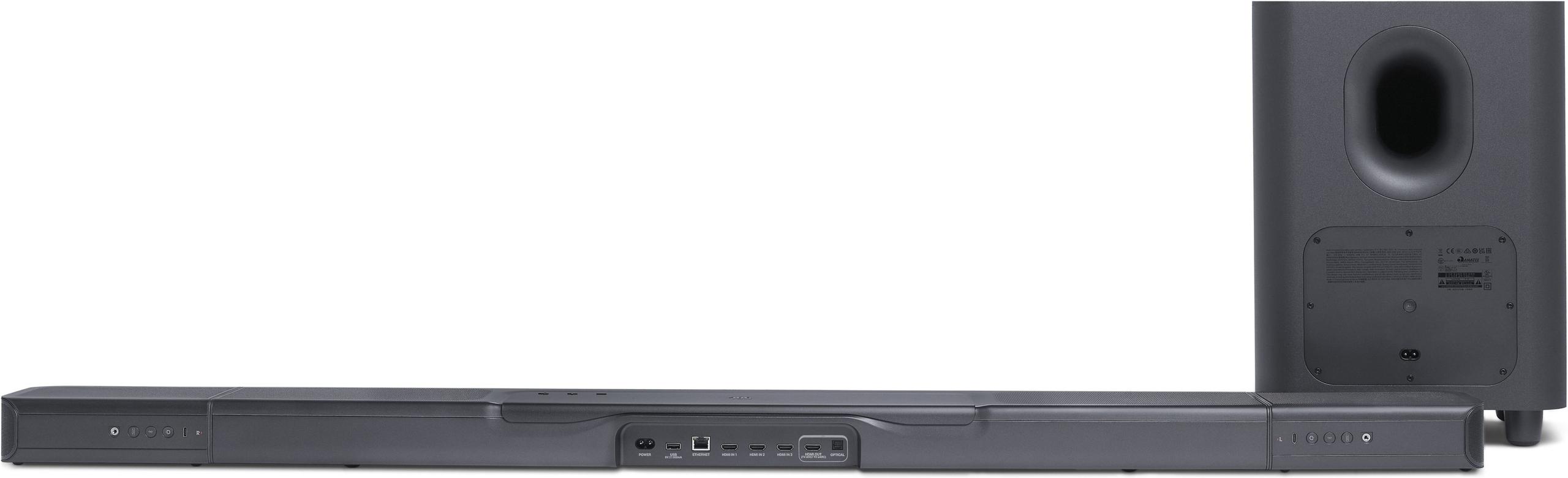
The JBL Bar 1300X takes connectivity to another level with Wi-Fi integration, enabling AirPlay 2, Chromecast built-in, and Alexa Multi-Room Music. This opens access to over 300 streaming services directly through the soundbar, bypassing your TV entirely. The three HDMI inputs are genuinely useful – you can connect a gaming console, streaming device, and Blu-ray player simultaneously without juggling cables.
The JBL's smart features extend beyond simple connectivity. PureVoice technology analyzes incoming audio to enhance dialogue clarity, which proves invaluable during action sequences where explosions might otherwise drown out conversation. The JBL One app provides granular control over EQ settings, room calibration, and streaming service integration.
TCL's approach focuses on simplicity and TV integration. If you own a TCL or Roku TV, the Q85H becomes truly plug-and-play, with automatic power switching and volume control through your existing remote. The AI Sonic room calibration runs automatically, adjusting the sound signature based on your room's acoustic properties without requiring manual setup.
The most striking difference between these systems lies in JBL's detachable surround speakers. This isn't just a cool party trick – it solves fundamental problems that have limited soundbar adoption. Traditional wireless surrounds still require power outlets near your seating area, limiting placement options and creating visual clutter.
JBL's battery-powered surrounds eliminate these constraints entirely. Each speaker contains a 6,600mAh battery providing up to 12 hours of playback, meaning you can place them anywhere in your room during movie night, then grab them for outdoor use the next day. I've found similar portable features genuinely useful for extending audio systems beyond the living room.
The TCL follows a more conventional approach with permanently wireless surrounds that still require power connections. While less flexible, this design proves more reliable for users who prefer set-and-forget simplicity. The overall aesthetic is clean and understated, fitting naturally into most room designs.
Power specifications tell only part of the story – how these systems perform in actual rooms matters more. The TCL's 860 watts prove adequate for small to medium rooms up to about 400 square feet. Beyond that size, you might find yourself pushing the system toward its limits during dynamic movie scenes.
The JBL's extra power becomes meaningful in larger spaces. That additional 300 watts isn't just about volume – it provides headroom for transient peaks that make explosions feel visceral rather than compressed. In my experience with similar high-power systems, this translates to maintained clarity even at reference levels.
Both systems excel for gaming, but with different strengths. The TCL's lower latency makes it particularly suitable for competitive gaming where audio cues matter for gameplay. The system's AI Sonic calibration seems particularly effective at highlighting positional audio in first-person shooters.
The JBL's extra channels and processing power shine with cinematic games. The additional height effects and more precise surround imaging create genuinely immersive experiences in games like The Last of Us or God of War, where environmental audio contributes significantly to the atmosphere.
At $499.99, the TCL Q85H delivers remarkable value for Dolby Atmos newcomers. You're getting wireless surround speakers, a subwoofer, and genuine height effects for less than many basic soundbars cost. The Ray Danz technology and AI Sonic calibration add premium features typically reserved for higher-priced systems.
The JBL Bar 1300X at $1,299.95 costs nearly three times as much, but the feature set justifies the premium for the right user. Those detachable surrounds essentially function as $200+ portable speakers, the extra HDMI inputs eliminate switcher boxes, and the superior power handling future-proofs your investment for room upgrades.
Software updates differentiate these systems over time. The JBL's Wi-Fi connectivity enables regular firmware improvements, new streaming service integration, and evolving smart features. TCL's more basic connectivity means fewer opportunities for meaningful updates, though the core audio performance remains constant.
Build quality also affects long-term satisfaction. The JBL's premium construction and component quality suggest better longevity, while the TCL's value-oriented design prioritizes performance over ultimate durability.
Choose the TCL Q85H if you're entering the Dolby Atmos world for the first time, have a small to medium room, own compatible TCL or Roku equipment, or simply want excellent performance without premium pricing. The system particularly appeals to gamers seeking immersive audio enhancement and families wanting straightforward operation.
The JBL Bar 1300X makes sense for audio enthusiasts prioritizing ultimate performance, owners of large rooms requiring powerful output, households with multiple source devices, or users attracted to the portable surround functionality. The extensive smart features and voice integration suit tech-forward users building connected home ecosystems.
The deciding factors ultimately come down to your priorities: the TCL delivers 80% of the premium experience at 40% of the cost, while the JBL provides cutting-edge features and superior performance that justify its premium pricing for the right user. Both represent excellent choices within their respective market segments, making your decision primarily about matching features to your specific needs and budget.
Whether you choose the value-packed TCL Q85H or the feature-rich JBL Bar 1300X, either system will transform your home theater experience far beyond what TV speakers can deliver. The question isn't whether these soundbars improve your audio – it's which one best fits your room, usage patterns, and long-term entertainment goals.
| TCL Q85H Q Class 7.1.4 Channel Sound Bar System | JBL Bar 1300X Soundbar with Wireless Subwoofer |
|---|---|
| Price - Entry point for premium Dolby Atmos experience | |
| $499.99 (exceptional value for features included) | $1,299.95 (premium pricing justified by advanced features) |
| Channel Configuration - More channels = better sound positioning | |
| 7.1.4 (adequate for most rooms under 400 sq ft) | 11.1.4 (superior object placement in larger spaces) |
| Total Power Output - Determines volume and dynamic range | |
| 860W (sufficient for small-medium rooms) | 1,170W (room-filling power for large spaces) |
| Subwoofer Size - Larger drivers typically produce deeper bass | |
| 6.5" wireless subwoofer (good for most content) | 12" wireless subwoofer (extends down to 33Hz for theater-level bass) |
| Height Effects Technology - Creates overhead sound for Atmos | |
| Ray Danz acoustic reflectors + up-firing drivers | MultiBeam + 6 dedicated up-firing drivers (4 in bar, 2 in surrounds) |
| Surround Speaker Design - Affects placement flexibility | |
| Fixed wireless surrounds (require power outlets) | Detachable battery-powered (12-hour battery, doubles as portable speakers) |
| HDMI Connectivity - More inputs reduce cable swapping | |
| 1 HDMI eARC input | 3 HDMI inputs + 1 eARC output (supports multiple sources) |
| Smart Features - Future-proofs your investment | |
| Basic Bluetooth, TCL/Roku TV integration | Wi-Fi, AirPlay 2, Chromecast, Alexa MRM, voice assistant support |
| Room Calibration - Optimizes sound for your space | |
| AI Sonic automatic calibration | Advanced calibration via JBL One app with manual adjustments |
| Dialogue Enhancement - Critical for clear speech during action scenes | |
| Center channel processing with voice EQ preset | PureVoice technology with granular dialogue control |
| Best For - Target user and room type | |
| First-time Atmos buyers, small-medium rooms, budget-conscious | Audio enthusiasts, large rooms, multi-device setups, portable use cases |
The TCL Q85H Q Class 7.1.4 Channel Sound Bar System ($499.99) delivers exceptional value at half the price of the JBL, offering genuine Dolby Atmos with wireless surrounds and subwoofer. The JBL Bar 1300X Soundbar with Wireless Subwoofer ($1,299.95) costs more but justifies the premium with superior power, detachable portable surrounds, and extensive smart features. For budget-conscious buyers, the TCL provides 80% of the premium experience at 40% of the cost.
The JBL Bar 1300X delivers superior sound quality with its 11.1.4 channel configuration and 1,170W total power compared to the TCL Q85H's 7.1.4 channels and 860W. The JBL's larger 12" subwoofer extends bass down to 33Hz for deeper impact, while its six up-firing drivers create more precise height effects. However, the TCL's Ray Danz technology still produces impressive surround sound that satisfies most users.
The JBL Bar 1300X is better suited for large rooms thanks to its 1,170W power output and room-filling capabilities. The extra power provides headroom for dynamic movie scenes without compression, while the 11.1.4 channel configuration maintains audio clarity across wider spaces. The TCL Q85H works well in rooms up to 400 square feet but may struggle in larger spaces at higher volumes.
Yes, both the TCL Q85H and JBL Bar 1300X support Dolby Atmos and DTS:X for three-dimensional surround sound. The TCL uses Ray Danz acoustic reflectors combined with up-firing drivers, while the JBL employs MultiBeam technology with six dedicated up-firing speakers. Both create convincing overhead effects, though the JBL's additional drivers provide more precise object placement.
The TCL Q85H includes HDMI eARC, optical input, and Bluetooth 5.1 for essential connectivity needs. The JBL Bar 1300X offers more extensive options including Wi-Fi, three HDMI inputs, AirPlay 2, Chromecast built-in, and Alexa Multi-Room Music. The JBL's additional inputs eliminate the need for HDMI switchers when connecting multiple devices like gaming consoles and streaming players.
The TCL Q85H is simpler to set up with fewer components and automatic AI Sonic room calibration. It integrates seamlessly with TCL and Roku TVs for one-remote control. The JBL Bar 1300X requires more initial setup through the JBL One app but offers greater customization options. The JBL's detachable surrounds add complexity but provide flexible placement without requiring power outlets.
Only the JBL Bar 1300X offers truly independent surround speakers with 12-hour batteries that double as portable Bluetooth speakers. You can take them outdoors or use them in other rooms when not part of the home theater setup. The TCL Q85H's wireless surrounds remain fixed components that require power connections and cannot function independently.
Both excel for gaming but serve different needs. The TCL Q85H offers lower latency and clear positional audio ideal for competitive gaming, with dedicated Game EQ preset. The JBL Bar 1300X provides more immersive cinematic gaming experiences with superior height effects and power handling. The JBL's multiple HDMI inputs also accommodate gaming consoles alongside other devices without switching cables.
The JBL Bar 1300X features a larger 12" wireless subwoofer with 300W dedicated power, extending bass response down to 33Hz for theater-level impact. The TCL Q85H includes a 6.5" wireless subwoofer that delivers satisfying bass for most content but lacks the deep extension and power of the JBL. The size difference becomes noticeable during action movies and bass-heavy music.
The JBL Bar 1300X provides comprehensive smart features including Wi-Fi connectivity, voice assistant integration, and access to 300+ streaming services through AirPlay 2 and Chromecast. The TCL Q85H focuses on essential features with Bluetooth streaming and seamless TV integration. The JBL receives regular firmware updates and new features, while the TCL maintains consistent core functionality.
The TCL Q85H includes the main soundbar, wireless subwoofer, two wireless surround speakers, remote control, and mounting hardware. The JBL Bar 1300X comes with the main soundbar, 12" wireless subwoofer, two detachable battery-powered surround speakers, charging cables, remote control, and the JBL One app for setup and control. Both include all necessary cables for immediate setup.
Choose the TCL Q85H if you want excellent Dolby Atmos performance at an affordable price, have a small-to-medium room, or prioritize simple setup and operation. Select the JBL Bar 1300X if you demand premium audio quality, have a large room, need extensive connectivity options, or want the flexibility of portable surround speakers. Both transform your home theater experience beyond basic TV speakers.
We've done our best to create useful and informative comparisons to help you decide what product to buy. Our research uses advanced automated methods to create this comparison and perfection is not possible - please contact us for corrections or questions. These are the sites we've researched in the creation of this article: gamerant.com - bestbuy.com - tcl.com - bestbuy.com - tcl.com - tcl.com - nfm.com - tcl.com - electronicexpress.com - tcl.com - tcl.com - digitaltrends.com - techradar.com - jbl.com - audioadvice.com - youtube.com - rtings.com - jbl.com - greentoe.com - harmanaudio.com - youtube.com - mm.jbl.com - jbl.com

Privacy Policy
Terms and Conditions - Affiliate Policy
Home Security
© Copyright 2008-2026.
11816 Inwood Rd #1211, Dallas, TX 75244