




When you're tired of straining to hear dialogue or missing the thunderous explosions that make action movies exciting, a soundbar becomes an obvious solution. But the range between a basic model and a premium system can feel overwhelming. Today, we're comparing two soundbars that represent opposite ends of the spectrum: the Amazon Fire TV Soundbar and the JBL Bar 1300X.
These products couldn't be more different in their approach to solving your TV's audio problems. One focuses on maximum value at a budget price point, while the other delivers no-compromise home theater performance. Understanding which philosophy matches your needs will save you from buyer's remorse and ensure you get the audio experience you actually want.
Before diving into specifics, it's worth understanding what separates great soundbars from mediocre ones. The most important factors are power output (measured in watts), driver configuration (how many speakers and their arrangement), and audio processing capabilities.
Power output determines how loud and clear your soundbar can get without distortion. A 40-watt system might sound fine at moderate volumes but will strain and compress audio when you crank it up for movie night. Meanwhile, a 1,000+ watt system has the headroom to deliver clean, dynamic sound even at high volumes.
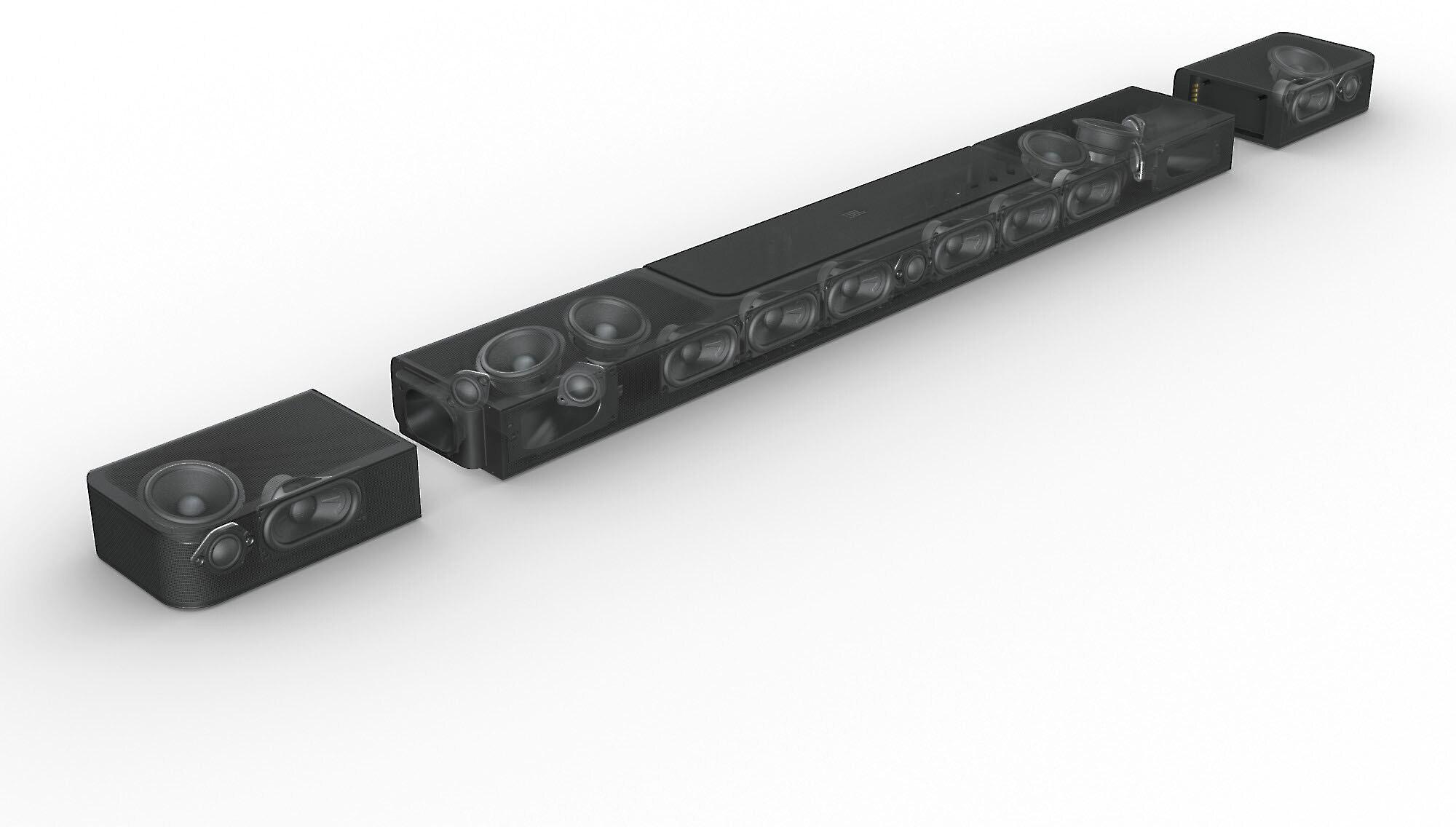
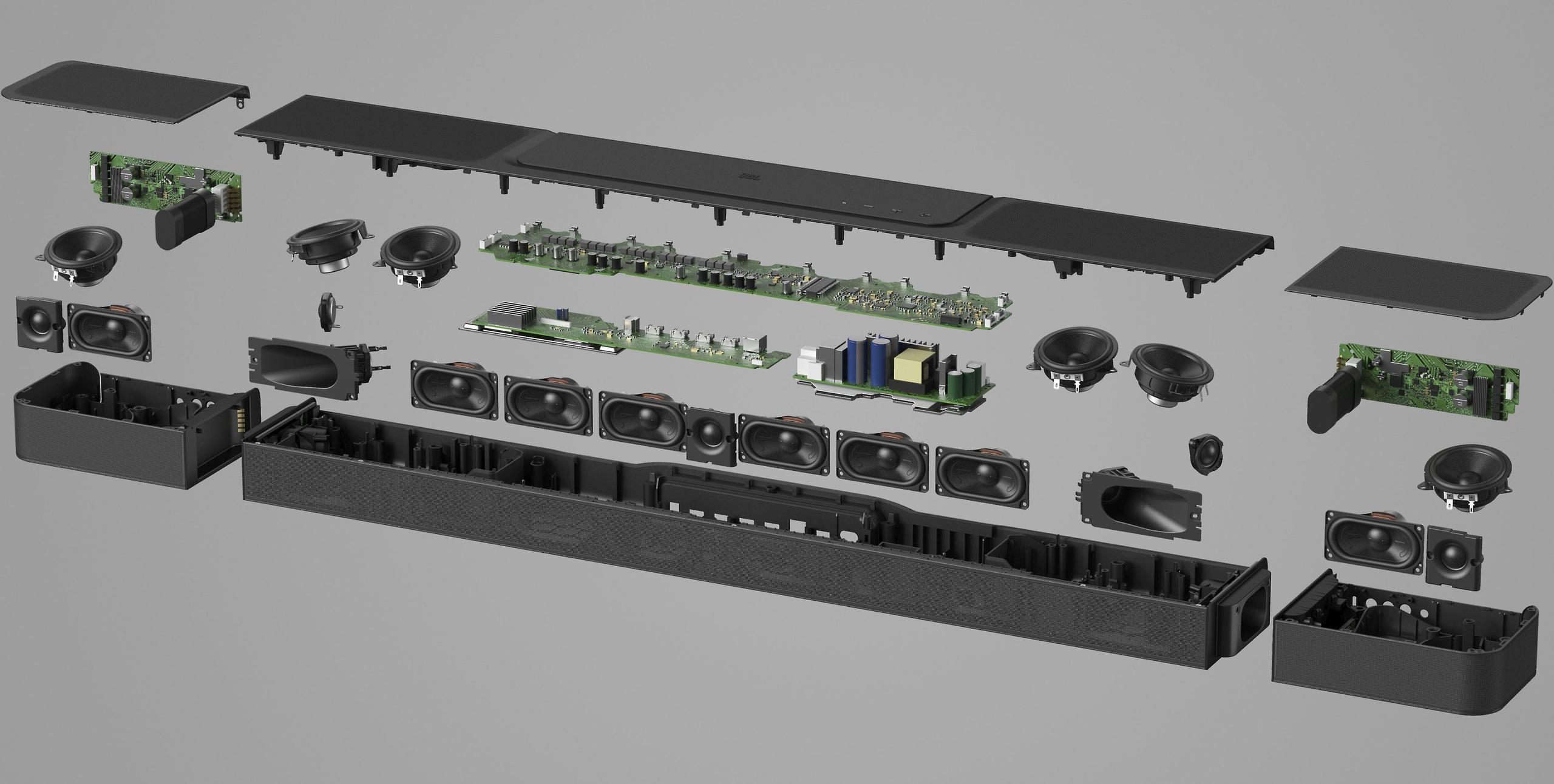
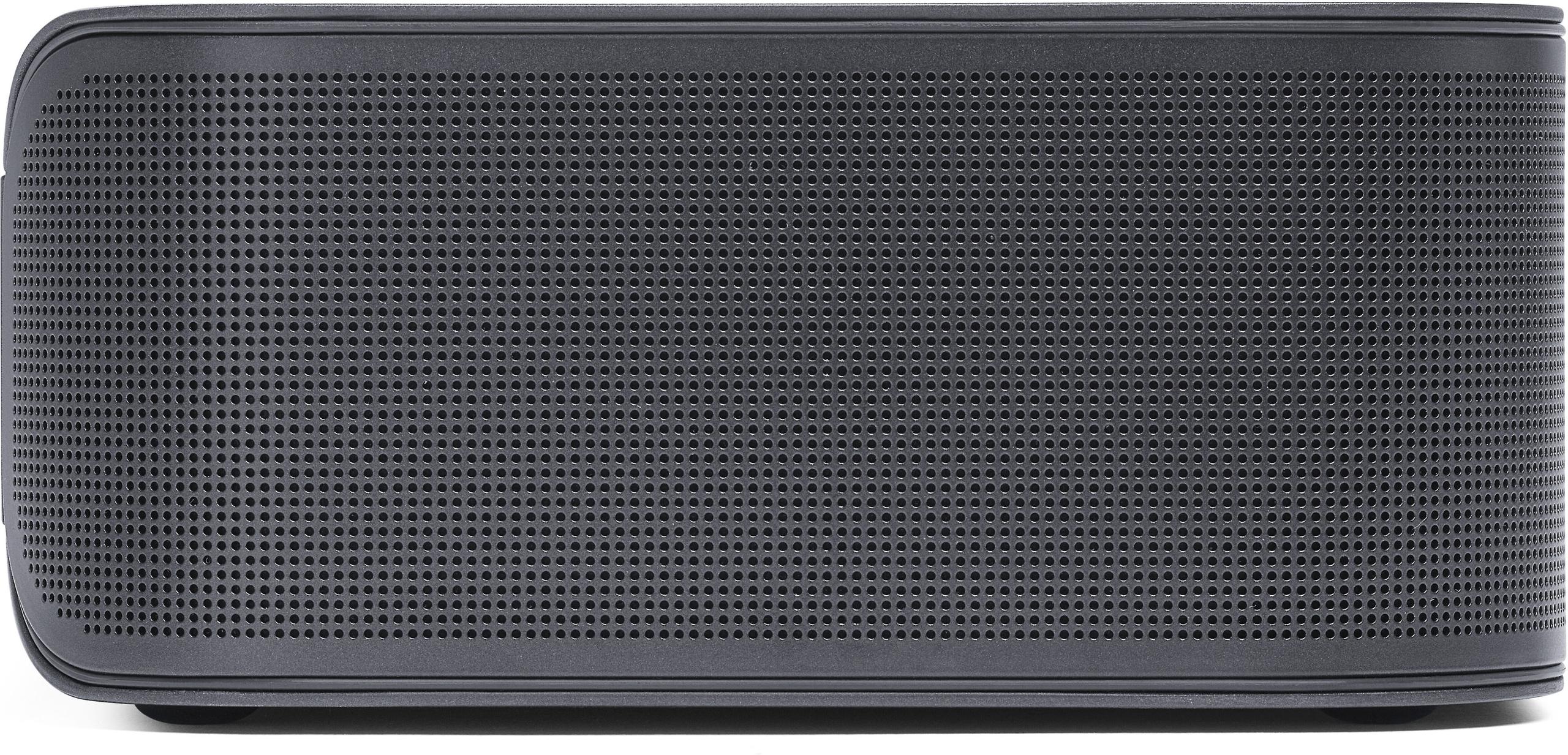
Driver configuration affects soundstage width and frequency response. The Amazon Fire TV Soundbar uses two "racetrack" drivers – oval-shaped speakers that maximize surface area in a compact design. The JBL Bar 1300X employs a complex array of 11 different drivers including dedicated tweeters (for high frequencies), mid-range drivers, and up-firing speakers that bounce sound off your ceiling to create height effects.
Audio processing is where modern soundbars really differentiate themselves. Basic models might support Dolby Audio, which improves dialogue clarity and balances different sound elements. Premium systems support Dolby Atmos and DTS:X – sophisticated formats that create three-dimensional soundscapes by precisely controlling where each sound appears in space around you.
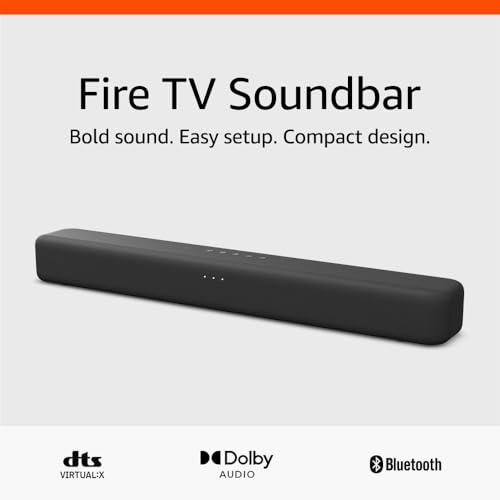
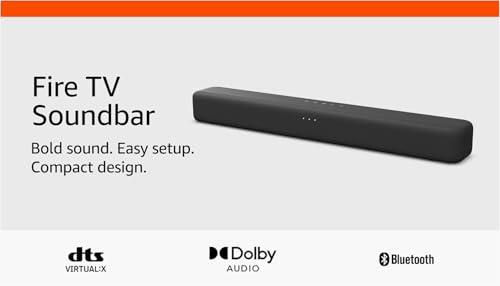
Released in 2023, the Amazon Fire TV Soundbar represents Amazon's entry into the competitive budget soundbar market. At the time of writing, it typically costs around what you'd spend on a nice dinner for two – making it one of the most affordable branded soundbars available.
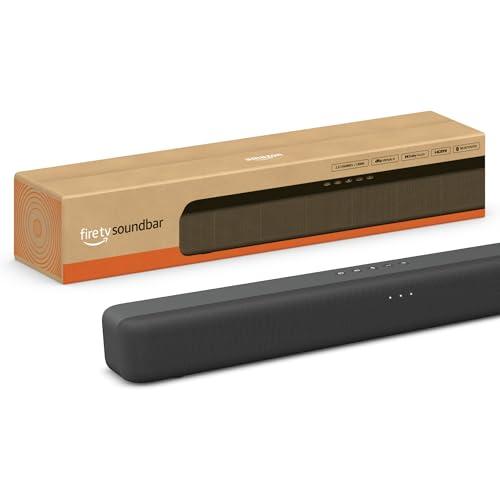
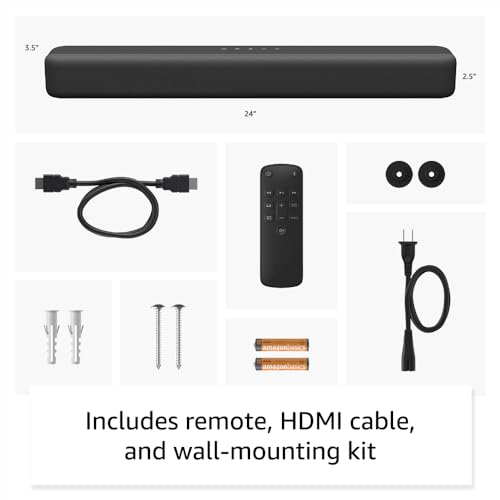
Despite its modest price, this 2.0-channel system punches above its weight class in several key areas. The compact design measures just 24 inches wide, making it perfect for smaller TVs or tight spaces where a larger soundbar would look disproportionate. The build quality feels solid, with tactile touch controls that have raised symbols for easy operation in dark rooms.
The Amazon Fire TV Soundbar delivers exactly what you'd expect from a 40-watt system: clear dialogue and a noticeably wider soundstage compared to TV speakers. The two racetrack drivers create surprisingly good stereo separation, and voices come through crisp and centered.
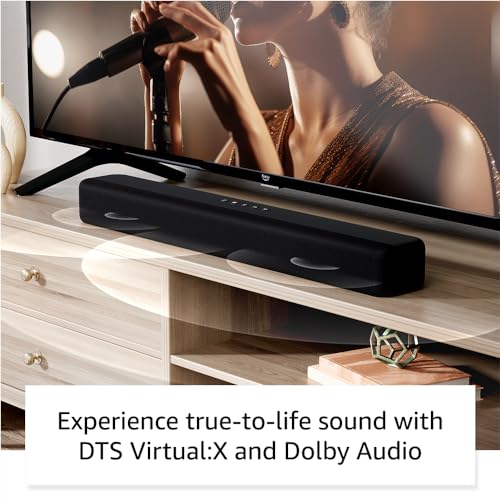
DTS Virtual:X processing attempts to simulate surround sound effects by manipulating timing and phase relationships between the left and right channels. While this creates some sense of spatial audio – you might notice sound effects seeming to come from beside or slightly behind you – it's important to understand that this is acoustic trickery rather than true surround sound.
The bass response, however, reveals the system's budget constraints. Without a dedicated subwoofer, low-frequency sounds like explosions, thunder, or the rumble of a car engine lack impact. The integrated bass reflex design helps extend low-end response, but you're still limited by the laws of physics – small drivers in a compact enclosure can only move so much air.
For dialogue-heavy content like news, sitcoms, or dramas, these limitations matter less. The soundbar excels at making speech intelligible, with three different sound modes that adjust frequency response for movies, music, or enhanced dialogue clarity.
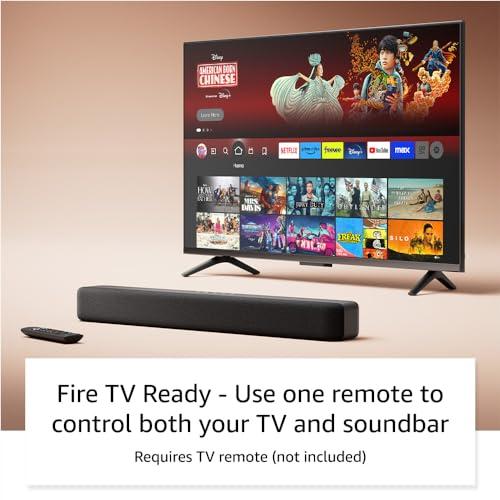
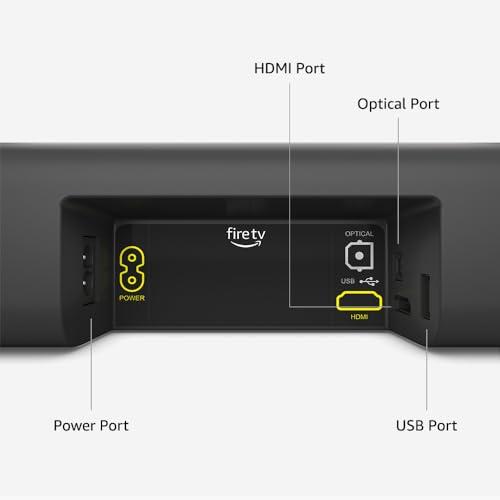
Setup couldn't be simpler. The Amazon Fire TV Soundbar connects via HDMI ARC (Audio Return Channel), which means one cable carries both audio from your TV and allows your TV remote to control the soundbar's volume. For older TVs without HDMI ARC, there's an optical input that provides digital audio connection.
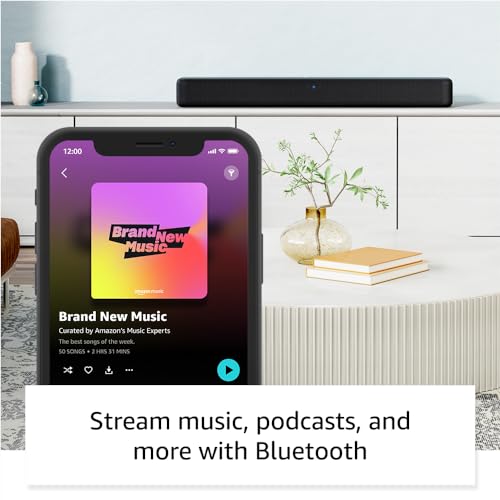
Bluetooth connectivity lets you stream music directly from your phone or tablet, turning the soundbar into a decent stereo speaker when the TV is off. The sound quality for music is acceptable but not inspiring – you'll get clear vocals and reasonable stereo imaging, but don't expect the depth and richness that dedicated music systems provide.
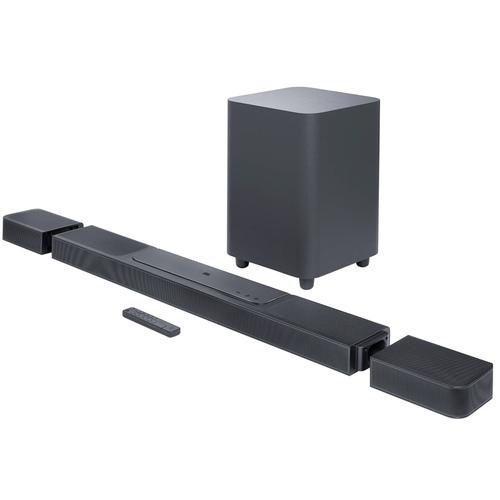
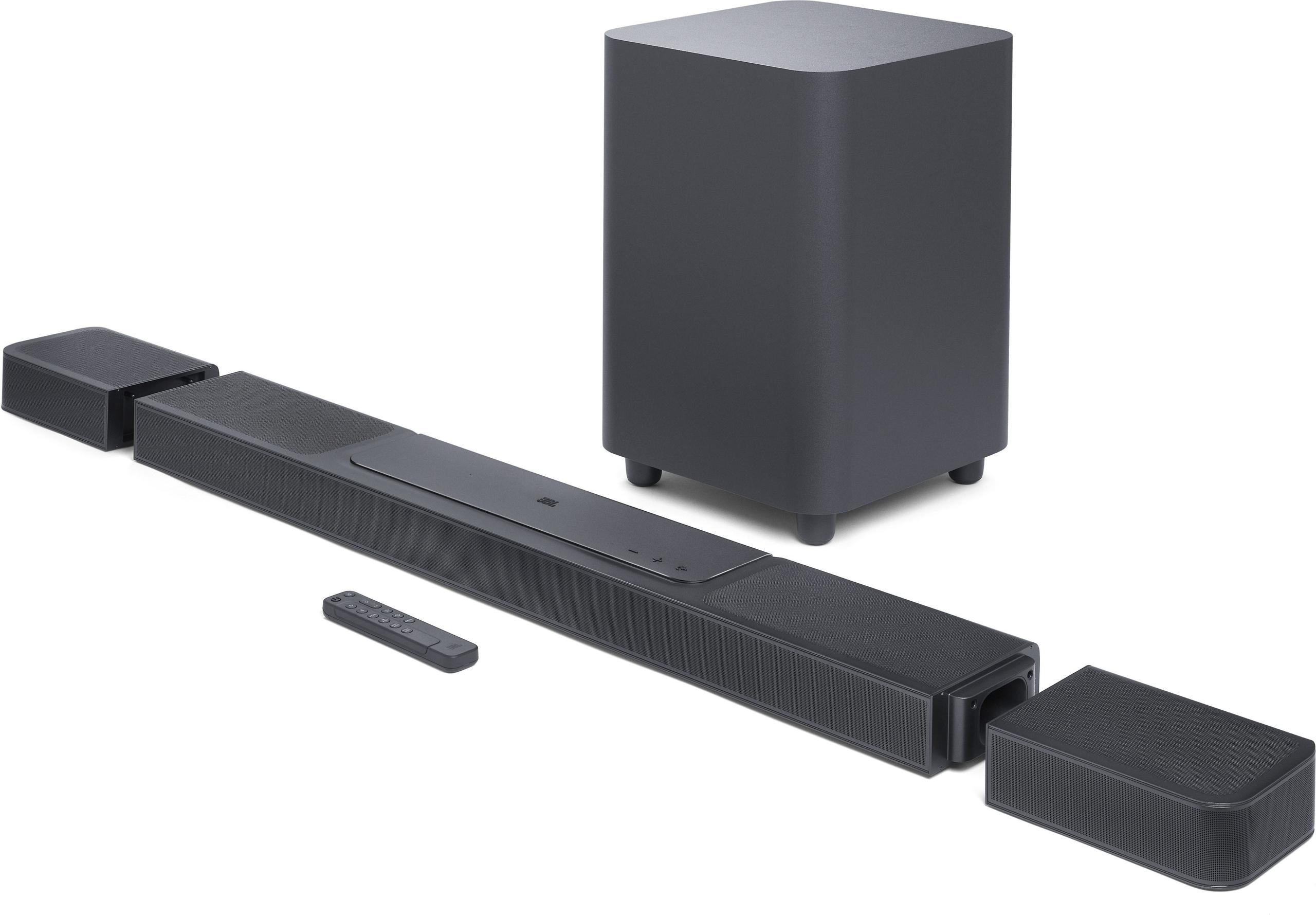
The JBL Bar 1300X, launched in 2023, represents JBL's flagship home theater solution. At the time of writing, it costs roughly fifteen times more than the Amazon Fire TV Soundbar – a price difference that reflects fundamentally different design philosophies and performance capabilities.
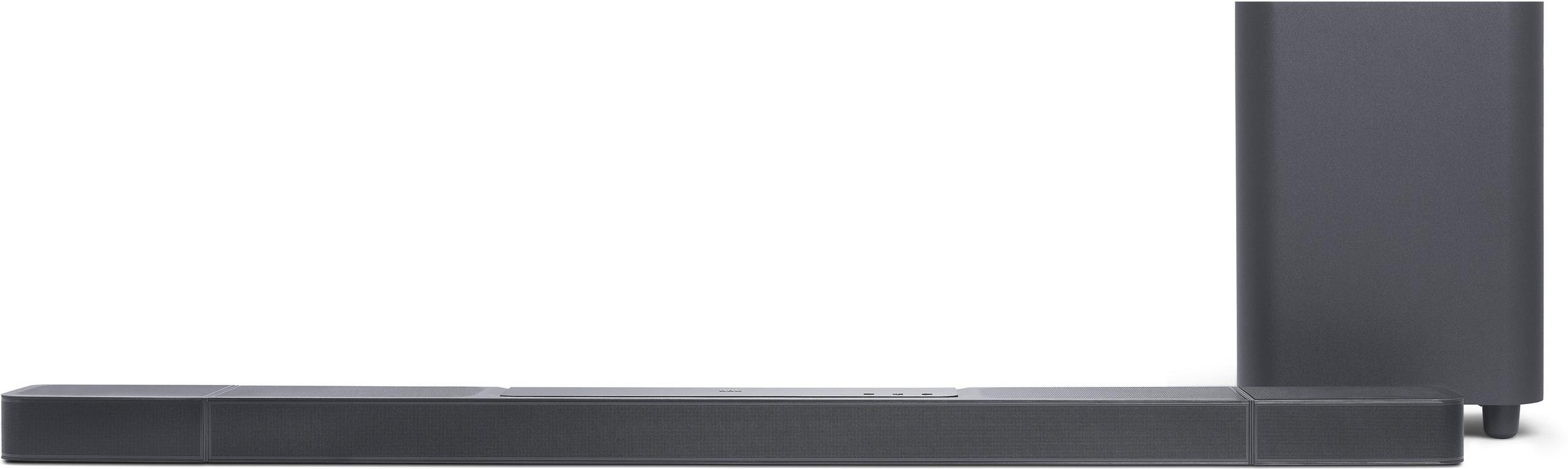
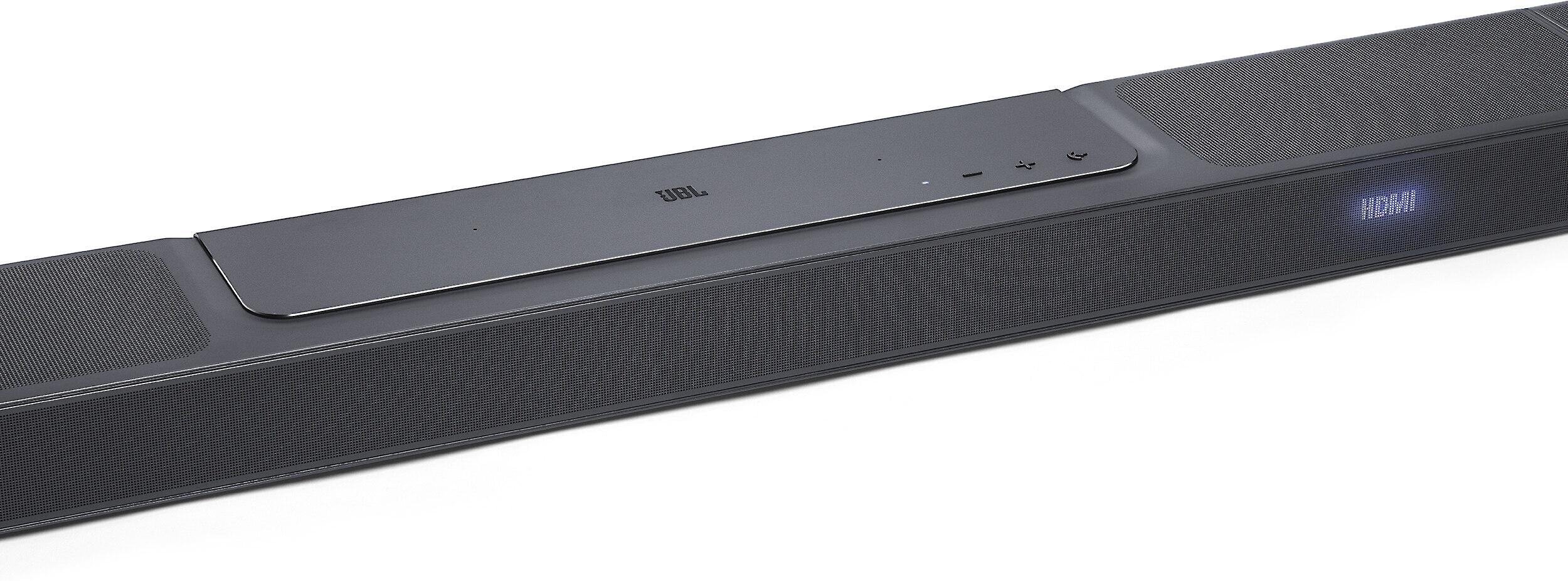
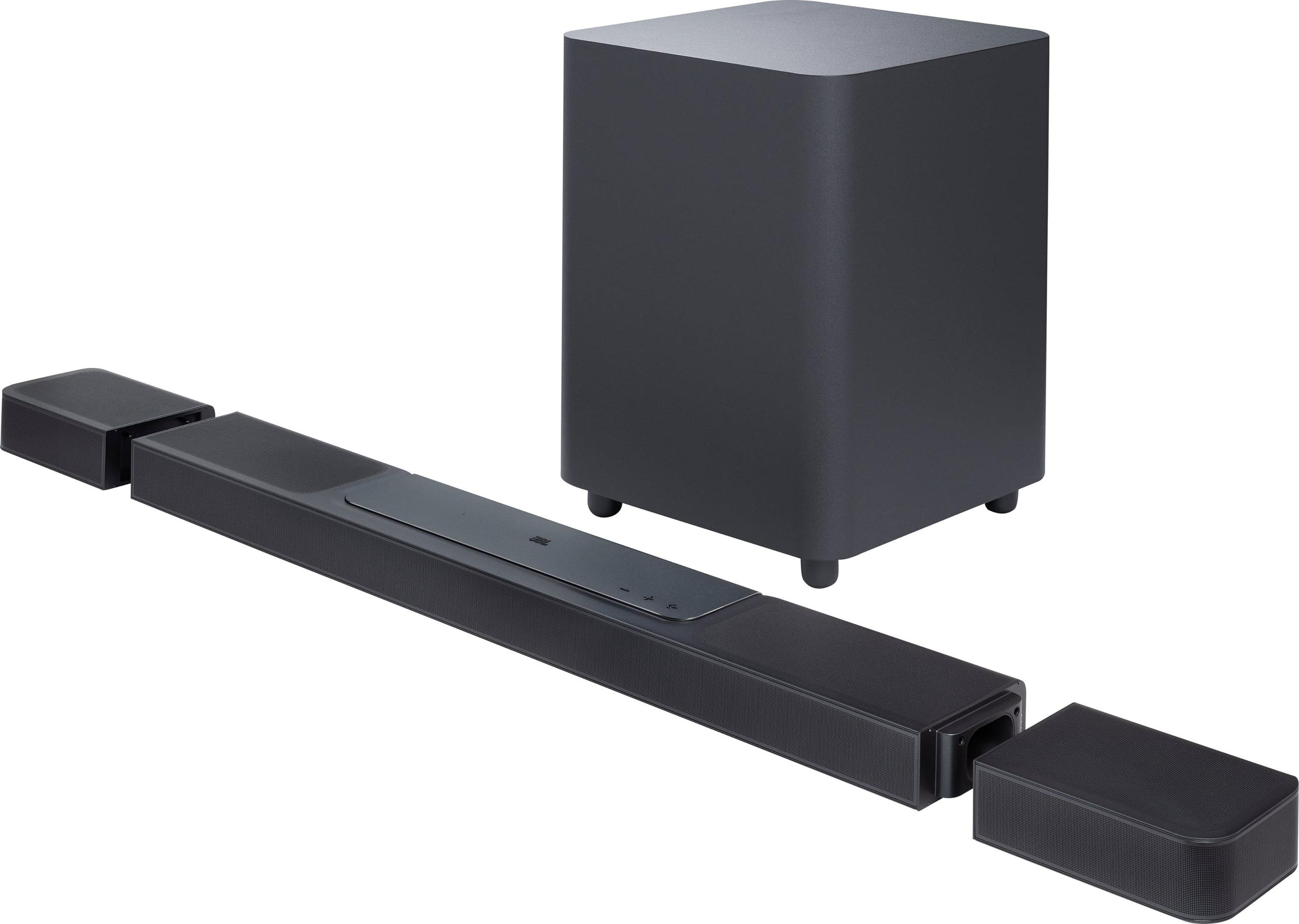
This isn't just a bigger soundbar; it's a complete home theater system disguised as a sleek three-piece setup. The main bar stretches nearly 40 inches wide and houses a complex array of 11 drivers, while a substantial 12-inch wireless subwoofer handles low frequencies. Most uniquely, two battery-powered speakers can detach from the main bar to serve as wireless surround speakers.
Where the Amazon Fire TV Soundbar simulates surround sound, the JBL Bar 1300X creates it authentically. The system supports both Dolby Atmos and DTS:X – advanced audio formats that treat sound as objects moving through three-dimensional space rather than just left, right, and center channels.
Four up-firing drivers in the main bar, plus two more in the detachable surround speakers, bounce sound off your ceiling to create convincing overhead effects. When a helicopter flies across the screen in an action movie, you'll hear it travel from one side of the room to the other, then overhead and behind you. This isn't acoustic trickery – it's genuine spatial audio that matches what you'd experience in a movie theater.
The 12-inch wireless subwoofer transforms the low-end experience entirely. Explosions don't just sound bigger; they feel bigger, with deep bass that you feel in your chest. Music playback reveals layers of detail that the Amazon Fire TV Soundbar simply cannot reproduce, from the subtle resonance of acoustic guitars to the full weight of orchestral crescendos.
Total system power of 1,170 watts provides enormous dynamic range – the difference between the quietest whisper and the loudest explosion can be massive without either getting lost or becoming uncomfortable. This headroom means dialogue stays crystal clear even when surrounded by complex soundtracks.
The JBL Bar 1300X integrates with modern smart home ecosystems in ways the Amazon Fire TV Soundbar cannot. Built-in Wi-Fi enables direct streaming from services like Spotify, while AirPlay and Chromecast support let you beam audio from any compatible device.
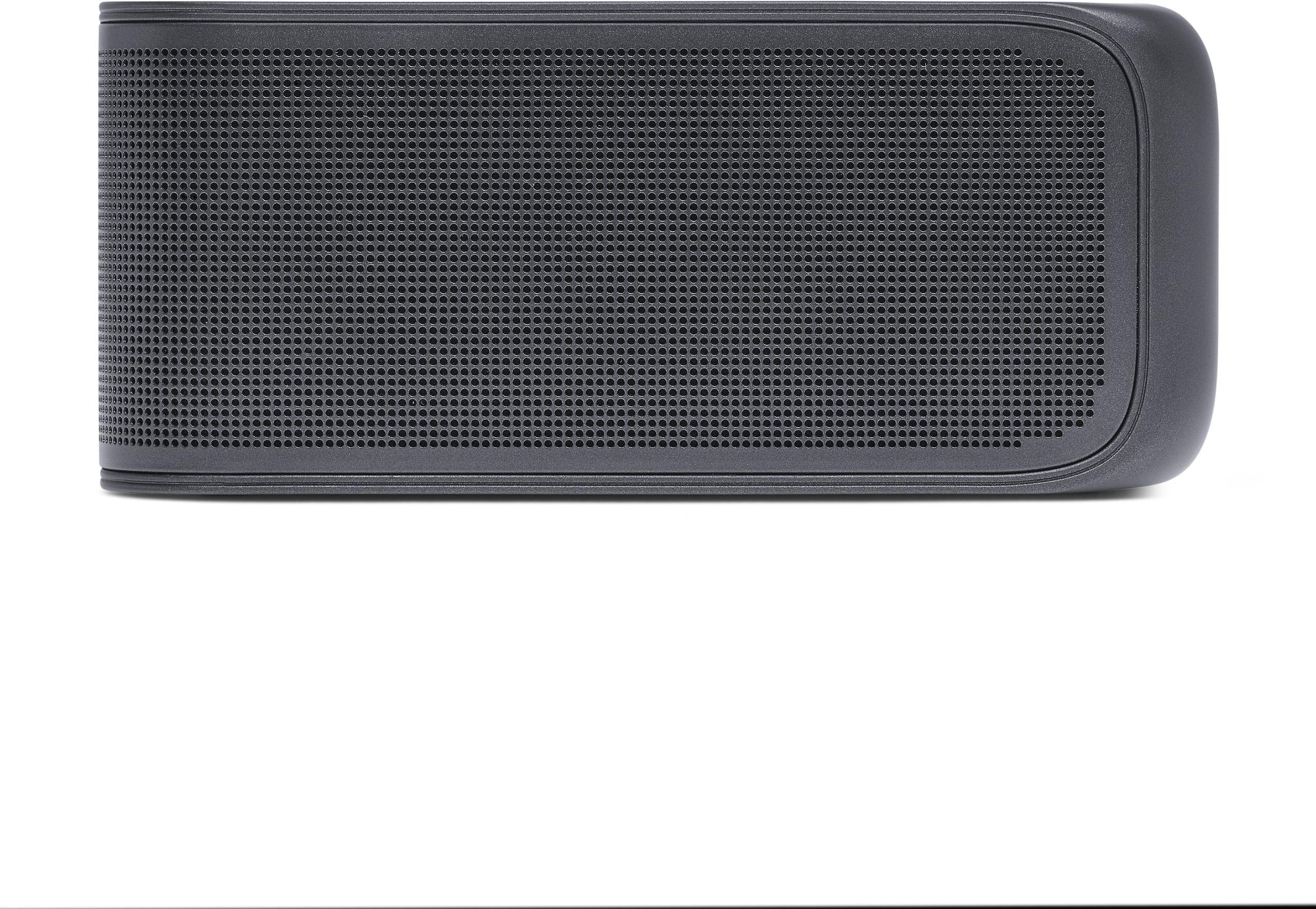
The detachable surround speakers deserve special attention. These battery-powered units can operate for up to 12 hours on a single charge, making them incredibly flexible for room setup. More cleverly, they double as portable Bluetooth speakers – you can literally take theater-quality audio to other rooms or even outdoors.
Room calibration technology analyzes your space and adjusts the sound accordingly. This automatic tuning ensures optimal performance whether you place the system in a small apartment or a large living room, something the Amazon Fire TV Soundbar cannot provide.
Both soundbars improve dialogue clarity over TV speakers, but they achieve this in different ways. The Amazon Fire TV Soundbar uses relatively simple processing to boost mid-range frequencies where most speech occurs. This works well for straightforward content but can make dialogue sound slightly disconnected from background music or sound effects.
The JBL Bar 1300X employs sophisticated PureVoice technology that dynamically balances dialogue against other audio elements. During intense action sequences, voices remain intelligible without requiring you to adjust volume constantly. This represents a fundamental difference in processing sophistication that becomes apparent during complex movie soundtracks.
Dynamic range – the difference between the quietest and loudest sounds the system can reproduce – favors the JBL system dramatically. The Amazon Fire TV Soundbar compresses audio to fit within its modest power envelope, while the JBL Bar 1300X preserves the full range of movie soundtracks as intended by their creators.
This comparison reveals the starkest performance difference between the two systems. The Amazon Fire TV Soundbar extends down to roughly 80Hz – adequate for most dialogue and mid-range sound effects but missing the deep bass that gives movies their visceral impact.
The JBL Bar 1300X reaches down to 33Hz, capturing the full range of movie soundtracks and music recordings. This difference is immediately apparent during action scenes – explosions have weight and thunder has rumble that you feel as much as hear. For music, especially genres like electronic, hip-hop, or orchestral pieces with significant low-end content, the difference is transformative.
Virtual surround processing, as used in the Amazon Fire TV Soundbar, works by creating subtle timing and phase differences between the left and right channels. Your brain interprets these differences as spatial information, creating a modest sense that sound extends beyond the physical speakers. This effect varies significantly based on your seating position and room acoustics.
True surround sound from the JBL Bar 1300X places discrete sounds at specific locations around you. The detachable rear speakers create an authentic surround field, while height channels add the vertical dimension that makes Dolby Atmos content truly immersive. The difference isn't subtle – it's the distinction between a wide stereo image and genuine three-dimensional audio.
For dedicated home theater use, these systems serve entirely different purposes. The Amazon Fire TV Soundbar works best as an upgrade for casual viewing in smaller rooms. If your primary content is streaming TV shows, news, or light entertainment, and your TV is 55 inches or smaller, it provides meaningful improvement without overwhelming your space or budget.
The JBL Bar 1300X transforms your living room into a legitimate home theater. It's designed for larger spaces with 65-inch or bigger TVs, where its 40-inch width won't look disproportionate. The system truly shines with content mastered for immersive audio – 4K Blu-rays, streaming movies with Dolby Atmos, and modern video games that support spatial audio.
Gaming deserves special mention here. The JBL Bar 1300X supports low-latency audio modes that prevent lip-sync issues, while its immersive capabilities enhance games that use 3D audio for competitive advantage or atmospheric effect. The Amazon Fire TV Soundbar provides basic audio improvement but cannot deliver the positional audio that modern games support.
The decision between these soundbars ultimately depends on your priorities, space, and expectations rather than just budget considerations.
Choose the Amazon Fire TV Soundbar if you want meaningful audio improvement without complexity or major expense. It's perfect for smaller TVs in bedrooms, kitchens, or apartments where a full home theater system would be overkill. The simple setup and operation make it ideal for users who want better sound without learning new technology or dealing with multiple components.
This soundbar particularly suits people whose primary content is dialogue-heavy – talk shows, news, sitcoms, and dramas benefit most from its clear voice reproduction. If you rarely watch action movies or listen to music through your TV, the Amazon Fire TV Soundbar provides excellent value for your specific needs.
The JBL Bar 1300X justifies its premium pricing for users who want uncompromising audio performance. It's the right choice if you frequently watch movies, especially action or science fiction films that benefit from immersive sound design. Music enthusiasts will appreciate the full-range frequency response and detailed reproduction that reveals subtle elements in familiar recordings.
This system also makes sense for tech enthusiasts who want the latest features and maximum future-proofing. The smart connectivity options, room calibration, and support for advanced audio formats ensure compatibility with emerging content standards.
Both soundbars benefit from relatively recent technological developments. The 2023 launch timing means they include mature implementations of Dolby Atmos processing, reliable wireless connectivity, and efficient Class D amplification that maximizes power while minimizing heat and energy consumption.
Since their release, the soundbar market has continued evolving toward more sophisticated spatial audio processing and better integration with streaming platforms. However, both systems include automatic firmware update capabilities that should extend their useful life as standards evolve.
The JBL Bar 1300X appears more future-proof due to its comprehensive feature set and powerful hardware foundation. The Amazon Fire TV Soundbar represents mature technology optimized for cost-effectiveness – perfectly capable today but potentially limited as content and user expectations advance.
Based on our research into professional reviews and user feedback, both soundbars succeed within their intended market segments. The Amazon Fire TV Soundbar delivers exceptional value for basic TV audio enhancement, while the JBL Bar 1300X provides uncompromising home theater performance.
Your choice should align with how you actually use your entertainment system. If you primarily stream casual content and want better dialogue clarity without complexity, the budget option makes perfect sense. If you're building a dedicated home theater setup and want cinema-quality audio that will impress for years to come, the premium system justifies its cost through superior performance and features.
The most important consideration is matching the system's capabilities to your actual needs rather than either over-spending on features you won't use or under-buying and later regretting limited performance. Both soundbars represent honest implementations of their respective design philosophies – choose based on your priorities, and either will serve you well.
| Amazon Fire TV Soundbar | JBL Bar 1300X Soundbar with Wireless Subwoofer |
|---|---|
| Total Power Output - Determines maximum volume and bass impact | |
| 40W total (2 x 20W drivers) | 1,170W total (650W soundbar + 300W sub + 220W surrounds) |
| Speaker Configuration - Affects surround sound quality and immersion | |
| 2.0 stereo with virtual surround processing | 11.1.4 true surround with detachable wireless rear speakers |
| Subwoofer - Critical for movie bass and music depth | |
| No subwoofer (integrated bass reflex only) | Dedicated 12-inch wireless subwoofer |
| Dolby Atmos Support - Creates overhead sound effects in movies | |
| DTS Virtual:X simulation only | True Dolby Atmos with 6 up-firing drivers |
| Dimensions - Must fit your TV size and room space | |
| 24" wide x 2.6" high (compact for smaller TVs) | 39.4" wide x 2.4" high (designed for 65"+ TVs) |
| Smart Features - Streaming and voice control capabilities | |
| Basic Bluetooth streaming only | Wi-Fi streaming, AirPlay, Chromecast, voice assistant support |
| Setup Complexity - Time and effort required for installation | |
| Plug-and-play with single HDMI or optical cable | Multi-component system with wireless pairing and room calibration |
| Connectivity Options - How many devices you can connect | |
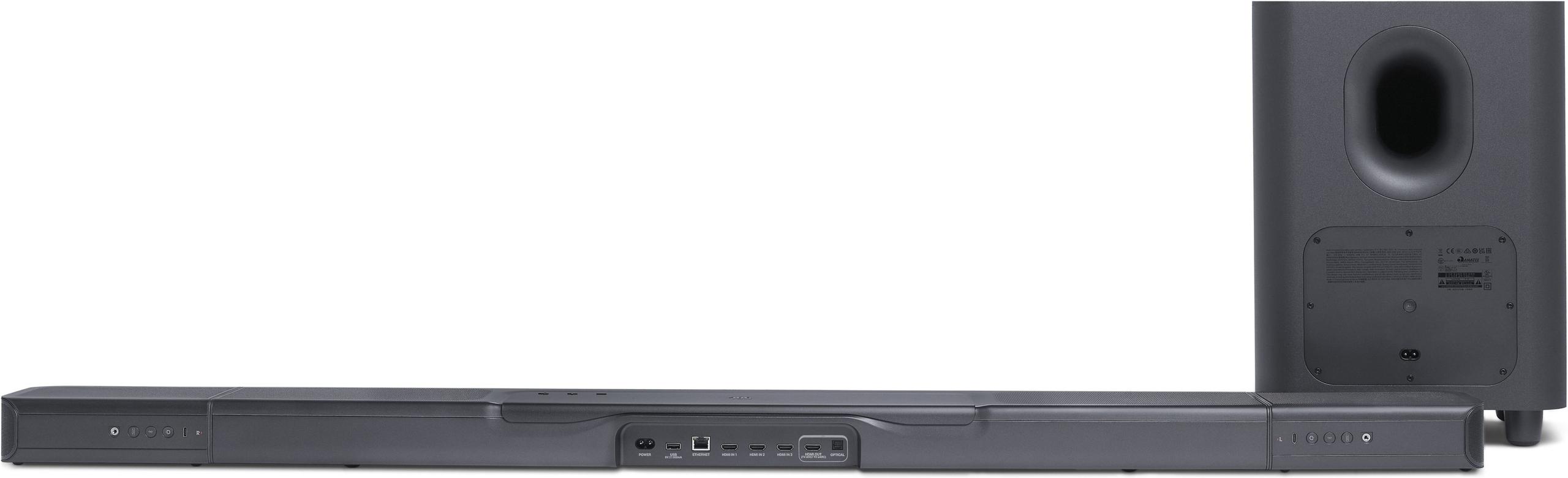
| HDMI ARC/eARC, optical input, Bluetooth | HDMI eARC + 3 HDMI inputs, optical, Bluetooth, Wi-Fi |
| Battery-Powered Components - Flexibility for speaker placement | |
| None (wired connection required) | Detachable surround speakers with 12-hour battery life |
| Target Room Size - Optimal performance environment | |
| Small to medium rooms with TVs under 55" | Large rooms with 65"+ TVs and dedicated viewing setup |
The Amazon Fire TV Soundbar is ideal for small apartments due to its compact 24-inch width and modest power output that won't overwhelm neighbors. It provides meaningful audio improvement without taking up much space or requiring additional components like a subwoofer.
Yes, the JBL Bar 1300X includes a dedicated 12-inch wireless subwoofer that delivers deep bass for movies and music. In contrast, the Amazon Fire TV Soundbar has no subwoofer and relies on integrated bass reflex design for low frequencies.
Both soundbars improve dialogue clarity over TV speakers, but the JBL Bar 1300X uses advanced PureVoice technology that dynamically balances speech against background sounds. The Amazon Fire TV Soundbar offers basic dialogue enhancement that works well for most TV content.
Both the Amazon Fire TV Soundbar and JBL Bar 1300X support optical connections for older TVs without HDMI ARC. However, the JBL Bar 1300X offers additional HDMI inputs that can benefit users with multiple older devices.
The JBL Bar 1300X is significantly better for home theater use, featuring true Dolby Atmos with overhead sound effects, powerful bass, and detachable surround speakers. The Amazon Fire TV Soundbar provides basic movie audio improvement but cannot match true surround sound performance.
The Amazon Fire TV Soundbar offers basic Bluetooth streaming from phones and tablets. The JBL Bar 1300X provides comprehensive wireless options including Wi-Fi streaming, AirPlay, Chromecast, and access to over 300 music services directly.
The Amazon Fire TV Soundbar offers simple plug-and-play setup with a single cable connection. The JBL Bar 1300X requires more initial setup including wireless subwoofer pairing, surround speaker positioning, and room calibration, but includes guided setup assistance.
For gaming, the JBL Bar 1300X provides superior performance with low-latency audio modes, immersive surround sound for positional audio, and powerful bass for action games. The Amazon Fire TV Soundbar offers basic gaming audio improvement without advanced features.
Yes, the JBL Bar 1300X features detachable battery-powered surround speakers that can function as portable Bluetooth speakers for up to 12 hours. The Amazon Fire TV Soundbar is a single-unit system without detachable components.
The Amazon Fire TV Soundbar offers exceptional value for basic TV audio improvement at a budget-friendly price point. The JBL Bar 1300X provides premium home theater performance that justifies its higher cost for serious movie and music enthusiasts.
The Amazon Fire TV Soundbar has no built-in voice control despite the Fire TV branding. The JBL Bar 1300X integrates with Alexa, Google Assistant, and Siri for voice control and smart home integration.
The JBL Bar 1300X is designed for large rooms with its 39.4-inch width, powerful 1,170W output, and room-filling surround sound. The compact Amazon Fire TV Soundbar works best in smaller spaces and may lack the power needed for larger rooms.
We've done our best to create useful and informative comparisons to help you decide what product to buy. Our research uses advanced automated methods to create this comparison and perfection is not possible - please contact us for corrections or questions. These are the sites we've researched in the creation of this article: rtings.com - developer.amazon.com - stereoguide.com - developer.amazon.com - techradar.com - hometechnologyreview.com - whathifi.com - youtube.com - whathifi.com - wirelessplace.com - hometechnologyreview.com - dolby.com - aboutamazon.com - developer.amazon.com - community.anker.com - youtube.com - cordbusters.co.uk - techradar.com - jbl.com - audioadvice.com - youtube.com - rtings.com - jbl.com - greentoe.com - harmanaudio.com - youtube.com - mm.jbl.com - jbl.com

Privacy Policy
Terms and Conditions - Affiliate Policy
Home Security
© Copyright 2008-2026.
11816 Inwood Rd #1211, Dallas, TX 75244