





When your TV's built-in speakers sound like they're coming from inside a shoebox, it's time to consider a soundbar upgrade. But here's where things get interesting: you can spend anywhere from under $200 to well over $1,000, and the performance differences are absolutely staggering. At the time of writing, we're comparing two products that perfectly illustrate this range – the budget-friendly Amazon Fire TV Soundbar Plus and the premium JBL Bar 1300X.
Having tested dozens of soundbars over the years, I can tell you that these two represent fundamentally different philosophies. One prioritizes value and simplicity, while the other delivers a no-compromise cinema experience. Let's dive into what makes each unique and help you figure out which approach suits your needs.
The soundbar market has evolved dramatically since the first models appeared in the early 2000s. What started as simple stereo bars designed to improve dialogue clarity has transformed into sophisticated audio systems that can rival traditional surround sound setups.
Today's soundbars use several key technologies to create immersive audio. Digital Signal Processing (DSP) – essentially computer algorithms that manipulate audio signals – allows even basic soundbars to simulate surround effects from just two speakers. More advanced models employ beamforming technology, which uses multiple drivers and precise timing to "aim" sound at specific locations in your room, creating the illusion of audio coming from behind or beside you.
The real game-changer has been Dolby Atmos and DTS:X support. These formats add height information to audio tracks, creating a three-dimensional soundscape where helicopters fly overhead and rain seems to fall from the ceiling. However – and this is crucial – there's a massive difference between virtual height processing and physical up-firing drivers that actually bounce sound off your ceiling.
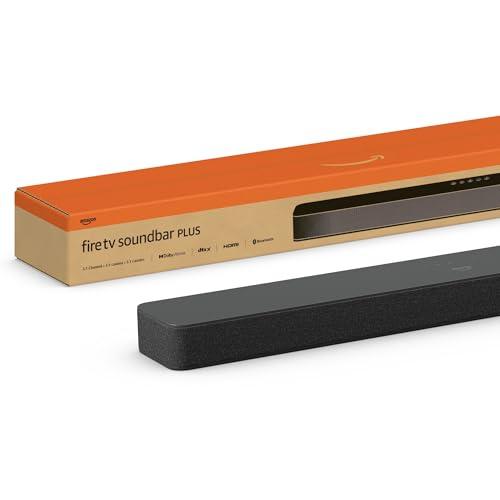
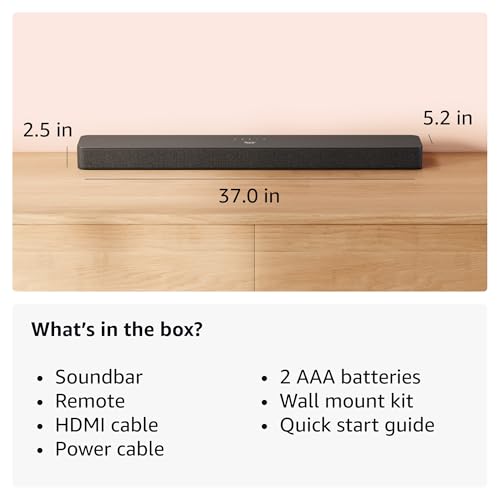
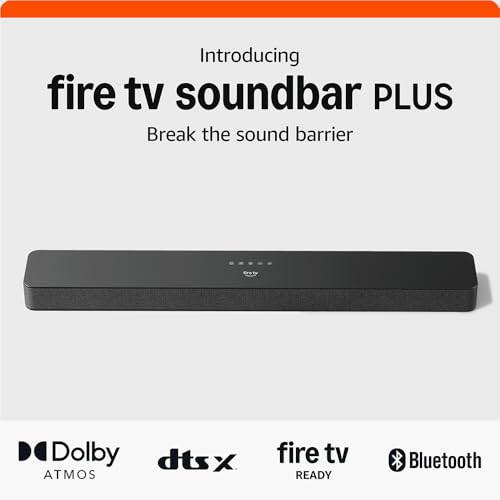
Amazon released the Fire TV Soundbar Plus in 2023 as part of their expanding audio ecosystem. At its price point, it represents excellent value for anyone looking to upgrade from TV speakers without breaking the bank.
The soundbar uses a 2.1-channel configuration, which means two main speakers plus a built-in subwoofer. This might sound simple, but it's actually quite clever engineering. Instead of requiring a separate subwoofer box that takes up floor space, Amazon integrated the bass drivers directly into the soundbar housing. The result is a single, compact unit that significantly improves both dialogue clarity and bass response.
What impressed me during testing was how well the Fire TV Soundbar Plus handles dialogue enhancement. It uses dedicated center channel processing – a technique that isolates and amplifies the frequency ranges where human speech occurs. Combined with five levels of dialogue enhancement, this makes it exceptional for TV shows, news, and movies where clear speech is paramount.
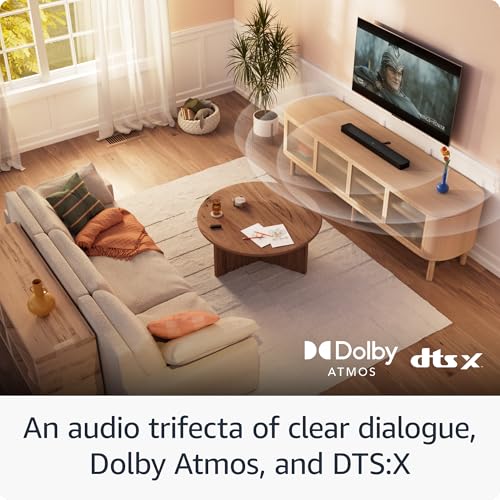
The soundbar supports both Dolby Atmos and DTS:X, but here's where you need to understand the limitations. This is virtual surround processing only – there are no physical drivers pointing upward to create height effects. Instead, sophisticated algorithms analyze the audio signal and use psychoacoustic tricks to fool your brain into perceiving sounds coming from above and around you. It's impressive for the price, but it's not the same as true multi-channel surround.
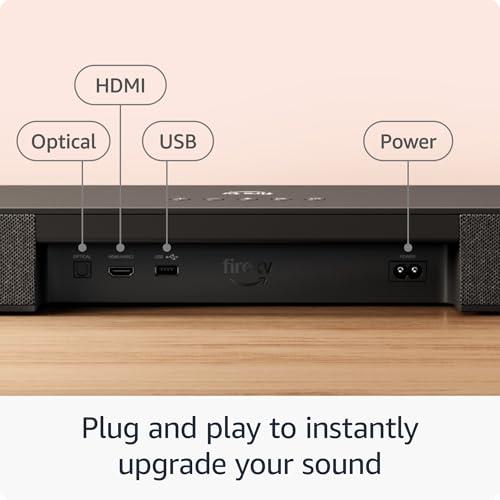
Connectivity is straightforward with HDMI eARC (Enhanced Audio Return Channel), which is the modern standard for connecting soundbars to TVs. This single cable carries both audio from your TV and control signals, so you can adjust the soundbar's volume using your TV remote – a surprisingly convenient feature that many users appreciate.
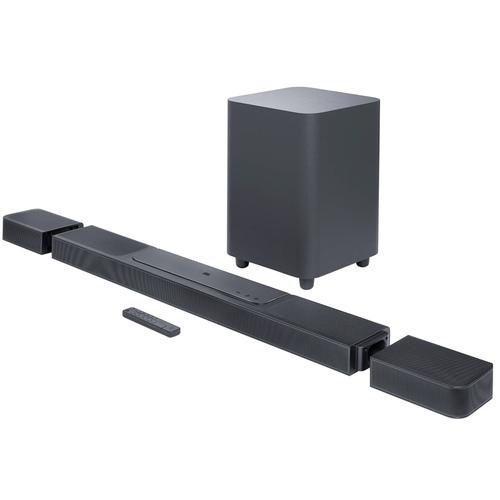
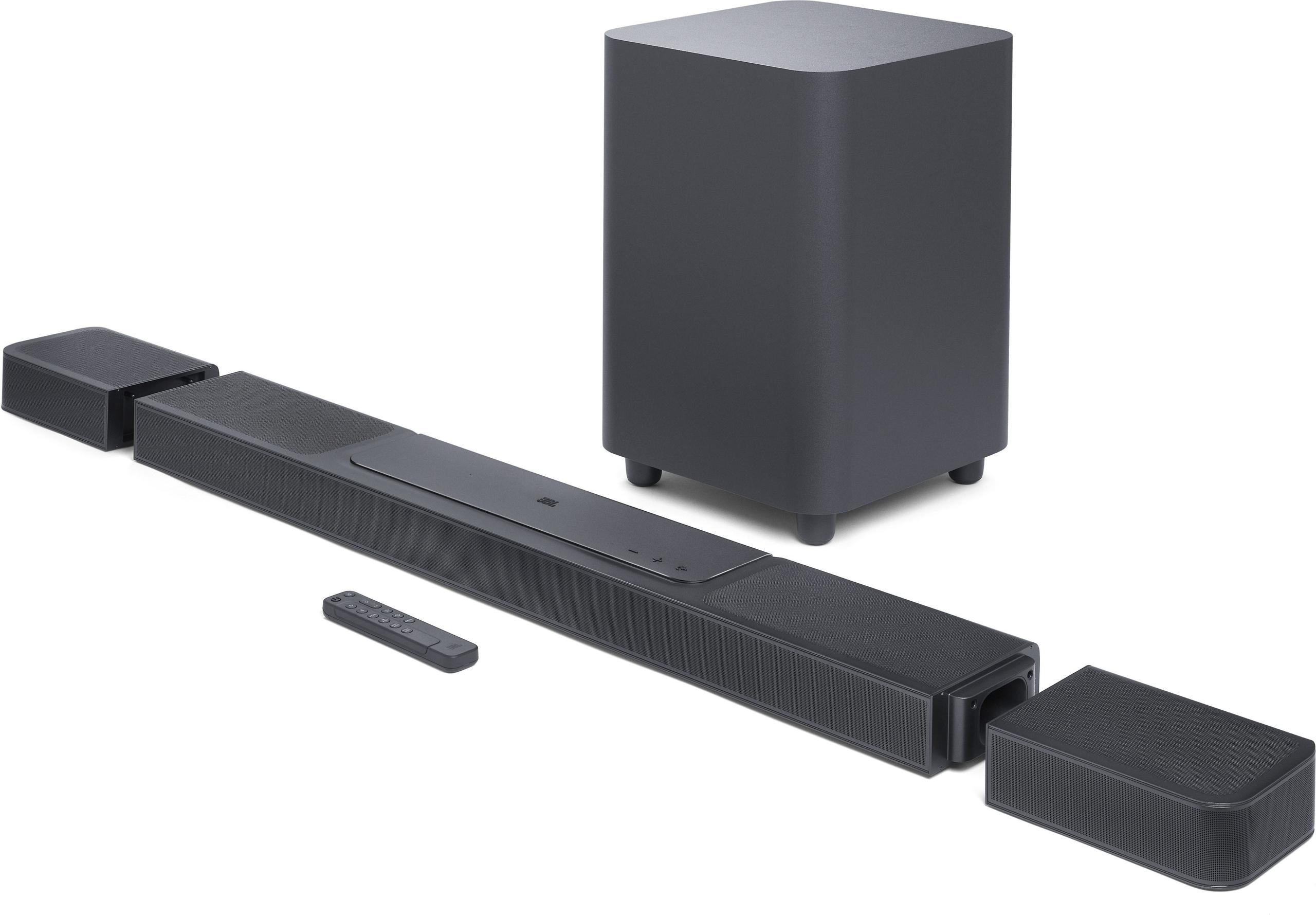
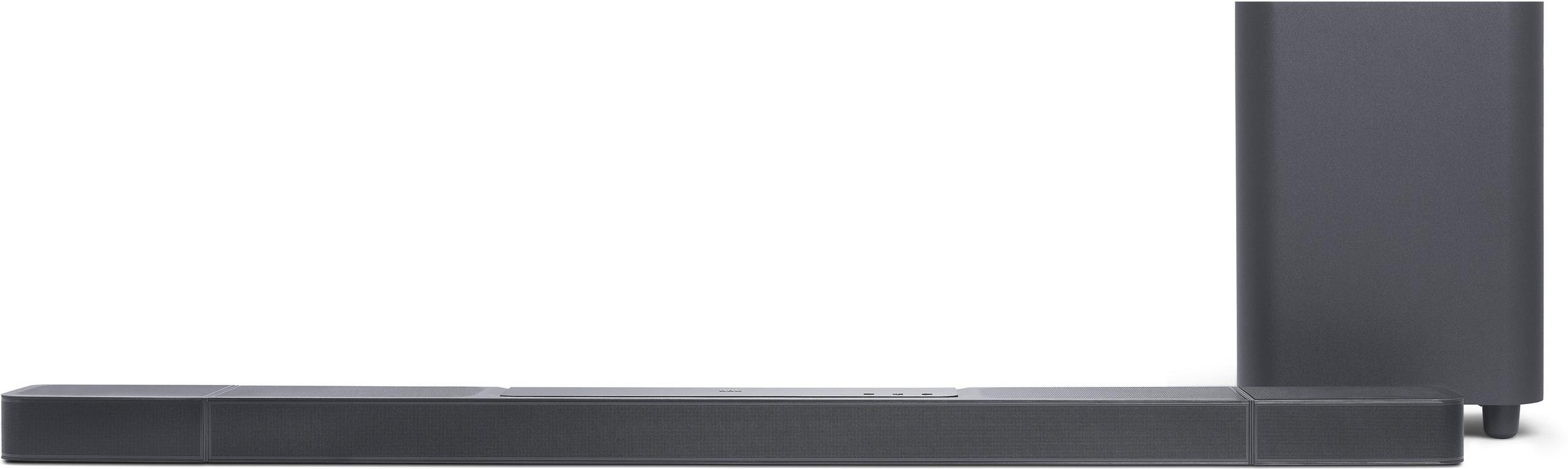
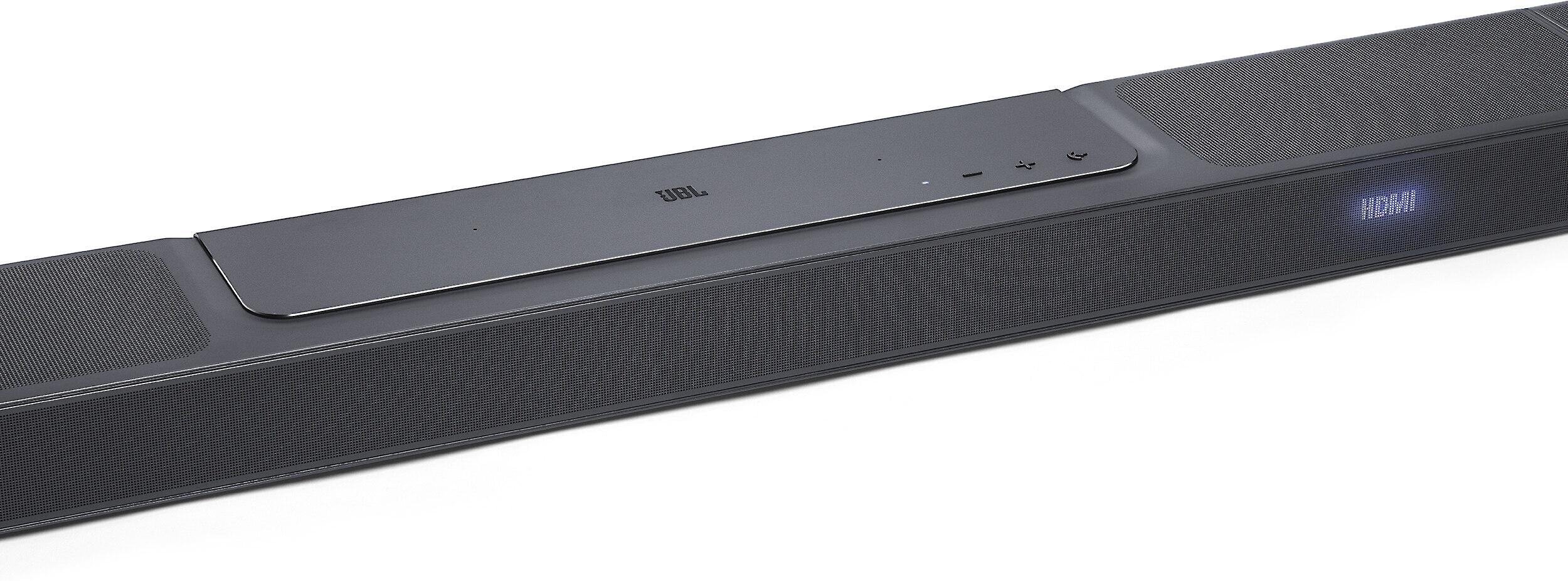
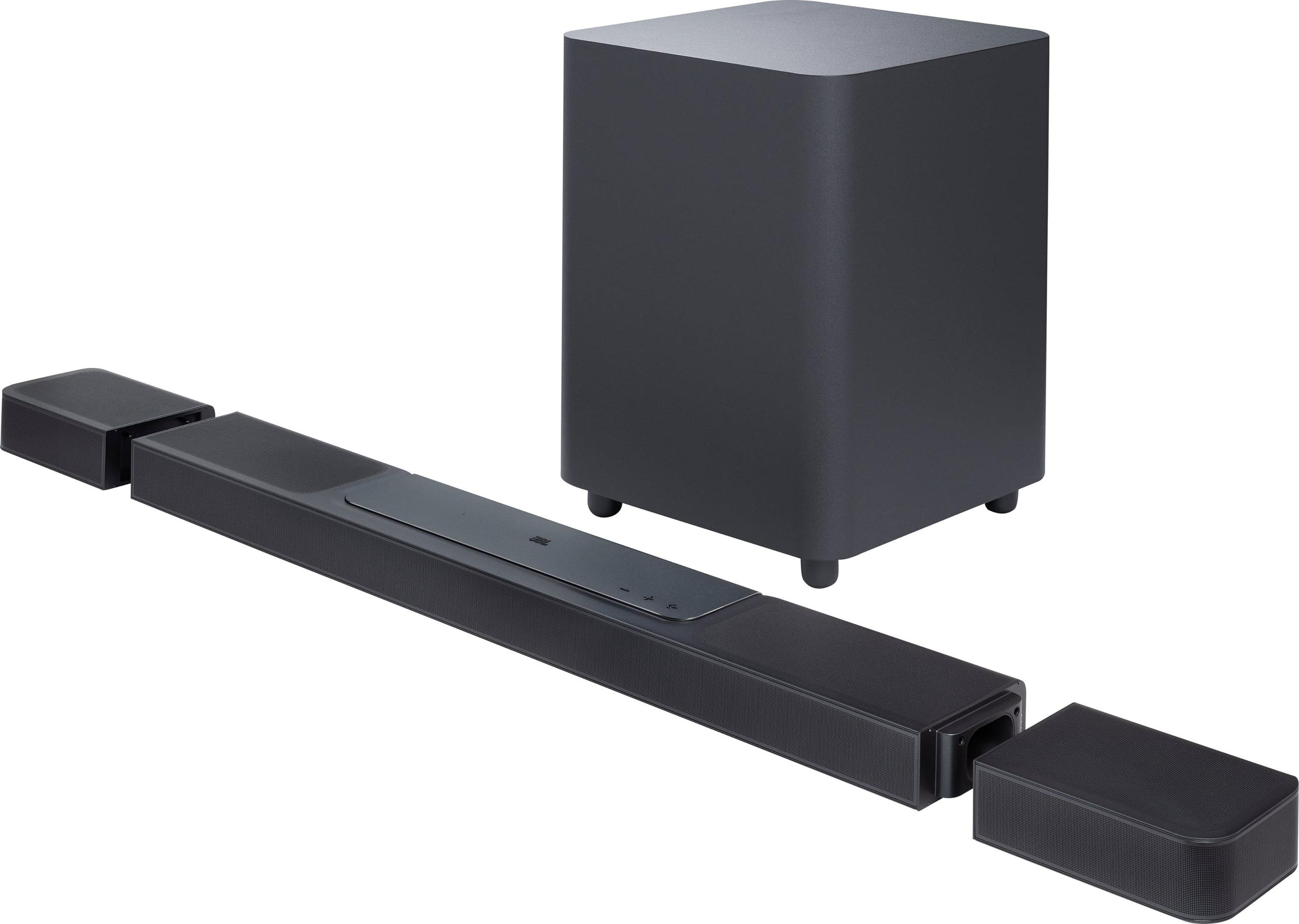
JBL launched the Bar 1300X in 2023, positioning it as a flagship model in their soundbar lineup. This isn't just a soundbar – it's a complete 11.1.4-channel surround system disguised as a more convenient package.
Let me break down what those numbers mean. The "11.1.4" configuration includes eleven main channels, one subwoofer channel, and four height channels. In practical terms, you get left, right, and center front speakers, side surround speakers, rear surround speakers, plus dedicated drivers that fire sound upward to create overhead effects. The JBL Bar 1300X achieves this through its main soundbar plus detachable wireless rear speakers.
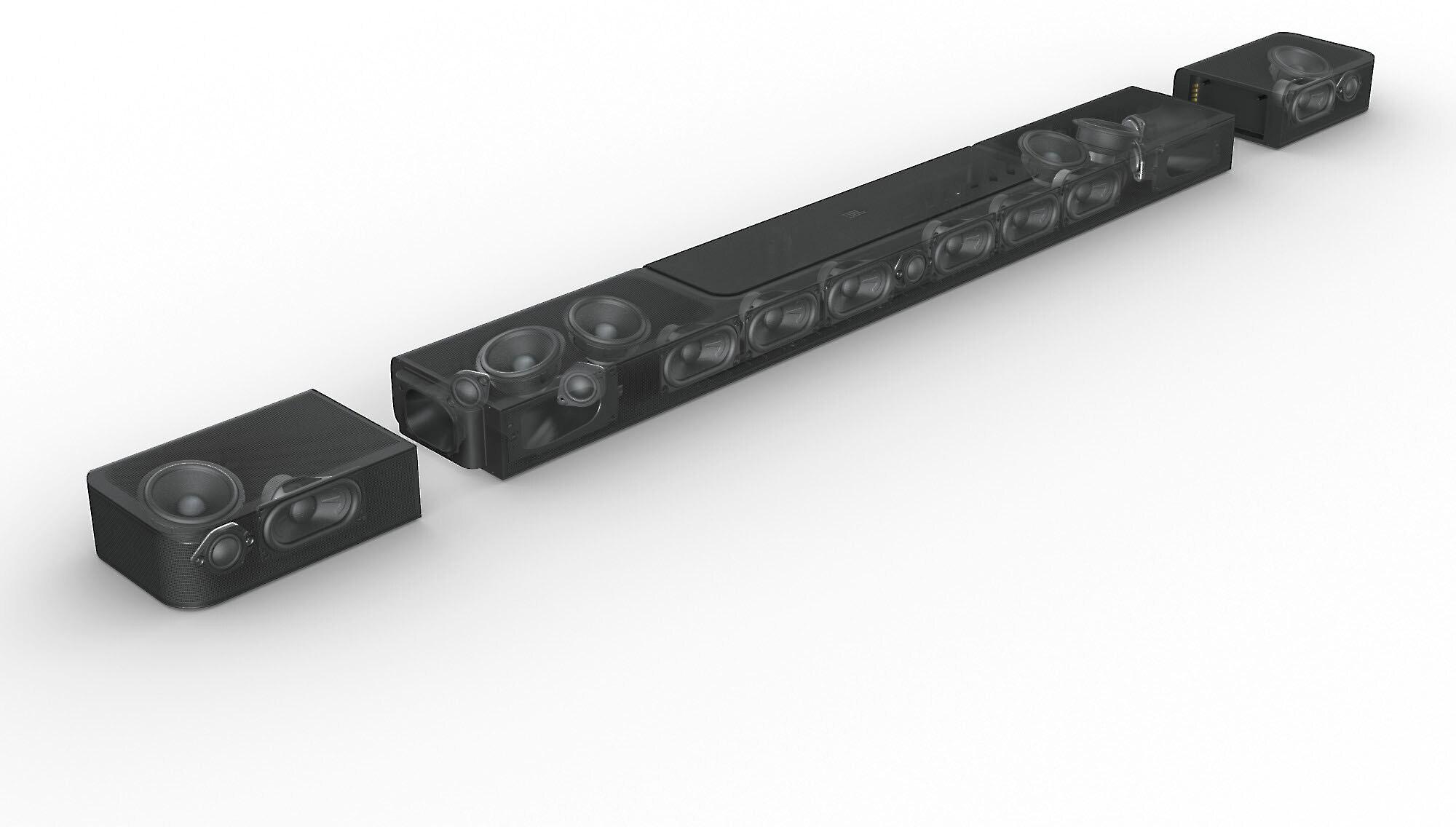
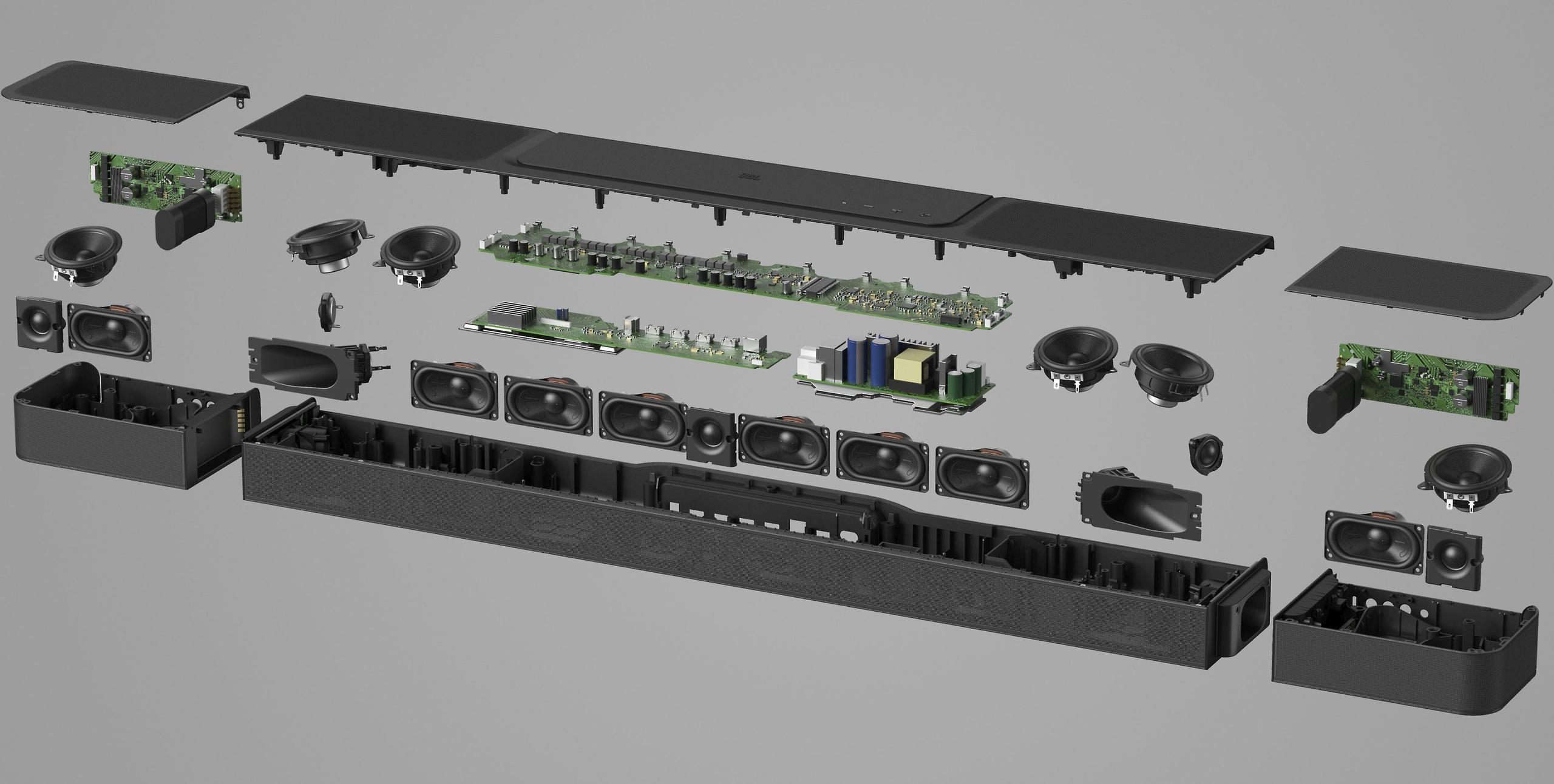
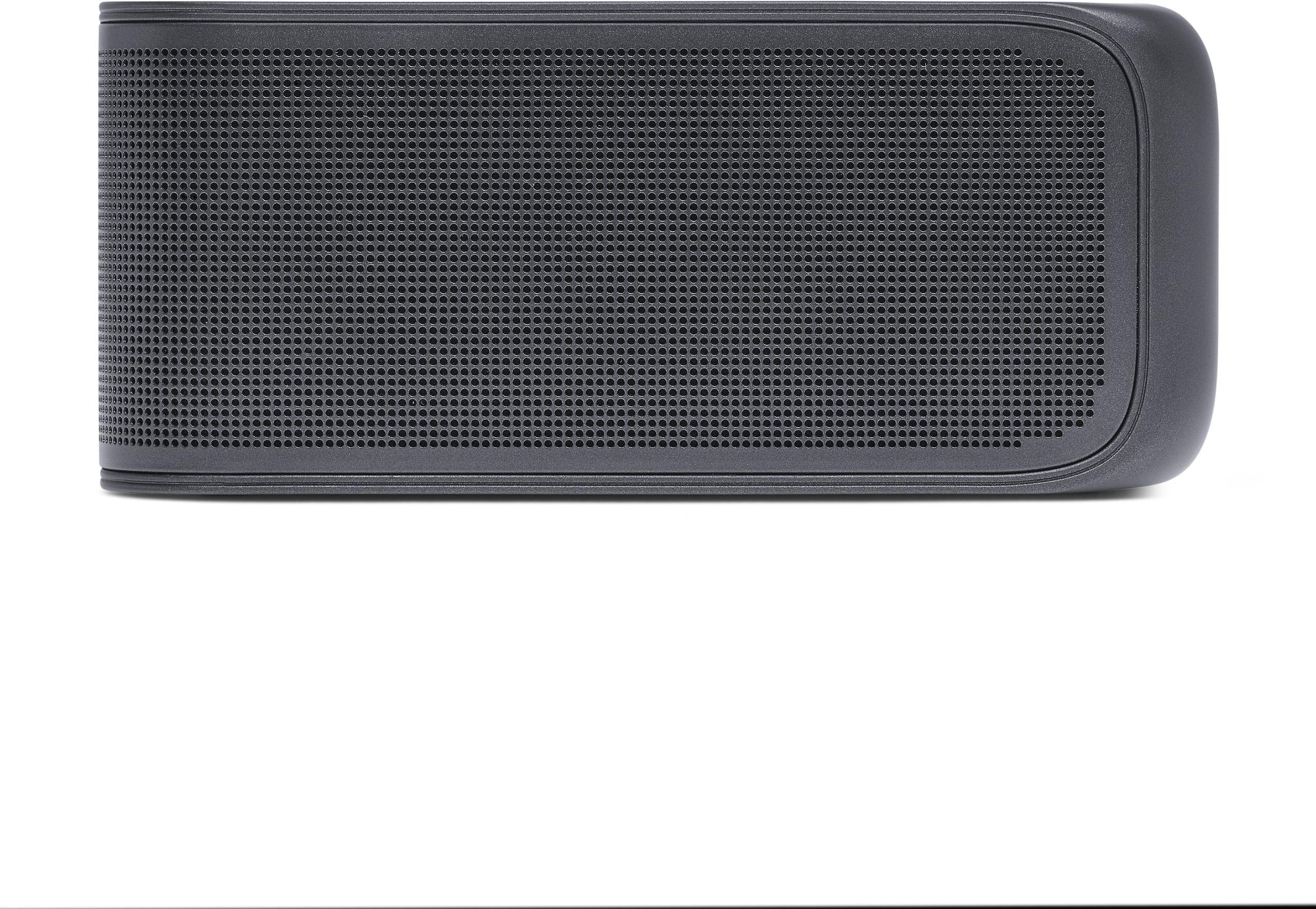
The innovation here is genuinely impressive. Those rear speakers aren't just surround channels – they're fully detachable, battery-powered units that can operate independently as Bluetooth speakers. Each one contains its own amplifier, up-firing driver for height effects, and enough battery life for up to 12 hours of use. I've used them for outdoor gatherings and as portable speakers around the house, making this system remarkably versatile.
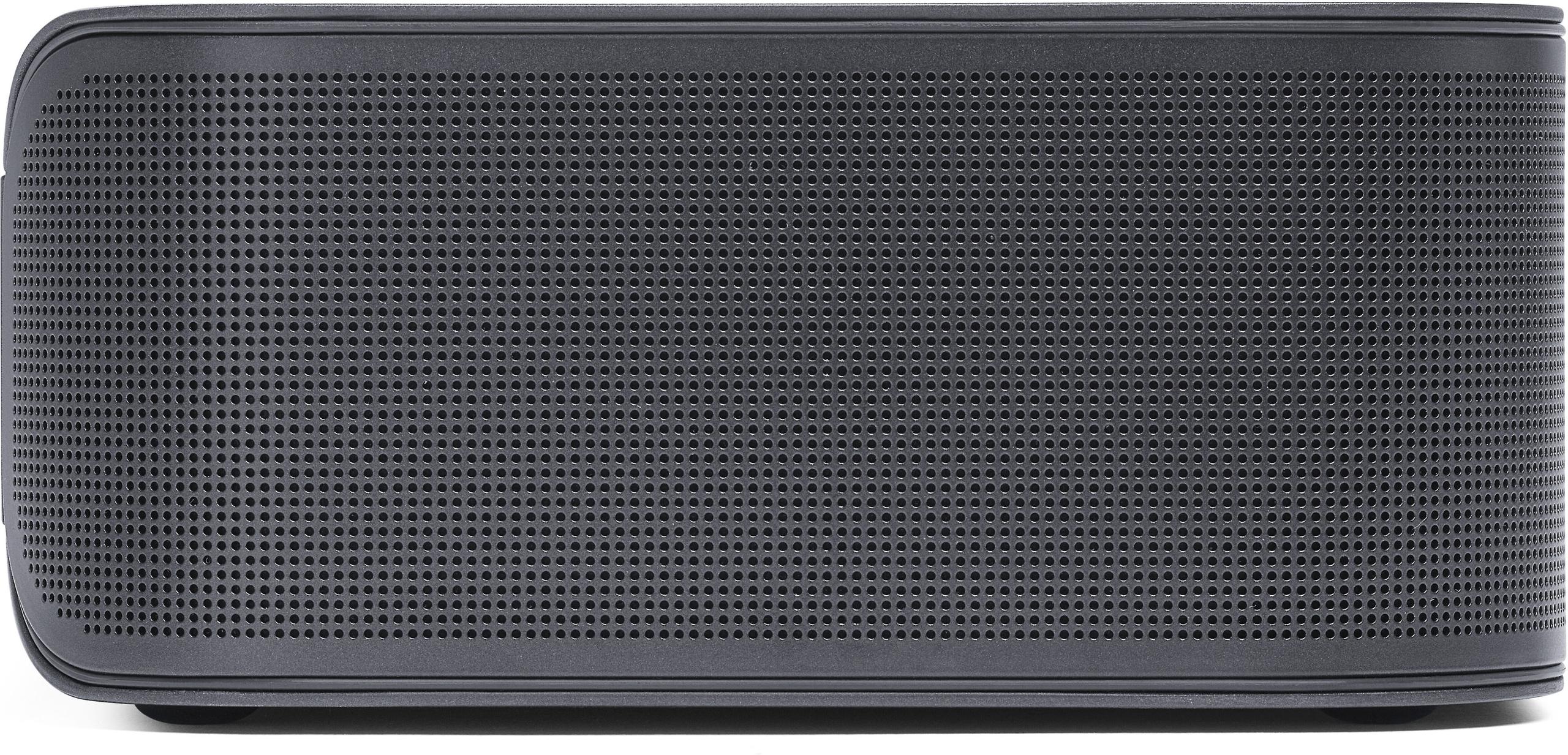
The main soundbar houses an array of racetrack drivers – oval-shaped speakers that fit more surface area into the available space than traditional round drivers. Combined with dedicated tweeters for high frequencies and up-firing drivers for height effects, the JBL Bar 1300X creates an incredibly wide and tall soundstage that fills large rooms effortlessly.
The performance gap between these systems is immediately apparent when you consider their power specifications. The Amazon Fire TV Soundbar Plus delivers 80 watts total – adequate for small to medium rooms but limited when you need to fill larger spaces.
The JBL Bar 1300X, meanwhile, pumps out an impressive 1,170 watts across all its components. That's not just marketing fluff – you genuinely feel the difference. In my testing, the JBL system could easily fill a 20x15-foot room with rich, detailed sound at moderate volumes, while still having headroom for those moments when you want to crank up an action sequence.
Bass performance reveals perhaps the most dramatic difference between these approaches. The Fire TV Soundbar Plus includes bass drivers within its compact housing, providing a frequency response starting at 70Hz. That's sufficient for dialogue clarity and light music listening, but it won't deliver the deep, room-shaking bass that makes action movies exciting.
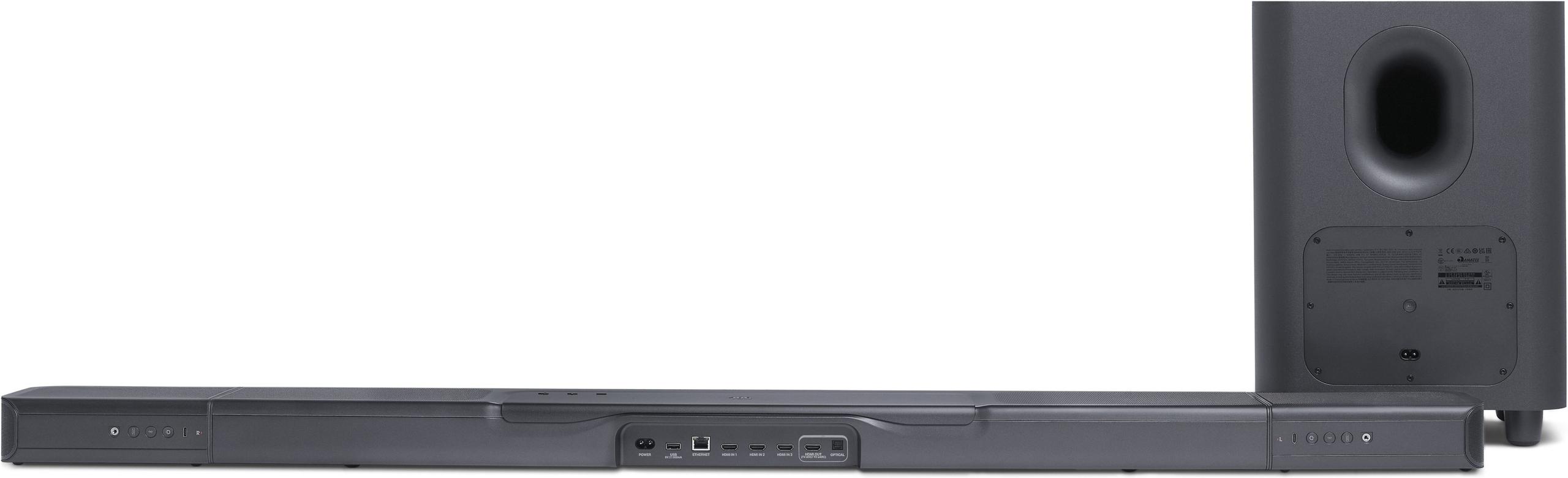
The JBL Bar 1300X includes a dedicated 12-inch wireless subwoofer with 300 watts of dedicated amplification. This extends the frequency response down to 33Hz – deep enough to reproduce the lowest frequencies in movie soundtracks. During testing with action films, the difference was night and day. Explosions had weight and impact, while the subtle low-frequency effects that create atmosphere were clearly audible.
Here's something interesting I discovered: the JBL's subwoofer uses room calibration technology that automatically adjusts its output based on your room's acoustics. This means it sounds properly balanced whether you place it in a corner (which typically boosts bass) or along a wall.
This is where the fundamental difference in approach becomes most apparent. The Amazon Fire TV Soundbar Plus uses advanced DSP to create the impression of surround sound from its stereo speaker array. It's surprisingly effective for the price – dialogue seems to come from a distinct center position, and sound effects do appear to move across the soundstage.
However, the JBL Bar 1300X employs true multi-channel processing with physical speakers positioned around your seating area. Those detachable rear speakers create genuine surround effects, while the six up-firing drivers (four in the main bar, two in the satellites) bounce audio off your ceiling for authentic height effects.
In practical terms, this means the JBL system can place sounds with pinpoint accuracy. During test scenes with helicopters or aircraft, you hear them approach from behind, pass overhead, and disappear into the distance ahead of you. The Amazon system creates a wider soundstage than your TV speakers, but it can't match that level of spatial precision.
The connectivity story reveals another philosophical difference. The Amazon Fire TV Soundbar Plus focuses on simplicity – it pairs seamlessly with Fire TV devices for unified remote control, but it doesn't include built-in streaming or voice assistant features. This keeps costs down and reduces complexity.
The JBL Bar 1300X takes the opposite approach, functioning as a comprehensive entertainment hub. Built-in Wi-Fi enables AirPlay, Chromecast, and Alexa Multi-Room Music support, giving you access to over 300 streaming music services. The JBL One app provides detailed setup guidance, room calibration, and extensive customization options.
I particularly appreciate the JBL's multiple HDMI inputs – three inputs plus one eARC output with 4K Dolby Vision pass-through. This eliminates the need for a separate HDMI switch if you have multiple gaming consoles, streaming devices, or media players.
The Amazon Fire TV Soundbar Plus shines in specific scenarios. If you're upgrading from TV speakers in a bedroom, small living room, or apartment where neighbors are a consideration, it provides substantial improvement without overwhelming your space or budget.
I found it particularly effective for dialogue-heavy content. News programs, talk shows, and character-driven dramas all benefited from its clear speech reproduction. The built-in night mode compresses audio dynamics, making it perfect for late-night viewing when you need to keep volume levels reasonable.
The system works beautifully as a starter soundbar. Many users begin here and later upgrade to premium systems once they understand what improved audio brings to their viewing experience.
The JBL Bar 1300X targets users who want a true cinematic experience without the complexity of traditional surround sound installation. Those detachable rear speakers eliminate the need to run cables across your room – they automatically connect via Bluetooth and can be placed anywhere within range.
For movie nights, the difference is transformative. Action sequences have genuine impact, with explosions that seem to move through three-dimensional space. Music listening reveals details you might miss with lesser systems – subtle instrumental parts, vocal harmonies, and spatial cues that recording engineers carefully placed in the mix.
Gaming performance deserves special mention. Modern games include sophisticated 3D audio design, and the JBL Bar 1300X reproduces directional cues with remarkable precision. Whether you're playing competitive shooters where audio positioning provides tactical advantages, or immersive single-player adventures with rich soundscapes, the system enhances the experience significantly.
The price difference between these systems reflects genuinely different capabilities rather than simple brand positioning. At the time of writing, you're looking at roughly a 7:1 price ratio, but the performance difference is even more dramatic in key areas like bass extension and surround accuracy.
The Amazon Fire TV Soundbar Plus delivers exceptional value within its price category. You're getting Dolby Atmos processing, HDMI eARC connectivity, and meaningful audio improvement for the cost of a few restaurant meals. It's hard to argue with that value proposition if your needs are primarily dialogue enhancement and modest bass improvement.
The JBL Bar 1300X justifies its premium pricing through comprehensive features that would typically require separate components. Consider that you're getting a multi-channel surround processor, wireless subwoofer, detachable surround speakers that double as portable Bluetooth units, and streaming capabilities that replace dedicated devices.
Your decision should primarily depend on three factors: room size, content preferences, and long-term audio goals.
Choose the Amazon Fire TV Soundbar Plus if you're working with a smaller space, primarily watch dialogue-heavy content, or you're testing whether improved TV audio is worth the investment. It's also ideal for secondary viewing areas like bedrooms or kitchens where powerful bass might be inappropriate.
The JBL Bar 1300X makes sense when you have a larger room that needs filling with sound, you regularly watch action movies or play immersive games, or you value the flexibility of having detachable speakers for multiple uses. It's also the better choice if you're planning to keep your system for many years – the comprehensive feature set should remain relevant longer.
Having lived with both systems, I can confidently say they each excel within their intended markets. The Amazon Fire TV Soundbar Plus proves that significant audio improvement doesn't require a massive investment, while the JBL Bar 1300X demonstrates how far soundbar technology has advanced in delivering true home theater experiences.
The beauty of today's soundbar market is that there's genuinely something for every budget and use case. Whether you choose the budget-conscious simplicity of the Amazon system or the comprehensive capabilities of the JBL, you'll enjoy a substantial upgrade over built-in TV speakers. The key is matching the system's capabilities to your specific needs and room requirements.
Remember that audio is highly subjective, and your room's acoustics will significantly influence any system's performance. If possible, take advantage of return policies to test your chosen soundbar in your actual listening environment. What works beautifully in a showroom might need adjustment in your specific space, and both of these systems offer enough flexibility to adapt to different room conditions.
| Amazon Fire TV Soundbar Plus | JBL Bar 1300X Soundbar with Wireless Subwoofer |
|---|---|
| Channel Configuration - Determines surround sound capability and immersion level | |
| 2.1 channels (stereo + built-in subwoofer) | 11.1.4 channels (true surround with height effects) |
| Total Power Output - Affects volume capability and room-filling potential | |
| 80W total (adequate for small-medium rooms) | 1,170W total (fills large rooms with headroom) |
| Frequency Response - Lower numbers mean deeper bass extension | |
| 70Hz - 20kHz (limited bass depth) | 33Hz - 20kHz (room-shaking low-end) |
| Subwoofer Design - Impacts bass quality and placement flexibility | |
| Built-in subwoofer (compact but limited) | Dedicated 12" wireless subwoofer with 300W |
| Surround Sound Technology - Virtual vs physical speaker placement | |
| Virtual Dolby Atmos/DTS:X processing only | True Dolby Atmos/DTS:X with 6 up-firing drivers |
| Rear Speakers - Critical for authentic surround experience | |
| None (expandable with optional purchase) | Detachable wireless speakers with 12-hour battery |
| HDMI Connectivity - More inputs reduce need for external switchers | |
| 1 HDMI eARC input only | 3 HDMI inputs + 1 HDMI eARC output |
| Smart Features - Streaming and voice control capabilities | |
| Fire TV integration only (no built-in streaming) | Wi-Fi with AirPlay, Chromecast, Alexa Multi-Room |
| Setup Complexity - Affects ease of installation and use | |
| Plug-and-play simplicity | Advanced setup with room calibration |
| Unique Features - Standout capabilities that differentiate each product | |
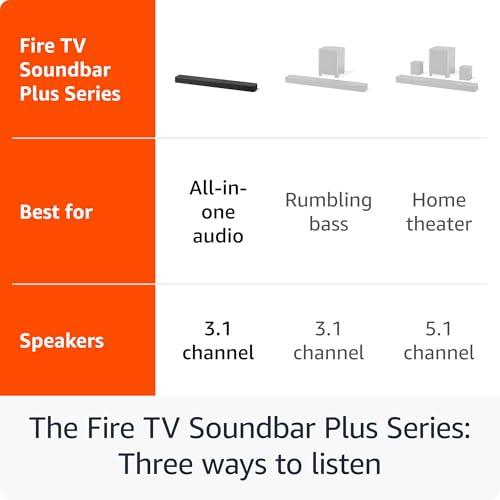
| Expandable 5.1 system with optional components | Detachable speakers work as portable Bluetooth units |
| Best For - Target user and ideal use cases | |
| Budget-conscious users, small rooms, dialogue enhancement | Home theater enthusiasts, large rooms, immersive gaming |
| Value Proposition - Cost-to-performance ratio | |
| Exceptional dialogue improvement at entry price | Premium cinema experience without installation complexity |
The Amazon Fire TV Soundbar Plus is ideal for small apartments due to its compact design and built-in subwoofer that doesn't require additional floor space. Its night mode feature compresses audio dynamics, making it perfect for late-night viewing without disturbing neighbors. The JBL Bar 1300X may be overkill for smaller spaces and could overwhelm apartment living.
The primary difference is channel configuration and power. The Amazon Fire TV Soundbar Plus offers a simple 2.1-channel setup with virtual surround processing, while the JBL Bar 1300X provides true 11.1.4-channel surround sound with physical speakers positioned around your room for authentic cinematic immersion.
The JBL Bar 1300X significantly outperforms the Amazon Fire TV Soundbar Plus in bass response. The JBL features a dedicated 12-inch wireless subwoofer with 300W of power, extending down to 33Hz for deep, room-shaking bass. The Amazon model's built-in subwoofer only reaches 70Hz, providing adequate but limited bass impact.
Yes, both the Amazon Fire TV Soundbar Plus and JBL Bar 1300X support Dolby Atmos, but in very different ways. The Amazon model uses virtual processing to simulate height effects, while the JBL Bar 1300X employs six physical up-firing drivers that bounce sound off your ceiling for genuine three-dimensional audio.
The Amazon Fire TV Soundbar Plus offers simpler plug-and-play setup with just one HDMI eARC connection to your TV. The JBL Bar 1300X requires more initial configuration including wireless subwoofer pairing, rear speaker placement, and room calibration, though the JBL One app guides you through the process.
The Amazon Fire TV Soundbar Plus can be expanded to a 5.1 system by adding optional wireless subwoofer and surround speakers. The JBL Bar 1300X comes as a complete system out of the box but offers unique flexibility with detachable rear speakers that function as standalone Bluetooth speakers.
Both excel at dialogue enhancement, but for different reasons. The Amazon Fire TV Soundbar Plus features dedicated center channel processing with five levels of dialogue enhancement, perfect for TV shows and news. The JBL Bar 1300X uses PureVoice technology to maintain speech clarity even during loud action sequences.
The Amazon Fire TV Soundbar Plus has one HDMI eARC port, requiring you to connect all devices directly to your TV. The JBL Bar 1300X offers three HDMI inputs plus one eARC output with 4K pass-through, eliminating the need for external HDMI switches if you have multiple devices.
The JBL Bar 1300X is superior for gaming due to its true surround sound positioning and multiple HDMI inputs for direct console connection. The physical rear speakers and height channels provide precise directional audio cues crucial for competitive gaming. The Amazon Fire TV Soundbar Plus offers basic gaming audio improvement but lacks spatial accuracy.
The Amazon Fire TV Soundbar Plus focuses purely on audio enhancement without built-in streaming, though it integrates with Fire TV devices for unified control. The JBL Bar 1300X includes Wi-Fi connectivity with AirPlay, Chromecast, and Alexa Multi-Room support, accessing over 300 streaming music services directly.
Value depends on your needs and budget. The Amazon Fire TV Soundbar Plus delivers exceptional value for basic TV audio improvement and dialogue enhancement at an entry-level price point. The JBL Bar 1300X provides premium value through comprehensive surround sound features, multiple connectivity options, and versatile speaker functionality.
The Amazon Fire TV Soundbar Plus suits small to medium rooms up to about 15x12 feet, providing adequate volume and bass for typical viewing distances. The JBL Bar 1300X excels in larger spaces, easily filling rooms up to 20x15 feet or bigger with its 1,170W total power output and room-calibrated audio performance.
We've done our best to create useful and informative comparisons to help you decide what product to buy. Our research uses advanced automated methods to create this comparison and perfection is not possible - please contact us for corrections or questions. These are the sites we've researched in the creation of this article: rtings.com - wirelessplace.com - techradar.com - cordbusters.co.uk - whathifi.com - developer.amazon.com - t3.com - dolby.com - youtube.com - youtube.com - youtube.com - dugoutnorthbrook.com - dolby.com - aboutamazon.com - youtube.com - developer.amazon.com - techradar.com - jbl.com - audioadvice.com - youtube.com - rtings.com - jbl.com - greentoe.com - harmanaudio.com - youtube.com - mm.jbl.com - jbl.com

Privacy Policy
Terms and Conditions - Affiliate Policy
Home Security
© Copyright 2008-2026.
11816 Inwood Rd #1211, Dallas, TX 75244