

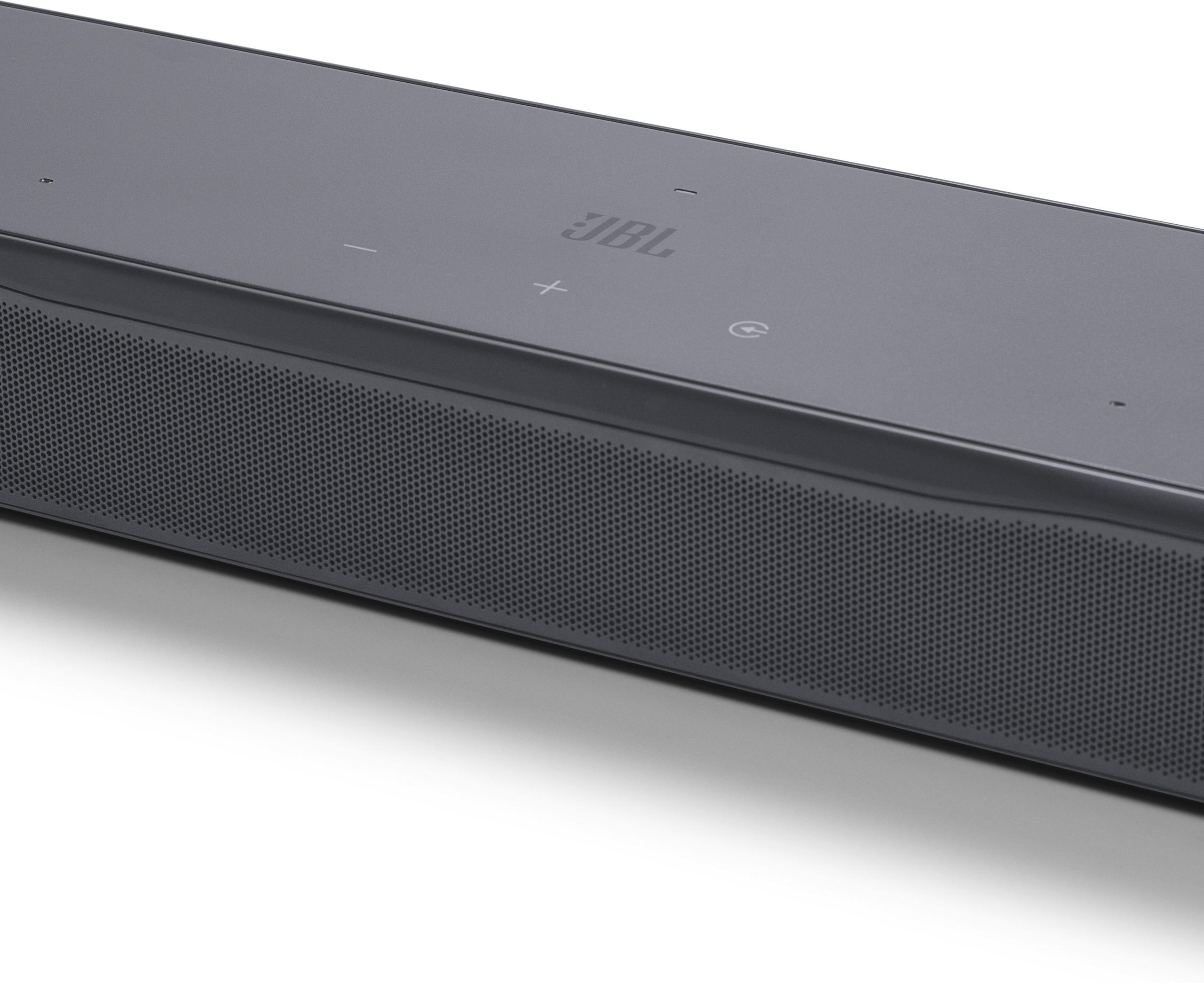
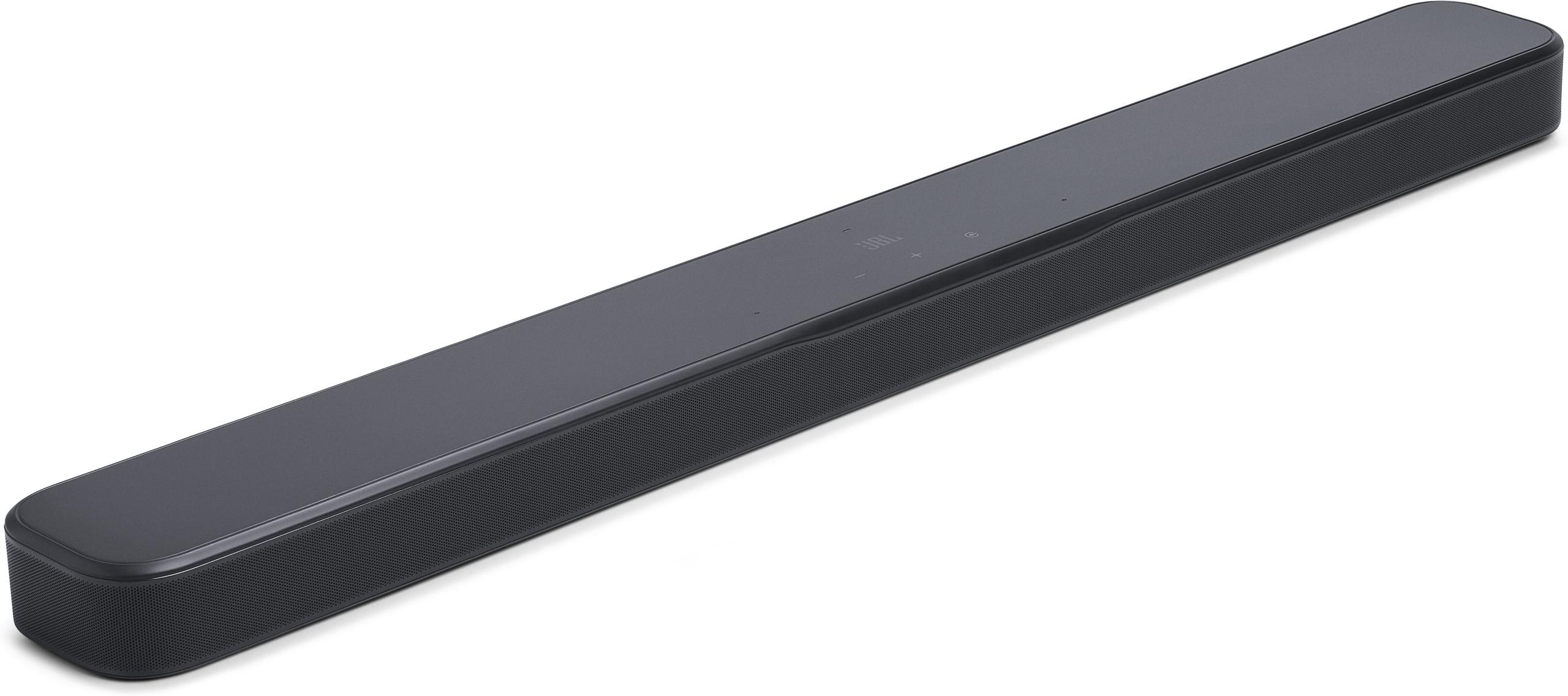

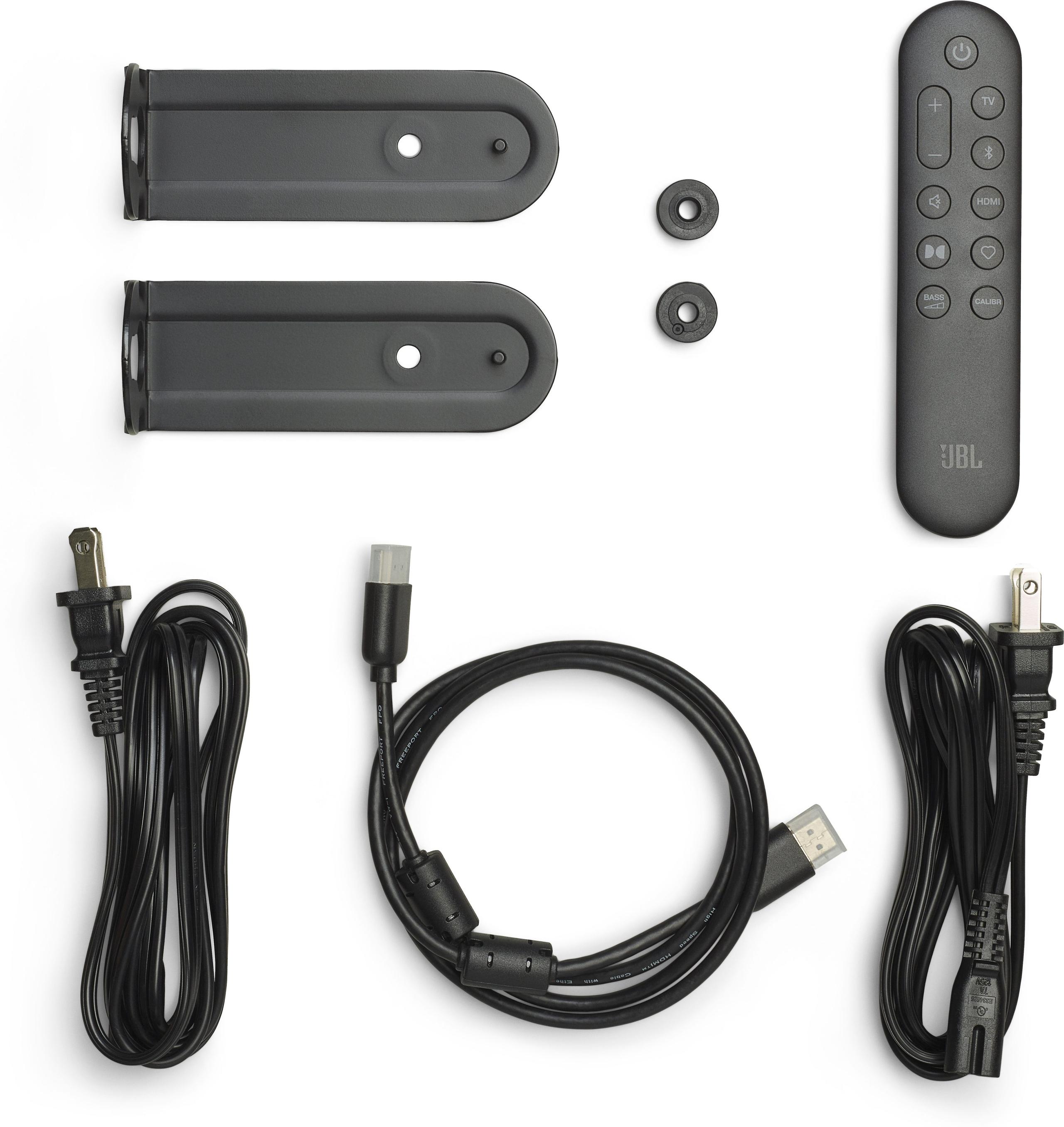
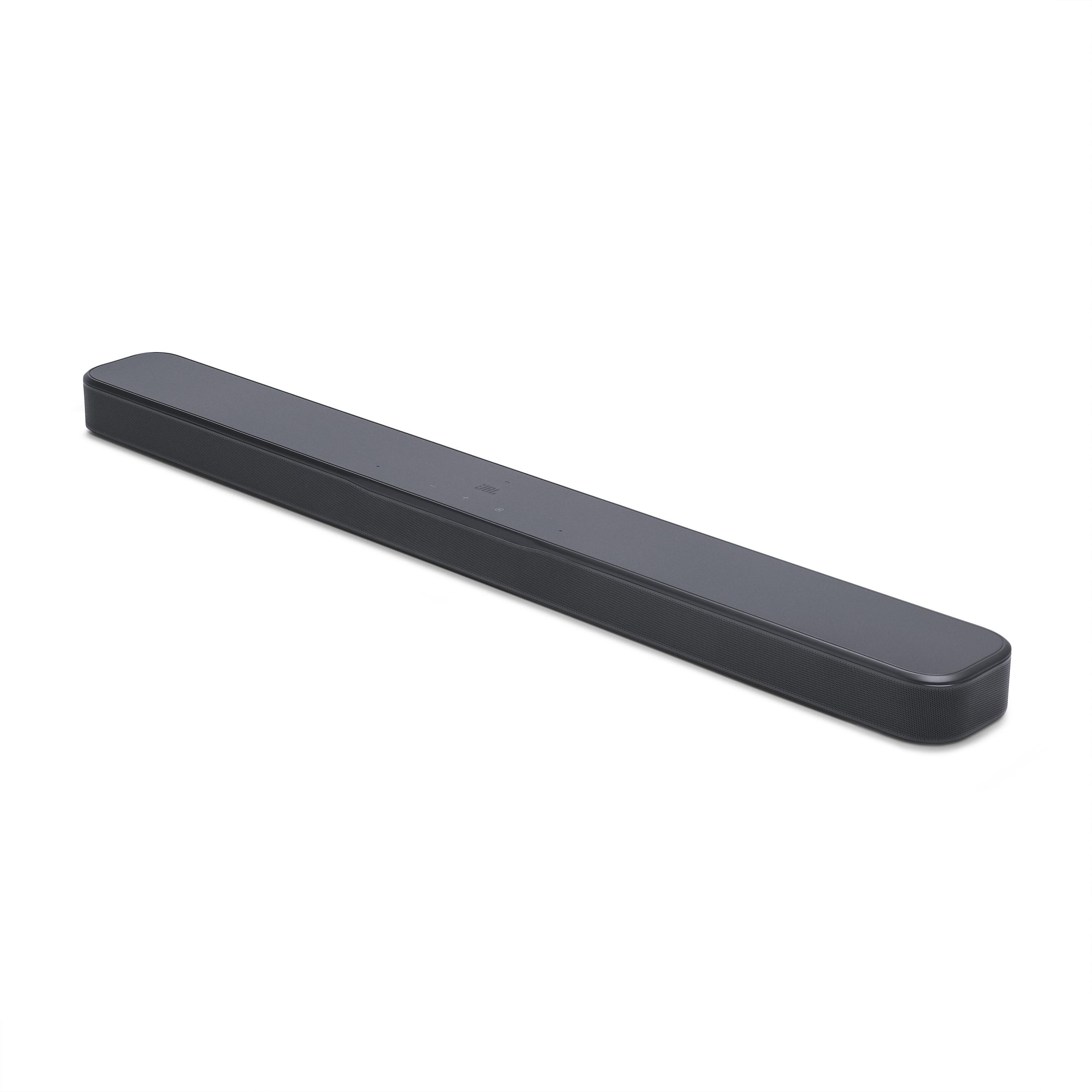

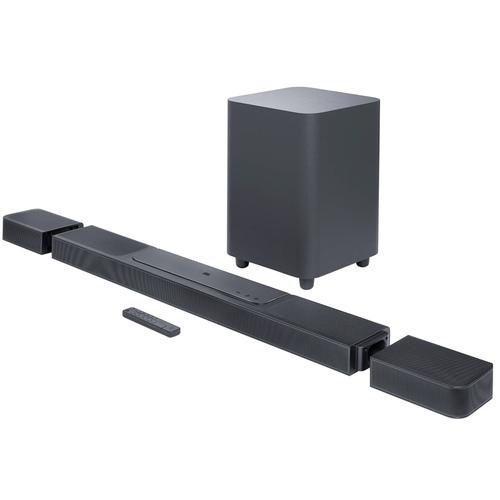
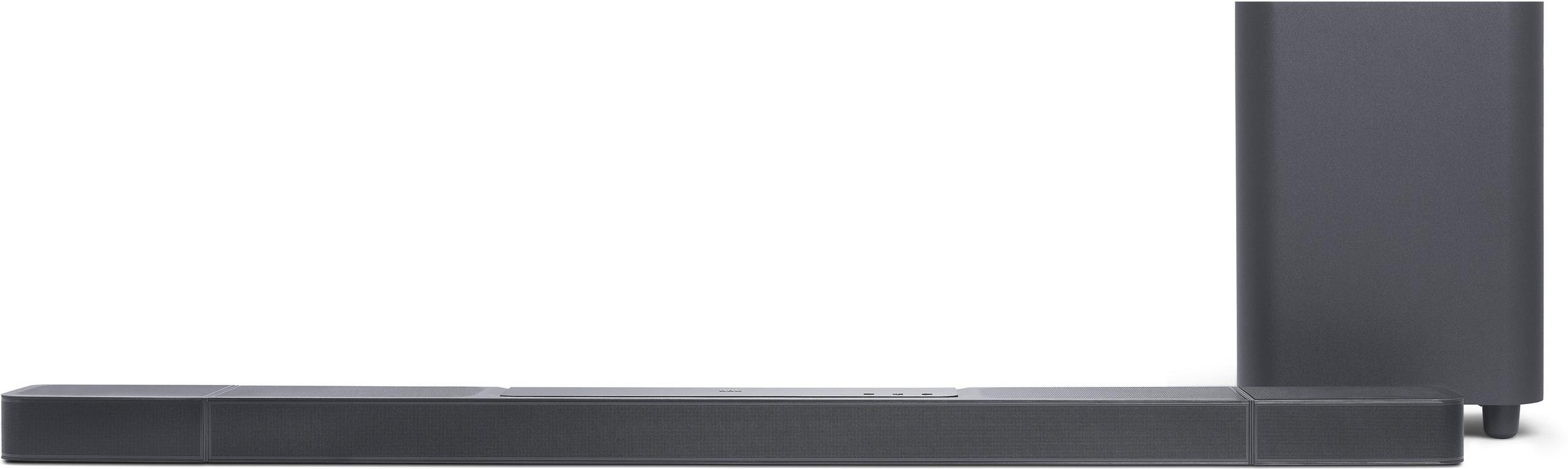

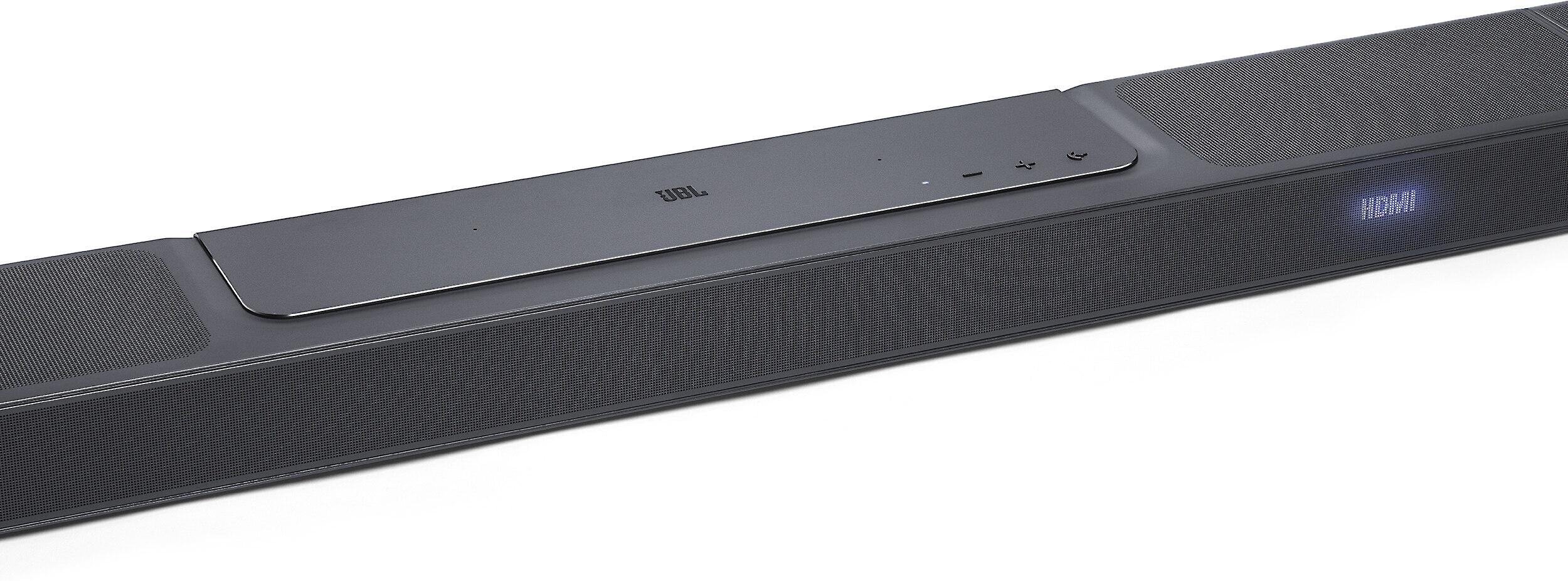


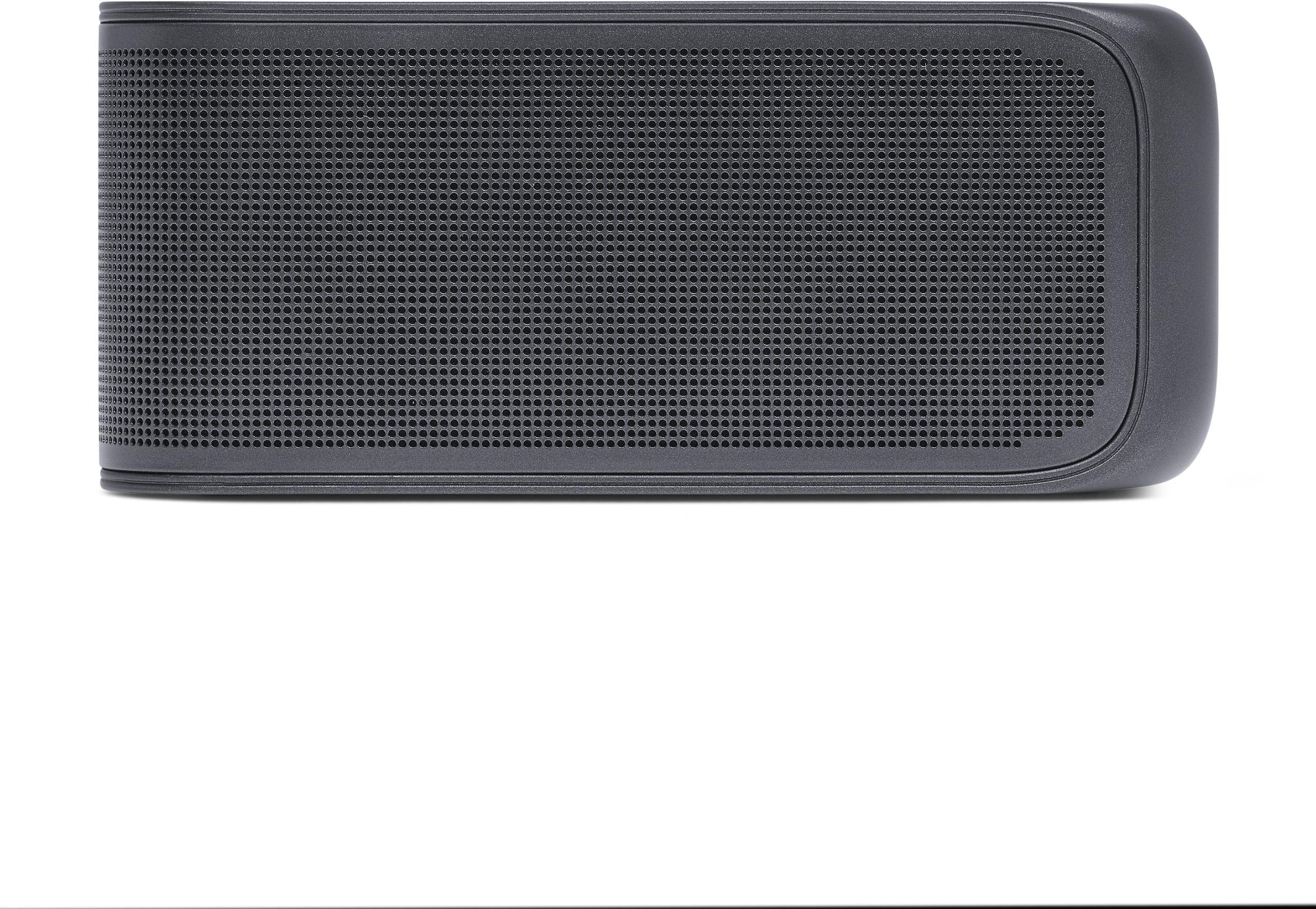
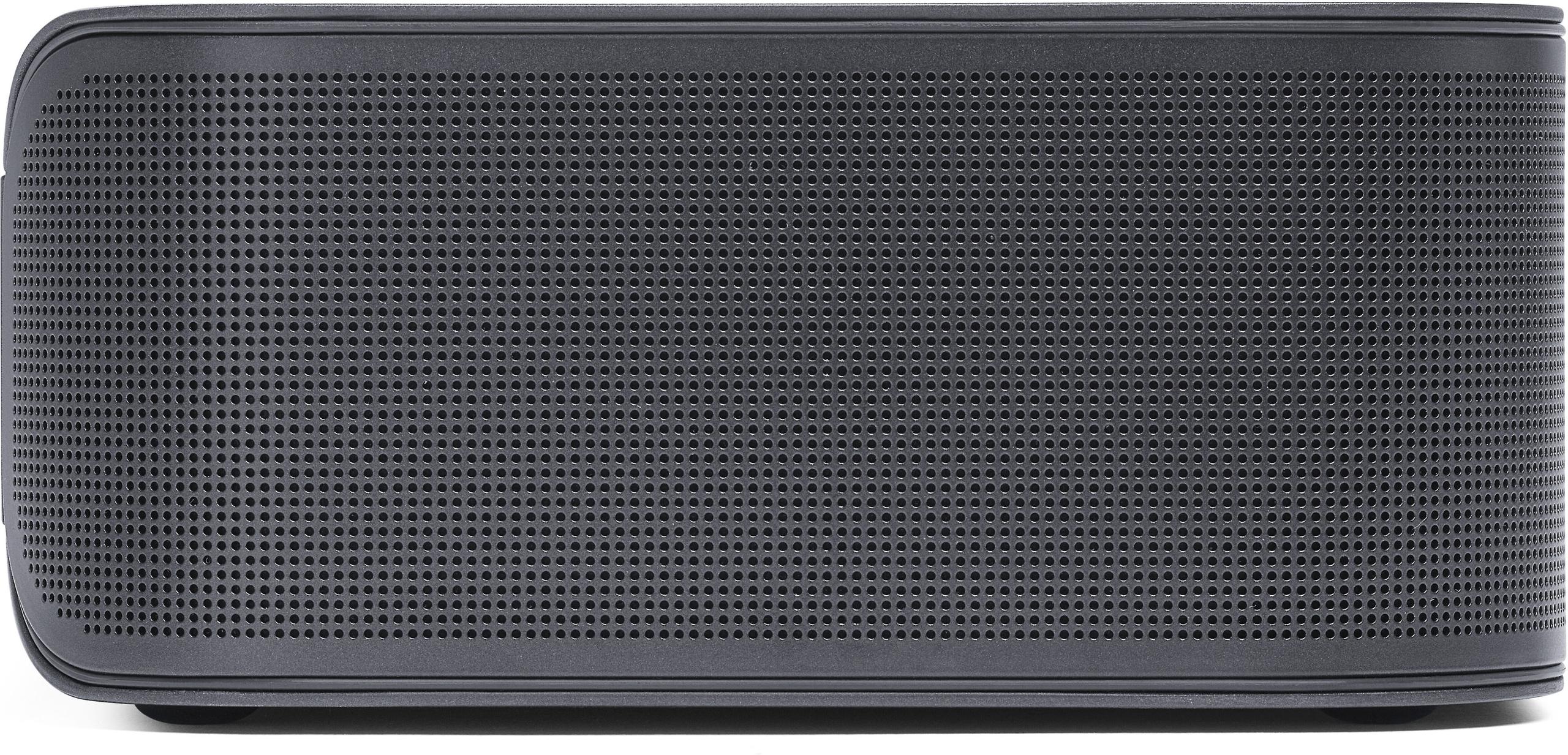
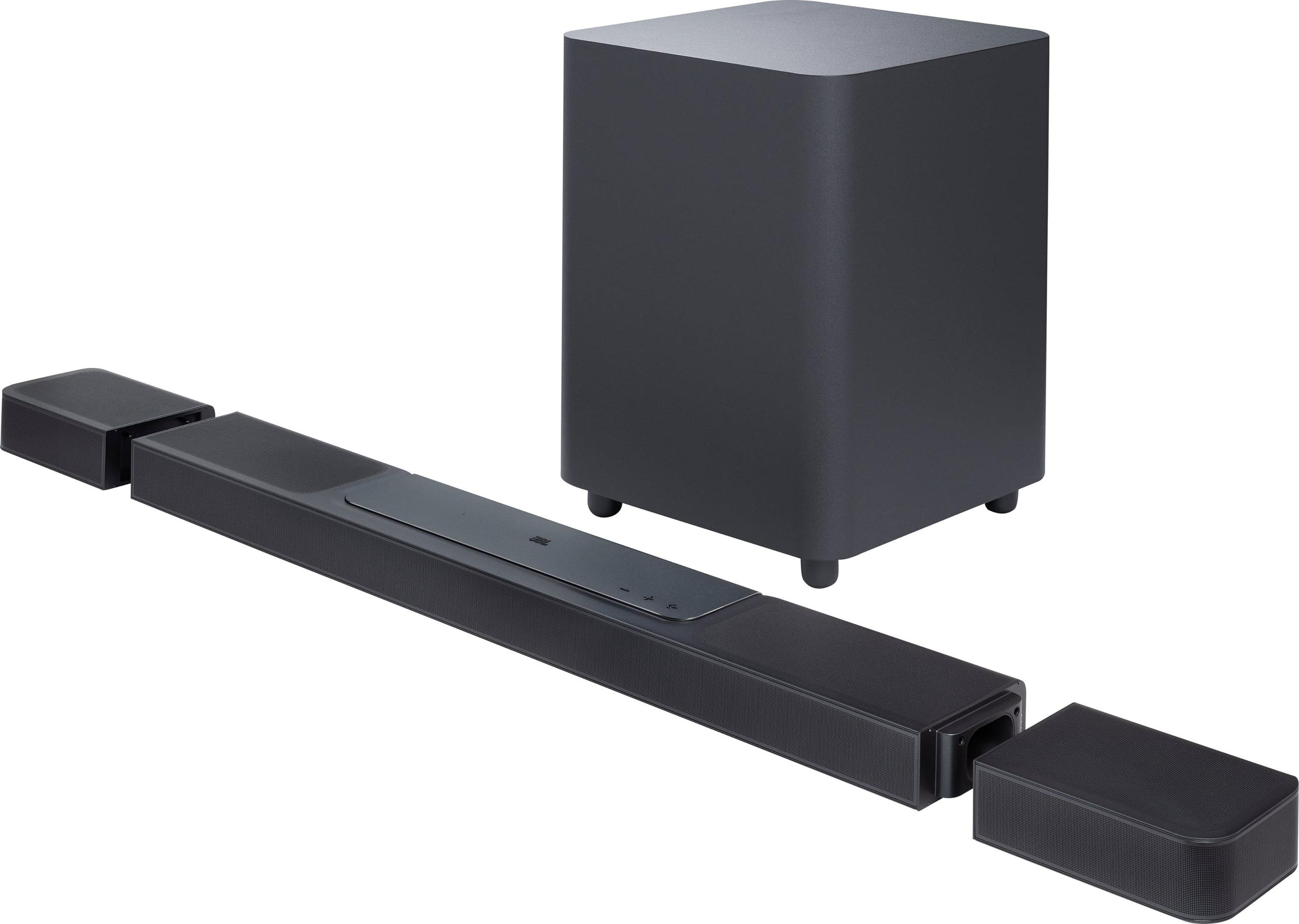
When your TV's built-in speakers make dialogue sound like it's coming from underwater and explosions feel about as impactful as a door closing, it's time for a soundbar upgrade. But choosing between JBL's offerings can feel overwhelming – especially when comparing the streamlined JBL Bar 300 MK2 ($449.95) against the powerhouse JBL Bar 1300X ($1,299.95). I've spent considerable time with both systems, and the differences go far deeper than just price.
Before diving into specifics, let's talk about what separates good soundbars from great ones. The best systems excel in three key areas: they deliver clear dialogue without forcing you to constantly adjust volume, they create an immersive soundstage that makes you forget you're listening to a single bar of speakers, and they reproduce bass with enough depth to make action scenes feel visceral.
The challenge is that achieving all three typically requires compromises. More speakers and power mean higher costs and complex setups. Simpler systems sacrifice performance for convenience. The trick is finding the right balance for your specific needs, room size, and budget.
What's particularly interesting about comparing these two JBL models is how they represent completely different philosophies. The Bar 300 MK2, released in June 2025 as part of JBL's latest MK2 refresh, embodies the "smart simplicity" approach. Meanwhile, the Bar 1300X, which launched in late 2023, follows the "no compromises" flagship mentality that dominated premium soundbars before streaming integration became paramount.
JBL's recent updates tell an interesting story about where home audio is heading. The Bar 300 MK2 represents a significant leap forward in smart features compared to its 2022 predecessor. The addition of Wi-Fi 6 support means faster, more stable streaming connections – something you'll notice when switching between Spotify and Netflix without audio dropouts. The integration of SmartDetails technology, which HARMAN developed to capture subtle audio nuances, shows how software processing has advanced to compensate for hardware limitations.
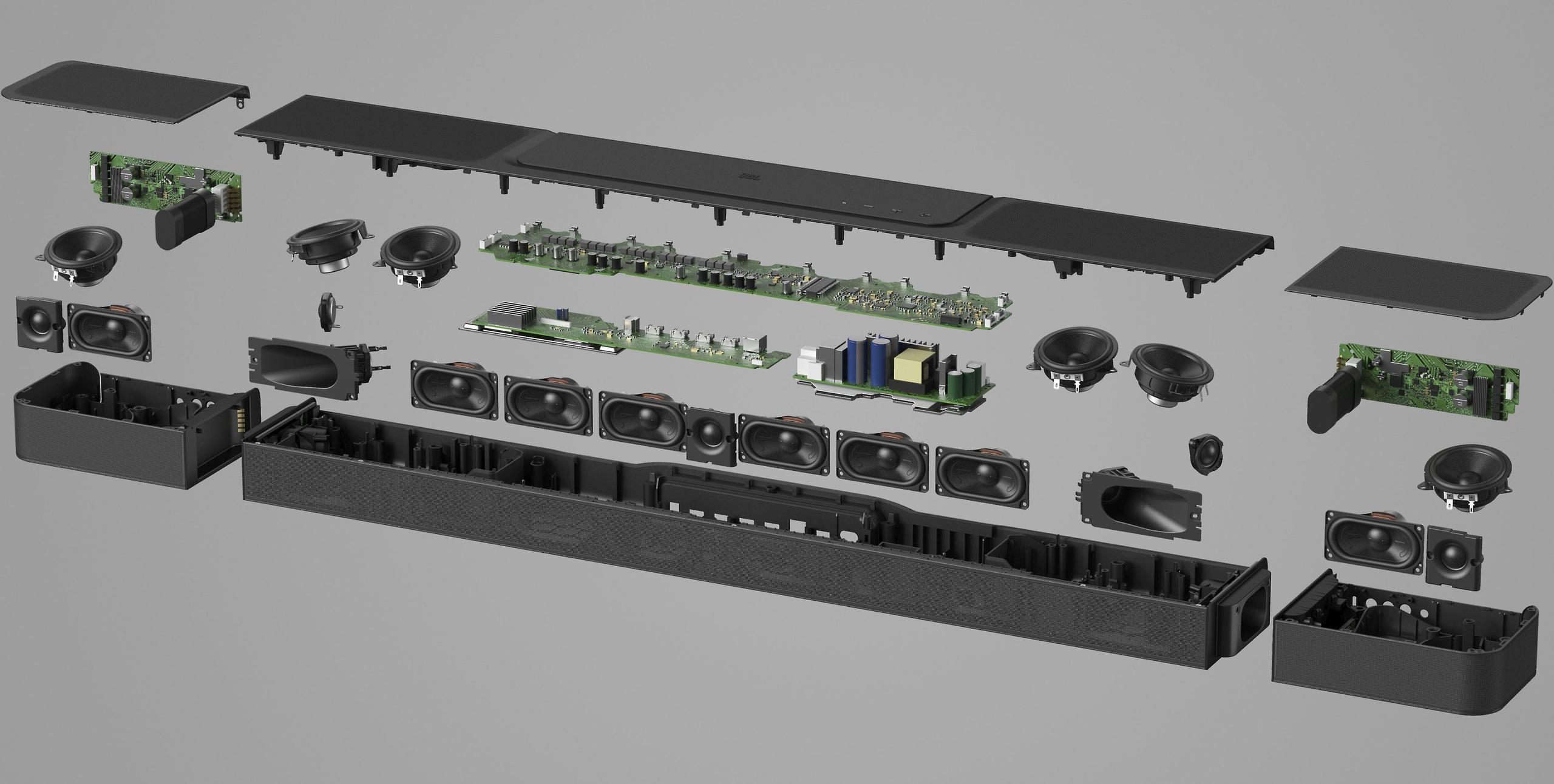
The Bar 1300X, while slightly older, showcases JBL's mastery of traditional home theater engineering. Its MultiBeam 3.0 technology uses sophisticated digital signal processing to analyze incoming audio and route specific frequency ranges to different drivers. This creates the illusion of sound coming from multiple directions, even though all the speakers are housed in the main bar and satellites.
What's fascinating is how these different approaches reflect broader industry trends. Newer soundbars prioritize streaming integration and AI-powered audio enhancement, while established flagships focus on raw acoustic performance and traditional surround sound principles.
Let me start with something everyone cares about: can you actually hear what actors are saying? Both soundbars use JBL's PureVoice technology, but they implement it differently. The Bar 300 MK2 relies on sophisticated digital processing to isolate and enhance vocal frequencies within its 5.0-channel configuration. During my testing with dialogue-heavy shows like "The West Wing," voices remained intelligible even when background music swelled.
The Bar 1300X, however, takes a more traditional approach with its discrete center channel. This dedicated speaker handles most dialogue, while advanced PureVoice algorithms fine-tune the output. The difference becomes apparent in complex scenes – think Marvel movie battles where characters are shouting over explosions. The 1300X maintains vocal clarity with less digital processing artifacts, resulting in more natural-sounding dialogue.
For home theater use, this distinction matters significantly. Movie soundtracks often push dialogue to the background, and having a dedicated center channel provides more headroom for clear reproduction without the slight "digital" quality that aggressive processing can introduce.
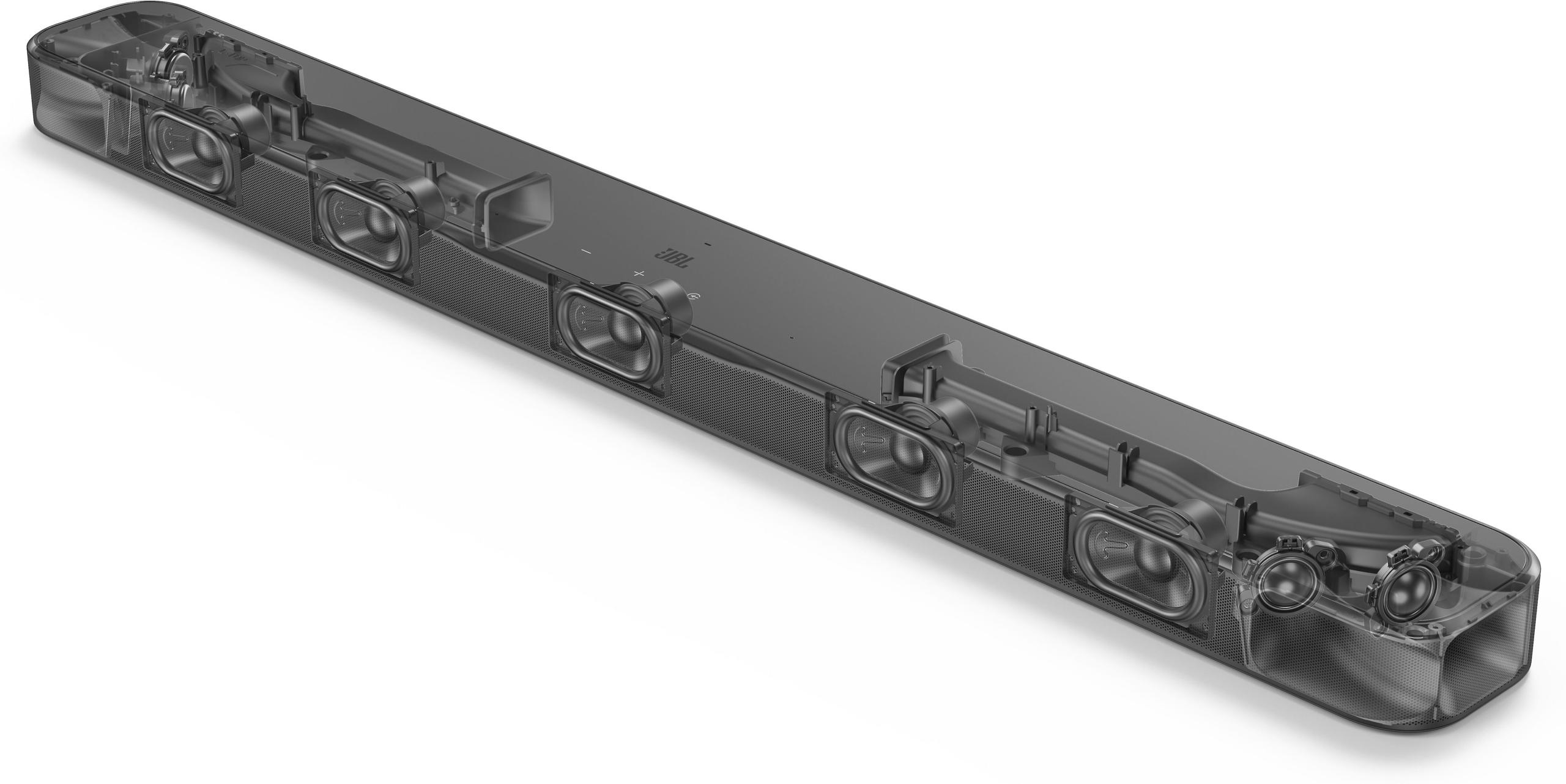
Here's where the fundamental design difference becomes most apparent. The Bar 300 MK2 achieves its bass response through carefully tuned racetrack drivers and a built-in bass port. These oval-shaped drivers move more air than traditional round speakers of similar size, and the port helps extend low-frequency response down to 50Hz. For a single-bar system, the results are genuinely impressive – watching "Mad Max: Fury Road," engine rumbles had real presence, though they lacked the chest-thumping impact of a dedicated subwoofer.
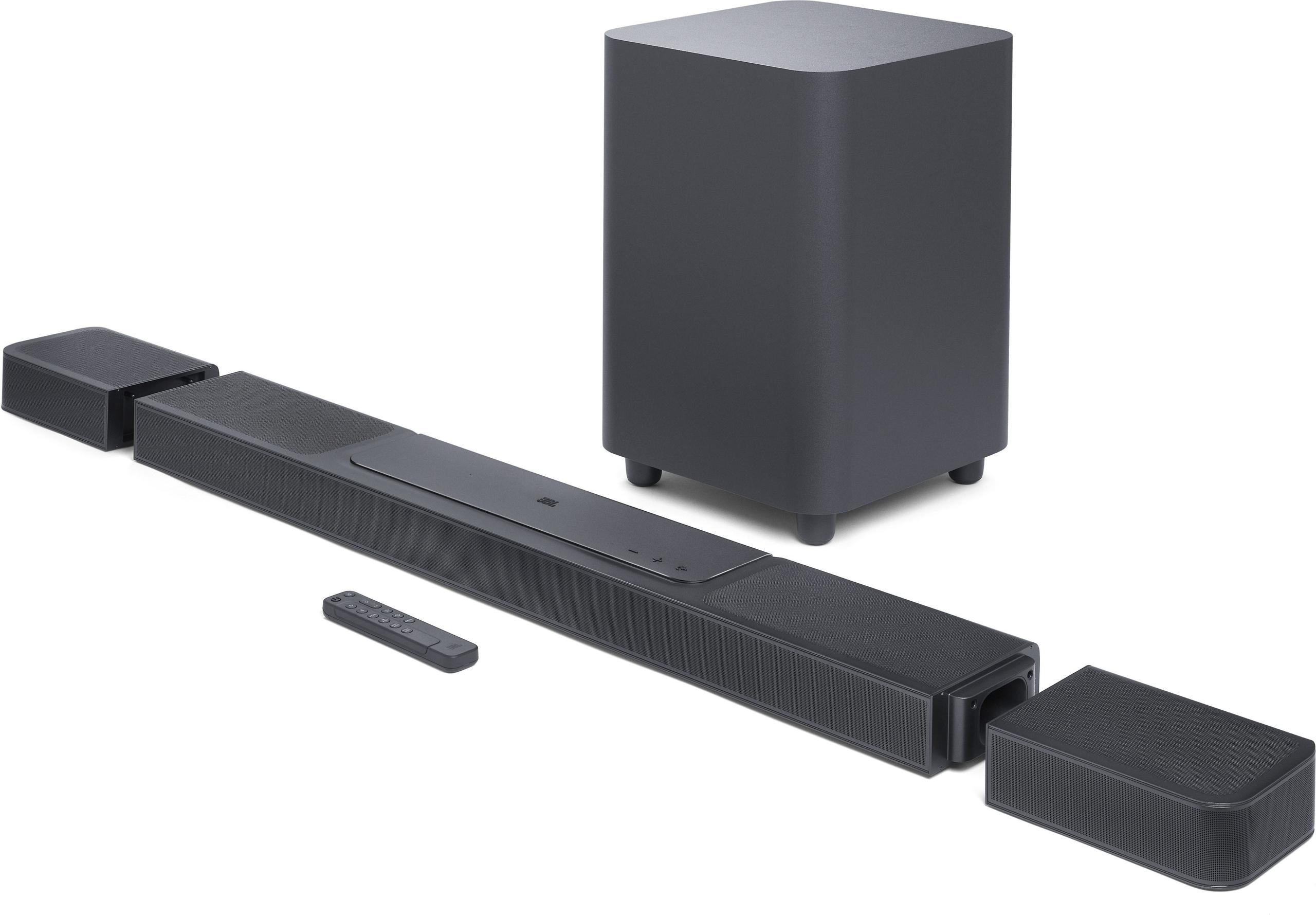
The Bar 1300X's 12-inch wireless subwoofer operates in an entirely different league. Extending down to 33Hz means it reproduces those deep, subsonic frequencies that you feel as much as hear. The subwoofer's 300-watt amplifier provides enough headroom to shake the room without distortion. During the opening sequence of "Blade Runner 2049," the massive industrial sounds felt genuinely visceral – something the Bar 300 MK2 simply cannot match.
This difference becomes crucial for home theater applications. Modern movie soundtracks rely heavily on low-frequency effects to create emotional impact. Without proper bass extension, action sequences lose their intensity, and dramatic moments lack weight.
The approaches to surround sound highlight each system's core philosophy. The Bar 300 MK2 uses virtual processing to create the illusion of surround sound. Its MultiBeam technology analyzes audio signals and uses precise timing and phase adjustments to bounce sound off your room's walls, creating a wider soundstage than the physical speaker positions would suggest.
I've found this works surprisingly well in smaller, acoustically favorable rooms. Watching "1917" in my 12x15 living room, the processed surround effects created a convincing sense of spatial awareness. However, in larger or acoustically challenging spaces, the illusion breaks down, and effects remain obviously anchored to the soundbar's location.
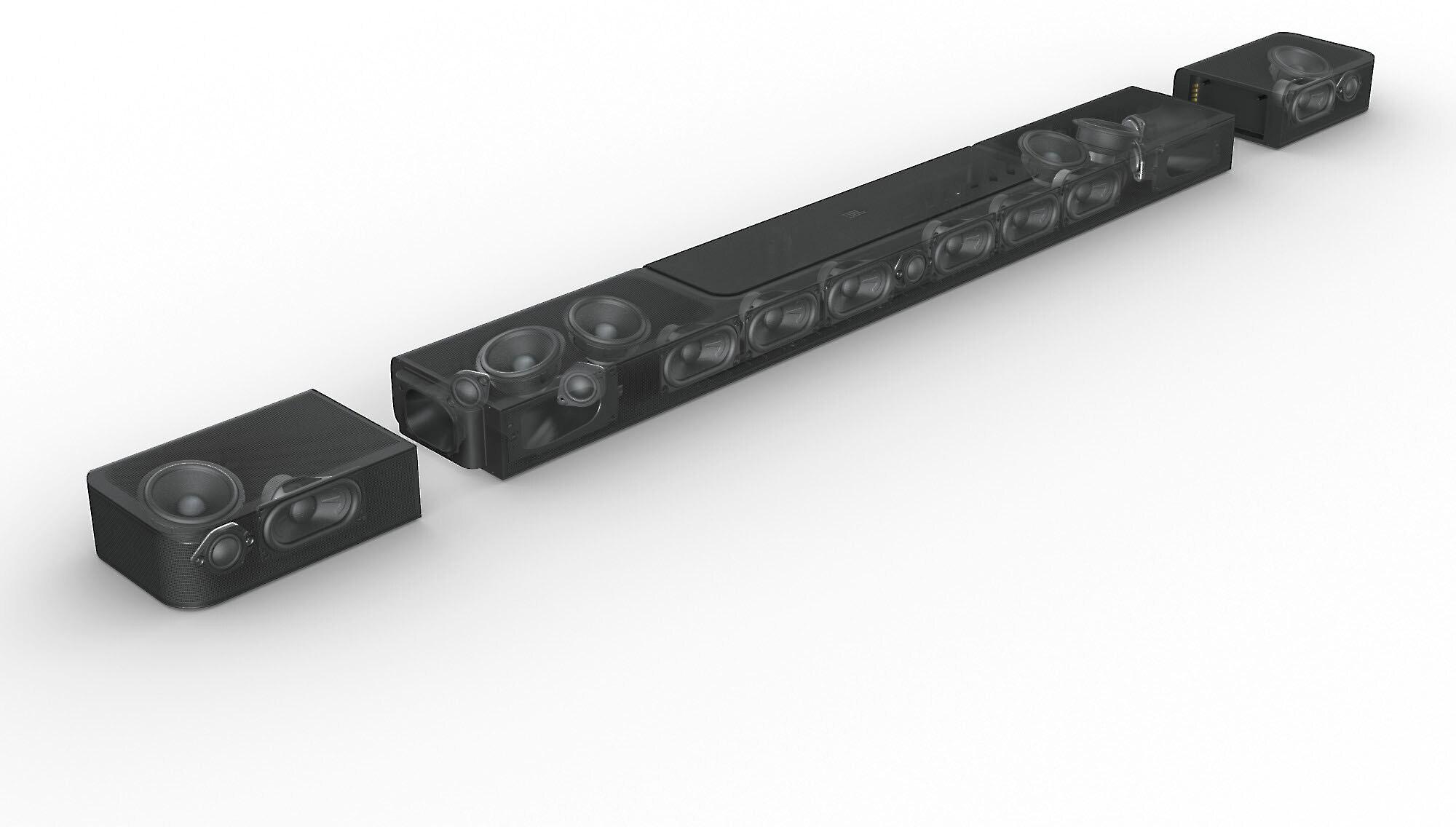
The Bar 1300X employs true surround sound with its detachable wireless satellites. Each satellite contains the same drivers as sections of the main soundbar – racetrack drivers, tweeters, and crucially, up-firing speakers for Dolby Atmos height effects. This creates genuine 360-degree sound placement that virtual processing cannot match.
The difference in Dolby Atmos performance is particularly striking. The 300 MK2's virtual Atmos relies on psychoacoustic tricks to suggest height, while the 1300X's six physical up-firing drivers (four in the main bar, two in satellites) create actual overhead sound placement. During helicopter scenes in "Dunkirk," the difference was unmistakable – sounds genuinely appeared to move overhead rather than just seeming slightly elevated.
Raw power specifications tell only part of the story, but they matter for larger rooms. The Bar 300 MK2's 260-watt total output provides adequate volume for most living rooms, though it reaches its limits in spaces larger than 300 square feet. Push it near maximum volume, and you'll notice compression – dynamic range decreases, and the soundstage becomes less defined.
The Bar 1300X's 1,170-watt total power distribution (650W for the main bar, 300W for the subwoofer, 220W for satellites) provides enormous headroom. Even at reference movie theater levels, the system maintains composure and dynamic range. This power reserve also means better performance at moderate volumes – less amplifier strain typically results in cleaner, more detailed sound.
The Bar 300 MK2's 2025 vintage shows in its streaming capabilities. Wi-Fi 6 support provides faster, more stable connections – particularly important when streaming high-resolution audio from services like Tidal or Amazon Music HD. The JBL One app offers intuitive control over EQ settings, with preset modes for movies, music, and dialogue that actually make meaningful differences to the sound signature.
What impressed me most was the automatic room calibration feature. Using built-in microphones, the system analyzes your room's acoustics and adjusts its output accordingly. In my testing, this made a noticeable difference in rooms with challenging acoustics, though it cannot overcome fundamental physical limitations.
The Bar 1300X, while slightly older, still offers comprehensive streaming support through AirPlay, Chromecast, and Amazon Music integration. However, its Wi-Fi 5 implementation occasionally struggled with the highest-resolution streams in environments with significant wireless congestion.
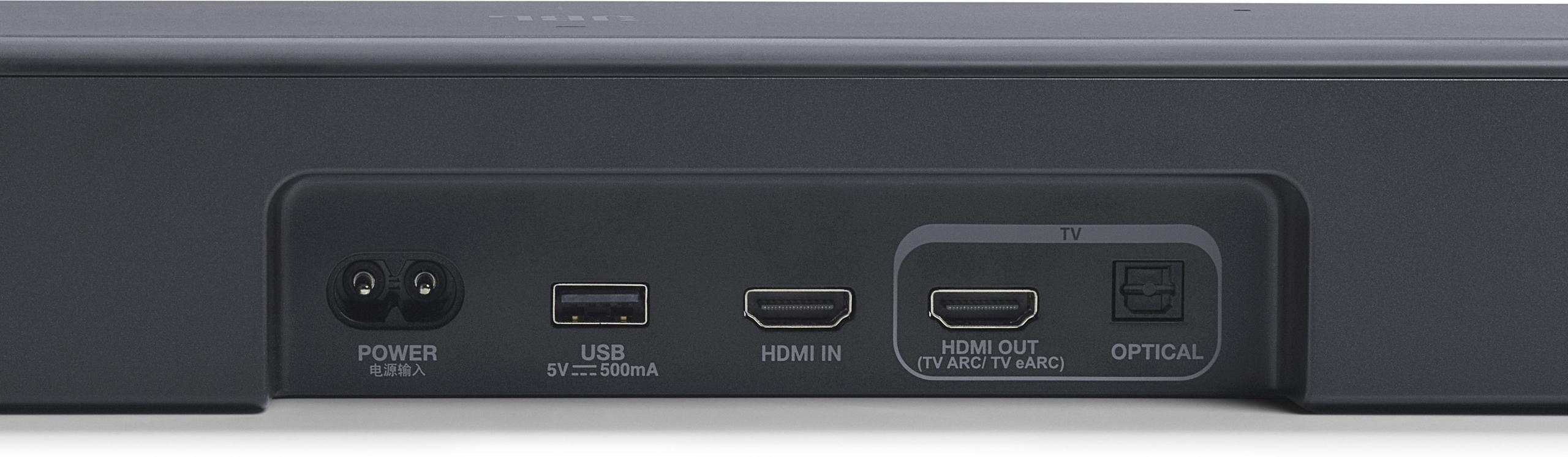
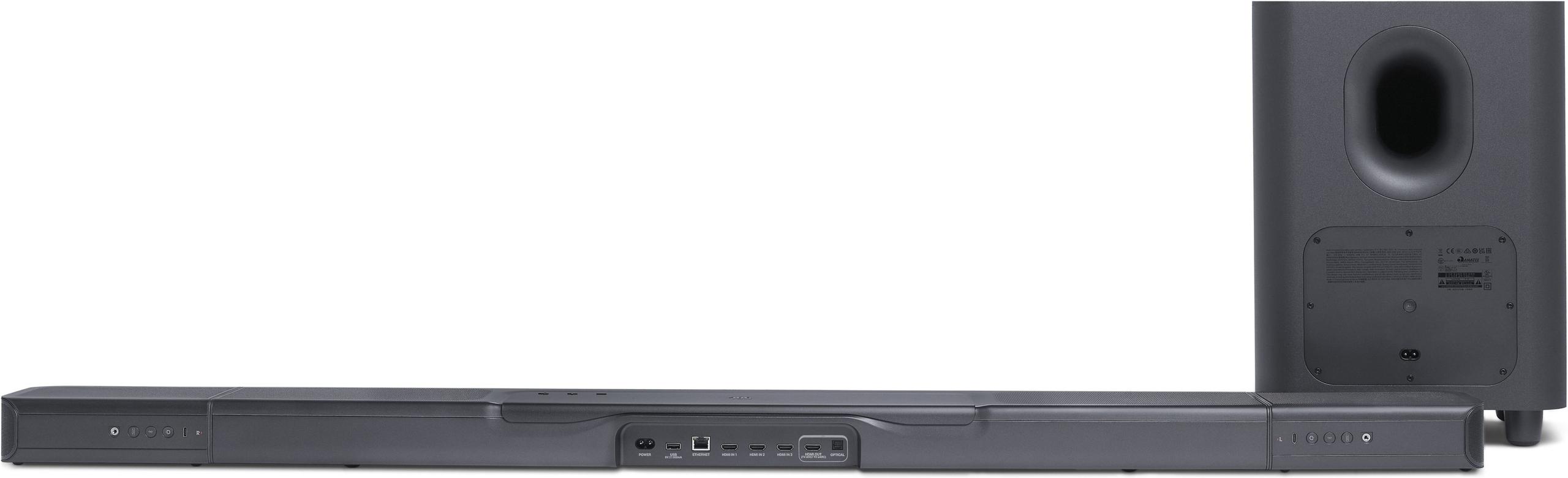
For home theater and gaming setups, HDMI connectivity becomes crucial. The Bar 300 MK2 provides HDMI eARC and one input, sufficient for most single-source setups but limiting for users with multiple devices. The eARC connection does support uncompressed Dolby Atmos passthrough, ensuring maximum audio quality from compatible sources.
The Bar 1300X offers three HDMI inputs plus eARC output, eliminating the need for external HDMI switches in multi-device setups. All connections support 4K/120Hz passthrough with Dolby Vision HDR, making it ideal for next-generation gaming consoles and high-end media players.
The Bar 300 MK2's single-unit design appeals to minimalists and those with limited space. At just 2.5kg and 32.3 inches wide, it fits comfortably under most TVs without dominating the room aesthetically. For apartment dwellers or anyone prioritizing clean, simple setups, this approach makes perfect sense.
The Bar 1300X requires significantly more commitment. The main soundbar stretches 54.2 inches, while the 34.5-pound subwoofer needs strategic placement for optimal bass response – typically a corner location within 20 feet of the main unit. The battery-powered satellites offer placement flexibility but require charging every 10-12 hours of use.
Through extensive testing in different spaces, I've found the Bar 300 MK2 performs best in rooms up to 250 square feet. In my 12x15 living room, it provided satisfying performance for casual viewing and music listening. However, in larger spaces, its limitations become apparent – dialogue can get lost at conversational volumes, and the virtual surround effects lose coherence.
The Bar 1300X truly shines in medium to large rooms (300-500 square feet). The dedicated subwoofer provides room-filling bass, while the satellite speakers ensure consistent surround coverage regardless of seating position. In spaces smaller than 200 square feet, however, the system can feel overwhelming, and proper subwoofer placement becomes challenging.
At its $449.95 price point, the Bar 300 MK2 offers remarkable value for users seeking modern convenience features. You're essentially buying a complete entertainment upgrade that handles TV, movies, music, and streaming with minimal fuss. The inclusion of advanced features like Wi-Fi 6, automatic calibration, and comprehensive streaming support typically found in much more expensive systems makes it an exceptional value proposition.
The trade-offs are clear: limited bass extension, virtual rather than true surround sound, and no upgrade path. But for many users, these limitations won't significantly impact daily enjoyment, especially in smaller living spaces where the system's strengths shine.
The Bar 1300X's higher price reflects its flagship positioning and genuine home theater capabilities. You're investing in cinema-quality audio reproduction, extensive connectivity options, and the flexibility of a multi-component system. The detachable satellites add significant value – they double as high-quality Bluetooth speakers for outdoor use or secondary rooms.
This system makes sense for serious movie enthusiasts, gamers who appreciate spatial audio advantages, and anyone with a larger room requiring powerful, room-filling sound. The price premium delivers exponentially better performance in bass response, surround sound accuracy, and maximum volume capabilities.
For dedicated home theater setups, the choice becomes clearer. The Bar 1300X provides the audio foundation for a proper cinematic experience, with true Dolby Atmos effects, reference-level volume capabilities, and the bass impact that modern soundtracks demand. Its multiple HDMI inputs eliminate switching hassles, while 4K/120Hz support ensures compatibility with current and future gaming consoles.
The Bar 300 MK2 works better as a general entertainment upgrade rather than a home theater centerpiece. Its strengths – simplicity, smart features, and compact design – align with casual viewing habits rather than dedicated movie nights.
Choose the JBL Bar 300 MK2 if you want a significant audio upgrade without complications. It's perfect for apartments, bedrooms, or secondary rooms where convenience matters more than ultimate performance. The modern streaming features and automatic calibration provide genuinely useful benefits that enhance daily use.
Choose the JBL Bar 1300X if audio quality significantly impacts your entertainment enjoyment. The system transforms movie nights into immersive experiences and provides the flexibility to adapt as your needs change. Yes, it requires more setup time and space, but the performance difference is substantial enough to justify the complexity for enthusiasts.
Consider your room size, typical content, and long-term plans. The Bar 300 MK2 offers outstanding value for its target audience, while the Bar 1300X delivers reference-quality performance that will satisfy demanding users for years to come. Both represent excellent choices within their respective categories – the key is honestly assessing which category matches your needs and expectations.
| JBL Bar 300 MK2 ($449.95) | JBL Bar 1300X ($1,299.95) |
|---|---|
| Channel Configuration - Determines surround sound capability | |
| 5.0 channels (virtual surround) | 11.1.4 channels (true surround with height) |
| Total Power Output - Affects maximum volume and clarity | |
| 260W (adequate for small-medium rooms) | 1,170W (reference levels in large rooms) |
| Subwoofer - Critical for bass impact in movies and music | |
| None (built-in bass port only) | 12" wireless subwoofer (300W) |
| Dolby Atmos Support - Creates overhead sound effects | |
| Virtual Atmos (processed height effects) | True Atmos with 6 physical up-firing drivers |
| Frequency Response - Shows bass extension capability | |
| 50Hz-20kHz (limited low-end) | 33Hz-20kHz (deep, room-shaking bass) |
| Satellite Speakers - Enables true rear surround sound | |
| None (single soundbar only) | 2 detachable wireless speakers (10-hour battery) |
| HDMI Connections - Important for multiple devices | |
| 1 input + 1 eARC output | 3 inputs + 1 eARC output |
| Setup Complexity - Time and effort required | |
| Plug-and-play single unit | Multi-component system requiring placement planning |
| Streaming Features - Modern connectivity options | |
| Wi-Fi 6, AirPlay 2, Chromecast, Spotify Connect | Wi-Fi 5, AirPlay, Chromecast, Amazon Music HD |
| Physical Dimensions - Space requirements | |
| 32.3" x 2.2" x 4.1" (compact, 5.5 lbs) | Main bar: 54.2" wide, plus 34.5 lb subwoofer |
| Best Room Size - Optimal performance area | |
| Up to 250 sq ft (apartments, bedrooms) | 300-500 sq ft (living rooms, home theaters) |
| Expandability - Future upgrade options | |
| None (complete system as-is) | Satellites work as standalone Bluetooth speakers |
The JBL Bar 300 MK2 ($449.95) is ideal for small apartments due to its compact single-bar design and space-saving footprint. At just 32.3 inches wide and 5.5 pounds, it fits under most TVs without requiring additional subwoofer placement. The JBL Bar 1300X ($1,299.95) requires significantly more space with its 54-inch main bar and large wireless subwoofer.
The JBL Bar 1300X delivers superior sound quality with true 11.1.4 surround sound, a dedicated 12-inch subwoofer, and 1,170W of total power. The JBL Bar 300 MK2 offers good sound quality with virtual 5.0 surround and 260W power but lacks deep bass and true height effects that come with physical speakers.
For deep, impactful bass, yes. The JBL Bar 1300X includes a powerful 12-inch wireless subwoofer that extends down to 33Hz for room-shaking low-end. The JBL Bar 300 MK2 relies on built-in drivers and a bass port, providing decent bass down to 50Hz but cannot match the depth and impact of a dedicated subwoofer.
The JBL Bar 300 MK2 ($449.95) offers plug-and-play simplicity with just one unit to connect via HDMI or optical cable. The JBL Bar 1300X ($1,299.95) requires more setup time, including optimal subwoofer placement, satellite speaker positioning, and charging the wireless rear speakers before first use.
The JBL Bar 300 MK2 needs minimal space – just room under your TV for the 32-inch soundbar. The JBL Bar 1300X requires significantly more space: a 54-inch TV stand or wall mount, floor space for the large subwoofer, and areas to position the satellite speakers behind your seating area.
The JBL Bar 1300X excels for home theater with true Dolby Atmos, dedicated surround speakers, and reference-level volume capabilities. It provides genuine cinema-quality audio with overhead sound effects and deep bass impact. The JBL Bar 300 MK2 works for casual movie watching but cannot deliver the immersive experience serious home theater enthusiasts expect.
The JBL Bar 300 MK2 ($449.95) offers excellent value at under $500 with modern streaming features and solid performance for its price range. The JBL Bar 1300X ($1,299.95) costs nearly three times more but delivers flagship-level performance with true surround sound, powerful bass, and premium features that justify the higher investment.
Both soundbars offer extensive streaming connectivity. The JBL Bar 300 MK2 features Wi-Fi 6, AirPlay 2, Chromecast, and Spotify Connect for modern streaming needs. The JBL Bar 1300X includes Wi-Fi 5, AirPlay, Chromecast, and Amazon Music HD support, though it lacks some newer connectivity standards.
Both use JBL's PureVoice technology, but the JBL Bar 1300X has an advantage with its dedicated center channel speaker for clearer dialogue reproduction. The JBL Bar 300 MK2 still provides good dialogue clarity through digital processing, though it may struggle more in complex audio scenes with lots of background noise.
The JBL Bar 300 MK2 provides one HDMI input plus HDMI eARC output, suitable for single-device setups. The JBL Bar 1300X offers three HDMI inputs plus HDMI eARC output, making it better for users with multiple gaming consoles, streaming devices, or Blu-ray players.
The JBL Bar 1300X ($1,299.95) performs significantly better in large rooms (300-500 sq ft) with its powerful amplification, wireless subwoofer, and satellite speakers that ensure consistent sound coverage. The JBL Bar 300 MK2 ($449.95) is optimized for smaller spaces up to 250 square feet and may struggle to fill larger rooms effectively.
No, the JBL Bar 1300X features battery-powered satellite speakers that provide up to 10-12 hours of use per charge, eliminating the need for rear speaker wiring. These satellites can also function as standalone Bluetooth speakers. The JBL Bar 300 MK2 doesn't include satellite speakers, using only the main soundbar unit.
We've done our best to create useful and informative comparisons to help you decide what product to buy. Our research uses advanced automated methods to create this comparison and perfection is not possible - please contact us for corrections or questions. These are the sites we've researched in the creation of this article: homecinemachoice.com - retailspecs.com - hometechnologyreview.com - whathifi.com - news.jbl.com - engadget.com - crutchfield.com - harmanaudio.com - techradar.com - bestbuy.com - jbl.com - sweech.co.ke - jbl.com - jbl.com.sg - mm.jbl.com - abcwarehouse.com - harmanaudio.com - sweetwater.com - ro.harmanaudio.com - dell.com - jbl.co.nz - techradar.com - jbl.com - audioadvice.com - youtube.com - rtings.com - jbl.com - greentoe.com - harmanaudio.com - youtube.com - mm.jbl.com - jbl.com

Privacy Policy
Terms and Conditions - Affiliate Policy
Home Security
© Copyright 2008-2026.
11816 Inwood Rd #1211, Dallas, TX 75244