




When you're shopping for a soundbar, you're essentially choosing between two very different philosophies about home audio. Do you want a sleek, compact upgrade that makes TV dialogue crystal clear, or are you looking for a complete home theater system that can make your living room feel like a movie theater? That's exactly the choice you're facing between the Bose Smart Soundbar 1100 and the JBL Bar 1300X.
These two products couldn't be more different in their approach, despite both being labeled as "soundbars." Understanding what makes each one special—and what trade-offs you're making—will help you pick the right one for your space and listening habits.
Before diving into the specifics, it's worth understanding what soundbars have become. Gone are the days when they were simple speaker strips designed to make TV dialogue slightly louder. Today's soundbars range from sophisticated audio processors that can create virtual surround sound from a single unit, to complete multi-speaker systems that can rival traditional home theater setups.
The most important things to consider are audio performance (how good does it sound?), system completeness (what do you get in the box versus what you need to buy separately?), and value (what's the total cost for the performance you want?). Secondary factors like smart features, connectivity options, and room aesthetics matter too, but they shouldn't drive your decision if the fundamental audio performance doesn't meet your needs.
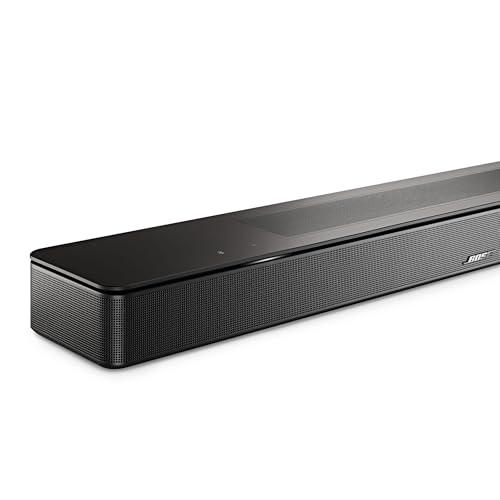
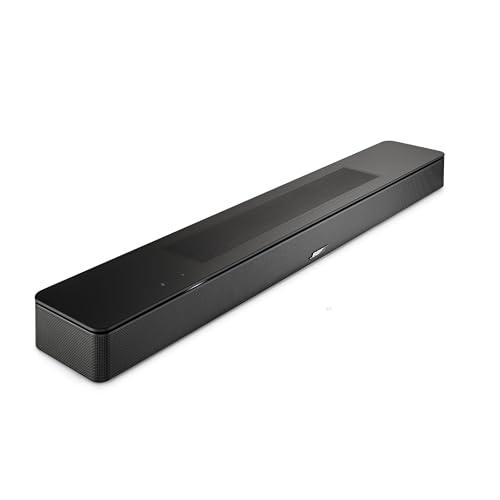
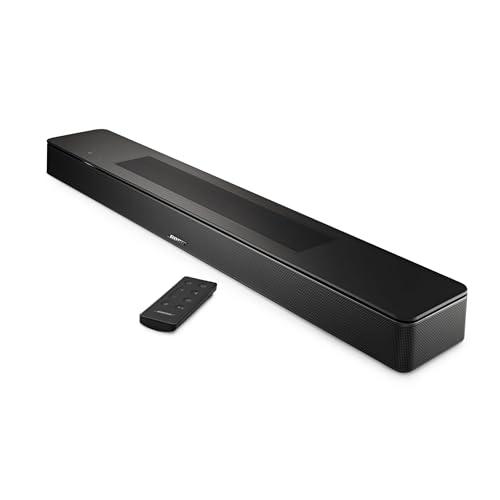
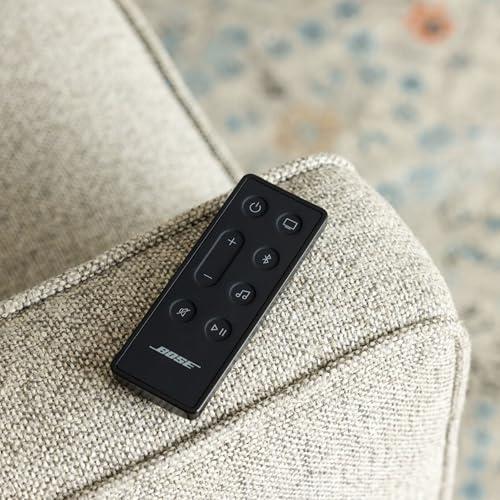
The Bose Smart Soundbar 1100 represents what I'd call the "refined minimalist" approach. Released in 2024 as an update to Bose's Smart Soundbar 600, it focuses on doing a few things exceptionally well: making dialogue crystal clear, fitting into small spaces, and providing smart home integration. It's essentially a premium soundbar that you can expand later if you want more bass or surround sound.
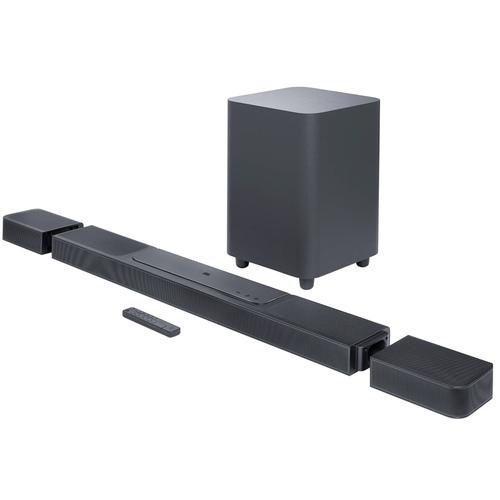
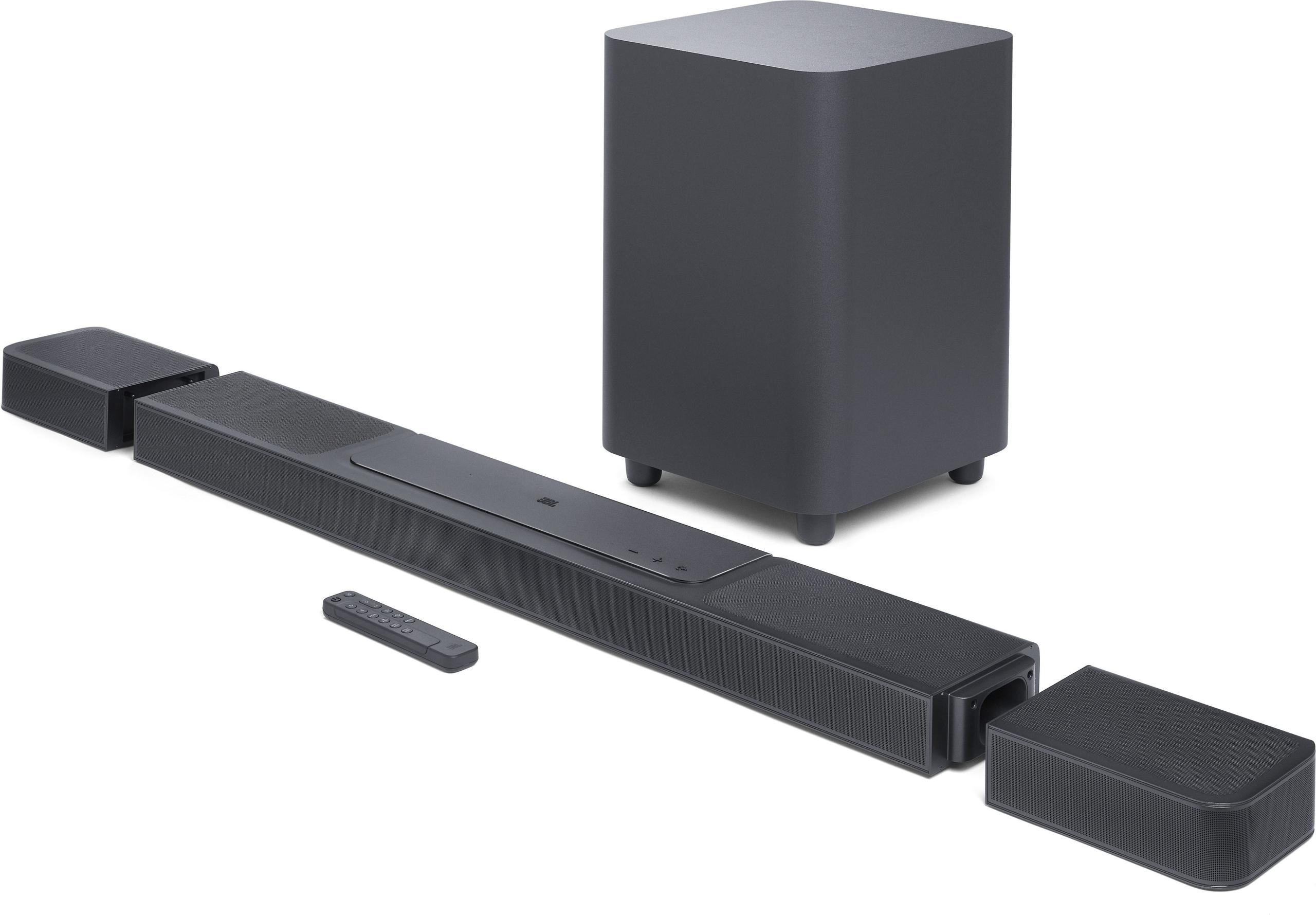
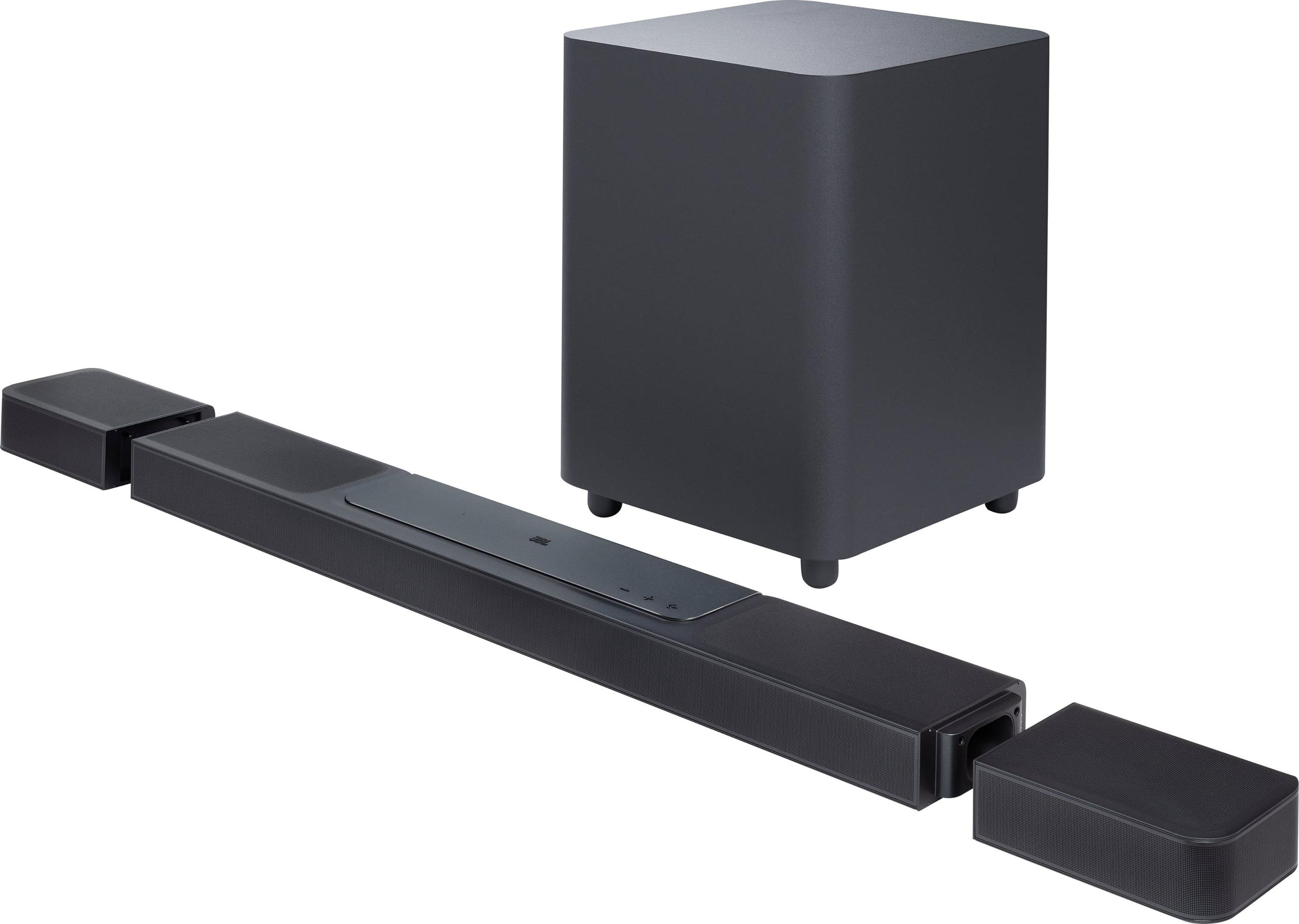
The JBL Bar 1300X, launched in 2023, takes the "complete system" approach. It's designed to replace your TV's speakers entirely and deliver a full home theater experience right out of the box. This isn't just a soundbar—it's a wireless subwoofer, detachable surround speakers, and sophisticated audio processing all working together.
At the time of writing, the Bose Smart Soundbar 1100 sits in the upper-entry-level price range, while the JBL Bar 1300X commands a premium price that's roughly three times higher. But here's where it gets interesting: if you want to match the JBL's capabilities by adding Bose's optional subwoofer and surround speakers, you'd actually spend more money overall.
The performance gap between these systems is dramatic. The Bose Smart Soundbar 1100 uses a 3.0.2 channel configuration, which means it has left, center, and right channels plus two upfiring drivers for height effects. That translates to 5 speakers plus a center tweeter—a respectable setup for its size.
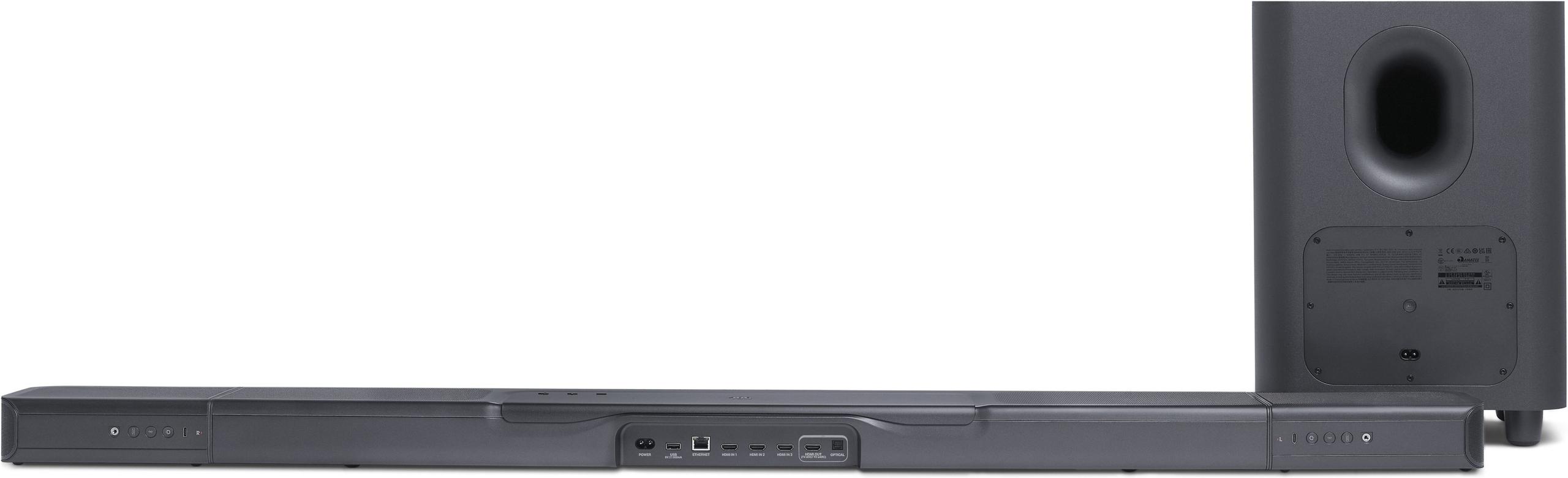
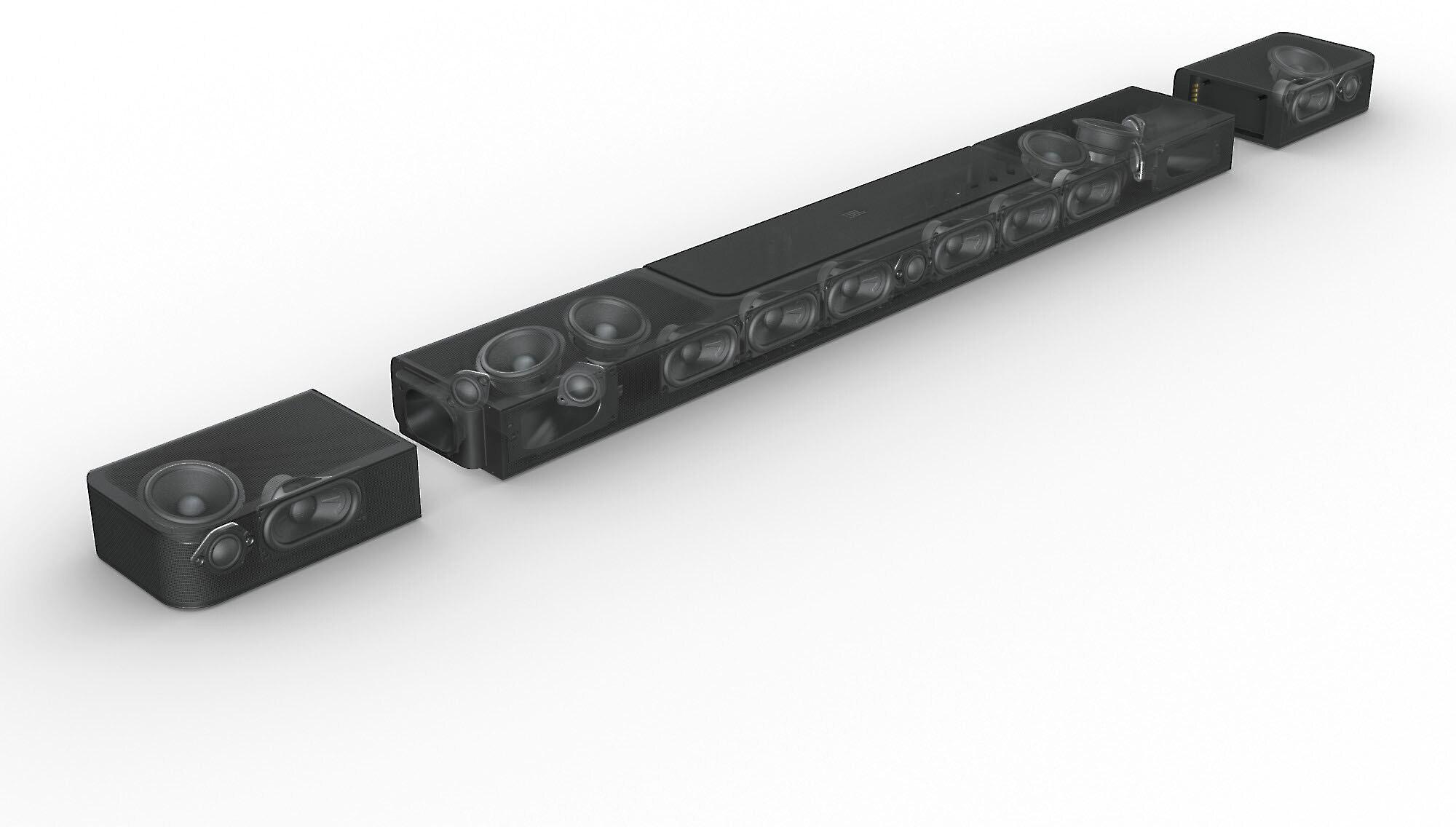
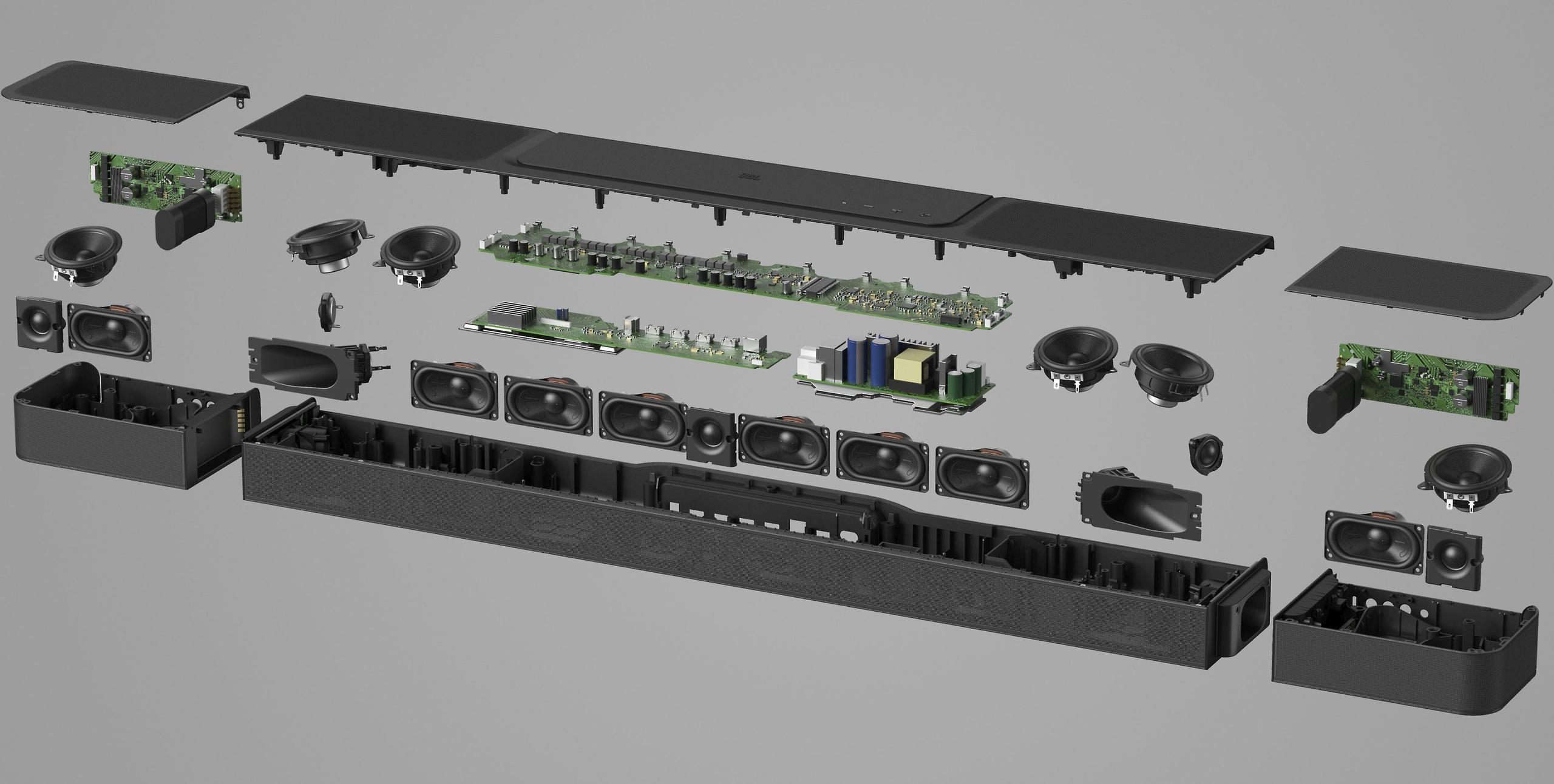
The JBL Bar 1300X operates on a completely different level with an 11.1.4 configuration. This means 11 main channels, one subwoofer channel, and 4 height channels, powered by 28 individual drivers spread across the soundbar, subwoofer, and detachable surround speakers. The JBL delivers 1,170 watts of total system power—that's enough to fill large rooms with authority.
In practical terms, this power difference is like comparing a sports car to a motorcycle. Both can get you where you're going, but the experience is fundamentally different. The Bose Smart Soundbar 1100 excels at making dialogue clear and creating a wider soundstage than your TV speakers, while the JBL Bar 1300X can make your couch vibrate during action scenes and create convincing surround effects where you actually hear helicopters flying overhead.
Here's where the systems diverge most dramatically. The Bose Smart Soundbar 1100 includes no subwoofer, relying on its internal drivers for bass. While these drivers are well-engineered, physics limits how much low-end you can get from small speakers in a slim enclosure. You'll hear adequate bass for news and talk shows, but action movies and music will sound thin without the room-shaking rumble that makes explosions feel real.
The JBL Bar 1300X includes a 12-inch wireless subwoofer that can reproduce frequencies down to 33 Hz. To put that in perspective, that's deep enough to reproduce the fundamental frequencies of a kick drum or the low rumble of thunder. The difference isn't subtle—it's the difference between hearing an explosion and feeling it in your chest.
Bass management is crucial for proper surround sound. When a system has a dedicated subwoofer, the main speakers can focus on midrange and high frequencies where dialogue and detail live, while the subwoofer handles everything below about 80 Hz. This division of labor results in clearer overall sound because each driver is working in its optimal frequency range.
Both systems excel at dialogue clarity, but they achieve it differently. The Bose Smart Soundbar 1100 uses AI Dialogue Mode, which automatically analyzes the incoming audio signal and adjusts the frequency response when it detects speech. This happens in real-time, so voices automatically become more prominent during dialogue scenes without you touching the remote.
The JBL Bar 1300X uses PureVoice technology combined with a dedicated center channel. Instead of processing the signal digitally, it uses separate physical drivers specifically positioned and tuned for vocal reproduction. This is the same approach used in high-end home theaters, where the center channel handles all dialogue while left and right channels handle music and effects.
From research into user experiences, both approaches work well, but they feel different. The Bose's AI processing is more automated—it just works without you thinking about it. The JBL's dedicated center channel sounds more natural and effortless, but sometimes requires manual adjustment if dialogue seems too quiet or loud relative to other sounds.
The Bose Smart Soundbar 1100 supports Dolby Atmos through two upfiring drivers and uses TrueSpace processing to create virtual surround effects. TrueSpace analyzes stereo and surround soundtracks and uses digital signal processing to create the illusion of sound coming from different directions. It's clever technology that works better than you might expect from a single soundbar.
However, virtual surround has limitations. No amount of processing can truly replicate the experience of having actual speakers behind you. The JBL Bar 1300X includes physical detachable surround speakers that run on internal batteries and connect wirelessly to the main system. These speakers literally sit behind your seating area, creating genuine surround effects.
The JBL also supports both Dolby Atmos and DTS:X (which the Bose doesn't), giving you better compatibility with different movie formats. The six upfiring drivers—four on the main bar and one on each surround speaker—create convincing height effects that make helicopters and rain sound like they're actually above you.
This is perhaps the biggest difference between these systems. The Bose Smart Soundbar 1100 includes only the soundbar itself. If you want bass extension, you need to purchase Bose's Bass Module separately. If you want surround sound, you need to add Bose's surround speakers. These aren't cheap accessories—by the time you build a complete system, you're spending significantly more than the JBL Bar 1300X's asking price.
The JBL Bar 1300X arrives as a complete package. Everything you need for immersive surround sound is in the box: the main soundbar, wireless subwoofer, detachable surround speakers, all necessary cables, and even wall mounting hardware. You can set up a complete 11.1.4 system without buying anything else.
There's a philosophical difference here too. The Bose approach lets you start small and expand over time, which appeals to people with limited budgets or those who aren't sure they want a complete surround system. The JBL approach assumes you want the full experience from day one and prices accordingly.
The Bose Smart Soundbar 1100 has built-in Amazon Alexa, so you can control your smart home, ask questions, and stream music using voice commands. This integration feels seamless—the soundbar essentially becomes an Echo speaker when you're not watching TV. It also supports all the major streaming services through Wi-Fi, Bluetooth, AirPlay 2, and Chromecast.
The JBL Bar 1300X takes a different approach. Instead of built-in voice assistants, it works with your existing smart speakers through casting protocols. It supports Wi-Fi 6 and Bluetooth 5.3—newer wireless standards that provide faster, more reliable connections than the Bose's Wi-Fi 4 and Bluetooth 5.0.
More importantly for home theater use, the JBL Bar 1300X includes three HDMI inputs plus one HDMI output with eARC (enhanced Audio Return Channel). This means you can connect your gaming console, streaming device, and cable box directly to the soundbar, which then passes the video to your TV while processing the audio. The Bose Smart Soundbar 1100 has only one HDMI connection, so you'll need to connect devices directly to your TV.
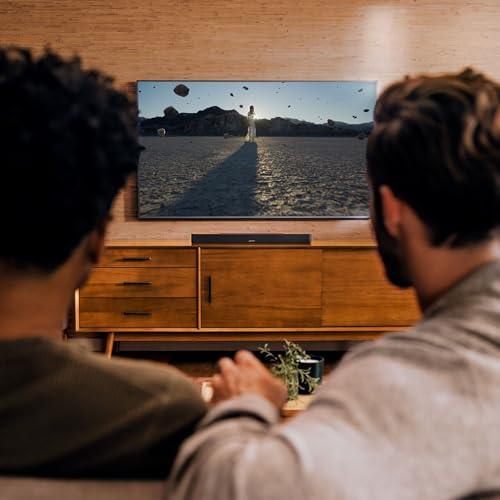
The Bose Smart Soundbar 1100 measures about 27 inches wide and weighs under 7 pounds. It's designed to slip under your TV without drawing attention to itself, available in both black and white to match your room's aesthetic. For apartment dwellers or anyone with limited space, this compact design is a significant advantage.
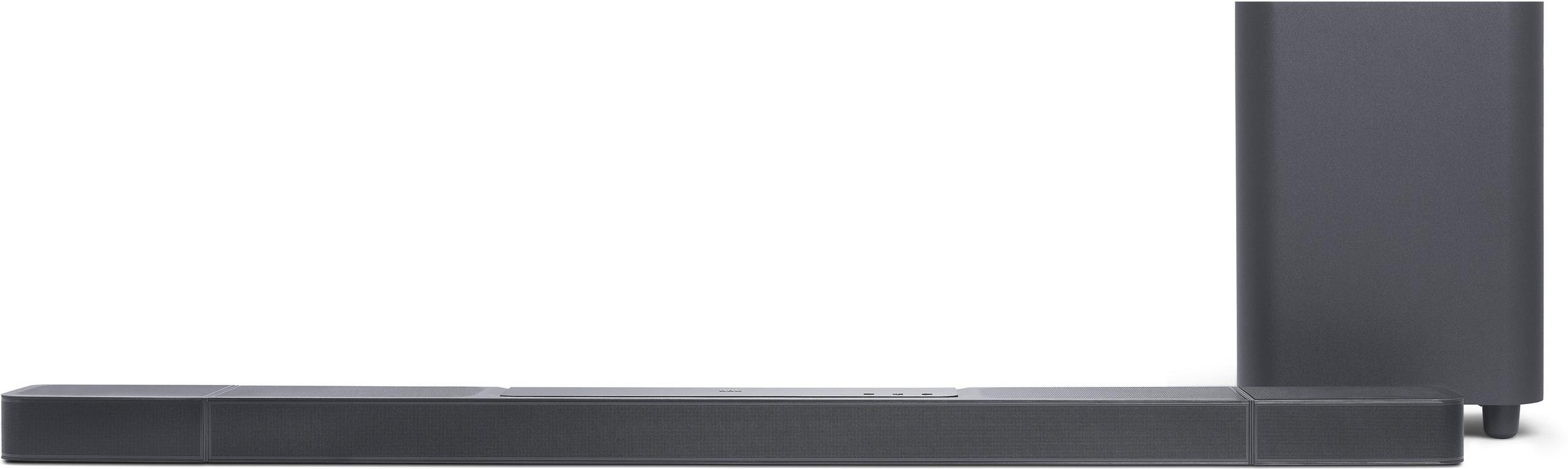
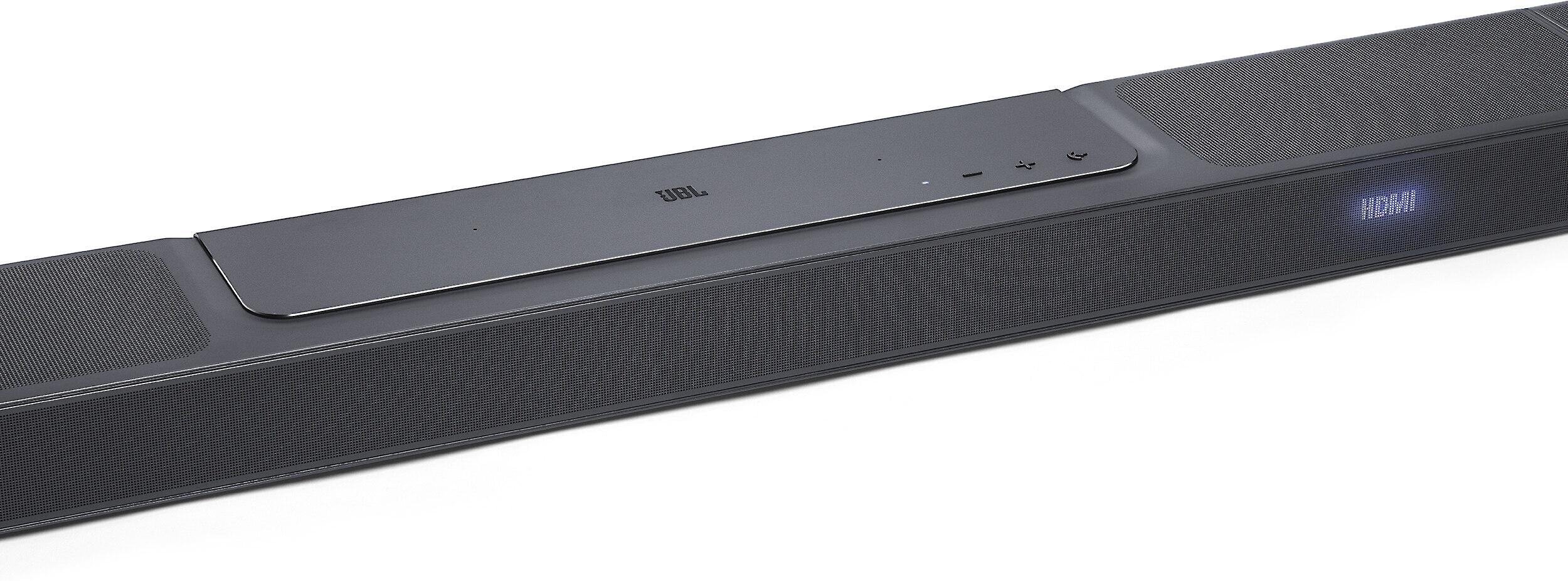
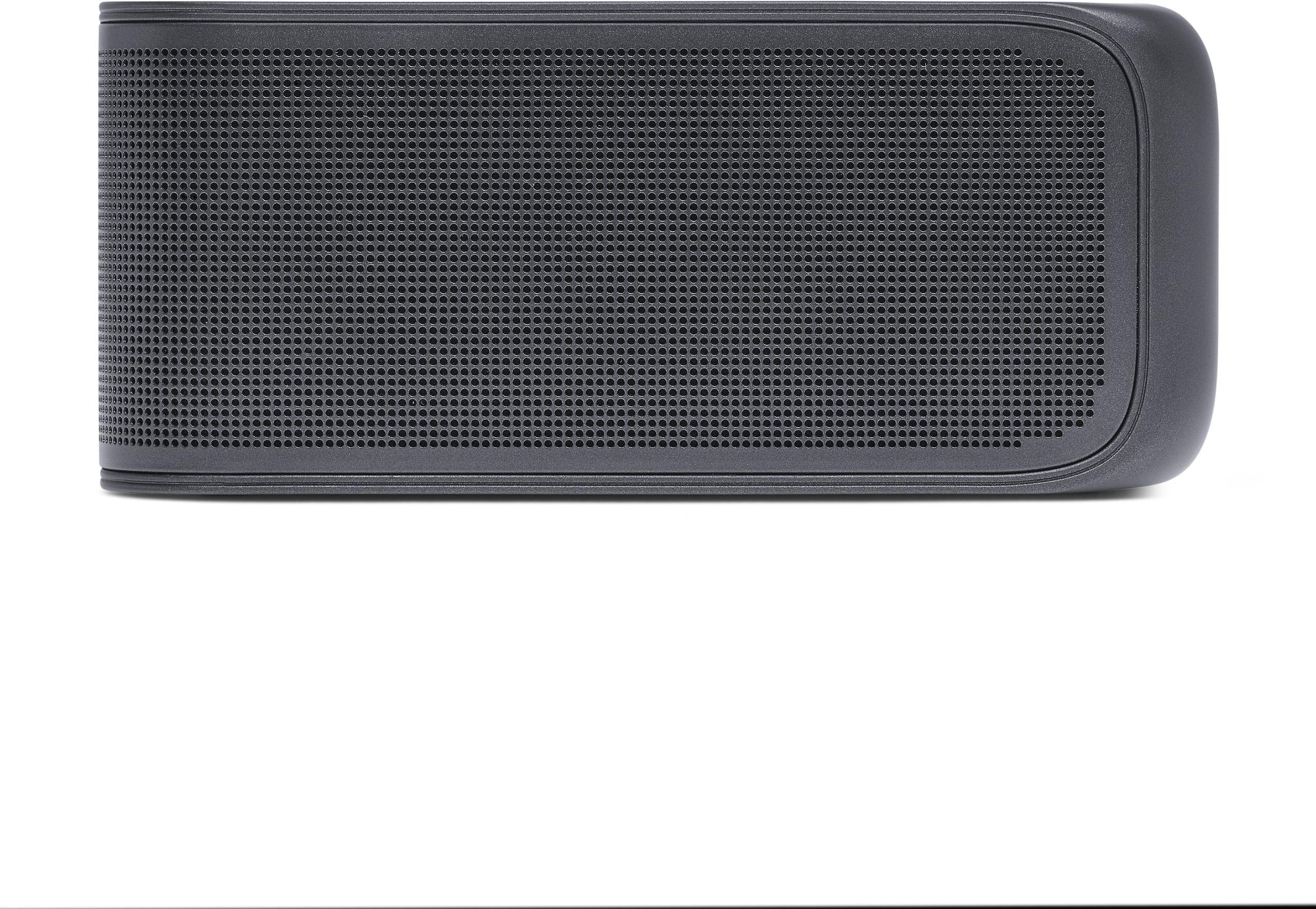
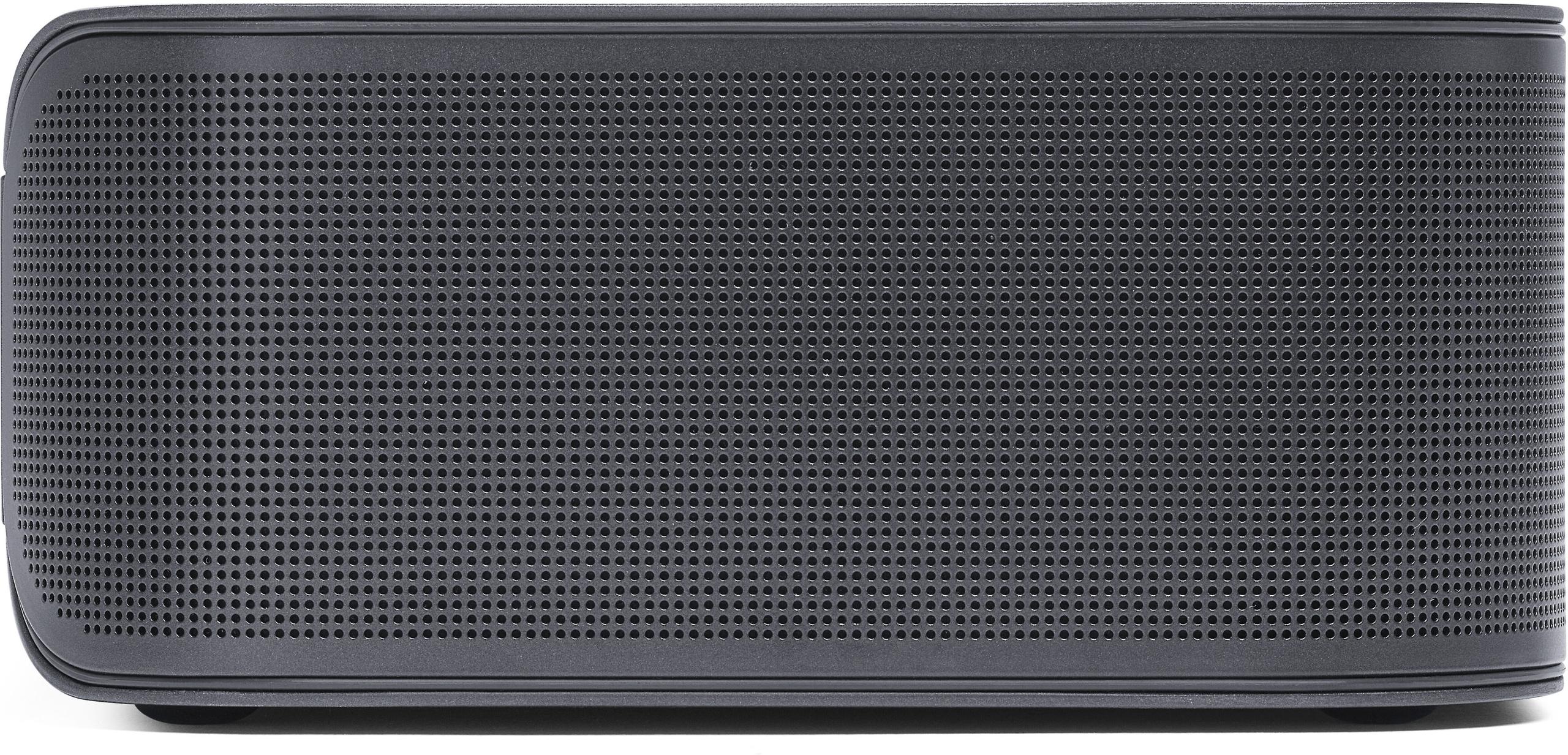
The JBL Bar 1300X is a much larger commitment. The main soundbar stretches 54 inches wide, plus you need space for the subwoofer and surround speakers. The subwoofer alone weighs 34 pounds and measures nearly 19 inches tall. This isn't a system you can hide—it becomes a prominent part of your room's layout.
However, the JBL's design includes some clever touches. The surround speakers detach from the main soundbar and run on internal batteries, so you can place them anywhere without running power cables. They also function as portable Bluetooth speakers when detached, adding versatility beyond their home theater role.
When evaluating soundbars, frequency response range tells you how deep the bass goes and how crisp the highs are. The JBL Bar 1300X's 33 Hz to 20 kHz range covers nearly the entire range of human hearing, while the Bose Smart Soundbar 1100 doesn't publish its specifications—typically a sign that the numbers aren't competitive.
Dynamic range—the difference between the quietest and loudest sounds a system can reproduce—matters for movie soundtracks with quiet dialogue and explosive action scenes. The JBL's higher power output and dedicated subwoofer give it a significant advantage here.
Total harmonic distortion (THD) measures how clean the sound remains at high volumes. Both systems perform well in this area, but the JBL's larger drivers and more powerful amplifiers allow it to play louder without strain.
The Bose Smart Soundbar 1100 makes sense for specific situations. If you live in an apartment with thin walls, its compact size and built-in voice control create a premium experience without overwhelming your neighbors. If you primarily watch news, documentaries, and TV dramas where dialogue clarity matters more than explosive action sequences, the Bose's AI dialogue processing excels.
Budget considerations also favor the Bose—if you want a significant upgrade from TV speakers but aren't ready to invest in a complete surround system, it provides excellent dialogue clarity and smart features at a more accessible price point.
The JBL Bar 1300X targets users who want the full home theater experience. If you regularly watch action movies, play video games, or listen to music through your TV, its powerful subwoofer and true surround sound create an immersive experience that rivals much more expensive traditional surround systems.
For families or roommates with varying listening preferences, the JBL's complete feature set satisfies everyone. Movie lovers get thunderous bass and convincing surround effects, while those watching quieter content benefit from the dedicated center channel's natural dialogue reproduction.
From a home theater standpoint, the JBL Bar 1300X is the clear winner. True surround sound requires speakers in multiple locations—you simply can't achieve the same immersion from a single soundbar, no matter how sophisticated its processing. The physical surround speakers, combined with six upfiring drivers for height effects, create the three-dimensional soundscape that directors intend.
The JBL's support for both Dolby Atmos and DTS:X also matters. These are the two primary surround sound formats used in modern movies and streaming content. The Bose Smart Soundbar 1100's lack of DTS:X support means you'll miss out on the enhanced audio experience for content encoded in that format.
At the time of writing, these products represent two distinct value propositions. The Bose Smart Soundbar 1100 offers premium dialogue clarity and smart features in a compact package, perfect for upgrading TV audio without dominating your living space. Its expandability means you can add bass and surround speakers later, though the total cost eventually exceeds the JBL's price.
The JBL Bar 1300X delivers complete home theater performance from day one. While it requires more space and costs more upfront, it includes everything needed for immersive surround sound without additional purchases.
Your decision should be based on your content preferences, living situation, and long-term audio goals. If you primarily watch dialogue-heavy content in a small space and value convenience features like built-in voice control, the Bose Smart Soundbar 1100 provides excellent performance for its size and price range.
If you want true home theater immersion—feeling explosions in your chest, hearing rain fall overhead, and experiencing music with full-range frequency response—the JBL Bar 1300X offers better long-term value despite its higher initial cost.
Both systems excel in their intended roles. The key is honestly assessing what kind of audio experience you want and how much space you're willing to dedicate to achieving it. The Bose Smart Soundbar 1100 upgrades your TV's audio with minimal fuss, while the JBL Bar 1300X transforms your living room into a home theater. Choose based on which vision better matches your entertainment goals.
| Bose Smart Soundbar 1100 | JBL Bar 1300X |
|---|---|
| System Type - What you get for your money | |
| Soundbar only (subwoofer and surrounds sold separately) | Complete system with wireless subwoofer and detachable surround speakers |
| Channel Configuration - How many discrete audio channels you get | |
| 3.0.2 (5 speakers + center tweeter) | 11.1.4 (28 total drivers across all components) |
| Total System Power - Ability to fill large rooms with sound | |
| Not specified (typical Bose practice) | 1,170 watts RMS |
| Bass Performance - Critical for movies and music impact | |
| Internal drivers only, requires separate $800+ subwoofer for deep bass | Included 12-inch subwoofer, 33Hz low-frequency extension |
| Surround Sound Approach - Virtual processing vs physical speakers | |
| Virtual surround via TrueSpace processing, no physical rear speakers included | True surround with battery-powered wireless rear speakers included |
| Supported Audio Formats - Compatibility with movie and streaming content | |
| Dolby Atmos only (no DTS:X support) | Dolby Atmos and DTS:X support |
| HDMI Connectivity - How many devices you can connect directly | |
| 1 HDMI eARC output only | 1 HDMI eARC output + 3 HDMI passthrough inputs |
| Dialogue Enhancement - Technology for clear speech | |
| AI Dialogue Mode (automatic frequency adjustment) | PureVoice with dedicated center channel drivers |
| Voice Control - Built-in smart assistant features | |
| Built-in Amazon Alexa with microphones | No built-in assistant (works via casting from other devices) |
| Physical Size - Space requirements in your room | |
| Compact: 27" wide, 6.9 lbs, fits under most TVs | Large system: 54" soundbar + subwoofer + surround speakers |
| Wireless Standards - Connection reliability and speed | |
| Wi-Fi 4, Bluetooth 5.0 | Wi-Fi 6, Bluetooth 5.3 (newer, faster standards) |
| Expandability - Future upgrade options | |
| Can add Bose subwoofer and surround speakers (expensive) | Complete system, no expansion needed or available |
| Best Use Case - Who should choose this system | |
| Small rooms, dialogue-focused content, gradual system building | Home theater enthusiasts wanting complete immersion from day one |
The Bose Smart Soundbar 1100 is better suited for small rooms due to its compact 27-inch width and slim profile. It fits easily under most TVs without overwhelming the space, while the JBL Bar 1300X requires significantly more room for its 54-inch soundbar, large subwoofer, and surround speakers.
The JBL Bar 1300X comes complete with everything you need: soundbar, wireless subwoofer, and detachable surround speakers. The Bose Smart Soundbar 1100 is just the soundbar itself - you'll need to purchase a separate subwoofer and surround speakers if you want comparable bass and surround sound performance.
The JBL Bar 1300X has significantly better bass performance with its included 12-inch wireless subwoofer that extends down to 33Hz. The Bose Smart Soundbar 1100 relies only on internal drivers for bass, which limits low-frequency impact for movies and music.
Yes, both the Bose Smart Soundbar 1100 and JBL Bar 1300X support Dolby Atmos. However, the JBL Bar 1300X also supports DTS:X format and has more upfiring drivers (6 vs 2) for better height effects, while the Bose Smart Soundbar 1100 only supports Dolby Atmos.
Both excel at dialogue clarity but use different approaches. The Bose Smart Soundbar 1100 uses AI Dialogue Mode for automatic speech enhancement, while the JBL Bar 1300X uses PureVoice technology with dedicated center channel drivers. The Bose is more automated, while the JBL sounds more natural.
The Bose Smart Soundbar 1100 has only one HDMI eARC connection, requiring you to connect devices directly to your TV. The JBL Bar 1300X offers one HDMI eARC output plus three HDMI passthrough inputs, letting you connect multiple devices directly to the soundbar.
The JBL Bar 1300X is superior for home theater use with its true 11.1.4 surround sound, physical rear speakers, powerful subwoofer, and support for both Dolby Atmos and DTS:X. The Bose Smart Soundbar 1100 provides virtual surround processing but lacks the immersive experience of actual surround speakers.
The Bose Smart Soundbar 1100 has built-in Amazon Alexa with microphones for voice control. The JBL Bar 1300X doesn't have built-in voice assistants but works with your existing smart speakers through casting protocols like Alexa Cast and Google Cast.
The JBL Bar 1300X offers better overall value as a complete system, including subwoofer and surround speakers. To match the JBL's capabilities, you'd need to add expensive accessories to the Bose Smart Soundbar 1100, making the total cost higher than the JBL's asking price.
The JBL Bar 1300X includes battery-powered wireless surround speakers that detach from the main bar and can also function as portable Bluetooth speakers. The Bose Smart Soundbar 1100 doesn't include surround speakers, but optional Bose surround speakers are available as separate wireless purchases.
The Bose Smart Soundbar 1100 is simpler to set up due to its single-unit design and compact size. The JBL Bar 1300X requires more setup time for positioning the subwoofer and surround speakers, though it includes wall mounting hardware and the wireless connections eliminate most cable management.
The Bose Smart Soundbar 1100 is a compact, dialogue-focused soundbar designed for gradual system expansion, while the JBL Bar 1300X is a complete home theater system with true surround sound, powerful bass, and immersive audio processing. Choose the Bose for simplicity and small spaces, or the JBL for full home theater immersion.
We've done our best to create useful and informative comparisons to help you decide what product to buy. Our research uses advanced automated methods to create this comparison and perfection is not possible - please contact us for corrections or questions. These are the sites we've researched in the creation of this article: bestbuy.com - rtings.com - rtings.com - youtube.com - staples.com - youtube.com - soundguys.com - businessinsider.com - youtube.com - rtings.com - crutchfield.com - youtube.com - youtube.com - smart.dhgate.com - dolby.com - bose.com - assets.bose.com - bose.com - connection.com - bestbuy.com - cdw.com - dell.com - device.report - techradar.com - jbl.com - audioadvice.com - youtube.com - rtings.com - jbl.com - greentoe.com - harmanaudio.com - youtube.com - mm.jbl.com - jbl.com

Privacy Policy
Terms and Conditions - Affiliate Policy
Home Security
© Copyright 2008-2026.
11816 Inwood Rd #1211, Dallas, TX 75244