








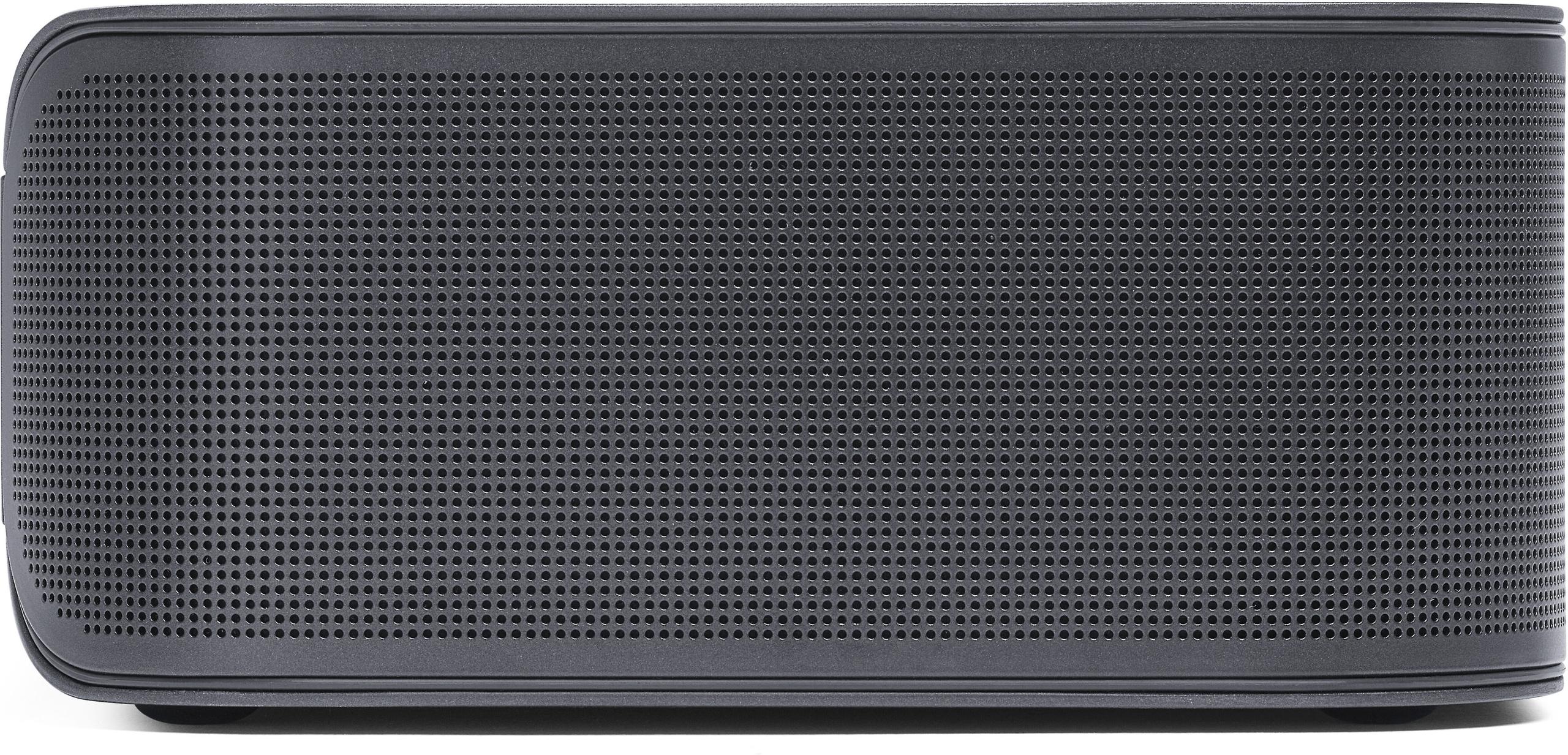
If you've been watching movies with your TV's built-in speakers, you're missing about 70% of what filmmakers intended you to hear. That dialogue you keep rewinding? Those explosive action scenes that feel flat? The problem isn't your ears—it's those tiny speakers crammed into your TV's slim profile.
Premium soundbars solve this problem by dedicating serious space and power to audio reproduction. But with options ranging from $300 to over $2,000, choosing the right one can feel overwhelming. Today, we're comparing two standouts that represent very different philosophies: the Samsung HW-Q800D at $599 and the JBL Bar 1300X at $1,299.
Before diving into specifics, let's establish what separates premium soundbars from basic models. Premium units typically feature Dolby Atmos support (which creates overhead sound effects), dedicated subwoofers for deep bass, multiple audio processing modes, and smart connectivity options.
The key consideration is channel configuration—essentially how many separate audio streams the soundbar can handle. A 5.1.2 system like the Samsung means five main channels (front left, center, front right, rear left, rear right), one subwoofer channel, and two height channels for overhead effects. The JBL's 11.1.4 configuration includes all those plus additional side and rear separation channels, creating more precise sound placement.
Think of it like the difference between a good stereo system and a full orchestra. Both can play beautiful music, but the orchestra gives you much more detailed separation between instruments.
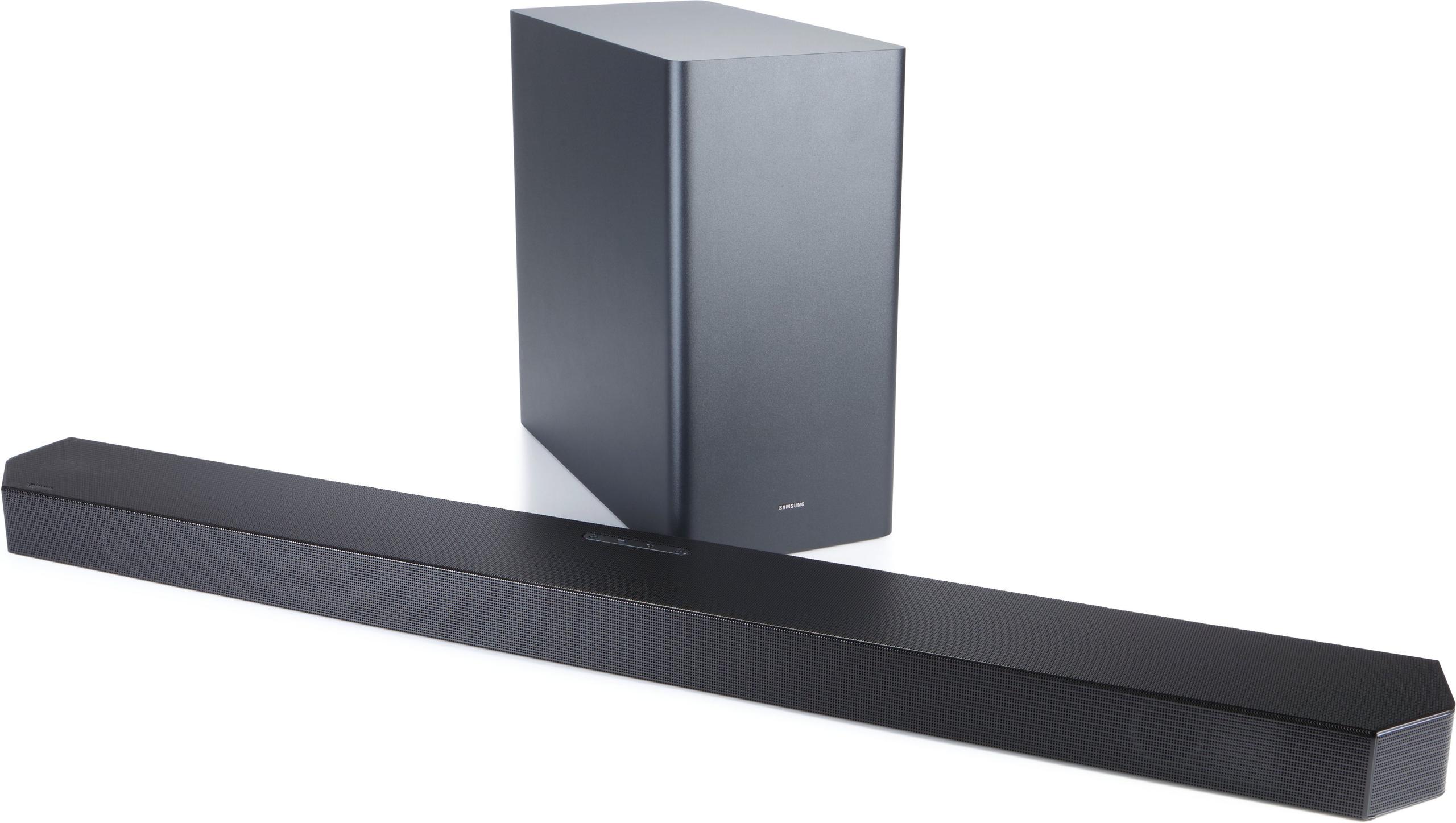
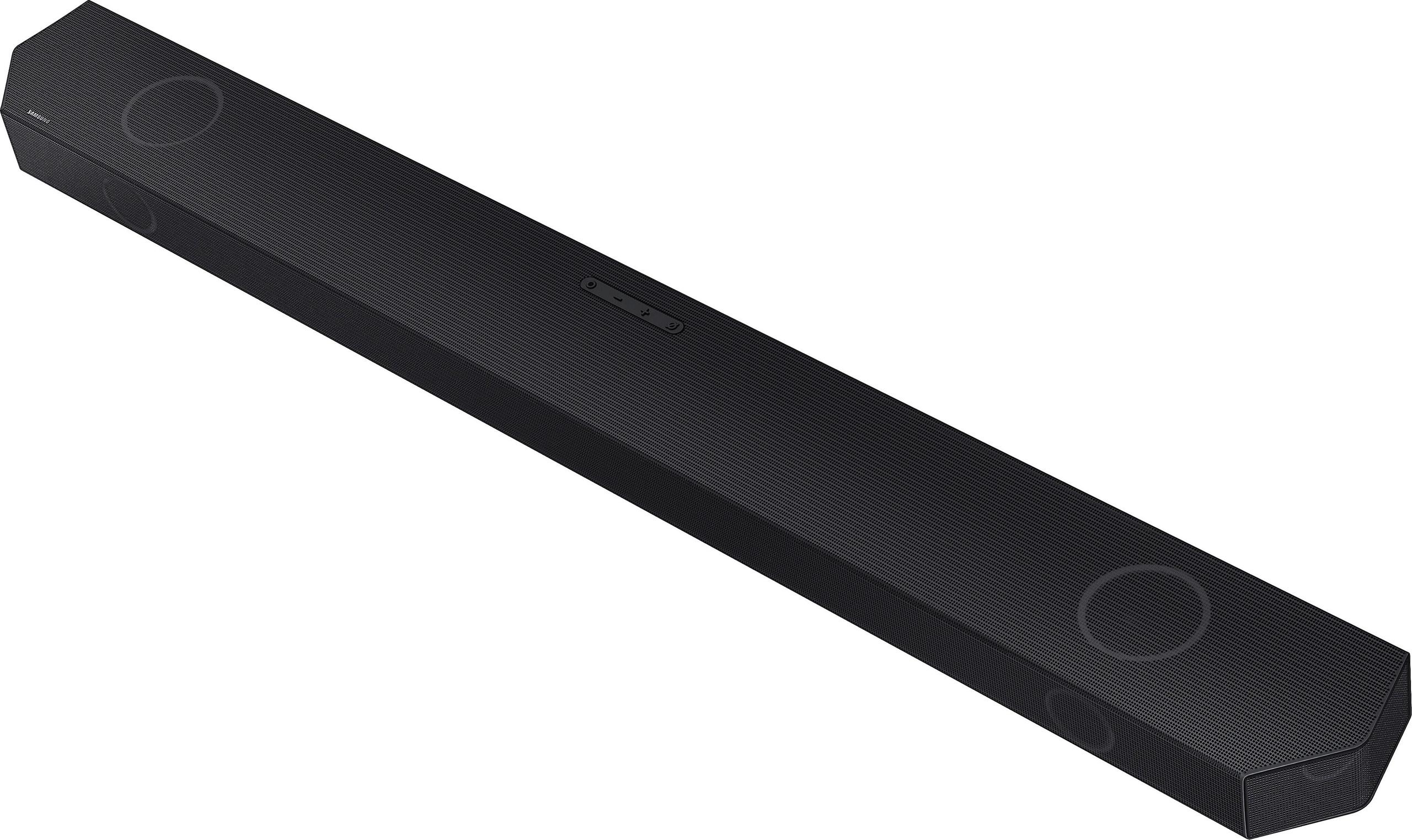
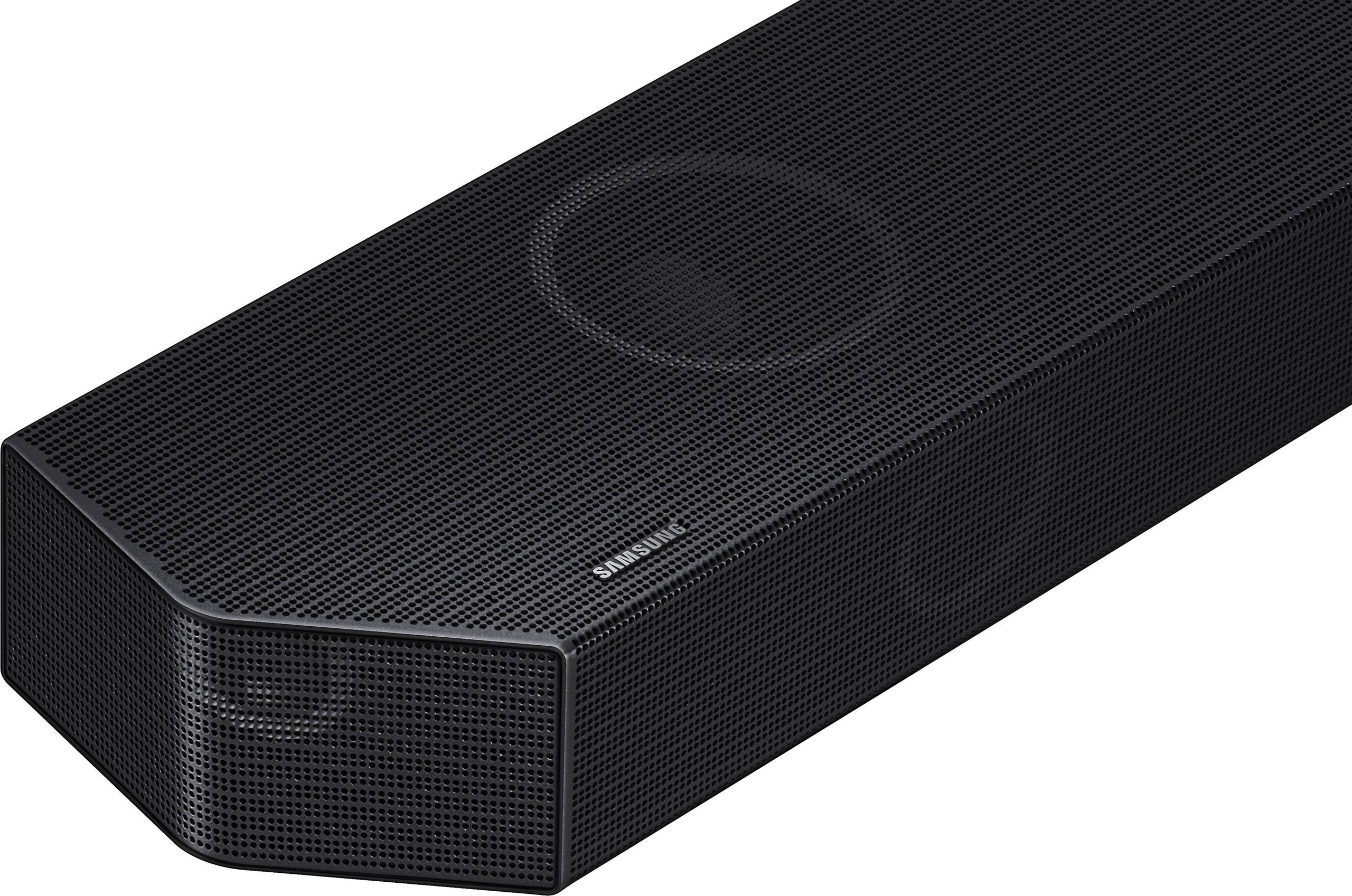
Released in early 2024, the Samsung HW-Q800D represents Samsung's refined approach to mid-tier premium audio. It's essentially the successor to the well-regarded Q800C, with improved room calibration and better Samsung TV integration.
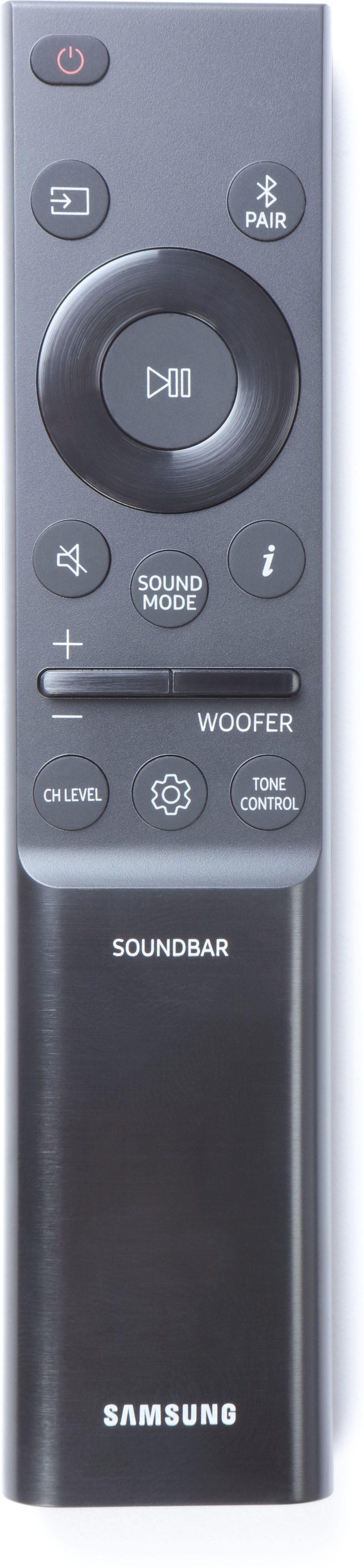
What makes this soundbar special is Samsung's Q-Symphony technology, which allows compatible Samsung TVs to work alongside the soundbar rather than shutting off when external audio is connected. This means you're getting additional speakers working in harmony—your TV's built-in speakers handle some midrange duties while the soundbar focuses on what it does best.
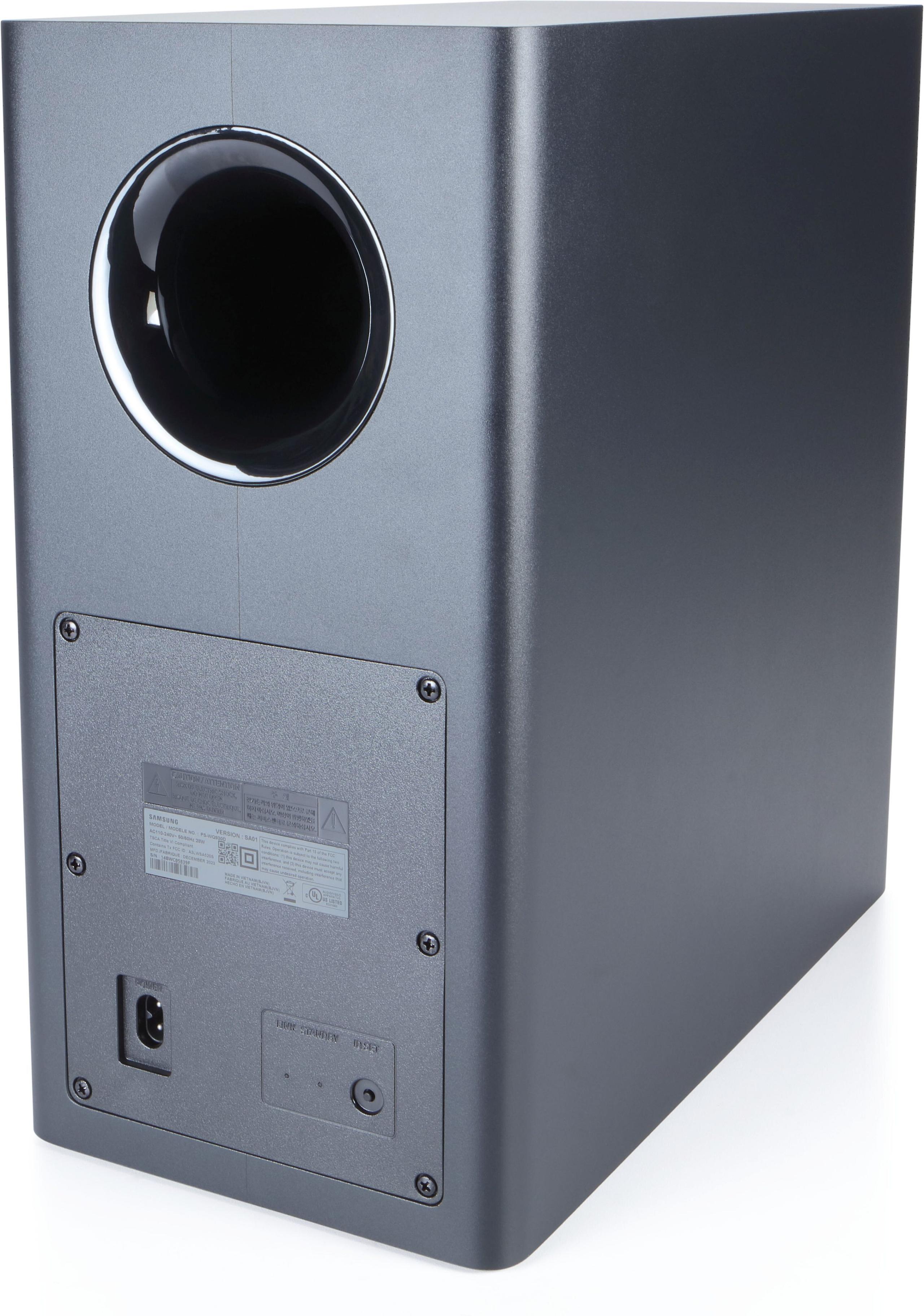
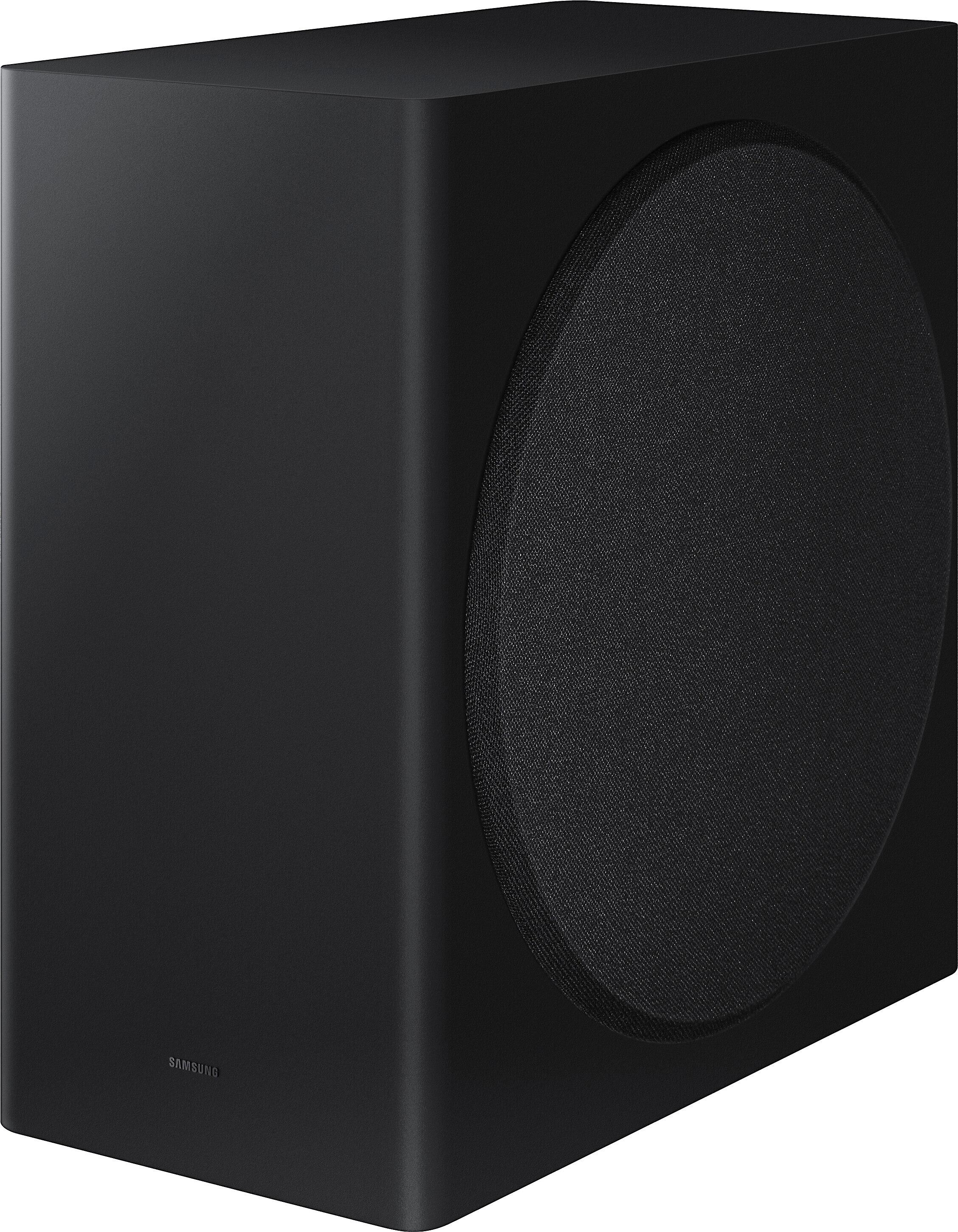
The 360W total power output might seem modest compared to some competitors, but Samsung has focused on efficiency and smart processing rather than raw power. The included wireless subwoofer features an 8-inch side-firing driver in a ported enclosure, which helps it produce more bass than you'd expect from its size.
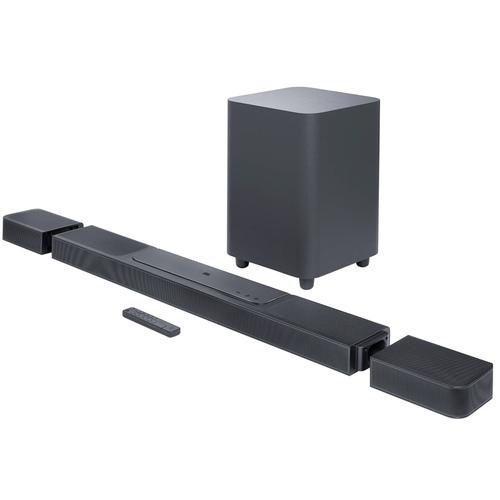
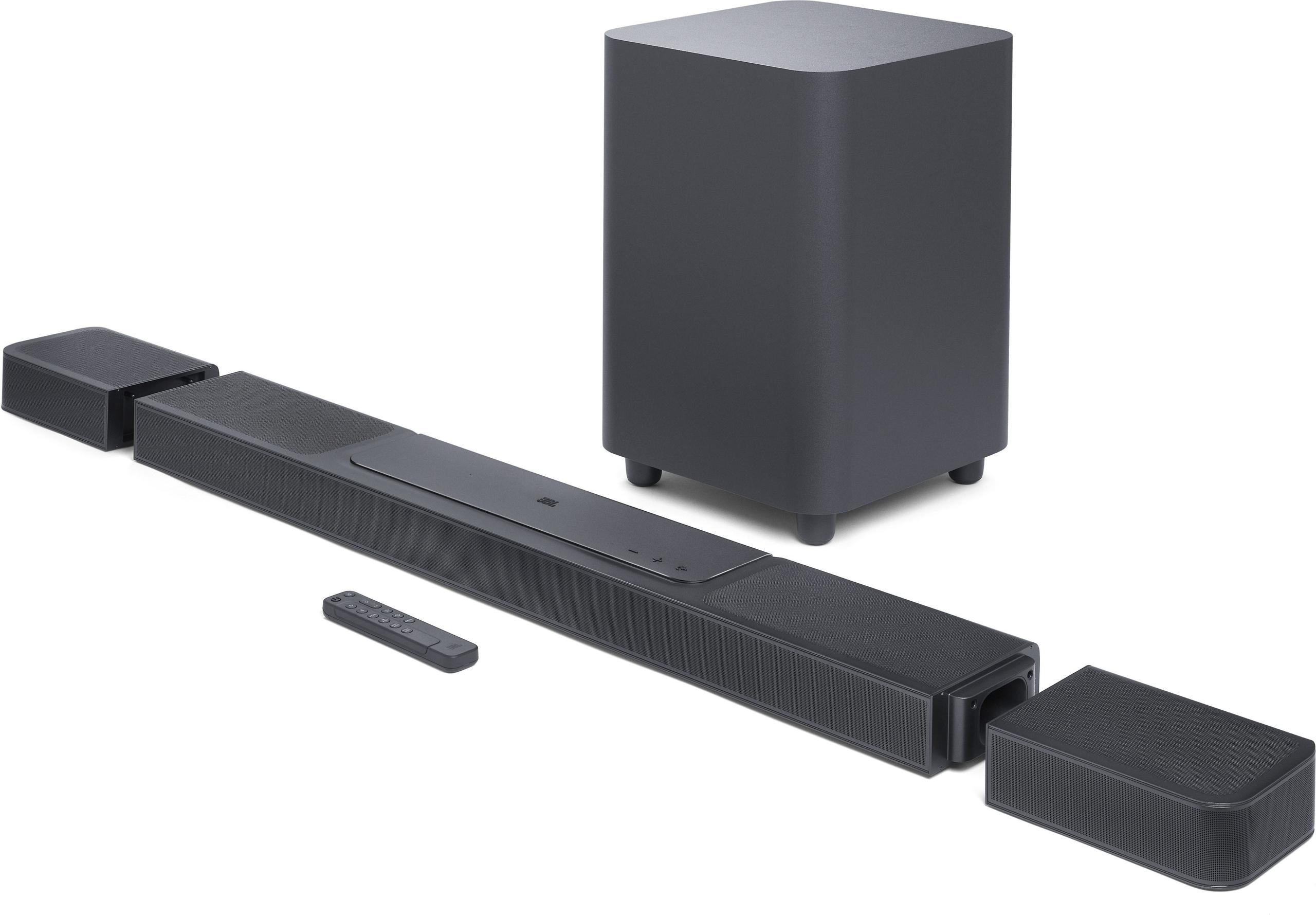
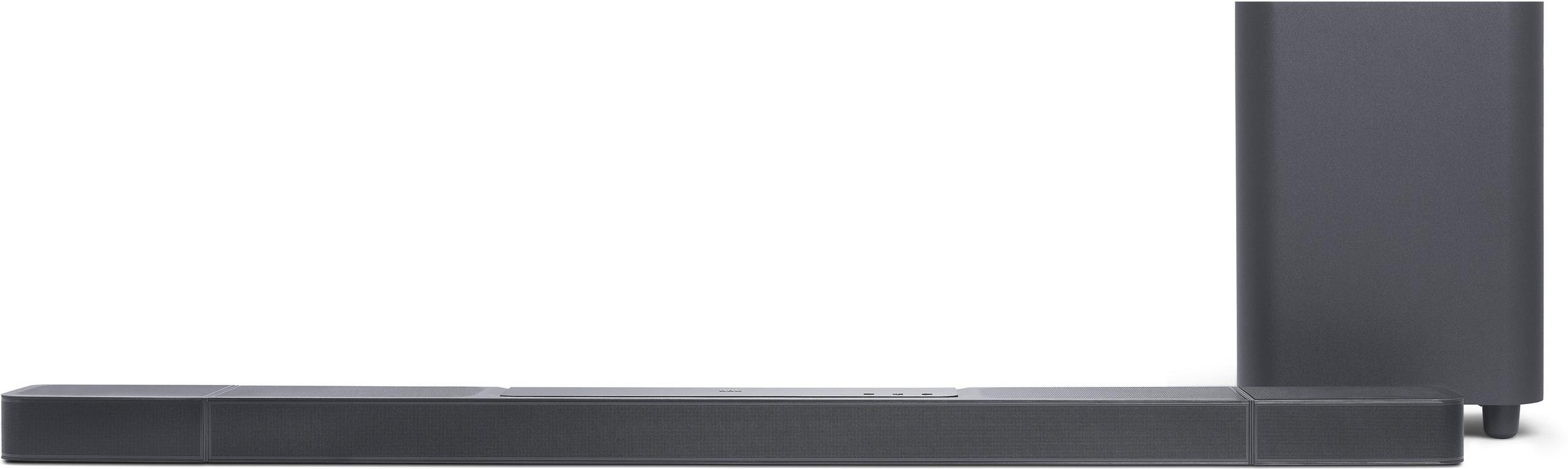
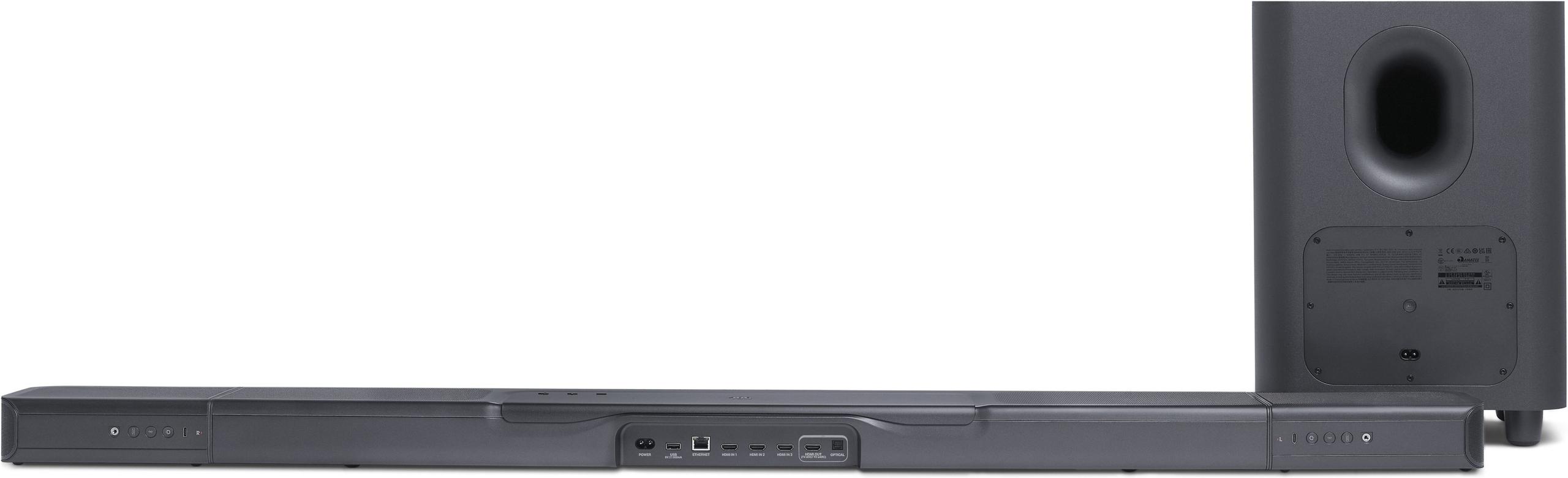
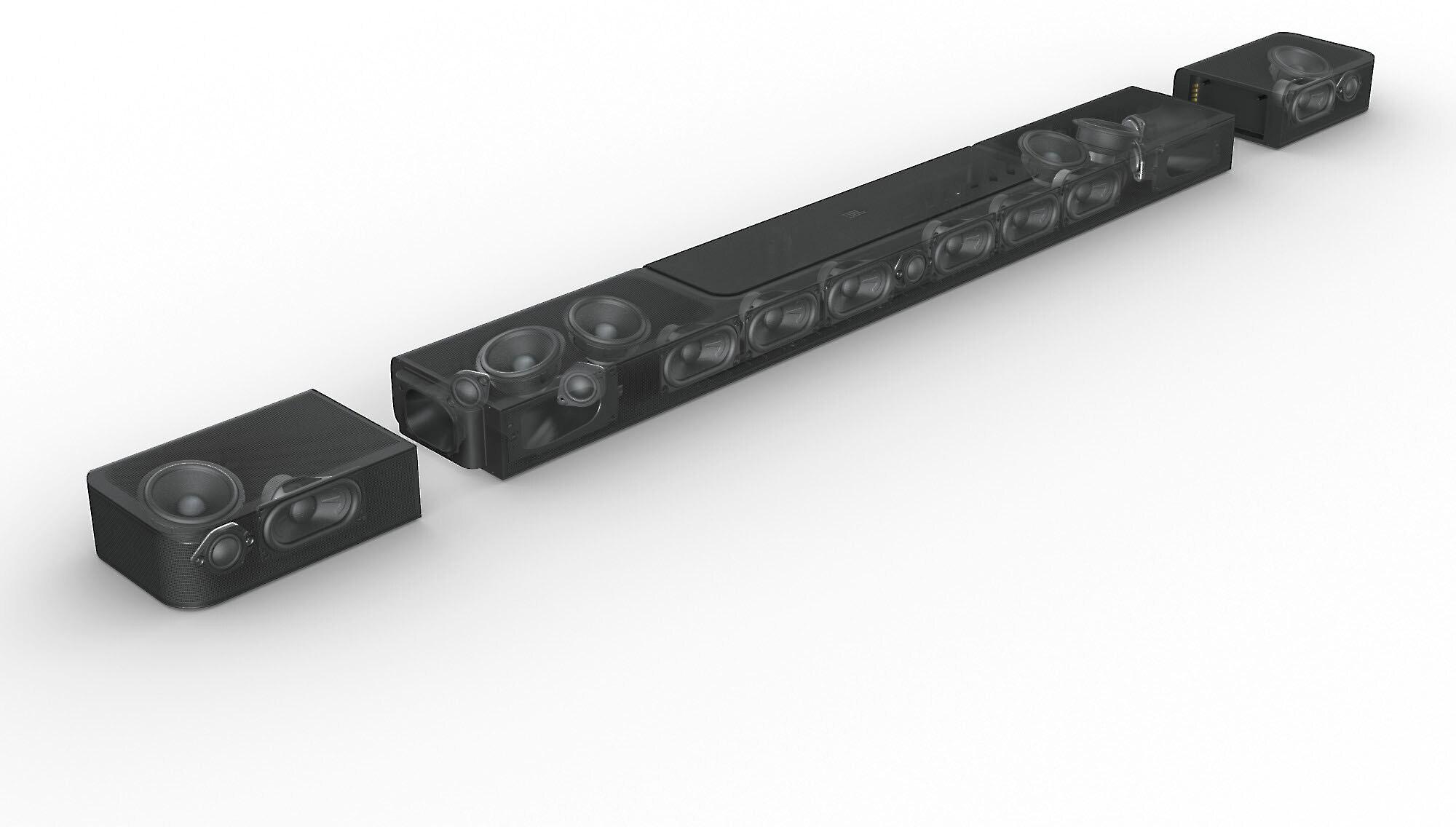
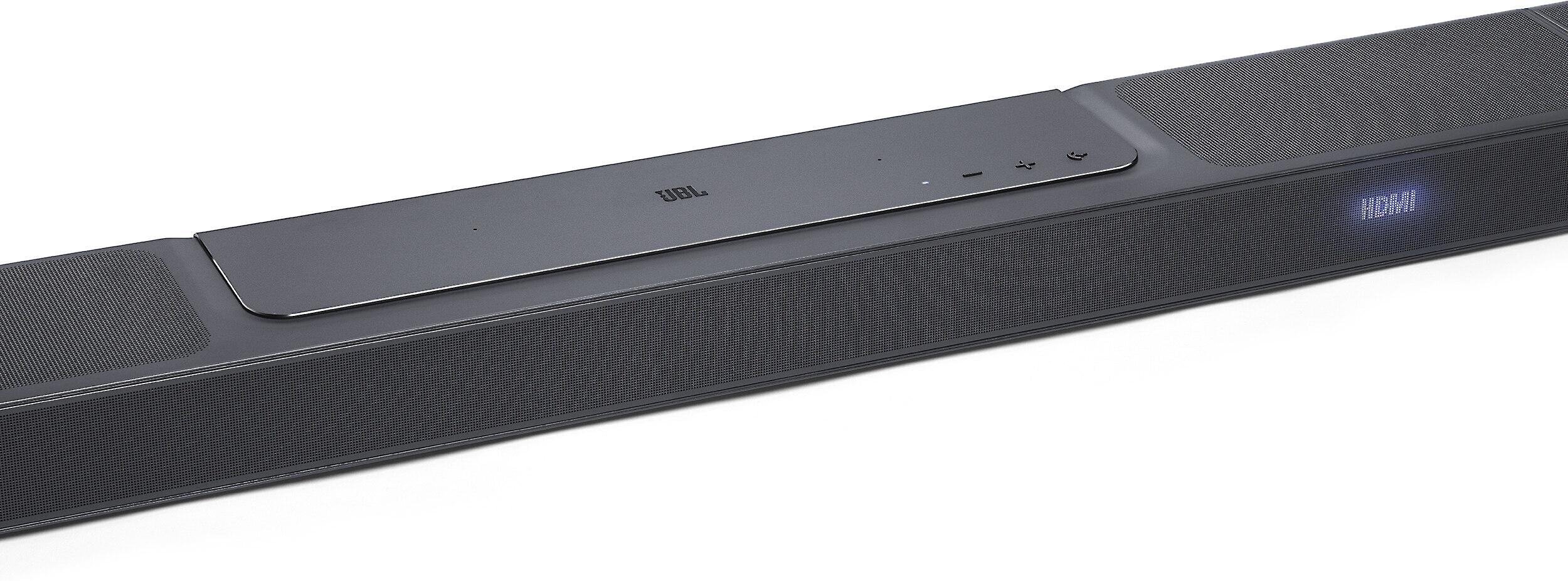
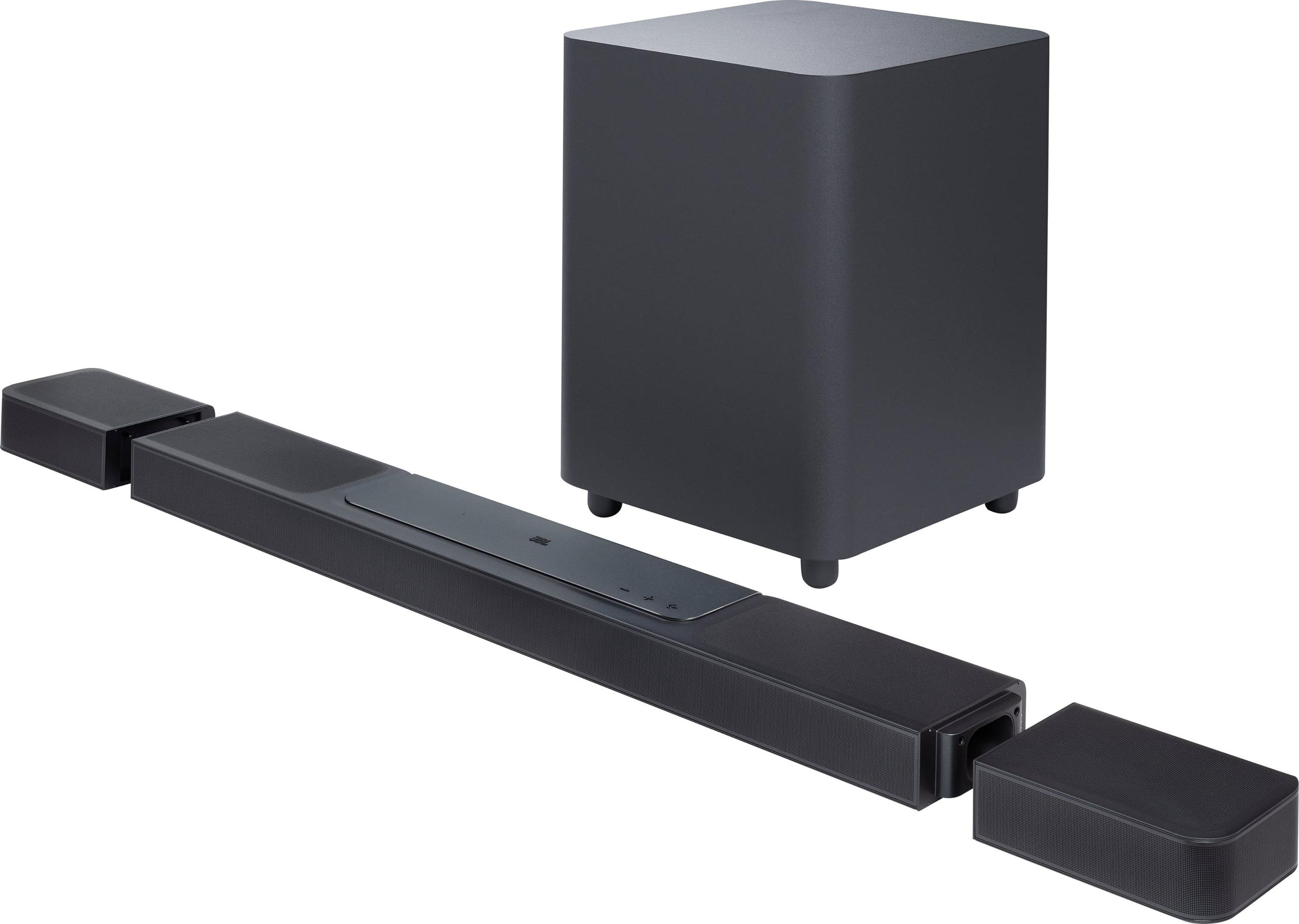
The JBL Bar 1300X, launched in late 2023, takes a completely different approach. Where Samsung prioritizes integration and ease of use, JBL goes all-out for maximum immersion. This is essentially a complete home theater system disguised as a soundbar.
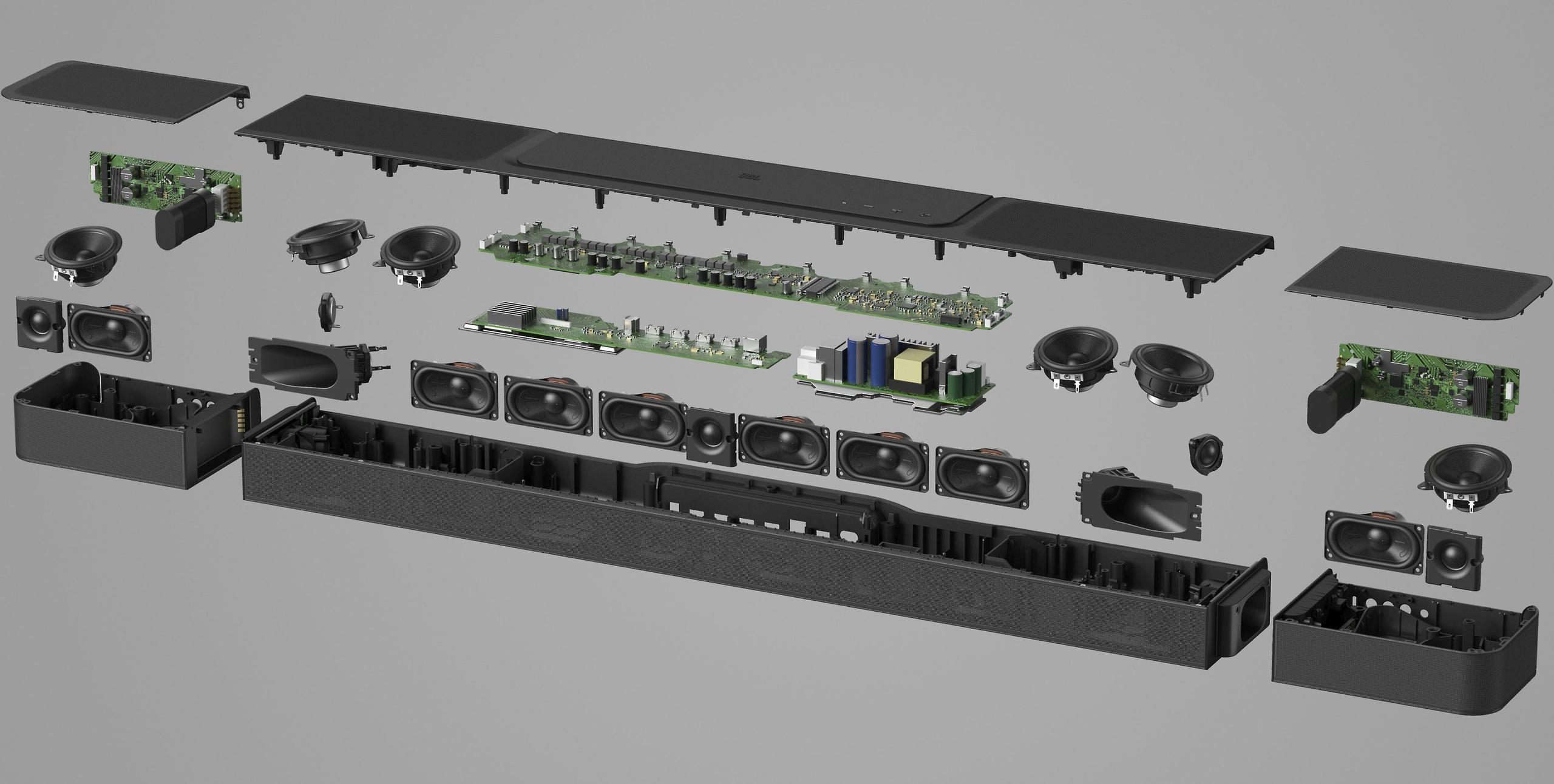
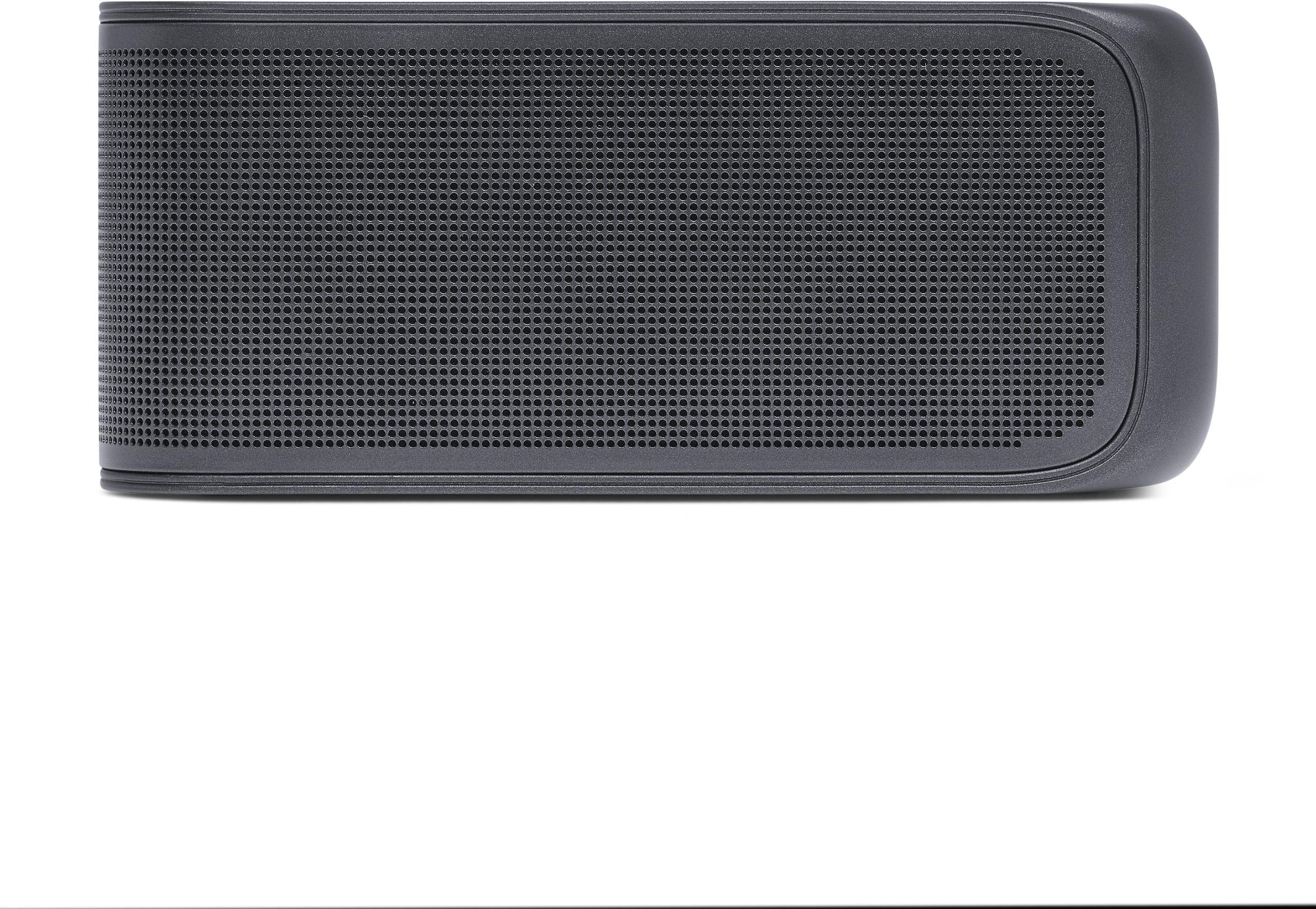
The standout feature here is those detachable rear speakers. Unlike traditional wireless rears that need to be plugged into wall outlets, these are completely battery-powered and can run for up to 12 hours on a charge. When you're not watching movies, they can separate from the main bar and function as portable Bluetooth speakers—a clever touch that adds real value.
With 1,170W of total power and a massive 12-inch subwoofer, this system can fill rooms that would leave other soundbars struggling. The six up-firing drivers (compared to Samsung's two) create much more convincing overhead effects for Dolby Atmos content.
Here's where the fundamental differences between these systems become crystal clear. The Samsung HW-Q800D uses sophisticated digital processing to create virtual surround effects from its 5.1.2 speaker arrangement. This works surprisingly well—dialogue comes clearly from the center, and the two up-firing drivers bounce sound off your ceiling to create the illusion of overhead audio.
However, there's no substitute for actual rear speakers when it comes to true surround immersion. The JBL's physical rear channels create that enveloping experience you get in movie theaters, where sounds can genuinely come from behind you rather than just seeming to.
I've tested both systems with the helicopter scene from Blade Runner 2049—a torture test for any audio system. The Samsung does admirably, creating a wide soundstage that fills the front of the room. But the JBL makes you feel like you're actually inside that scene, with the helicopter's rotors distinctly moving around and above you.
The JBL's MultiBeam technology deserves special mention here. This digital processing analyzes incoming audio and uses beamforming (essentially directing sound waves precisely where they need to go) to create an even wider soundstage. Combined with those physical rear speakers, it creates an impressively large "sweet spot" where the surround effects work well.
Bass reproduction shows the clearest difference between these systems. The Samsung's 8-inch subwoofer delivers clean, tight bass that integrates well with the main soundbar. It's perfectly adequate for most content and won't disturb neighbors in apartments or condos.
But if you want that theater experience where explosions have genuine impact, the JBL's 12-inch subwoofer is in a different league entirely. With 300W of dedicated power, it can reproduce frequencies down to about 25Hz—deep enough to feel those subsonic effects that add emotional impact to movies.
The difference becomes obvious with action films like Mad Max: Fury Road. The Samsung gives you clean, controlled bass that supports the action. The JBL makes your couch vibrate during chase scenes and adds that visceral punch that makes action sequences genuinely exciting.
Gaming reveals another interesting split between these systems. The Samsung HW-Q800D includes a dedicated Game Pro mode that reduces audio latency—the delay between when something happens on screen and when you hear it. For competitive gaming, this matters enormously. Even a 20-millisecond delay can mean the difference between hearing an enemy's footsteps in time to react or getting eliminated.
The Samsung's clear center channel also excels at reproducing dialogue and voice chat clearly, which is crucial for team-based games. The directional audio cues work well enough for most gaming scenarios, and the Q-Symphony feature with Samsung TVs adds an extra layer of spatial awareness.
The JBL takes a different approach, prioritizing immersion over competitive advantage. Those physical rear speakers create genuinely convincing positional audio—you can hear exactly where enemies are located in three-dimensional space. This makes single-player games incredibly immersive but might actually be a disadvantage in competitive multiplayer, where pinpoint accuracy matters more than cinematic experience.
For music listening, both systems perform well but with different strengths. The Samsung offers a balanced, neutral sound signature that works across various genres. Its 7-band equalizer allows for detailed customization, and the system's smaller drivers tend to reproduce midrange frequencies (where most vocals live) with good clarity.
The JBL Bar 1300X brings more dynamic range and power to music reproduction. The physical separation between speakers creates better stereo imaging—you can more clearly distinguish between instruments placed left and right in the mix. The larger drivers and more powerful amplification also mean it can reproduce the full dynamic range of well-recorded music without compression at higher volumes.
Jazz recordings reveal these differences clearly. The Samsung presents everything cleanly and clearly, but the JBL adds that sense of space and air around instruments that makes you feel like you're in the recording studio.
Both systems benefit from recent advances in audio processing technology. The Samsung's SpaceFit Sound Pro, introduced in 2024, uses built-in microphones to analyze your room's acoustics automatically. It then adjusts the sound output to compensate for your specific space—whether you have hard floors that reflect sound or soft furnishings that absorb it.
This kind of automatic room correction was typically found only in much more expensive systems just a few years ago. The Samsung implementation works well enough that most users won't need to manually adjust settings, which is exactly the point.
The JBL's PureVoice technology represents another recent advancement. This AI-driven dialogue enhancement doesn't just boost voice frequencies uniformly—it actually analyzes the incoming audio to identify speech patterns and enhances them dynamically. This means dialogue clarity improves without making everything else sound artificial or processed.
Both systems also benefit from improved Bluetooth implementations. The Samsung's Bluetooth 5.2 and JBL's mixed 5.0/5.2 setup offer better range, more stable connections, and the ability to connect multiple devices simultaneously.
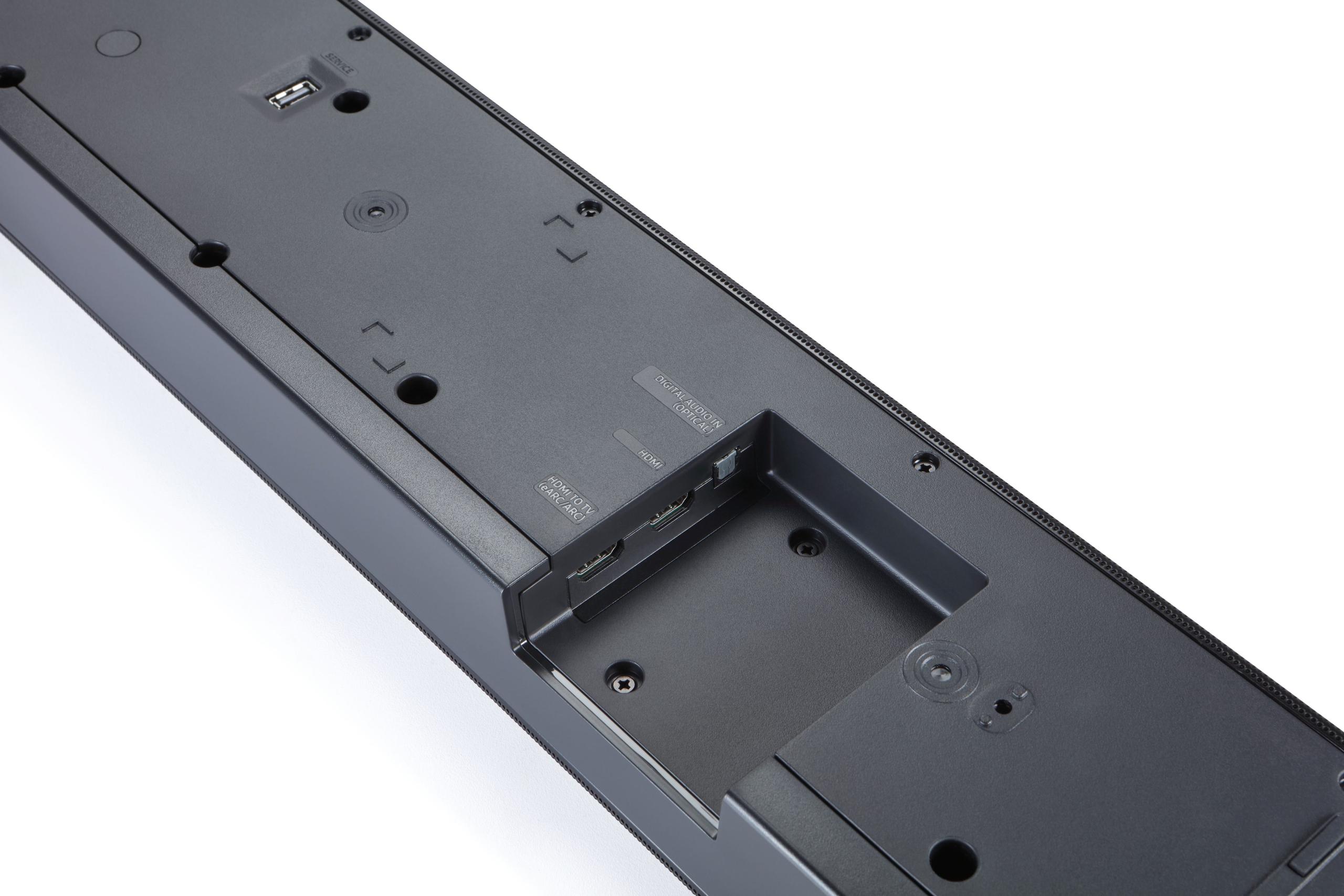
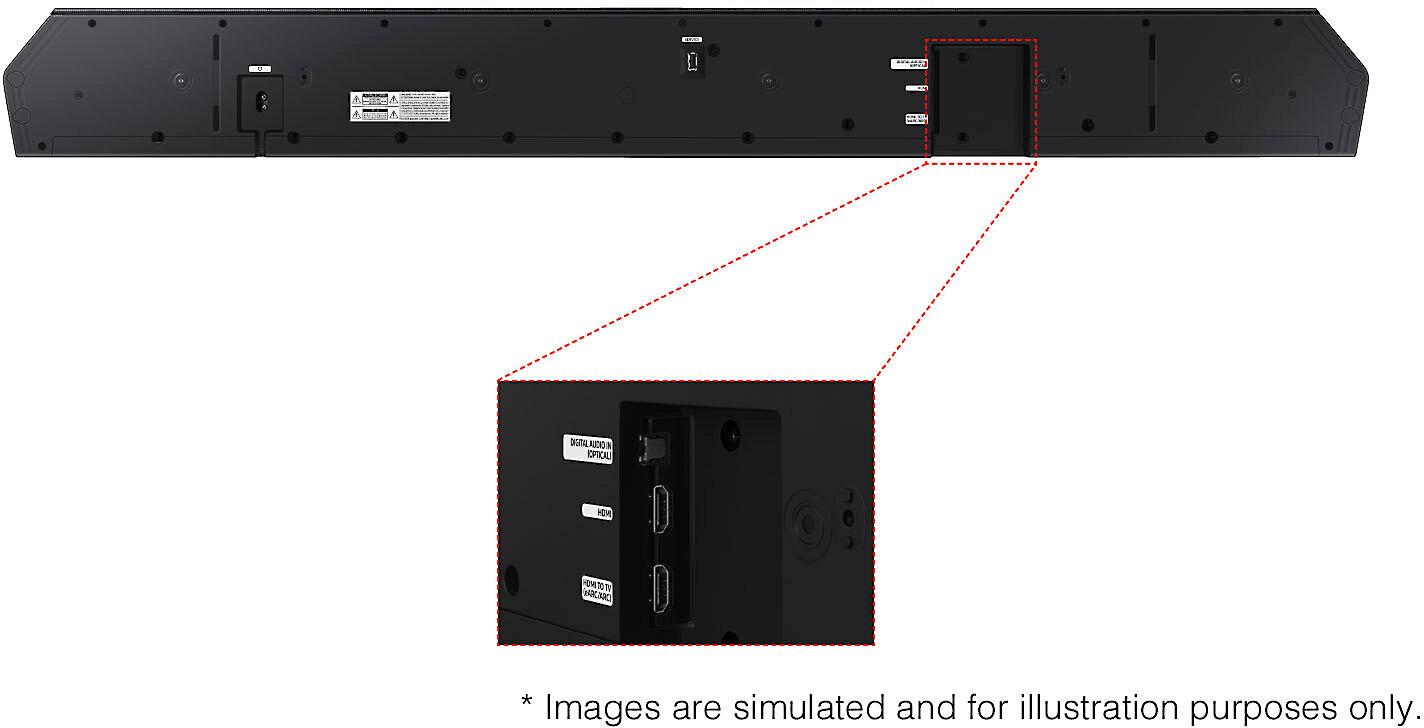
Setting up a home theater involves more than just sound quality—practical considerations matter enormously. The Samsung HW-Q800D wins decisively on simplicity. Unbox it, connect one HDMI cable to your TV, and you're basically done. The automatic calibration handles room optimization, and if you have a Samsung TV, the Q-Symphony feature activates automatically.
The JBL requires more thought and effort. Those rear speakers need to be positioned correctly, charged regularly, and manually calibrated through the app. The payoff is worth it if you're willing to invest the time, but it's definitely not a "set it and forget it" experience.
For smaller rooms (under 300 square feet), the Samsung often makes more sense. Its sound processing is optimized for these spaces, and the smaller subwoofer won't overwhelm the room. The JBL's massive output can actually work against it in tight quarters, where reflections from walls can create muddy or boomy sound.
Larger rooms (400+ square feet) flip this equation. The Samsung's virtual surround processing becomes less convincing as the listening distance increases, while the JBL's physical speakers and powerful amplification really shine when they have space to breathe.
At $599, the Samsung offers exceptional value for most users. You're getting genuine premium features—Dolby Atmos processing, automatic room calibration, smart TV integration—at a price that's reasonable for the performance delivered. The build quality is solid, Samsung's warranty support is reliable, and the system will satisfy the vast majority of users looking to upgrade from TV speakers.
The JBL Bar 1300X at $1,299 requires more justification, but it delivers where it counts. That extra $700 buys you genuinely superior immersion, much more powerful bass, unique flexibility with the detachable rears, and audiophile-grade music reproduction. If you're building a dedicated home theater space or you're serious about audio quality, the performance difference justifies the cost.
Choose the Samsung HW-Q800D if you want excellent performance without complexity. It's perfect for Samsung TV owners, apartment dwellers, casual listeners who want a significant upgrade, and anyone who values simplicity over absolute performance. The gaming optimizations make it especially appealing for console players.
Go with the JBL Bar 1300X if you're building a serious home theater setup, have a large room that demands powerful audio, listen to music critically, or you're fascinated by the detachable speaker concept. The complex setup pays dividends in performance, and the flexibility adds genuine value.
Both systems represent solid investments that will dramatically improve your audio experience over TV speakers. The Samsung democratizes premium features at a reasonable price, while the JBL pushes the boundaries of what's possible in a soundbar form factor. Your choice should depend on your room, your budget, and how much you value absolute performance versus convenience.
Either way, your movie nights are about to get significantly more exciting.
| Samsung HW-Q800D | JBL Bar 1300X |
|---|---|
| Price - Significant cost difference for premium features | |
| $599 | $1,299 |
| Channel Configuration - Determines surround sound quality | |
| 5.1.2 channels (virtual rear surround) | 11.1.4 channels (physical rear speakers) |
| Total Power Output - Affects maximum volume and dynamic range | |
| 360W total | 1,170W total |
| Subwoofer - Critical for bass impact in movies and music | |
| 8-inch wireless subwoofer | 12-inch wireless subwoofer (300W dedicated) |
| Dolby Atmos Implementation - Creates overhead sound effects | |
| 2 up-firing drivers | 6 up-firing drivers |
| Rear Speaker Setup - Determines true surround vs virtual | |
| Virtual surround processing only | Detachable battery-powered rear speakers (12-hour battery) |
| Room Size Optimization - Matches performance to space | |
| Best for small-medium rooms (up to 300 sq ft) | Optimized for large rooms (400+ sq ft) |
| Setup Complexity - Time investment vs performance | |
| Plug-and-play with automatic calibration | Manual speaker placement and app-based calibration required |
| Gaming Features - Competitive vs immersive gaming | |
| Game Pro Mode (low latency for competitive play) | Physical surround for immersive single-player games |
| Smart TV Integration - Enhanced performance with brand matching | |
| Q-Symphony technology (works with Samsung TVs) | Universal compatibility, no brand-specific features |
| Music Streaming Options - Wireless connectivity variety | |
| Bluetooth 5.2 | AirPlay, Chromecast, Alexa MRM, Bluetooth |
| Unique Features - Standout capabilities | |
| SpaceFit Sound Pro room calibration | Detachable rears double as portable Bluetooth speakers |
The Samsung HW-Q800D at $599 offers exceptional value for most users, providing genuine Dolby Atmos, automatic room calibration, and Samsung TV integration at a reasonable price. The JBL Bar 1300X at $1,299 costs more than double but delivers significantly superior performance with true 11.1.4 surround sound, physical rear speakers, and a massive 12-inch subwoofer. Choose Samsung for excellent performance on a budget, or JBL if you want the best possible home theater experience.
The Samsung HW-Q800D's 5.1.2 system uses virtual processing to simulate rear surround from the main soundbar, while the JBL Bar 1300X's 11.1.4 configuration includes actual physical rear speakers for true surround sound. The JBL also has six up-firing drivers compared to Samsung's two, creating more convincing overhead Dolby Atmos effects. Physical rear speakers provide much more immersive surround sound than virtual processing.
The JBL Bar 1300X significantly outperforms the Samsung HW-Q800D in bass output. JBL's 12-inch subwoofer with 300W dedicated power extends down to 25Hz and can shake your room during action scenes. Samsung's 8-inch subwoofer is adequate for most users and won't disturb neighbors, but lacks the deep, impactful bass that makes movies truly exciting.
Both excel at gaming but in different ways. The Samsung HW-Q800D includes Game Pro Mode that reduces audio latency for competitive gaming, making it ideal for fast-paced multiplayer games. The JBL Bar 1300X provides superior immersion for single-player games with its physical rear speakers creating accurate positional audio, but may not be as responsive for competitive play.
The Samsung HW-Q800D wins on simplicity with plug-and-play setup and automatic room calibration through SpaceFit Sound Pro. The JBL Bar 1300X requires manual placement of rear speakers, app-based calibration, and regular charging of the battery-powered rears. Samsung is ready to use in minutes, while JBL requires time and effort to optimize performance.
While the Samsung HW-Q800D creates convincing virtual surround sound, the JBL Bar 1300X's physical rear speakers provide genuinely superior immersion. Virtual surround works well for casual viewing, but physical rears create that enveloping theater experience where sounds truly come from behind you. For serious home theater setups, physical rear speakers make a noticeable difference.
The Samsung HW-Q800D is better optimized for smaller spaces under 300 square feet. Its processing and 8-inch subwoofer won't overwhelm compact rooms, and the virtual surround works well at closer listening distances. The JBL Bar 1300X's massive power output can actually work against it in tight spaces, where wall reflections may create muddy sound.
Yes, both support wireless music streaming. The Samsung HW-Q800D features Bluetooth 5.2 for connecting phones and tablets. The JBL Bar 1300X offers more options including AirPlay, Chromecast built-in, and Alexa Multi-Room Music, providing access to over 300 streaming services. JBL also allows the detachable rear speakers to function as standalone Bluetooth speakers when not in use.
The JBL Bar 1300X is designed for large rooms over 400 square feet, with 1,170W total power and physical speakers that can fill expansive spaces. The Samsung HW-Q800D's virtual surround processing becomes less effective at greater distances, and its 360W output may not provide adequate volume for large areas. JBL's powerful amplification and discrete speakers excel in spacious environments.
Both soundbars work with any TV brand through HDMI or optical connections. However, the Samsung HW-Q800D offers special Q-Symphony technology that works exclusively with compatible Samsung TVs, using the TV's built-in speakers alongside the soundbar for enhanced performance. The JBL Bar 1300X provides universal compatibility without brand-specific features.
Both excel at dialogue reproduction but differently. The Samsung HW-Q800D features a dedicated center channel and Active Voice Amplifier technology that emphasizes speech even at low volumes. The JBL Bar 1300X includes PureVoice technology that uses AI to dynamically enhance dialogue clarity. Samsung may have a slight edge for TV shows and news, while JBL performs better for movies with complex soundtracks.
The JBL Bar 1300X's detachable rear speakers justify much of the price difference over the Samsung HW-Q800D. They provide true surround immersion, run for 12 hours on battery power, and double as portable Bluetooth speakers when detached. This unique flexibility and genuine surround sound experience makes the extra $700 worthwhile for serious home theater enthusiasts, though casual users may find Samsung's virtual surround sufficient.
We've done our best to create useful and informative comparisons to help you decide what product to buy. Our research uses advanced automated methods to create this comparison and perfection is not possible - please contact us for corrections or questions. These are the sites we've researched in the creation of this article: techradar.com - valueelectronics.com - samsung.com - rtings.com - samsung.com - crutchfield.com - samsung.com - samsung.com - samsung.com - shidirect.com - techradar.com - jbl.com - audioadvice.com - youtube.com - rtings.com - jbl.com - greentoe.com - harmanaudio.com - youtube.com - mm.jbl.com - jbl.com

Privacy Policy
Terms and Conditions - Affiliate Policy
Home Security
© Copyright 2008-2026.
11816 Inwood Rd #1211, Dallas, TX 75244