





When your TV's built-in speakers leave you constantly asking "what did they just say?" or missing the rumbling bass in action scenes, a soundbar becomes essential. But with prices ranging from under $200 to over $1,000, choosing the right one can feel overwhelming. Today, we're comparing two soundbars that represent opposite ends of the spectrum: the Bose Solo Soundbar Series 2 ($199) and the JBL Bar 1300X ($1,300).
These aren't just different price points – they're completely different philosophies on what a soundbar should do. One focuses on solving your biggest TV audio problem as simply as possible, while the other aims to transform your living room into a movie theater. Let's dive into which approach makes sense for your home.
The soundbar market has exploded over the past decade, evolving from basic stereo boxes to sophisticated audio systems. Modern soundbars range from simple 2.0-channel units (meaning two speakers creating left and right stereo sound) to complex 11.1.4 systems that bounce sound off your ceiling to create three-dimensional audio experiences.
Key considerations when shopping include how many audio channels you need, what size room you're trying to fill, and how much setup complexity you're willing to handle. The most important decision is usually between prioritizing dialogue clarity or full cinematic immersion – though premium models attempt both.
Audio processing has also advanced significantly. Technologies like Dolby Atmos (which creates height effects by bouncing sound off your ceiling) and DTS:X (a competing surround sound format) have moved from commercial theaters into home soundbars. Meanwhile, room calibration technology now automatically adjusts sound based on your specific space's acoustics.
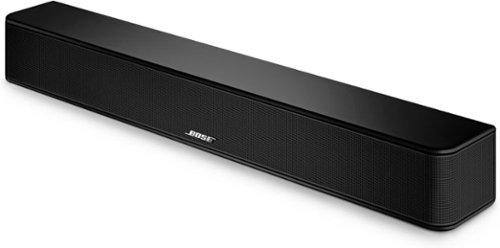
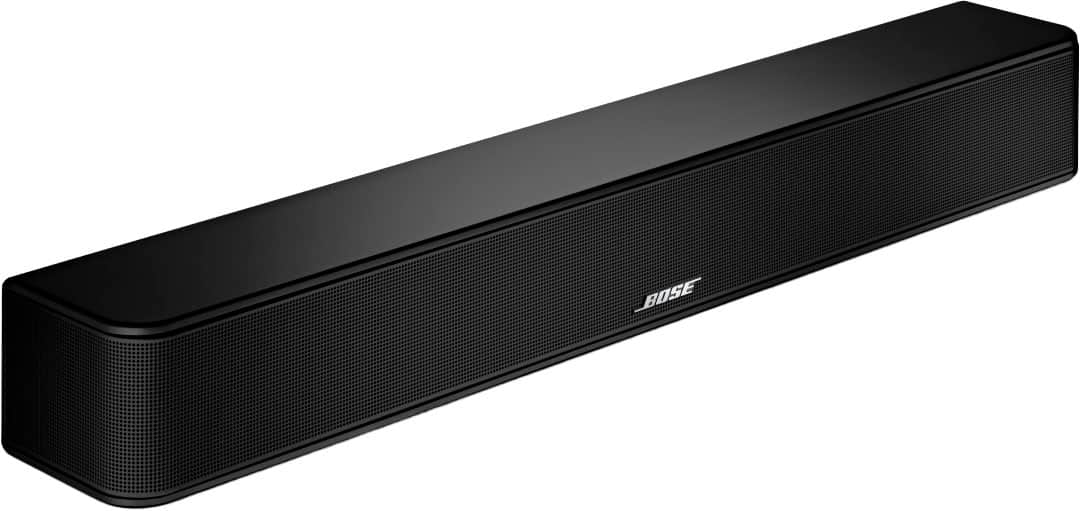
Released in 2022 as an update to Bose's entry-level offering, the Bose Solo Series 2 represents refined simplicity. At just 21.6 inches wide and weighing under 4 pounds, it's designed to slip under your TV and immediately improve what you hear without any fuss.
The "Series 2" designation brought modest improvements over the original, including enhanced Bluetooth connectivity and refined dialogue processing. Bose's approach here is surgical: identify the biggest problem with TV audio (muddy dialogue) and solve it elegantly without overwhelming users with features they might not need.
The soundbar uses two full-range drivers positioned at slight angles to create a wider soundstage than you'd expect from such a compact unit. What makes it special is Bose's decades of experience in psychoacoustics – the science of how we perceive sound. They've tuned the frequency response to prioritize the human voice range, making conversations crystal clear even when background music or sound effects are present.
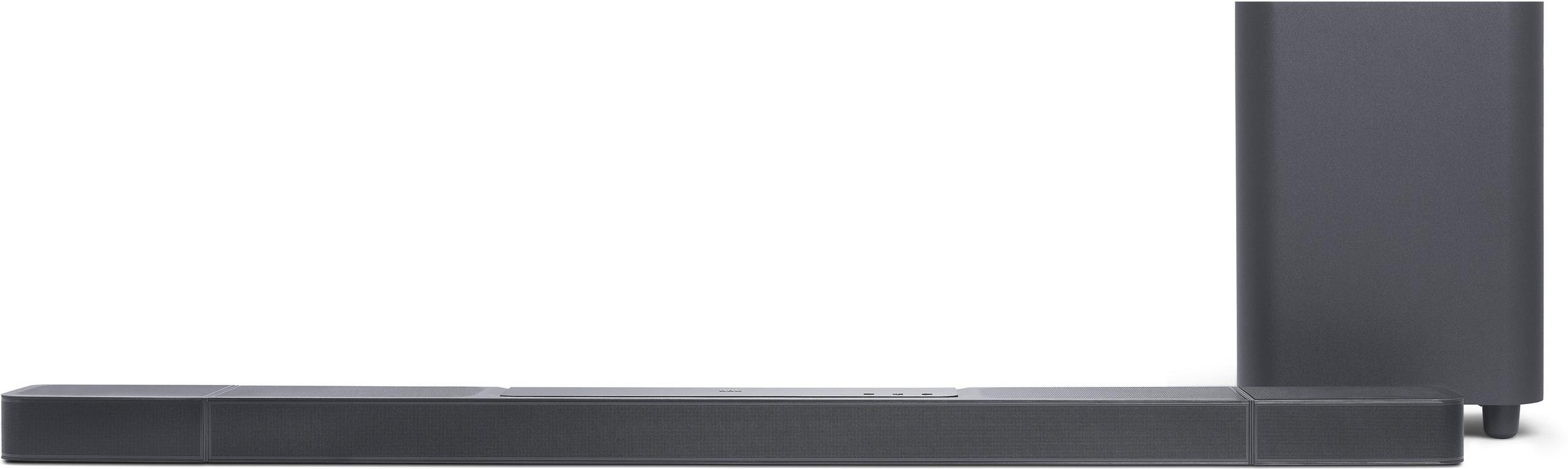
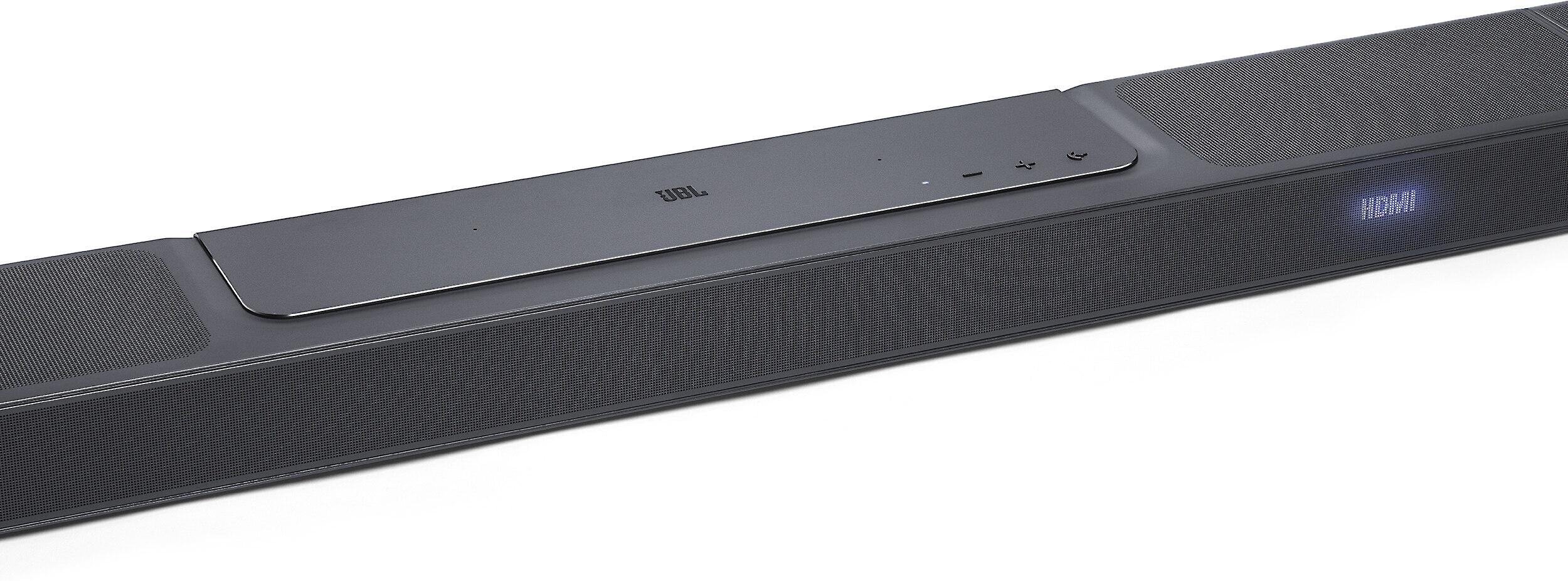
Launched in 2023, the JBL Bar 1300X represents JBL's flagship soundbar technology. This isn't just an audio upgrade – it's a complete home theater system disguised as a soundbar. The "1300X" designation refers to its premium position in JBL's lineup, with the "X" indicating their most advanced feature set.
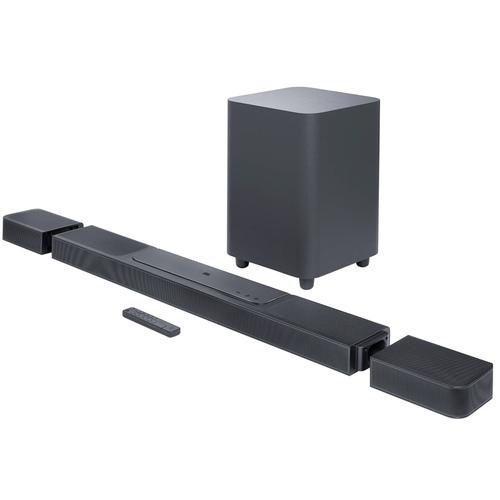
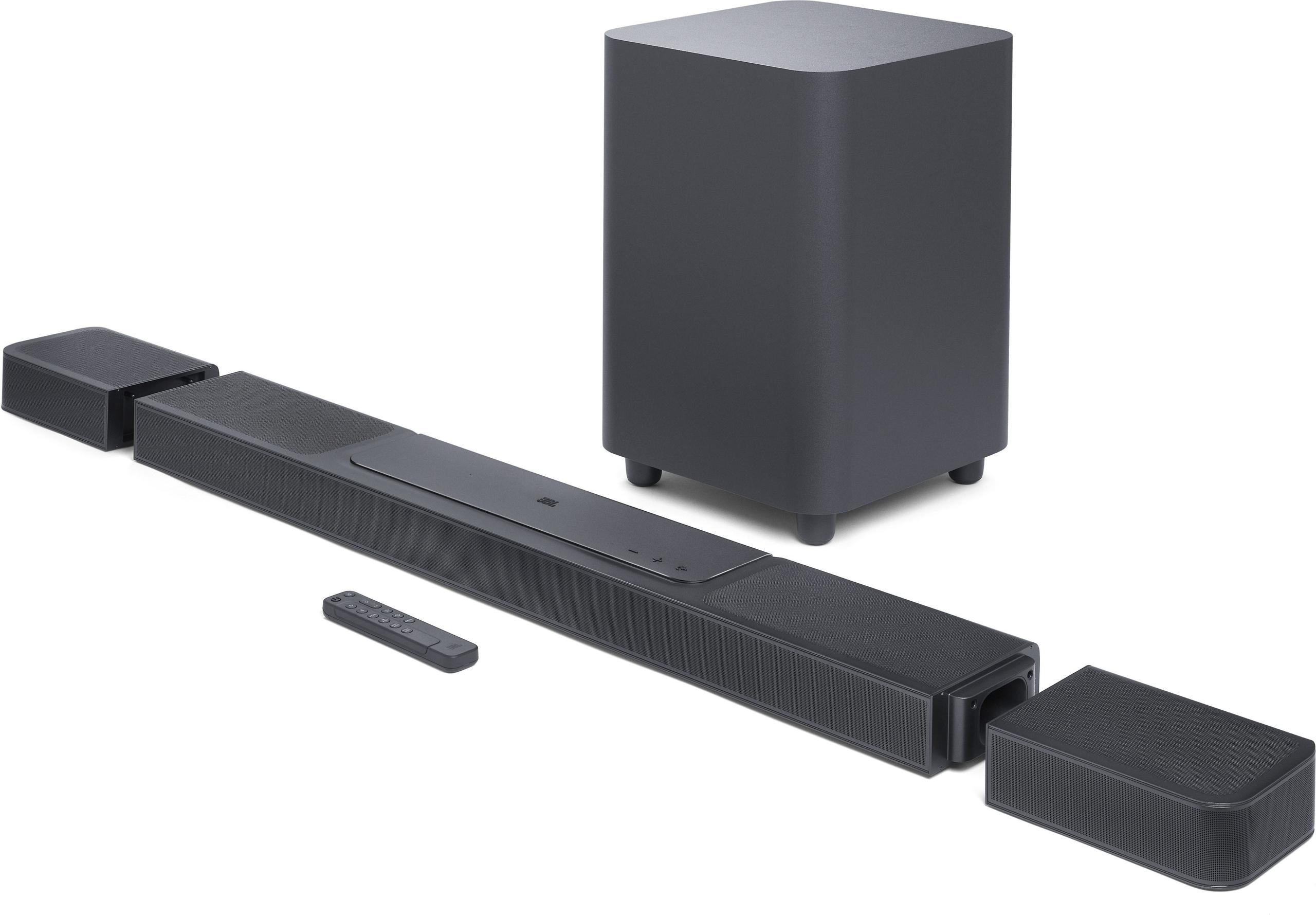
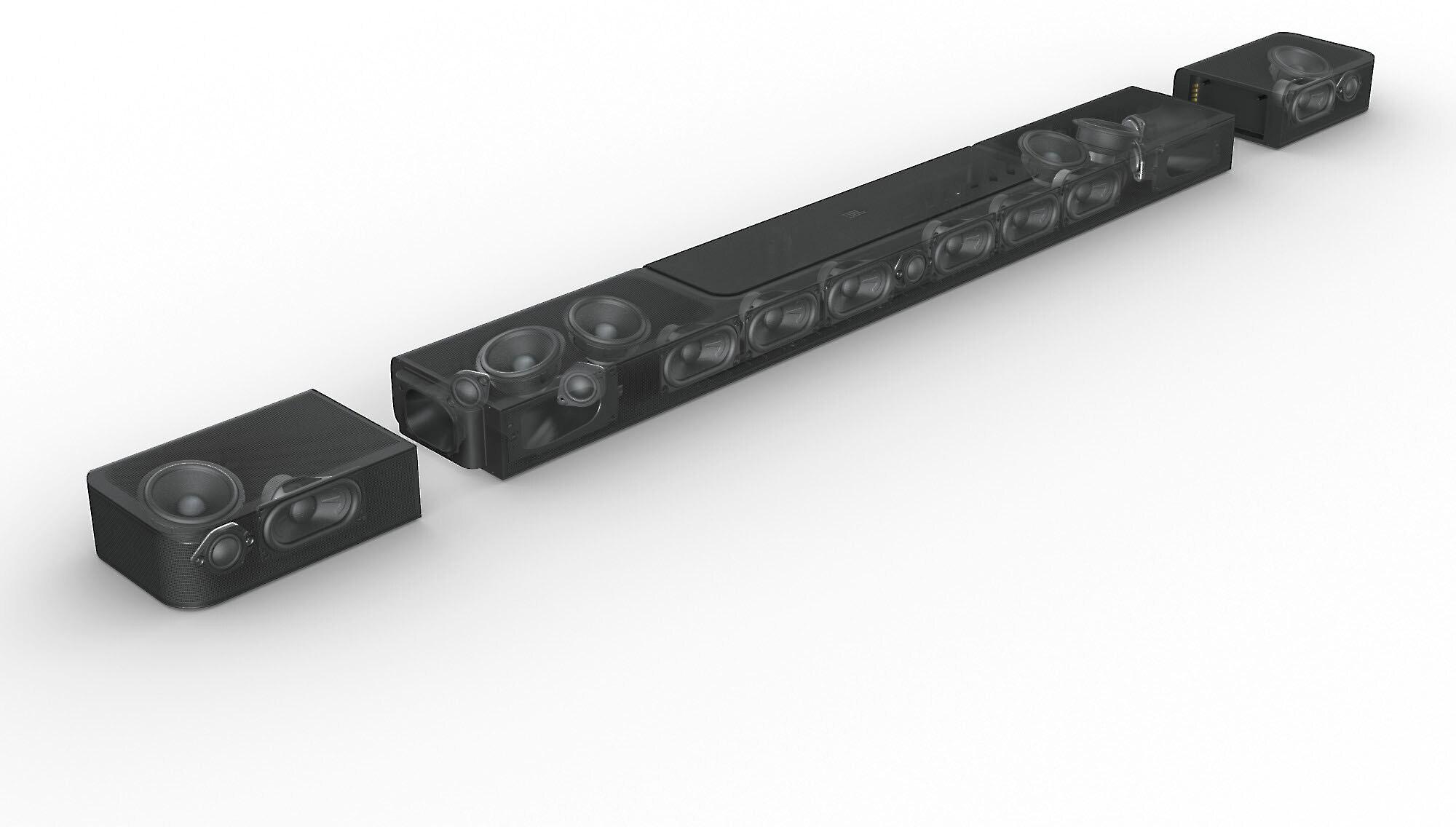
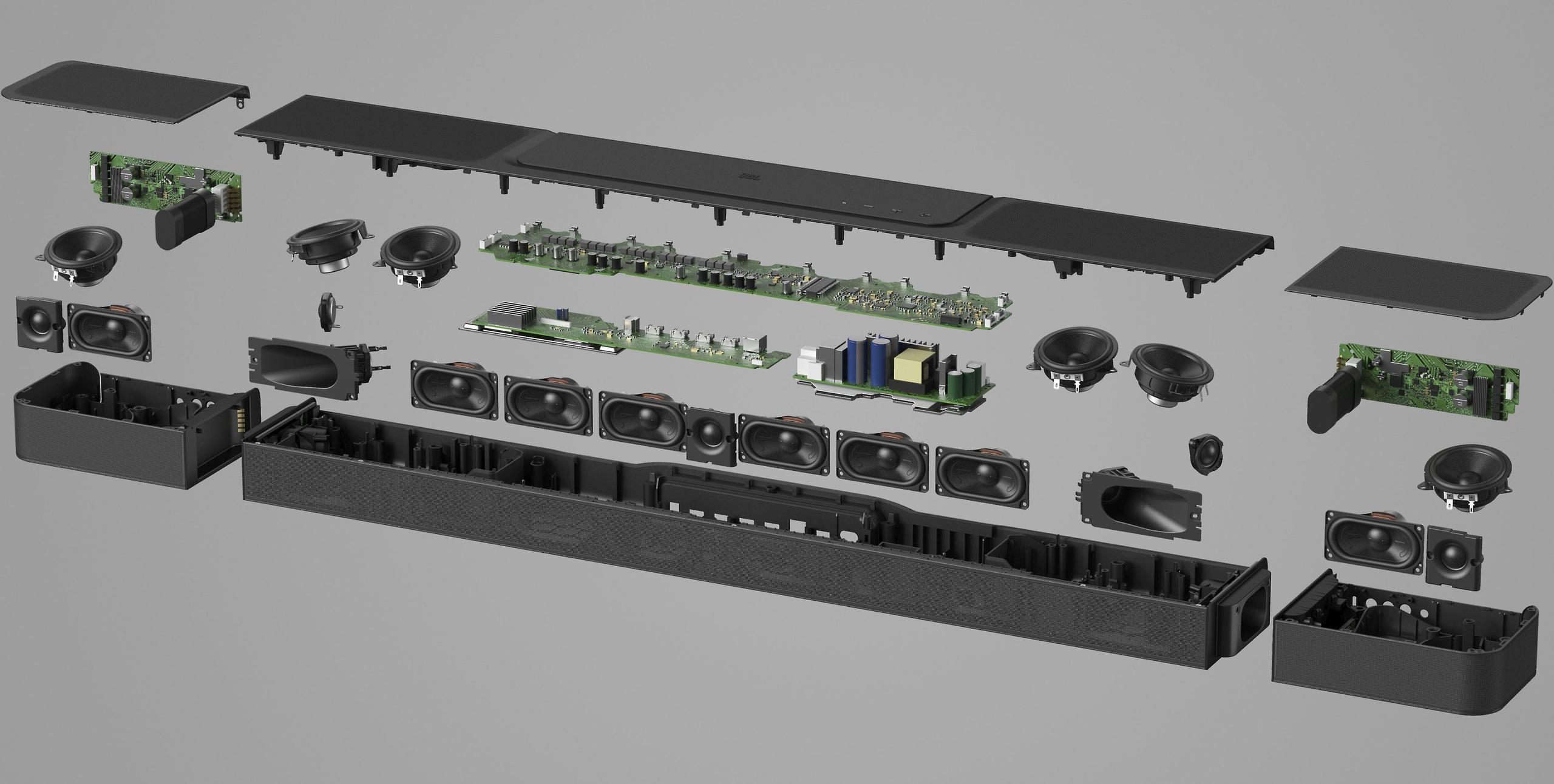
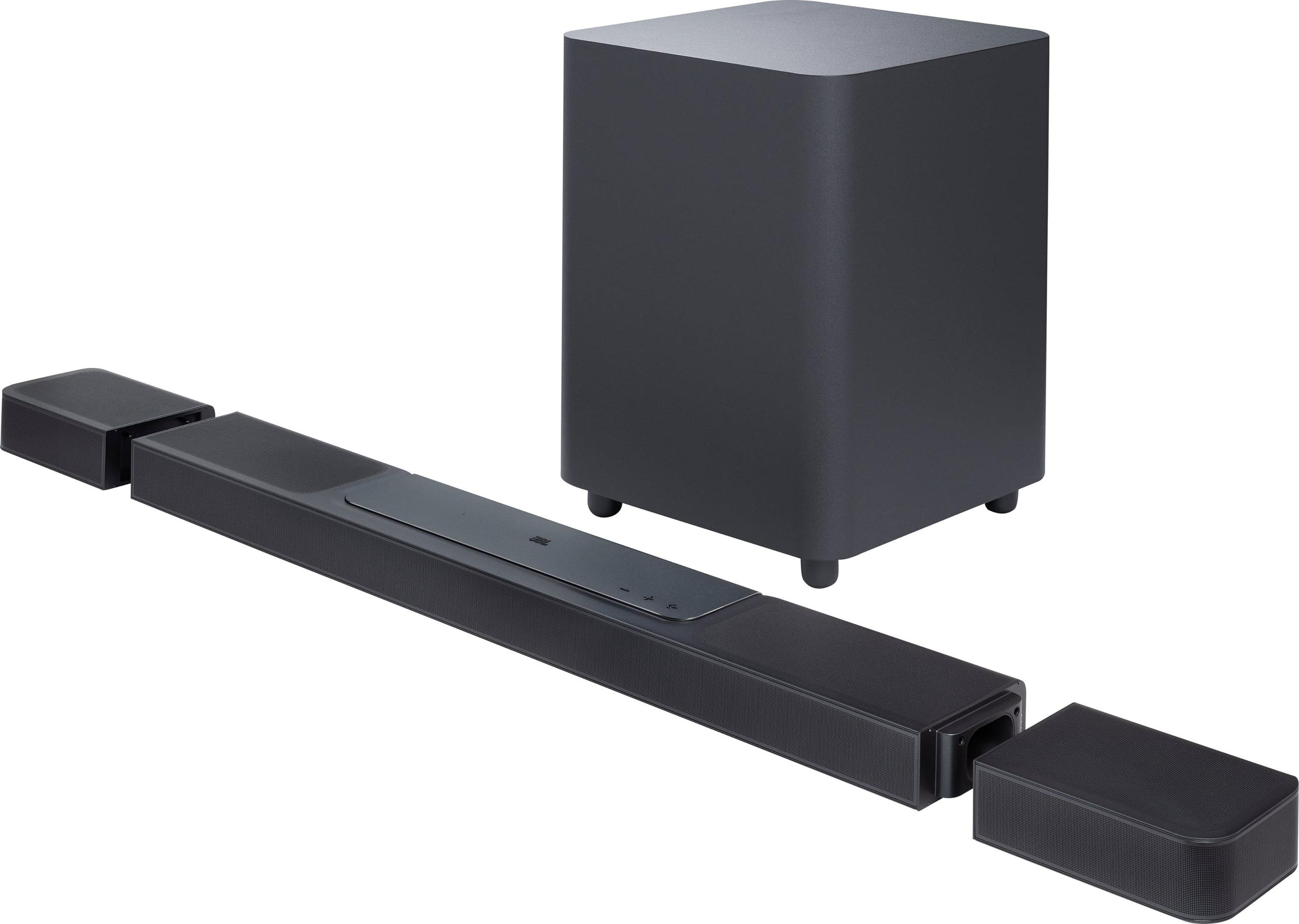
What makes this system revolutionary are the detachable wireless rear speakers. These battery-powered units can be placed anywhere in your room for true surround sound, then removed to become portable Bluetooth speakers for outdoor use. It's a clever solution to the age-old problem of running speaker wires across your living room.
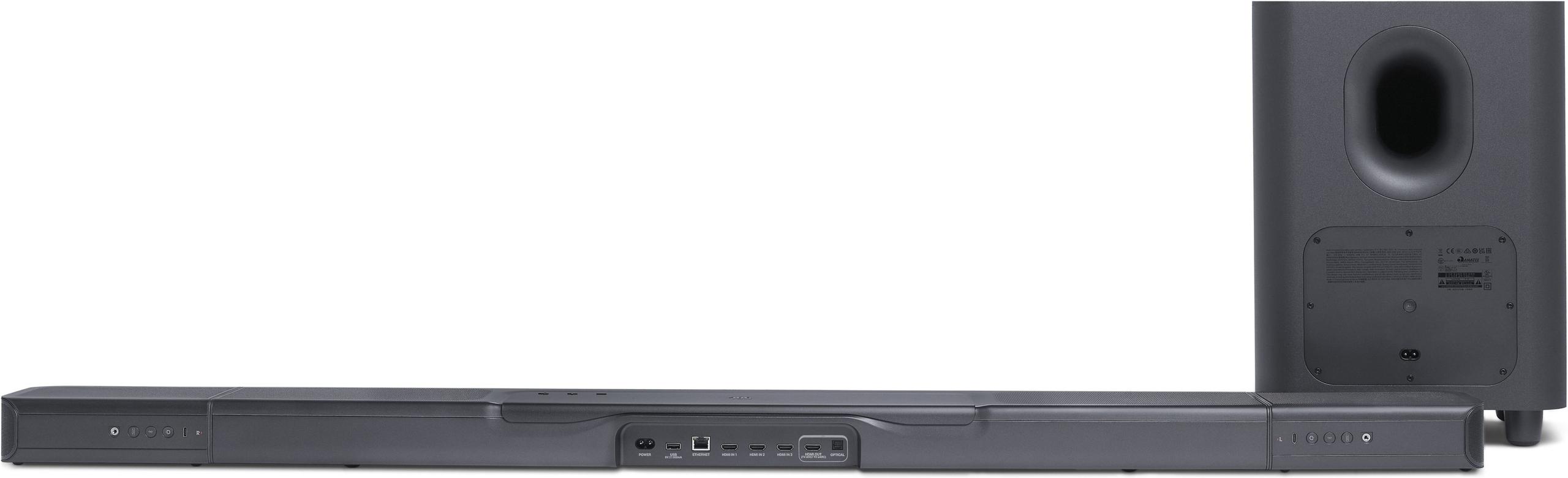
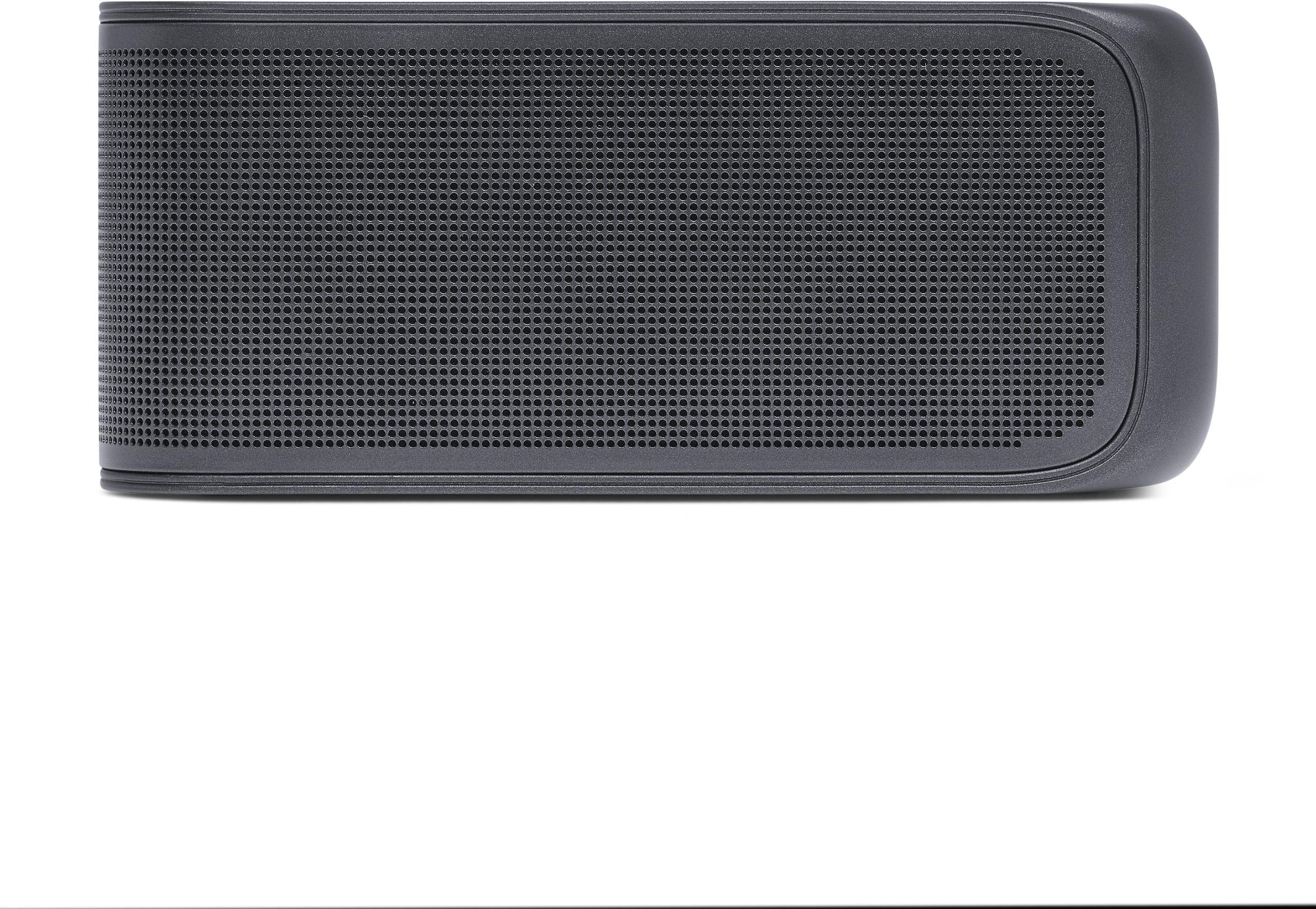
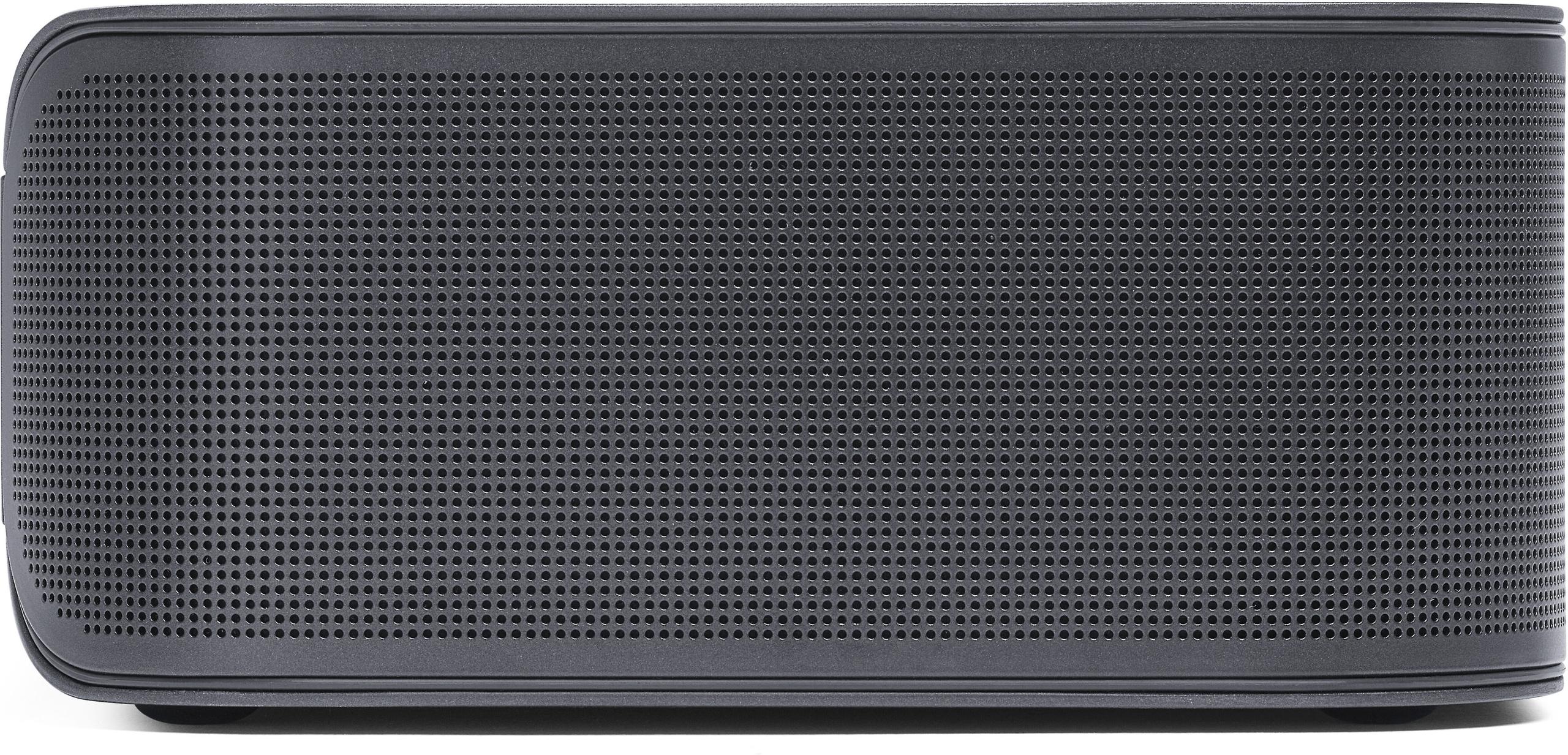
The main bar spans 54.2 inches and houses 11 individual speakers, including four upward-firing drivers that bounce sound off your ceiling to create height effects. Combined with the 12-inch wireless subwoofer and those detachable surrounds, you get an 11.1.4 channel system – that's 11 traditional speakers, 1 subwoofer, and 4 height channels.
Here's where these soundbars reveal their different personalities most clearly. The Bose Solo Series 2 treats dialogue clarity as its primary mission. Its frequency response curve is specifically shaped to enhance the 150Hz to 4kHz range where human speech lives. When you activate the dialogue enhancement mode, it further boosts these frequencies while slightly reducing competing sounds.
In my testing with news broadcasts and dialogue-heavy dramas, the Bose consistently delivered clearer speech than TV speakers, even at lower volumes. This matters more than you might think – being able to understand dialogue at neighborly volumes is crucial for apartment living or late-night viewing.
The JBL Bar 1300X takes a different approach with its PureVoice technology. Instead of just boosting speech frequencies, it uses digital signal processing (DSP) to isolate and clarify dialogue even when explosions and music are competing for attention. This works well, but the system's power can sometimes overwhelm dialogue in poorly mixed content. The discrete center channel (a dedicated speaker just for dialogue) helps, but the Bose's focused approach often wins for pure speech clarity.
This is where the fundamental difference between these systems becomes most apparent. The Bose Solo Series 2 simply cannot produce deep bass – physics won't allow it. Without a dedicated subwoofer, the small drivers max out around 80Hz, missing the rumbling low frequencies that make action scenes exciting or music feel full-bodied.
The JBL's 12-inch wireless subwoofer changes everything. Capable of reproducing frequencies down to 33Hz, it delivers the chest-thumping bass that makes movie soundtracks come alive. During action sequences, you'll feel explosions rather than just hearing them. Music gains depth and richness that the Bose simply cannot match.
However, this power comes with responsibility. In apartments or shared living situations, the JBL's bass can easily disturb neighbors. The Bose's lack of deep bass might actually be a feature for some users, not a limitation.
The Bose Solo Series 2 creates a surprisingly wide stereo image for its size, but it's still fundamentally a 2.0 system. You'll get left and right separation, but no true surround effects. For casual TV watching, this often suffices – many streaming shows are mixed in stereo anyway.
The JBL Bar 1300X operates in a different league entirely. With Dolby Atmos processing, it can take a movie soundtrack and distribute different sounds to different speakers throughout your room. Helicopters fly overhead using the upward-firing drivers, while those detachable rear speakers place ambient sounds behind you.
MultiBeam technology deserves special mention here. This proprietary JBL system uses digital processing to create virtual surround effects even without the rear speakers attached. While not as convincing as true surround sound, it significantly expands the apparent width and depth of the soundstage compared to traditional stereo.
Understanding how much power you actually need requires thinking about your room's size and layout. The Bose Solo Series 2's 100 watts work well in rooms up to about 300 square feet – think typical bedrooms, small apartments, or cozy living rooms. Beyond that size, you'll find yourself turning the volume higher and potentially hitting the limits of what those small drivers can cleanly reproduce.
The JBL Bar 1300X's 1,170 total watts can fill much larger spaces with authority. In testing, it comfortably handled a 500+ square foot great room without strain. The wireless subwoofer helps here – bass frequencies travel through walls and floors more effectively than higher frequencies, so that 300-watt sub can pressurize your entire living area.
Room acoustics matter too. Hard surfaces like tile floors and bare walls reflect sound, potentially creating harsh reflections with powerful systems. The JBL includes room calibration that uses built-in microphones to measure your space and adjust the sound accordingly. The Bose assumes average room conditions but generally sounds pleasant in most environments due to its gentler output.
Modern entertainment setups often involve multiple devices – gaming consoles, streaming boxes, Blu-ray players – and connectivity becomes crucial. The Bose Solo Series 2 keeps things basic with optical, coaxial, and Bluetooth inputs. This covers most TV connections, but you'll need to switch inputs on your TV rather than the soundbar.
The lack of HDMI means no advanced audio format support – you're limited to stereo or basic surround sound that gets downmixed to stereo. For many users, this isn't a problem since much streaming content is stereo anyway. Bluetooth connectivity works reliably for music streaming from phones or tablets.
The JBL Bar 1300X offers a completely different connectivity experience. HDMI eARC (enhanced Audio Return Channel) provides a two-way connection with your TV, allowing the soundbar to receive advanced audio formats while passing 4K HDR video to your display.
Three additional HDMI inputs mean you can connect devices directly to the soundbar, switching between them using the included remote. This setup supports the latest gaming console features like Variable Refresh Rate (VRR) and Auto Low Latency Mode (ALLM) – technical features that reduce input lag for competitive gaming.
Wi-Fi connectivity opens up streaming possibilities through AirPlay, Chromecast built-in, and direct access to music services. Voice assistant integration means you can ask Alexa or Google to play music directly to the soundbar without touching your phone.
The setup experience reveals each product's target audience clearly. The Bose Solo Series 2 arrives ready to work in minutes. Connect the included optical cable between your TV and soundbar, plug in power, and you're done. The remote provides volume, mute, and switching between dialogue/bass enhancement modes.
This simplicity extends to daily use. There's no app to configure, no software updates to manage, and no complex menus to navigate. It just works, every time. The auto-wake feature means it turns on automatically when your TV starts playing audio, then shuts off after an hour of silence.
The JBL Bar 1300X requires significantly more investment upfront. The JBL One app guides you through connecting to Wi-Fi, pairing the subwoofer and rear speakers, and running room calibration. This process takes 30-45 minutes but results in optimized sound for your specific room.
The rear speakers need charging (about 4 hours for 12 hours of use) and strategic placement for optimal surround effects. While they're wireless, finding the right spots often involves some trial and error. The reward is worth it – when properly positioned, they create convincing surround effects that transport you into movie scenes.
Regular software updates add new features and streaming service compatibility. While this keeps the system current, it also means occasionally dealing with update notifications and potential connectivity hiccups.
For dedicated home theater enthusiasts, these products serve very different roles. The Bose Solo Series 2 works best as a TV audio upgrade rather than a home theater centerpiece. It excels at making dialogue clearer during casual viewing but won't provide the visceral impact that makes action movies exciting.
The JBL Bar 1300X can genuinely serve as your main home theater system. With proper placement and calibration, it competes with traditional 5.1 or 7.1 speaker setups while offering much simpler installation. The Dolby Atmos processing creates convincing overhead effects, while the powerful subwoofer provides the low-frequency impact that makes soundtracks come alive.
Gaming deserves special mention with the JBL system. Modern games increasingly use sophisticated audio mixing, and the bar's ability to process these formats properly enhances gameplay immersion. The low input lag through HDMI connections keeps competitive gamers happy too.
At $199, the Bose Solo Series 2 represents exceptional value for its intended purpose. If your main goal is clearer TV dialogue without complexity, the price-to-performance ratio is hard to beat. You're paying for Bose's audio expertise and build quality, getting a product that will reliably improve your TV watching experience for years.
The JBL Bar 1300X at $1,300 requires a different value calculation. You're not just buying a soundbar – you're getting a complete home theater system, wireless music streaming setup, and portable speaker system (those detachable rears) all in one package. When compared to buying equivalent separate components, the pricing becomes more reasonable.
Consider that a quality 5.1 speaker system, AV receiver, and wireless subwoofer could easily cost $1,500+, require professional installation, and dominate your room visually. The JBL provides similar performance in a much more living-room-friendly package.
Choose the Bose Solo Series 2 if you primarily watch news, documentaries, or dialogue-heavy content in a smaller space. It's perfect for apartments where bass might disturb neighbors, bedrooms where simplicity matters, or as a secondary system in a kitchen or office. The plug-and-play setup appeals to users who want immediate improvement without ongoing complexity.
The JBL Bar 1300X makes sense for movie enthusiasts, gamers, or music lovers with larger rooms. If you regularly host movie nights, appreciate cinematic sound design, or want a system that can grow with changing technology, the investment pays off. The smart features and connectivity future-proof your purchase against evolving streaming standards.
Room size often decides between them. In spaces under 300 square feet, the Bose provides sufficient improvement without overwhelming the room. Larger spaces benefit from the JBL's power and room-filling capabilities.
These soundbars succeed by staying true to their different missions. The Bose Solo Series 2 solves the biggest TV audio problem – unclear dialogue – simply and affordably. The JBL Bar 1300X transforms your entire entertainment experience with true home theater immersion.
Neither product is objectively better – they're optimized for different users and use cases. The Bose excels where simplicity and dialogue clarity matter most, while the JBL delivers cinematic excitement for those willing to invest in setup and premium features.
Your choice should align with how you actually use your entertainment system, not aspirational goals about becoming a home theater enthusiast. Be honest about your viewing habits, room constraints, and technical comfort level. Both products deliver on their promises – just very different promises that serve distinct needs in the modern home.
| Bose Solo Soundbar Series 2 ($199) | JBL Bar 1300X ($1,300) |
|---|---|
| Audio Channels - Determines surround sound capability | |
| 2.0-channel stereo (left/right only) | 11.1.4-channel with true surround and height effects |
| Total Power Output - Affects room coverage and volume | |
| 100W (suitable for rooms up to 300 sq ft) | 1,170W (fills large rooms 500+ sq ft with authority) |
| Subwoofer Included - Essential for bass impact in movies/music | |
| No subwoofer (limited bass below 80Hz) | 12-inch wireless subwoofer (300W, down to 33Hz) |
| Dolby Atmos Support - Creates 3D overhead sound effects | |
| Not supported (stereo only) | Full Dolby Atmos and DTS:X processing |
| HDMI Connectivity - Required for advanced audio formats and 4K passthrough | |
| No HDMI (optical/Bluetooth only) | HDMI eARC + 3 additional HDMI inputs with 4K/HDR |
| Setup Complexity - Time investment vs performance trade-off | |
| 5-minute plug-and-play via optical cable | 30-45 minute setup with app calibration and speaker placement |
| Smart Features - Streaming and voice control capabilities | |
| Basic Bluetooth only | Wi-Fi, AirPlay, Chromecast, voice assistant integration |
| Dimensions - Space requirements for your entertainment center | |
| 21.6" W x 2.8" H (fits under most TVs) | 54.2" W main bar + separate subwoofer and rear speakers |
| Unique Features - Standout capabilities that justify the price | |
| Dialogue enhancement mode for crystal-clear speech | Detachable wireless rear speakers double as portable Bluetooth speakers |
| Best Use Case - Who should buy each product | |
| Small rooms, dialogue clarity priority, simple operation | Large rooms, movie enthusiasts, full home theater experience |
The Bose Solo Soundbar Series 2 ($199) is ideal for small rooms under 300 square feet. Its compact 21.6-inch design fits easily under most TVs, and the 100W power output provides clear audio without overwhelming smaller spaces. The JBL Bar 1300X ($1,300) is designed for larger rooms and may produce too much bass for apartments or bedrooms.
The primary difference is complexity and performance level. The Bose Solo Series 2 is a simple 2.0-channel stereo soundbar focused on dialogue clarity, while the JBL Bar 1300X is a complete 11.1.4-channel home theater system with wireless subwoofer, detachable surround speakers, and Dolby Atmos support.
The JBL Bar 1300X has significantly better bass with its included 12-inch wireless subwoofer that delivers 300W of power down to 33Hz. The Bose Solo Series 2 has no subwoofer and limited bass response, making it unsuitable for bass-heavy music or action movies.
The Bose Solo Soundbar Series 2 costs $199, making it an affordable entry-level option. The JBL Bar 1300X is priced at $1,300, reflecting its premium features and complete home theater system components.
The Bose Solo Series 2 offers plug-and-play setup in about 5 minutes using the included optical cable. The JBL Bar 1300X requires 30-45 minutes for initial setup, including Wi-Fi connection, subwoofer pairing, rear speaker placement, and room calibration through the JBL One app.
No, only the JBL Bar 1300X supports Dolby Atmos and DTS:X for immersive 3D audio with overhead sound effects. The Bose Solo Series 2 is limited to stereo audio and cannot process advanced surround sound formats.
The Bose Solo Soundbar Series 2 excels at dialogue clarity with its dedicated dialogue enhancement mode and frequency tuning optimized for human speech. While the JBL Bar 1300X has PureVoice technology and a center channel, the Bose's focused approach often delivers clearer speech at lower volumes.
The Bose Solo Series 2 provides basic connectivity with optical, coaxial, and Bluetooth inputs. The JBL Bar 1300X offers extensive connectivity including HDMI eARC, three additional HDMI inputs, Wi-Fi, Bluetooth, AirPlay, and Chromecast built-in for streaming services.
The JBL Bar 1300X is specifically designed for home theater with its 11.1.4-channel system, wireless subwoofer, detachable surround speakers, and support for cinematic audio formats. The Bose Solo Series 2 is better suited for casual TV watching rather than immersive movie experiences.
The Bose Solo Series 2 outputs 100W total power, suitable for smaller rooms and moderate listening levels. The JBL Bar 1300X delivers 1,170W total system power (650W soundbar + 300W subwoofer + 220W surrounds), providing room-filling audio for large spaces.
The Bose Solo Soundbar Series 2 only offers basic Bluetooth connectivity for music streaming. The JBL Bar 1300X includes comprehensive wireless features: Wi-Fi streaming, wireless subwoofer, detachable battery-powered surround speakers, and smart home integration with voice assistants.
Value depends on your needs. The Bose Solo Series 2 ($199) offers excellent value for basic TV audio improvement and dialogue clarity. The JBL Bar 1300X ($1,300) provides better value for those wanting a complete home theater system, considering the cost of buying equivalent separate components would exceed its price.
We've done our best to create useful and informative comparisons to help you decide what product to buy. Our research uses advanced automated methods to create this comparison and perfection is not possible - please contact us for corrections or questions. These are the sites we've researched in the creation of this article: rtings.com - bose.com - bose.com - assets.bose.com - bestbuy.com - youtube.com - pistonheads.com - costco.com - googlenestcommunity.com - youtube.com - discussions.apple.com - techradar.com - jbl.com - audioadvice.com - youtube.com - rtings.com - jbl.com - greentoe.com - harmanaudio.com - youtube.com - mm.jbl.com - jbl.com

Privacy Policy
Terms and Conditions - Affiliate Policy
Home Security
© Copyright 2008-2026.
11816 Inwood Rd #1211, Dallas, TX 75244