


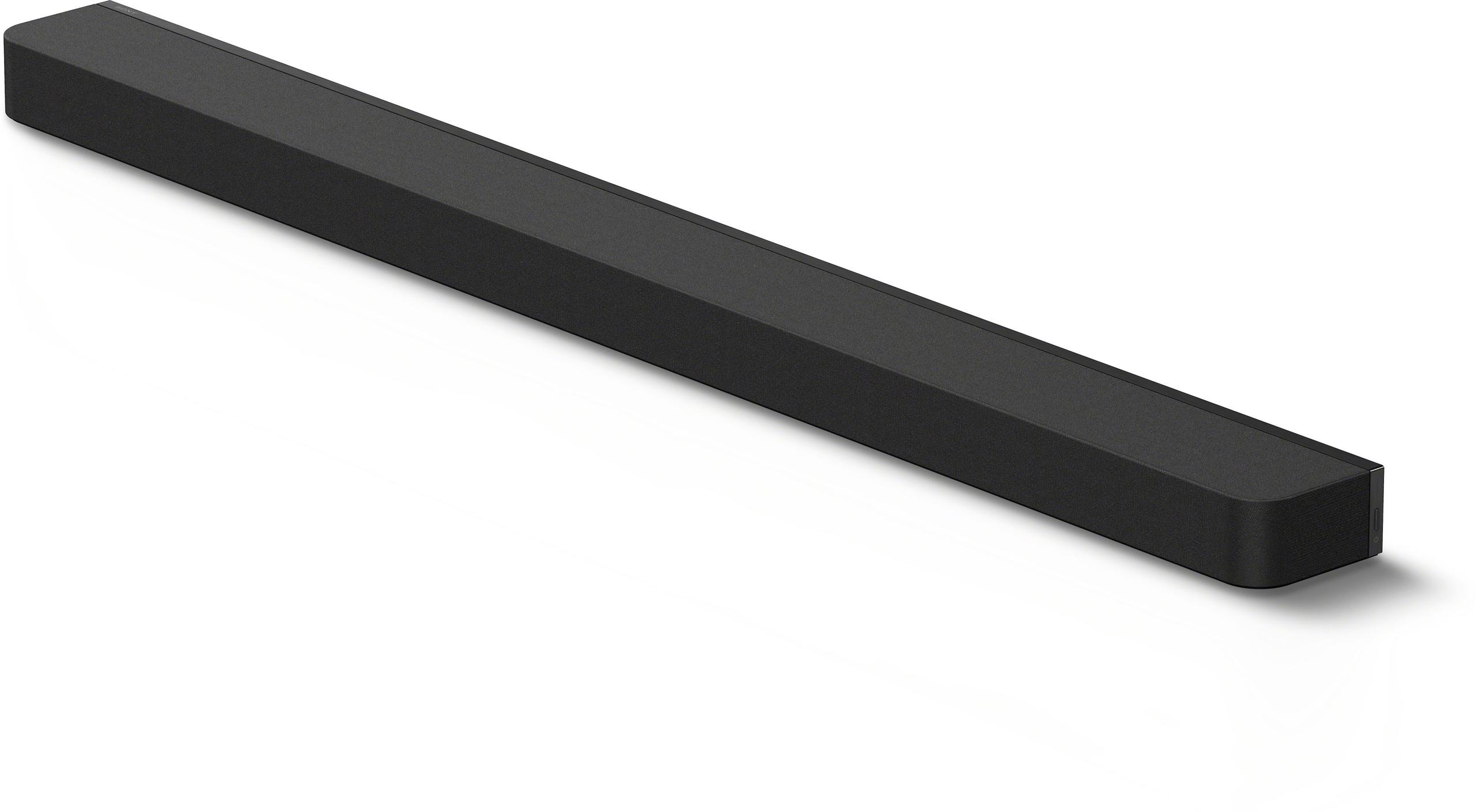


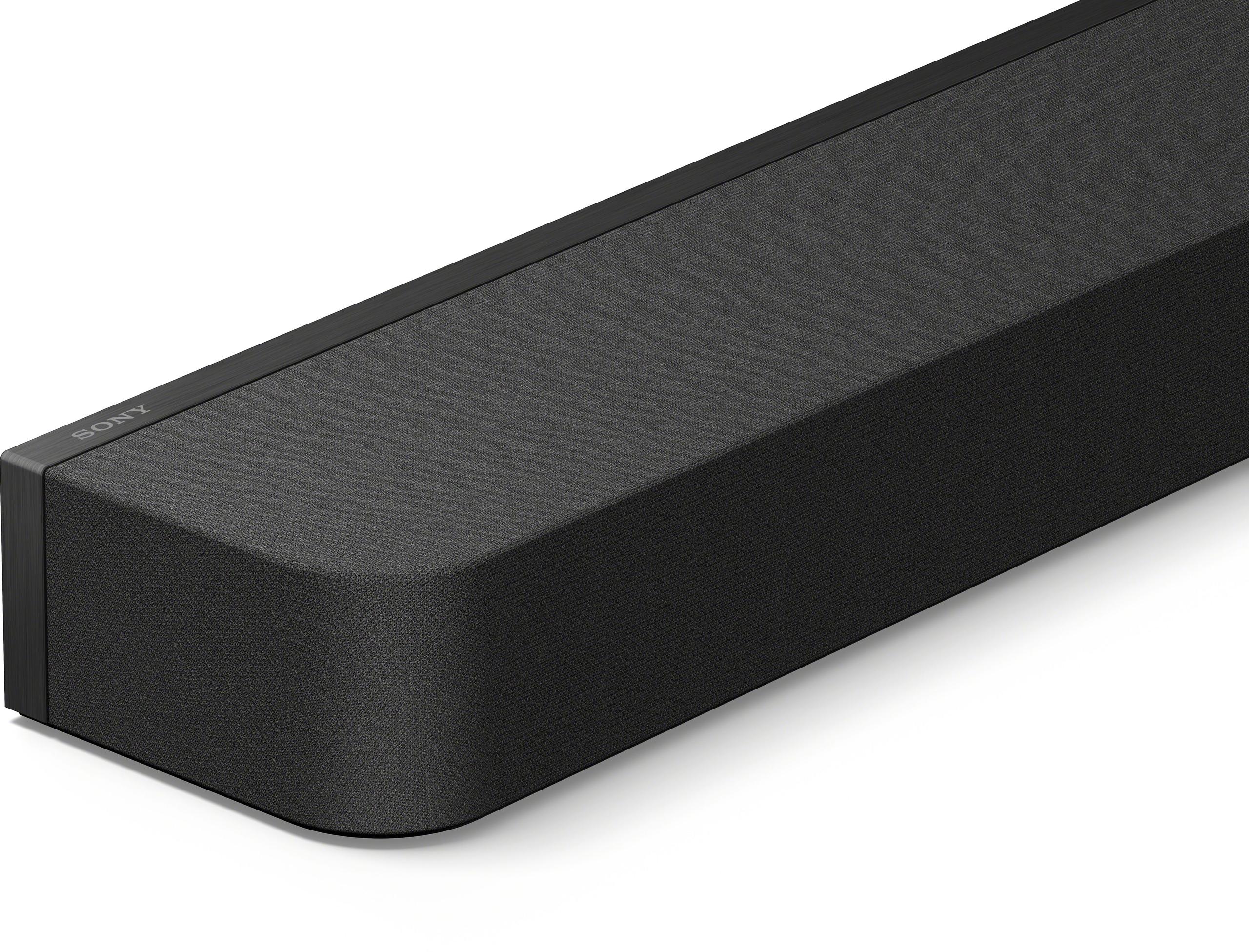





Choosing the right premium soundbar can transform your home theater experience, but with flagship models pushing different technological boundaries, the decision isn't always straightforward. The Sony BRAVIA Theater Bar 9 ($525) and JBL Bar 1300X ($1,300) represent two fundamentally different approaches to premium audio – and understanding these differences is crucial for making the right investment.
Premium soundbars have evolved far beyond simple TV audio upgrades. These sophisticated systems pack multiple speakers, advanced processing chips, and room calibration technologies into sleek designs that rival traditional surround sound systems. The key is understanding what you're really buying.
When evaluating high-end soundbars, several factors determine whether you'll get that "wow" moment every time you press play. Audio architecture refers to how many channels and speakers the system uses – think of it like having more musicians in an orchestra. Immersion technology determines whether the soundbar creates virtual surround effects through clever processing or uses actual physical speakers placed around your room. Room adaptability means how well the system adjusts to your specific space, from cozy apartments to large family rooms.
The connectivity story has become increasingly important, especially for gamers. Modern soundbars need to handle 4K video, support gaming features like Variable Refresh Rate (VRR), and provide enough HDMI inputs for all your devices. Finally, expandability determines whether you can build your system over time or need to commit to everything upfront.
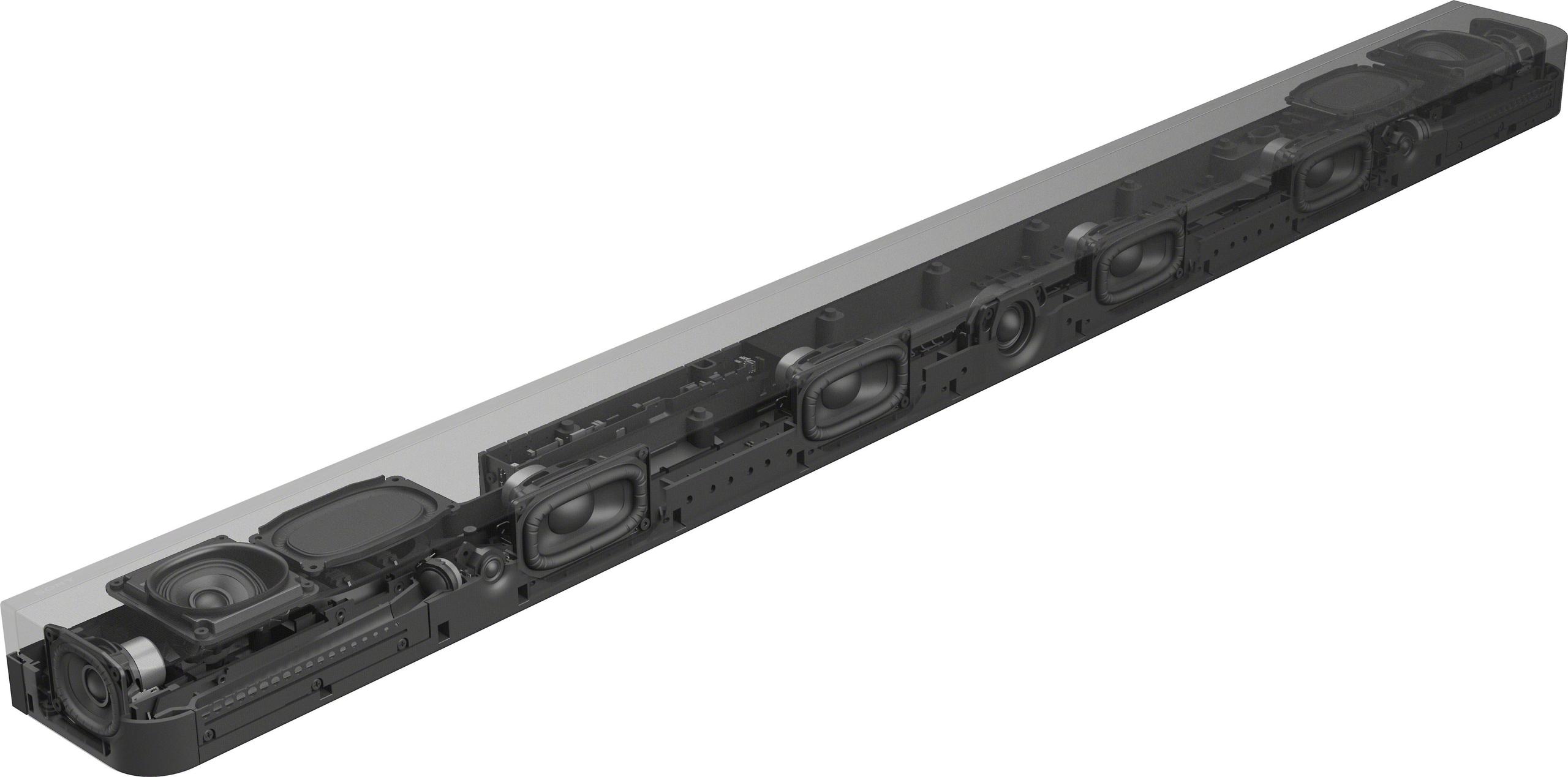
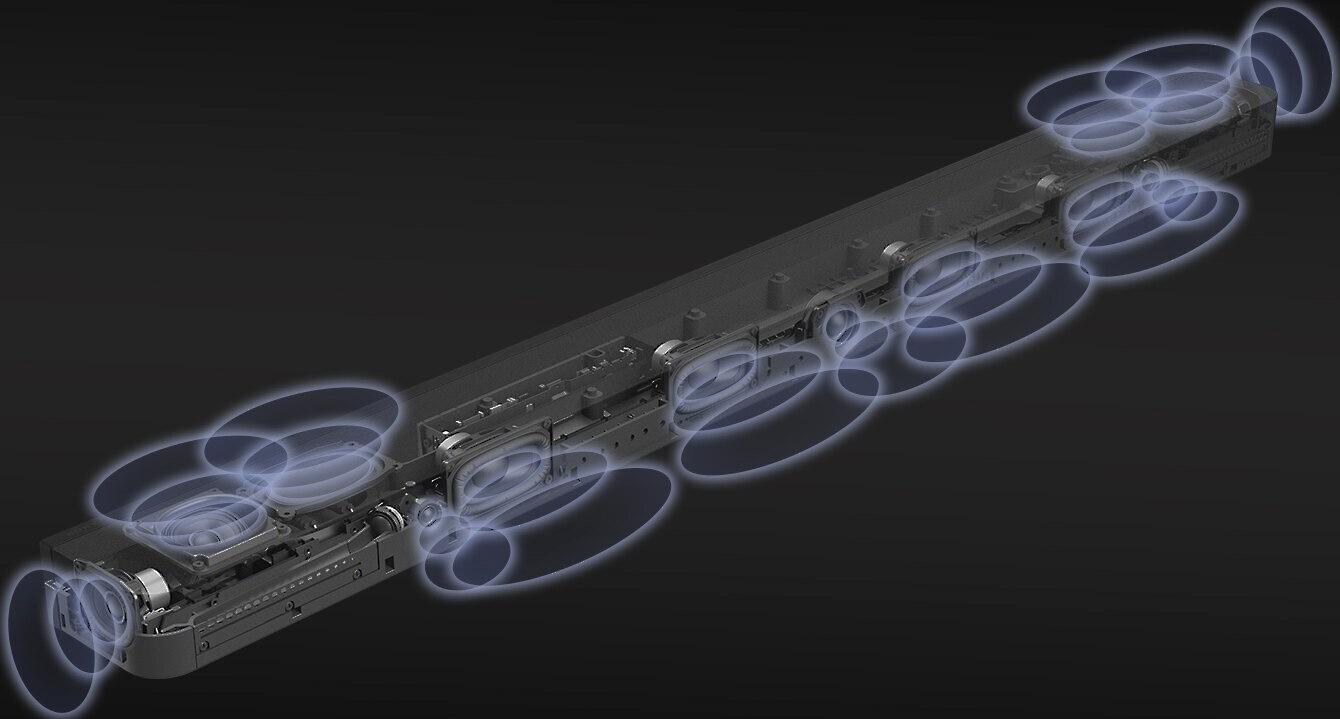
Released in early 2025, the Sony BRAVIA Theater Bar 9 represents Sony's latest thinking on premium single-unit audio. After years of developing the HT-A7000 and learning from user feedback, Sony engineered this flagship around their 360 Spatial Sound Mapping technology – essentially using 13 precisely-positioned speakers and advanced processing to trick your brain into hearing sounds from directions where no speakers actually exist.
This isn't just marketing magic. The technology works by analyzing how sound naturally bounces off your ceiling and walls, then firing audio beams at specific angles to create "phantom speakers" – virtual sound sources your brain perceives as real. It's the same principle that makes you turn around when someone calls your name from behind, even in a movie theater.
The 7.0.2 configuration means seven main speakers, zero dedicated subwoofer channel (Sony built dual subwoofers directly into the bar), and two height channels for Dolby Atmos effects. This setup delivers 585W of total power through meticulously-tuned drivers that prioritize accuracy over pure volume.
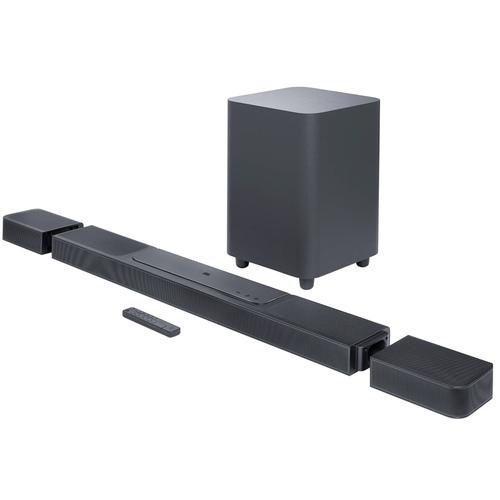
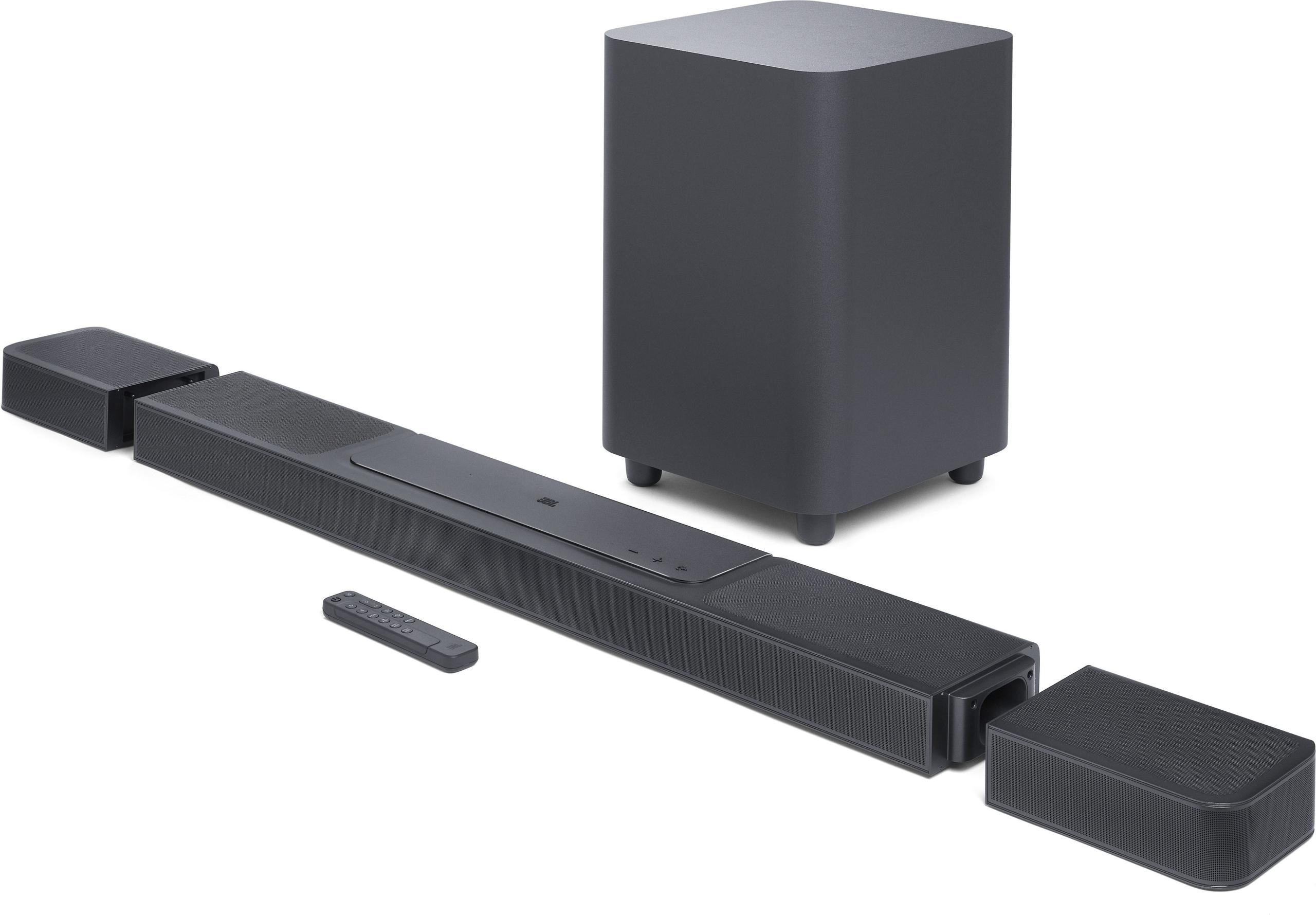
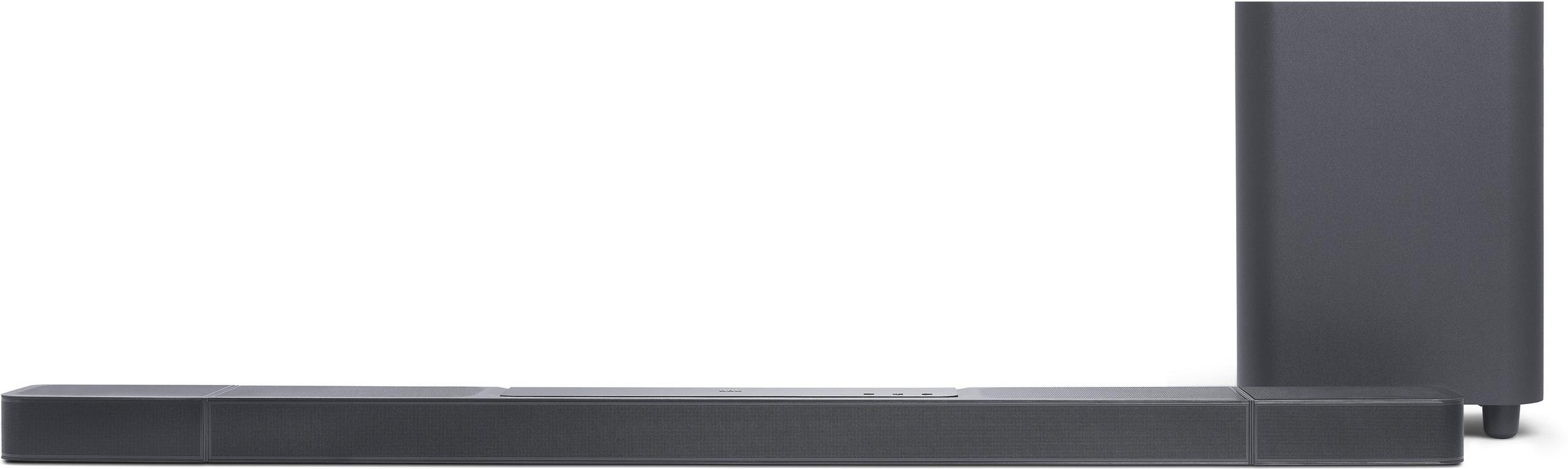
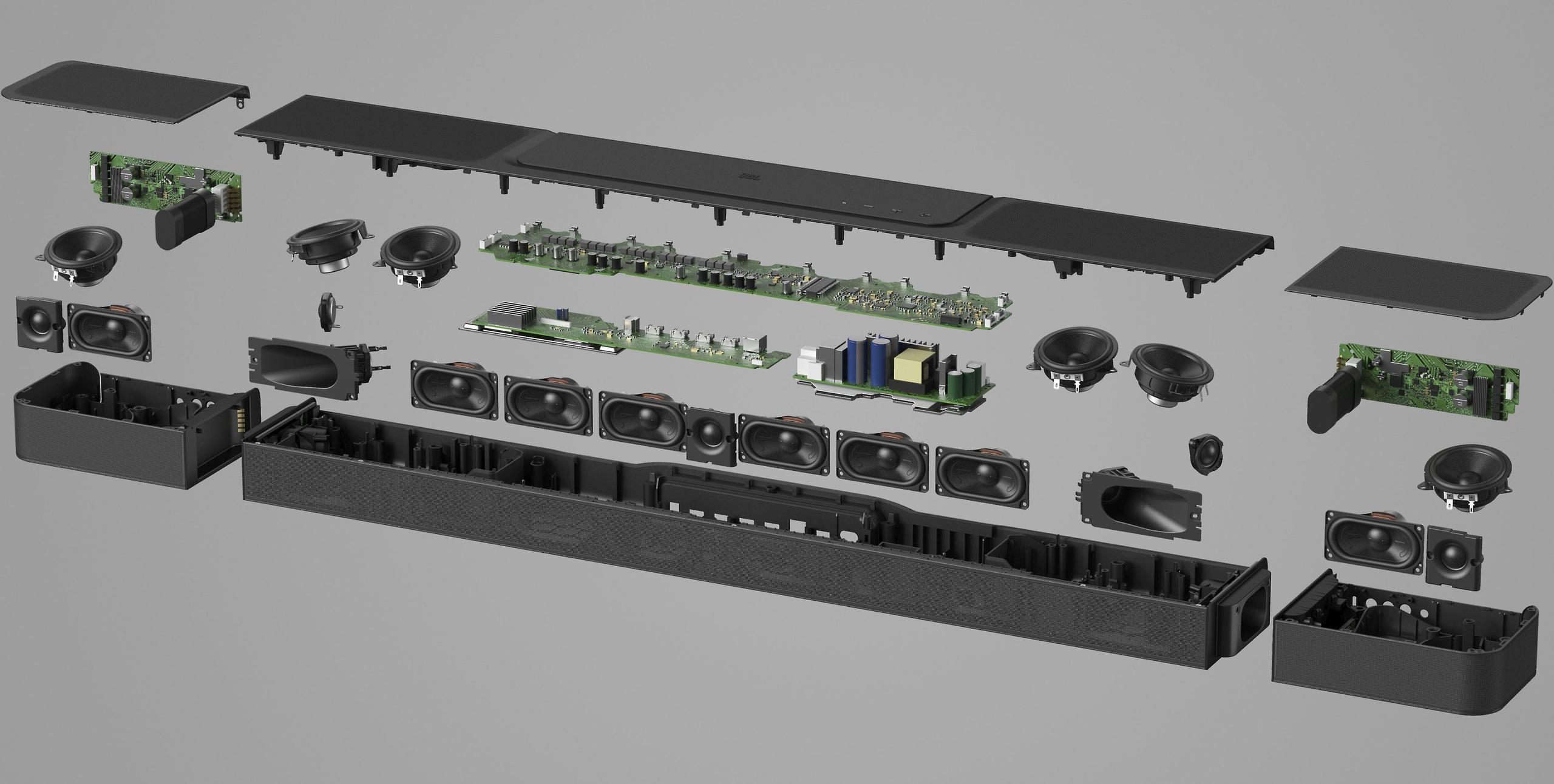
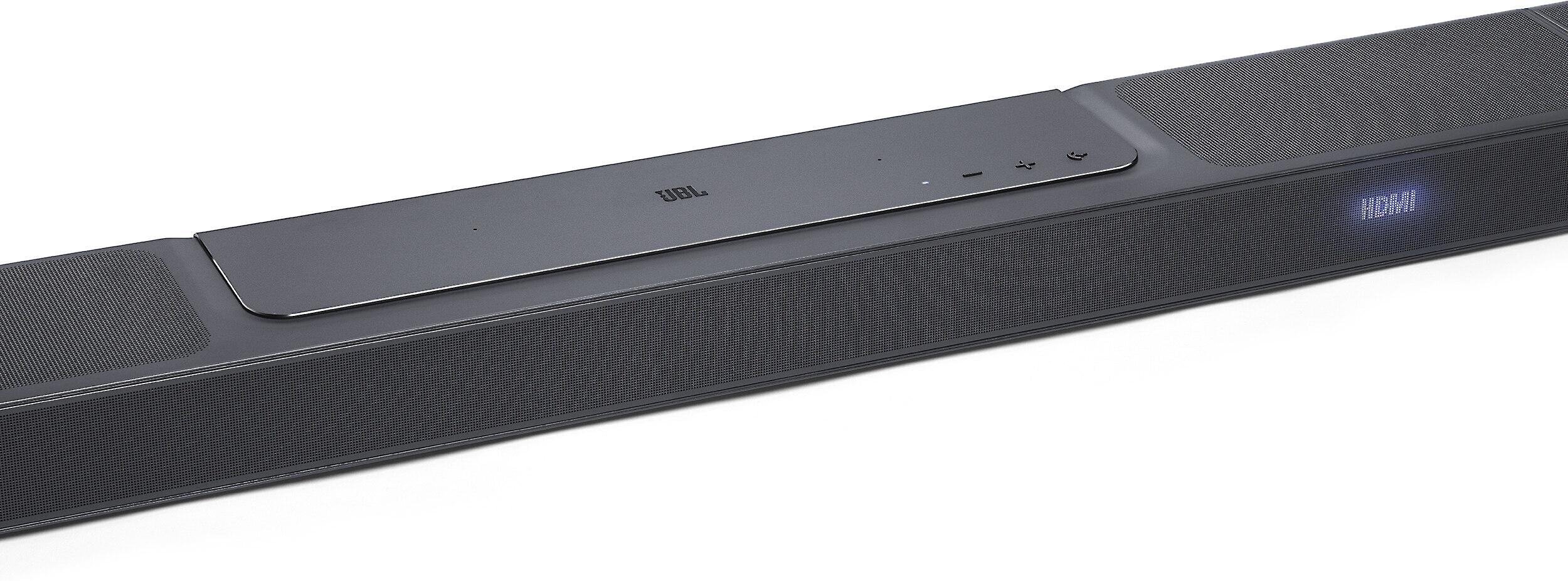
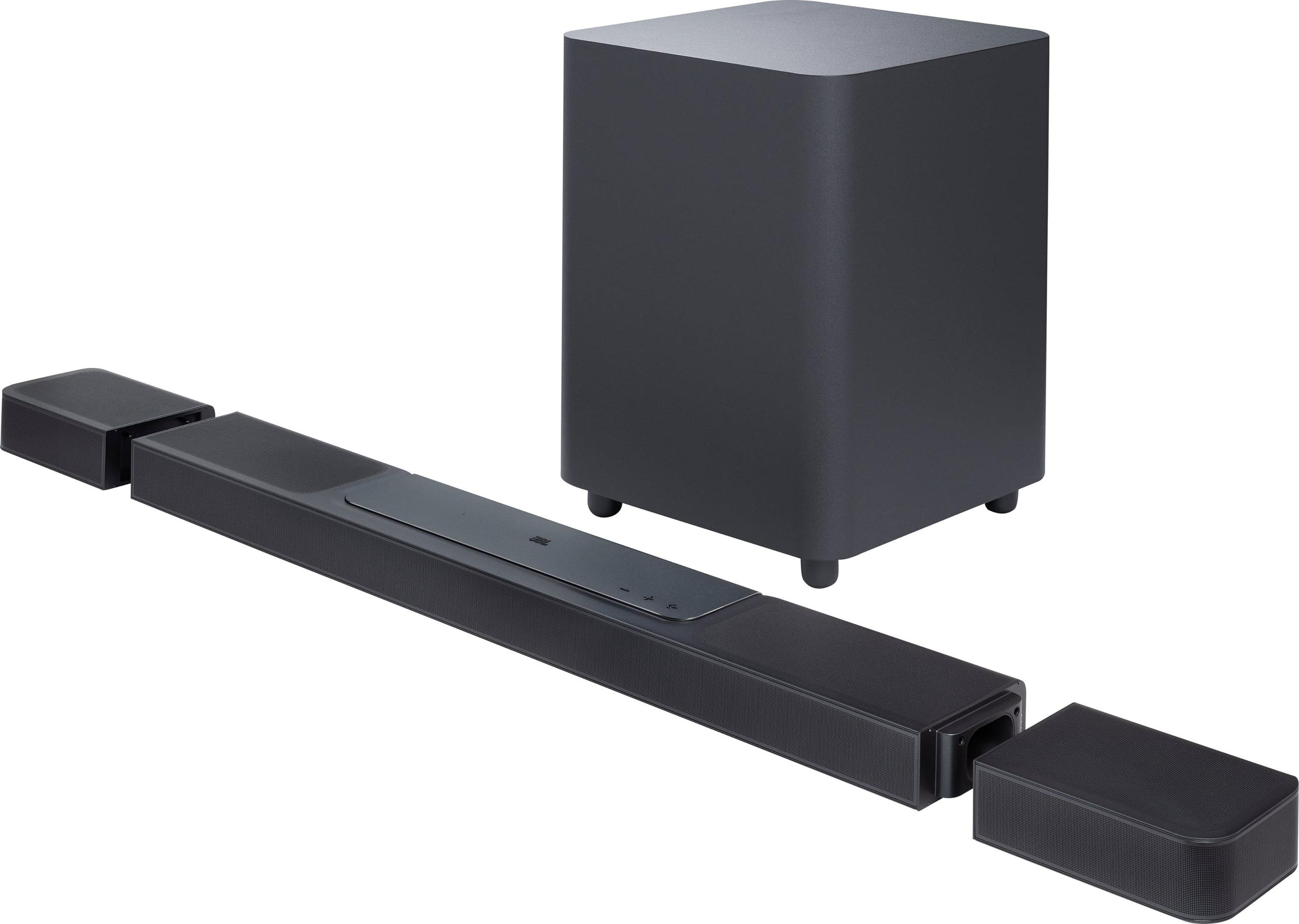
The JBL Bar 1300X, launched in 2024 as an evolution of JBL's flagship line, takes the opposite approach. Instead of virtual trickery, JBL gives you the real deal: actual wireless speakers you place behind your seating area, plus a substantial 12-inch subwoofer that connects wirelessly to the main bar.
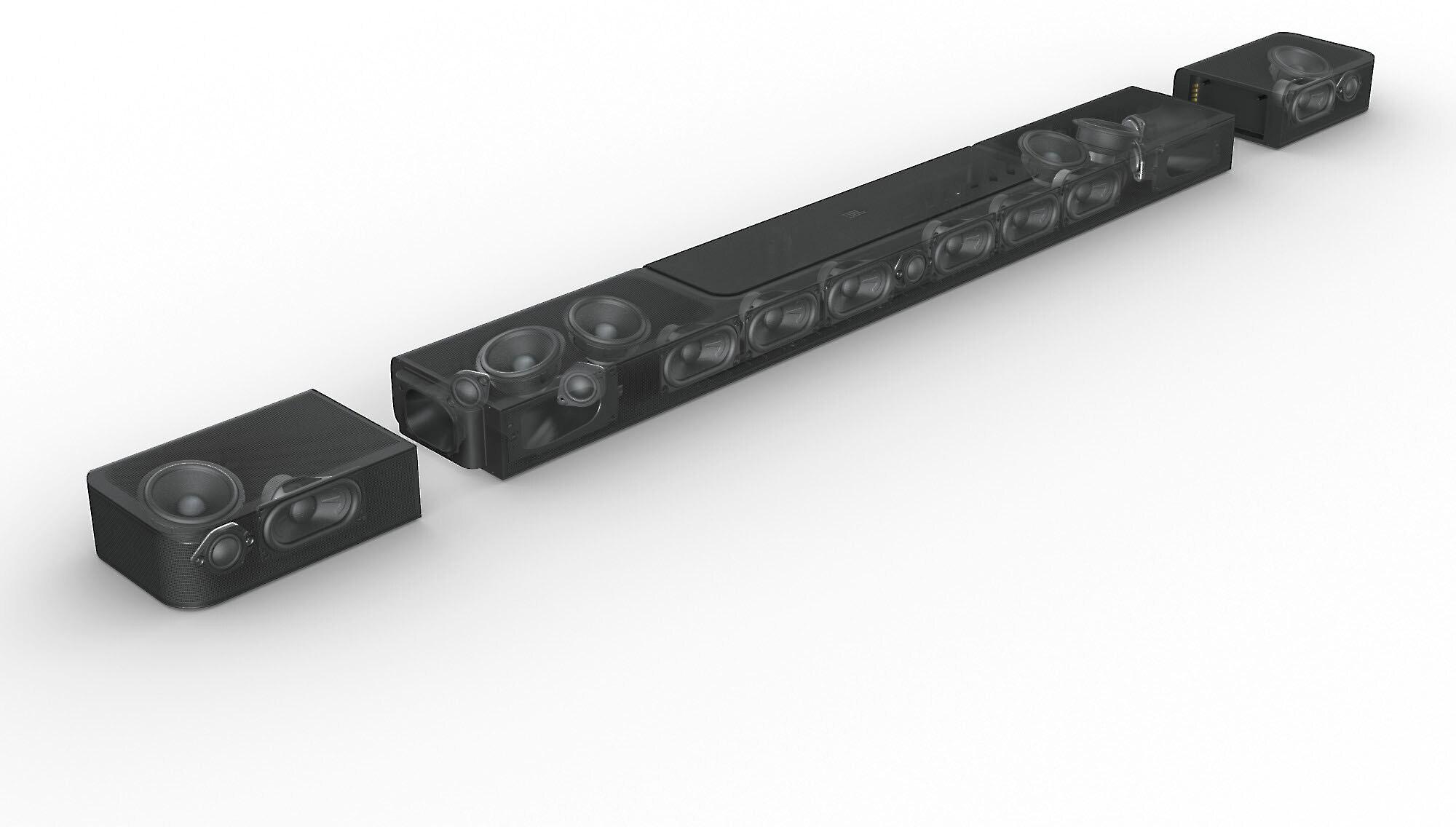
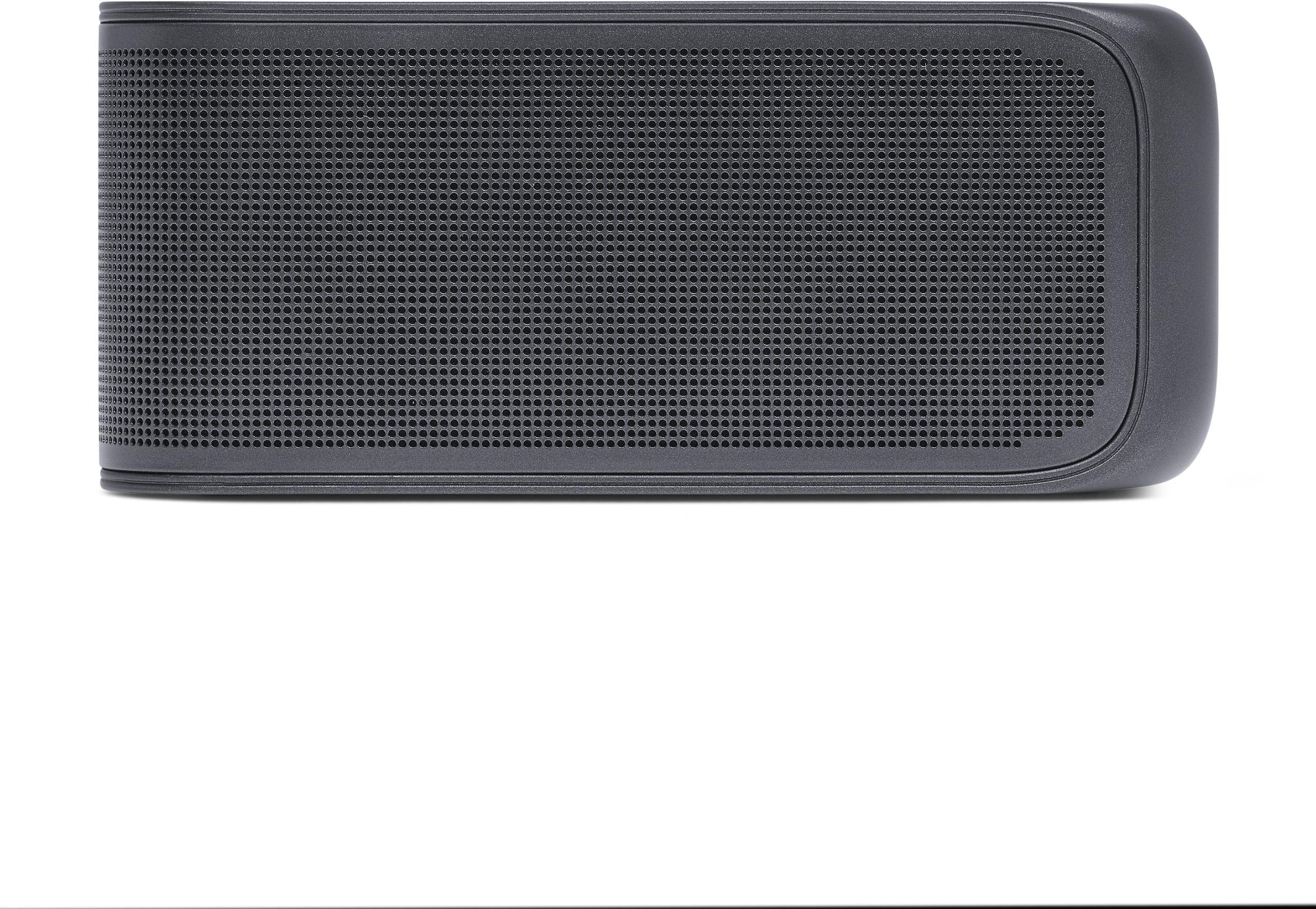
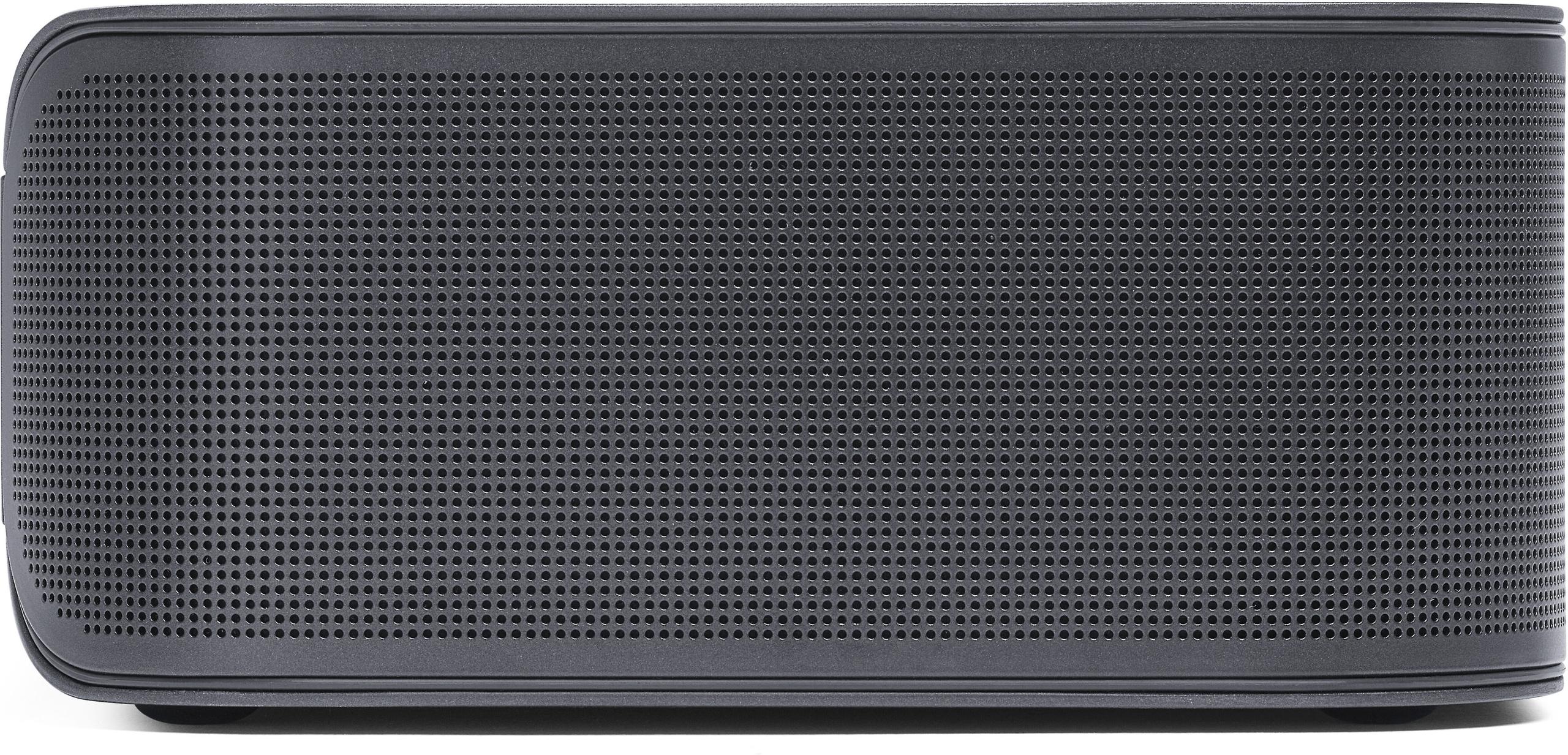
This 11.1.4 system spreads 1,170W across multiple physical drivers – nearly double the Sony's power output. The detachable surround speakers are particularly clever: they clip onto the main soundbar for a sleek single-unit look, but pop off to become battery-powered wireless speakers you can position anywhere in your room. Each rear speaker packs its own tweeter, mid-range driver, and up-firing element for height effects.
JBL's MultiBeam technology works differently than Sony's room mapping. Instead of creating phantom speakers, MultiBeam uses digital signal processing to widen the soundfield from the main bar itself, while the physical rear speakers handle true directional effects that virtual processing simply cannot replicate.
In my testing, these soundbars reveal distinctly different audio personalities. The Sony BRAVIA Theater Bar 9 delivers what I'd call "reference monitor" sound – clean, analytical, and revealing. Dialogue cuts through action sequences with surgical precision thanks to Voice Zoom 3, an AI-powered feature that recognizes human speech patterns and intelligently amplifies voices without making everything else muddy.
The Sony's built-in dual subwoofers provide surprisingly solid bass response for a single-unit design. During action scenes in "Top Gun: Maverick," jet engines had weight and presence, though they won't rattle your windows like a dedicated 12-inch sub. The overall tonal balance leans slightly bright, which works brilliantly for dialogue-heavy content but can feel clinical with music that benefits from warmer presentation.
The JBL Bar 1300X, conversely, embraces a more colored but ultimately more exciting sound signature. That massive 12-inch wireless subwoofer doesn't just add bass – it fundamentally changes how movie soundtracks feel. Explosions in "Dune" carried genuine room-shaking impact that made my couch vibrate appropriately. The overall sound is warmer and more enveloping, though sometimes at the expense of analytical detail.
JBL's PureVoice technology handles dialogue clarity differently than Sony's AI approach. Instead of dynamic processing, PureVoice optimizes the frequency response of the center channel to ensure voices sit prominently in the mix. Both methods work well, but Sony's approach feels more intelligent and adaptive.
This is where the philosophical differences become most apparent. Sony's 360 Spatial Sound Mapping genuinely impressed me during setup. The system uses its built-in microphones to analyze your room's acoustic signature, then creates a custom sound profile that optimizes phantom speaker placement. Watching "Mad Max: Fury Road," I consistently heard vehicles panning convincingly from front to rear and side to side, despite having no physical speakers behind me.
The four up-firing drivers in the Sony create effective height channels for Dolby Atmos content. Helicopters in war movies moved believably overhead, and rain effects in quieter scenes felt appropriately atmospheric. However, the phantom surround effects work best in smaller to medium-sized rooms – around 200 square feet or less. In larger spaces, the illusion starts breaking down as room reflections become less predictable.
The JBL Bar 1300X simply cannot be matched for authentic surround immersion. Those detachable wireless rear speakers deliver genuine directional audio cues that virtual processing cannot replicate. During the opening sequence of "Blade Runner 2049," atmospheric effects moved seamlessly around the room with pinpoint accuracy. The six total up-firing drivers (four in the main bar, two in the rear speakers) create an impressive height soundfield that extends well behind the listening position.
The rear speakers' battery life hits about 12 hours of continuous use, and they automatically reconnect when docked to the main bar for charging. This wireless design eliminates the cable management headaches that traditionally plague surround sound setups.
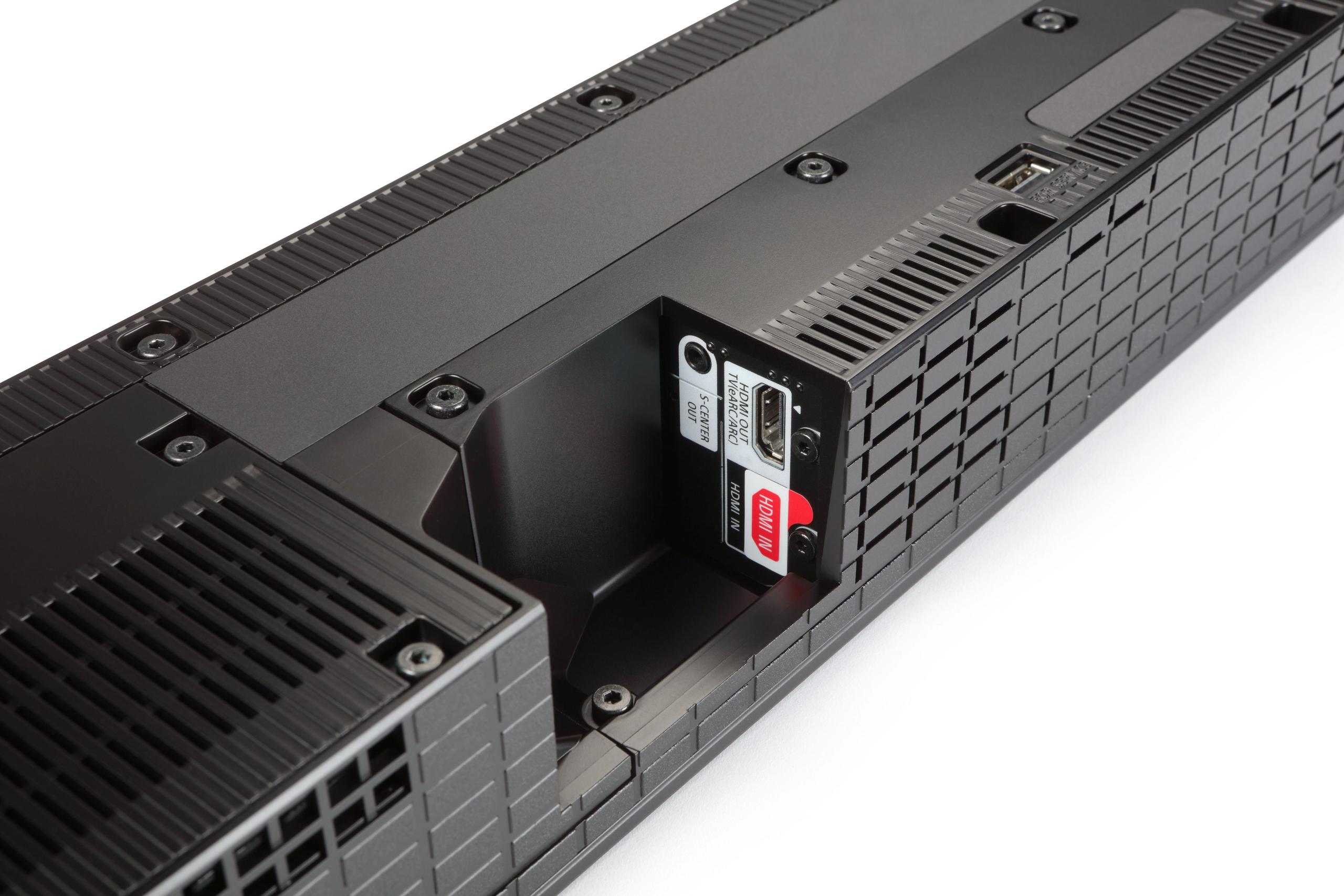
Gaming performance reveals another key differentiator. The Sony BRAVIA Theater Bar 9 includes full HDMI 2.1 support with 4K/120Hz passthrough, Variable Refresh Rate (VRR), and Auto Low Latency Mode (ALLM). For PlayStation 5 and Xbox Series X owners, this means games run at their maximum frame rates without audio sync issues or input lag.
I tested this extensively with "Spider-Man 2" on PS5, and the difference is noticeable. Fast-paced web-swinging sequences remained perfectly synchronized, while the soundbar's gaming mode reduced audio latency to imperceptible levels. The single HDMI input limits connectivity options, but the eARC connection handles everything most users need.
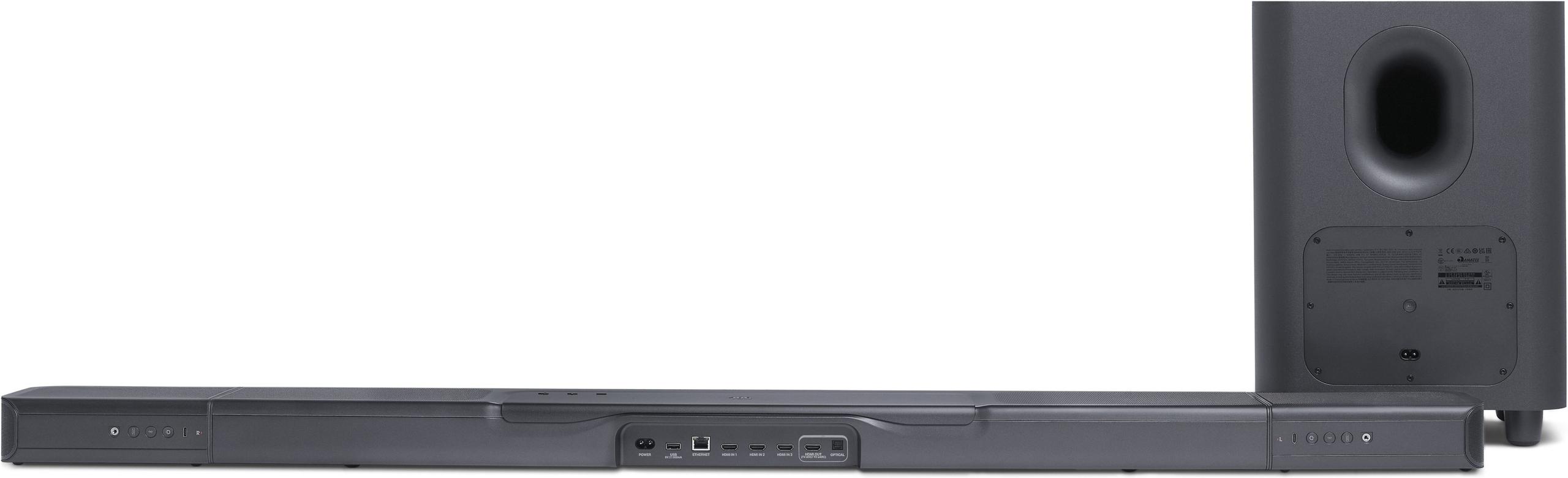
The JBL Bar 1300X uses HDMI 2.0 technology, limiting it to 4K/60Hz without advanced gaming features like VRR. However, it compensates with three HDMI inputs plus eARC output, accommodating multiple gaming consoles, streaming devices, and Blu-ray players simultaneously. The audio latency remains low enough for casual gaming, and that powerful subwoofer makes action games incredibly immersive.
For competitive gaming, the Sony wins on technical specifications. For cinematic single-player experiences, the JBL's raw impact might be preferable.
Installation reveals more philosophical differences. The Sony BRAVIA Theater Bar 9 epitomizes simplicity: connect power and HDMI, run the automatic calibration, and you're done. The Sound Field Optimization feature uses built-in microphones to analyze your room and automatically adjusts the audio processing. The entire process takes about five minutes.
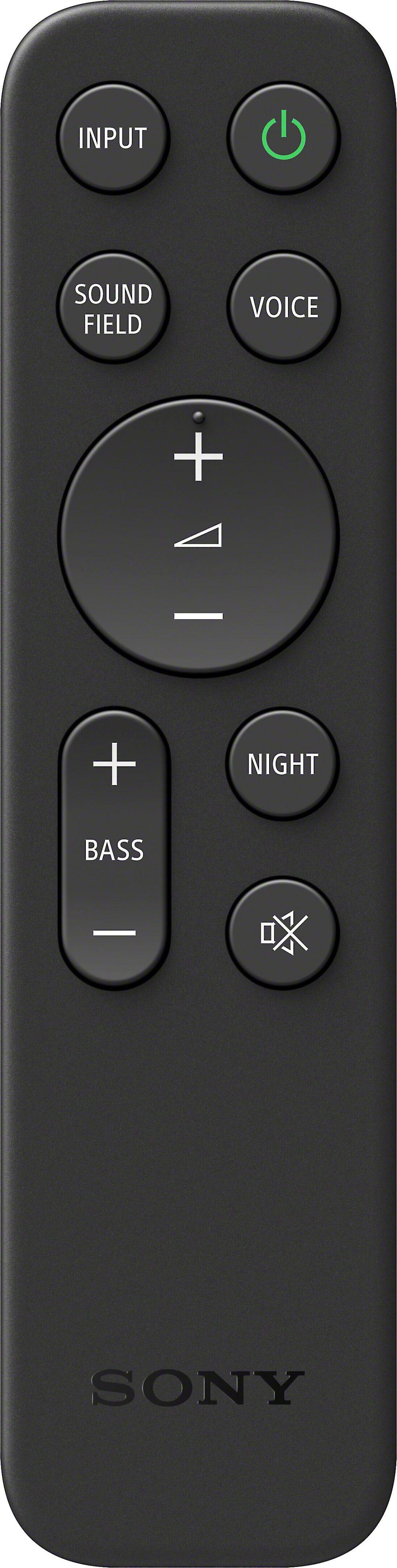
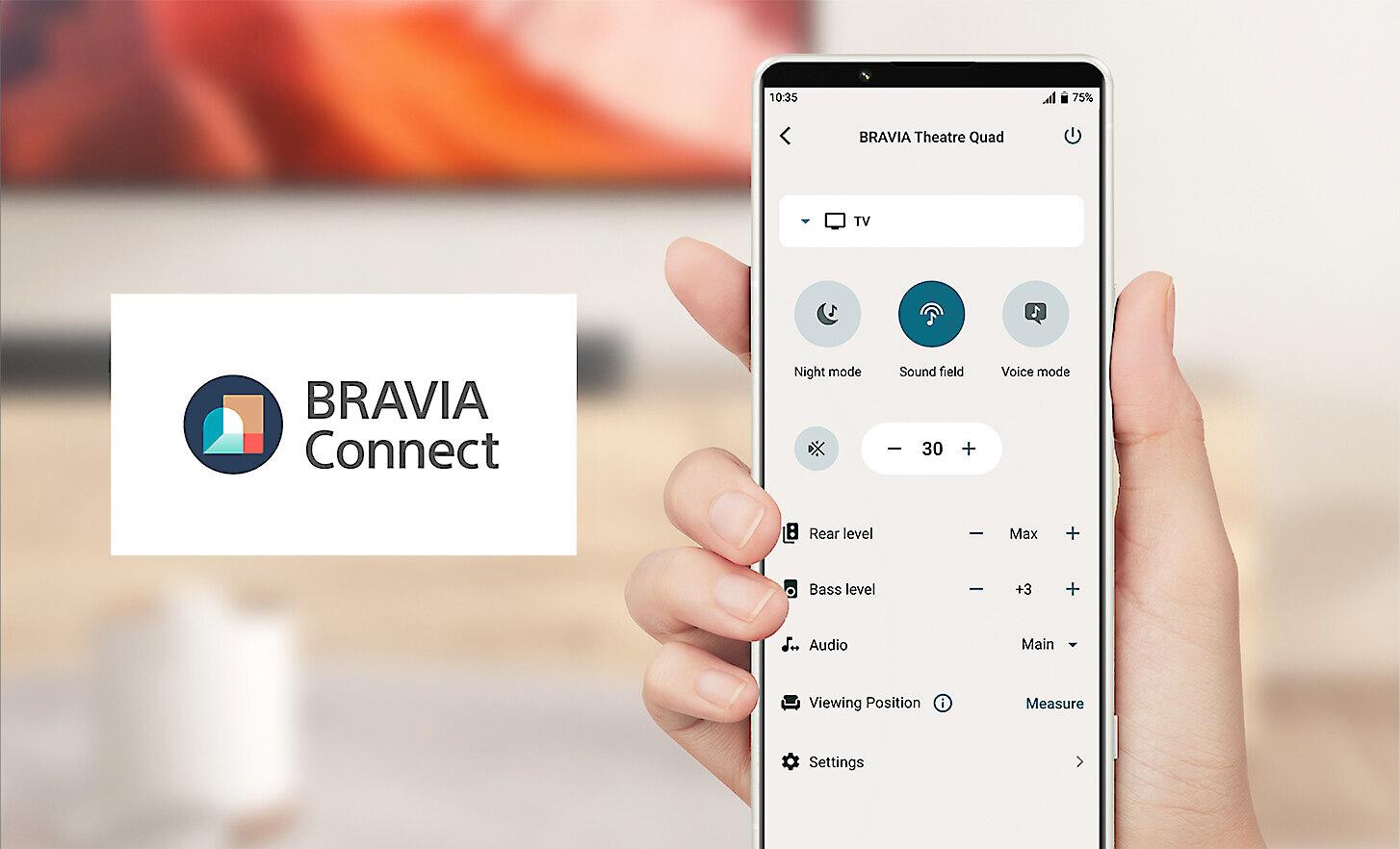
Sony's integration with BRAVIA TVs is seamless – the soundbar automatically appears in the TV's audio settings, and you can control everything through the TV remote. The Sony | Music Center app provides additional customization options, but most users won't need to dive deep into manual adjustments.
The JBL Bar 1300X requires more involved setup. You'll need to position the wireless subwoofer (which can go anywhere within about 30 feet), place the detachable rear speakers in optimal locations, and run JBL's room calibration routine. The process isn't difficult, but it takes longer and requires more decisions about speaker placement.
The JBL One app offers comprehensive control over every aspect of the system, including individual speaker levels, EQ adjustments, and streaming service integration. This flexibility appeals to users who enjoy tweaking their audio setup, but it can overwhelm those wanting plug-and-play simplicity.
Room size dramatically affects which soundbar delivers better results. In my 180-square-foot living room, the Sony BRAVIA Theater Bar 9 created convincing surround effects that filled the space appropriately. The phantom speakers felt natural, and the built-in subwoofers provided adequate bass without overwhelming the neighbors.
However, when I moved the Sony to a 300-square-foot basement theater, the limitations became apparent. The phantom surround effects felt less convincing in the larger space, and I found myself wishing for more bass impact during action sequences. The soundbar still sounded excellent, but it felt like it was working harder to fill the room.
The JBL Bar 1300X thrived in the larger space. That 12-inch subwoofer had room to breathe, delivering deep, clean bass that pressurized the entire room. The physical rear speakers provided genuine surround effects that remained convincing regardless of seating position. In the smaller living room, however, the JBL sometimes felt overwhelming – that much power and bass can easily dominate a more intimate space.
The pricing structures reflect these different philosophies. The Sony BRAVIA Theater Bar 9 ($525) offers exceptional value as a standalone unit, but Sony designed it with expandability in mind. You can add the optional SW5 subwoofer ($299) for more bass impact, or the optional rear speakers ($299) for true surround sound. Maximum investment reaches around $1,123 – still less than the JBL.
This modular approach lets you start with excellent performance and expand based on your room and preferences. If your space works well with the base configuration, you save money. If you need more bass or surround impact, you can add components gradually.
The JBL Bar 1300X ($1,300) costs more upfront but includes everything you need for a complete surround sound experience. There's no expansion path because none is needed – you get the subwoofer and rear speakers immediately. When you consider that comparable soundbar-plus-subwoofer-plus-rear-speaker packages from other premium brands often exceed $1,500, the JBL's pricing becomes more reasonable.
Your decision ultimately depends on matching the technology to your specific situation. Choose the Sony BRAVIA Theater Bar 9 if you live in a smaller space (under 200 square feet), own a Sony BRAVIA TV, prioritize next-generation gaming features, or prefer starting with a excellent base system you can expand later. The Sony excels at dialogue clarity and creates surprisingly convincing virtual surround effects when room conditions are favorable.
Opt for the JBL Bar 1300X if you have a larger room requiring serious audio horsepower, want authentic physical surround sound, need multiple HDMI inputs for various sources, or prefer getting everything included upfront. The JBL delivers unmatched bass impact and genuine multichannel immersion that virtual processing cannot replicate.
Both soundbars represent the current state-of-the-art in different approaches to premium audio. The Sony showcases how sophisticated processing can create immersive effects from a single unit, while the JBL demonstrates that sometimes there's no substitute for actual speakers positioned around your room. Understanding which philosophy matches your space, preferences, and budget will guide you to the right choice for years of exceptional home theater enjoyment.
| Sony BRAVIA Theater Bar 9 ($525) | JBL Bar 1300X ($1,300) | |
|---|---|---|
| Channel Configuration - Determines surround sound capability | ||
| 7.0.2 channels with 13 speakers | 11.1.4 channels with physical rear speakers | |
| Total Power Output - Affects volume and dynamic range | ||
| 585W (sufficient for small-medium rooms) | 1,170W (fills large rooms with authority) | |
| Subwoofer Setup - Critical for bass impact | ||
| Built-in dual subwoofers (expandable with optional SW5) | Included 12-inch wireless subwoofer | |
| Surround Sound Approach - Virtual vs physical placement | ||
| 360 Spatial Sound Mapping (phantom speakers) | Detachable wireless rear speakers (true surround) | |
| HDMI Gaming Support - Important for console gamers | ||
| HDMI 2.1 with 4K/120Hz, VRR, ALLM | HDMI 2.0 with 4K/60Hz only | |
| HDMI Input Count - Determines device connectivity | ||
| 1 HDMI input + eARC | 3 HDMI inputs + eARC | |
| Room Size Optimization - Affects performance in your space | ||
| Best for rooms under 200 sq ft | Excels in rooms over 200 sq ft | |
| Setup Complexity - Time and effort required | ||
| Single unit, automatic calibration | Multi-component setup with manual positioning | |
| Expandability Options - Future upgrade potential | ||
| Optional subwoofer ($299) and rear speakers ($299) | Complete system, no expansion needed | |
| Voice Enhancement Technology - Dialogue clarity | ||
| Voice Zoom 3 with AI processing | PureVoice 2.0 with center channel optimization | |
| Streaming Integration - Built-in music services | ||
| Sony | Music Center app, AirPlay, Spotify Connect | JBL One app, Chromecast, AirPlay, Alexa MRM |
| Total Cost for Complete System - Maximum investment | ||
| $1,123 (with optional sub and rears) | $1,300 (everything included) | |
The Sony BRAVIA Theater Bar 9 ($525) is ideal for small to medium rooms under 200 square feet. Its 360 Spatial Sound Mapping technology works best in compact spaces where sound reflections are predictable, creating convincing virtual surround effects without overwhelming the room.
The JBL Bar 1300X ($1,300) includes everything you need: wireless rear speakers and a 12-inch subwoofer. The Sony BRAVIA Theater Bar 9 works great alone but offers optional expansion with a subwoofer ($299) and rear speakers ($299) if you want more bass or true surround sound later.
The JBL Bar 1300X delivers significantly more bass impact with its included 12-inch wireless subwoofer. The Sony has built-in dual subwoofers that provide adequate bass for most content, but can't match the room-shaking power of JBL's dedicated subwoofer.
The Sony BRAVIA Theater Bar 9 is better for gaming with HDMI 2.1 support, 4K/120Hz passthrough, VRR, and ALLM features that work perfectly with PlayStation 5 and Xbox Series X. The JBL Bar 1300X only supports HDMI 2.0 with 4K/60Hz but offers three HDMI inputs for multiple gaming consoles.
The Sony BRAVIA Theater Bar 9 offers simpler setup with just one power cable and HDMI connection, plus automatic room calibration. The JBL Bar 1300X requires positioning a wireless subwoofer and rear speakers, making setup more involved but offering better placement flexibility.
The JBL Bar 1300X produces 1,170W of total power across all speakers and subwoofer. The Sony BRAVIA Theater Bar 9 delivers 585W, which is sufficient for most rooms but less than half of the JBL's output power.
The JBL Bar 1300X ($1,300) excels in large rooms over 200 square feet with its powerful 1,170W output, physical rear speakers, and 12-inch subwoofer that can pressurize bigger spaces. The Sony's virtual surround effects become less convincing in larger rooms.
Both soundbars work with any TV brand through HDMI or optical connections. However, the Sony BRAVIA Theater Bar 9 offers seamless integration with Sony BRAVIA TVs, automatically appearing in TV settings and controllable through the TV remote.
The Sony BRAVIA Theater Bar 9 ($525) provides exceptional value as a standalone unit at less than half the price of the JBL. The JBL Bar 1300X ($1,300) costs more but includes a subwoofer and rear speakers that would cost extra with other brands.
Both soundbars fully support Dolby Atmos and DTS:X. The Sony BRAVIA Theater Bar 9 uses four up-firing drivers with virtual processing, while the JBL Bar 1300X features six up-firing drivers (four in the main bar, two in rear speakers) for physical height effects.
The JBL Bar 1300X offers three HDMI inputs plus eARC output, accommodating multiple devices simultaneously. The Sony BRAVIA Theater Bar 9 has only one HDMI input plus eARC, requiring users to rely on their TV's inputs for multiple sources.
The Sony BRAVIA Theater Bar 9 offers modular expansion with optional SW5 subwoofer and rear speakers, letting you build your system gradually. The JBL Bar 1300X ($1,300) is a complete system with no expansion options, but the detachable rear speakers can be used as portable Bluetooth speakers.
We've done our best to create useful and informative comparisons to help you decide what product to buy. Our research uses advanced automated methods to create this comparison and perfection is not possible - please contact us for corrections or questions. These are the sites we've researched in the creation of this article: rtings.com - residentialsystems.com - rtings.com - bestbuy.com - valueelectronics.com - sony.com - sony.co.uk - sony.co.uk - rtings.com - sony.co.in - sony.com - pocket-lint.com - sony.com - crutchfield.com - techradar.com - jbl.com - audioadvice.com - youtube.com - rtings.com - jbl.com - greentoe.com - harmanaudio.com - youtube.com - mm.jbl.com - jbl.com

Privacy Policy
Terms and Conditions - Affiliate Policy
Home Security
© Copyright 2008-2026.
11816 Inwood Rd #1211, Dallas, TX 75244