









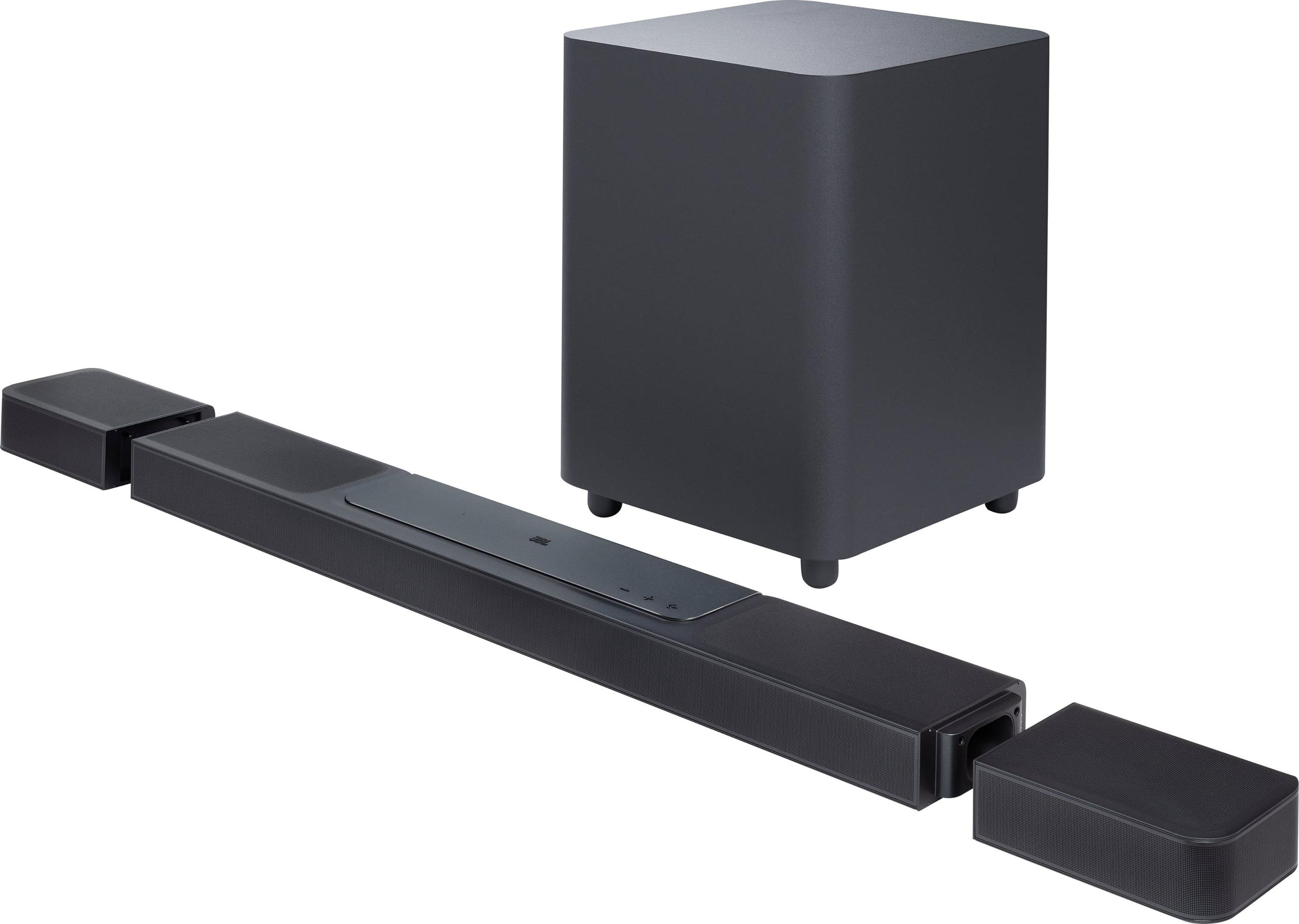
If you've ever found yourself cranking up the TV volume during a movie only to have the neighbors complain about explosions while you still can't understand what the actors are saying, you know exactly why soundbars exist. Modern TVs, with their impossibly thin designs, simply don't have room for decent speakers. That's where soundbars come in – they're designed to solve this exact problem without turning your living room into a maze of wires and speakers.
Today we're comparing two very different approaches to better TV sound: the budget-friendly Samsung B-Series 5.1 Channel Soundbar ($228) and the premium JBL Bar 1300X ($1,300). These aren't just different price points – they represent completely different philosophies about what a soundbar should be and do.
Before diving into these specific models, let's talk about what actually matters when choosing a soundbar. The most important factor is how well it reproduces dialogue – if you can't understand what people are saying, nothing else matters. Next comes bass response, which adds weight and impact to everything from explosions to music. Surround sound capabilities determine how immersive your experience feels, while connectivity options affect how easy the system is to use with your existing devices.
Room size plays a huge role too. A soundbar that sounds amazing in a small bedroom might get completely lost in a large living room, while an overpowered system in a tiny space can overwhelm and cause unwanted vibrations through walls and floors.
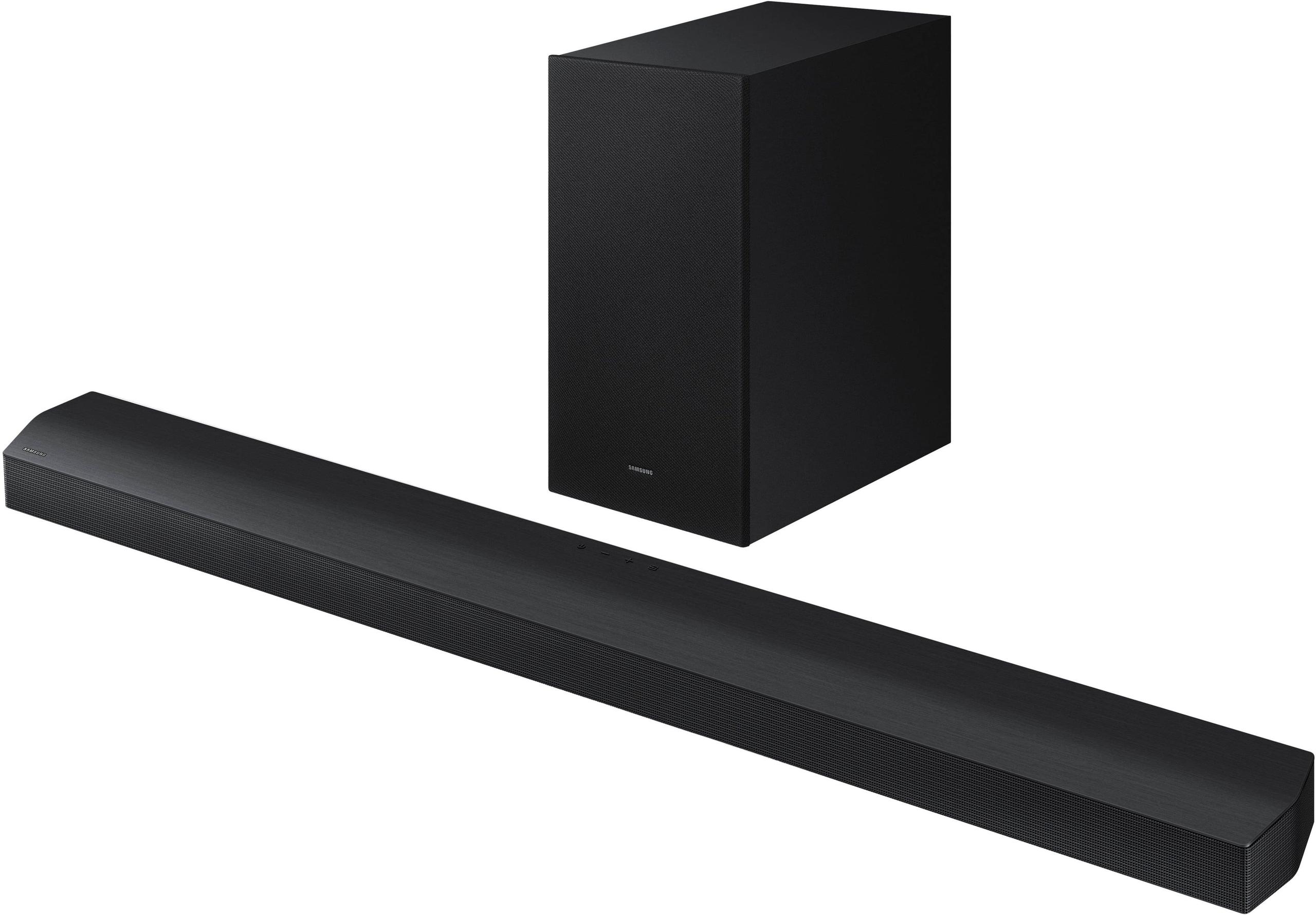
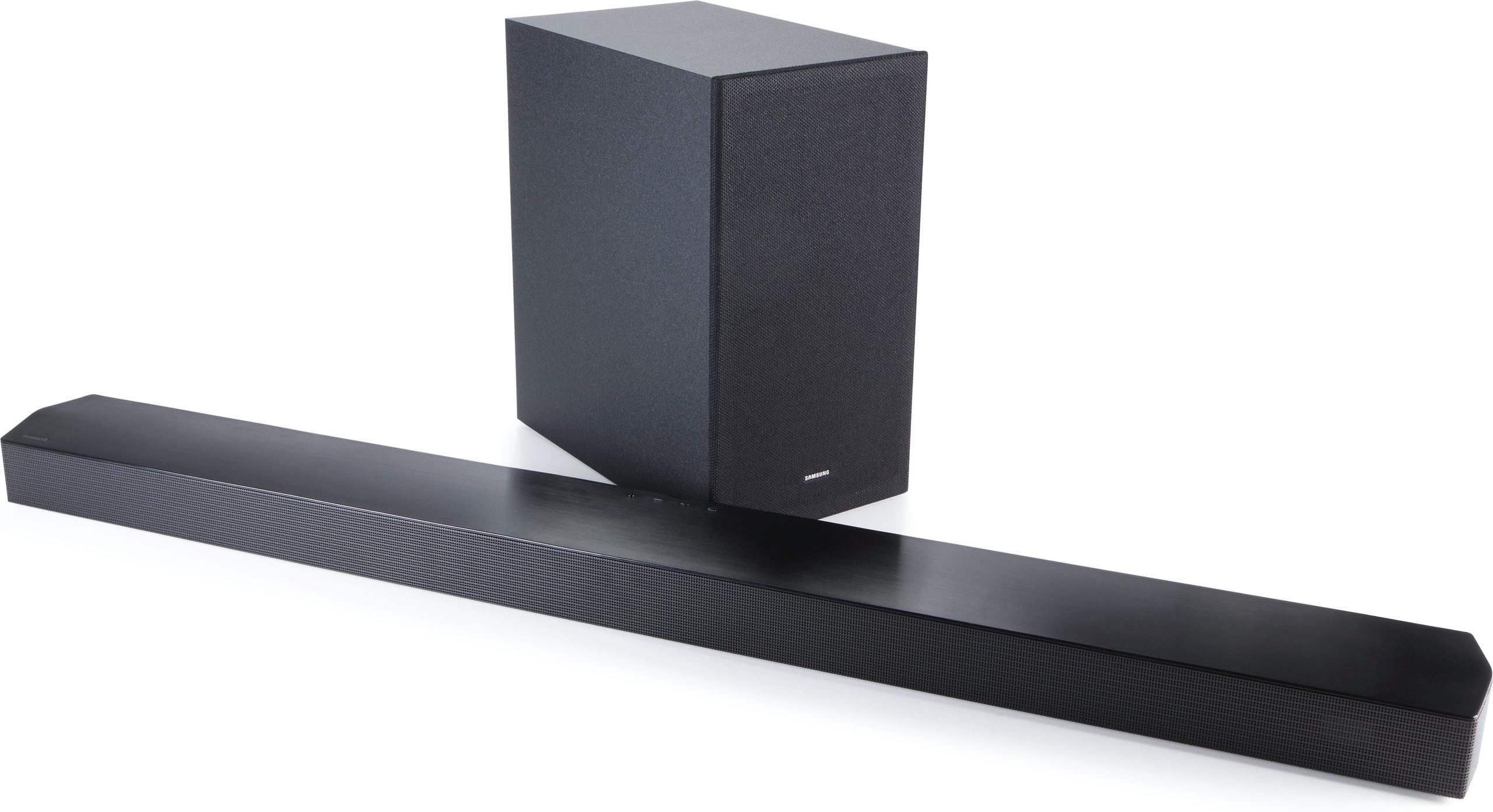
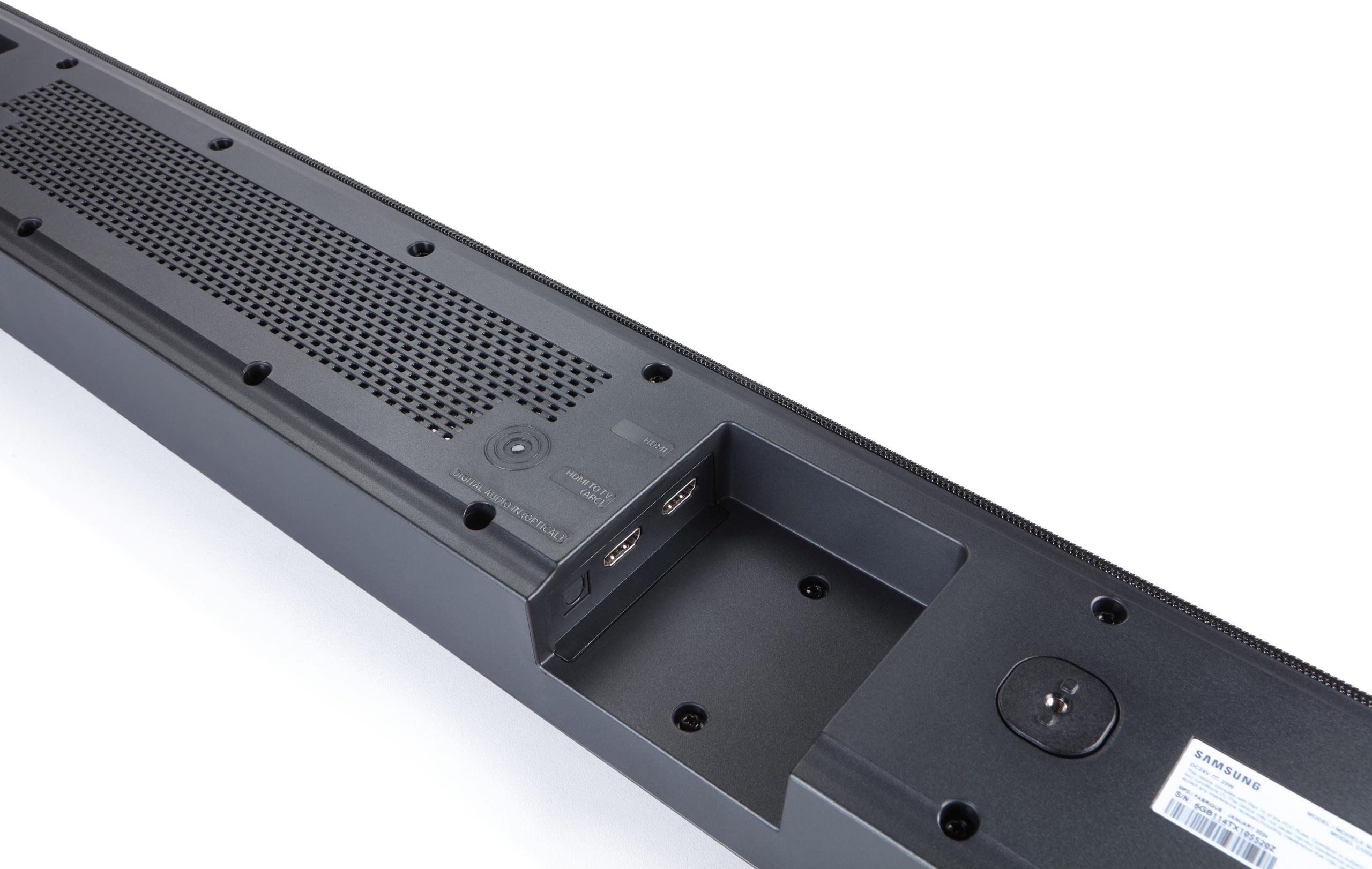
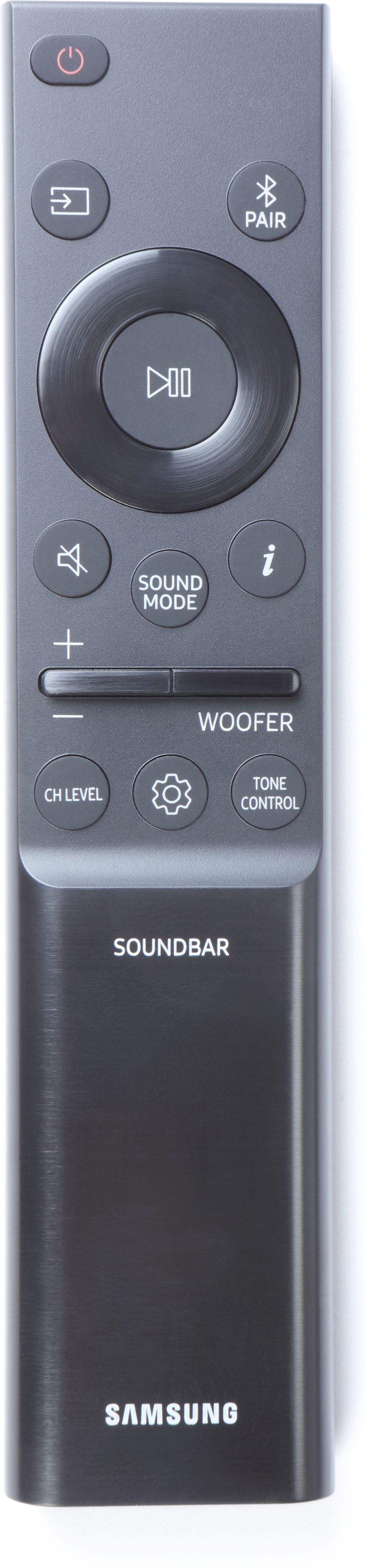
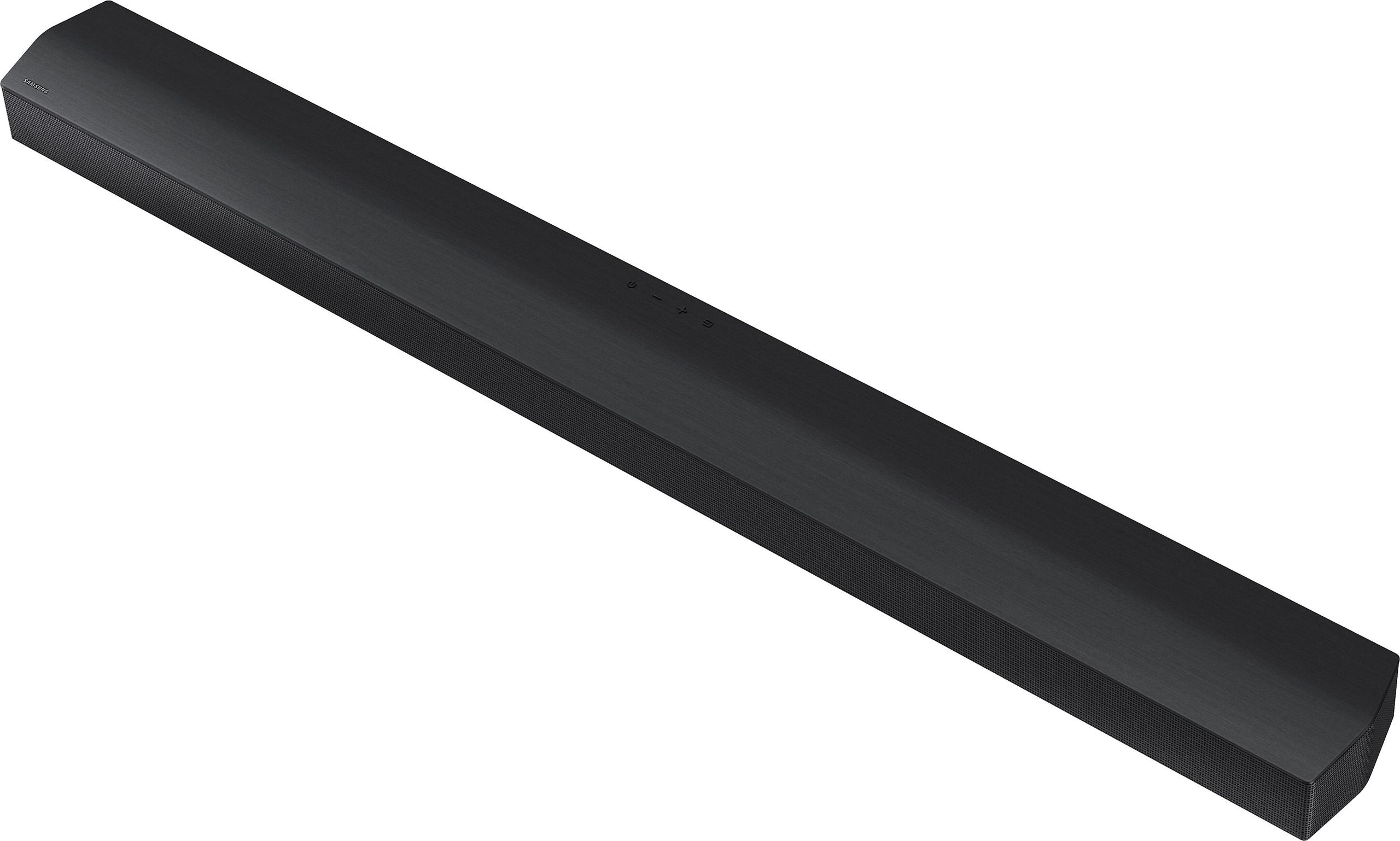
Released in early 2025, the Samsung B-Series 5.1 represents Samsung's latest effort to bring quality sound to the masses without breaking the bank. At $228, it sits in that sweet spot where serious audio improvements become accessible to most households.
This soundbar uses what's called "virtual surround sound" through DTS Virtual:X technology. Think of it like audio wizardry – the soundbar uses digital processing to trick your ears into thinking sound is coming from places where there aren't actually any speakers. It's not quite the same as having real speakers positioned around your room, but it's surprisingly effective, especially considering the price.
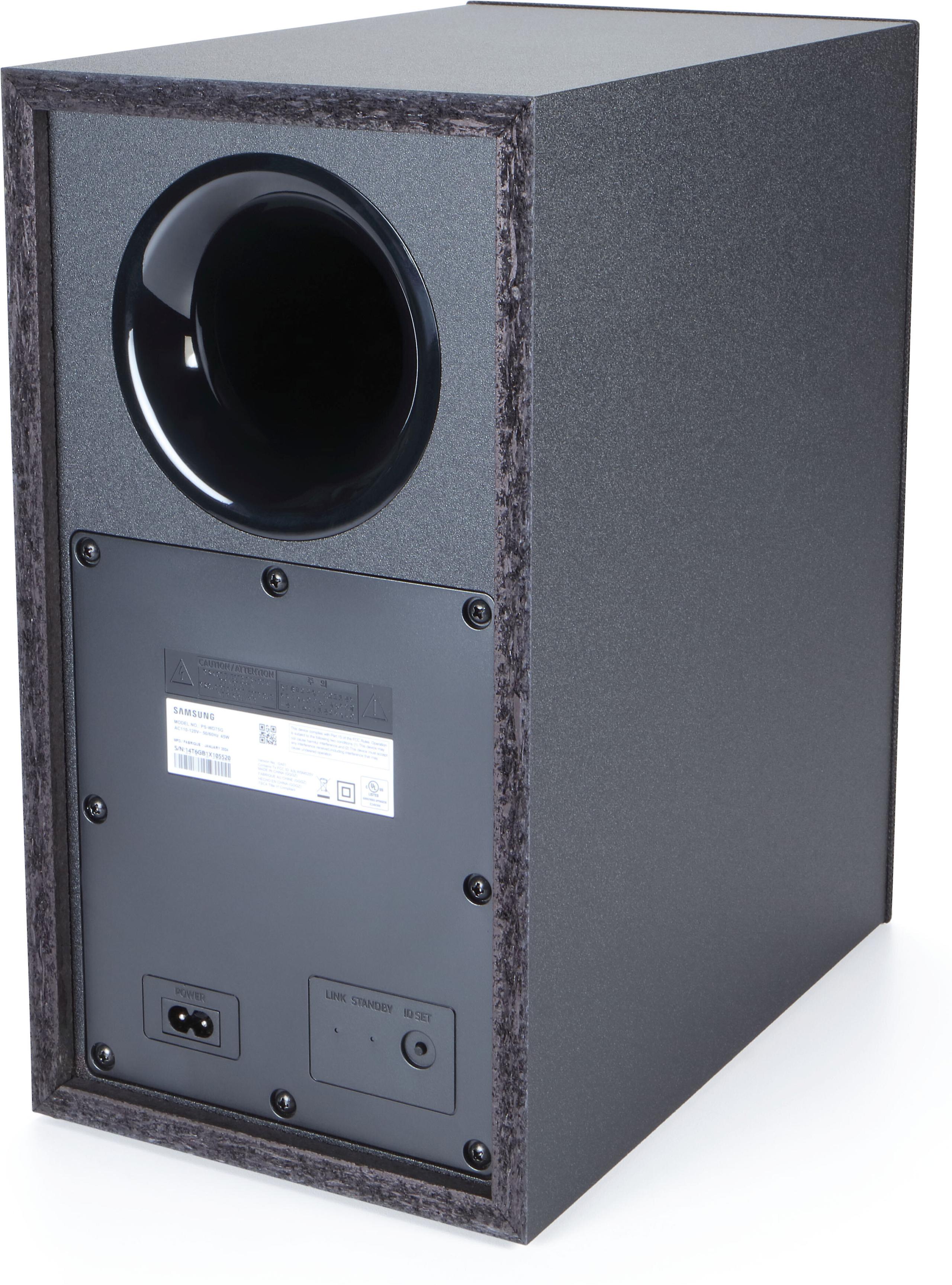
The system includes a wireless subwoofer – that's the separate box that handles the deep bass frequencies. Having a dedicated subwoofer makes a massive difference because those low frequencies need larger drivers and more power than what can fit inside a slim soundbar. Samsung's subwoofer connects wirelessly, so you don't need to run cables across your room, though it still needs to plug into the wall for power.
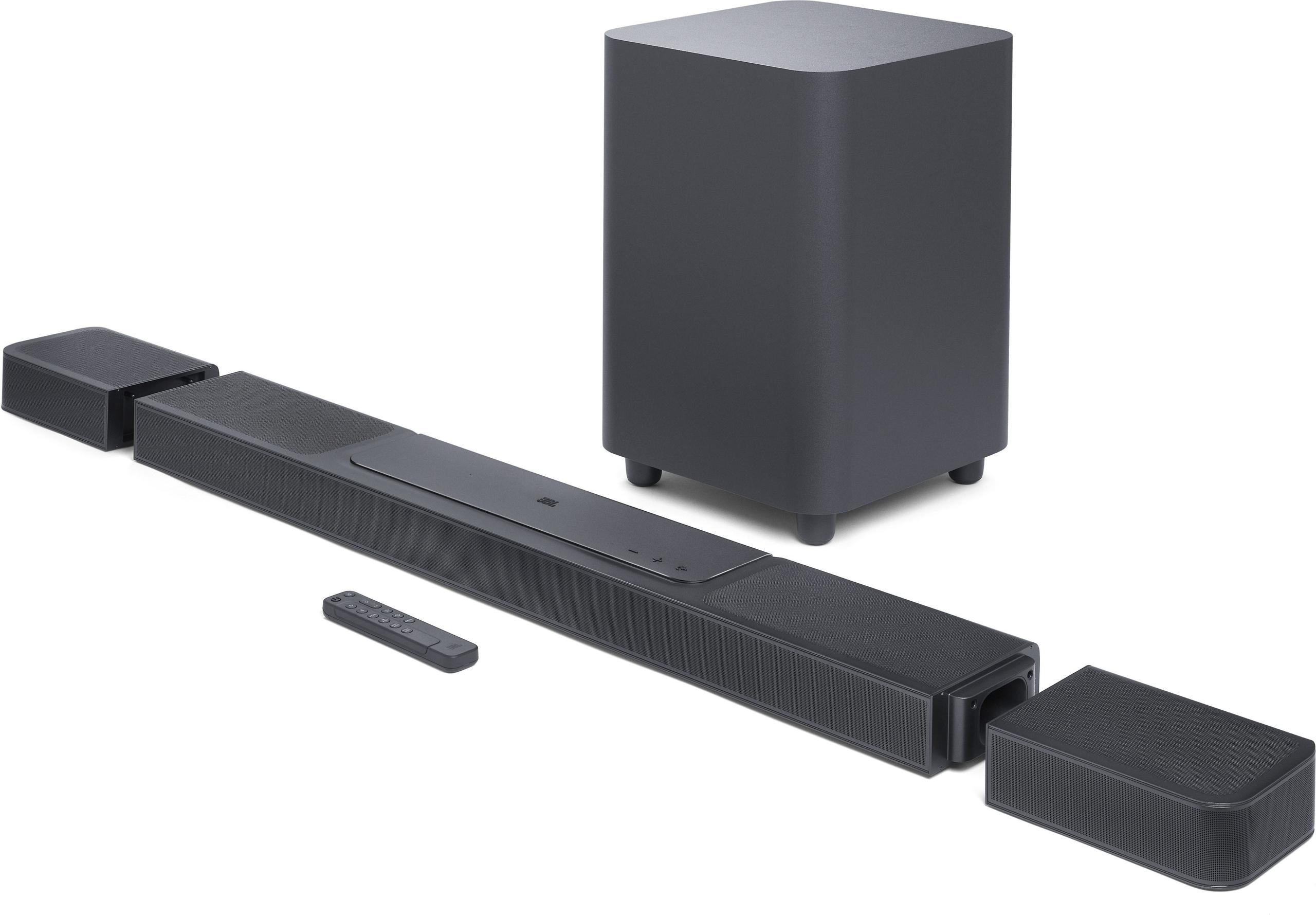
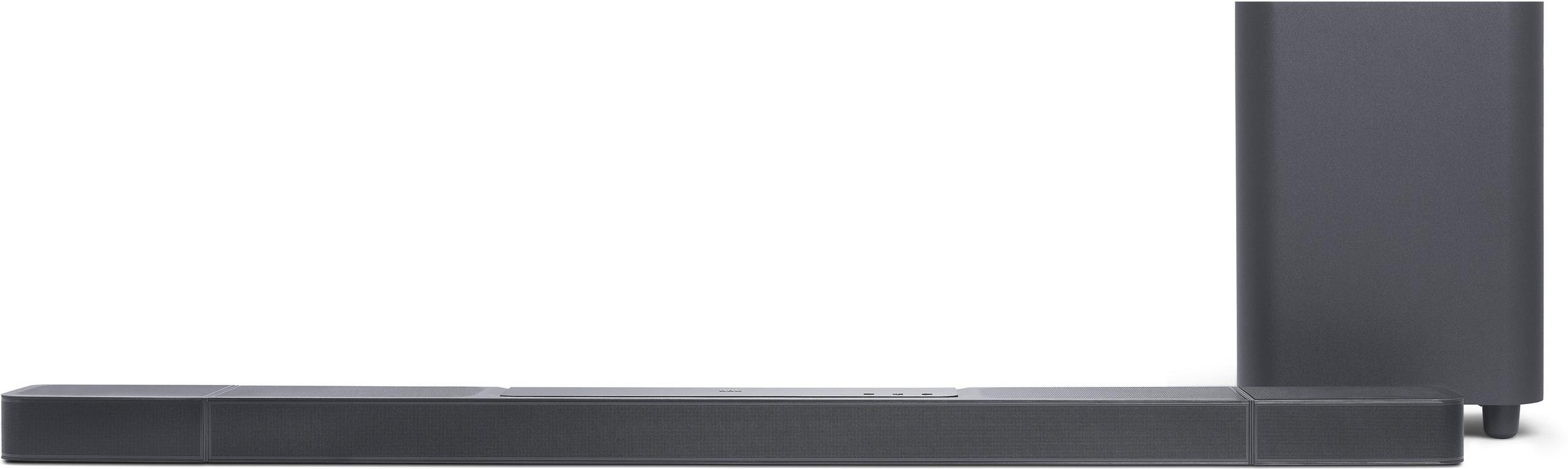
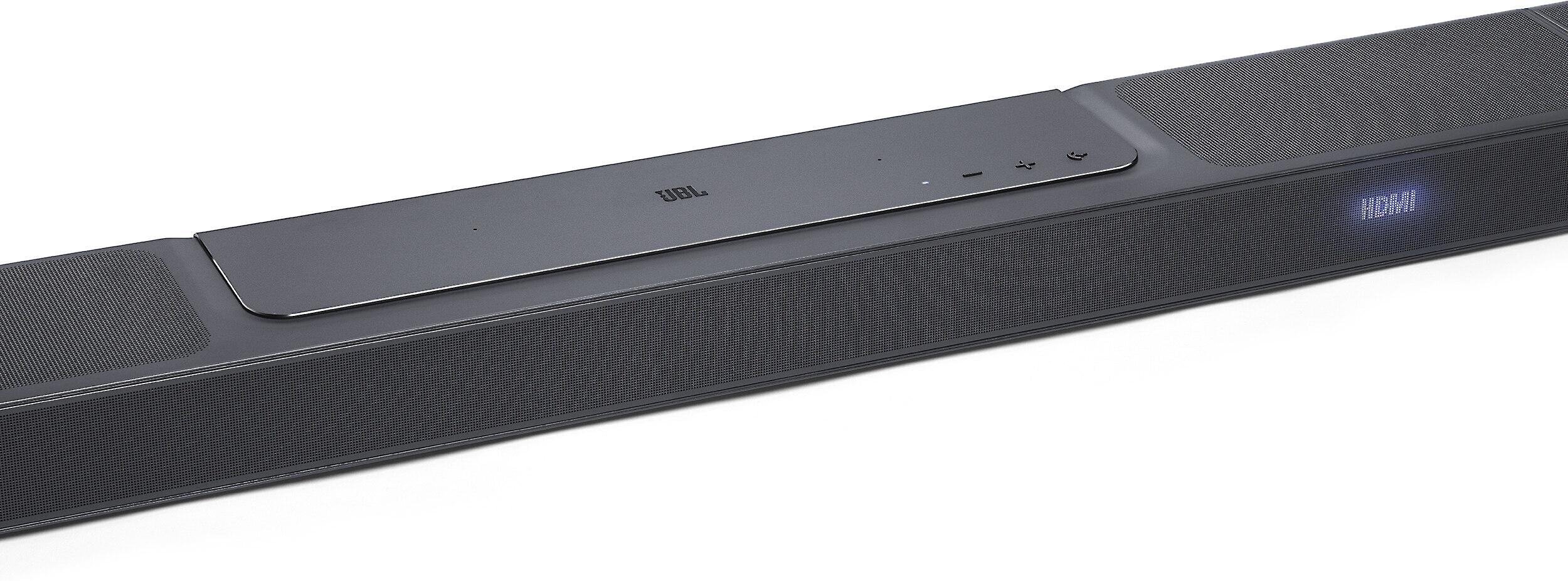
The JBL Bar 1300X, also launching in 2025, takes a completely different approach. At $1,300, it costs nearly six times more than the Samsung, but it's packed with technology that justifies that premium – at least for the right user.
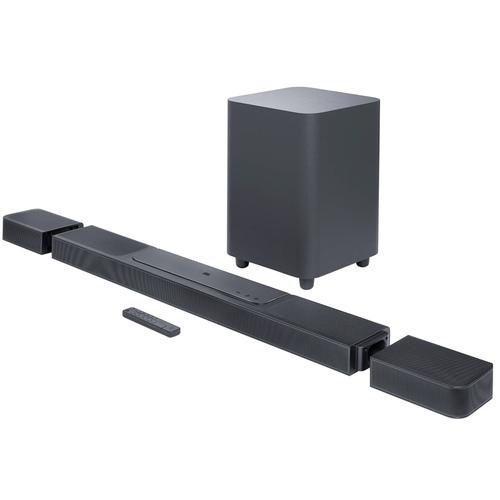
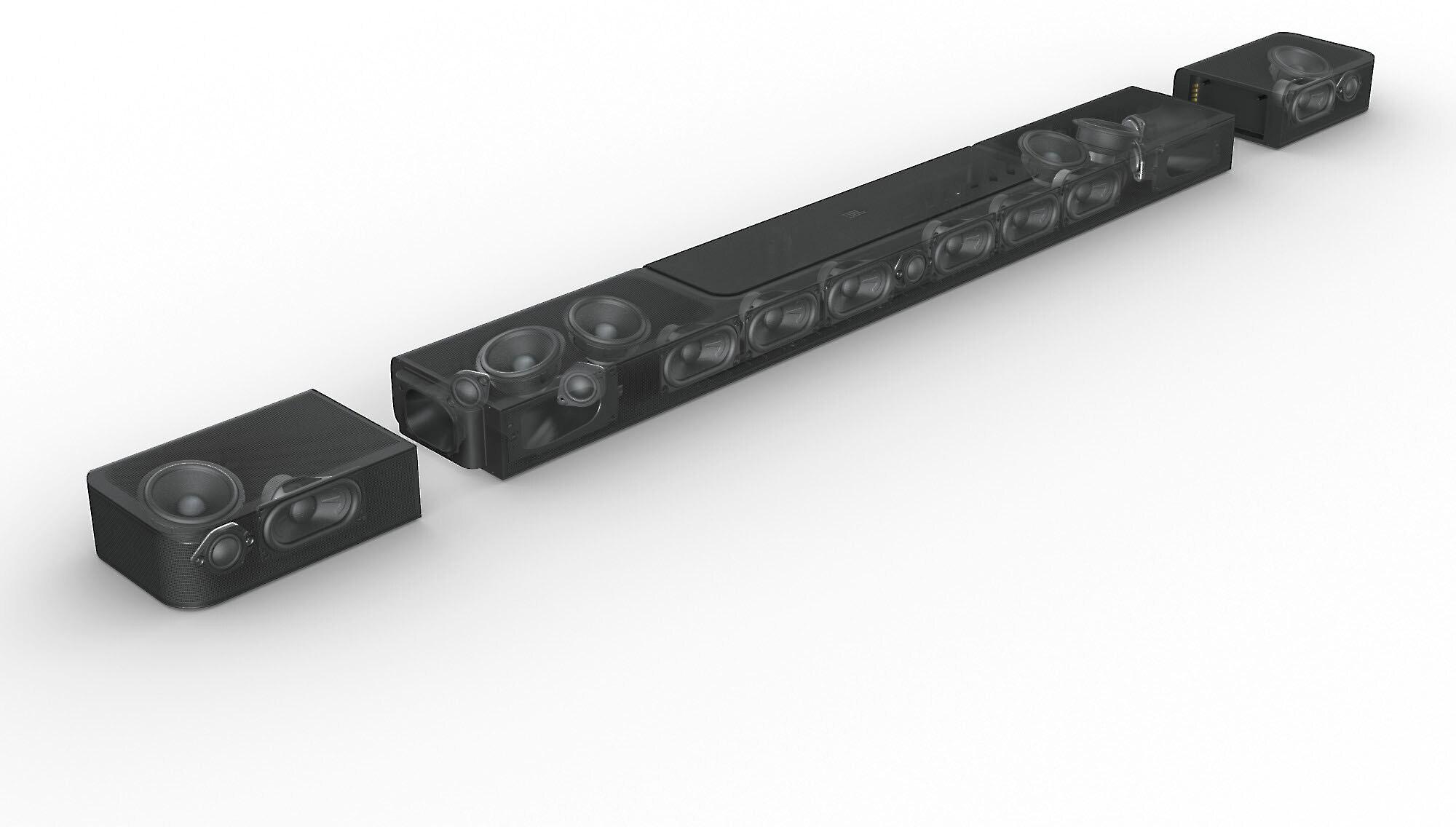
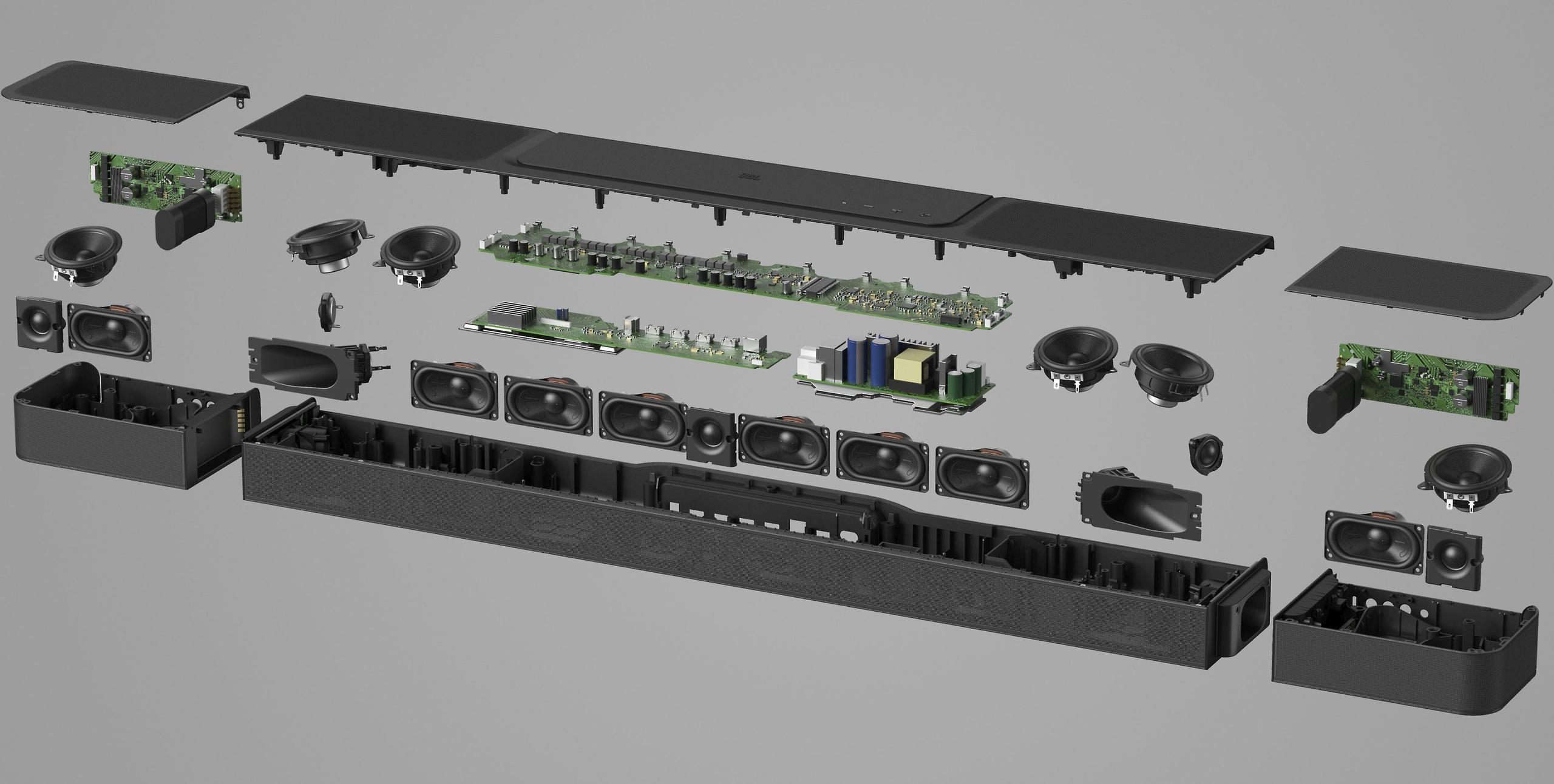
This system delivers true Dolby Atmos, which means it actually has speakers that fire sound upward toward your ceiling. These "height channels" bounce sound off your ceiling to create genuine overhead effects. When a helicopter flies over in a movie, you'll actually hear it pass above your head. The JBL uses 11.1.4 channels – that's eleven main channels plus four height channels – compared to the Samsung's 5.1 virtual setup.
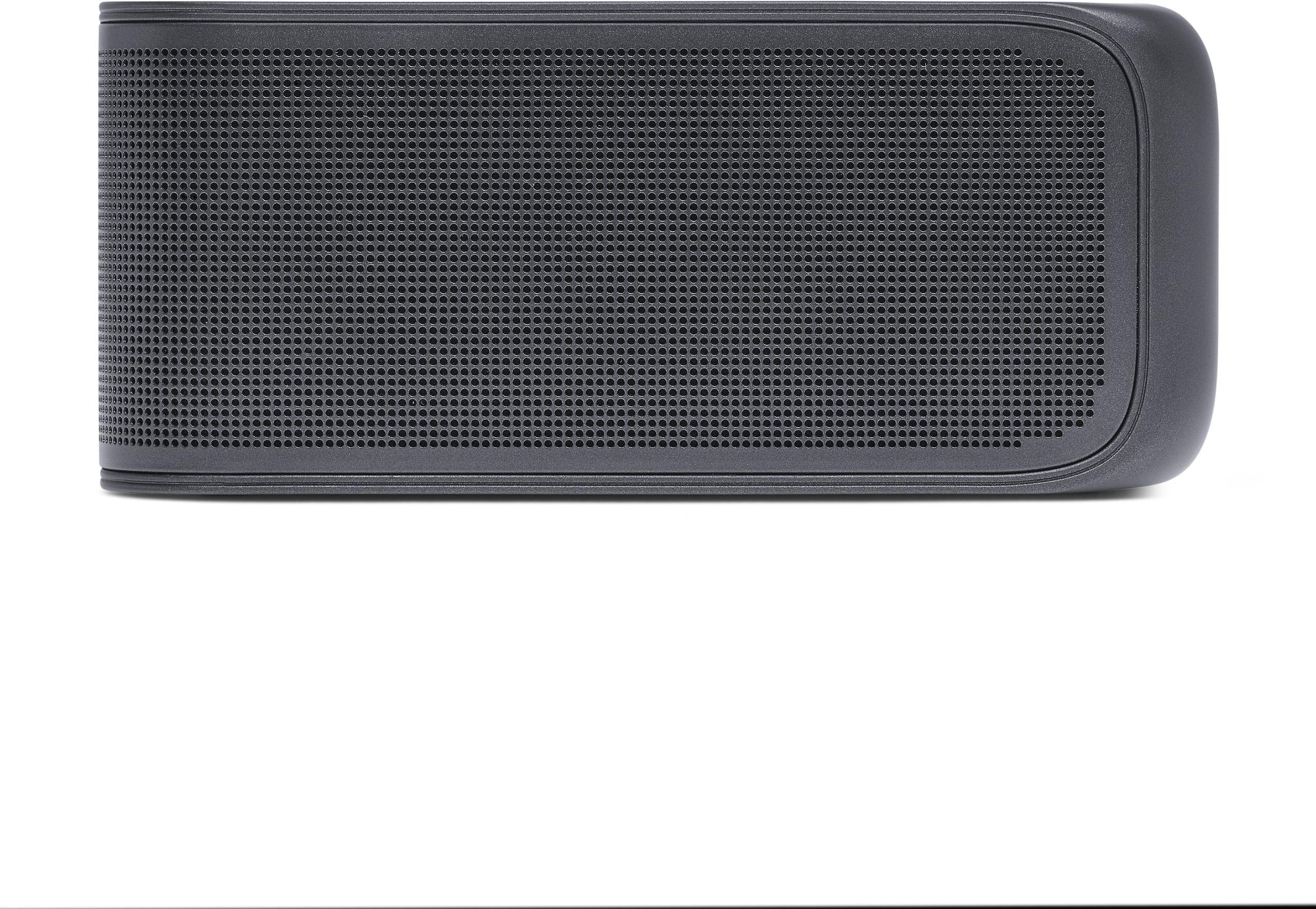
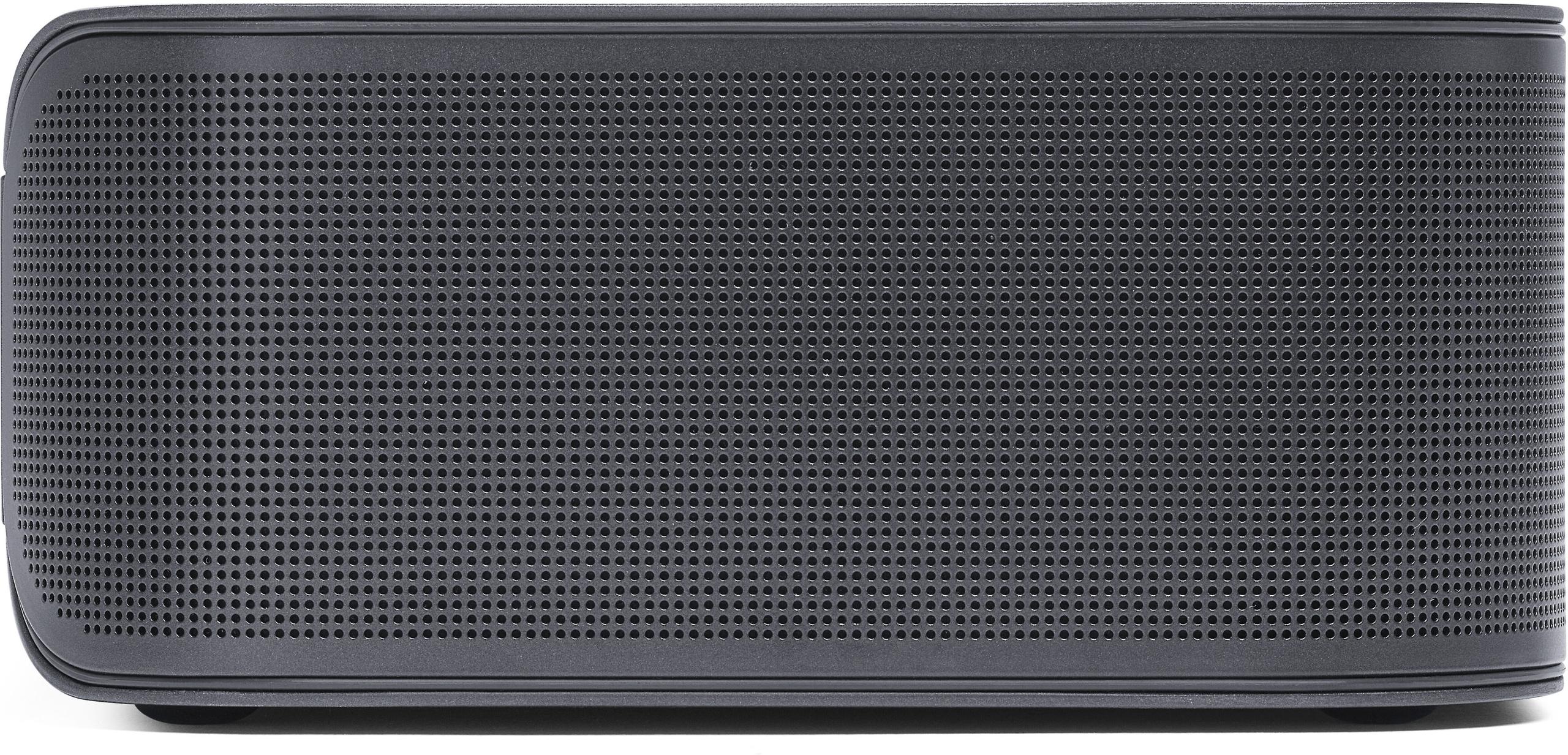
Perhaps most interesting are the JBL's detachable wireless surround speakers. These battery-powered units can be placed behind your seating position for true rear surround sound, but here's the clever part: when you're not watching movies, you can detach them and use them as portable Bluetooth speakers around the house or even outdoors. It's like getting a soundbar and two decent wireless speakers in one package.
The difference in audio quality between these systems becomes obvious the moment you start listening. The Samsung B-Series 5.1 delivers clean, clear sound that's a massive improvement over TV speakers. Dialogue comes through clearly thanks to its Voice Enhance mode, which boosts the frequencies where human speech lives. The included subwoofer adds solid bass that makes action scenes more engaging and music more full-bodied.
However, the Samsung does have limitations. Its virtual surround processing can sometimes make dialogue sound slightly artificial, and the bass, while present, lacks the depth and control you get from larger, more powerful systems. For most people watching TV in a typical living room, these limitations won't be deal-breakers, but they're worth knowing about.
The JBL Bar 1300X operates in a different league entirely. Its PureVoice technology doesn't just boost dialogue frequencies – it actively analyzes the audio mix in real-time to separate and clarify speech, even when explosions or music are competing for attention. This makes a huge difference when watching complex soundtracks or movies with heavy accents.
The bass response from JBL's 12-inch subwoofer is simply in another category. Where the Samsung provides adequate bass, the JBL delivers room-shaking low frequencies that you feel as much as hear. But it's not just about volume – the larger driver and more powerful amplifier provide better control and accuracy, so bass lines in music remain clear and defined rather than becoming muddy.
This is where the philosophical differences between these soundbars become most apparent. The Samsung uses DTS Virtual:X to create the impression of surround sound. This technology analyzes the audio and uses precise timing and frequency adjustments to make your brain think sound is coming from different directions. It's impressive technology that works better than you might expect, creating a wider soundstage that extends well beyond the physical soundbar.
The Samsung also includes built-in side-firing speakers – drivers that point left and right rather than straight at you. These help create that wider sound field and add to the virtual surround effect. For many viewers, especially those coming from basic TV speakers, this virtual approach provides a satisfying sense of immersion.
The JBL takes the more traditional but ultimately more effective approach of using actual speakers positioned around the room. Its detachable wireless surrounds place real drivers behind your seating position, creating genuine rear-channel effects. When someone walks across the screen, you'll hear their footsteps move from the front soundbar to the rear speakers in a way that virtual processing simply can't match.
The JBL's height channels add another dimension entirely. These upward-firing drivers bounce sound off your ceiling to create overhead effects. When rain falls in a movie scene, it sounds like it's actually falling from above. When a plane flies over, you can track its movement through three-dimensional space. This Dolby Atmos processing works best with content specifically mixed for it, which includes most modern movies and many streaming shows.
Bass isn't just about making explosions louder – it's the foundation that makes all audio feel more realistic and engaging. Both soundbars include wireless subwoofers, but the differences in implementation are significant.
The Samsung's subwoofer does its job competently for the price point. It adds the low-frequency extension that the main soundbar simply cannot produce, and the Bass Boost mode can dial up the impact when you want more rumble. For most TV watching and casual music listening, it provides enough bass to make the experience satisfying. The wireless connection means easy placement, though you'll want to experiment with positioning to avoid boomy or muddy bass.
The JBL's 12-inch subwoofer is simply a different class of component. The larger driver can move more air, creating deeper bass that extends lower into the frequency spectrum. More importantly, the additional power and control mean this bass stays clean and articulate even at high volumes. In music, you can follow bass guitar lines clearly rather than just feeling a general rumble. In movies, explosions have the kind of chest-thumping impact that makes action scenes truly engaging.
The difference becomes especially apparent in larger rooms. While the Samsung's subwoofer might struggle to fill a big space with adequate bass, the JBL's larger driver has the output capability to energize rooms of almost any size.
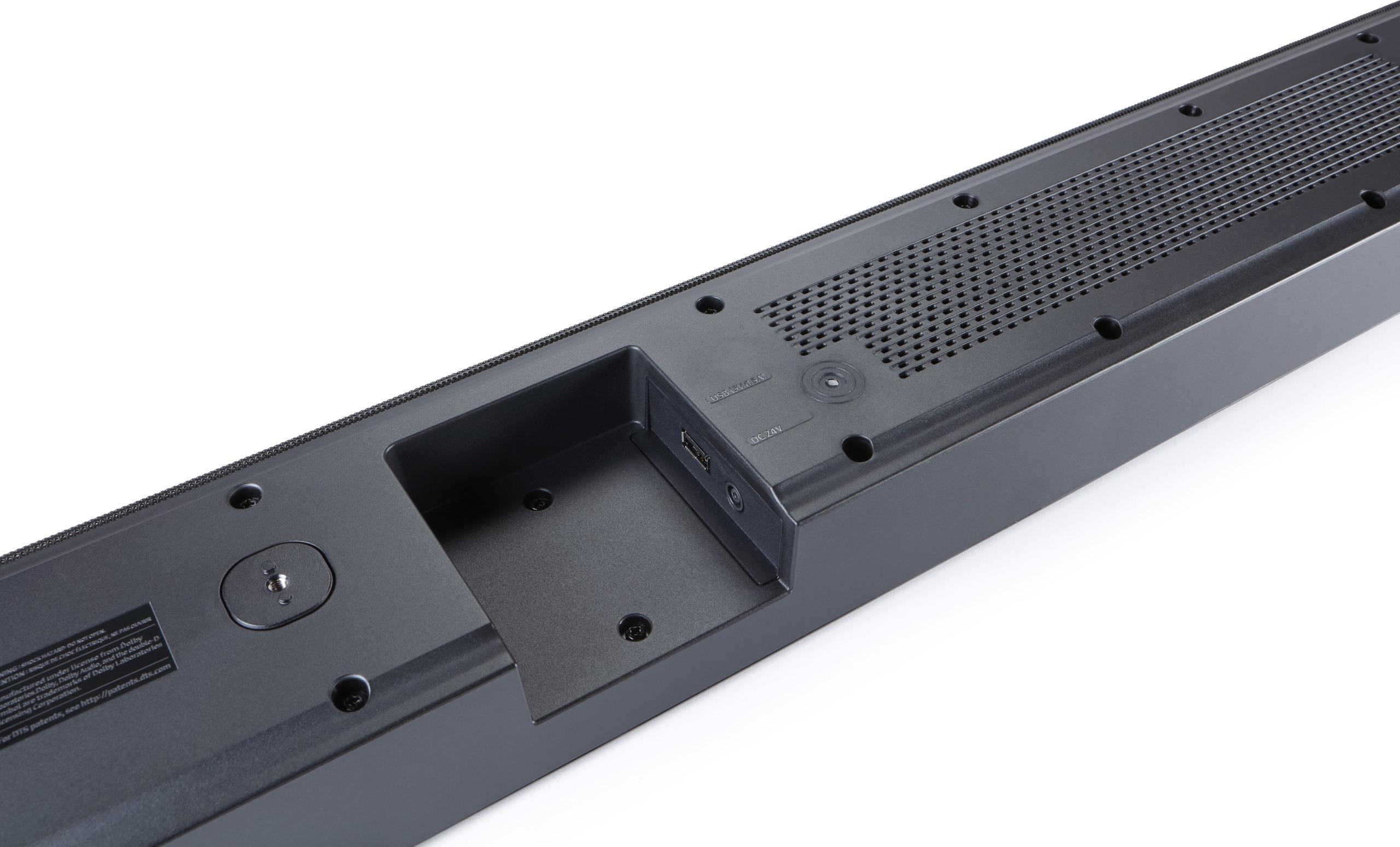
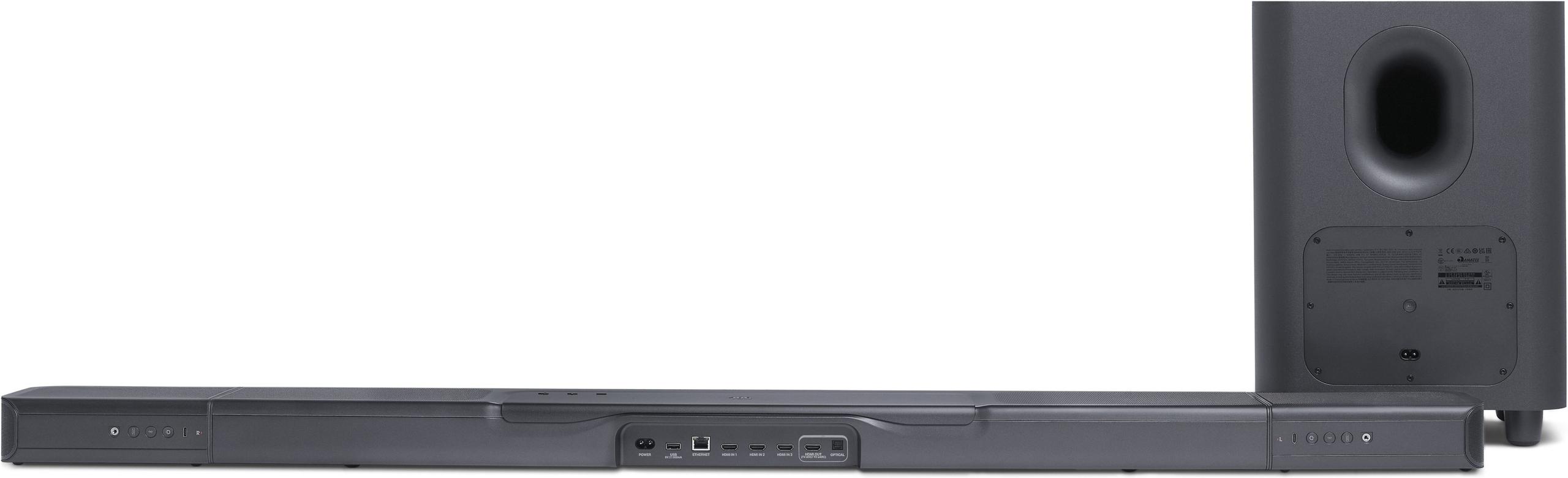
Both soundbars reflect 2025's connectivity expectations, but with different levels of sophistication. The Samsung B-Series 5.1 covers the basics well with HDMI ARC (Audio Return Channel – this lets your TV send audio back to the soundbar through the same HDMI cable), optical input for older devices, and Bluetooth for streaming music from your phone.
Samsung's Q-Symphony feature deserves special mention if you own a compatible Samsung TV. This technology lets the TV's built-in speakers work together with the soundbar rather than being disabled. The result is a more enveloping sound field and better dialogue clarity since the TV's speakers can handle higher frequencies while the soundbar focuses on mid-range and the subwoofer handles bass.
The Samsung also includes Adaptive Sound, which analyzes what you're watching and adjusts the audio accordingly. Watching the news? It emphasizes dialogue clarity. Action movie? It opens up the dynamic range for more impact. This automatic adjustment works well for most content, though purists might prefer manual control.
The JBL Bar 1300X offers significantly more connectivity options, reflecting its premium positioning. Beyond the basic connections, it includes Wi-Fi networking that opens up streaming from over 300 music services through built-in AirPlay, Chromecast, and Alexa integration. This means you can stream high-quality audio directly to the soundbar without using your phone's Bluetooth, which often compresses the audio.
The JBL One app provides room calibration that uses your phone's microphone to analyze your room's acoustics and adjust the soundbar's output accordingly. This kind of automatic tuning, common in high-end audio equipment, helps optimize performance for your specific space and furniture arrangement.
For dedicated home theater use, the differences between these systems become even more pronounced. The Samsung B-Series 5.1 makes a solid foundation for casual movie watching. Its virtual surround processing works well with typical TV and streaming content, and the Night Mode feature compresses loud sounds so you can watch late-night movies without disturbing others.
The Samsung's Game Mode is worth mentioning for console users. This mode reduces audio processing delay and emphasizes directional cues, helping you locate enemies in games or react faster to audio cues. While not as sophisticated as dedicated gaming audio systems, it's a useful feature that many competing soundbars omit.
However, the Samsung's virtual processing has limitations with complex soundtracks. Films with dense audio mixes or overlapping dialogue and effects can sometimes sound confused or artificial. The system works best with mainstream content and may struggle with the kind of reference-quality audio that serious movie buffs appreciate.
The JBL Bar 1300X was clearly designed with serious home theater use in mind. Its true Dolby Atmos processing means it can take full advantage of the sophisticated audio mixes found in modern films. Movies like "Blade Runner 2049" or "Dunkirk," which were specifically mixed to showcase immersive audio, reveal layers of detail and spatial effects that simply don't come through on lesser systems.
The detachable wireless surrounds deserve special praise for home theater use. Unlike many soundbar "surround" speakers that are tiny and underpowered, these units include full-range drivers and even their own height channels. When properly positioned, they create a genuine surround sound experience that rivals traditional 5.1 speaker systems while maintaining the convenience of a soundbar setup.
The JBL's power advantage becomes crucial for larger home theater rooms. At 1,170 watts total system power compared to the Samsung's 340 watts, it can maintain clean, undistorted sound even at the high volumes that make action movies truly immersive.
The decision between these soundbars ultimately comes down to your priorities, room, and budget. The Samsung B-Series 5.1 ($228) represents exceptional value for anyone seeking a significant upgrade from TV speakers without a major investment. It's particularly compelling for smaller rooms, apartment living, or situations where you primarily watch TV shows and mainstream movies.
If you own a Samsung TV, the Q-Symphony integration adds real value that competing brands can't match. The system's simplicity is also a genuine advantage – it does what most people need a soundbar to do without complicated setup or ongoing maintenance.
The JBL Bar 1300X ($1,300) justifies its premium price through genuine technological advantages and superior performance. For serious movie enthusiasts, the true Dolby Atmos experience and powerful bass response create the kind of immersive audio that transforms how you experience films. The detachable speakers add versatility that extends beyond TV watching, essentially giving you a complete home audio system.
The JBL makes the most sense for larger rooms where its power advantage becomes crucial, and for users who value audio quality enough to invest in a system they'll keep for many years. Its advanced connectivity and streaming capabilities also future-proof your investment as audio formats and streaming services continue to evolve.
Both soundbars represent their categories well, but they're solving different problems for different users. Choose the Samsung if you want great value and solid performance; choose the JBL if you want no-compromise audio quality and advanced features. Either way, you'll be amazed at how much better your TV viewing experience becomes with proper sound.
| Samsung B-Series 5.1 Channel Soundbar ($228) | JBL Bar 1300X ($1,300) |
|---|---|
| Price - The most obvious difference between these systems | |
| $228 (exceptional value for basic surround sound) | $1,300 (premium pricing for advanced features) |
| Audio Channels - Determines surround sound capability | |
| 5.1 virtual channels (simulated surround via processing) | 11.1.4 true channels (physical speakers for genuine surround) |
| Total Power Output - Affects volume levels and sound clarity | |
| 340W total (adequate for small-medium rooms) | 1,170W total (room-filling power for large spaces) |
| Surround Technology - Virtual vs. real surround sound | |
| DTS Virtual:X (convincing but artificial surround effects) | True Dolby Atmos with height speakers (genuine overhead effects) |
| Subwoofer Size - Directly impacts bass depth and quality | |
| Standard wireless subwoofer with Bass Boost mode | 12-inch wireless subwoofer (deeper, more controlled bass) |
| Rear Speakers - Critical for true surround sound experience | |
| Optional wireless rears sold separately | Included detachable battery-powered surrounds (12-hour life) |
| Connectivity Options - Affects streaming and device compatibility | |
| HDMI ARC, Optical, Bluetooth 4.2 (basic but sufficient) | HDMI eARC, Wi-Fi, AirPlay, Chromecast, 300+ streaming services |
| Voice Enhancement - Important for dialogue clarity | |
| Basic Voice Enhance mode | Advanced PureVoice 2.0 with real-time dialogue optimization |
| Smart TV Integration - Seamless operation with your TV | |
| Q-Symphony with Samsung TVs (speakers work together) | Universal compatibility but no special TV partnerships |
| Room Calibration - Optimizes sound for your specific space | |
| Adaptive Sound mode (content-based adjustment) | App-controlled room analysis with acoustic optimization |
| Versatility - Additional uses beyond TV audio | |
| Fixed soundbar setup only | Detachable speakers double as portable Bluetooth speakers |
| Best For - Target user and room type | |
| Budget buyers, small-medium rooms, casual viewing | Audio enthusiasts, large rooms, serious home theater setups |
The biggest difference is price and technology approach. The Samsung B-Series 5.1 ($228) uses virtual surround sound processing to simulate 3D audio, while the JBL Bar 1300X ($1,300) provides true Dolby Atmos with physical height speakers and detachable wireless surround speakers. The JBL costs nearly six times more but delivers genuine surround sound rather than simulated effects.
The Samsung B-Series 5.1 is better suited for small to medium rooms. Its 340W power output and virtual surround processing work well in compact spaces without overwhelming the room. The JBL Bar 1300X with its 1,170W output is designed for larger spaces and might be overkill for smaller rooms.
Yes, both include wireless subwoofers. The Samsung B-Series 5.1 comes with a standard wireless subwoofer that provides solid bass for its price range. The JBL Bar 1300X features a larger 12-inch wireless subwoofer that delivers deeper, more powerful bass with better control at high volumes.
The JBL Bar 1300X has superior dialogue clarity thanks to its PureVoice 2.0 technology, which actively separates and enhances speech in real-time. The Samsung B-Series 5.1 includes a basic Voice Enhance mode that boosts dialogue frequencies, which works well for most content but isn't as sophisticated as the JBL's processing.
Both support music streaming, but with different capabilities. The Samsung B-Series 5.1 offers Bluetooth connectivity for streaming from your phone. The JBL Bar 1300X provides more options including Wi-Fi, AirPlay, Chromecast, and access to over 300 streaming music services directly through the soundbar.
The Samsung B-Series 5.1 is simpler to set up with basic HDMI ARC connection and automatic pairing of the wireless subwoofer. The JBL Bar 1300X requires more configuration due to its multiple components including detachable surround speakers, room calibration, and Wi-Fi setup, though the JBL One app guides you through the process.
It depends on your expectations. The Samsung B-Series 5.1 creates convincing virtual surround effects without rear speakers, though you can add optional wireless rears separately. The JBL Bar 1300X includes detachable battery-powered rear speakers that provide genuine surround sound and can also function as portable Bluetooth speakers.
The Samsung B-Series 5.1 includes a dedicated Game Mode that reduces audio delay and emphasizes directional cues for competitive gaming. The JBL Bar 1300X doesn't have a specific gaming mode but its true Dolby Atmos processing provides more immersive positional audio for single-player games and cinematic experiences.
The Samsung B-Series 5.1 consumes about 70W during operation and 1W in standby mode, making it energy efficient. The JBL Bar 1300X uses more power due to its higher output capabilities and additional components, though both are Energy Star certified for efficiency.
The Samsung B-Series 5.1 has a significant advantage with Samsung TVs through Q-Symphony technology, which allows the TV's speakers to work together with the soundbar for enhanced sound. The JBL Bar 1300X works with all TV brands but doesn't offer this special integration feature.
Only the JBL Bar 1300X supports true Dolby Atmos with its physical height speakers that bounce sound off your ceiling for overhead effects. The Samsung B-Series 5.1 uses DTS Virtual:X to simulate height effects but cannot process actual Dolby Atmos content as intended.
For budget-conscious buyers, the Samsung B-Series 5.1 ($228) offers exceptional immediate value with solid performance improvements over TV speakers. For audio enthusiasts planning to keep their system for many years, the JBL Bar 1300X ($1,300) provides future-proof features, superior sound quality, and versatile functionality that justifies the higher investment.
We've done our best to create useful and informative comparisons to help you decide what product to buy. Our research uses advanced automated methods to create this comparison and perfection is not possible - please contact us for corrections or questions. These are the sites we've researched in the creation of this article: bestbuy.com - abt.com - avsforum.com - crutchfield.com - camelcamelcamel.com - samsung.com - samsung.com - samsung.com - images.samsung.com - samsung.com - avblinq.avbportal.com - samsung.com - samsung.com - techradar.com - jbl.com - audioadvice.com - youtube.com - rtings.com - jbl.com - greentoe.com - harmanaudio.com - youtube.com - mm.jbl.com - jbl.com

Privacy Policy
Terms and Conditions - Affiliate Policy
Home Security
© Copyright 2008-2026.
11816 Inwood Rd #1211, Dallas, TX 75244