




If you've been dealing with your TV's tinny built-in speakers, you're probably ready for a serious upgrade. Premium soundbars have come a long way from the simple speaker bars of the past – today's models are sophisticated home theater systems that can rival traditional surround sound setups while keeping your living room clutter-free.
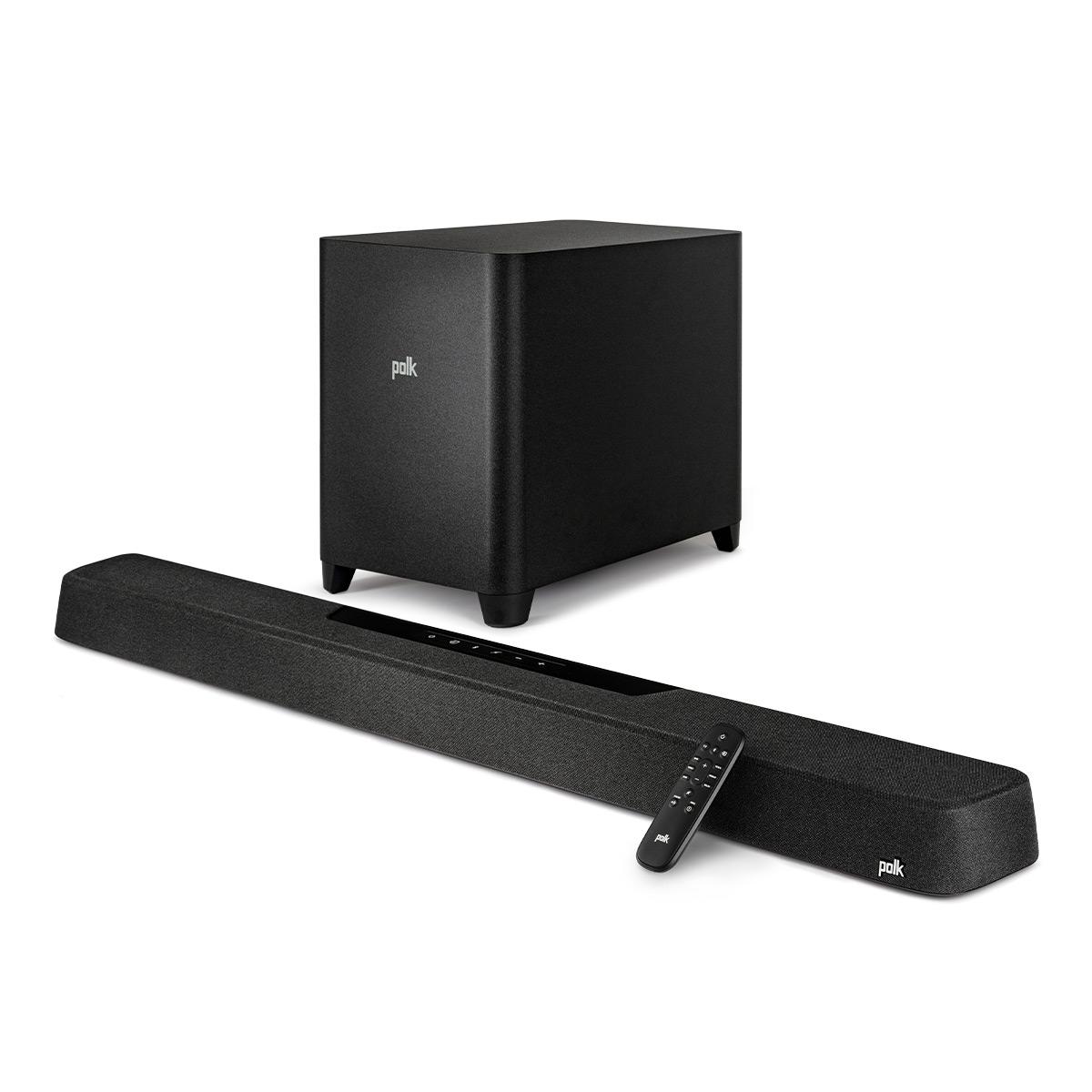
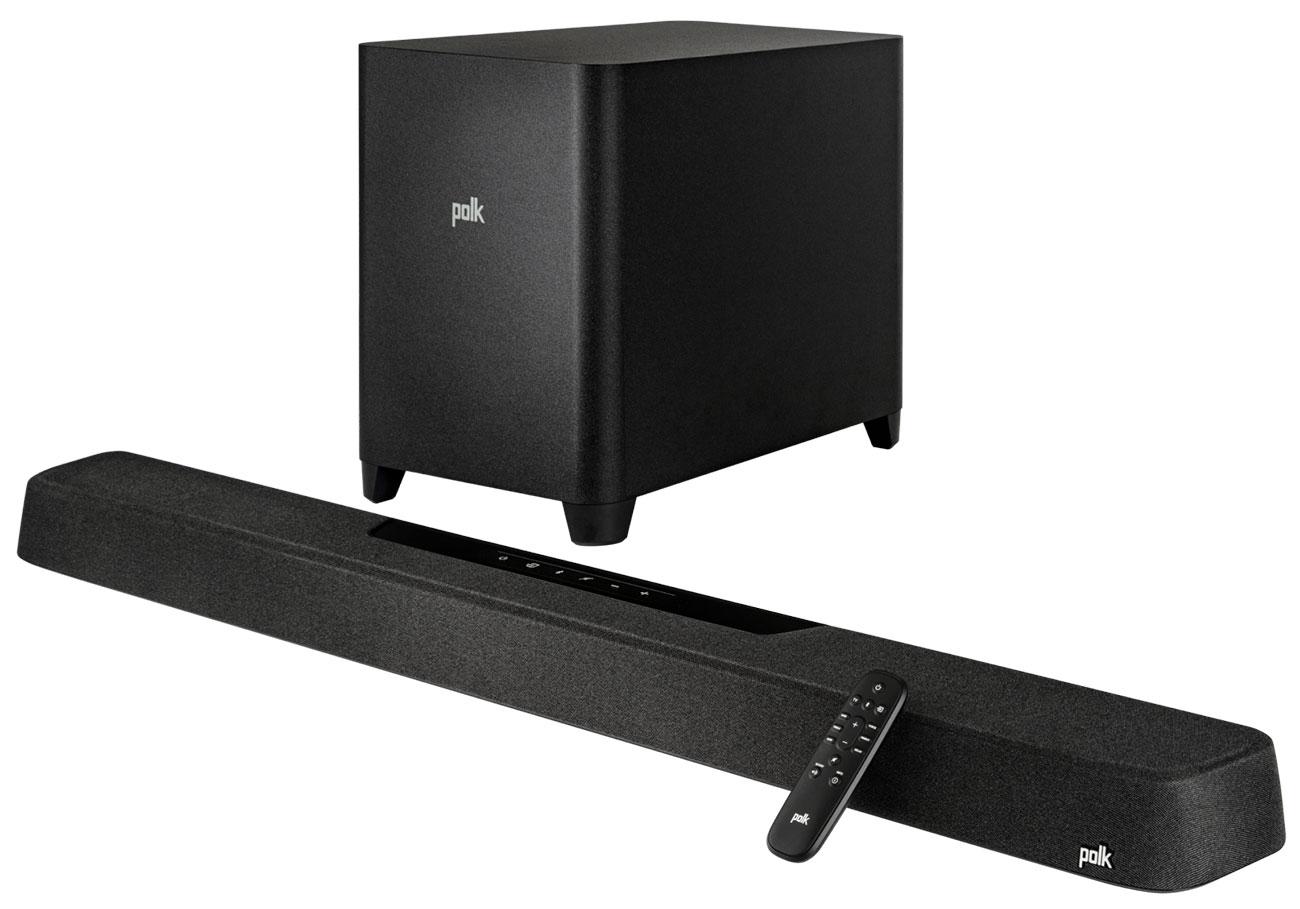
The soundbar market has exploded with innovation over the past few years, particularly in the premium segment where manufacturers are pushing boundaries with immersive audio technologies. Two standout models that represent different approaches to high-end sound are the Polk Audio MagniFi Max AX 3.1.2 at $499 and the JBL Bar 1300X at $1,300. While both deliver Dolby Atmos experiences, they take fundamentally different paths to get there.
Before diving into these specific models, it's worth understanding what separates premium soundbars from basic ones. The key differentiators include channel configuration (how many separate audio streams the system can handle), immersion technology (how they create that surround sound feeling), connectivity options, and smart features.
Channel configuration is expressed in numbers like 3.1.2 or 11.1.4. The first number represents left, center, and right channels. The second is for subwoofers (the .1 means one dedicated bass speaker). The third number indicates height channels – speakers that fire upward to bounce sound off your ceiling, creating overhead effects for movies like planes flying overhead or rain falling.
Immersion technology is where things get interesting. Some soundbars use virtual processing – clever digital tricks that make two speakers sound like five or seven. Others use physical speakers placed around your room for true surround sound. Both approaches have their merits, and the choice often comes down to your room layout and how much setup complexity you're willing to handle.
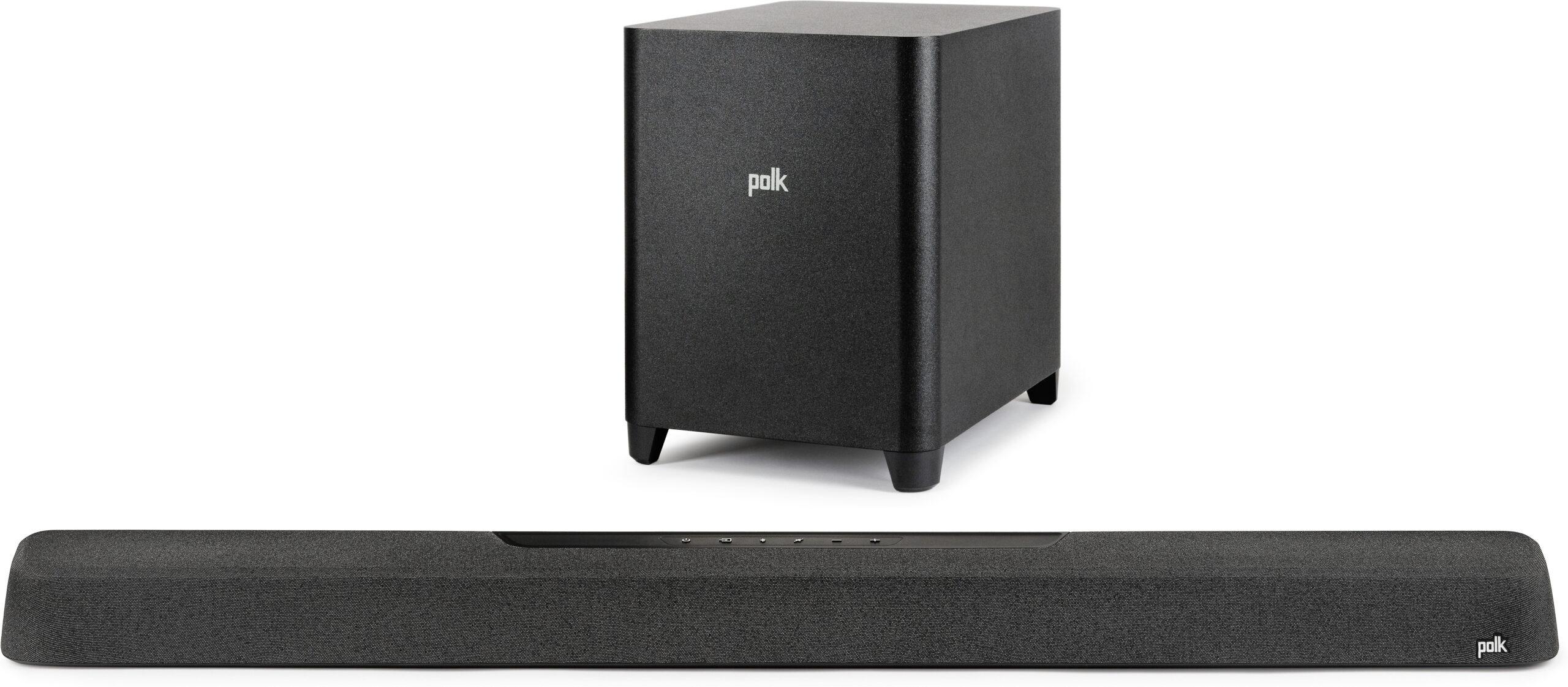
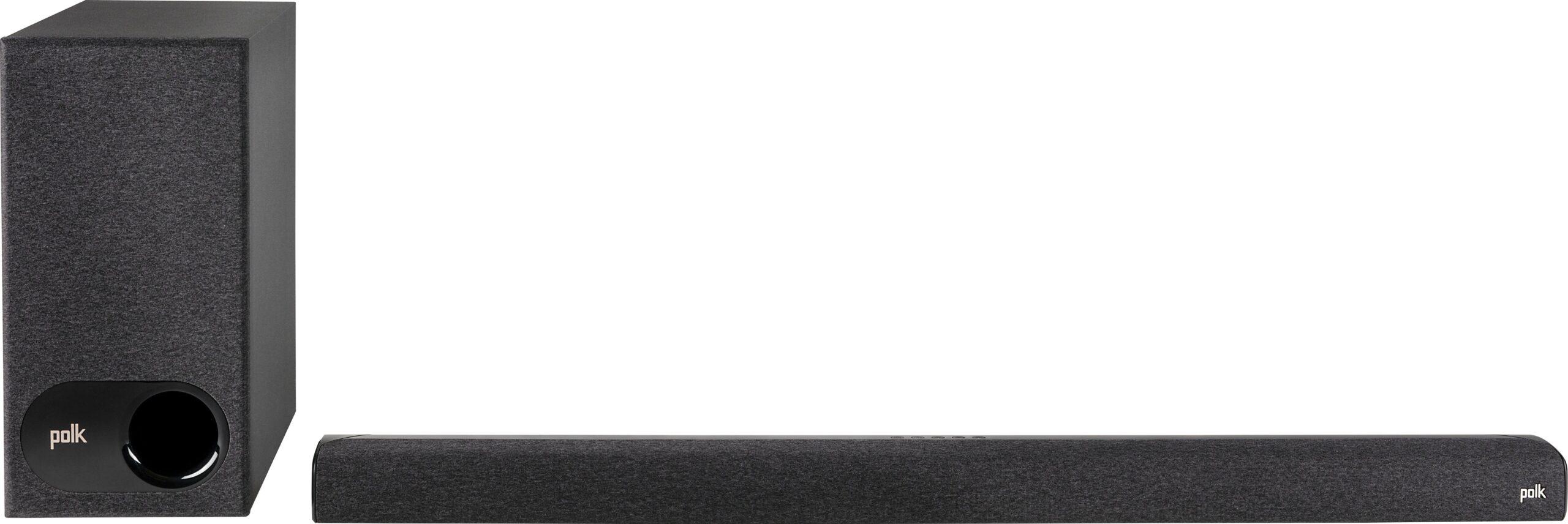
Released in 2022, the Polk Audio MagniFi Max AX 3.1.2 represents Polk's approach to making premium audio accessible. At $499, it sits in that sweet spot where you get serious performance improvements without the complexity or cost of flagship models.
Polk has been in the speaker business for over 50 years, and their expertise shows in the MagniFi Max AX's tuning. The company's proprietary SDA (Stereo Dimensional Array) technology is the star here – it's a sophisticated digital processing system that analyzes incoming audio and distributes it across multiple drivers to create a wider, more spacious soundstage than you'd expect from a single soundbar.
The 3.1.2 configuration means you get dedicated left, center, and right channels, plus a wireless subwoofer and two up-firing drivers for height effects. Those up-firing drivers shoot sound toward your ceiling, which then reflects back down to create the impression of overhead audio – essential for Dolby Atmos movies where helicopters need to sound like they're actually above you.
What's particularly clever about Polk's implementation is their VoiceAdjust technology. This feature specifically targets the frequency range where human speech occurs, allowing you to boost dialogue clarity without affecting other sounds. If you've ever struggled to hear what characters are saying during action scenes, this addresses that exact problem.
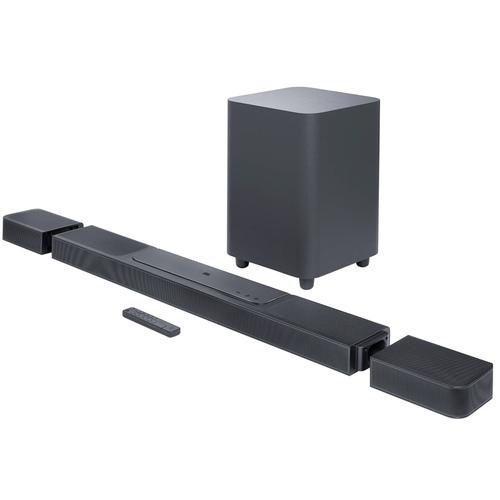
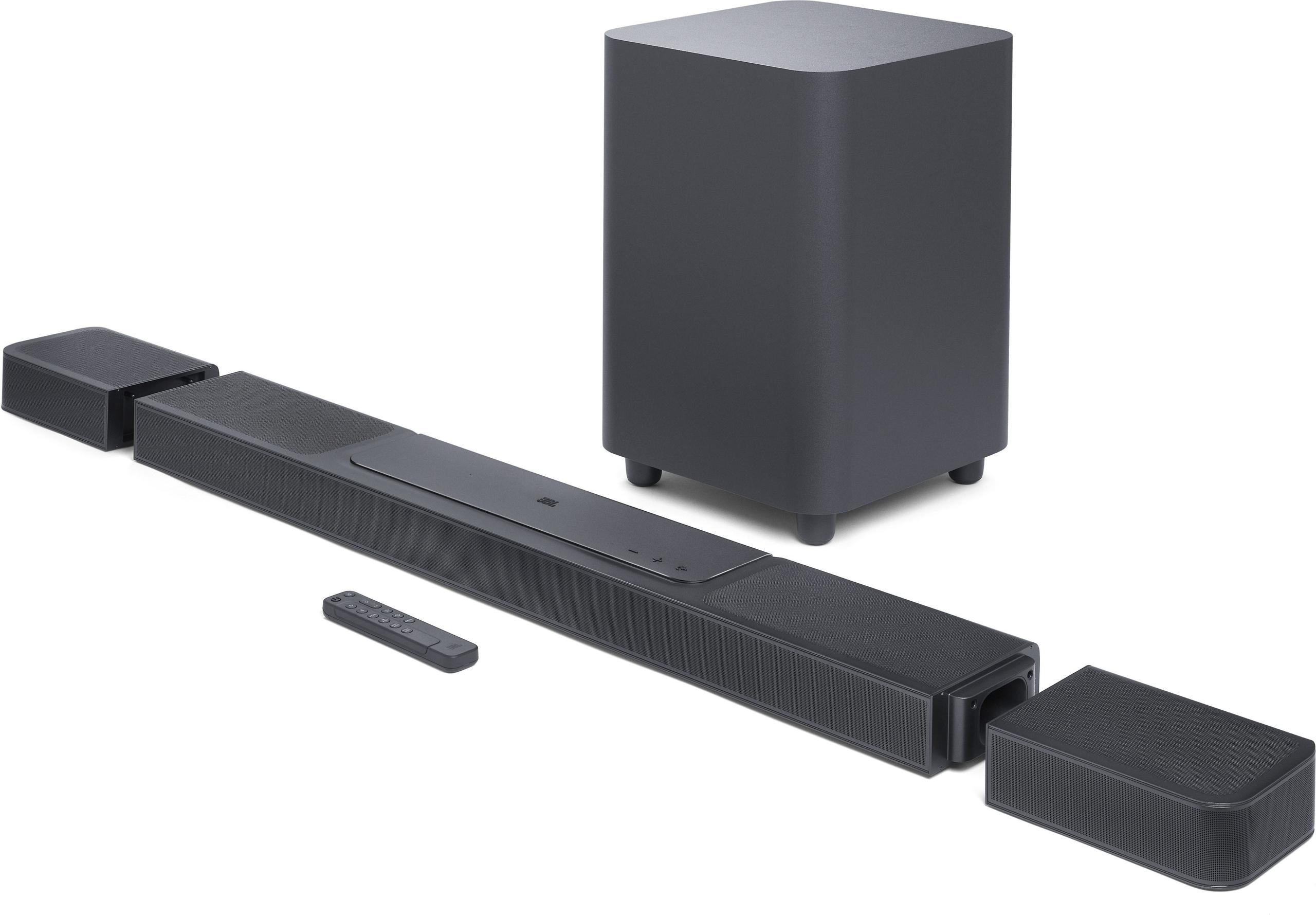
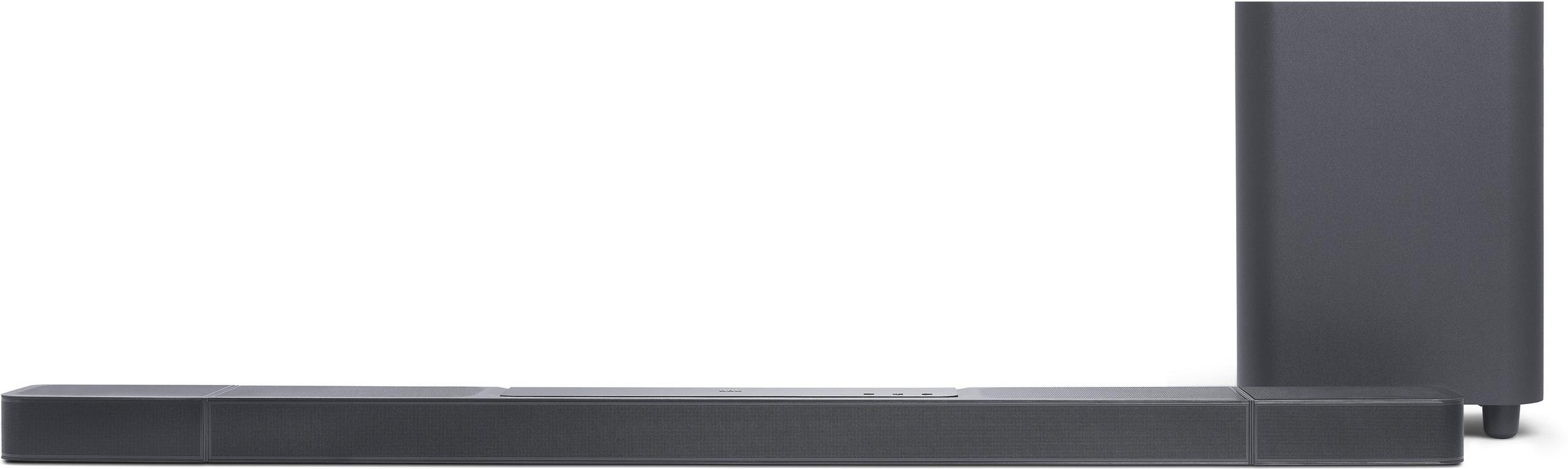
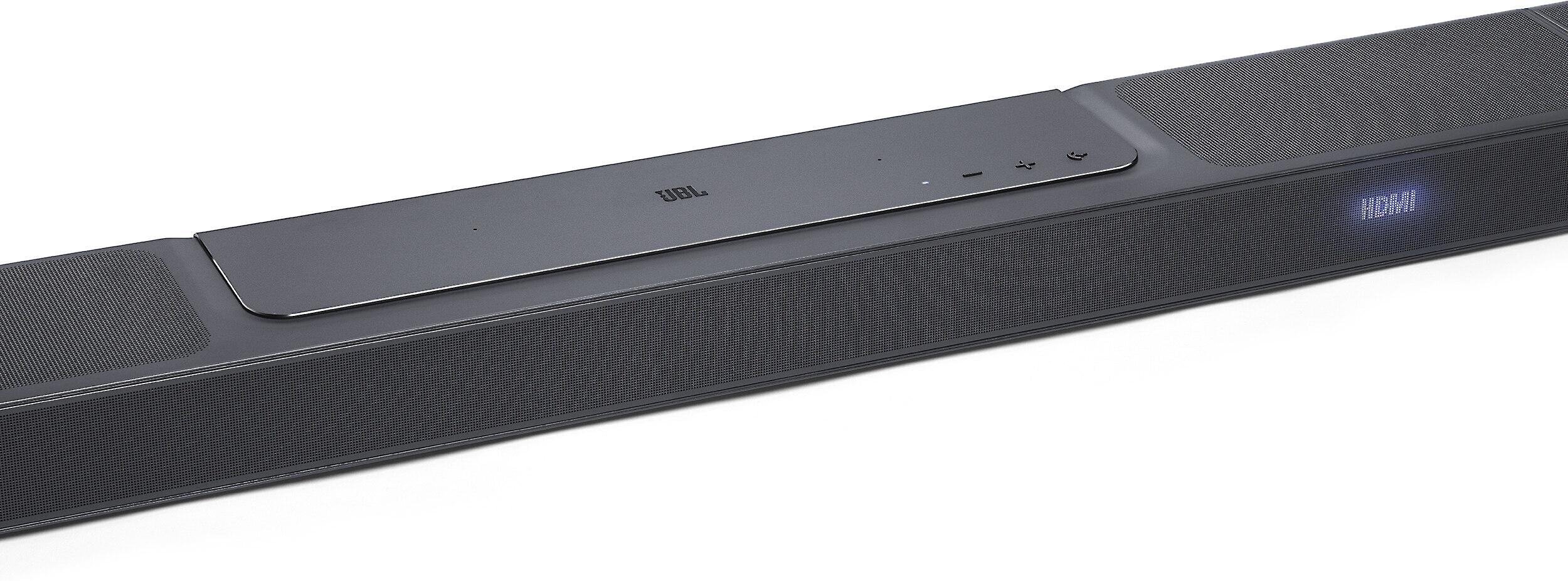
The JBL Bar 1300X, launched in 2023, takes a completely different approach. At $1,300, it's definitely a premium investment, but JBL has packed it with features that didn't exist in soundbars just a few years ago.
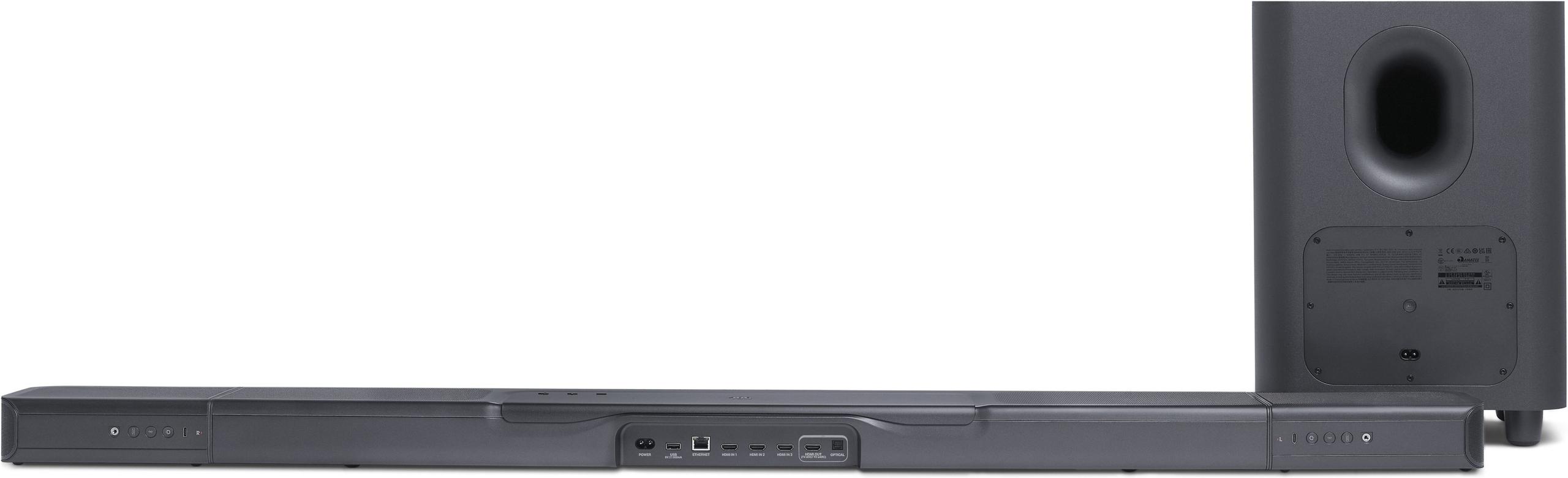
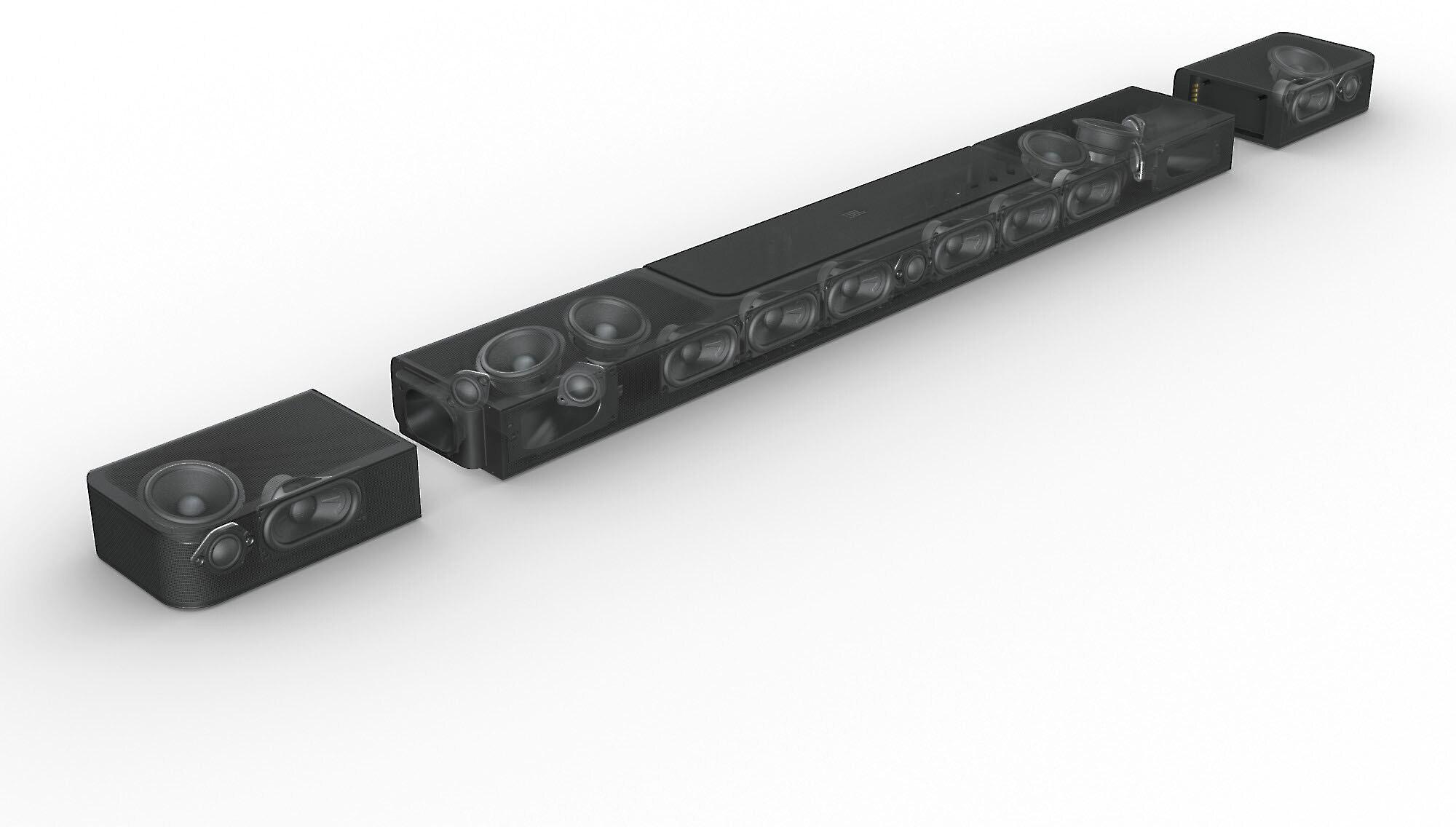
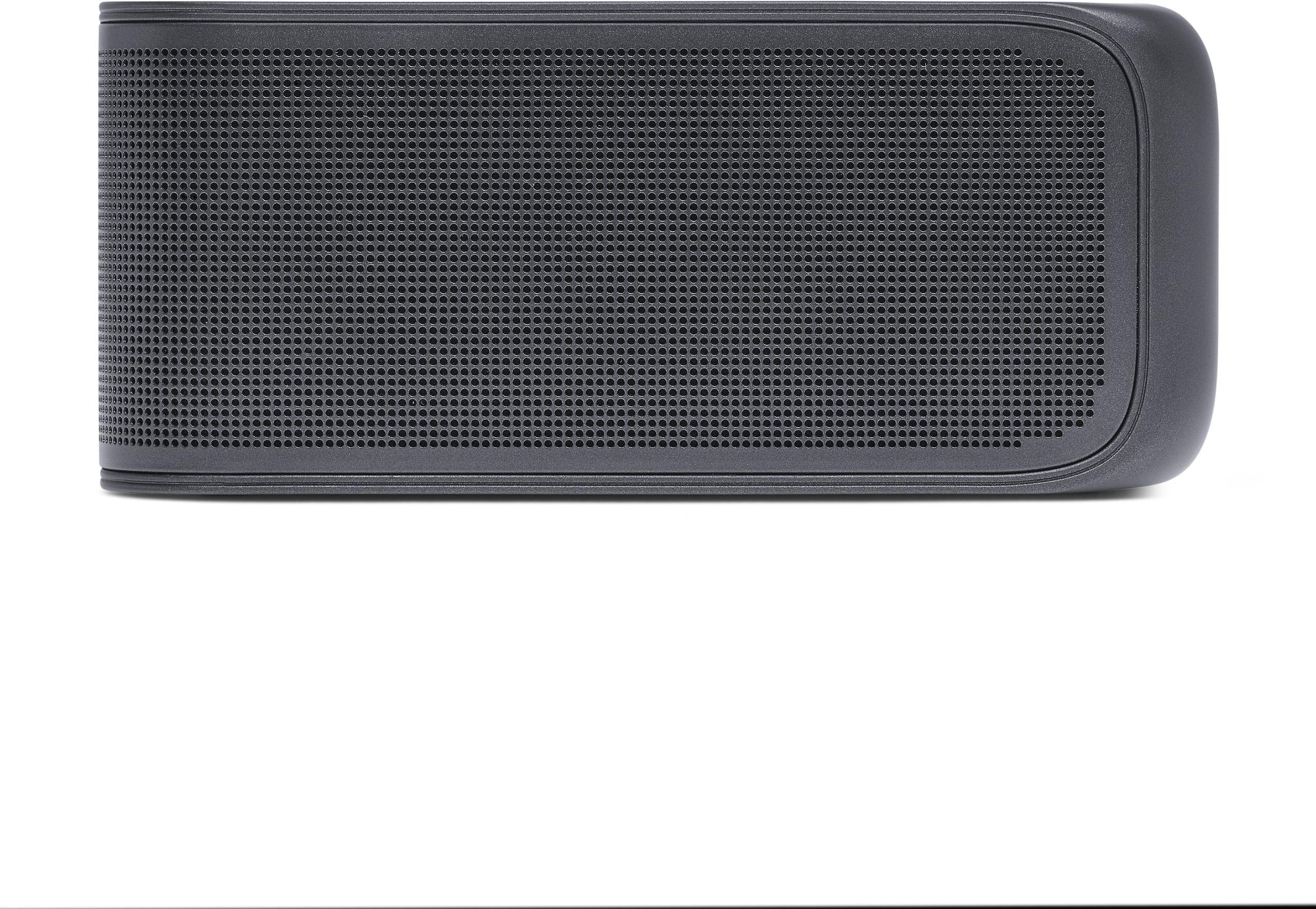
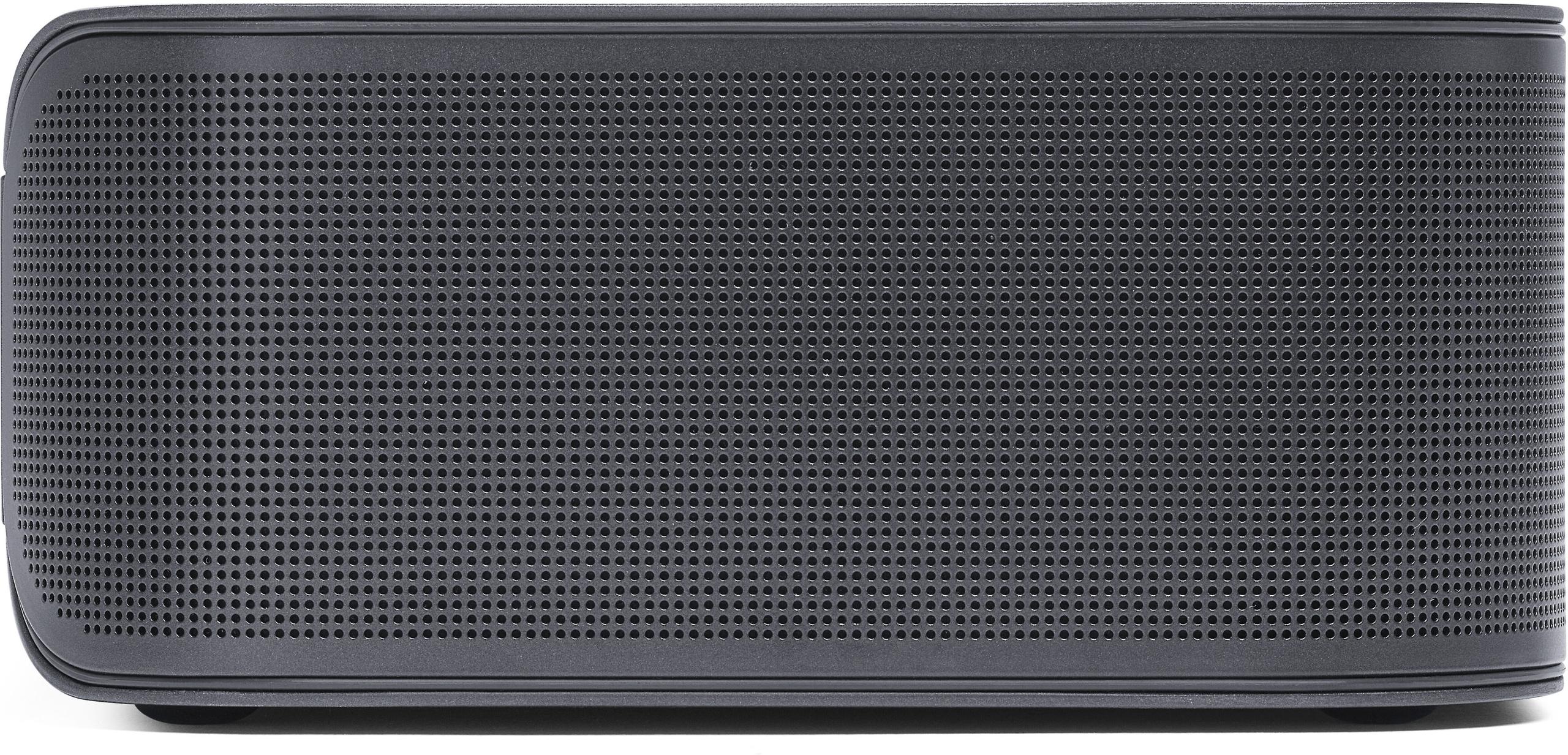
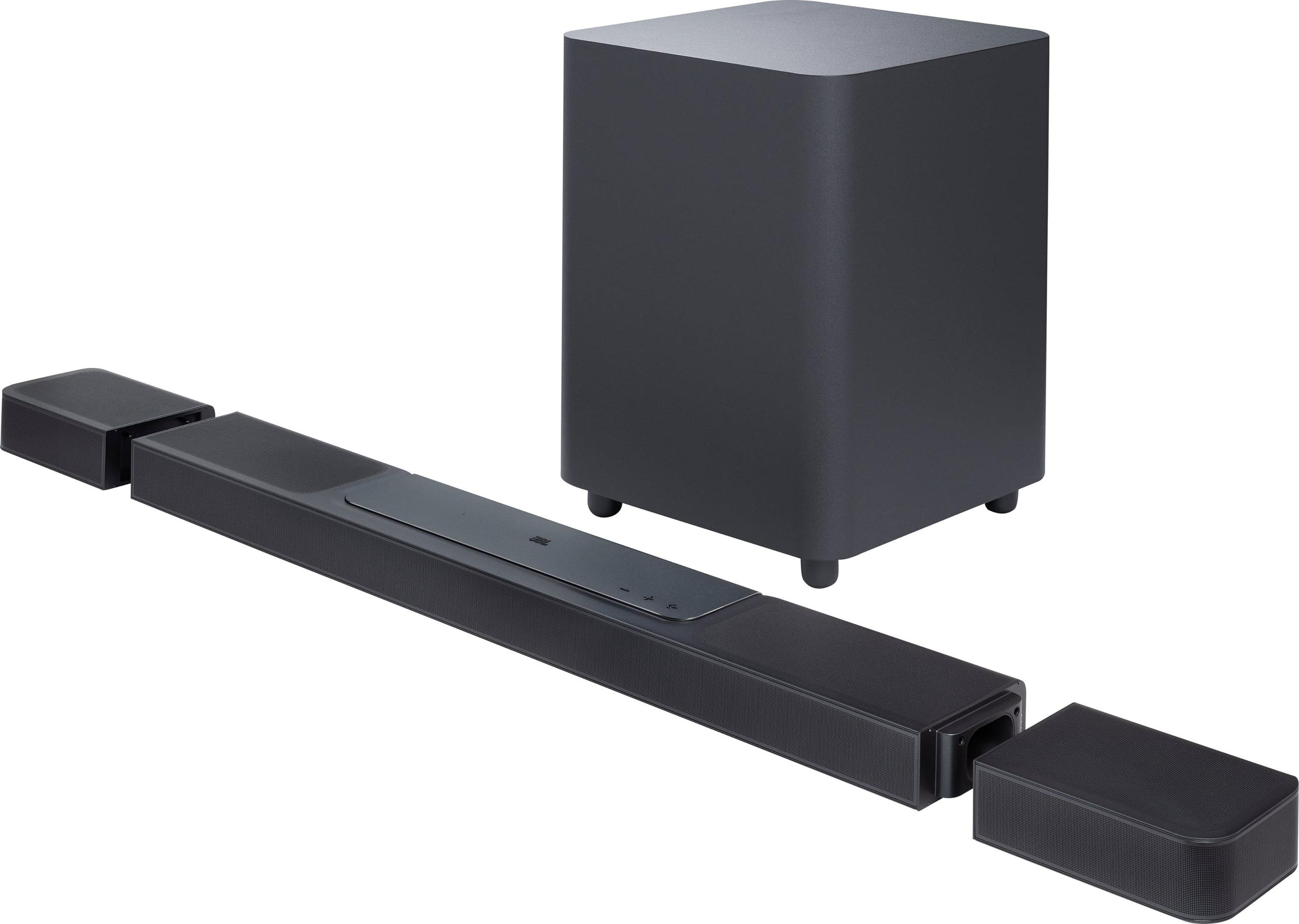
The most striking innovation is the detachable surround speakers. These aren't just wireless rear speakers – they're battery-powered units that magnetically attach to the main soundbar for charging and storage. When you want the full surround experience, you detach them and place them behind your seating area. When you don't need them, they snap back onto the soundbar. It's like having a modular home theater system.
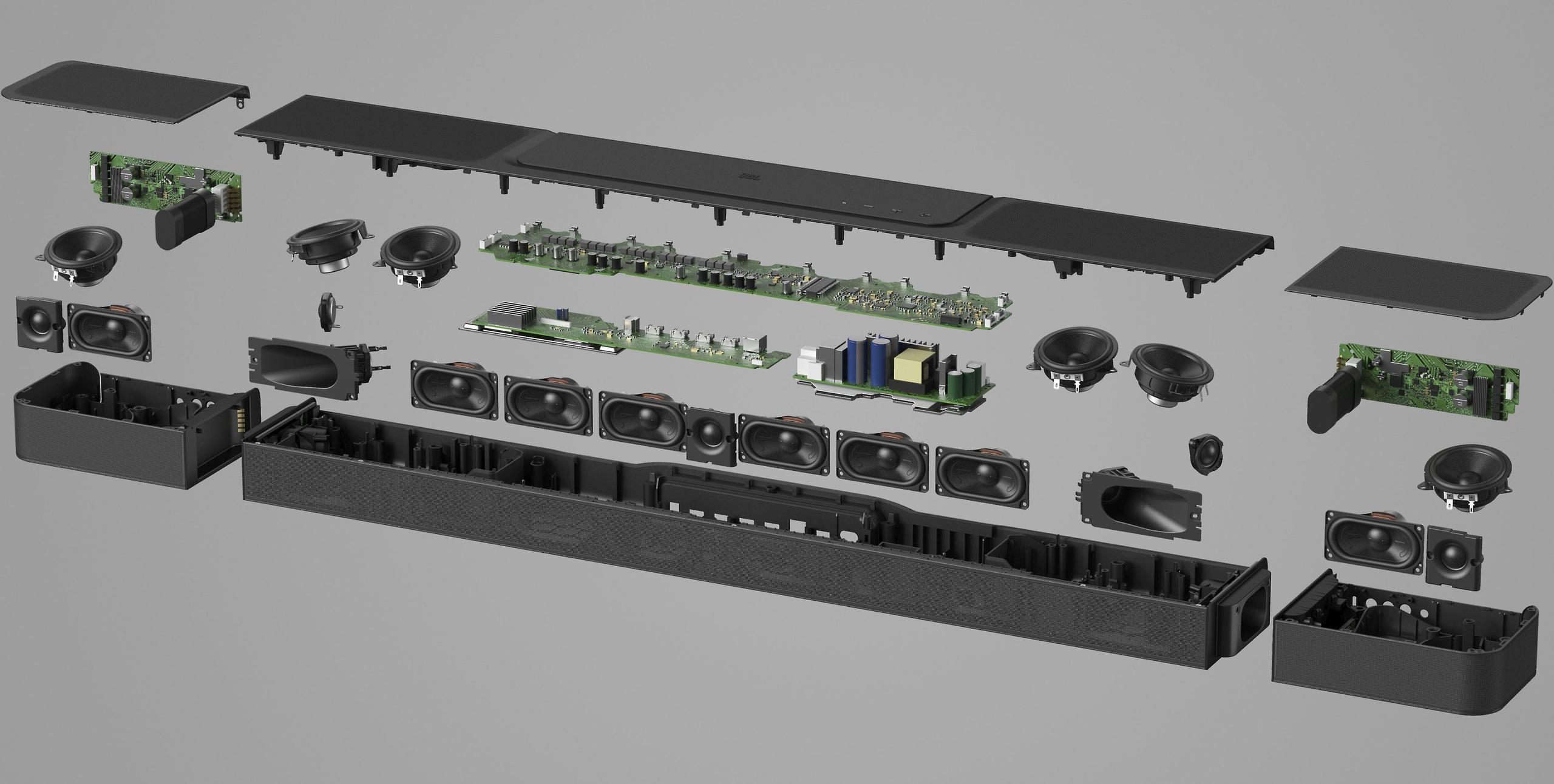
The 11.1.4 channel configuration is impressive on paper, but what does it mean in practice? You get true discrete surround sound – actual separate speakers creating effects behind you rather than digital trickery trying to fool your ears. The four up-firing drivers (two in the main bar, one in each rear speaker) create more convincing height effects than most soundbars can manage.
JBL's MultiBeam technology works alongside the physical speaker placement to analyze your room and optimize the sound field. Think of it as the soundbar taking acoustic measurements of your space and adjusting its output accordingly.
This is where the fundamental difference between these soundbars becomes clear. The Polk MagniFi Max AX relies on psychoacoustic processing – essentially tricking your brain into hearing surround effects that aren't physically there. It's surprisingly effective, especially for dialogue-heavy content like TV shows and dramas.
I've spent considerable time with both systems, and the Polk's virtual surround works well in smaller rooms with good acoustic properties. The SDA processing creates a convincing sense of width, making the soundstage extend well beyond the physical boundaries of the soundbar. However, it can't replicate the sensation of having actual speakers behind you.
The JBL Bar 1300X doesn't need to fake it. Those detachable rear speakers create genuine surround effects that move around the room. During action sequences, you'll hear bullets whizzing past your ears and explosions that seem to come from specific directions. The difference is particularly noticeable with Dolby Atmos content, where sound objects are meant to move freely through three-dimensional space.
The trade-off is complexity. The Polk system is ready to go once you plug it in and connect the wireless subwoofer. The JBL requires you to position the rear speakers correctly, keep them charged, and deal with the occasional wireless hiccup that comes with more complex systems.
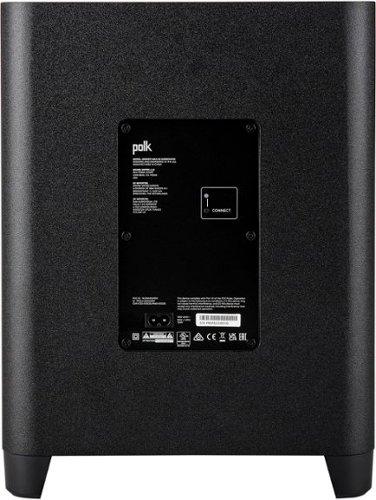
Both systems include wireless subwoofers, but they're tuned for different purposes. The Polk's 10-inch subwoofer is designed for balance – it provides solid bass extension without overwhelming your room or neighbors. This makes it ideal for apartment living or smaller spaces where you want impactful bass that doesn't shake the building.
The JBL's 12-inch subwoofer is a different beast entirely. With 300 watts of dedicated power, it's designed to fill large rooms with deep, room-shaking bass. During movie nights, explosions have genuine impact, and music reproduction benefits from the extended low-frequency response. However, in smaller rooms, it can be overpowering and may require careful adjustment to avoid muddying dialogue.
This is where soundbar design philosophy really shows. The Polk MagniFi Max AX excels at dialogue reproduction thanks to both its dedicated center channel and VoiceAdjust processing. The center channel handles most dialogue in movies and shows, while VoiceAdjust allows you to boost speech frequencies without affecting other audio elements.
In practice, this means you can watch action movies at moderate volumes and still clearly hear every word without having to constantly adjust the volume when scenes switch between dialogue and explosions. The frequency response is carefully tuned to prevent the boominess that can make speech sound muffled.
The JBL Bar 1300X also features a discrete center channel and PureVoice technology, but its higher power output can sometimes work against dialogue clarity. At higher volumes, the sheer amount of audio information can make dialogue feel less prominent, though the PureVoice processing helps mitigate this issue.
Dolby Atmos height effects are where both soundbars face their biggest challenge. Neither can truly replicate the experience of ceiling-mounted speakers, but they approach the problem differently.
The Polk's two up-firing drivers create a modest but noticeable height effect. In movies with distinct overhead sounds – rain, aircraft, falling debris – you'll get a sense of verticality that flat soundbars can't provide. However, the effect depends heavily on your ceiling height and material. High or textured ceilings can diminish the reflection effect that makes up-firing drivers work.
The JBL's four up-firing drivers create more convincing height effects, particularly because the rear speakers contribute to the overhead soundfield. The processing is more sophisticated, and the additional drivers provide better coverage. During Atmos movie scenes, effects move more convincingly through three-dimensional space.
Connectivity is where the JBL Bar 1300X pulls ahead significantly. Its three HDMI inputs plus eARC output mean you can connect multiple devices – gaming console, streaming device, Blu-ray player – without constantly swapping cables. All inputs support 4K and HDR passthrough, so your video quality isn't compromised.
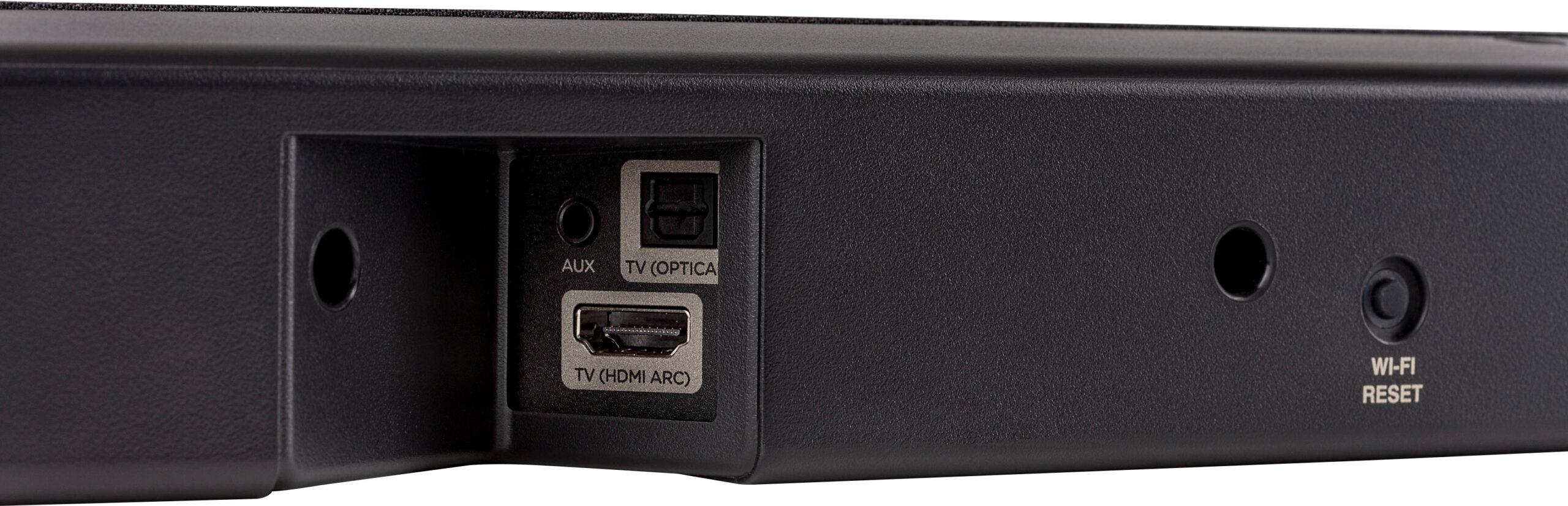
The Polk MagniFi Max AX takes a more minimalist approach with a single HDMI eARC connection plus optical input. For many users, this is sufficient, especially if your TV has enough HDMI inputs for your devices. The wireless connectivity options – Wi-Fi, Bluetooth, AirPlay 2, and Chromecast – provide plenty of streaming flexibility.
Both systems support the major streaming services, but the JBL's app-based room calibration is a standout feature. The system uses your smartphone's microphone to measure your room's acoustics and automatically adjust the sound profile. It's not as sophisticated as dedicated room correction systems, but it's a significant step above the basic EQ presets found on most soundbars.
For dedicated home theater use, the JBL Bar 1300X is the clear winner, but it requires the right setup. In a medium to large room with proper placement for the rear speakers, it creates an impressively immersive experience that rivals traditional 7.1 surround systems in many ways.
The detachable speakers are both the system's greatest strength and its most complex feature. When positioned correctly behind your main seating area, they create genuine surround effects that virtual processing can't match. However, they need clear wireless signal paths to the main unit, and their 12-hour battery life means you'll need to remember to charge them periodically.
The Polk MagniFi Max AX excels in situations where simplicity matters more than ultimate performance. It's perfect for smaller home theaters, bedrooms, or any space where you want a significant audio upgrade without the complexity of managing multiple speakers.
This is where the different approaches really show their strengths and weaknesses. The Polk integrates seamlessly into most living rooms – it's a single soundbar with a wireless subwoofer that you can tuck into a corner or under furniture. Setup takes minutes, and it works well for everything from casual TV watching to movie nights.
The JBL requires more consideration. The rear speakers need placement that works for both surround sound and regular use, and they need to be positioned where they won't be in the way when not in use. However, the fact that they double as portable Bluetooth speakers adds an interesting dimension – you can take them outside for parties or use them in other rooms.
At $499, the Polk Audio MagniFi Max AX represents exceptional value in the premium soundbar market. You're getting Dolby Atmos support, sophisticated processing, excellent dialogue clarity, and a balanced frequency response that works well with varied content. For most users, it provides 80% of the premium soundbar experience at 40% of flagship pricing.
The JBL Bar 1300X at $1,300 is definitely a premium purchase, but it delivers features and performance that weren't available at any price just a few years ago. The detachable speaker concept alone is worth the innovation premium for users who want maximum flexibility. In larger rooms or dedicated home theater spaces, the performance difference justifies the cost.
The choice between these soundbars ultimately comes down to your space, budget, and how much complexity you're willing to embrace for better performance.
Choose the Polk Audio MagniFi Max AX 3.1.2 if you have a small to medium room, prioritize simplicity and dialogue clarity, want excellent value for Dolby Atmos, prefer balanced bass over room-shaking power, or need reliable performance without managing batteries and complex setups.
Opt for the JBL Bar 1300X if you have a large room or open floor plan, want the most immersive surround experience possible, need multiple HDMI inputs, value the flexibility of detachable speakers, enjoy powerful bass and high-volume listening, or can justify the premium for cutting-edge features.
Both soundbars represent significant upgrades over TV speakers and basic soundbars, but they serve different needs and preferences. The Polk offers refined, accessible performance that works for most situations. The JBL pushes boundaries with innovation that creates a more immersive but complex experience. Your choice should align with your room, lifestyle, and how much you value having the latest audio technology in your home theater setup.
| Polk Audio MagniFi Max AX 3.1.2 | JBL Bar 1300X |
|---|---|
| Price - Entry point vs premium investment | |
| $499 (excellent value for Dolby Atmos) | $1,300 (premium pricing for flagship features) |
| Channel Configuration - Determines surround sound capability | |
| 3.1.2 (virtual surround processing) | 11.1.4 (true discrete surround channels) |
| Surround Speaker Setup - Physical vs virtual surround | |
| Virtual processing only (simpler setup) | Detachable battery-powered rear speakers (true surround) |
| Total Power Output - Room-filling capability | |
| 620W (suitable for small-medium rooms) | 1,170W (designed for large spaces) |
| Subwoofer Size - Bass impact and room compatibility | |
| 10-inch wireless (balanced, apartment-friendly) | 12-inch wireless 300W (room-shaking power) |
| Up-firing Drivers - Dolby Atmos height effects | |
| 2 drivers in soundbar (basic height effects) | 4 drivers total (2 in bar, 2 in rears - superior overhead sound) |
| HDMI Connectivity - Multiple device support | |
| 1 eARC input (sufficient for most setups) | 3 inputs + 1 eARC output (connects multiple sources directly) |
| Room Calibration - Automatic sound optimization | |
| Manual EQ presets only | App-based automatic room calibration included |
| Wireless Streaming - Music service compatibility | |
| Wi-Fi, Bluetooth, AirPlay 2, Chromecast | Wi-Fi, Bluetooth, AirPlay 2, Chromecast, Alexa MRM |
| Setup Complexity - Time to optimal performance | |
| Plug-and-play (soundbar + wireless sub) | Complex (rear speaker positioning, battery management) |
| Ideal Room Size - Performance sweet spot | |
| Small to medium rooms (under 300 sq ft) | Medium to large rooms (300-500+ sq ft) |
| Unique Features - Standout capabilities | |
| VoiceAdjust dialogue enhancement, SDA processing | Detachable speakers double as Bluetooth portables |
The Polk Audio MagniFi Max AX 3.1.2 at $499 offers exceptional value for those wanting Dolby Atmos without breaking the bank. You get 80% of premium soundbar performance at 40% of flagship pricing. The JBL Bar 1300X at $1,300 is a premium investment that justifies its cost through unique features like detachable surround speakers and superior room-filling power for larger spaces.
The core difference is surround sound approach: the Polk Audio MagniFi Max AX 3.1.2 uses virtual processing to simulate surround effects, while the JBL Bar 1300X includes physical detachable rear speakers for true surround sound. This makes the Polk simpler to set up but the JBL more immersive for movies.
The Polk Audio MagniFi Max AX 3.1.2 is ideal for small to medium rooms under 300 square feet. Its balanced 10-inch subwoofer won't overwhelm smaller spaces, and the virtual surround processing works well in intimate settings. The JBL Bar 1300X is designed for larger rooms and may be overpowering in compact spaces.
The Polk Audio MagniFi Max AX 3.1.2 features a 10-inch wireless subwoofer tuned for balanced, controlled bass that won't disturb neighbors. The JBL Bar 1300X has a more powerful 12-inch subwoofer with 300W of dedicated power, delivering room-shaking bass ideal for large home theater setups.
The Polk Audio MagniFi Max AX 3.1.2 excels at dialogue with its VoiceAdjust technology that specifically enhances speech frequencies without affecting other sounds. While the JBL Bar 1300X also has good dialogue clarity with PureVoice technology, the Polk's tuning prioritizes voice reproduction more consistently across all volume levels.
Yes, both the Polk Audio MagniFi Max AX 3.1.2 and JBL Bar 1300X support Dolby Atmos. The Polk uses 2 up-firing drivers for basic height effects, while the JBL features 4 up-firing drivers (2 in the main bar, 2 in detachable rears) for more convincing overhead sound placement.
The Polk Audio MagniFi Max AX 3.1.2 is much simpler to set up - just connect the soundbar and pair the wireless subwoofer. The JBL Bar 1300X requires more complex setup including positioning the detachable rear speakers, managing their battery charging, and running room calibration through the app.
The Polk Audio MagniFi Max AX 3.1.2 has one HDMI eARC input, which is sufficient if your TV has enough inputs for your devices. The JBL Bar 1300X offers three HDMI inputs plus one eARC output, allowing you to connect multiple devices directly to the soundbar with 4K/HDR passthrough.
For dedicated home theater use, the JBL Bar 1300X is superior with its true 11.1.4 surround sound, detachable rear speakers, and powerful bass. However, the Polk Audio MagniFi Max AX 3.1.2 provides excellent home theater performance for smaller rooms at a much lower price point.
Only the JBL Bar 1300X has this capability - its detachable rear speakers can be used as standalone Bluetooth speakers for outdoor use or other rooms. The Polk Audio MagniFi Max AX 3.1.2 uses virtual surround processing, so there are no physical rear speakers to separate.
The JBL Bar 1300X is specifically designed for large rooms with its 1,170W total power output and room-filling capabilities. The Polk Audio MagniFi Max AX 3.1.2 with 620W output is optimized for smaller spaces and may struggle to adequately fill very large or open floor plan areas.
Both the Polk Audio MagniFi Max AX 3.1.2 and JBL Bar 1300X support Wi-Fi, Bluetooth, AirPlay 2, and Chromecast for streaming music. The JBL additionally supports Alexa Multi-Room Music (MRM) for integration with Amazon Echo devices, while both offer access to major streaming services like Spotify and Pandora.
We've done our best to create useful and informative comparisons to help you decide what product to buy. Our research uses advanced automated methods to create this comparison and perfection is not possible - please contact us for corrections or questions. These are the sites we've researched in the creation of this article: youtube.com - avsforum.com - rtings.com - rtings.com - bestbuy.com - walts.com - hometechnologyreview.com - polkaudio.com - pcrichard.com - techradar.com - jbl.com - audioadvice.com - youtube.com - rtings.com - jbl.com - greentoe.com - harmanaudio.com - youtube.com - mm.jbl.com - jbl.com

Privacy Policy
Terms and Conditions - Affiliate Policy
Home Security
© Copyright 2008-2026.
11816 Inwood Rd #1211, Dallas, TX 75244