

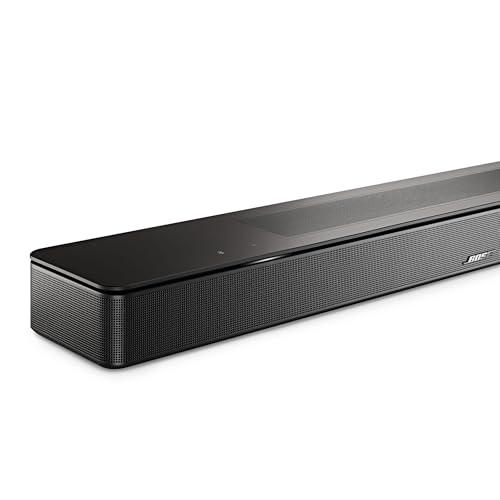
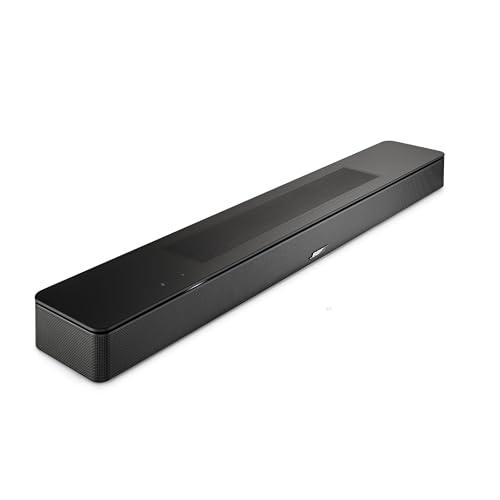

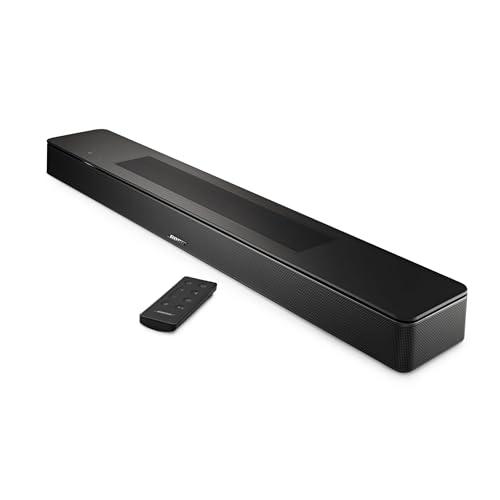
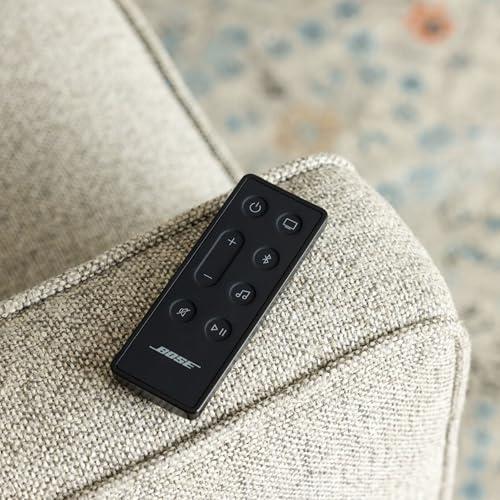


When your TV's built-in speakers sound like they're coming from inside a tin can, it's time for a soundbar upgrade. But with so many options on the market, choosing between premium features and budget-friendly performance can feel overwhelming. Today we're diving deep into two popular soundbars that take completely different approaches: the feature-packed Bose Smart Soundbar 1100 and the value-focused Sonos Ray.
These aren't just random picks – they represent two distinct philosophies in soundbar design. The Bose Smart Soundbar 1100 launches a full assault on your senses with Dolby Atmos, built-in voice assistants, and every connectivity option you could want. Meanwhile, the Sonos Ray takes a "less is more" approach, focusing on exceptional audio quality and ecosystem integration at a price point that won't break the bank.
Before we get into the nitty-gritty, let's talk about what actually matters in a soundbar. The most important factor is dialogue clarity – if you can't understand what characters are saying without cranking the volume or turning on subtitles, your soundbar has failed its primary mission. Next comes overall sound quality, including how well it handles different types of content from whisper-quiet dramatic scenes to explosive action sequences.
Connectivity options determine how easily the soundbar integrates with your existing setup. Modern soundbars should handle HDMI eARC (enhanced Audio Return Channel), which allows for higher-quality audio formats and simpler control through your TV remote. However, optical connections are still widely used and perfectly functional for most content.
Smart features have become increasingly important, with many users expecting their soundbars to stream music directly from Spotify or Apple Music without needing their phone or TV. Voice control through Amazon Alexa or Google Assistant adds convenience, especially when your hands are full of popcorn.
Finally, expandability matters if you think you might want to add a subwoofer or rear speakers later. Some soundbars lock you into proprietary ecosystems, while others offer more flexibility.
The Bose Smart Soundbar 1100 arrived on the scene in 2024 as Bose's answer to the growing demand for compact yet capable soundbars. It packs Dolby Atmos processing, which creates three-dimensional sound by bouncing audio off your ceiling to simulate overhead effects – think helicopters flying above or rain falling around you. This 3.0.2 channel system includes five speakers plus a center tweeter, with two up-firing drivers dedicated to creating that height effect.
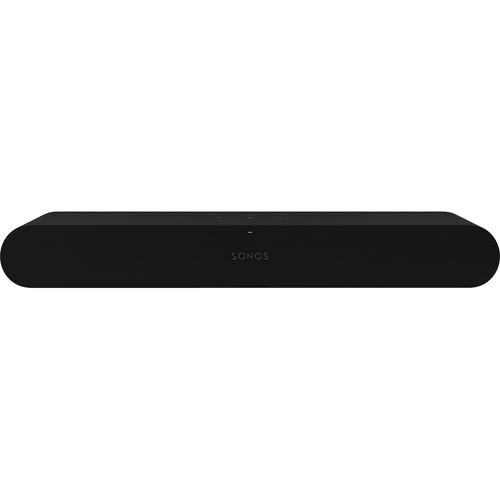
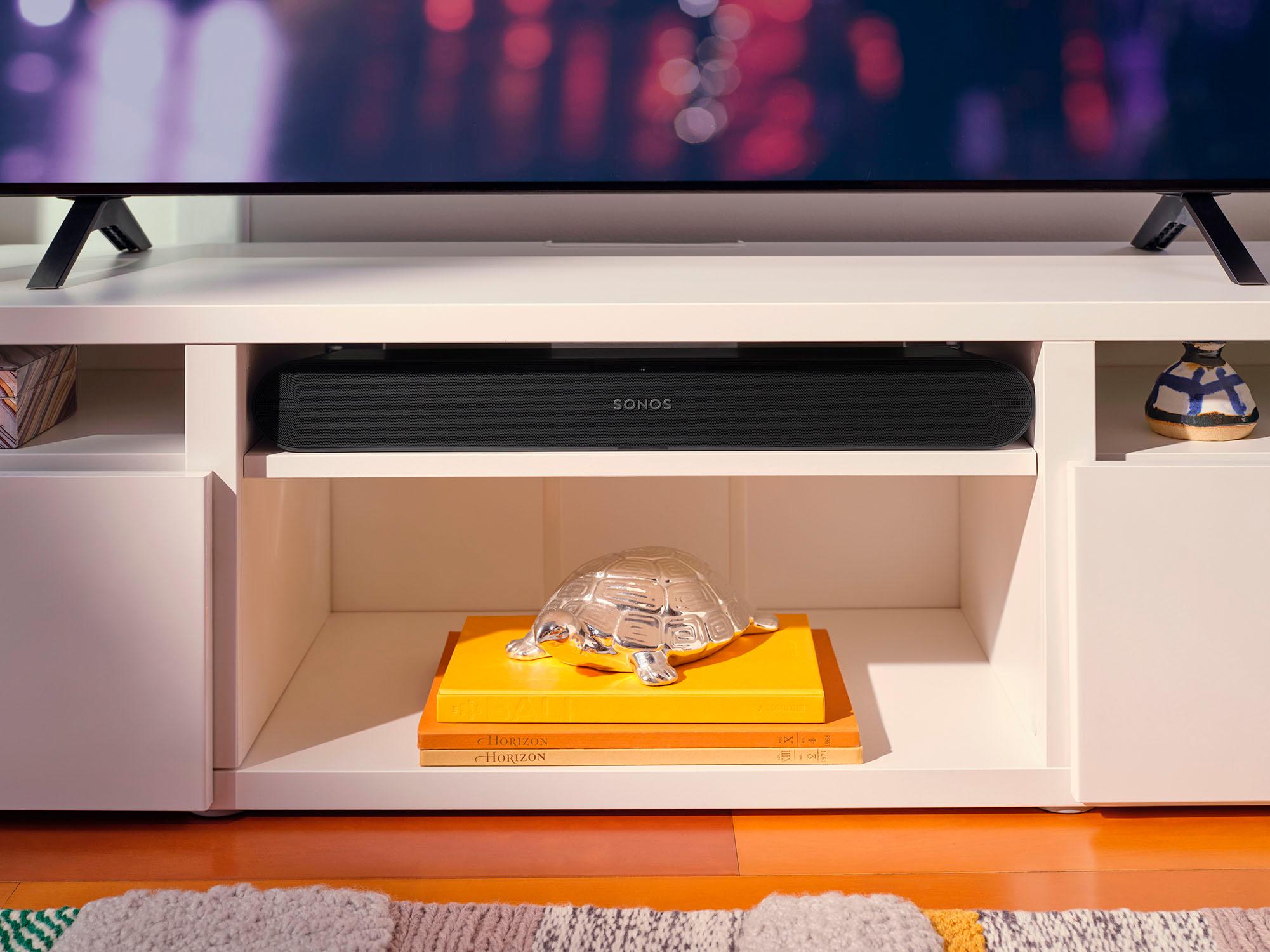
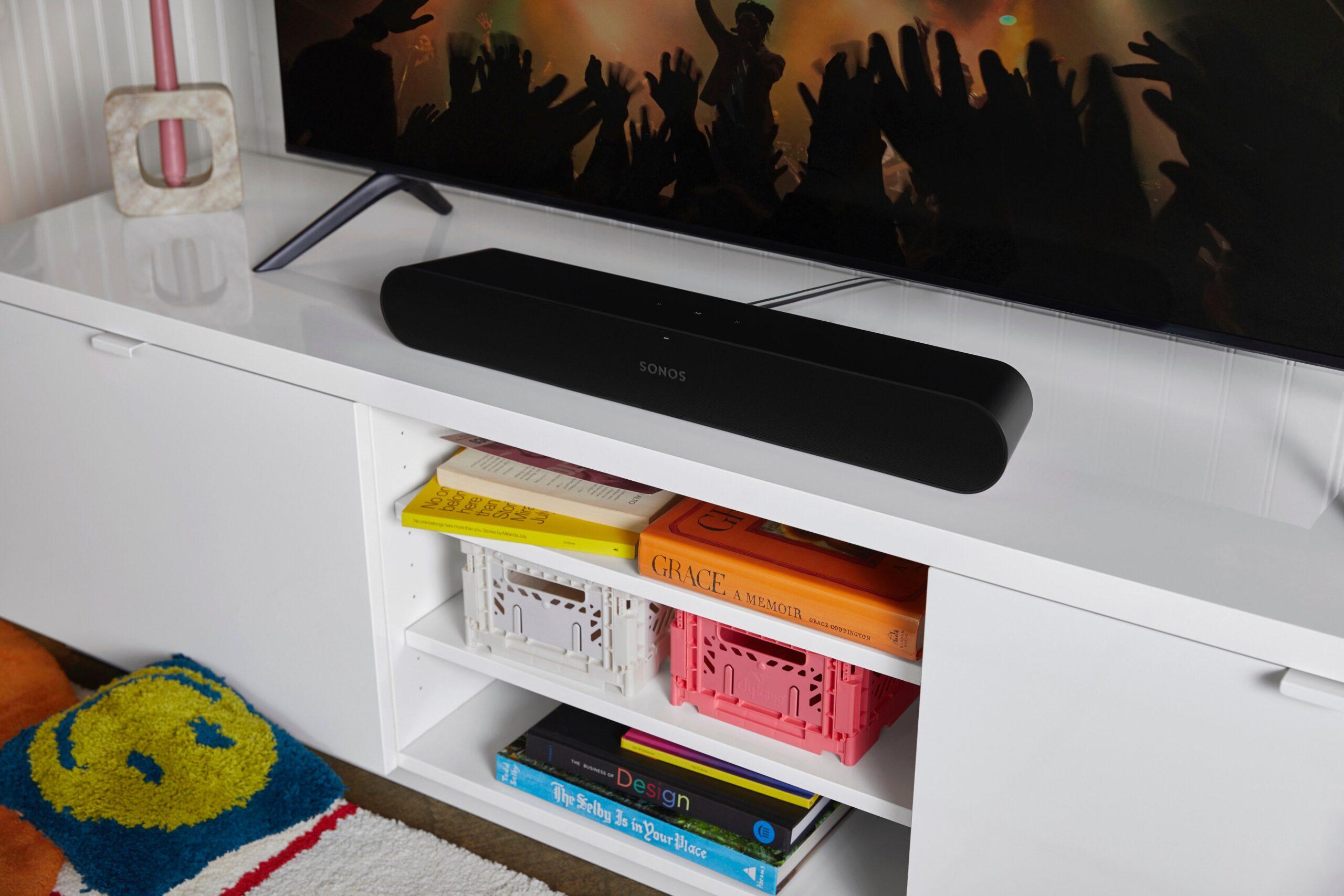
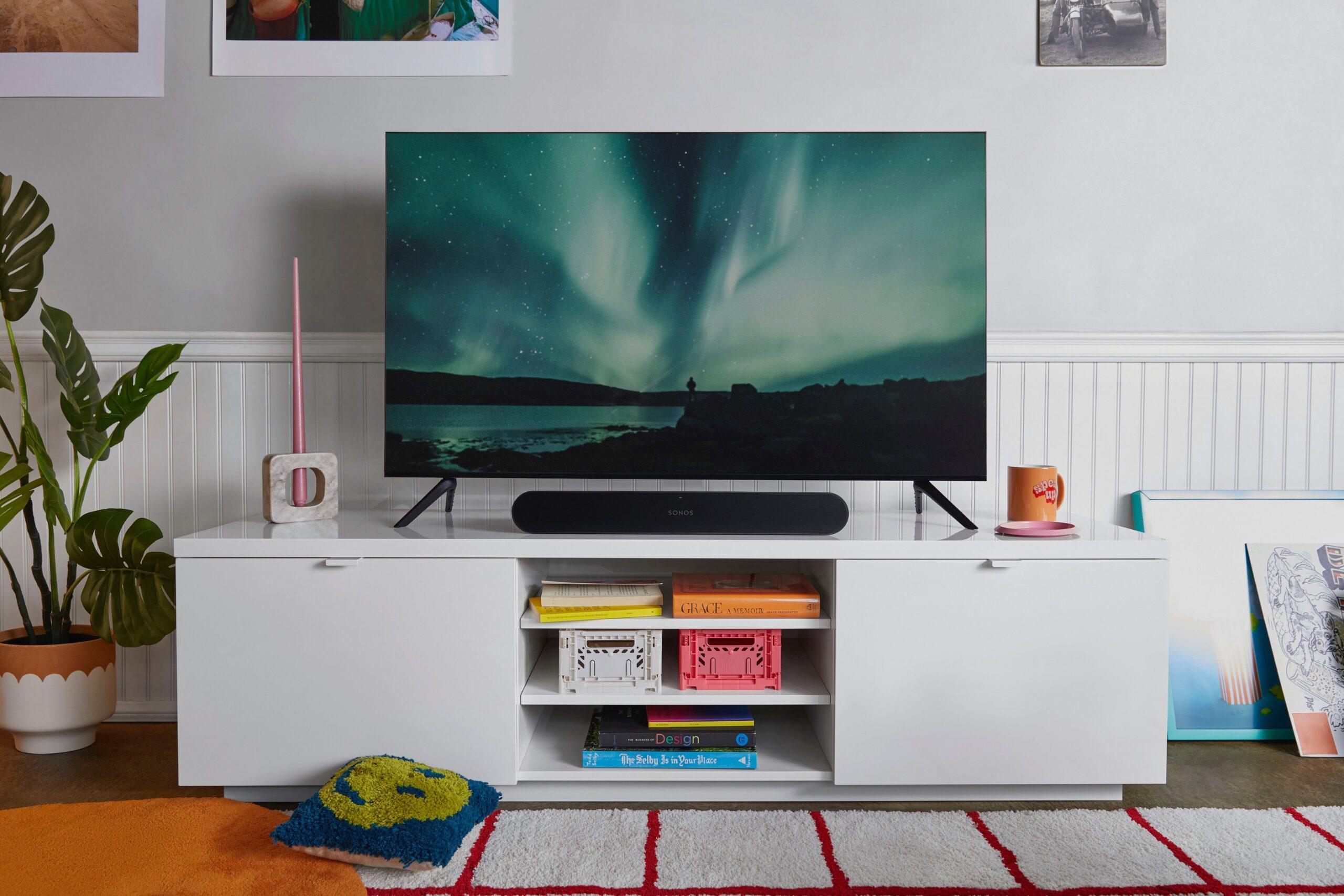
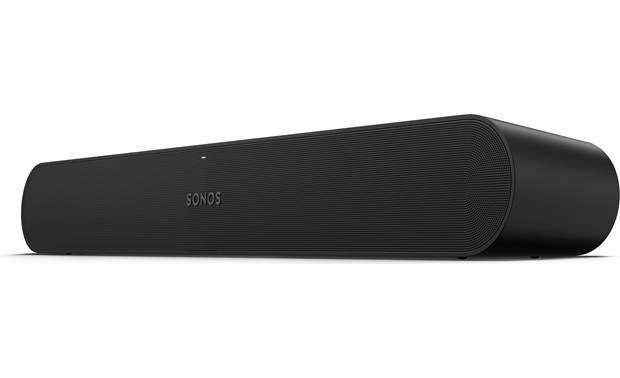
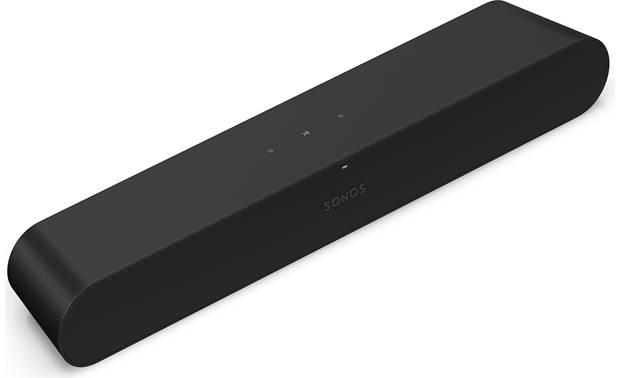
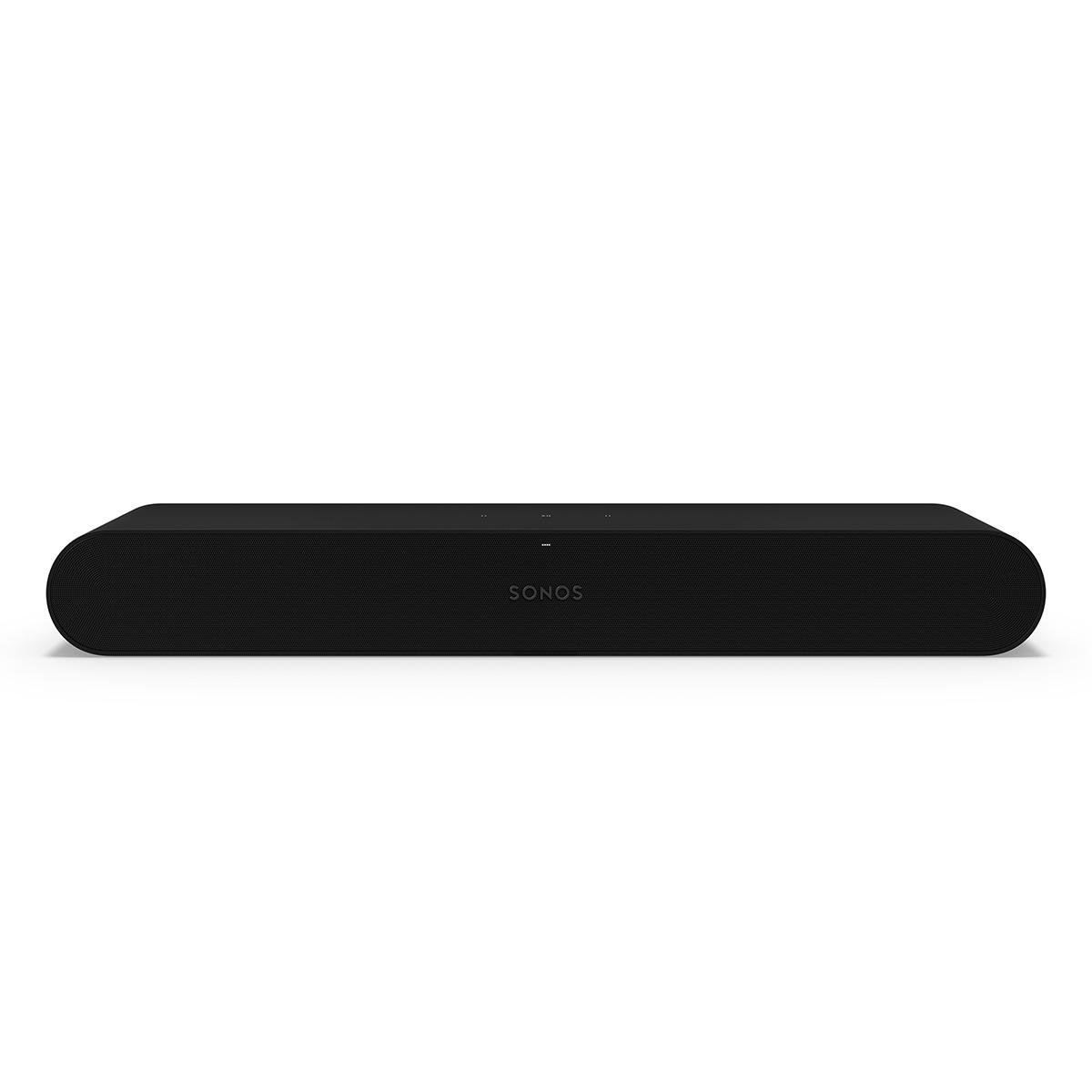
The Sonos Ray, launched in 2022, takes a completely different approach. Instead of cramming in every possible feature, Sonos focused on delivering exceptional stereo sound quality and seamless ecosystem integration. It's a traditional left-right stereo soundbar, but don't let that simplicity fool you – the engineering behind its sound quality is anything but basic.
At the time of writing, these soundbars sit in different price categories, with the Bose Smart Soundbar 1100 positioned as a premium option while the Sonos Ray targets budget-conscious buyers who refuse to compromise on audio quality.
Nothing ruins a movie night like constantly rewinding because you missed crucial dialogue. Both soundbars excel here, but through different approaches. The Bose Smart Soundbar 1100 uses AI Dialogue Mode, which analyzes audio in real-time to automatically boost speech frequencies when it detects dialogue. This isn't just a simple EQ adjustment – it's artificial intelligence that adapts to what you're watching, ensuring voices cut through even during action-packed scenes with explosions and music.
The system's dedicated center tweeter and PhaseGuide technology work together to create what Bose calls a "focused vocal zone" in your listening area. PhaseGuide uses tiny transducers to direct sound beams precisely, making dialogue appear to come directly from the screen rather than the soundbar below it.
The Sonos Ray achieves impressive dialogue clarity despite lacking a dedicated center channel, which traditionally handles dialogue in surround sound systems. Instead, it uses custom-designed waveguides and advanced processing to create what reviewers consistently describe as dialogue that "pops" from the soundstage. The Speech Enhancement feature specifically boosts voice frequencies, though it's less sophisticated than Bose's AI-driven approach.
Based on our research into professional and user reviews, the Bose Smart Soundbar 1100 edges out the Sonos Ray in challenging listening scenarios – think busy restaurant scenes or action movies where dialogue competes with sound effects and music.
Bass is where these soundbars show their different priorities most clearly. The Bose Smart Soundbar 1100 employs QuietPort technology, which uses specially designed ports with resistance screens to minimize turbulence and distortion. This allows the compact soundbar to produce surprisingly deep bass without the "chuffing" noise you often hear from poorly designed ports.
The soundbar's side-firing drivers contribute additional low-end weight, while a proprietary 3.5mm output allows seamless connection to Bose's wireless subwoofers. The bass output is impressive for a standalone soundbar, though action movie enthusiasts will likely want to add a subwoofer eventually.
The Sonos Ray uses a bass reflex system with carefully tuned ports to enhance low-frequency response. Reviewers consistently praise its bass quality relative to size and price, describing it as "perfectly weighted" for most content. However, during bass-heavy scenes with multiple low-frequency elements – think Thor's hammer combined with a rumbling soundtrack – the Ray can sound overwhelmed, becoming "mushy" rather than tight and controlled.
For pure bass extension and control, the Bose Smart Soundbar 1100 takes the lead, though both soundbars benefit significantly from adding a subwoofer.
This is where the philosophical differences between these soundbars become most apparent. The Bose Smart Soundbar 1100 supports true Dolby Atmos through its up-firing drivers, which bounce sound off your ceiling to create height effects. When you hear a plane flying overhead in Top Gun: Maverick, you'll actually perceive it moving above you rather than just in front.
The system's TrueSpace technology goes further by analyzing non-Atmos content and upmixing it to create spatial effects. Watching older movies or TV shows, you'll notice improved depth and width to the soundstage compared to traditional stereo presentation.
The Sonos Ray is limited to stereo presentation, but it makes the most of those two channels. Its wide soundstage projection creates an impressive sense of space for music and dialogue, though it cannot replicate the height effects that make Dolby Atmos compelling for movies.
For home theater enthusiasts who want that immersive cinema experience, the Bose Smart Soundbar 1100 is the clear winner. However, if you primarily watch sitcoms, news, or listen to music, the Sonos Ray's excellent stereo presentation might be all you need.
Here's where things get interesting. While both soundbars excel with dialogue and movie soundtracks, their music performance reveals different strengths. The Sonos Ray was specifically tuned for music reproduction, with Trueplay room correction technology that uses your iPhone's microphone to analyze your room's acoustics and adjust the sound accordingly.
The Sonos approach to music feels more natural and less processed. Jazz recordings showcase detailed instrument separation, while rock music maintains its energy without becoming harsh or fatiguing. The company's decades of experience in wireless audio shows in the balanced frequency response that works across genres.
The Bose Smart Soundbar 1100 offers excellent music performance with its wider frequency range and multiple driver configuration. The system handles complex orchestral pieces well, maintaining clarity even during loud, dense passages. However, some listeners find Bose's sound signature slightly more colored compared to Sonos's neutral approach.
For serious music listening, the Sonos Ray earns our recommendation, especially considering its integration with the broader Sonos ecosystem for multi-room audio.
Modern soundbars need to work with everything from 4K Apple TVs to vintage gaming consoles, and connectivity options determine how well they integrate with your existing setup. The Bose Smart Soundbar 1100 covers all the bases with HDMI eARC, optical input, and even a 3.5mm IR blaster input for controlling other devices.
HDMI eARC support is crucial for accessing high-quality audio formats like Dolby TrueHD and uncompressed multichannel audio from Blu-ray players and streaming devices. It also enables HDMI CEC control, allowing your TV remote to control the soundbar's volume and power without additional setup.
The soundbar includes Bluetooth 5.0 for direct device pairing, plus comprehensive Wi-Fi streaming support including Apple AirPlay 2, Google Chromecast, and Spotify Connect. This means you can start playing music from Spotify on your phone and hand off control to the soundbar, continuing playback even if your phone leaves the room.
The Sonos Ray takes a more minimalist approach with optical-only connectivity. While this limits audio quality compared to HDMI, optical connections work reliably with virtually any TV manufactured in the last fifteen years. The soundbar learns IR commands from your TV remote, providing volume control without additional setup steps.
For wireless streaming, the Sonos Ray supports Wi-Fi and AirPlay 2 but lacks Bluetooth entirely. This might frustrate users who want to quickly connect their phone to play music, though the Sonos app provides excellent control once you're familiar with it.
If you have multiple devices or want the highest possible audio quality, the Bose Smart Soundbar 1100 offers superior connectivity. However, if you primarily use one streaming device or your TV's built-in apps, the Sonos Ray's optical connection will work perfectly fine.
The Bose Smart Soundbar 1100 includes built-in Amazon Alexa with a noise-rejecting microphone array that works even when music is playing loudly. The Voice4Video feature extends Alexa's capabilities to control your TV and cable box through voice commands – you can change channels, adjust volume, or launch Netflix without touching a remote.
Google Assistant compatibility adds flexibility for households using Google's ecosystem, though this requires a separate Google device rather than being built directly into the soundbar.
The Sonos Ray takes a different approach by working with your existing voice assistants rather than including them built-in. If you already have an Amazon Echo or Google Nest device, you can control the Ray through voice commands for basic functions like volume and play/pause.
The Sonos app deserves special mention for its intuitive interface and comprehensive control options. Setting up streaming services, adjusting EQ settings, and managing multi-room audio feels more polished than most manufacturer apps.
For smart home enthusiasts who want everything controllable by voice, the Bose Smart Soundbar 1100 offers more convenience. Users who prefer dedicated smart speakers for voice control will find the Sonos Ray integrates well with existing setups.
Both soundbars offer paths to more immersive audio, but through different ecosystems. The Bose Smart Soundbar 1100 can connect wirelessly to Bose Bass Modules (500 or 700) and Bose Surround Speakers for a complete 5.1+ system. The proprietary wireless connection ensures perfect synchronization without the interference issues that sometimes plague third-party wireless subwoofers.
Bose's unique Personal Surround Sound feature lets you pair Ultra Open Earbuds to act as rear surround speakers for late-night viewing without disturbing others – a creative solution we haven't seen from other manufacturers.
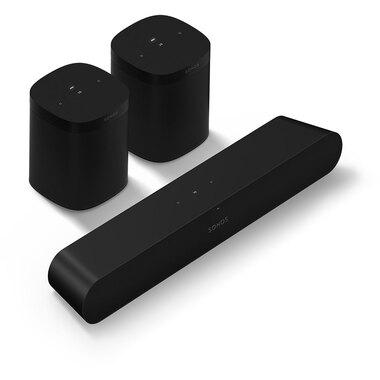
The Sonos Ray integrates into the broader Sonos ecosystem, allowing connection to the Sonos Sub and various rear speaker options, including the budget-friendly IKEA Symfonisk speakers. The real advantage here is multi-room capability – you can start playing music in your living room and seamlessly extend it to Sonos speakers throughout your home.
Long-term value considerations favor different approaches depending on your goals. The Bose ecosystem focuses on home theater performance with precise synchronization and formats support. The Sonos ecosystem prioritizes whole-home audio with superior music streaming and room-to-room handoff capabilities.
After analyzing professional reviews, user feedback, and technical specifications, clear usage patterns emerge. The Bose Smart Soundbar 1100 excels in dedicated home theater setups where movie and TV watching takes priority. Its Dolby Atmos processing and AI dialogue enhancement make action movies, dramas, and sports significantly more engaging than basic TV speakers.
The built-in voice assistant proves genuinely useful for families who frequently adjust volume, change channels, or launch streaming apps through voice commands. The comprehensive connectivity options also make it ideal for users with multiple devices – gaming consoles, streaming boxes, and Blu-ray players all connect seamlessly.
The Sonos Ray shines in living spaces where music streaming matters as much as TV audio. Its exceptional stereo imaging and balanced frequency response make it equally at home playing jazz albums and Netflix series. The entry-level pricing makes it an excellent starting point for users who want premium audio quality without premium pricing.
The Sonos ecosystem advantage becomes apparent for users planning multi-room audio expansion. Starting with the Ray and gradually adding speakers throughout your home creates a cohesive whole-home audio system that few competitors can match.
At the time of writing, these soundbars occupy different value propositions that make direct comparison challenging. The Bose Smart Soundbar 1100 justifies its premium pricing through advanced features like Dolby Atmos, AI dialogue processing, and comprehensive smart home integration. If you want the most immersive TV viewing experience and plan to use voice control regularly, the additional cost delivers meaningful benefits.
The Sonos Ray represents exceptional value for users who prioritize audio quality over advanced features. Its dialogue clarity rivals more expensive soundbars, while music performance exceeds expectations for its price category. The path to ecosystem expansion provides future upgrade options without forcing immediate expensive purchases.
For most users, the decision comes down to priorities and budget. Choose the Bose Smart Soundbar 1100 if you want immediate home theater immersion with Dolby Atmos and don't mind paying extra for convenience features. Choose the Sonos Ray if you want excellent audio quality at an accessible price point with the option to expand gradually over time.
Both soundbars will dramatically improve your TV's audio quality compared to built-in speakers. Your choice should reflect whether you value cutting-edge features and immediate capability, or prefer starting with excellent basics and growing your system organically. Either way, you'll end up with significantly better dialogue clarity, music performance, and overall audio enjoyment than standard TV speakers can provide.
| Bose Smart Soundbar 1100 | Sonos Ray Soundbar |
|---|---|
| Audio Channels - Determines surround sound capabilities | |
| 3.0.2 channels with Dolby Atmos (true overhead effects) | Stereo only (excellent imaging but no height effects) |
| Speaker Configuration - Affects sound quality and clarity | |
| 5 speakers + center tweeter (dedicated dialogue channel) | 4 speakers: 2 full-range drivers + 2 tweeters |
| Dolby Atmos Support - Creates immersive 3D audio for movies | |
| Yes, with dedicated up-firing drivers | No Atmos support |
| Voice Assistant - Hands-free control convenience | |
| Built-in Amazon Alexa + Google Assistant compatibility | No built-in assistant (works with external devices) |
| Connectivity Options - Determines compatibility with your devices | |
| HDMI eARC + Optical + Bluetooth 5.0 | Optical only (no HDMI or Bluetooth) |
| Wireless Streaming - Music and podcast playback options | |
| AirPlay 2, Chromecast, Spotify Connect, Bluetooth | AirPlay 2 + Wi-Fi streaming (no Bluetooth) |
| Dimensions - Space requirements under your TV | |
| 27.3" W x 2.2" H x 4.6" D (fits most TVs) | 22" W x 2.8" H x 3.7" D (very compact) |
| Smart Audio Features - Advanced processing for better sound | |
| AI Dialogue Mode, TrueSpace upmixing, PhaseGuide | Speech Enhancement, Trueplay room tuning (iPhone only) |
| Expandability - Future upgrade options | |
| Wireless Bose subwoofers and surrounds | Sonos Sub + rear speakers + multi-room system |
| Room Correction - Optimizes sound for your space | |
| Wall EQ preset only | Trueplay automatic room tuning (iOS required) |
| Best Use Case - Who should choose this soundbar | |
| Movie lovers wanting immersive Dolby Atmos experience | Music enthusiasts and budget-conscious buyers seeking quality |
The Bose Smart Soundbar 1100 has a slight edge for dialogue clarity thanks to its AI Dialogue Mode that automatically enhances speech and dedicated center tweeter. However, the Sonos Ray also delivers excellent vocal clarity with its Speech Enhancement feature and custom waveguides, despite lacking a center channel. Both soundbars significantly outperform TV speakers for dialogue.
Yes, the Bose Smart Soundbar 1100 supports true Dolby Atmos with dedicated up-firing drivers that bounce sound off your ceiling for overhead effects. The Sonos Ray does not support Dolby Atmos and is limited to stereo sound, making the Bose the better choice for immersive movie experiences.
The Bose Smart Soundbar 1100 offers superior connectivity with HDMI eARC, optical input, and Bluetooth 5.0. The Sonos Ray only has optical connectivity and lacks both HDMI and Bluetooth. If you have multiple devices or want the highest audio quality, choose the Bose Smart Soundbar 1100.
Both soundbars can be expanded with subwoofers from their respective manufacturers. The Bose Smart Soundbar 1100 connects wirelessly to Bose Bass Modules, while the Sonos Ray pairs with the Sonos Sub. Both systems also support adding rear surround speakers for a complete home theater setup.
The Sonos Ray generally performs better for music with its balanced frequency response and Trueplay room correction technology. The Bose Smart Soundbar 1100 also handles music well with its wider frequency range, but the Sonos Ray is specifically tuned for music reproduction and integrates better with multi-room audio systems.
The Bose Smart Soundbar 1100 has built-in Amazon Alexa and works with Google Assistant for hands-free control. The Sonos Ray doesn't have built-in voice assistants but can be controlled through existing Amazon Echo or Google devices in your home.
The Sonos Ray offers exceptional value with premium sound quality at an entry-level price point. The Bose Smart Soundbar 1100 costs more but includes advanced features like Dolby Atmos, voice assistants, and comprehensive connectivity. Your choice depends on whether you prioritize features or budget.
The Bose Smart Soundbar 1100 produces deeper, more controlled bass thanks to its QuietPort technology and side-firing drivers. The Sonos Ray delivers good bass for its size but can sound overwhelmed during bass-heavy scenes. Both benefit from adding a subwoofer for the best low-end performance.
Both soundbars work well in small rooms, but the Sonos Ray is more compact and may be a better fit under smaller TVs. The Bose Smart Soundbar 1100 offers more immersive sound with Dolby Atmos, which can be particularly effective in smaller spaces where ceiling reflections work better.
Yes, both soundbars support TV remote control. The Bose Smart Soundbar 1100 uses HDMI CEC for seamless integration, while the Sonos Ray learns commands from your TV's infrared remote. The Bose typically offers more reliable control through its HDMI connection.
Both offer good app experiences, but the Sonos Ray has a slight advantage with the highly-regarded Sonos app that's intuitive for setup and multi-room control. The Bose Smart Soundbar 1100 uses the Bose Music app, which is functional but not quite as polished as the Sonos experience.
For dedicated home theater use, choose the Bose Smart Soundbar 1100 due to its Dolby Atmos support, AI dialogue enhancement, and HDMI eARC connectivity. The Sonos Ray is better suited for mixed-use scenarios where music listening is equally important as TV watching, though it still significantly improves movie audio over TV speakers.
We've done our best to create useful and informative comparisons to help you decide what product to buy. Our research uses advanced automated methods to create this comparison and perfection is not possible - please contact us for corrections or questions. These are the sites we've researched in the creation of this article: bestbuy.com - rtings.com - rtings.com - youtube.com - staples.com - youtube.com - soundguys.com - businessinsider.com - youtube.com - rtings.com - crutchfield.com - youtube.com - youtube.com - smart.dhgate.com - dolby.com - bose.com - assets.bose.com - bose.com - connection.com - bestbuy.com - cdw.com - dell.com - device.report - techradar.com - soundandvision.com - youtube.com - appleinsider.com - youtube.com - sonos.com - cnet.com - howtogeek.com - pcrichard.com - en.community.sonos.com - epicsystems.tech - en.community.sonos.com - cepro.com - videoandaudiocenter.com

Privacy Policy
Terms and Conditions - Affiliate Policy
Home Security
© Copyright 2008-2026.
11816 Inwood Rd #1211, Dallas, TX 75244