



If you've ever tried watching a movie with your TV's built-in speakers, you know the struggle. Dialogue that's either too quiet or drowned out by explosions, bass that sounds like it's coming through a tin can, and an overall flat experience that makes you wonder why you bothered upgrading to that beautiful 4K display. That's where soundbars come in – they're designed to fix these exact problems without the complexity of a full surround sound system.
But here's the thing: not all soundbars are created equal. The Devialet Dione and Sonos Ray represent two completely different philosophies in soundbar design, released just a few months apart in 2022. One costs about twelve times more than the other, and the differences go far beyond just the price tag.
Before diving into these specific models, it's worth understanding what separates a great soundbar from a mediocre one. The most important factors are driver quality (the individual speakers inside), amplification power, and digital signal processing (DSP) – basically, the computer brain that decides how to distribute sound across different speakers.
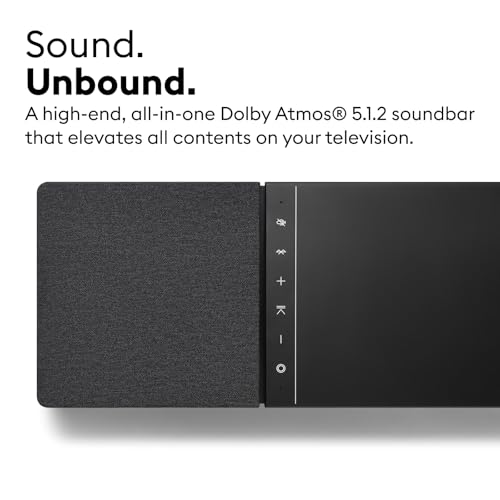
Modern soundbars also need to handle various audio formats. Dolby Atmos, for instance, is an object-based audio system that places sounds in a three-dimensional space around you, rather than just left and right channels. DTS:X works similarly. These formats can make you feel like helicopters are actually flying overhead or rain is falling around you, but only if your soundbar can properly decode and reproduce these effects.
The physical design matters too. Longer soundbars generally create a wider soundstage (the perceived width of sound), while the internal layout of drivers determines how well they can create virtual surround effects – making it seem like sounds are coming from behind you even when all the speakers are in front.
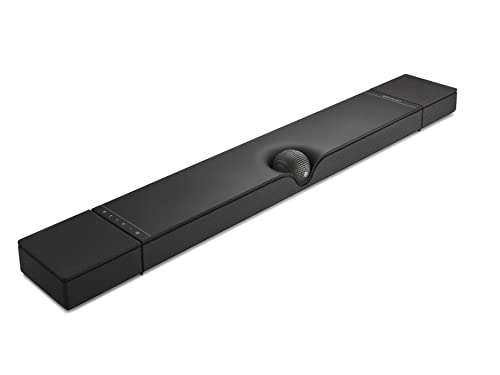
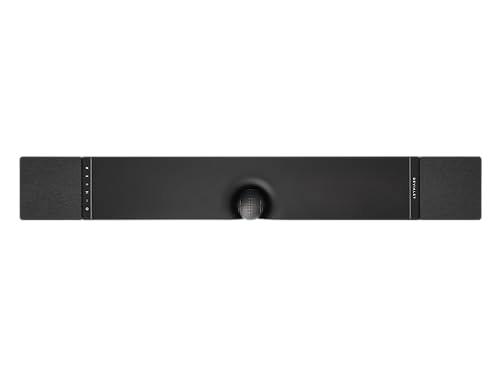
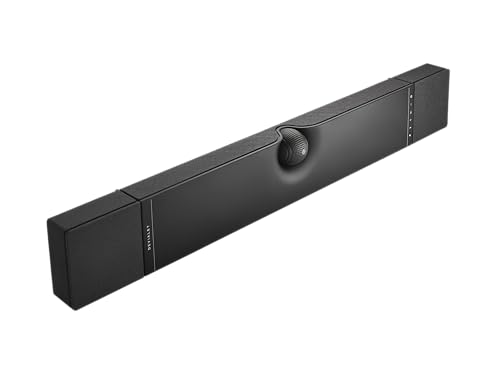
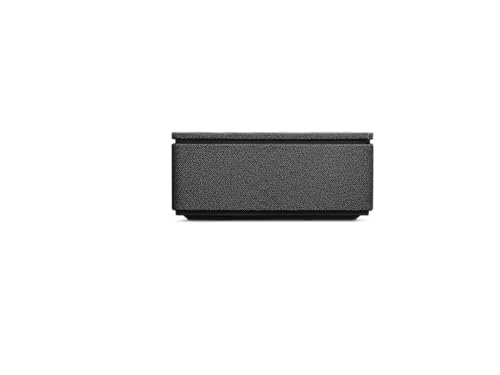
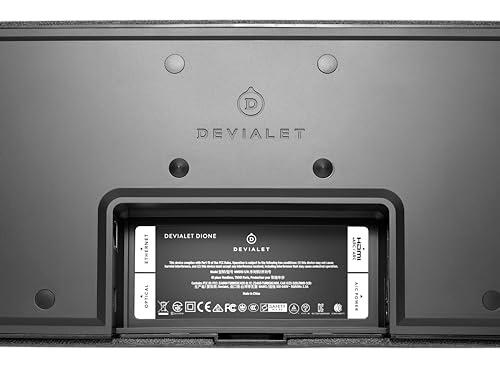
Released in early 2022, the Devialet Dione represents what happens when a high-end audio company decides to build a no-compromise soundbar. Devialet has spent years perfecting amplification technology for their premium Phantom speakers, which can cost upwards of $3,000 each, so they brought that same engineering philosophy to the soundbar market.
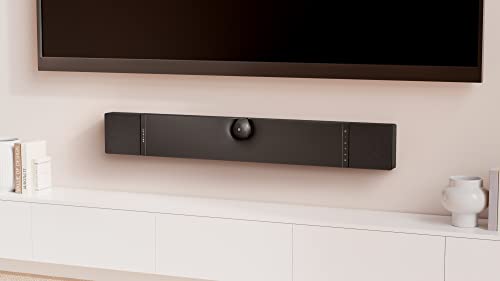
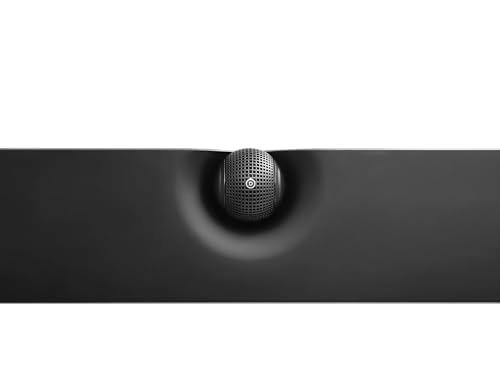
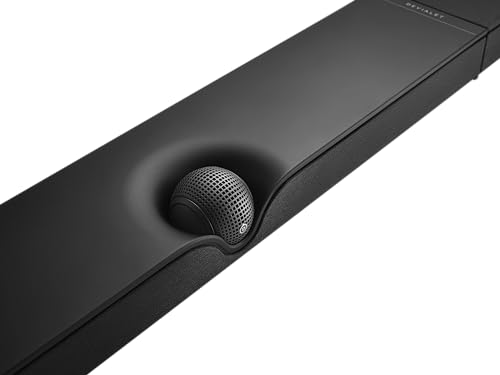
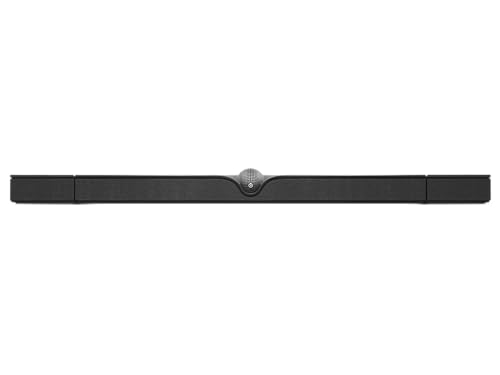
The most striking feature is the ORB – that spherical center speaker that can rotate 180 degrees. This isn't just for show; it's a brilliant engineering solution. When you place the Dione on a TV stand, the ORB faces forward. Mount it on the wall, and the ORB rotates down to maintain optimal dialogue projection toward your listening position. A built-in gyroscope automatically detects the orientation and adjusts the channel mapping accordingly.
But the real magic happens with the driver array. The Dione packs 17 individual speakers: nine full-range drivers for mids and highs, plus eight dedicated subwoofers arranged in what Devialet calls a "push-push" configuration. This means pairs of woofers work in opposition, canceling out vibrations that would otherwise muddy the sound or rattle your TV stand.
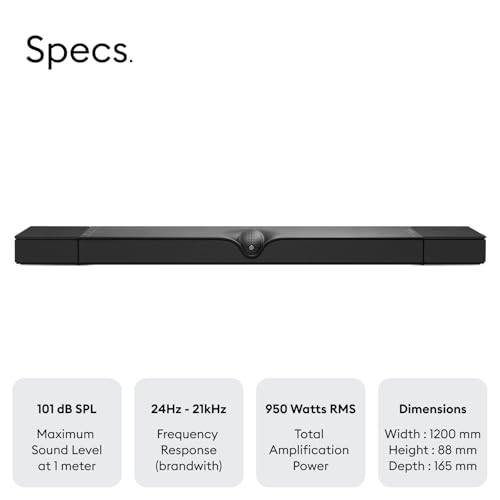
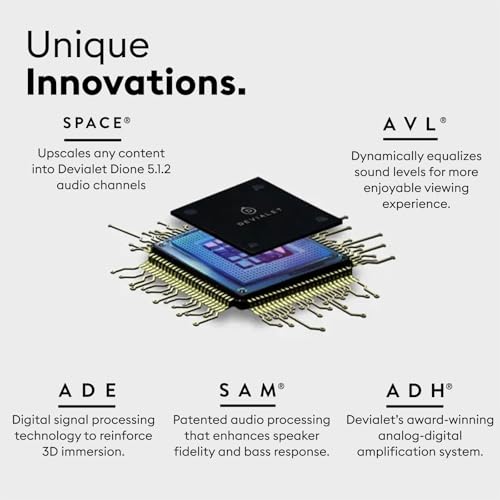
The amplification system deserves special attention. Devialet's ADH (Analog Digital Hybrid) technology combines the musical qualities of Class A amplifiers – known for their purity but inefficiency – with the power and efficiency of Class D amplifiers. The result is 950 watts of clean power that can push the Dione to cinema-level volumes without distortion.
What really sets the Dione apart is its frequency response. Most soundbars struggle below 60Hz, requiring a separate subwoofer for meaningful bass. The Dione extends down to 24Hz – that's legitimate subwoofer territory. For context, the lowest note on a standard piano is around 27Hz, and movie sound effects often dig even deeper.
The SPACE technology is particularly clever. It analyzes incoming stereo or mono content and uses psychoacoustic processing to spread it across all 17 drivers, creating a convincing 5.1.2 surround experience from any source. This means even your local news broadcast gets enhanced spatial processing, though you can switch to a pure stereo mode for critical music listening.
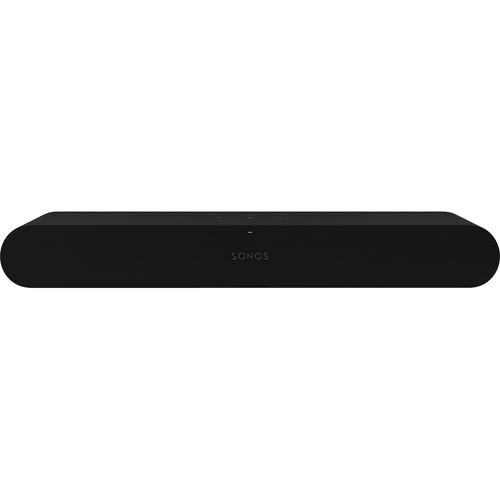
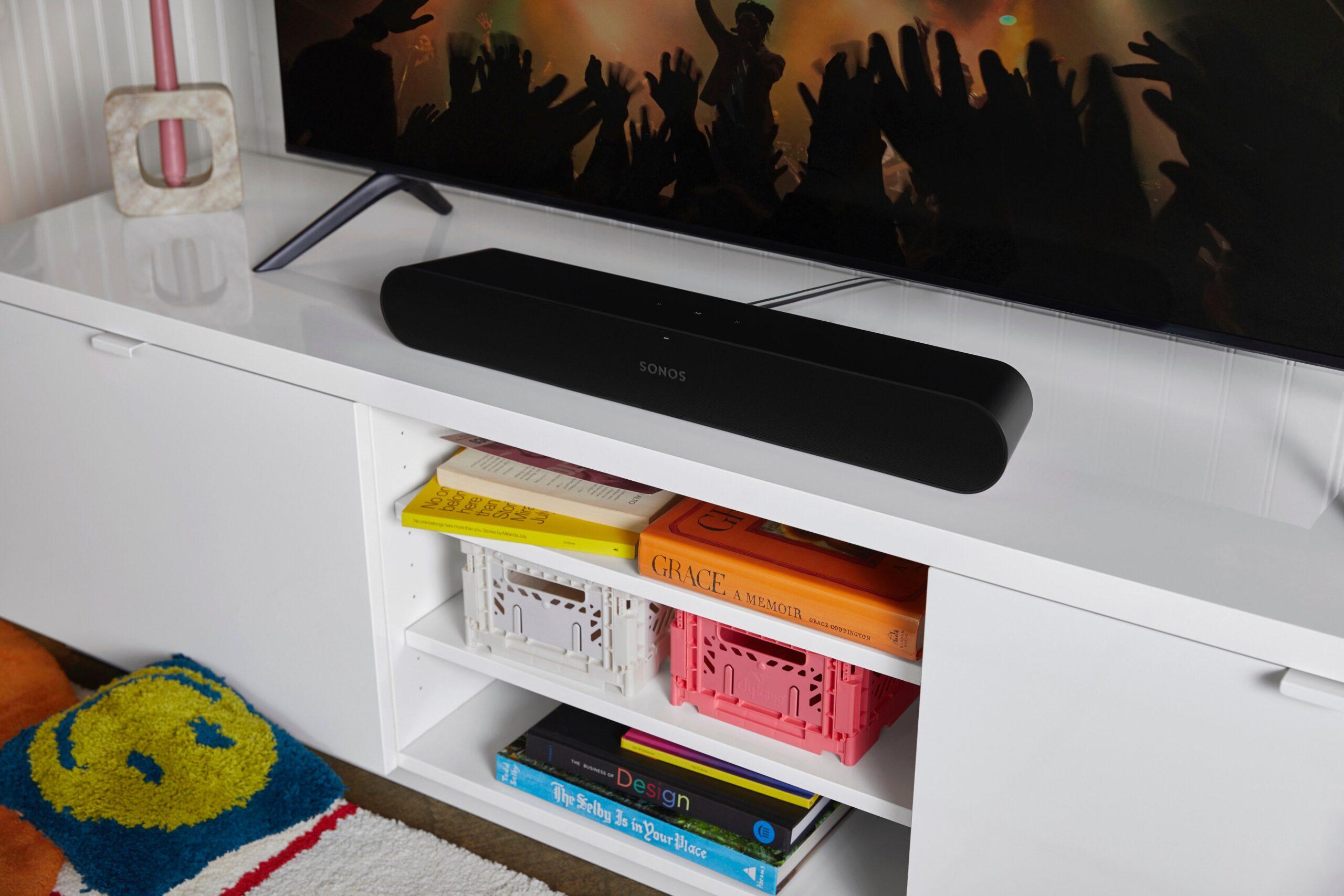
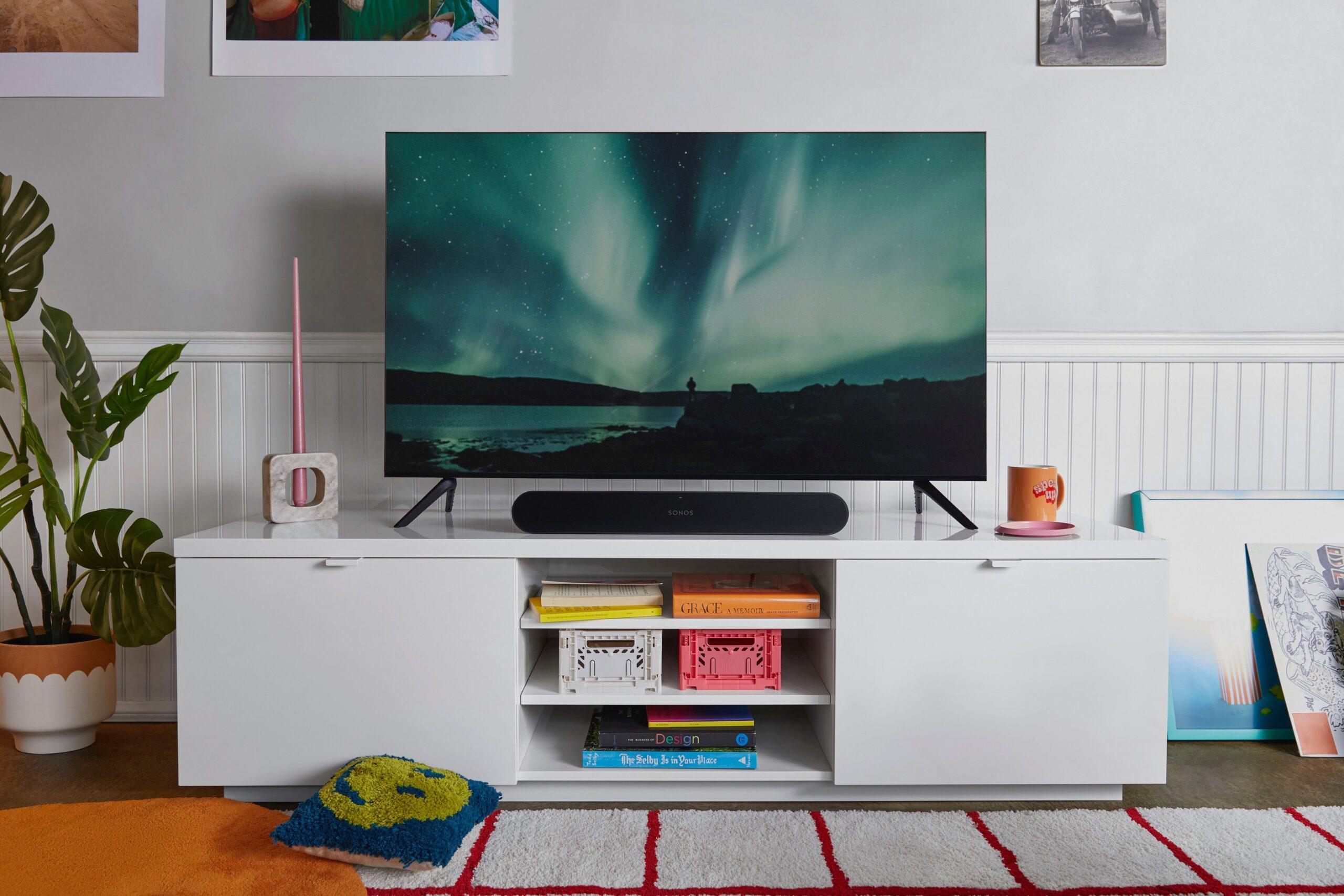
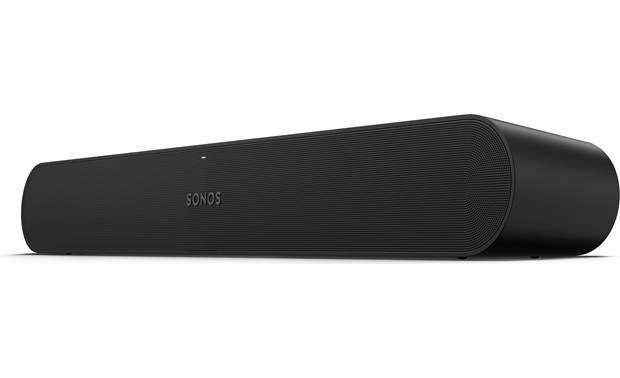
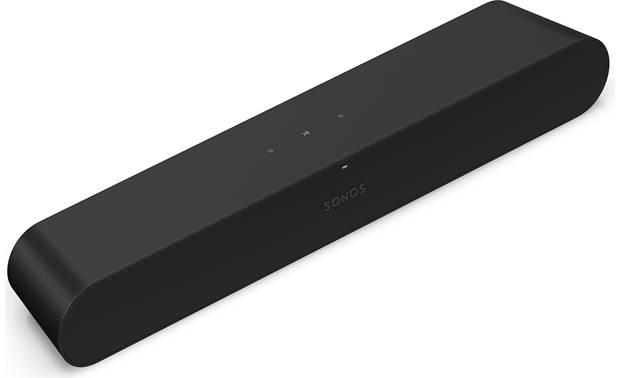
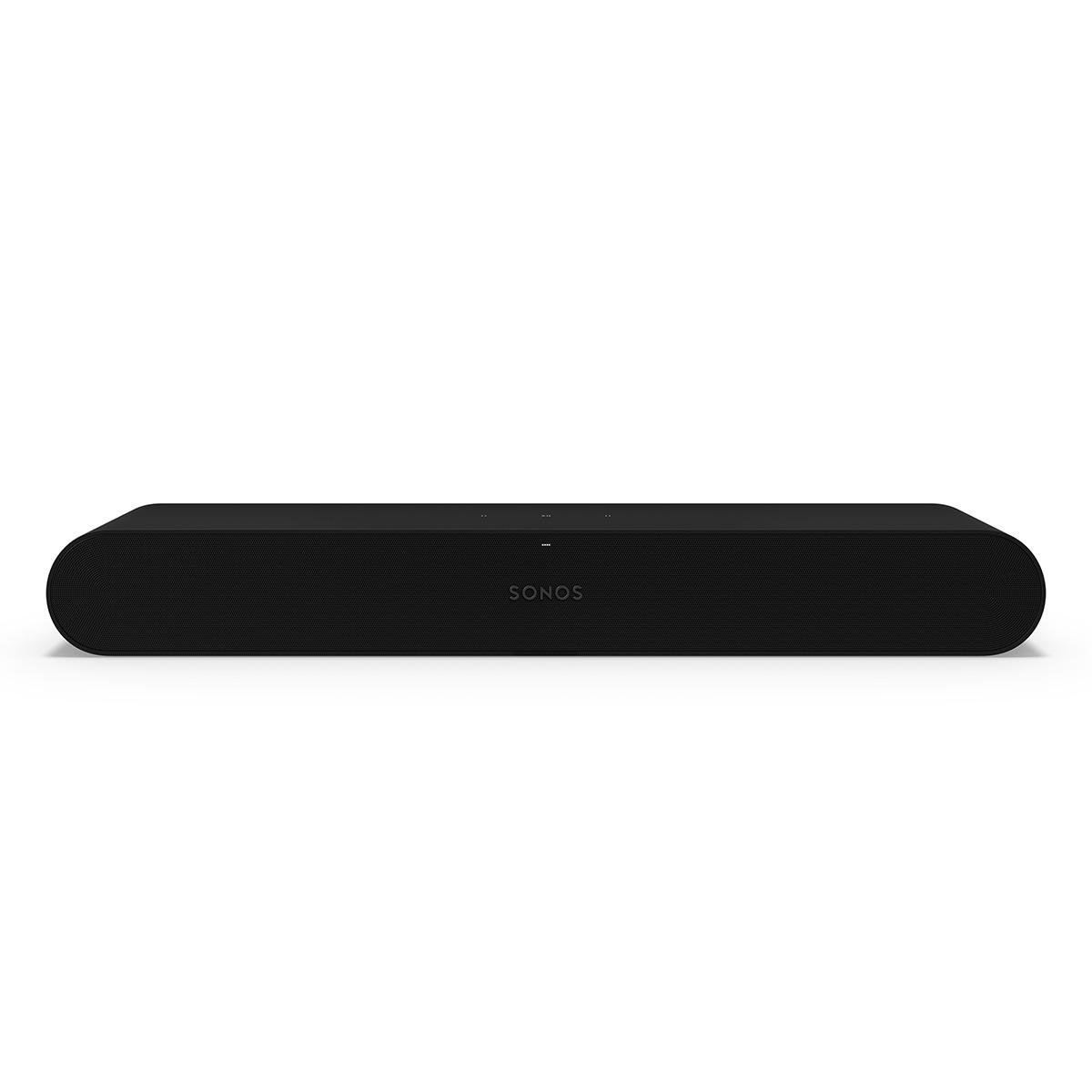
The Sonos Ray, launched in mid-2022, takes a completely different approach. Sonos recognized that many people want better TV sound without the complexity or expense of premium audio gear. The Ray is essentially a sophisticated stereo speaker with some smart enhancements for TV use.
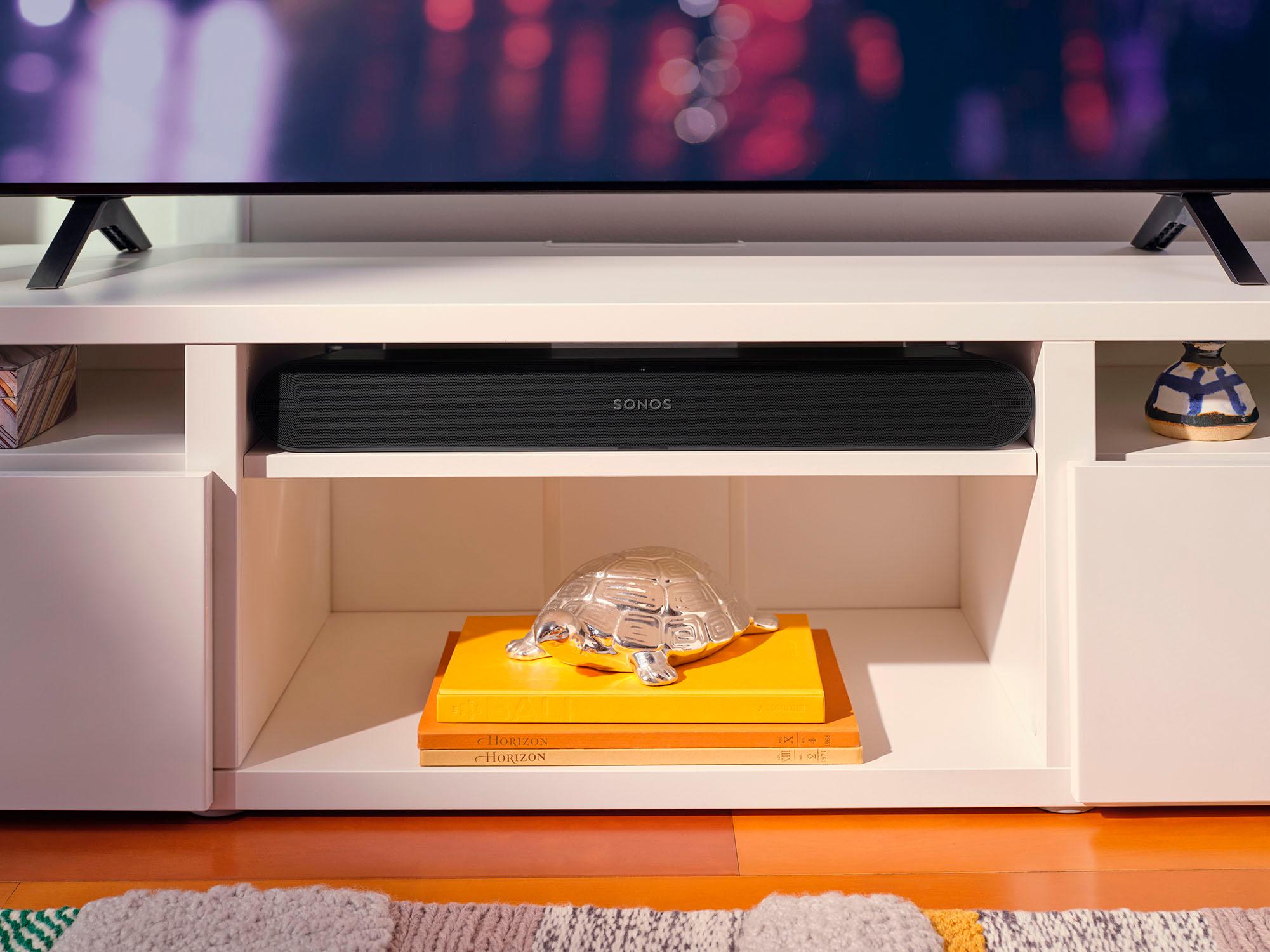
The design philosophy here is minimalist elegance. Where the Dione makes a statement with its rotating ORB and premium materials, the Ray tries to disappear into your entertainment setup. It's compact enough to fit under most TVs without blocking the screen or remote sensors.
Inside, you'll find a much simpler driver configuration: two tweeters for highs, two mid-range drivers, and a pair of bass ports. The processing focuses on dialogue enhancement and basic stereo separation rather than complex surround virtualization. There's no room correction, no gyroscope, and no Dolby Atmos processing.
But simplicity has its advantages. Setup takes minutes rather than the more involved process required for the Dione. The Ray connects via optical cable (no HDMI at all), and once it's on your Wi-Fi network, it integrates seamlessly with the Sonos ecosystem. If you already have other Sonos speakers around the house, the Ray can join that multi-room setup immediately.
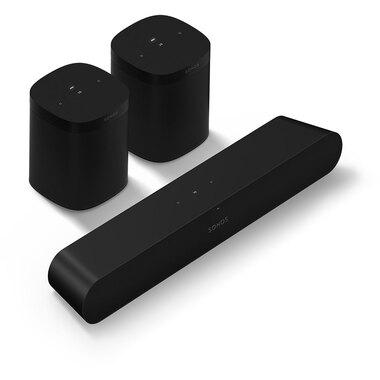
The Ray also represents an entry point into Sonos's modular approach. Start with the basic soundbar, then add a Sonos Sub for deeper bass, and eventually add rear speakers for true surround sound. This lets you spread the cost over time rather than making one large purchase.
This is where the fundamental difference between these approaches becomes obvious. The Dione's eight dedicated subwoofers, powered by ADH amplification and controlled by SAM (Speaker Active Matching) technology, deliver bass that rivals standalone subwoofers. Based on measurements and user reports, it can reproduce the deep rumbles in movie soundtracks with surprising authority for a single-bar solution.
The Ray, by comparison, starts rolling off significantly below 60Hz. It's adequate for dialogue and most TV content, but action movies and music with substantial low-end will reveal its limitations quickly. The two bass ports help somewhat, but they can't overcome the physical constraints of small drivers and limited internal volume.
For home theater use specifically, this difference is crucial. Modern movie soundtracks use deep bass not just for explosions, but for emotional impact and tension building. The low-frequency rumble when the T-Rex approaches in Jurassic Park, or the subsonic effects in Dune's ornithopter scenes – these moments lose their impact without proper bass reproduction.
The Dione's approach to surround sound is sophisticated but necessarily limited by physics. Its 5.1.2 processing can create convincing effects, especially for overhead sounds that bounce off the ceiling. The ADE (Advanced Dimensional Experience) beamforming technology steers different frequencies in specific directions, creating phantom surround channels that can be surprisingly effective.
However, even the best single-soundbar surround processing can't fully replicate discrete rear speakers. The Dione does better than most, particularly when wall-mounted where its drivers can use room boundaries more effectively, but it's still a compromise compared to a true multi-speaker setup.
The Ray doesn't even attempt surround virtualization. It's purely stereo, which means Dolby Atmos and DTS:X content gets downmixed to two channels. This isn't necessarily bad – many people prefer a clean stereo presentation to mediocre surround processing – but it does limit the immersive potential for movies.
Both soundbars excel here, but through different means. The Dione's dedicated center channel in the ORB provides excellent vocal localization and clarity. The fact that it can physically orient toward the listener gives it an advantage that software processing alone can't match.
The Ray achieves good dialogue clarity through its Speech Enhancement feature, which specifically boosts voice frequencies. While it lacks a discrete center channel, Sonos has tuned the stereo processing to maintain clear vocal reproduction even in complex soundtracks.
For TV watching specifically, both soundbars represent massive improvements over TV speakers. The difference between them in dialogue clarity is noticeable but not dramatic – you'll catch every whisper and conversation with either option.
Here's where Devialet's audiophile heritage really shows. The Dione can switch to a pure stereo mode that bypasses the spatial processing, essentially functioning as a high-end stereo speaker. The full-range frequency response, quality drivers, and clean amplification make it genuinely suitable for serious music listening.
The Ray approaches music differently. It's designed for the streaming era – Spotify, Apple Music, and other compressed sources sound good, but it's not trying to compete with dedicated hi-fi equipment. The limited bass response becomes more obvious with music than with dialogue-heavy TV content.
The Dione's 950-watt ADH amplification system is genuinely impressive, but wattage numbers can be misleading. What matters more is clean power delivery across the full frequency range. The ADH technology essentially gives each driver its own optimized amplifier stage, allowing for precise control and minimal distortion even at high volumes.
The Ray's amplification is more conventional but adequate for its intended use. Sonos doesn't publish specific wattage figures, focusing instead on real-world performance for typical TV viewing distances and volumes.
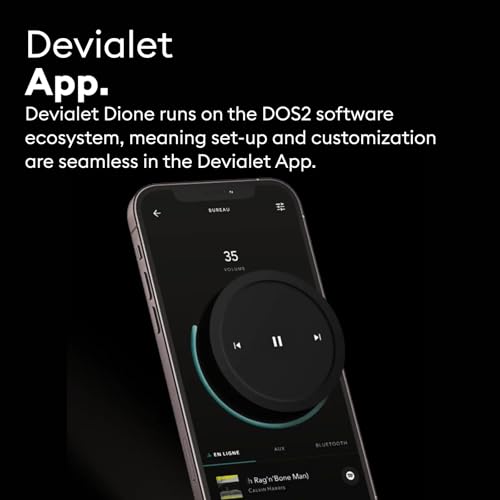
The Dione runs on what Devialet calls their Intelligence Processor – essentially a dedicated computer with four ARM processors and specialized audio chips. This enables real-time room correction, complex surround processing, and the various listening modes without affecting audio quality.
The Ray's processing is simpler but targeted. Instead of trying to do everything, it focuses on the specific challenges of TV audio: dialogue clarity, volume consistency, and basic stereo enhancement.
The Dione includes four calibration microphones that measure your room's acoustic properties and adjust the sound accordingly. This automatic room correction can make a significant difference, especially in challenging spaces with hard surfaces or odd layouts.
The Ray includes Trueplay tuning, but only for iPhone users (Android users are left out due to microphone variations between devices). It's less sophisticated than the Dione's system but still helpful for optimizing the basic stereo response.
At the time of writing, the Devialet Dione positioned itself in the premium segment where price isn't the primary consideration. You're paying for cutting-edge amplification technology, premium materials, and the convenience of getting high-end performance from a single component. When compared to building a traditional home theater system with separates that deliver similar performance, the price becomes more reasonable, though it's still a significant investment.
The Ray occupied the budget-conscious segment, offering substantial improvement over TV speakers without the complexity or cost of premium options. Its real value lies in the upgrade path – you can start simple and build a more capable system over time as budget allows.
The decision between these soundbars often comes down to more than just audio performance. If you want the absolute best sound from a single component and have the budget for it, the Dione delivers. Its bass response alone justifies the premium for many users, and the convenience of not needing a separate subwoofer is genuinely valuable in space-constrained setups.
But the Ray makes sense for a much broader audience. If your primary goal is better dialogue clarity for TV watching, with the option to add more components later, it's an excellent starting point. The Sonos ecosystem integration is particularly valuable if you're planning a whole-home audio setup.
For serious home theater enthusiasts, the Dione's Dolby Atmos processing and bass response make it a compelling all-in-one solution. However, purists might argue that the same budget could build a more flexible system with separates that could be upgraded piece by piece.
For casual viewers who want better sound without complexity, the Ray hits the sweet spot of performance and convenience. Just don't expect it to recreate the movie theater experience on its own – that's not what it's designed for.
The reality is that both soundbars succeed at their intended purposes. The Dione pushes the boundaries of what's possible from a single component, while the Ray makes quality sound accessible and expandable. Your choice should align with both your audio priorities and your long-term entertainment setup goals.
| Devialet Dione | Sonos Ray |
|---|---|
| Audio Channels - Determines surround sound capability | |
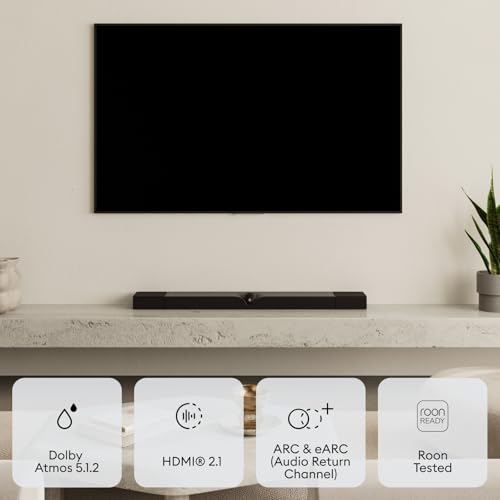
| True 5.1.2 Dolby Atmos with dedicated height channels | Stereo 2.0 only (no surround or height effects) |
| Driver Configuration - More drivers generally mean better sound separation | |
| 17 drivers: 9 full-range + 8 subwoofers with 950W amplification | 4 drivers: 2 tweeters + 2 mid-range with basic amplification |
| Bass Response - Critical for movie impact and music enjoyment | |
| 24Hz-21kHz (genuine subwoofer-level bass, no external sub needed) | ~45Hz-20kHz (requires separate subwoofer for meaningful bass) |
| Dolby Atmos Support - Essential for modern movie soundtracks | |
| Full Dolby Atmos decoding with object-based positioning | No Atmos support (downmixes to stereo) |
| HDMI Connectivity - Determines audio quality from TV and devices | |
| HDMI 2.1 with eARC (supports high-bandwidth audio) | No HDMI (optical connection only) |
| Room Calibration - Automatically optimizes sound for your space | |
| 4 built-in microphones with automatic room correction | Trueplay tuning (iPhone only, manual setup required) |
| Expandability - Ability to add components for better surround sound | |
| Closed system (cannot add subwoofer or rear speakers) | Modular design (can add Sonos Sub and rear speakers) |
| Wireless Streaming - Convenience for music playback | |
| Bluetooth 5.0, AirPlay 2, Spotify Connect, Wi-Fi | Wi-Fi only through Sonos app (no Bluetooth or direct streaming) |
| Physical Design - How it fits in your entertainment setup | |
| Large premium unit (47" wide) with rotating ORB center channel | Compact design (22" wide) fits under most TVs discretely |
| Best Use Case - Who should consider this product | |
| Home theater enthusiasts wanting premium all-in-one performance | Budget-conscious buyers seeking TV audio improvement with upgrade path |
The Devialet Dione is significantly better for home theater use, offering true 5.1.2 Dolby Atmos with 17 drivers and genuine subwoofer-level bass down to 24Hz. The Sonos Ray is stereo-only without Atmos support, making it better suited for basic TV audio enhancement rather than immersive movie experiences.
The Devialet Dione includes 8 built-in subwoofers and doesn't require an external sub, delivering deep bass down to 24Hz. The Sonos Ray has limited bass response and benefits significantly from adding the Sonos Sub for fuller sound, especially for movies and music.
Both soundbars excel at dialogue clarity compared to TV speakers. The Devialet Dione features a dedicated rotating center channel for precise voice reproduction, while the Sonos Ray uses Speech Enhancement technology to boost voice frequencies. Both provide clear dialogue, though the Dione offers more precise localization.
Yes, the Sonos Ray is designed for modular expansion - you can add the Sonos Sub for bass and rear Sonos speakers for true surround sound. The Devialet Dione cannot be expanded with additional components as it's designed as a complete all-in-one solution.
The Devialet Dione offers superior music quality with audiophile-grade amplification, full frequency response, and multiple streaming options including Bluetooth and AirPlay 2. The Sonos Ray focuses on convenience with Sonos ecosystem integration but has limited bass response and only Wi-Fi streaming through the Sonos app.
The Devialet Dione is a true 5.1.2 channel system with Dolby Atmos support, creating immersive surround and height effects. The Sonos Ray is a 2.0 stereo soundbar with no surround processing, focusing on enhanced left-right channel separation and dialogue clarity.
The Sonos Ray is much simpler to set up with just an optical cable connection and the intuitive Sonos app. The Devialet Dione requires more involved setup including HDMI eARC connection, room calibration with built-in microphones, and configuration of various audio modes and settings.
The Devialet Dione features HDMI 2.1 with eARC support for high-bandwidth audio from your TV. The Sonos Ray has no HDMI ports at all, connecting only via optical cable, which limits audio quality compared to HDMI eARC connections.
The Sonos Ray is more suitable for smaller spaces due to its compact 22-inch width and lower volume output optimized for close listening. The Devialet Dione is a large 47-inch unit designed to fill larger rooms with its 950W amplification system and room-filling soundstage.
Yes, both work with standard content. The Devialet Dione uses SPACE technology to upmix stereo content into immersive 5.1.2 surround sound. The Sonos Ray enhances stereo content with improved separation and dialogue clarity but maintains a traditional left-right stereo presentation.
This depends on your needs and budget. The Sonos Ray offers excellent value for basic TV audio improvement with future expandability. The Devialet Dione provides premium performance with high-end features but costs significantly more - it's better value if you want the best possible single-unit performance without compromises.
The Devialet Dione includes automatic room correction with 4 built-in calibration microphones that continuously adapt to your space. The Sonos Ray offers Trueplay tuning for iPhone users only, requiring manual setup to optimize the sound for your specific room acoustics.
We've done our best to create useful and informative comparisons to help you decide what product to buy. Our research uses advanced automated methods to create this comparison and perfection is not possible - please contact us for corrections or questions. These are the sites we've researched in the creation of this article: rtings.com - crutchfield.com - devialet.com - ooberpad.com - bhphotovideo.com - kjwestone.co.uk - whathifi.com - devialet.com - devialet.com - sound-advice.online - kjwestone.co.uk - device.report - tmraudio.com - devialet.com - devialetchat.com - projectorscreen.com - soundandvision.com - bestbuy.com - youtube.com - av.com - audiofi.ca - devialet.com - blog.son-video.com - audioconnection.com.au - baybloorradio.com - cdn.abicart.com - smarthomesounds.co.uk - e-piphany.co.za - cloneyaudio.com - devialet.com - catalog.asbis.ee - av.com - soundandvision.com - youtube.com - comparisontabl.es - techradar.com - soundandvision.com - youtube.com - appleinsider.com - youtube.com - sonos.com - cnet.com - howtogeek.com - pcrichard.com - en.community.sonos.com - epicsystems.tech - en.community.sonos.com - cepro.com - videoandaudiocenter.com

Privacy Policy
Terms and Conditions - Affiliate Policy
Home Security
© Copyright 2008-2026.
11816 Inwood Rd #1211, Dallas, TX 75244