




When your TV's built-in speakers sound like they're coming from inside a cereal box, it's time for an upgrade. The soundbar market has evolved into two distinct philosophies: comprehensive surround sound systems that recreate the movie theater experience at home, and refined stereo soundbars that prioritize audio quality and simplicity. Today we're comparing two compelling options that represent these different approaches—the Ultimea Aura A40 and the Sonos Ray.
Released in 2022 and 2022 respectively, these soundbars emerged during a period when home entertainment exploded in popularity. The pandemic drove massive improvements in affordable home theater technology, making features that once cost thousands available for hundreds of dollars. Both products benefit from this innovation wave but take fundamentally different paths to better sound.
Before diving into specifics, let's establish what separates excellent soundbars from mediocre ones. The most critical performance metric is dialogue clarity—can you actually hear what characters are saying without constantly adjusting volume? This depends on frequency response (how evenly the soundbar reproduces different sound frequencies) and whether it has a dedicated center channel or sophisticated processing to emphasize speech frequencies.
The second major consideration is soundstage width—how much the audio seems to extend beyond the physical dimensions of the soundbar itself. Premium soundbars use acoustic tricks like angled drivers, waveguides (specially shaped channels that direct sound), and digital signal processing to create the illusion that sound comes from a much larger area.
Bass response deserves special attention because it's where most TV speakers fail catastrophically. Deep bass requires moving large amounts of air, which tiny TV speakers simply cannot do. This is measured in frequency response, typically showing how low in hertz (Hz) the system can reproduce sound effectively. Human hearing extends down to about 20Hz, but most people feel satisfied bass starting around 60-80Hz.
For home theater use specifically, dynamic range becomes crucial—the difference between the quietest whisper and loudest explosion in a movie. A good soundbar maintains clarity at both extremes without compressing (artificially reducing) the difference between loud and soft sounds.
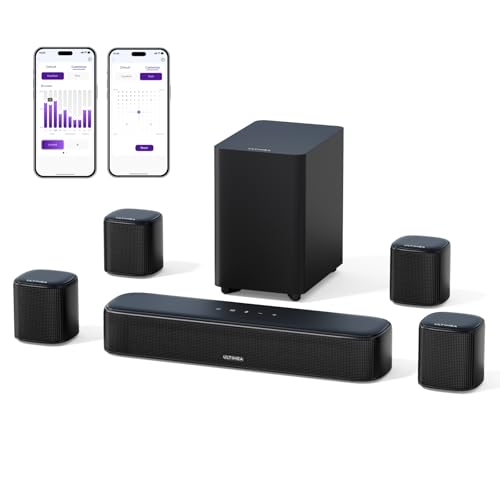
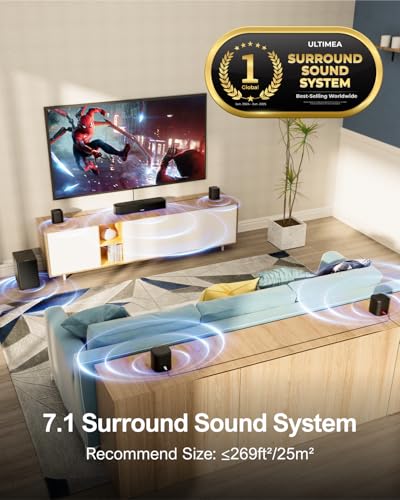
The Ultimea Aura A40 represents what happens when engineers decide to build a true surround sound system instead of just a better TV speaker. This 7.1 channel virtual surround system includes eight separate drivers: three in the main soundbar, four in dedicated surround speakers, and one in a standalone subwoofer.
The "7.1 channel" designation means the system can play seven distinct audio channels plus one low-frequency effects channel (the ".1" for bass). Most movies and TV shows don't actually use all seven channels, but having them available allows the system's processing to create more convincing surround effects by precisely placing sounds in three-dimensional space around your listening position.
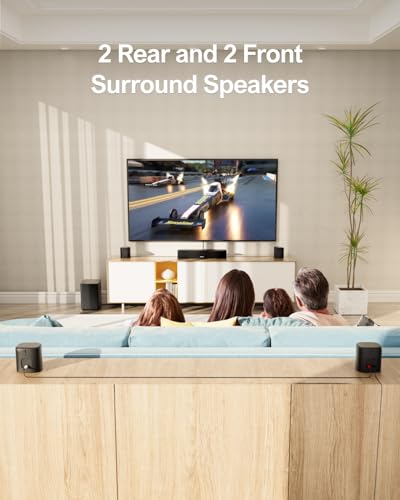
What sets the Aura A40 apart from typical soundbars is its four physical surround speakers—two that sit near your TV (front left/right surround) and two positioned behind your seating area (rear surround). This physical separation creates genuine directional audio where you can pinpoint exactly where sounds originate. When a helicopter flies overhead in a movie, you'll hear it move from front to back through actual speaker placement rather than digital trickery.
The included 4-inch subwoofer handles frequencies from 65Hz up to 18kHz, which covers the full range of human hearing with emphasis on deep bass reproduction. BassMX technology optimizes the subwoofer's output to prevent distortion—the ugly buzzing or rattling that happens when speakers are pushed beyond their limits. In practical terms, this means explosions feel impactful without becoming muddy or overwhelming dialogue.
The system's SurroundX processing analyzes incoming audio and distributes it across all eight speakers to create what Ultimea calls a "360-degree sound field." Based on user reports, this works particularly well for action movies where sound effects like gunfire, vehicles, and environmental audio become spatially accurate and immersive.
Setup involves running cables to position the four surround speakers appropriately—typically on wall mounts or stands. While this requires more effort than a single-unit soundbar, it's still far simpler than installing in-wall or in-ceiling speakers for traditional surround sound.
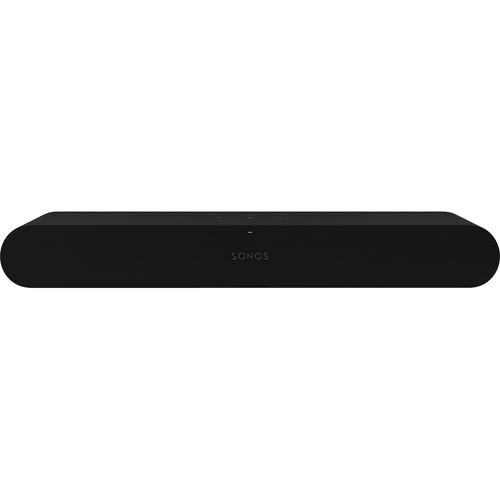
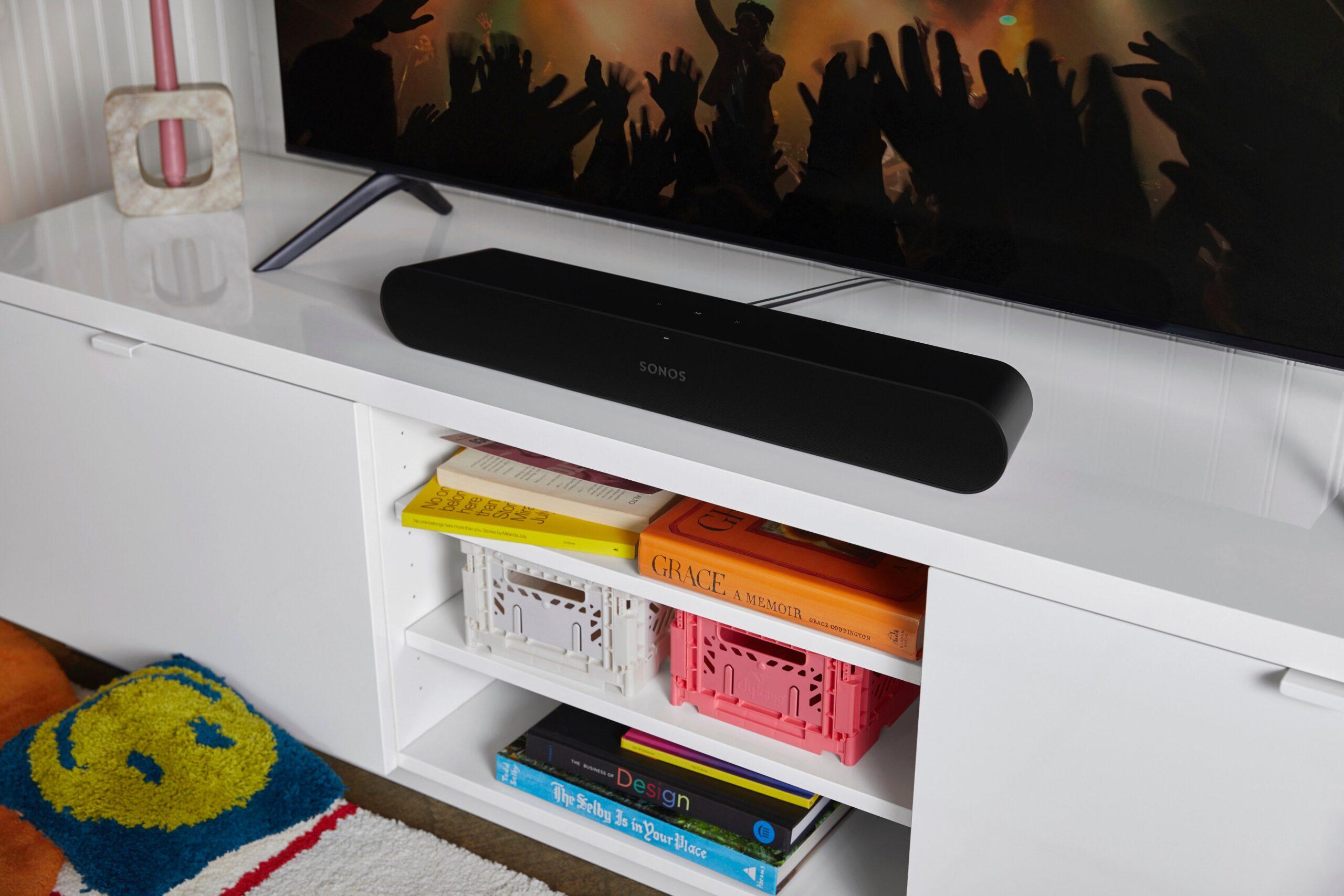
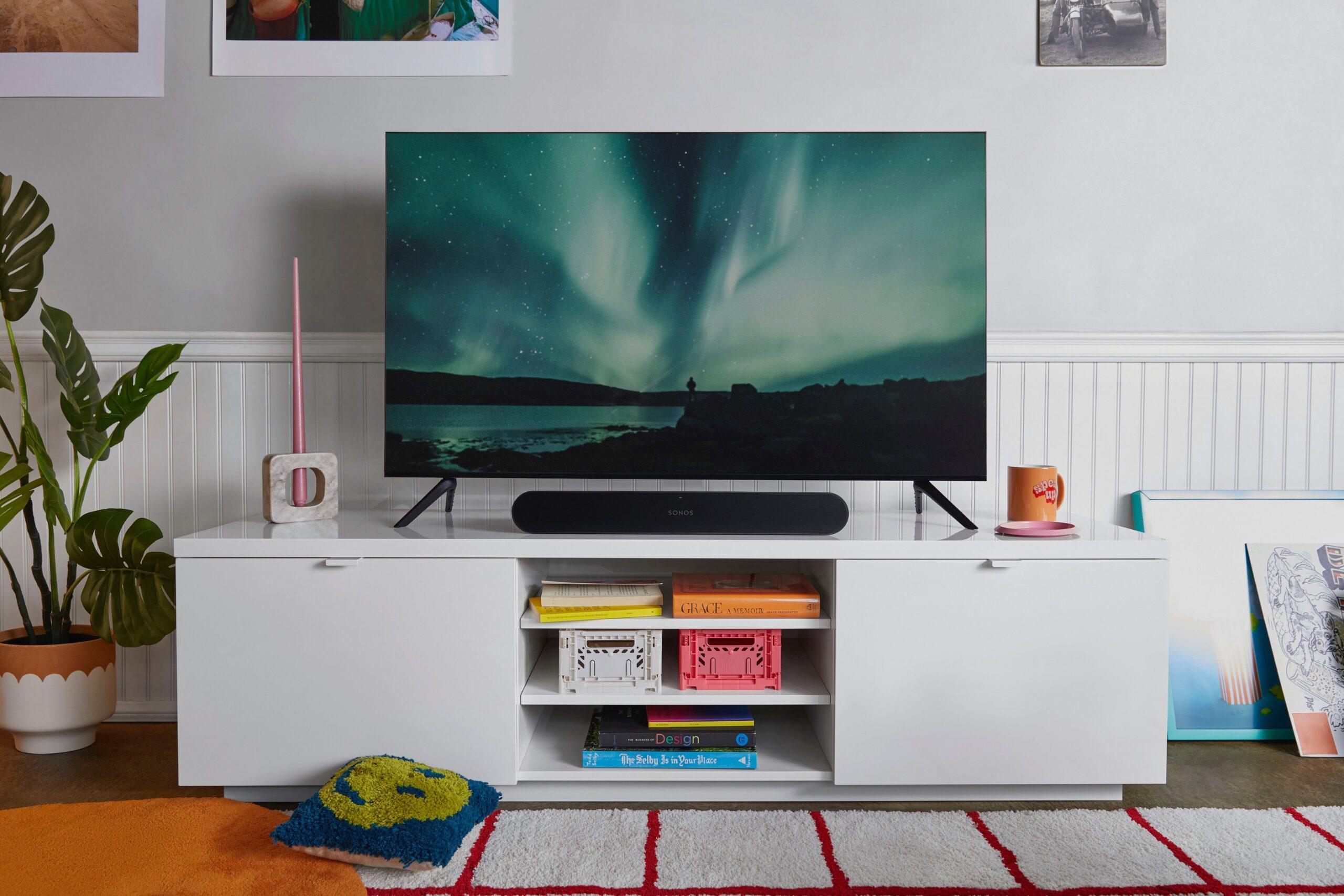
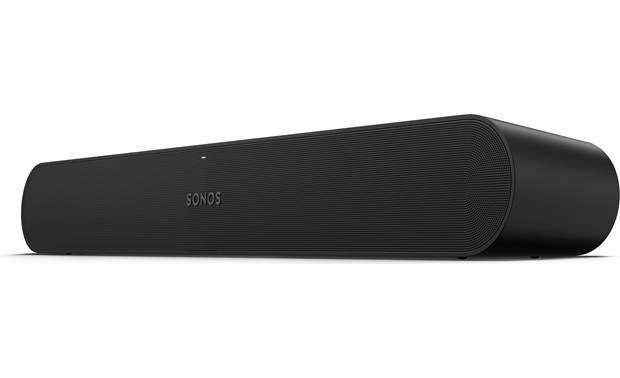
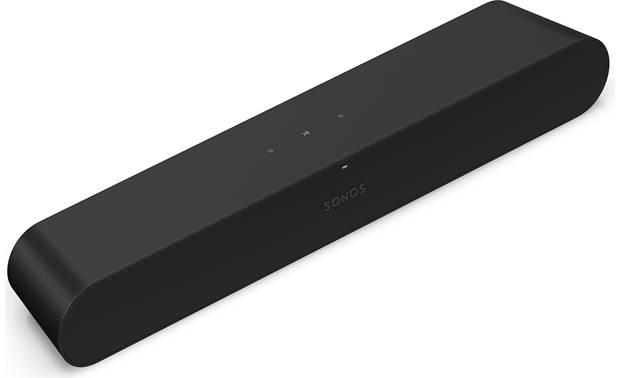
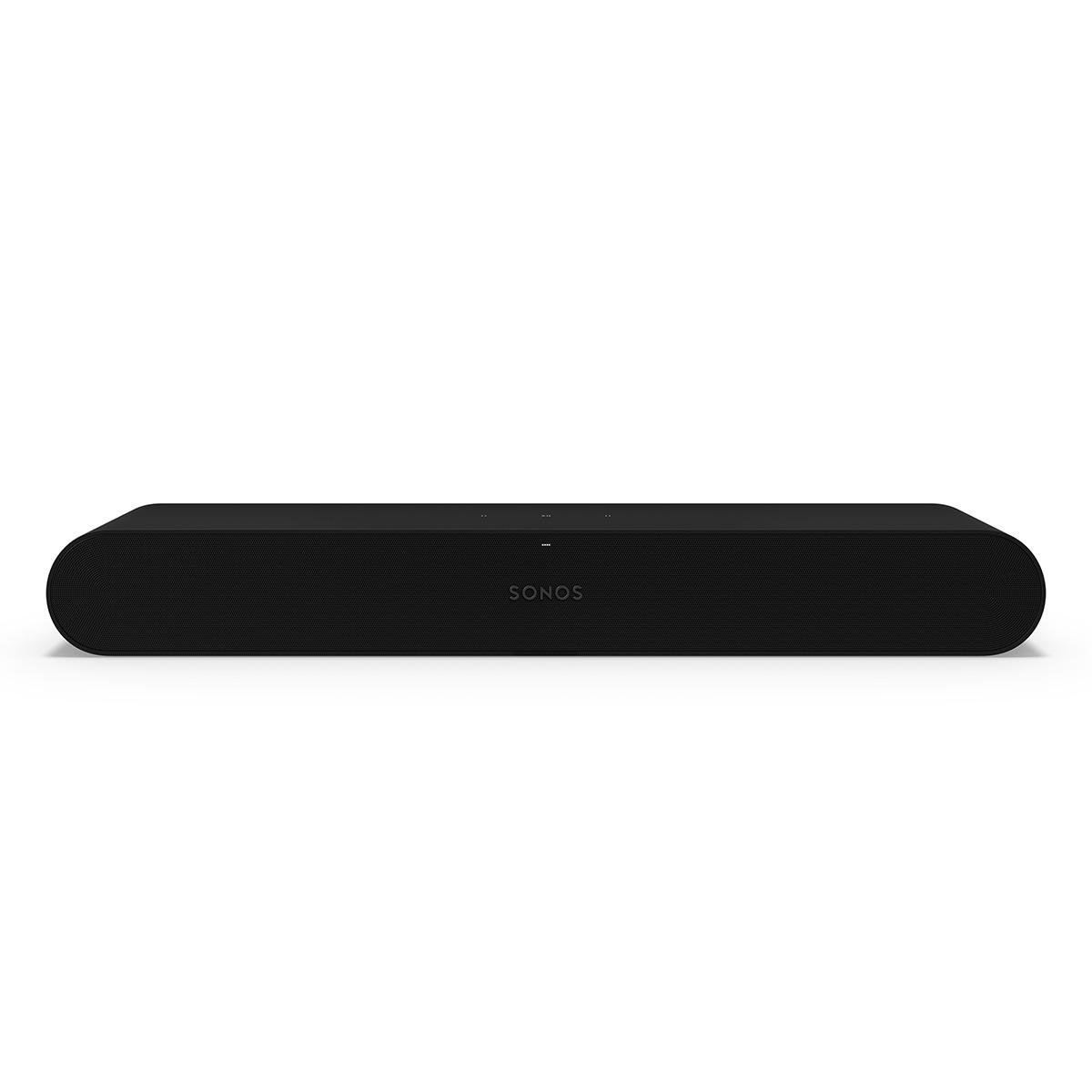
The Sonos Ray takes the opposite approach, focusing intensely on stereo audio quality rather than surround sound quantity. Released in 2022 as Sonos's entry-level soundbar, it incorporates decades of acoustic engineering expertise into a compact 22-inch package.
Instead of multiple speakers scattered around the room, the Ray uses four carefully positioned drivers within its sleek enclosure: two precision-engineered tweeters for high frequencies and two full-range drivers for midrange and bass. This might seem limited compared to the Aura A40's eight drivers, but the Ray's advantage lies in driver quality and acoustic design.
The Ray employs custom-designed waveguides—essentially shaped channels inside the soundbar that direct sound waves in specific patterns. These waveguides project audio "from wall to wall" according to Sonos, creating a much wider soundstage than you'd expect from such a compact device. The effect simulates surround sound through acoustic engineering rather than additional speakers.
Bass response comes from a proprietary bass reflex system with two carefully tuned ports. Bass reflex designs use these ports to enhance low-frequency output by allowing sound waves from the back of the drivers to reinforce the front-facing sound. Done correctly, this can produce surprisingly deep bass from a small enclosure, though it can't match a dedicated subwoofer's output.
The Ray's signature feature is Trueplay tuning, available for iPhone users. This system uses your phone's microphone to measure your room's acoustics, then adjusts the soundbar's output to compensate for reflections, absorption, and other acoustic characteristics. It's like having a professional audio engineer tune your system for your specific space.
Speech Enhancement technology specifically boosts voice frequencies while maintaining natural sound balance. This addresses the primary complaint about TV audio—that dialogue gets lost in background music and sound effects. Based on reviews, the Ray excels here, with users consistently noting that "dialogue just pops" compared to TV speakers.
Both systems significantly improve dialogue clarity over TV speakers, but through different methods. The Ultimea Aura A40 achieves this through sheer speaker quantity and spatial separation. Having three drivers in the main soundbar allows for better frequency distribution, while the surround speakers pull background effects away from the center channel where dialogue sits.
User reviews consistently praise the Aura A40's ability to maintain clear speech even during loud action sequences. The system's adjustable surround levels (six different intensity settings) let you dial in the perfect balance between immersive effects and dialogue prominence for your room and content.
The Sonos Ray approaches dialogue differently, using sophisticated digital signal processing and acoustic design rather than brute force. Despite having no dedicated center channel, the Ray's advanced processing creates what reviewers describe as exceptional vocal clarity. The Speech Enhancement feature specifically targets the frequency ranges where human voices naturally occur, bringing them forward in the mix without making them sound artificial.
In our evaluation of user feedback, the Ray edges ahead for pure dialogue clarity and naturalness, while the Aura A40 provides excellent clarity with the added benefit of spatial separation.
This is where the fundamental design philosophies create dramatically different experiences. The Ultimea Aura A40 delivers genuine surround sound through physical speaker placement. When a car passes from left to right on screen, you hear it move through actual space via the front and rear surround speakers. This creates what users describe as "incredibly lifelike" directional audio that places you in the center of the action.
The system excels particularly with action movies and gaming. First-person shooter games benefit enormously from the directional audio precision—you can locate enemies by sound alone, providing a competitive advantage. Movie scenes with complex soundscapes, like battle sequences or racing scenes, become more engaging when sounds actually originate from different directions around the room.
The Sonos Ray creates surround-like effects through stereo enhancement and room-filling acoustic design. While impressive for a single-unit soundbar, it fundamentally cannot match the spatial precision of physically separated speakers. The Ray's strength lies in creating a wider, more enveloping stereo image that makes TV audio more engaging without the complexity of multiple speakers.
For true home theater enthusiasts who want the cinematic experience, the Aura A40 provides substantially more immersion. However, for casual viewers who primarily want better-than-TV-speaker audio without installation complexity, the Ray's enhanced stereo approach proves quite satisfying.
Bass reproduction showcases another clear performance difference. The Aura A40's dedicated 4-inch subwoofer provides genuine deep bass extension down to 65Hz. This covers most of the bass content in movies and music, creating the physical sensation of low-frequency effects. Users report feeling vibrations during explosion scenes and musical passages with heavy bass lines.
The BassMX technology prevents the common problem of bass distortion at higher volumes. However, some users noted that without proper equalization adjustment through the system's 10-band EQ, the bass can sound "flabby and loose." The good news is that the extensive customization options allow fine-tuning to match your room and preferences.
The Sonos Ray produces impressive bass for its size through the bass reflex design, but physics ultimately limits what's possible. Reviews indicate the Ray can feel "bottlenecked" during particularly bass-heavy content, sometimes producing what one reviewer called "mushy rather than bassy" sound when pushed to its limits.
For music listening, particularly genres like electronic, hip-hop, or rock that rely on bass impact, the Aura A40's subwoofer provides a more satisfying experience. The Ray handles most content admirably but cannot deliver the physical impact of dedicated bass reproduction.
Music reproduction reveals interesting strengths in both systems. The Ultimea Aura A40 handles various musical genres well, with users reporting good performance across acoustic tracks and energetic electronic music. However, some reviewers noted that without careful equalization, the sound can become "tinny, boxy, and metallic," particularly in the midrange frequencies where most musical content lives.
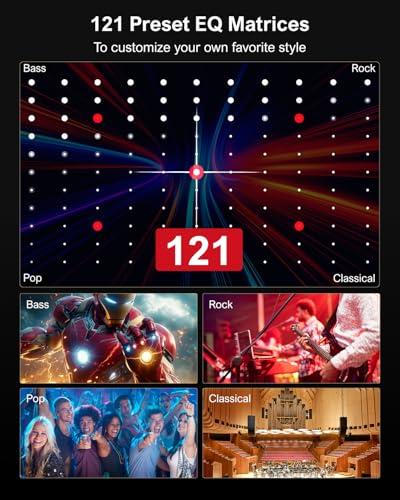
The system's strength for music lies in its customization options—121 preset EQ matrices covering different genres like Pop, Classical, Rock, and Electronic, plus manual 10-band equalization. This allows tailoring the sound signature to match specific musical styles or personal preferences.
The Sonos Ray approaches music with the precision audio engineering Sonos is known for. Reviews consistently describe the Ray as "effectively best-in-class" for music playback at its price point. The carefully tuned drivers and acoustic processing deliver what users call "crystal-clear highs and rich, detailed midranges."
The Ray particularly shines for users who stream music frequently. Its integration with streaming services through the Sonos app, combined with Apple AirPlay 2 support, makes it effortless to play music from phones, tablets, or computers. The Trueplay tuning optimizes performance for your specific room, something the Aura A40 cannot match.
For dedicated music listening, the Ray provides more refined, naturally balanced sound out of the box, while the Aura A40 offers more customization potential but requires more user intervention to achieve optimal results.
Modern soundbars need to integrate seamlessly with multiple devices and control systems. Both products show the evolution of connectivity since their 2022 releases, though with different priorities.
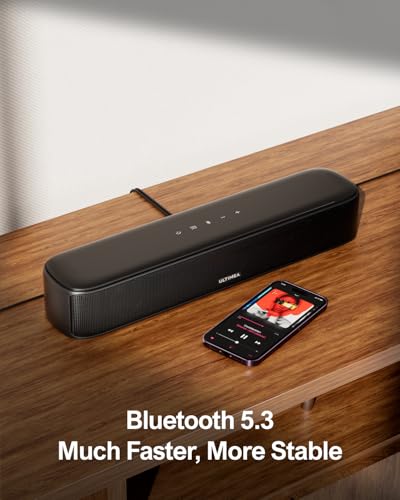
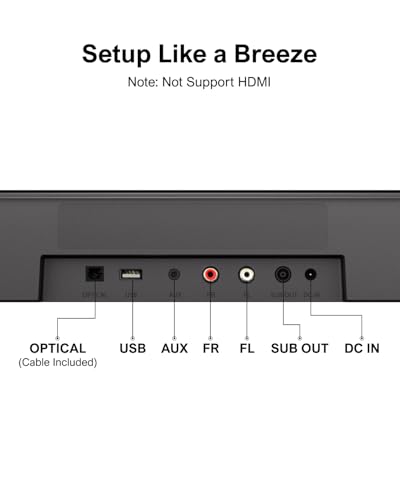
The Ultimea Aura A40 offers multiple physical connection options: optical digital input (the most common TV connection), 3.5mm auxiliary jack for direct device connection, and USB for playing files from flash drives. Bluetooth 5.3 provides wireless connection to phones and tablets with improved stability over older Bluetooth versions.
Notably absent is HDMI connectivity, which limits compatibility with some modern setups. However, most users find the optical connection perfectly adequate for TV audio, and the wireless options handle music streaming effectively.
The system's standout feature is the ULTIMEA Smart App, which transforms your smartphone into a comprehensive remote control. Beyond basic volume and source selection, the app provides access to all EQ settings, surround level adjustments, and sound modes. This level of customization through a smartphone app was relatively uncommon in budget soundbars when the system launched.
The Sonos Ray prioritizes wireless connectivity and ecosystem integration over connection variety. Like the Aura A40, it includes optical input for TV connection but lacks HDMI. However, it compensates with sophisticated wireless capabilities including Wi-Fi connectivity and Apple AirPlay 2.
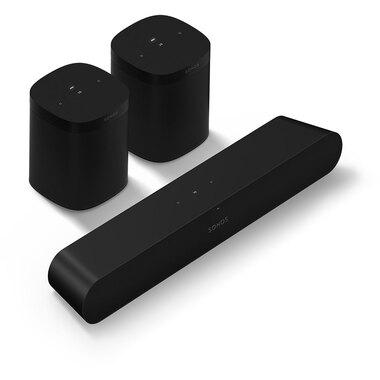
The Ray's integration into the Sonos ecosystem provides significant long-term value. Users can add additional Sonos speakers throughout their home for synchronized multi-room audio, or expand the Ray itself by adding a Sonos Sub or rear speakers to create a full surround system. This modular approach allows starting simple and expanding over time.
Both systems support over-the-air firmware updates, ensuring continued improvements and new features after purchase—a significant advancement from the static firmware of older audio equipment.
At the time of writing, these products occupy different value propositions in the soundbar market. The Ultimea Aura A40 provides exceptional feature density for its price point, offering a complete surround sound system including all necessary components at a cost typically associated with basic stereo soundbars.
This represents remarkable value for home theater enthusiasts who want genuine surround sound without spending significantly more on traditional separate components. The system includes everything needed for installation: cables, mounting hardware, remote control, and comprehensive documentation. When you consider that the Aura A40 includes a subwoofer and four surround speakers that would cost considerably more if purchased separately, the value becomes apparent.
However, the Ray justifies its higher price point through superior build quality, acoustic engineering, and ecosystem integration. Sonos products typically maintain their value better over time due to continued software support and the ability to integrate with expanding Sonos systems.
The Ray particularly makes sense for users who prioritize music streaming and plan to build a multi-room audio system eventually. Starting with the Ray provides an upgrade path that the Aura A40 cannot match—you can later add rear speakers, a subwoofer, or additional rooms to create a comprehensive whole-home audio system.
Your ideal soundbar depends entirely on your priorities, room setup, and usage patterns. The Ultimea Aura A40 makes the most sense for dedicated home theater enthusiasts who want maximum immersion for movies and gaming. If you have the space to position four surround speakers properly and enjoy tweaking audio settings to perfection, the Aura A40 delivers an experience typically associated with much more expensive systems.
The system particularly excels for larger rooms (the recommended 108-270 square feet) where the surround speakers have space to create proper directional effects. Apartment dwellers or those with limited space might find the multiple speakers impractical, though the system's compact components make placement more flexible than traditional large speakers.
Gamers who play competitive first-person shooters or immersive single-player games will appreciate the directional audio precision that only physical surround speakers can provide. The ability to locate enemies by sound alone provides both competitive advantage and enhanced immersion.
The Sonos Ray suits users who prioritize convenience, build quality, and music streaming over maximum feature density. If you frequently stream music and want exceptional dialogue clarity for TV watching without installation complexity, the Ray provides a more refined experience with significantly simpler setup.
The Ray particularly makes sense for existing or potential Sonos ecosystem users. If you might eventually want whole-home audio or plan to expand your system with additional components, starting with the Ray provides a logical foundation that can grow with your needs.
For most users choosing between these systems, the decision comes down to immersion versus convenience. The Aura A40 creates a more cinematic experience that truly transforms your living room into a home theater, while the Ray provides premium audio quality with minimal complexity. Both represent excellent value in their respective approaches, making either choice a significant upgrade over built-in TV speakers.
| Ultimea Aura A40 U2601 Soundbar System | Sonos Ray Soundbar |
|---|---|
| Channel Configuration - Determines surround sound capabilities | |
| 7.1 Channel Virtual Surround with 4 physical surround speakers | Stereo with virtual surround processing |
| Total Speakers - More drivers generally mean better sound separation | |
| 8 speakers (3 soundbar + 4 surround + 1 subwoofer) | 4 speakers (2 tweeters + 2 full-range drivers) |
| Subwoofer Inclusion - Essential for deep bass in movies and music | |
| Dedicated 4-inch wired subwoofer with BassMX technology | No subwoofer (bass ports only) |
| Frequency Response - Shows how deep the bass extends | |
| 65Hz - 18kHz (solid bass extension with subwoofer) | Not specified (limited by compact design) |
| Power Output - Affects maximum volume and dynamics | |
| 330W peak power across all speakers | Not specified (lower than Aura A40) |
| Room Size Recommendation - Matching power to space is crucial | |
| 108-270 sq ft (medium rooms) | Small to medium rooms (more compact) |
| Connectivity Options - Determines what devices you can connect | |
| Optical, AUX, USB, Bluetooth 5.3 (no HDMI) | Optical, Wi-Fi, Apple AirPlay 2 (no HDMI or Bluetooth) |
| Smart App Features - Controls customization and convenience | |
| ULTIMEA app with 10-band EQ, 121 presets, 6 surround levels | Sonos S2 app with Trueplay tuning and multi-room control |
| EQ Modes - Preset sound profiles for different content | |
| 6 modes (Movie, Music, Voice, Sport, Game, Night) | Basic sound adjustments only |
| Setup Complexity - Time and effort required for installation | |
| Moderate (requires positioning 4 surround speakers with cables) | Simple (single unit, auto room tuning available) |
| Ecosystem Integration - Ability to expand or connect with other products | |
| Standalone system with limited expansion options | Full Sonos ecosystem compatibility for multi-room audio |
| Build Quality and Design - Affects longevity and aesthetics | |
| Functional plastic construction, multiple components | Premium materials, minimalist single-unit design |
| Warranty Coverage - Protection for your investment | |
| 2 years parts and labor | 1 year parts and labor |
| Value Proposition - What you get for the money | |
| Complete surround system at budget soundbar prices | Premium stereo quality with ecosystem benefits at higher cost |
The Ultimea Aura A40 is significantly better for home theater use due to its true 7.1 channel surround sound system with four physical surround speakers and a dedicated subwoofer. This creates genuine directional audio where you can hear helicopters flying overhead or bullets whizzing past from specific directions. The Sonos Ray offers enhanced stereo sound that's great for dialogue clarity but cannot match the immersive surround experience that makes movies feel cinematic.
The Ultimea Aura A40 includes a dedicated 4-inch subwoofer in the box, providing deep bass for explosions, music, and low-frequency effects without additional purchases. The Sonos Ray does not include a subwoofer and relies on bass ports for low-end sound, though you can add a Sonos Sub separately if you want deeper bass performance.
The Sonos Ray is much easier to set up as a single-unit soundbar that connects via optical cable and automatically tunes itself to your room using Trueplay technology. The Ultimea Aura A40 requires positioning and wiring four surround speakers around your room, making setup more complex but rewarding you with true surround sound.
Both the Ultimea Aura A40 and Sonos Ray connect to TVs via optical digital cable, which nearly all modern TVs have. Neither offers HDMI connectivity, but the optical connection handles all TV audio including surround sound formats effectively.
The Sonos Ray excels at music streaming with superior audio engineering, Trueplay room tuning, and seamless integration with streaming services through Wi-Fi and Apple AirPlay 2. The Ultimea Aura A40 offers good music playback with extensive EQ customization options, but the Sonos Ray provides more refined sound quality for dedicated music listening.
Both soundbars significantly improve dialogue clarity over TV speakers. The Sonos Ray uses advanced processing and Speech Enhancement technology to make voices exceptionally clear and natural. The Ultimea Aura A40 provides excellent dialogue clarity through its three-driver soundbar configuration and spatial separation from surround effects.
The Sonos Ray offers excellent expansion options within the Sonos ecosystem, allowing you to add rear speakers, a subwoofer, or create multi-room audio throughout your home. The Ultimea Aura A40 is a complete system that cannot be expanded, but it already includes all surround speakers and subwoofer components.
The Ultimea Aura A40 is superior for gaming, especially competitive games, because its physical surround speakers provide precise directional audio that helps locate enemies and creates better spatial awareness. The Sonos Ray offers enhanced stereo gaming audio but lacks the directional precision that serious gamers appreciate.
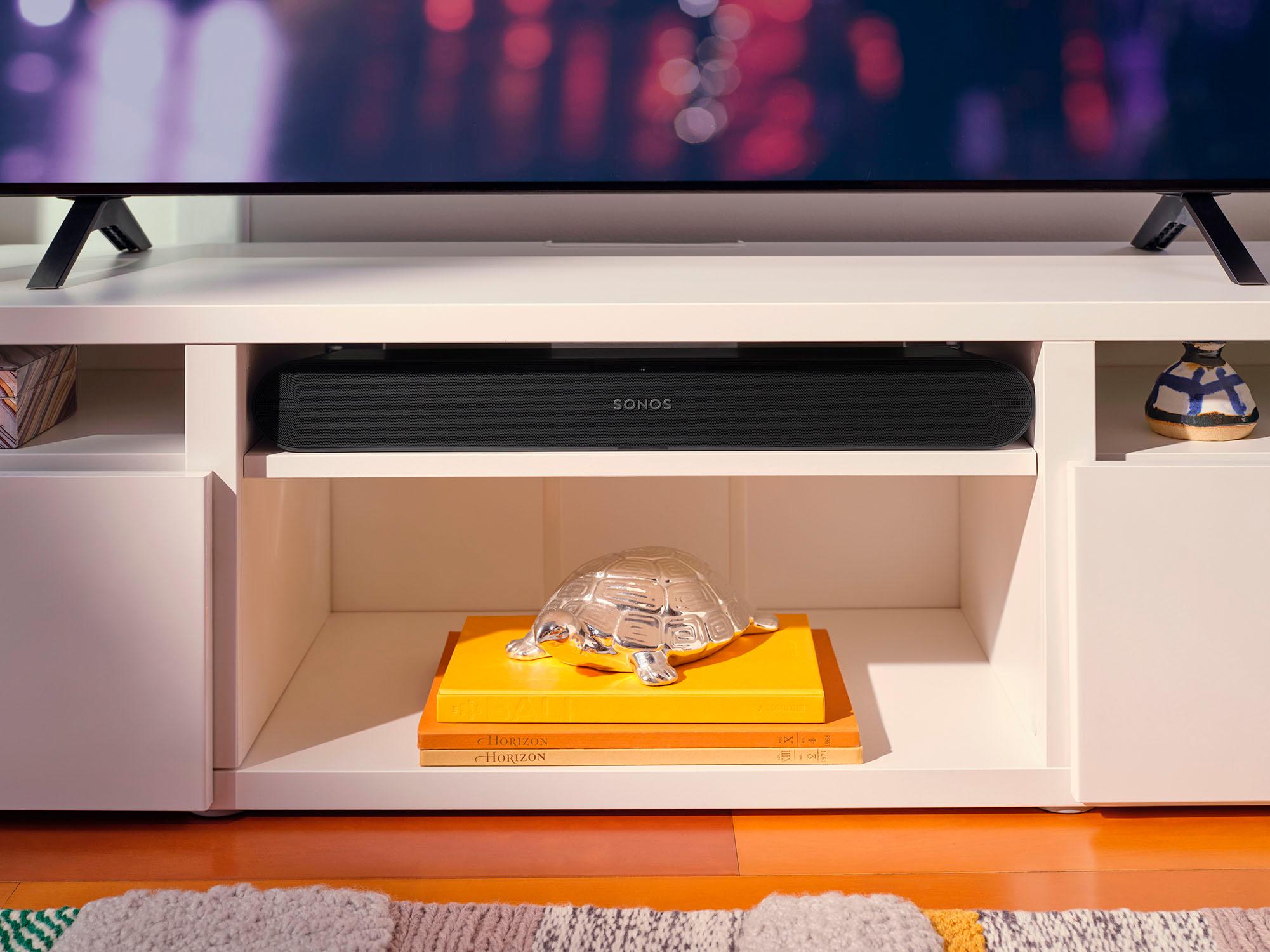
The Sonos Ray is a compact 22-inch single unit that fits easily under most TVs or in entertainment centers. The Ultimea Aura A40 requires significantly more space as you need to position four surround speakers around your seating area, making it better suited for dedicated home theater rooms rather than small apartments.
The Sonos Ray is ideal for small rooms with its compact design and Trueplay tuning that optimizes sound for your specific space. The Ultimea Aura A40 is designed for medium-sized rooms (108-270 square feet) and may overwhelm very small spaces, though its adjustable surround levels help adapt to different room sizes.
The Ultimea Aura A40 provides exceptional value by including a complete 7.1 surround sound system with subwoofer and four surround speakers at a budget-friendly price. The Sonos Ray costs more but justifies the premium with superior build quality, refined audio engineering, and ecosystem integration that allows future expansion.
Yes, both soundbars offer smartphone app control. The Ultimea Aura A40 uses the ULTIMEA Smart App with extensive customization including 10-band EQ, 121 preset sound profiles, and adjustable surround levels. The Sonos Ray uses the well-regarded Sonos S2 app for basic control, room tuning, and multi-room audio management.
We've done our best to create useful and informative comparisons to help you decide what product to buy. Our research uses advanced automated methods to create this comparison and perfection is not possible - please contact us for corrections or questions. These are the sites we've researched in the creation of this article: walmart.com - newegg.com - youtube.com - ultimea.com - youtube.com - device.report - ultimea.co - manuals.plus - homestudiobasics.com - youtube.com - bestbuy.com - community.ultimea.com - manuals.plus - eu.ultimea.com - navesapeugeot.com.br - bestbuy.com - images.thdstatic.com - provantage.com - ultimea.com - bestbuy.com - techradar.com - soundandvision.com - youtube.com - appleinsider.com - youtube.com - sonos.com - cnet.com - howtogeek.com - pcrichard.com - en.community.sonos.com - epicsystems.tech - en.community.sonos.com - cepro.com - videoandaudiocenter.com

Privacy Policy
Terms and Conditions - Affiliate Policy
Home Security
© Copyright 2008-2026.
11816 Inwood Rd #1211, Dallas, TX 75244