



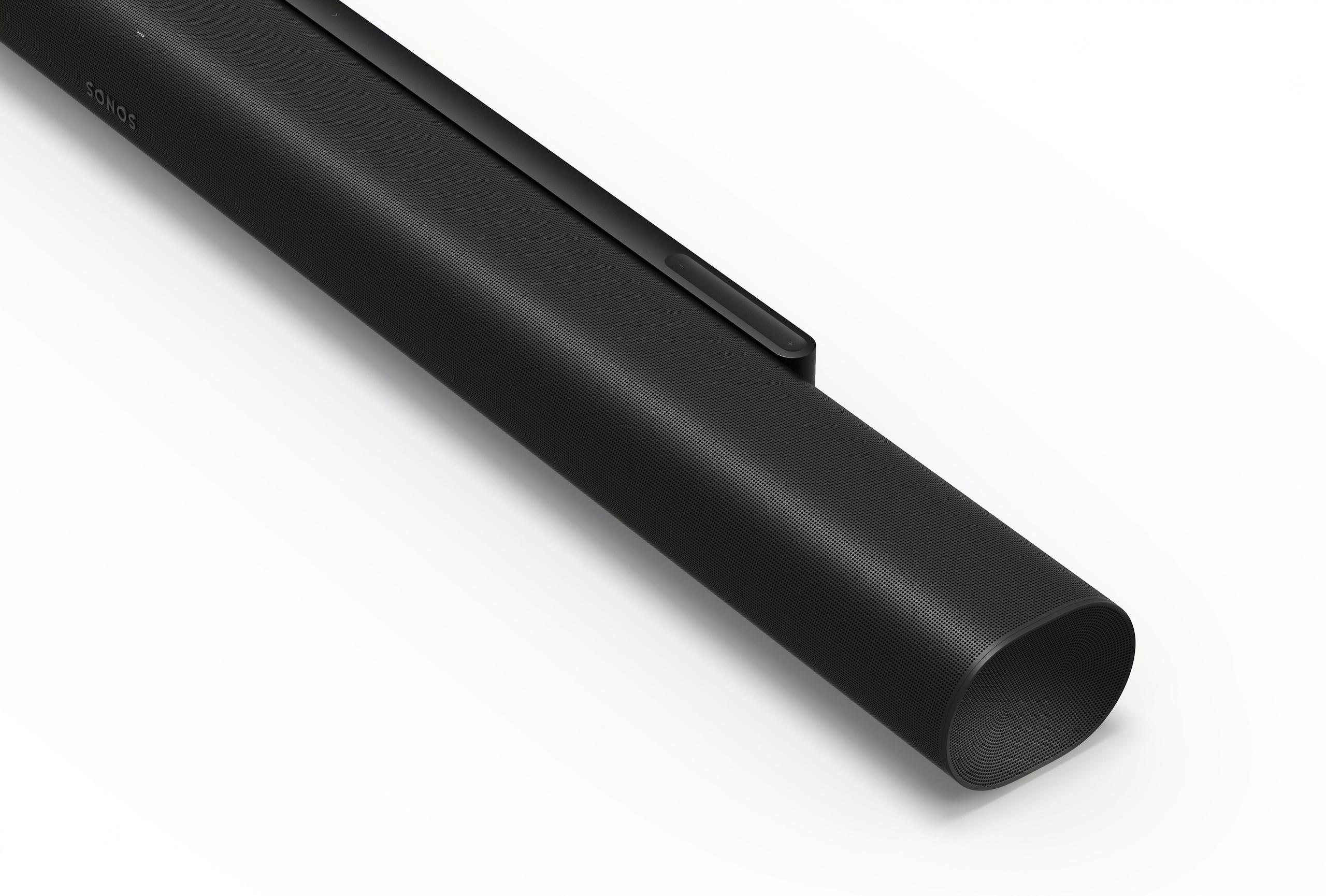
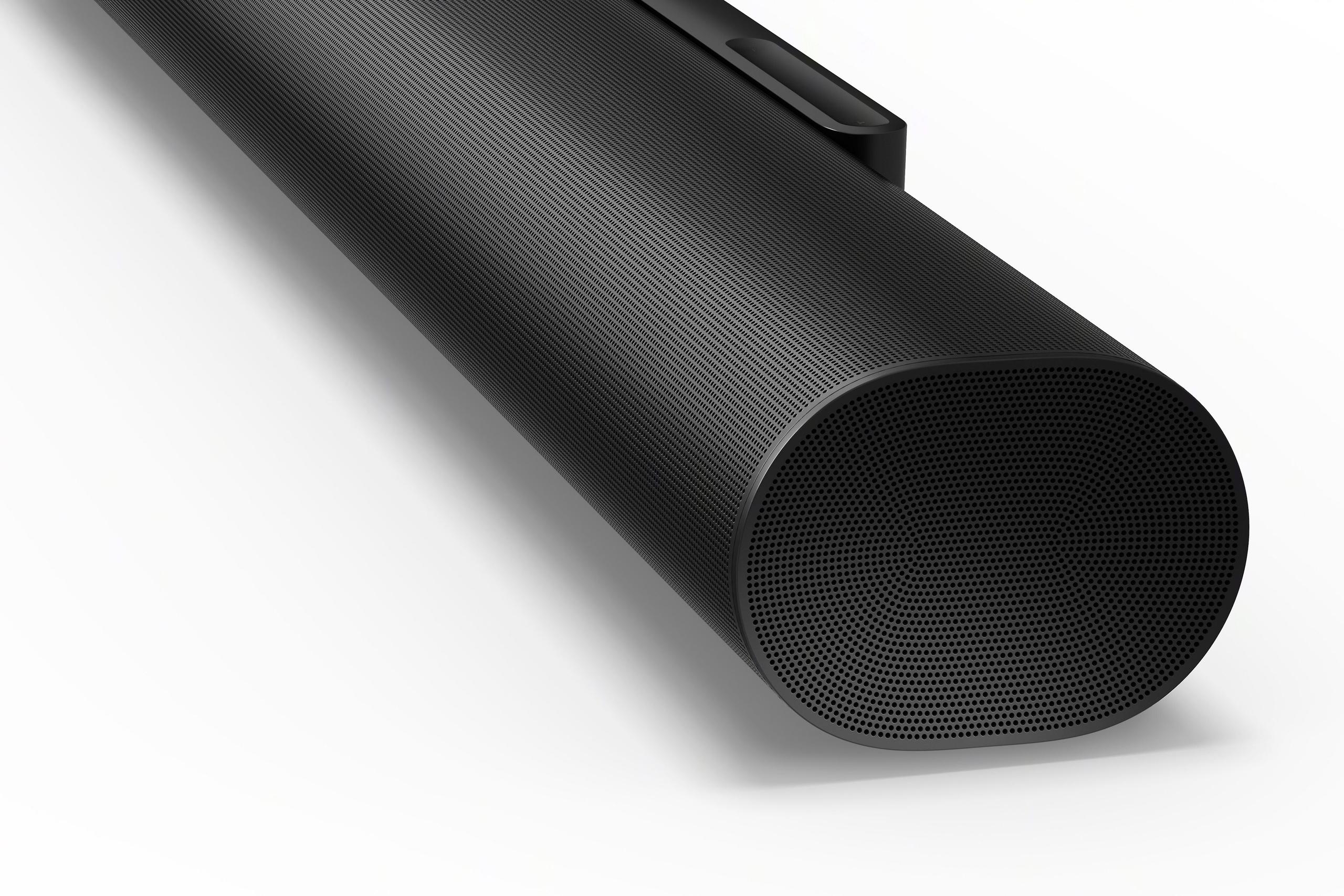
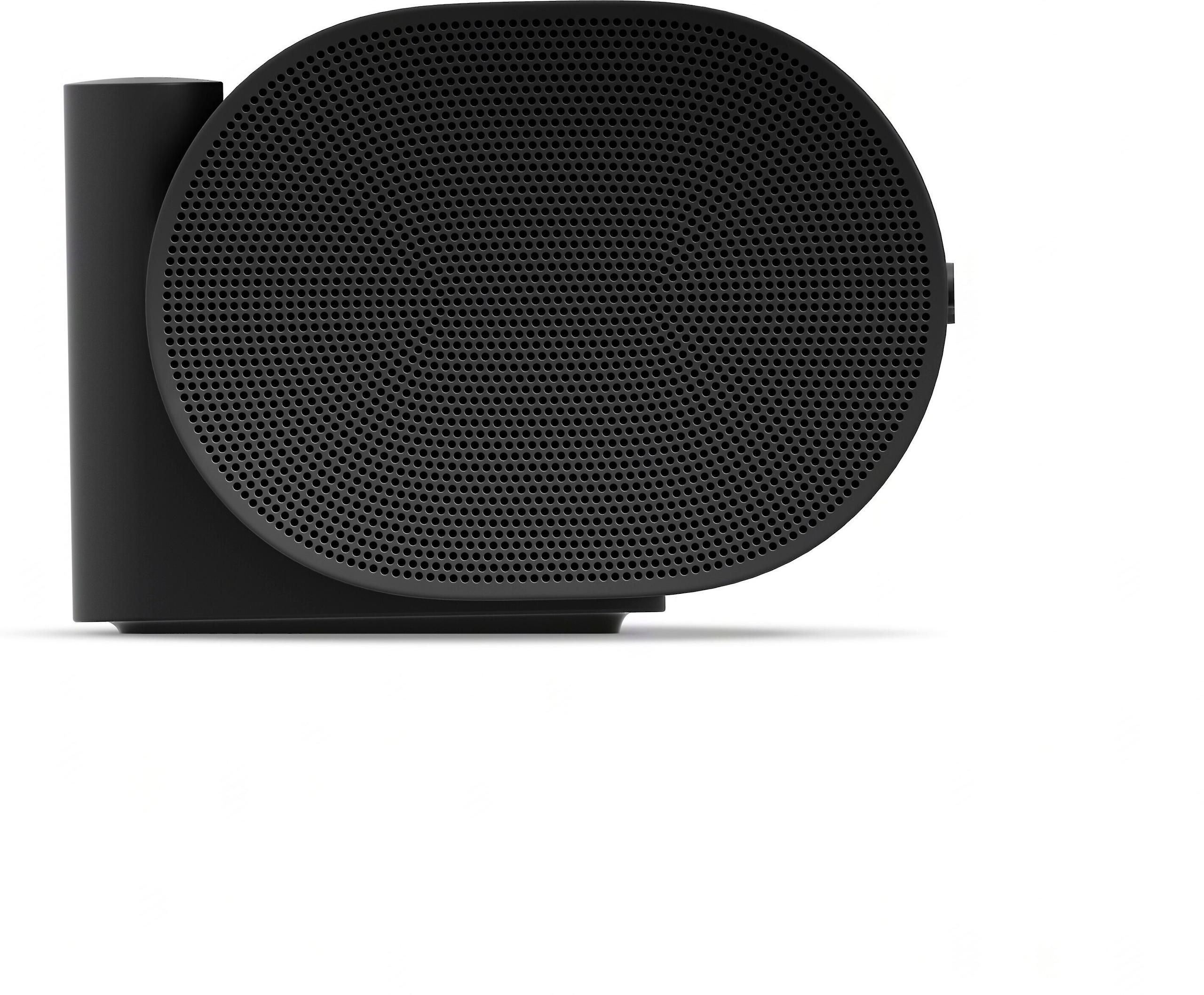
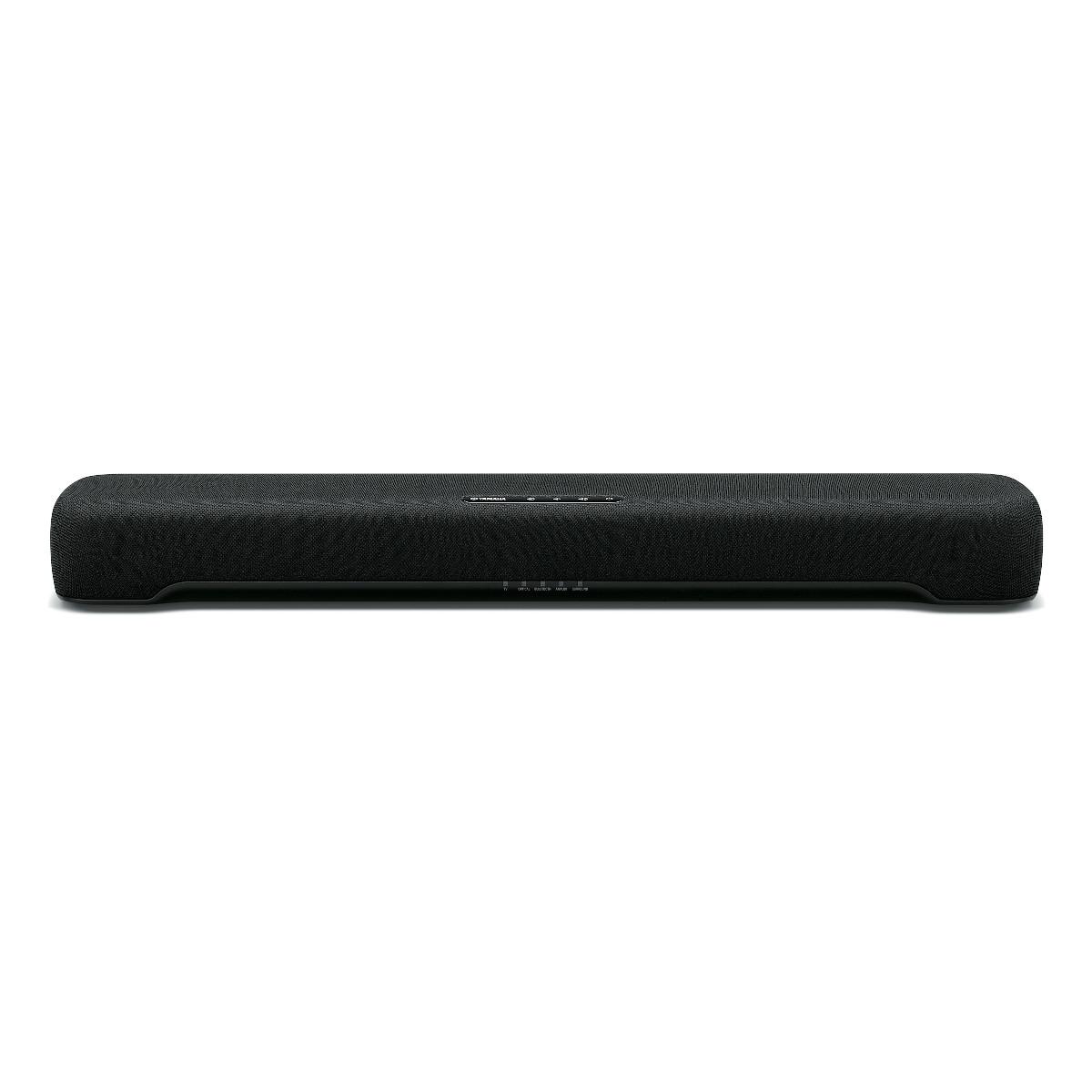

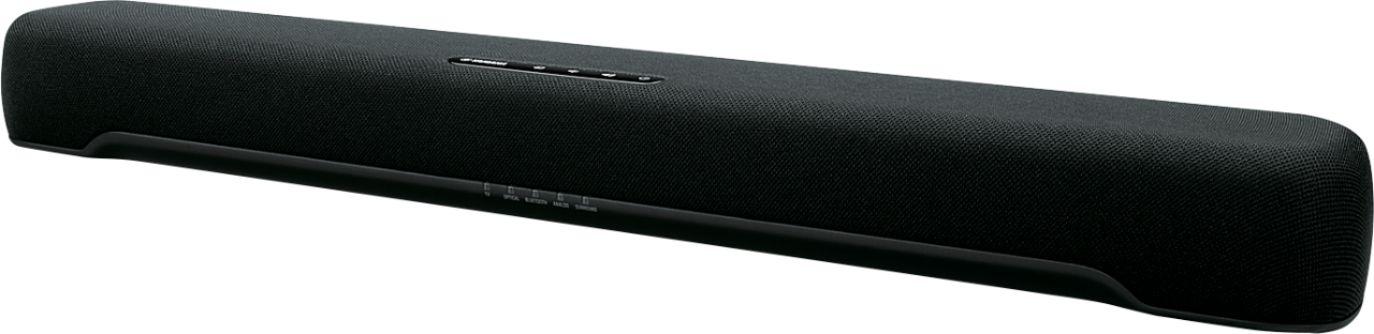


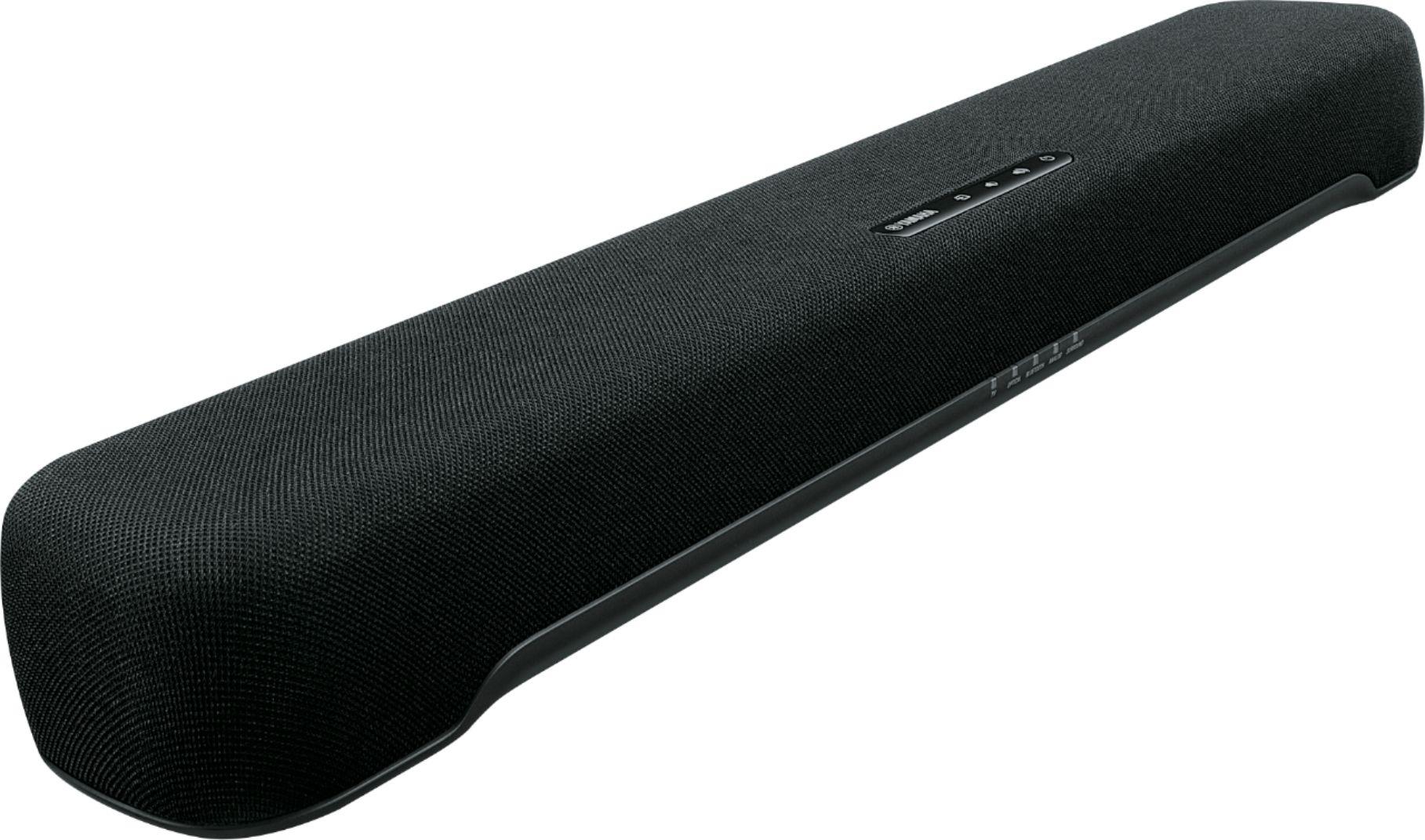


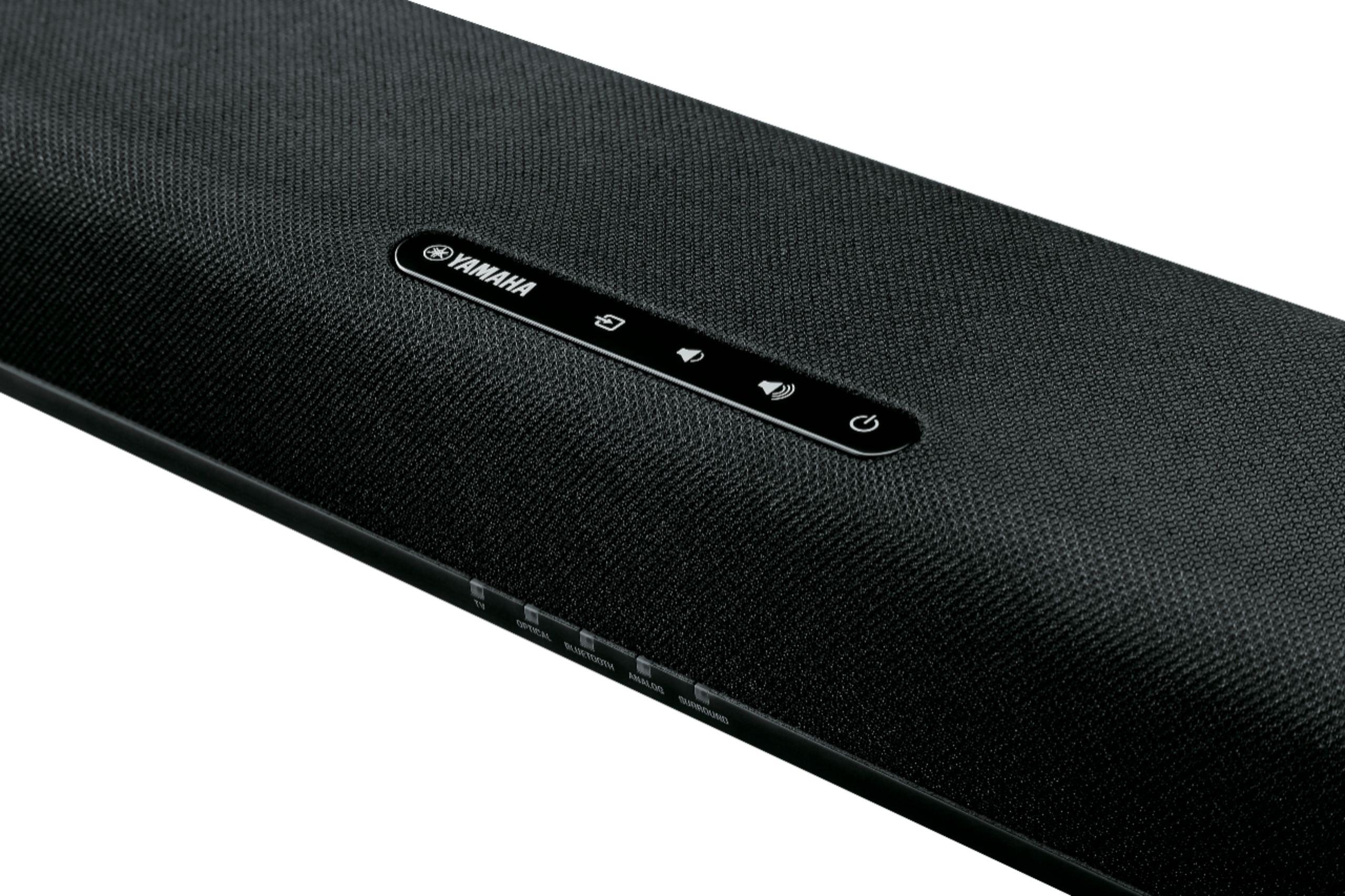


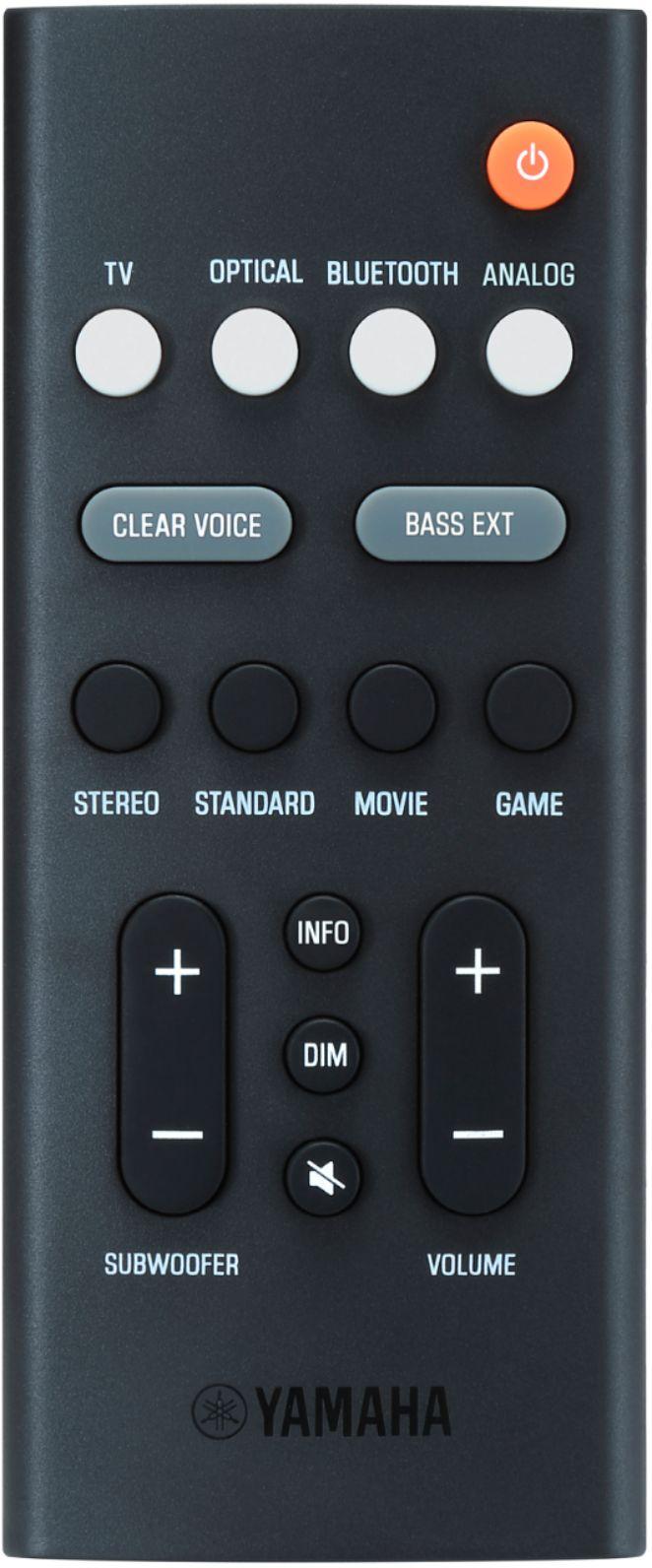



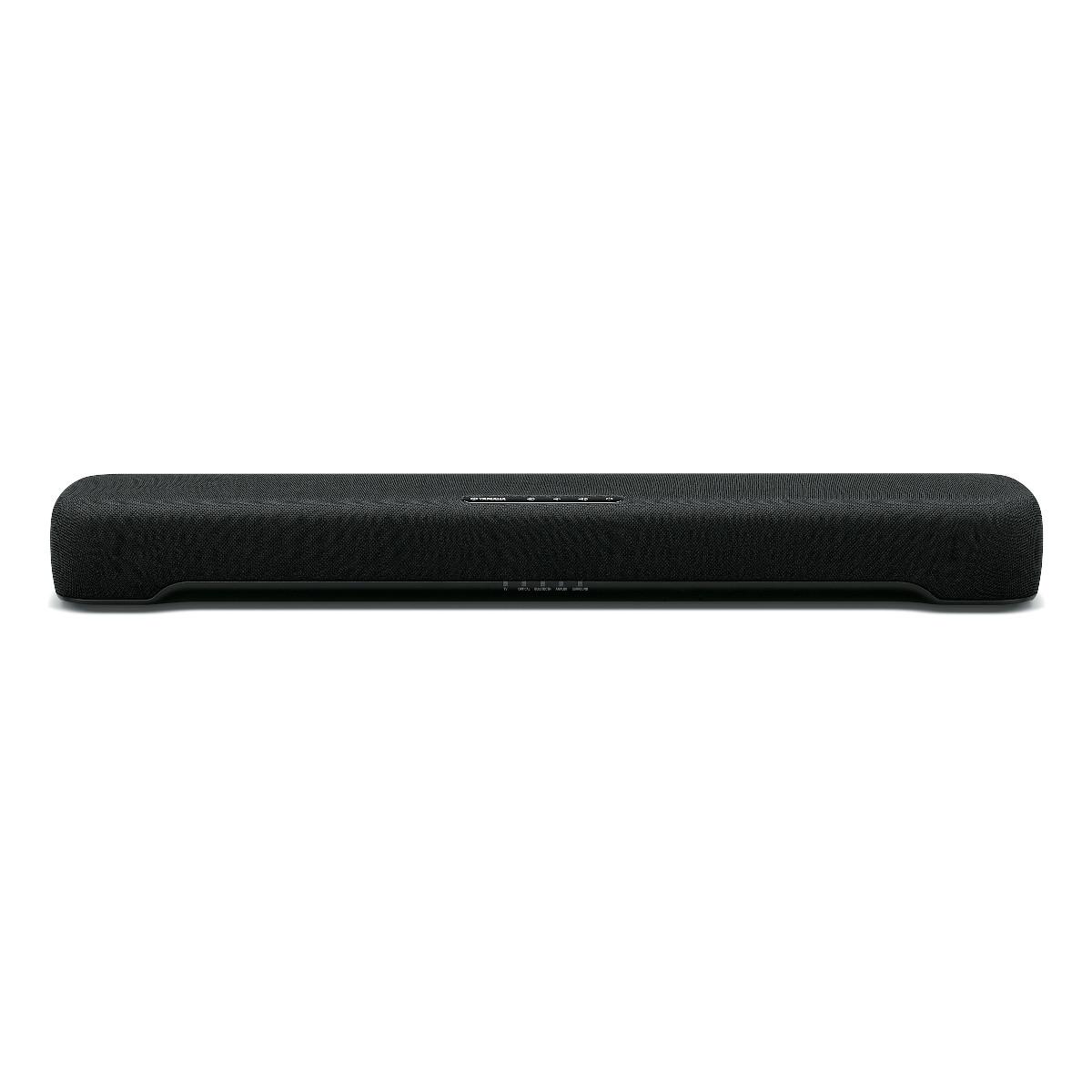
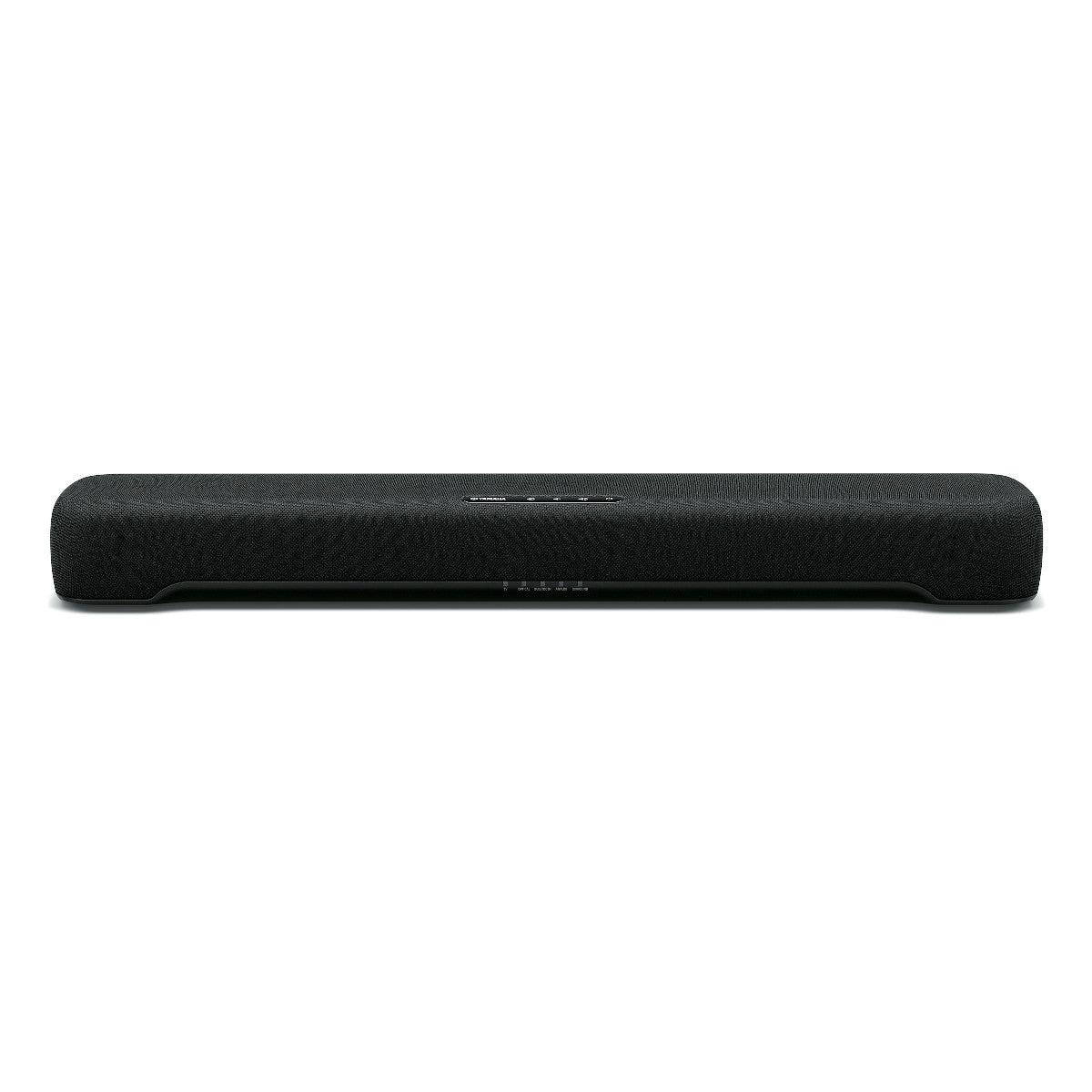
When your TV's built-in speakers just aren't cutting it anymore, you're faced with a classic dilemma: do you invest in a premium soundbar that promises theater-like immersion, or go with a budget option that simply makes everything sound better? The Sonos Arc Ultra ($999) and Yamaha SR-C20A ($170) represent these two very different approaches to solving the same problem.
After testing dozens of soundbars over the years, I've found that both strategies can work brilliantly – it just depends on what you're trying to achieve and how much you're willing to spend. Let me walk you through everything you need to know about these two very different soundbars.
Before diving into specifics, it's worth understanding what separates a basic soundbar from a premium one. At their core, all soundbars are trying to create a wider, more engaging sound than your TV can produce. But how they achieve this varies dramatically.
Budget soundbars like the SR-C20A focus on the fundamentals: clearer dialogue, better bass response, and simple connectivity. They use virtual surround processing (software that manipulates stereo audio to sound wider) and built-in subwoofers to punch above their weight class.
Premium soundbars like the Arc Ultra take a completely different approach. They pack in advanced driver arrays, sophisticated signal processing, and support for modern audio formats like Dolby Atmos – a technology that adds height information to create truly three-dimensional sound. Think of it as the difference between a good pair of headphones and a full concert hall experience.
The timing of these releases tells an interesting story about the soundbar market's evolution. The Yamaha SR-C20A launched in early 2021, during a period when people were upgrading their home entertainment setups but remained budget-conscious. Yamaha focused on delivering reliable performance at an accessible price point.
The Sonos Arc Ultra, released in late 2024, represents three years of technological advancement. It showcases innovations like Sound Motion™ technology – a revolutionary approach to bass reproduction that eliminates the traditional trade-off between deep bass and compact size. Where older soundbars needed massive subwoofer drivers or separate wireless subs, the Arc Ultra achieves impressive low-end response through advanced engineering and materials science.
This timing difference matters more than you might think. The SR-C20A was designed when HDMI ARC (Audio Return Channel) was the standard for TV connectivity. The Arc Ultra takes advantage of eARC (enhanced Audio Return Channel), which can handle much higher-quality audio signals including lossless Dolby Atmos tracks.
Here's where things get really interesting. The Arc Ultra's headline feature is its 9.1.4 Dolby Atmos capability – but what does that actually mean for your movie nights?
Those numbers represent a channel configuration: 9 ear-level channels, 1 subwoofer channel, and 4 height channels. In a traditional home theater, you'd need 14 separate speakers positioned around your room to achieve this. The Arc Ultra creates this experience using precisely angled drivers that bounce sound off your ceiling and walls.
I've spent considerable time testing Atmos content on both discrete speaker systems and soundbars, and while the Arc Ultra can't fully replicate the precision of individual ceiling speakers, it comes surprisingly close. When watching action sequences in movies like "Top Gun: Maverick," you genuinely hear aircraft passing overhead. The effect works best in rooms with standard 8-10 foot ceilings and isn't too wide – something to keep in mind if you have a large, open-concept space.
The SR-C20A takes a more traditional approach with virtual surround processing. It analyzes stereo content and uses digital signal processing to create the illusion of wider sound. While this works well for dialogue clarity and general TV watching, it can't create the vertical dimension that makes Atmos special.
This is where these soundbars reveal fundamentally different design philosophies. The SR-C20A includes a dedicated 60-watt subwoofer driver with dual passive radiators – essentially speakers without magnets that vibrate sympathetically to reinforce bass frequencies. For a compact soundbar, this setup delivers surprisingly powerful bass that you can actually feel during action scenes.
The Arc Ultra's Sound Motion™ technology is more sophisticated but potentially less immediately impressive. Instead of a traditional large driver moving lots of air, it uses advanced materials and motor systems to achieve bass response from a much smaller package. The result is tighter, more controlled bass that integrates seamlessly with the midrange and treble. However, if you're looking for the kind of room-shaking bass that makes your neighbors complain, you'll likely want to add Sonos's separate Sub (an additional $749 investment).
In my testing, the SR-C20A actually delivers more visceral bass impact out of the box. But the Arc Ultra's bass is more accurate and musical – better for both movies and music listening.
Since most of us spend more time watching TV shows and news than action movies, dialogue clarity often matters more than explosive sound effects. Both soundbars address this crucial need but use different approaches.
The Sonos Arc Ultra employs AI-powered Speech Enhancement with four adjustable levels. This isn't just an EQ boost – it's sophisticated processing that can identify and prioritize human voice frequencies while maintaining the integrity of background music and effects. The system learns and adapts, becoming more effective over time.
The SR-C20A uses Yamaha's Clear Voice technology, which takes a more straightforward approach by boosting the frequency ranges where human speech typically occurs. It's simpler but very effective, especially for news, talk shows, and dialogue-heavy dramas.
In practical terms, both work well, but the Arc Ultra offers more nuanced control. If you're someone who struggles with dialogue clarity due to hearing challenges, the Arc Ultra's multiple enhancement levels provide better customization options.
This is where the three-year technology gap becomes most apparent. The Yamaha SR-C20A represents the pre-smart home era of audio equipment – it connects to your TV, plays music via Bluetooth, and that's essentially it. There's no app, no voice control, and no integration with streaming services. For many people, this simplicity is actually a feature rather than a limitation.
The Arc Ultra, meanwhile, is designed for the connected home. It includes built-in microphones for Amazon Alexa and Google Assistant, connects to your Wi-Fi network for high-quality streaming, and integrates with the broader Sonos ecosystem. This means you can group it with other Sonos speakers throughout your home, control everything through the Sonos app, and even use Trueplay tuning – a feature that uses your smartphone's microphone to measure your room's acoustics and automatically optimize the soundbar's output.
The practical impact is significant. With the Arc Ultra, you can ask Alexa to play specific playlists, adjust volume, or even control smart home devices without reaching for a remote. The SR-C20A requires manual input switching and volume adjustment through either its remote or your TV's remote (if compatible).
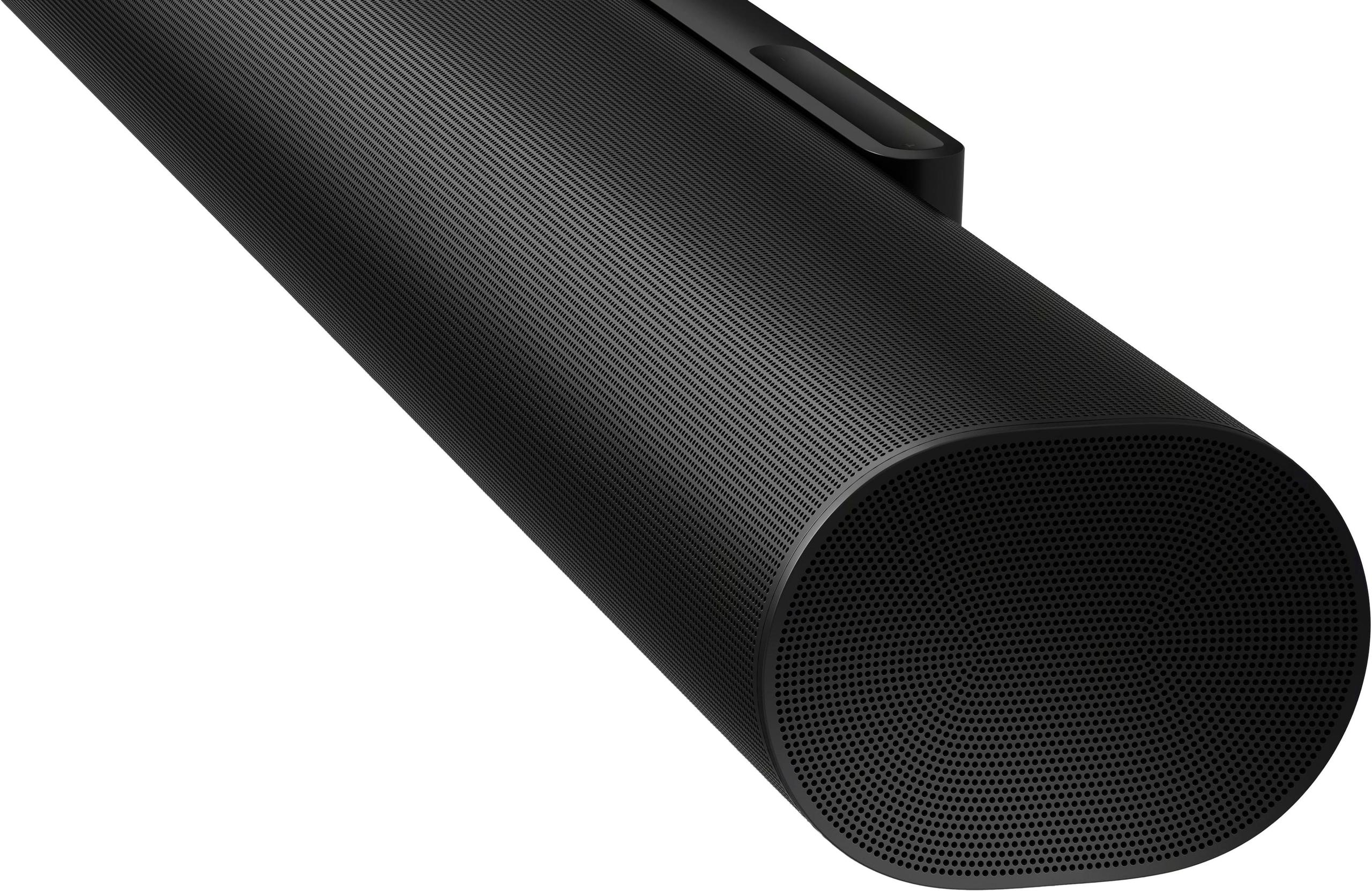
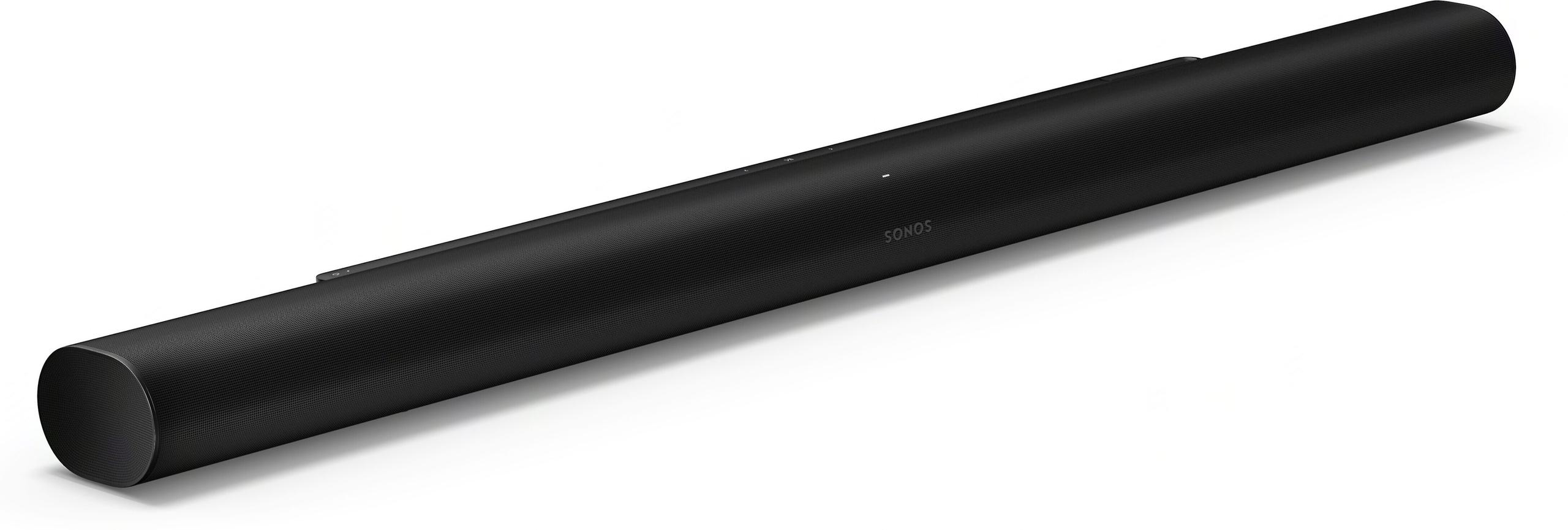
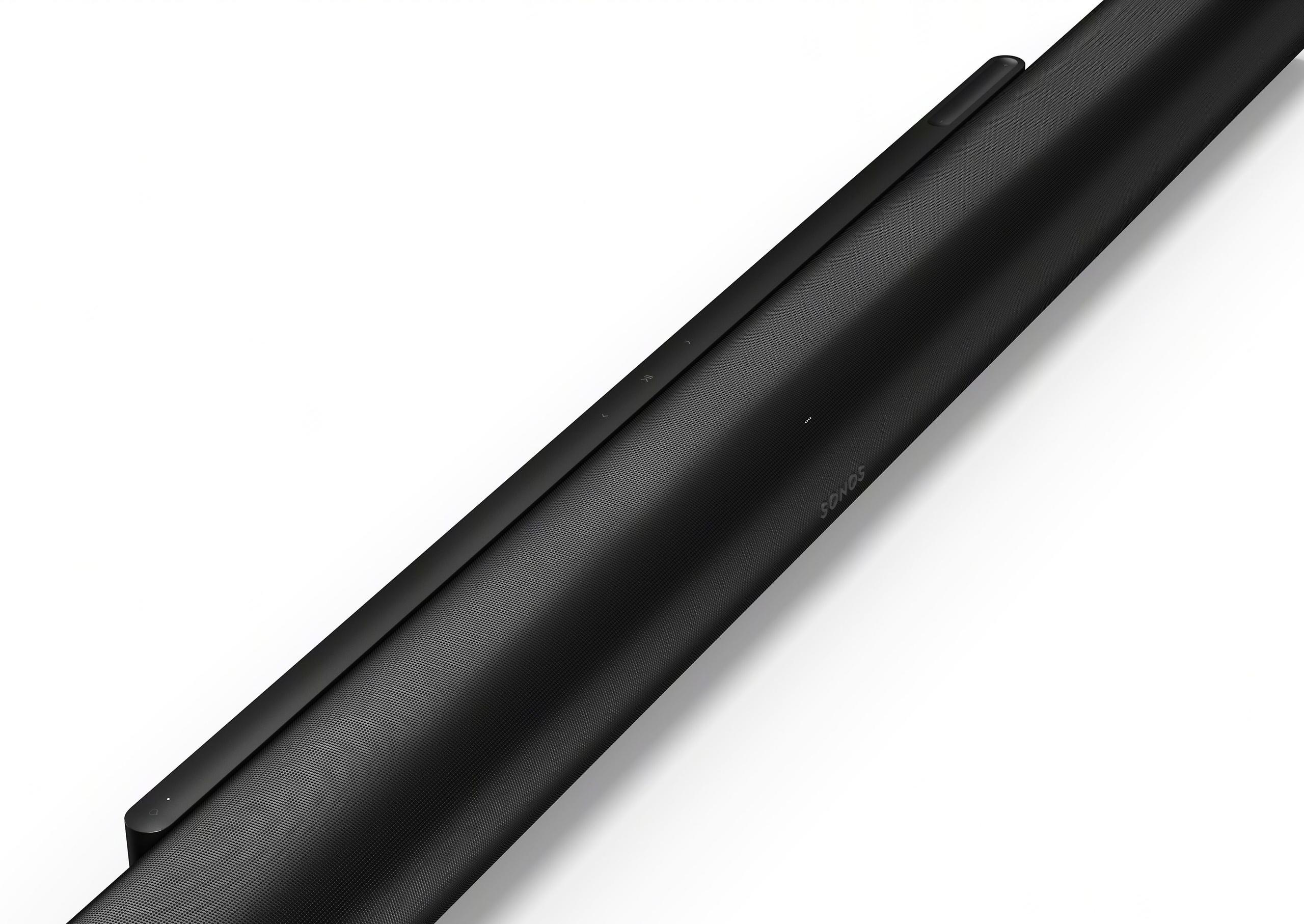
Physical design might seem secondary to sound quality, but it significantly impacts daily use. The Arc Ultra spans nearly four feet (46.18 inches) and is designed for TVs 55 inches and larger. Its curved, premium design definitely makes a statement – this isn't a soundbar that disappears into your entertainment center.
The SR-C20A is refreshingly compact at just under two feet wide (23.6 inches). It's perfect for smaller TVs and rooms where you don't want the audio equipment to dominate the space. At less than 4 pounds compared to the Arc Ultra's 12.7 pounds, it's also much easier to mount on walls or move between rooms.
From an installation perspective, both offer wall-mounting options, but the Arc Ultra requires more careful consideration of placement due to its reliance on ceiling reflections for Atmos effects. The SR-C20A is more forgiving – as long as it's reasonably centered under your TV, it'll work well.
If you're serious about creating a dedicated home theater experience, the choice becomes clearer. The Arc Ultra is specifically designed to serve as the foundation of a larger system. You can add Sonos's Sub for deep bass extension and Era 300 speakers as wireless surrounds to create a true 5.1.4 Atmos system. The whole setup communicates wirelessly and can be controlled through a single app.
The SR-C20A is more of an endpoint solution. While it dramatically improves TV audio, there's no expansion path beyond the soundbar itself. This isn't necessarily a disadvantage – many people prefer the simplicity of a single-box solution that just works.
Here's where personal priorities really matter. The Sonos Arc Ultra costs nearly six times more than the Yamaha SR-C20A, but it's not six times better in terms of pure audio improvement over built-in TV speakers. The law of diminishing returns applies heavily in audio equipment.
However, the Arc Ultra offers future-proofing that the SR-C20A simply can't match. It supports current and emerging audio formats, receives regular software updates that add new features, and integrates with smart home ecosystems that are likely to become more important over time.
The SR-C20A represents immediate gratification at a minimal financial risk. For under $200, you get significantly better TV audio with particularly strong bass response. There's no app to learn, no account to create, and no ongoing relationship with the manufacturer required.
After extensive testing with both soundbars, I've identified specific scenarios where each excels:
Choose the Arc Ultra if you regularly watch movies and premium TV content, have a larger TV (55+ inches), plan to build out a multi-room audio system, or simply want the best possible single-soundbar experience money can buy. It's also the clear choice if you're interested in voice control integration or frequently stream music.
The SR-C20A makes more sense for casual TV viewing, smaller TVs and rooms, secondary installations (bedrooms, kitchens), or situations where you want meaningful audio improvement without complexity or high cost. It's also ideal if you prioritize immediate bass impact over long-term expandability.
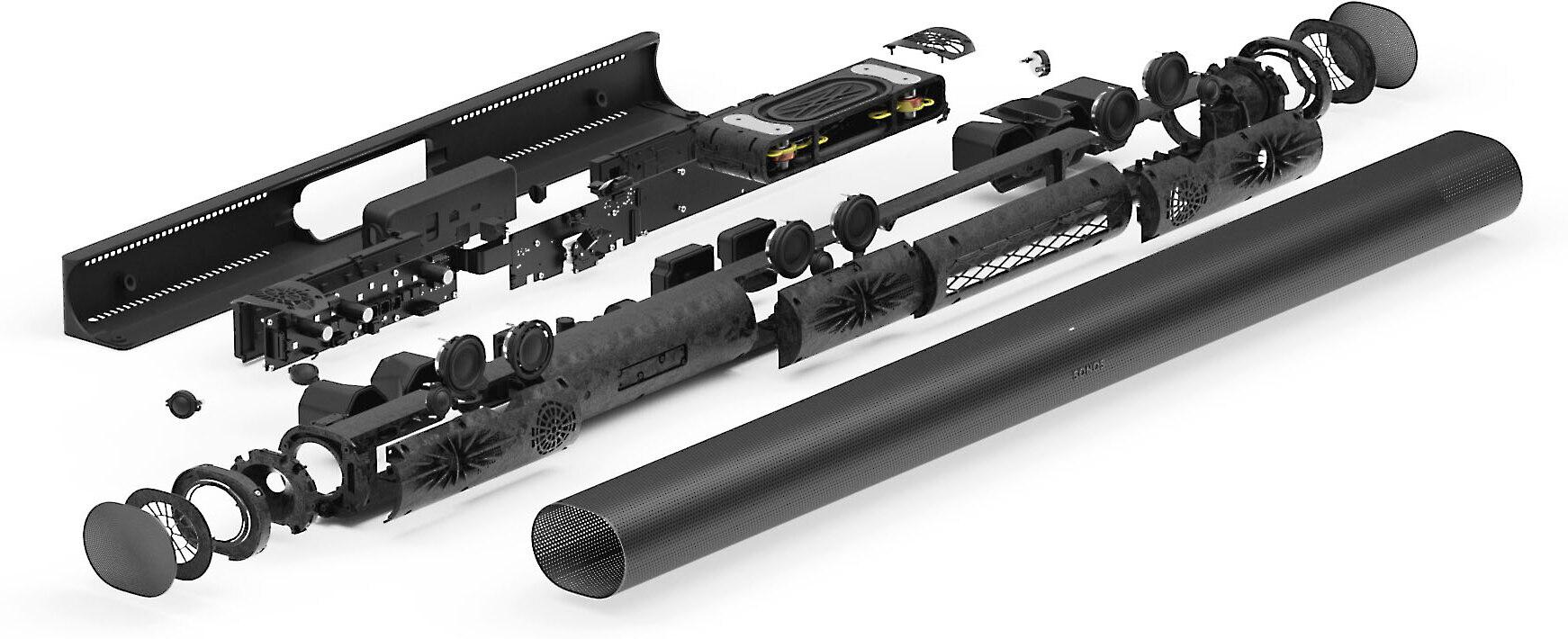
The engineering differences between these soundbars reveal why they perform so differently. The Arc Ultra packs 14 individual drivers – seven tweeters for high frequencies, six midwoofers for vocals and midrange content, and one Sound Motion™ woofer for bass. Each driver is individually powered by its own amplifier, allowing for precise control and optimization.
The SR-C20A uses a simpler but effective approach: stereo drivers for main content, plus the dedicated subwoofer section with passive radiators. The passive radiators are clever – they're essentially speakers without magnets that vibrate in response to the active subwoofer, effectively doubling the bass output without requiring additional amplification.
The Arc Ultra's Sound Motion™ technology deserves special mention because it represents a genuine innovation in driver design. Traditional subwoofers move lots of air by using large cones with significant excursion (how far the driver moves back and forth). Sound Motion™ achieves similar results using advanced magnetic structures and lightweight materials that require much less physical movement, enabling powerful bass from a compact form factor.
After living with both soundbars extensively, I've come to appreciate them as solutions to different problems rather than direct competitors. The Yamaha SR-C20A excels at its primary mission: making TV audio significantly better at a price point that won't break the bank. It's particularly effective for dialogue-heavy content and provides satisfying bass response that many users find adequate for their needs.
The Sonos Arc Ultra represents what's possible when engineering constraints are relaxed and premium materials are employed. It creates a genuinely immersive audio experience that approaches what you'd get from a full surround sound system, while offering the convenience and aesthetics of a single soundbar.
Your choice ultimately depends on your priorities, room size, content preferences, and budget. But either way, you'll be getting significantly better audio than what your TV provides on its own – and sometimes, that's all the improvement you really need.
| Sonos Arc Ultra Dolby Atmos Soundbar ($999) | Yamaha SR-C20A Compact Sound Bar ($170) |
|---|---|
| Audio Channels - Determines immersion and surround sound capability | |
| 9.1.4 Dolby Atmos (virtualized height effects) | 2.1-channel with built-in subwoofer |
| Total Drivers - More drivers typically mean better sound separation | |
| 14 custom-engineered drivers (7 tweeters, 6 midwoofers, 1 Sound Motion woofer) | Standard stereo drivers plus 3" subwoofer with dual passive radiators |
| Bass Technology - Critical for movie impact and music enjoyment | |
| Sound Motion™ woofer (tight, controlled bass) | 60W dedicated subwoofer (more immediate bass impact) |
| Dialogue Enhancement - Essential for clear speech | |
| AI-powered Speech Enhancement with 4 adjustable levels | Clear Voice technology with simple on/off |
| Smart Features - Convenience and future-proofing | |
| Built-in Alexa/Google, Wi-Fi streaming, Sonos ecosystem | Bluetooth only, no voice control or apps |
| Room Calibration - Optimizes sound for your specific space | |
| Trueplay tuning via smartphone microphone | None (manual sound mode selection) |
| Connectivity Options - Determines compatibility with devices | |
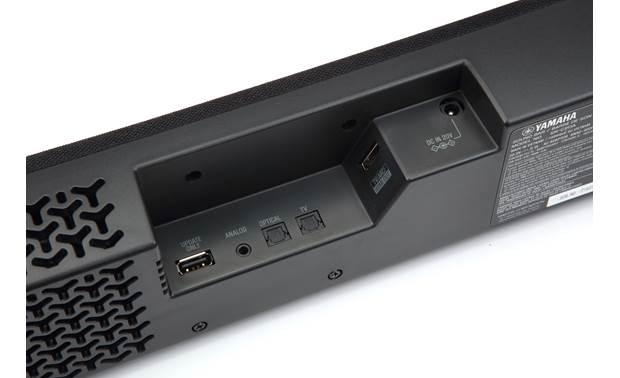
| HDMI eARC, Wi-Fi, Bluetooth 5.3, AirPlay 2 | HDMI ARC, Bluetooth 5.0, optical, aux input |
| Physical Size - Important for TV compatibility and room aesthetics | |
| 46.18" × 3.13" × 4.35" (12.7 lbs) - fits 55"+ TVs | 23.6" × 2.5" × 3.75" (3.9 lbs) - perfect for smaller TVs |
| Expandability - Ability to grow your audio system | |
| Compatible with Sonos Sub ($749) and surround speakers | No expansion options available |
| Setup Complexity - Time and effort required | |
| App-based setup with Wi-Fi configuration required | Plug-and-play with optional app control |
| Best Use Case - Who each product serves best | |
| Home theater enthusiasts with larger TVs wanting Dolby Atmos | Budget-conscious users seeking better TV audio in smaller rooms |
The Yamaha SR-C20A ($170) offers exceptional value for basic TV audio improvement, while the Sonos Arc Ultra ($999) provides premium features and Dolby Atmos immersion. If you want immediate bass improvement and clearer dialogue without breaking the bank, the Yamaha wins on value. However, if you prioritize cutting-edge audio technology and future-proofing, the Sonos justifies its higher price.
Dolby Atmos on the Sonos Arc Ultra creates genuine overhead sound effects that make movies more immersive, especially action films and nature documentaries. The Yamaha SR-C20A uses virtual surround processing that widens the soundstage but can't create height effects. For casual TV watching, the Yamaha's virtual surround is perfectly adequate. Choose Atmos if you regularly watch movies and want theater-like immersion.
The Yamaha SR-C20A delivers more immediate bass impact thanks to its dedicated 60W subwoofer and dual passive radiators. The Sonos Arc Ultra has tighter, more controlled bass through Sound Motion technology, but you'll likely want to add the separate Sonos Sub ($749) for deep, room-filling bass. If you want strong bass right out of the box, the Yamaha wins.
Yes, both work with modern TVs. The Sonos Arc Ultra uses HDMI eARC for the best audio quality and supports newer audio formats. The Yamaha SR-C20A connects via HDMI ARC, optical, or auxiliary inputs, making it compatible with older TVs too. Both can be controlled by your TV remote once connected properly.
The Yamaha SR-C20A is ideal for smaller spaces at just 23.6 inches wide and 3.9 pounds. It's designed for TVs 32-50 inches and won't overwhelm compact rooms. The Sonos Arc Ultra spans nearly 4 feet and works best with 55+ inch TVs in larger rooms where its Dolby Atmos effects have space to work properly.
The Sonos Arc Ultra has built-in Amazon Alexa and Google Assistant, letting you control volume, play music, and manage smart home devices with voice commands. The Yamaha SR-C20A has no voice control capabilities - you'll need to use the included remote or your TV remote for all adjustments.
The Yamaha SR-C20A is plug-and-play simple - just connect one cable to your TV and you're done. No apps, accounts, or Wi-Fi setup required. The Sonos Arc Ultra requires the Sonos app, Wi-Fi configuration, and room tuning for optimal performance. If you want zero complexity, choose the Yamaha.
Both support Bluetooth music streaming from your phone. The Sonos Arc Ultra also supports Wi-Fi streaming, AirPlay 2, and direct access to Spotify, Apple Music, and other services through the Sonos app. The Yamaha SR-C20A is limited to Bluetooth only but includes a Compressed Music Enhancer to improve sound quality from wireless sources.
Both excel at dialogue clarity but use different approaches. The Sonos Arc Ultra has AI-powered Speech Enhancement with four adjustable levels that can cut through complex soundtracks. The Yamaha SR-C20A uses Clear Voice technology that's simpler but very effective for news, talk shows, and regular TV programming.
The Sonos Arc Ultra is designed for expansion - you can add the Sonos Sub for deeper bass and Sonos Era 300s as wireless rear speakers for true surround sound. The Yamaha SR-C20A is a complete solution with no expansion options, but its built-in subwoofer means you may not need additional speakers.
The Yamaha SR-C20A includes a dedicated Game mode that enhances sound effects and reduces audio lag. The Sonos Arc Ultra doesn't have gaming-specific modes but its superior driver array and processing provide more detailed audio positioning. Both work well for gaming, but the Yamaha's Game mode gives it a slight edge for dedicated gamers.
For a dedicated home theater with a large TV (55+ inches), the Sonos Arc Ultra delivers the immersive Dolby Atmos experience that makes movies truly cinematic. For casual viewing or secondary rooms, the Yamaha SR-C20A provides excellent dialogue clarity and bass impact at a fraction of the cost. Consider your viewing habits, room size, and whether you plan to expand your audio system over time.
We've done our best to create useful and informative comparisons to help you decide what product to buy. Our research uses advanced automated methods to create this comparison and perfection is not possible - please contact us for corrections or questions. These are the sites we've researched in the creation of this article: bestbuy.com - shopjetson.com - youtube.com - ign.com - crutchfield.com - dowtechnologies.com - sonos.com - appleinsider.com - pcrichard.com - clefdesol.com - sonos.com - businessinsider.com - audioadvice.com - en.community.sonos.com - t3.com - usa.yamaha.com - radiotimes.com - shop.usa.yamaha.com - whathifi.com - hifiheaven.net - usa.yamaha.com - sweetwater.com - hub.yamaha.com - bestbuy.com

Privacy Policy
Terms and Conditions - Affiliate Policy
Home Security
© Copyright 2008-2026.
11816 Inwood Rd #1211, Dallas, TX 75244