










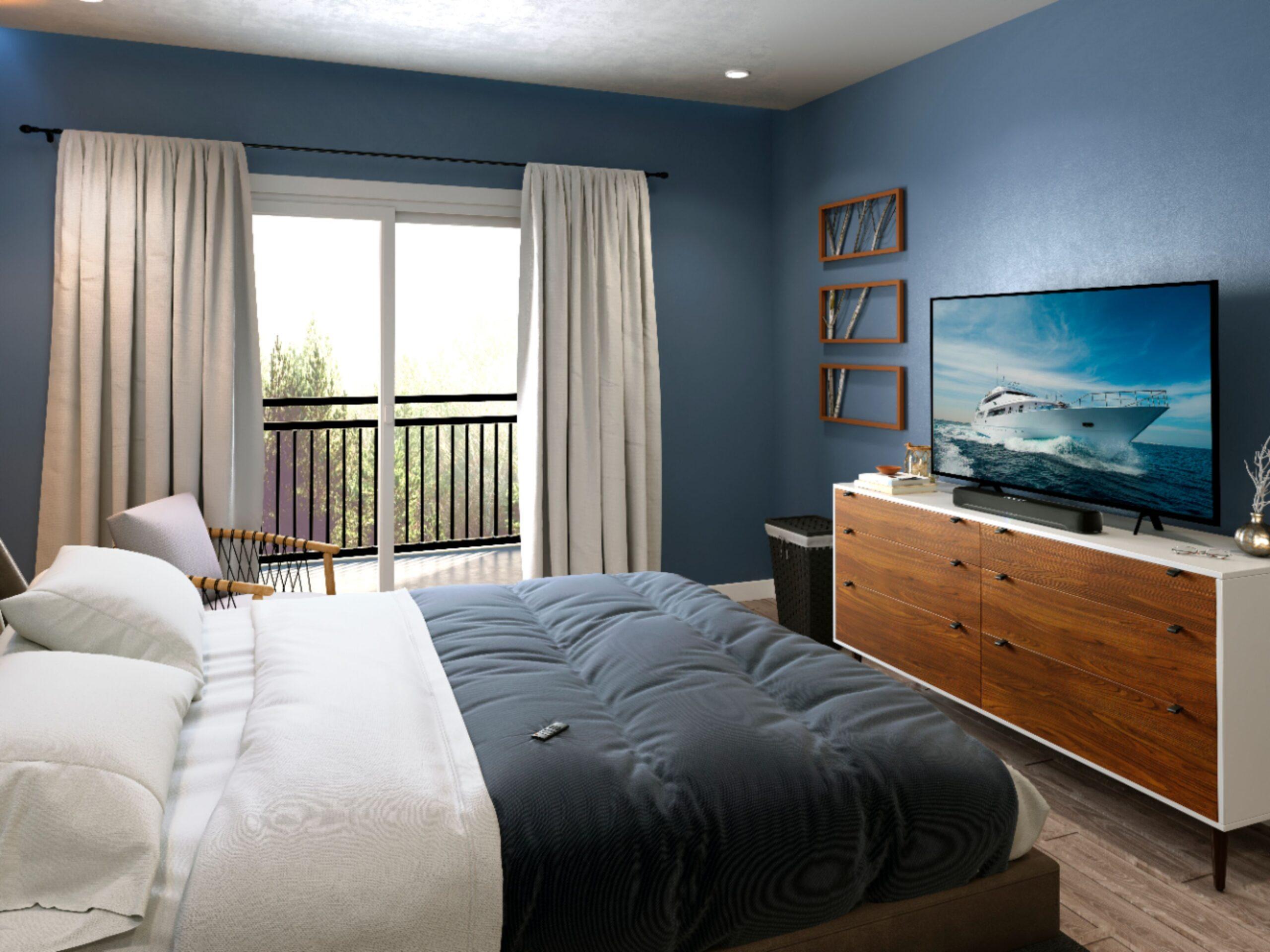
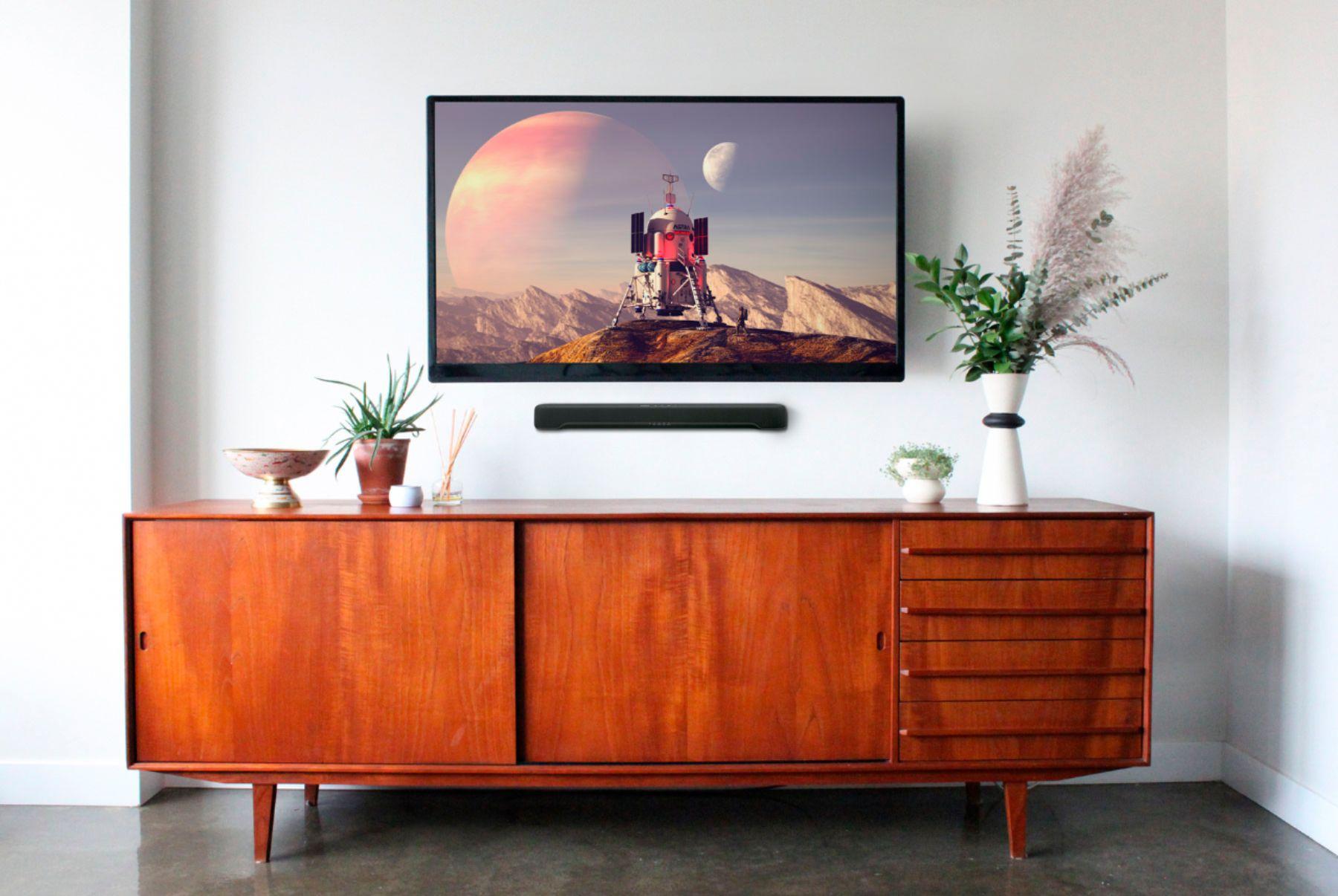
If you've ever watched a movie on your TV and thought "I wish I could actually hear what they're saying," you're not alone. Most TVs today are incredibly thin, which means their built-in speakers are about as powerful as a smartphone speaker trying to fill your living room. That's where soundbars come in – they're the most popular way to upgrade your TV's audio without turning your room into a maze of speakers and wires.
But here's the thing: not all soundbars are created equal. Today we're comparing two very different approaches to better TV sound – the Samsung HW-Q800D ($697.99) and the Yamaha SR-C20A ($199.95). Think of it like comparing a luxury SUV to a reliable compact car – both will get you where you need to go, but they're designed for completely different journeys.
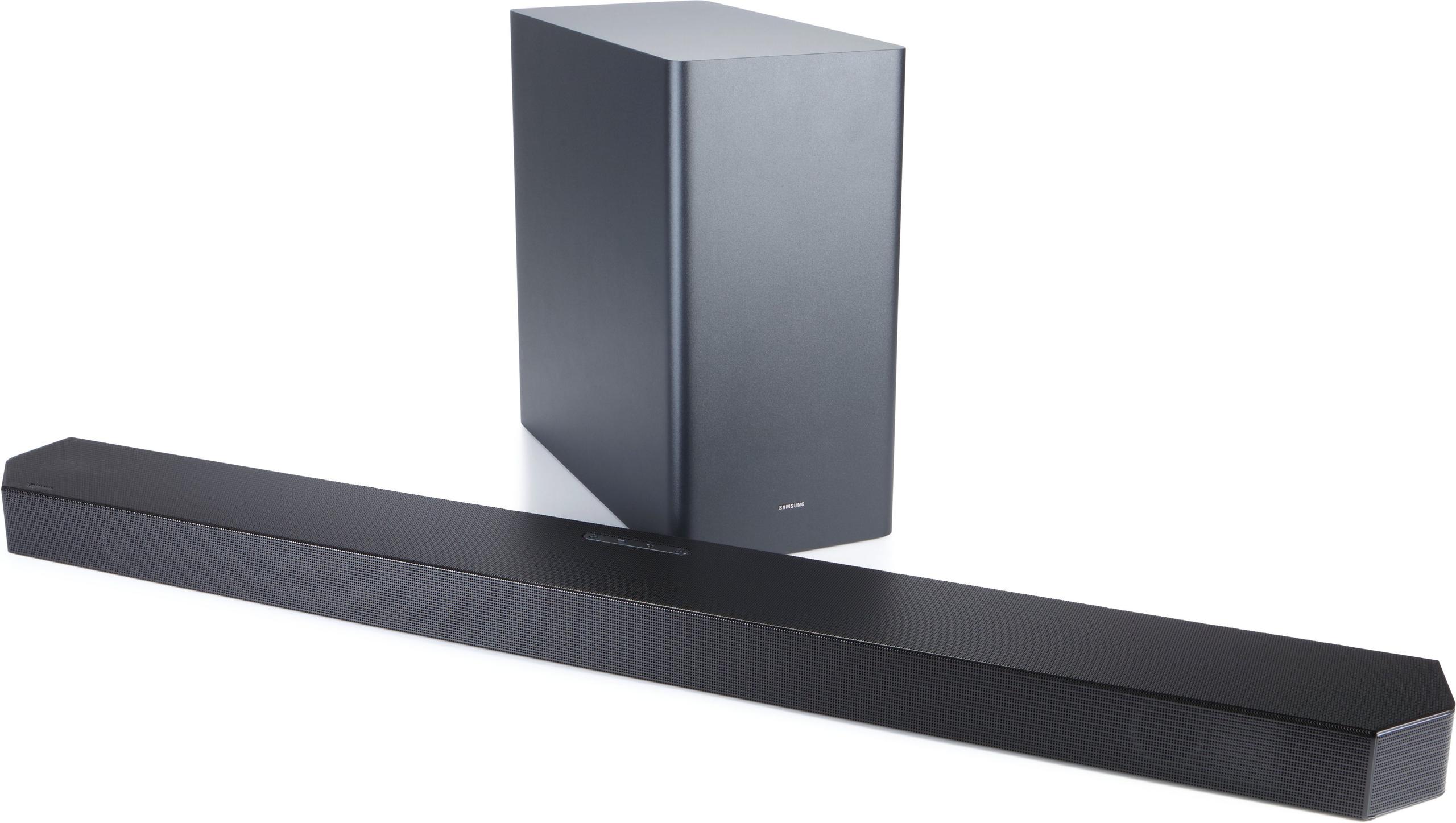
Before we dive into these specific models, let's talk about what you should actually care about when shopping for a soundbar. The most important consideration is channel configuration – this tells you how many separate audio channels the soundbar can produce. A 2.1 system has left and right speakers plus a subwoofer (that's the ".1" part, which handles bass). A 5.1.2 system like the Samsung has five main channels (left, center, right, and two surround), one subwoofer, and two height channels that fire sound upward to bounce off your ceiling.
The subwoofer situation is another big deal. Some soundbars have everything built into one bar, while others come with a separate subwoofer box. Built-in subwoofers save space but can't move as much air. Separate subwoofers can be placed anywhere in your room for optimal bass, but they need power outlets and take up floor space.
Then there's the question of audio processing. Basic soundbars use "virtual surround" – clever digital tricks that make two speakers sound like they're coming from multiple directions. Premium soundbars support Dolby Atmos, which is object-based audio that can precisely place sounds in three-dimensional space around you. When a helicopter flies overhead in a movie, Atmos makes it sound like it's actually above you.
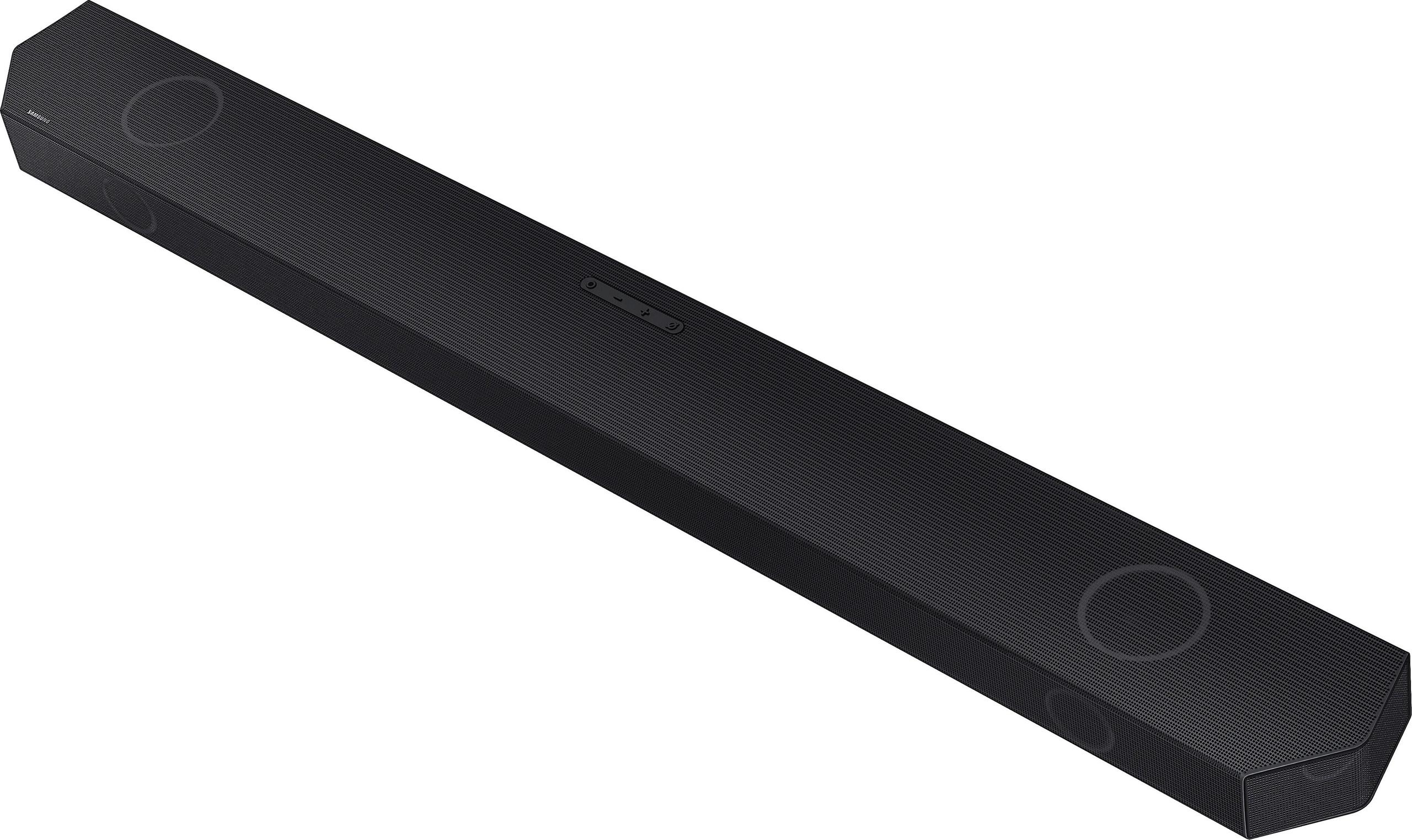
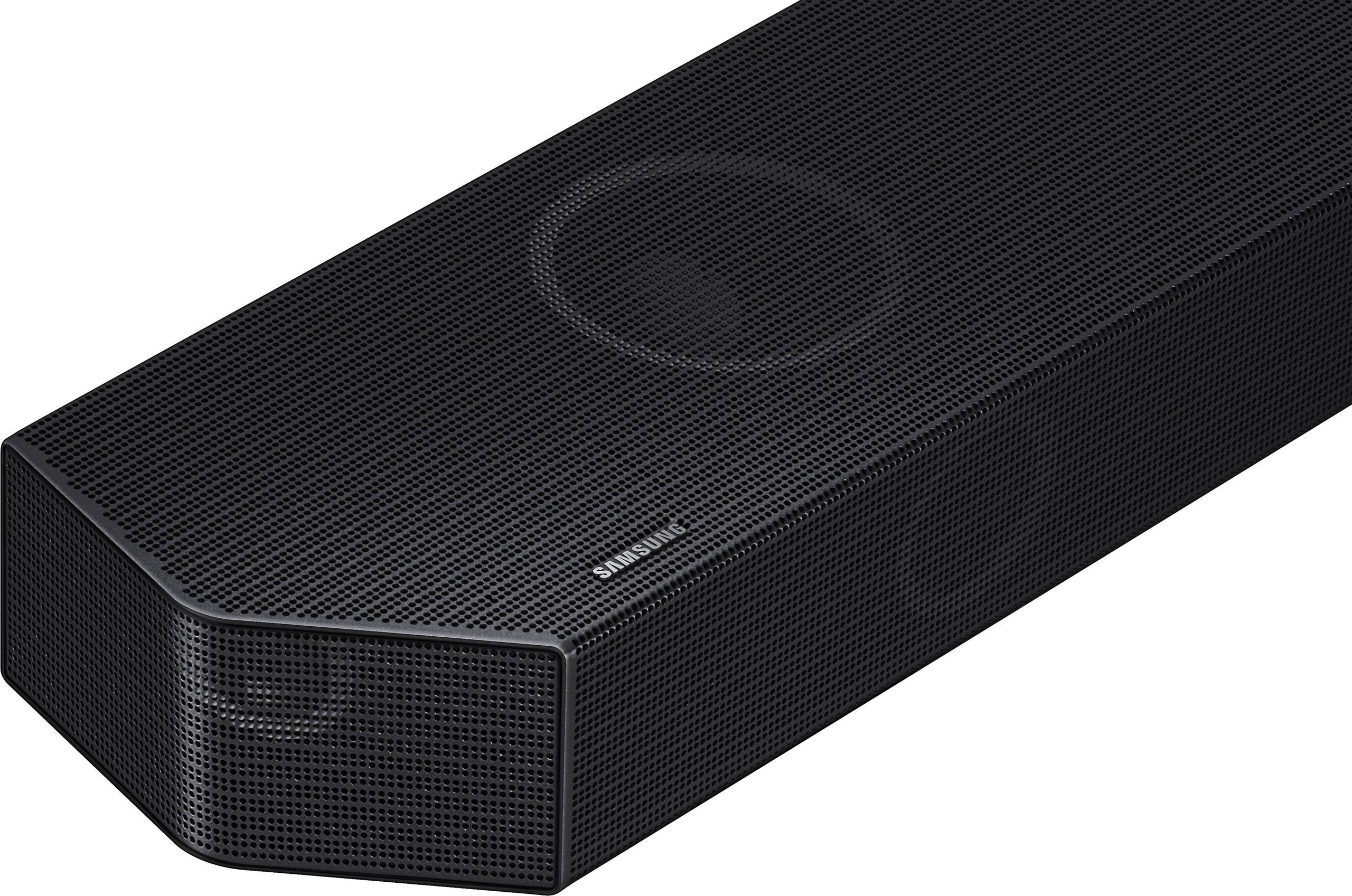
The Samsung HW-Q800D launched in 2024 as part of Samsung's premium soundbar lineup, representing the sweet spot between their mid-range and flagship offerings. It's a true 5.1.2 Dolby Atmos system with 10 individual speakers spread across the main bar and a wireless 8-inch subwoofer. At nearly 44 inches wide, it's designed to pair with larger TVs and deliver genuine home theater experiences.
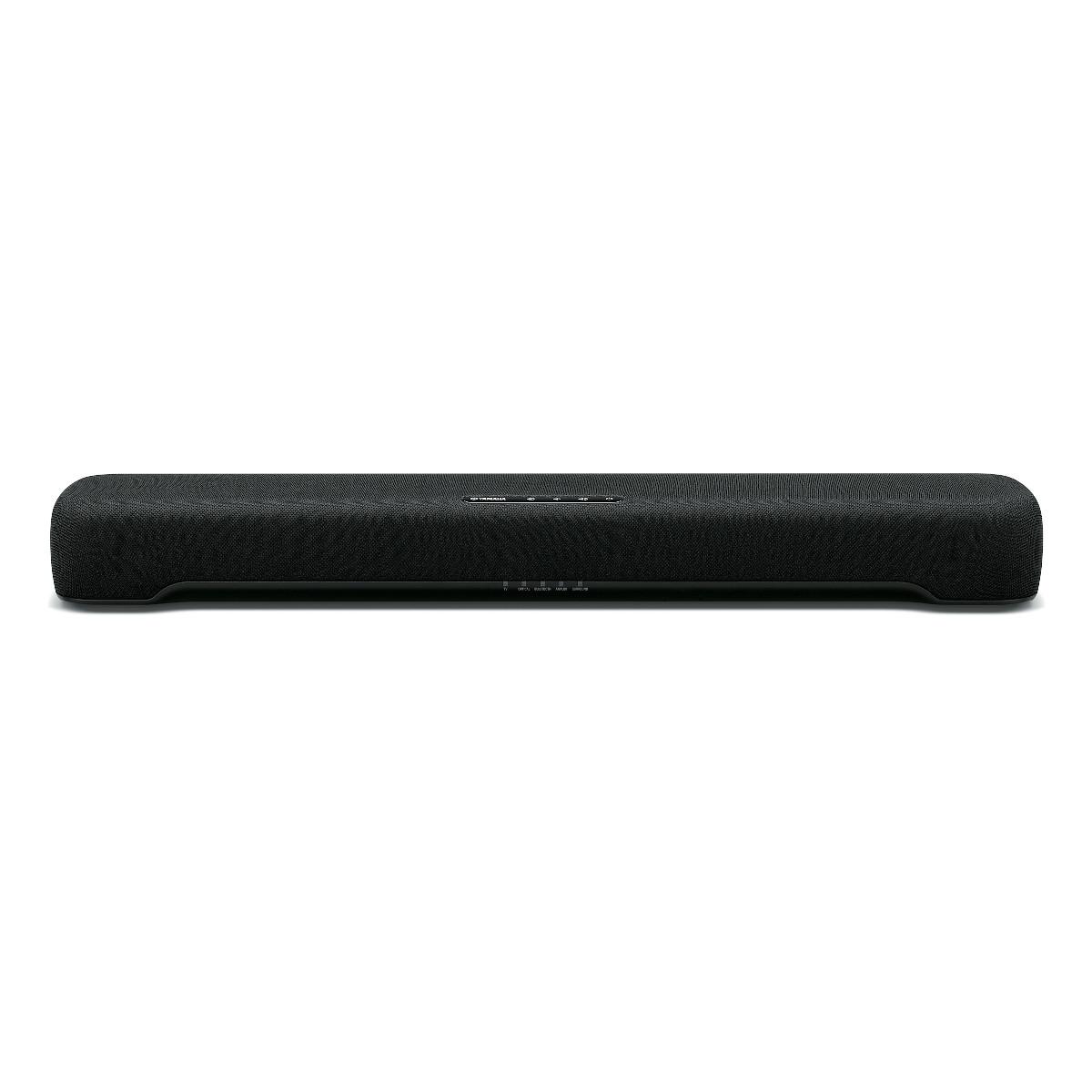
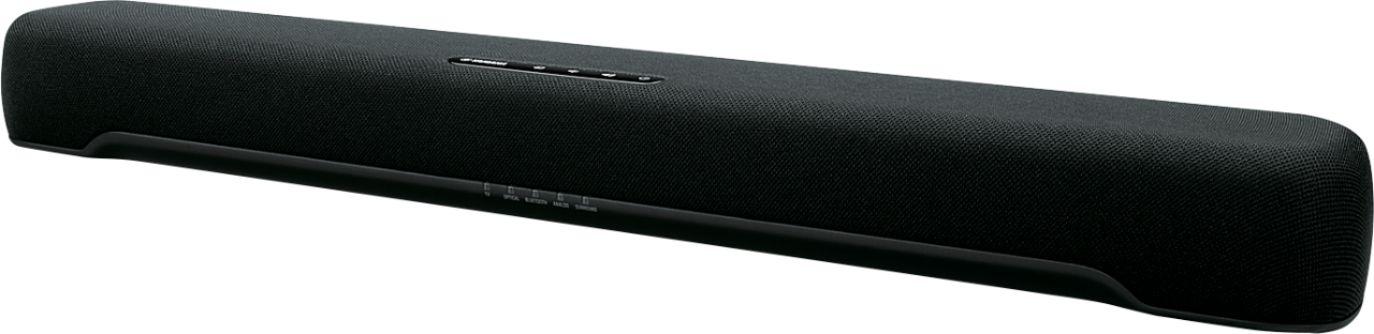
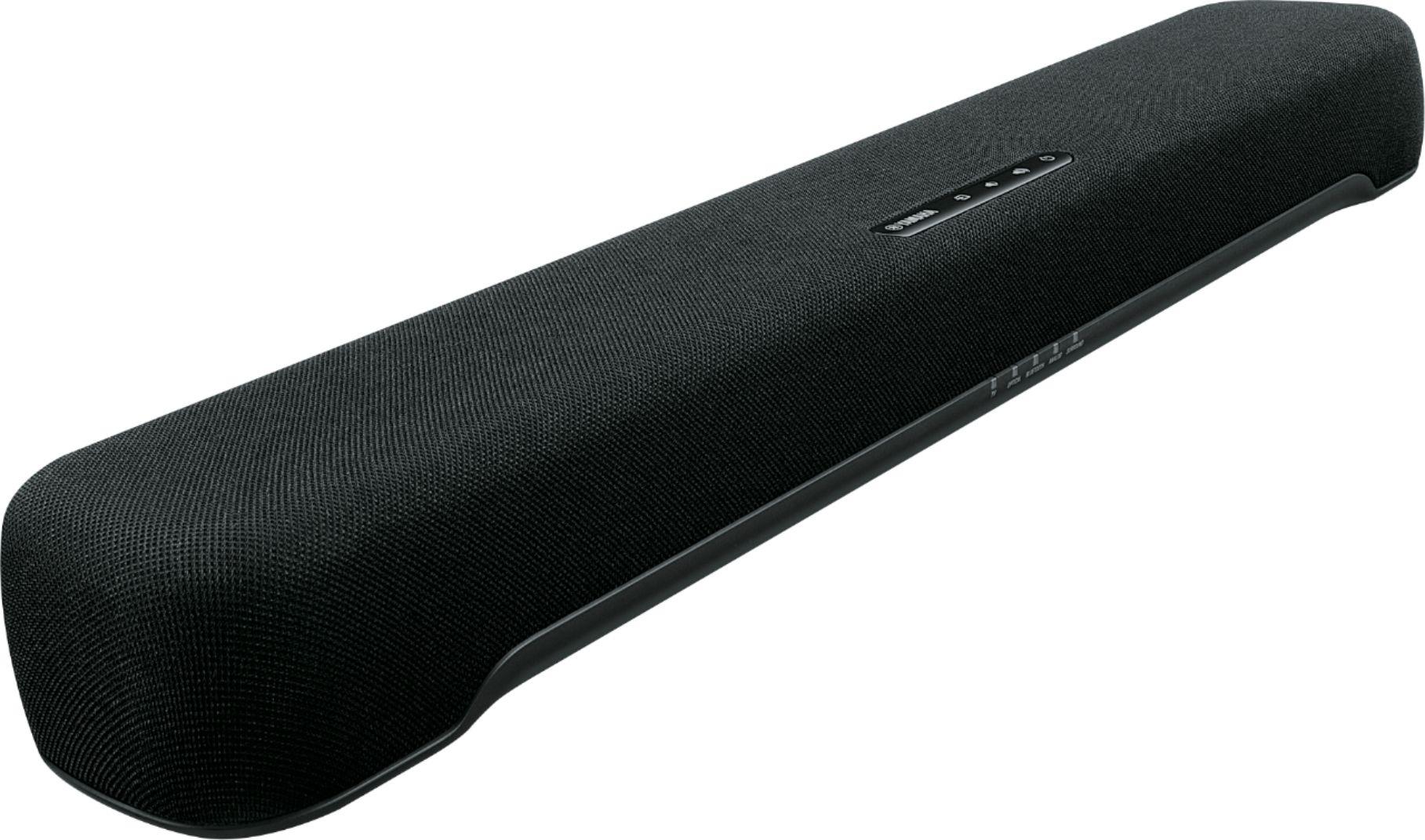
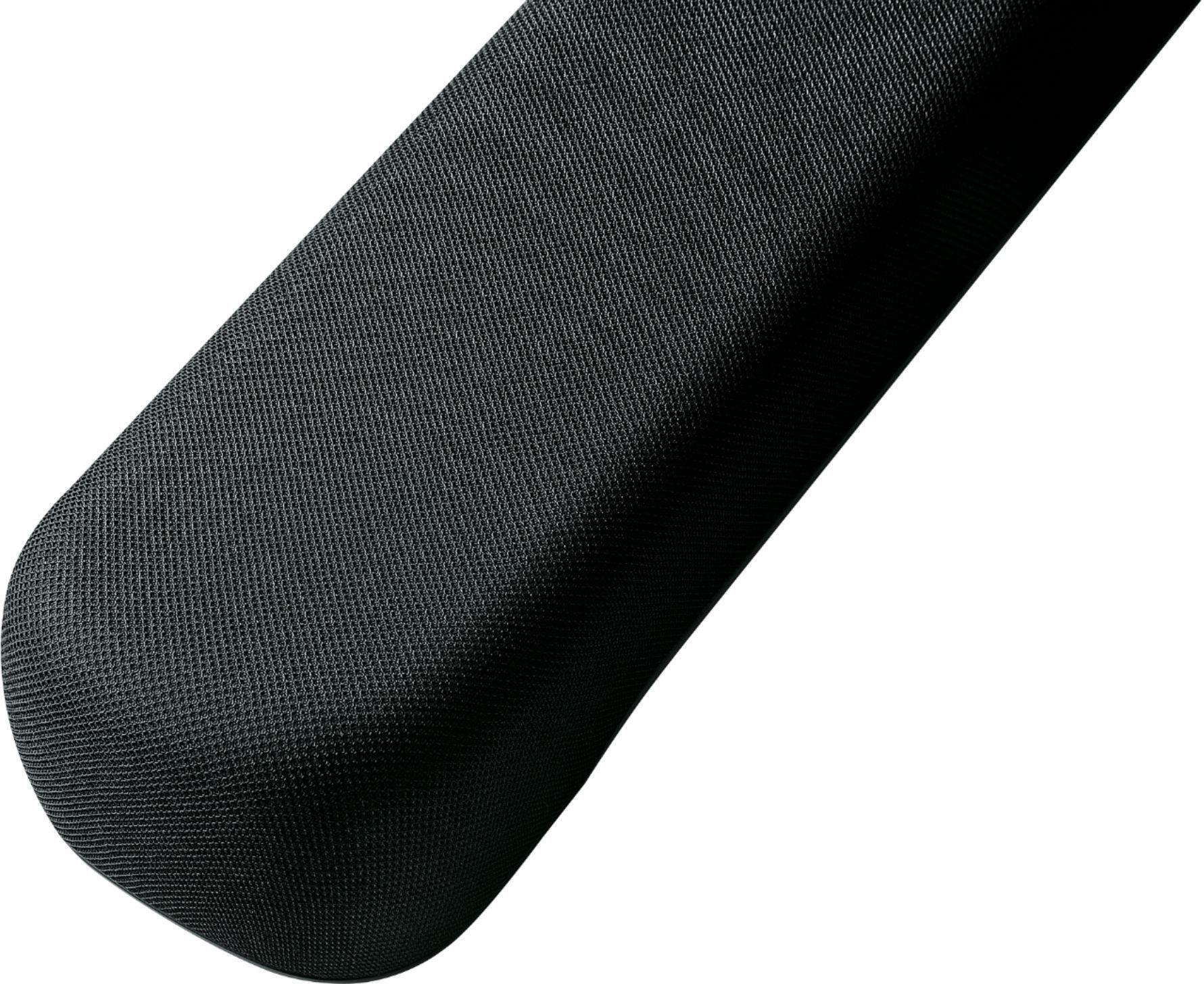
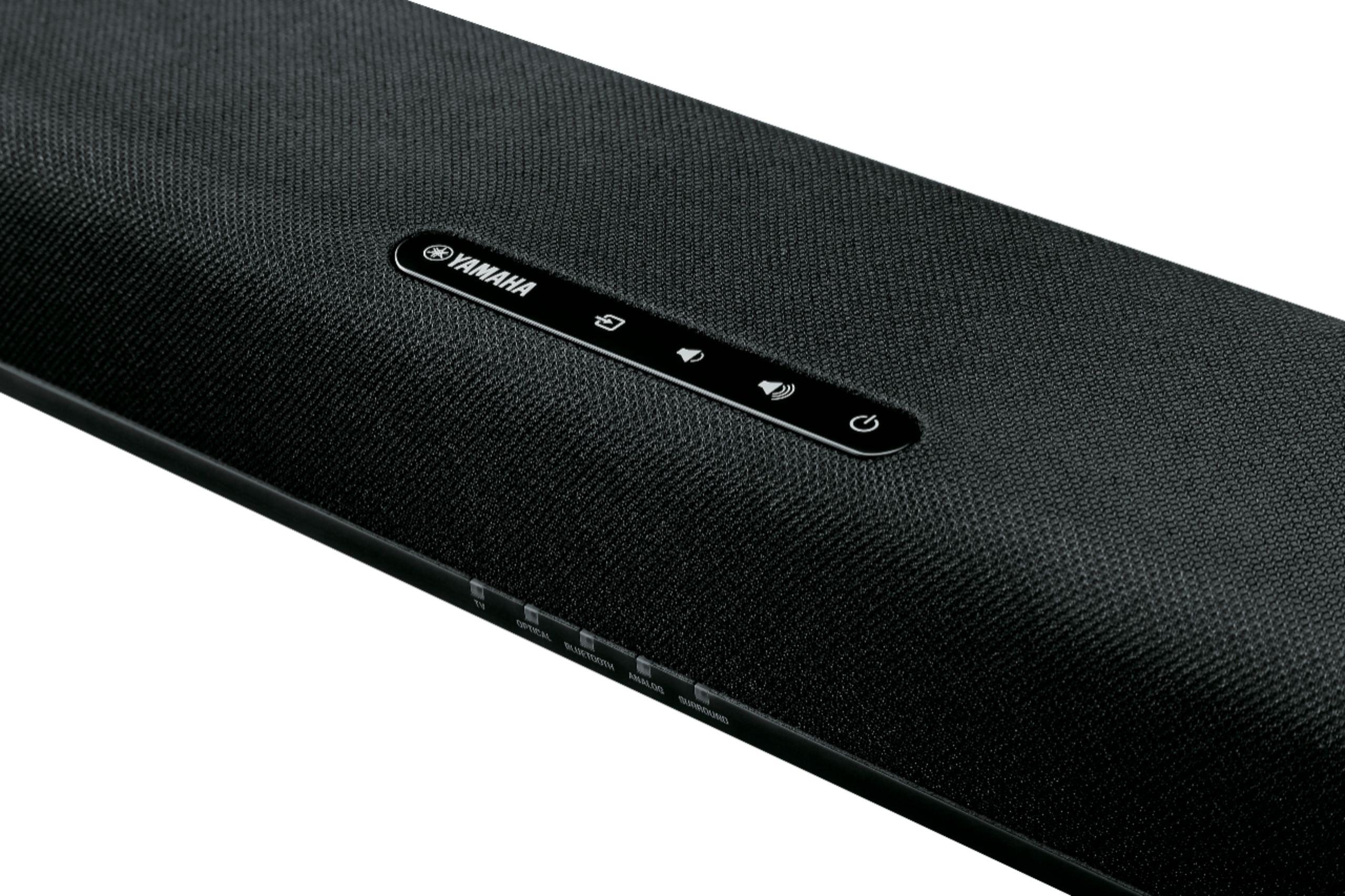
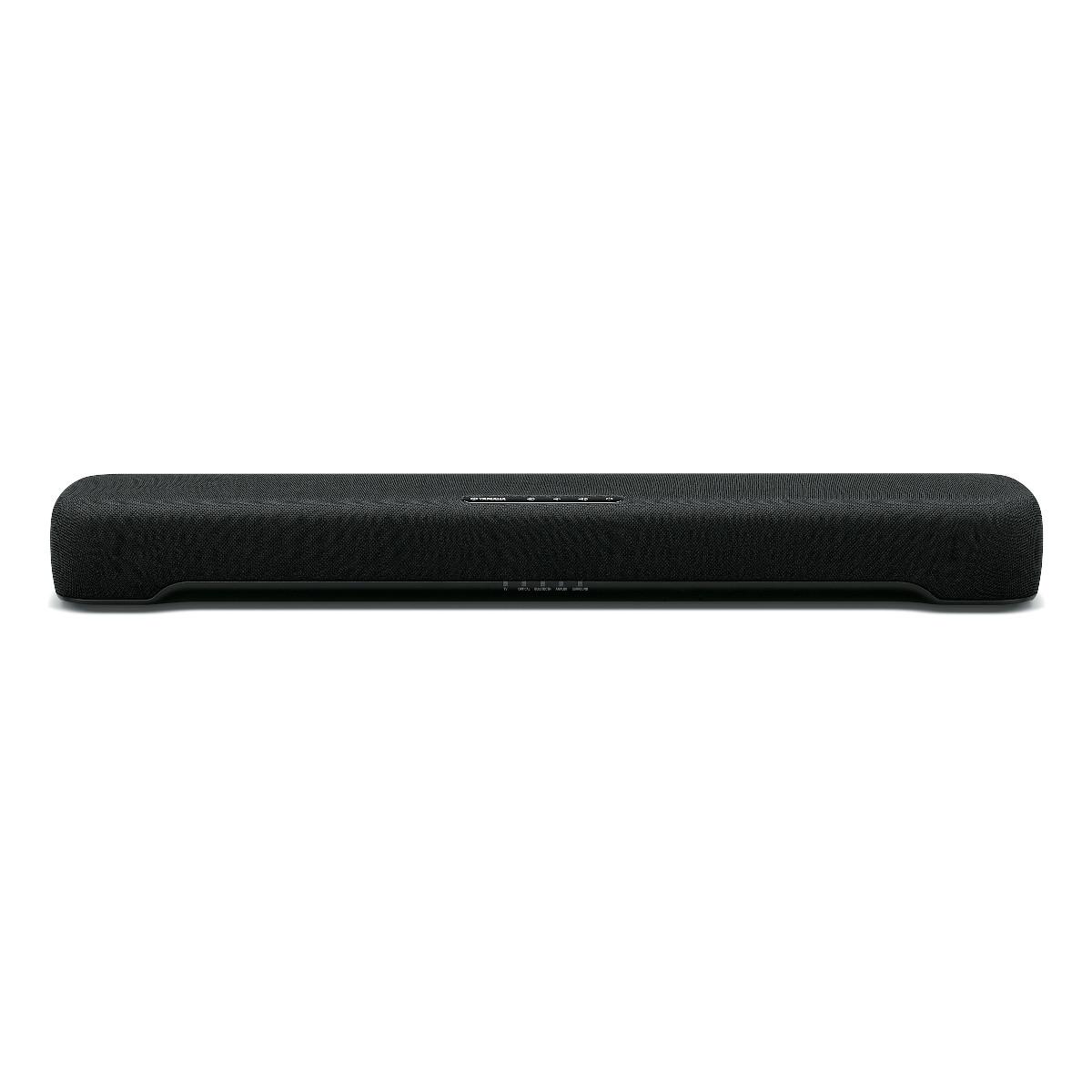
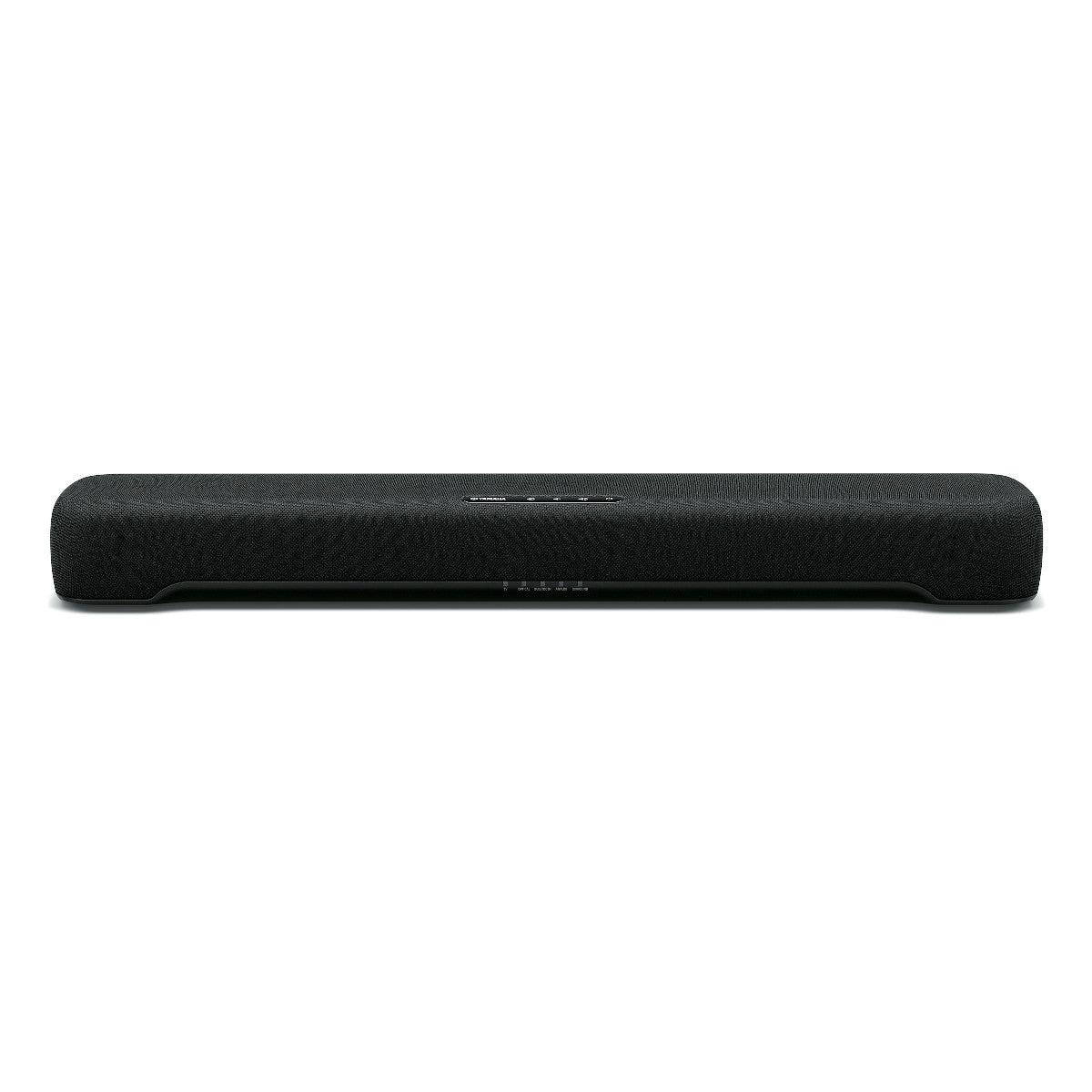
The Yamaha SR-C20A took a different path when it debuted in 2020. Rather than chasing the latest audio formats, Yamaha focused on doing the basics exceptionally well in the smallest possible package. At just under 24 inches wide, it packs a 2.1 system with built-in subwoofer and dual passive radiators (these are like extra bass drivers that don't need their own amplifiers) into a single, sleek bar.
What's interesting is how these represent different eras of soundbar thinking. The Samsung embodies the current trend toward Atmos immersion and smart home integration, while the Yamaha represents the timeless approach of excellent audio engineering in a no-fuss package.
Here's where these two soundbars couldn't be more different. The Samsung HW-Q800D creates what I can only describe as audio magic with its Dolby Atmos processing. When you're watching a movie and rain starts falling, you actually hear individual droplets hitting different parts of your ceiling. The dedicated height channels fire sound upward, where it bounces off your ceiling and comes back down to your ears from above. It's not just left-to-right stereo – it's a complete bubble of sound around you.
The system uses something called SpaceFit Sound Pro, which is basically like having an audio engineer optimize your sound system. The soundbar listens to your room using built-in microphones, figures out how sound bounces around your specific space, and adjusts accordingly. If you have a big, echoey room, it compensates. If your room absorbs sound like a recording studio, it adapts to that too.
The Yamaha takes a completely different approach with virtual surround processing. Instead of physically firing sound in different directions, it uses digital signal processing to trick your brain into thinking sounds are coming from places they're not. It's similar to how noise-canceling headphones can make you feel like you're in a concert hall even though you're just wearing two small drivers. The SR-C20A does this surprisingly well for its size, creating a wider soundstage than you'd expect from such a compact unit.
But let's be honest – virtual surround has its limits. It works great for dialogue-heavy content and can add some nice width to music, but it can't replicate the overhead effects that make Atmos so compelling. You won't get that helicopter-flying-overhead sensation with the Yamaha.
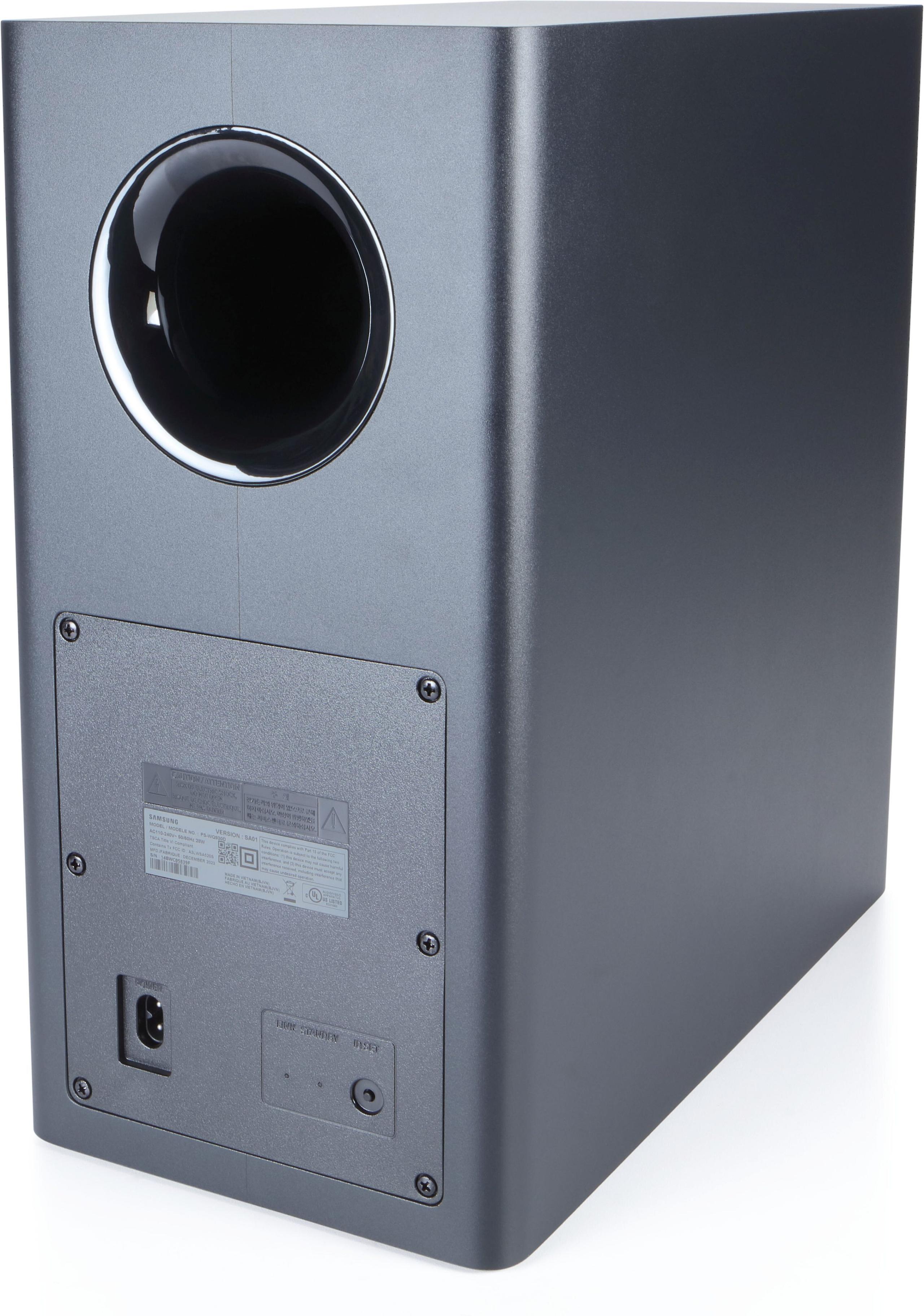
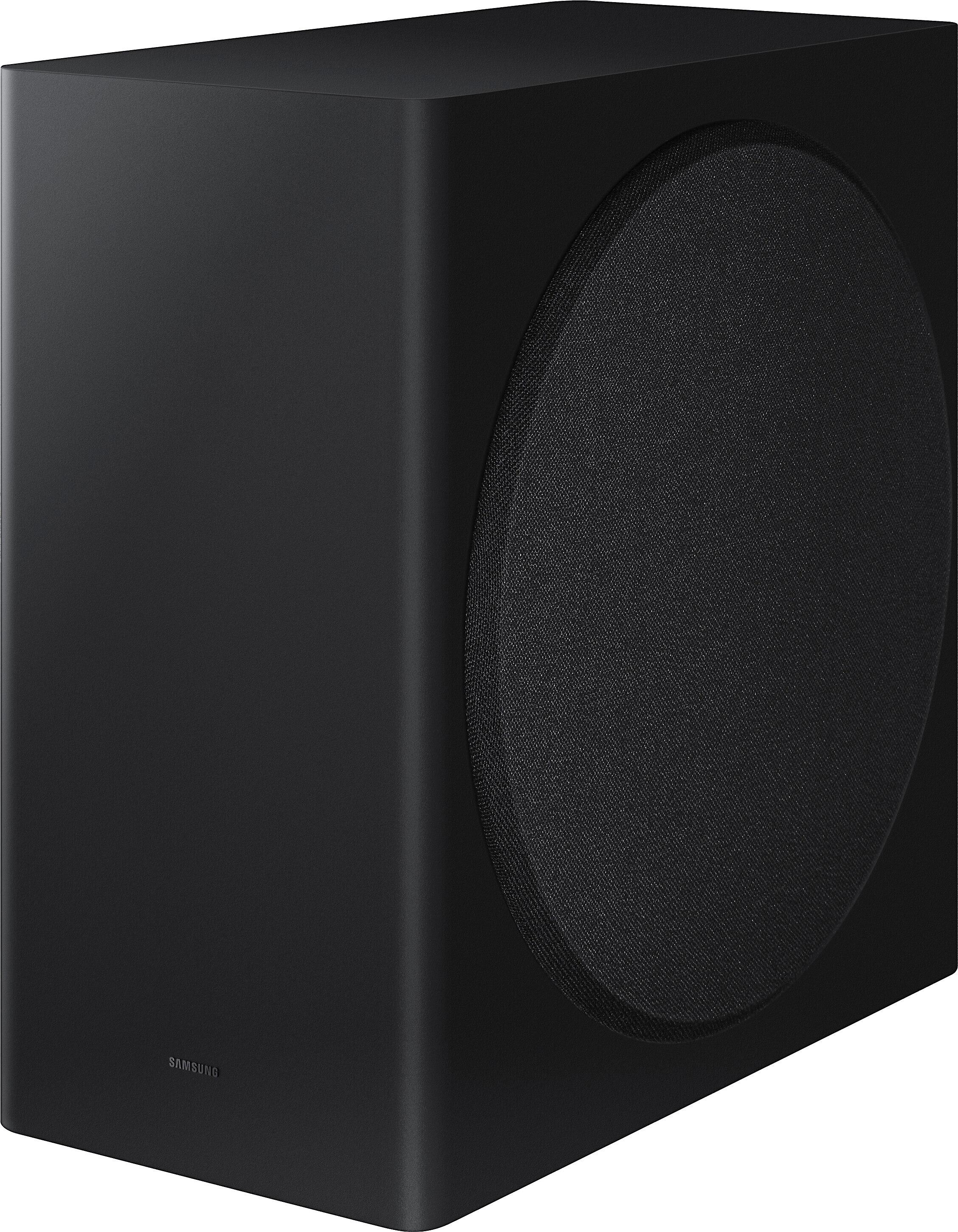
This is where physics gets involved, and physics doesn't lie. The Samsung's separate 8-inch wireless subwoofer can move significantly more air than anything built into the Yamaha's compact frame. When you're watching an action movie and explosions start going off, you feel them in your chest with the Samsung. The subwoofer hits frequencies as low as 33Hz, which is deep enough to reproduce most of the rumble and impact that movie sound designers intended.
The wireless connection is a game-changer for placement flexibility. You can tuck that subwoofer behind your couch, in a corner where bass naturally builds up, or anywhere within about 30 feet of the main bar. I've found that corner placement often works best because walls help reinforce the bass, but every room is different.
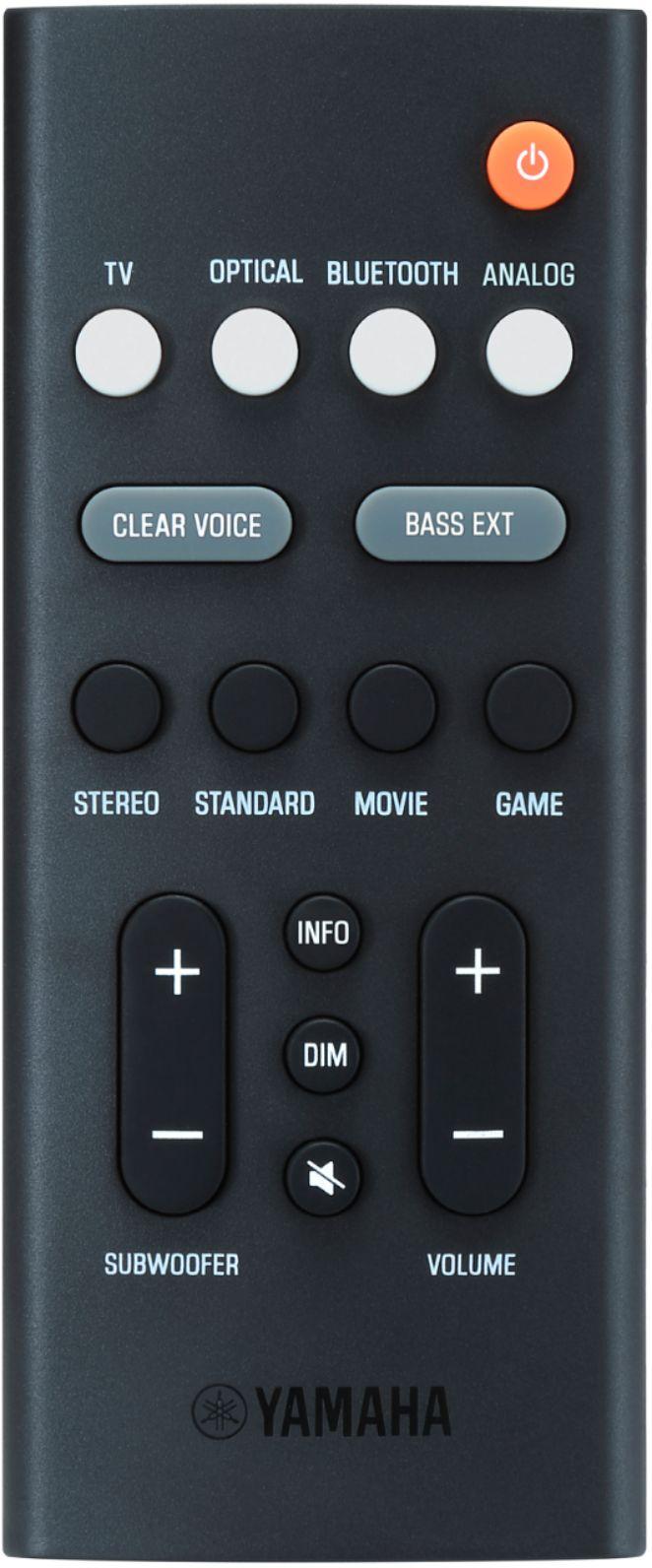
Now, the Yamaha SR-C20A shouldn't be underestimated in the bass department. Those dual passive radiators are clever engineering – they're essentially speaker cones without magnets that vibrate sympathetically with the main subwoofer driver. This lets Yamaha get more bass output than you'd expect from such a small enclosure. The Bass Extension mode pushes things even further, adding digital boost to the low end.
But physics is physics. A 3-inch driver simply cannot move as much air as an 8-inch driver, no matter how clever the engineering. The Yamaha provides perfectly adequate bass for dialogue, music, and most TV content, but it won't give you that visceral, room-shaking experience during action scenes.
Here's something both soundbars get right, which is crucial because poor dialogue clarity is probably the number one complaint about TV audio. The Samsung uses Active Voice Amplifier technology that analyzes the audio signal in real-time and boosts dialogue frequencies when it detects someone speaking. It's smart enough to know the difference between dialogue and background music, so it won't make everything sound harsh and bright.
The room calibration really helps here too. One of the biggest reasons TV dialogue sounds muddy is because of room acoustics – sound bouncing off walls and furniture creates interference that masks speech frequencies. The Samsung's auto-calibration compensates for this, essentially EQ-ing your room to make voices clearer.
Yamaha's Clear Voice technology takes a more straightforward approach, applying targeted EQ to boost the frequency ranges where human speech lives (roughly 1-4kHz). It's simpler than Samsung's adaptive approach, but it's also more predictable. You know exactly what it's doing, and it works consistently across all content.
In my experience, both systems make dialogue significantly clearer than TV speakers, but the Samsung has an edge in challenging content like action movies where dialogue competes with explosions and music. The Yamaha excels with everyday TV watching – news, sitcoms, and drama series where dialogue is the primary focus.
The power difference between these systems is substantial – 360 watts total for the Samsung versus 100 watts for the Yamaha. But raw numbers don't tell the whole story. The Samsung's power is distributed across multiple amplifiers, with dedicated amplification for different frequency ranges and channels. This means each speaker group can operate at its optimal level without being limited by what other channels are doing.
More importantly, the Samsung maintains its composure at high volumes. The discrete amplification and larger drivers mean it doesn't start compressing the dynamic range (the difference between quiet and loud sounds) when you turn it up. Action movies retain their impact, and music keeps its dynamics.
The Yamaha's 100 watts is perfectly adequate for smaller rooms, but reviews consistently note that it starts to compress and lose clarity at maximum volume levels. This isn't necessarily a problem if you're using it in a bedroom or small apartment, but it does limit its capability in larger spaces or for party-level listening.
The Samsung HW-Q800D at $697.99 sits in an interesting position in the soundbar market. It's not the cheapest Atmos soundbar you can buy, but it includes features that often cost extra on other brands. The wireless subwoofer eliminates the need for speaker wire runs, which professional installers typically charge $100-200 to handle. The automatic room calibration is a feature you'd normally find on much more expensive systems.
Where the Samsung's value proposition gets complicated is in what it doesn't include. True surround sound really benefits from rear speakers, but Samsung sells those separately as the SWA-9500S kit for around $200. Without rear speakers, you're getting excellent front soundstage and overhead effects, but not the full surround experience that 5.1.2 implies. It's still significantly better than 2.1 systems, but it's worth understanding this limitation.
The Yamaha SR-C20A at $199.95 represents exceptional value in the compact soundbar category. For less than $200, you're getting a significant upgrade over TV speakers, built-in bass capability, and Yamaha's reputation for audio quality. The all-in-one design means no additional purchases, no complex setup, and no extra power outlets needed.
The value trade-off is in scalability and future-proofing. The Yamaha does what it does very well, but it can't grow with your needs. If you move to a larger room or develop a taste for immersive audio, you'll need to replace the entire system. The Samsung, meanwhile, can expand with rear speakers and will support the latest audio formats for years to come.
The Samsung incorporates several technologies that showcase where soundbar innovation is heading. Q-Symphony is particularly clever – if you have a compatible Samsung TV, the soundbar can actually coordinate with the TV's built-in speakers rather than replacing them. This creates additional channels and fills in frequency gaps, essentially turning your TV into part of the sound system.
The SpaceFit Sound Pro calibration process is more sophisticated than typical auto-EQ systems. Rather than just measuring frequency response, it analyzes how sound disperses in your specific room and adjusts not just EQ but also the soundbar's dispersion patterns. Different drivers can be adjusted independently to optimize for your seating position and room characteristics.
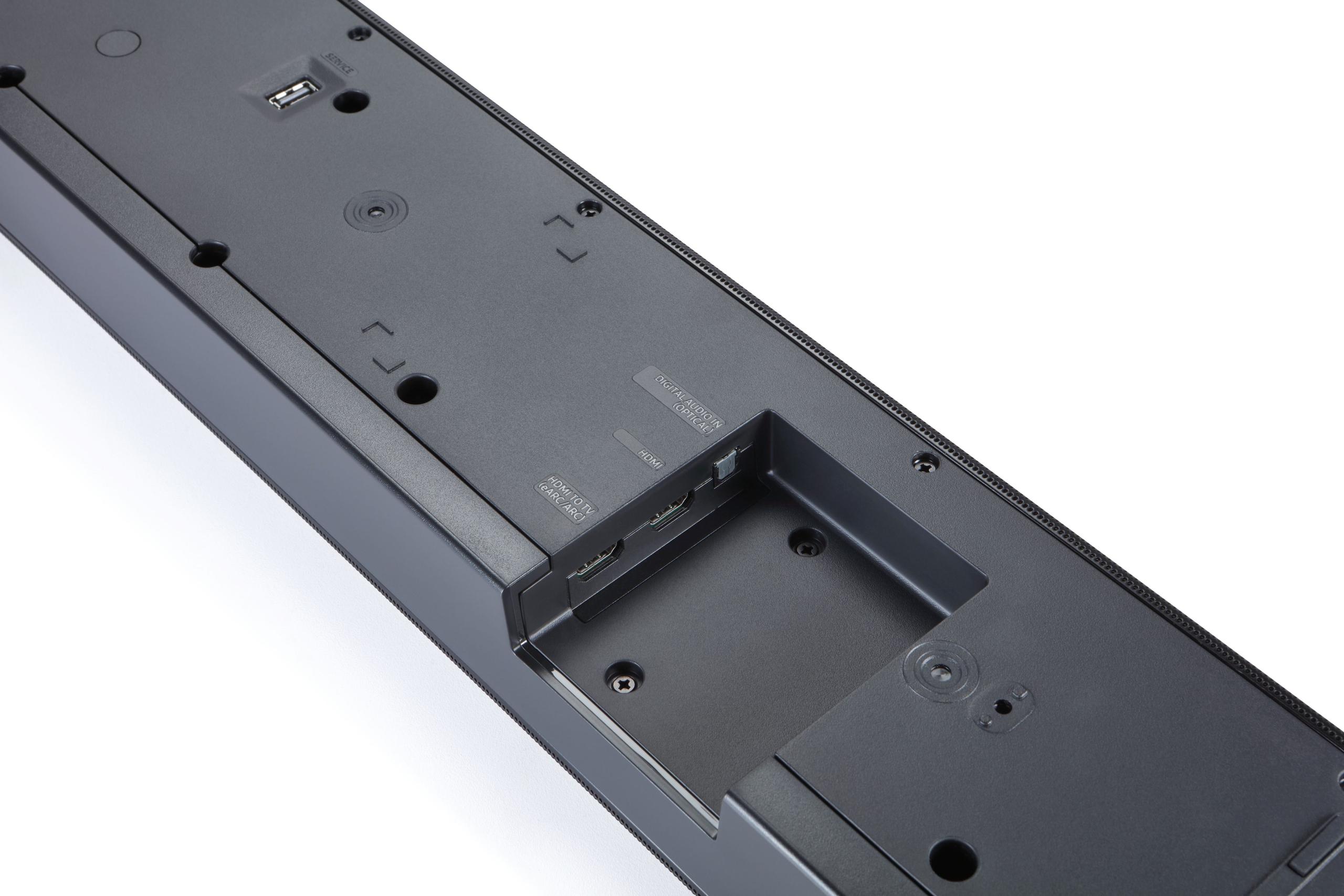
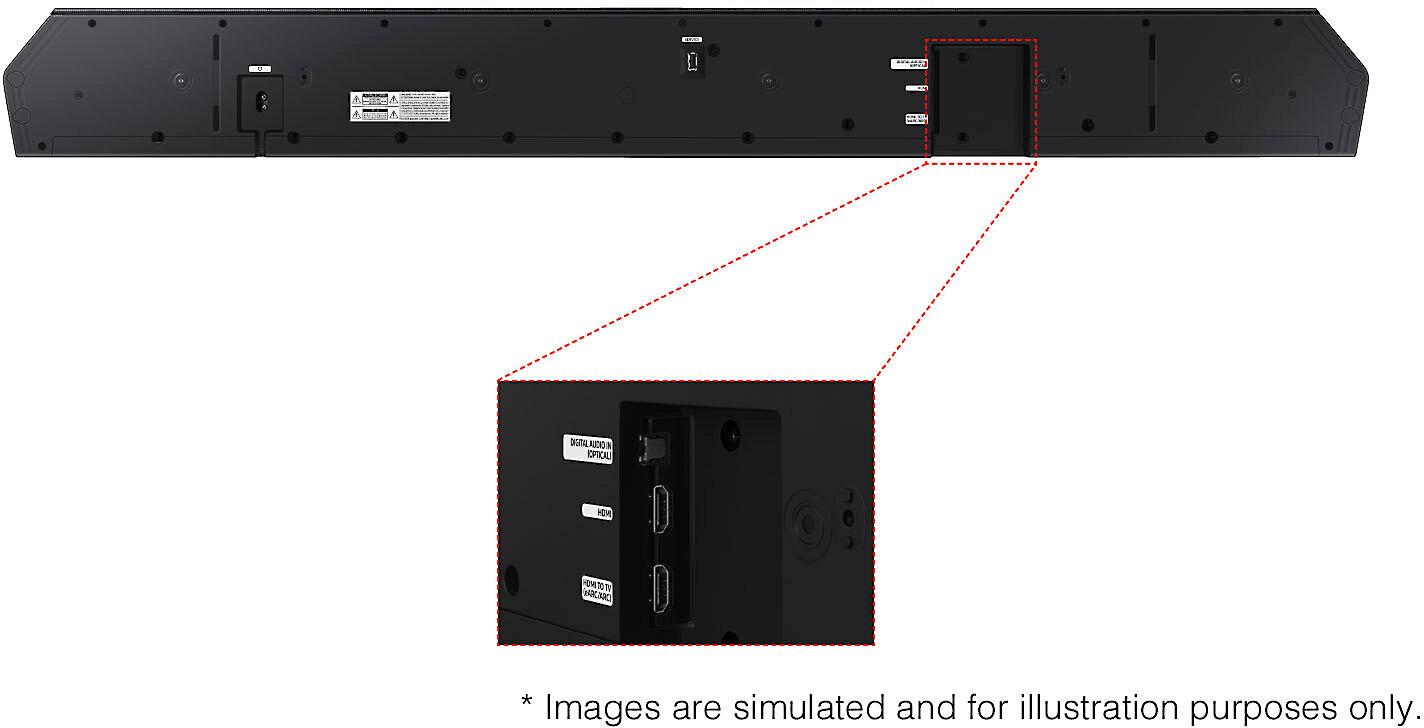
HDMI eARC (enhanced Audio Return Channel) support ensures the Samsung can handle the full bandwidth of Dolby Atmos signals without compression. This matters because some soundbars with basic ARC connections have to compress Atmos signals, losing some of the spatial precision that makes the format special.
The Yamaha focuses on getting the fundamentals right rather than adding cutting-edge features. The compressed music enhancer specifically targets Bluetooth audio, which is often heavily compressed and loses detail. This feature reconstructs some of the missing information, making your Spotify streams sound closer to CD quality.
The built-in keyhole mounting system might seem like a small detail, but it eliminates the need for separate mounting hardware and makes installation foolproof. The passive radiator design is also worth understanding – these are essentially speaker cones that aren't driven by their own magnets but instead vibrate in response to the main subwoofer driver. This technique lets Yamaha effectively triple the bass-producing surface area without adding more amplifiers.
For dedicated home theater use, the Samsung HW-Q800D is clearly the better choice, but with some important caveats. The Dolby Atmos processing genuinely enhances movie watching, especially with content that was mixed specifically for the format. Most major streaming services now provide Atmos tracks for their premium content, and 4K Blu-rays almost universally include Atmos soundtracks.
The height channels make the biggest difference with content that has distinct overhead effects – rain, helicopters, debris falling, thunder rolling across the sky. These elements come through with startling realism when the system is properly calibrated. Even content that wasn't mixed for Atmos benefits from the improved soundstage and separation that multiple channels provide.
However, the Samsung really shines when paired with rear speakers to complete the surround experience. The front soundstage and height effects are excellent on their own, but adding the rear channels creates that fully enveloping experience that makes you forget you're sitting in your living room rather than a commercial theater.
The wireless subwoofer placement flexibility is crucial for home theater use. Bass response varies dramatically based on subwoofer location, and the ability to experiment with placement without running cables makes it much easier to optimize performance for your specific room.
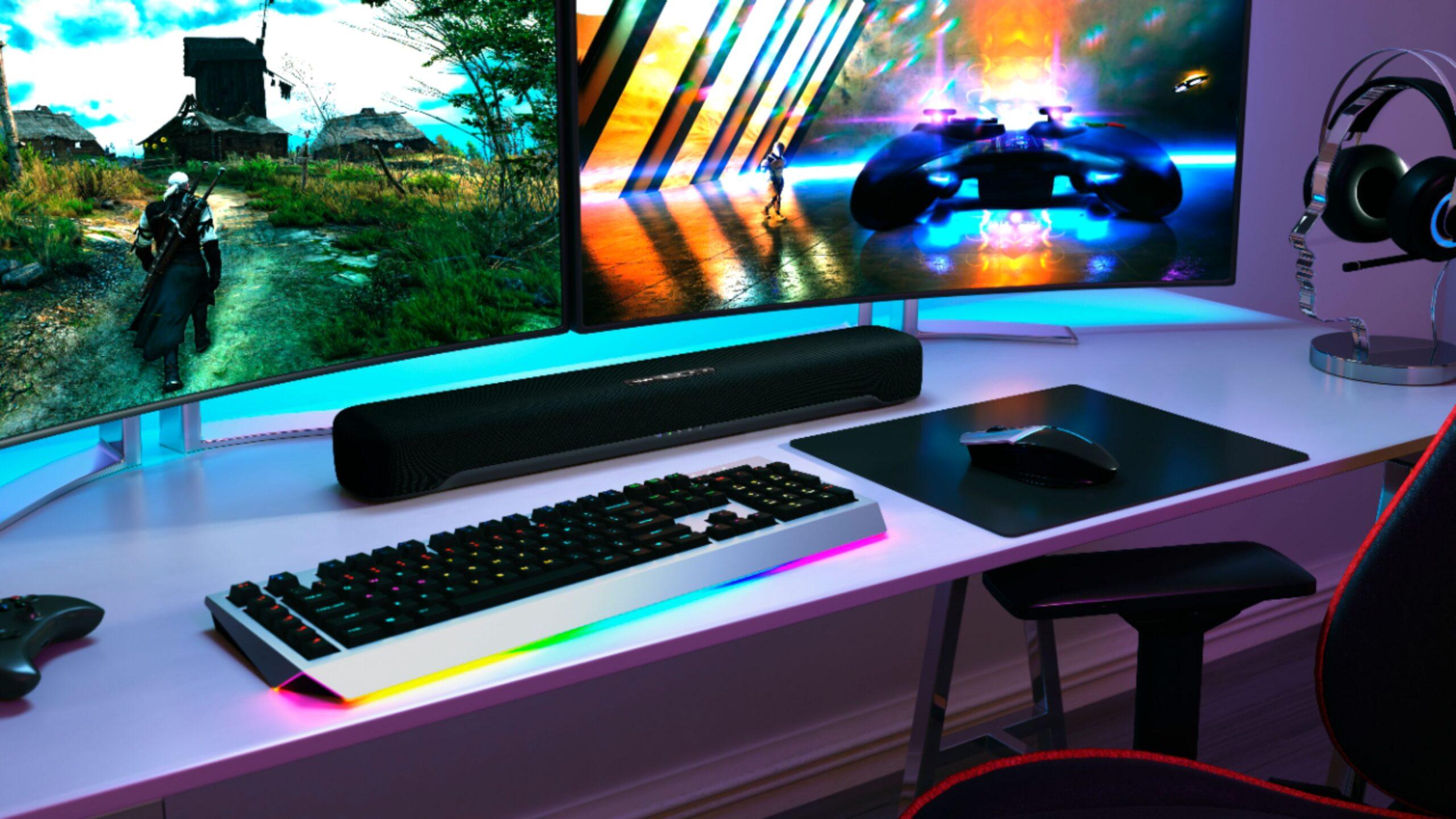
The Yamaha SR-C20A isn't designed for serious home theater use, but it can certainly improve the experience for casual movie watching. The virtual surround processing adds width and some sense of space, while the bass extension helps with action sequences. It's particularly good for dialogue-heavy content like dramas and comedies where spatial effects are less important than clear voices.
Choose the Samsung HW-Q800D if you have a dedicated TV watching space, care about the latest audio formats, and want a system that can grow with your needs. It's ideal for rooms larger than 200 square feet where the Atmos effects have space to develop properly. The wireless subwoofer means you need flexibility in furniture placement, and the price point assumes you're serious enough about audio quality to notice and appreciate the differences.
The Samsung also makes sense if you're building around a Samsung TV ecosystem, as the Q-Symphony integration provides genuine added value. And if you're a gamer, the dedicated Game Pro mode and low-latency HDMI processing make it suitable for serious gaming setups.
Choose the Yamaha SR-C20A if simplicity, space constraints, or budget are your primary concerns. It's perfect for bedrooms, small apartments, kitchens, or secondary viewing areas where you want better sound without complexity. The all-in-one design eliminates the subwoofer placement question entirely, and the price point makes it accessible for upgrading multiple TVs throughout your home.
The Yamaha is also the better choice if you primarily watch dialogue-heavy content, listen to a lot of music through the soundbar, or prefer straightforward operation without smart features and automatic adjustments.
Ultimately, both soundbars succeed at their intended purposes. The Samsung delivers on its promise of immersive, theater-like audio for serious entertainment setups. The Yamaha provides meaningful improvement over TV speakers with maximum convenience and minimal fuss. Your room size, budget, and how you actually use your TV should guide your decision more than pure specifications or feature lists.
The good news is that either choice will dramatically improve your TV watching experience compared to built-in TV speakers. The question is whether you want to optimize for maximum performance or maximum simplicity – both are valid approaches to better home audio.
| Samsung HW-Q800D 5.1.2 Channel Soundbar ($697.99) | Yamaha SR-C20A Compact Sound Bar with Built-In Subwoofer ($199.95) |
|---|---|
| Channel Configuration - Determines surround sound capability and immersion level | |
| True 5.1.2 with discrete height channels for Dolby Atmos | 2.1 with virtual surround processing |
| Total Power Output - Affects maximum volume and dynamic range | |
| 360W (maintains clarity at high volumes) | 100W (adequate for small-medium rooms) |
| Subwoofer Design - Impact on bass depth and placement flexibility | |
| Separate wireless 8" subwoofer (33Hz bass extension) | Built-in 3" subwoofer with dual passive radiators |
| Physical Dimensions - Space requirements and TV compatibility | |
| 43.7" soundbar + separate subwoofer unit | 23.6" all-in-one compact design |
| Audio Processing Technologies - Advanced features for sound optimization | |
| SpaceFit Sound Pro room calibration, Q-Symphony TV integration | Clear Voice dialogue enhancement, Bass Extension mode |
| HDMI Connectivity - Determines compatibility with modern devices | |
| HDMI eARC with 4K passthrough (no 120Hz gaming) | HDMI ARC only |
| Dolby Atmos Support - Creates overhead sound effects for immersive experience | |
| Full Dolby Atmos with dedicated height speakers | Virtual surround only (no height channels) |
| Smart Features - App control and wireless capabilities | |
| SmartThings app, Bluetooth 5.2, auto room calibration | Sound Bar Remote app, Bluetooth 5.0 |
| Best Room Size - Optimal performance based on power and dispersion | |
| Large rooms (200+ sq ft) where Atmos effects can develop | Small to medium rooms, bedrooms, apartments |
| Setup Complexity - Installation requirements and component management | |
| Wireless subwoofer placement + main bar positioning | Single unit with built-in keyhole wall mounting |
The Samsung HW-Q800D ($697.99) is significantly better for large rooms thanks to its 360W power output and separate wireless subwoofer. The Dolby Atmos processing and multiple speakers create room-filling sound that maintains clarity even at high volumes. The Yamaha SR-C20A ($199.95) is designed for smaller spaces and may struggle to adequately fill rooms larger than 200 square feet.
The biggest difference is channel configuration and immersion level. The Samsung HW-Q800D offers true 5.1.2 Dolby Atmos with overhead sound effects, while the Yamaha SR-C20A provides 2.1 channels with virtual surround processing. The Samsung creates three-dimensional audio experiences, while the Yamaha focuses on improving basic TV sound in a compact package.
The Samsung HW-Q800D delivers superior bass with its separate wireless 8-inch subwoofer that reaches down to 33Hz for deep, room-shaking low frequencies. The Yamaha SR-C20A has a built-in 3-inch subwoofer with dual passive radiators that provides decent bass for its size but cannot match the depth and impact of Samsung's larger dedicated subwoofer.
The Samsung HW-Q800D justifies its higher price if you want true Dolby Atmos immersion, have a large room, and prioritize home theater performance. The wireless subwoofer, room calibration, and overhead sound effects provide genuine value over the Yamaha SR-C20A. However, if you just need better TV dialogue and have space constraints, the Yamaha offers excellent value at its lower price point.
Both soundbars excel at dialogue clarity but use different approaches. The Samsung HW-Q800D features Active Voice Amplifier with automatic room calibration that adapts to your space for optimal speech clarity. The Yamaha SR-C20A uses Clear Voice technology with targeted EQ boost for speech frequencies. Both provide significant improvement over TV speakers, with the Samsung having a slight edge in challenging acoustic environments.
The Samsung HW-Q800D includes a wireless subwoofer as part of the system, providing deep bass without additional purchases. The Yamaha SR-C20A has everything built into one compact unit, including a 3-inch subwoofer with passive radiators. Neither requires purchasing a separate subwoofer, though the Samsung's dedicated sub delivers significantly more bass impact.
The Yamaha SR-C20A is much easier to set up as a single all-in-one unit with built-in keyhole mounting and simple connection options. The Samsung HW-Q800D requires positioning both the main bar and wireless subwoofer, plus running through the automatic room calibration process. While the Samsung offers more performance, the Yamaha wins on installation simplicity.
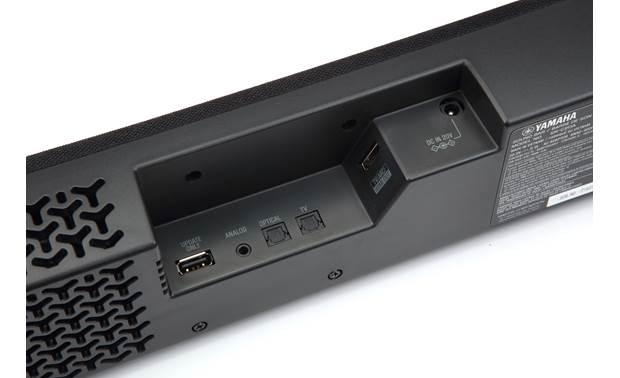
Both soundbars offer multiple connection options for older TVs. The Samsung HW-Q800D includes HDMI eARC, optical digital, and can connect via Bluetooth. The Yamaha SR-C20A features HDMI ARC, two optical inputs, analog audio input, and Bluetooth connectivity. The Yamaha actually provides more input options for connecting multiple older devices simultaneously.
The Samsung HW-Q800D is superior for gaming with its dedicated Game Pro mode that optimizes directional audio cues and low-latency HDMI processing. The Dolby Atmos processing enhances spatial awareness in games. The Yamaha SR-C20A includes a Game mode but lacks the advanced processing and immersive audio capabilities that benefit modern gaming experiences.
The Samsung HW-Q800D excels with music thanks to its multiple discrete speakers, powerful amplification, and deep bass extension that handles everything from classical to electronic music. The Yamaha SR-C20A also performs well with music, featuring Yamaha's audio expertise and a Stereo mode optimized for music listening, though it lacks the soundstage width and bass depth of the Samsung system.
The Yamaha SR-C20A is ideal for small apartments with its compact 23.6-inch design, built-in subwoofer that doesn't require floor space, and moderate power output suitable for close listening. The Samsung HW-Q800D may be overkill for small spaces and requires placement flexibility for both the main bar and separate subwoofer unit.
The Samsung HW-Q800D offers full Dolby Atmos support with dedicated upfiring height speakers that create genuine overhead sound effects. The Yamaha SR-C20A does not support Dolby Atmos, instead using virtual surround processing to simulate wider soundstage from its stereo configuration. For true Atmos immersion, the Samsung is the only choice between these two models.
We've done our best to create useful and informative comparisons to help you decide what product to buy. Our research uses advanced automated methods to create this comparison and perfection is not possible - please contact us for corrections or questions. These are the sites we've researched in the creation of this article: techradar.com - valueelectronics.com - samsung.com - rtings.com - samsung.com - crutchfield.com - samsung.com - samsung.com - samsung.com - shidirect.com - t3.com - usa.yamaha.com - radiotimes.com - shop.usa.yamaha.com - whathifi.com - hifiheaven.net - usa.yamaha.com - sweetwater.com - hub.yamaha.com - bestbuy.com

Privacy Policy
Terms and Conditions - Affiliate Policy
Home Security
© Copyright 2008-2026.
11816 Inwood Rd #1211, Dallas, TX 75244