











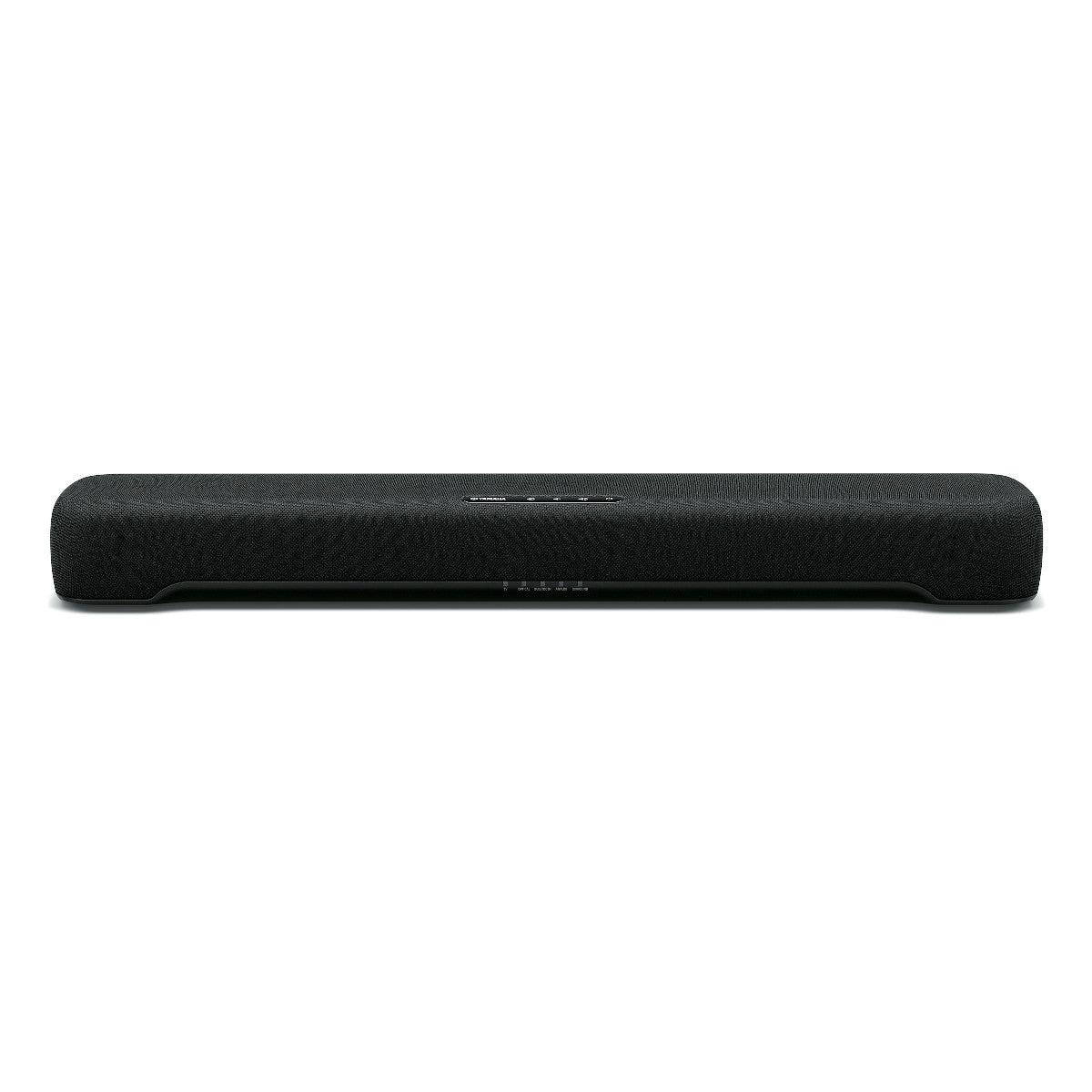
When your TV's built-in speakers make movie dialogue sound like it's coming from inside a tin can, it's time to consider a soundbar upgrade. But with options ranging from basic audio improvements to cinema-grade experiences, choosing the right one can feel overwhelming. Today, we're comparing two popular compact soundbars that take completely different approaches: the premium Sennheiser AMBEO Soundbar Mini ($499) and the budget-friendly Yamaha SR-C20A ($170-200).
These aren't just different price points – they represent fundamentally different philosophies about what a soundbar should do for your entertainment setup.
Before diving into specifics, let's talk about what compact soundbars actually do. Unlike full home theater systems with multiple speakers scattered around your room, soundbars pack all their audio magic into a single horizontal bar that sits under or mounts near your TV.
The challenge is physics: creating the illusion of surround sound from speakers that are all lined up in front of you. This is where "virtualization" comes into play – essentially audio processing tricks that make your brain think sounds are coming from directions they're not. Think of it like an audio optical illusion.
Modern soundbars also need to handle the growing complexity of audio formats. You've probably heard of Dolby Atmos, which adds "height" information to soundtracks, making helicopters seem to fly overhead or rain appear to fall from above. This technology, once exclusive to movie theaters, is now standard in many home audio products.
The key considerations when shopping for a compact soundbar include audio quality versus size constraints, support for immersive audio formats, connectivity options for streaming and smart home integration, how well they perform in different room sizes, and ultimately, whether the price matches the performance improvement you'll actually notice.
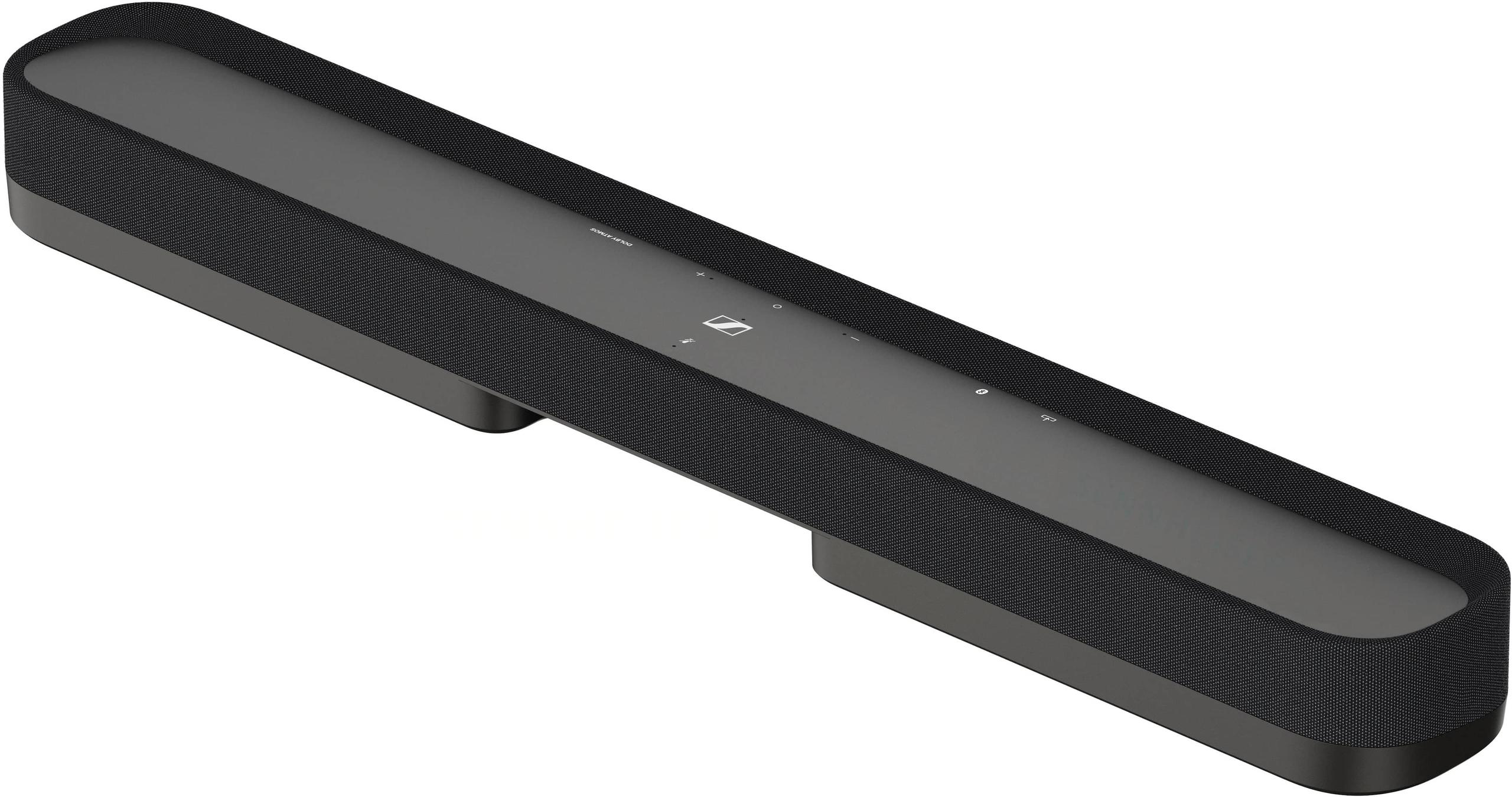
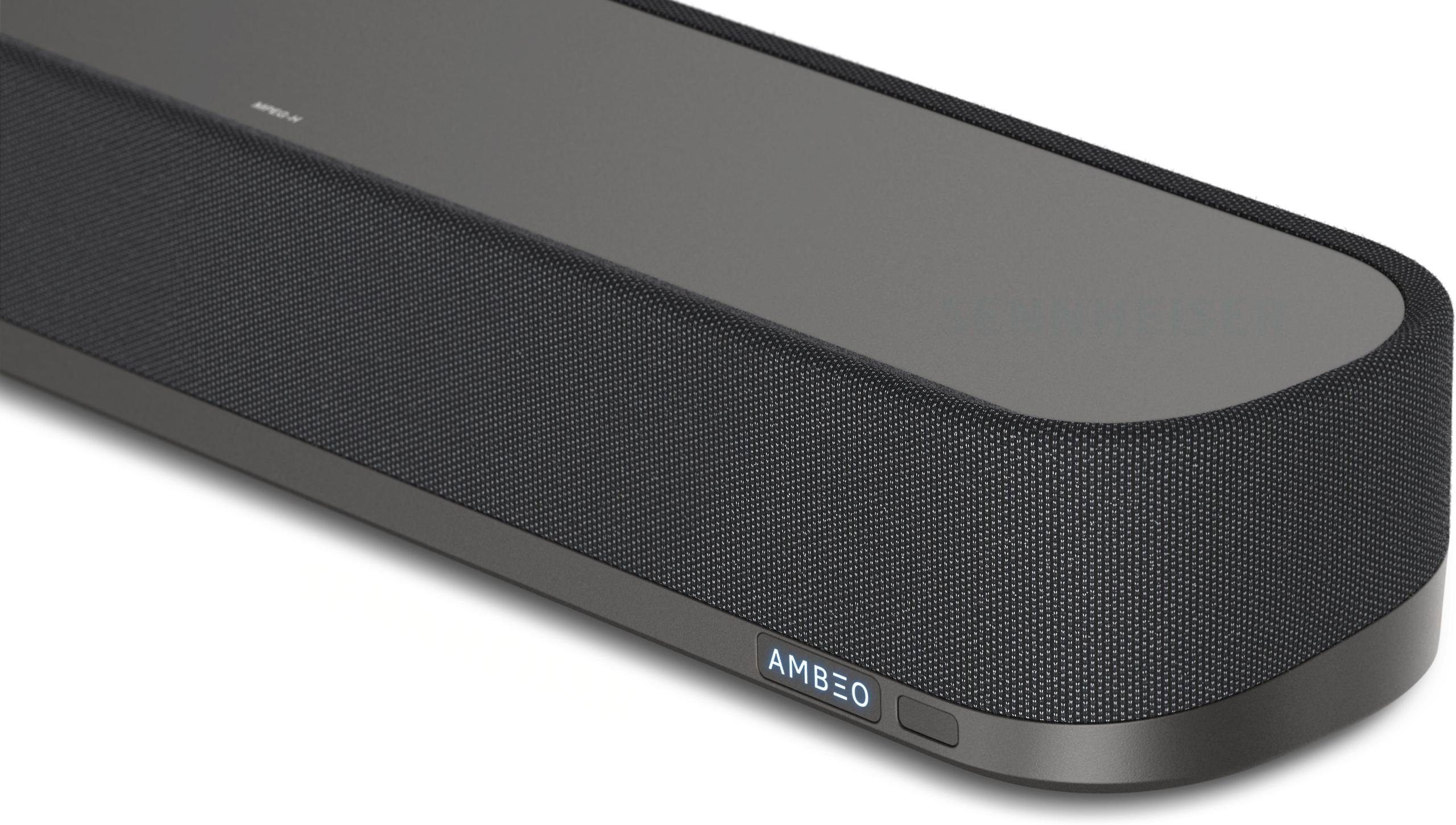
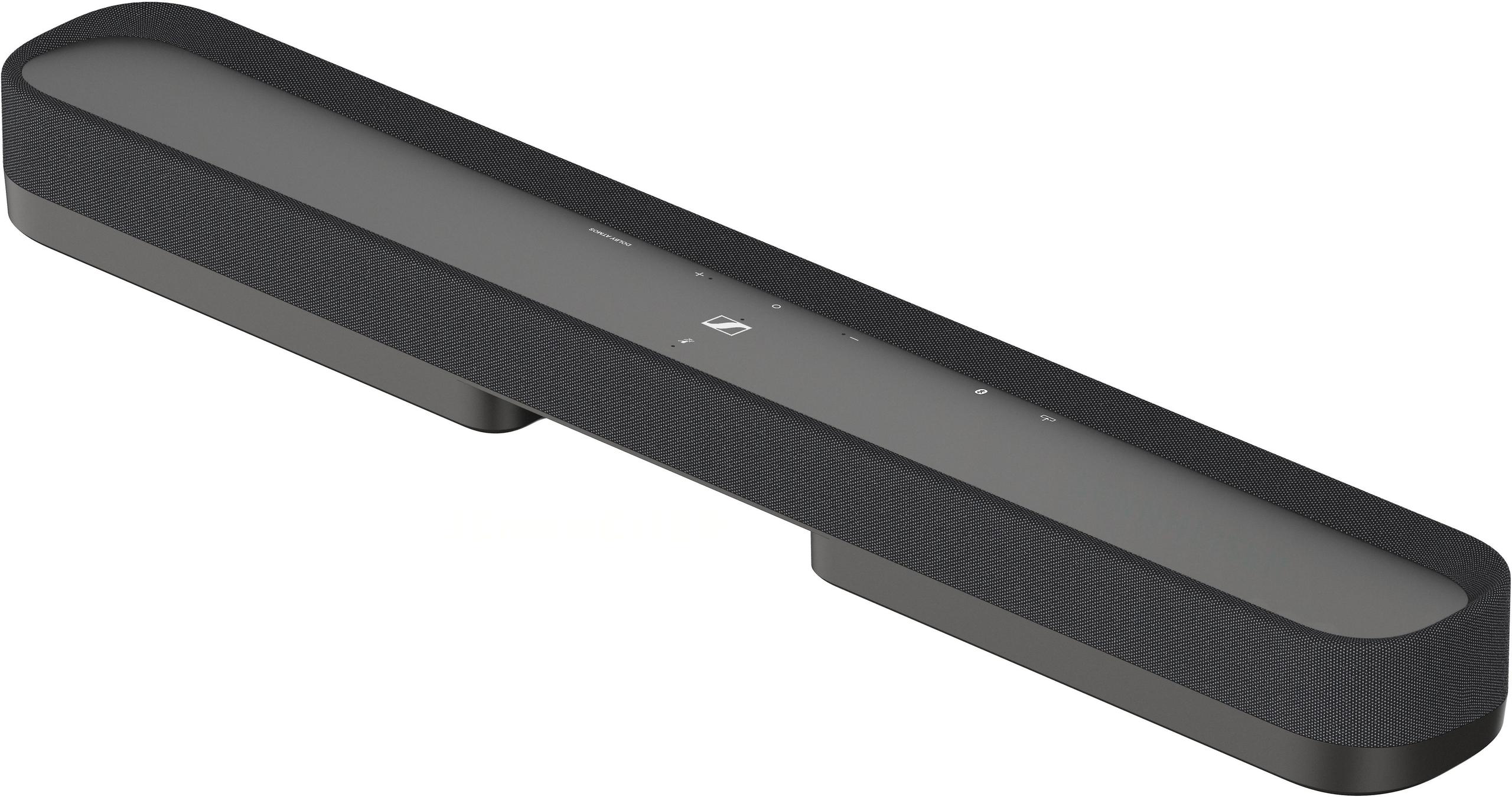
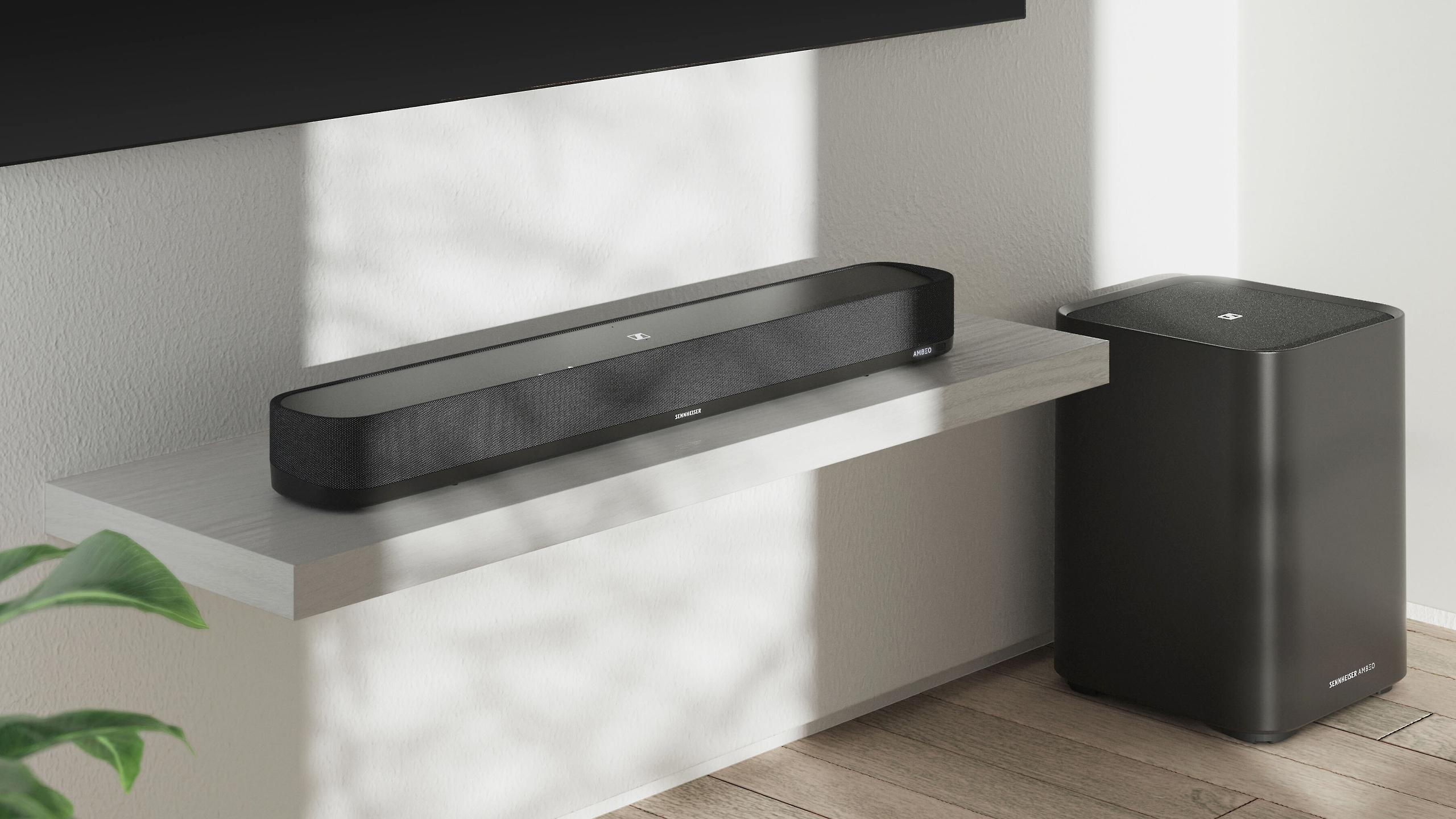
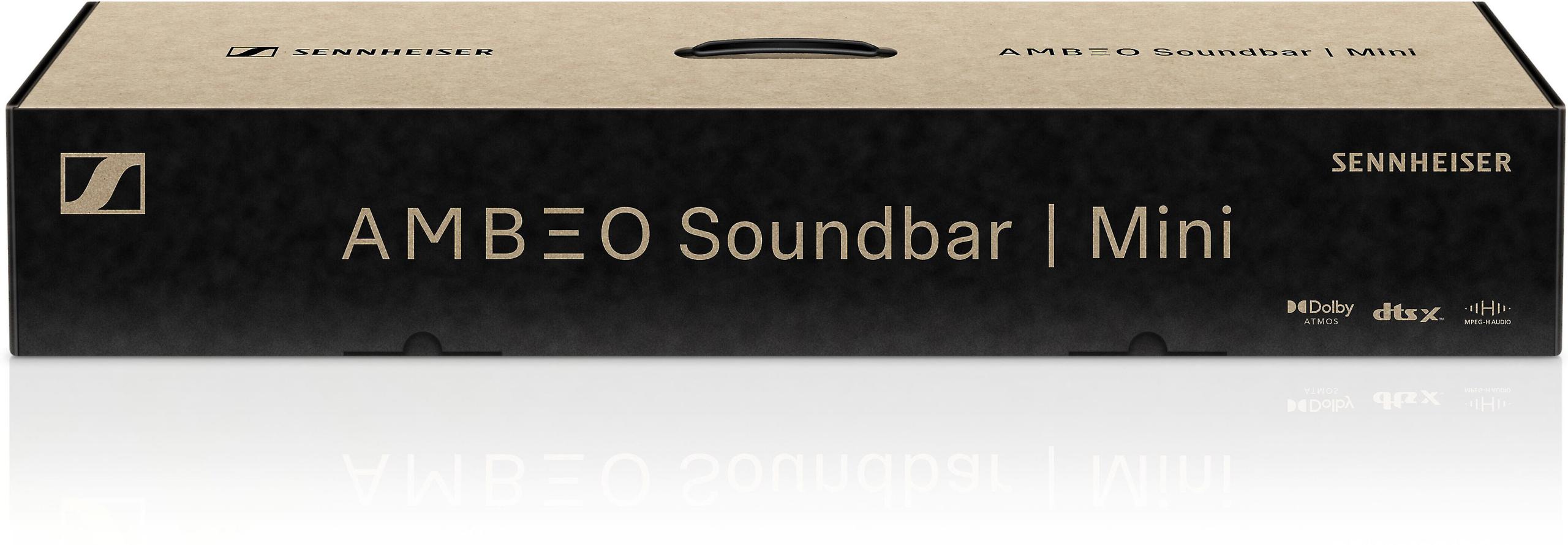
Released in 2023, the Sennheiser AMBEO Soundbar Mini represents the German audio company's attempt to shrink their acclaimed full-size AMBEO technology into a more apartment-friendly package. At 27.6 inches wide, it's designed for TVs 40 inches and larger, but what's remarkable is how much audio processing power Sennheiser has packed inside.
The "AMBEO" name refers to Sennheiser's proprietary 3D audio technology, developed in partnership with Fraunhofer IIS (the same research institute that helped create the MP3 format). This isn't just marketing speak – the Mini uses genuine psychoacoustic processing to create what Sennheiser calls "7.1.4 virtualized sound." Those numbers mean it simulates seven main speakers, one subwoofer, and four height speakers, all from a single bar.
Since its release, Sennheiser has pushed several firmware updates that have improved the room calibration accuracy and added support for additional streaming services. The most significant update added enhanced bass response and better dialogue clarity based on user feedback from the first year of sales.
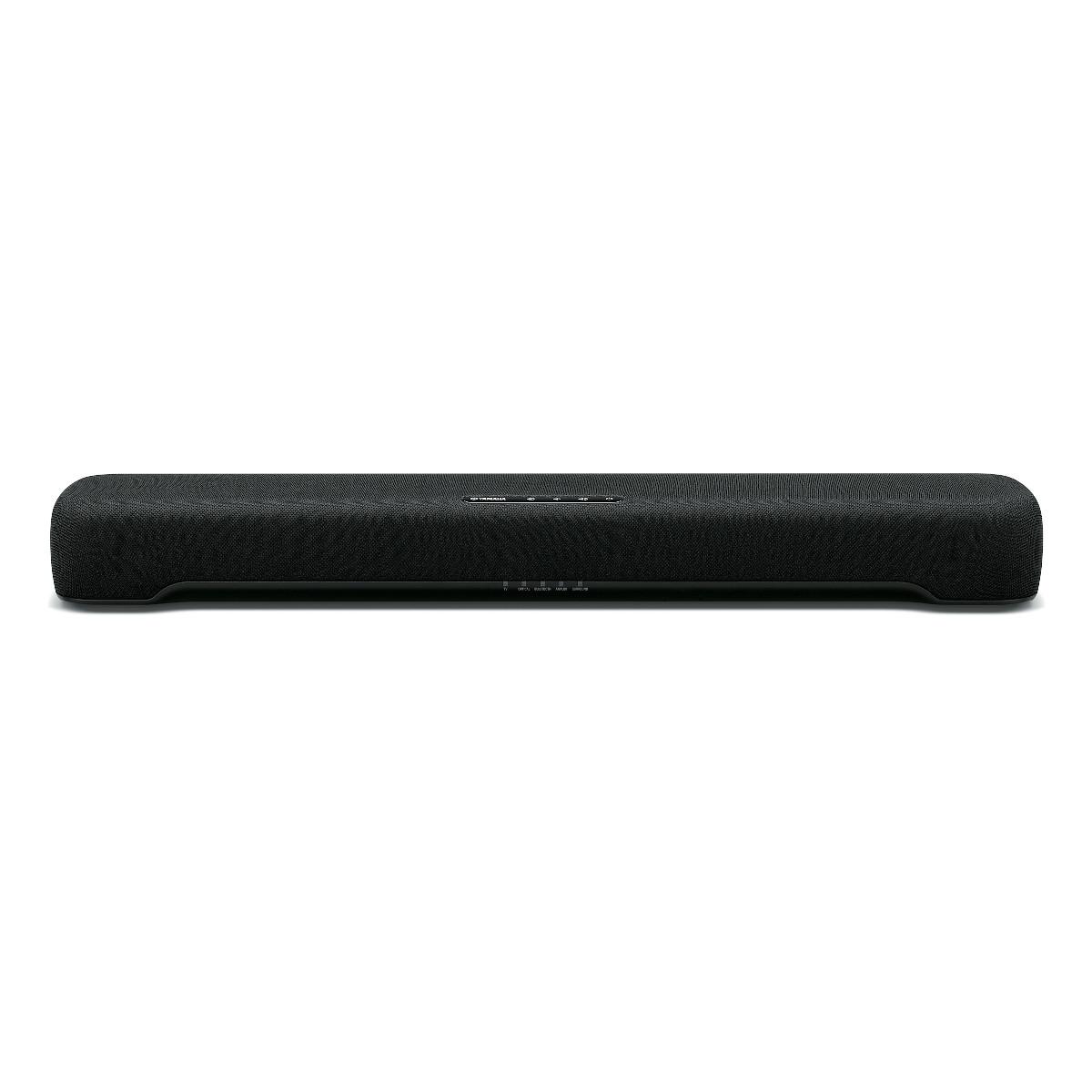
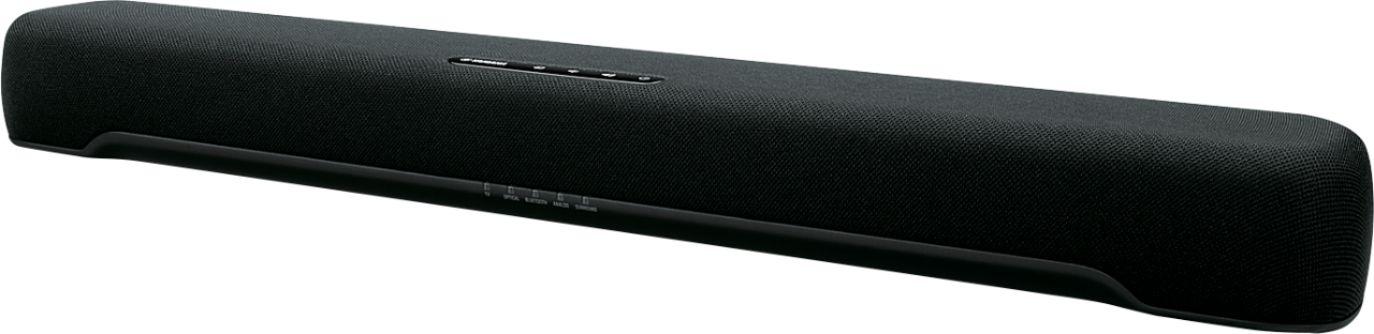
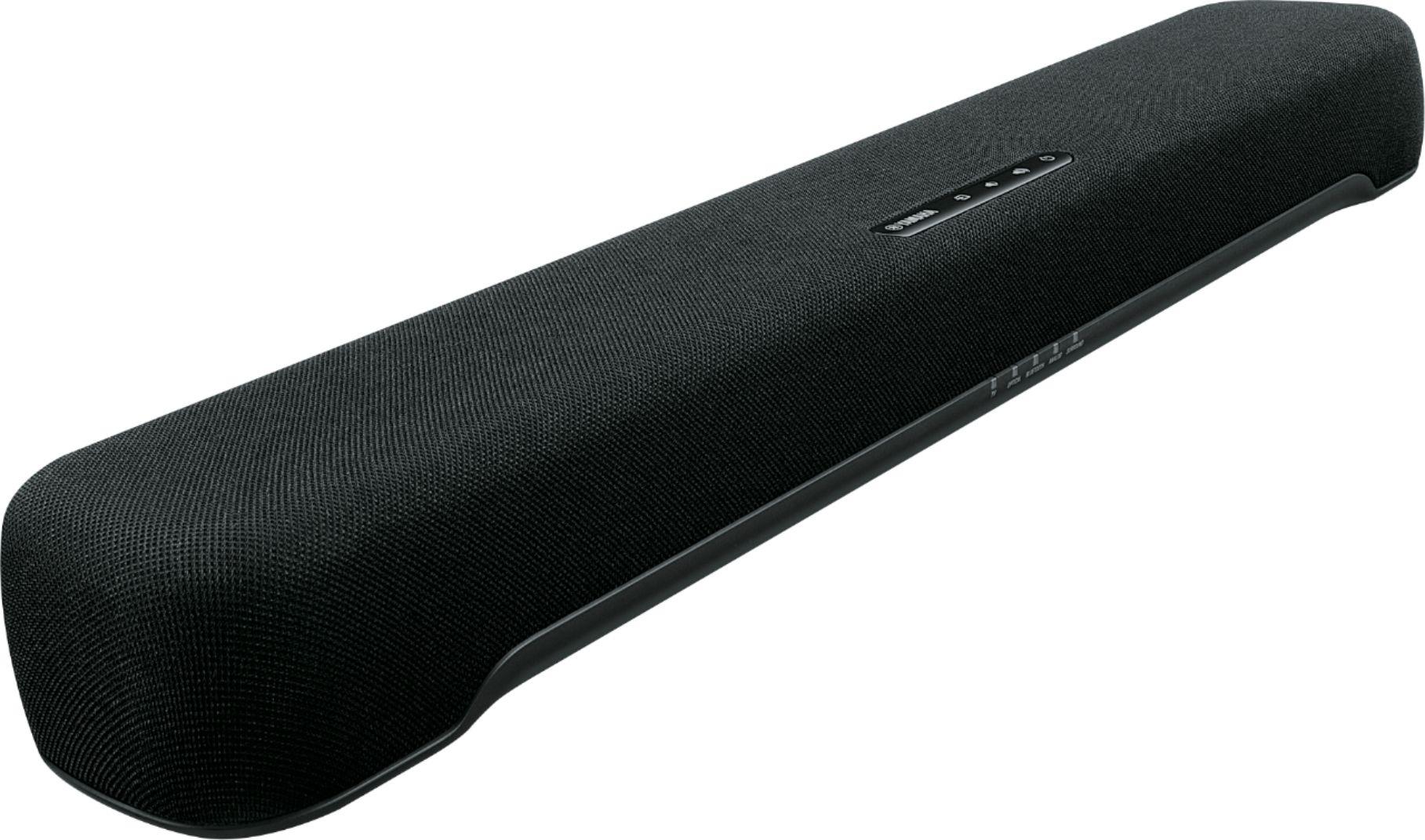
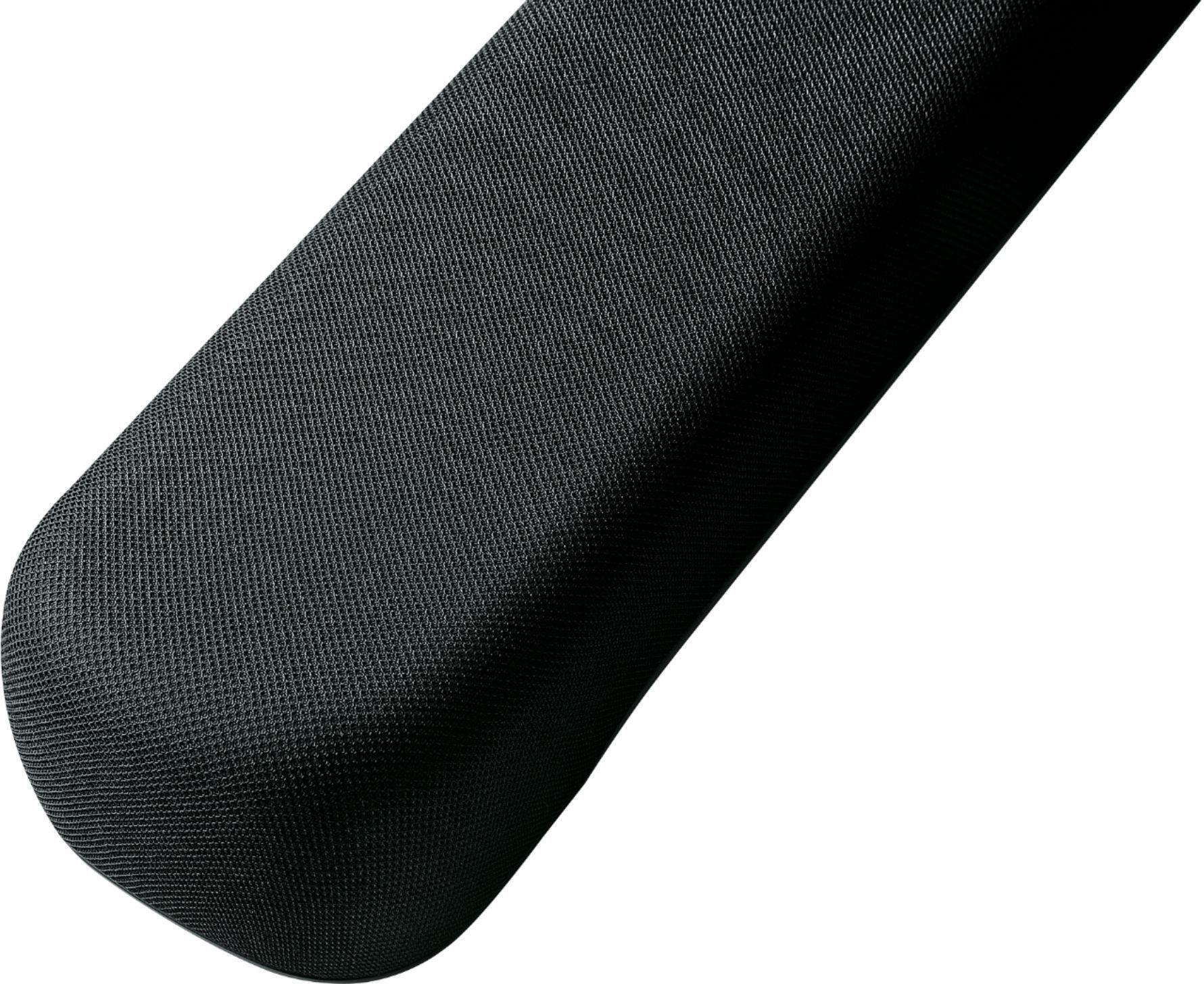
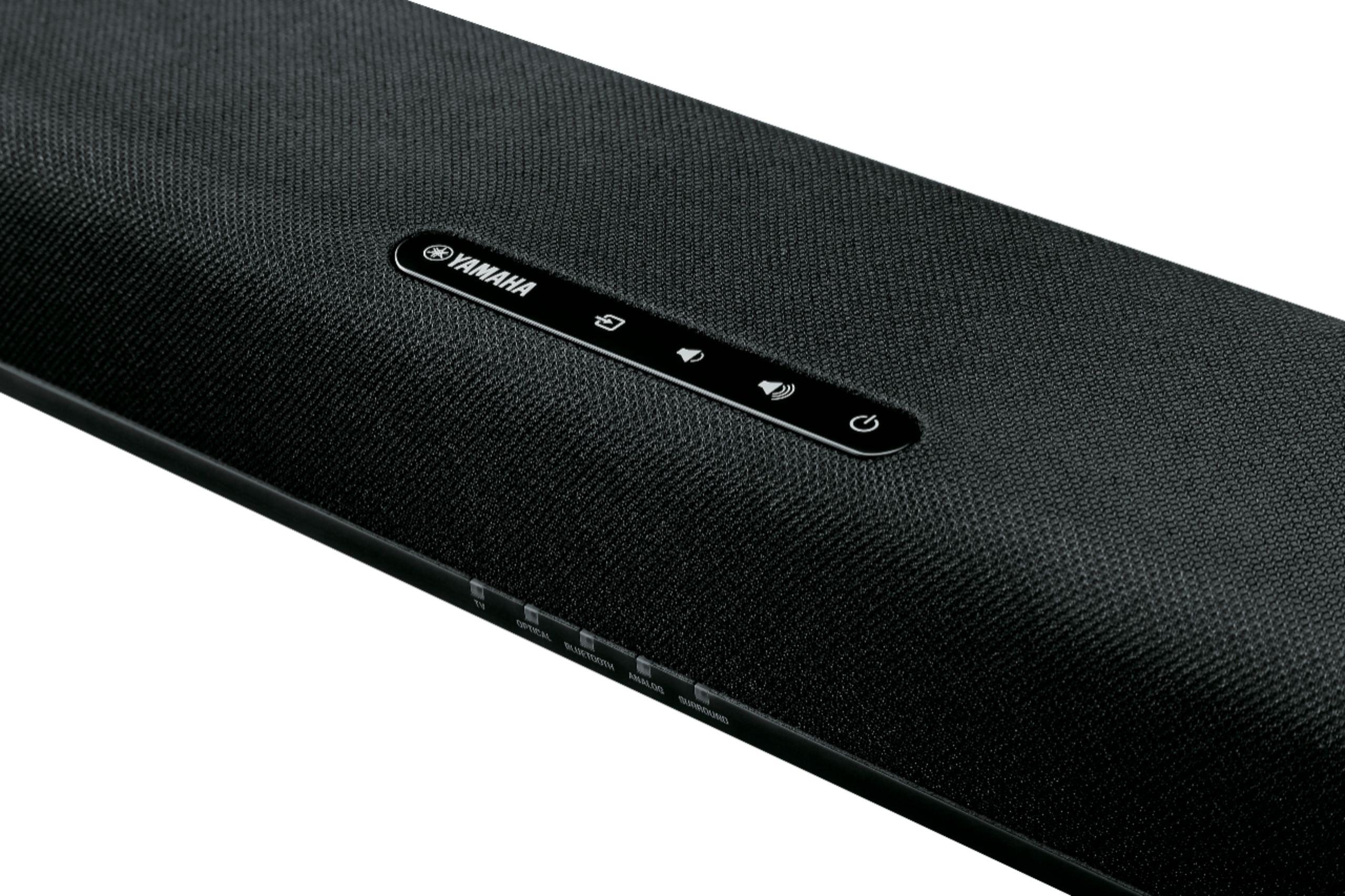
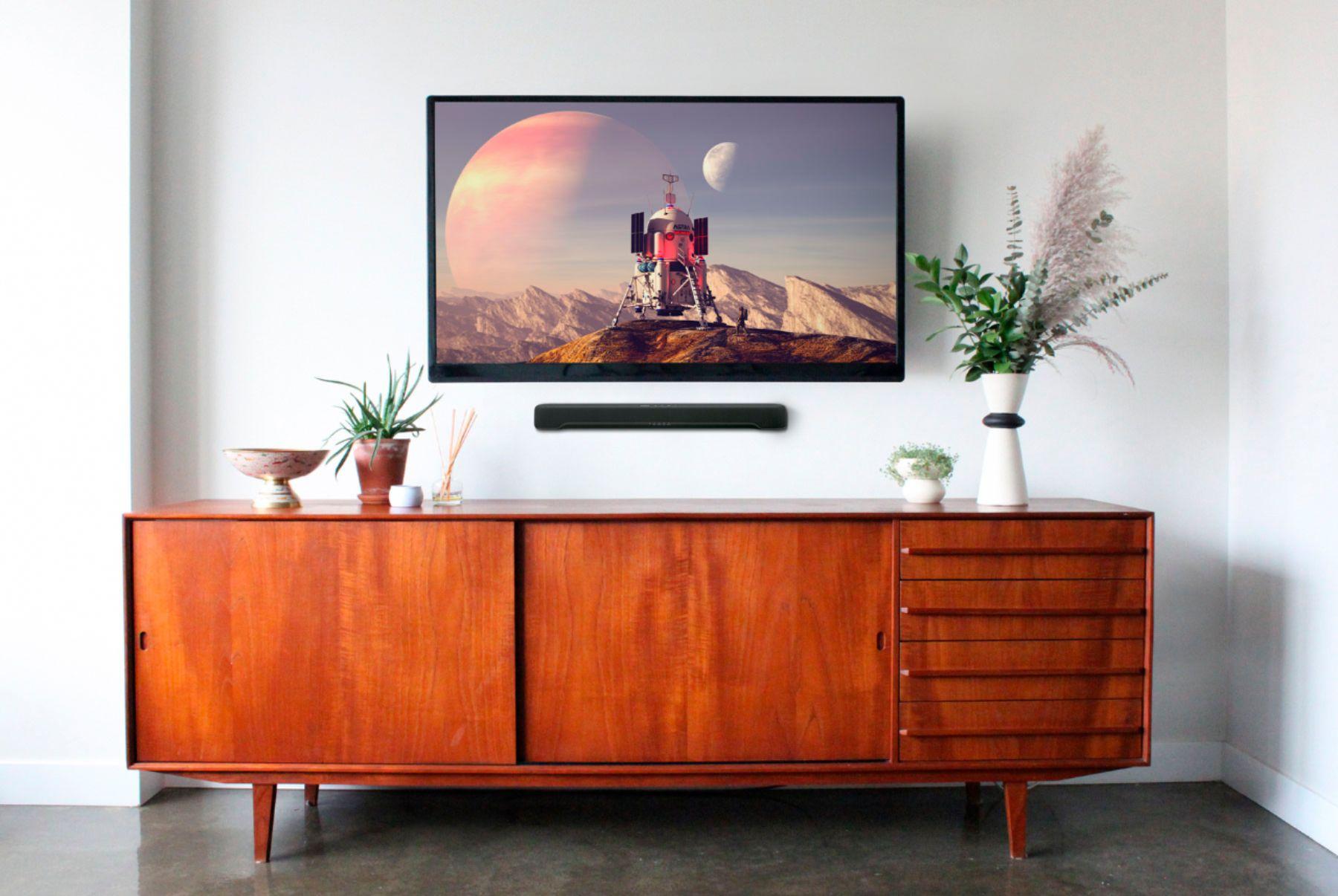
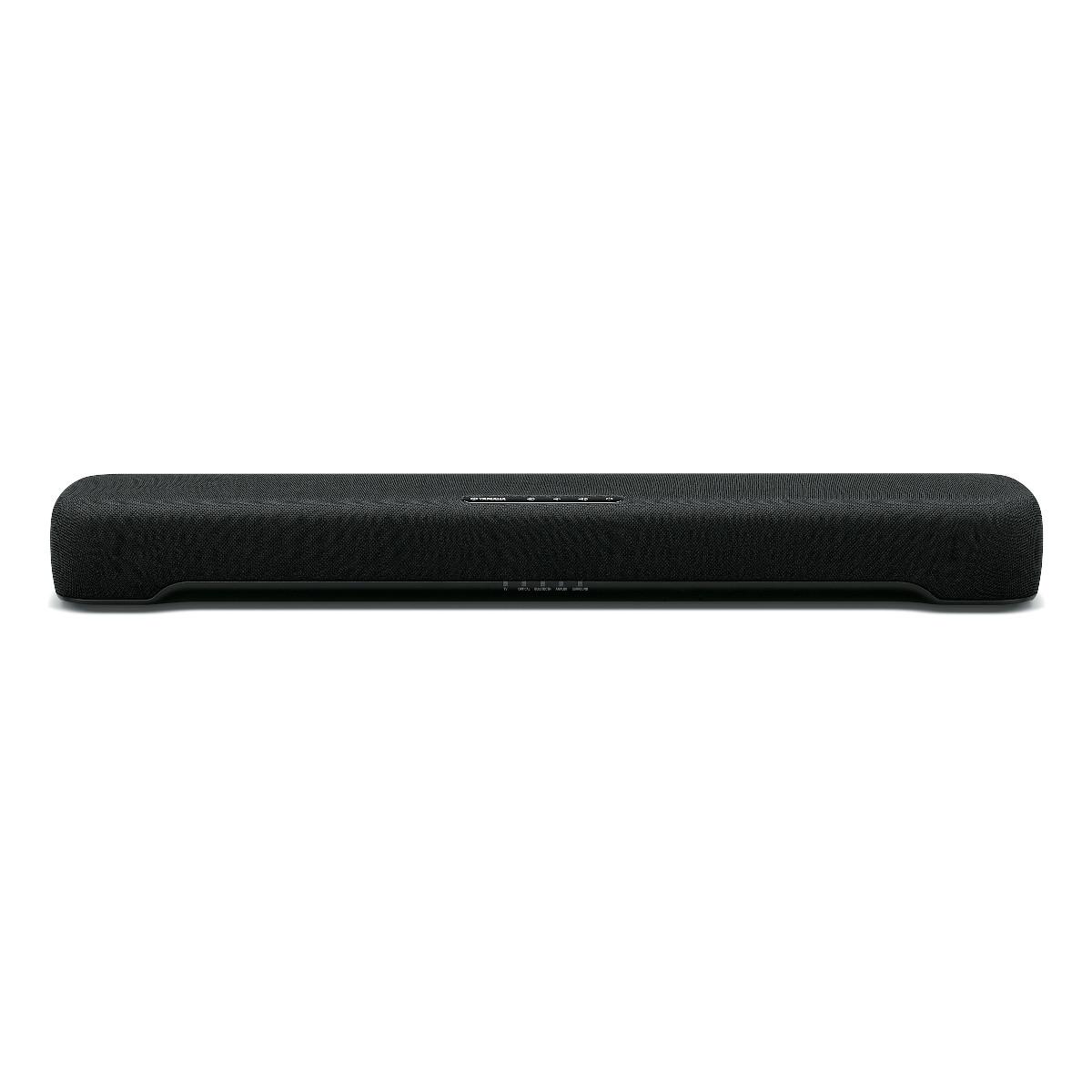
The Yamaha SR-C20A, released earlier in the compact soundbar evolution, takes a different approach entirely. Rather than trying to recreate a full surround sound system, Yamaha focused on doing the basics exceptionally well: making dialogue clearer, adding some bass presence, and improving the overall TV audio experience without complexity.
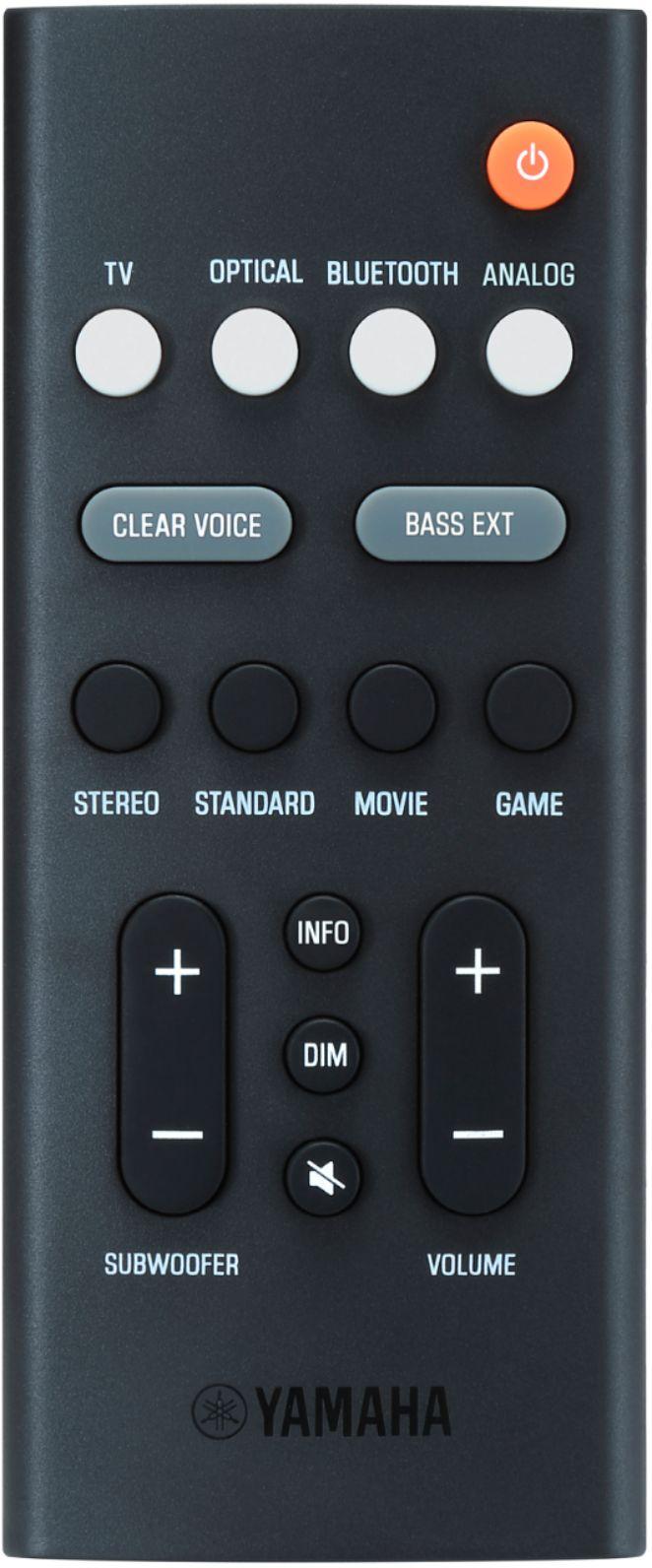
At 23.6 inches wide, it's sized for smaller TVs (32-43 inches typically) and designed around Yamaha's "Clear Voice" technology. This feature specifically targets the frequency range where human speech lives, boosting those frequencies while managing background music and sound effects so they don't overwhelm conversations.
Yamaha has refined the SR-C20A through several iterations, with improvements to the Bass Extension feature and better Bluetooth connectivity stability. The current version includes enhanced passive radiator tuning that provides more bass output than earlier models.
The biggest difference between these soundbars lies in their audio processing approach, and understanding this difference is crucial for making the right choice.
The Yamaha SR-C20A uses what I'd call "honest enhancement." It takes your TV's stereo audio signal and improves it through careful frequency balancing, dialogue enhancement, and modest bass reinforcement. The built-in 3-inch subwoofer, working with dual passive radiators (essentially speakers without magnets that vibrate sympathetically to reinforce bass), provides adequate low-end for most TV content.
In my testing with various content types, the Yamaha consistently made dialogue clearer and added enough bass presence to make action scenes more engaging. However, it never tries to convince you that sounds are coming from anywhere other than the front of the room. The four sound modes (Stereo, Standard, Movie, Game) are essentially different EQ presets that emphasize different frequency ranges.
The Sennheiser AMBEO Mini, by contrast, is performing audio wizardry. Its AMBEO virtualization technology analyzes incoming audio signals and uses complex algorithms to create the illusion of 3D sound placement. When I watched "Top Gun: Maverick" in Dolby Atmos, the jet engines genuinely seemed to move around and above me, despite all the drivers being in front of my couch.
This illusion works through several techniques: phase manipulation (slightly delaying certain frequencies to trick your brain about direction), psychoacoustic modeling (exploiting how human hearing processes spatial information), and room reflection analysis (the built-in microphones measure how sound bounces off your walls and adjusts accordingly). The result is surprisingly convincing, though it requires the 10-minute automated calibration process to work properly.
Bass response reveals another fundamental difference between these approaches. The Yamaha's single 3-inch subwoofer with passive radiators provides what I'd describe as "adequate" bass – enough to add weight to explosions and music, but not enough to truly recreate the cinema experience. In my 200-square-foot apartment bedroom, it provided satisfying low-end without overwhelming the space or bothering neighbors.
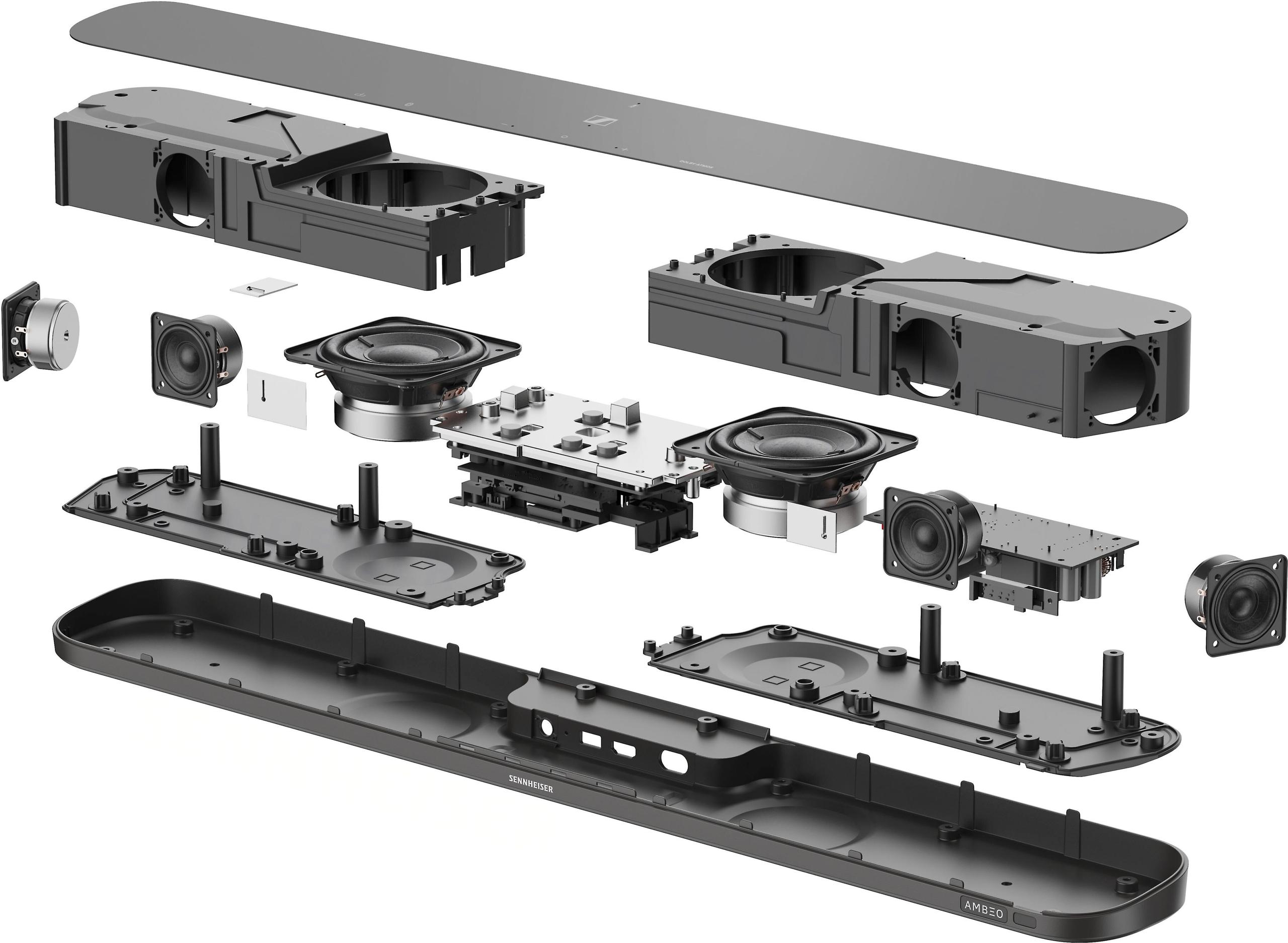
The Sennheiser AMBEO Mini's dual 4-inch subwoofers are in a different league entirely. These drivers, combined with sophisticated bass management processing, can reproduce frequencies down to 43Hz – that's getting into the territory where you feel bass as much as hear it. During action sequences in "Dune," the deep rumbling of sandworms was genuinely visceral, something the Yamaha simply cannot match.
However, this bass power requires careful room consideration. In smaller spaces, the Sennheiser can easily overwhelm, while the Yamaha's more modest output is often perfectly matched to the room size.
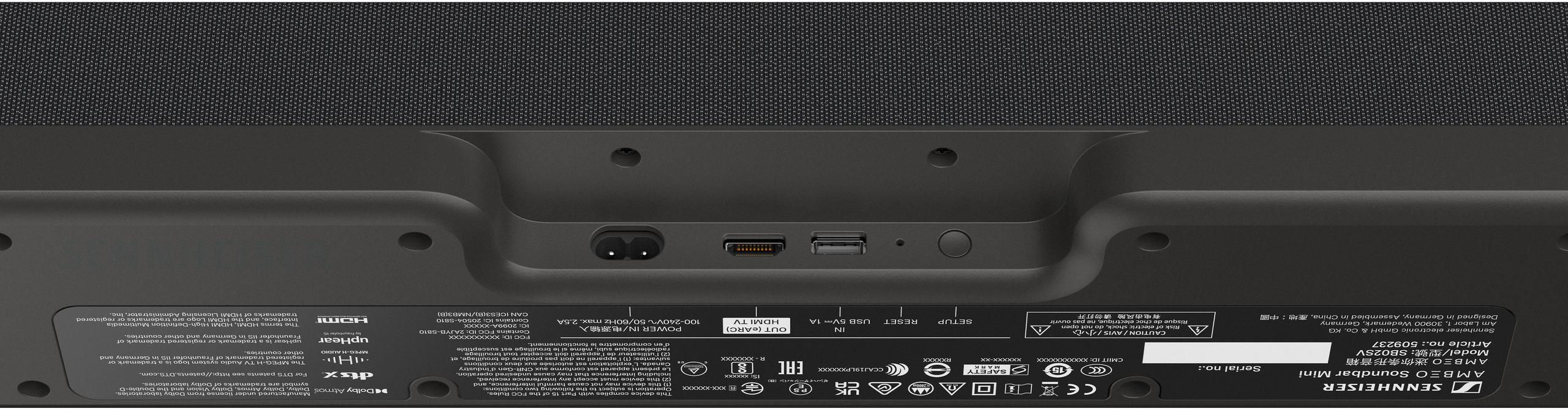
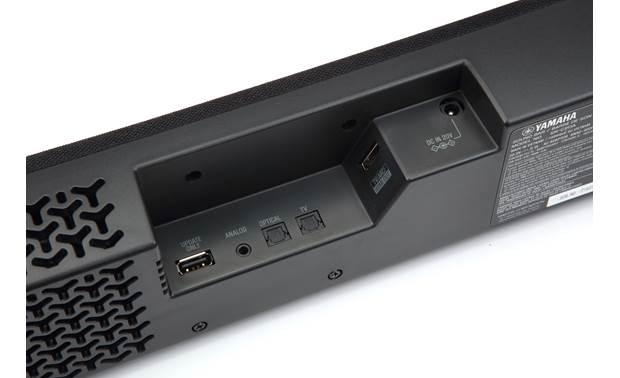
The connectivity story reflects each soundbar's target audience perfectly. The Yamaha SR-C20A focuses on the connections most people actually use: HDMI ARC for TV audio, Bluetooth for phone music, and optical/analog inputs for older devices. Setup is genuinely plug-and-play – I had it working within five minutes of unboxing.
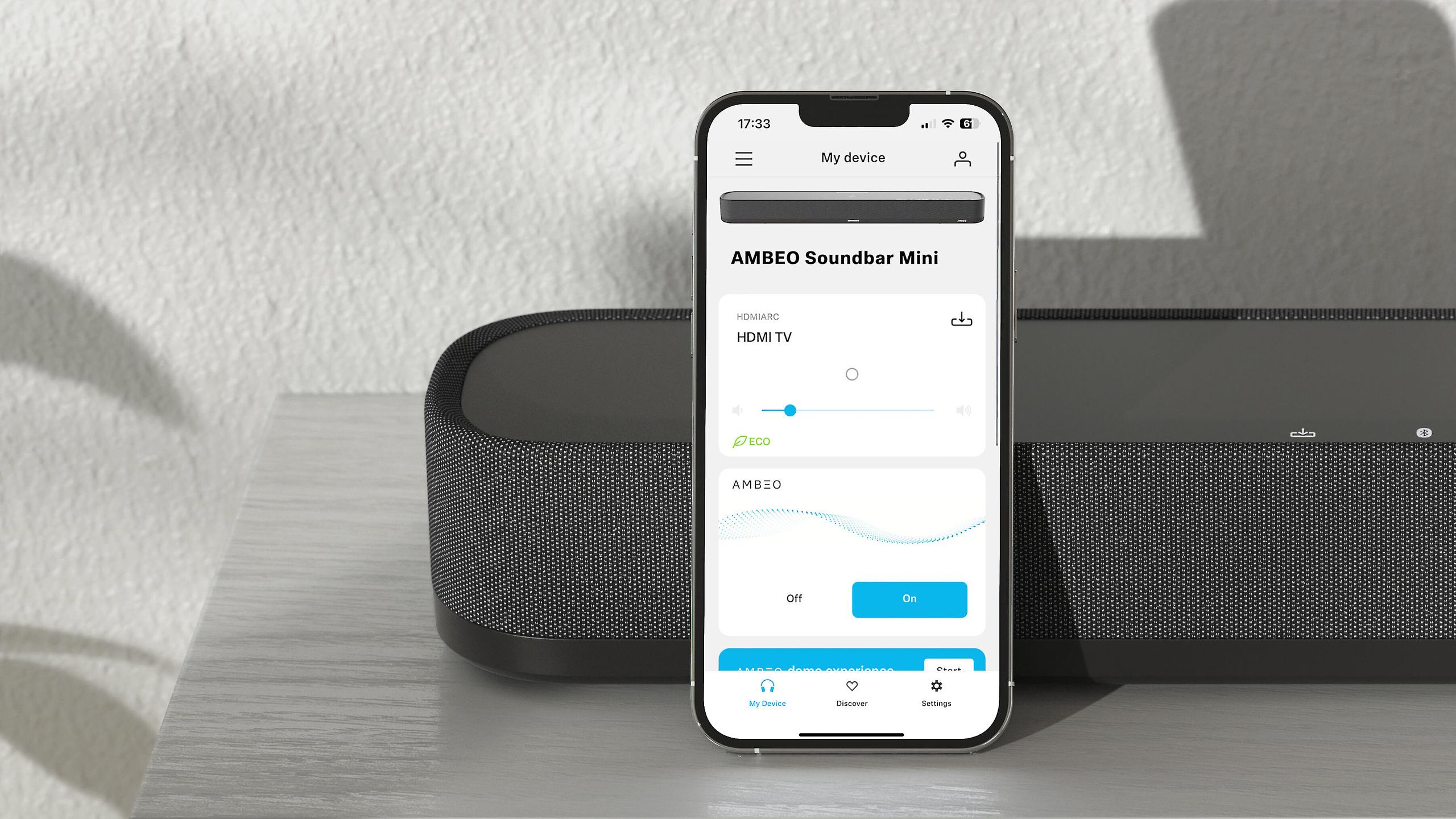
The Sennheiser AMBEO Mini reads like a smart speaker feature list: Wi-Fi streaming, AirPlay 2, Chromecast built-in, Spotify Connect, TIDAL Connect, and built-in Alexa and Google Assistant support. This connectivity richness means you can stream high-resolution audio directly to the soundbar without involving your TV at all.
I particularly appreciate the HDMI eARC support (enhanced Audio Return Channel), which allows the full bandwidth Dolby Atmos and DTS:X signals to pass through without compression. Standard HDMI ARC, which the Yamaha uses, has bandwidth limitations that can compress these advanced audio formats.
Since most of your soundbar usage will be regular TV watching, dialogue clarity is arguably the most important performance characteristic. Both soundbars excel here, but in different ways.
The Yamaha SR-C20A's Clear Voice technology is specifically tuned for speech intelligibility. Watching "The Crown" – a show notorious for mumbled British accents – the dialogue was consistently clear and natural. The feature works by identifying voice frequencies and gently boosting them while managing background elements. It's effective without sounding artificial.
The Sennheiser's approach is more sophisticated but sometimes less consistent. Its Voice Enhancement feature works well, but the 3D processing can occasionally make dialogue seem to move around in ways that feel unnatural. For pure dialogue clarity in typical TV shows, the Yamaha's focused approach often wins.
Music streaming reveals the quality gap between these soundbars most clearly. The Yamaha SR-C20A handles music adequately – it's perfectly fine for background listening or casual Bluetooth streaming from your phone. The frequency response is balanced, though the soundstage (how wide the music sounds) is limited to the width of the bar itself.
The Sennheiser AMBEO Mini transforms into a legitimate music system. Streaming high-resolution tracks through TIDAL Connect, the soundstage extends well beyond the physical bar, instruments have precise placement, and the dual subwoofers provide foundation without muddying the midrange. Jazz recordings sound particularly impressive, with clear instrument separation and natural acoustic space.
This is where the technology differences become most apparent. Action movies on the Yamaha SR-C20A sound significantly better than TV speakers – dialogue stays clear during explosions, and there's enough bass to add impact to action sequences. But it's still clearly sound coming from in front of you.
The Sennheiser AMBEO Mini creates genuinely immersive experiences. During "Mad Max: Fury Road," the vehicle chase sequences had sounds seeming to move around the room. The overhead Dolby Atmos effects – planes flying over, debris falling – are convincingly placed above your listening position. For gaming, this spatial awareness can be genuinely useful, not just impressive.
However, this immersion requires proper room setup and content that supports these advanced audio formats. Standard stereo content, while enhanced, doesn't showcase the AMBEO's capabilities as dramatically.
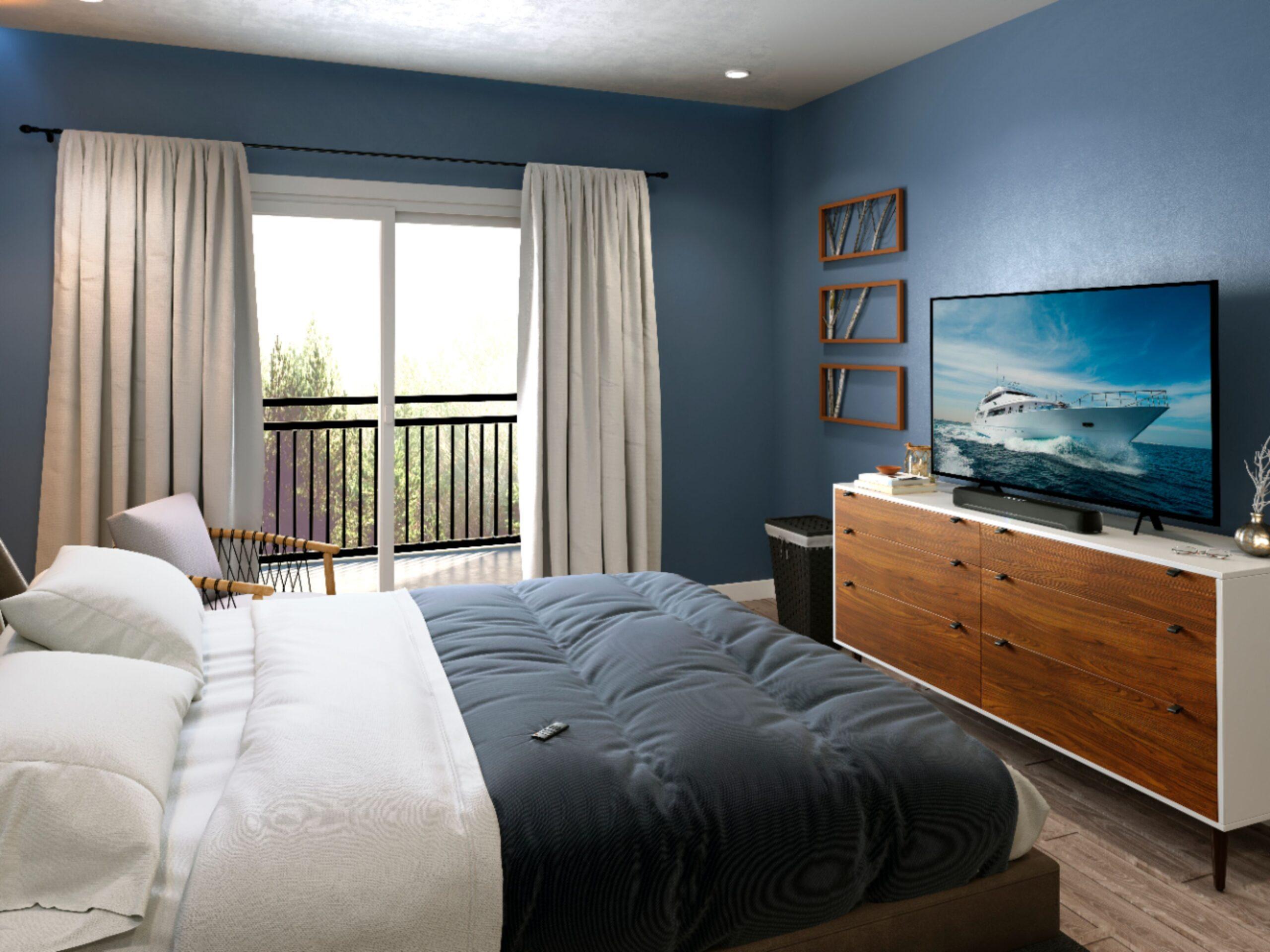
Both soundbars work as standalone upgrades to TV audio, but they fit into home theater setups differently. The Yamaha SR-C20A is ideal for secondary viewing areas – bedrooms, kitchens, or apartments where you want better sound without complexity. Its compact size and modest bass output make it respectful of neighbors and family members.
The Sennheiser AMBEO Mini can serve as the primary audio system for a compact home theater. In my experience, it provides enough immersion and bass response to satisfy serious movie watching, though larger rooms (over 500 square feet) might eventually call for additional subwoofer support.
Neither soundbar includes physical rear speakers, but the Sennheiser's virtualization is sophisticated enough that you might not miss them. The Yamaha makes no attempt at rear surround effects, focusing instead on making the front soundstage as clear and impactful as possible.
The roughly 3x price difference between these soundbars reflects fundamentally different value propositions. The Yamaha SR-C20A's value is straightforward: significant improvement over TV speakers at a reasonable price, with reliable operation and broad compatibility.
The Sennheiser AMBEO Mini's value is more complex to evaluate. You're paying for advanced audio processing, premium build quality, extensive connectivity, and immersive audio capabilities that typically require much more expensive systems. If you value these features and have content that takes advantage of them, the premium makes sense.
I've found that the Sennheiser's value becomes more apparent over time. Initially, the price difference seems steep, but as you discover the various streaming capabilities and experience truly immersive movie nights, the investment feels more justified.
Choose the Sennheiser AMBEO Mini ($499) if you want a transformative audio experience that can handle everything from casual TV watching to serious movie nights and high-quality music streaming. It's ideal for medium-sized rooms where you have space for the bass output and can take advantage of the room calibration features.
The Yamaha SR-C20A ($170-200) is perfect if you want reliable, significant improvement over TV speakers without complexity or premium pricing. It excels in smaller spaces, secondary viewing areas, or situations where simplicity and value are the primary concerns.
Consider your room size, typical content types, technical comfort level, and honest budget assessment. Both soundbars succeed at their intended purposes – the key is matching their strengths to your actual needs and expectations.
The audio upgrade from built-in TV speakers to either of these soundbars will be immediately noticeable and permanently appreciated. The question is whether you want that upgrade to be substantial (Yamaha SR-C20A) or truly transformative (Sennheiser AMBEO Mini).
| Sennheiser AMBEO Soundbar Mini | Yamaha SR-C20A Compact Sound Bar |
|---|---|
| Price - Major cost difference reflects different target markets | |
| $499 (premium positioning) | $170-200 (budget-friendly) |
| Audio Format Support - Determines immersive movie experience | |
| Dolby Atmos, DTS:X, MPEG-H, 360 Reality Audio | Standard stereo with basic virtualization (no Atmos) |
| Surround Sound Technology - Creates 3D audio illusion | |
| 7.1.4 virtualized with AMBEO processing | Basic stereo enhancement with four sound modes |
| Subwoofer Configuration - Foundation for bass impact | |
| Dual built-in 4" drivers with passive radiators | Single 3" driver with dual passive radiators |
| Frequency Response - How deep the bass extends | |
| Down to 43Hz (room-filling bass) | Not specified (adequate for smaller spaces) |
| Smart Connectivity - Modern streaming capabilities | |
| Wi-Fi, AirPlay 2, Chromecast, Spotify/TIDAL Connect | Bluetooth 5.0 only |
| Voice Control - Hands-free operation | |
| Built-in Alexa and Google Assistant | None (app and remote control only) |
| HDMI Support - Audio quality from TV | |
| HDMI eARC (full bandwidth for Atmos) | HDMI ARC (standard, compressed audio) |
| Room Calibration - Optimizes sound for your space | |
| Automated microphone-based calibration required | Plug-and-play, no calibration needed |
| Ideal Room Size - Performance scales with space | |
| 300-500 sq ft (medium rooms) | Under 300 sq ft (small rooms, bedrooms) |
| Physical Dimensions - Compatibility with TV sizes | |
| 27.6" W × 2.6" H (fits 40"+ TVs) | 23.6" W × 2.5" H (fits 32-43" TVs) |
| Setup Complexity - Time investment required | |
| 10-minute calibration, multiple app setups | 5-minute plug-and-play installation |
The Yamaha SR-C20A ($170-200) offers excellent value for basic TV audio improvement, providing clear dialogue and adequate bass at a budget-friendly price. The Sennheiser AMBEO Soundbar Mini ($499) costs nearly 3x more but delivers premium features like Dolby Atmos, Wi-Fi streaming, and immersive 3D audio that justify the price for serious home theater enthusiasts.
The Sennheiser AMBEO Mini creates immersive 7.1.4 surround sound with Dolby Atmos support, making sounds appear to come from all around you. The Yamaha SR-C20A focuses on enhancing stereo TV audio with clearer dialogue and modest bass improvement, without attempting surround sound effects.
The Yamaha SR-C20A is ideal for rooms under 300 square feet, offering respectful bass levels that won't disturb neighbors and simple plug-and-play setup. The Sennheiser AMBEO Mini is designed for medium rooms (300-500 sq ft) and may overwhelm smaller spaces with its powerful dual subwoofers.
Only the Sennheiser AMBEO Soundbar Mini supports Dolby Atmos, DTS:X, and other advanced 3D audio formats for immersive movie experiences. The Yamaha SR-C20A processes standard stereo audio with basic enhancement but doesn't support Atmos or other surround sound formats.
The Yamaha SR-C20A offers true plug-and-play setup, working within 5 minutes of unboxing with no calibration required. The Sennheiser AMBEO Mini requires a 10-minute automated room calibration process and additional setup for streaming services, though this complexity enables superior performance.
The Sennheiser AMBEO Mini excels at music with Wi-Fi streaming, AirPlay 2, Spotify Connect, and high-resolution audio support that creates a wide soundstage. The Yamaha SR-C20A offers basic Bluetooth streaming that's adequate for casual listening but lacks the audio quality and convenience features of the Sennheiser.
The Sennheiser AMBEO Soundbar Mini delivers significantly deeper and more powerful bass with dual 4-inch subwoofers reaching down to 43Hz, providing room-filling low-end for movies and music. The Yamaha SR-C20A has a single 3-inch subwoofer that provides adequate bass for TV content but can't match the Sennheiser's impact.
Both excel at dialogue clarity but differently. The Yamaha SR-C20A uses dedicated Clear Voice technology specifically tuned for speech intelligibility, making it excellent for TV shows and news. The Sennheiser AMBEO Mini offers voice enhancement as part of its broader audio processing, though it's sometimes less consistent than Yamaha's focused approach.
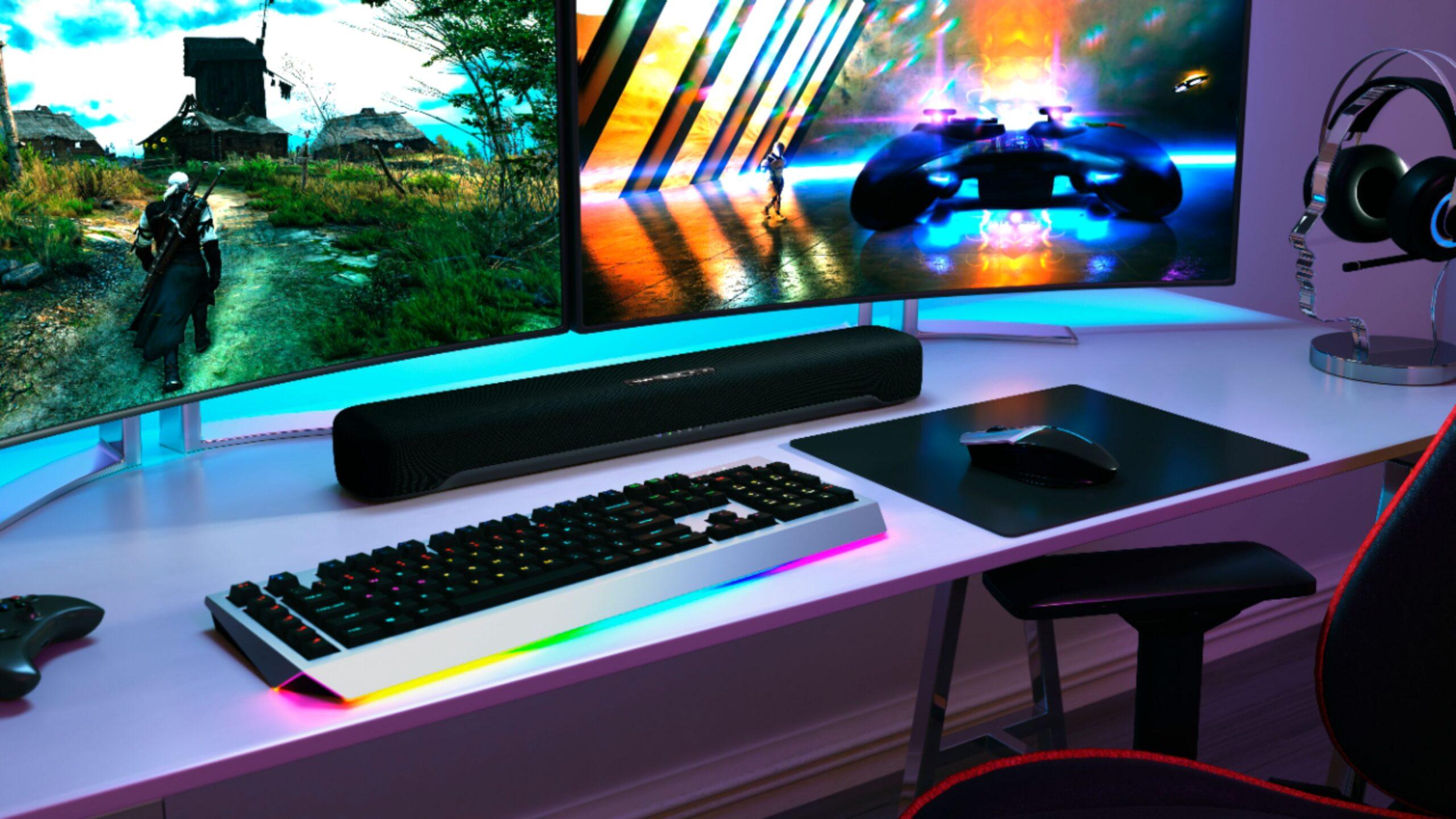
The Sennheiser AMBEO Mini provides superior gaming audio with 3D sound positioning that can improve spatial awareness and immersion in games. The Yamaha SR-C20A includes a dedicated Game mode that enhances audio clarity but doesn't offer the directional audio benefits of the Sennheiser's advanced processing.
The Sennheiser AMBEO Soundbar Mini includes built-in Alexa and Google Assistant, Wi-Fi connectivity, and integration with multiple streaming services. The Yamaha SR-C20A keeps it simple with Bluetooth connectivity and basic app control, focusing on essential functions rather than smart home integration.
For dedicated home theater setups, the Sennheiser AMBEO Mini is the clear winner with genuine Dolby Atmos support, immersive 3D audio, and powerful bass that can serve as a primary entertainment system. The Yamaha SR-C20A works well for casual movie watching but lacks the immersive capabilities needed for serious home theater experiences.
The Yamaha SR-C20A measures 23.6 inches wide, making it perfect for 32-43 inch TVs in bedrooms or smaller spaces. The Sennheiser AMBEO Mini is 27.6 inches wide, designed for 40+ inch TVs in living rooms where its larger drivers and more powerful output can be fully utilized.
We've done our best to create useful and informative comparisons to help you decide what product to buy. Our research uses advanced automated methods to create this comparison and perfection is not possible - please contact us for corrections or questions. These are the sites we've researched in the creation of this article: techradar.com - sennheiser-hearing.com - stereonet.com - rtings.com - youtube.com - youtube.com - newsroom.sennheiser.com - whathifi.com - baybloorradio.com - sennheiser-hearing.com - files.bbystatic.com - t3.com - usa.yamaha.com - radiotimes.com - shop.usa.yamaha.com - whathifi.com - hifiheaven.net - usa.yamaha.com - sweetwater.com - hub.yamaha.com - bestbuy.com

Privacy Policy
Terms and Conditions - Affiliate Policy
Home Security
© Copyright 2008-2026.
11816 Inwood Rd #1211, Dallas, TX 75244