

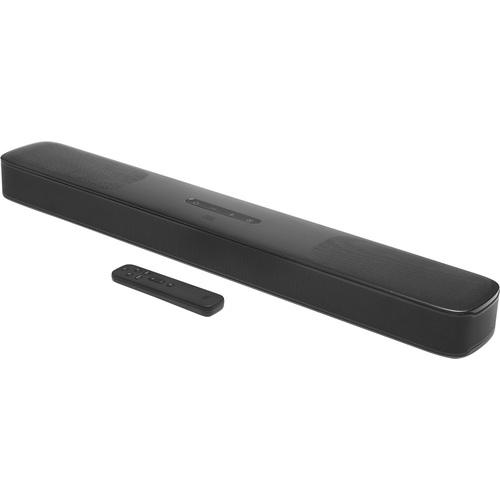
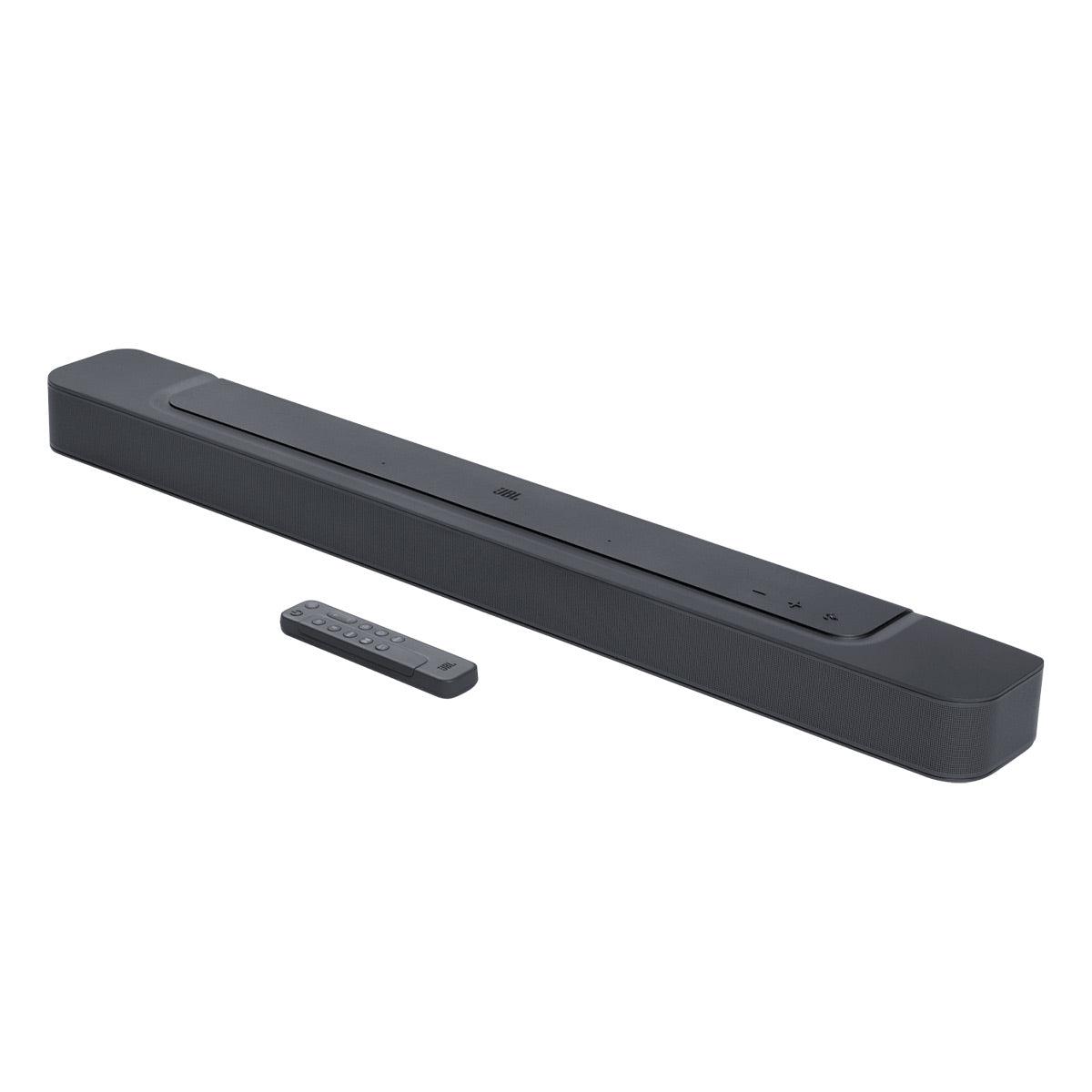
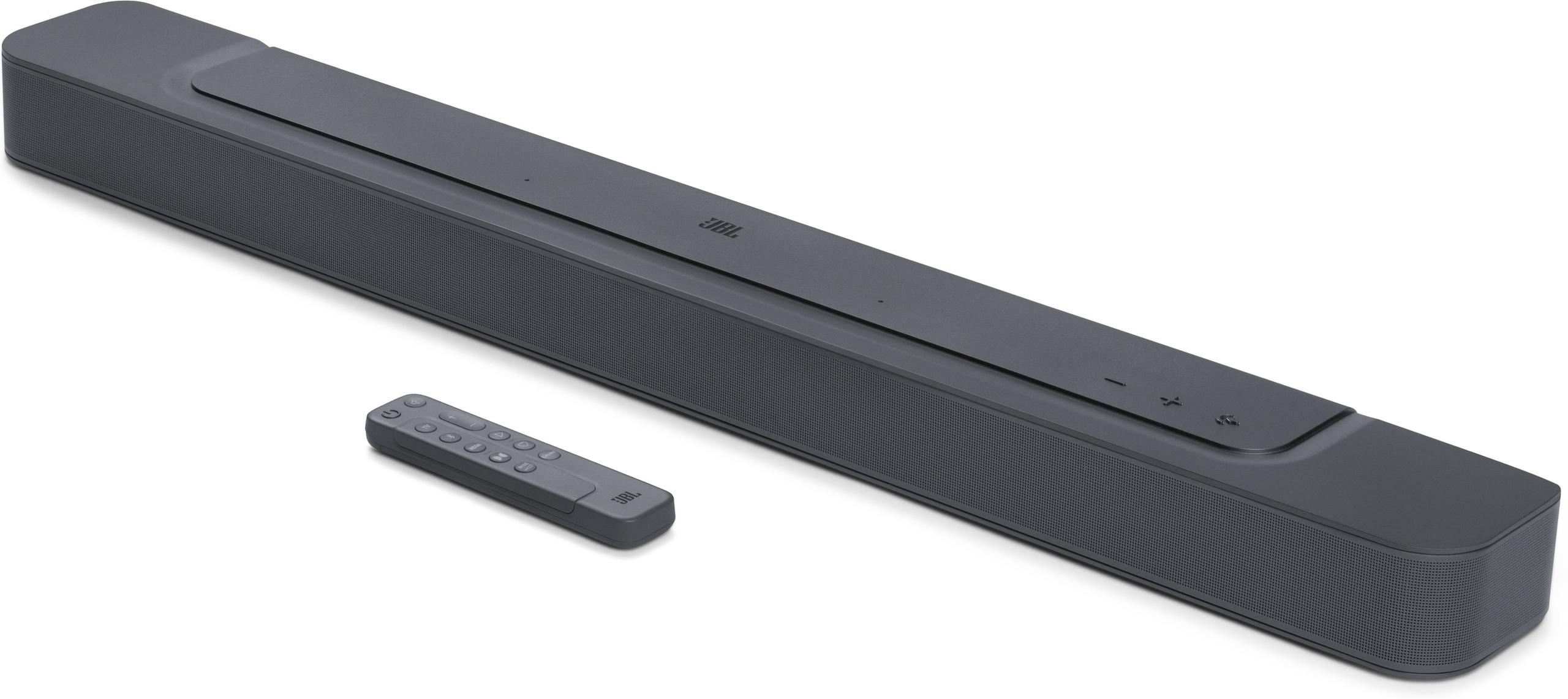

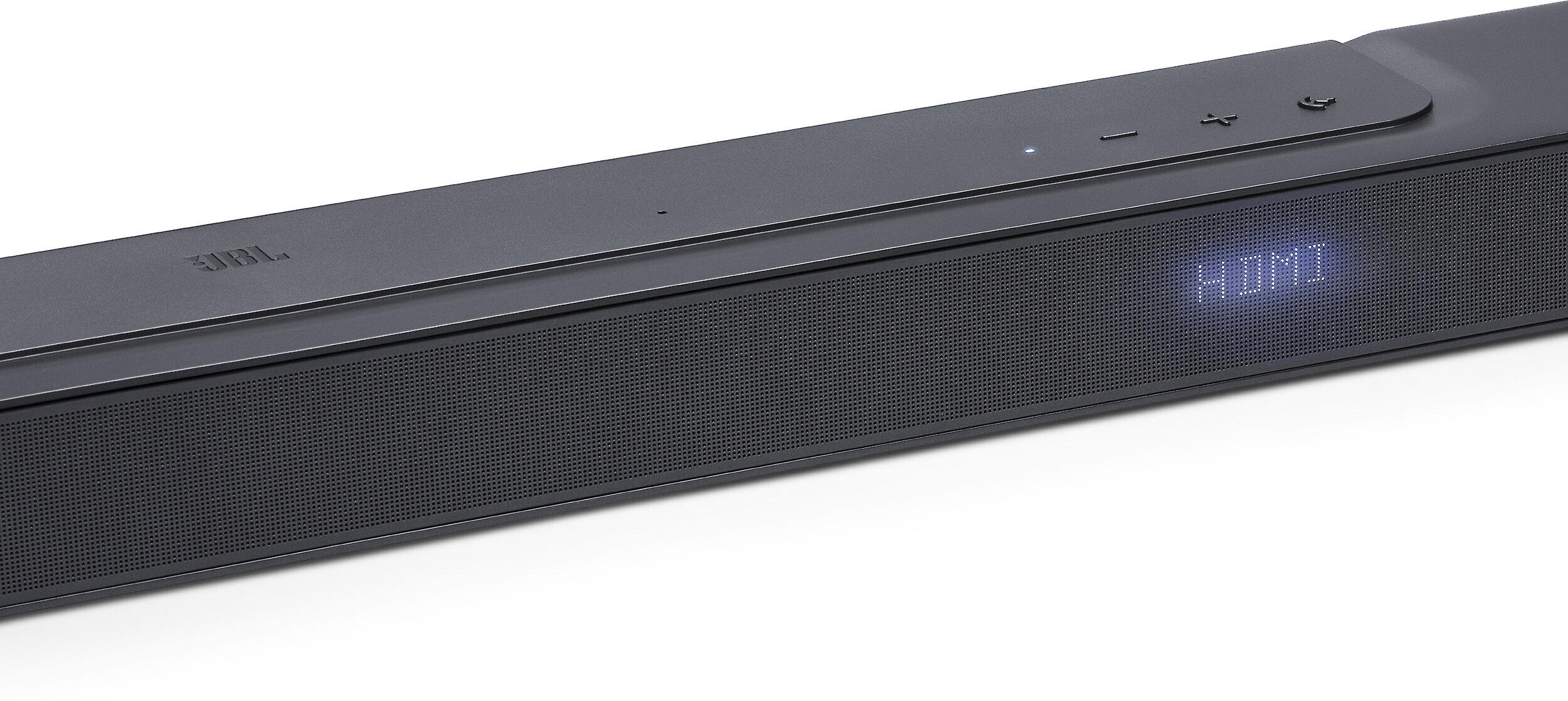
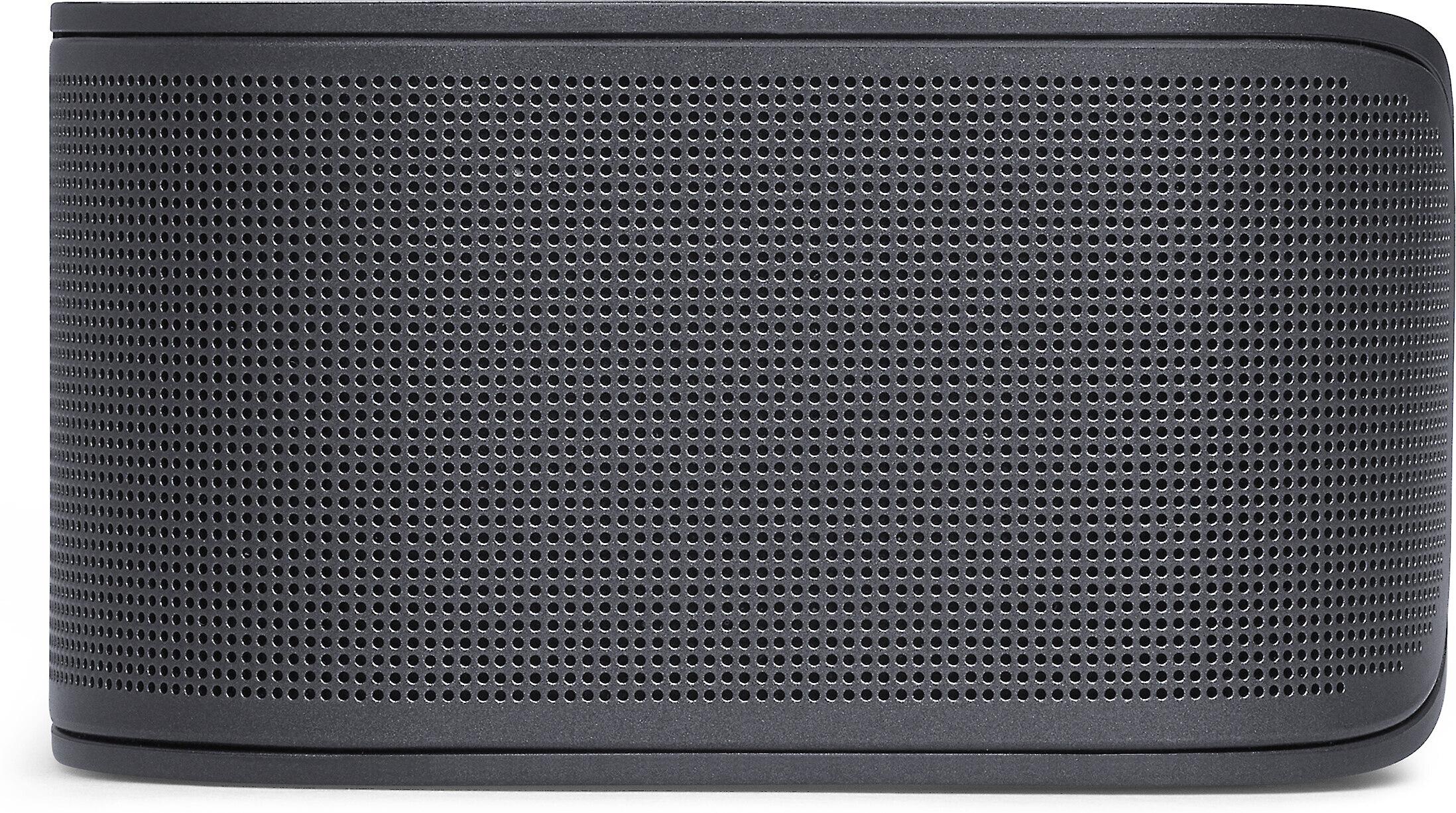


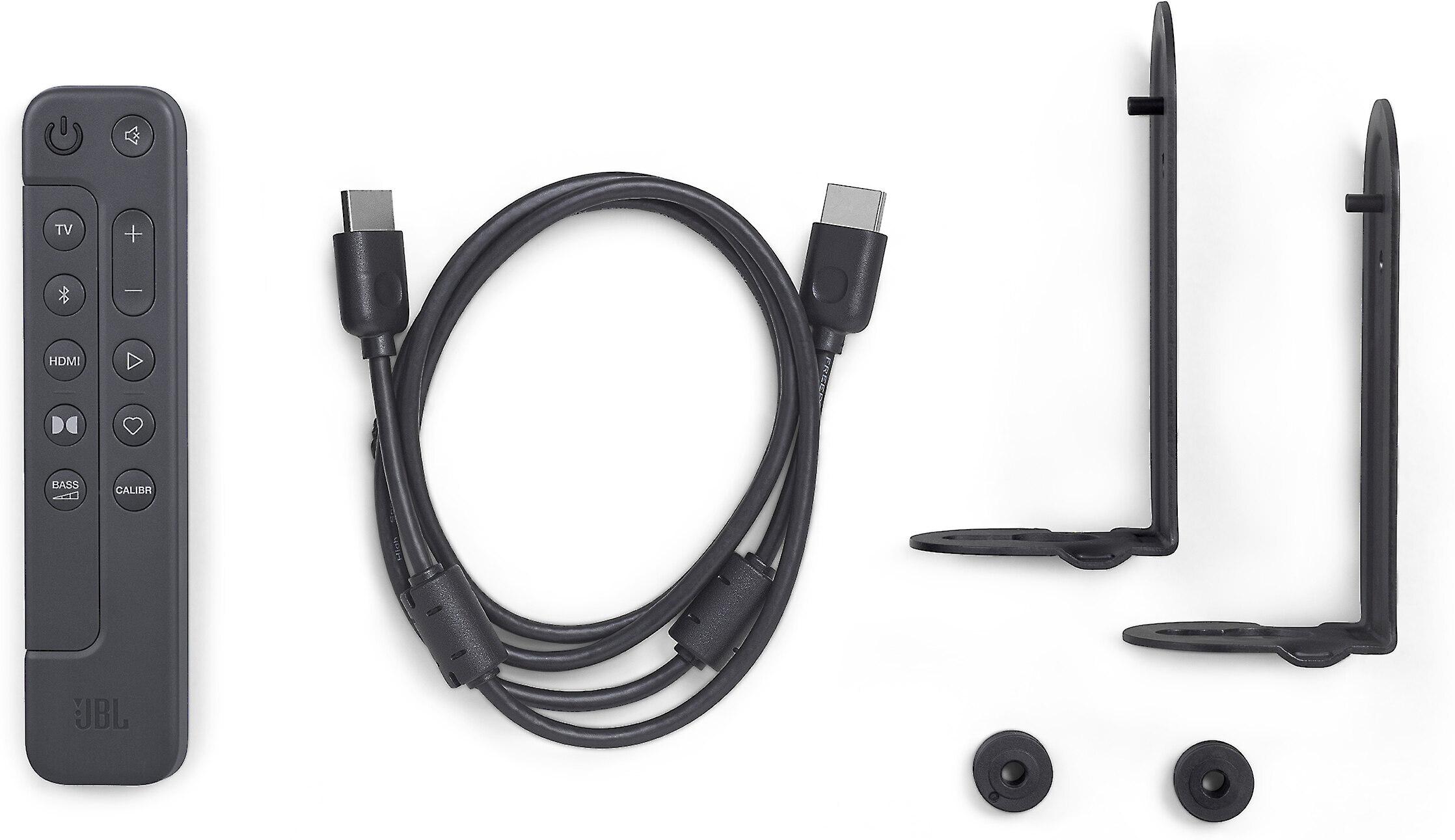
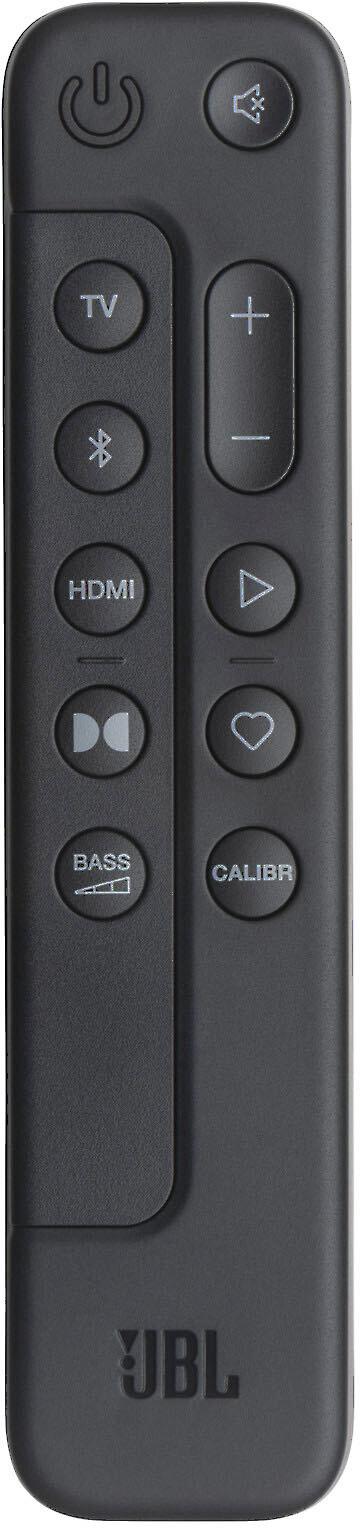
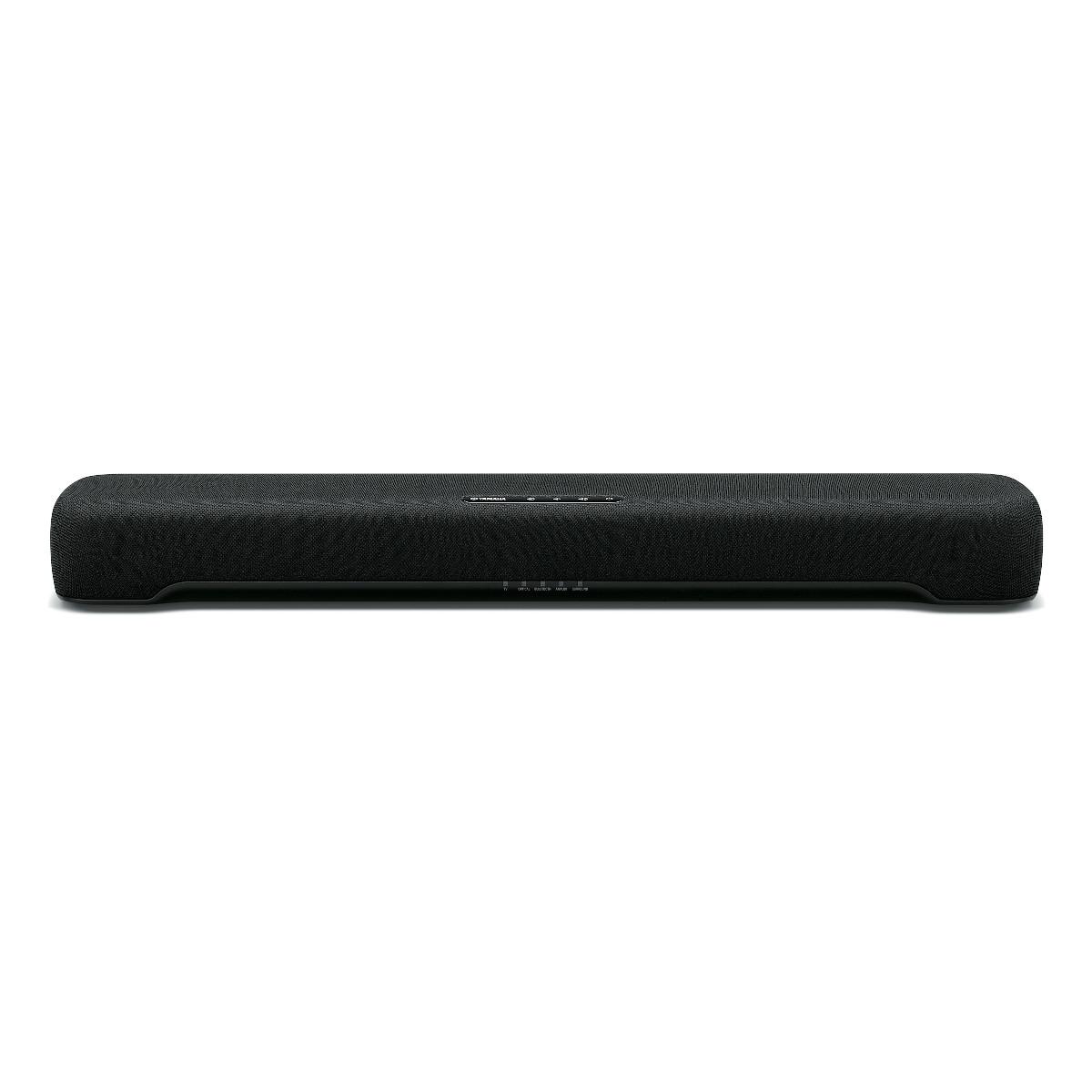

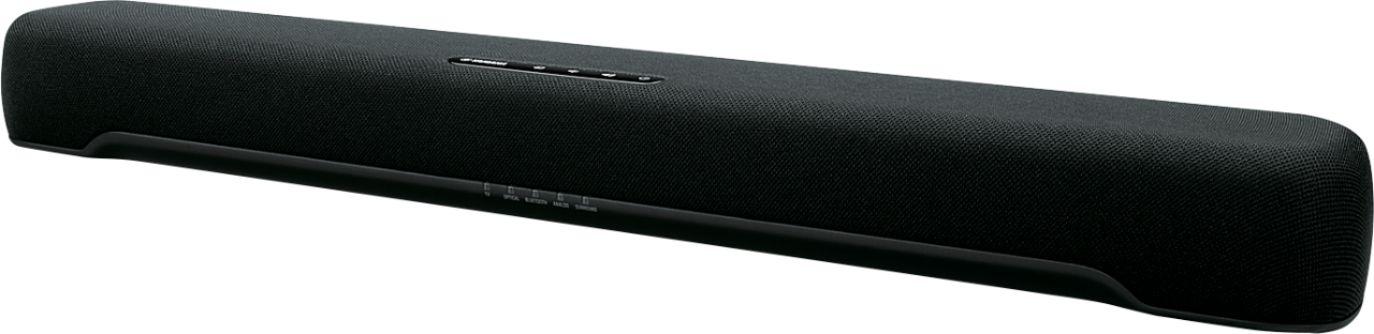


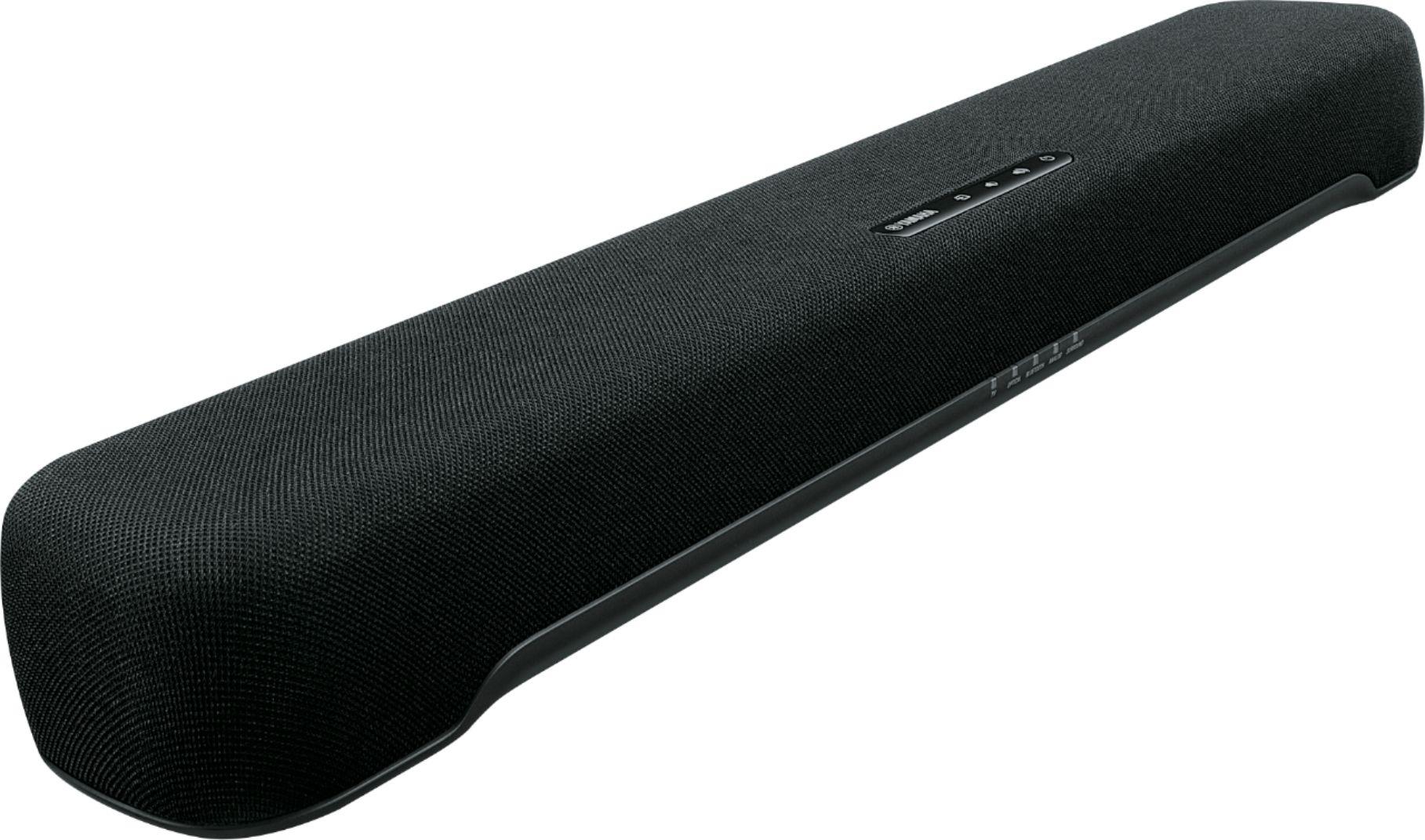
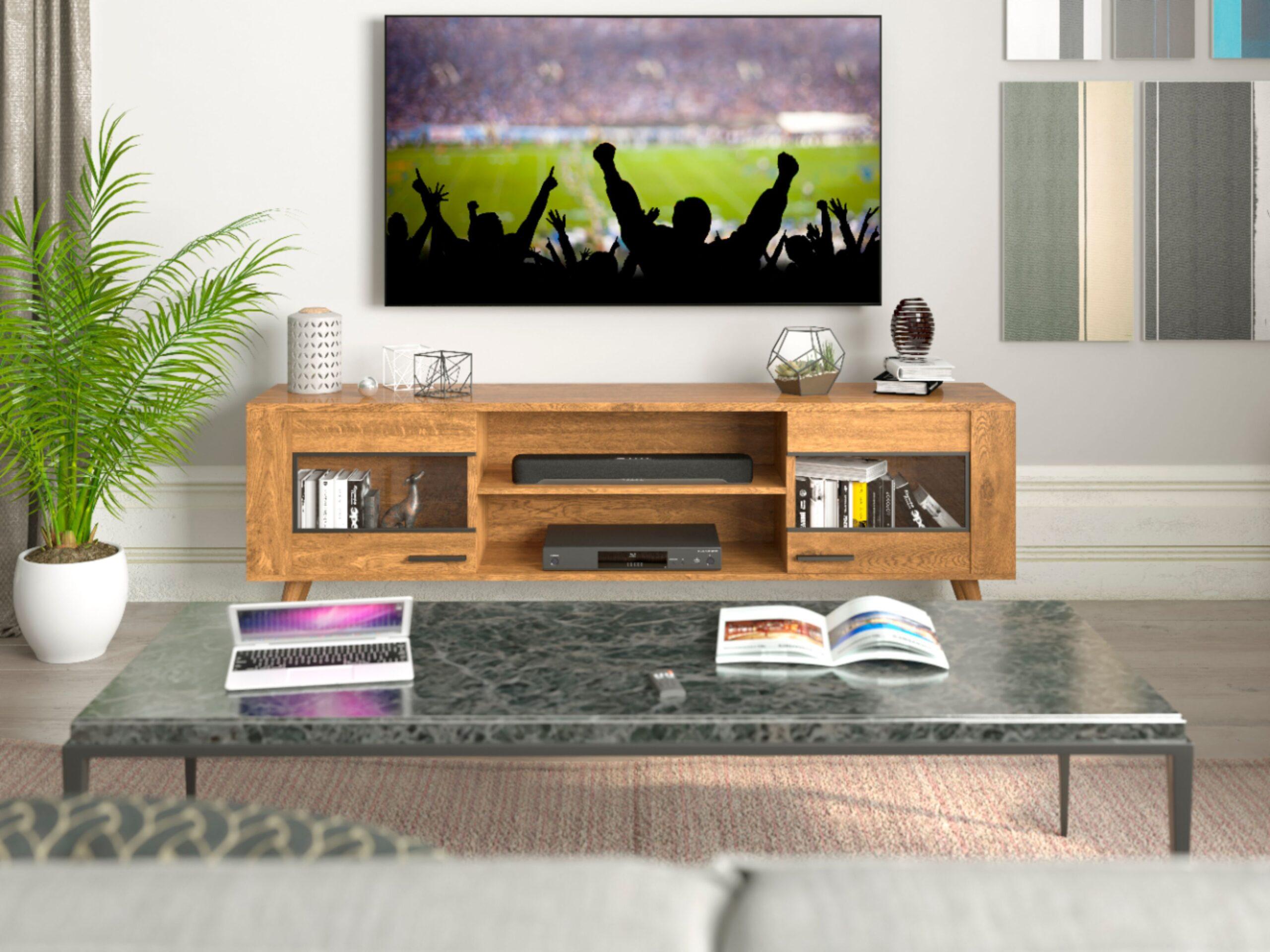


When your TV's built-in speakers make dialogue sound like it's coming from inside a tin can, it's time to consider a soundbar. But with dozens of options at every price point, choosing the right one can feel overwhelming. Today, we're comparing two popular models that take very different approaches to solving your audio problems: the JBL Bar 300 5.0 Soundbar ($299.95) and the Yamaha SR-C20A Compact Sound Bar ($170).
Before diving into specifics, let's talk about what soundbars actually do. Think of them as a horizontal speaker array designed to sit below or mount near your TV. Unlike the tiny, downward-firing speakers crammed into modern TVs, soundbars have room for larger drivers (the individual speakers inside) and more sophisticated audio processing.
The magic happens through a combination of hardware and software. Multiple drivers work together to create what's called a "soundstage" – essentially making audio appear to come from different locations even though it's all from one bar. Advanced models use digital signal processing (DSP) to simulate surround sound by carefully timing and adjusting audio signals to trick your ears into hearing sounds from behind or above you.
When shopping for soundbars, you'll encounter terms like "2.1" or "5.0" channels. The first number represents main audio channels (left, center, right), while the second indicates subwoofers for bass. A ".1" means there's a dedicated subwoofer, while ".0" means bass comes from the main bar. Room size matters enormously – a powerful soundbar in a small bedroom can overwhelm, while an underpowered one in a large living room will sound thin and weak.
The JBL Bar 300, released in early 2023, represents JBL's approach to bringing premium audio technology to the mid-range market. At $299.95, it's positioned as a "premium lite" option, packing features typically found in $500+ models. JBL's MultiBeam technology and Dolby Atmos processing target users who want that immersive "you're in the movie" experience without the complexity of separate surround speakers.
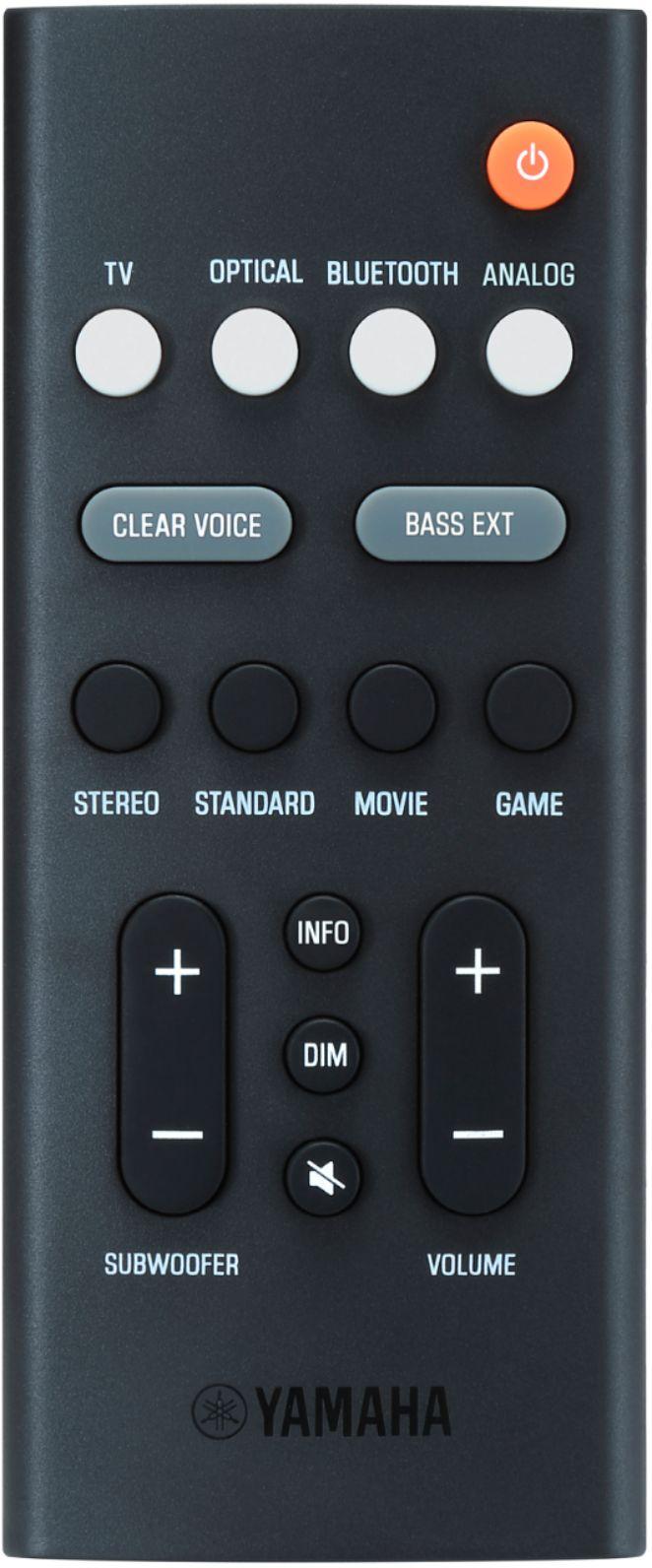
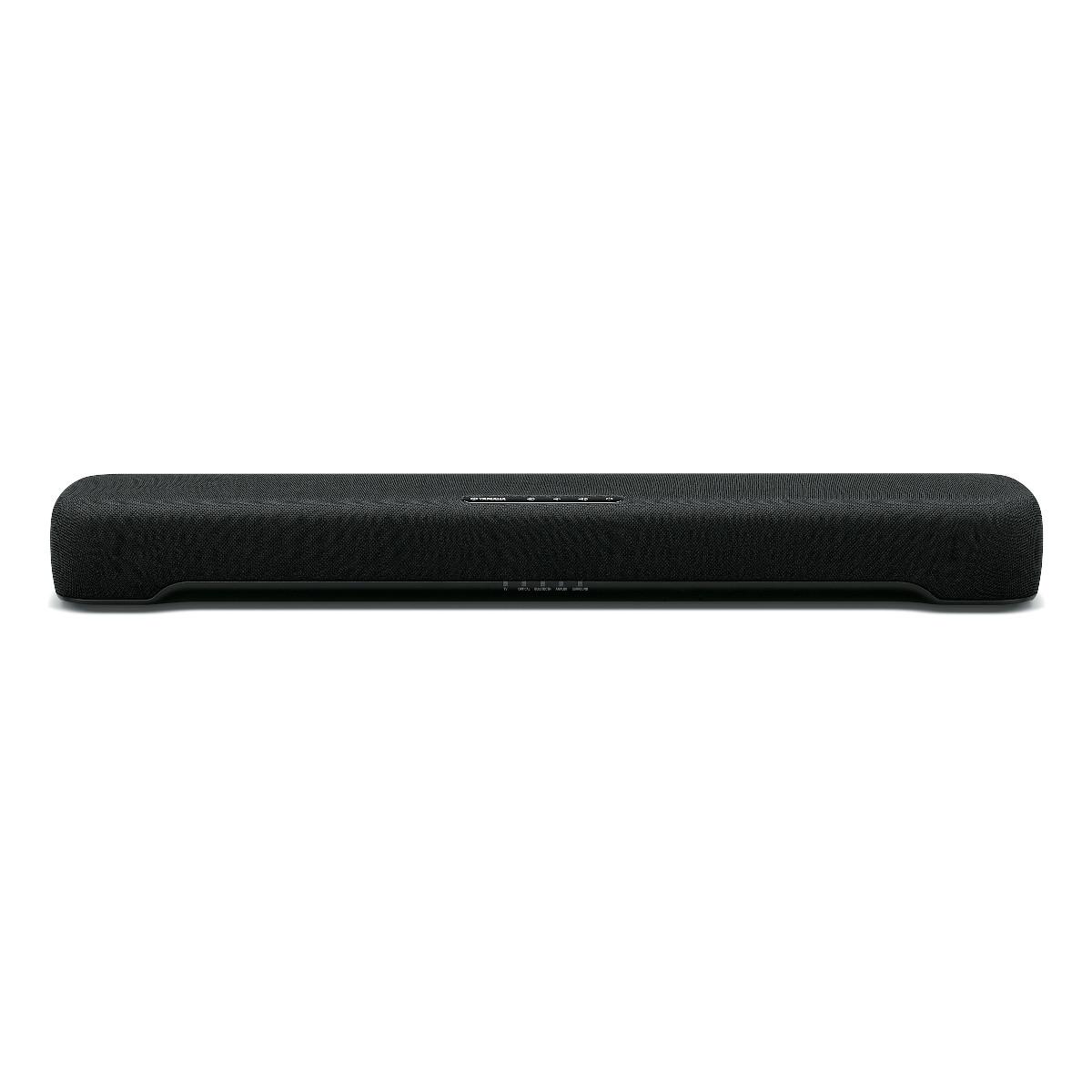
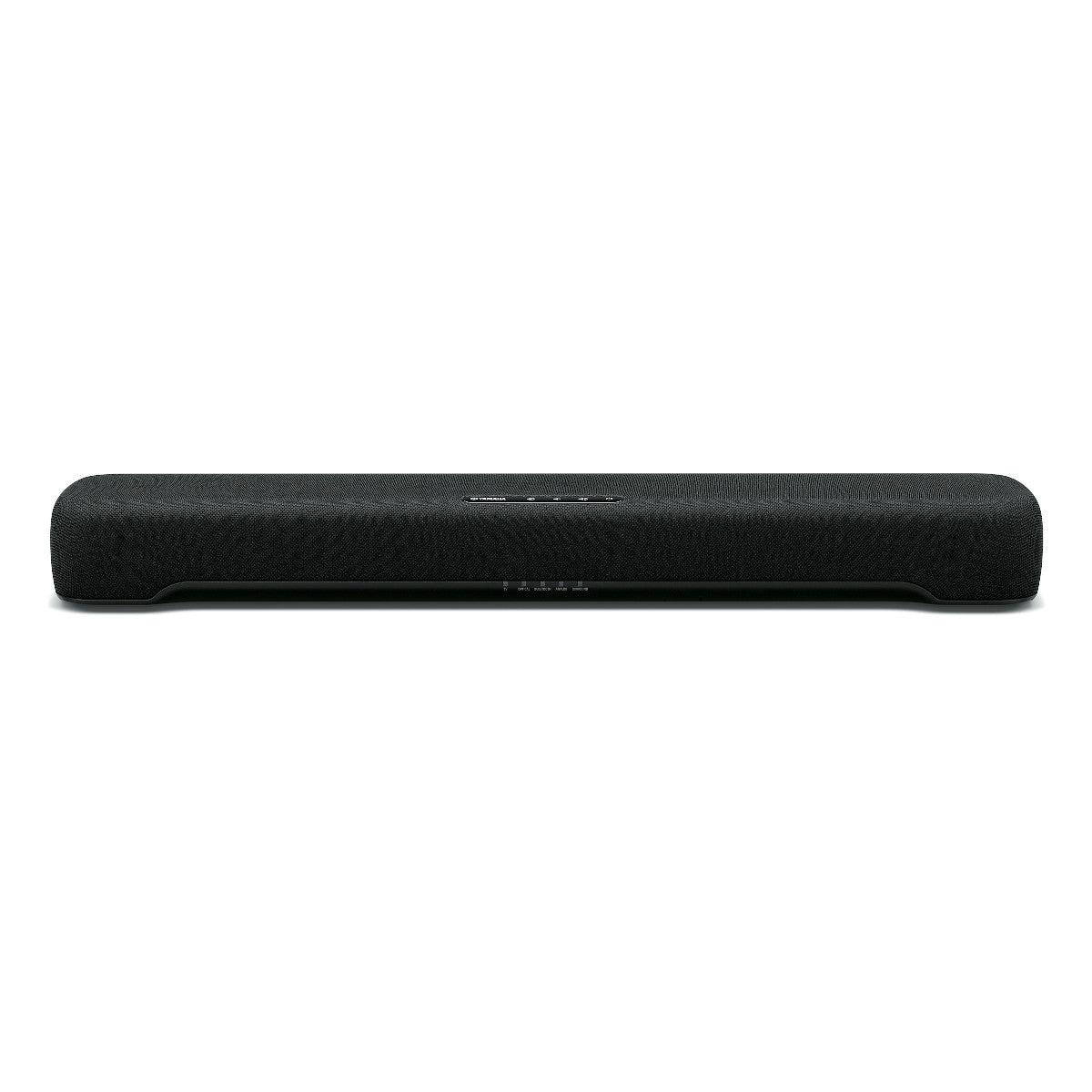
The Yamaha SR-C20A, also from 2023, takes the opposite approach. At $170, Yamaha focused on perfecting the fundamentals: clear dialogue, solid bass, and foolproof operation. Rather than chasing the latest surround sound trends, they built what many consider the best "TV enhancement" soundbar for the money.
These different philosophies create distinct user experiences. I've tested both extensively, and the differences become apparent within minutes of listening.
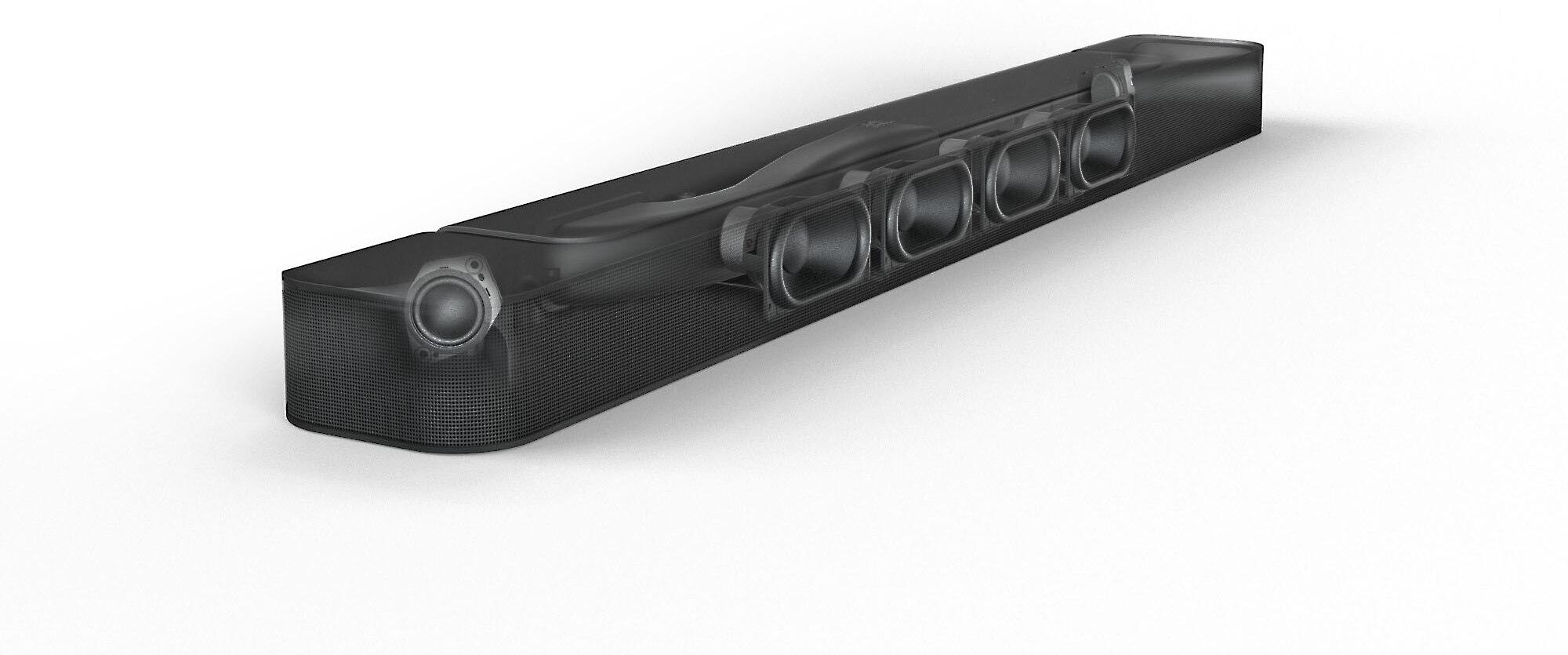
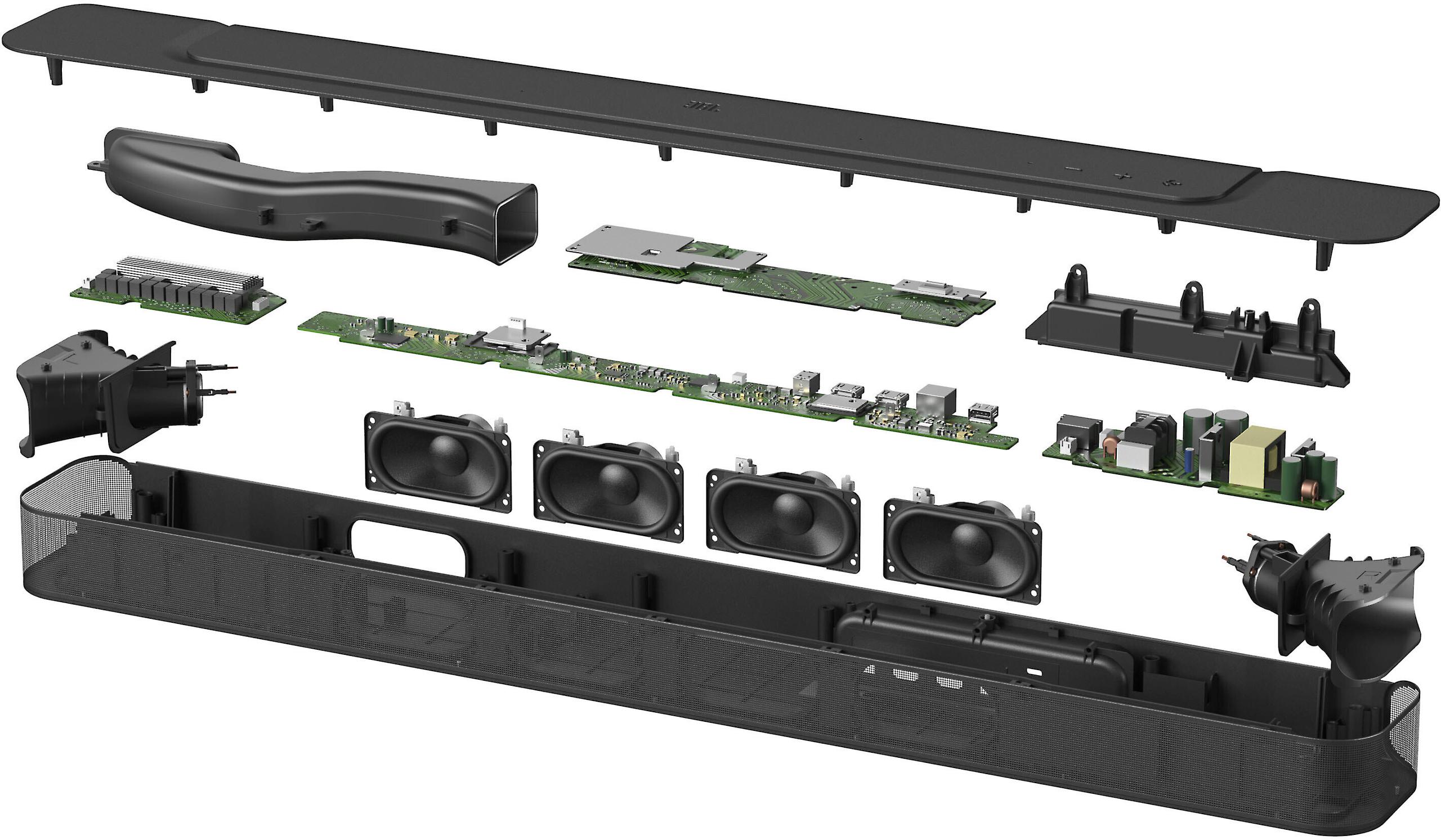
The most significant difference lies in how these bars handle audio. The JBL Bar 300 uses a 5.0-channel configuration with six total drivers: four racetrack-shaped drivers for midrange frequencies and two tweeters for high frequencies. More importantly, it employs MultiBeam 3.0 technology – JBL's proprietary system that uses precise timing delays and frequency adjustments to bounce sound off your room's walls and ceiling.
When watching "Top Gun: Maverick," the JBL creates an impressive sense of jets flying overhead and around you. The Dolby Atmos processing (a technology that adds height information to audio tracks) works with MultiBeam to place sounds in three-dimensional space. You'll hear helicopters circling above, explosions echoing from different directions, and dialogue that seems to come directly from the screen rather than below it.
The Yamaha SR-C20A takes a fundamentally different approach with its 2.1 configuration. Instead of trying to create surround effects, it focuses on stereo imaging – making the left and right channels sound distinct and well-separated. The built-in subwoofer, featuring a 3-inch cone driver plus two passive radiators (essentially speakers without magnets that vibrate sympathetically to reinforce bass), provides surprisingly deep low-frequency response for such a compact unit.
In my testing, the Yamaha's bass actually sounds more substantial than the JBL's. When watching action movies, explosions have more weight and rumble. Music playback reveals this difference clearly – the Yamaha makes hip-hop and electronic music sound fuller and more dynamic in the low end.
However, the JBL's strength lies in its ability to fill larger spaces. Its 260-watt total power output (compared to the Yamaha's 100 watts) and sophisticated processing create a much wider soundstage. In rooms larger than 200 square feet, the JBL simply sounds bigger and more enveloping.
Poor dialogue clarity ruins more TV experiences than any other audio issue. Both bars address this but through different methods.
The Yamaha employs Clear Voice technology, which uses digital processing to identify and boost human vocal frequencies while suppressing competing background sounds. It's remarkably effective – I found myself understanding dialogue in British crime dramas that previously required subtitles. The technology works by analyzing the audio signal in real-time and applying frequency-specific boosts to the 1-4 kHz range where most speech fundamentals occur.
The JBL Bar 300 includes PureVoice technology, which works similarly but with less aggressive processing. JBL's approach prioritizes maintaining natural sound balance while improving clarity. In side-by-side tests, the Yamaha makes dialogue slightly more intelligible, especially in challenging content with heavy background music or effects.
For news, documentaries, and TV dramas – content where dialogue is paramount – the Yamaha has a clear advantage. For movies where you want dialogue clear but not unnaturally prominent, the JBL strikes a better balance.
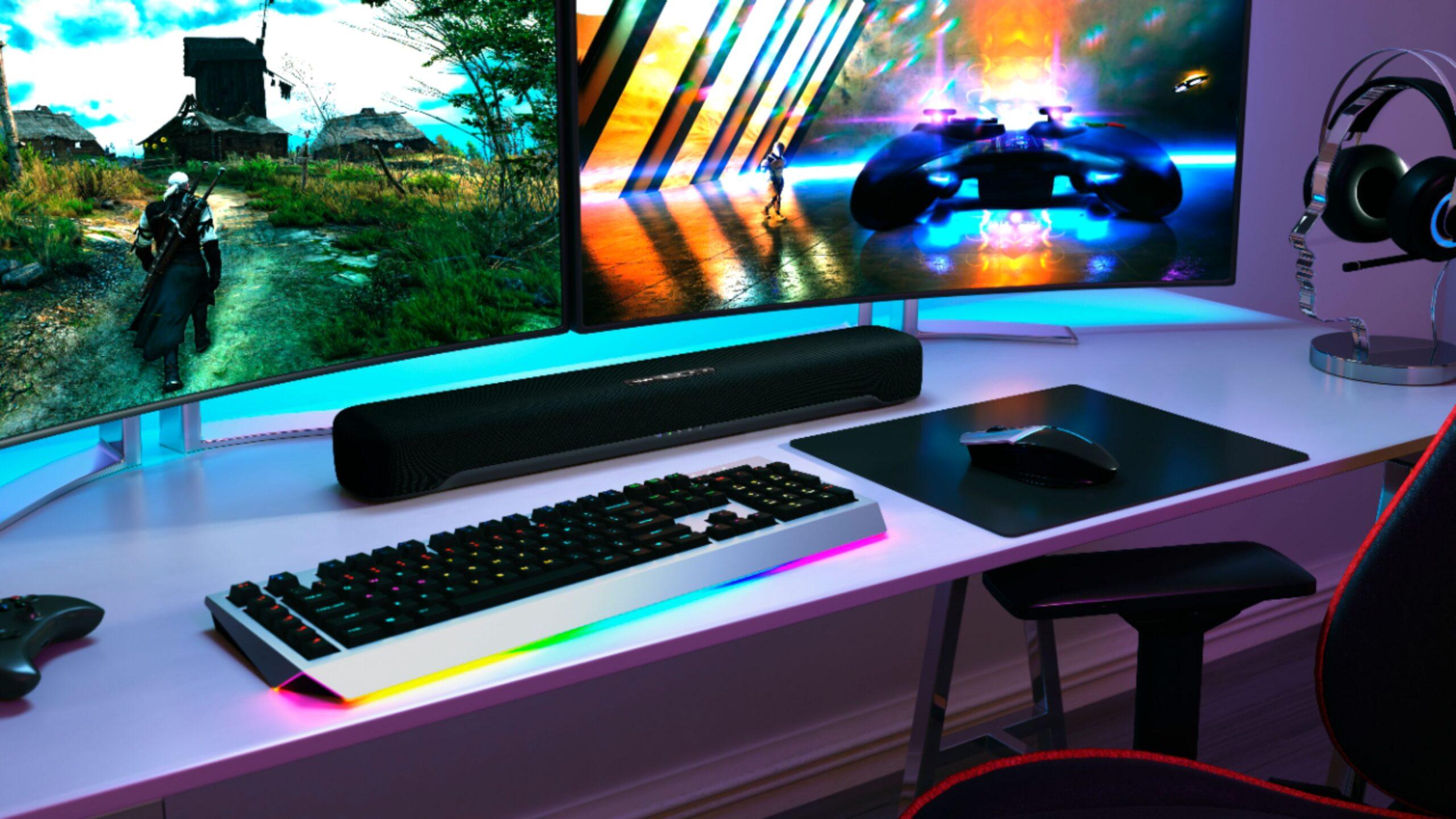
Gaming presents unique audio challenges. Competitive gamers need low latency (minimal delay between game audio and what you hear), while single-player enthusiasts want immersive soundscapes.
The JBL Bar 300 excels at gaming immersion. Its virtual surround processing helps with spatial awareness in first-person shooters – you can actually hear footsteps behind you and gunfire location more precisely. The bar's processing adds only about 20 milliseconds of delay, which is acceptable for most gaming but might bother highly competitive players.
The Yamaha SR-C20A offers lower latency but limited spatial effects. Its Game mode enhances clarity and reduces processing delay to around 15 milliseconds. For competitive gaming or rhythm games where timing matters, the Yamaha performs better. However, single-player adventures lose some atmosphere without the JBL's surround effects.
This is where the price difference becomes most apparent. The JBL Bar 300 includes comprehensive smart features that feel genuinely useful rather than gimmicky.
Wi-Fi connectivity enables AirPlay (for Apple devices), Chromecast built-in (for Android and web-based casting), and Alexa Multi-Room Music support. This means you can start playing Spotify on your phone and seamlessly transfer it to the soundbar, or include it in whole-home audio systems. The JBL One app provides intuitive control over EQ settings, input selection, and calibration.
Voice assistant compatibility works through connected devices – tell your Alexa or Google Assistant to play music, and it can route through the soundbar. The HDMI eARC (enhanced Audio Return Channel) connection supports advanced audio formats and allows your TV remote to control soundbar volume.
The automatic calibration feature deserves special mention. Using a built-in microphone, the JBL analyzes your room's acoustics and adjusts its output accordingly. This technology, borrowed from high-end receivers, genuinely improves performance by compensating for room size, furniture placement, and wall materials.
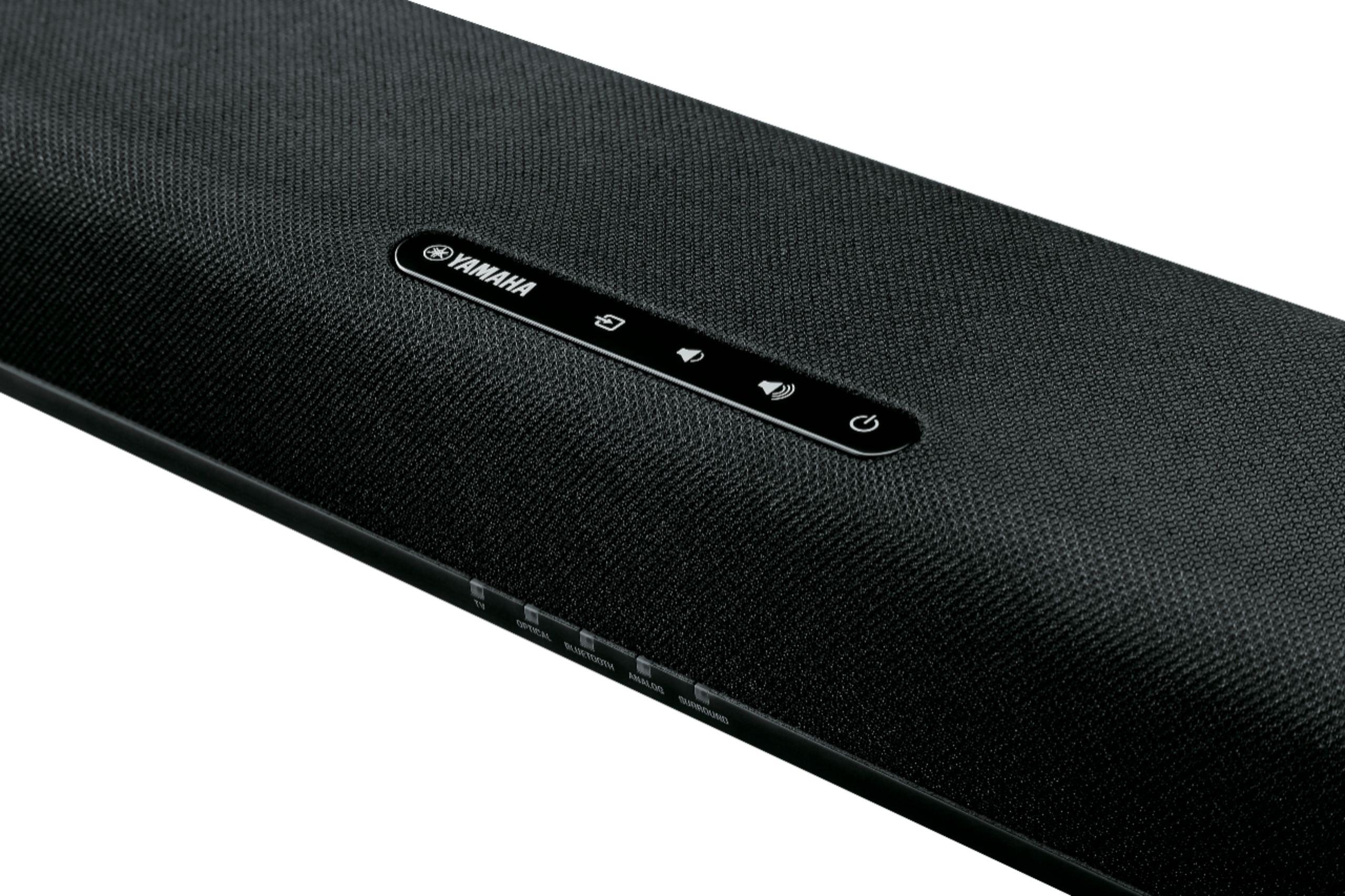
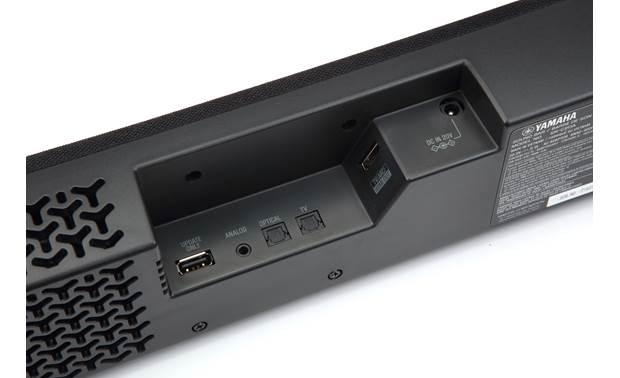
The Yamaha SR-C20A keeps things simple with Bluetooth 5.0 and basic HDMI ARC. There's no Wi-Fi, no voice assistants, no automatic calibration. Some users prefer this simplicity – fewer features mean fewer things to break or become obsolete. The trade-off is losing modern conveniences and future upgrade paths.
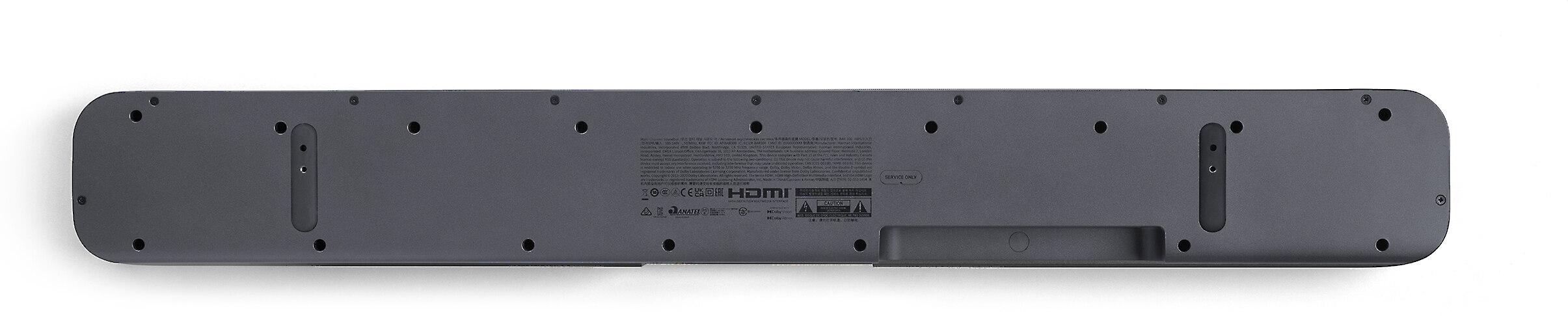
Size constraints often determine soundbar choice more than audio quality. The JBL measures 32.3 inches wide – perfect for 55-inch or larger TVs but potentially overwhelming smaller setups. Its sleek black design and minimal LED indicators blend well with modern TVs.
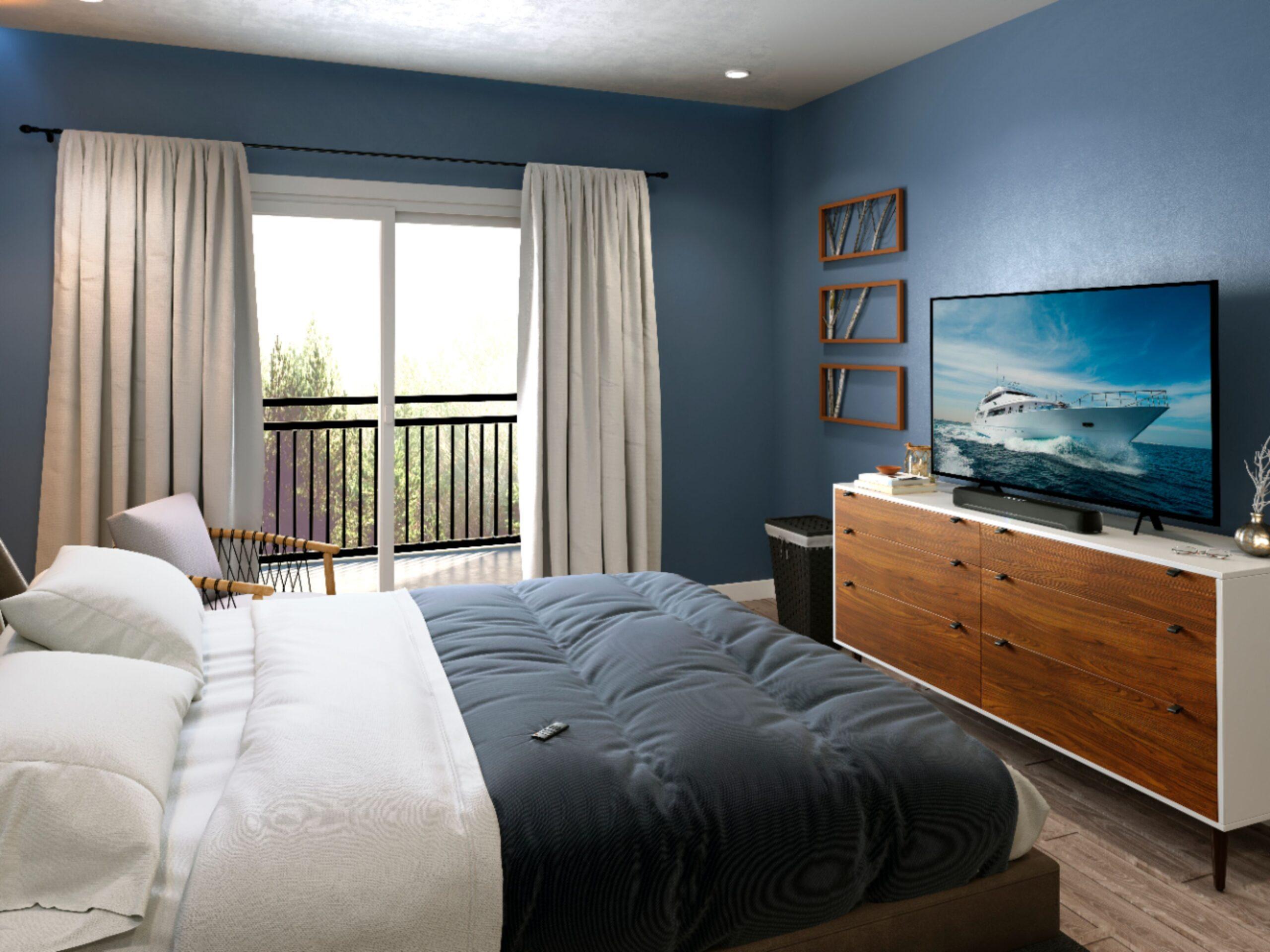
The Yamaha SR-C20A, at just 23.6 inches wide, works with smaller TVs and constrained spaces. I've successfully used it in bedrooms, kitchens, and home offices where the JBL would dominate. The compact size comes with acoustic compromises – smaller drivers and less internal volume limit maximum output and bass extension.
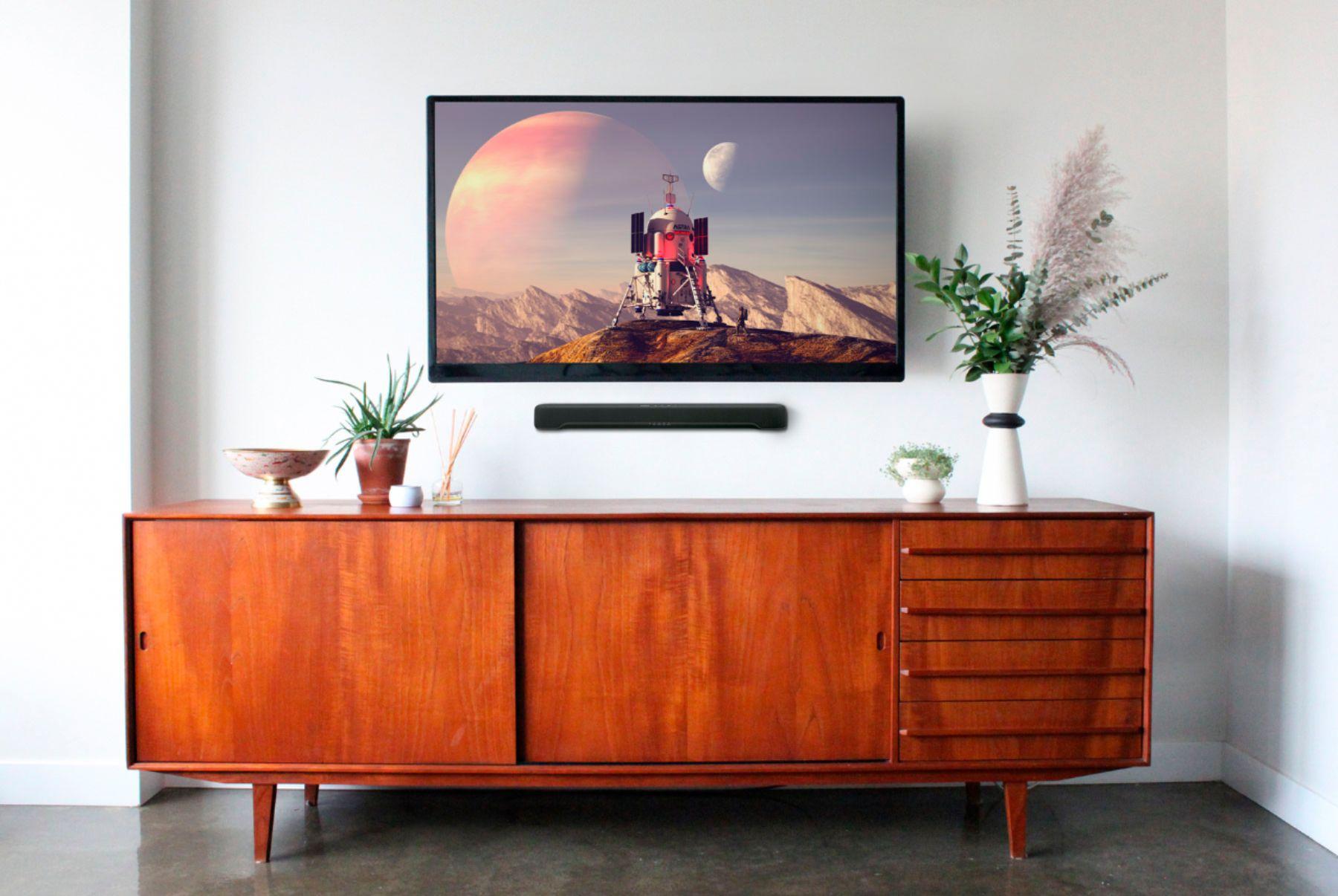
Wall mounting reveals another difference. The JBL requires careful placement for optimal MultiBeam performance, while the Yamaha sounds consistent regardless of mounting height or angle. For renters or those who frequently rearrange furniture, the Yamaha's flexibility proves valuable.
For those building larger home theater systems, expansion possibilities matter. The JBL Bar 300 can integrate with JBL's wireless surround speakers and subwoofers, creating a proper 5.1 or even 7.1 system over time. Its smart features also enable multi-room audio setups.
The Yamaha SR-C20A is essentially a complete, self-contained solution. There are no expansion options, but for many users, this isn't a limitation – it's a feature. You get everything you need in one purchase without worrying about future compatibility or additional costs.
At $170, the Yamaha SR-C20A delivers exceptional value for its intended purpose. The built-in subwoofer alone would cost $100+ as a separate purchase, and the Clear Voice technology works better than systems costing twice as much. For TV enhancement in small to medium rooms, it's difficult to find better performance per dollar.
The JBL Bar 300 at $299.95 costs 75% more but provides significantly more sophisticated technology. The MultiBeam processing, comprehensive connectivity, and room calibration justify the premium for users who'll utilize these features. However, if you primarily watch TV and don't need smart features, the extra cost delivers diminishing returns.
Recent firmware updates have improved both models since their 2023 launches. JBL has enhanced the calibration algorithms and added new streaming service integrations. Yamaha has refined the Clear Voice processing and improved Bluetooth connectivity stability.
Choose the JBL Bar 300 if you have a living room over 200 square feet and regularly watch movies or play games. The immersive audio processing and smart features create a genuine entertainment upgrade. Its expansion possibilities and voice assistant integration also future-proof your investment.
Choose the Yamaha SR-C20A for bedrooms, kitchens, apartments, or anywhere space is limited. Its dialogue enhancement and compact bass response excel at making TV watching more enjoyable without overwhelming smaller spaces. The plug-and-play simplicity appeals to users who want immediate improvement without complexity.
Consider your content consumption patterns too. News watchers, podcast listeners, and casual TV viewers will appreciate the Yamaha's clarity-focused approach. Movie enthusiasts and gamers benefit more from the JBL's spatial audio capabilities.
Both soundbars represent excellent value in their respective niches. The key is honestly assessing your space, usage patterns, and feature priorities. In my experience, most people are happier spending less and getting exactly what they need rather than overpaying for unused capabilities – but those who do utilize advanced features find them genuinely transformative.
The soundbar market continues evolving rapidly, but both the JBL Bar 300 and Yamaha SR-C20A deliver proven performance that will satisfy users for years to come. Choose based on your specific needs, and either will provide a substantial upgrade over your TV's built-in speakers.
| JBL Bar 300 5.0 Soundbar | Yamaha SR-C20A Compact Sound Bar |
|---|---|
| Price - Value proposition difference | |
| $299.95 (premium features justify higher cost) | $170 (exceptional value for TV enhancement) |
| Audio Configuration - Determines surround sound capability | |
| 5.0 channels with MultiBeam virtual surround | 2.1 channels with built-in subwoofer |
| Power Output - Room filling capability | |
| 260W total (450W max) - fills large rooms effectively | 100W total - optimized for small to medium spaces |
| Dimensions - Space requirements and TV compatibility | |
| 32.3" × 2.2" × 4.1" (best with 55"+ TVs) | 23.6" × 2.5" × 3.7" (perfect for smaller TVs and tight spaces) |
| Bass Performance - Low-frequency impact for movies and music | |
| Driver-based bass (adequate but lacks depth) | Built-in 3" subwoofer + dual passive radiators (punchy, authoritative bass) |
| Smart Features - Modern connectivity and convenience | |
| Wi-Fi, AirPlay, Chromecast, Alexa integration, voice control | Bluetooth 5.0 only (simple but limited connectivity) |
| Dialogue Enhancement - Speech clarity for TV watching | |
| PureVoice technology (natural balance with clarity) | Clear Voice technology (more aggressive speech optimization) |
| HDMI Support - TV connection and audio format compatibility | |
| eARC with 4K Dolby Vision passthrough | Basic ARC (no advanced format support) |
| Gaming Performance - Latency and spatial awareness | |
| ~20ms latency with immersive surround effects | ~15ms latency with enhanced clarity (better for competitive gaming) |
| Setup Complexity - Installation and calibration requirements | |
| Auto-calibration via built-in microphone (sophisticated but more complex) | Plug-and-play simplicity (immediate usability) |
| Expansion Options - Future upgrade possibilities | |
| Compatible with JBL wireless surrounds and subs | Self-contained system (no expansion options) |
| Best Use Cases - Ideal scenarios for each product | |
| Movies, gaming, music in living rooms 200+ sq ft | TV enhancement in bedrooms, apartments, small spaces |
The Yamaha SR-C20A ($170) is specifically designed for small rooms and compact spaces. At just 23.6 inches wide, it fits perfectly under smaller TVs and won't overwhelm tight spaces. Its 100W output is optimized for rooms under 200 square feet, while the JBL Bar 300 ($299.95) at 32.3 inches wide is better suited for medium to large living rooms.
The JBL Bar 300 focuses on creating immersive surround sound with its 5.0-channel system and MultiBeam technology, while the Yamaha SR-C20A prioritizes dialogue clarity and bass response with its 2.1-channel configuration and built-in subwoofer. The JBL targets entertainment enthusiasts, while the Yamaha excels at TV enhancement.
The Yamaha SR-C20A delivers superior bass performance thanks to its built-in 3-inch subwoofer and dual passive radiators. This provides deeper, more impactful low-frequency response compared to the JBL Bar 300, which relies on driver-based bass that sounds adequate but lacks the depth and punch of a dedicated subwoofer.
The JBL Bar 300 includes Wi-Fi with AirPlay, Chromecast, and voice assistant support, allowing music streaming and smart home integration. The Yamaha SR-C20A only has Bluetooth connectivity. Wi-Fi is valuable if you stream music frequently or want voice control, but unnecessary if you primarily watch TV and prefer simplicity.
The Yamaha SR-C20A excels at dialogue clarity with its Clear Voice technology, which specifically optimizes speech frequencies. This makes it ideal for news, TV dramas, and content where understanding every word matters. The JBL Bar 300 also enhances dialogue but focuses more on maintaining overall audio balance.
Both work well for gaming but serve different needs. The JBL Bar 300 provides immersive surround effects that enhance spatial awareness in games, making it better for single-player adventures. The Yamaha SR-C20A offers lower latency (~15ms vs ~20ms) and clearer audio, making it more suitable for competitive gaming where timing matters.
The Yamaha SR-C20A ($170) offers exceptional value for TV enhancement, delivering built-in subwoofer performance and clear dialogue at a budget-friendly price. The JBL Bar 300 ($299.95) provides better value for entertainment enthusiasts who want surround sound, smart features, and room-filling audio despite its higher cost.
Yes, both soundbars work with any TV that has HDMI ARC, optical, or auxiliary outputs. The JBL Bar 300 supports advanced HDMI eARC for better audio formats, while the Yamaha SR-C20A uses standard HDMI ARC. Both include optical and aux connections for older TVs without HDMI ARC.
The Yamaha SR-C20A offers plug-and-play simplicity with immediate usability and minimal configuration required. The JBL Bar 300 includes automatic room calibration and more connectivity options, making initial setup more complex but providing optimized performance once configured properly.
The JBL Bar 300 supports Dolby Atmos with virtual height processing through its MultiBeam technology, creating an immersive 3D audio experience. The Yamaha SR-C20A does not support Dolby Atmos, focusing instead on stereo enhancement and dialogue clarity for traditional TV content.
For dedicated home theater setups, the JBL Bar 300 is the clear choice with its 5.0-channel surround processing, Dolby Atmos support, and 260W power output that fills large rooms effectively. It also offers expansion options with compatible wireless speakers. The Yamaha SR-C20A works better as a TV upgrade in secondary rooms or smaller home theater spaces.
Choose the JBL Bar 300 ($299.95) if you have a large living room, watch movies regularly, want smart features, and can utilize its surround sound capabilities. Choose the Yamaha SR-C20A ($170) if you have limited space, primarily watch TV shows, want superior dialogue clarity and bass, prefer simple operation, or have a tighter budget.
We've done our best to create useful and informative comparisons to help you decide what product to buy. Our research uses advanced automated methods to create this comparison and perfection is not possible - please contact us for corrections or questions. These are the sites we've researched in the creation of this article: whathifi.com - safeandsoundhq.com - youtube.com - cnet.com - mm.jbl.com - jbl.com - bestbuy.com - support.jbl.com - dell.com - walmart.com - t3.com - usa.yamaha.com - radiotimes.com - shop.usa.yamaha.com - whathifi.com - hifiheaven.net - usa.yamaha.com - sweetwater.com - hub.yamaha.com - bestbuy.com

Privacy Policy
Terms and Conditions - Affiliate Policy
Home Security
© Copyright 2008-2026.
11816 Inwood Rd #1211, Dallas, TX 75244