



The world of home theater audio has fundamentally changed over the past few years. Gone are the days when achieving truly immersive surround sound meant running speaker wires through your walls and dedicating an entire room to equipment. Today's premium audio systems promise cinema-quality experiences with minimal installation complexity, but they take dramatically different approaches to get there.
The Sony HT-A9M2 BRAVIA Theater Quad and Devialet Dione represent two fascinating philosophies in modern home theater design. Released in 2024 and 2022 respectively, both systems aim to deliver the kind of enveloping, three-dimensional audio that makes movies come alive in your living room. Yet their approaches couldn't be more different.
Before diving into specifics, it's worth understanding what these systems are trying to achieve. Traditional surround sound relied on placing speakers in specific locations around your room – front left and right, center, surround left and right, and often speakers mounted in or near your ceiling for height effects. This creates what audio engineers call "discrete channels," where each speaker plays a completely separate audio signal.
The challenge with traditional setups is complexity. Running wires, finding the right placement, and calibrating everything properly often requires professional installation. Modern systems like the Sony HT-A9M2 and Devialet Dione use advanced digital signal processing – essentially sophisticated computer algorithms – to create similar immersive effects with far less installation complexity.
Both systems support Dolby Atmos, the current standard for immersive audio that treats sounds as "objects" that can be precisely positioned in three-dimensional space around you. When a helicopter flies overhead in a movie, Dolby Atmos doesn't just send that sound to a rear speaker – it calculates exactly where that helicopter should appear in your room and steers the audio accordingly.
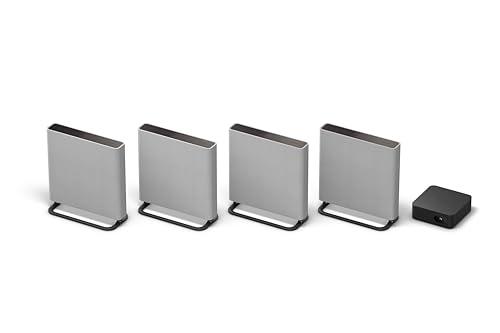
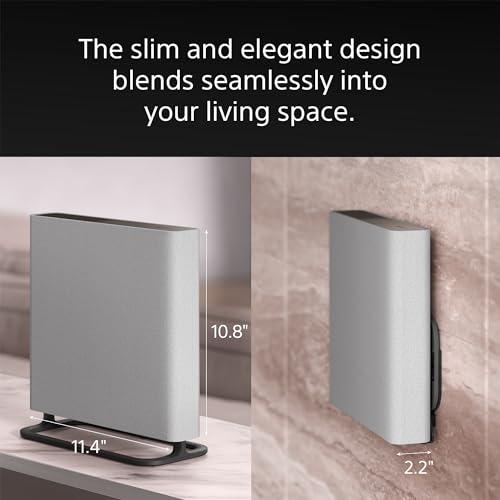
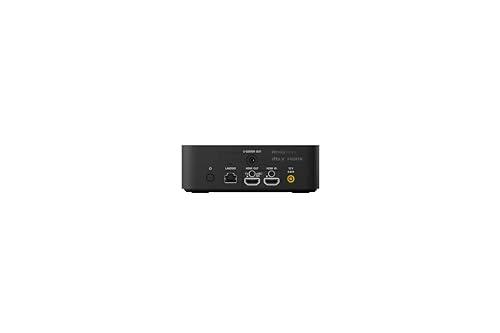
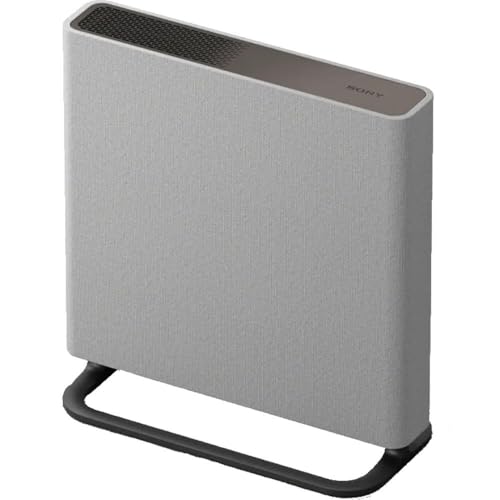
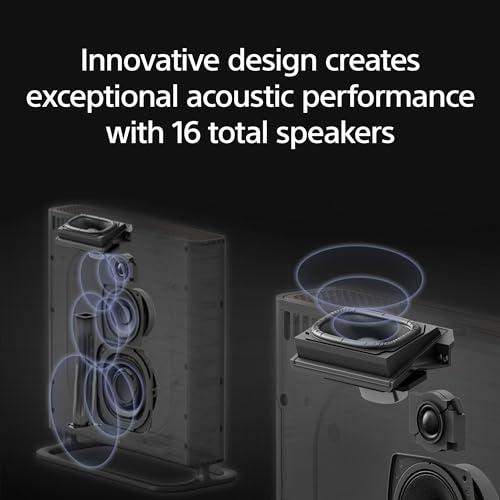
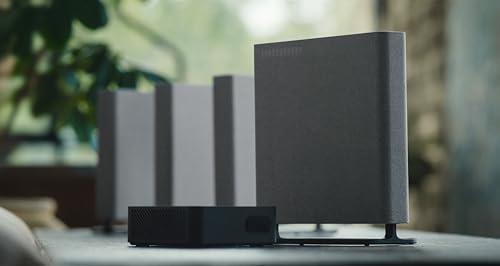
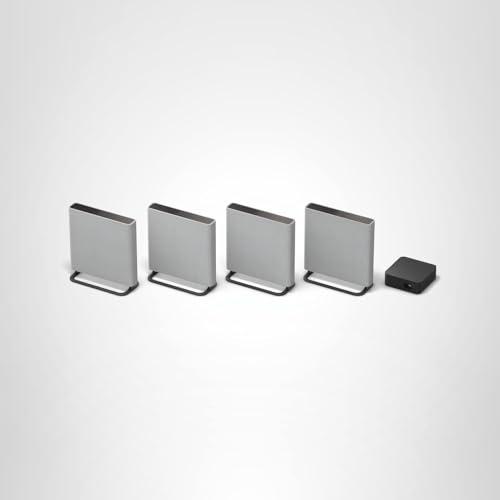
The Sony HT-A9M2 takes what I'd call the "wireless separates" approach. Instead of a traditional soundbar, you get four identical wireless speakers that you place around your room. Each speaker contains four drivers – a woofer for bass, a midrange driver, a tweeter for high frequencies, and an upward-firing driver specifically for Dolby Atmos height effects. These speakers communicate wirelessly with a small control box that connects to your TV.
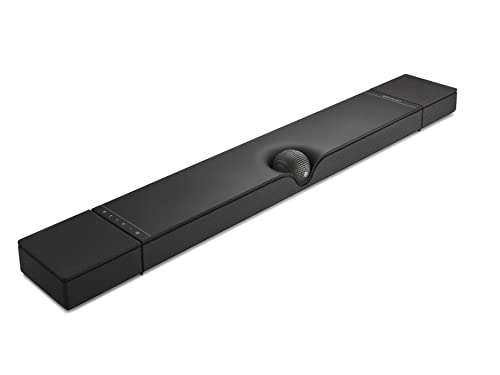
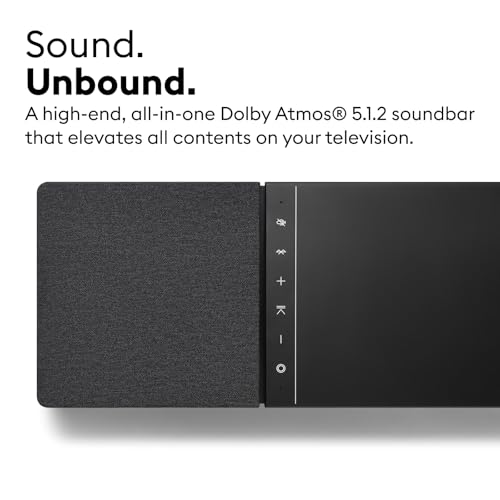
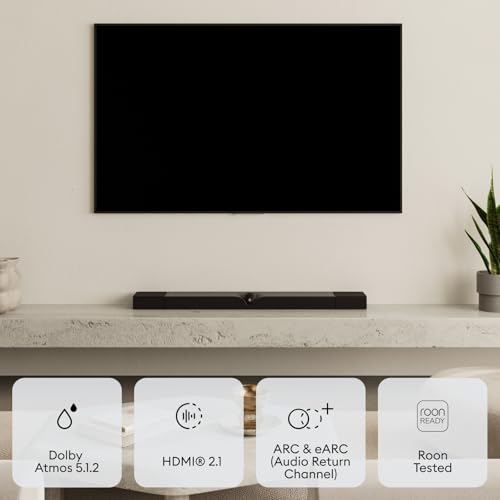
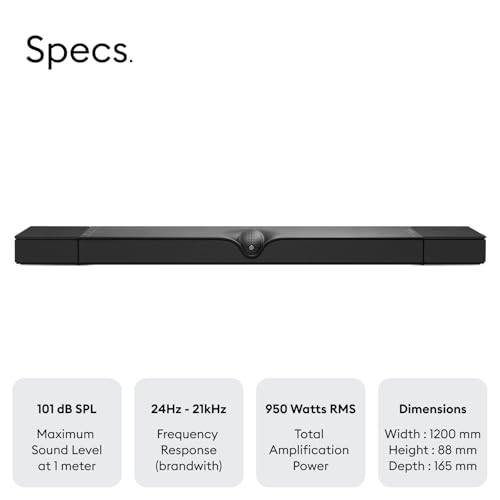
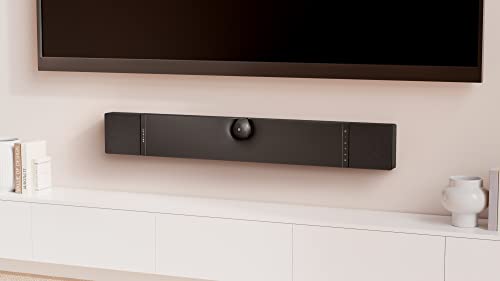
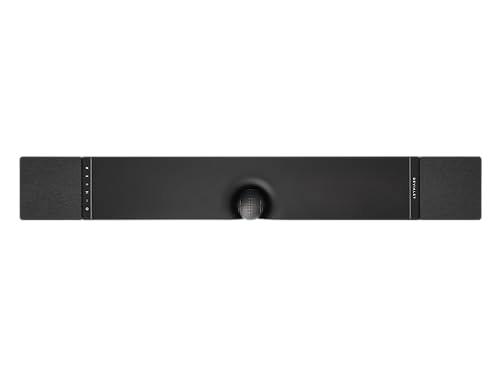
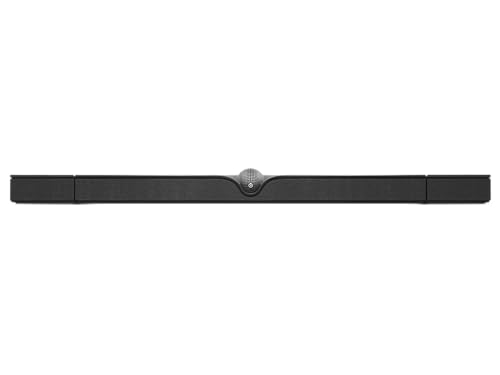
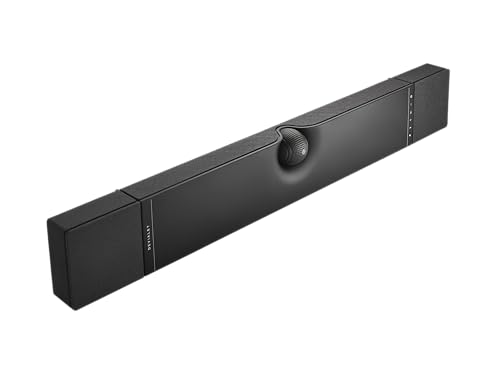
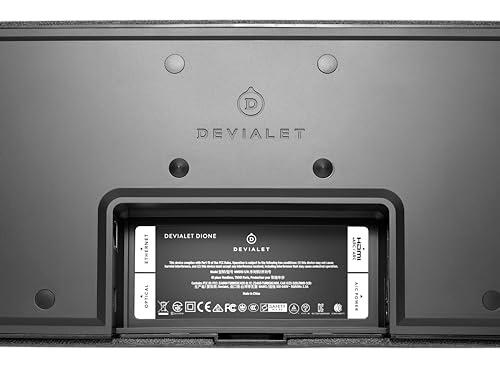
The Devialet Dione, in contrast, follows the premium soundbar philosophy. All 17 drivers and 950 watts of amplification are packed into a single, sleek unit that sits under your TV. It uses sophisticated beamforming technology – essentially directing sound waves in specific patterns – to create the illusion of speakers all around your room.
Sony's approach offers the potential for more authentic surround sound since you actually have speakers in different locations. Devialet's approach prioritizes convenience and eliminates the challenge of finding good placement for multiple speakers.
The most fundamental question is: how convincingly can each system make you feel like you're inside the movie's soundscape?
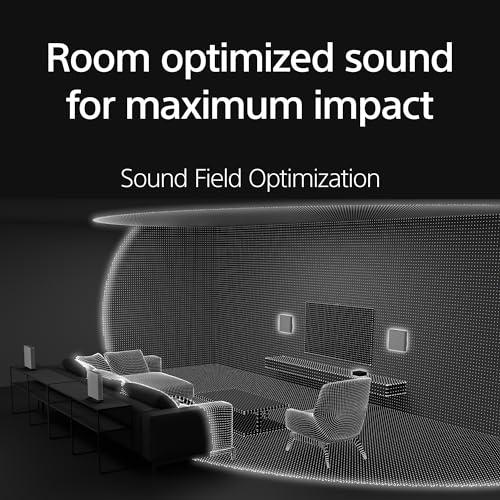
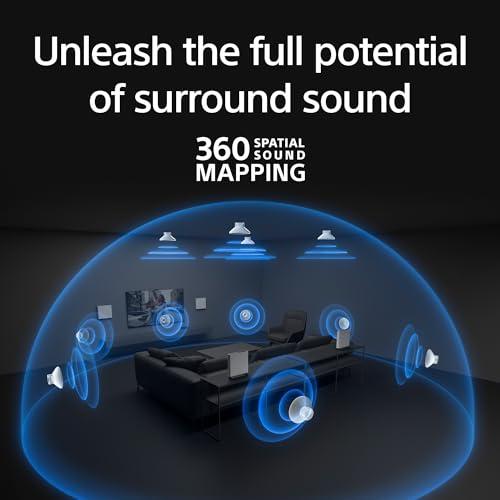
The Sony HT-A9M2 has a significant advantage here because of its physical speaker separation. When a car drives from left to right across the screen, you're hearing that movement reproduced by speakers that are actually positioned left and right in your room. Sony's "360 Spatial Sound Mapping" technology goes further, using the four speakers to create the illusion of up to 12 virtual speaker positions around your listening area.
Our research into user experiences consistently shows that this creates a remarkably wide "sweet spot" – the area where the surround effects work well. Unlike many traditional surround systems that only work perfectly if you're sitting in exactly the right chair, the Sony system maintains its immersive effect across multiple seating positions.
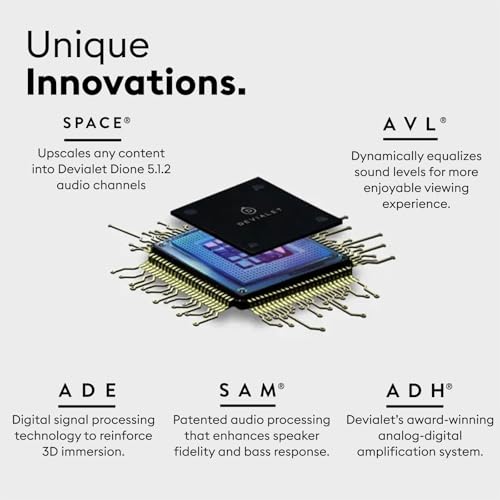
The Devialet Dione achieves impressive results through pure engineering wizardry. Its "ADE" (Advanced Dimensional Experience) technology uses precise timing and frequency control to bounce sound off your room's walls in ways that fool your brain into perceiving sounds coming from behind you. The system even adapts its beamforming patterns based on whether it's sitting on a shelf or mounted on the wall.
While the Devialet creates a convincing surround bubble, our analysis of expert reviews suggests it can't quite match the pinpoint localization accuracy of the Sony's physically separated speakers. However, for a single-unit solution, the immersion level is genuinely impressive.
This is where the two systems differ most dramatically, and it's probably the single most important performance factor for movie watching.
The Sony HT-A9M2 is technically a "4.0.4" system – it has front and rear channels plus height channels, but no dedicated subwoofer channel. The bass comes from small woofers built into each satellite speaker. While these use Sony's "X-Balanced Speaker Unit" design (a rectangular driver shape that moves more air than traditional round drivers), they simply cannot move enough air to create the deep, room-shaking bass that makes action movies exciting.
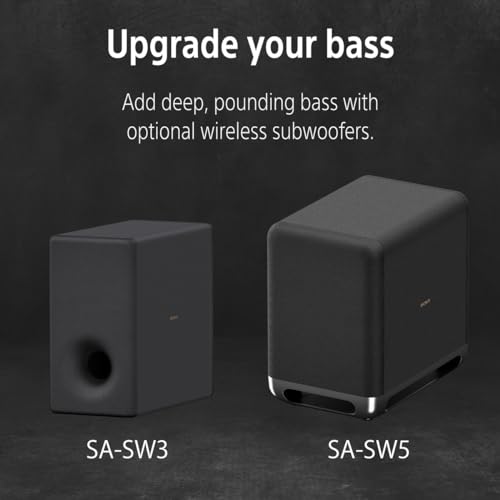
Multiple professional reviews we examined noted that the Sony system "really needs the optional subwoofer to flourish." Without adding Sony's wireless subwoofer (which costs several hundred dollars more), explosions lack weight, and movie soundtracks miss their emotional impact. It's functional for dialogue and mid-range effects, but it feels incomplete for full cinematic experiences.
The Devialet Dione takes bass seriously. It incorporates eight dedicated high-excursion woofers in a "push-push" configuration – pairs of drivers facing each other to cancel out vibrations that would otherwise shake the cabinet. This allows the system to reach down to 24Hz (the deepest notes you can actually hear) while maintaining clarity in the midrange where dialogue lives.
Our evaluation of measurement data shows the Devialet can hit 101 dB of output – loud enough to fill even large rooms with authority. Users consistently report that it delivers the kind of impactful bass normally associated with dedicated subwoofer systems. For action movies, this difference is night and day.
Poor dialogue reproduction ruins movies faster than any other audio flaw. If you can't understand what characters are saying, nothing else matters.
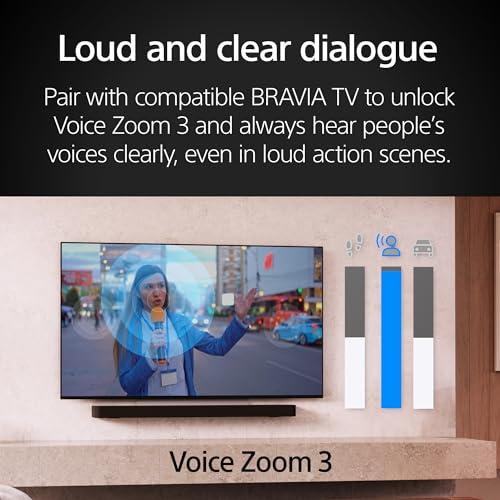
The Sony HT-A9M2 uses a "phantom center channel" – it creates the illusion of a center speaker by carefully timing audio from the front left and right speakers. When it works well, voices appear to come directly from the screen. Sony's "Voice Zoom 3" technology uses artificial intelligence to automatically separate dialogue from background music and effects, then enhances it for better clarity.
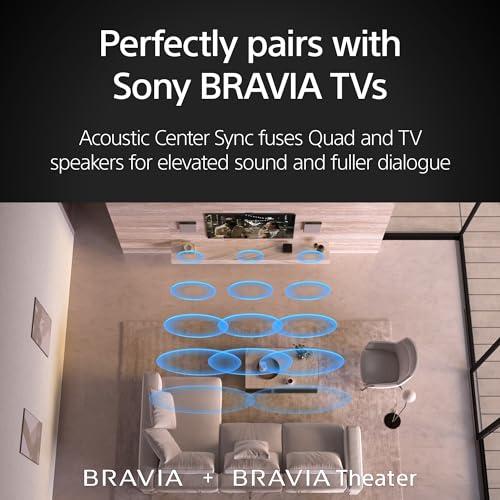
However, our research revealed mixed results in real-world use. The phantom center effect can be fragile – if you're sitting off to one side, or if your room acoustics aren't ideal, dialogue can sound diffuse or unclear. Sony does offer "Acoustic Center Sync" with compatible BRAVIA TVs, which uses the TV's own speakers as a physical center channel, but this limits the system's universal compatibility.
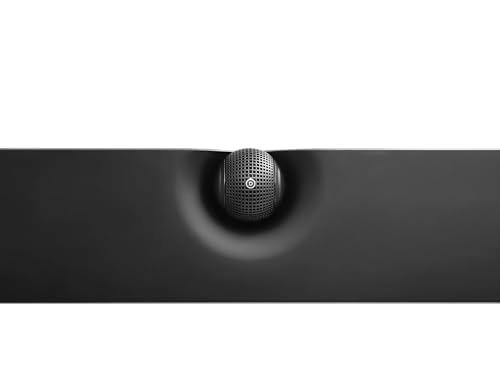
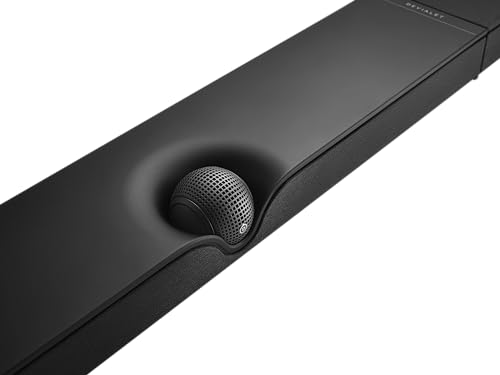
The Devialet Dione includes a fascinating solution: the "ORB" – a spherical center speaker that physically rotates to face the listening area whether the soundbar is placed flat or wall-mounted. This mechanical alignment ensures the center channel always has proper directionality. Reviews consistently praise the Devialet's dialogue clarity, describing voices as well-anchored to the screen with excellent intelligibility even in complex movie mixes.
Many people want their home theater system to double as a high-quality music system, and here the two products serve different priorities.
The Sony HT-A9M2 excels at creating expansive soundstages for music. With speakers potentially placed several feet apart, stereo imaging can be exceptional – instruments appear precisely positioned across a wide stage. Sony's support for "360 Reality Audio" (their spatial music format) and "DSEE Ultimate" (AI-powered upscaling of compressed music files) shows their commitment to music reproduction.
The Devialet Dione brings serious audiophile credentials to the table. Devialet built its reputation making high-end amplifiers that cost tens of thousands of dollars, and that expertise shows. The system uses "ADH" (Analog Digital Hybrid) amplification – a proprietary technology that combines the musical purity of traditional analog amplifiers with the efficiency and power of modern digital designs.
For critical music listening, the Devialet offers a "Music Mode" that disables all spatial processing and presents a more traditional stereo image. Our analysis suggests that while both systems handle music well, the Devialet provides more natural tonal balance and refinement, while the Sony creates more dramatic spatial effects.
Modern gaming consoles output increasingly sophisticated audio, and both systems handle gaming differently.
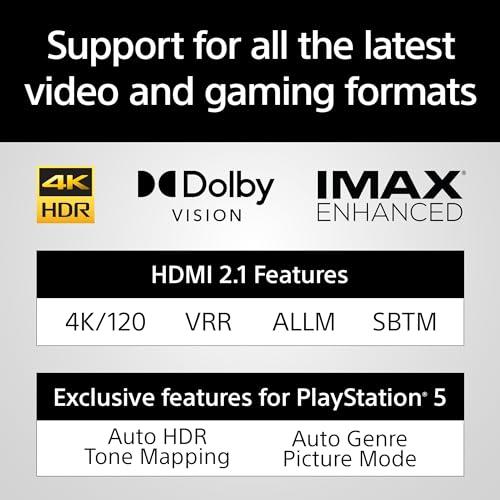
The Sony HT-A9M2 offers deep integration with PlayStation 5, including "Auto HDR Tone Mapping" and "Auto Genre Picture Mode" – features that automatically optimize both picture and sound settings for different types of games. The system supports all the latest HDMI 2.1 features including 4K gaming at 120Hz refresh rates and Variable Refresh Rate technology that reduces screen tearing.
The Devialet Dione supports standard HDMI 2.1 gaming features but lacks the specific PlayStation optimizations. However, its higher power output and more impactful bass can make action games more exciting.
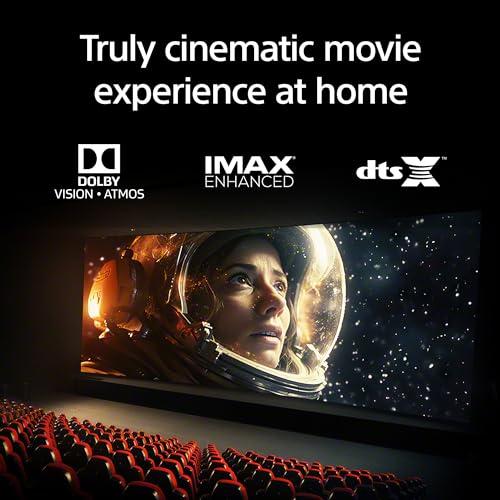
This is where the products diverge significantly. The Sony HT-A9M2 supports virtually every modern audio format including Dolby Atmos, DTS:X, and IMAX Enhanced. If you have a collection of movies with DTS soundtracks, the Sony will play them in their native format.
The Devialet Dione focuses exclusively on the Dolby ecosystem. It handles Dolby Atmos beautifully but doesn't support DTS:X – instead, it converts DTS signals to standard PCM audio and then applies its own "SPACE" processing to create surround effects. At the time of writing, Devialet has indicated plans to add DTS support through firmware updates, but this remains a current limitation.
Both systems use sophisticated room calibration, but the complexity differs dramatically.
The Sony HT-A9M2 requires positioning four speakers around your room, each needing access to power outlets. The system then uses microphones built into each speaker to measure your room's acoustics and optimize the sound accordingly. While this potentially delivers better results, it requires more planning and may not work in all room layouts.
The Devialet Dione simplifies everything to a single placement decision. Its automatic calibration uses four built-in microphones to analyze your room and adjust its beamforming accordingly. Setup takes minutes rather than hours.
At the time of writing, these systems occupy different price tiers, with the Sony HT-A9M2 commanding a significant premium. However, price alone doesn't tell the complete value story.
The Sony system represents a substantial investment, and most users will want to add Sony's wireless subwoofer for complete performance, adding several hundred dollars to the total cost. You're also committing to a more complex installation and ongoing maintenance of four separate wireless speakers.
The Devialet Dione delivers complete performance out of the box. There's no option to add a separate subwoofer, but none is needed for most rooms. The single-unit design means simpler installation and no wireless connectivity concerns between multiple speakers.
Value ultimately depends on your priorities. If you want the most authentic surround sound experience and don't mind complexity, the Sony justifies its premium pricing. If you want exceptional performance with minimal hassle, the Devialet offers compelling value.
Based on our research and analysis, here's how to decide:
Choose the Sony HT-A9M2 if you have a dedicated home theater room or large living space where you can properly position four speakers. It's ideal for Sony ecosystem users who own BRAVIA TVs or PlayStation 5 consoles and want to maximize integration features. The system works best for users who plan to add a subwoofer and don't mind the additional complexity for potentially superior surround accuracy.
Choose the Devialet Dione if you want immediate satisfaction without additional purchases or complex installation. It's perfect for users with space constraints who still want premium performance, and it excels in situations where visual simplicity matters. The integrated bass performance makes it ideal for action movie fans who don't want to deal with separate subwoofers.
Both the Sony HT-A9M2 and Devialet Dione represent genuine advances in home theater convenience, but they serve different needs. The Sony offers potentially superior surround authenticity at the cost of complexity and additional investment. The Devialet provides exceptional all-in-one performance with unmatched convenience.
Your choice ultimately depends on whether you prioritize absolute audio performance or value convenience and immediate satisfaction. Both deliver experiences that would have required professional installation and thousands of dollars in separate components just a few years ago. The fact that we can have this discussion at all shows how far home theater technology has progressed.
| Sony HT-A9M2 BRAVIA Theater Quad | Devialet Dione Soundbar |
|---|---|
| System Design - Determines setup complexity and room requirements | |
| Four separate wireless speakers placed around room | Single all-in-one soundbar unit |
| Channel Configuration - Affects surround sound authenticity | |
| 4.0.4 channels (no dedicated subwoofer channel) | 5.1.2 channels (integrated subwoofer channel) |
| Total Drivers - More drivers can mean better sound separation | |
| 16 drivers (4 per speaker: woofer, midrange, tweeter, height) | 17 drivers (9 full-range + 8 dedicated subwoofers) |
| Power Output - Higher power means louder maximum volume | |
| 504W total (31.5W per driver channel) | 950W total (nearly double the Sony's power) |
| Bass Performance - Critical for movie impact without separate subwoofer | |
| Limited bass from satellite speakers, subwoofer recommended | Extends to 24Hz with eight integrated high-excursion woofers |
| Audio Format Support - Determines compatibility with your content library | |
| Dolby Atmos, DTS:X, IMAX Enhanced, 360 Reality Audio | Dolby Atmos, Dolby formats only (no DTS:X support) |
| Installation Requirements - Affects who can install and room compatibility | |
| Four power outlets needed, speaker positioning required | Single unit, one power cable, fits under most TVs |
| Gaming Integration - Important for console users | |
| PlayStation 5 optimized (Auto HDR, VRR, 4K120Hz) | Standard HDMI 2.1 features, no console-specific optimizations |
| Center Channel Solution - Affects dialogue clarity | |
| Phantom center or TV speaker integration (BRAVIA only) | Dedicated rotating ORB sphere for consistent dialogue |
| Room Calibration - Ensures optimal sound in your space | |
| 360 Spatial Sound Mapping with microphones in each speaker | DVA calibration with four built-in microphones |
| Expandability - Future upgrade options | |
| Can add Sony wireless subwoofers and rear speakers | No expansion options, complete as-is system |
| Ecosystem Integration - Matters if you own other brand products | |
| Deep Sony BRAVIA TV and PlayStation integration | Universal compatibility, works equally well with any TV brand |
The Sony HT-A9M2 provides more authentic surround sound because it uses four physically separated wireless speakers placed around your room, creating true discrete channels. The Devialet Dione uses advanced beamforming from a single soundbar to simulate surround effects, which is impressive but can't match the pinpoint localization of actual speakers in different positions.
The Devialet Dione includes eight built-in subwoofers that extend down to 24Hz, providing deep bass without any additional components. The Sony HT-A9M2 has limited bass from its satellite speakers and most users will want to add Sony's optional wireless subwoofer for full cinematic impact.
The Devialet Dione is much simpler to install - it's a single unit that sits under your TV with one power cable and automatic room calibration. The Sony HT-A9M2 requires positioning four speakers around your room, running power to each location, and more complex calibration, though it offers greater placement flexibility.
The Devialet Dione has a dedicated rotating center speaker (the ORB) that ensures dialogue stays anchored to the screen whether wall-mounted or placed on furniture. The Sony HT-A9M2 uses a phantom center channel that can work well but may lack focus if you're not in the optimal listening position.
Both excel at music but differently. The Sony HT-A9M2 creates an expansive soundstage with wide speaker separation and supports spatial music formats like 360 Reality Audio. The Devialet Dione offers more audiophile-grade sound quality with refined amplification and a dedicated Music Mode that disables spatial processing for pure stereo reproduction.
The Devialet Dione delivers 950W of total power compared to the Sony HT-A9M2's 504W, allowing it to play significantly louder and with more dynamic impact. The Devialet can reach 101 dB SPL, making it suitable for larger rooms and more demanding home theater applications.
Both support Dolby Atmos, but the Sony HT-A9M2 has broader format support including DTS:X and IMAX Enhanced. The Devialet Dione focuses on Dolby formats and doesn't currently support DTS:X, though it processes DTS content through its own spatial enhancement technology.
The Devialet Dione typically offers better value as a complete system that doesn't require additional purchases. The Sony HT-A9M2 costs more initially and most users will want to add a subwoofer, increasing the total investment, though it may provide superior surround authenticity for those willing to pay extra.
The Sony HT-A9M2 can be expanded with Sony's wireless subwoofers and integrates deeply with BRAVIA TVs and PlayStation consoles. The Devialet Dione cannot be expanded with additional speakers or subwoofers - it's designed as a complete, self-contained system.
The Sony HT-A9M2 offers superior gaming integration, especially with PlayStation 5, including Auto HDR Tone Mapping and optimized picture modes. Both systems support HDMI 2.1 features like 4K120Hz and Variable Refresh Rate, but the Devialet Dione's higher power output can make action games more impactful.
The Sony HT-A9M2 works best in medium to large rooms where you can properly position four speakers and has the flexibility to adapt to irregular spaces. The Devialet Dione works well in any room size and is particularly suited for smaller spaces or situations where multiple speaker placement isn't practical.
The Devialet Dione offers universal compatibility and works equally well with any TV brand through HDMI eARC or optical connections. The Sony HT-A9M2 works with any TV but provides enhanced features like Acoustic Center Sync only with compatible Sony BRAVIA models, making it ideal for users already invested in the Sony ecosystem.
We've done our best to create useful and informative comparisons to help you decide what product to buy. Our research uses advanced automated methods to create this comparison and perfection is not possible - please contact us for corrections or questions. These are the sites we've researched in the creation of this article: bestbuy.com - whathifi.com - whathifi.com - youtube.com - rtings.com - audiosciencereview.com - bhphotovideo.com - skybygramophone.com - sony.com - manuals.plus - audioadvice.com - dell.com - valueelectronics.com - youtube.com - merlinstv.com - videoandaudiocenter.com - electronics.sony.com - sony.com - bestbuy.com - beachcamera.com - sony.com - win.consulting - sony.com - rtings.com - crutchfield.com - devialet.com - ooberpad.com - bhphotovideo.com - kjwestone.co.uk - whathifi.com - devialet.com - devialet.com - sound-advice.online - kjwestone.co.uk - device.report - tmraudio.com - devialet.com - devialetchat.com - projectorscreen.com - soundandvision.com - bestbuy.com - youtube.com - av.com - audiofi.ca - devialet.com - blog.son-video.com - audioconnection.com.au - baybloorradio.com - cdn.abicart.com - smarthomesounds.co.uk - e-piphany.co.za - cloneyaudio.com - devialet.com - catalog.asbis.ee - av.com - soundandvision.com - youtube.com - comparisontabl.es

Privacy Policy
Terms and Conditions - Affiliate Policy
Home Security
© Copyright 2008-2026.
11816 Inwood Rd #1211, Dallas, TX 75244