



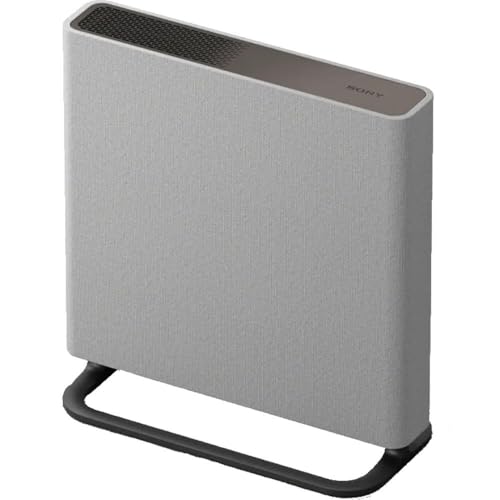








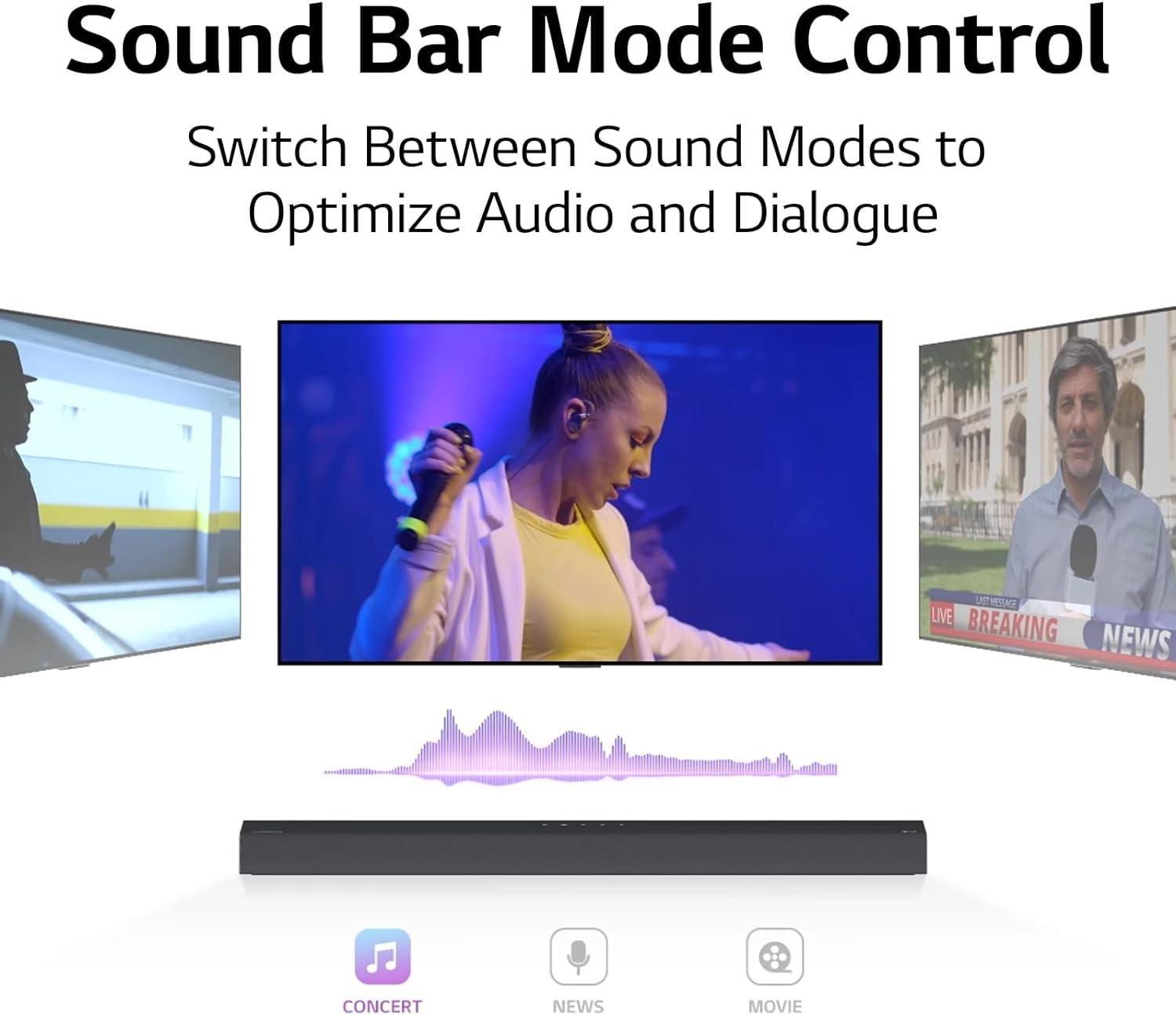

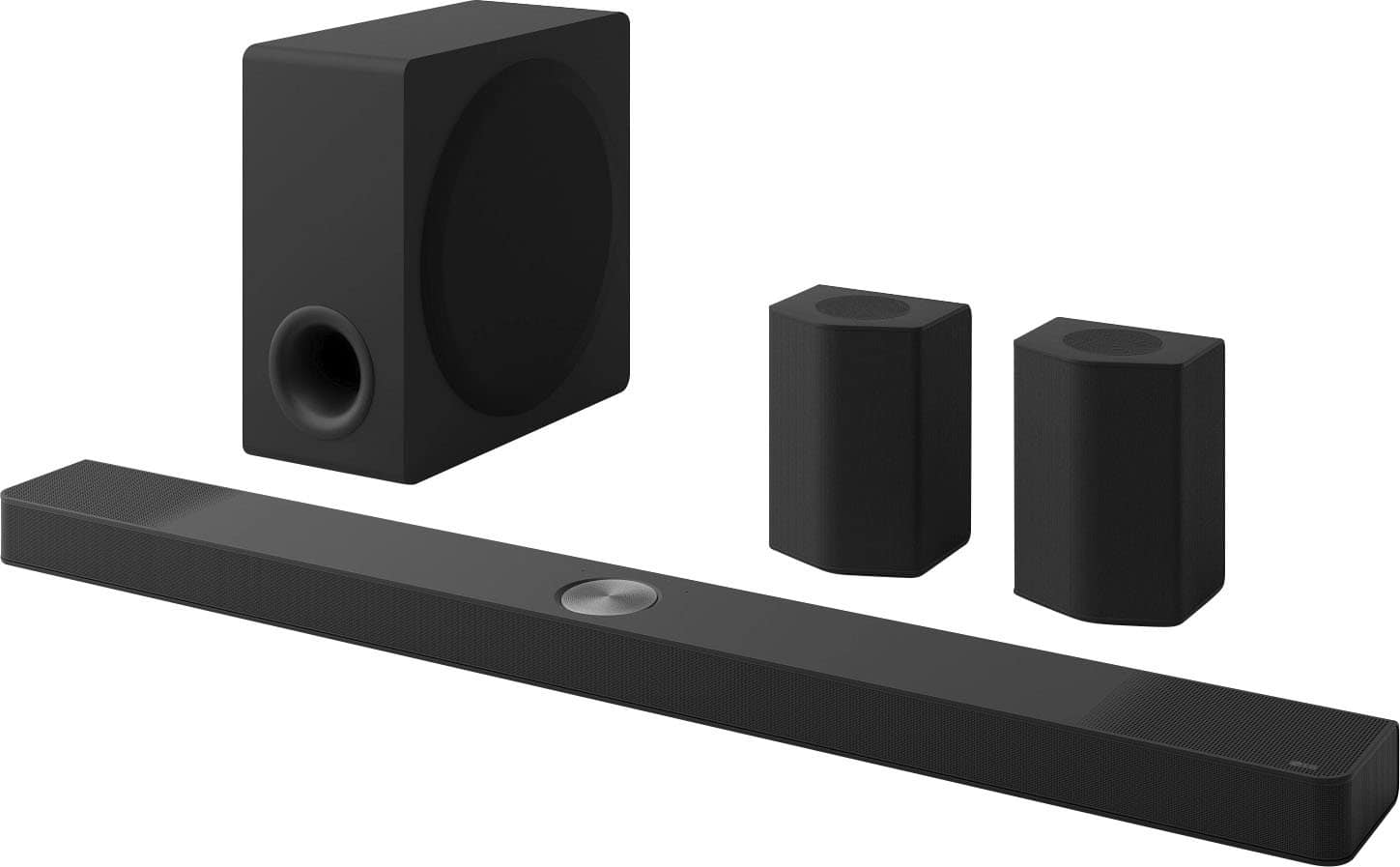
Shopping for a premium home theater audio system in 2024 means choosing between two fundamentally different philosophies. On one side, you have Sony's innovative HT-A9M2 BRAVIA Theater Quad, which uses advanced spatial processing to create surround sound with just four wireless speakers. On the other, there's LG's more traditional S95TR soundbar system, which delivers genuine discrete surround through physical speakers placed around your room.
Both systems launched in 2024, representing the latest thinking in premium home theater audio. At the time of writing, the Sony system costs roughly 2.5 times more than the LG setup, but that price difference tells only part of the story. The real question is which approach better serves your specific needs, room, and entertainment habits.
The home theater audio landscape has evolved dramatically over the past few years. Gone are the days when your only options were basic soundbars or complex AV receiver setups that required running speaker wire throughout your room. Today's premium systems use advanced digital signal processing (DSP) to create immersive experiences that rival traditional multi-speaker installations, but with far less complexity.
The key considerations when evaluating these systems boil down to a few critical factors: how they create surround sound, what your room can accommodate, how they integrate with your existing gear, and ultimately, whether their performance justifies their cost. Both the Sony HT-A9M2 and LG S95TR excel in different areas, making your choice dependent on which priorities matter most to you.
What makes 2024 particularly interesting is that both manufacturers have refined their approaches based on years of user feedback. Sony has improved the wireless reliability that plagued earlier versions, while LG has enhanced their room calibration technology to better compete with Sony's spatial processing capabilities.
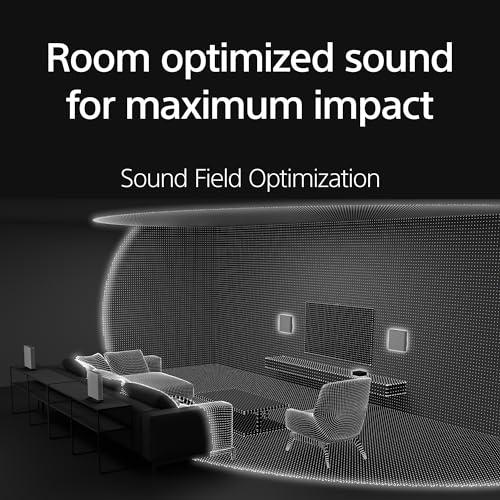
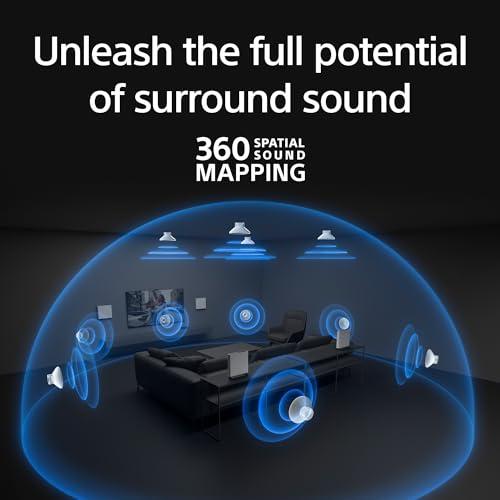
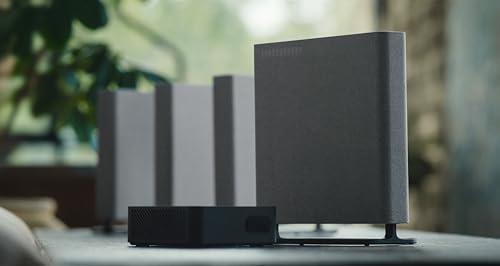
The Sony HT-A9M2 represents perhaps the most innovative approach to home theater audio we've seen. Instead of relying on traditional surround sound placement, Sony uses what they call 360 Spatial Sound Mapping. This technology analyzes your room's acoustics using built-in microphones in each speaker, then creates "phantom speakers" – virtual sound sources that your brain perceives as coming from specific locations even though no physical speaker exists there.
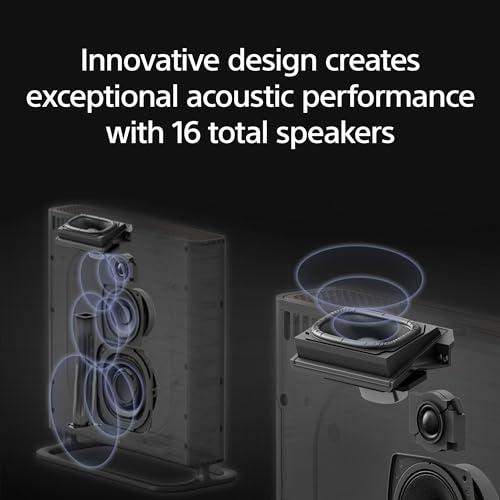
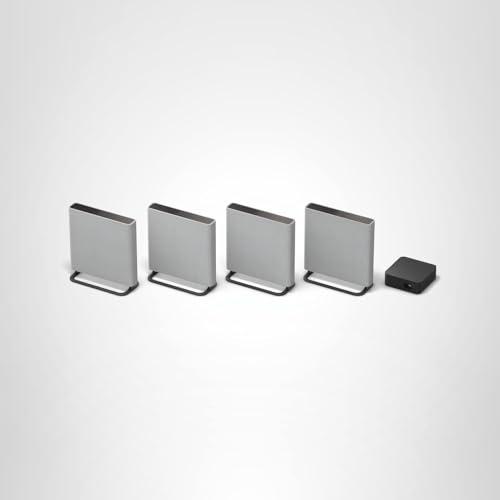
Each of the four identical speakers contains a full 3-way driver array: a rectangular X-Balanced woofer for bass, a dedicated midrange driver, a tweeter for highs, and an upward-firing driver for Atmos height effects. This gives you 16 total drivers working together, with each driver getting its own dedicated amplifier channel for precise control.
The magic happens in the processing. The system can create up to 12 phantom speaker positions around and above you, effectively simulating a much larger speaker array than what's physically present. When watching a helicopter scene in Top Gun: Maverick, for instance, the sound genuinely appears to move overhead and around the room, even though you only have four speakers at roughly ear level.
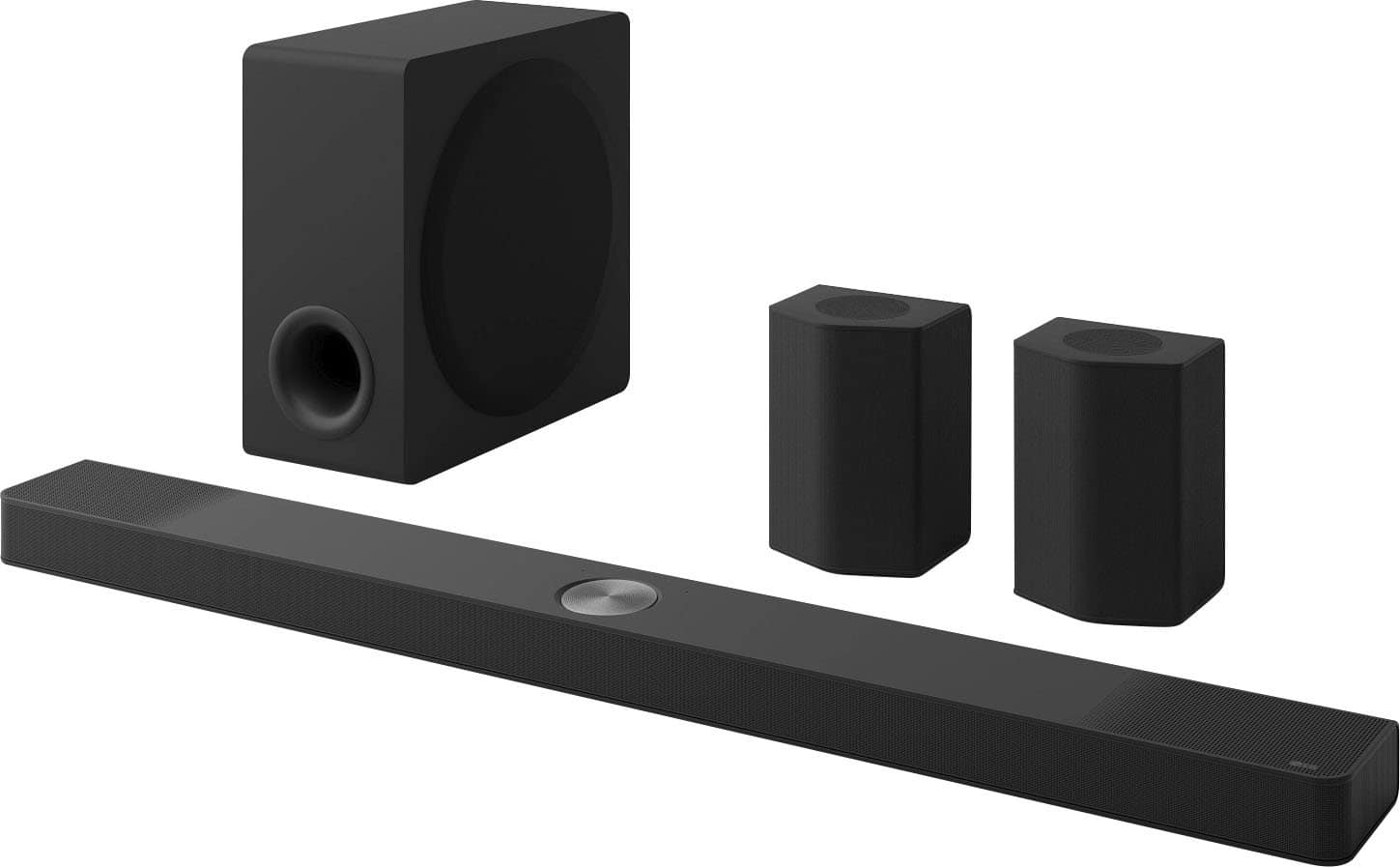
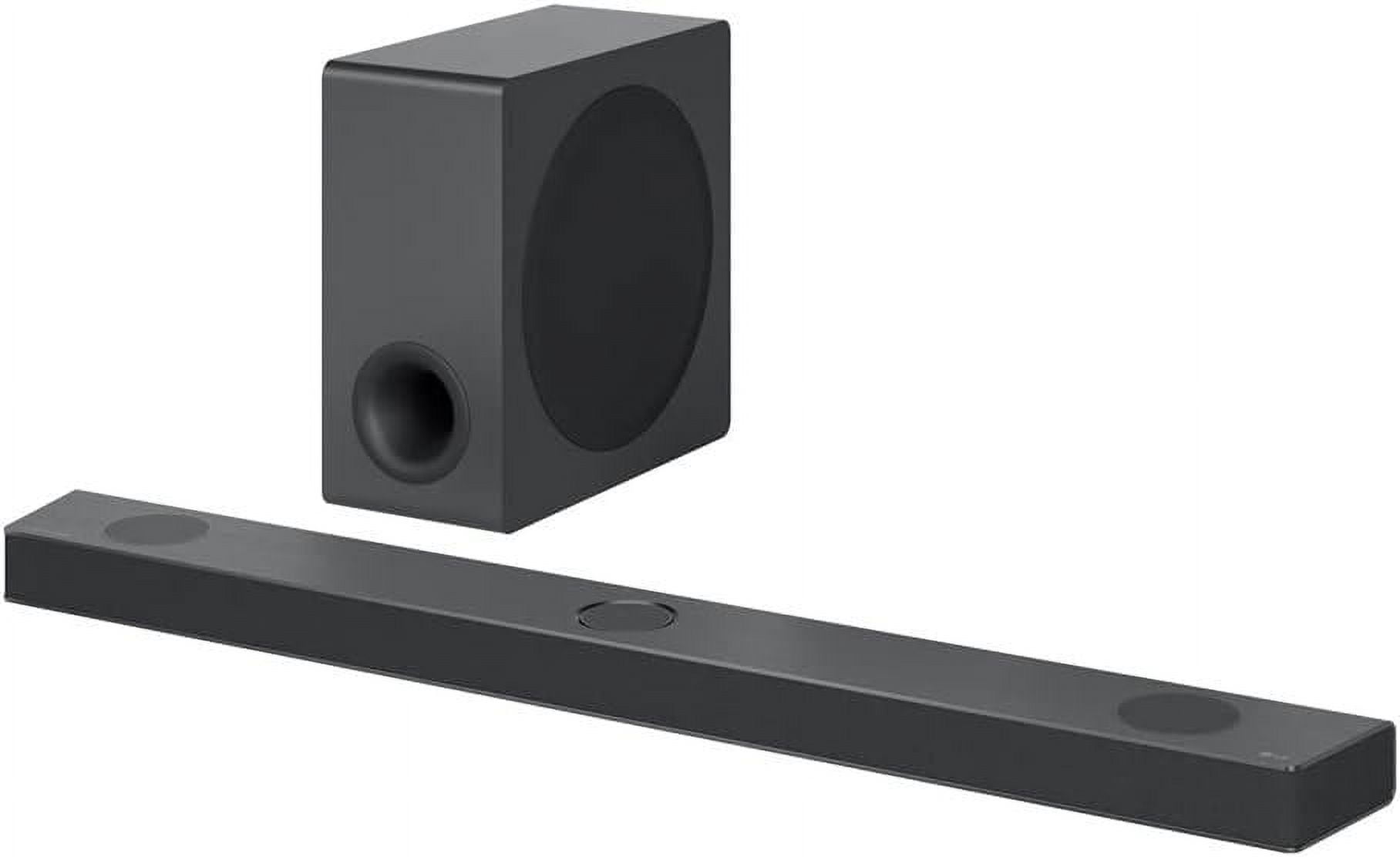
The LG S95TR takes a more traditional but thoroughly modern approach. It's a true 9.1.5 system, meaning you get 9 main channels (front left, center, right, side left, side right, rear left, rear right, plus two additional surround channels), 1 dedicated subwoofer channel, and 5 height channels for Dolby Atmos effects.
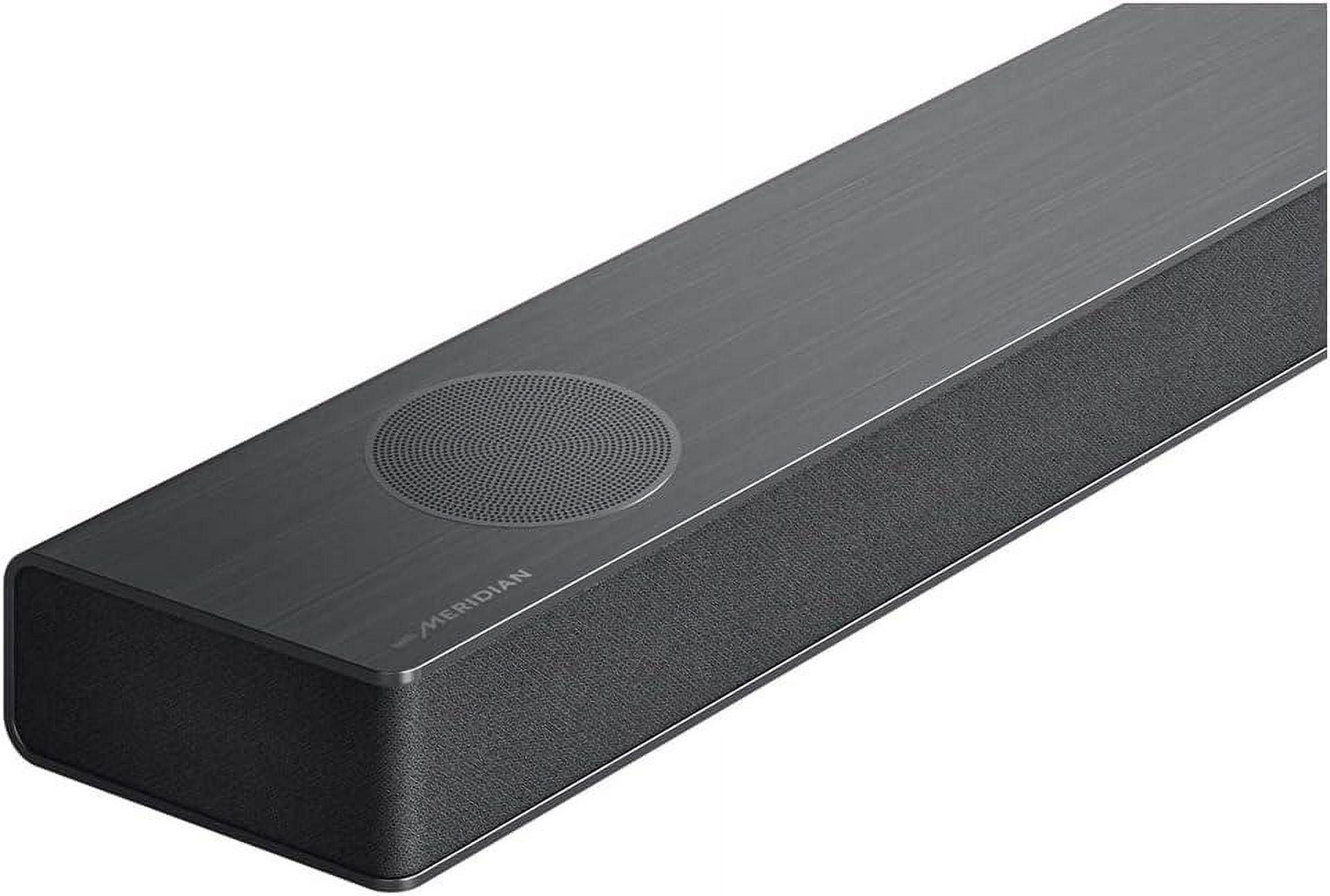
This setup includes a main soundbar with upward-firing drivers, a powerful wireless subwoofer, and separate wireless rear speakers that also include their own upward-firing drivers. The result is genuine channel separation – when a sound effect is supposed to come from behind and to your left, it actually does come from a physical speaker in that location.
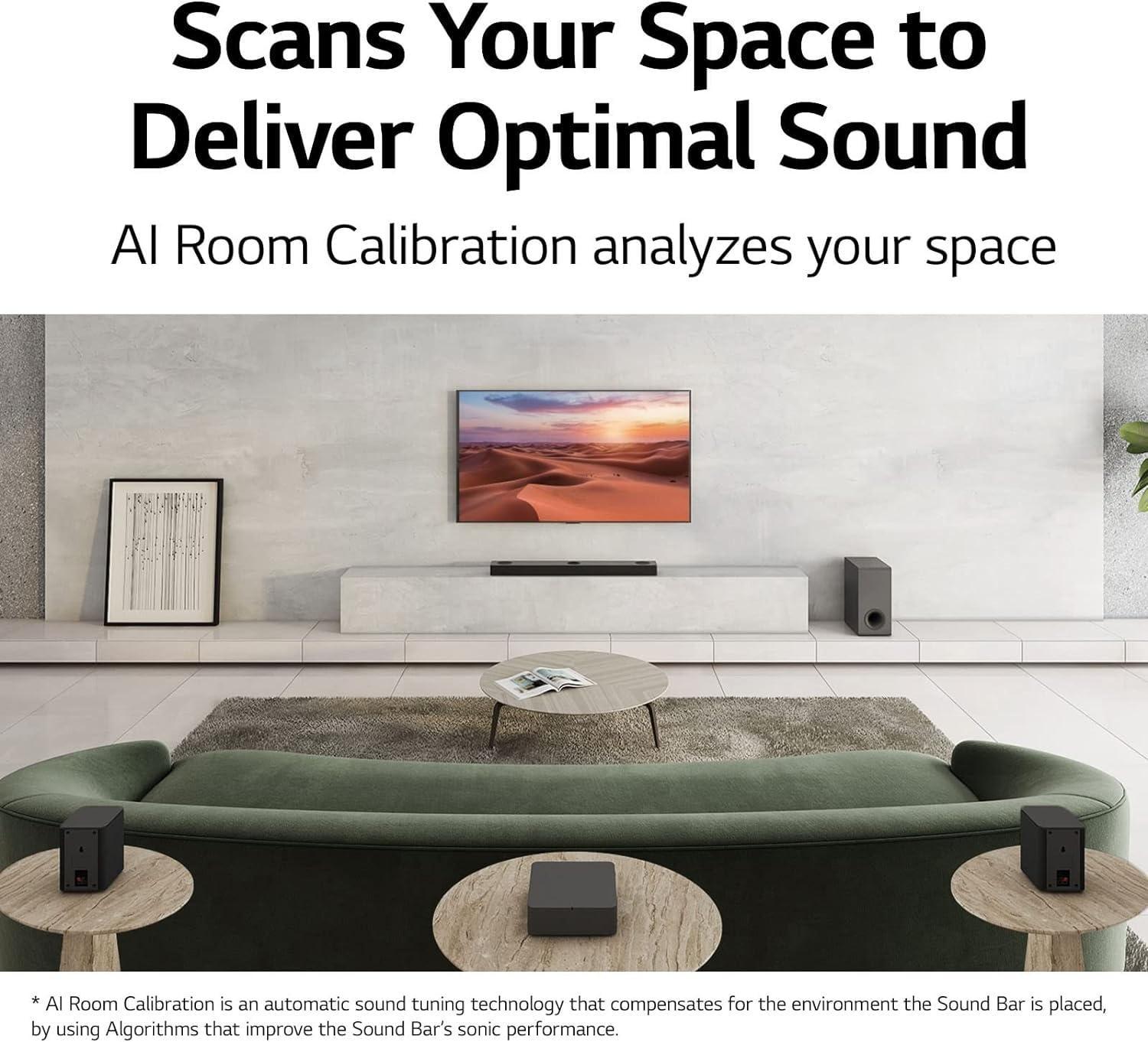
LG's AI Room Calibration technology analyzes your space and adjusts the audio accordingly, but unlike Sony's approach, it's working with discrete physical channels rather than creating virtual ones. This fundamental difference affects everything from setup requirements to ultimate performance capabilities.
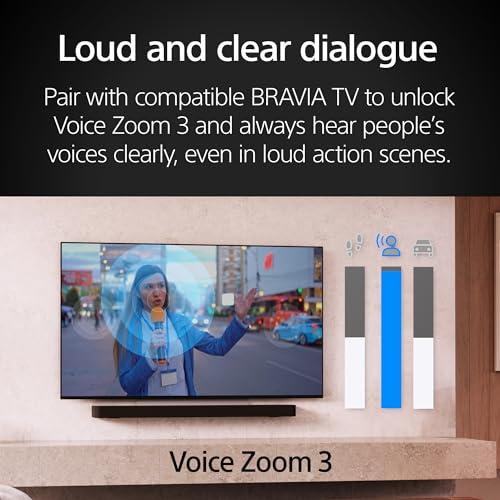
Based on extensive research into user experiences and expert evaluations, these systems exhibit distinctly different sonic personalities. The Sony HT-A9M2 prioritizes clarity and spatial precision. Its Voice Zoom 3 technology, which uses AI to analyze and enhance dialogue separately from background effects, is genuinely impressive. When watching dialogue-heavy content like The Crown or Succession, voices remain crystal clear even during complex audio scenes.
However, Sony's approach comes with trade-offs. The system's bass response, while adequate for its size, lacks the physical impact you get from a dedicated subwoofer. More concerning for music listeners is the aggressive bass tuning that works well for movies but can overwhelm musical content. Users consistently report needing to adjust EQ settings when switching between movie watching and music listening.
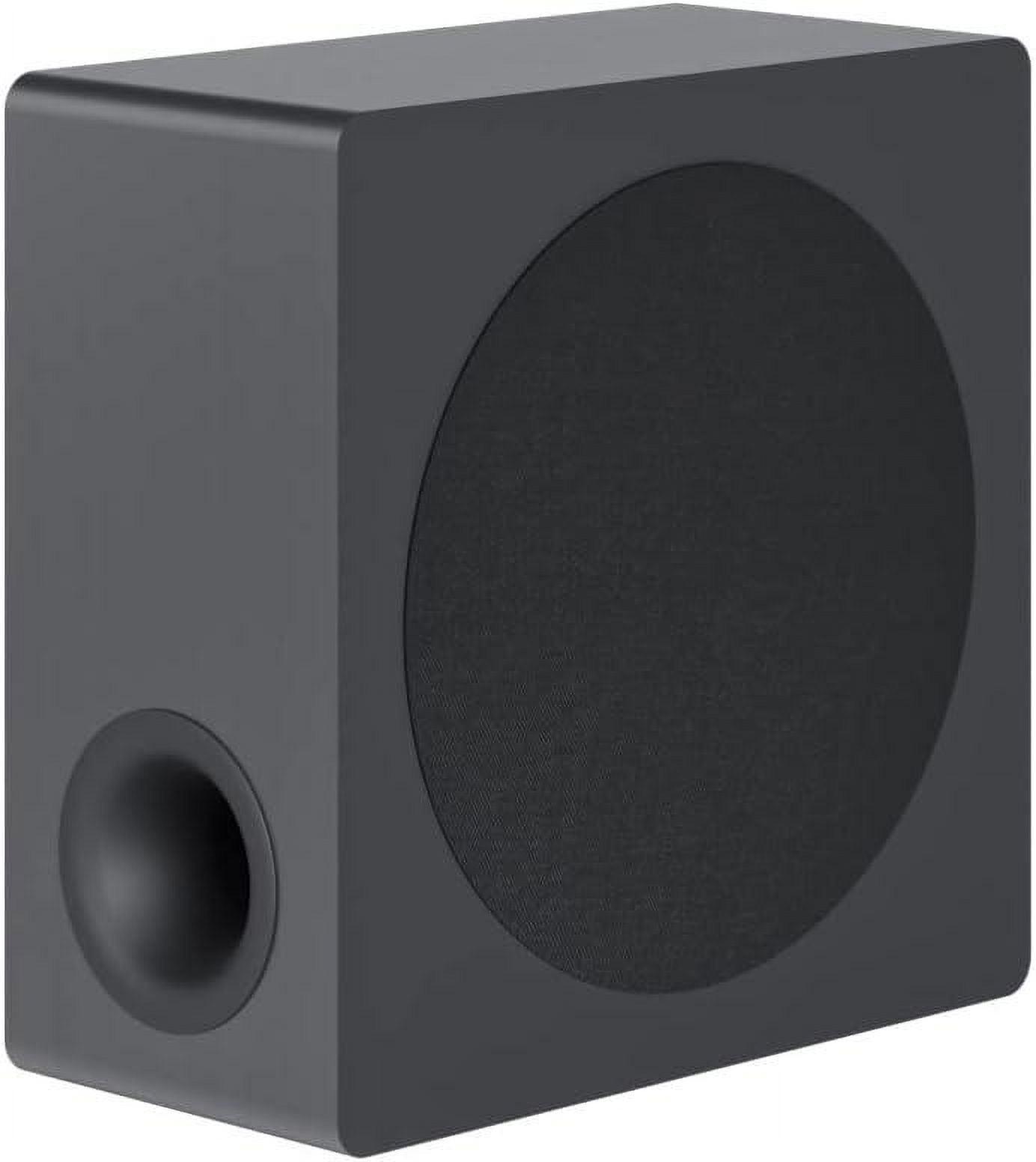
The LG S95TR, by contrast, offers more balanced sound straight out of the box. Its dedicated subwoofer provides the kind of deep, room-shaking bass that makes action sequences genuinely thrilling. The discrete channel separation also means you get more precise sound localization – when a car crashes in the rear left channel, you hear it exactly where it should be, not as a processed approximation.
For music listening, the LG system's more neutral frequency response and excellent stereo imaging make it considerably more enjoyable across different genres. Where Sony requires frequent adjustment between content types, the LG performs admirably whether you're watching Dune or listening to your favorite playlist.
Both systems handle Dolby Atmos content well, but through different methods that yield notably different results. The Sony system's strength lies in its ability to create a convincing "bubble" of sound that envelops your listening position. Its 360 Spatial Sound Mapping can make effects appear to come from locations where no speaker exists, creating an almost holographic audio experience.
This works particularly well in smaller to medium-sized rooms (under 300 square feet) where the four speakers can effectively "paint" sound throughout the space. In larger rooms, however, the illusion begins to break down as the physical distance between speakers becomes too great for the processing to bridge convincingly.
The LG S95TR takes a more straightforward approach that scales better with room size. Its physical height channels – including dedicated upward-firing drivers in both the main bar and rear speakers – create genuine overhead effects. When watching Atmos content like Blade Runner 2049, rain effects genuinely sound like they're falling from above, not just processed to seem that way.
The LG's approach also provides better dynamics – the difference between quiet and loud sounds – thanks to its higher total power output and dedicated subwoofer. Explosions have real weight and impact, while quiet dialogue scenes maintain detail without getting lost.
For gaming enthusiasts, both systems offer HDMI 2.1 passthrough with support for 4K/120Hz and Variable Refresh Rate (VRR), but the Sony HT-A9M2 edges ahead with PlayStation 5-specific optimizations. Its Auto HDR Tone Mapping and Auto Genre Picture Mode switching work seamlessly with Sony's console, automatically adjusting both audio and video settings based on game content.
The spatial processing that makes the Sony system excel with movies also enhances gaming immersion. In competitive shooters like Call of Duty, the precise directional audio helps pinpoint enemy locations with remarkable accuracy. The low-latency processing ensures that audio cues remain perfectly synchronized with on-screen action.
The LG S95TR offers solid gaming performance as well, with the advantage of multiple HDMI inputs allowing you to connect consoles directly to the soundbar rather than routing everything through your TV. Its discrete channel separation can be advantageous in open-world games where environmental audio comes from all directions.
Setting up the Sony HT-A9M2 involves placing four identical speakers around your room's perimeter and connecting them wirelessly to a compact control hub. The beauty of this approach is its flexibility – you don't need perfect speaker placement or traditional "surround sound geometry." The speakers can sit on furniture, mount to walls, or even be positioned at different heights, as the system's calibration accounts for irregular placement.
The challenge lies in power requirements. Each speaker needs its own power outlet, which can be problematic in some room layouts. Additionally, the system works best when speakers have some separation from walls and obstacles, which isn't always practical in smaller living spaces.
Sony's improved wireless implementation in 2024 addresses the connectivity issues that plagued earlier versions. The dual-antenna system and automatic frequency hopping provide more reliable connections, but you'll still want to ensure your room doesn't have excessive wireless interference.
The LG S95TR follows a more conventional setup pattern that most people find familiar. The main soundbar goes near your TV, the subwoofer can be placed anywhere within reasonable range, and the rear speakers need positioning behind your seating area.
This traditional approach has advantages and disadvantages. On the positive side, most people intuitively understand where components should go, and the system provides clear performance feedback when positioning is optimal. The challenge comes with the rear speakers – you need both space behind your seating area and accessible power outlets.
LG's AI Room Calibration process is notably thorough, analyzing not just speaker distances but also room acoustics and acoustic reflections. This helps the system perform well even in challenging acoustic environments, though it can't overcome fundamental placement limitations the way Sony's processing can.
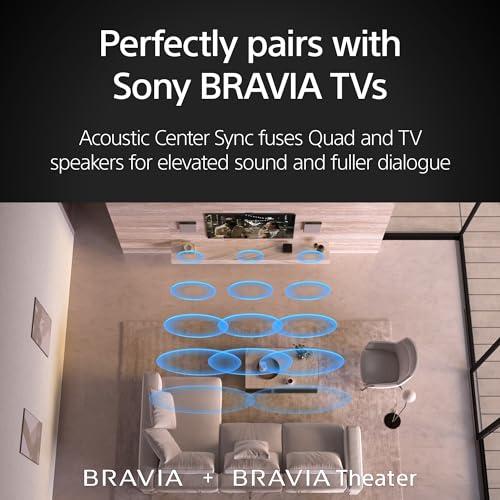
If you own Sony BRAVIA TVs or PlayStation consoles, the HT-A9M2 offers integration that goes beyond simple connectivity. Acoustic Center Sync uses your Sony TV's built-in speakers as part of the center channel, anchoring dialogue directly to the screen while the quad speakers handle surround duties. This creates remarkably natural dialogue localization that feels like voices are coming directly from actors' mouths.
The BRAVIA integration extends to smart features as well. Sony's quick settings menu lets you adjust audio parameters directly from your TV interface, and the system automatically optimizes audio based on content type when paired with compatible Sony TVs.
For streaming, the Sony system supports high-quality wireless codecs including LDAC for Bluetooth connections, along with Spotify Connect and AirPlay 2 for direct network streaming. The DSEE Ultimate technology automatically upscales compressed audio, making even lower-quality streams sound noticeably better.
The LG S95TR takes a more universal approach that works well regardless of your TV brand. Its WOW Orchestra feature can use your LG TV's speakers to enhance the soundbar experience, but the system doesn't rely on brand-specific integration for optimal performance.
This broader compatibility extends to source devices as well. The LG system's multiple connection options – including optical audio input – make it easier to integrate with older devices or complex AV setups. Its support for multiple voice assistants and streaming platforms also provides more flexibility in how you interact with the system.
At the time of writing, the Sony HT-A9M2 commands a significant price premium over the LG S95TR – roughly 2.5 times the cost. This price difference reflects not just the advanced spatial processing technology, but also Sony's positioning as a premium audio brand and the research investment required to develop their unique approach.
The Sony system's value proposition rests on convenience, innovation, and ecosystem integration. For users within Sony's ecosystem – particularly those with BRAVIA TVs and PlayStation consoles – the seamless integration and advanced processing capabilities can justify the premium. The wireless convenience also has real value for those who want high-end performance without the complexity of traditional surround sound setup.
The LG S95TR represents perhaps the best value in premium home theater audio at the time of writing. It delivers genuine discrete surround sound with powerful bass extension at a price point that makes it accessible to a much broader audience than the Sony system.
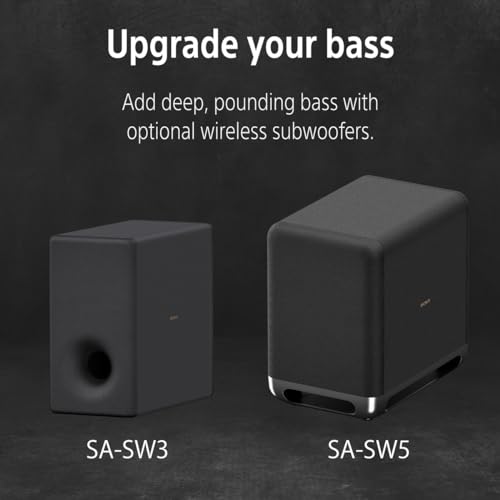
The LG's value isn't just about being less expensive – it's about delivering fundamentally important features (discrete channels, powerful subwoofer, rear speakers) that the Sony system either lacks or charges extra for. When you consider that adding Sony's optional wireless subwoofer to the HT-A9M2 closes much of the price gap, the LG's value proposition becomes even more compelling.
You should strongly consider the Sony HT-A9M2 if you're already invested in Sony's ecosystem. The integration with BRAVIA TVs and PlayStation consoles is genuinely superior to what you'll get with other manufacturers. The spatial processing technology, while expensive, represents a legitimate advancement in home audio that works particularly well in smaller to medium-sized rooms.
The Sony system also makes sense if setup convenience is a priority. Not needing to position rear speakers behind seating areas or find optimal subwoofer placement removes significant barriers for apartment dwellers or those with challenging room layouts.
For dialogue clarity, particularly with complex audio mixes, the Sony system's AI-enhanced processing is noticeably superior. If you watch a lot of content where understanding speech is critical – foreign films with subtitles, dense TV dramas, or podcasts – the HT-A9M2's clarity advantage may justify its premium price.
The LG S95TR makes more sense for most home theater enthusiasts, particularly those who want proven discrete channel performance without paying premium prices. The genuine surround separation, powerful bass response, and excellent musical performance make it a more versatile system overall.
If your room is larger than 300 square feet, the LG system's discrete channels and higher power output will likely provide better performance than Sony's virtual processing. The physical rear speakers and dedicated subwoofer scale better with room size and provide more convincing immersion in larger spaces.
The LG system also makes more sense if you prioritize music listening alongside movie watching. Its more neutral frequency response and excellent stereo imaging make it enjoyable across all content types without requiring frequent adjustment.
Both the Sony HT-A9M2 and LG S95TR represent excellent approaches to premium home theater audio, but they serve different priorities and use cases. Sony's system pushes the boundaries of what's possible with spatial processing and wireless convenience, delivering a genuinely innovative experience that works exceptionally well within its intended scope.
LG's system, meanwhile, delivers exceptional value by executing the traditional discrete channel approach with modern refinements and convenience features. It provides more of the fundamental elements that make surround sound impressive – genuine channel separation, powerful bass, and room-filling dynamics – at a price point that makes premium home theater accessible to more people.
Your choice ultimately comes down to whether you value innovation and ecosystem integration enough to pay a significant premium, or whether you prefer proven technology executed excellently at a more reasonable price. Both are valid choices that will significantly enhance your entertainment experience compared to basic TV speakers or budget soundbars.
| Sony HT-A9M2 BRAVIA Theater Quad | LG S95TR 9.1.5 Channel Soundbar |
|---|---|
| Channel Configuration - Determines surround sound capability and setup complexity | |
| 4.0.4 channels via four wireless speakers (16 total drivers) | 9.1.5 channels with soundbar, subwoofer, and rear speakers |
| Physical Components - Affects setup requirements and room compatibility | |
| Control hub + 4 identical wireless speakers (no subwoofer included) | Main soundbar + wireless subwoofer + wireless rear speakers |
| Total Power Output - Impacts maximum volume and dynamic range | |
| 504W across 16 individually amplified drivers | 810W with dedicated subwoofer amplification |
| Audio Technology Approach - Core difference in how surround sound is created | |
| 360 Spatial Sound Mapping creates virtual "phantom speakers" | Traditional discrete channels with physical speaker separation |
| Bass Response - Critical for movie impact and music enjoyment | |
| Relies on speaker woofers only (subwoofer sold separately) | Dedicated wireless subwoofer with front port design |
| Setup Complexity - Determines installation difficulty and room requirements | |
| Four speakers need power outlets around room perimeter | Rear speakers must be positioned behind seating area |
| Room Size Optimization - Performance varies significantly with space | |
| Best in small-medium rooms (under 300 sq ft) | Scales better for larger rooms (300+ sq ft) |
| TV Brand Integration - Enhanced features with specific manufacturer TVs | |
| Deep integration with Sony BRAVIA (Acoustic Center Sync) | WOW Orchestra feature works with LG TVs |
| Gaming Features - Important for console users | |
| PlayStation 5 optimization with Auto HDR/Genre modes | HDMI 2.1 passthrough with multiple inputs |
| Music Performance - Affects daily listening beyond movies | |
| Requires EQ adjustment between movies and music | Balanced frequency response across all content types |
| Dialogue Clarity - Crucial for understanding speech in complex mixes | |
| Voice Zoom 3 AI enhancement with Sony BRAVIA TVs | Dedicated center channel with standard enhancement |
| Connectivity Options - Determines compatibility with various devices | |
| HDMI eARC only, Bluetooth 5.2 with LDAC, no optical input | HDMI eARC + passthrough, Bluetooth, optical input included |
| Value Positioning - Performance relative to cost at time of writing | |
| Premium price for advanced spatial processing technology | Exceptional performance-per-dollar with discrete channels |
The Sony HT-A9M2 BRAVIA Theater Quad is better suited for small to medium rooms under 300 square feet. Its 360 Spatial Sound Mapping technology creates convincing surround sound without needing rear speakers behind your seating area. The LG S95TR requires space for rear speakers and a subwoofer, making it more challenging to set up in compact spaces.
The Sony HT-A9M2 doesn't include a subwoofer and relies on built-in woofers in each speaker for bass. For full cinematic impact, you'll likely want to add Sony's optional wireless subwoofer. The LG S95TR includes a powerful wireless subwoofer in the box, providing deep bass immediately without additional purchases.
The Sony HT-A9M2 is generally easier to set up since you only need to place four speakers around your room and plug them into power outlets - no speaker wires required. The LG S95TR requires positioning rear speakers behind your seating area and finding optimal placement for the subwoofer, though many find this traditional setup more intuitive.
The Sony HT-A9M2 excels at dialogue clarity, especially when paired with Sony BRAVIA TVs using Voice Zoom 3 AI technology. It can intelligently separate and enhance speech from background effects. The LG S95TR has a dedicated center channel for clear dialogue but lacks the advanced AI processing of the Sony system.
Yes, both systems work with any TV brand through HDMI eARC connections. However, the Sony HT-A9M2 offers enhanced integration features like Acoustic Center Sync when paired with Sony BRAVIA TVs. The LG S95TR provides WOW Orchestra features with LG TVs but maintains excellent compatibility across all brands.
The LG S95TR is generally better for music with its more balanced frequency response and dedicated subwoofer providing natural bass extension. The Sony HT-A9M2 often requires EQ adjustments when switching between movies and music due to its movie-optimized tuning, though it supports high-resolution audio formats.
The Sony HT-A9M2 uses proprietary wireless technology to connect four speakers to a central hub, with improved dual-antenna reliability in 2024. The LG S95TR uses standard wireless connections for its subwoofer and rear speakers, which most users find reliable and straightforward to maintain.
Both excel at Dolby Atmos but through different approaches. The Sony HT-A9M2 creates virtual height effects through spatial processing that works well in smaller rooms. The LG S95TR uses physical upfiring drivers in both the main bar and rear speakers for genuine overhead effects that scale better in larger spaces.
Both support HDMI 2.1 with 4K/120Hz passthrough for modern consoles. The Sony HT-A9M2 offers special PlayStation 5 integration with Auto HDR Tone Mapping and automatic picture mode switching. The LG S95TR provides multiple HDMI inputs and low-latency gaming modes that work well with all console brands.
The LG S95TR offers exceptional value, providing discrete surround sound with a dedicated subwoofer and rear speakers at a significantly lower price point. The Sony HT-A9M2 commands a premium for its advanced spatial processing technology and Sony ecosystem integration, making value dependent on your priorities and existing equipment.
The Sony HT-A9M2 needs space to position four speakers around your room's perimeter with access to power outlets, but doesn't require specific rear seating arrangements. The LG S95TR needs traditional surround sound placement with rear speakers behind your seating area and flexible subwoofer positioning throughout the room.
The LG S95TR performs better in large rooms over 300 square feet due to its higher total power output, discrete channel separation, and dedicated subwoofer. The Sony HT-A9M2 works best in smaller to medium-sized spaces where its spatial processing can effectively create the surround sound bubble effect.
We've done our best to create useful and informative comparisons to help you decide what product to buy. Our research uses advanced automated methods to create this comparison and perfection is not possible - please contact us for corrections or questions. These are the sites we've researched in the creation of this article: bestbuy.com - whathifi.com - whathifi.com - youtube.com - rtings.com - audiosciencereview.com - bhphotovideo.com - skybygramophone.com - sony.com - manuals.plus - audioadvice.com - dell.com - valueelectronics.com - youtube.com - merlinstv.com - videoandaudiocenter.com - electronics.sony.com - sony.com - bestbuy.com - beachcamera.com - sony.com - win.consulting - sony.com - techradar.com - bestbuy.com - youtube.com - trustedreviews.com - zdnet.com - rtings.com - lg.com - lambcotvandappliance.com - valueelectronics.com - romomattressfurniture.com - dolby.com - youtube.com

Privacy Policy
Terms and Conditions - Affiliate Policy
Home Security
© Copyright 2008-2026.
11816 Inwood Rd #1211, Dallas, TX 75244