






When you're ready to upgrade your TV's built-in speakers, the world of premium home theater audio can feel overwhelming. Two standout systems represent completely different approaches to solving the same problem: how to fill your living room with cinematic sound. The Sony HT-A9M2 BRAVIA Theater Quad takes an innovative wireless multi-speaker approach, while the Samsung HW-Q800D perfects the traditional soundbar formula.
At the time of writing, these systems sit at opposite ends of the premium audio spectrum in terms of both price and design philosophy. Understanding their fundamental differences will help you choose the right system for your space, budget, and listening priorities.
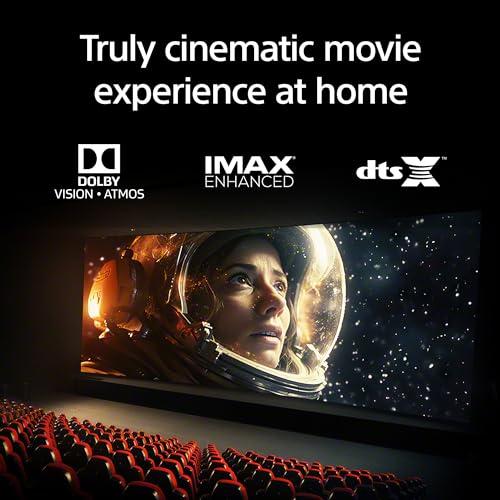
Before diving into specifics, it's worth understanding what separates premium home theater systems from basic soundbars. These advanced systems need to handle object-based audio—think of it as audio that moves around your room rather than just coming from fixed left and right channels. Technologies like Dolby Atmos and DTS:X create three-dimensional soundfields where helicopters genuinely seem to fly overhead and rain appears to fall from the ceiling.
The challenge is recreating this experience in your living room without installing speakers throughout your ceiling. This is where our two systems take dramatically different approaches: distributed wireless speakers versus advanced signal processing in a single unit.
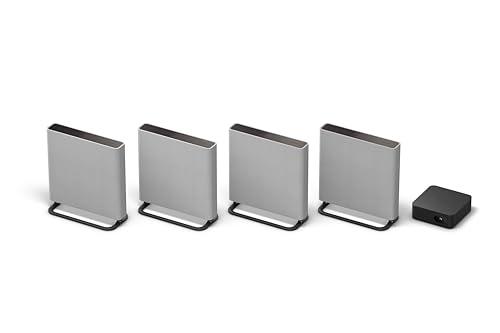
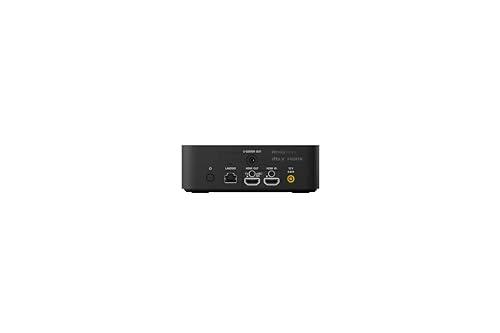
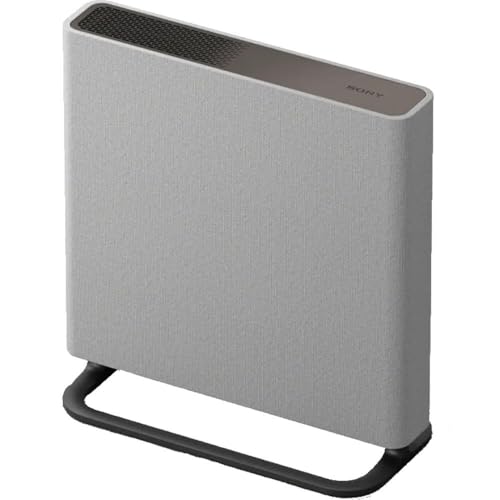
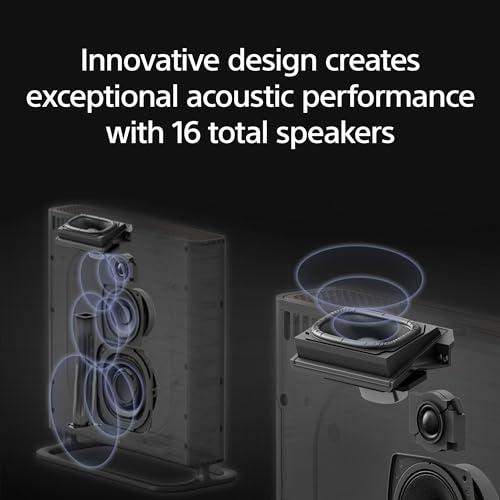
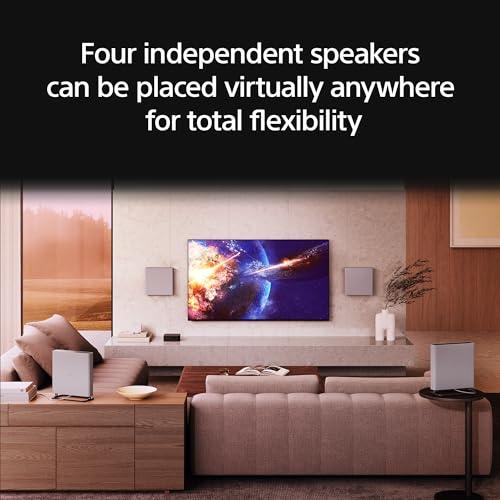
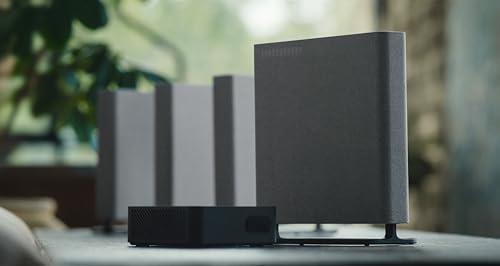
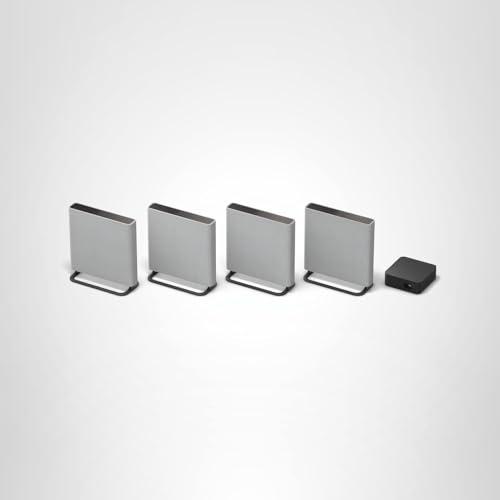
The Sony HT-A9M2, released in 2024 as an evolution of the original HT-A9, represents Sony's boldest rethinking of home audio. Instead of cramming everything into one soundbar, Sony distributes the work across four identical wireless speakers. Each speaker contains four separate drivers—a woofer for bass, a midrange driver for vocals, a tweeter for high frequencies, and an upfiring driver that bounces sound off your ceiling to create height effects.
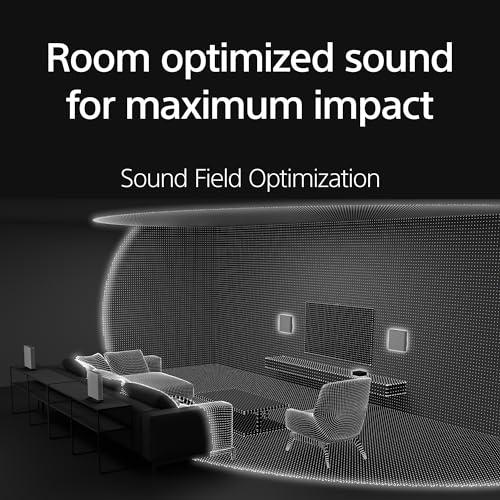
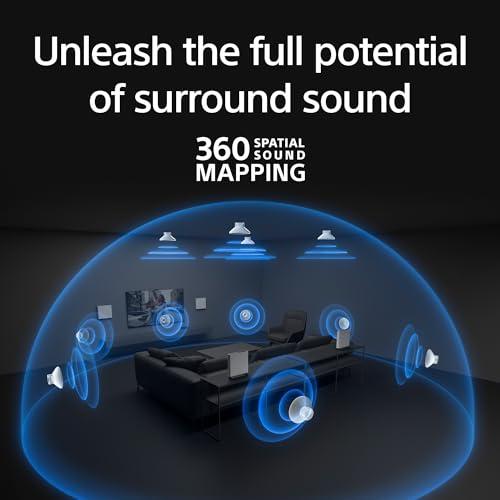
This 4.0.4 configuration means four main speakers at ear level plus four height speakers above. The magic happens through Sony's 360 Spatial Sound Mapping technology, which uses microphones in each speaker to measure your room's acoustics. The system then creates virtual "phantom speakers" by carefully timing and processing the audio from all 16 drivers working together.
Think of it like having a sophisticated orchestra conductor who can make four musicians sound like twelve by precisely controlling when and how they play each note.
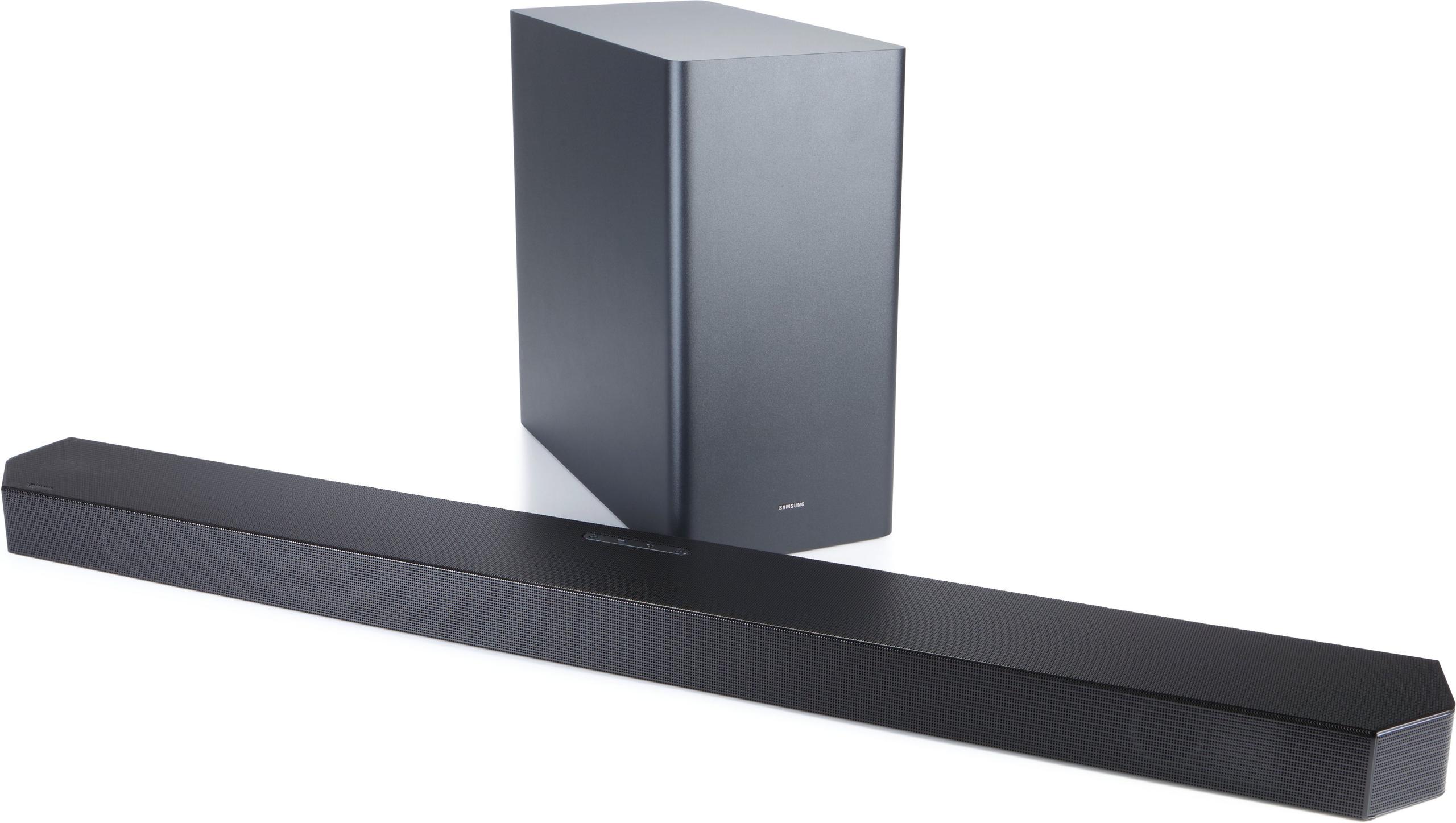
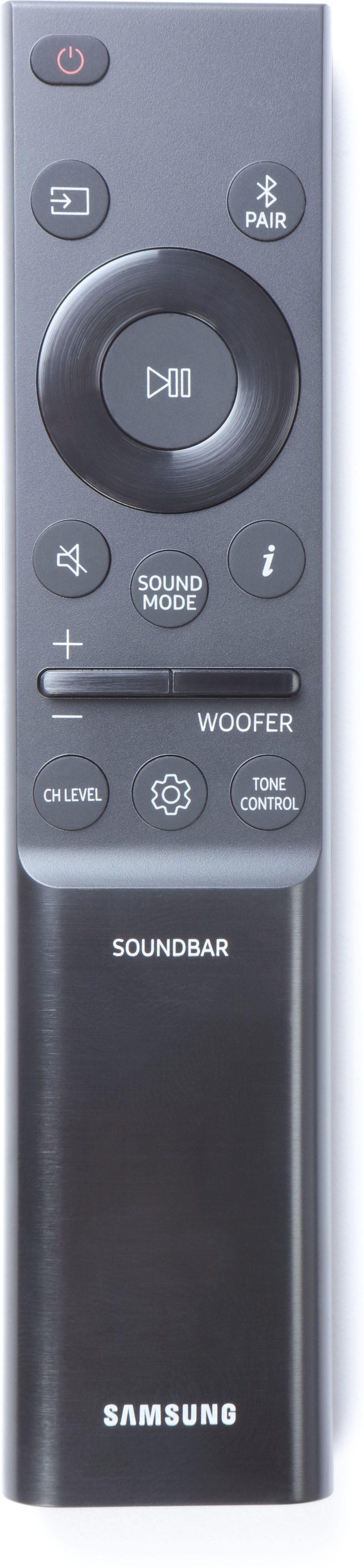
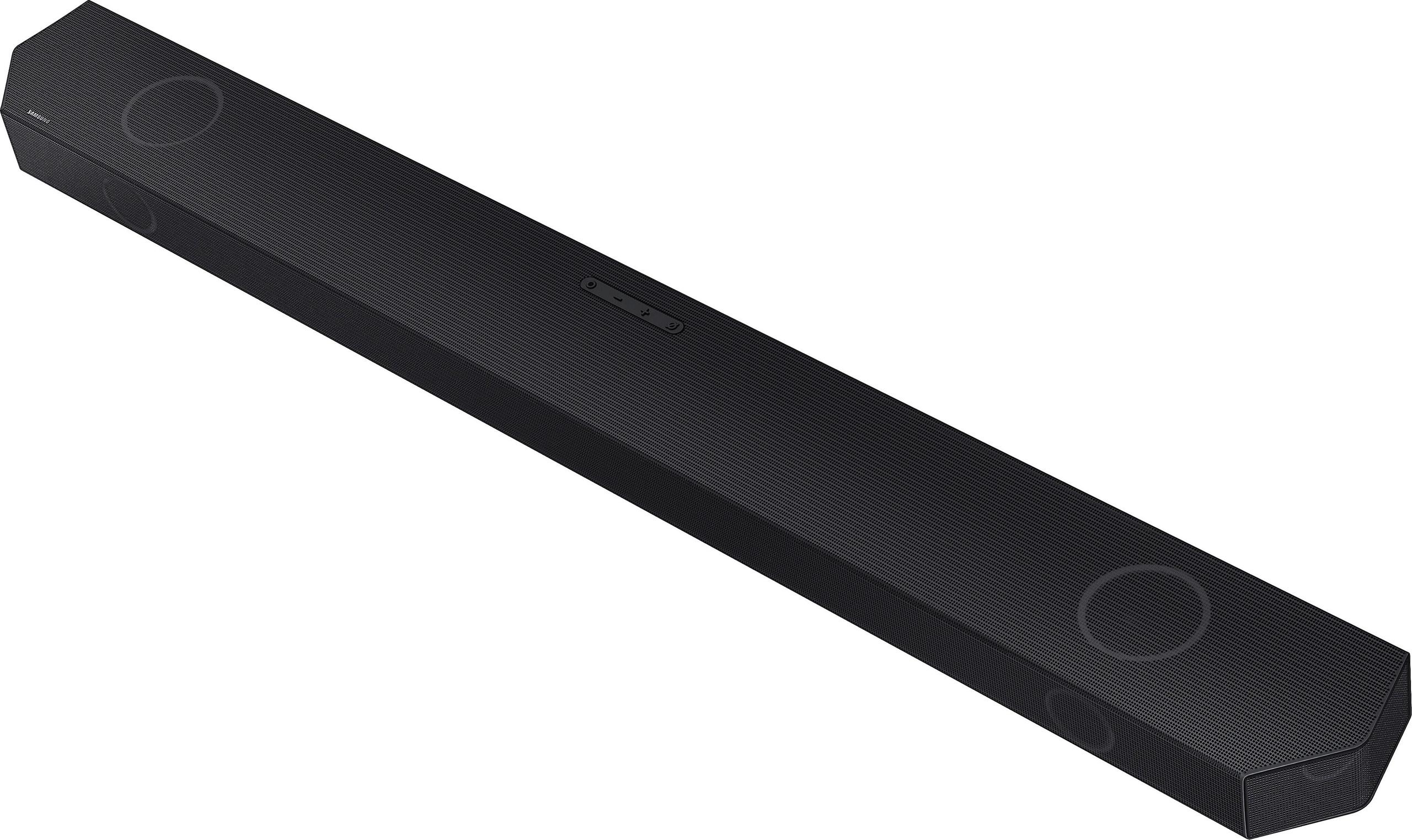
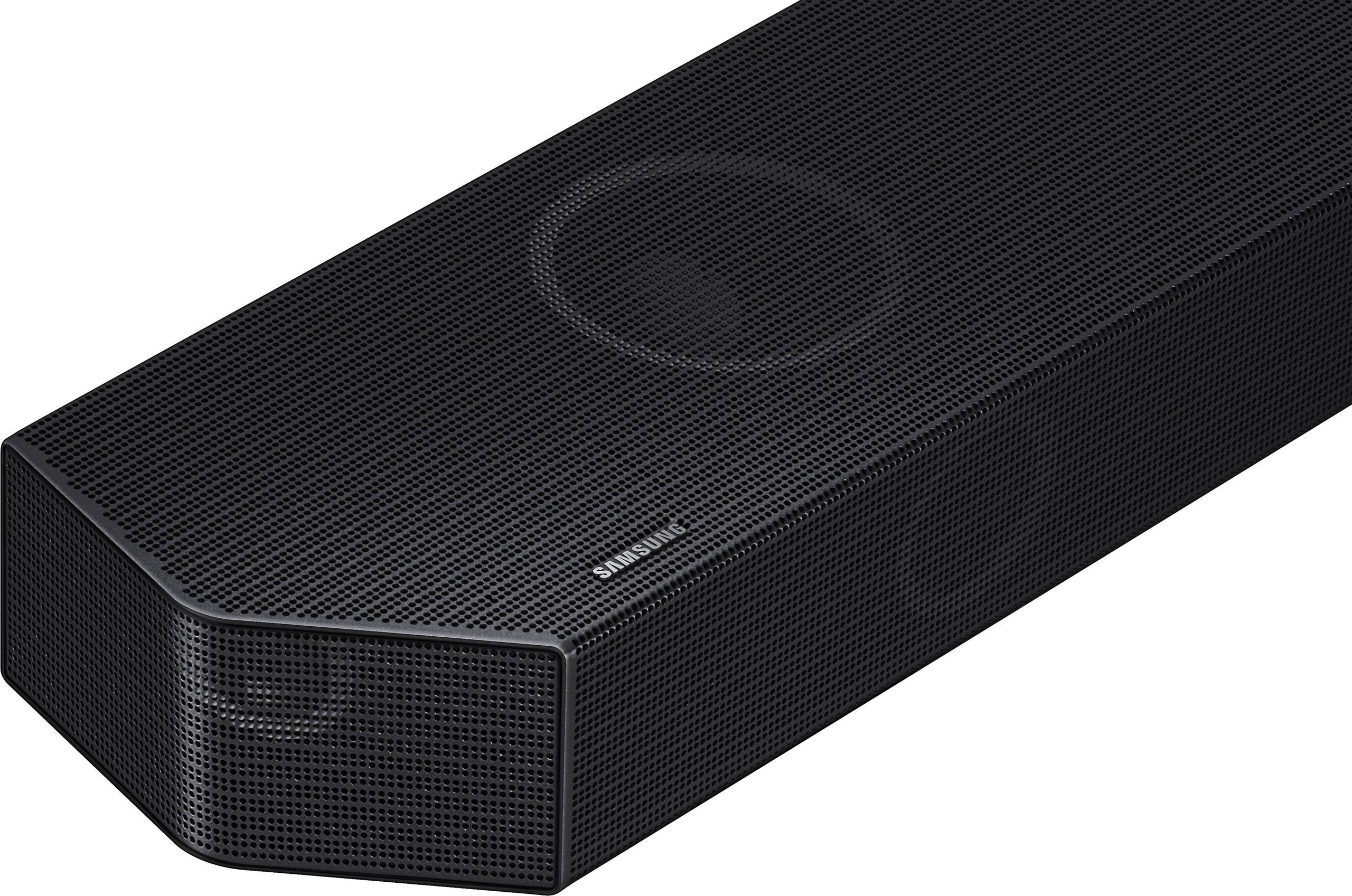
The Samsung HW-Q800D, launched in 2023, represents the evolution of traditional soundbar design done extremely well. It concentrates eleven speakers into a single soundbar unit plus a separate wireless subwoofer. The 5.1.2 configuration includes left, center, and right front channels, two side surround channels, and two upfiring height channels, plus the dedicated subwoofer for deep bass.
Samsung's approach relies on SpaceFit Sound Pro, which uses a built-in microphone to analyze your room and adjust the sound accordingly. While less sophisticated than Sony's system, it delivers excellent results with minimal fuss.
Here's where the fundamental design differences create the biggest performance gap. The Sony HT-A9M2's distributed speakers deliver noticeably superior spatial audio performance. When watching movies, sounds don't just come from "somewhere over there"—they have precise locations in your room.
During our research into user experiences, the consistent feedback about Sony's system centers on this spatial precision. Viewers report hearing footsteps move across the room with startling accuracy, or dialogue that seems to emanate directly from actors' mouths on screen. This happens because the four separate speakers can create true stereo imaging—the audio equivalent of depth perception.
The 360 Spatial Sound Mapping technology goes beyond simple calibration. It creates a three-dimensional map of your room and calculates how to bounce sound off walls and ceiling to place audio objects precisely where the movie director intended. This works best in rectangular rooms with normal ceiling heights, where the system can predict acoustic reflections accurately.
The Samsung HW-Q800D delivers good spatial effects but can't match this precision. Soundbars face an inherent limitation: all their drivers are lined up in a row. Even with sophisticated processing, they're essentially trying to create the illusion of separated speakers from a single location.
However, Samsung's system excels in consistency. While it may not create the most precise spatial effects, it delivers reliably good surround sound in almost any room configuration. For many listeners, this predictable performance proves more satisfying than Sony's system, which can be brilliant in ideal conditions but less impressive in challenging room layouts.
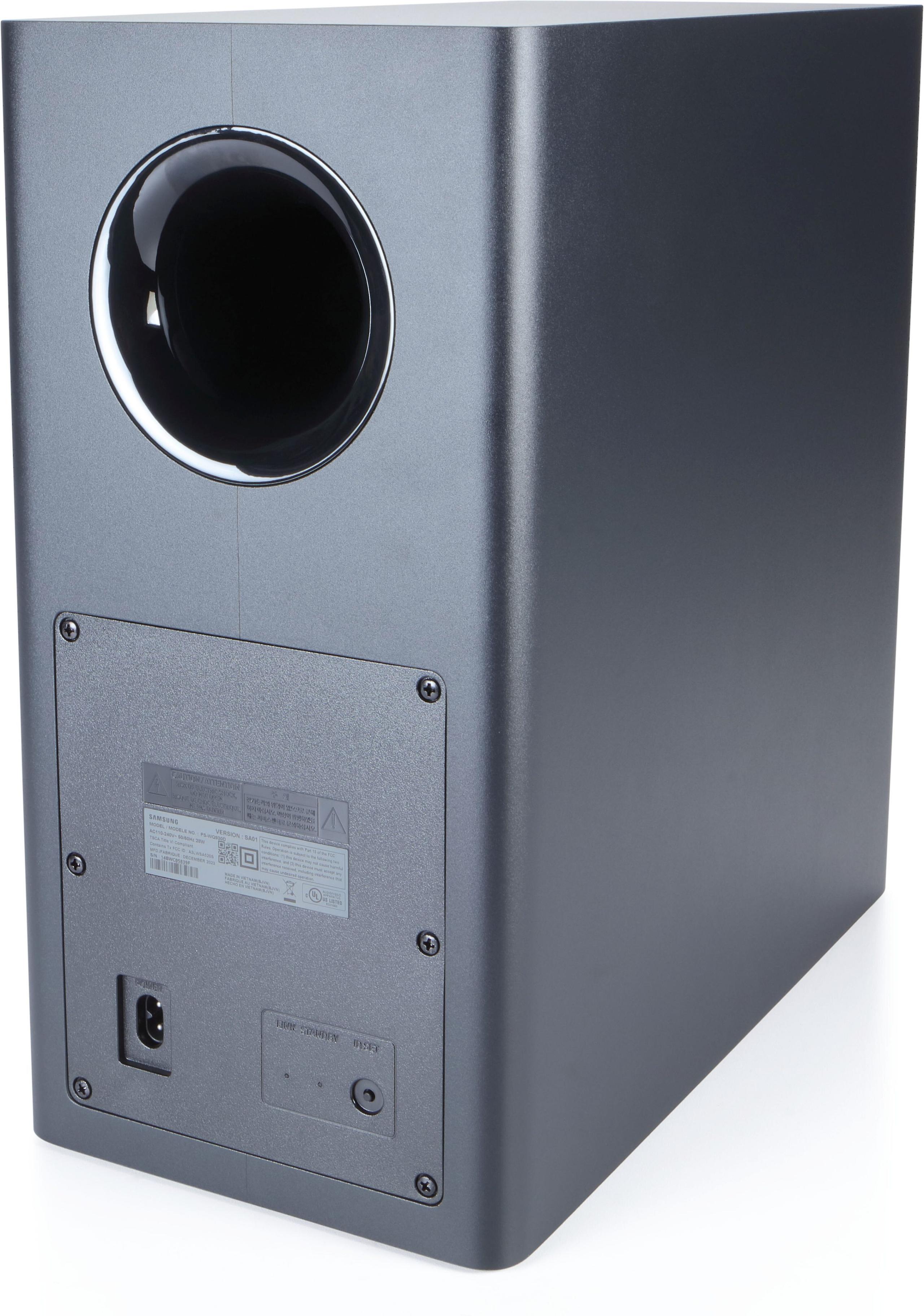
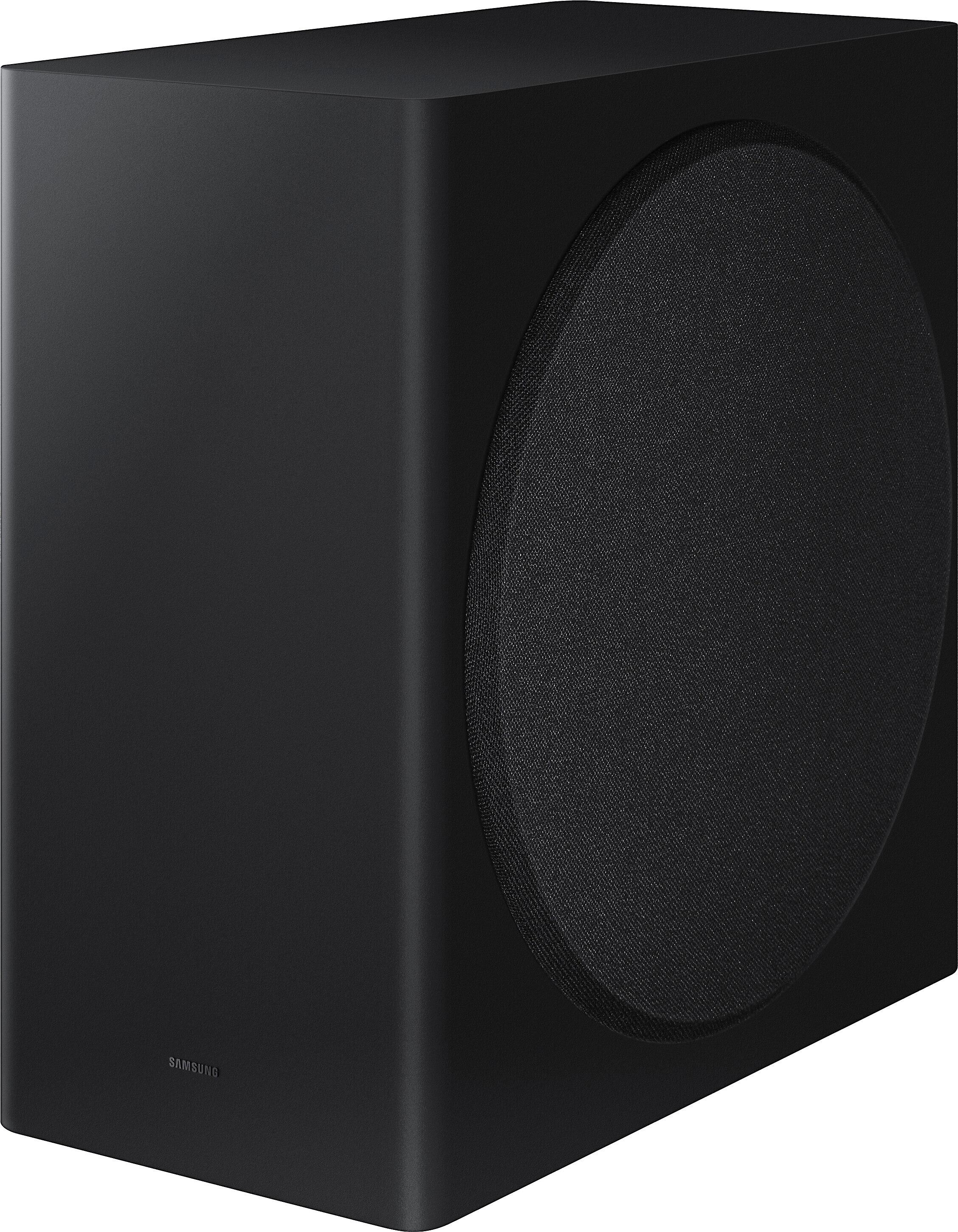
This is where the Samsung HW-Q800D delivers a decisive advantage. Its included wireless subwoofer provides the kind of deep, room-shaking bass that makes action movies feel visceral. The 8-inch side-firing driver in a ported enclosure can reproduce the lowest frequencies that make explosions feel real and music sound full.
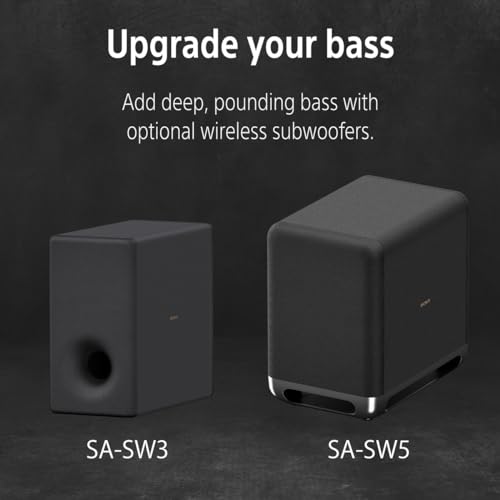
The Sony HT-A9M2 ships without a subwoofer, which significantly impacts its out-of-box performance. Each speaker contains a 3.3-inch woofer, but these simply cannot move enough air to create proper deep bass. For movies with substantial low-frequency content—think Marvel blockbusters or action films—the Sony system sounds noticeably thin without an additional subwoofer.
Sony offers compatible wireless subwoofers (the SA-SW3 and SA-SW5), but these represent additional purchases that substantially increase the total system cost. When properly equipped with a subwoofer, the Sony system becomes more competitive, but this configuration pushes the price even higher.
For music listening, this bass difference becomes even more apparent. The Samsung system handles everything from hip-hop to electronic music with authority, while the Sony system works better with acoustic genres that don't depend heavily on deep bass.
Both systems take different approaches to dialogue clarity, and both work well for different reasons. The Samsung HW-Q800D includes a dedicated center channel—the most traditional and reliable method for clear dialogue. This physical center speaker handles all speech, creating consistent vocal clarity regardless of your listening position.
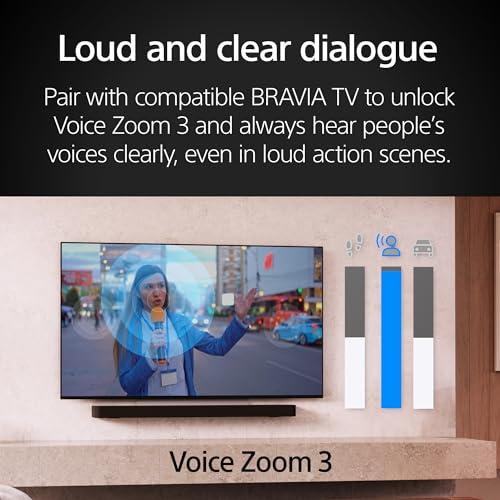
The Sony HT-A9M2 creates a "phantom" center channel by coordinating its front speakers. While this can sound more natural when properly calibrated, it's more sensitive to room acoustics and listener position. Sony compensates with Voice Zoom 3 technology, which uses artificial intelligence to identify and enhance dialogue in real-time. This feature analyzes the audio signal, separates voices from background effects, and amplifies them appropriately.
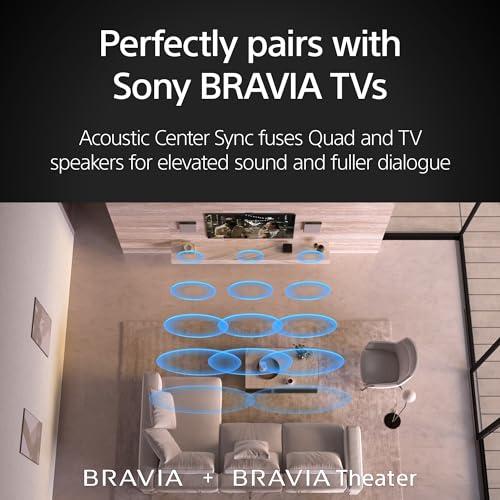
When connected to compatible Sony BRAVIA TVs, the Sony system gains Acoustic Center Sync, which uses the TV's speakers as a dedicated center channel. This combination can provide exceptional dialogue clarity, but only works within Sony's ecosystem.
For most viewers, the Samsung's traditional center channel provides more consistently clear dialogue across different content types and listening positions.
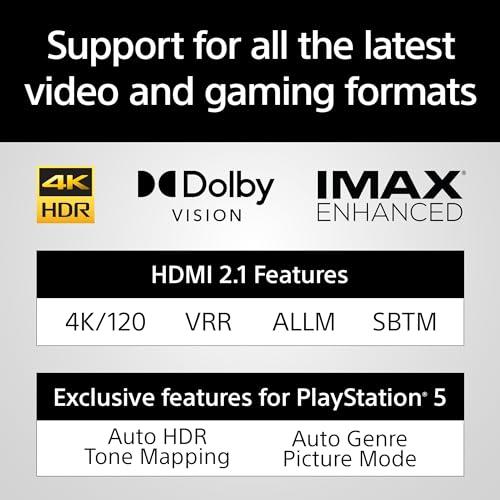
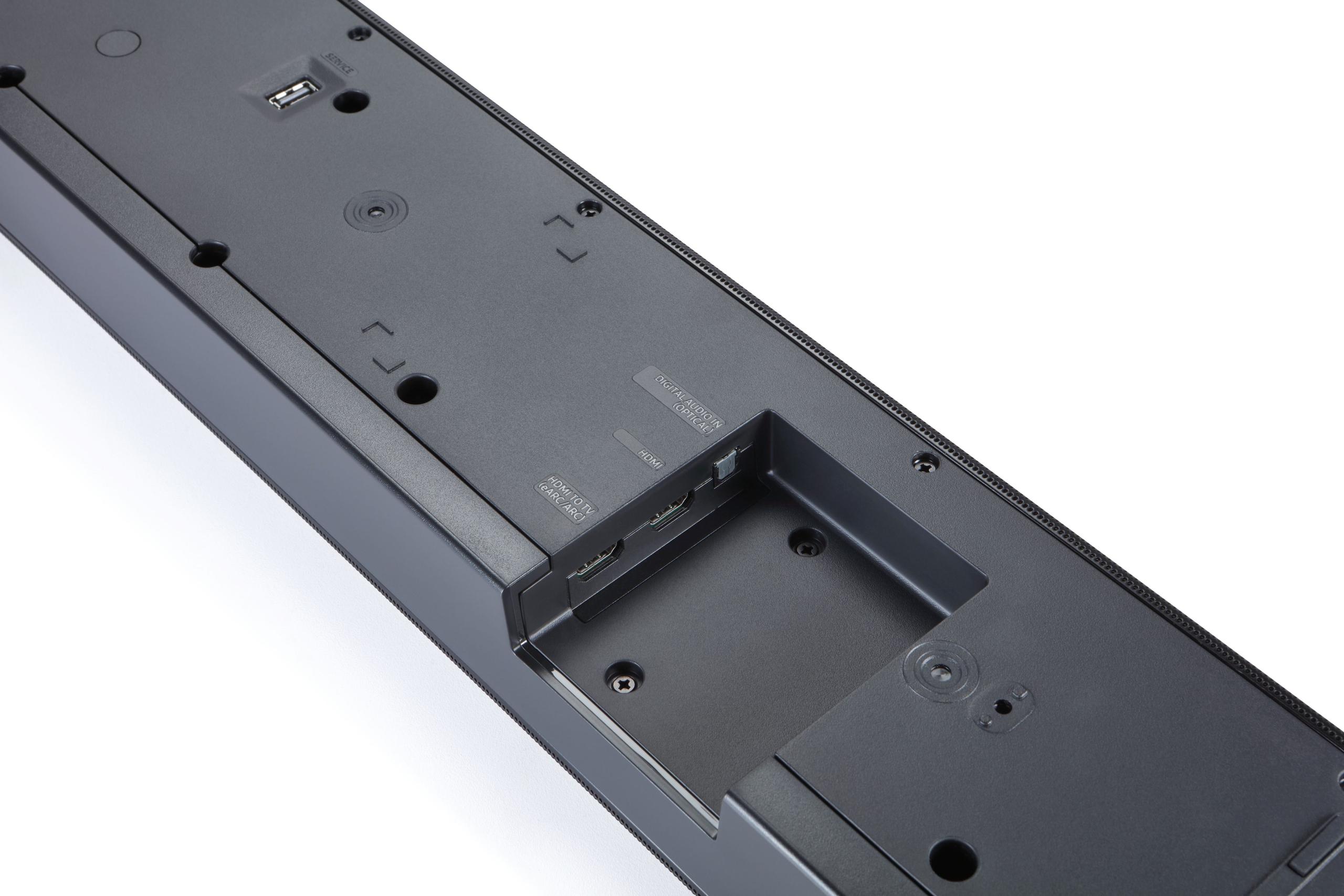
The gaming performance difference between these systems is substantial and represents one of the strongest arguments for the Sony HT-A9M2. Sony equipped this system with full HDMI 2.1 support, including 4K/120Hz passthrough, Variable Refresh Rate (VRR), and Auto Low Latency Mode (ALLM).
These features matter significantly for PlayStation 5 and Xbox Series X owners. VRR eliminates screen tearing during fast-paced gaming, while ALLM automatically reduces input lag when gaming mode is detected. The 4K/120Hz support ensures that high-refresh gaming visuals pass through without compression or quality loss.
The Samsung HW-Q800D lacks these advanced gaming features, limiting it to HDMI 2.0 with 4K/60Hz maximum. While it includes a "Game Pro Mode" that enhances directional audio cues, it cannot take advantage of next-generation console capabilities.
For serious gamers, especially those with high-end consoles, this difference alone may justify the Sony's higher price. The spatial audio advantages also enhance gaming immersion, making it easier to locate enemies or environmental cues in competitive games.
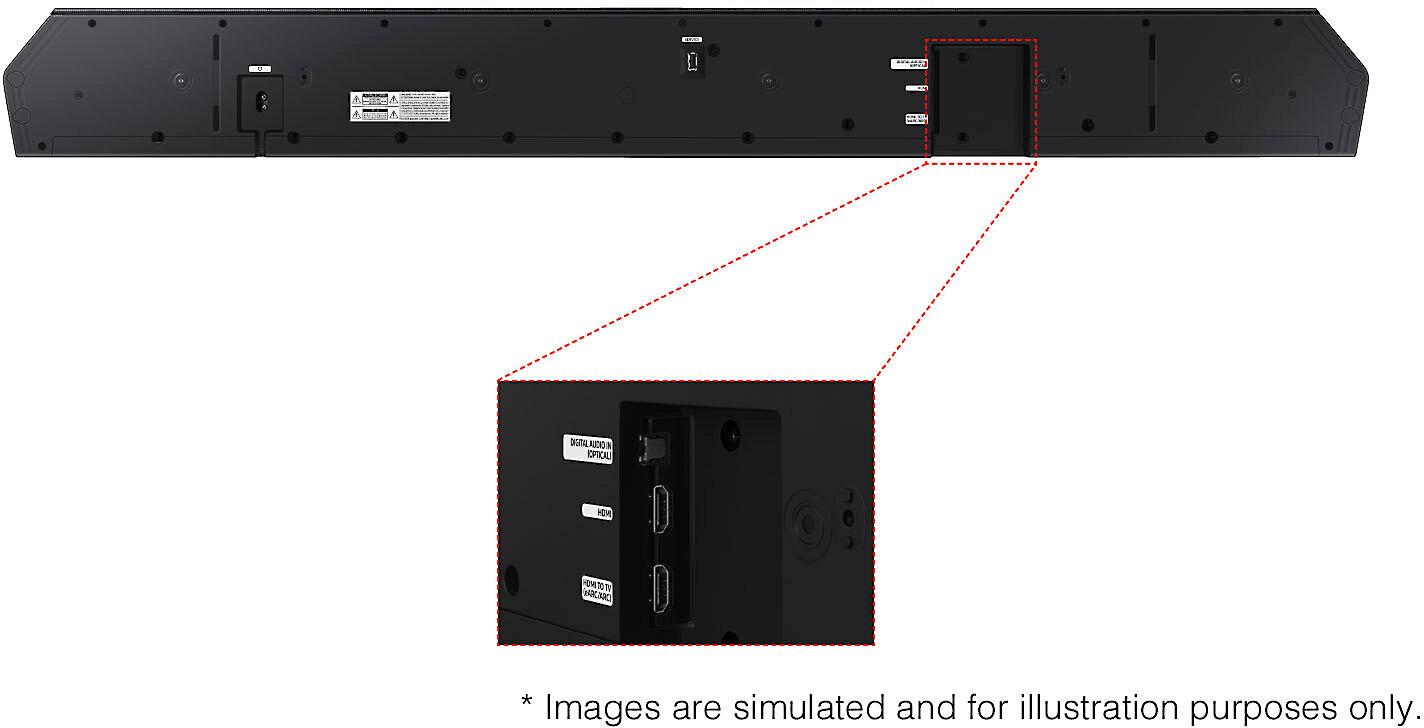
The setup experience differs dramatically between these systems. The Samsung HW-Q800D follows the traditional soundbar playbook: place the bar under your TV, position the wireless subwoofer somewhere in the room, connect one HDMI cable, and you're essentially done. The SpaceFit Sound Pro calibration runs automatically and takes just a few minutes.
The Sony HT-A9M2 demands significantly more attention during setup. Each of the four speakers must be positioned carefully—Sony recommends at least 18 inches from walls and optimal spacing around the listening area. The Sound Field Optimization process is more comprehensive, requiring the system to measure multiple room characteristics and create a detailed acoustic map.
This complexity serves a purpose. When properly set up, the Sony system's calibration is remarkably sophisticated, adapting to irregular room shapes and unusual speaker placements. However, the process can be intimidating for users who prefer plug-and-play simplicity.
Room shape significantly affects the Sony system's performance. Rectangular rooms with standard ceiling heights yield the best results, while irregular layouts or rooms with vaulted ceilings can reduce effectiveness. The Samsung system proves more forgiving of challenging room acoustics.
Both systems integrate well with their respective ecosystems. The Sony system works seamlessly with BRAVIA TVs and PlayStation consoles, offering features like automatic picture mode switching and audio optimization based on content type.
The Samsung HW-Q800D provides excellent integration with Samsung TVs through Q-Symphony technology, which coordinates the soundbar speakers with the TV's built-in speakers for enhanced surround effects. However, it works well with any TV brand, unlike Sony's more ecosystem-dependent features.
Music listening reveals another key difference between these systems. The Samsung HW-Q800D delivers more immediately satisfying music performance thanks to its included subwoofer and balanced frequency response. Whether you're listening to rock, pop, hip-hop, or electronic music, the system provides the full-range sound that makes music engaging.
The Sony HT-A9M2 excels with acoustic music and offers unique features like 360 Reality Audio support for specially mastered immersive music tracks. The LDAC codec support provides higher-quality Bluetooth streaming than standard codecs. However, without a subwoofer, bass-heavy genres sound incomplete.
Sony's DSEE Ultimate technology can upscale compressed music files, potentially improving the sound quality of streaming services. While this feature works well, it cannot compensate for the fundamental frequency response limitations of a system without dedicated low-frequency drivers.
At the time of writing, these systems occupy very different price segments, with the Sony HT-A9M2 commanding approximately four times the price of the Samsung HW-Q800D. This price difference reflects not just build quality, but fundamentally different target markets.
You're a serious home theater enthusiast with a larger room (400+ square feet) who prioritizes cutting-edge spatial audio technology. The system makes sense if you already own or plan to purchase Sony BRAVIA TVs and PlayStation 5 consoles, where ecosystem integration provides additional value. You should also be prepared to purchase a compatible subwoofer to achieve optimal performance.
The Sony system appeals to users who view home theater as a primary hobby and want the most advanced spatial audio technology available. If you frequently watch movies with complex soundtracks and can appreciate subtle improvements in audio positioning, the premium price may feel justified.
You want excellent home theater performance without the premium price or setup complexity. The Samsung system provides outstanding value for medium-sized rooms and works well for the full spectrum of content from movies to music to gaming (though without advanced gaming features).
This system appeals to users who want significant improvement over TV speakers without becoming audio enthusiasts. If you prioritize reliable performance, simple setup, and strong bass response, the Samsung delivers exceptional results at its price point.
The Samsung also makes sense for renters or those who move frequently, as its simpler setup process makes it easier to relocate and reconfigure.
These systems represent different philosophies about home audio: innovation versus refinement, complexity versus simplicity, ecosystem integration versus universal compatibility. The Sony HT-A9M2 pushes the boundaries of what's possible with wireless home theater technology, creating genuinely impressive spatial audio experiences for those willing to invest in the complete system.
The Samsung HW-Q800D perfects the traditional soundbar formula, delivering reliable, high-quality performance that satisfies the vast majority of home theater needs without requiring extensive setup or additional purchases.
For most buyers, the Samsung provides better immediate satisfaction and value. Its complete package approach, strong bass response, and simple setup make it an excellent choice for the majority of home theater situations. However, for dedicated enthusiasts with the right room setup and budget flexibility, Sony's innovative approach delivers a uniquely impressive spatial audio experience that represents the future of home theater technology.
The choice ultimately depends on whether you prioritize innovation and spatial precision over simplicity and value. Both systems succeed in their respective approaches, but they serve different audiences with different priorities and budgets.
| Sony HT-A9M2 BRAVIA Theater Quad | Samsung HW-Q800D |
|---|---|
| System Architecture - Fundamentally different approaches to surround sound | |
| 4 wireless speakers with 16 total drivers (4.0.4 configuration) | Traditional soundbar + wireless subwoofer (5.1.2 configuration) |
| Total Power Output - Determines maximum volume and dynamic range | |
| 504W across 16 channels (31.5W per driver) | 360W total with dedicated amplification |
| Subwoofer Inclusion - Critical for bass impact and music enjoyment | |
| No subwoofer included (must purchase separately) | 8" wireless subwoofer included |
| Gaming Features - Essential for next-gen console compatibility | |
| Full HDMI 2.1: 4K/120Hz, VRR, ALLM, 8K passthrough | HDMI 2.0 only: 4K/60Hz maximum, no VRR/ALLM |
| Room Calibration Technology - How well the system adapts to your space | |
| 360 Spatial Sound Mapping with multi-point room analysis | SpaceFit Sound Pro with single-point calibration |
| Spatial Audio Technology - Creates the surround sound experience | |
| Phantom speaker generation with precise 3D positioning | Traditional Dolby Atmos with upfiring drivers |
| Setup Complexity - Time and effort required for optimal performance | |
| Complex 4-speaker placement with 18" wall clearance required | Simple soundbar + subwoofer placement |
| TV Integration Features - Enhanced performance with matching TVs | |
| Sony BRAVIA Acoustic Center Sync and ecosystem features | Samsung Q-Symphony with QLED TV speaker coordination |
| Audio Codec Support - Quality of wireless and streaming audio | |
| LDAC, 360 Reality Audio, DSEE Ultimate upscaling | Standard Bluetooth codecs, no advanced upscaling |
| Physical Footprint - How much space the system requires | |
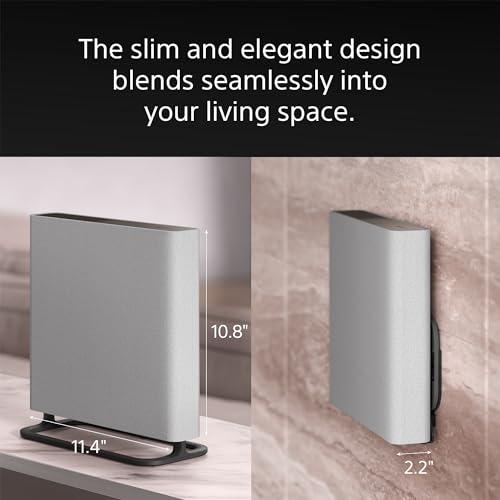
| 4 separate speakers (11.5" x 10.9" x 2.3" each) | Single soundbar (38.6" x 2.3" x 4.7") + subwoofer |
| Optimal Room Size - Where each system performs best | |
| Large rooms (400+ sq ft) with proper speaker spacing | Medium rooms (under 400 sq ft) with flexible placement |
| Music Performance - How well each handles stereo music content | |
| Excellent clarity but requires subwoofer for full-range sound | Strong bass response with balanced frequency profile |
| Voice Enhancement Technology - Clarity for dialogue-heavy content | |
| Voice Zoom 3 with AI-based dialogue separation | Active Voice Amplifier (AVA) with dedicated center channel |
The Sony HT-A9M2 BRAVIA Theater Quad delivers superior spatial audio performance for dedicated home theater setups, especially in larger rooms. Its four wireless speakers create more precise sound positioning and immersive Dolby Atmos effects. However, the Samsung HW-Q800D offers better overall value with its included subwoofer and simpler setup, making it excellent for most home theater needs without the premium price.
The fundamental difference is system architecture. The Sony HT-A9M2 uses four separate wireless speakers placed around your room, while the Samsung HW-Q800D follows the traditional soundbar design with a main bar plus wireless subwoofer. Sony's approach creates more precise surround sound but requires more complex setup and higher investment.
The Samsung HW-Q800D has significantly better bass performance out of the box thanks to its included 8-inch wireless subwoofer. The Sony HT-A9M2 ships without a subwoofer and relies on small woofers in each speaker, resulting in weaker bass response. Sony requires purchasing an additional subwoofer separately for comparable low-frequency performance.
The Sony HT-A9M2 is worth the premium for serious home theater enthusiasts with larger rooms who prioritize cutting-edge spatial audio technology and gaming features. However, for most users, the Samsung HW-Q800D provides exceptional value with strong performance across movies, music, and TV at a fraction of the cost.
The Samsung HW-Q800D is much easier to set up, requiring only placement of the soundbar and subwoofer plus one HDMI connection. The Sony HT-A9M2 demands careful positioning of four separate speakers with specific spacing requirements and a more complex calibration process, though this complexity enables superior spatial audio when done correctly.
Both the Sony HT-A9M2 and Samsung HW-Q800D support Dolby Atmos, but Sony's implementation is more sophisticated. The Sony system creates more convincing overhead effects and precise object positioning through its distributed speaker design, while Samsung delivers solid Atmos performance from a more conventional setup.
The Sony HT-A9M2 is significantly better for next-gen gaming, offering full HDMI 2.1 support with 4K/120Hz passthrough, Variable Refresh Rate (VRR), and Auto Low Latency Mode (ALLM). The Samsung HW-Q800D only supports HDMI 2.0 with 4K/60Hz maximum, lacking the advanced gaming features that enhance modern console performance.
Both systems work with any TV brand, but each offers enhanced features with their respective manufacturers' TVs. The Samsung HW-Q800D provides Q-Symphony technology with Samsung TVs, while the Sony HT-A9M2 offers Acoustic Center Sync and other advanced features with Sony BRAVIA TVs.
The Samsung HW-Q800D is better for music listening thanks to its included subwoofer providing full-range sound and balanced frequency response. The Sony HT-A9M2 offers excellent clarity and spatial presentation for acoustic music but lacks the bass impact needed for most music genres without an additional subwoofer purchase.
The Samsung HW-Q800D requires minimal space with just a soundbar under your TV and flexible subwoofer placement. The Sony HT-A9M2 needs significantly more space, requiring four speaker positions around your room with at least 18 inches clearance from walls for optimal performance.
Both systems handle dialogue well but differently. The Samsung HW-Q800D uses a dedicated center channel for consistent vocal clarity, while the Sony HT-A9M2 creates a phantom center with advanced Voice Zoom 3 technology. Samsung's approach is more reliable across different listening positions, while Sony's can sound more natural when properly calibrated.
For small apartments, the Samsung HW-Q800D is the better choice due to its compact design, simple setup, and excellent performance in smaller spaces. The Sony HT-A9M2 is designed for larger rooms and requires more space for optimal speaker placement, making it less suitable for typical apartment living situations.
We've done our best to create useful and informative comparisons to help you decide what product to buy. Our research uses advanced automated methods to create this comparison and perfection is not possible - please contact us for corrections or questions. These are the sites we've researched in the creation of this article: bestbuy.com - whathifi.com - whathifi.com - youtube.com - rtings.com - audiosciencereview.com - bhphotovideo.com - skybygramophone.com - sony.com - manuals.plus - audioadvice.com - dell.com - valueelectronics.com - youtube.com - merlinstv.com - videoandaudiocenter.com - electronics.sony.com - sony.com - bestbuy.com - beachcamera.com - sony.com - win.consulting - sony.com - techradar.com - valueelectronics.com - samsung.com - rtings.com - samsung.com - crutchfield.com - samsung.com - samsung.com - samsung.com - shidirect.com

Privacy Policy
Terms and Conditions - Affiliate Policy
Home Security
© Copyright 2008-2026.
11816 Inwood Rd #1211, Dallas, TX 75244