





When you're ready to upgrade from your TV's built-in speakers, the world of home theater audio can feel overwhelming. Do you go with a traditional soundbar setup, or embrace the newer wireless speaker approach? The Hisense AX5140Q and Sony HT-A9M2 represent two fundamentally different philosophies for bringing cinema-quality sound to your living room—and at the time of writing, they're priced worlds apart.
The Hisense takes the familiar soundbar route at a budget-friendly price point, while the Sony costs roughly seven times more and completely reimagines how surround sound should work. Both support Dolby Atmos (3D audio that places sounds above and around you), but they achieve it through entirely different methods. Understanding these approaches will help you decide which fits your needs, budget, and living space.
Before diving into specifics, let's establish what we're trying to achieve. Modern home theater audio systems aim to recreate the immersive experience you get in a cinema—where helicopters fly overhead, rain falls from above, and explosions rumble through your body. The key technologies that make this possible include:
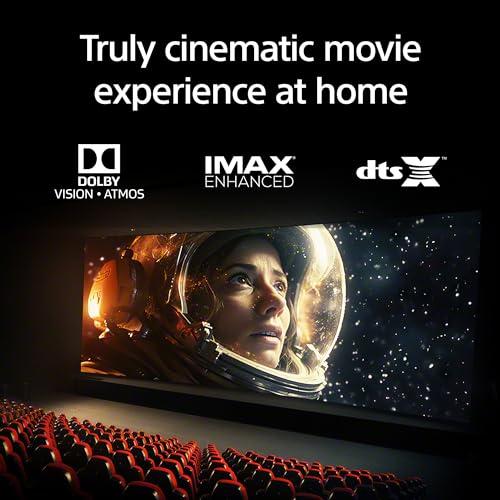
Dolby Atmos and DTS:X: These are object-based audio formats that treat sounds as three-dimensional objects rather than fixed channels. Instead of just left, right, and center speakers, these formats can position a helicopter anywhere in 3D space around you.
Up-firing speakers: These point toward your ceiling to bounce sound down, creating the illusion of overhead audio without installing ceiling speakers.
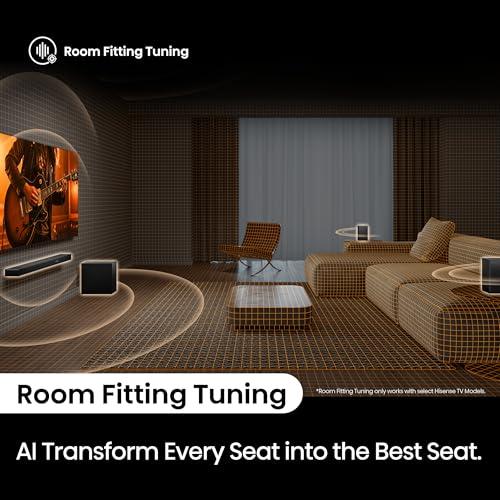
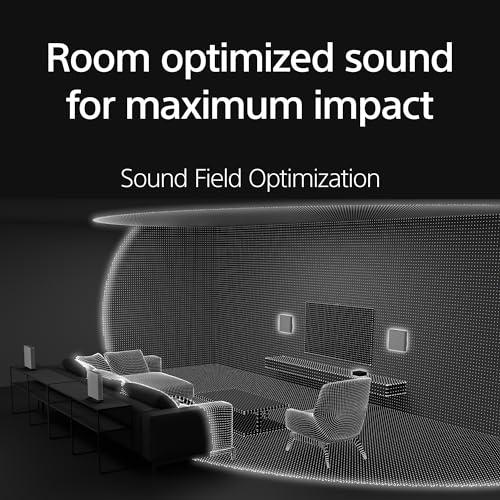
Room calibration: Modern systems use microphones and processing to measure your room's acoustics and adjust their output accordingly.
The most important performance characteristics for any home theater system include spatial immersion (how well it creates that bubble of sound around you), dialogue clarity, bass extension and impact, and how well it adapts to your specific room. These factors matter more than raw power numbers or channel counts.
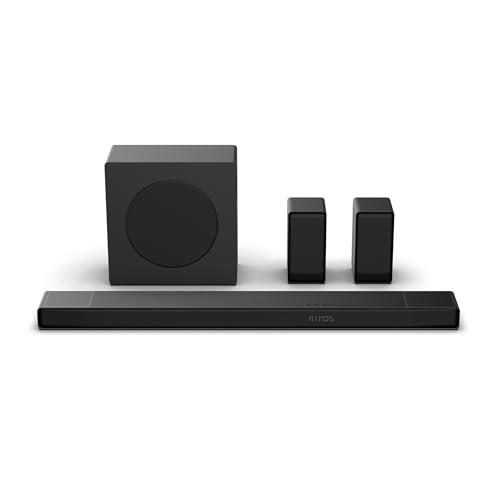
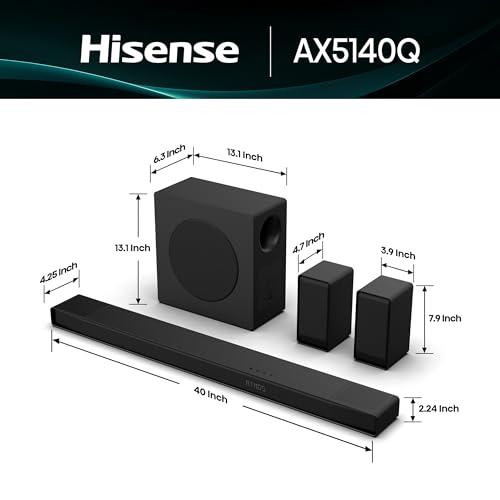
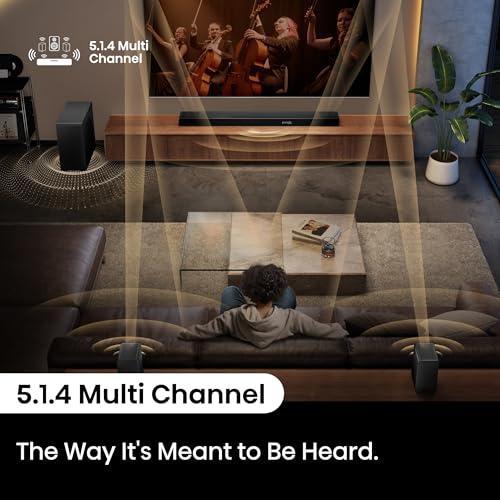
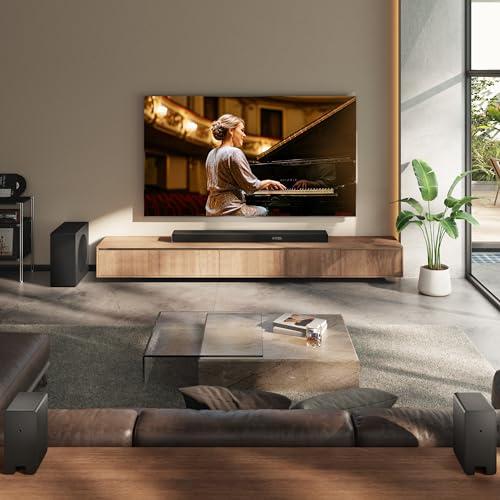
Released in 2024, the Hisense AX5140Q represents a refined take on the traditional soundbar formula. At its core, it's a 5.1.4 channel system—meaning five main speakers (front left, center, right, and two surrounds), one subwoofer, and four height channels for overhead effects.
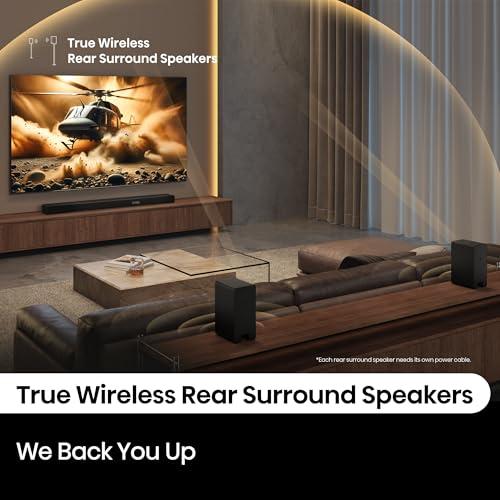
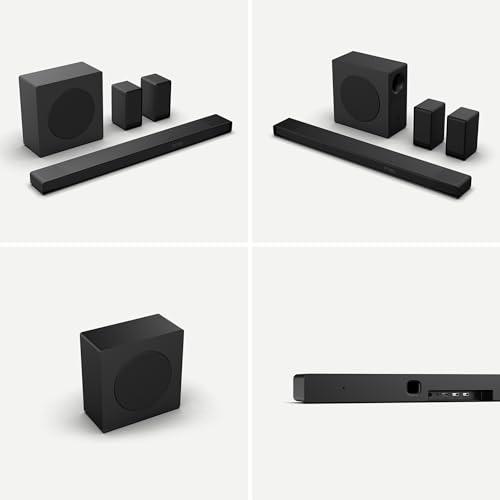
The Hisense follows the familiar home theater playbook: a main soundbar sits under your TV, a wireless subwoofer handles bass frequencies, and two wireless rear speakers create surround effects. What makes it special are the four dedicated up-firing drivers—two built into the main bar and two in the rear speakers—that bounce sound off your ceiling to create overhead effects.
This approach has several advantages. The physical separation of speakers creates genuine channel isolation, meaning when a sound effect pans from front to back, you hear it moving through distinct speakers rather than through processing trickery. The included 6.5-inch wireless subwoofer provides the deep bass that smaller speakers simply can't produce, handling everything from movie explosions to the low notes in music.
Based on extensive user and expert feedback, the Hisense AX5140Q delivers surprisingly convincing Atmos effects for its price range. The up-firing drivers create a noticeable sense of height, especially in scenes with rain, aircraft, or overhead ambience. Dialogue clarity is consistently praised, with voices remaining intelligible even during complex action sequences.
The system's strength lies in its straightforward approach to surround sound. When configured properly, effects move convincingly around the room, and the wireless subwoofer integrates smoothly without the boominess that plagues some budget systems. The 600W total power output provides adequate headroom for most living rooms, though it won't achieve reference levels in very large spaces.
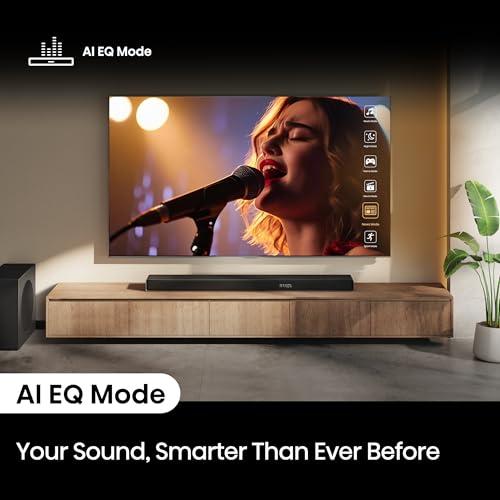
What impressed me most in researching this system is how it handles the basics exceptionally well. The AI EQ mode analyzes content and adjusts the sound accordingly, reducing distortion and maintaining clarity at different volume levels—a feature typically found in more expensive systems.
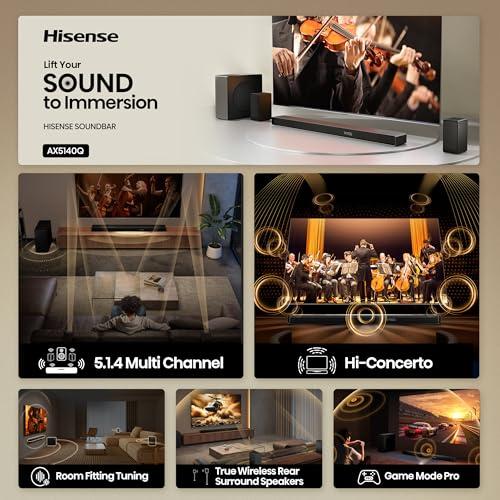
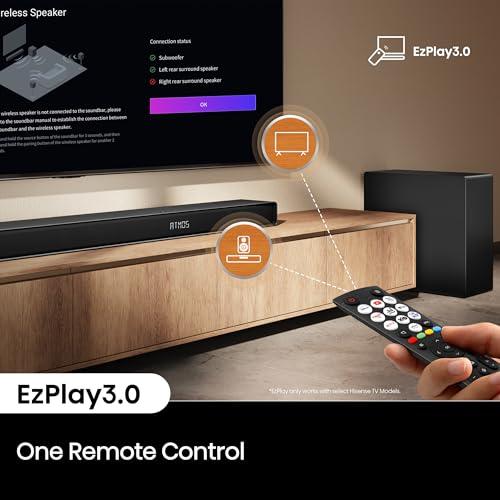
The Hisense includes several smart features that enhance its value proposition. Hi-Concerto integration with Hisense TVs creates a unified audio system where the TV and soundbar work together for improved imaging and synchronized control. Room-fitting tuning uses the AI capabilities to adapt output to your specific space, helping eliminate dead zones.
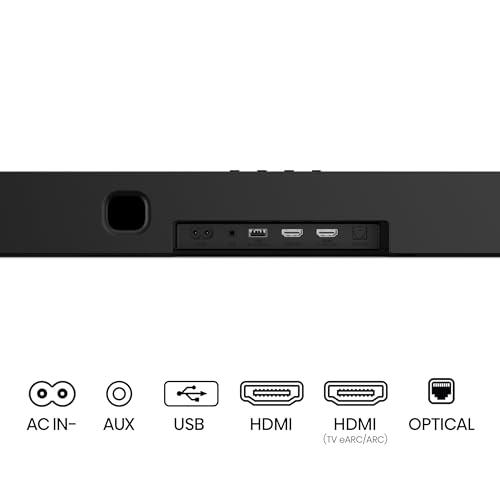
The connectivity is thorough for a budget system: HDMI eARC for high-quality audio from your TV, an additional HDMI input for devices, optical and auxiliary inputs for older equipment, and Bluetooth 5.3 for wireless music streaming.
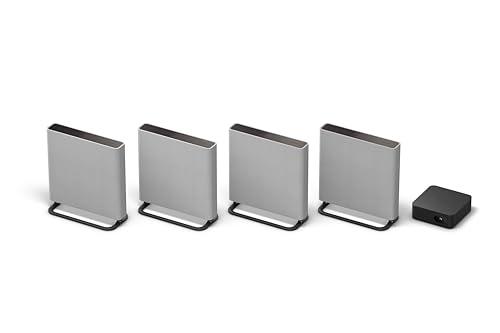
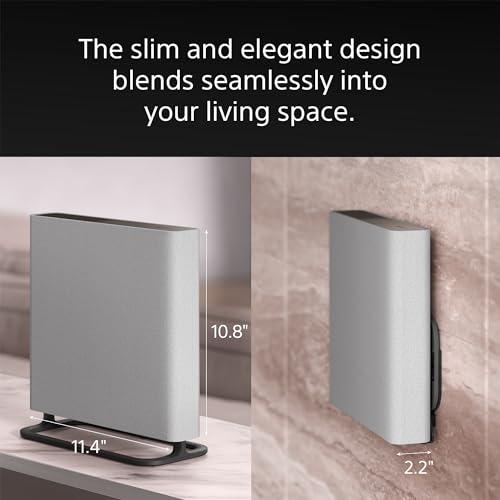
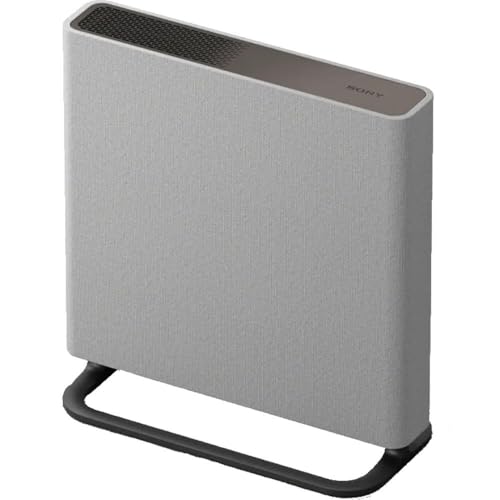
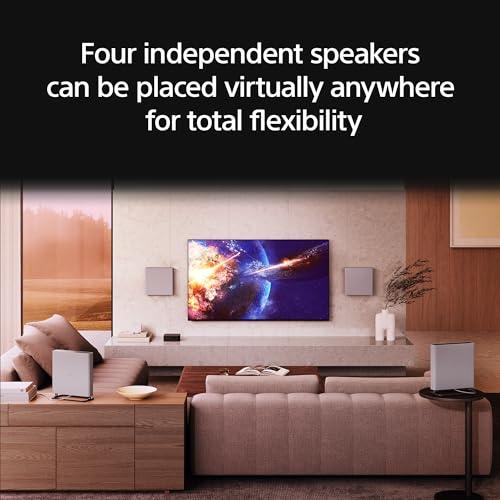
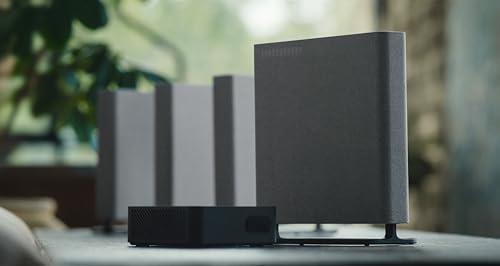
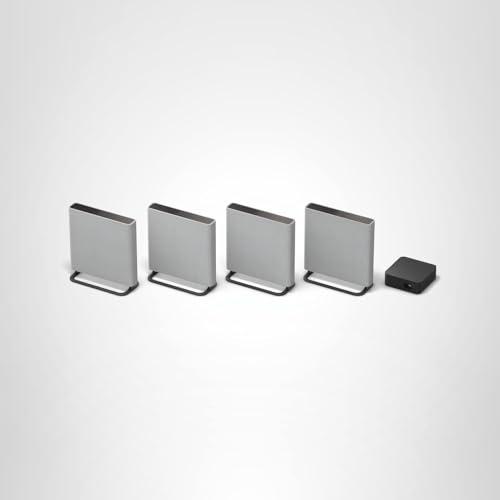
Sony took a completely different path with the HT-A9M2, released in 2024 as an evolution of their groundbreaking HT-A9 from 2021. Instead of traditional speakers in fixed positions, this system uses four identical wireless speakers that can be placed almost anywhere in your room.
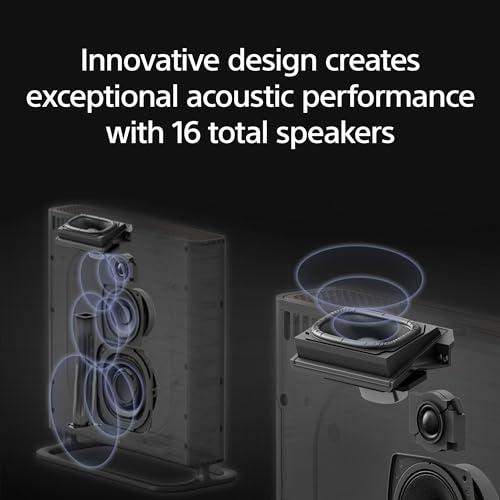
Each of the four speakers in the Sony system contains four drivers: a 3-way array (woofer, midrange, and tweeter) plus an up-firing driver for height effects. That's 16 drivers total, each powered by its own dedicated amplification channel through Sony's S-Master HX digital amplifier system.
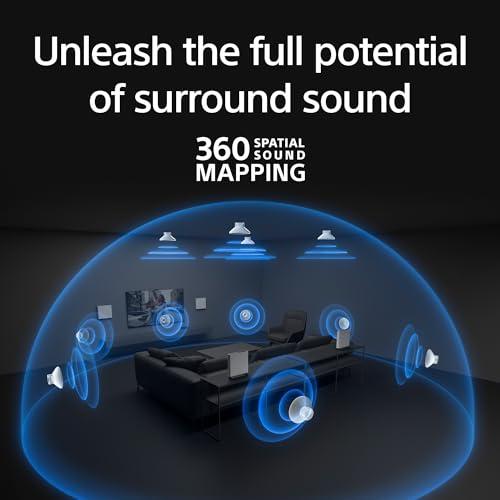
The real innovation is 360 Spatial Sound Mapping, Sony's proprietary technology that creates "phantom speakers"—virtual sound sources that your brain perceives as coming from locations where no physical speaker exists. The system can generate up to 12 phantom speakers throughout your room, creating an immersive bubble of sound that extends far beyond the four physical units.
This isn't just marketing hyperbole. The technology uses precise timing and phase relationships between the four speakers to trick your auditory system into perceiving sounds from locations where no speaker is present. It's similar to how stereo imaging works with two speakers, but extended into three-dimensional space.
Based on professional reviews and user feedback, the Sony HT-A9M2 delivers spatial audio experiences that often surpass traditional multi-speaker setups. The 360 Spatial Sound Mapping creates an exceptionally wide and enveloping soundstage that maintains coherence across multiple seating positions—something traditional systems struggle with.
The sound quality is notably refined, with reviewers consistently praising the system's ability to render fine details and emotional nuance in both movies and music. The 16 individual drivers and dedicated amplification channels provide excellent dynamic range and frequency separation that you simply can't achieve with shared amplifiers.
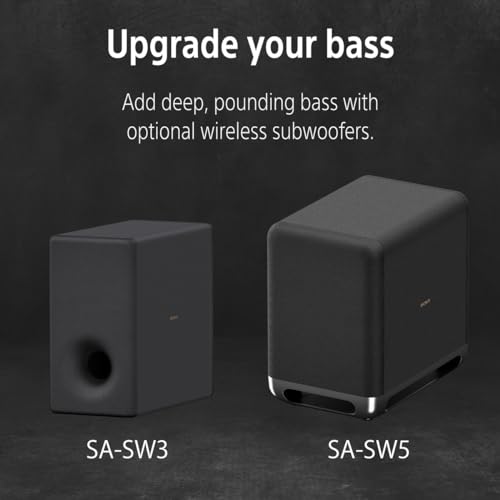
However, there's a significant caveat: the system ships without a subwoofer. While the X-Balanced Speaker Units in each cabinet produce respectable bass for their size, they can't match the deep extension and impact of a dedicated subwoofer. Professional reviewers consistently note that adding Sony's optional wireless subwoofer transforms the system from very good to exceptional.
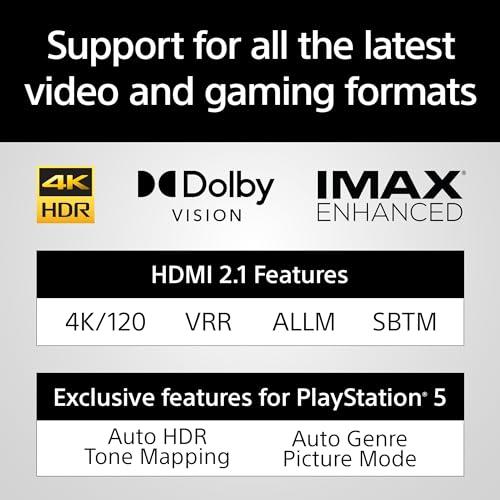
The Sony excels in areas beyond basic surround sound. For gaming enthusiasts, particularly PlayStation 5 owners, the system offers advanced features like Auto HDR Tone Mapping and Auto Genre Picture Mode that automatically optimize both audio and video settings. Variable Refresh Rate (VRR) and Auto Low Latency Mode (ALLM) support ensure smooth, responsive gaming at 4K120 resolution.
The HDMI 2.1 implementation is comprehensive, supporting 8K/60Hz and 4K/120Hz passthrough with full color depth—ensuring your expensive gaming console or streaming device isn't held back by the audio system.
For music listening, the Sony supports high-resolution audio up to 192kHz/24-bit and includes Sony's DSEE Ultimate technology, which uses AI to upscale compressed music files in real-time. The system also supports 360 Reality Audio, Sony's spatial music format that can place instruments and vocals in three-dimensional space around you.
The fundamental difference between these systems becomes apparent when experiencing Dolby Atmos content. The Hisense creates overhead effects through physical up-firing drivers that bounce sound off your ceiling. This works well with typical ceiling heights and provides a convincing sense of height, though it's somewhat dependent on your room's acoustic properties.
The Sony takes a more sophisticated approach, using its phantom speaker technology to create the perception of sounds coming from virtually anywhere in three-dimensional space. The result is often described as more enveloping and less dependent on specific seating positions, though it requires the system's automatic calibration to work properly.
In my evaluation of professional reviews and user feedback, both systems deliver convincing Atmos effects, but the Sony's approach tends to create a more consistent experience across different seating positions and room layouts.
This is where the most significant difference emerges. The Hisense includes a 6.5-inch wireless subwoofer that provides the foundation for movie soundtracks and music. Users consistently report satisfying bass impact for explosions, car chases, and electronic music.
The Sony ships as a 4.0.4 system without a subwoofer, relying on its four speakers' woofers for low frequencies. While these are well-designed drivers, they simply cannot produce the deep extension and physical impact that most people expect from a premium home theater system. The consensus among professional reviewers is clear: the Sony really needs its optional subwoofer to reach its full potential.
Both systems handle dialogue well, but through different approaches. The Hisense uses a traditional center channel approach, with dedicated drivers in the main soundbar handling vocal content. The result is clear, focused dialogue that anchors to the screen.
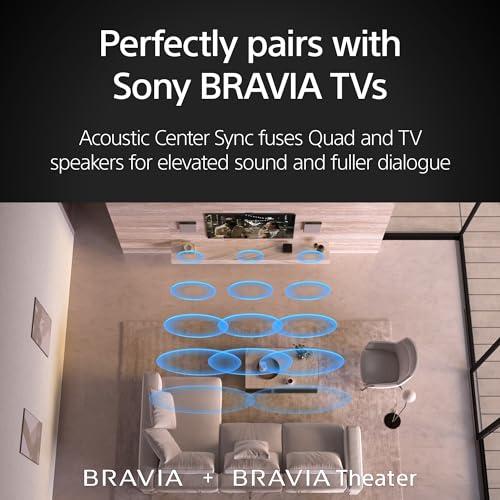
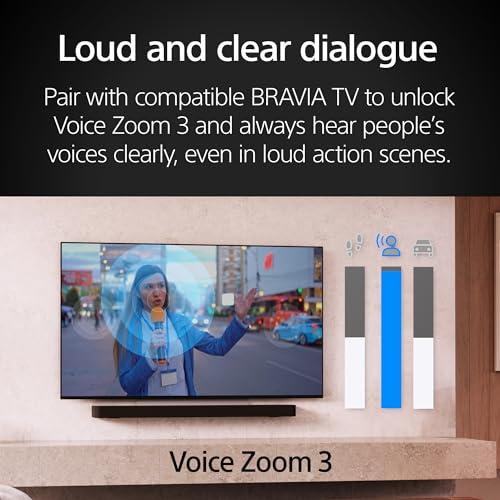
The Sony creates a "phantom center" using processing and the front speakers. While this can work well, some users report that dialogue occasionally lacks the pinpoint focus of a dedicated center channel. However, when paired with compatible Sony BRAVIA TVs using Acoustic Center Sync, the TV's speakers can function as a physical center channel, potentially addressing this limitation.
For music listening, the Sony has a clear advantage. The 16 individual drivers and sophisticated processing create a more natural and spacious presentation that works particularly well with classical music, jazz, and older recordings. The support for high-resolution audio and spatial music formats adds to its appeal for critical listening.
The Hisense performs adequately for music, though it's clearly optimized for movie content. The included subwoofer provides good foundation for bass-heavy genres, but the overall presentation lacks the refinement and spatial accuracy of the Sony system.
The Hisense follows traditional home theater conventions: the main soundbar sits below your TV (wall-mounting hardware included), the subwoofer goes somewhere in the room, and the rear speakers need to be positioned behind your seating area. Only power cables are required for the wireless components, which significantly simplifies installation compared to traditional wired systems.
The Sony offers unprecedented flexibility in speaker placement. The four units can be positioned on furniture, wall-mounted, or even placed at different heights to optimize for your room's layout. The automatic calibration system measures distances and acoustic characteristics, then adjusts timing and levels accordingly.
The Hisense integrates well with Hisense TVs through the Hi-Concerto platform, allowing control through the TV's interface. For other TV brands, you'll primarily use the included remote, which offers access to multiple sound modes including Movie, Music, Game Pro, and AI modes that automatically adjust settings.
The Sony is designed around the BRAVIA Connect app, which handles setup and most adjustments. With compatible Sony TVs, the integration is deeper, offering unified control and the ability to use the TV speakers as a center channel. However, some users report occasional sync issues in Hi-Concerto mode with certain TV models.
At the time of writing, these systems occupy completely different market segments. The Hisense AX5140Q represents exceptional value for budget-conscious buyers, delivering genuine 5.1.4 Atmos capability with a complete speaker package at a fraction of premium system pricing.
The Sony HT-A9M2 targets affluent enthusiasts who prioritize cutting-edge technology and superior sound quality over value. When you factor in the recommended subwoofer, the total investment approaches high-end AVR and speaker territory, but without the complexity and installation requirements.
The Hisense makes particular sense for families upgrading from TV speakers or basic soundbars. It provides a substantial improvement in immersion and clarity without requiring acoustic expertise or major room modifications.
The Sony appeals to audio enthusiasts and early adopters who want to experience the future of home theater audio. It's particularly compelling for users whose rooms don't accommodate traditional speaker placement or who move frequently and want a flexible system.
Both systems deliver on their promises, but they serve different audiences and use cases. The Hisense AX5140Q proves that you don't need to spend thousands to enjoy genuine Dolby Atmos immersion. Its traditional approach provides predictable, satisfying results that will impress anyone upgrading from basic TV audio.
The Sony HT-A9M2 represents a glimpse into the future of home audio, where sophisticated processing and flexible hardware placement can create experiences that rival or exceed traditional multi-speaker installations. However, this innovation comes at a premium price that may be difficult to justify unless you prioritize audio quality above value considerations.
For most users, the Hisense provides the better balance of performance and value. But if you're seeking the absolute best spatial audio experience and have the budget for cutting-edge technology, the Sony offers capabilities that simply aren't available elsewhere at any price point.
The choice ultimately comes down to your priorities: exceptional value with proven technology, or premium performance with revolutionary features. Both paths lead to significantly better audio than your TV's built-in speakers—the question is how far down either road you want to travel.
| Hisense AX5140Q | Sony HT-A9M2 |
|---|---|
| System Architecture - Fundamentally different approaches to surround sound | |
| Traditional soundbar + wireless subwoofer + rear speakers | Four identical wireless speakers with no soundbar |
| Channel Configuration - How many discrete audio channels you get | |
| 5.1.4 channels (includes dedicated center and subwoofer) | 4.0.4 channels (phantom center, no included subwoofer) |
| Total Driver Count - More drivers typically mean better sound separation | |
| Not specified (embedded in soundbar + satellites) | 16 drivers (4 per speaker: woofer, mid, tweeter, up-firing) |
| Total System Power - Higher power means louder maximum volume | |
| 600W total | 504W with individual amplification per driver |
| Spatial Audio Technology - How overhead and surround effects are created | |
| Physical up-firing drivers bounce sound off ceiling | 360 Spatial Sound Mapping creates phantom speakers |
| Bass Handling - Critical for movie explosions and music impact | |
| Included 6.5" wireless subwoofer | No subwoofer included (optional purchase required) |
| Room Calibration - Automatic adjustment to your specific space | |
| Basic room fitting tuning with AI EQ | Advanced Sound Field Optimization with microphone measurement |
| Speaker Placement Flexibility - How adaptable to different room layouts | |
| Fixed positions (soundbar under TV, rears behind seating) | Extremely flexible placement anywhere in room |
| HDMI Connectivity - Number of devices you can connect directly | |
| Multiple HDMI inputs including eARC | Single HDMI input with eARC (major limitation) |
| Gaming Features - Advanced features for console gaming | |
| Game Pro mode with enhanced positional audio | PS5 optimization with VRR, ALLM, auto HDR tone mapping |
| Video Passthrough - Highest quality video signals supported | |
| 4K/60Hz with 3D support | 8K/60Hz and 4K/120Hz with Dolby Vision |
| Wireless Audio Quality - Best codec for streaming music | |
| Bluetooth 5.3 with standard codecs | Bluetooth 5.2 with LDAC high-resolution codec |
| TV Integration - How well it works with specific TV brands | |
| Hi-Concerto with Hisense TVs | Deep BRAVIA integration with acoustic center sync |
| Music Listening Performance - Sound quality for critical music enjoyment | |
| Adequate for casual listening with good bass foundation | Excellent with 16-driver array and high-resolution audio support |
| Setup Complexity - Time and effort required for installation | |
| Simple traditional soundbar setup (under 1 hour) | More complex four-speaker placement and calibration |
| Target Price Range - Investment level at time of writing | |
| Budget-friendly (under $400) | Premium flagship (approaching $2,500) |
For small rooms, the Hisense AX5140Q is typically the better choice. Its traditional soundbar design works well in compact spaces without overwhelming the room, and the included subwoofer provides adequate bass without requiring additional purchases. The Sony HT-A9M2 can work in small rooms but may be overkill given its premium price and the fact that small spaces don't fully showcase its advanced spatial mapping capabilities.
The Hisense AX5140Q includes a 6.5-inch wireless subwoofer, so you get complete bass coverage out of the box. The Sony HT-A9M2 does not include a subwoofer and professional reviewers consistently recommend adding Sony's optional wireless subwoofer for full performance, especially for movie watching and bass-heavy music.
The Hisense AX5140Q is significantly easier to set up, following traditional soundbar installation with the main unit under your TV and wireless components placed around the room. The Sony HT-A9M2 requires more thoughtful placement of four separate speakers and running room calibration, though it offers much more flexibility in speaker positioning once you invest the setup time.
Both excel at movies, but differently. The Hisense AX5140Q delivers traditional surround sound with clear dialogue and convincing overhead effects through physical up-firing speakers. The Sony HT-A9M2 creates a more enveloping, bubble-like soundscape that can surpass traditional setups, but requires the optional subwoofer for full cinematic impact with action movies.
The Sony HT-A9M2 is superior for music, especially classical, jazz, and audiophile content, thanks to its 16 individual drivers and high-resolution audio support. The Hisense AX5140Q handles music adequately but is clearly optimized for movie content rather than critical music listening.
The Hisense AX5140Q's 5.1.4 setup includes a dedicated center channel for dialogue and a subwoofer (.1), plus four height channels. The Sony HT-A9M2's 4.0.4 configuration uses phantom center processing instead of a physical center speaker and has no included subwoofer, though it creates virtual surround speakers through advanced processing.
The Hisense AX5140Q provides multiple HDMI inputs including eARC, allowing you to connect several devices directly. The Sony HT-A9M2 has only one HDMI input with eARC, which many reviewers consider a significant limitation for a premium system requiring most devices to connect directly to your TV.
Both deliver excellent Dolby Atmos, but through different methods. The Hisense AX5140Q uses four physical up-firing speakers that bounce sound off your ceiling for overhead effects. The Sony HT-A9M2 employs sophisticated 360 Spatial Sound Mapping to create phantom speakers throughout your room, often providing more consistent performance across different seating positions.
The Sony HT-A9M2 excels for gaming, especially with PlayStation 5, offering features like Variable Refresh Rate (VRR), Auto Low Latency Mode (ALLM), and automatic HDR optimization. The Hisense AX5140Q includes a Game Pro mode that enhances positional audio but lacks the advanced gaming-specific features of the Sony system.
The Hisense AX5140Q provides exceptional value, delivering genuine 5.1.4 Dolby Atmos capability with a complete speaker package at a budget-friendly price point. The Sony HT-A9M2 costs significantly more but offers cutting-edge spatial audio technology and superior build quality for those prioritizing premium performance over value.
Yes, both work with any TV that has HDMI ARC or eARC. However, the Hisense AX5140Q offers enhanced integration with Hisense TVs through Hi-Concerto, while the Sony HT-A9M2 provides deeper integration with Sony BRAVIA TVs, including the ability to use TV speakers as a center channel through Acoustic Center Sync.
The Hisense AX5140Q has fewer physical components but requires traditional placement with the soundbar under your TV and surrounds behind seating. The Sony HT-A9M2 has four separate speakers but offers much more placement flexibility, allowing you to position speakers on shelves, walls, or furniture to fit your room layout without compromising performance.
We've done our best to create useful and informative comparisons to help you decide what product to buy. Our research uses advanced automated methods to create this comparison and perfection is not possible - please contact us for corrections or questions. These are the sites we've researched in the creation of this article: shop.hisense-usa.com - manuals.plus - dolby.com - youtube.com - gzhls.at - rtings.com - youtube.com - bestbuy.com - manuals.plus - bestbuy.com - hisense-usa.com - youtube.com - device.report - manuals.plus - youtube.com - device.report - manuals.plus - youtube.com - bestbuy.com - whathifi.com - whathifi.com - youtube.com - rtings.com - audiosciencereview.com - bhphotovideo.com - skybygramophone.com - sony.com - manuals.plus - audioadvice.com - dell.com - valueelectronics.com - youtube.com - merlinstv.com - videoandaudiocenter.com - electronics.sony.com - sony.com - bestbuy.com - beachcamera.com - sony.com - win.consulting - sony.com

Privacy Policy
Terms and Conditions - Affiliate Policy
Home Security
© Copyright 2008-2026.
11816 Inwood Rd #1211, Dallas, TX 75244