


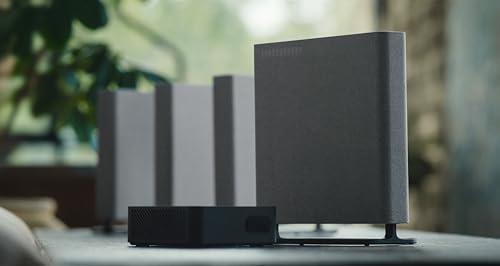



If you've ever watched an action movie and felt like the explosions were coming from inside a tin can, you know how important good audio is for entertainment. Your TV's built-in speakers just aren't designed to fill a room with immersive sound, which is where aftermarket audio solutions come in. Today, we're comparing two products that take completely different approaches to solving this problem: the Sony HT-A9M2 wireless theater system and the Klipsch Flexus Core 200 soundbar.
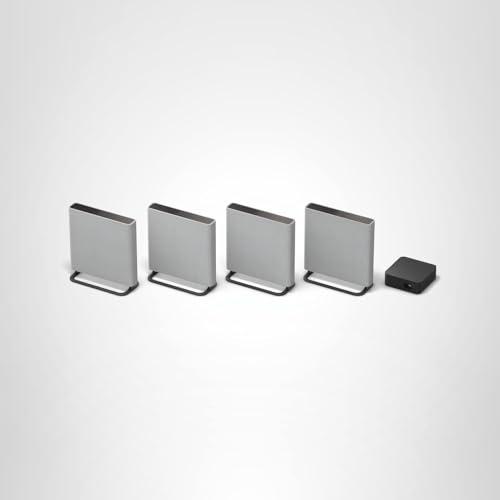
These aren't direct competitors in the traditional sense. The Sony HT-A9M2 is what we'd call a "wireless surround system" – it uses four separate speakers that you place around your room to create true surround sound. The Klipsch Flexus Core 200, on the other hand, is a premium soundbar that does everything from a single bar positioned near your TV. At the time of writing, they're priced worlds apart, with the Sony system costing roughly five times more than the Klipsch soundbar.
Understanding which approach works better for your situation requires diving into what each system does well and where they fall short.
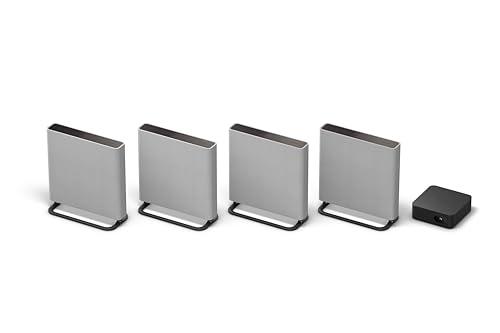
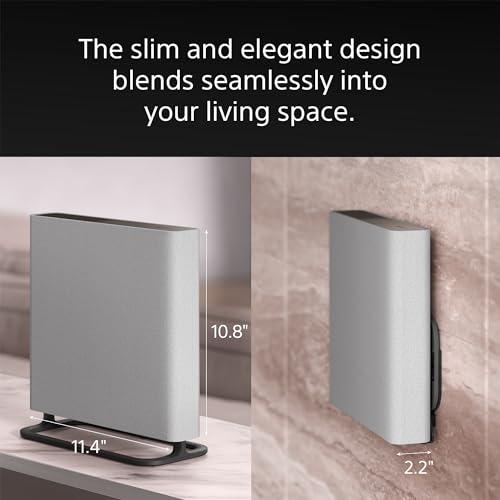
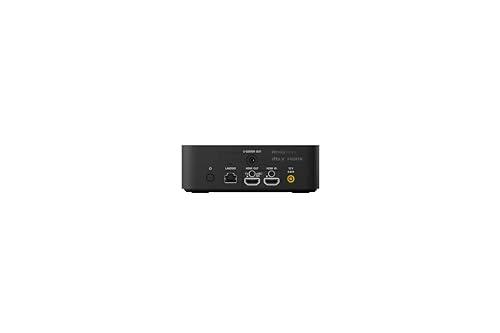
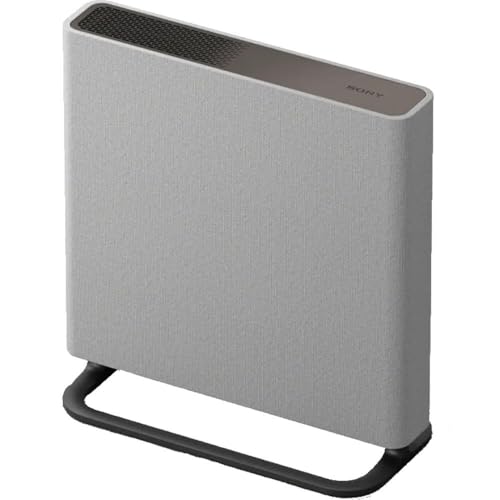
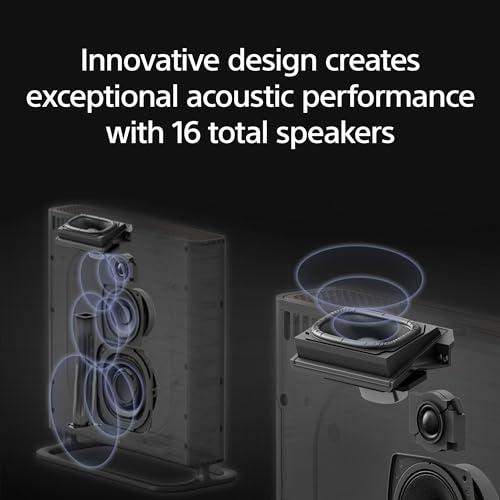
The Sony HT-A9M2, released in 2023, represents Sony's vision of how surround sound should work in modern homes. Instead of running speaker wires all over your room like traditional surround systems, it uses four identical wireless speakers that communicate with a central control box. Each speaker contains four separate drivers (the individual speakers inside the cabinet): a full-range driver, a tweeter for high frequencies, a woofer for bass, and an upward-firing driver for Dolby Atmos height effects.
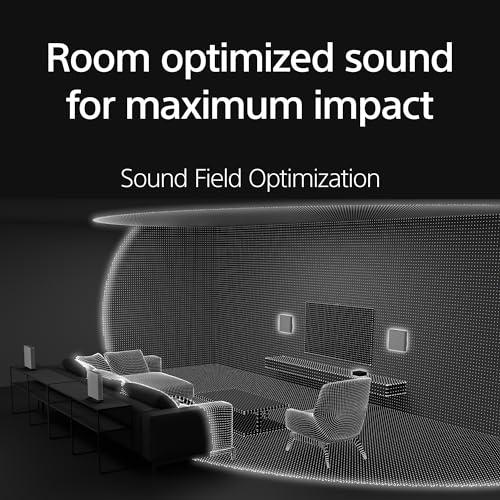
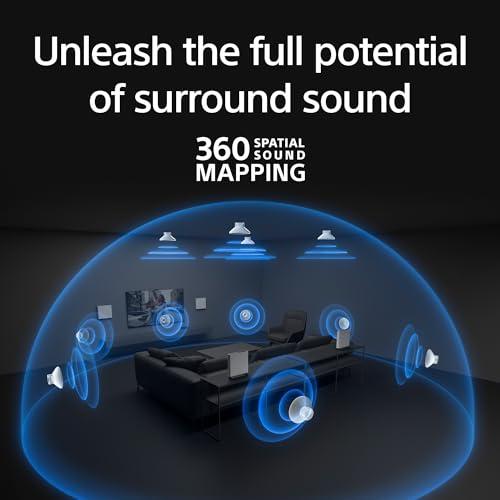
What makes this system special is Sony's "360 Spatial Sound Mapping" technology. This isn't just marketing speak – it's a sophisticated room analysis system that uses microphones built into each speaker to measure your room's acoustics. The system then creates "phantom speakers" by bouncing sound off your walls and ceiling in precisely timed ways. These phantom speakers make it seem like sound is coming from locations where there aren't any physical speakers, potentially creating up to 12 virtual sound sources around your listening area.
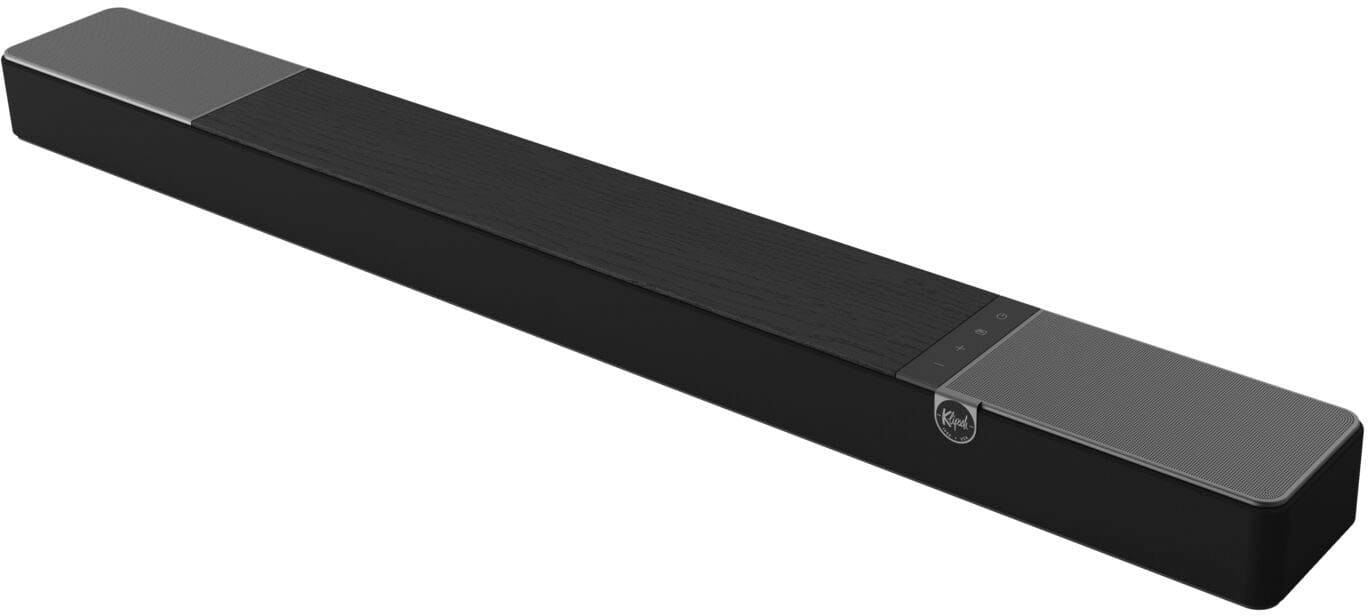
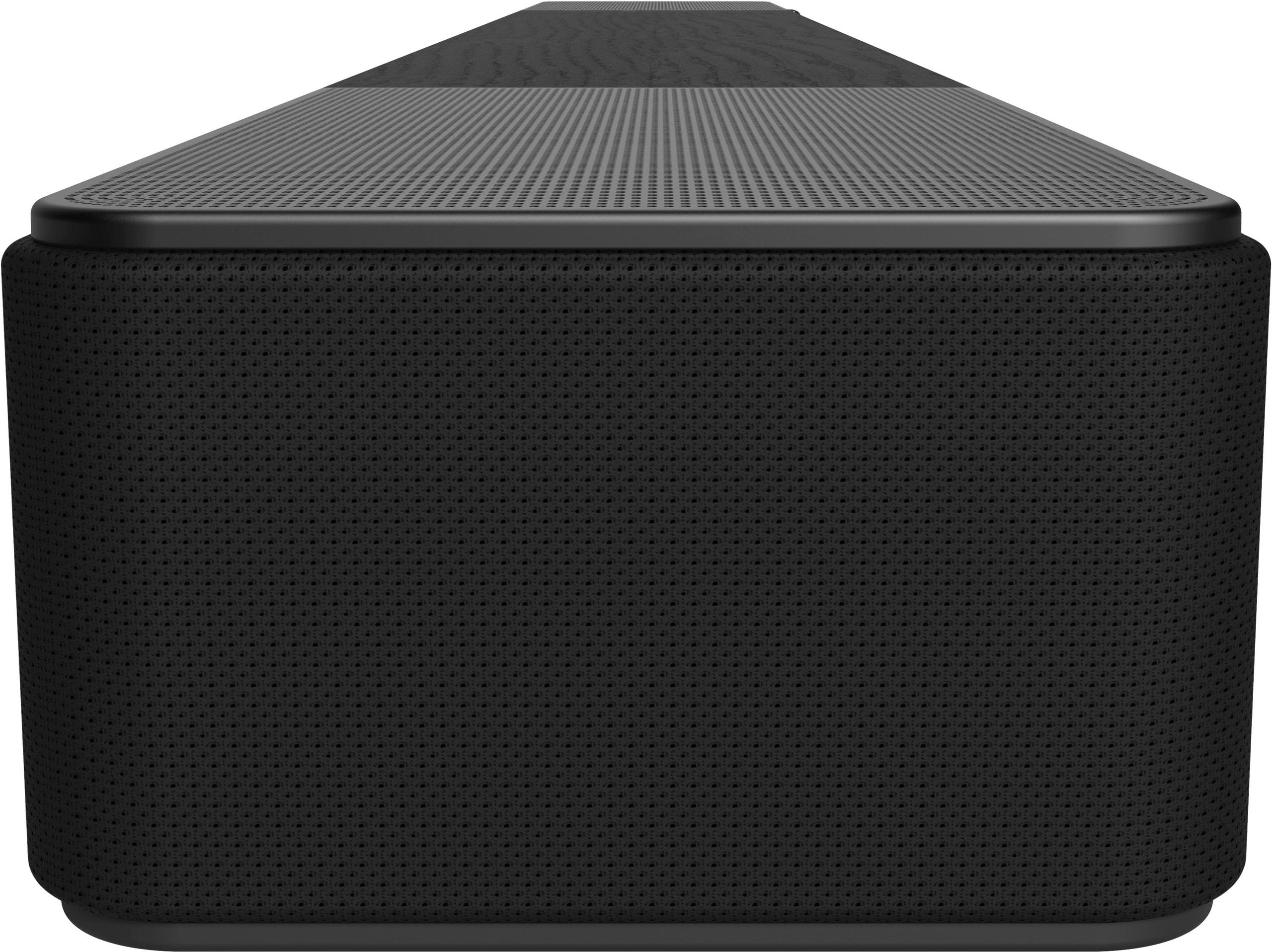
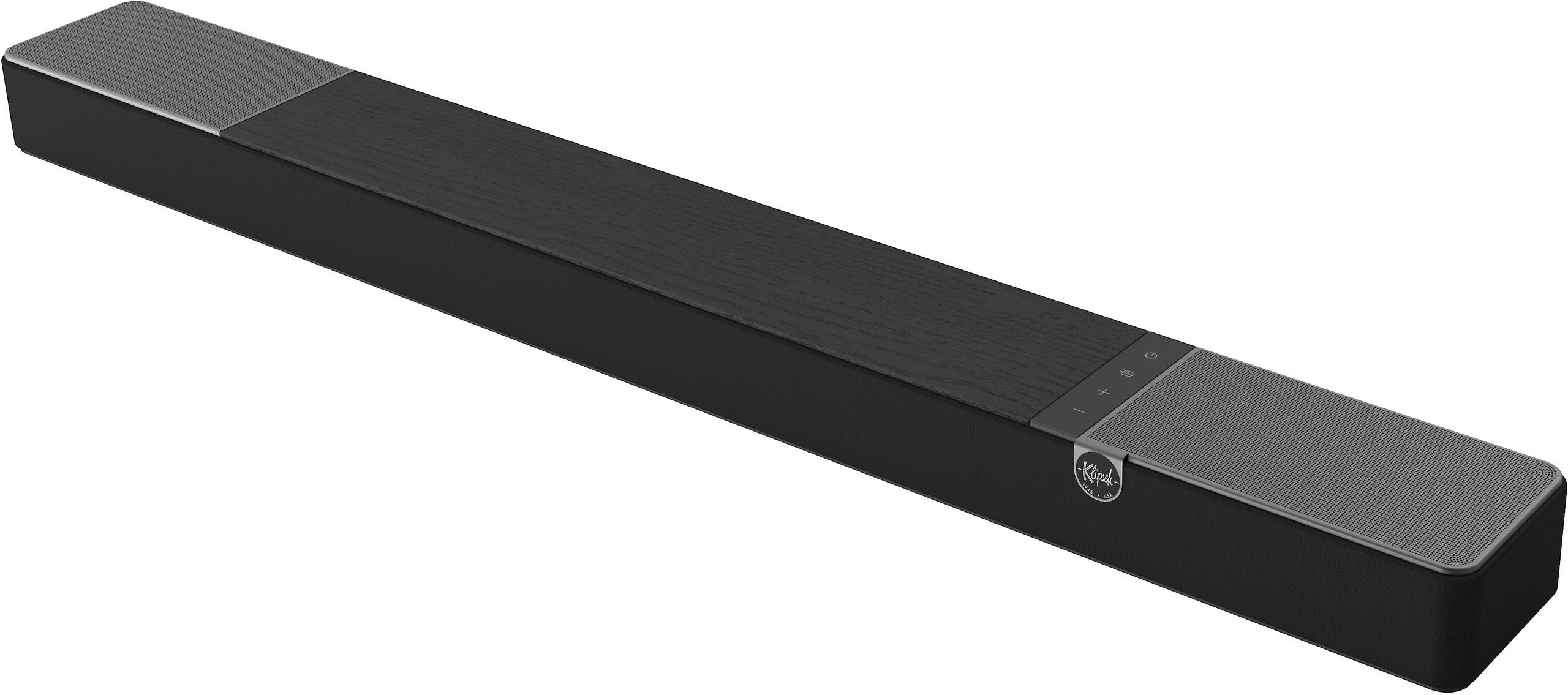
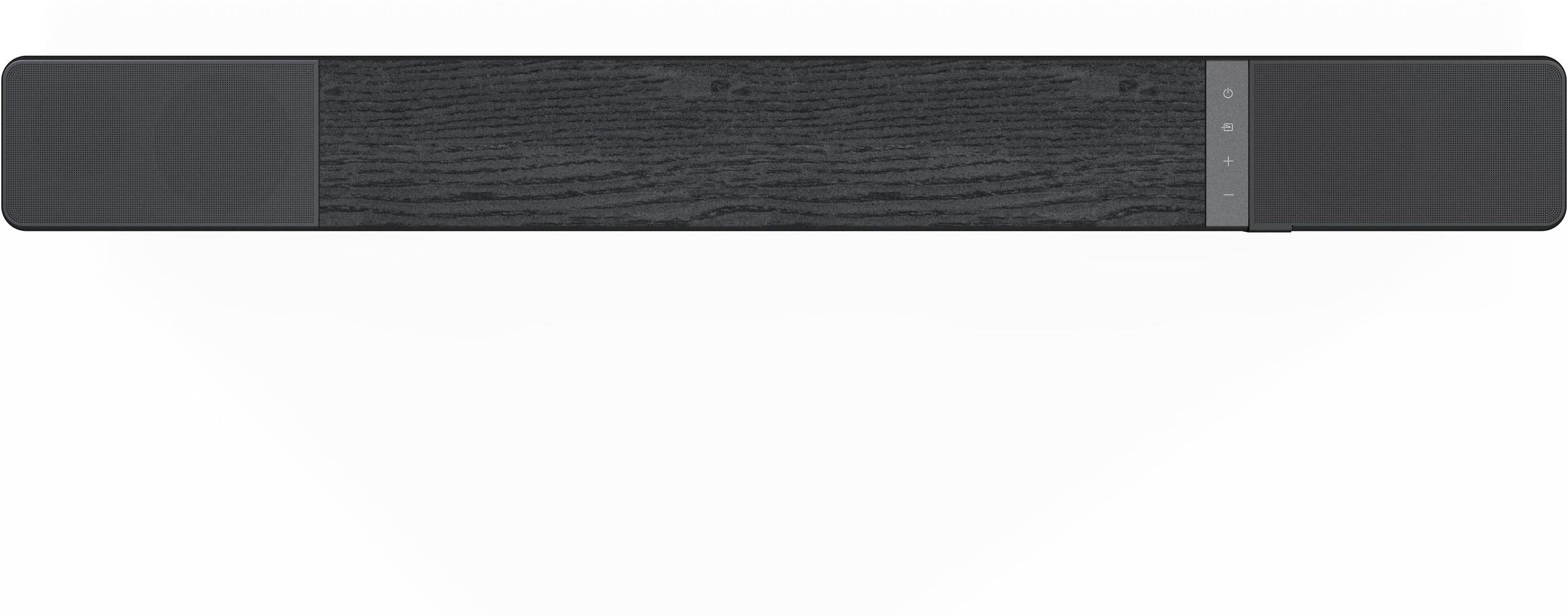
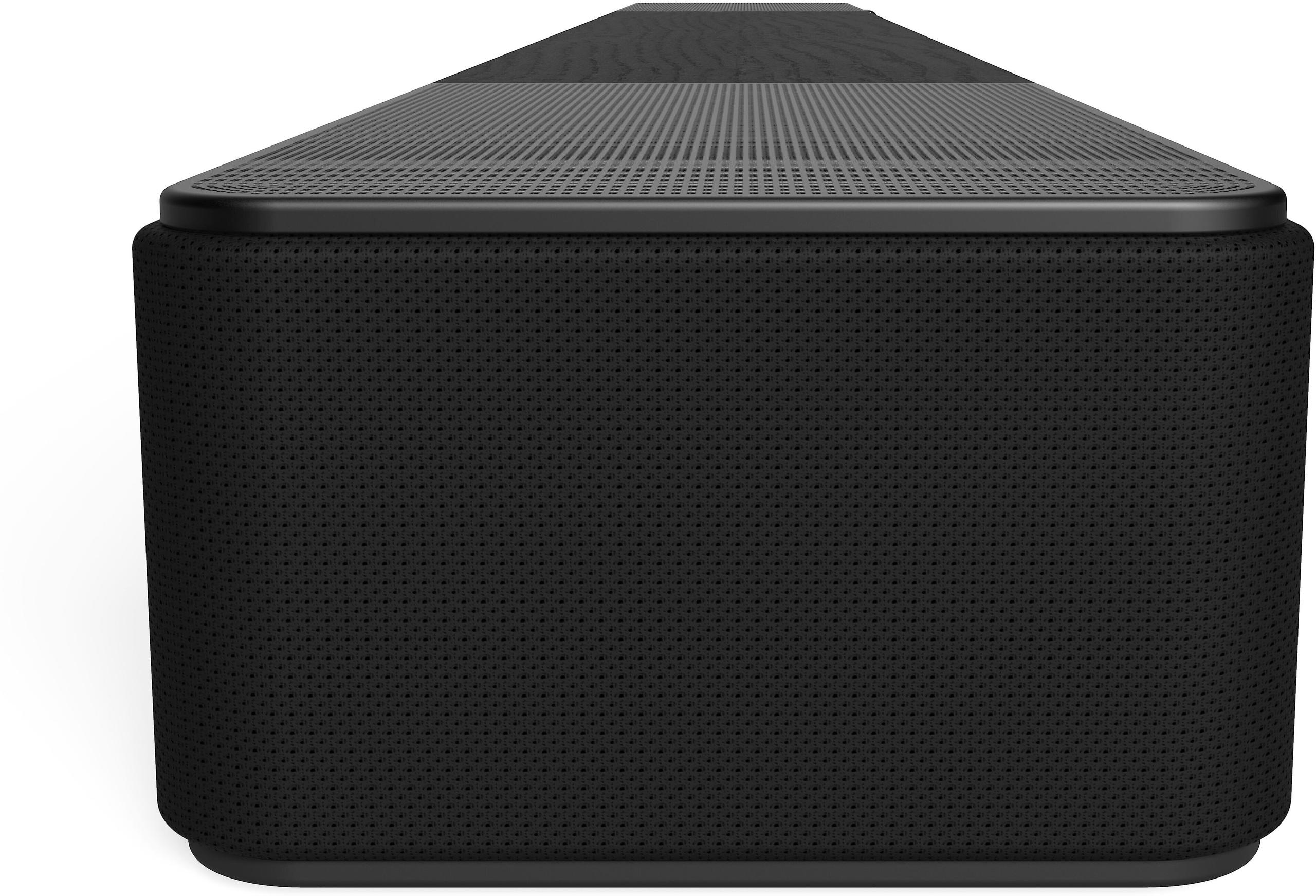
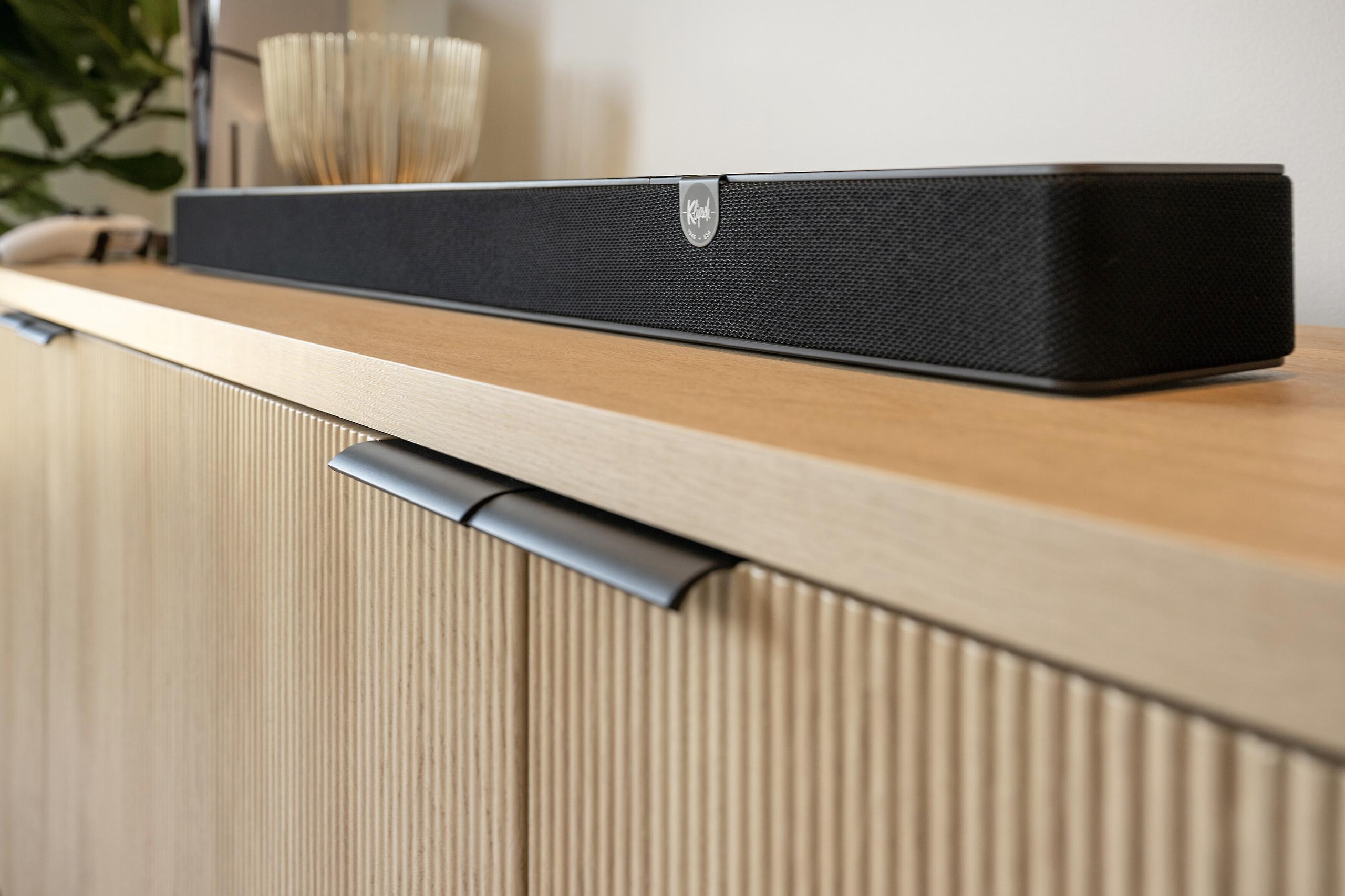
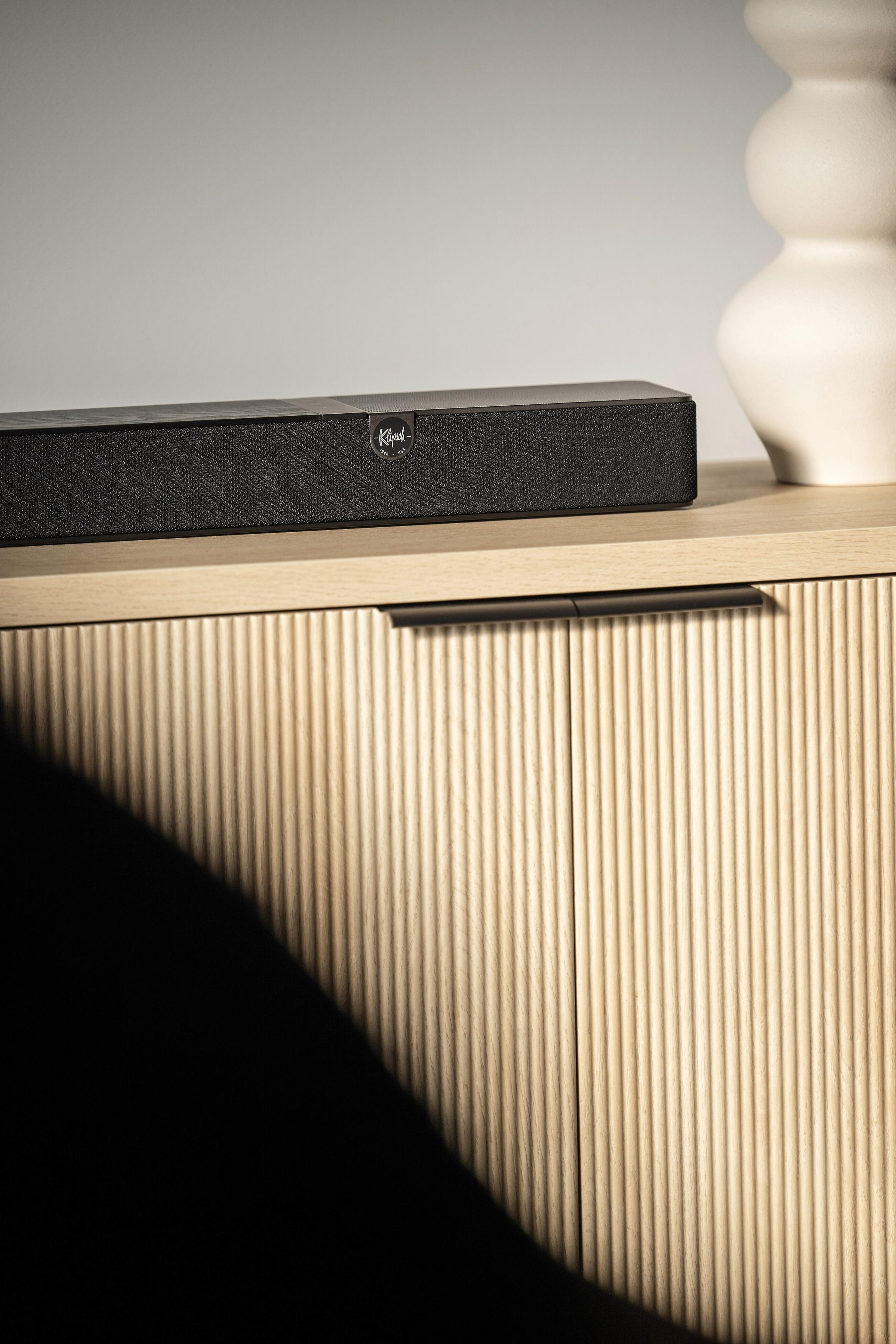
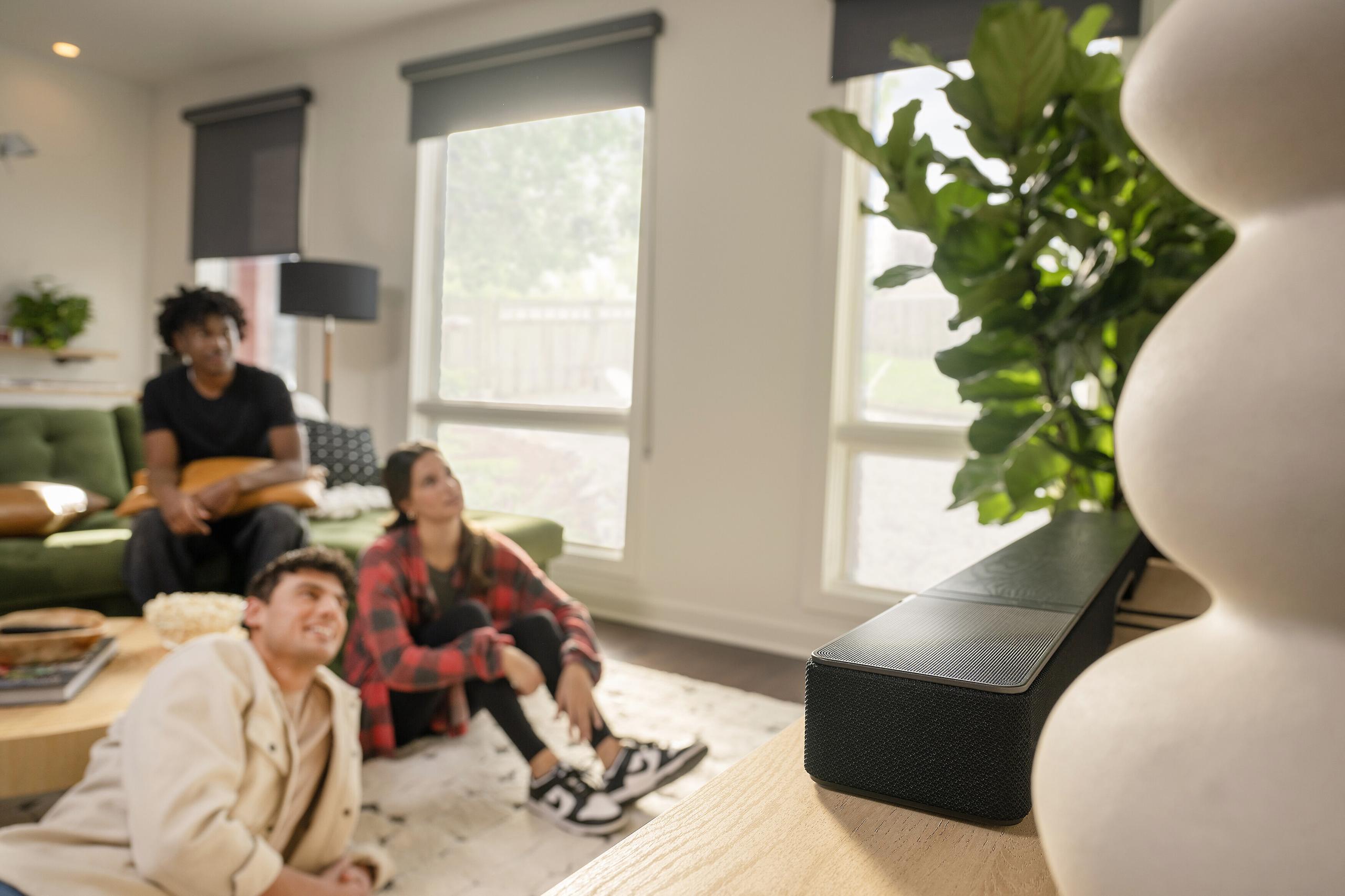
The Klipsch Flexus Core 200, launched in 2024, takes the opposite approach. Everything you need is built into a single 44-inch soundbar. It packs seven drivers into that slim profile: four front-firing speakers for left and right channels, one horn-loaded tweeter dedicated to dialogue (the center channel), two upward-firing drivers for Dolby Atmos effects, and dual 4-inch built-in subwoofers.
Klipsch is famous for their horn-loaded tweeters – a technology they've been perfecting since the 1940s. The horn acts like a megaphone, focusing sound waves more efficiently than traditional dome tweeters. This means dialogue comes through with exceptional clarity, even at lower volumes. The built-in subwoofers are particularly noteworthy because most soundbars in this price range require you to buy a separate subwoofer for decent bass response.
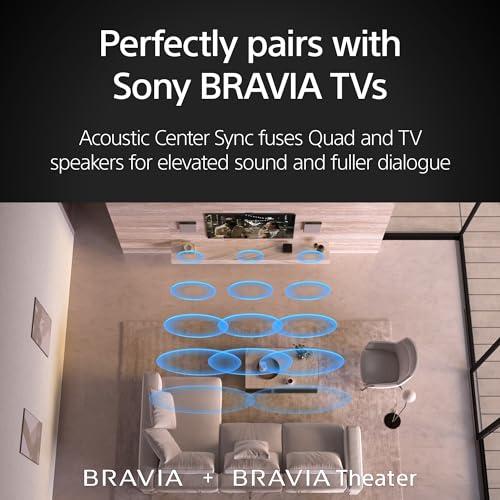
When it comes to creating that "you're in the movie" feeling, the Sony HT-A9M2 has a clear advantage. Having four physically separated speakers around your room creates genuine surround sound. When a helicopter flies overhead in a movie, you'll hear it start from one side, move across the ceiling, and exit on the other side. The phantom speaker technology extends this even further – sounds can appear to come from directions where there are no physical speakers.
Our research into user and expert reviews consistently shows that the Sony system creates what many describe as a "bubble of sound" around the listening position. This works particularly well with Dolby Atmos content, where sound objects are meant to be placed in three-dimensional space around the listener. The system's room calibration means this effect works even if you can't place speakers in ideal locations – the processing adapts to work with whatever placement your room allows.
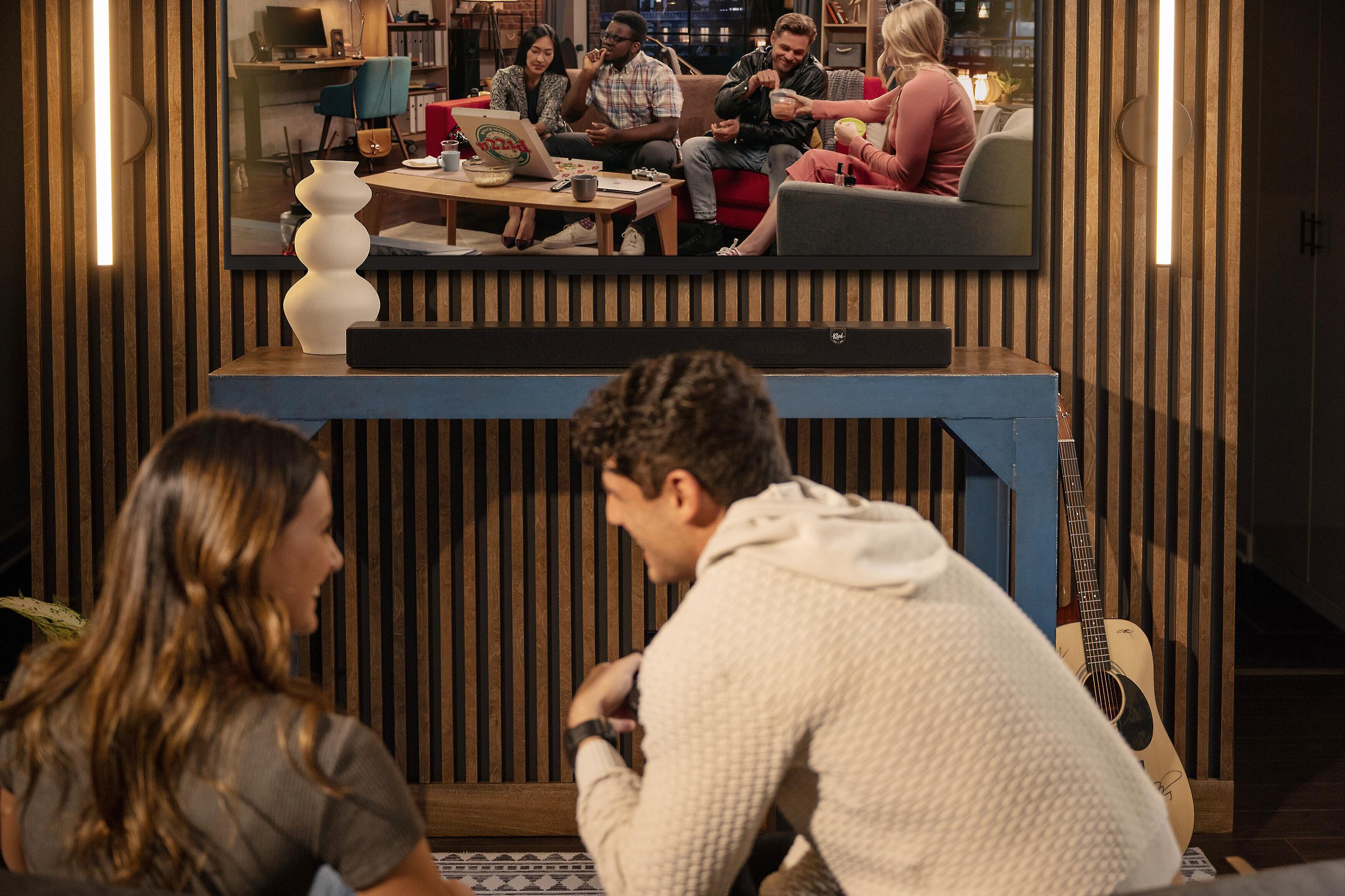
The Klipsch Flexus Core 200 handles immersive audio differently. It creates a wide soundstage (the perceived width and depth of the audio presentation) from its 44-inch width, and the two upward-firing drivers add some height effects. However, it's fundamentally limited to creating sound effects in front of you. While the Atmos processing can make it seem like sounds are coming from wider and higher than the physical bar, it can't create the wraparound effect that true surround speakers provide.
For most everyday TV watching, the Klipsch approach works well. The wide soundstage makes dialogue and music feel more spacious than typical TV speakers. But for movie enthusiasts who want to feel immersed in the action, the Sony system provides a more convincing experience.
Here's where things get interesting. Despite costing significantly less, the Klipsch Flexus Core 200 actually delivers better bass response out of the box than the Sony HT-A9M2. The dual 4-inch subwoofers built into the Klipsch bar provide what reviewers consistently describe as "remarkable" low-end impact for a soundbar.
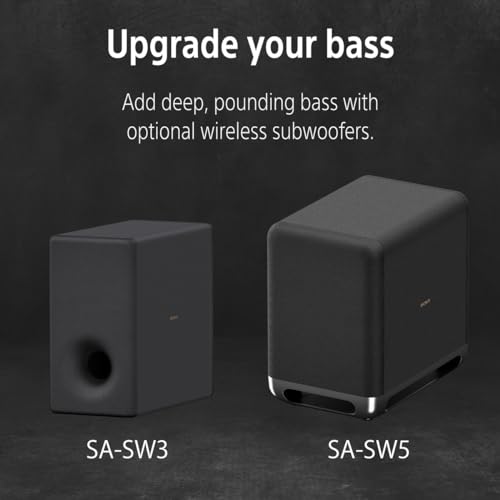
The Sony system's Achilles heel is its bass performance without an additional subwoofer. Each of the four speakers has a small woofer, but they're designed more for midrange clarity than deep bass. Professional reviews consistently note that while the system sounds excellent for dialogue and effects, it lacks the low-frequency punch that makes explosions feel impactful and music sound full. Sony clearly expects users to add their optional wireless subwoofer, which pushes the total system cost significantly higher.
This difference matters more than you might think. Bass isn't just about loud explosions – it provides the foundation for music and adds emotional impact to movie soundtracks. A system that can't reproduce the low rumble of a spaceship engine or the deep notes of a piano simply sounds thin and unconvincing, no matter how good the rest of the frequency range sounds.
Both systems excel at dialogue clarity, but they achieve it in different ways. The Klipsch Flexus Core 200 uses a dedicated horn-loaded tweeter as its center channel, which is specifically designed to reproduce human speech. Horn loading increases efficiency and provides better directional control, meaning dialogue sounds crisp and clear even at low volumes or when you're sitting off to the side.
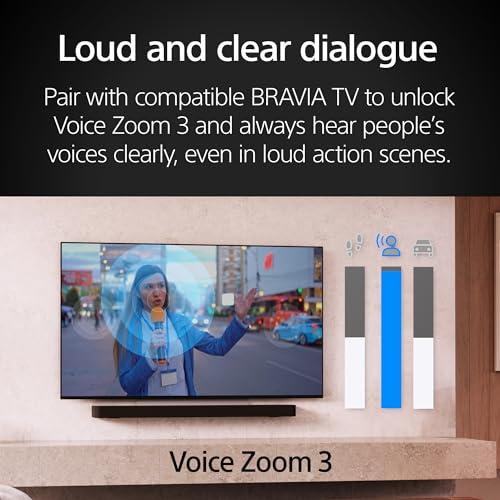
The Sony HT-A9M2 creates a "phantom center channel" using processing to make dialogue appear to come from the center of your screen, even though there's no physical center speaker. While this works well when properly calibrated, it's more dependent on room acoustics and listener position. Many users find they need to activate the system's "Voice Mode" to optimize dialogue clarity, particularly in challenging acoustic environments.
For everyday TV watching – news, sitcoms, dramas – the Klipsch approach provides more consistent dialogue performance across different listening positions and room layouts. The dedicated center channel is simply more foolproof than phantom center processing.
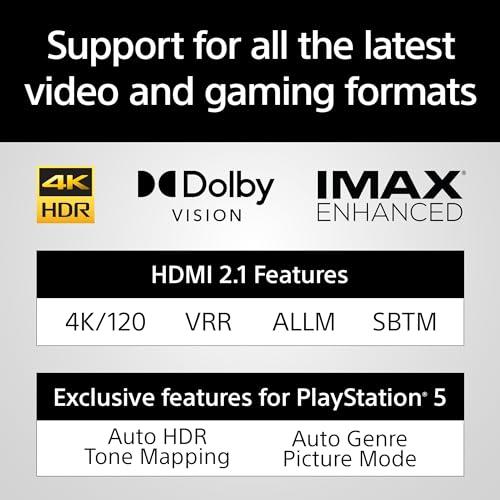
Gamers will find significant differences between these systems. The Sony HT-A9M2 functions as a full HDMI 2.1 hub, supporting 4K at 120Hz, 8K at 60Hz, and advanced gaming features like Variable Refresh Rate (VRR) and Auto Low Latency Mode (ALLM). These features reduce input lag and eliminate screen tearing for smoother gameplay on modern consoles like the PlayStation 5 and Xbox Series X.
The system also supports Source-Based Tone Mapping (SBTM), which allows games to send HDR metadata that helps displays show more accurate colors and brightness levels. For PlayStation 5 owners, the Sony system offers special integration features that automatically optimize both picture and sound settings for different types of games.
The Klipsch Flexus Core 200 offers only basic connectivity with a single HDMI eARC input and no HDMI 2.1 features. While it will pass through 4K video, it doesn't support the advanced gaming features that modern consoles offer. For casual gaming, this isn't a problem, but enthusiast gamers who want the latest features will find the Sony system more future-proof.
Both systems support Dolby Atmos, but their broader format support differs significantly. The Sony HT-A9M2 supports virtually every current audio format, including DTS:X (a competing surround format), IMAX Enhanced, 360 Reality Audio for spatial music, and Hi-Res Audio up to 192kHz/24-bit. It also includes Sony's DSEE Ultimate technology, which uses AI processing to upscale compressed audio files by restoring high-frequency detail that gets lost during compression.
The Klipsch Flexus Core 200 has a notable limitation: it doesn't support DTS formats at all. This matters if you watch a lot of Blu-ray movies, many of which use DTS-HD Master Audio or DTS:X soundtracks. When the soundbar encounters DTS content, it falls back to basic stereo or Dolby Digital processing, losing the immersive audio information entirely.
For streaming-focused users, this limitation is less important since most streaming services use Dolby formats. But for physical media enthusiasts, the lack of DTS support is a significant drawback.
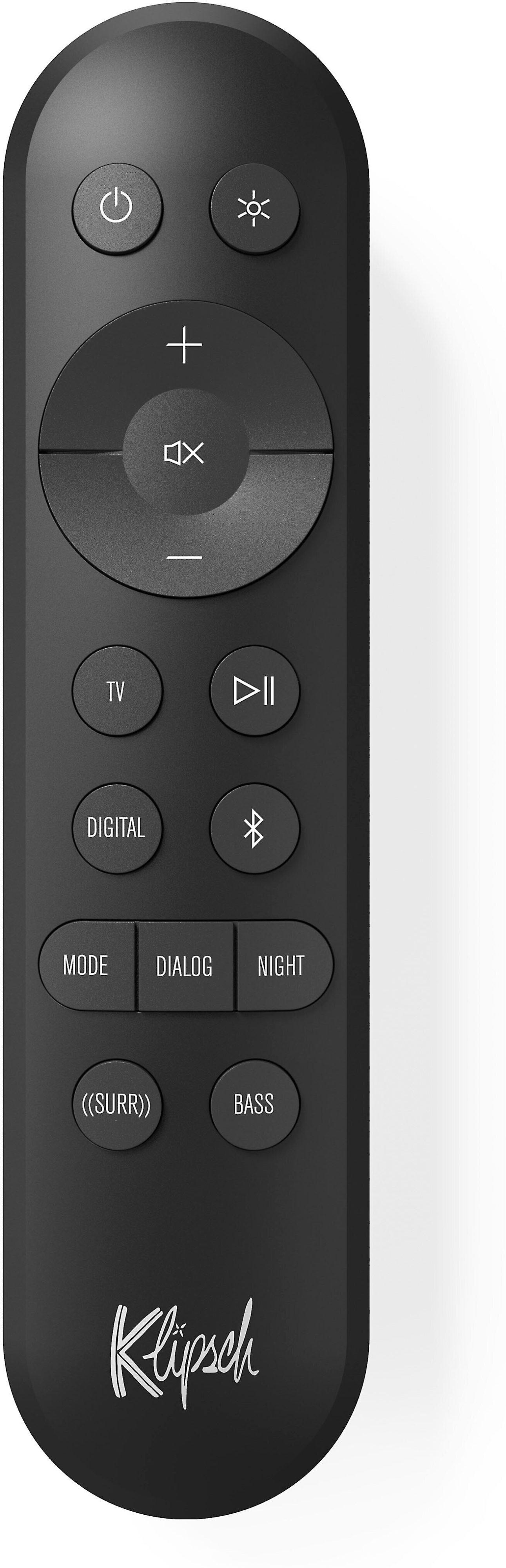
The Klipsch Flexus Core 200 wins hands-down for simplicity. You place the bar near your TV, connect power and HDMI cables, and you're done. The system works well without any calibration, though the Klipsch Connect app provides EQ adjustments if you want to fine-tune the sound.
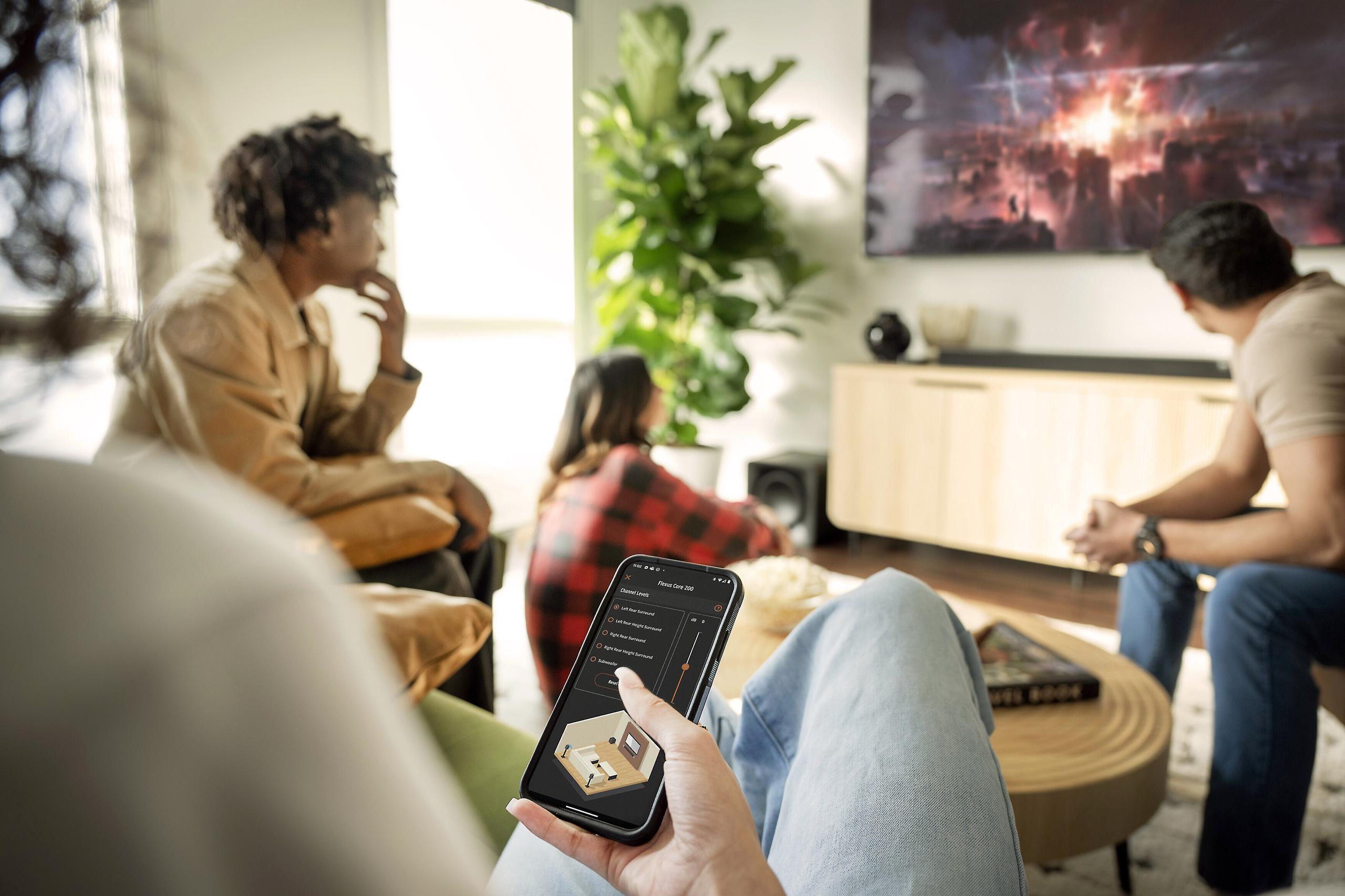
The Sony HT-A9M2 requires more planning. You need power outlets for four speakers, which means considering your room's electrical layout. The speakers connect wirelessly to the central control box, so you don't need to run speaker cables, but you do need to think about optimal placement. The automatic room calibration helps, but the initial setup process is more involved, requiring you to use Sony's smartphone app to measure and optimize the system.
However, the Sony system's flexibility can be an advantage. Because the calibration adapts to your speaker placement, you can work around furniture and room constraints that would compromise a traditional surround system. The speakers can be placed on shelves, mounted to walls, or even positioned at different heights, and the system will adapt accordingly.
Room size significantly affects which system works better. The Klipsch Flexus Core 200 excels in small to medium-sized rooms, roughly up to 15 by 15 feet. In these spaces, the built-in bass response feels appropriate, and the wide soundstage from the 44-inch bar can effectively fill the listening area. The compact design also works well in apartments where space is limited and powerful bass might disturb neighbors.
The Sony HT-A9M2 really shines in medium to large rooms where it has space to create its surround sound bubble. The four separated speakers can take advantage of room acoustics to create a more immersive experience. However, in small rooms, the system can feel like overkill – you're paying for capabilities that the room size prevents you from fully utilizing.
Both systems offer expansion options, but they work differently. The Klipsch Flexus Core 200 can connect to additional Klipsch Flexus components using their proprietary wireless technology, including surround speakers and additional subwoofers. However, the single HDMI input limits connectivity for complex setups.
The Sony HT-A9M2 can add Sony's wireless subwoofers and rear speakers to create a full 7.1.4 system. The HDMI hub functionality means you can connect multiple devices while maintaining advanced features. This makes it more suitable for building a comprehensive home theater system over time.
After researching extensive user feedback and professional reviews, clear patterns emerge about who should choose each system.
Choose the Sony HT-A9M2 if you're serious about home theater and want the most immersive experience possible from a wireless system. This makes sense if you have a medium to large room, plan to watch a lot of movies with surround sound, and are willing to invest in a wireless subwoofer for complete bass response. The system is also ideal for PlayStation 5 owners who want to take advantage of advanced gaming features and for users who prioritize future-proofing with comprehensive format support.
Choose the Klipsch Flexus Core 200 if you want immediate, significant improvement over TV speakers without complexity or additional purchases. This is perfect for smaller spaces, apartment living, or situations where you primarily watch dialogue-heavy content like news, sitcoms, and dramas. The built-in bass response and exceptional dialogue clarity make it an excellent all-around upgrade that works well right out of the box.
The price difference reflects these different approaches. At the time of writing, the Sony system costs roughly five times more than the Klipsch soundbar, but that comparison becomes more complex when you factor in the Sony's need for an additional subwoofer to reach its full potential.
For most people upgrading from TV speakers, the Klipsch Flexus Core 200 provides exceptional value and immediately noticeable improvements in audio quality. For home theater enthusiasts who want the closest thing to a true surround sound experience without running speaker wires, the Sony HT-A9M2 offers capabilities that no soundbar can match, but at a significantly higher investment level.
The choice ultimately comes down to your room, your budget, and how important that wraparound surround sound experience is to your enjoyment of movies and games. Both systems excel at what they're designed to do – they just happen to be designed for very different users and use cases.
| Sony HT-A9M2 BRAVIA Theater Quad | Klipsch Flexus Core 200 |
|---|---|
| Speaker Configuration - Determines surround sound capability and room coverage | |
| 4.0.4 wireless system with 4 separate speakers (16 total drivers) | 3.1.2 single soundbar with 7 drivers plus dual built-in subs |
| Bass Performance - Critical for movie impact and music enjoyment | |
| Requires separate subwoofer purchase for full bass response | Dual 4" built-in subwoofers provide complete bass without additional purchase |
| Total Power Output - Affects maximum volume and dynamic range | |
| 504W total across 16 channels with S-Master HX amplification | 185W RMS from integrated amplifiers |
| Room Size Suitability - Matches system capabilities to your space | |
| Medium to large rooms (15x15 ft or larger) for optimal surround effect | Small to medium rooms, ideal for apartments and compact spaces |
| Immersive Audio Technology - Creates 3D soundscape around listener | |
| 360 Spatial Sound Mapping with phantom speaker generation | Traditional upfiring Atmos drivers with wide soundstage |
| Setup Complexity - Time and effort required for installation | |
| Four wireless speakers need power outlets, app-based room calibration | Single bar placement, plug-and-play with minimal setup |
| Dialogue Clarity - Speech intelligibility for TV shows and movies | |
| Phantom center channel with Voice Mode enhancement | Dedicated horn-loaded center tweeter for superior vocal clarity |
| Gaming Features - Modern console compatibility and performance | |
| HDMI 2.1 hub with 4K/120Hz, VRR, ALLM, PS5 optimization | Single HDMI eARC, no advanced gaming features |
| Audio Format Support - Compatibility with different movie and music sources | |
| Dolby Atmos, DTS:X, IMAX Enhanced, 360 Reality Audio, Hi-Res Audio | Dolby Atmos and Dolby formats only (no DTS support - limits Blu-ray compatibility) |
| Connectivity Options - Device inputs and streaming capabilities | |
| Multiple HDMI inputs, Wi-Fi, Bluetooth 5.2, LDAC, Spotify Connect, AirPlay 2 | Single HDMI eARC, optical input, basic Bluetooth streaming |
| Expandability - Future upgrade potential | |
| Can add wireless subwoofer and rear speakers for 7.1.4 system | Compatible with additional Klipsch Flexus surrounds and subs |
| Value Proposition - Performance per dollar investment | |
| Premium immersive experience at flagship pricing (requires subwoofer for full potential) | Exceptional all-in-one performance at mid-range pricing with no additional purchases needed |
The Klipsch Flexus Core 200 is better for small rooms. Its single soundbar design with built-in subwoofers works perfectly in compact spaces without overwhelming the room. The Sony HT-A9M2 is designed for medium to large rooms where its four separate speakers can create a proper surround sound bubble.
The Klipsch Flexus Core 200 includes dual 4-inch built-in subwoofers, so no additional subwoofer is needed for most users. The Sony HT-A9M2 requires purchasing a separate wireless subwoofer to achieve full bass performance, as the built-in bass in each speaker is adequate but not exceptional.
The Klipsch Flexus Core 200 is much easier to set up - simply place the soundbar near your TV and connect power plus HDMI cables. The Sony HT-A9M2 requires placing four speakers around your room (each needing power outlets) and running smartphone app-based room calibration.
The Klipsch Flexus Core 200 offers superior dialogue clarity thanks to its dedicated horn-loaded center channel tweeter, which is specifically designed for speech reproduction. The Sony HT-A9M2 uses a phantom center channel that works well but may require Voice Mode activation for optimal dialogue performance.
The Sony HT-A9M2 is excellent for gaming with full HDMI 2.1 support, 4K/120Hz passthrough, VRR, ALLM, and special PlayStation 5 optimizations. The Klipsch Flexus Core 200 works with gaming consoles but only offers basic HDMI eARC connectivity without advanced gaming features.
The Sony HT-A9M2 creates true surround sound with four physically separated speakers that place effects all around you using 360 Spatial Sound Mapping technology. The Klipsch Flexus Core 200 provides a wide soundstage and height effects but is limited to front-focused audio presentation.
Yes, both the Sony HT-A9M2 and Klipsch Flexus Core 200 support Dolby Atmos. However, the Sony system also supports DTS:X, IMAX Enhanced, and other formats, while the Klipsch system notably lacks DTS format support, which can be problematic for Blu-ray movie collections.
The Klipsch Flexus Core 200 offers exceptional value as an all-in-one solution that significantly improves TV audio without requiring additional purchases. The Sony HT-A9M2 costs significantly more but provides a premium home theater experience that approaches dedicated surround sound systems.
Both systems are expandable. The Sony HT-A9M2 can add wireless subwoofers and rear speakers to create a full 7.1.4 system. The Klipsch Flexus Core 200 can connect to additional Klipsch Flexus components like surround speakers and extra subwoofers using their wireless technology.
The Sony HT-A9M2 is better for music with Hi-Res Audio support, 360 Reality Audio compatibility, and DSEE Ultimate upscaling technology. The wide speaker separation also creates excellent stereo imaging. The Klipsch Flexus Core 200 handles music well but is more optimized for TV and movie content.
The Sony HT-A9M2 uses proprietary wireless technology to connect four speakers to the control hub, with improved reliability over previous generations. The Klipsch Flexus Core 200 is a wired soundbar that can wirelessly connect to optional expansion speakers using Klipsch's transport technology.
Choose the Sony HT-A9M2 if you want the most immersive surround sound experience, have a medium to large room, and plan to add a subwoofer. Choose the Klipsch Flexus Core 200 if you want immediate improvement over TV speakers with minimal setup, have a smaller space, or prefer an all-in-one solution that works great right out of the box.
We've done our best to create useful and informative comparisons to help you decide what product to buy. Our research uses advanced automated methods to create this comparison and perfection is not possible - please contact us for corrections or questions. These are the sites we've researched in the creation of this article: bestbuy.com - whathifi.com - whathifi.com - youtube.com - rtings.com - audiosciencereview.com - bhphotovideo.com - skybygramophone.com - sony.com - manuals.plus - audioadvice.com - dell.com - valueelectronics.com - youtube.com - merlinstv.com - videoandaudiocenter.com - electronics.sony.com - sony.com - bestbuy.com - beachcamera.com - sony.com - win.consulting - sony.com - soundandvision.com - avnirvana.com - avsforum.com - cnet.com - klipsch.com - klipsch.com - youtube.com - assets.klipsch.com - klipsch.com - worldwidestereo.com - klipsch.com - crutchfield.com - digitaltrends.com

Privacy Policy
Terms and Conditions - Affiliate Policy
Home Security
© Copyright 2008-2026.
11816 Inwood Rd #1211, Dallas, TX 75244