








When your TV's built-in speakers just aren't cutting it anymore, you're faced with a decision that goes far beyond simple volume improvements. The home theater audio market has evolved dramatically, offering everything from basic soundbars to sophisticated multi-speaker systems that can transform your living room into a cinema. Today, we're comparing two products that represent opposite ends of this spectrum: the Sony HT-A9M2 BRAVIA Theater Quad and the Polk Audio Signa S2.
At the time of writing, these products sit in completely different price tiers—the Sony costs nearly nine times more than the Polk. But this isn't just about expensive versus cheap; it's about fundamentally different approaches to solving the same problem. Understanding which approach works for your situation could save you from buyer's remorse or missing out on an experience that transforms how you enjoy entertainment.
The home theater audio category has become increasingly complex as technology has advanced. In the early 2000s, your choices were essentially TV speakers or a full 5.1 surround system with an AV receiver. Today's market offers everything from ultra-slim soundbars to wireless speaker arrays that can create immersive audio without running cables through your walls.
The key considerations when shopping have evolved too. Audio channels tell you how many discrete audio streams a system can handle—more channels generally mean better surround effects and more precise sound placement. Physical versus virtual surround represents perhaps the biggest philosophical divide: some systems use actual speakers positioned around your room, while others use digital processing to simulate surround effects through fewer speakers.
Room compatibility has become crucial as living spaces vary wildly. A system that works beautifully in a dedicated home theater might overwhelm a small apartment or clash with modern open-concept designs. Setup complexity often correlates with performance, but busy lifestyles make plug-and-play solutions increasingly attractive.
Content format support determines whether you can take advantage of modern audio technologies like Dolby Atmos (which adds overhead sound effects) or DTS:X (a competing surround format). Finally, connectivity and future-proofing ensure your investment won't become obsolete as TVs, gaming consoles, and streaming services adopt new standards.
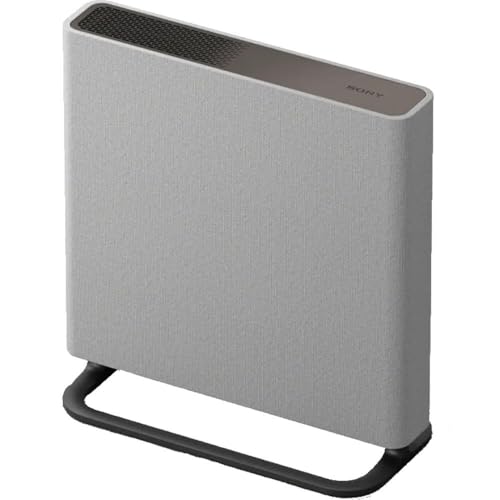
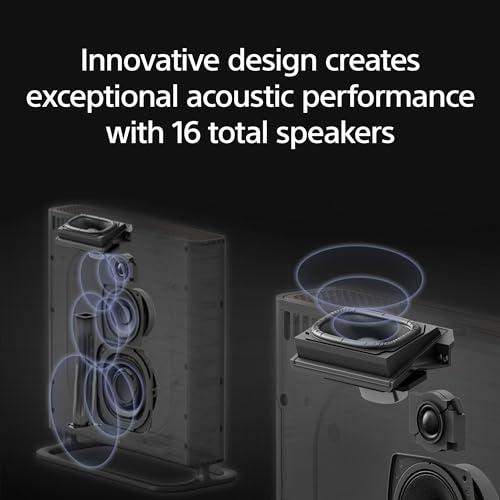
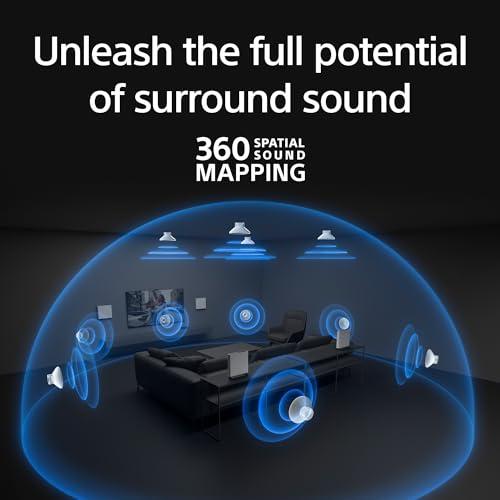
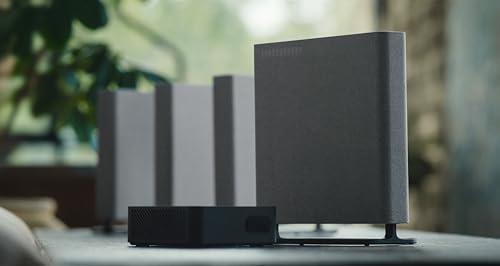
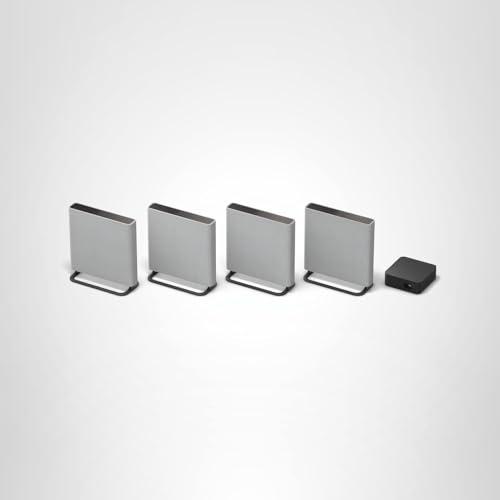
The Sony HT-A9M2, released in 2024 as an evolution of Sony's innovative wireless theater concept, represents the "true surround" philosophy. It's a 4.0.4-channel system, meaning four main speakers at ear level plus four height channels for overhead effects. Each of the four identical speakers contains four drivers: a woofer for bass, a mid-range driver for vocals, a tweeter for high frequencies, and an upward-firing driver for Atmos effects. This gives you 16 total drivers working together to create what Sony calls "360 Spatial Sound Mapping."
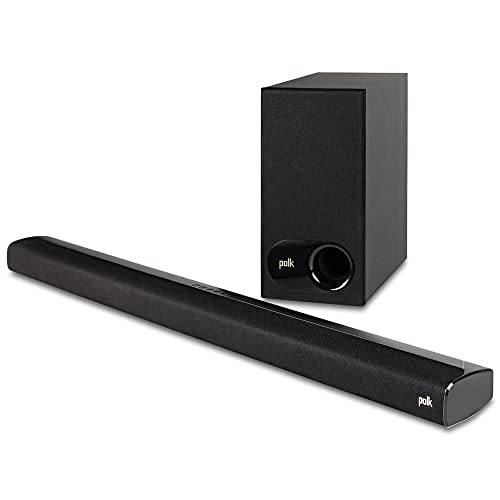
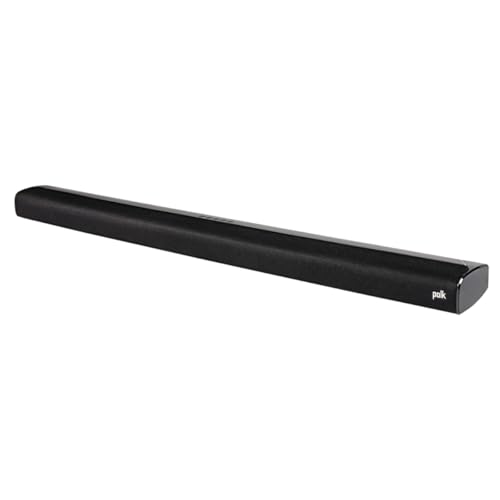
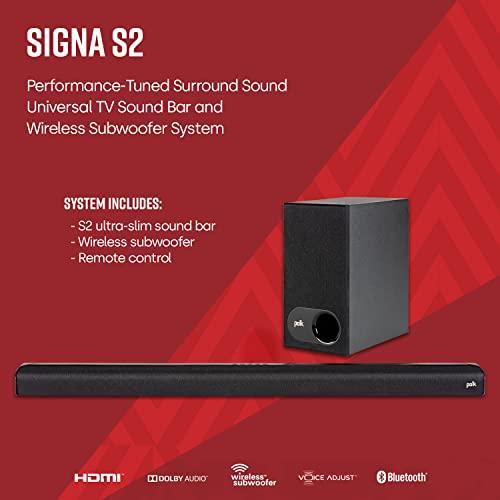
The Polk Signa S2, which has been refined over several years in the budget soundbar market, takes the "enhanced stereo" approach. It's a 2.1-channel system consisting of a single soundbar with four drivers plus a separate wireless subwoofer. Rather than physically surrounding you with speakers, it uses digital processing to simulate surround effects while focusing on the fundamentals: clear dialogue and impactful bass.
These represent fundamentally different philosophies about how to improve your TV audio experience, and understanding which philosophy aligns with your needs and expectations is crucial.
The most significant performance difference lies in how these systems create their soundstage. The Sony HT-A9M2 uses true 4.0.4 surround sound, meaning it has four speakers at ear level (left, right, and two surrounds) plus four height channels for overhead effects. This isn't marketing speak—you're getting genuine surround sound where effects can be precisely placed anywhere in a 360-degree bubble around your seating position.
Each Sony speaker functions as a complete 3-way system with an additional height driver. The 3-way design means dedicated drivers handle different frequency ranges: woofers for bass, mid-range drivers for vocals and most music, and tweeters for high frequencies like cymbals or dialogue clarity. This specialization typically produces cleaner, more accurate sound than asking a single driver to handle everything.
The Polk Signa S2 creates what's called virtual surround sound. The soundbar's four drivers work together to process surround content and create the illusion of sound coming from beside or behind you. While this can be effective, especially for the price point, it's fundamentally limited by physics—you're still getting sound from one location in front of you.
Based on our research into expert reviews and user experiences, the Sony's approach delivers dramatically more convincing surround effects. Users consistently report being able to pinpoint sounds in specific locations around the room, while the Polk's virtual processing creates a wider but less precise soundstage.
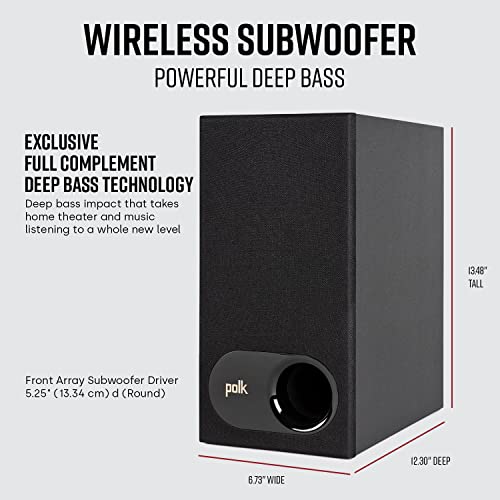
Here's where things get interesting: the Polk Signa S2 actually has an advantage out of the box. It includes a 5.25-inch wireless subwoofer that delivers solid bass impact for its size class. The wireless subwoofer means you can place it anywhere in your room for optimal bass response without running cables.
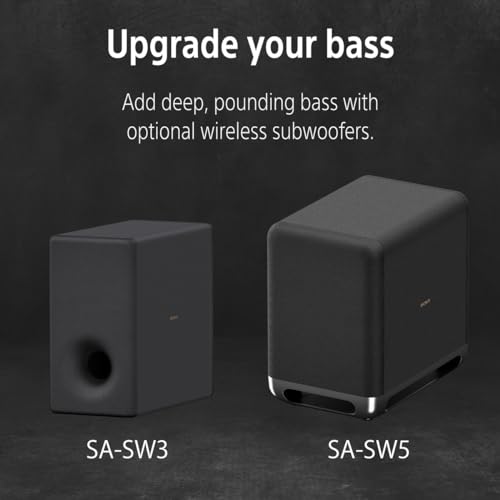
The Sony HT-A9M2, surprisingly, ships as a 4.0.4 system with no subwoofer included. Professional reviewers consistently note that while the Sony's sound is more refined and spatially accurate, it lacks the low-frequency impact that makes action movies exciting. Multiple expert reviews suggest that the Sony really needs its optional wireless subwoofer to reach its full potential.
This creates an interesting value proposition. The Polk gives you complete, bass-heavy performance immediately, while the Sony requires an additional investment (potentially several hundred dollars more) to deliver full-range impact. However, when properly equipped with a subwoofer, the Sony's distributed bass approach—where low frequencies come from multiple points rather than a single subwoofer—creates more natural, room-filling bass.
The Polk's frequency response follows what's called a V-shaped signature, emphasizing bass and treble while keeping midrange slightly recessed. This makes music sound energetic and movies feel impactful, but can sometimes make vocals sound distant or hollow. The Sony aims for a more balanced response that reproduces audio as the content creators intended.
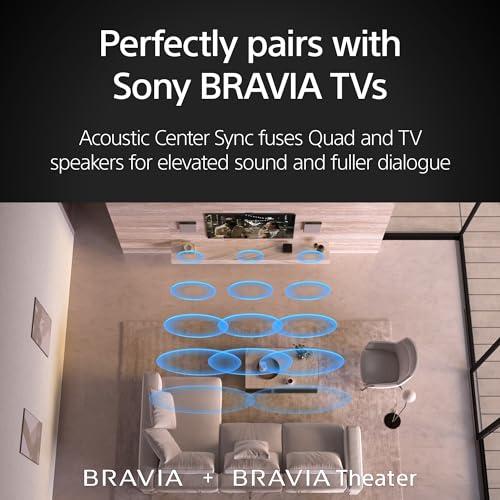
Both systems tackle dialogue differently, and both have merit. The Sony HT-A9M2 creates a phantom center channel by processing center channel information across its front speakers. When paired with compatible Sony BRAVIA TVs, it can also use the TV's built-in speakers as an actual center channel through Acoustic Center Sync technology.
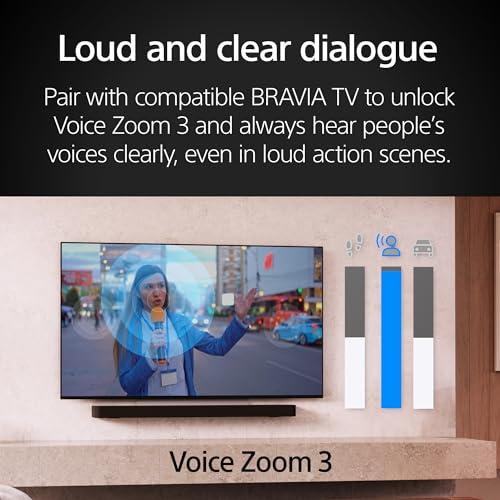
The Sony also features Voice Zoom 3, which uses artificial intelligence to identify and enhance dialogue in the audio mix. This AI processing can separate voices from background music and effects, then boost them for clarity without making the overall sound harsh.
The Polk Signa S2 uses VoiceAdjust technology, which allows you to customize voice levels independently of other audio. This is particularly effective for TV shows and movies where dialogue might otherwise get buried in the mix.
Expert reviews and user feedback suggest both approaches work well, but the Sony's AI-enhanced dialogue processing proves more sophisticated at maintaining natural sound while boosting intelligibility. The Polk's approach is simpler but can sometimes make voices sound artificially bright or nasal when pushed to higher settings.
This is where the price difference becomes most apparent. The Sony HT-A9M2 includes full HDMI 2.1 support, meaning it can handle 8K video at 60 frames per second or 4K at 120 frames per second without compression. For gaming enthusiasts with PlayStation 5 or Xbox Series X consoles, this means the audio system won't bottleneck your video quality.
The Sony also supports advanced gaming features like Variable Refresh Rate (VRR), which eliminates screen tearing, and Auto Low Latency Mode (ALLM), which reduces input lag for more responsive gaming. eARC (enhanced Audio Return Channel) allows the system to receive high-quality audio formats from your TV without compression.
The Polk Signa S2 offers basic HDMI ARC connectivity, which works fine for most TV audio but lacks the bandwidth for advanced audio formats or high-refresh gaming. For most users focused on improving TV and movie audio, this limitation won't matter. But if you're building around a next-generation gaming console or planning to keep this system for many years, the Sony's connectivity proves more future-proof.
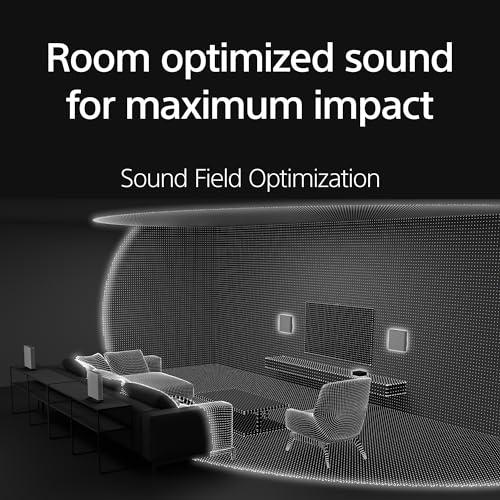
The Sony HT-A9M2 includes Sound Field Optimization, which automatically analyzes your room's acoustics and adjusts the audio accordingly. During setup, the system plays test tones and uses built-in microphones to measure distances, wall reflections, and ceiling height. It then optimizes timing, levels, and frequency response for your specific environment.
This room calibration technology makes a significant difference in real-world performance. Users report that the Sony sounds dramatically different (and better) after calibration, adapting to room quirks that would otherwise cause audio problems.
The Sony also includes modern streaming features like Spotify Connect and Apple AirPlay 2, plus LDAC Bluetooth for high-quality wireless music. DSEE Ultimate uses AI to upscale compressed music files, restoring detail often lost in streaming.
The Polk Signa S2 keeps things simple with basic Bluetooth connectivity and infrared remote control. There's no room calibration, app control, or advanced streaming features. For users who just want better TV audio without complications, this simplicity can be a virtue.
The Sony HT-A9M2 requires significant space planning. You need to position four speakers around your seating area—two in front, two behind or to the sides. Each speaker measures roughly 11 inches tall and deep, so they're not exactly discrete. However, they can be placed on furniture, shelves, or wall-mounted, offering more flexibility than traditional wired systems.
The wireless design eliminates the need to run speaker cables, but you still need power outlets near each speaker location. The system works best in medium to large rooms where you can achieve proper speaker spacing without the speakers dominating your décor.
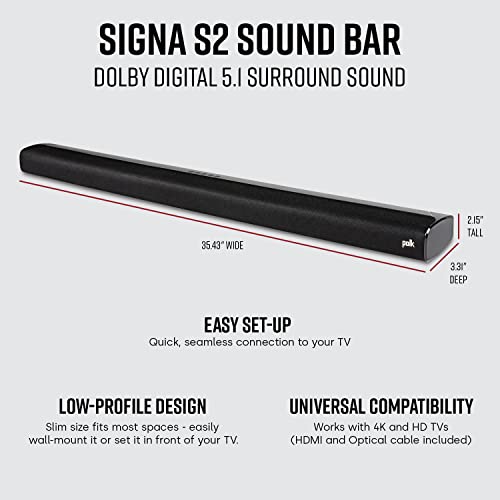
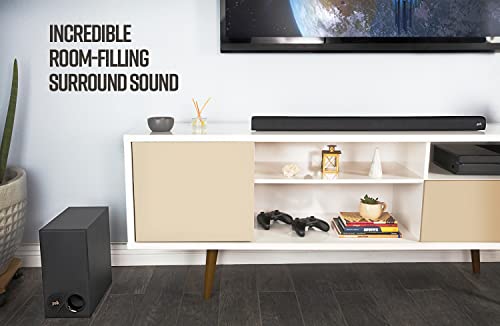
The Polk Signa S2 prioritizes space efficiency. The soundbar measures just over 35 inches wide and barely 2 inches tall, designed to fit in front of most TVs without blocking infrared sensors or overwhelming smaller spaces. The wireless subwoofer can hide behind furniture or in a corner.
This makes the Polk ideal for apartments, bedrooms, or any situation where you want better audio without reorganizing your living space. It's also perfect for renters who can't or won't install wall mounts or run cables.
The Sony HT-A9M2 truly shines with modern content formats. Dolby Atmos movies and shows deliver overhead effects that can genuinely surprise you—helicopters flying overhead, rain falling from above, or explosions that seem to surround you completely. The system also supports DTS:X, IMAX Enhanced, and 360 Reality Audio for music.
Gaming proves particularly impressive, especially with PlayStation 5 titles that support 3D audio. The system can precisely place enemy footsteps, gunfire, or environmental effects in three-dimensional space around you.
The Polk Signa S2 focuses on enhancing standard content rather than showcasing advanced formats. It supports Dolby Digital but downmixes surround content to stereo. This works fine for most TV shows, movies, and music, providing a wider, more engaging soundstage than TV speakers without requiring specific content formats.
You're serious about home theater and have the budget for a premium system. The Sony makes most sense if you frequently watch movies with surround sound, own a next-generation gaming console, or plan to keep this system for many years. You need a medium to large room where you can properly position four speakers, and you're willing to invest in the optional subwoofer for complete performance.
The Sony also appeals to audio enthusiasts who appreciate the technical sophistication of room calibration and advanced processing. If you stream high-quality music or have a collection of Dolby Atmos content, the Sony will showcase these formats properly.
You want a significant improvement over TV speakers without the complexity or cost of a full surround system. The Polk excels in smaller rooms, apartments, or secondary viewing areas where space is limited. It's perfect for users who primarily watch TV shows, news, and casual movie viewing rather than action-heavy content.
The Polk also makes sense if you prioritize dialogue clarity above all else—its VoiceAdjust feature specifically targets the most common complaint about modern TV audio. For users who want plug-and-play simplicity with immediate bass impact, the Polk delivers complete performance out of the box.
These products serve fundamentally different needs, and the price difference reflects genuine capability gaps rather than simple brand markup. The Sony HT-A9M2 creates a transformative home theater experience that can genuinely change how you consume entertainment. Its spatial audio capabilities, room adaptation, and future-proof connectivity justify the premium price for serious home theater enthusiasts.
The Polk Signa S2 solves the most common problem—poor TV audio—efficiently and affordably. It provides excellent value for users who want clearer dialogue, better bass, and a wider soundstage without complexity or major space requirements.
At the time of writing, I'd recommend the Sony for dedicated home theater rooms, serious gamers, and audio enthusiasts who want cutting-edge technology. The Polk makes more sense for most users who simply want their TV to sound better without reorganizing their living space or learning new technology.
Consider your room, budget, content preferences, and how long you plan to keep your investment. Both products excel in their intended roles—just make sure you're buying the right tool for your specific job.
| Sony HT-A9M2 BRAVIA Theater Quad | Polk Audio Signa S2 Sound Bar |
|---|---|
| Channel Configuration - Determines surround sound capability and immersion level | |
| 4.0.4 channels with 16 total drivers across 4 wireless speakers | 2.1 channels with 5 drivers (soundbar + wireless subwoofer) |
| Physical vs Virtual Surround - Real speakers around room vs processed effects | |
| True surround with physical speakers placed around listening area | Virtual surround processing through single soundbar |
| Dolby Atmos Support - Essential for modern movies and overhead effects | |
| Full Dolby Atmos, DTS:X, IMAX Enhanced with dedicated height drivers | Dolby Digital only, no Atmos or height channel support |
| Total Power Output - Affects maximum volume and dynamic range | |
| 504W with 16-channel digital amplification | 120W RMS across all drivers |
| Room Calibration - Automatically optimizes sound for your specific space | |
| Sound Field Optimization with microphone-based room analysis | No automatic calibration or room correction |
| Bass Configuration - Impacts out-of-box low-frequency performance | |
| No included subwoofer (optional wireless sub available separately) | 5.25" wireless subwoofer included |
| HDMI Connectivity - Critical for gaming and future video formats | |
| HDMI 2.1 with 8K/60Hz, 4K/120Hz, VRR, ALLM, eARC | HDMI ARC only, basic 4K passthrough |
| Setup Complexity - Time and effort required for installation | |
| Complex: 4 speakers require room positioning and wireless pairing | Simple: soundbar placement below TV, pre-paired subwoofer |
| Smart Features - Streaming and app integration capabilities | |
| Wi-Fi, Spotify Connect, AirPlay 2, LDAC Bluetooth, DSEE Ultimate AI | Basic Bluetooth streaming, IR remote control |
| Dialogue Enhancement - Specialized technology for voice clarity | |
| Voice Zoom 3 AI processing, Acoustic Center Sync with BRAVIA TVs | VoiceAdjust technology with adjustable dialogue levels |
| Ideal Room Size - Space requirements for optimal performance | |
| Medium to large rooms (300+ sq ft) with flexible speaker placement | Small to medium rooms, apartments, space-constrained setups |
| Target User - Best suited for specific user types and priorities | |
| Home theater enthusiasts, gamers, users wanting true surround immersion | Budget-conscious buyers seeking TV audio upgrade with minimal complexity |
The Sony HT-A9M2 BRAVIA Theater Quad is a premium 4.0.4-channel system with four wireless speakers that create true surround sound, while the Polk Audio Signa S2 is a budget-friendly 2.1-channel soundbar with virtual surround processing. The Sony provides authentic surround effects with speakers positioned around your room, whereas the Polk creates simulated surround sound from a single bar.
The Polk Signa S2 is better for small rooms and apartments. Its ultra-slim soundbar design (just 2.15 inches tall) fits easily under most TVs without blocking sensors, and the wireless subwoofer can be placed discreetly. The Sony HT-A9M2 requires positioning four separate speakers around your seating area, which may be challenging in smaller spaces.
The Polk Signa S2 includes a 5.25-inch wireless subwoofer for immediate bass impact. The Sony HT-A9M2 doesn't include a subwoofer and many reviewers recommend adding Sony's optional wireless subwoofer for full bass performance, though this increases the total cost significantly.
Only the Sony HT-A9M2 BRAVIA Theater Quad supports Dolby Atmos with dedicated upward-firing drivers in each speaker for genuine overhead effects. The Polk Signa S2 supports basic Dolby Digital but cannot process Atmos or create height effects, limiting it to traditional surround sound processing.
The Polk Signa S2 offers simple plug-and-play setup with just the soundbar placement and pre-paired wireless subwoofer positioning. The Sony HT-A9M2 requires more complex setup, including positioning four speakers around your room and running the automatic room calibration process, though the wireless design eliminates speaker cable runs.
The Sony HT-A9M2 is significantly better for next-gen gaming, featuring HDMI 2.1 support for 4K/120Hz gaming, Variable Refresh Rate (VRR), and Auto Low Latency Mode (ALLM). The Polk Signa S2 only offers basic HDMI ARC without advanced gaming features or high refresh rate support.
Both systems support Bluetooth music streaming, but the Sony HT-A9M2 BRAVIA Theater Quad offers more advanced options including Wi-Fi connectivity, Spotify Connect, Apple AirPlay 2, and high-quality LDAC Bluetooth codec. The Polk Signa S2 provides standard Bluetooth streaming without additional smart features or high-resolution wireless codecs.
Both excel at dialogue but use different approaches. The Polk Signa S2 features VoiceAdjust technology specifically designed for dialogue enhancement, while the Sony HT-A9M2 uses advanced Voice Zoom 3 AI processing to separate and enhance speech. Both receive praise for voice clarity, though the Sony's AI processing is more sophisticated.
The Sony HT-A9M2 provides superior music performance with balanced frequency response, spatial audio support for immersive music formats, and DSEE Ultimate AI upscaling for compressed files. The Polk Signa S2 Sound Bar offers decent music playback with emphasized bass and treble (V-shaped sound) but lacks the refinement and spatial capabilities of the Sony system.
This depends on your budget and needs. The Polk Signa S2 offers excellent value for budget-conscious buyers seeking a significant TV audio upgrade with included bass. The Sony HT-A9M2 BRAVIA Theater Quad costs significantly more but provides premium features like true surround sound, room calibration, and advanced connectivity that justify the price for serious home theater enthusiasts.
Yes, both systems work with any TV that has the appropriate connections. The Polk Signa S2 connects via HDMI ARC, optical, or auxiliary input to any modern TV. The Sony HT-A9M2 offers enhanced integration with Sony BRAVIA TVs through Acoustic Center Sync but works with any TV via HDMI eARC or ARC.
For a dedicated home theater room, the Sony HT-A9M2 BRAVIA Theater Quad is the clear choice. Its true 4.0.4 surround sound, Dolby Atmos support, room calibration technology, and immersive spatial audio create a genuine cinema experience. The Polk Signa S2 is better suited for casual TV viewing and smaller spaces rather than serious home theater applications.
We've done our best to create useful and informative comparisons to help you decide what product to buy. Our research uses advanced automated methods to create this comparison and perfection is not possible - please contact us for corrections or questions. These are the sites we've researched in the creation of this article: bestbuy.com - whathifi.com - whathifi.com - youtube.com - rtings.com - audiosciencereview.com - bhphotovideo.com - skybygramophone.com - sony.com - manuals.plus - audioadvice.com - dell.com - valueelectronics.com - youtube.com - merlinstv.com - videoandaudiocenter.com - electronics.sony.com - sony.com - bestbuy.com - beachcamera.com - sony.com - win.consulting - sony.com - rtings.com - youtube.com - bestbuy.com - rtings.com - consumerreports.org - rtings.com - youtube.com - hometechnologyreview.com - soundbars.com - youtube.com - manuals.plus - creativeaudio.net - parts-express.com - thomsunmusic.com - polkaudio.com - manuals.plus - polkaudio.com - polkaudio.com - polkaudio.com - bestbuy.com - youtube.com - youtube.com - polkaudio.com

Privacy Policy
Terms and Conditions - Affiliate Policy
Home Security
© Copyright 2008-2026.
11816 Inwood Rd #1211, Dallas, TX 75244