




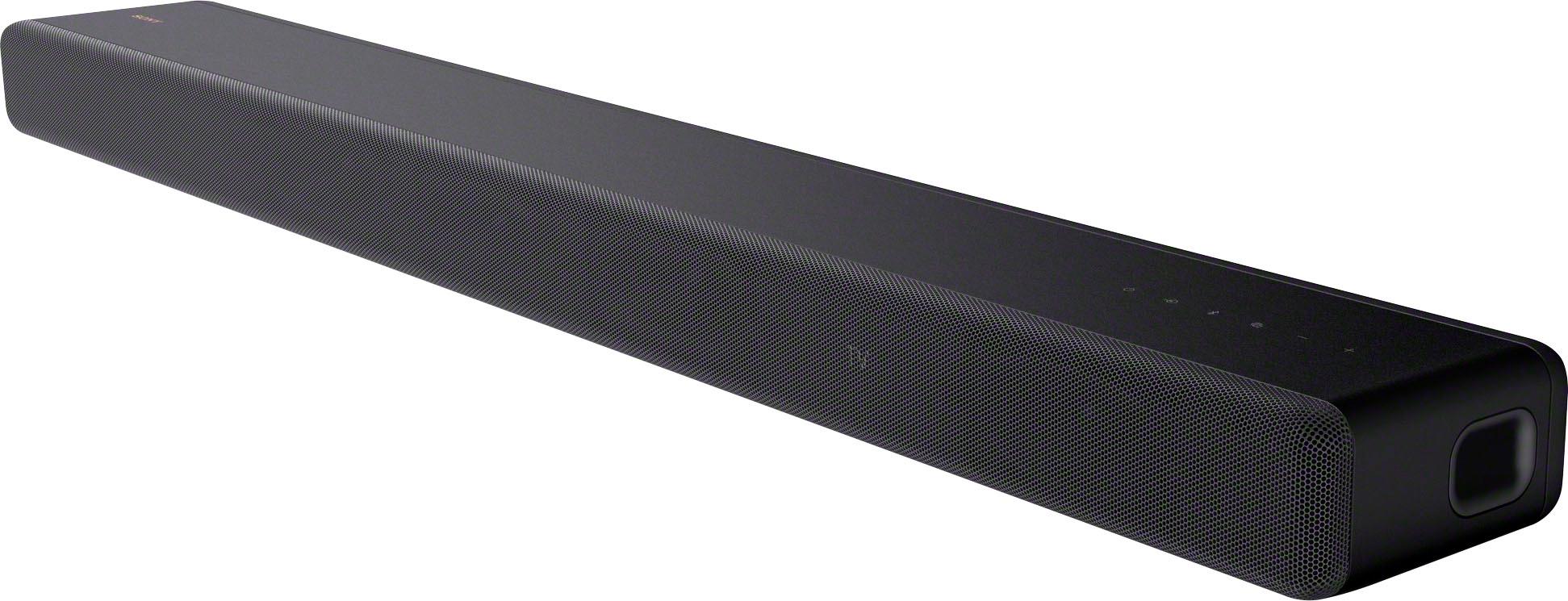
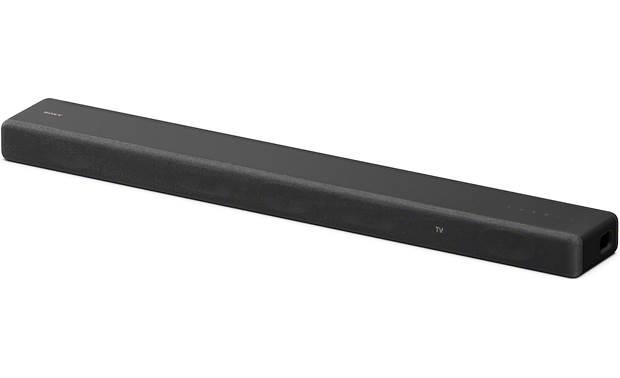

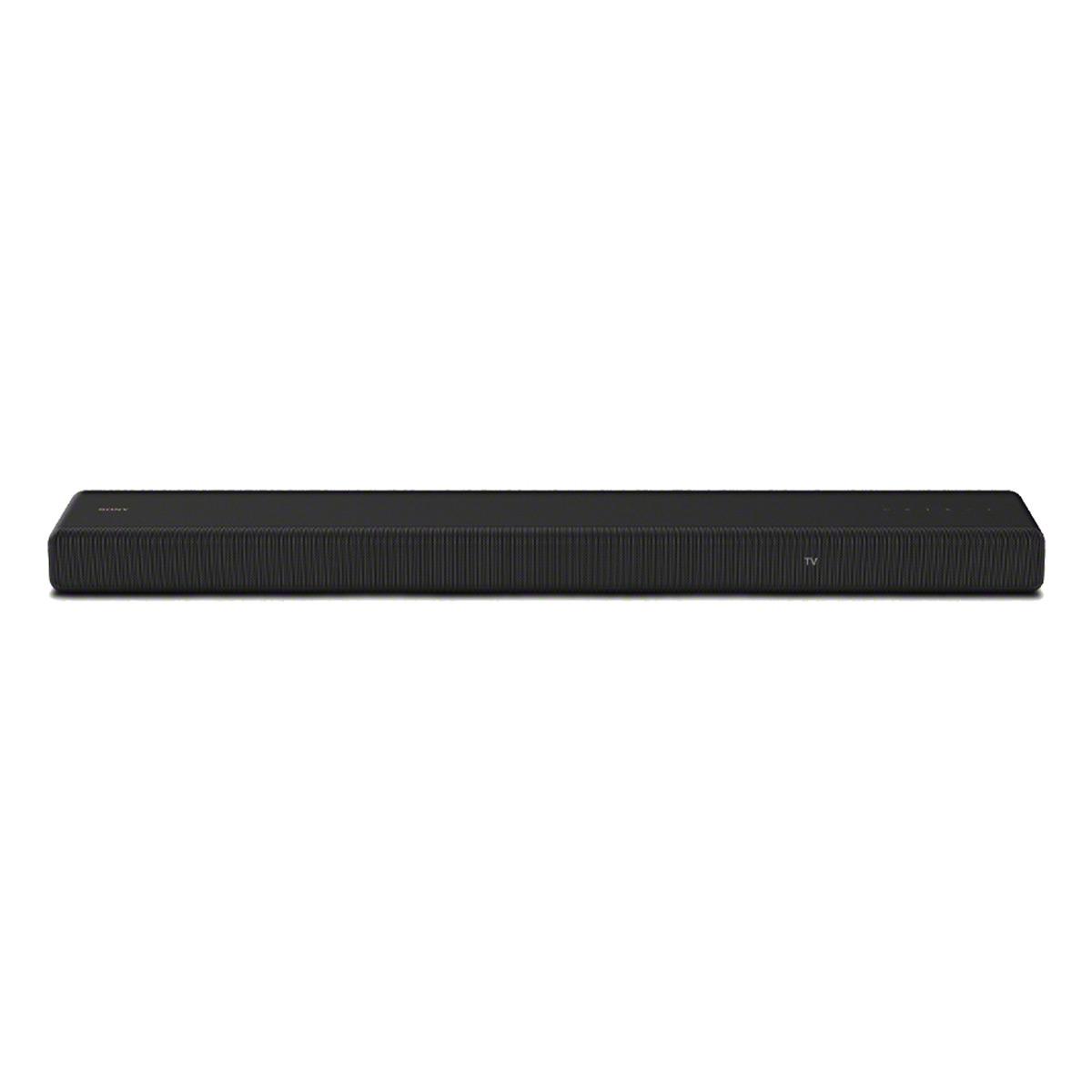
Shopping for home theater audio can feel overwhelming, especially when you're trying to figure out whether to go with a simple soundbar or invest in something more sophisticated. Sony offers two very different approaches with the HT-A9M2 BRAVIA Theater Quad and the HT-A3000 soundbar, and understanding their differences is crucial for making the right choice for your setup.
Let me break down everything you need to know about these systems, from their core technologies to real-world performance, so you can decide which one makes sense for your home and budget.
Before diving into these specific products, it's worth understanding what you're really choosing between. Home theater audio has evolved dramatically over the past few years, moving from basic stereo setups to complex spatial audio systems that can place sounds all around and above you.
The main considerations when shopping in this category include sound quality (how clear and detailed everything sounds), spatial performance (how well the system creates that "surround sound" experience), room compatibility (whether it works well in your specific space), and setup complexity (how much work it takes to get everything running properly).
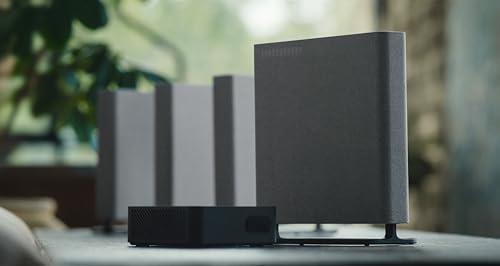
The Sony HT-A9M2 and HT-A3000 represent completely different philosophies. The HT-A9M2, released in 2023, is essentially a wireless version of a traditional multi-speaker surround sound setup, while the HT-A3000, which came out in 2022, takes the all-in-one soundbar approach that's become popular for its simplicity.
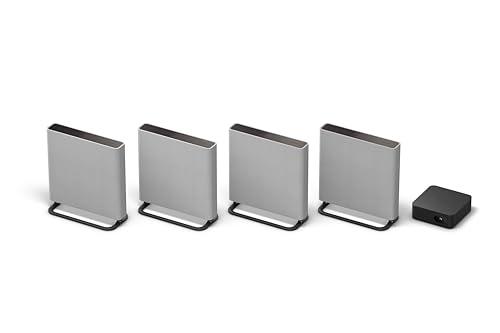
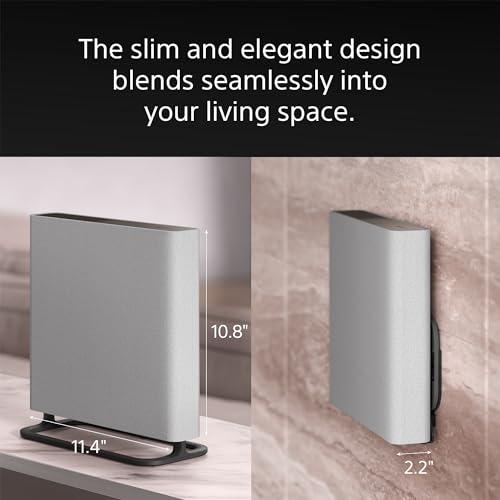
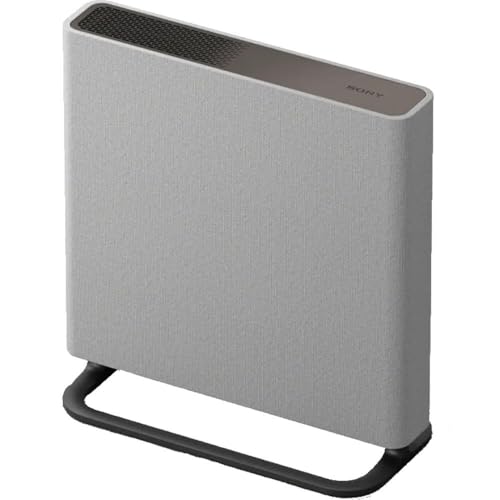
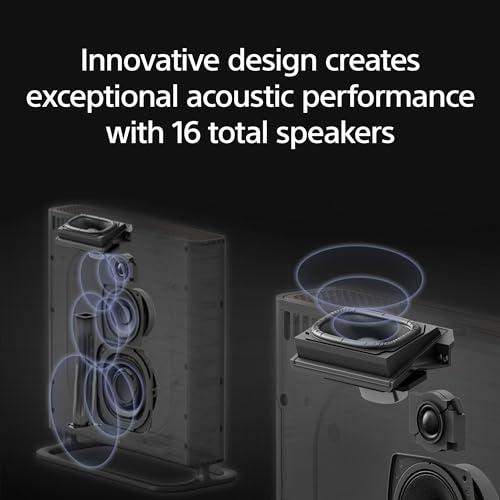
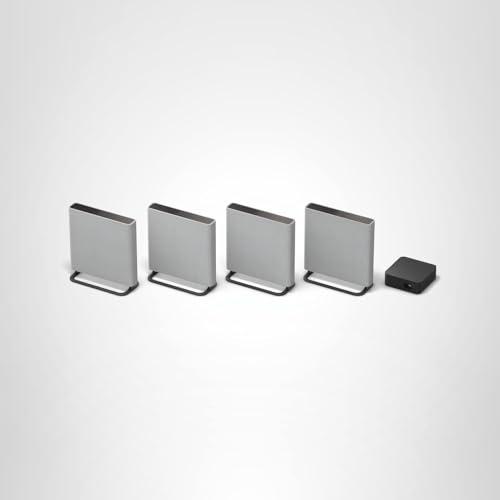
The HT-A9M2 is what Sony calls a "Theater Quad" system, and it's genuinely unique in the market. Instead of one long soundbar, you get four identical wireless speakers that you place around your room. Each speaker is essentially a complete audio system on its own, containing a 3-way driver arrangement—that means it has separate drivers for bass (woofer), midrange frequencies (where most vocals live), and high frequencies (tweeter). On top of that, each speaker has an additional upward-firing driver for height effects.
This gives you 16 total drivers across the four speakers, all powered by separate amplifier channels. The term "4.0.4" refers to four main speakers at ear level, zero traditional subwoofer, and four height channels for overhead effects. It's a true multi-channel system that happens to connect wirelessly instead of through speaker wire.
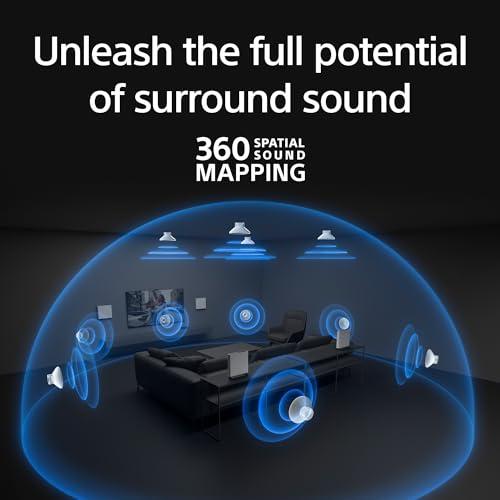
The technology that makes this work is Sony's 360 Spatial Sound Mapping. Through a combination of precise timing, room measurement, and digital signal processing, the system creates what Sony calls "phantom speakers"—virtual sound sources that seem to exist in locations where there are no actual speakers. Your brain perceives these phantom sources as real, creating an immersive bubble of sound.
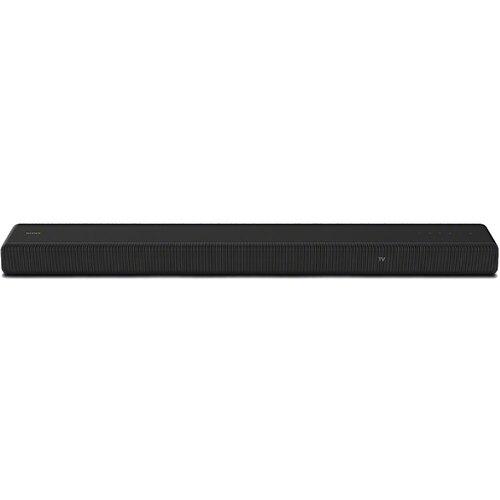
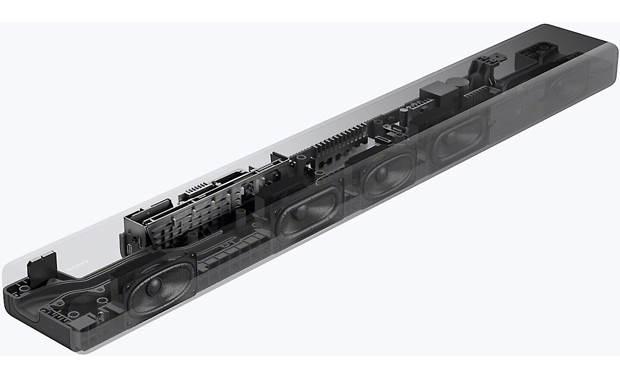
The HT-A3000, by contrast, is a traditional soundbar that uses virtual processing to simulate surround effects. It has five physical drivers—three facing forward for left, center, and right channels, plus two downward-firing subwoofers built into the bar itself. The "3.1" designation means three main channels plus one subwoofer channel.
To create height and surround effects, the HT-A3000 relies on Sony's Vertical Surround Engine and S-Force Pro processing. These technologies use psychoacoustic principles—basically tricks that exploit how your brain processes sound—to make it seem like audio is coming from directions where there are no speakers.
This is where the fundamental difference in approach becomes most apparent. The HT-A9M2 has a massive advantage in pure audio fidelity because of its 16 discrete drivers and dedicated amplification. Each frequency range gets its own optimized driver, and the 3-way design in each speaker means the system can reproduce everything from deep bass to crisp highs without asking any single driver to handle too much.
Our research into professional reviews consistently shows that the HT-A9M2 delivers what reviewers describe as "clear, crisp, and spacious sound with excellent imaging." The X-Balanced Speaker Units that Sony uses are designed with rectangular diaphragms instead of traditional round ones, which increases the surface area and reduces distortion. In practical terms, this means dialogue sounds more natural, and you can hear subtle details in music and movie soundtracks that might get lost in other systems.
The HT-A3000, while decent for its price point at the time of writing, simply can't match this level of detail. With only five drivers handling all the audio, compromises are inevitable. Professional reviewers noted that while dialogue is generally clear, the system lacks the refinement and detail retrieval of higher-end options.
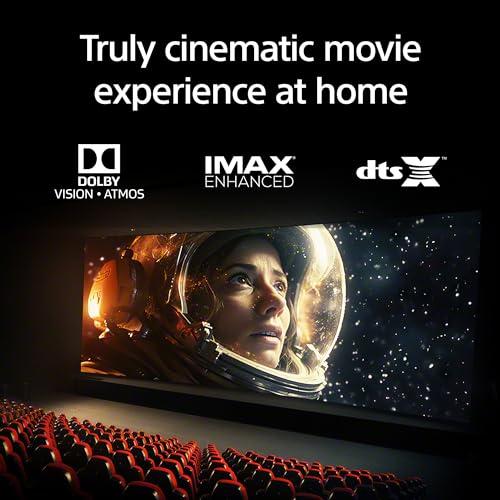
Here's where things get really interesting. Dolby Atmos and DTS:X are object-based audio formats that place sounds in three-dimensional space rather than just sending them to specific speakers. How well a system handles these formats often determines whether you feel truly immersed in movies and games.
The HT-A9M2 handles spatial audio through actual physical placement of sound sources. Because you have four speakers positioned around your room, each with its own height driver, the system can create genuine directional audio. When a helicopter flies overhead in a movie, the sound literally moves from speaker to speaker around your room. Sony's 360 Spatial Sound Mapping then fills in the gaps with phantom speakers, creating what many users describe as a seamless "surround bubble."
Professional reviews consistently praise this approach. What Hi-Fi noted that with the HT-A9M2, "effects are easy to locate in space" and that voices "convincingly appear to come from the ceiling or from another room." This kind of precise positional audio is what makes the difference between hearing surround sound and feeling like you're inside the action.
The HT-A3000 tries to achieve similar effects through virtual processing, but physics ultimately limits what's possible. User reviews are mixed on the Atmos effectiveness, with many noting that without additional rear speakers, the height effects are subtle at best. One user review we found rated the Atmos performance as "barely 2/5," noting that "Dolby Atmos feature doesn't make much sense without back speakers."
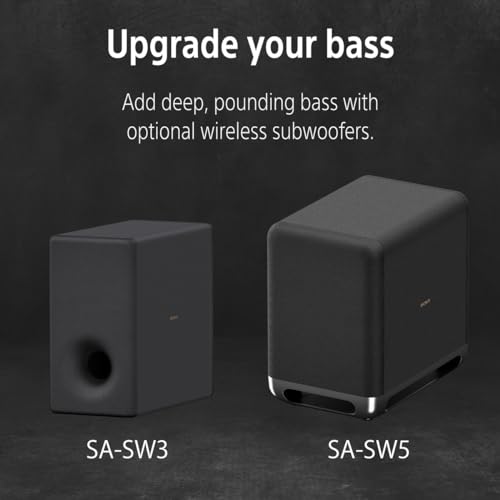
This is one area where the comparison gets complicated. The HT-A3000 includes dual built-in subwoofers, so you get bass right out of the box. The HT-A9M2 comes as a 4.0.4 system with no dedicated subwoofer, though Sony offers optional wireless subs that integrate seamlessly.
In practice, multiple professional reviews noted that the HT-A9M2 "really needs the optional subwoofer to flourish," especially for action movies with deep bass effects. However, when properly equipped with Sony's SA-SW3 or SA-SW5 wireless subwoofer, the system creates omnidirectional bass that fills the room evenly.
The HT-A3000's built-in subs provide immediate bass impact, but there's a catch. Several user reviews mention that the bass is "directional"—meaning it sounds strong when you're sitting directly in front of the soundbar but weakens significantly when you move off-axis. For a living room where people sit in different positions, this can be problematic.
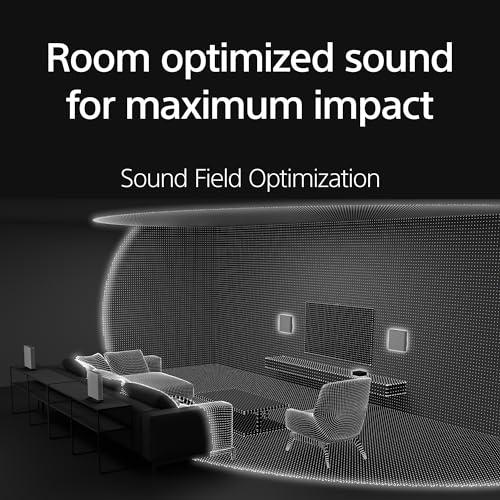
This might be the HT-A9M2's biggest practical advantage. Because the four speakers are wireless and self-powered, you can place them wherever works best in your room. The Sound Field Optimization feature uses built-in microphones to measure distances, wall reflections, and acoustic properties, then calibrates the system accordingly.
This means the HT-A9M2 can work in irregular room layouts, around furniture, or even in asymmetrical configurations. Professional reviews consistently note that the system maintains a coherent soundstage even when speakers are positioned non-ideally, which is revolutionary for home theater.
The HT-A3000 is limited by its single-point-source design. It works fine in smaller, simpler rooms where you can position it centrally, but larger or more complex spaces expose its limitations. User reviews suggest it's most effective in rooms under 300 square feet, while the HT-A9M2 can handle spaces up to 500 square feet effectively.
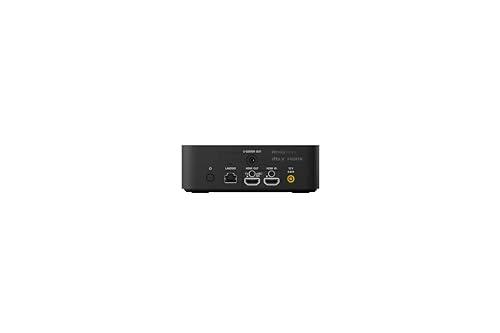
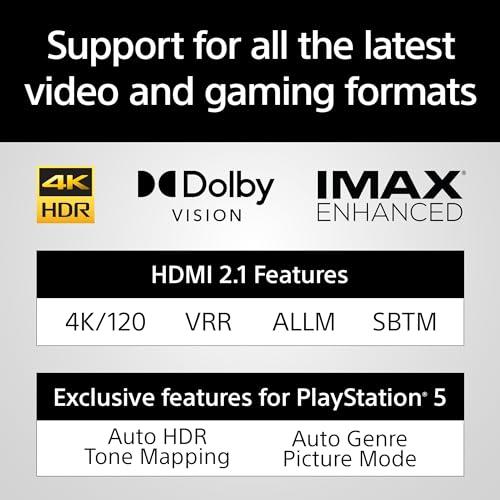
If you're a gamer or care about having the latest video features, the connectivity differences between these systems are significant. The HT-A9M2 includes full HDMI 2.1 support, which means it can pass through 8K video at 60Hz and 4K video at 120Hz—crucial for PlayStation 5 and Xbox Series X gaming.
More importantly for gaming, the HT-A9M2 supports Variable Refresh Rate (VRR), Auto Low Latency Mode (ALLM), and Source-Based Tone Mapping (SBTM). VRR eliminates screen tearing by syncing the display refresh rate with the console's output. ALLM automatically switches to the lowest latency mode when gaming. SBTM allows games and movies to send metadata about how they want HDR to be displayed.
The HT-A3000 lacks these features entirely, using HDMI 2.0 without next-generation gaming support. If you're planning to keep your system for several years, this could matter more than you might think initially.
One area where opinions diverge significantly is setup complexity. The HT-A3000 is undeniably simpler—plug in one bar, connect one HDMI cable, and you're mostly done. The HT-A9M2 requires placing four speakers around your room and running power to each location, though the wireless connectivity eliminates speaker wire runs.
However, our research suggests that the HT-A9M2's automated calibration process is remarkably effective. The BRAVIA Connect app guides you through placement and optimization, and most users report that the system "just works" once positioned. Professional reviewers consistently note that the Sound Field Optimization creates surprisingly good results even with less-than-ideal speaker placement.
At the time of writing, these systems occupy very different price tiers. The HT-A3000 represents an entry point into Dolby Atmos, while the HT-A9M2 is a premium investment that costs significantly more.
However, value calculations get complex when you consider total cost of ownership. Many HT-A3000 users report feeling the need to upgrade within months, adding rear speakers and a separate subwoofer to achieve satisfying surround performance. By the time you've added these components, you might be approaching the cost of the complete HT-A9M2 system.
User reviews suggest vastly different satisfaction levels. HT-A9M2 owners consistently describe transformative experiences, with comments like "cinema-like sound" and "fills the complete room with clarity." HT-A3000 reviews are more mixed, with several users noting they wished they had "gone for either the A5000 or A7000" instead.
The HT-A3000 makes sense for specific situations. If you have a small apartment (under 300 square feet), a limited budget, and primarily watch TV shows rather than action movies, it can provide a meaningful upgrade over built-in TV speakers. It's also appropriate if setup simplicity is your absolute top priority and you don't plan to expand your system later.
The HT-A9M2 is the better choice for most serious home theater applications. If you have a medium to large room, care about gaming features, want true surround sound, or value long-term satisfaction, the premium investment makes sense. It's particularly compelling if you want the performance of traditional separates without the complexity of running speaker wires.
I'd also strongly recommend the HT-A9M2 if you're the type of person who tends to upgrade audio equipment over time. Rather than starting with the HT-A3000 and inevitably wanting more, the HT-A9M2 represents an endpoint system that you're likely to be satisfied with for years.
These systems represent fundamentally different approaches to home theater audio, and your choice should align with your space, budget, and expectations. The HT-A3000 is a basic TV audio upgrade that happens to support Dolby Atmos, while the HT-A9M2 is a sophisticated surround sound system that happens to be wireless.
Based on our research into professional reviews and user experiences, the HT-A9M2 delivers dramatically better performance across nearly every metric that matters for home theater. The price difference reflects real differences in technology, build quality, and ultimate capability.
If budget allows, the HT-A9M2 is the clear choice for anyone serious about home theater audio. If budget constraints are absolute and your room is small, the HT-A3000 can serve as a stepping stone, but be aware that you'll likely want to upgrade eventually. Consider whether it might make more sense to save up for the system you really want rather than buying twice.
| Sony HT-A9M2 BRAVIA Theater Quad | Sony HT-A3000 3.1ch Dolby Atmos Soundbar |
|---|---|
| System Configuration - Determines real vs. virtual surround performance | |
| True 4.0.4 channel with 16 physical drivers across 4 wireless speakers | Virtual 3.1 channel with 5 drivers in single soundbar |
| Speaker Design - Affects sound quality and room coverage | |
| 3-way speakers with dedicated woofer, midrange, tweeter + upfiring Atmos driver per unit | Basic driver array with dual built-in subwoofers |
| Total Power Output - Impacts maximum volume and dynamic range | |
| 504W with S-Master HX digital amplification | 250W with standard amplification |
| Spatial Audio Technology - Key for immersive movie/gaming experience | |
| 360 Spatial Sound Mapping with phantom speaker generation | Vertical Surround Engine with virtual processing only |
| Room Calibration - Ensures optimal performance in your space | |
| Sound Field Optimization with automatic room measurement and adaptation | Basic preset sound modes without room adaptation |
| HDMI Features - Critical for gaming and future video formats | |
| HDMI 2.1 with 8K/60Hz, 4K/120Hz, VRR, ALLM, eARC support | HDMI 2.0 with basic ARC (no gaming features or 8K support) |
| Placement Flexibility - Determines installation options | |
| Four wireless speakers can be placed anywhere in room | Single soundbar requires central positioning below TV |
| Subwoofer Configuration - Affects bass performance | |
| No included subwoofer (optional wireless SA-SW3/SW5 recommended) | Dual built-in subwoofers included |
| Room Size Compatibility - Determines effective coverage area | |
| Optimized for medium to large rooms (300-500+ sq ft) | Best for small to medium rooms (under 300 sq ft) |
| Audio Enhancement Technology - Improves sound quality of various sources | |
| DSEE Ultimate AI upscaling with Hi-Res Audio support up to 192kHz/24-bit | Basic DSEE with standard audio processing |
| Wireless Connectivity - Affects streaming quality and device compatibility | |
| Bluetooth 5.2 with LDAC codec, Wi-Fi with AirPlay 2 and Spotify Connect | Bluetooth 5.0 without LDAC, limited streaming options |
| BRAVIA TV Integration - Enhanced features for Sony TV owners | |
| Acoustic Center Sync, Auto HDR Tone Mapping, Auto Genre Picture Mode | Basic BRAVIA Sync functionality only |
| Expandability - Future upgrade potential | |
| Compatible with Sony wireless subwoofers and HT-A9M2 ecosystem | Limited expansion options beyond optional rear speakers |
The Sony HT-A9M2 BRAVIA Theater Quad is a premium wireless surround sound system with four separate speakers that you place around your room, while the Sony HT-A3000 is a traditional all-in-one soundbar. The HT-A9M2 creates true surround sound with 16 physical drivers, whereas the HT-A3000 uses virtual processing to simulate surround effects from a single bar.
The Sony HT-A9M2 delivers significantly better sound quality with clearer dialogue, more detailed audio, and genuine surround effects. Professional reviews consistently praise its immersive "surround bubble" that places sounds all around you. The Sony HT-A3000 provides decent sound for its category but can't match the spatial audio performance and detail of the four-speaker system.
The Sony HT-A3000 includes dual built-in subwoofers, so you get bass right out of the box. The Sony HT-A9M2 doesn't include a subwoofer but works with Sony's optional wireless subwoofers (SA-SW3 or SA-SW5). Most reviewers recommend adding a subwoofer to the HT-A9M2 for full bass impact in action movies.
The Sony HT-A3000 is much simpler to set up - just plug in the soundbar and connect one HDMI cable. The Sony HT-A9M2 requires placing four speakers around your room and connecting power to each location, though the wireless connectivity eliminates the need for speaker wires. The HT-A9M2 does include automatic room calibration to optimize performance.
The Sony HT-A9M2 works effectively in medium to large rooms up to 500 square feet and can adapt to irregular layouts. The Sony HT-A3000 is best suited for smaller rooms under 300 square feet where you can position it centrally below your TV.
The Sony HT-A9M2 excels for gaming with full HDMI 2.1 support, including 4K/120Hz, Variable Refresh Rate (VRR), and Auto Low Latency Mode (ALLM) for PlayStation 5 and Xbox Series X. The Sony HT-A3000 only supports HDMI 2.0 without these advanced gaming features, making it less suitable for next-generation consoles.
The Sony HT-A9M2 provides true Dolby Atmos with dedicated upfiring drivers in each of the four speakers, creating convincing overhead effects. The Sony HT-A3000 supports Dolby Atmos through virtual processing, but user reviews suggest the height effects are subtle and less convincing without additional rear speakers.
While the Sony HT-A3000 has a much lower upfront cost, many users end up wanting to add rear speakers and a separate subwoofer for better performance. The Sony HT-A9M2 costs significantly more initially but provides a complete surround sound experience that most users find satisfying long-term without needing additional components.
Both systems can be expanded, but in different ways. The Sony HT-A3000 can work with optional rear speakers and subwoofers to create a more complete surround setup. The Sony HT-A9M2 integrates with Sony's wireless subwoofers and is part of the broader BRAVIA Theater ecosystem for future expansion.
The Sony HT-A9M2 offers superior music performance with Hi-Res Audio support up to 192kHz/24-bit, LDAC Bluetooth codec, and wide stereo imaging from the separated speakers. The Sony HT-A3000 provides decent music playback but lacks the detail, soundstage width, and audio enhancement technologies of the premium system.
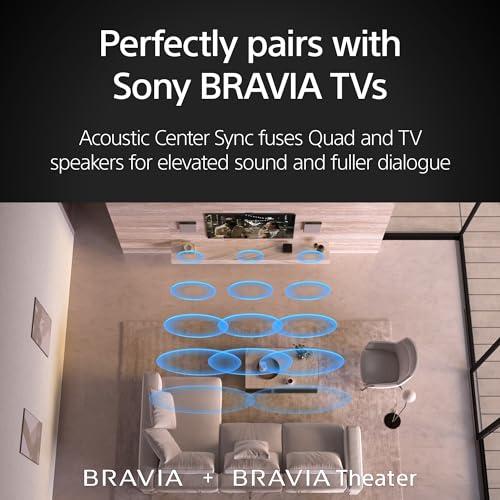
While both systems work with any TV brand, Sony BRAVIA TV owners get additional benefits. The Sony HT-A9M2 supports Acoustic Center Sync (using the TV as a center channel), Auto HDR Tone Mapping, and enhanced integration features. The Sony HT-A3000 offers basic BRAVIA Sync functionality but fewer advanced integration features.
Choose the Sony HT-A9M2 if you want the best possible surround sound experience, have a medium to large room, care about gaming features, and can invest in a premium system. Choose the Sony HT-A3000 if you have a small room, need a simple setup, have budget constraints, and primarily watch TV shows rather than action movies with demanding audio.
We've done our best to create useful and informative comparisons to help you decide what product to buy. Our research uses advanced automated methods to create this comparison and perfection is not possible - please contact us for corrections or questions. These are the sites we've researched in the creation of this article: bestbuy.com - whathifi.com - whathifi.com - youtube.com - rtings.com - audiosciencereview.com - bhphotovideo.com - skybygramophone.com - sony.com - manuals.plus - audioadvice.com - dell.com - valueelectronics.com - youtube.com - merlinstv.com - videoandaudiocenter.com - electronics.sony.com - sony.com - bestbuy.com - beachcamera.com - sony.com - win.consulting - sony.com - rtings.com - electronics.sony.com - crutchfield.com - store.sony.com.au - digitaltrends.com - videoandaudiocenter.com - abt.com - sony.com - merlinstv.com - crutchfield.com - youtube.com

Privacy Policy
Terms and Conditions - Affiliate Policy
Home Security
© Copyright 2008-2026.
11816 Inwood Rd #1211, Dallas, TX 75244