







If you've been suffering through your TV's tinny built-in speakers, you've probably started looking at audio upgrades. But here's where things get interesting: the Sony HT-A9M2 and Yamaha SR-B40A represent completely different philosophies for solving the same problem. One costs about eight times more than the other, and they take fundamentally different approaches to making your movies and shows sound better.
Before diving into these specific products, it's worth understanding what you're really buying when you upgrade your TV's audio. At its core, you're trying to solve several problems: dialogue that's hard to understand, explosions that sound like gentle puffs, and music that lacks any sense of space or impact.
The traditional solution has been soundbars—those long, thin speakers that sit below your TV. They're simple, relatively affordable, and immediately better than TV speakers. But in recent years, we've seen the emergence of more sophisticated wireless speaker systems that try to recreate what you'd get from a full home theater setup without all the wires and complexity.
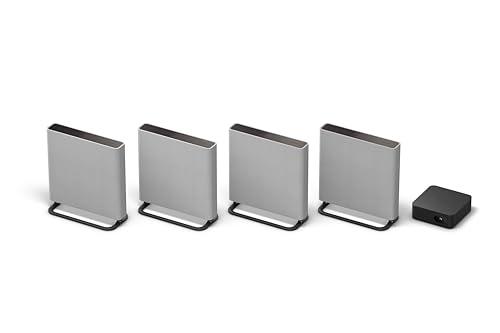
This is where our comparison gets interesting. The Yamaha SR-B40A, released in 2023, represents the evolved soundbar approach—it's what happens when you take the traditional soundbar concept and really nail the execution at a reasonable price point. The Sony HT-A9M2, also from 2023, is Sony's attempt to create something entirely different: a wireless home theater system that gives you true surround sound without the traditional complexity of receiver boxes and speaker wire runs.
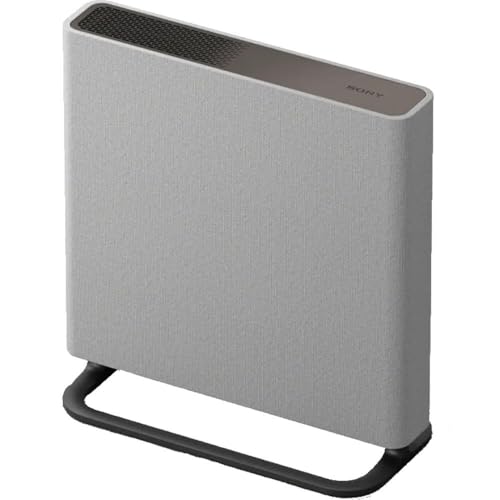
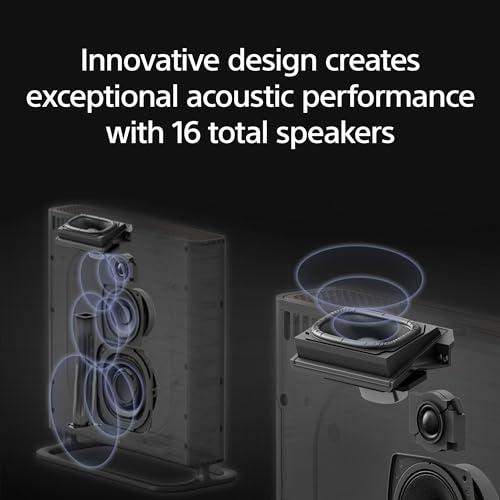
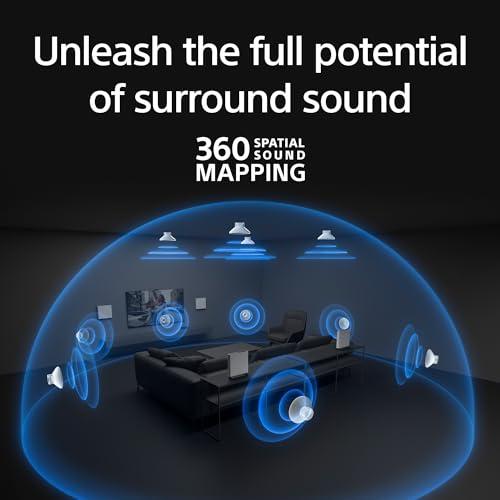
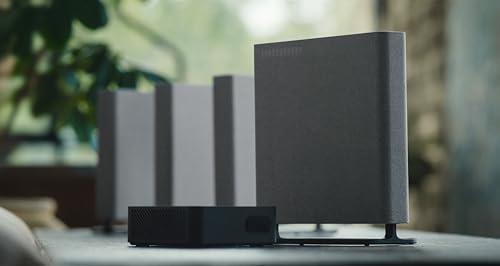
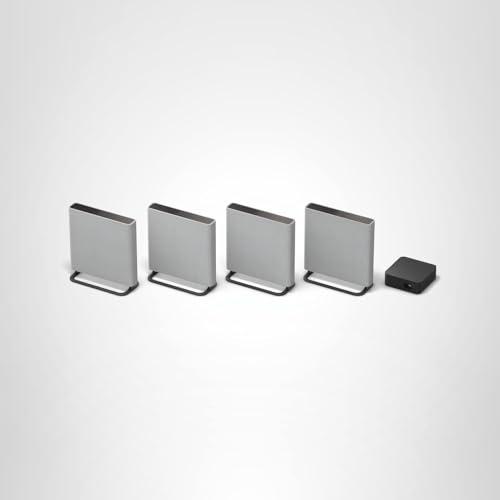
The Sony HT-A9M2 is essentially four identical wireless speakers that work together to create what Sony calls "360 Spatial Sound Mapping." Each speaker is about the size of a small bookshelf speaker and contains four individual drivers: a woofer for bass, a midrange driver for voices and most music, a tweeter for high frequencies, and an upward-firing driver specifically for Dolby Atmos height effects.
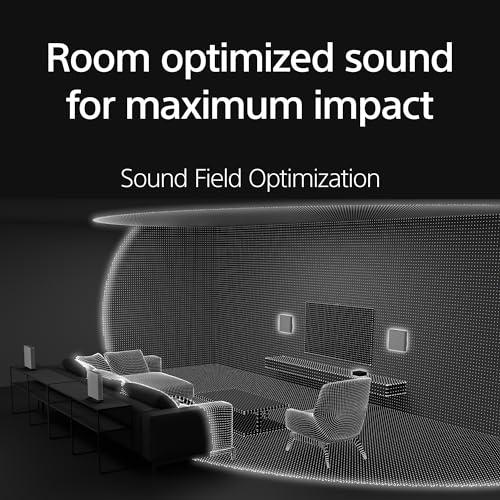
Here's what makes this system unique: those four speakers don't need to be placed in perfect positions like traditional surround systems. Sony's room calibration technology—called Sound Field Optimization—uses microphones in each speaker to measure your room's acoustics, then creates virtual "phantom speakers" throughout the space. This means you can get surround sound even if your couch is against the back wall or your room has an odd layout.
The total power output hits 504 watts across all 16 individual drivers, and each driver gets its own dedicated amplifier channel. This level of individual driver control is typically found only in high-end audiophile systems, and it allows for incredibly precise sound placement and dynamics.
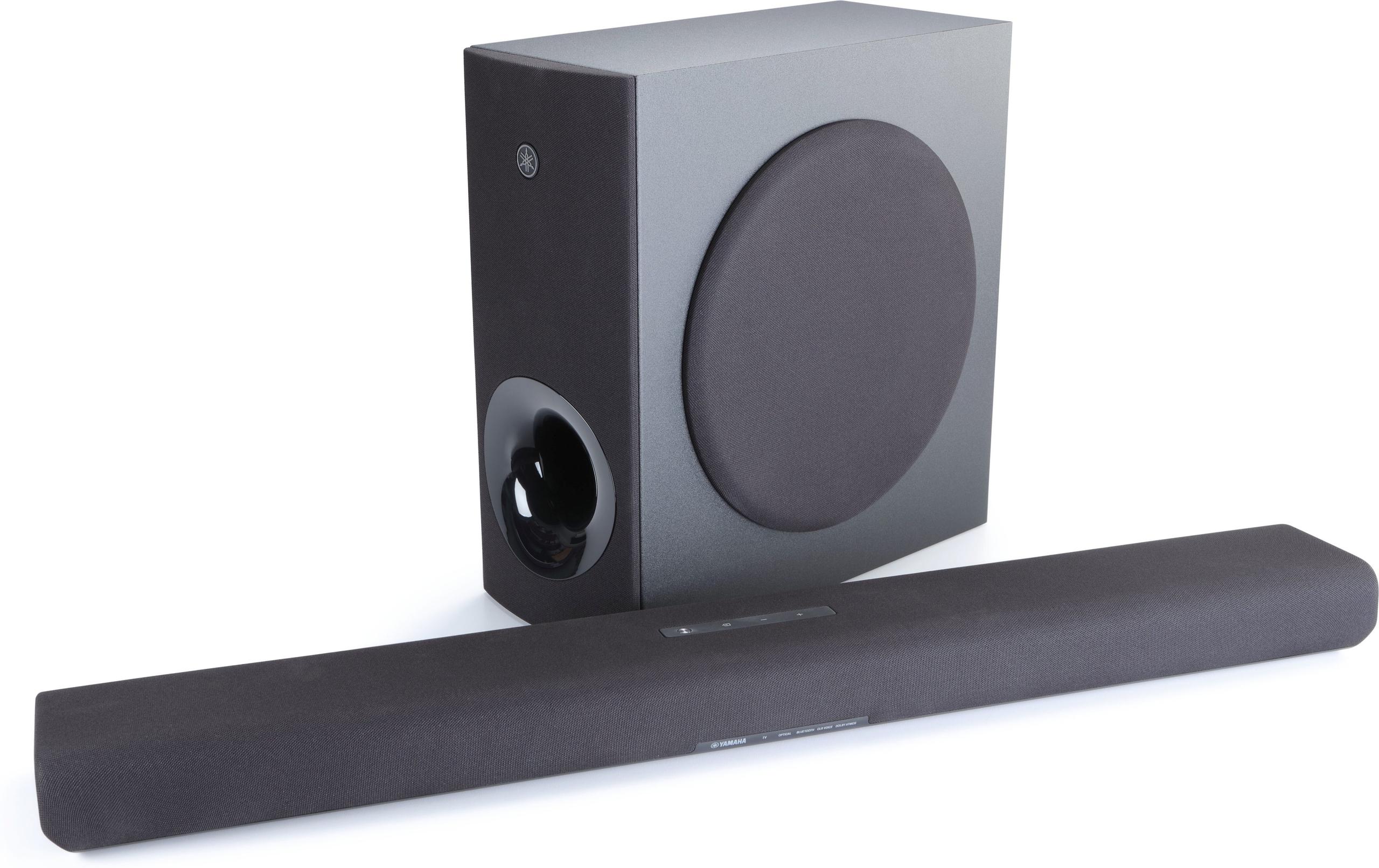
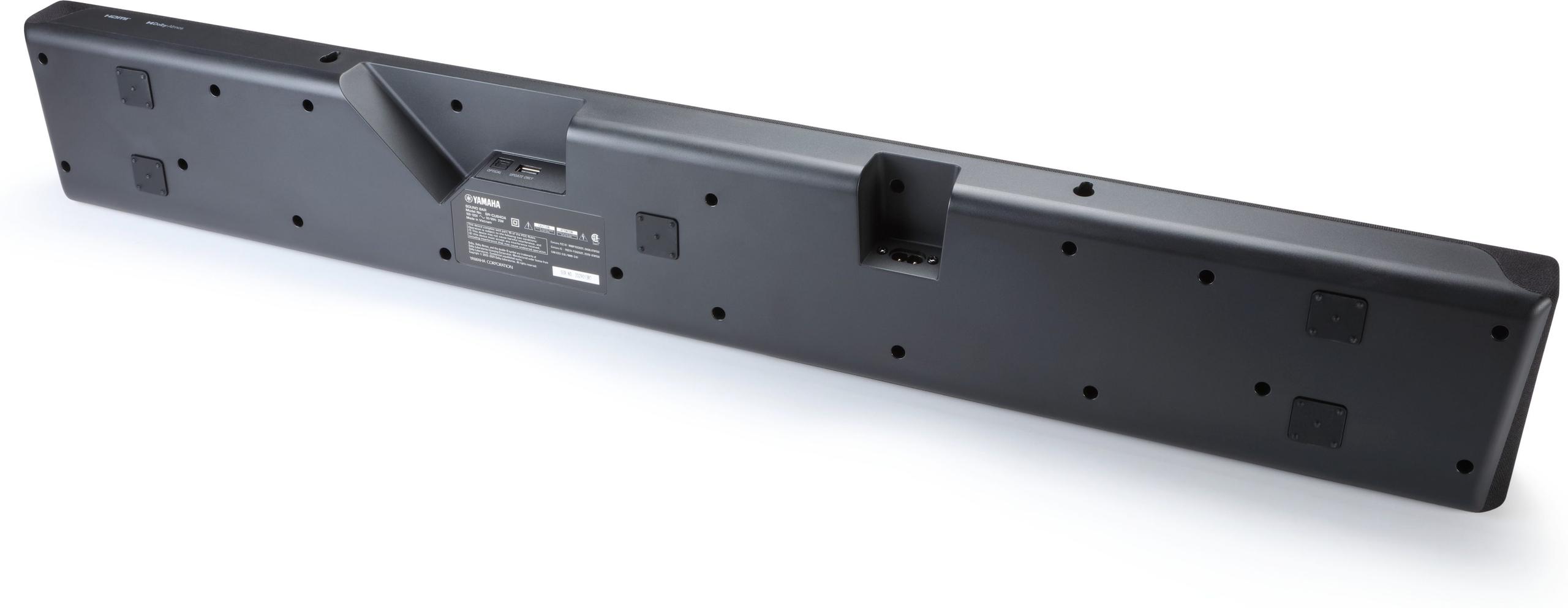
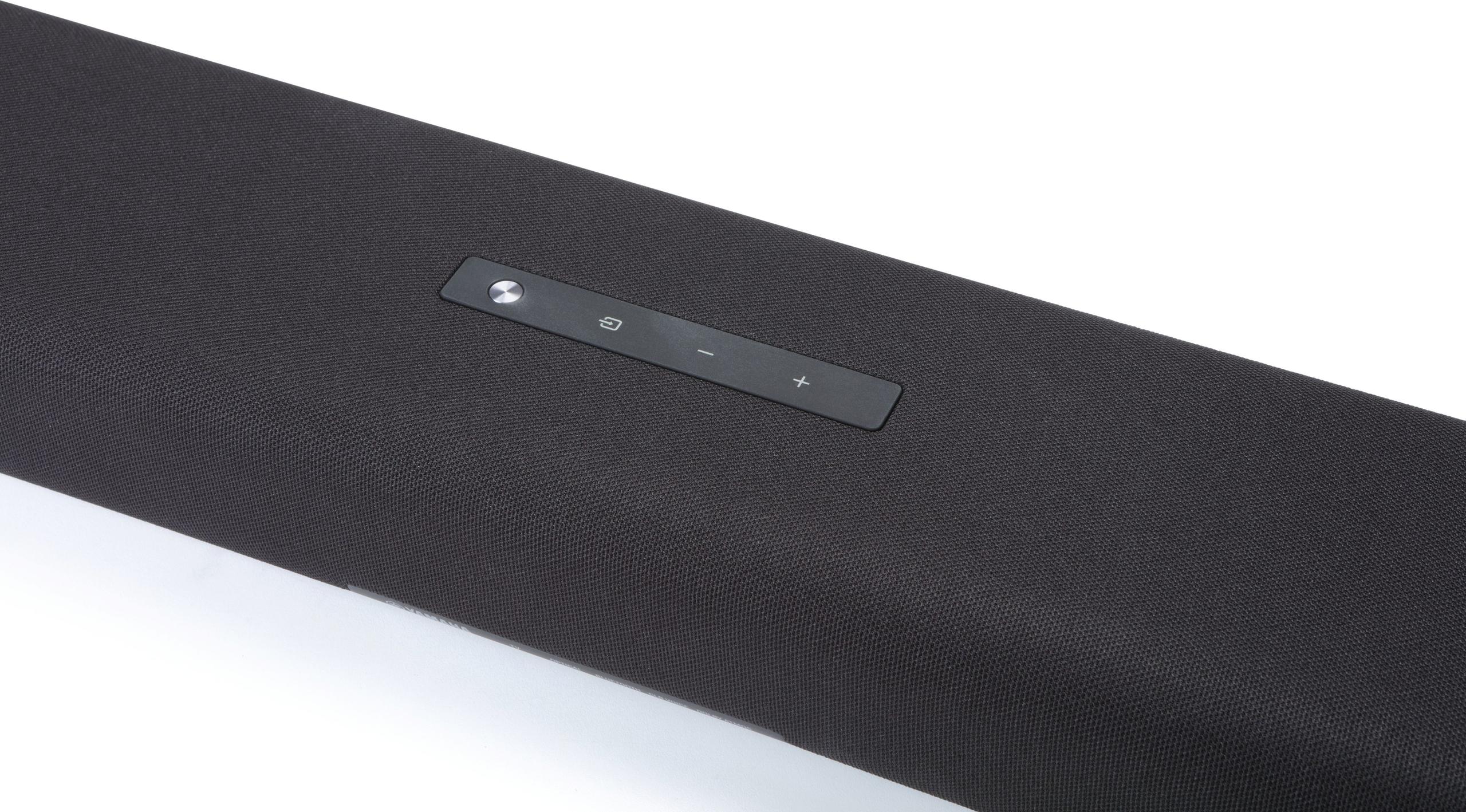
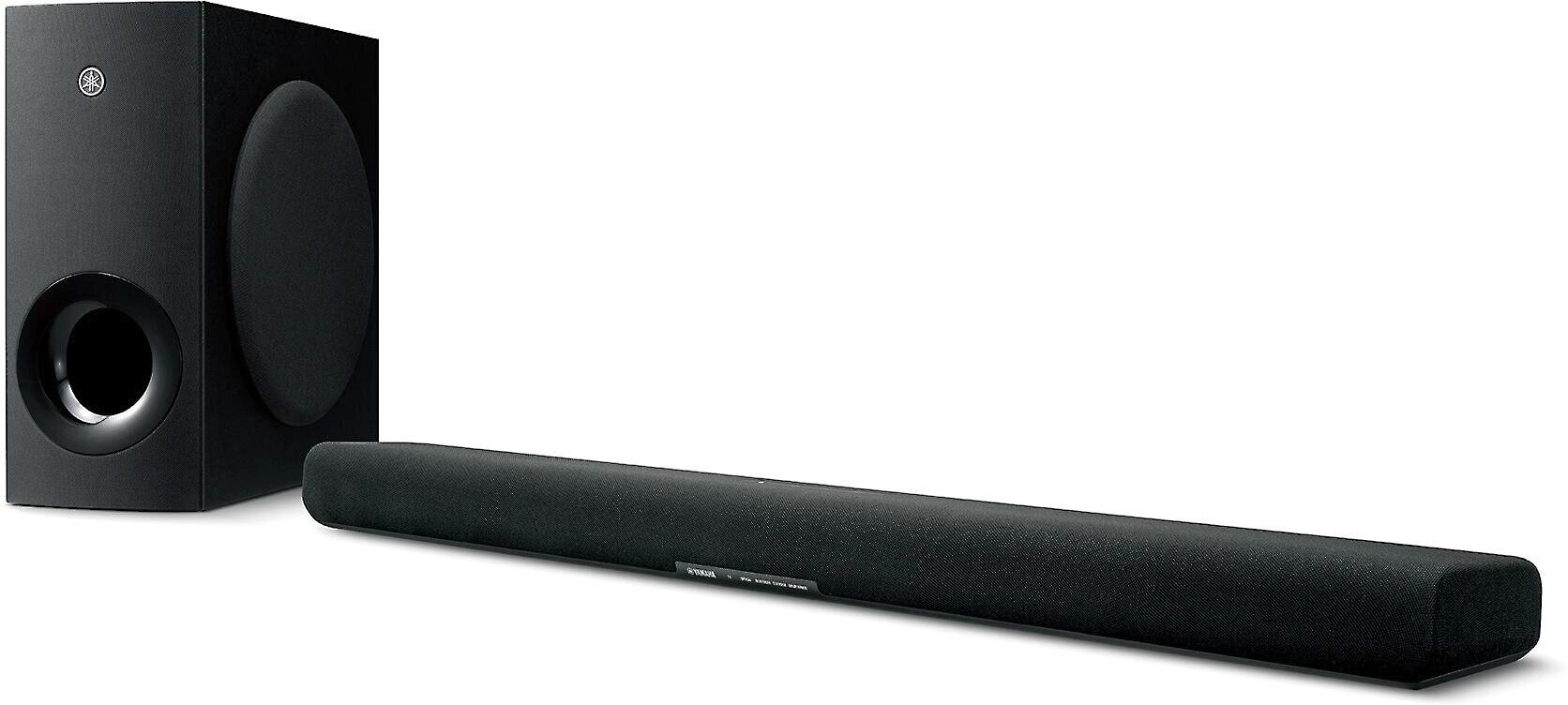
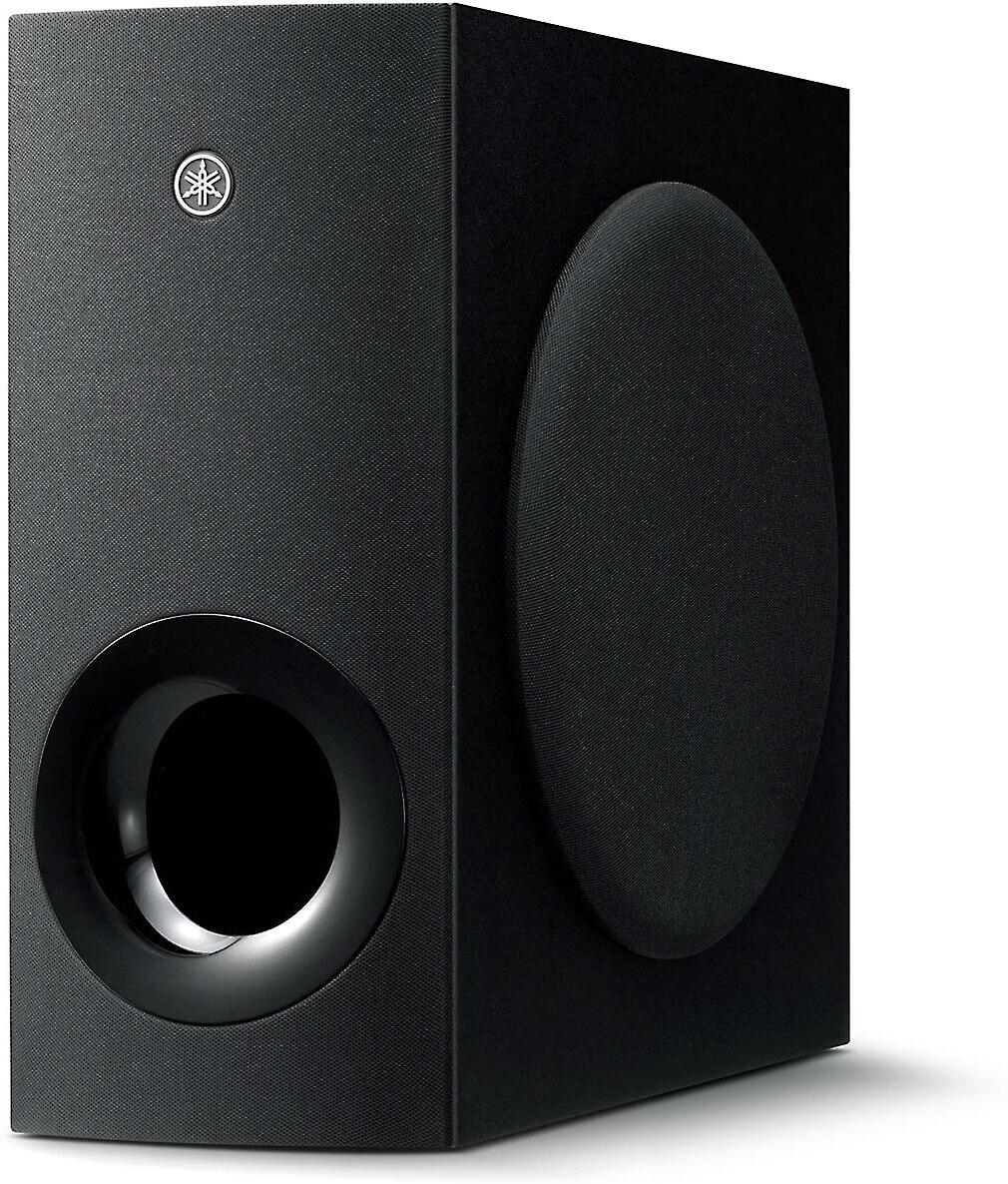
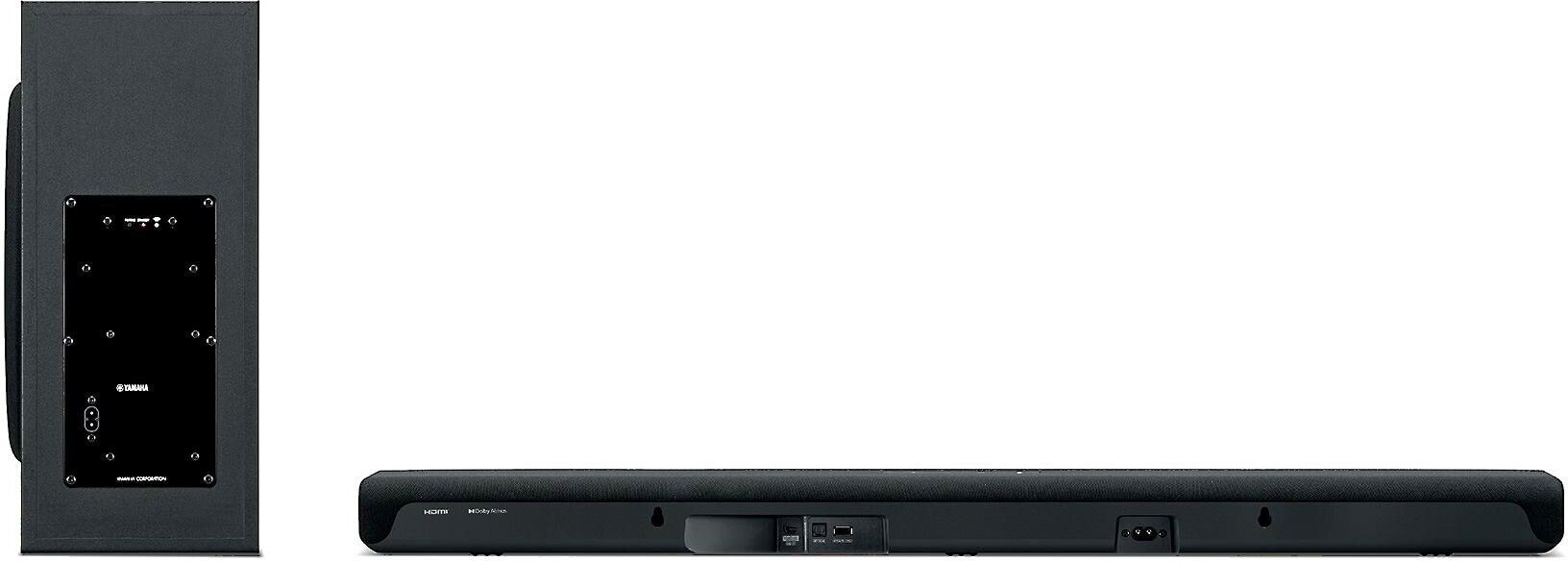
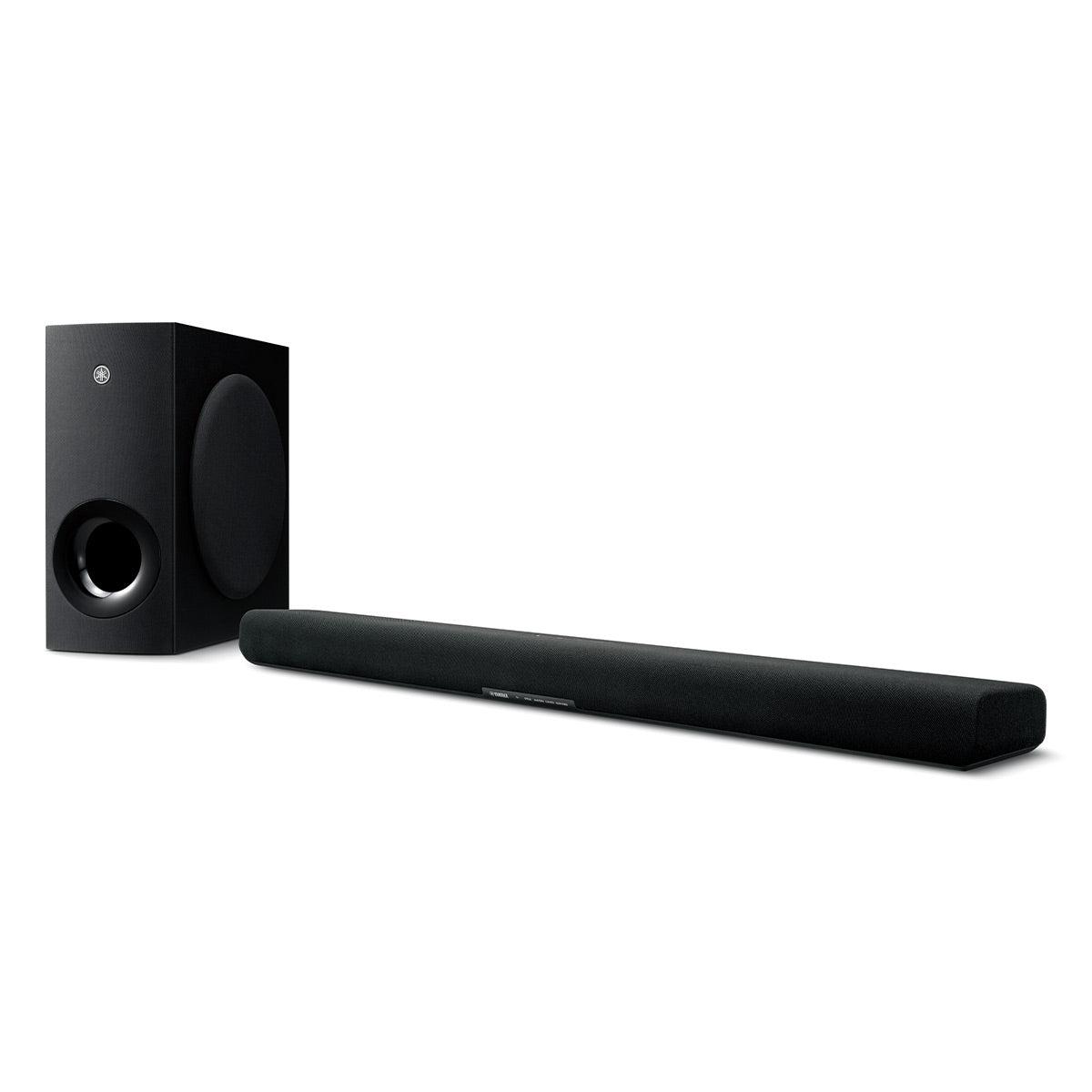
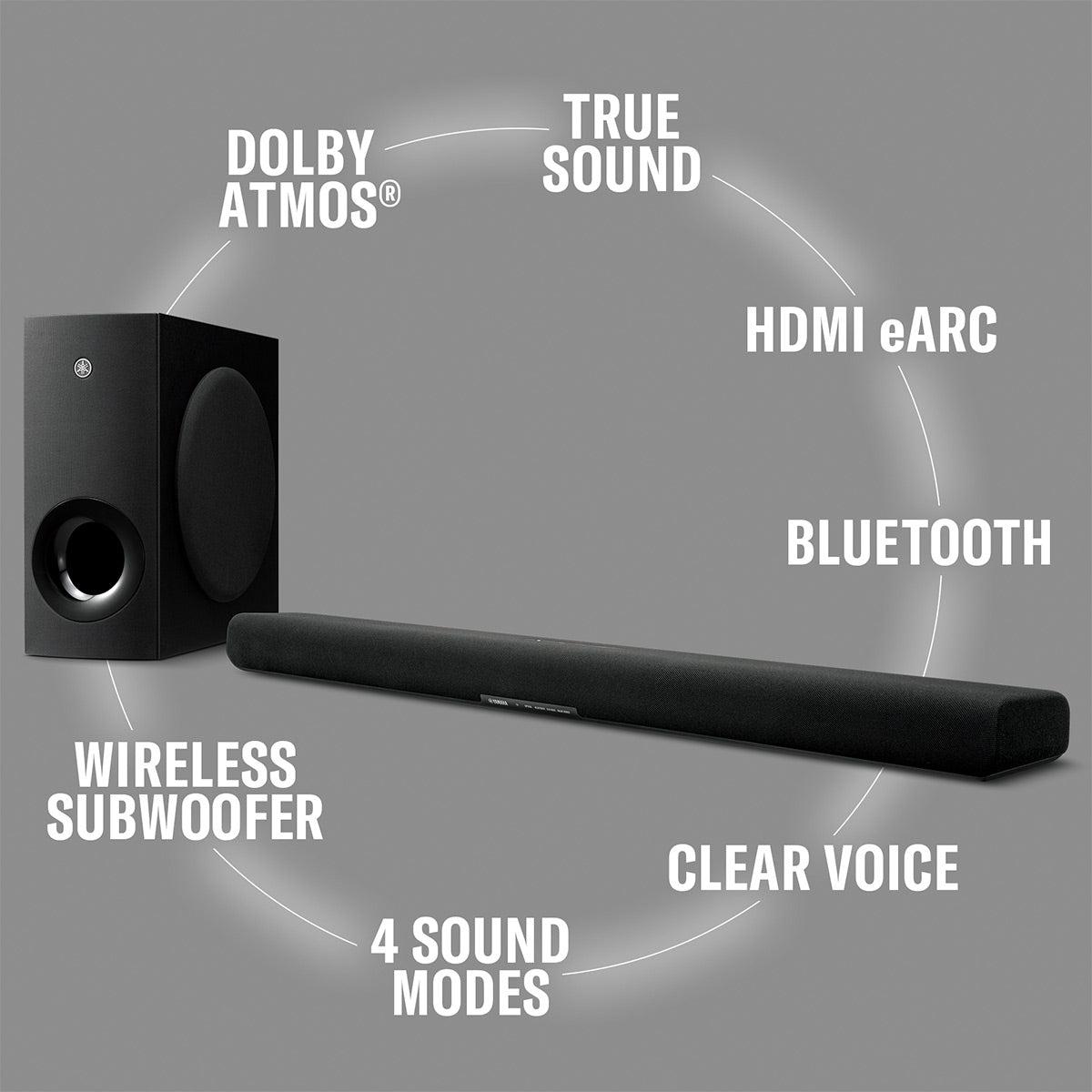
The Yamaha SR-B40A, on the other hand, takes the traditional soundbar concept and executes it really well. It's a single 36-inch bar that houses six drivers: four full-range speakers and two dedicated tweeters for clearer highs. What sets it apart from cheaper soundbars is the included wireless subwoofer with a surprisingly large 6.5-inch driver—that's bigger than what you'll find in many systems costing twice as much.
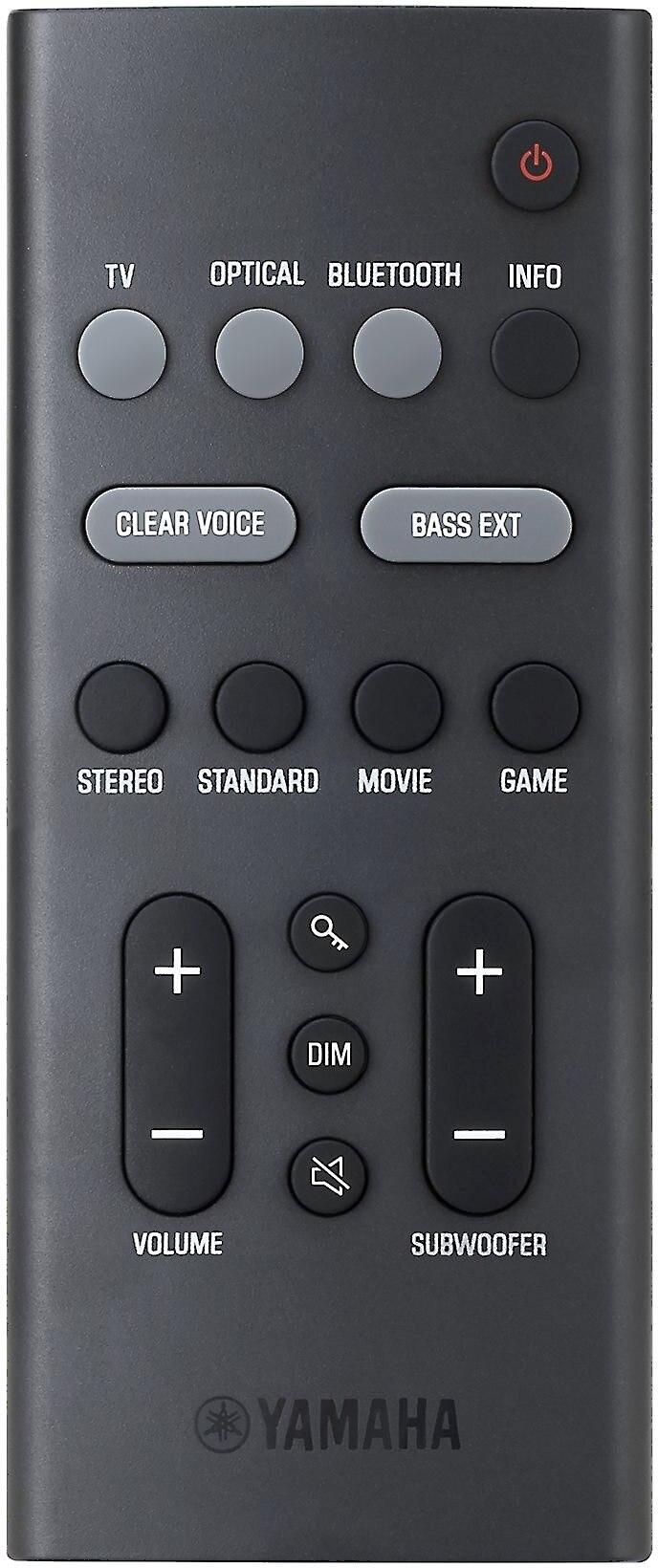
Yamaha's approach focuses on what they call "True Sound" engineering, which is essentially their way of saying they've tuned the system to sound natural and balanced rather than artificially enhanced. The system includes their "Clear Voice" technology, which uses frequency adjustments to make dialogue more intelligible without making it sound unnatural.
The total system power is 200 watts, which might sound modest compared to Sony's 504 watts, but remember—all of Yamaha's power is concentrated in fewer drivers, and the 6.5-inch subwoofer can hit surprisingly low frequencies for the price point.
This is where these systems diverge most dramatically. The Sony HT-A9M2 creates genuine surround sound—when a helicopter flies overhead in a movie, you'll actually hear it moving above you because of those upward-firing Atmos drivers. When bullets whiz past characters on screen, they'll seem to travel around your room because different speakers are handling different parts of the sound effect.
Sony's 360 Spatial Sound Mapping is particularly impressive because it adapts to your room. Most surround systems require precise speaker placement—typically 6-8 feet apart at specific angles. But Sony's system can create an immersive bubble of sound even if you place the speakers wherever they fit in your room. The system measures distances and reflections, then adjusts timing and frequency response to maintain the illusion.
The Yamaha SR-B40A uses what's called virtual surround processing. It takes multi-channel audio and uses digital signal processing to create the impression of sounds coming from different directions. This works through a psychoacoustic trick—by carefully adjusting timing, phase, and frequency content, the soundbar can make some sounds seem to come from beside or slightly behind you.
Here's the reality: virtual surround can be convincing for widening the soundstage and making dialogue seem more spacious, but it can't replicate the genuine overhead effects that make modern movie soundtracks so immersive. If you've never experienced real Dolby Atmos with height speakers, the Yamaha's virtual processing might seem impressive. But once you've heard genuine height effects, it's hard to go back.
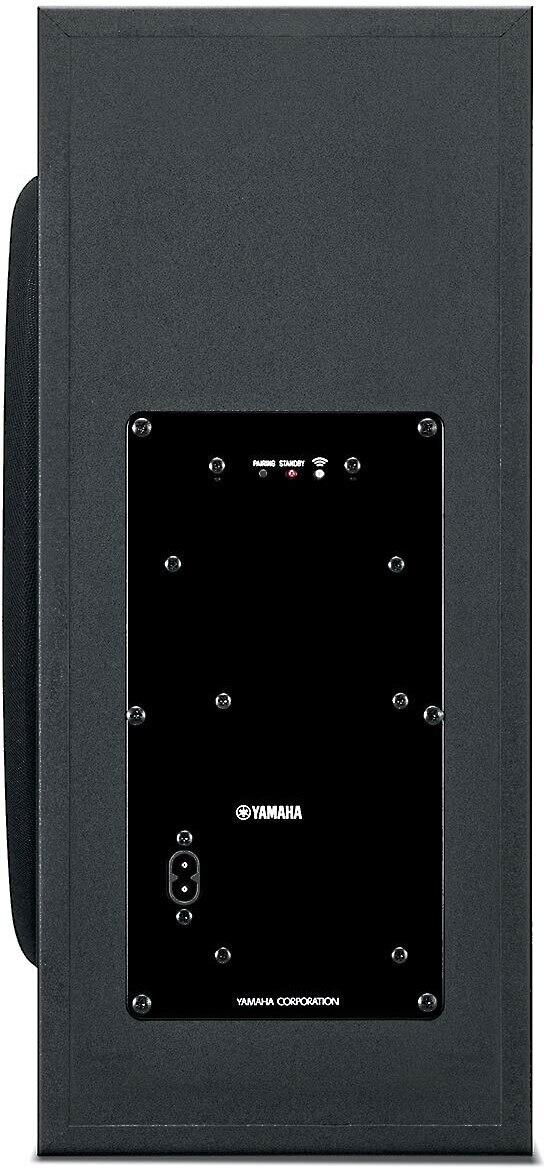
Bass performance reveals another fundamental difference between these approaches. The Yamaha SR-B40A includes a dedicated 6.5-inch wireless subwoofer right out of the box. This subwoofer can reach down to around 22Hz—low enough to reproduce the deepest movie effects and music fundamentals. For the price point, this is exceptional bass performance that would typically require a much more expensive system.
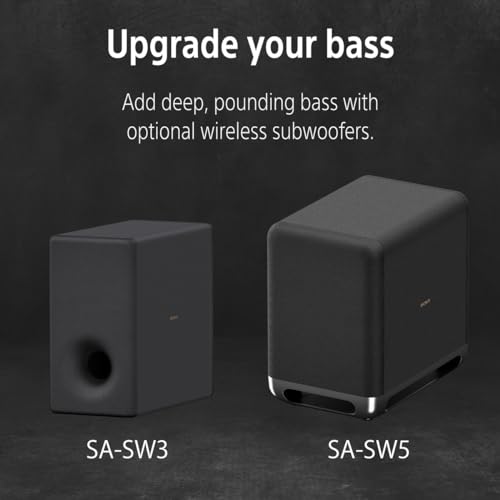
The Sony HT-A9M2, despite its higher price, doesn't include a subwoofer. Each satellite speaker has bass drivers, and they can produce reasonable low-end for their size, but they can't match the impact of a dedicated subwoofer. Sony expects you to add their wireless subwoofer (sold separately) to get full-range performance, which significantly increases the total system cost.
This creates an interesting value proposition. The Yamaha gives you excellent bass performance immediately, while the Sony requires additional investment to achieve comparable low-end impact. However, when properly configured with a subwoofer, the Sony's distributed bass from multiple speakers can create more even bass response throughout the room.
For most people, dialogue clarity is the primary reason they upgrade from TV speakers. Both systems address this, but differently.
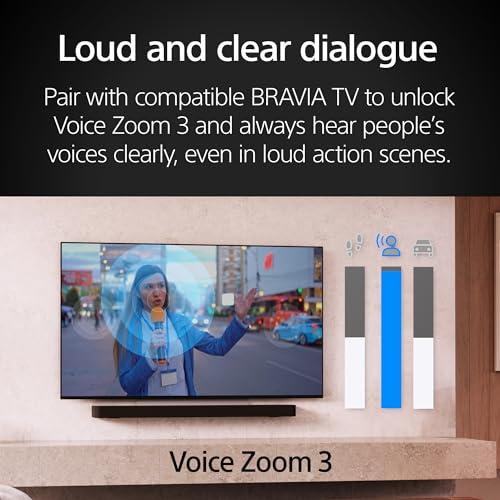
The Sony HT-A9M2 creates what's called a "phantom center channel"—it uses the left and right front speakers to make dialogue appear to come from the center of your TV screen. This works well because the speakers can be positioned to create precise imaging. Sony's Voice Zoom 3 technology uses AI processing to identify and enhance human voices in the mix, making them more prominent without sounding unnatural.
The system's strength is consistency across different seating positions. Because you have four speakers working together, dialogue remains clear whether you're sitting directly in front or off to the side.
The Yamaha SR-B40A handles dialogue through its Clear Voice technology, which emphasizes the frequency ranges where human speech is most intelligible. This works well when you're sitting directly in front of the soundbar, but dialogue clarity can degrade if you move significantly off-axis—a common limitation of soundbar designs.
However, Yamaha's approach has an advantage: it's immediately effective without any setup complexity. Turn on Clear Voice mode, and dialogue becomes more intelligible. The Sony's phantom center requires proper speaker placement and room calibration to work optimally.
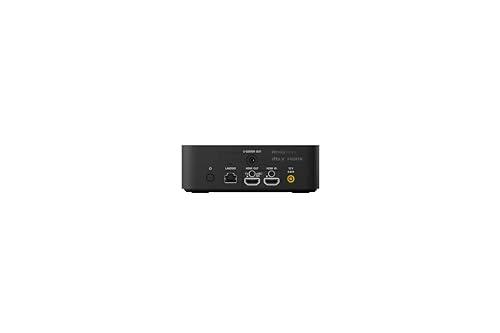
Modern gaming consoles and streaming devices support advanced audio and video features that can significantly enhance your experience. The Sony HT-A9M2 includes full HDMI 2.1 support, which means it can pass through 4K video at 120Hz refresh rates—crucial for PlayStation 5 and Xbox Series X gaming. It also supports Variable Refresh Rate (VRR) and Auto Low Latency Mode (ALLM), which reduce input lag and screen tearing.
Sony has particularly strong integration with PlayStation 5, including Auto HDR Tone Mapping and Auto Genre Picture Mode. These features automatically optimize both audio and video settings based on what type of content you're experiencing.
The Yamaha SR-B40A includes basic HDMI connectivity but lacks the advanced HDMI 2.1 features. For most TV watching, this isn't a limitation, but serious gamers will miss the high-refresh-rate support and low-latency features.
Your room size significantly impacts which system will work better. The Sony HT-A9M2 really shines in medium to large rooms (300+ square feet) where you can properly space the four speakers. In smaller rooms, the system might feel overwhelming, and you won't get the full benefit of the spatial audio effects.
The distributed speaker design means the Sony can fill large spaces more evenly than a traditional soundbar. If you have a big family room or open-concept living space, the Sony's approach of placing speakers around the room creates more consistent audio throughout the space.
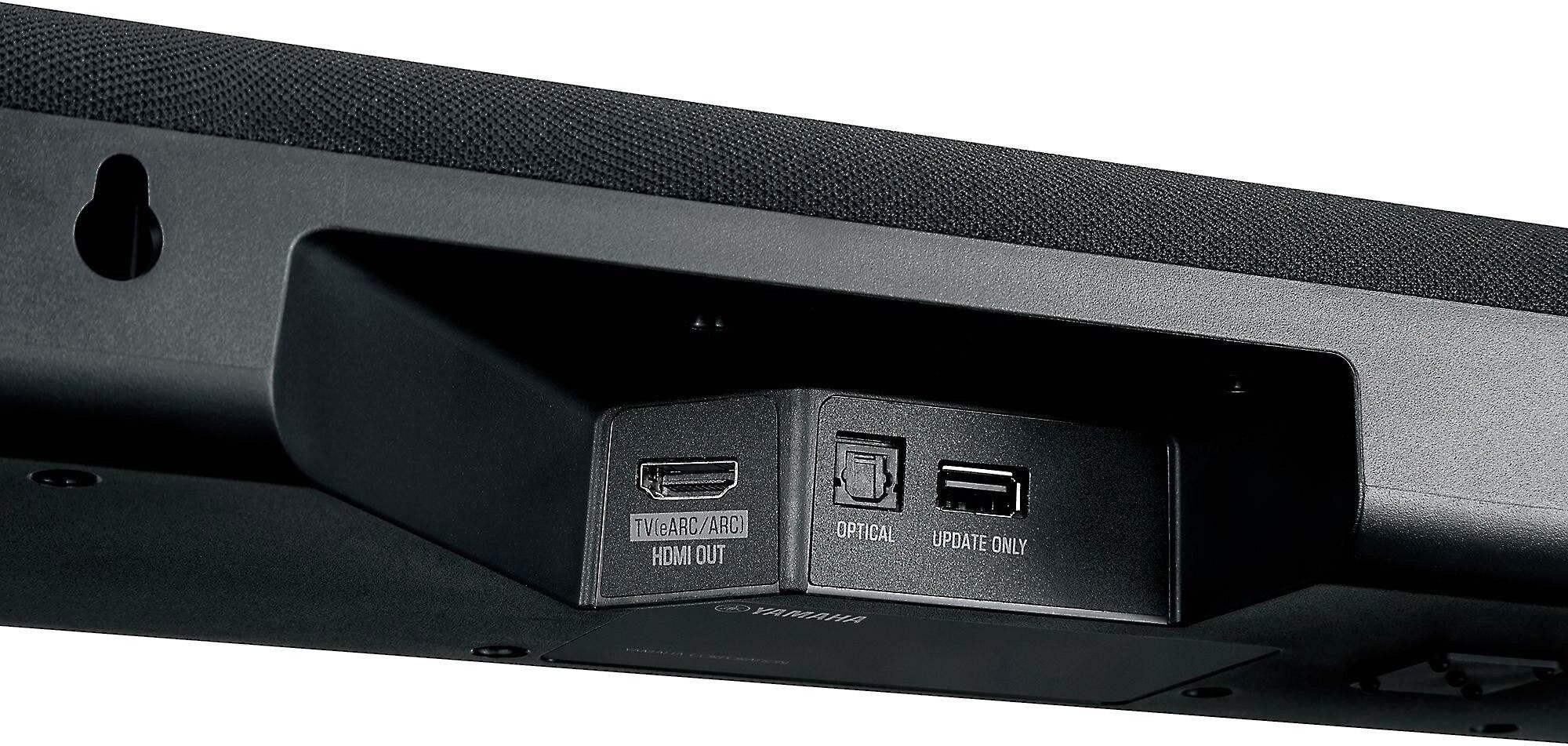
The Yamaha SR-B40A works well in smaller to medium-sized rooms where you're primarily watching from a central seating position. It's also much simpler to set up—connect one cable to your TV, plug in the wireless subwoofer, and you're done. The Sony requires careful speaker placement, power outlets for each speaker, and a calibration process.
While both systems are designed primarily for TV and movies, music performance is worth considering since you'll likely stream Spotify, Apple Music, or other services through these systems.
The Yamaha SR-B40A has a more traditionally "musical" sound signature. Yamaha has decades of experience making audio equipment, and their tuning philosophy emphasizes natural, balanced reproduction. For stereo music listening, the soundbar creates a wide, engaging soundstage that works well for most genres.
The Sony HT-A9M2 approaches music differently. It can create an incredibly spacious presentation, especially with newer "spatial audio" music formats like Dolby Atmos Music or Sony's 360 Reality Audio. However, some listeners prefer more traditional stereo presentation for music, finding Sony's spatial processing less natural for two-channel content.
Both systems support Bluetooth for wireless music streaming, but the Sony includes LDAC support—a high-quality Bluetooth codec that can stream music at near-CD quality from compatible devices.
At the time of writing, these systems represent vastly different value propositions. The Yamaha SR-B40A costs roughly eight times less than the Sony HT-A9M2, yet provides immediate, significant improvement over TV speakers with excellent bass performance included.
However, the value comparison becomes more complex when you consider what you're getting. The Sony provides a fundamentally different—and arguably superior—audio experience with true surround sound and height effects. But to get the full experience, you'll need to add Sony's wireless subwoofer, which increases the total system cost significantly.
For most people upgrading from TV speakers, the Yamaha represents exceptional value. You get a complete system with strong bass performance and clear dialogue enhancement for a reasonable price. The Sony targets enthusiasts who want the closest thing to a traditional home theater system without the complexity and permanent installation requirements.
You're serious about home theater audio and have the budget for a premium system. The Sony makes sense if you frequently watch movies with high-quality surround sound, own a PlayStation 5 or other gaming console that benefits from advanced audio features, or have a larger room where the distributed speakers can create a more immersive experience.
The Sony also appeals to people who appreciate cutting-edge technology and want future-proofing for upcoming audio and video formats. If you're the type of person who reads about audio technology and wants the latest features, the Sony delivers.
You want the biggest improvement in TV audio quality for the most reasonable price. The Yamaha makes sense if you primarily watch TV shows and movies from a central seating position, have a smaller room where a soundbar setup works well, or prefer simple setup and operation.
The Yamaha is also ideal if bass performance is a priority and you don't want to purchase additional components. That 6.5-inch subwoofer provides impressive low-end impact that you typically don't get in this price range.
These systems solve the same problem—poor TV audio—but they represent fundamentally different approaches and philosophies. The Sony HT-A9M2 is a premium wireless home theater system that creates genuine surround sound immersion but requires a significant investment and careful setup. The Yamaha SR-B40A is a refined soundbar system that provides excellent value and immediate improvement with minimal complexity.
Neither choice is wrong, but your decision should align with your priorities, budget, and how you actually use your entertainment system. If you're looking for the most impactful upgrade per dollar spent and want something that just works out of the box, the Yamaha is hard to beat. If you want to transform your living room into a genuine home theater experience and have the budget for a premium system, the Sony represents the current state of the art in wireless surround sound.
The key is being honest about your needs and usage patterns. Both systems will dramatically improve your TV audio experience—they just do it in very different ways, for very different audiences, at very different price points.
| Sony HT-A9M2 BRAVIA Theater Quad | Yamaha SR-B40A |
|---|---|
| System Architecture - Determines surround sound capability and setup complexity | |
| Four wireless satellite speakers (4.0.4 channels) with 16 total drivers | Traditional soundbar + wireless subwoofer (2.1 channels) with 7 drivers |
| Total Power Output - Affects maximum volume and dynamic range | |
| 504W distributed across 16 individual amplifier channels | 200W total system power (concentrated output) |
| Dolby Atmos Implementation - Critical for modern movie soundtracks | |
| True physical height channels with dedicated upward-firing drivers | Virtual Dolby Atmos processing (software-based) |
| Subwoofer Inclusion - Determines bass performance out of the box | |
| No subwoofer included (sold separately for $400-600) | 6.5" wireless subwoofer included |
| Room Calibration - Affects ease of setup and sound optimization | |
| Advanced Sound Field Optimization with automatic room measurement | No room calibration (manual sound mode selection) |
| HDMI Connectivity - Important for gaming and future-proofing | |
| HDMI 2.1 with eARC, 8K/4K120Hz, VRR, ALLM support | Basic HDMI eARC/ARC (no HDMI 2.1 features) |
| Speaker Placement Flexibility - Impacts room layout options | |
| Four speakers can be placed anywhere in room (wireless from hub) | Fixed soundbar position below/above TV |
| Setup Complexity - Time and effort required for installation | |
| Complex: Four speaker placements, power outlets, app calibration | Simple: One cable to TV, wireless sub pairing |
| Ideal Room Size - Where each system performs best | |
| Medium to large rooms (300+ sq ft) for proper speaker spacing | Small to medium rooms with front-facing seating |
| Gaming Features - Benefits for console users | |
| PlayStation 5 integration, Auto HDR Tone Mapping, low latency | Basic game mode preset, standard latency |
| Music Streaming Quality - Audio codec support for wireless devices | |
| Bluetooth 5.2 with LDAC, AirPlay 2, Spotify Connect | Bluetooth 5.1 with SBC/AAC codecs |
| Price Positioning - Value proposition at time of writing | |
| Premium flagship system (8x more expensive) | Budget-friendly with exceptional bass value |
The Sony HT-A9M2 is a four-speaker wireless home theater system that creates true surround sound, while the Yamaha SR-B40A is a traditional soundbar with wireless subwoofer. The Sony uses four separate speakers placed around your room for genuine 360-degree audio, whereas the Yamaha projects sound from a single bar below your TV using virtual surround processing.
The Yamaha SR-B40A is better suited for small rooms. Its soundbar design works well in compact spaces and doesn't require multiple speaker placements. The Sony HT-A9M2 needs adequate space between its four speakers to create proper surround effects, making it less ideal for smaller rooms where speakers would be too close together.
The Yamaha SR-B40A comes complete with everything you need, including a wireless subwoofer with a 6.5-inch driver. The Sony HT-A9M2 doesn't include a subwoofer, so you'll need to purchase Sony's wireless subwoofer separately to get full bass performance, which significantly increases the total system cost.
The Yamaha SR-B40A is much easier to set up - just connect one cable to your TV and pair the wireless subwoofer. The Sony HT-A9M2 requires placing four speakers around your room, connecting each to power, and running calibration through Sony's app to optimize the sound field.
Only the Sony HT-A9M2 creates real overhead effects using dedicated upward-firing Dolby Atmos speakers in each satellite. The Yamaha SR-B40A uses virtual processing to simulate height effects, which can widen the soundstage but can't replicate genuine overhead sounds like helicopters or rain.
The Yamaha SR-B40A offers exceptional value, providing significant audio improvement with included bass performance at a budget-friendly price. The Sony HT-A9M2 costs significantly more but delivers a premium home theater experience with true surround sound that justifies the higher investment for serious audio enthusiasts.
The Sony HT-A9M2 excels for gaming with HDMI 2.1 support, 4K/120Hz passthrough, and special PlayStation 5 integration features. The Yamaha SR-B40A includes a game mode but lacks advanced gaming features like variable refresh rate support and low-latency processing.
The Yamaha SR-B40A has a more natural, musical sound signature that works well for stereo music content. The Sony HT-A9M2 can create impressive spatial effects with Dolby Atmos music but may sound overly processed for traditional stereo recordings, though it supports high-quality LDAC Bluetooth streaming.
Both systems improve dialogue significantly over TV speakers. The Sony HT-A9M2 uses AI-powered Voice Zoom 3 technology and creates a phantom center channel for precise dialogue positioning. The Yamaha SR-B40A uses Clear Voice technology to enhance speech frequencies, though dialogue clarity may decrease when sitting off to the side.
The Sony HT-A9M2 requires considerably more space as you need to position four speakers around your room with adequate separation. The Yamaha SR-B40A only needs space for the soundbar below your TV and flexible placement for the wireless subwoofer anywhere in the room.
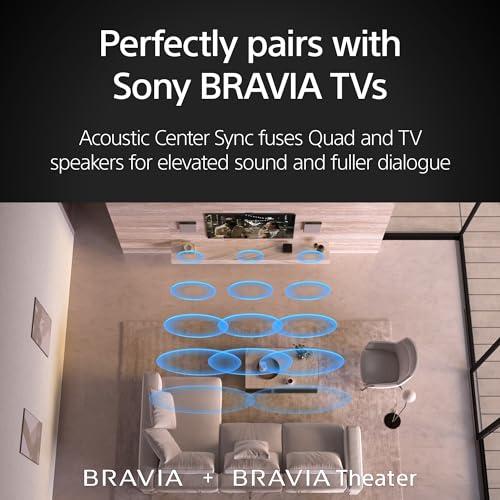
Yes, both systems work with any TV that has HDMI or optical outputs. The Yamaha SR-B40A connects via HDMI or optical cable to any TV brand. The Sony HT-A9M2 also works universally but offers enhanced integration features when paired with Sony BRAVIA TVs, including Acoustic Center Sync.
The Sony HT-A9M2 performs much better in large rooms because its four distributed speakers can fill the space more evenly and create immersive surround effects throughout the area. The Yamaha SR-B40A may struggle to project sound effectively in very large spaces, as all audio comes from the front-mounted soundbar location.
We've done our best to create useful and informative comparisons to help you decide what product to buy. Our research uses advanced automated methods to create this comparison and perfection is not possible - please contact us for corrections or questions. These are the sites we've researched in the creation of this article: bestbuy.com - whathifi.com - whathifi.com - youtube.com - rtings.com - audiosciencereview.com - bhphotovideo.com - skybygramophone.com - sony.com - manuals.plus - audioadvice.com - dell.com - valueelectronics.com - youtube.com - merlinstv.com - videoandaudiocenter.com - electronics.sony.com - sony.com - bestbuy.com - beachcamera.com - sony.com - win.consulting - sony.com - crutchfield.com - visions.ca - shop.usa.yamaha.com - bestbuy.com - bestbuy.com - usa.yamaha.com - my.yamaha.com - europe.yamaha.com - adorama.com - usa.yamaha.com - digitalhomecreations.com - europe.yamaha.com - sundownone.com

Privacy Policy
Terms and Conditions - Affiliate Policy
Home Security
© Copyright 2008-2026.
11816 Inwood Rd #1211, Dallas, TX 75244