



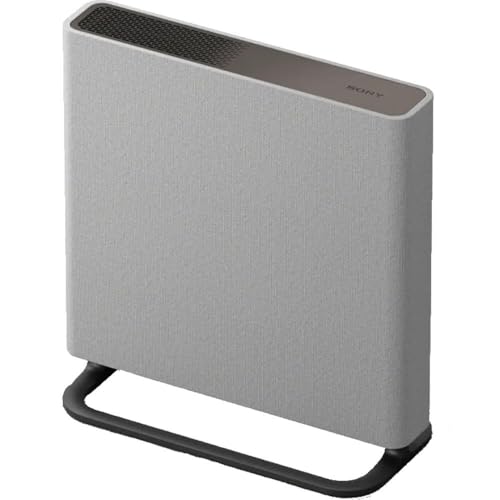




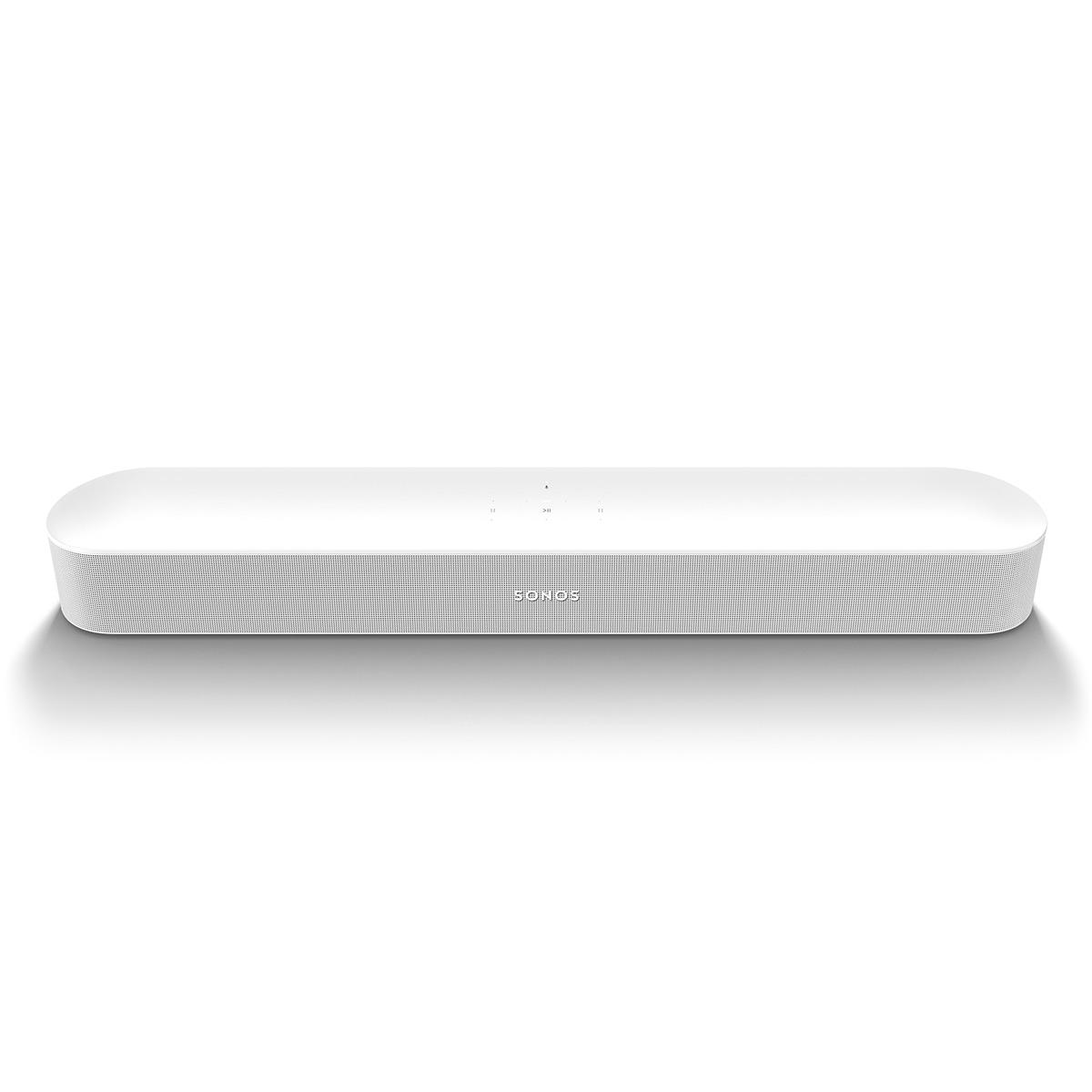
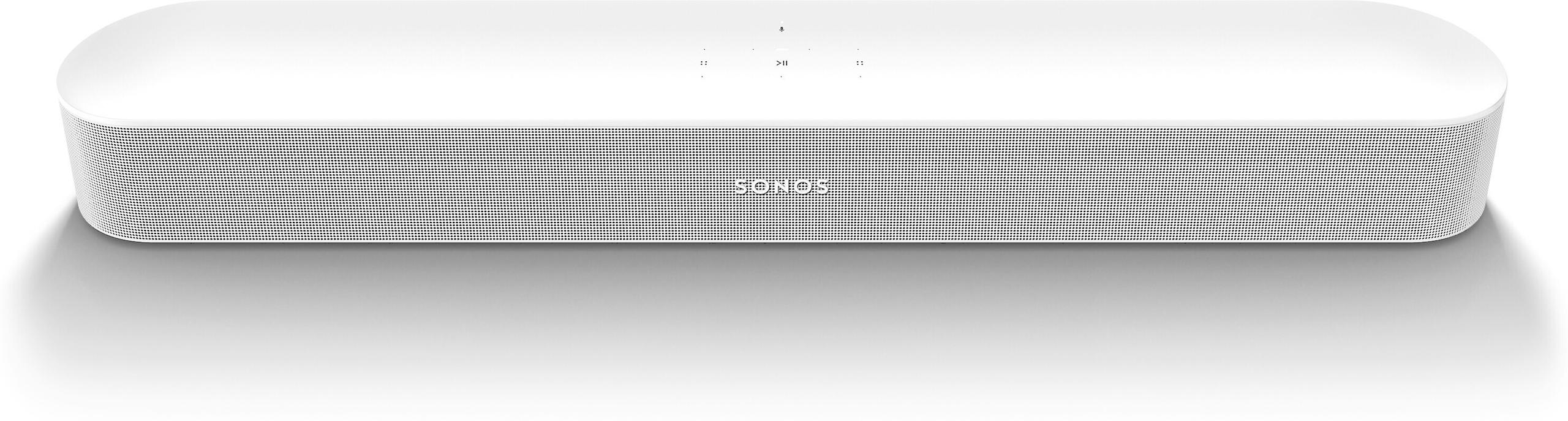
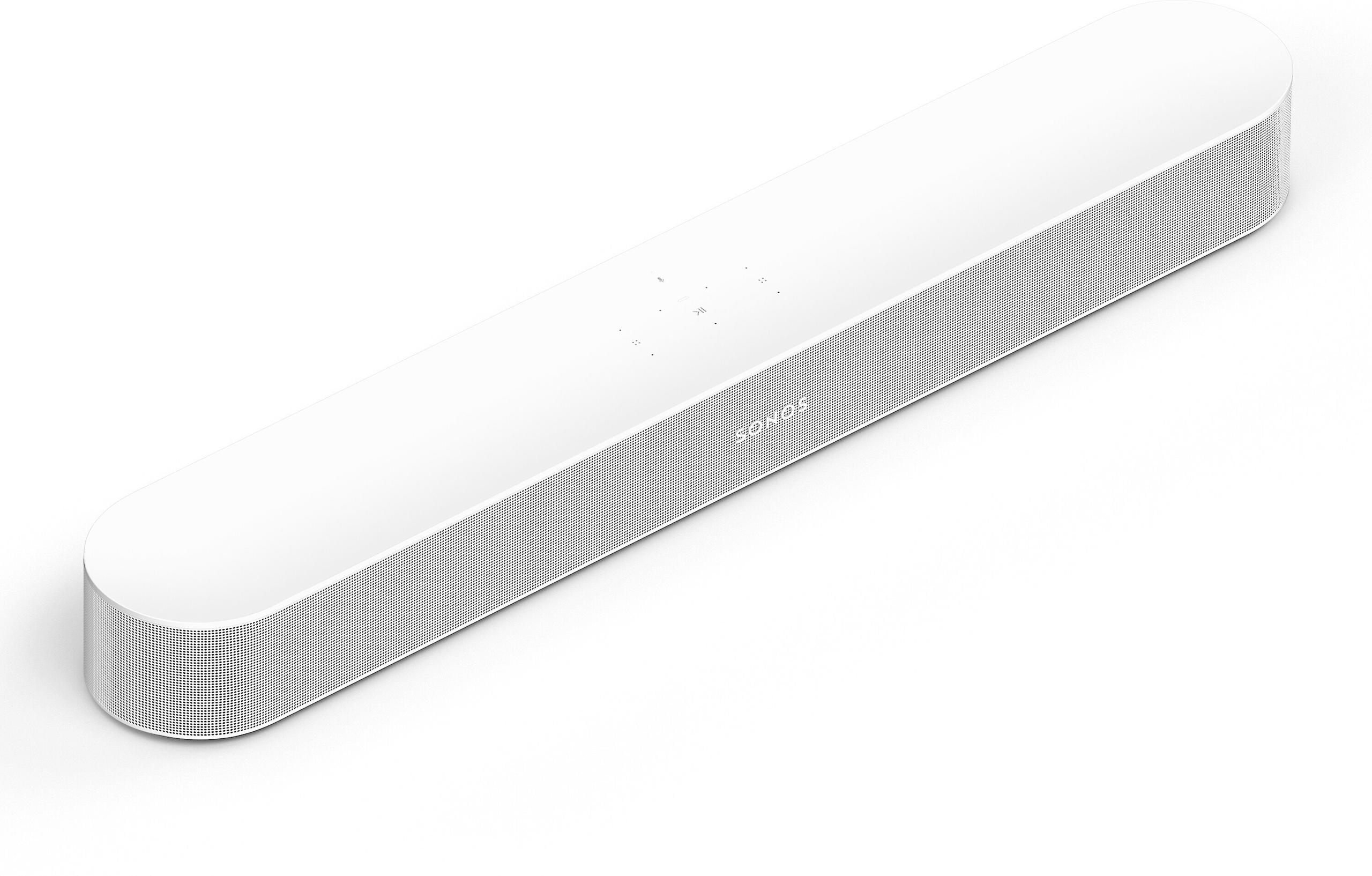




Home theater audio has evolved dramatically over the past few years, with manufacturers taking two distinct approaches to deliver immersive sound. On one side, you have traditional soundbars that pack everything into a sleek single unit. On the other, wireless speaker systems that distribute audio across your room using multiple separate speakers. Today we're comparing two excellent examples of each approach: the Sony HT-A9M2 BRAVIA Theater Quad and the Sonos Beam Gen 2.
These products represent fundamentally different philosophies for home audio, and understanding their approaches will help you make the right choice for your space and needs.
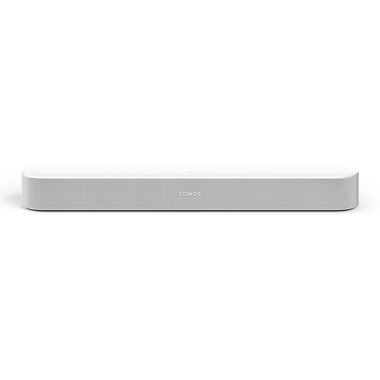
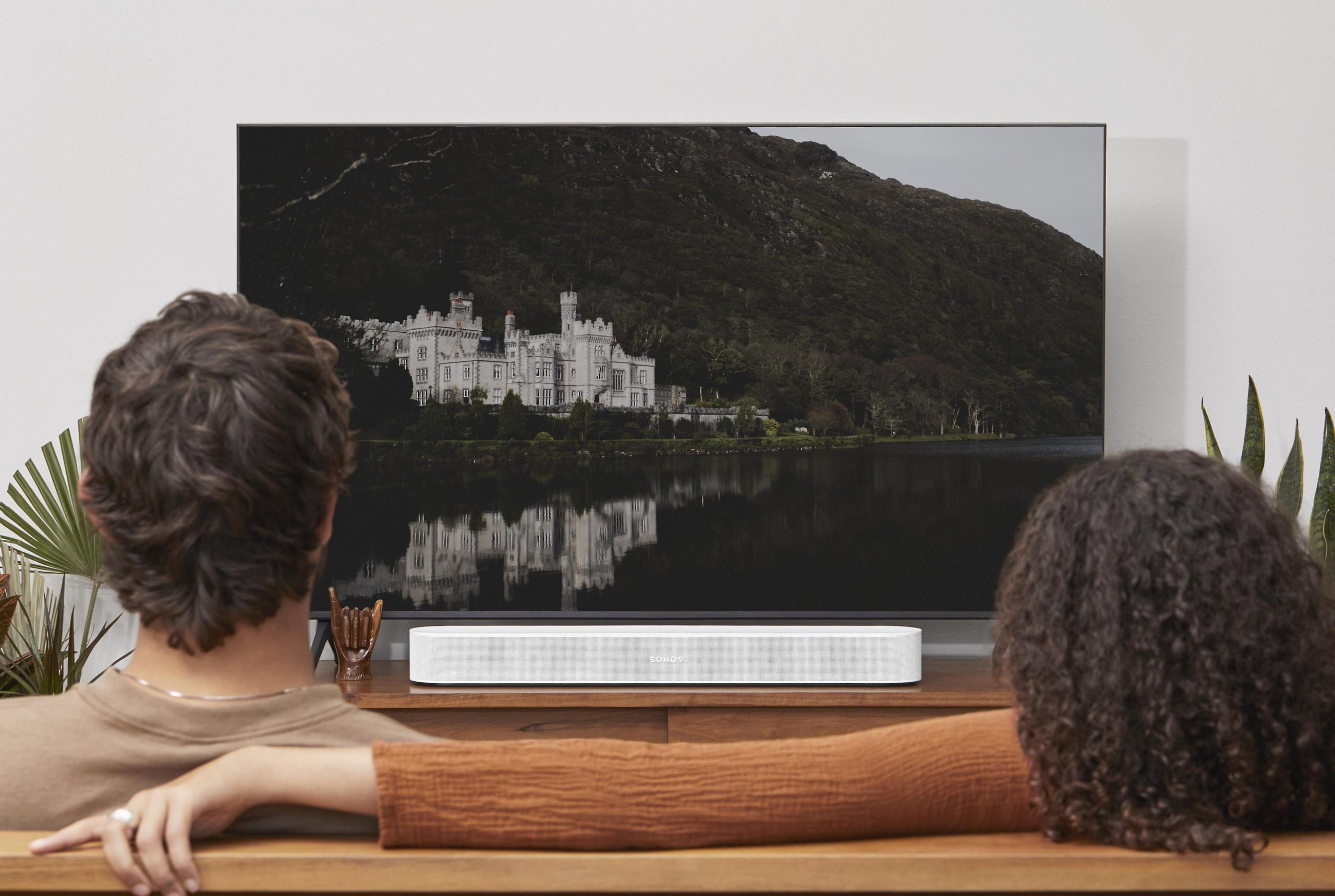
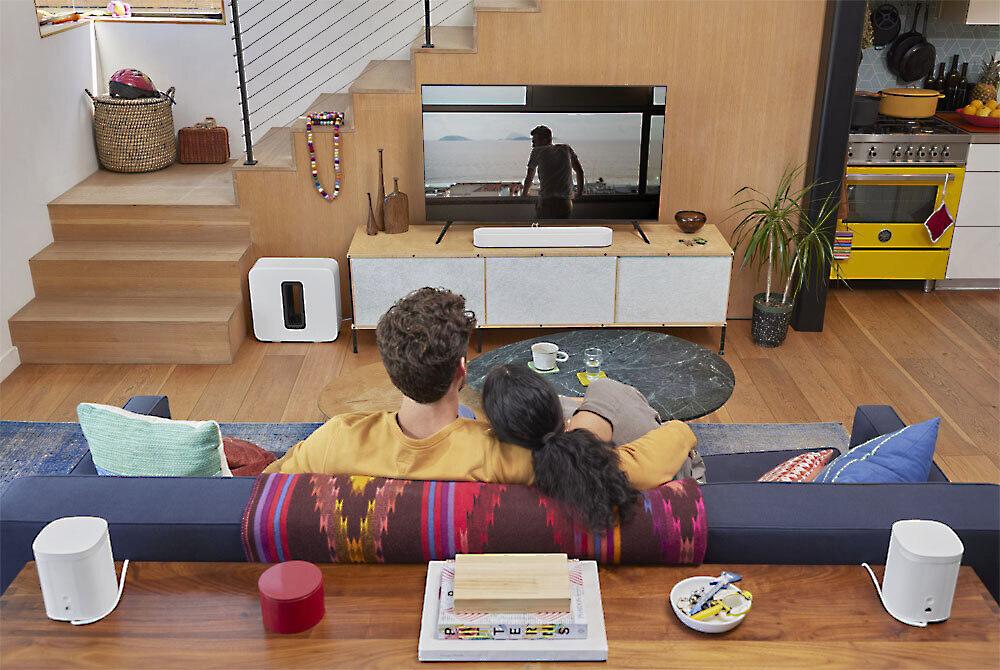
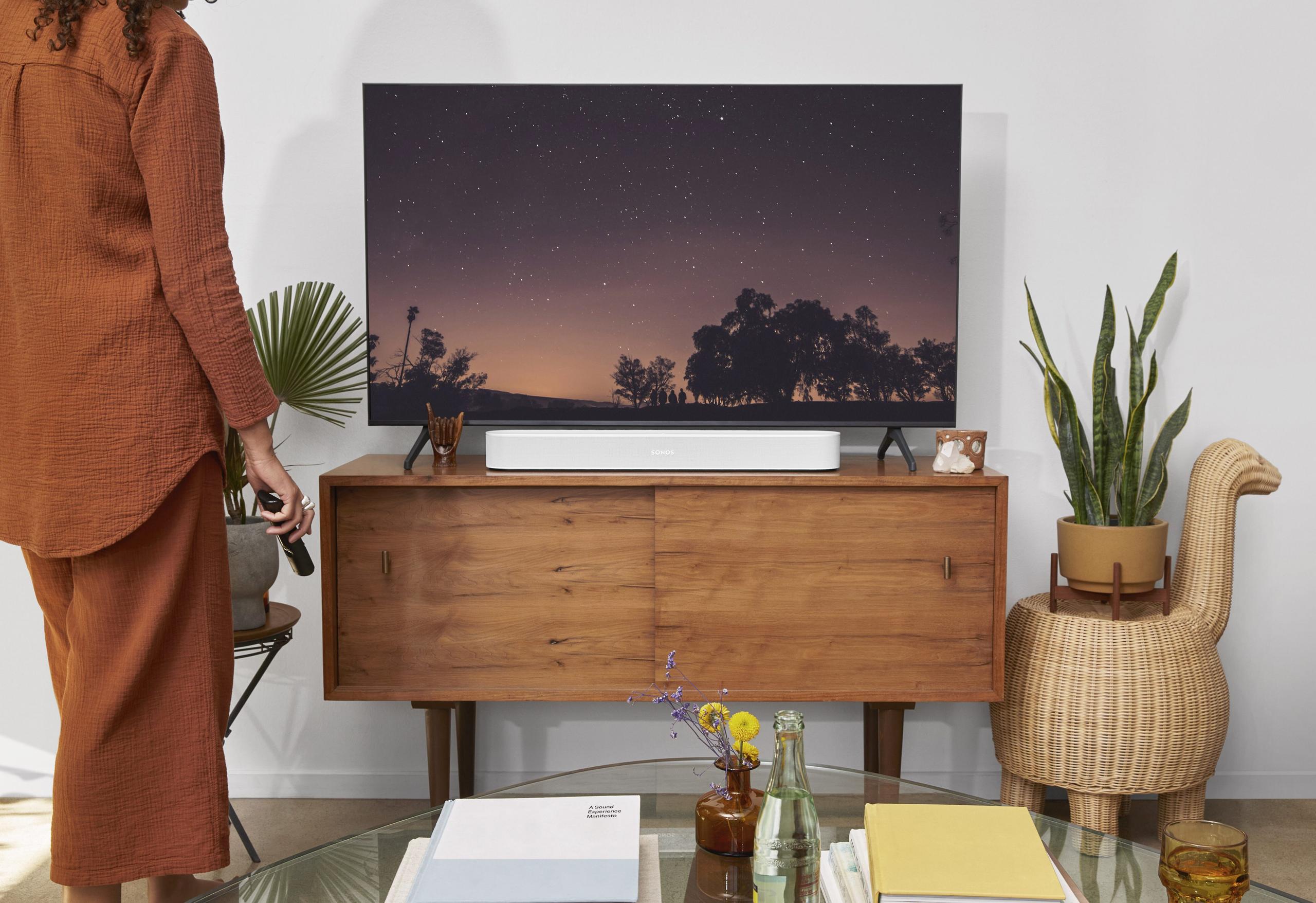
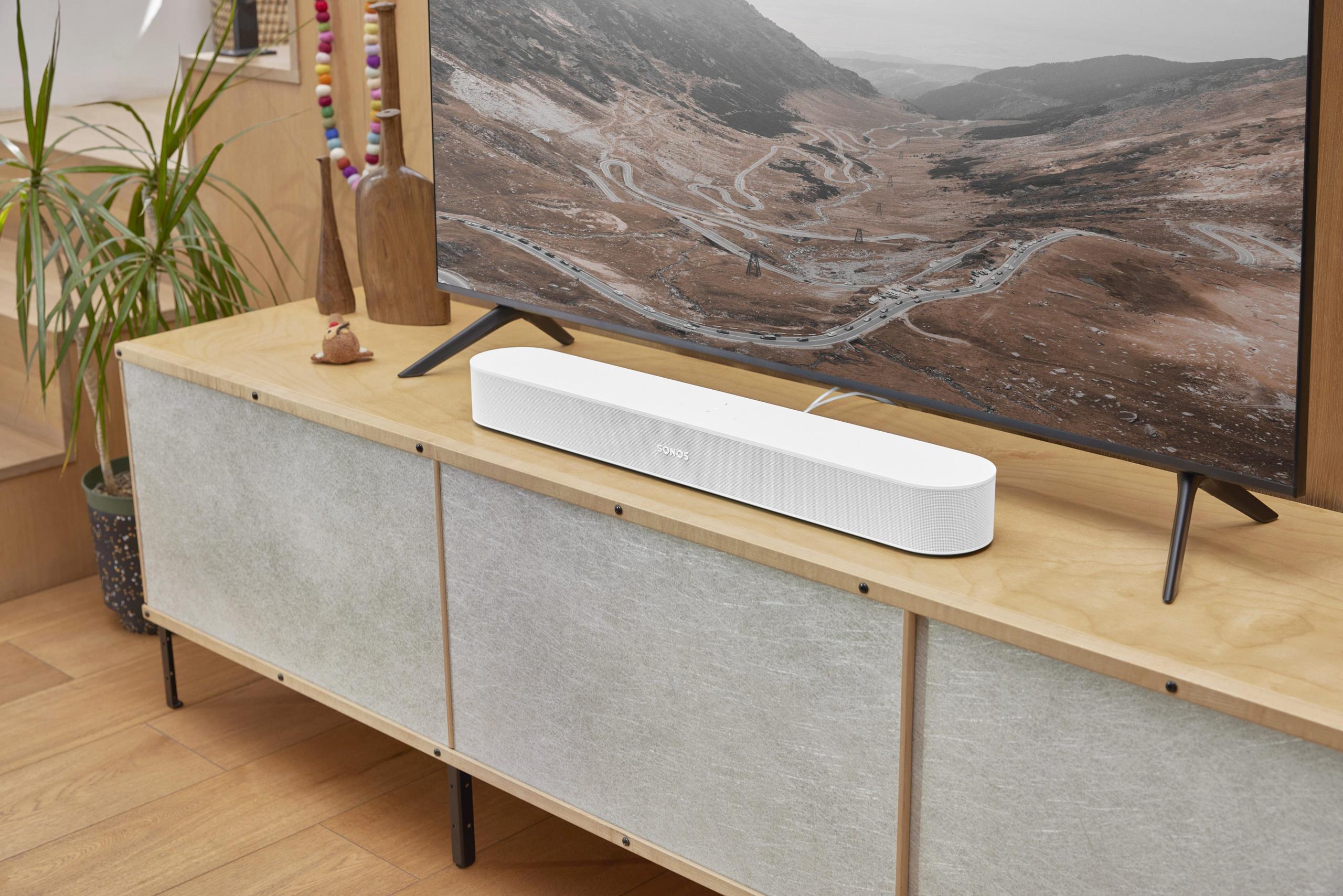
Before diving into specifics, it's worth understanding what makes these systems different. The Sonos Beam Gen 2 is what most people picture when they think "soundbar" – a single rectangular unit that sits under your TV and does everything. It uses clever software processing to create the illusion of surround sound from its built-in speakers.
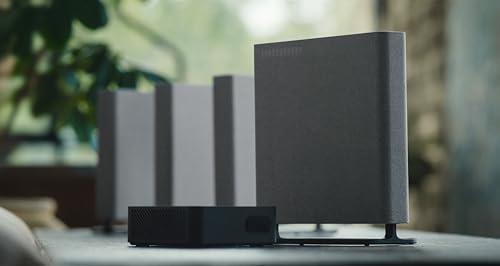
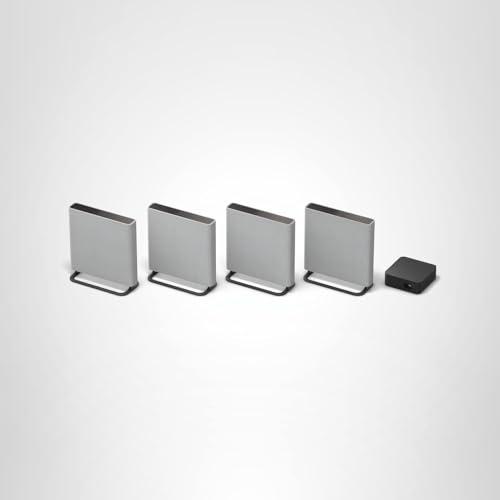
The Sony HT-A9M2, released in 2024, takes a completely different approach. It's technically four separate wireless speakers that work together as a coordinated system. Each speaker contains multiple drivers (the individual components that produce sound) and connects wirelessly to a central control box. This lets you place speakers around your room for genuine surround sound, rather than relying on audio tricks.
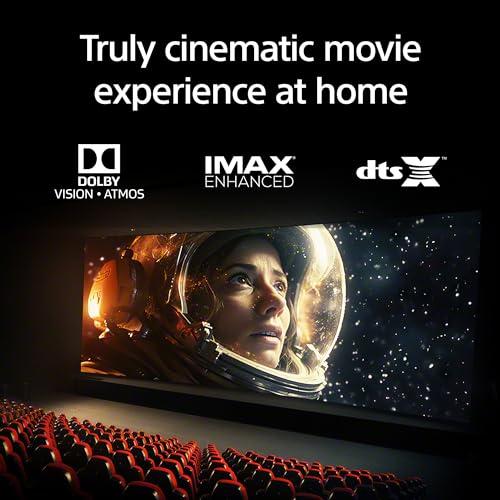
Both systems support Dolby Atmos, which is a technology that adds height information to soundtracks. Think of traditional surround sound as creating a circle of audio around you – Dolby Atmos adds a dome overhead, so helicopters can fly above you or rain can fall from the ceiling. How each system achieves this effect differs significantly, and that difference is crucial to understanding which might work better for you.
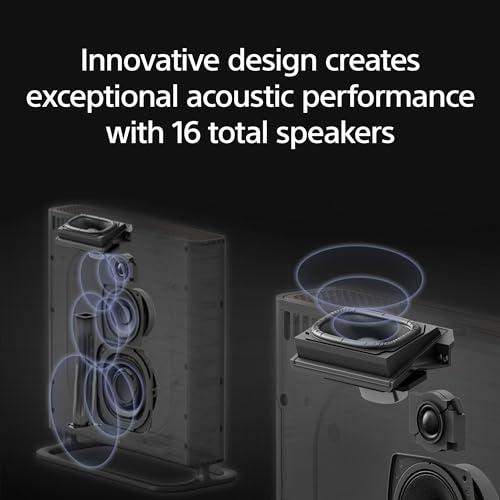
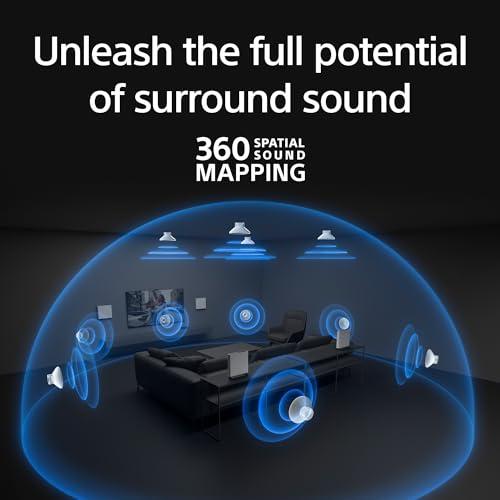
The Sony HT-A9M2 uses what Sony calls "360 Spatial Sound Mapping." Each of the four speakers contains four individual drivers: a woofer for bass, a mid-range driver for vocals and most instruments, a tweeter for high frequencies, and an upward-firing driver specifically for Atmos height effects. That's 16 total drivers working together across the system.
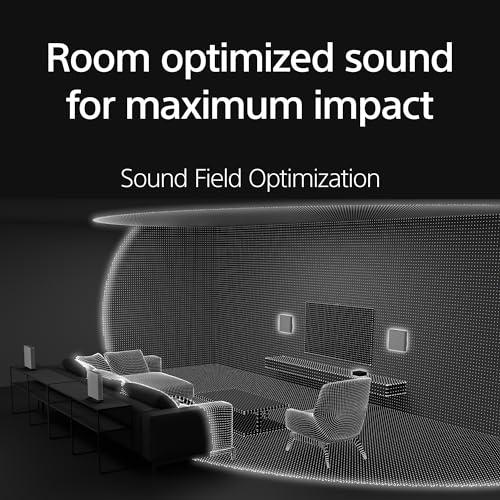
The magic happens through Sony's room calibration technology. During setup, the system uses built-in microphones to measure your room's acoustics, then creates what Sony calls "phantom speakers" – virtual sound sources that seem to exist between and around the physical speakers. The result is a sound bubble that can place effects anywhere in three-dimensional space around you.
What makes this particularly impressive is the system's flexibility. Unlike traditional surround sound setups that require precise speaker placement, the Sony HT-A9M2 adapts to wherever you can actually put the speakers in your real living space. The auto-calibration compensates for imperfect placement, making it much more practical than conventional multi-speaker systems.
The Sonos Beam Gen 2, released in late 2022, represents the evolution of Sonos's compact soundbar philosophy. It contains five drivers in a single 25.6-inch unit: four woofers and one tweeter. Rather than physical height speakers, it uses psychoacoustic processing – essentially audio tricks that fool your brain into hearing height effects that aren't really there.
This virtual Dolby Atmos processing works by carefully timing and adjusting the sound from different drivers to create reflections off your ceiling and walls. When done well, your brain interprets these reflections as coming from above, creating the illusion of overhead sound without dedicated height speakers.
The Sonos Beam Gen 2 also includes Trueplay room calibration, though it requires an iPhone or iPad to work. The system uses your device's microphone to measure room acoustics and adjusts its sound accordingly. While not as sophisticated as Sony's approach, it's effective for optimizing the soundbar's performance in different spaces.
When it comes to creating that "you're in the movie" feeling, the Sony HT-A9M2 has significant advantages due to its physical speaker separation. Sound separation – the ability to clearly distinguish individual effects and place them in specific locations – is noticeably better with four discrete speakers versus a single soundbar.
In action movies, this translates to bullets whizzing past your ear, explosions that seem to originate from specific locations, and ambient effects that create a convincing environment around you. The dedicated upward-firing Atmos drivers in each speaker create genuine overhead effects that are simply more convincing than virtual processing can achieve.
The Sonos Beam Gen 2 does an admirable job with its virtual processing, but there's no getting around physics. While it creates a wider soundstage than you'd expect from a compact unit, and its virtual Atmos provides some sense of height, it can't match the spatial accuracy of physically separated speakers. Where Sonos excels is in dialogue clarity and overall tonal balance – voices sound natural and easy to understand, which is crucial for TV watching.
Bass performance reveals another key difference between these systems. The Sony HT-A9M2 distributes bass across four speakers, each with its own woofer. Sony's X-Balanced Speaker Unit technology uses rectangular diaphragms instead of traditional round ones, increasing the surface area within the compact speaker enclosures. This translates to noticeably better bass impact and extension compared to what a single soundbar can achieve.
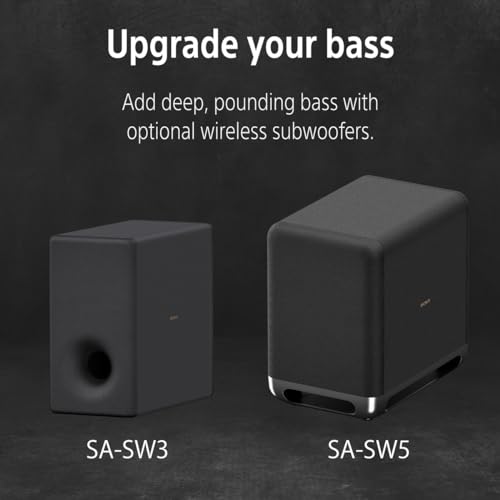
However, both systems benefit significantly from adding a subwoofer. The Sony HT-A9M2 can pair with Sony's wireless subwoofers, while the Sonos Beam Gen 2 works with the Sonos Sub. For serious home theater use, we'd consider a subwoofer nearly essential with either system, though the Sony holds up better on its own.
Here's where things get interesting. Despite its home theater focus, the Sony HT-A9M2 creates an exceptionally wide stereo image for music listening. With speakers placed far apart, stereo separation is excellent, and the system supports high-resolution audio formats and 360 Reality Audio for spatial music content.
The Sonos Beam Gen 2 takes a more traditional approach to music reproduction, and frankly, it's excellent at it. Sonos built its reputation on music playback, and that expertise shows. The tonal balance is warmer and more musical, rhythm and timing are spot-on, and the integration with Sonos's multi-room ecosystem means seamless whole-home audio.
For someone who listens to as much music as movies, the Sonos Beam Gen 2 might actually be the better choice, despite its limitations for cinematic content.
Gaming performance strongly favors the Sony HT-A9M2, particularly if you own a PlayStation 5 or high-end gaming PC. The system supports the full HDMI 2.1 feature set, including 4K at 120Hz, Variable Refresh Rate (VRR), and Auto Low Latency Mode (ALLM). These features ensure smooth, responsive gaming without the audio system becoming a bottleneck.
The PS5 integration is particularly impressive, with automatic optimization for HDR content and game-specific audio modes. The immersive audio also provides competitive advantages in games where positional audio matters – you can actually hear enemies approaching from specific directions with startling accuracy.
The Sonos Beam Gen 2 offers basic HDMI eARC connectivity but lacks gaming-specific features. It's perfectly adequate for casual gaming but won't unlock the full potential of modern consoles.
Room size plays a crucial role in determining which system will work better for you. The Sony HT-A9M2 really needs space to shine – we'd recommend rooms of at least 300 square feet to properly appreciate the spatial audio effects. In smaller spaces, you can't position the speakers far enough apart to create convincing surround effects, and you're essentially paying premium prices for capabilities you can't fully utilize.
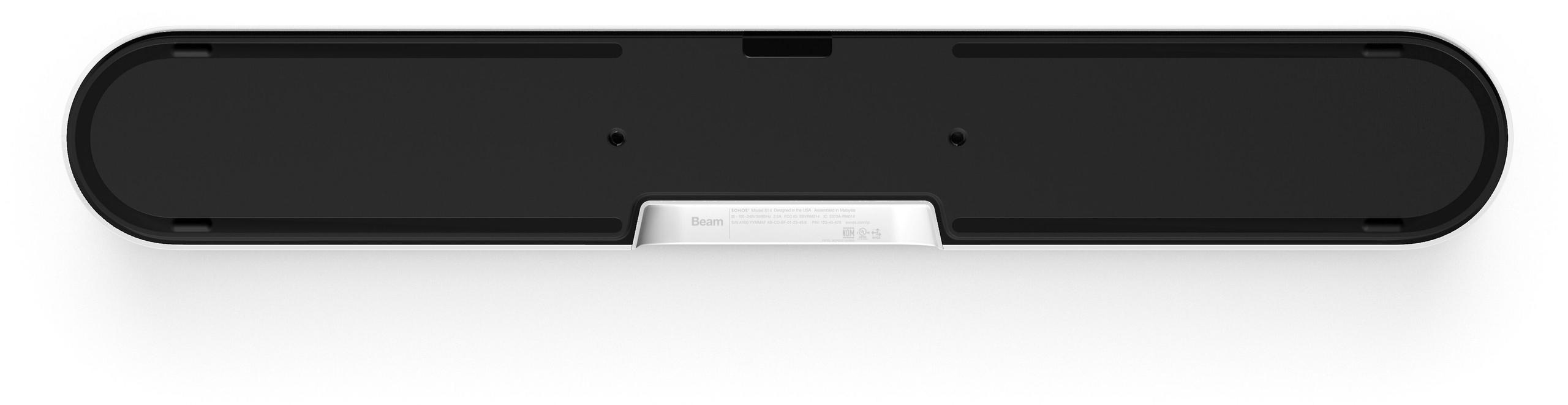
The Sonos Beam Gen 2 is designed for smaller spaces and actually performs better in compact rooms. Its sound is optimized for near-field listening, making it ideal for apartments, bedrooms, or smaller living rooms. It also requires just one power outlet and can sit on a TV stand or mount on the wall, making installation trivial.
At the time of writing, these products sit in very different price categories. The Sony HT-A9M2 commands a significant premium – roughly five to six times the cost of the Sonos Beam Gen 2. This pricing reflects the sophisticated wireless technology, multiple speakers, and premium positioning, but it also means the Sony needs to deliver proportionally better performance to justify the investment.
For the Sony HT-A9M2, you're paying for genuinely superior immersive audio capabilities, future-proof connectivity, and the flexibility of wireless speaker placement. If you have the right room and budget, and home theater performance is your priority, the value proposition makes sense.
The Sonos Beam Gen 2 offers exceptional value for its price point. You get Dolby Atmos support, excellent build quality, voice control, and integration with a proven ecosystem. For most people in most rooms, it provides 80% of what they want from a home theater system at a fraction of the cost.
Installation complexity differs significantly between these systems. The Sony HT-A9M2 requires positioning four speakers around your room, each needing a power outlet, then running the room calibration process. While not technically difficult, it does require some planning and flexibility in your room layout.
The Sonos Beam Gen 2 is genuinely plug-and-play. Connect one HDMI cable, download the app, and you're essentially done. The simplicity is hard to overstate – it just works, reliably, without fuss.
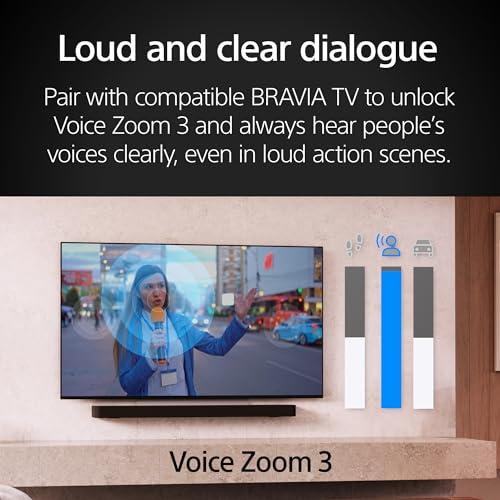
For daily use, both systems integrate well with modern TVs through HDMI-CEC, allowing your TV remote to control volume and basic functions. The Sonos Beam Gen 2 adds built-in voice assistants (Alexa and Google Assistant) for hands-free control, while the Sony HT-A9M2 requires a compatible Sony BRAVIA TV for similar functionality.
Based on our research and analysis of user and expert reviews, the decision comes down to your priorities, space, and budget.
Choose the Sony HT-A9M2 if you have a larger room, prioritize cinematic immersion above all else, and have the budget for premium performance. It's particularly compelling if you're a serious gamer or own a Sony BRAVIA TV that can unlock additional features. The spatial audio capabilities are genuinely impressive and create a home theater experience that's difficult to match with traditional soundbars.
Choose the Sonos Beam Gen 2 if you want excellent performance in a compact package, value simplicity and reliability, or if music listening is as important as movie watching. It's also the clear choice for smaller rooms, apartments, or if you want to build a multi-room audio system over time. The combination of performance, features, and value is hard to beat.
These products represent two different approaches to home theater audio, each with distinct strengths. The Sony HT-A9M2 pushes the boundaries of what's possible with wireless home theater systems, delivering genuinely impressive spatial audio at a premium price. The Sonos Beam Gen 2 focuses on delivering excellent overall performance, reliability, and value in a package that works for most people in most rooms.
Neither choice is wrong – it depends on matching the right system to your specific needs, space, and priorities. The Sony rewards those who can take full advantage of its capabilities, while the Sonos provides a more universally satisfying experience that just works well for everyone.
| Sony HT-A9M2 BRAVIA Theater Quad | Sonos Beam Gen 2 |
|---|---|
| System Type - Fundamentally different approaches to home theater audio | |
| 4.0.4-channel wireless speaker system with four separate units | Compact 5.0-channel soundbar in single unit |
| Total Drivers - More drivers generally mean better sound separation and dynamics | |
| 16 drivers (4 per speaker: woofer, mid-range, tweeter, height driver) | 5 drivers (4 woofers, 1 tweeter) |
| Power Output - Higher wattage provides better dynamics and room-filling capability | |
| 504W total across 16-channel digital amplifier | Not specified (typical for compact soundbars) |
| Dolby Atmos Implementation - Physical height channels create more convincing overhead effects | |
| True physical Atmos with dedicated upward-firing drivers | Virtual Atmos using psychoacoustic processing |
| Room Size Suitability - Critical for determining which system will work in your space | |
| Optimized for 300+ sq ft rooms with flexible speaker placement | Ideal for rooms up to 300 sq ft, perfect for apartments |
| HDMI Connectivity - Important for gaming and future-proofing | |
| HDMI 2.1 with 8K/4K120, VRR, ALLM for advanced gaming | HDMI eARC only, no gaming-specific features |
| Wireless Technology - Affects reliability and placement flexibility | |
| Proprietary wireless with dual antennas and frequency hopping | Wi-Fi based with proven Sonos mesh networking |
| Voice Control - Convenience feature for smart home integration | |
| Requires compatible Sony BRAVIA TV for voice features | Built-in Amazon Alexa and Google Assistant |
| Music Performance - Important if you listen to music as much as movies | |
| Theater-focused tuning, wide stereo imaging, Hi-Res audio support | Music-first DNA with warm, balanced sound signature |
| Multi-Room Capability - Useful for whole-home audio expansion | |
| Limited to Sony ecosystem expansion | Seamless integration with full Sonos multi-room system |
| Setup Complexity - Consider your comfort level with technology | |
| Moderate complexity: position 4 speakers, run calibration | Plug-and-play: single HDMI connection, app setup |
| Expandability - Options for adding subwoofer and additional speakers | |
| Compatible with Sony wireless subwoofers and surrounds | Expandable with Sonos Sub and surround speakers |
| Price Category - Significant difference affects value proposition | |
| Premium pricing (5-6x more expensive at time of writing) | Mid-range pricing with exceptional value |
The Sony HT-A9M2 is a four-speaker wireless home theater system that places separate speakers around your room for true surround sound, while the Sonos Beam Gen 2 is a compact single soundbar that uses virtual processing to simulate surround effects. The Sony system creates genuine 360-degree audio with physical speaker separation, whereas the Sonos relies on software to create the illusion of surround sound from one unit.
The Sonos Beam Gen 2 is ideal for small rooms and apartments. Its compact 25.6-inch design fits easily on TV stands and works well in spaces up to 300 square feet. The Sony HT-A9M2 needs larger rooms of 300+ square feet to properly position its four speakers and achieve the intended surround effect.
Both systems benefit from adding a subwoofer, but the Sony HT-A9M2 provides better bass on its own due to multiple woofers across four speakers. The Sonos Beam Gen 2 has limited bass response from its compact size and really benefits from adding the Sonos Sub for movie watching. However, the Sonos Beam Gen 2 is more enjoyable out-of-the-box for casual viewing.
The Sonos Beam Gen 2 is much easier to install – just connect one HDMI cable and complete setup through the app. The Sony HT-A9M2 requires positioning four speakers around your room, ensuring power outlets for each, and running room calibration. While not difficult, the Sony system needs more planning and setup time.
The Sony HT-A9M2 delivers superior cinematic immersion with genuine surround sound and convincing height effects from its physical Dolby Atmos speakers. It excels at placing effects in specific locations around you. The Sonos Beam Gen 2 offers excellent dialogue clarity and balanced sound but cannot match the spatial accuracy of physically separated speakers.
The Sonos Beam Gen 2 is better for music listening, with Sonos's renowned musical tuning that delivers warm, balanced sound with excellent rhythm and timing. The Sony HT-A9M2 creates an impressively wide stereo image and supports high-resolution audio, but its theater-focused tuning isn't optimized for all music genres.
The Sony HT-A9M2 is significantly better for gaming, especially with PlayStation 5 or high-end PCs. It supports HDMI 2.1 features like 4K 120Hz, Variable Refresh Rate, and Auto Low Latency Mode. The immersive audio also provides competitive advantages in games where positional audio matters. The Sonos Beam Gen 2 lacks gaming-specific features.
Both systems can be expanded, but differently. The Sonos Beam Gen 2 integrates seamlessly with the broader Sonos ecosystem – you can add the Sonos Sub, surround speakers, or build a multi-room audio system. The Sony HT-A9M2 can add Sony wireless subwoofers and surrounds but is limited to Sony's ecosystem.
The Sonos Beam Gen 2 offers exceptional value, providing Dolby Atmos support, voice control, and excellent performance at a mid-range price point. The Sony HT-A9M2 commands a significant premium but delivers genuinely superior immersive audio capabilities. The value depends on whether you can utilize the Sony's advanced features in your specific room and setup.
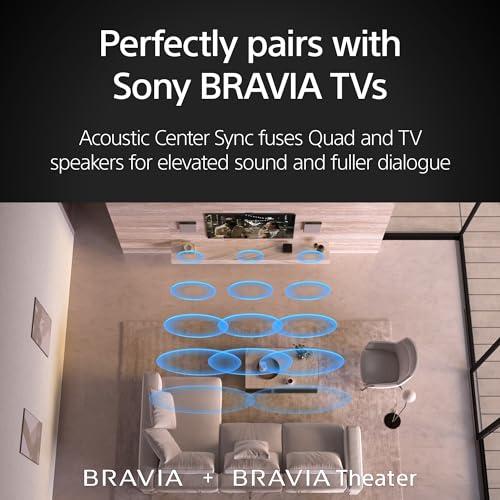
The Sonos Beam Gen 2 works equally well with any TV brand that has HDMI eARC or optical audio output. The Sony HT-A9M2 works with any TV but unlocks additional features like Acoustic Center Sync and enhanced voice control when paired with Sony BRAVIA TVs.
The Sonos Beam Gen 2 has built-in Amazon Alexa and Google Assistant for hands-free voice control of the system and smart home devices. The Sony HT-A9M2 requires a compatible Sony BRAVIA TV to access voice control features through the TV's built-in assistants.
Choose the Sony HT-A9M2 if you have a larger room, prioritize maximum cinematic immersion, are a serious gamer, or own a Sony BRAVIA TV. Choose the Sonos Beam Gen 2 if you have a smaller space, want simple setup, listen to music frequently, value reliability, or want to build a multi-room audio system over time.
We've done our best to create useful and informative comparisons to help you decide what product to buy. Our research uses advanced automated methods to create this comparison and perfection is not possible - please contact us for corrections or questions. These are the sites we've researched in the creation of this article: bestbuy.com - whathifi.com - whathifi.com - youtube.com - rtings.com - audiosciencereview.com - bhphotovideo.com - skybygramophone.com - sony.com - manuals.plus - audioadvice.com - dell.com - valueelectronics.com - youtube.com - merlinstv.com - videoandaudiocenter.com - electronics.sony.com - sony.com - bestbuy.com - beachcamera.com - sony.com - win.consulting - sony.com - whathifi.com - en.community.sonos.com - techradar.com - youtube.com - consumerreports.org - bestbuy.com - youtube.com - sonos.com - wave-electronics.com - en.community.sonos.com - epicsystems.tech - tomsguide.com - bestbuy.com

Privacy Policy
Terms and Conditions - Affiliate Policy
Home Security
© Copyright 2008-2026.
11816 Inwood Rd #1211, Dallas, TX 75244